Questions
Answers
Our trusted network of 1stDibs sellers answer common questions
What is the cheapest way to divide a room?
1 Answer
Lightweight Japanese paper lattice screens known as shōji are a versatile way to define a living space and block drafts. Painted folding screens known as byōbu are also used as decorative elements, often featuring landscapes, animals, and flowering plants. Chinese folding screens were traditionally comprised of monumental hinged panels, intricately carved and decorated with panoramic landscapes or stone inlay.

PAGODA REDOctober 7, 2020
Related Questions
View All QuestionsShop for Chinese Room Dividers and Screens on 1stDibs
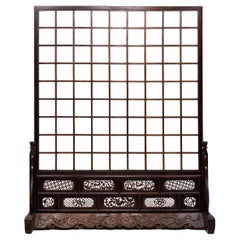
Monumental Chinese Lattice Spirit Screen, c. 1850
Located in Chicago, IL
Single-panel standing screens have been prevalent in fine Chinese interiors since as early as the
Category
Antique Mid-19th Century Chinese Qing Paintings and Screens
Materials
Elm, Pine
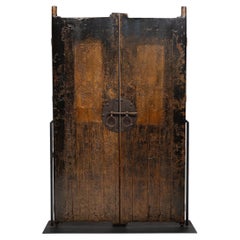
Pair of Chinese Crackle Lacquer Courtyard Doors, c. 1800
Located in Chicago, IL
traditional home in northern China. The graphic marks on each door are likely left from early 20th-century
Category
Antique Early 19th Century Chinese Qing Paintings and Screens
Materials
Elm
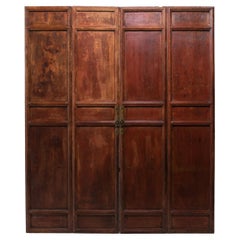
Set of Four Chinese Courtyard Door Panels, c. 1850
Located in Chicago, IL
A hallmark of Chinese architecture, tall door panels such as these were used in provincial
Category
Antique Mid-19th Century Chinese Qing Doors and Gates
Materials
Brass
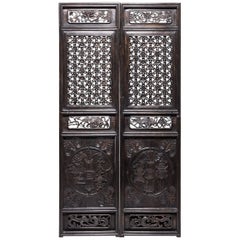
Pair of Chinese Floral Chainlink Lattice Panels, c. 1800
Located in Chicago, IL
This pair of elaborately carved early 19th century Chinese courtyard panels feature intricately
Category
Antique Early 19th Century Chinese Qing Screens and Room Dividers
Materials
Elm
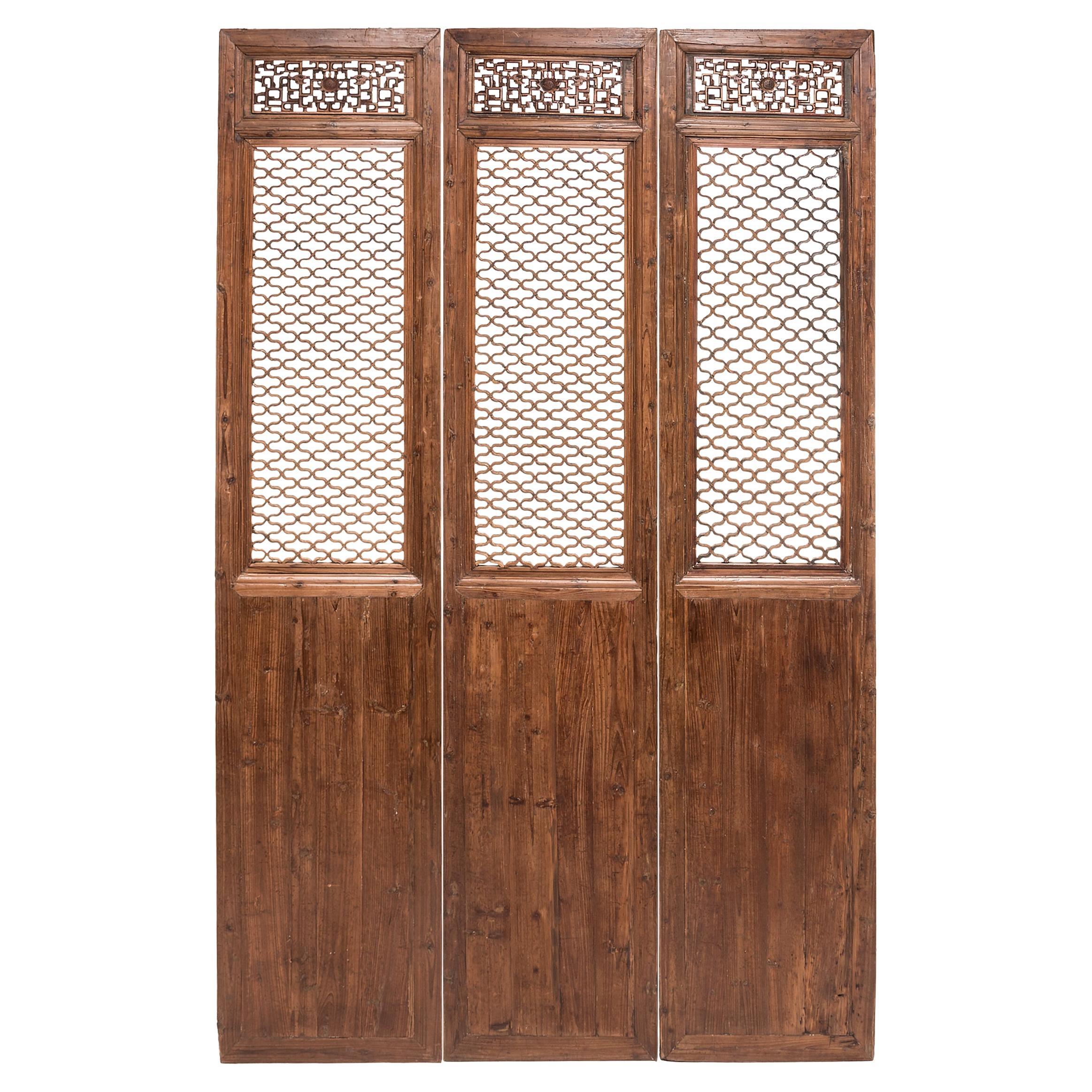
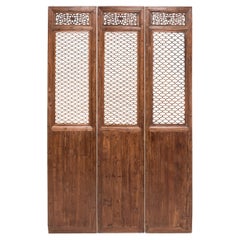
Set of Three Chinese Quadrilobe Lattice Courtyard Panels, c. 1850
Located in Chicago, IL
The sweeping elegance of these 19th-century courtyard doors, with their intricate lattice panels, hides the mathematical brilliance required to create them. The wax-finished, knotty ...
Category
Antique Mid-19th Century Chinese Qing Doors and Gates
Materials
Fir
Shop More furniture from PAGODA RED on 1stDibs
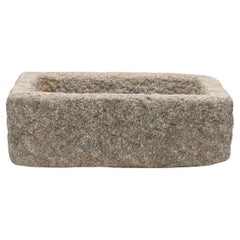
Chinese Stone Garden Trough, c. 1850
Located in Chicago, IL
Once a common sight in courtyards throughout rural China, this textured stone vessel was used as a grain or water trough for chickens and other barnyard fowl. Chiseled from a block o...
Category
Antique Mid-19th Century Chinese Minimalist Planters and Jardinieres
Materials
Granite
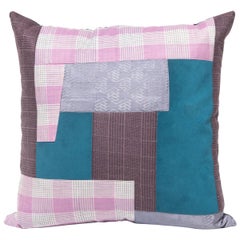
Japanese Suiting Patchwork Pillow
Located in Chicago, IL
This hand-crafted throw pillow was designed by a local Chicago artist and textile historian who lovingly repurposes the vintage fabrics, garments and embroidery fragments she collect...
Category
21st Century and Contemporary American Modern Pillows and Throws
Materials
Wool, Cotton, Linen, Silk, Down
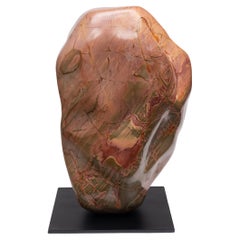
Fugui Meditation Stone Sculpture
Located in Chicago, IL
A well-chosen stone is a focal point of both a traditional Chinese garden and a scholar's studio - evoking the complexities of nature and inspiring creative thought. This meditation ...
Category
21st Century and Contemporary Chinese Organic Modern Natural Specimens
Materials
Stone
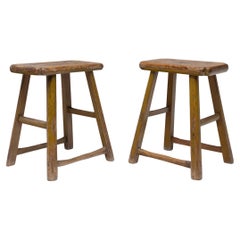
Pair of Chinese Splayed Leg Courtyard Stools, c. 1900
Located in Chicago, IL
These provincial Chinese stools date to the turn of the century and would have been used throughout a courtyard home as versatile everyday seating. Crafted of elm using mortise-and-t...
Category
Early 20th Century Chinese Qing Furniture
Materials
Elm
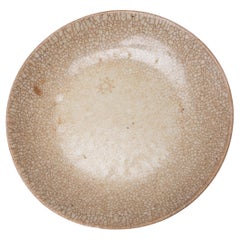
Chinese Pale Crackle Glaze Plate, c. 1800
Located in Chicago, IL
Humble yet refined, this Chinese porcelain plate from the early 19th century is cloaked in a pale crème glaze and decorated only by an allover crackle. The network of fine lines is b...
Category
Antique Early 19th Century Chinese Qing Ceramics
Materials
Porcelain
Shanghai Art Deco Side Table with Marble Top, c. 1930s
Located in Chicago, IL
When the Art Deco movement reached major Chinese cities like Tianjin and Shanghai, the design aesthetic that emerged was the perfect intersection of European modernism and Ming-dynas...
Category
Early 20th Century Chinese Art Deco End Tables
Materials
Marble
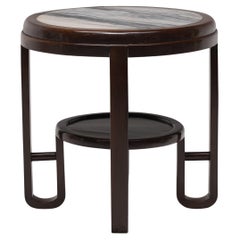
Shanghai Art Deco Coffee Table with Marble Top, c. 1930s
Located in Chicago, IL
When the Art Deco movement reached major Chinese cities like Tianjin and Shanghai, the design aesthetic that emerged was the perfect intersection of European modernism and Ming-dynas...
Category
Early 20th Century Chinese Art Deco Coffee and Cocktail Tables
Materials
Marble