Art

to
73,704
138,808
78,689
72,335
54,102
75,060
Overall Width
to
Overall Height
to
7,515
21,292
158,185
232,634
1,962
2,229
4,876
6,391
5,805
13,210
19,535
25,570
18,138
13,478
5,369
113,957
65,234
54,754
27,044
14,932
9,336
6,479
5,761
4,184
3,056
2,598
2,319
2,254
719
181,412
159,530
53,187
148,949
77,416
49,330
41,391
36,202
34,559
29,708
25,948
25,602
23,251
20,255
16,517
15,231
14,443
13,633
12,925
11,023
10,281
10,141
8,346
184,734
97,274
78,607
77,687
71,295
9,980
2,753
1,376
1,373
1,218
82,891
100,014
229,122
154,735
Art For Sale
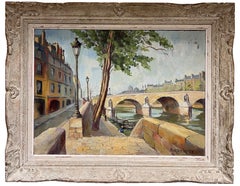
Pont Marie Bridge Paris River Seine 1950 s Mid Century French Signed Oil
Located in Cirencester, Gloucestershire
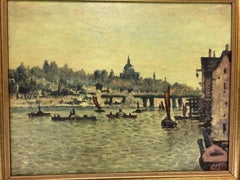
Le Pont Marie, Paris French Impressionist artist, signed and dated 58' oil on canvas, framed in original Montparnasse frame. framed: 28 x 35 inches canvas: 22 x 29 inches Provenanc...
Category

Mid-20th Century Impressionist Art

Materials

Oil, Canvas

Andrew Wyeth, Brinton’s Mill, from The Four Seasons (after)
Located in Southampton, NY
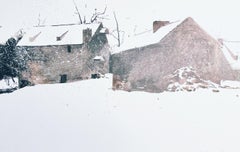
This exquisite lithograph after Andrew Wyeth (1917–2009), titled Brinton’s Mill, originates from the distinguished 1962 folio The Four Seasons: Paintings and Drawings by Andrew Wyeth. Published and printed by Art in America Company, Inc., New York, the edition exemplifies Wyeth’s intimate connection to the Brandywine Valley landscape. Brinton’s Mill, a historic gristmill near Chadds Ford, Pennsylvania—later purchased and restored by Wyeth and his wife Betsy—appears here bathed in the gentle light of seasonal transition, a motif of both personal and regional significance rendered with quiet reverence and precision. Executed on velin paper, this lithograph measures 17 x 13 inches (43.2 x 33 cm). As issued, it is unsigned and unnumbered, representing the folio’s authentic format. The Four Seasons series was conceived by the editors of Art in America in collaboration with Andrew and Betsy Wyeth, who selected drawings from the artist’s studio to illustrate the cycle of renewal and passage. Each image in the series embodies Wyeth’s profound sensitivity to mood, atmosphere, and the subtle interplay between man and nature. Artwork Details: Artist: After Andrew Wyeth (1917–2009) Title: Brinton’s Mill, from The Four Seasons, Paintings and Drawings by Andrew Wyeth, 1962 Medium: Lithograph on velin paper Dimensions: 17 x 13 inches (43.2 x 33 cm) Inscription: Unsigned and unnumbered, as issued Date: 1962 Publisher: Art in America Company, Inc., New York Printer: Art in America Company, Inc., New York Condition: Well preserved, consistent with age and medium Provenance: From the 1962 folio The Four Seasons, Paintings and Drawings by Andrew Wyeth, published and printed by Art in America Company, Inc., New York Notes: Excerpted from the 1962 folio: "In 1962 the editors of Art in America proposed to Wyeth a portfolio of images of his recent dry-brush drawings. The artist and his wife suggested the theme, 'The Four Seasons,' because of the essential role played in his work by the cycle of the seasons. The drawings were selected by Andrew and Betsy Wyeth from works in the house and studio at Chadds Ford, supplemented by some owned by friends. With a few exceptions they had never been exhibited or reproduced. The plates were made directly from the originals. In these drawings Wyeth's loving concentration on the object is fully revealed. But as always in his work, this concern with the tangible is balanced by sensibility to mood, to the emotion arising from the actual. They are pervaded with a sense of the season—the exact time of year, the hour of the day, the quality of the light. To the truth and subtlety with which he captures these intangible factors, these drawings owe their poignant poetry." About the Artist: Andrew Wyeth (1917–2009) was an American visual artist and one of the best-known painters of the mid-20th century. Although he considered himself an abstractionist, Wyeth’s work is characterized by a meticulous realism imbued with psychological depth and atmosphere. He often painted the landscapes and people surrounding his homes in Chadds Ford, Pennsylvania, and Cushing, Maine, creating an intimate record of American rural life. The son of the celebrated illustrator N. C. Wyeth, Andrew trained under his father before developing his own deeply personal visual language inspired by Winslow Homer, Henry David Thoreau, and King Vidor. His wife, Betsy Wyeth, was both his muse and career manager, while his son Jamie Wyeth continued the family’s artistic legacy. Among Wyeth’s best-known works is Christina’s World (1948), housed in the Museum of Modern Art, New York—a quintessential image of 20th-century American art. His other notable series include The Helga Pictures and his window studies, each reflecting a profound meditation on solitude, memory, and perception. Wyeth was the first painter to receive both the Presidential Medal of Freedom and the Congressional Gold Medal, and was elected to the French Académie des Beaux-Arts in 1980. In 2022, Andrew Wyeth's painting Day Dream sold for USD 23.29 million at Christie’s New York, setting a world record for the artist. Andrew Wyeth lithograph...
Category

1960s American Realist Art

Materials

Lithograph

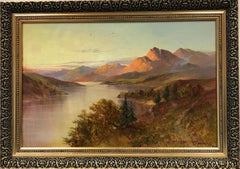
Scottish Highland Loch at Sunset signed antique oil painting Beautiful Landscape
Located in Cirencester, Gloucestershire
Artist/ School: F. E. Jamieson (British 1895-1950), signed Title: Scottish Highlands Loch Scene with warm sunset. Medium: signed oil painting on canvas, framed framed: 20 x 28.5 ...
Category

Early 20th Century Victorian Art

Materials

Oil

Copy of "Portrait of Beatrice dʼEste" by Leonardo da Vinci created 15th Century
Located in New York, NY
A masterful copy by an unknown artist, after the portrait of "Beatrice d'Este" by Leonardo Da Vinci also known as ‘Portrait of a Lady’ or ‘La Dama con la reticella di perle (The Lady With a Pearl Hairnet)’. The original work originally created in the 15th Century is currently on display in the Pinacoteca Ambrosiana Museum of Milan. Beatrice d'Este was the Duchess of Bari/Milan and was believed to be one of the most attractive princesses of the Renaissance. Her impeccable style won her many admirers throughout Italy and France, and she became a trendsetter of the highest order. This copy of the original painting, is an oil on canvas done in the 18th Century, and in this exquisite portrait, the artist has masterfully depicted the fine details with draped hair, pearls, royal dress, ornate headgear and sumptuous jewelry in front of a dark background. Once again, capturing the imagination with another enigmatic smile. It comes housed in an elegant period giltwood frame with ebonized trims and ready to be displayed with hanging wire on verso. Art measures 28 x 18 inches Frame measures 34.5 x 24.5 inches There is much debate and controversy over who actually painted the "Beatrice d'Este" was it Leonardo da Vinci (1452–1519), or Giovanni Ambrogio de Predis (1455–1508). So we may never know who executed the original portrait which hangs in the museum, but that need not deter from an appreciation of its singularity. Following the portraiture convention established by painters of the Quattrocentro, the artist has chosen to portray his sitter in profile. In doing so, he magnificently captures the essence of his sitter, a girl on the threshold of womanhood. Bedecked in the adornments—silk, velvet, pearls and embroidery (brocade) crafted of spun gold threads—afforded her by birthright and marriage, Beatrice looks forward in noble serenity. And at the same time her profile with its upturned nose and slight smile betrays an innocence that must have been the basis of the oft-repeated epithet: la più zentil donna in Italia” (“the sweetest lady in Italy”). It is believed the lady is Beatrice d'Este (1475-1497), duchess of Bari and later of Milan, the wife of Ludovico Sforza (known as "il Moro"). One of the most beautiful princesses of the Italian Renaissance, she was known for her good taste in fashion. Beatrice was a member of the Este-Sforza family, which joined by marriage two of the oldest reigning and already powerful houses in Italy. The house of Este, which held court in Ferrara, traced its lineage to the 11th century Dukes of Saxony and Bavaria. Beatriceʼs father, Ercole I ruled the Ferrara commune for 34 years, catapulting the city-state (and the Estes with it) to an unmatched level of economic prosperity and cultural prominence. The family was renowned for its love of letters and patronage of the arts. The first time Leonardo da Vinci’s name resounded in the Ambrosiana, it was through the pen of its founder, Cardinal Federico Borromeo, who attributed this little panel to the great Master, describing it as “A portrait of a Duchess of Milan, by the hand of Leonardo”. Following the Cardinal’s statement, the portrait was for long assumed to depict Beatrice d’Este, the wife of Ludovico il Moro. However, scholars have recently been more cautious and vague in their statements, with regard to both the artist (anonymous Lombard or Emilian...
Category

18th Century Northern Renaissance Art

Materials

Canvas, Oil

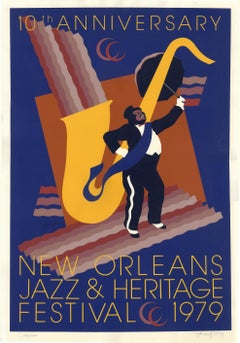
10th Anniversary New Orleans Jazz and Heritage Festival Poster - 1979
Located in New Orleans, LA
10th Anniversary New Orleans Jazz and Heritage Festival Poster, 1979 by John Martinez Fifth in the series by John Martinez. The grand marshal returns for the Jazz Festival's 10th anniversary; as does the "cut paper" technique first seen in the 1977 poster...
Category

1970s Contemporary Art

Materials

Screen

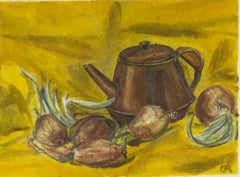
Brown teapot surrounded by red onions on Yellow background
By Glenora Richards
Located in New Orleans, LA
Glenny created beautiful miniature watercolors, mostly still life. This image of a bronze teapot with red onions is a unique work of art. Glenora Rich...
Category

1990s Realist Art

Materials

Watercolor

Tableau, Japanese, limited edition lithograph, black, white, red, signed, number
Located in Santa Fe, NM
Tableau, Japanese, limited edition lithograph, black, white, red, signed, number Shinoda's works have been collected by public galleries and museums, including the Museum of Modern Art, Solomon R. Guggenheim Museum, Brooklyn Museum and Metropolitan Museum (all in New York City), the National Museum of Modern Art in Tokyo, the British Museum in London, the Art Institute of Chicago, Arthur M. Sackler Gallery of the Smithsonian in Washington, D.C., the Singapore Art Museum, the National Museum of Singapore, the Kröller-Müller Museum in Otterlo, Netherlands, the Albright–Knox Art Gallery in Buffalo, New York, the Cincinnati Art Museum, and the Yale University Art Gallery in New Haven, Connecticut. New York Times Obituary, March 3, 2021 by Margalit Fox, Alex Traub contributed reporting. Toko Shinoda, one of the foremost Japanese artists of the 20th century, whose work married the ancient serenity of calligraphy with the modernist urgency of Abstract Expressionism, died on Monday at a hospital in Tokyo. She was 107. Her death was announced by her gallerist in the United States. A painter and printmaker, Ms. Shinoda attained international renown at midcentury and remained sought after by major museums and galleries worldwide for more than five decades. Her work has been exhibited at, among other places, the Metropolitan Museum of Art and the Museum of Modern Art in New York; the Art Institute of Chicago; the British Museum; and the National Museum of Modern Art in Tokyo. Private collectors include the Japanese imperial family. Writing about a 1998 exhibition of Ms. Shinoda’s work at a London gallery, the British newspaper The Independent called it “elegant, minimal and very, very composed,” adding, “Her roots as a calligrapher are clear, as are her connections with American art of the 1950s, but she is quite obviously a major artist in her own right.” As a painter, Ms. Shinoda worked primarily in sumi ink, a solid form of ink, made from soot pressed into sticks, that has been used in Asia for centuries. Rubbed on a wet stone to release their pigment, the sticks yield a subtle ink that, because it is quickly imbibed by paper, is strikingly ephemeral. The sumi artist must make each brush stroke with all due deliberation, as the nature of the medium precludes the possibility of reworking even a single line. “The color of the ink which is produced by this method is a very delicate one,” Ms. Shinoda told The Business Times of Singapore in 2014. “It is thus necessary to finish one’s work very quickly. So the composition must be determined in my mind before I pick up the brush. Then, as they say, the painting just falls off the brush.” Ms. Shinoda painted almost entirely in gradations of black, with occasional sepias and filmy blues. The ink sticks she used had been made for the great sumi artists of the past, some as long as 500 years ago. Her line — fluid, elegant, impeccably placed — owed much to calligraphy. She had been rigorously trained in that discipline from the time she was a child, but she had begun to push against its confines when she was still very young. Deeply influenced by American Abstract Expressionists like Jackson Pollock, Mark Rothko and Robert Motherwell, whose work she encountered when she lived in New York in the late 1950s, Ms. Shinoda shunned representation. “If I have a definite idea, why paint it?,” she asked in an interview with United Press International in 1980. “It’s already understood and accepted. A stand of bamboo is more beautiful than a painting could be. Mount Fuji is more striking than any possible imitation.” Spare and quietly powerful, making abundant use of white space, Ms. Shinoda’s paintings are done on traditional Chinese and Japanese papers, or on backgrounds of gold, silver or platinum leaf. Often asymmetrical, they can overlay a stark geometric shape with the barest calligraphic strokes. The combined effect appears to catch and hold something evanescent — “as elusive as the memory of a pleasant scent or the movement of wind,” as she said in a 1996 interview. Ms. Shinoda’s work also included lithographs; three-dimensional pieces of wood and other materials; and murals in public spaces, including a series made for the Zojoji Temple in Tokyo. The fifth of seven children of a prosperous family, Ms. Shinoda was born on March 28, 1913, in Dalian, in Manchuria, where her father, Raijiro, managed a tobacco plant. Her mother, Joko, was a homemaker. The family returned to Japan when she was a baby, settling in Gifu, midway between Kyoto and Tokyo. One of her father’s uncles, a sculptor and calligrapher, had been an official seal carver to the Meiji emperor. He conveyed his love of art and poetry to Toko’s father, who in turn passed it to Toko. “My upbringing was a very traditional one, with relatives living with my parents,” she said in the U.P.I. interview. “In a scholarly atmosphere, I grew up knowing I wanted to make these things, to be an artist.” She began studying calligraphy at 6, learning, hour by hour, impeccable mastery over line. But by the time she was a teenager, she had begun to seek an artistic outlet that she felt calligraphy, with its centuries-old conventions, could not afford. “I got tired of it and decided to try my own style,” Ms. Shinoda told Time magazine in 1983. “My father always scolded me for being naughty and departing from the traditional way, but I had to do it.” Moving to Tokyo as a young adult, Ms. Shinoda became celebrated throughout Japan as one of the country’s finest living calligraphers, at the time a signal honor for a woman. She had her first solo show in 1940, at a Tokyo gallery. During World War II, when she forsook the city for the countryside near Mount Fuji, she earned her living as a calligrapher, but by the mid-1940s she had started experimenting with abstraction. In 1954 she began to achieve renown outside Japan with her inclusion in an exhibition of Japanese calligraphy at MoMA. In 1956, she traveled to New York. At the time, unmarried Japanese women could obtain only three-month visas for travel abroad, but through zealous renewals, Ms. Shinoda managed to remain for two years. She met many of the titans of Abstract Expressionism there, and she became captivated by their work. “When I was in New York in the ’50s, I was often included in activities with those artists, people like Mark Rothko, Jackson Pollock, Motherwell and so forth,” she said in a 1998 interview with The Business Times. “They were very generous people, and I was often invited to visit their studios, where we would share ideas and opinions on our work. It was a great experience being together with people who shared common feelings.” During this period, Ms. Shinoda’s work was sold in the United States by Betty Parsons, the New York dealer who represented Pollock, Rothko and many of their contemporaries. Returning to Japan, Ms. Shinoda began to fuse calligraphy and the Expressionist aesthetic in earnest. The result was, in the words of The Plain Dealer of Cleveland in 1997, “an art of elegant simplicity and high drama.” Among Ms. Shinoda’s many honors, she was depicted, in 2016, on a Japanese postage stamp. She is the only Japanese artist to be so honored during her lifetime. No immediate family members survive. When she was quite young and determined to pursue a life making art, Ms. Shinoda made the decision to forgo the path that seemed foreordained for women of her generation. “I never married and have no children,” she told The Japan Times in 2017. “And I suppose that it sounds strange to think that my paintings are in place of them — of course they are not the same thing at all. But I do say, when paintings that I have made years ago are brought back into my consciousness, it seems like an old friend, or even a part of me, has come back to see me.” Works of a Woman's Hand Toko Shinoda bases new abstractions on ancient calligraphy Down a winding side street in the Aoyama district, western Tokyo. into a chunky white apartment building, then up in an elevator small enough to make a handful of Western passengers friends or enemies for life. At the end of a hall on the fourth floor, to the right, stands a plain brown door. To be admitted is to go through the looking glass. Sayonara today. Hello (Konichiwa) yesterday and tomorrow. Toko Shinoda, 70, lives and works here. She can be, when she chooses, on e of Japans foremost calligraphers, master of an intricate manner of writing that traces its lines back some 3,000 years to ancient China. She is also an avant-garde artist of international renown, whose abstract paintings and lithographs rest in museums around the world. These diverse talents do not seem to belong in the same epoch. Yet they have somehow converged in this diminutive woman who appears in her tiny foyer, offering slippers and ritual bows of greeting. She looks like someone too proper to chip a teacup, never mind revolutionize an old and hallowed art form She wears a blue and white kimono of her own design. Its patterns, she explains, are from Edo, meaning the period of the Tokugawa shoguns, before her city was renamed Tokyo in 1868. Her black hair is pulled back from her face, which is virtually free of lines and wrinkles. except for the gold-rimmed spectacles perched low on her nose (this visionary is apparently nearsighted). Shinoda could have stepped directly from a 19th century Meji print. Her surroundings convey a similar sense of old aesthetics, a retreat in the midst of a modern, frenetic city. The noise of the heavy traffic on a nearby elevated highway sounds at this height like distant surf. delicate bamboo shades filter the daylight. The color arrangement is restful: low ceilings of exposed wood, off-white walls, pastel rugs of blue, green and gray. It all feels so quintessentially Japanese that Shinoda’s opening remarks come as a surprise. She points out (through a translator) that she was not born in Japan at all but in Darien, Manchuria. Her father had been posted there to manage a tobacco company under the aegis of the occupying Japanese forces, which seized the region from Russia in 1905. She says,”People born in foreign places are very free in their thinking, not restricted” But since her family went back to Japan in 1915, when she was two, she could hardly remember much about a liberated childhood? She answers,”I think that if my mother had remained in Japan, she would have been an ordinary Japanese housewife. Going to Manchuria, she was able to assert her own personality, and that left its mark on me.” Evidently so. She wears her obi low on the hips, masculine style. The Porcelain aloofness she displays in photographs shatters in person. Her speech is forceful, her expression animated and her laugh both throaty and infectious. The hand she brings to her mouth to cover her amusement (a traditional female gesture of modesty) does not stand a chance. Her father also made a strong impression on the fifth of his seven children:”He came from a very old family, and he was quite strict in some ways and quite liberal in others.” He owned one of the first three bicycles ever imported to Japan and tinkered with it constantly He also decided that his little daughter would undergo rigorous training in a procrustean antiquity. “I was forced to study from age six on to learn calligraphy,” Shinoda says, The young girl dutifully memorized and copied the accepted models. In one sense, her father had pushed her in a promising direction, one of the few professional fields in Japan open to females. Included among the ancient terms that had evolved around calligraphy was onnade, or woman's writing. Heresy lay ahead. By the time she was 15, she had already been through nine years of intensive discipline, “I got tired of it and decided to try my own style. My father always scolded me for being naughty and departing from the traditional way, but I had to do it.” She produces a brush and a piece of paper to demonstrate the nature of her rebellion. “This is kawa, the accepted calligraphic character for river,” she says, deftly sketching three short vertical strokes. “But I wanted to use more than three lines to show the force of the river.” Her brush flows across the white page, leaving a recognizable river behind, also flowing.” The simple kawa in the traditional language was not enough for me. I wanted to find a new symbol to express the word river.” Her conviction grew that ink could convey the ineffable, the feeling, "as she says, of wind blowing softly.” Another demonstration. She goes to the sliding wooden door of an anteroom and disappears in back of it; the only trace of her is a triangular swatch of the right sleeve of her kimono, which she has arranged for that purpose. A realization dawns. The task of this artist is to paint that three sided pattern so that the invisible woman attached to it will be manifest to all viewers. Gen, painted especially for TIME, shows Shinoda’s theory in practice. She calls the work “my conception of Japan in visual terms.” A dark swath at the left, punctuated by red, stands for history. In the center sits a Chinese character gen, which means in the present or actuality. A blank pattern at the right suggests an unknown future. Once out of school, Shinoda struck off on a path significantly at odds with her culture. She recognized marriage for what it could mean to her career (“a restriction”) and decided against it. There was a living to be earned by doing traditional calligraphy:she used her free time to paint her variations. In 1940 a Tokyo gallery exhibited her work. (Fourteen years would pass before she got a second show.)War came, and bad times for nearly everyone, including the aspiring artist , who retreated to a rural area near Mount Fuji and traded her kimonos for eggs. In 1954 Shinoda’s work was included in a group exhibit at New York City’s Museum of Modern Art. Two years later, she overcame bureaucratic obstacles to visit the U.S.. Unmarried Japanese women are allowed visas for only three months, patiently applying for two-month extensions, one at a time, Shinoda managed to travel the country for two years. She pulls out a scrapbook from this period. Leafing through it, she suddenly raises a hand and touches her cheek:”How young I looked!” An inspection is called for. The woman in the grainy, yellowing newspaper photograph could easily be the on e sitting in this room. Told this, she nods and smiles. No translation necessary. Her sojourn in the U.S. proved to be crucial in the recognition and development of Shinoda’s art. Celebrities such as actor Charles Laughton and John Lewis of the Modern Jazz Quartet bought her paintings and spread the good word. She also saw the works of the abstract expressionists, then the rage of the New York City art world, and realized that these Western artists, coming out of an utterly different tradition, were struggling toward the same goal that had obsessed her. Once she was back home, her work slowly made her famous. Although Shinoda has used many materials (fabric, stainless steel, ceramics, cement), brush and ink remain her principal means of expression. She had said, “As long as I am devoted to the creation of new forms, I can draw even with muddy water.” Fortunately, she does not have to. She points with evident pride to her ink stone, a velvety black slab of rock, with an indented basin, that is roughly a foot across and two feet long. It is more than 300 years old. Every working morning, Shinoda pours about a third of a pint of water into it, then selects an ink stick from her extensive collection, some dating back to China’s Ming dynasty. Pressing stick against stone, she begins rubbing. Slowly, the dried ink dissolves in the water and becomes ready for the brush. So two batches of sumi (India ink) are exactly alike; something old, something new. She uses color sparingly. Her clear preference is black and all its gradations. “In some paintings, sumi expresses blue better than blue.” It is time to go downstairs to the living quarters. A niece, divorced and her daughter,10,stay here with Shinoda; the artist who felt forced to renounce family and domesticity at the outset of her career seems welcome to it now. Sake is offered, poured into small cedar boxes and happily accepted. Hold carefully. Drink from a corner. Ambrosial. And just right for the surroundings and the hostess. A conservative renegade; a liberal traditionalist; a woman steeped in the male-dominated conventions that she consistently opposed. Her trail blazing accomplishments are analogous to Picasso’s. When she says goodbye, she bows. --by Paul Gray...
Category

1990s Contemporary Art

Materials

Lithograph

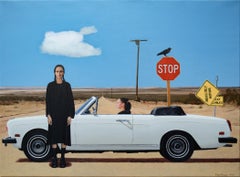
Absolutely Nothing
Located in Zofingen, AG
This surreal artwork captures a stark desert crossroads under a vivid blue sky, where a vintage white convertible takes center stage. Two figures add intrigue: one stands beside the ...
Category

2010s Realist Art

Materials

Cotton Canvas, Acrylic

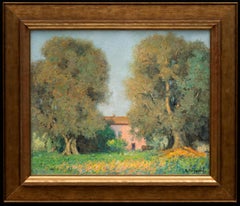
“Olive Trees and Farm: Cannes.” Raymond Thibesart (1874-1968)
Located in SANTA FE, NM
Olive Trees and Farm: Cannes. (Ferme dans le Oliviers: Cannes” Raymond Thibesart (France, 1874-1968) Oil on canvas, circa 1920s Signed ;lower right 19 1/2 x 24 1/2 (26 1/2 x 31 1/2 ...
Category

1920s Post-Impressionist Art

Materials

Canvas, Oil

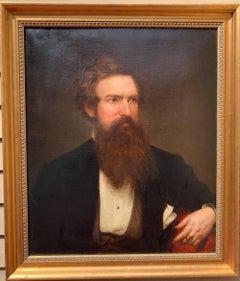
ORIGINAL 1860 Famous American Artist Henry Peters Gray (1819-1877) oil on canvas
By Henry Peters Gray
Located in Palm Coast, FL
Up for sale is an amazing original antique oil painting on canvas by Famous American Artist Henry Peters Gray (1819-1877), depicting a portrait of a W.P. Wright Esq. Some of his paintings are exhibited in the Metropolitan Museum of Art, in New York. The painting has a commemorative inscription on the verso: "For W.P. Wright Esq. Portrait from Henry Peter Gray. Painted at Pittsfield MA August 1860. Please read some interesting information about this Artist from Wikipedia. Henry Peters Gray was born in New York City he was a pupil of Daniel Huntington...
Category

1860s Impressionist Art

Materials

Oil

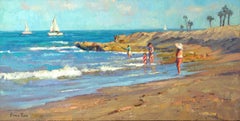
Seaside Serenity
Located in Atlanta, GA
Aruna Rao is a Florida-based painter specializing in luminous coastal landscapes in oils. Her work captures the interplay of light, color, and atmosphere, evoking a sense of place and tranquility. Born and raised in a literary family in India, Aruna was immersed in world literature...
Category

2010s Impressionist Art

Materials

Linen, Oil

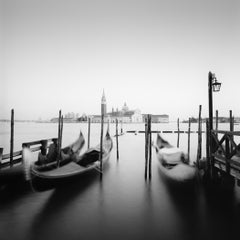
Santa Maria della Salute, Venice, black and white cityscape fine art photography
Located in Vienna, Vienna
Gerald Berghammer - Black and white photography. Two gondolas docked at a pier on a calm body of water with the cityscape of Venice, Italy. Archival fine art pigment print, Limited ...
Category

2010s Contemporary Art

Materials

Photographic Film, Archival Ink, Archival Paper, Black and White, Digita...

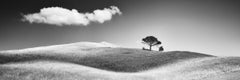
Italian Stone Pines Tuscany monochrome photograph limieted edition
Located in Vienna, Vienna
Italian Stone Pines Study 4, Tuscany - no. 21067 Black and white fine art landscape photography. Archival pigment ink print as part of a limited edition of 9. All Gerald Berghammer p...
Category

Early 2000s Contemporary Art

Materials

Digital Pigment

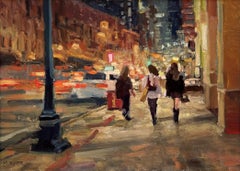
"Night Out, " Urban Night Scene by Jim Beckner
Located in Denver, CO
Jim Beckner's (US based) "Night Out" is an original, handmade oil painting depicting a group of friends strolling down a brightly lit city street at night. About the Artist: (Born...
Category

2010s Impressionist Art

Materials

Canvas, Oil

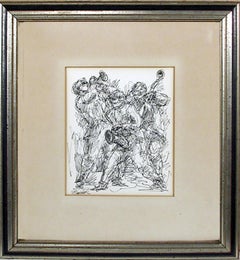
Jazz Band III, Modern Ink Painting by Charles Burdick
Located in Long Island City, NY
Charles Burdick, American (1924 - ) - Jazz Band III, Year: circa 1970, Medium: Ink on paper, signed l.l., Size: 7 in. x 5.5 in. (17.78 cm x 13.97 cm), Frame Size: 14 x 13 inches
Category

1970s Modern Art

Materials

Ink

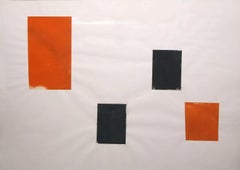
Untitled Geometric Abstract (Minimalism, Red, Black, Collage, ~78% OFF)
Located in Kansas City, MO
Willy Oster Untitled Geometric Abstract Mixed Media Collage; Acrylic, Paper 1990 27.55 x 39.37 inches (70 x 100 cm) Signed, dated and annotated by hand on verso COA provided *Condit...
Category

1990s Minimalist Art

Materials

Paper, Mixed Media, Acrylic

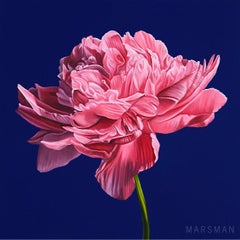
Peony - 21st Century contemporary Hyper realistic oil painting of a peony flower
Located in Nuenen, Noord Brabant
Jean Paul Marsman (Dutch artist) Peony 20 x 20 cm (framed, included in price 23 x 23 cm) Oil paint on wood Craftsmanship: The work is painted so realistically that everything seems...
Category

2010s Contemporary Art

Materials

Oil, Wood Panel

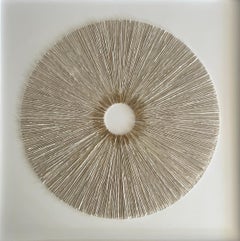
Fragile Edges, original, sculpture, thread, contemporary
Located in Deddington, GB
Porcelain shards on wood set in a round. Gold lustre applied the central area. Julie Massie has always taken inspiration for her artwork is from the Dorset Coastline which is a beaut...
Category

2010s Contemporary Art

Materials

Clay, Porcelain, Board

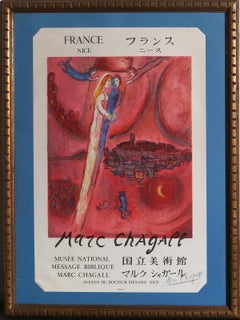
The Songs of Songs, Hand-Signed Lithograph Poster after Marc Chagall
Located in Long Island City, NY
Marc Chagall, After, Russian (1887 - 1985) - The Songs of Songs, Year: 1975, Medium: Lithograph Poster, signed in color pencil lower right, Edition: 8500, Size: 30 x 20.25 in. (7...
Category

1970s Modern Art

Materials

Lithograph

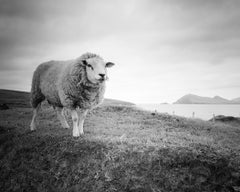
Bucky the Sheep - black and white photography - landscape - limited edition
Located in Vienna, Vienna
Gerald Berghammer - Black and white landscape photography. A sheep standing on grassy land near the Atlantic Ocean with hills on a small island. Archival pigment ink print, edition o...
Category

2010s Contemporary Art

Materials

Archival Ink, Archival Paper, Digital Pigment

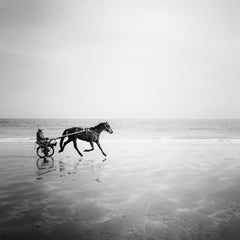
Harness Racing, Beach, black and white photograph, limited edition landscape
Located in Vienna, Vienna
Gerald Berghammer - Black and white minimalist landscape photography. Harness racing on a deserted sand beach near the ocean on a rainy day. Archival pigment ink print, edition of 9...
Category

21st Century and Contemporary Contemporary Art

Materials

Archival Ink, Archival Paper, Archival Pigment

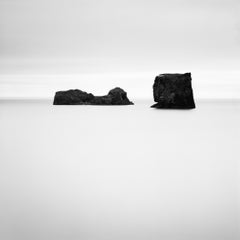
Black Rocks, Iceland - monochrome photo - limited edition, seascape, landscape
Located in Vienna, Vienna
Gerald Berghammer - Black and white minimalist long exposure photography. Two large dark rocks in the ocean with a smooth water surface and a cloudy sky. Archival pigment ink print, ...
Category

2010s Contemporary Art

Materials

Digital Pigment

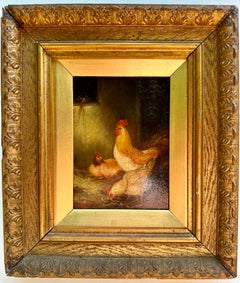
19th century English Victorian chickens in a barn scene with Rooster and Hens
Located in Woodbury, CT
This charming English Victorian painting by Arthur Jackson beautifully captures a rustic scene of chickens in a barn. The artist's meticulou...
Category

1890s Victorian Art

Materials

Oil, Board

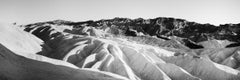
Shadow Mountains, Death Valley, USA - black and white photography - landscape
Located in Vienna, Vienna
Gerald Berghammer - Analog panorama photography. Black and white photo of rugged desert landscape with mountainous terrain with deep valleys and ridges. Archival pigment ink print as...
Category

2010s Contemporary Art

Materials

Digital Pigment

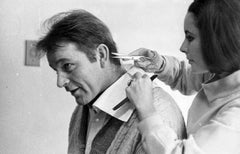
"Liz s Scissors" by William Lovelace
Located in London, GB
"Liz's Scissors" by William Lovelace 6th March 1964: Elizabeth Taylor gives her future husband Richard Burton (1925-1984) a cursory haircut. Unframed Paper Size: 12" x 16'' (inches...
Category

1960s Modern Art

Materials

Black and White

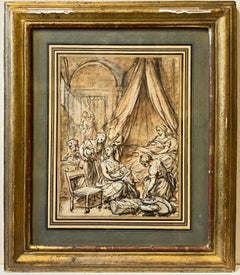
18th Century French Rococo Old Master Ink Drawing Nativity Scene
Located in Cirencester, Gloucestershire
The Birth French Rococo School, mid 18th century sepia ink on paper over board, framed behind glass. framed: 13 x 11 inches painting : 8 x 6 inches Provenance: private collection, B...
Category

18th Century Rococo Art

Materials

Watercolor, Ink

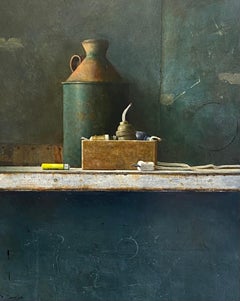
Clutter- 21st Century Contemporary Still-life painting with cutter plug
Located in Nuenen, Noord Brabant
This still-life is made by Dutch painter Erik Zwaga. The painter started in the style of the romantic school, Erik Zwaga began to search more and more for his own visual language...
Category

2010s Contemporary Art

Materials

Oil, Wood Panel

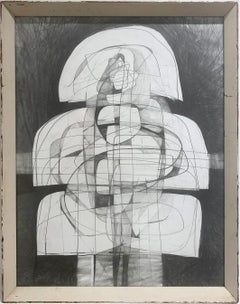
Infanta IV: Figurative Cubist Abstract Graphite Drawing with Antique Frame
Located in Hudson, NY
Figurative abstract cubist style drawing inspired by the Infanta Margarita in an antique gold frame “Infanta IV” by Hudson Valley artist, David Dew Bruner, made in 2015 23 x 18 inch...
Category

2010s Abstract Art

Materials

Paper, Graphite

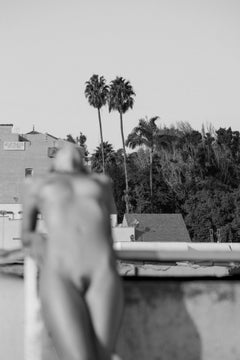
"Two Palms" Black White Photography 36" x 24" in Edition 2/15 by Larsen Sotelo
Located in Culver City, CA
"Two Palms" Black & White Photography 36" x 24" in Edition 2/15 by Larsen Sotelo Not framed. Ships in a tube Giclee (Archival Ink) print on 310G Platine Fibre Cotton Rag w/satin fin...
Category

21st Century and Contemporary Modern Art

Materials

Archival Ink, Rag Paper, Giclée

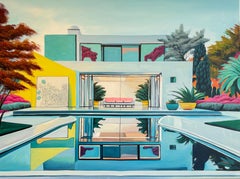
The future is calling us for - Contemporary Architecture Pool House Oil Painting
Located in DE
Lilly Muth's architectural paintings transport viewers on a visual journey to a different world, where imagination knows no bounds and the boundaries between reality and fantasy blur...
Category

21st Century and Contemporary Contemporary Art

Materials

Canvas, Oil

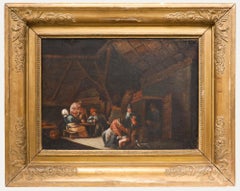
Dutch School 18th Century Oil - A Drink at the Inn
Located in Corsham, GB
A charming 18th-century tavern scene, depicting peasants gathered at an inn. Unsigned. Presented in gilt frame with unique corner ornaments featuring phoenix, acanthus scroll and pom...
Category

Early 18th Century Art

Materials

Oil

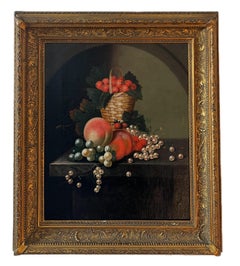
Rare 18th Century English Still Life of Grapes, Peaches and Strawberries
Located in Harkstead, GB
A rare and most attractive still life by William Jones of Bath. The sumptuous textures of the peaches, grapes and strawberries contrasting with the dark background. A really handsome...
Category

18th Century Old Masters Art

Materials

Canvas, Oil

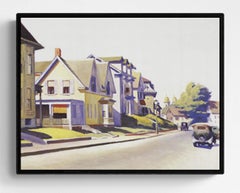
Edward Hopper Sun on Prospect Street 2010- Offset Lithograph
By Edward Hopper
Located in Brooklyn, NY
Paper Size: 13 x 17 inches ( 33.02 x 43.18 cm ) Image Size: 13 x 17 inches ( 33.02 x 43.18 cm ) Framed: Yes Frame Size: H: 14 x W: 18 x D: .75 in. Condition: A: Mint Additiona...
Category

2010s Art

Materials

Offset

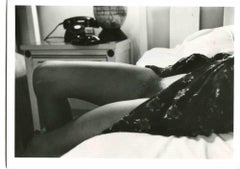
Kristine DeBell - Vintage Photo by Helmut Newton - 1970s
Located in Roma, IT
Kristine DeBell is a  vintage photo, realized by Helmut Newton in the 1970s. The artwork represent fashion model and actress in 1970s. 
Category

1970s Contemporary Art

Materials

Photographic Paper

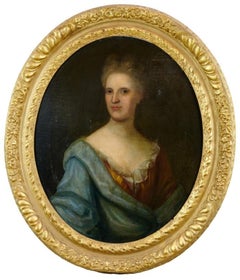
Fine 18th Century English Aristocratic Portrait of a Lady Oval Canvas Gilt Frame
Located in Cirencester, Gloucestershire
Artist/ School: English School, circa 1740's Title: Portrait of a Lady, traditionally identified as 'Anne of Chesterfield'. Medium: oil painting on canvas, framed Size: painting: ...
Category

Early 18th Century Old Masters Art

Materials

Canvas, Oil

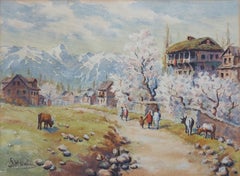
Kashmir Valley Almond Blossom Dina Nath Walli Mountain Landscape India Art
Located in Norfolk, GB
Dina Nath Walli (1908–2006) Almond Blossom, Kashmir Watercolour on Board c 1960 Framed size: 42.8cm x 52.8cm Image size: 27.5cm x 38cm Signed and dated 1970 on the verso, gifted fro...
Category

Mid-20th Century Abstract Impressionist Art

Materials

Board, Watercolor

"Well... Shit." Watercolor Landscape With Volcano Eruption
Located in Philadelphia, PA
This piece titled "Well... Shit." is an original piece by Graham Franciose, and is made from watercolor on panel mounted Rives BFK cotton rag, wax sealed, custom Douglas Fir frame. T...
Category

21st Century and Contemporary Contemporary Art

Materials

Wax, Watercolor, Wood Panel, Paper

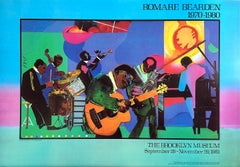
Romare Bearden JAMMING AT THE SAVOY Vintage 1981 Brooklyn Museum Poster, Jazz
Located in Union City, NJ
ROMARE BEARDEN 1970-1980 The Brooklyn Museum, September 26-November 29, 1981 Vintage 1981 Exhibition Poster "Jamming At The Savoy" (image from original 14" x 18" collage on board by ...
Category

1980s Contemporary Art

Materials

Offset

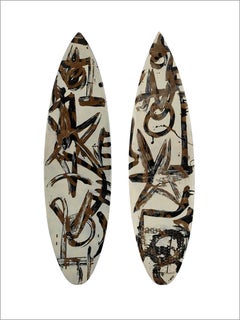
Moon Beam Surf Board Print by Michael Torquato deNicola
Located in Los Angeles, CA
Artist: Michael Torquato deNicola Title: Moon Beam Surf Board Print Edition Details: Archival pigment print on 100% Agave/Cotton sustainable fine art paper, signed and numbered in the margins by the artist, and released in the following exclusive worldwide edition: 24x18, edition 70, $300. 32x24 sheet, edition 30, $780. Michael Torquato deNicola (know as Torquato) is an award winning professional surfer, visual artist and filmmaker. His work has shown in museums and galleries in the US and Europe, including shows at the Amstel Gallery in Amsterdam and Florida, Chase Edwards Gallery in the Hamptons, Art Project Paia on Maui, The Misfit Gallery in La Jolla, and The Laguna Gallery of Contemporary Art, as well as showcased at The Museum of Architecture and Design,The Surfing Heritage Museum and the California Surf...
Category

2010s Street Art Art

Materials

Archival Pigment

404. Exit Not Found
Located in Zofingen, AG
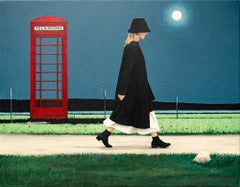
The world offers fewer exits. Fewer phone booths. Fewer places to disconnect from the noise. In this striking, hyperreal scene, a woman walks alone past a red booth glowing in the ni...
Category

2010s Realist Art

Materials

Cotton Canvas, Acrylic

Monet like Impressionist Seascape by Nagy
Located in San Francisco, CA
One of the finest impressionistic seascapes we have owned. It really does remind me of Monet. It is signed Nagy and there are a number of well listed artists with that last name. We ...
Category

1940s Impressionist Art

Materials

Oil

Rider, Oil Painting
Located in San Francisco, CA

Artist Comments
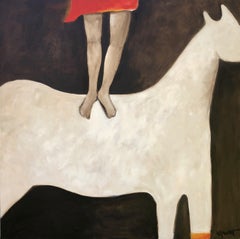
Artist Jaime Ellsworth depicts a sturdy white stallion with its face out of frame. A girl with a red skirt—also obscured from perspective—stands on its ba...

Category

21st Century and Contemporary Outsider Art Art

Materials

Oil

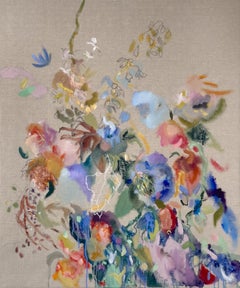
Echoes of Bloom
Located in Dallas, TX
oil stick, acrylic, & charcoal on raw linen
Category

2010s Art

Materials

Charcoal, Oil Pastel, Raw Linen, Acrylic

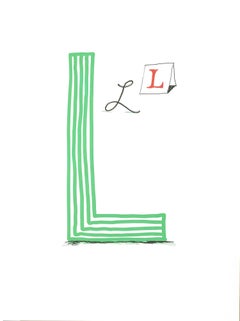
David Hockney, Letter L, from Hockney s Alphabet, 1991
Located in Southampton, NY
This exquisite lithograph by David Hockney (born 1937), titled Letter L, from the folio Hockney's Alphabet, Drawings by David Hockney, originates from the 1991 edition published by A...
Category

1990s Contemporary Art

Materials

Lithograph

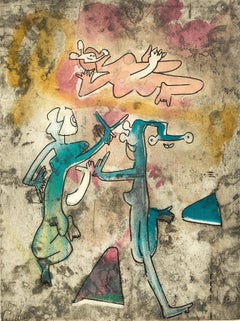
Centre Noeuds (Sabatier 393), Roberto Matta
Located in Fairfield, CT
Artist: Roberto Matta (1912-2002) Title: Centre Noeuds (Sabatier 393) Year: 1974 Edition: 38/125, plus proofs Medium: Etching on Arches paper Size: 23.875 x 17.5 inches Inscription: ...
Category

1970s Surrealist Art

Materials

Etching

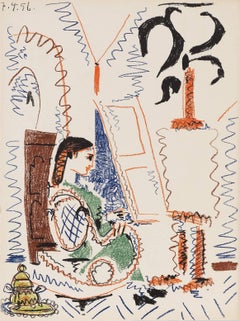
L atelier de Cannes (first state)
Located in OPOLE, PL
Pablo Picasso (1881-1973) - L'atelier de Cannes (The Cannes Studio) Lithograph from 1956. The edition of 275. Dated in the plate at the upper left: “7.4.56”. Dimensions of work: ...
Category

20th Century Modern Art

Materials

Drypoint, Etching

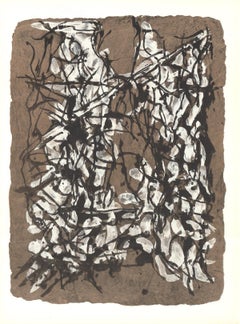
Jean-Paul Riopelle Composition 160-XIV 1966- Lithograph
Located in Brooklyn, NY
Paper Size: 15 x 11 inches ( 38.1 x 27.94 cm ) Image Size: 15 x 11 inches ( 38.1 x 27.94 cm ) Framed: No Condition: A-: Near Mint, very light signs of handling Additional Details: C...
Category

1960s Art

Materials

Lithograph

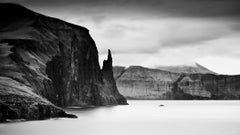
Trollkonufingur Monolith Panorama, Large Seascape Photograph, Limited Edition
Located in Vienna, Vienna
Black and white long exposure seascape - landscape photography. Archival pigment ink print as part of a limited edition of 7. All Gerald Berghammer prints are made to order in limite...
Category

21st Century and Contemporary Contemporary Art

Materials

Archival Ink, Archival Paper, Archival Pigment, Digital Pigment

Werner Bronkhorst - Swing
Located in London, GB
Werner Bronkhorst Swing, 2025 Giclée print on heavyweight 395gsm matte Canson Infinity PhotoArt ProCanvas, made with long-lasting Epson archival inks. Hand-stretched over FSC-certifi...
Category

2010s Contemporary Art

Materials

Canvas, Giclée

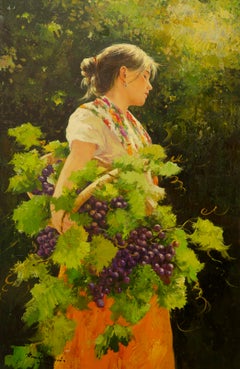
Vendimiadora (Grape Harvester)
Located in Atlanta, GA
Small limited edition run of 49 and 6 E.A."s (Edition of the artist). Each canvas reproduction is crafted by a skilled printer under the supervision of the artist. Román Francés has...
Category

21st Century and Contemporary Impressionist Art

Materials

Canvas, Oil, Giclée

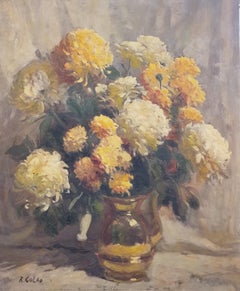
Mid-Century Still Life Oil on Canvas of Chrysanthemums in Copper Vase.
Located in Cotignac, FR
Mid-Century still life of chrysanthemums in copper vase, oil on canvas signed R Colao bottom left. A wonderfully colourful and vibrant still life, beautifully...
Category

Mid-20th Century Art

Materials

Canvas, Oil

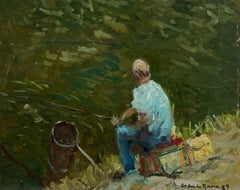
Angler Seated on Dappled Light River Bank Signed French Impressionist Oil
Located in Cirencester, Gloucestershire
Le Pecheur by Claude Marin (French 1914-2001) signed and dated 89 oil on artist card stuck on board, unframed board: 9 x 10.5 inches Inscribed verso Provenance: private collection, P...
Category

1980s Impressionist Art

Materials

Oil

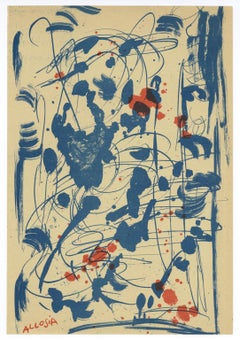
original lithograph
Located in Henderson, NV
Medium: original lithograph. Printed on buff colored thin wove paper and published in Milan in 1958 by Groupe Espace for the very rare Documenti d'arte d'oggi. Size: 12 3/8 x 8 1/2 i...
Category

1950s Art

Materials

Lithograph

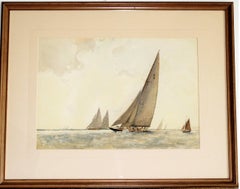
The Endeavour.
Located in Storrs, CT
The Endeavour. c.1935. Pencil and watercolor on watercolor board. 14 3/8 x 20 7/8. Signed in pencil, lower right; titled in pencil, verso. Housed in a subtle 23 1/2 x 36-inch light ...
Category

1930s Modern Art

Materials

Watercolor, Pencil

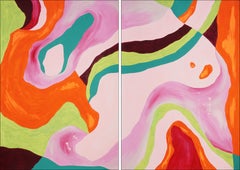
Sensual Diptych, Organic Abstract Atmosphere in Pastel Pink and Orange, Paper
Located in Barcelona, ES
In this series, Perrine explores the profound relationship between light and color, both essential elements in her artistic expression. Without light, there would be no colors, and i...
Category

2010s Abstract Impressionist Art

Materials

Paper, Oil Crayon, Acrylic

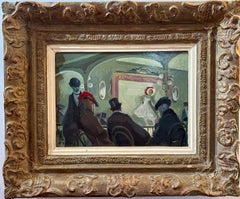
20th century Spanish Cafe scene with dancing and drinking figures in a bar
Located in Woodbury, CT
This captivating mid-century Spanish painting by Alfredo Opisso immerses the viewer in the lively atmosphere of a café or bar, where figures gather to drink, sing, and dance. Rendere...
Category

1960s Post-Impressionist Art

Materials

Oil, Board

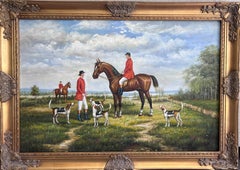
M. Aarinon Original Oil Painting, English Fox Hunt Scene, Horses Hounds
Located in Palm Coast, FL
A superb equestrian oil painting on canvas signed by M. Aarinon, depicting an elegant English fox hunt in full stride. Two riders in traditional red h...
Category

Late 20th Century Impressionist Art

Materials

Oil

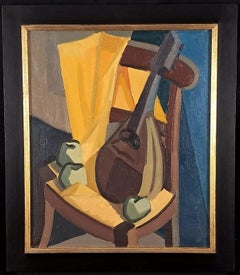
Still Life - Large Post Impressionist Belgian Guitar Interior Oil Painting
Located in Sevenoaks, GB
A beautiful post-impressionist interior still life oil on canvas depicting a guitair and fruits on a chair, by modern Belgian artist and sculptor Roger Duterme. Ther work is signed ...
Category

1940s Post-Impressionist Art

Materials

Canvas, Oil

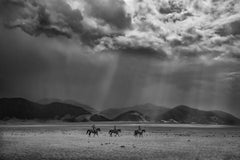
God s Country by Anouk Krantz 2021
Located in Chicago, IL
God's Country (B&W) 2021 ARCHIVAL PIGMENT PRINT Unframed Sizes: 30 x 45 in (76.2 x 114.3 cm) - Edition of 10 + 2 AP (Artist Proofs) 40 x 60 in (101.6 x 152.4 cm) - Edition of 10 + 2...
Category

21st Century and Contemporary Contemporary Art

Materials

Archival Pigment, Silver Gelatin

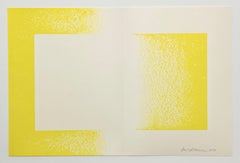
"Yellow Reversed" original lithograph
Located in Henderson, NV
Medium: original lithograph. Printed in 1970 and published by Art In America. Size: 11 1/4 x 16 3/4 inches (283 x 427 mm). This lithograph was published as a folded sheet with a cent...
Category

1970s Art

Materials

Lithograph

Shop Art on 1stDibs: Photography, Drawings, Prints, Sculptures and Paintings for Sale

Whether growing your current fine art collection or taking the first steps on that journey, you will find an extensive range of original photography, drawings, prints, sculptures, paintings and more on 1stDibs.

Visual art is among the oldest forms of expression, and it has been evolving for centuries. Beautiful objects can provide a window to the past or insight into our current time. Art collecting enhances daily life through the presence of meaningful work. It displays an appreciation for culture, whether a print by Elizabeth Catlett channeling social change or a narrative quilt by Faith Ringgold.

Contemporary art has lured more initiates to collecting than almost any other category, with notable artists including Yayoi Kusama, Marc Chagall, Kehinde Wiley and Jean-Michel Basquiat. Navigating the waiting lists for the next Marlene Dumas, Jeff Koons or Jasper Johns has become competitive.

When you’re living with art, particularly as people more often work from home and enjoy their spaces, it’s important to choose art that resonates with you. While the richness of art with its many movements, styles and histories can be overwhelming, the key is to identify what is appealing and inspiring. Artwork can play with the surrounding color of a room, creating a layered approach. The dynamic shapes and sizes of sculptures can set different moods, such as a bronze by Miguel Guía on a mantel or an Alexander Calder mobile suspended over a table. A wall of art can evoke emotions in an interior while showing off your tastes and interests. A salon-style wall mixing eclectic pieces like landscape paintings with charcoal drawings is a unique way to transform a space and show off a collection.

For art meditating on the subconscious, investigate Surrealists like Joan Miró and Salvador Dalí. Explore Pop art and its leading artists such as Andy Warhol, Rosalyn Drexler and Keith Haring for bright and bold colors. Not only did these artists question art itself, but also how we perceive society. Similarly, 20th-century photography and abstract painting reconsidered the intent of art.

Abstract Expressionists like Helen Frankenthaler and Lee Krasner and Color Field artists including Sam Gilliam broke from conventional ideas of painting, while Op artists such as Yaacov Agam embraced visual trickery and kinetic movement. Novel visuals are also integral to contemporary work influenced by street art, such as sculptures and prints by KAWS.

Realist portraiture is a global tradition reflecting on what makes us human. This is reflected in the work of Slim Aarons, an American photographer whose images are at once candid and polished and appeared in Holiday magazine and elsewhere. Innovative artists Mickalene Thomas and Kerry James Marshall are now offering new perspectives on the form.

Collecting art is a rewarding, lifelong pursuit that can help connect you with the creative ways historic, modern and contemporary artists have engaged with the world. For more tips on piecing together an art collection, see our guide to buying and displaying art.

Find photography, drawings, paintings, prints and other art for sale on 1stDibs.

Recently Viewed

View All