Art

to
7
19
4
3
1
5
Overall Width
to
Overall Height
to
28
4
1
2
1
28
17
2
1
17
15
26
13
12
10
8
7
5
4
3
3
3
3
3
2
1
1
1
1
1
15
11
9
9
9
10
3
2
1
11
3
21
9
Art For Sale
Search Within: Giovanni Battista Tiepolo
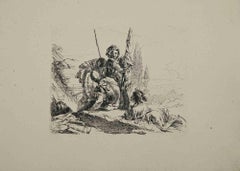
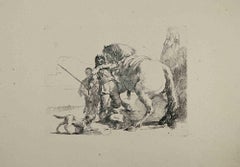
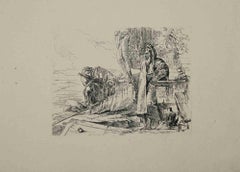
Two Soldiers - Etching by G.B. Tiepolo - 1785
Located in Roma, IT
Two soldiers is an etching realized by Giambattista Tiepolo, in 1785.  Sheet 23 x 30 cm. Good impressions on paper, with wide margins. Referenc...
Category

1780s Old Masters Art

Materials

Etching

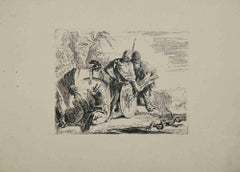
Two Soldiers - Etching by G.B. Tiepolo - 1795
Located in Roma, IT
Two soldiers is an etching realized by Giambattista Tiepolo in 1785.  Sheet 23 x 30 cm. Good impressions on paper, with wide margins. Reference: D...
Category

1790s Old Masters Art

Materials

Etching

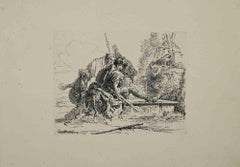
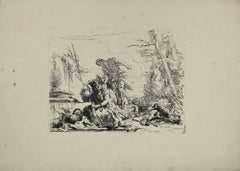
Woman Soldiers - Etching by G.B. Tiepolo - 1785
Located in Roma, IT
Woman soldiers  is an etching realized by Giambattista Tiepolo, in 1785.  Sheet 23 x 30 cm. Good impression on paper, with wide margins. Refere...
Category

1740s Old Masters Art

Materials

Etching

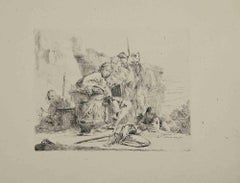
The Young Man Sitting - Etching by G.B. Tiepolo - 1785
Located in Roma, IT
The young man sitting is an etching realized by Giambattista Tiepolo in 1785.  Sheet 23 x 30 cm. Good impressions on paper, with wide margins. ...
Category

1740s Old Masters Art

Materials

Etching

The Knight and his Horse - Etching by G.B. Tiepolo - 1785
Located in Roma, IT
The knight and his horse is an etching realized by Giambattista Tiepolo, in 1785.  Sheet 23 x 30 cm. Good impressions on paper, with wide margin...
Category

1780s Old Masters Art

Materials

Etching

Chained Woman and Four Figures - Etching by G.B. Tiepolo - 1785
Located in Roma, IT
Chained woman and four figures is an etching realized by Giambattista Tiepolo, in 1785.  Sheet 32 X 23 CM.  Good impressions on paper, with wide margin...
Category

1740s Old Masters Art

Materials

Etching

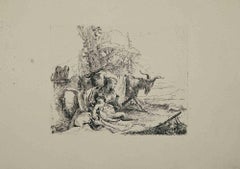
The Nynph and the Centaur - Etching by G.B. Tiepolo - 1785
Located in Roma, IT
The nynph and the centaur is an etching realized by Giambattista Tiepolo, in 1785.  Sheet 23 x 30 cm. Good impression on paper, with wide margins. Reference: De Vesme, 3/10; Rizzi 29...
Category

1740s Old Masters Art

Materials

Etching

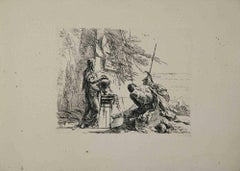
Man and Soldier with an Urn - Etching by G.B. Tiepolo - 1785
Located in Roma, IT
Man and soldier with an urn  is an etching realized by Giambattista Tiepolo in 1785.  A woman looks out of the print. Two characters, a man and a soldier, are in front of a funeral ...
Category

1780s Old Masters Art

Materials

Etching

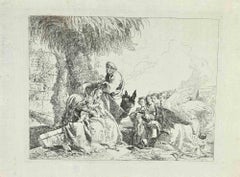
Rest on the Flight into Egypt - Etching by Giambattista Tiepolo - 1750
Located in Roma, IT
This etching on laid paper is the 13th plate of the series of 27 entitled Idee pittoresche sopra la fugga in Egitto di Giesù, Maria e Gioseppe executed by Giambattista Tiepolo and pu...
Category

1780s Old Masters Art

Materials

Etching

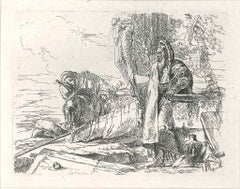
Philosopher Standing with Two Figures - Original Etching by G.B. Tiepolo
Located in Roma, IT
Extremely beautiful Artist's proof. Sixth Sheet from “Vari Capricci”, the most important series by Giambattista Tiepolo including 10 etchings (un...
Category

1740s Old Masters Art

Materials

Etching

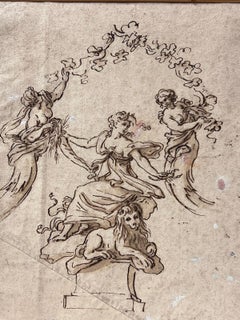
1700 s Venetian Old Master Ink Drawing St. Marks Lion Angelic Figures Flowers
Located in Cirencester, Gloucestershire
The Lion of St. Mark Venetian Old Master, mid 18th century circle of Giovanni Battista Tiepolo (Venetian, 1696-1770) ink and watercolour drawing on paper mounted on a card frame, unf...
Category

Mid-18th Century Rococo Art

Materials

Watercolor, Ink

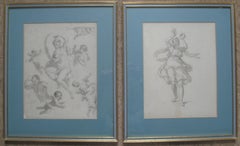
The Medici Society : School of Tiepolo (1696-1770) Fine Art Prints c1930 s
Located in Frome, Somerset
Two Medici Society Fine Art prints of preparatory drawing for paintings , Italian/ Venetian school of Giovanni Battista Tiepolo (1696-1770). Handmade pr...
Category

1930s Rococo Art

Materials

Printer s Ink

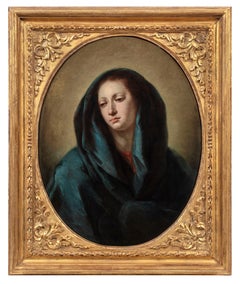
Head of the Virgin
Located in New York, NY
Provenance: Private Collection, Paraguay. This unpublished Head of the Virgin is a new addition to the rich corpus of paintings by Giovanni Battista Tiepolo. While the artist freque...
Category

18th Century Old Masters Art

Materials

Oil, Canvas

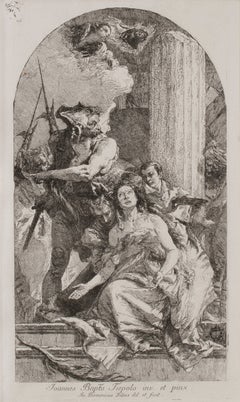
The Martyrdom of Saint Agatha
Located in Fairlawn, OH
The Martyrdom of Saint Agatha after the painting by his father, Giovanni Battista Tiepolo (see photo) Etching, c. 1780 Signature: unsigned Watermark: Letter A (similar to Bromberg 4...
Category

1780s Baroque Art

Materials

Etching

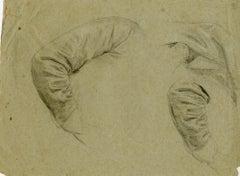
Studies of arms in draped sleeves
Located in Middletown, NY
Charcoal and graphite on grayish laid paper, 10 1/2 x 7 3/4 inches (265 x 195 mm), the full sheet. Scattered light, minor and unobtrusive foxing, several non-archival cellophane tape...
Category

Mid-18th Century Italian School Art

Materials

Handmade Paper, Laid Paper, Graphite, Charcoal
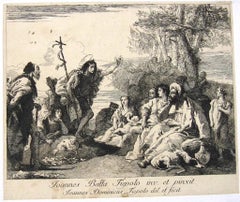
La Predicazione di S. Giovanni Battista - Etching by Tiepolo - 18th Century
Located in Roma, IT
La Predicazione di San Giovanni Battista is an original etching realized by Giovanni Domenico Tiepolo (Venice, 1727-1804) in the Second Half of the 18th Century. Original Black and white etching and burin on paper. 1st state on 2, fresh and lively Impression. Dimensions: 230 x 275 mm. Wonderful etching in excellent impression, very fresh and bright, in a vibrant black ink, wide margins. Some minor stains, some minor folds and a little fold on the lower right margin. Excellent conditions. Ref: Rizzi 108, Prouté no. 163, 1981. Provenance: Ex Coll. Paul I Ermitage. Lugt 2061. Giovanni Domenico Tiepolo (Venice, 1727-1804). Tiepolo was an Italian painter and printmaker, mastering the art of etching. He is well known wolrdwide as he assisted his father in Wurzburg (Germany), he made stairwell fresco in Vicenza (Italy) and at the Palace of Charles III in Madrid (Spain). La Via Crucis is among the earliest works engraved by Giandomenico Tiepolo, just about twenty years old, where he translates into etchings the namesake series of paintings realised for the oratory...
Category

18th Century Modern Art

Materials

Etching

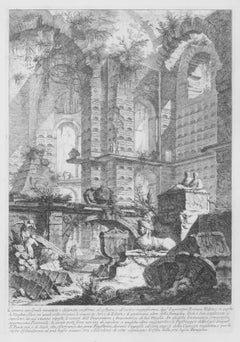
Camera sepolcrale
Located in Fairlawn, OH
Camera sepolcrale Etching 1743 Signed in the bottom left corner From: Prima Parte, 1743 Second edition: 1750-1778 Watermark: R 37-39 A lifetime impression printed during Piranesi’s life, before the plates are moved to Paris by his sons in the 1790’s Condition: Excellent Image size: 14 5/8 x 9 3/4 inches Reference: Robison 20 iii/V Piranesi In Rome: Prima Parte di Architetture e Prospettive "Although Piranesi studied architecture in Venice, he never was able to find work in the field other than a few jobs involving remodeling in Rome. While Piranesi was struggling to support his architectural endeavors upon his arrival in Rome in 1740, he spent a short period of time in the studio of master painter Giovanni Battista Tiepolo (1696-1770) in addition to his apprenticeship with Giuseppe Vasi. The first production of Piranesi’s early years in Rome and a culmination of his training under Vasi, Tiepolo, and his uncle, was the Prima Parte di Architetture e Prospettive (1743). The Prima Parte was a collection of twelve etchings of imaginary temples, palaces, ruins, and a prison. During this time, Piranesi was still developing the unique style of etching he is known for today, and as such the Prima Parte differs significantly in technique compared to later works. In the Frontispiece of the Prima Parte, Piranesi’s lines are definite and exact with very little flow to them, designed in the form of traditional etching. The detail is immaculate, and yet perspective of the piece is oddly simple and familiar to the viewer. Piranesi’s technique employs miniscule markings and lines, intricately woven together to create a stippling effect. The Prima Parte, described as “rigid” by art historian Jonathan Scott, came to be seen as a stark contrast to his later sketches, which were much lighter and freer. Influenced by the style of Tiepolo, which epitomized the lightness and brightness of the Rococo period, Piranesi adopted some of the more painterly techniques of the masters he apprenticed under. Piranesi made the medium of etching appear as though it was a sketch or a painting, hence a “freer” and more fluid design in his later works. For example, the frontispiece of the Prima Parte read as an etching to Piranesi’s audience, but in his later vedute, the style of etching almost appears to be made of brushstrokes. Moreover, at the same time Piranesi was working on the Prima Parte, he aided the artist Giambattista Nolli. There is a small section of Nolli’s map...
Category

1740s Old Masters Art

Materials

Etching

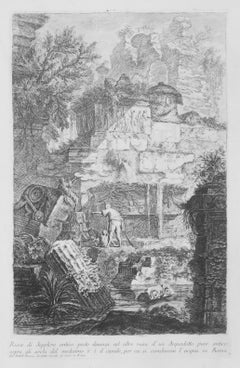
Ruine di Sepolcro antico
Located in Fairlawn, OH
Ruine di Sepolcro antico Etching, 1743 Signed in the plate bottomleft in the caaption plate From: Prima Parte, 1743 Second edition: 1750-1778 Watermark: R 37-39 A lifetime impression printed during Piranesi’s life, before the plates are moved to Paris by his sons in the 1790’s Coniditon: Excellent/Very good Image size: 14 5/8 x 9 3/4 inches Reference: Robison 17 iii/V Piranesi In Rome: Prima Parte di Architetture e Prospettive "Although Piranesi studied architecture in Venice, he never was able to find work in the field other than a few jobs involving remodeling in Rome. While Piranesi was struggling to support his architectural endeavors upon his arrival in Rome in 1740, he spent a short period of time in the studio of master painter Giovanni Battista Tiepolo (1696-1770) in addition to his apprenticeship with Giuseppe Vasi. The first production of Piranesi’s early years in Rome and a culmination of his training under Vasi, Tiepolo, and his uncle, was the Prima Parte di Architetture e Prospettive (1743). The Prima Parte was a collection of twelve etchings of imaginary temples, palaces, ruins, and a prison. During this time, Piranesi was still developing the unique style of etching he is known for today, and as such the Prima Parte differs significantly in technique compared to later works. In the Frontispiece of the Prima Parte, Piranesi’s lines are definite and exact with very little flow to them, designed in the form of traditional etching. The detail is immaculate, and yet perspective of the piece is oddly simple and familiar to the viewer. Piranesi’s technique employs miniscule markings and lines, intricately woven together to create a stippling effect. The Prima Parte, described as “rigid” by art historian Jonathan Scott, came to be seen as a stark contrast to his later sketches, which were much lighter and freer. Influenced by the style of Tiepolo, which epitomized the lightness and brightness of the Rococo period, Piranesi adopted some of the more painterly techniques of the masters he apprenticed under. Piranesi made the medium of etching appear as though it was a sketch or a painting, hence a “freer” and more fluid design in his later works. For example, the frontispiece of the Prima Parte read as an etching to Piranesi’s audience, but in his later vedute, the style of etching almost appears to be made of brushstrokes. Moreover, at the same time Piranesi was working on the Prima Parte, he aided the artist Giambattista Nolli. There is a small section of Nolli’s map...
Category

1740s Old Masters Art

Materials

Etching

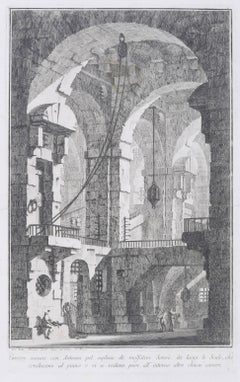
Carcere ascura
Located in Fairlawn, OH
Carcere ascura Etching, 1743 Signed in the plate bottom left corner From: Prima Parte, 1743 Second edition: 1750-1778 Watermark: R 37-39 A lifetime impression printed during Piranesi’s life, before the plates are moved to Paris by his sons in the 1790’s This image foretells Piranesi's famous set, Carceri (Prisons) which is his next creative effort. Condition: Horizontal crease midway in the sheet associated with the manufacture of the paper. Visible watermark verso Small printer crease in the bottom right below the caption plate. Image size: 14 1/2 x 9 1/2 inches Reference: Robison 3 iii/VI Piranesi In Rome: Prima Parte di Architetture e Prospettive "Although Piranesi studied architecture in Venice, he never was able to find work in the field other than a few jobs involving remodeling in Rome. While Piranesi was struggling to support his architectural endeavors upon his arrival in Rome in 1740, he spent a short period of time in the studio of master painter Giovanni Battista Tiepolo (1696-1770) in addition to his apprenticeship with Giuseppe Vasi. The first production of Piranesi’s early years in Rome and a culmination of his training under Vasi, Tiepolo, and his uncle, was the Prima Parte di Architetture e Prospettive (1743). The Prima Parte was a collection of twelve etchings of imaginary temples, palaces, ruins, and a prison. During this time, Piranesi was still developing the unique style of etching he is known for today, and as such the Prima Parte differs significantly in technique compared to later works. In the Frontispiece of the Prima Parte, Piranesi’s lines are definite and exact with very little flow to them, designed in the form of traditional etching. The detail is immaculate, and yet perspective of the piece is oddly simple and familiar to the viewer. Piranesi’s technique employs miniscule markings and lines, intricately woven together to create a stippling effect. The Prima Parte, described as “rigid” by art historian Jonathan Scott, came to be seen as a stark contrast to his later sketches, which were much lighter and freer. Influenced by the style of Tiepolo, which epitomized the lightness and brightness of the Rococo period, Piranesi adopted some of the more painterly techniques of the masters he apprenticed under. Piranesi made the medium of etching appear as though it was a sketch or a painting, hence a “freer” and more fluid design in his later works. For example, the frontispiece of the Prima Parte read as an etching to Piranesi’s audience, but in his later vedute, the style of etching almost appears to be made of brushstrokes. Moreover, at the same time Piranesi was working on the Prima Parte, he aided the artist Giambattista Nolli. There is a small section of Nolli’s map...
Category

1740s Old Masters Art

Materials

Etching

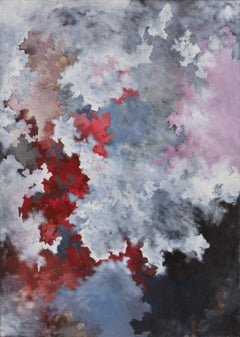
Passages in Light III - Abstract Oil Painting Like a Tiepolo Sky
Located in New York, NY
Ruggero Vanni's Passages in Light III is a 49 x 35 inch abstract oil painting. The main colors are red, pink and gray. There is a reference to nature, like clouds up in the sky. It ...
Category

1980s Abstract Art

Materials

Canvas, Oil

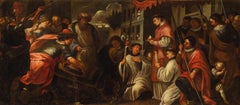
"Eucharistic miracle of the mule and the heretic before Saint Anthony of Padua"
Located in Edinburgh, GB
Francesco Belotto (1721–1780) "Eucharistic Miracle of the Mule and the Heretic Before Saint Anthony of Padua" Framed: 82 x 170 cm Flat: 76 x 161 cm Medium: Oil on canvas This dramat...
Category

18th Century Realist Art

Materials

Canvas, Oil

Philosopher Standing with a Book - Lithograph - 1785
Located in Roma, IT
Philosopher standing with a book is an etching realized by Giambattista Tiepolo, in 1785.  Sheet 32 x 23 cm. Good impressions on paper, with wid...
Category

1780s Modern Art

Materials

Lithograph

18th Century By Francesco Fontebasso Allegory of Vanity Oil on Canvas
Located in Milano, Lombardia
Francesco Salvatore Fontebasso (Venice, Italy, 1707 - 1769) Title: Allegory of Vanity Medium: Oil on canvas Dimensions: without frame 74.5 x 98 cm - with frame 95 x 119 cm With a "cassetta" frame in gilded and carved wood Expertise by Professor Egidio Martini Publications: G. M. Guidetti, in From Sacro to Profano. The Giorgio Baratti...
Category

18th Century Old Masters Art

Materials

Canvas, Oil

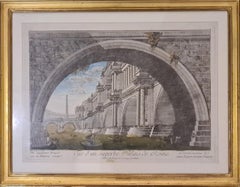
Piranesi, Hand Coloured Period Engraving, Vue d un Superb Palais de Rome
Located in Cotignac, FR
A fine hand coloured 18th Century engraving after the original by Piranesi (Rome 1743), published by Danisy, Paris. Presented in period gold leaf frame, under glass. Piranesi was born in Venice, in the parish of S. Moisè where he was baptised. His father was a stonemason. His brother Andrea introduced him to Latin literature and ancient Greco-Roman civilization, and later he was apprenticed under his uncle, Matteo Lucchesi, who was a leading architect in Magistrato delle Acque, the state organization responsible for engineering and restoring historical buildings. From 1740, he had an opportunity to work in Rome as a draughtsman for Marco Foscarini, the Venetian ambassador of the new Pope Benedict XIV. He resided in the Palazzo Venezia and studied under Giuseppe Vasi, who introduced him to the art of etching and engraving of the city and its monuments. Giuseppe Vasi found Piranesi's talent was much greater than that of a mere engraver. According to Legrand, Vasi told Piranesi that "you are too much of a painter, my friend, to be an engraver." After his studies with Vasi, he collaborated with pupils of the French Academy in Rome to produce a series of vedute (views) of the city; his first work was Prima parte di Architettura e Prospettive (1743), followed in 1745 by Varie Vedute di Roma Antica e Moderna. From 1743 to 1747, he was mainly in Venice where, according to some sources, he often visited Giovanni Battista Tiepolo, a leading artist in Venice. It was Tiepolo who expanded the restrictive conventions of reproductive, topographical and antiquarian engravings. He then returned to Rome, where he opened a workshop in Via del Corso. In 1748–1774, he created an important series of vedute of the city which established his fame. In the meantime Piranesi devoted himself to the measurement of many of the ancient buildings: this led to the publication of Le Antichità Romane de' tempo della prima Repubblica e dei primi imperatori ("Roman Antiquities of the Time of the First Republic...
Category

Late 18th Century Baroque Art

Materials

Paper, Ink, Watercolor

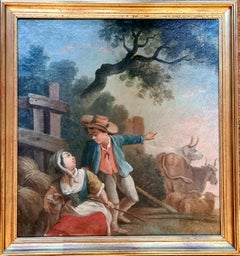
Rococo Pastoral Landscape, Figures, Oxen and Sheep Circle of Saverio Della Gatta
Located in Cotignac, FR
Late 18th or early 19th century oil on canvas Rococo idylic pastoral scene. Though not signed the painting is of very fine quality and is presented in a plain gilt wood frame. This...
Category

18th Century Rococo Art

Materials

Canvas, Oil

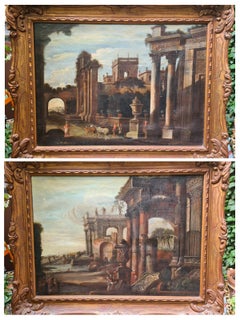
Pair of Grand Tour 18th Century Veduta Capriccio Paintings, After Gennaro Greco
Located in Cotignac, FR
A large pair of 18th century veduta capriccio scenes with temple ruins after Gennaro Greco from the circle of Pietro Cappelli. The paintings are presented in more modern carved gilt ...
Category

18th Century Baroque Art

Materials

Canvas, Oil

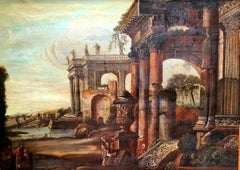
Large Grand Tour 18th Century Capriccio Painting Roman Ruins after Gennaro Greco
Located in Cotignac, FR
A fine, large 18th century veduta capriccio scene with temple ruins after Gennaro Greco from the circle of Pietro Cappelli. The painting is presented in a more modern carved gilt woo...
Category

18th Century Baroque Art

Materials

Canvas, Oil

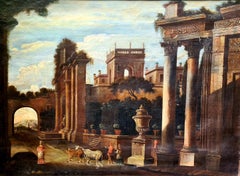
Grand Tour 18th Century Veduta Capriccio Painting, After Gennaro Greco
Located in Cotignac, FR
A fine, large 18th century veduta capriccio scene with temple ruins after Gennaro Greco from the circle of Pietro Cappelli. The painting is presented in a more modern carved gilt woo...
Category

18th Century Baroque Art

Materials

Canvas, Oil

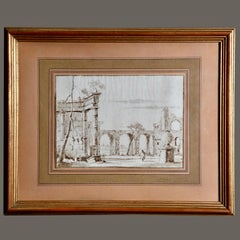
Francesco Guardi Follower Period Venetian School Ink Picture Capriccio
By Francesco Guardi
Located in Roma, IT
Our company has been present on this platform for many years, with numerous sales made and just as many excellent reviews received that you can under our Furniture account. Period V...
Category

Late 18th Century Old Masters Art

Materials

Paper, Ink

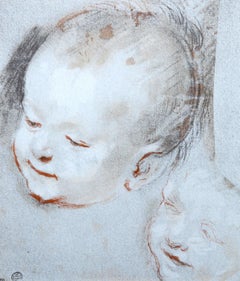
Federico Barocci, Head of a child, from Faces of Children, 1968 (after)
Located in Southampton, NY
This exquisite lithograph and pochoir after Federico Barocci (c.1535–1612), titled Tete d enfant (Head of a child), originates from the 1968 folio Visages d Enfants. Quinze Dessins d...
Category

1960s Renaissance Art

Materials

Lithograph, Stencil

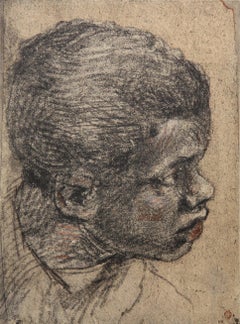
Paolo Veronese, Head of a young Black man, from Faces of Children, 1968 (after)
By Paolo Veronese
Located in Southampton, NY
This exquisite lithograph and pochoir after Paolo Veronese (1528–1588), titled Tete de jeune negre (Head of a young Black man), originates from the 1968 folio Visages d'Enfants. Quin...
Category

1960s Renaissance Art

Materials

Lithograph, Stencil

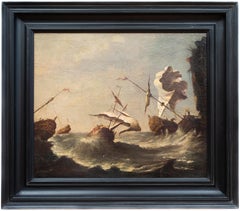
Shipping in Stormy Waters, Attributed to Italian Artist Francesco Guardi
By Francesco Guardi
Located in Stockholm, SE
The splendour of the tragic sea Francesco Guardi and maritime painting in Venetian art No Venetian painter was a stranger to the sea. After all, Venice was not only one of the most prominent ports of the Mediterranean, but indeed a city literally submerged in the ocean from time to time. Curiously however, the famous Venetian school of painting showed little interest in maritime motifs, favouring scenes from the iconic architecture of the city rather than seascapes. That is why this painting is a particularly interesting window into not only the painter Francesco Guardi himself – but to the significance of the element of water in art history, in absence as well as in the centre of attention. Whether it be calm, sunny days with stunning views of the palaces alongside the canals of Venice or – more rarely – stormy shipwrecking tragedies at sea, water as a unifying element is integral to the works of painter Francesco Guardi (1712–1793). During his lifetime, Venetian art saw many of its greatest triumphs with names like Tiepolo or Canaletto gaining international recognition and firmly establishing Venice as one of the most vibrant artistic communities of Europe. While the city itself already in the 18th century was something of an early tourist spot where aristocrats and high society visited on their grand tour or travels, the artists too contributed to the fame and their work spread the image of Venice as the city of romance and leisure to an international audience, many of whom could never visit in person. Still today, the iconic image of Venice with its whimsical array of palaces, churches and other historic buildings is much influenced by these artists, many of whom have stood the test of time like very well and remain some of the most beloved in all of art history. It was not primarily subtility, intellectual meanings or moral ideals that the Venetian art tried to capture; instead it was the sheer vibrancy of life and the fast-paced city with crumbling palaces and festive people that made this atmosphere so special. Of course, Venice could count painters in most genres among its residents, from portraiture to religious motifs, history painting and much else. Still, it is the Vedutas and views of the city that seems to have etched itself into our memory more than anything else, not least in the tradition of Canaletto who was perhaps the undisputed master of all Venetian painters. Born into his profession, Francesco lived and breathed painting all his life. His father, the painter Domenico Guardi (1678–1716) died when Francesco was just a small child, yet both he and his brothers Niccolò and Gian Antonio continued in their fathers’ footsteps. The Guardi family belonged to the nobility and originated from the mountainous area of Trentino, not far from the Alps. The brothers worked together on more challenging commissions and supported each other in the manner typical of family workshops or networks of artists. Their sister Maria Cecilia married no other than the artist Giovanni Battista Tiepolo himself, linking the family to the most renowned Venetian name of the time. During almost a decade, Guardi worked in the studio of Michele Giovanni Marieschi, sometimes simply known as Michiel, a painted similar in both style and motif. Canaletto is, however, the artist Guardi is most often compared to since they shared a mutual fascination for depicting the architecture and cityscape of Venice. During the course of his career, Guardi tried his hand in many different genres. He was as swift in painting landscapes, Vedutas of Venice, sacred motifs, interiors and architectural compositions as he was in a number of other motifs. His style is typical of the Venetian school but also distinct and personal once we look a little closer. There is an absolute certainty in the composition, the choice of which sometimes feels like that of a carefully calculated photograph – yet it is also very painterly, in the best sense of the word: fluid, bold, sensitive and full of character. The brushwork is rapid, intense, seemingly careless and extraordinarily minute at the same time; fresh and planned in a very enjoyable mixture. His interiors often capture the breath-taking spacious glamour of the palaces and all their exquisite decor. He usually constructed the motif through remarkably simple, almost spontaneous yet intuitively precise strokes and shapes. The result was a festive, high-spirited atmospheric quality, far away from the sterile and exact likeness that other painters fell victim to when trying to copy Canaletto. The painting here has nothing of the city of Venice in it. On the contrary, we seem to be transported far away into the solitary ocean, with no architecture, nothing to hold on to – only the roaring sea and the dangerous cliffs upon which the ships are just moments away from being crushed upon. It is a maritime composition evoking both Flemish and Italian precursors, in the proud tradition of maritime painting that for centuries formed a crucial part of our visual culture. This genre of painting is today curiously overlooked, compared to how esteemed and meaningful it was when our relationship to the sea was far more natural than it is today. When both people and goods travelled by water, and many nations and cities – Venice among them – depended entirely on sea fare, the existential connection to the ocean was much more natural and integrated into the imagination. The schools and traditions of maritime art are as manifold as there are countries connected to the sea, and all reflect the need to process the dangers and wonders of the ocean. It could symbolize opportunity, the exciting prospects of a new countries and adventures, prospering trade, beautiful scenery as well as war and tragedy, loss of life, danger and doom. To say that water is ambivalent in nature is an understatement, and these many layers were something that artists explored in the most wondrous ways. Perhaps it takes a bit more time for the modern eye to identify the different nuances and qualities of historic maritime paintings, they may on first impression seem hard to differentiate from each other. But when allowing these motifs to unfold and tell stories of the sea in both fiction and reality – or somewhere in between – we are awarded with an understanding of how the oceans truly built our world. In Guardi’s interpretation, we see an almost theatrically arranged shipwrecking scene. No less than five ships are depicted right in the moment of utter disaster. Caught in a violent storm, the waves have driven them to a shore of sharp cliffs and if not swallowed by the waves, crushing against the cliffs seems to be the only outcome. The large wooden ships are impressively decorated with elaborate sculpture, and in fact relics already during Guardi’s lifetime. They are in fact typical of Dutch and Flemish 17th century ships, giving us a clue to where he got the inspiration from. Guardi must have seen examples of Flemish maritime art, that made him curious about these particular motifs. One is reminded of Flemish painters like Willem van de Velde and Ludolf Backhuysen, and this very painting has indeed been mistakenly attributed to Matthieu van Plattenberg...
Category

18th Century Old Masters Art

Materials

Canvas, Oil

Shop Art on 1stDibs: Photography, Drawings, Prints, Sculptures and Paintings for Sale

Whether growing your current fine art collection or taking the first steps on that journey, you will find an extensive range of original photography, drawings, prints, sculptures, paintings and more on 1stDibs.

Visual art is among the oldest forms of expression, and it has been evolving for centuries. Beautiful objects can provide a window to the past or insight into our current time. Art collecting enhances daily life through the presence of meaningful work. It displays an appreciation for culture, whether a print by Elizabeth Catlett channeling social change or a narrative quilt by Faith Ringgold.

Contemporary art has lured more initiates to collecting than almost any other category, with notable artists including Yayoi Kusama, Marc Chagall, Kehinde Wiley and Jean-Michel Basquiat. Navigating the waiting lists for the next Marlene Dumas, Jeff Koons or Jasper Johns has become competitive.

When you’re living with art, particularly as people more often work from home and enjoy their spaces, it’s important to choose art that resonates with you. While the richness of art with its many movements, styles and histories can be overwhelming, the key is to identify what is appealing and inspiring. Artwork can play with the surrounding color of a room, creating a layered approach. The dynamic shapes and sizes of sculptures can set different moods, such as a bronze by Miguel Guía on a mantel or an Alexander Calder mobile suspended over a table. A wall of art can evoke emotions in an interior while showing off your tastes and interests. A salon-style wall mixing eclectic pieces like landscape paintings with charcoal drawings is a unique way to transform a space and show off a collection.

For art meditating on the subconscious, investigate Surrealists like Joan Miró and Salvador Dalí. Explore Pop art and its leading artists such as Andy Warhol, Rosalyn Drexler and Keith Haring for bright and bold colors. Not only did these artists question art itself, but also how we perceive society. Similarly, 20th-century photography and abstract painting reconsidered the intent of art.

Abstract Expressionists like Helen Frankenthaler and Lee Krasner and Color Field artists including Sam Gilliam broke from conventional ideas of painting, while Op artists such as Yaacov Agam embraced visual trickery and kinetic movement. Novel visuals are also integral to contemporary work influenced by street art, such as sculptures and prints by KAWS.

Realist portraiture is a global tradition reflecting on what makes us human. This is reflected in the work of Slim Aarons, an American photographer whose images are at once candid and polished and appeared in Holiday magazine and elsewhere. Innovative artists Mickalene Thomas and Kerry James Marshall are now offering new perspectives on the form.

Collecting art is a rewarding, lifelong pursuit that can help connect you with the creative ways historic, modern and contemporary artists have engaged with the world. For more tips on piecing together an art collection, see our guide to buying and displaying art.

Find photography, drawings, paintings, prints and other art for sale on 1stDibs.

Still Thinking About These?

All Recently Viewed