Items Similar to Alexandra Exter Russian Avant Garde work on paper Signed ex-Solomon Shuster coll

Want more images or videos?
Request additional images or videos from the seller
1 of 9
Alexandra ExterAlexandra Exter Russian Avant Garde work on paper Signed ex-Solomon Shuster coll1918
1918
$25,000
£19,037.48
€21,739.59
CA$35,128.09
A$38,542.20
CHF 20,302.18
MX$458,500.17
NOK 260,068.51
SEK 237,478.06
DKK 162,415.67
About the Item
Alexandra Alexandrovna Exter
Colour Dynamic, 1918
Russian avant-garde watercolor and gouache on paper
Signed on the front
Collection of Solomon Shuster, Leningrad (with collection label verso of frame)
This work on paper is based upon a large (same-titled) gouache on wood painting that was featured in the monograph published on the occasion of the Exter retrospective at the Moscow Museum of Modern Art. Moscow. 2010 by Dr. Georgy Kovalenko. The large Colour Dynamic painting is illustrated on page 179, and the catalogue states that it was held in a private collection, Switzerland.
In 1918, the year the work was made, Alexandra Ekster was living in Kiev, which at that time was part of the Ukrainian People's Republic, before eventual Soviet control. That year, she was deeply involved in the Kiev artistic scene - her home and studio became a gathering place for avant-garde artists, poets and intellectuals, including members of the Russian and Ukrainian Futurist movements. (She later left for Odessa in 1919 and then emigrated to Western Europe in the early 1920s.) Since her family was relatively well-off, she traveled more than many of her colleagues in the Russian avant-garde.
This work bears the official collection stamp of Leningrad collector Solomon Shuster on the verso (shown)
"The fate of all outstanding Soviet art collectors is comprised of squalid entrances, broken banisters, and cartridge clips of doorbells,” the pre-eminent Leningrad art-lover, collector, and film director Solomon Shuster wrote about his fellow connoisseurs. “But on the inside [of their apartments], as in Hauff’s fairytales, was the glow of beauty.” Shuster was just one of many Soviet citizens who tried to escape mundane socialist routine by travelling to the wonderland embodied in Russia’s unconventional, modernist paintings from the early 20th century. He and his fellow collectors sought true art, untouched by the lethargic, stiff socialist realism, to fill their collections. But buying such pieces was fraught with risk. The Soviet authorities considered avant-gardists, nonconformists, and all other modernists to be inimical to the newly-established communist ideology, which preached cultural unification and disapproved of private ownership. Collectors who sought and obtained art by persecuted masters risked not only their wealth and property, but also their freedom. Yet throughout the Soviet Union, a select band jeopardised their positions to snap up modernist paintings, preserving what would later become a generation’s artistic legacy..." =courtesy of New East Digital Archive
Note: Scholarship relating to Russian avant-garde works of the early 20th century is complex and evolving. This work is offered based upon available research and comparative provenance.
Alexandra Alexandrovna Exter Biography
Alexandra Exter, was a Russian and French painter and designer.
As a young woman, her studio in Kiev attracted all the city's creative luminaries, and she became a figure of the Paris salons, mixing with Picasso, Braque and others. She is identified with the Russian/Ukrainian avant-garde, as a Cubo-futurist, Constructivist, and influencer of the Art Deco movement. She was the teacher of several School of Paris artists such as Abraham Mintchine, Isaac Frenkel Frenel and the film directors Grigori Kozintsev, Sergei Yutkevich among others. Exter spent the majority of her creative life between Kiev and Paris, and while she is remembered as an important member of the Russian Avant-Garde group, she also mixed with the Cubists and Art Deco painters of France.
Elegantly floated and framed in a handmade white wood frame under UV plexiglass . The frame bears a die-cut window on the verso to reveal the Leningrad collection stamp.
Measurements:
Framed:
20 inches by 15.5 inches by 1.5
Artwork:
15 inches by 10.5 inches
- Creator:Alexandra Exter
- Creation Year:1918
- Dimensions:Height: 15 in (38.1 cm)Width: 10.5 in (26.67 cm)
- Medium:
- Movement Style:
- Period:
- Condition:
- Gallery Location:New York, NY
- Reference Number:1stDibs: LU1745217374172
About the Seller
5.0
Gold Seller
Premium sellers maintaining a 4.3+ rating and 24-hour response times
Established in 2007
1stDibs seller since 2022
471 sales on 1stDibs
Typical response time: 1 hour
- ShippingRetrieving quote...Shipping from: New York, NY
- Return Policy
More From This Seller
View AllThomas Anderson Abstract Expressionist painting on paper, unique, signed, Framed
By Thomas Anderson
Located in New York, NY
Thomas Anderson
Abstract Expressionist painting on paper, ca. 1987
Mixed media watercolor, gouache and marker on paper
Signed in black marker lower right front
Unique
Frame included
...
Category
1980s Abstract Expressionist Mixed Media
Materials
Paper, Watercolor, Gouache, Permanent Marker
Untitled mid century modern geometric abstraction
By William Fredericksen
Located in New York, NY
William Fredericksen
Untitled mid century modern geometric abstraction, 1958-1959
Watercolor and Gouache on Board
Hand signed and dated on the front
12 4/5 × 11 7/10 inches
Unframed
...
Category
Mid-20th Century Abstract Geometric Abstract Drawings and Watercolors
Materials
Mixed Media, Watercolor, Gouache
Abstract Mixed Media environmental art collage Andre Emmerich Gallery, Signed
By Judy Pfaff
Located in New York, NY
Judy Pfaff
Untitled, 1994
Collage, Mixed media, Gouache and Leaves on paper, in Artist's Frame. Signed with Andre Emmerich
Bellas Artes Gallery Labels - accompanied by original...
Category
1990s Abstract Expressionist Abstract Drawings and Watercolors
Materials
Mixed Media, Gouache
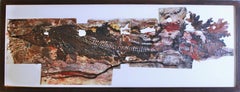
Study #26, 1960s Gouache painting Signed Framed Pace
Hudson Gallery provenance
By Jack Youngerman
Located in New York, NY
Jack Youngerman
Untitled Study #26, 1967
Gouache painting on paper (with original JL Hudson and PACE Gallery labels)
Hand signed and dated '67 on the front; J.L. Hudson Gallery Label on Verso.
Unique Abstract Expressionist work on paper
Frame included
Framed
Measurements:
Framed:
15 inches by 15 inches by 1.5 inch
Artwork:
7.75 inches by 7.5 inches
Provenance
From the estate of Anne Markley Spivak
J. L. Hudson Gallery Label affixed to verso (back).
The J.L. Hudson Gallery, Detroit, Michigan
This 1967 unique, signed gouache painting by renowned abstract expressionist painter Jack Youngerman was acquired from the estate of Anne Markley Spivak. It is held in the original vintage metal frame with the original J.L. Hudson Gallery label, as well as the PACE gallery label on the verso
The artwork has been newly loated and framed in a museum quality white wood frame; the original labels from the original back board have been affixed to the back to preserve provenance.
Jack Youngerman Biography
Jack Youngerman was born in St. Louis, Missouri on March 25, 1926. He moved to Louisville, Kentucky in 1929 and studied at the University of Missouri, Columbia from 1944 to 1946 under a wartime navy training program. He graduated from the University of North Carolina Chapel Hill in 1947 and, that same year, he returned to Missouri to finish his Bachelor’s degree in Journalism before moving to Paris on a G.I. scholarship.
In Paris, Youngerman enrolled at the Ecole des Beaux-Arts, studying drawing with Jean Souverbie. He explored Paris, taking in the cathedrals, museums, and history in order to grasp a greater sense of art history. He also traveled to the Netherlands, Spain, Belgium, Italy, and Greece on fine art excursions.
In 1948, Youngerman became friends with Ellsworth Kelly, Eduardo Paolozzi, and Cesar – fellow students at Ecole des Beaux-Arts. He married Delphine Seyrig in 1950, and later that year he had his first group exhibition at Galerie Maeght in Paris. He visited the studios of Constantín Brancusi and Jean Arp and became heavily influenced by the organic forms present in their work. He also met artist Alexander Calder through his father-in-law, Henri Seyrig, and experimental filmmaker and artist, Robert Breer...
Category
1960s Abstract Expressionist Abstract Paintings
Materials
Gouache
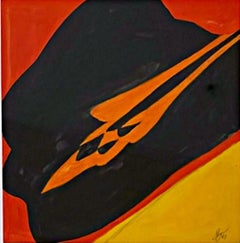
Untitled Geometric Abstraction - unique signed and inscribed work -framed
Located in New York, NY
Paul Pagk
Untitled Geometric Abstraction, 1989
Gouache and watercolor on paper
Signed, dated and inscribed "A Jacqueline".
Frame included
Excellent unique work on paper by contempora...
Category
1980s Abstract Geometric Abstract Drawings and Watercolors
Materials
Watercolor, Gouache, Pencil, Graphite

Pillar of Zen #124, unique signed gouache painting Andre Zarre Gallery, 1959
By Charmion von Wiegand
Located in New York, NY
Charmion von Wiegand
Pillar of Zen #124, 1959
Gouache on paper painting
Hand signed, titled and dated on the front
Unique
Provenance: Andre Zarre Gallery, with label verso
(Estate of renowned gallerist Andre Zarre, ne Andre Sowulewski)
Measurements:
Framed
26.5 inches vertical by 25.5 horizontal by 2 inches
Artwork:
21 inches vertical by 22 inches horizontal
Mid century modern, geometric, spiritual abstraction, mystical
The Estate of the celebrated artist Charmion Von Wiegand has been represented exclusively by Michael Rosenfeld Gallery since 1998.
From March 3 to August 13, 2023, Charmion Von Wiegand was the subject of an acclaimed retrospective at the Kunstmuseum Basel, and she has received major attention in the price, including a June, 2023 ArtNews feature entitled, "Who Was Charmion von Wiegand and Why Is She Important?". Her work was also featured in a solo presentation by Rosenfeld Gallery at the New York Art Show held at the Park Avenue Armory, which also received critical acclaim.
Artists Biography - courtesy of Michael Rosenfeld Gallery:
Known for her vibrant, geometric paintings that originate a deeply personal language of spiritual enlightenment expressed through a constructivist mode of abstraction, Charmion von Wiegand (1896–1983) was born in Chicago but spent much of her childhood traveling. The daughter of a journalist for Hearst, von Wiegand eventually settled in New York in 1915 to attend Barnard College and Columbia University, where she took classes at the School of Journalism while nurturing a growing interest in art history. In 1925, von Wiegand realized that she wanted to be an artist and set up a studio in Greenwich Village, teaching herself how to paint while pursuing a career as a journalist. In 1929, she secured a position in Moscow as a foreign correspondent for Hearst, the only woman at the desk at the time.
In 1932, von Wiegand returned to New York and married Russian émigré Joseph Freeman, who co-founded and edited the leftist journal New Masses. Von Wiegand began writing art criticism for New Masses as well as for other publications, including New Theatre, ARTnews, and Arts Magazine. When the Abstract American Artists (AAA) held their inaugural exhibition, von Wiegand reviewed it. An early champion of abstract art, von Wiegand became close friends with AAA founder Carl Holty. In 1941, Holty introduced von Wiegand to Piet Mondrian, who would have a profound impact on her art. Fascinated by Mondrian’s artistic philosophy, von Wiegand played a key role in the introduction of his work to American audiences, translating many of the Dutch artist’s writings into English and assisting in the composition of his influential article “Toward the True Vision of Reality” (1941). Through her friendship with Mondrian, von Wiegand re-kindled her interest in Theosophy (a religion established in the late 19th century that combines aspects of Hinduism, Buddhism, occultism, and esotericism) and embarked on an extended study of neoplasticism. In her artwork, she incorporated Mondrian’s iconic grid but rejected the constraints of pure neoplasticism and embraced a wide range of influences including surrealism and German expressionism.
In 1942, von Wiegand became a member of the AAA, exhibiting regularly with the group and eventually serving as its president from 1951 to 1953. In the late 1940s, sculptor and fellow AAA member Ibram Lassaw gave her a translation of The Secret of the Golden Flower: A Chinese Book of Life, which inspired von Wiegand to immerse herself in a study of Buddhist art. She began incorporating Buddhist motifs such as stupas and mandalas into her paintings, and her spiritual practice steadily intensified throughout the 1950s. In 1953, her husband gifted her a copy of the Taoist I Ching Book of Changes, a guide for divining meaning from randomly derived numbers arranged in a hexagram—a form the artist readily incorporated into her painting. Von Wiegand’s study of Theosophy also intensified over these years, bolstered by her increased access to the religion’s primary sources composed by the religion’s founders and their successors at the New York Theosophical Society’s library. Von Wiegand’s search for the sacred and transcendent ultimately led her to Tibetan Buddhism and, in 1967, von Wiegand met Khyongla Rato Rinpoche, a Gelugpa monk who had recently arrived in New York, who would mentor her spiritual study in the tradition of Mahayana Buddhism until her death. Her travels in the 1960s and 1970s took her to Tibet and India, where she had an audience with the Dalai Lama, who was living in exile in Dharamsala. Many works from these decades incorporate symbols and schematics drawn from Theosophical prismatic color charts, Chinese astrology and tantric yoga.
In 1978, she was the subject of a PBS documentary titled The Circle of Charmion von Wiegand, which was scored by Philip Glass. In 1980, von Wiegand was elected to the American Academy of Arts and Letters and in 1982, the Bass Museum of Art in Miami Beach (FL) organized her first retrospective exhibition. She died the following year in New York, bequeathing her estate to Khyongla Rato and the Tibet Center of New York. In 1998, Michael Rosenfeld Gallery became the sole representative of her estate and has presented her work in four solo and multiple group exhibitions. Recent notable exhibitions that have included her work are The Third Mind: American Artists Contemplate Asia (Solomon R. Guggenheim Museum, New York, NY, 2009) and Constructive Spirit: Abstract Art in South and North America (Newark Museum, NJ, 2010). In March 2023, the Kunstmuseum Basel (Switzerland) opened the first comprehensive museum retrospective of von Wiegand’s work in Europe.
Von Wiegand’s work is represented in numerous museum collections including the Addison Gallery of American Art, Phillips Academy (Andover, MA); Albright-Knox Art Gallery (Buffalo, NY); Arithmeum, University of Bonn (Germany); Birmingham Museum of Art (Alabama); Blanton Museum of Art, The University of Texas at Austin; Brooklyn Museum (NY); Carnegie Museum of Art (Pittsburgh, PA); The Cleveland Museum of Art (OH); Indianapolis Museum of Art (IN); Fondazione Marguerite Arp (Locarno, Switzerland); Museum of Fine Arts, Boston (Massachusetts); The Metropolitan Museum of Art (New York, NY); The Museum of Modern Art (New York, NY); Newark Museum of Art (New Jersey); Seattle Art Museum (WA); Smithsonian American Art Museum (Washington, DC); Walker Art Center (Minneapolis, MN); Weatherspoon Art Museum, The University of North Carolina at Greensboro; Wellin Museum of Art at Hamilton College (Clinton, NY); Whitney Museum of American Art (New York, NY); and Yale University Art Gallery (New Haven, CT).
More about gallerist Andre Zarre
A tribute in the New Criterion:
Dispatch
August 11, 2020
Andre Zarre, 1942–2020
by Dana Gordon
On the late New York gallery pioneer.
Art should never be aggressively explained; art should be felt.
—Andre Zarre, 1977
Often, in the starlit New York cultural mecca, a longtime important figure fades away through the penumbra and dies without notice. Such was the fate of Andre Zarre, the contemporary art dealer, who passed away a few weeks ago.
Andy, as he wanted friends to call him, opened his eponymous gallery in 1974 just off Madison Avenue on Sixty-ninth Street. He soon moved it to the omphalos of the art world in that era, 41 East Fifty-seventh Street, the Fuller Building. Over the years he moved to SoHo and then to Chelsea, as fashion and real estate prices pushed the art souk hither and thither.
To understand his importance, all you need do is take a look at a list of artists who had solo shows at the Andre Zarre Gallery. This includes such names, from an early generation, as Sonia Delaunay, Nassos Daphnis, Sari Dienes, and Perle Fine. Among a subsequent generation are Pat Lipsky, Jay Milder, Thornton Willis, and Kes Zapkus.1
And this list does not include the many knowns and unknowns who were in his lively group shows. Zarre had a real “eye” and was a champion of abstract art from the moment he founded his gallery—even among the gathering storms of conceptual and political art, which he eschewed. He showed a good deal of figurative art as well. His galleries were always spacious and unpretentious, oriented simply to show the art. In the words of Dee Shapiro, who showed with the Zarre gallery many times, “He had a photographic memory and knew a lot about art and was always interested in the artist’s life.”
Reliable biographical information on Zarre is scarce, but he said of his background that he was born in Poland in 1942 and that his parents were a diplomat and a socialite. He left home for the United States at the age of fifteen. During his decades as an art dealer in New York, Zarre did not appear to accumulate wealth, though he acquired a collection and lived on Park Avenue. “He was not personally aggressive in that way. People had to come to him,” Dee Shapiro said. He was honest in his financial dealings with artists, which not all art dealers are. For a long time while running the gallery he had a second job as a supervisor in an airline office and he kept little to no additional staff in the gallery. He supported a brother who remained in Poland.
Among artists, Zarre was known to be quite ornery. After my show at his gallery in 1997, I refused to enter it for seventeen years. Then I ran into him in Chelsea and he offered me another show, an opportunity I gladly accepted, but he remained just as disagreeable. He showed the work of many women, probably more than any other gallery, save those devoted to showing only women. Collectors, curators, and writers found him mostly friendly. As Peter Reginato put it, Zarre was a “strange guy but I liked him. I think he was a dealer who was more interested in the art than in making money, but somehow he lasted forty-plus years.”
Zarre is not known to have kept extensive or extant records of his gallery’s long history, though these may emerge in time. Scouring the Internet, one may compile a partial list of more than eighty artists who had solo shows at the Andre Zarre Gallery:Nancy Azara, Ellen Banks, Mary Barnes, Tony Bechara, Juan Bernal, Stephanie Bernheim, Randy Bloom, Elena Borstein, Michael Boyd, Fritz Bultman, Ed Buonagurio, Yoan Capote, Sonia Delaunay, Nassos Daphnis, Cathy Diamond, Sari Dienes, Joseph Dolinsky, Beata Drozd, Ronnie Elliot, William Fares, Perle Fine, Lynne Frehm, Ben Georgia, Mikel Glass, Dana Gordon, Juanita Guccione, Fred Gutzeit, Don Hazlitt, Amy Hill, Clinton Hill, Monroe Hodder, Budd Hopkins, Arlan Huang, Richard Hunt, Rhia Hurt, Buffie Johnson, Alexander Kaletski, Robert Kaupelis...
Category
1950s Abstract Abstract Drawings and Watercolors
Materials
Paper, Gouache
You May Also Like
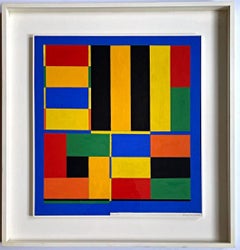
Geometric Shapes
By Ben Nicholson
Located in Jerusalem, IL
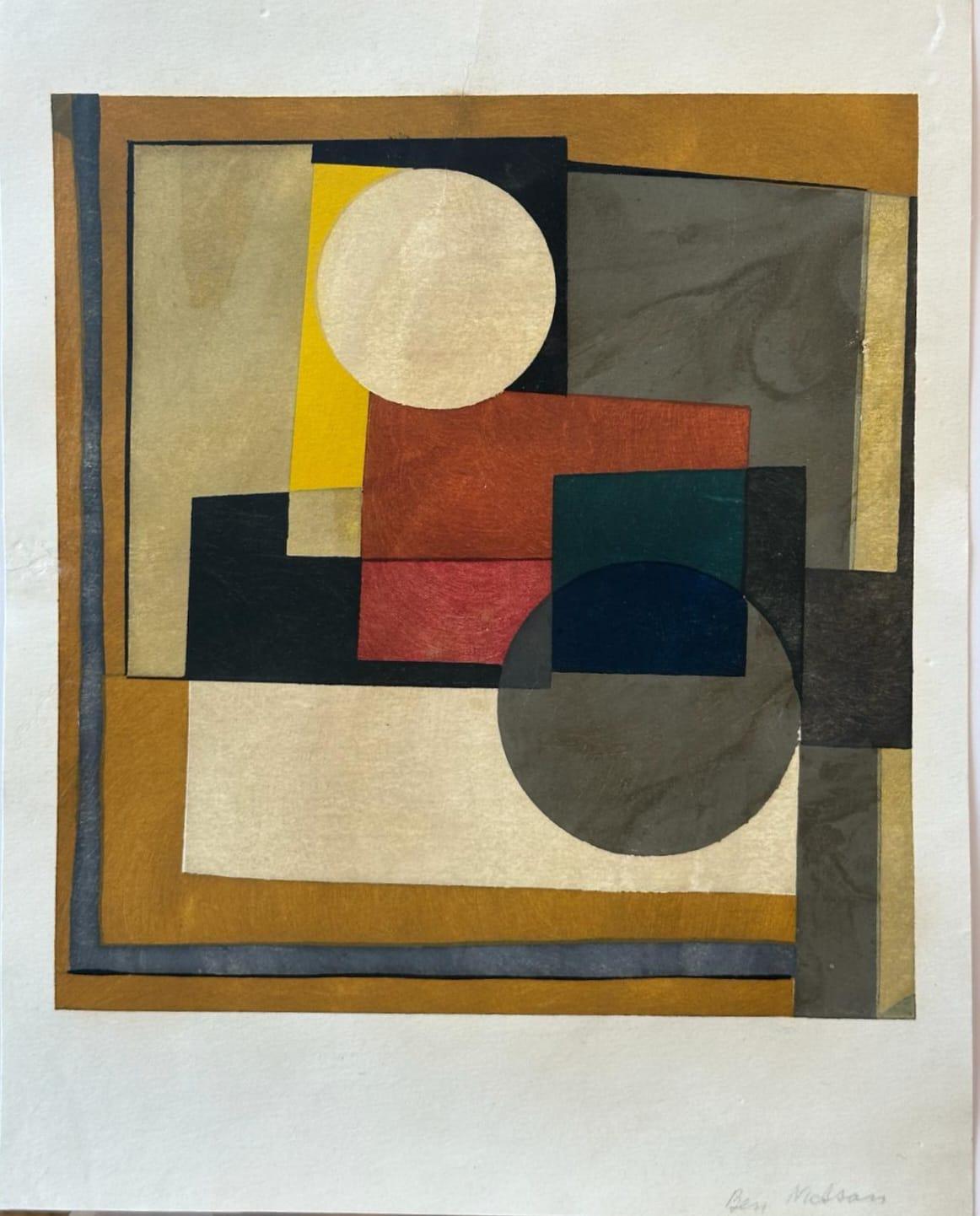
The idea of Ben Nicholson and his circle was to apply constructivist principles to public and private art. Especially, they were against ornaments and advocated for clean lines. Artworks were created with mathematical precision.
“Geometric shapes...
Category
Mid-20th Century Abstract Geometric Mixed Media
Materials
Gouache, C Print
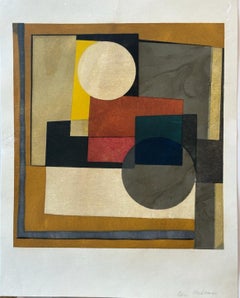
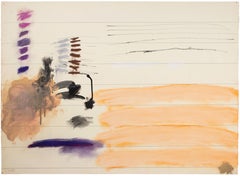
Untitled (Linear Composition in Black Purple and Orange)
By Joan Snyder
Located in Brooklyn, NY
Joan Snyder's early 1970s period is known as the best of her career, now an iconic period of time for feminist abstract painting of the era. This fully finished work on paper reads l...
Category
1970s Abstract Mixed Media
Materials
Acrylic, Gouache, Archival Paper, Graphite
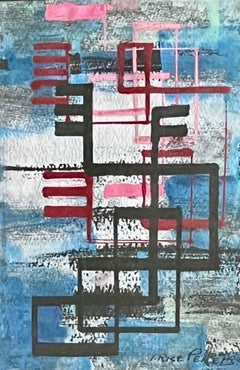
ABSTRACT American Woman Abstract Non-objective Mid 20th Century Modern Drawing
By Irene Rice Pereira
Located in New York, NY
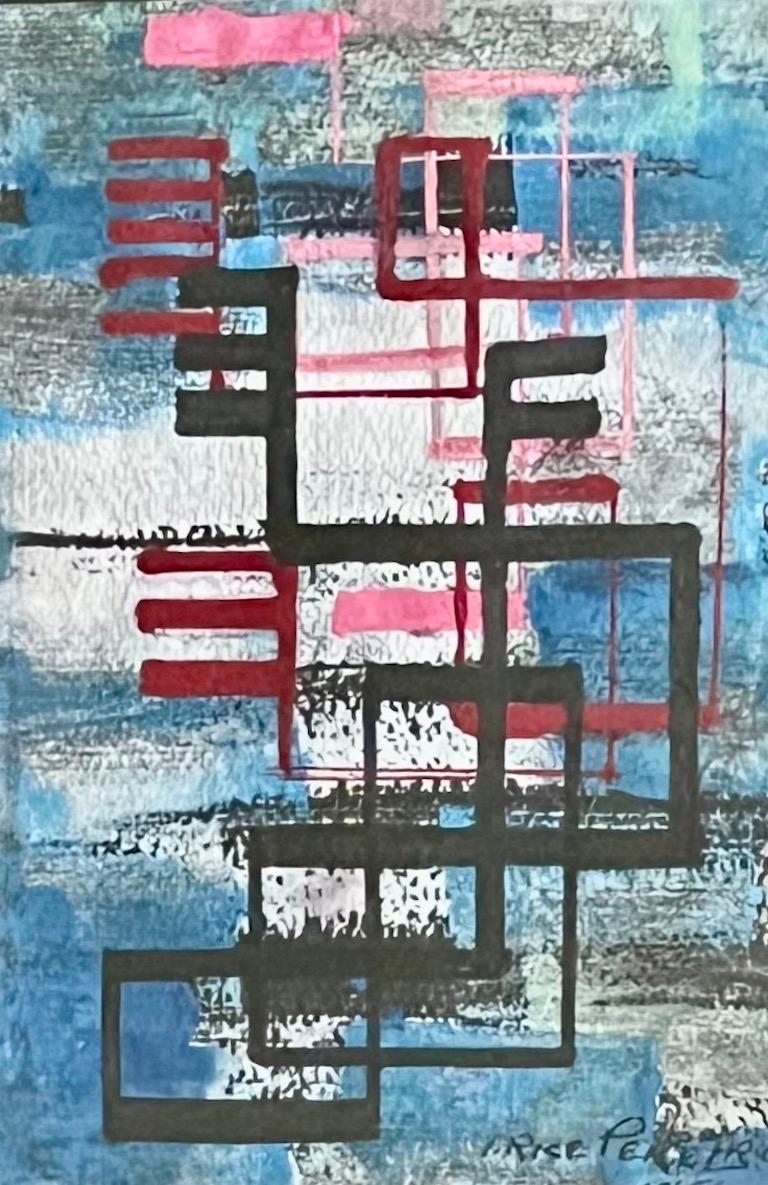
ABSTRACT American Woman Abstract Non-objective Mid 20th Century Modern Drawing
Irene Rice Pereira (1902-1971)
Abstract
8 1/2 x 5 1/2 inches
Watercolor, gouache, and ink on black paper
Signed lower right
Framed by Bark
BIO
rene Pereira was born in 1902 in Chelsea, Massachusetts and grew up in Great Barrington. She was strongly influenced by her mother who was an amateur artist. Irene began art lessons at the age of fifteen; she took a secretarial job because her father had died. She took art classes at the Art Students League in New York City. At the age of twenty-one she married the first of three husbands, Humberto Pereira, whose name she kept.
She traveled extensively in Europe and North Africa and was much inspired by the expansive vistas of the Sahara Desert. Returning to New York, she began incorporating these visions into her work, increasingly experimental in her styles and methods. At first she painted on canvas, then she devised a means of actually incorporating light into her works by painting on layers of glass and mounting the layers together.
In 1942 she married George Brown, an engineer, who helped her experiment with a variety of materials. By the 1950s she became more interested in writing poetry and, divorced from Brown in 1952, she married George Reavey, an Irish Poet...
Category
1950s Abstract Abstract Drawings and Watercolors
Materials
Paper, Watercolor, Gouache
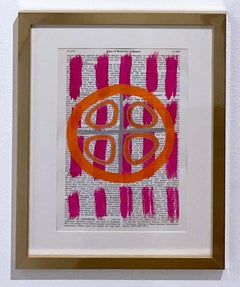
Serene * Serenity
By Cheryl R. Riley
Located in Jersey City, NJ
Serene * Serenity
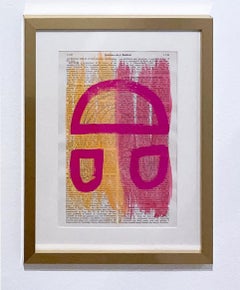
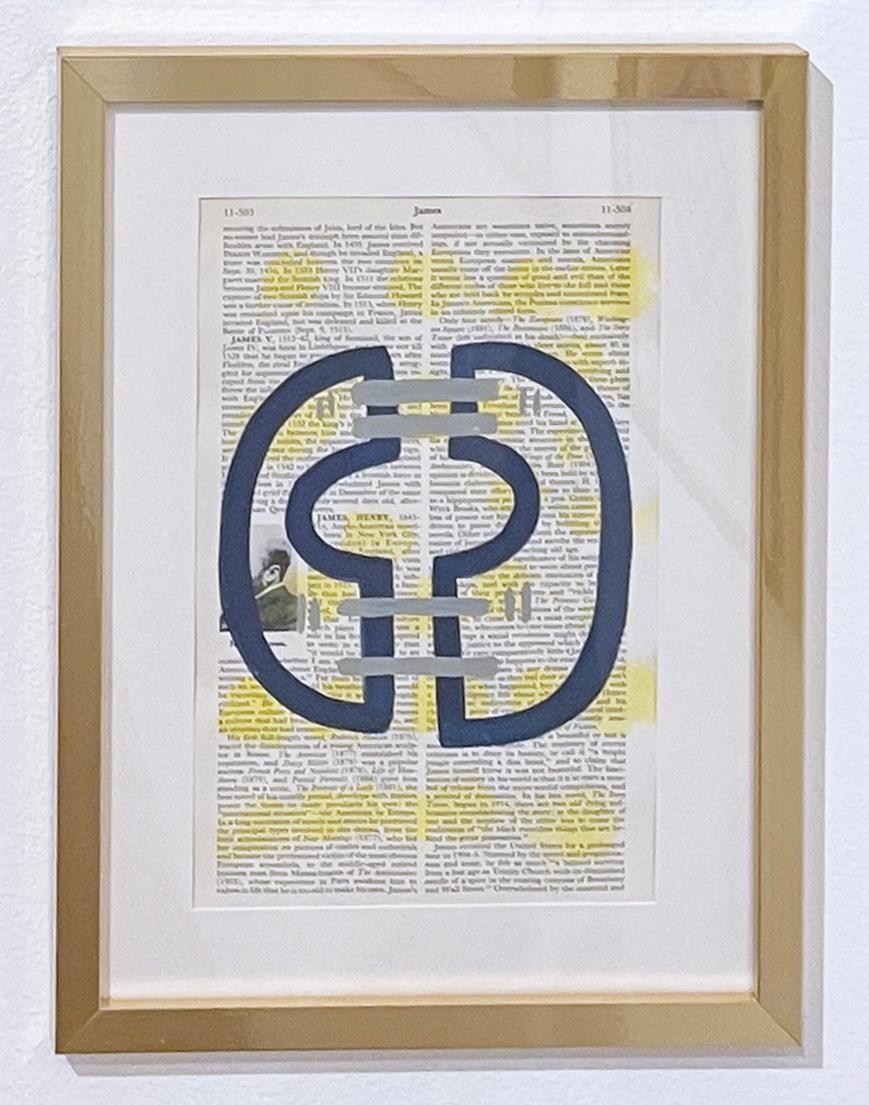
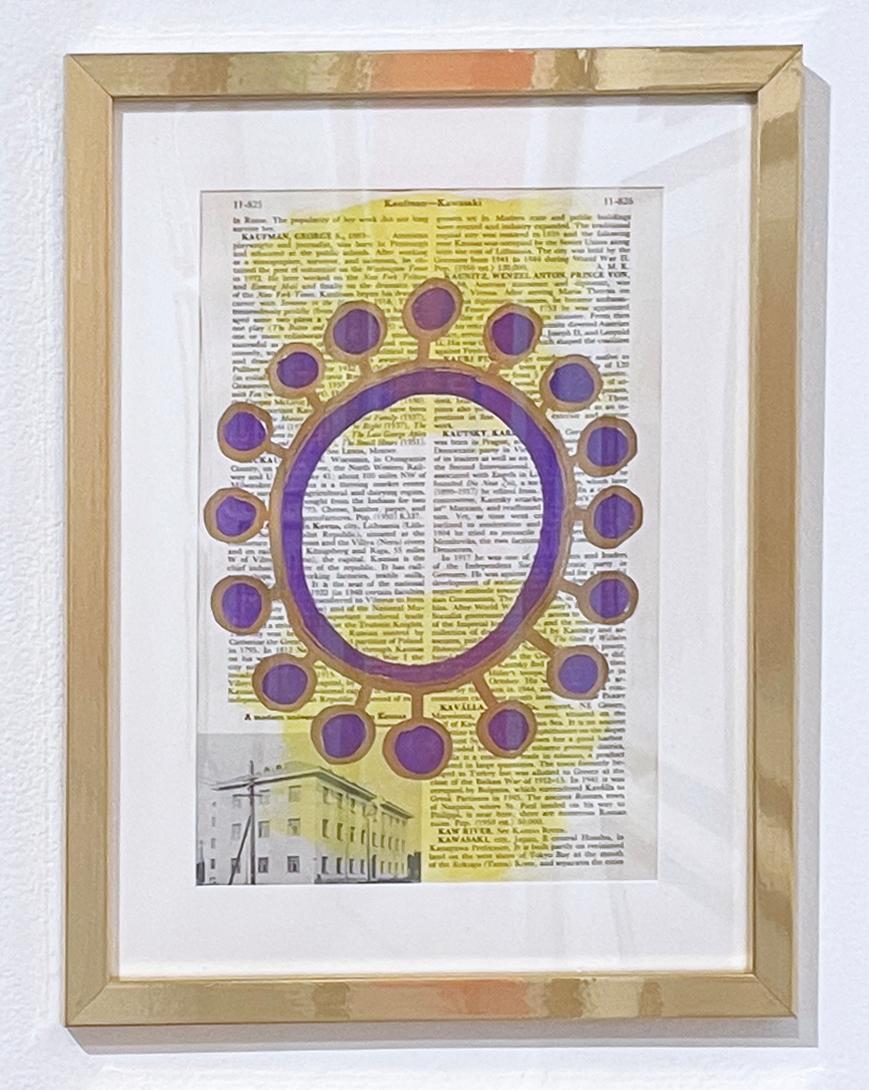
Gouache and metallic ink on 1957 Encyclopedia page
Feminist Art and Contemporary Feminist / Geometric Abstraction / Gestural Abstraction / Abstract Art / Minimali...
Category
2010s Abstract Geometric Abstract Drawings and Watercolors
Materials
Acrylic, Gouache, Magazine Paper
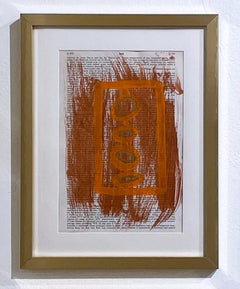
Accomplish (To Accomplish * Goals
Task)
By Cheryl R. Riley
Located in Jersey City, NJ
Accomplish (To Accomplish * Goals & Task)
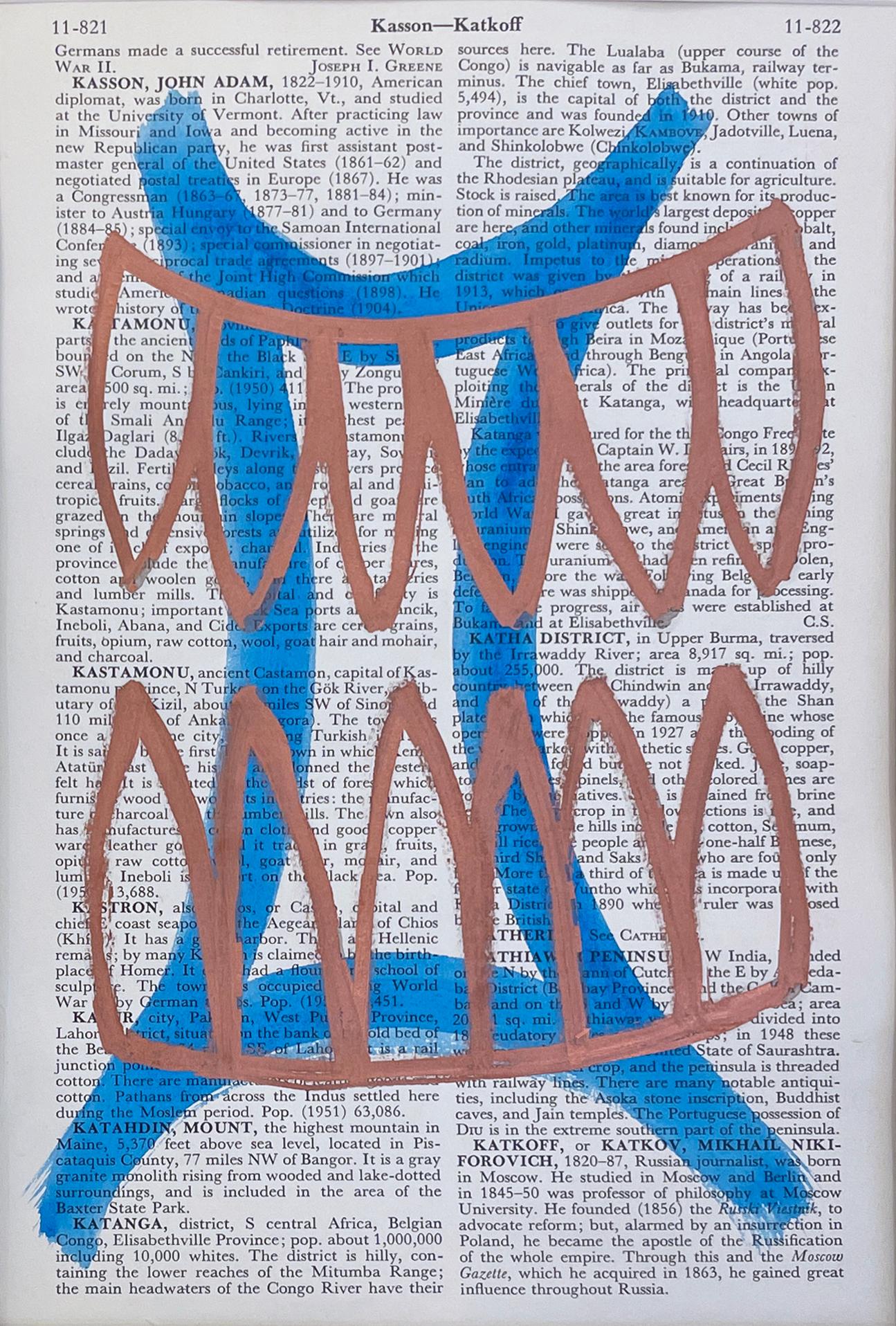
Gouache and metallic ink on 1957 Encyclopedia page
Feminist Art and Contemporary Feminist / Geometric Abstraction / Gestural Abstraction /...
Category
2010s Abstract Geometric Abstract Drawings and Watercolors
Materials
Acrylic, Gouache, Magazine Paper
Science * Laws of Nature (One of the Arts)
By Cheryl R. Riley
Located in Jersey City, NJ
Science * Laws of Nature (One of the Arts)
Gouache and metallic ink on 1957 Encyclopedia page
Feminist Art and Contemporary Feminist / Geometric Abstraction / Gestural Abstraction ...
Category
2010s Abstract Geometric Abstract Drawings and Watercolors
Materials
Acrylic, Gouache, Magazine Paper