Items Similar to "Untitled Abstract" Howard Daum, Mid-Century Twisting Abstract Composition
Want more images or videos?
Request additional images or videos from the seller
1 of 5
Howard Daum"Untitled Abstract" Howard Daum, Mid-Century Twisting Abstract Composition1963
1963
$1,250
£952.77
€1,098.92
CA$1,775.37
A$1,907.83
CHF 1,023.66
MX$22,473.02
NOK 12,871.38
SEK 11,757.92
DKK 8,212.91
About the Item
Howard Daum
Untitled Abstract, 1963
Signed and dated upper left, Signed on the reverse
Pencil on paper
4 1/2 x 6 inches
Provenance
The artist
Ashby Gallery, New York
Carl Ashby, New York
Estate of the above
Howard Daum was born in Poland. His family lived in Lodz until he turned 14, when he and his mother left the counrtry. They settled in Montreal, Canada, where Daum learned from the artist Alexander Bercovitch from 1934 to 1937. In 1938, Daum and his mom traveled to New York and chose the Bronx as their home.
After finishing high school in 1940, Daum received a scholarship to the Art Students League. There, he learned from teachers like Will Barnet, Cameron Booth, Morris Kantor, Harry Sternberg, and Vaclav Vytlacil, who was a key mentor. Vytlacil had studied under modern painter Hans Hofmann in Munich in 1921 and helped start the American Abstract Artists group in 1936.
In 1943 and 1944, Daum served in the U. S. Army in Mississippi before coming back to New York. During 1944 and 1945, he had lessons with Hofmann at his school in Greenwich Village. Daum's art during this time became more abstract, using bold and bright colors with clear brushstrokes. The space in his work was very shallow, with objects like figures and easels overlapping each other.
Some of Daum’s artist friends, such as Robert Barrell, Peter Busa, and Steve Wheeler, also learned from Hofmann. In 1940, they moved away from Hofmann’s expressive abstraction style and began creating art influenced by Native American art from the northwest. This style became very popular and was featured in a 1941 exhibition: Indian Art of the United States at the Museum of Modern Art. This new approach, called Indian Space, included nearly abstract flat areas with patterns, complex figure and background interactions, curved lines that fit together, and intricate designs. Daum joined this group and was the one who named the style Indian Space; he also worked with Gertrude Barrer and Oscar Collier. They displayed their art in a show called “Semeiology or 8 and a Totem Pole” at the Gallery Neuf in 1946. That same year, Daum's woodcut titled Cat and Bird was chosen for the cover of the first issue of Iconograph magazine.
In 1945, Daum rented a studio, known as Studio K, on the second floor of a building at 30 East 14th Street, just west of Union Square. He continued to live and work there for the rest of his life, adding another studio, Studio O, on the fifth floor in the late 1960s. Along with his good friends Carl Ashby and Helen de Mott, other artists in the same building included Charles Keller, Leon Kotkofsky, Yasuo Kuniyoshi, Edward Laning, Kenneth Hayes Miller, and Harry Sternberg.
In the mid-1940s, Daum also learned printmaking at Stanley William Hayter's Atelier 17. This studio started in Paris in 1927 but moved to New York City due to World War II. It opened in late 1940, supported by the New School, and became a venue for artists to meet and work. Many of Daum's prints come from this time. His relief prints show a fascination with the abstract concept of Indian Space, while the intaglio prints show Pablo Picasso's influence and focus back on human figures. Daum explored various parts of modern art and returned to these early interests throughout his life.
In 1963, Daum earned a Longview Foundation Award. During the 1960s, encouraged by his friend Paul Resika, Daum taught in the MFA program at Parsons School of Design. In the 1960s and 70s, he painted backgrounds for CBS-TV and the Metropolitan Opera.
Daum had his first solo art show at the Ashby Gallery in New York in 1946. He had other shows at Gallery 35 in 1950, Urban Gallery in 1954, Artists Gallery in 1952 and 1956, Bianchini Gallery in 1964, Green Mountain Gallery in 1971, Ashby Gallery in 1981, Gary Snyder Fine Art in 1991, and David Findlay Jr. Fine Art in 2004 and 2006. Daum's work has been shown in many exhibitions, such as Indian Space Painting: Native American Sources of American Abstract Art at Baruch College Art Gallery in 1991, Artists of 30 East 14th Street at Susan Teller Gallery in 1992, and Indian Space Works From the Montclair Art Museum’s Permanent Collection in New Jersey from 2004 to 2005.
Daum's work is held in collections at the Art Students League in New York, the Montclair Art Museum in New Jersey, the Arkansas Art Center in Little Rock, and the Walker Art Center and Minneapolis Sculpture Garden.
Artists linked to Indian Space include Will Barnet, Robert Barrell, Gertrude Barrer, Peter Busa, Oscar Collier, Howard Daum, Helen De Mott, Ruth Lewin, Lillian Orloff, Robert Smith, and Steve Wheeler.
- Creator:Howard Daum (1918 - 1988, American)
- Creation Year:1963
- Dimensions:Height: 8.5 in (21.59 cm)Width: 10 in (25.4 cm)
- Medium:
- Movement Style:
- Period:
- Condition:
- Gallery Location:New York, NY
- Reference Number:1stDibs: LU1841217500652
About the Seller
5.0
Platinum Seller
Premium sellers with a 4.7+ rating and 24-hour response times
Established in 2022
1stDibs seller since 2022
136 sales on 1stDibs
Typical response time: <1 hour
- ShippingRetrieving quote...Shipping from: New York, NY
- Return Policy
More From This Seller
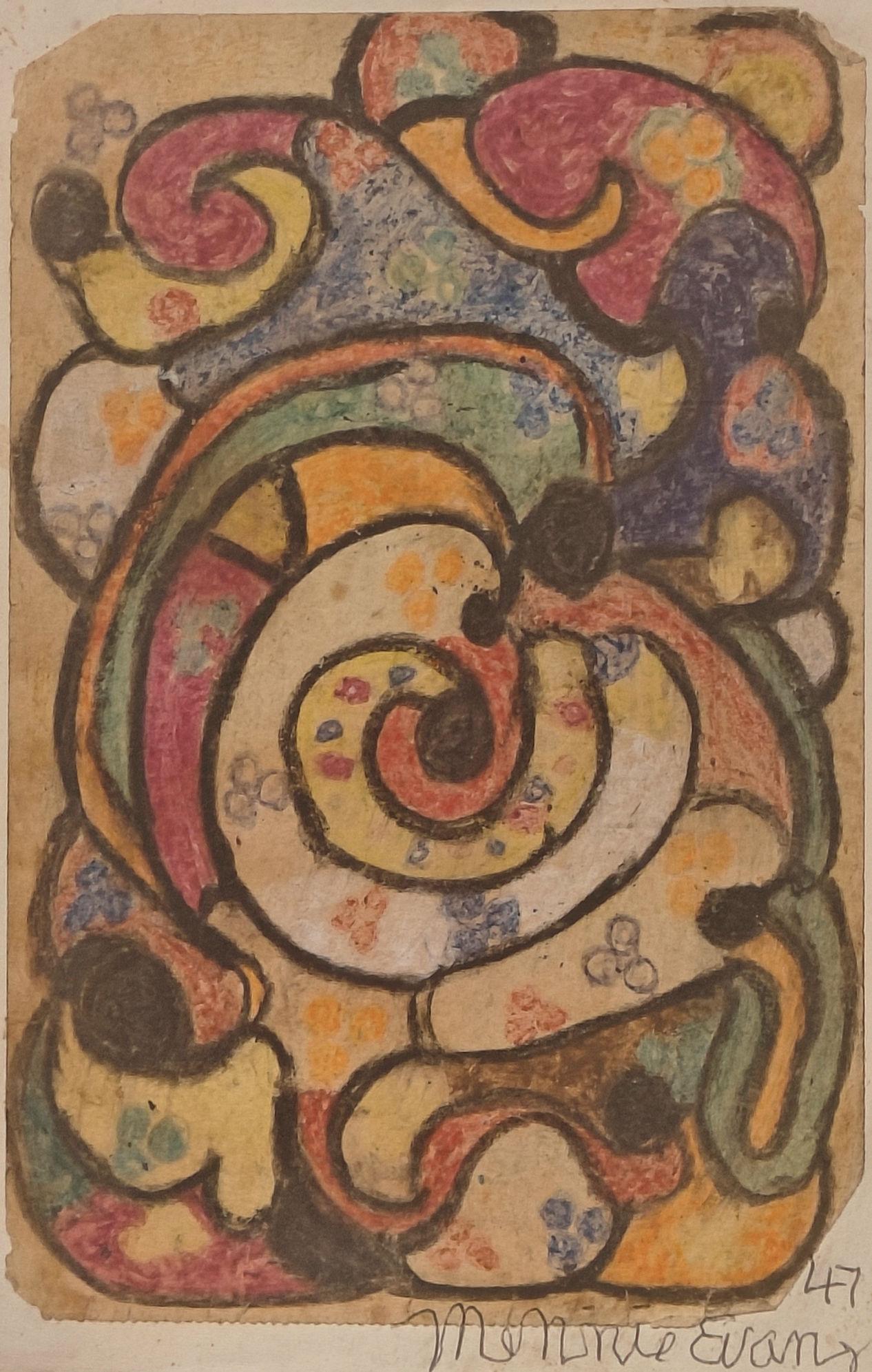
View All"Untitled" Minnie Evans, Mid-Century, Biomorphic Modernist Abstract Spirals
By Minnie Evans
Located in New York, NY
Minnie Evans
Untitled, 1947
Signed and dated lower right
Crayon and graphite on paper
8 1/8 x 5 1/2 inches
Provenance
Luise Ross Gallery, New York
Privat...
Category
1940s American Modern Abstract Drawings and Watercolors
Materials
Paper, Crayon, Graphite
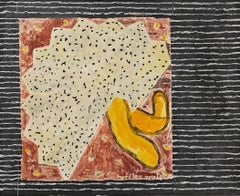
"Ruffled Waters" Harmony Hammond, Striped, Black and White, Abstract, Feminist
Located in New York, NY
Harmony Hammond
Ruffled Waters, 1980
Signed lower right
Mixed media on paper
18 1/8 x 24 inches
Provenance
Private Collection, New York
Heritage Auctions, Dallas, Contemporary Art W...
Category
1980s American Modern Mixed Media
Materials
Paper, Mixed Media
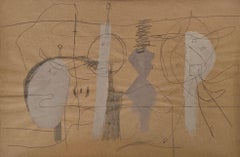
"Untitled" Perle Fine, Female Abstract Expressionist, Gray and Black Forms
By Perle Fine
Located in New York, NY
Perle Fine
Untitled, circa 1945
Estate stamped and numbered "#632" on the reverse
Gouache and pencil on Kraft paper
12 x 20 inches
Provenance
The artist
Estate of the artist
Thomas McCormick Gallery...
Category
1940s Abstract Expressionist Abstract Drawings and Watercolors
Materials
Paper, Gouache, Pencil
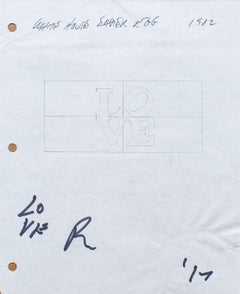
"Love Notebook Page 2" Robert Indiana, Pop Art, Preparatory Drawing, American
By Robert Indiana
Located in New York, NY
Robert Indiana
Love Notebook Page 2, 2014
Signed lower left, dated lower right
Artist's marker and graphite on paper
11 x 8 1/2 inches
Provenance
Gifted by the artist, Vinalhaven, M...
Category
2010s Pop Art Abstract Drawings and Watercolors
Materials
Paper, Permanent Marker, Graphite
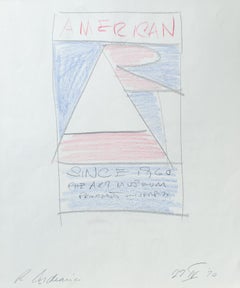
"Preparatory drawing for American Art since 1960" Robert Indiana, Pop Art Sketch
By Robert Indiana
Located in New York, NY
Robert Indiana
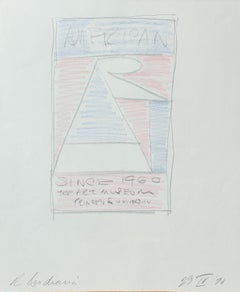
Preparatory drawing for "American Art since 1960", 1970
Signed lower left, dated lower right
Colored pencil on paper
11 x 8 1/2 inches
Provenance
Gifted by the artist...
Category
1970s Pop Art Abstract Drawings and Watercolors
Materials
Paper, Color Pencil
"Preparatory drawing for American Art since 1960" Robert Indiana, Pop Art Sketch
By Robert Indiana
Located in New York, NY
Robert Indiana
Preparatory drawing for "American Art since 1960", 1970
Signed lower left, dated lower right
Colored pencil on paper
11 x 8 1/2 inches
Provenance
Gifted by the artist...
Category
1970s Pop Art Abstract Drawings and Watercolors
Materials
Paper, Color Pencil
You May Also Like
"Transition, Series 1, No. 4" - Watercolor Figurative Illustration
Located in Soquel, CA
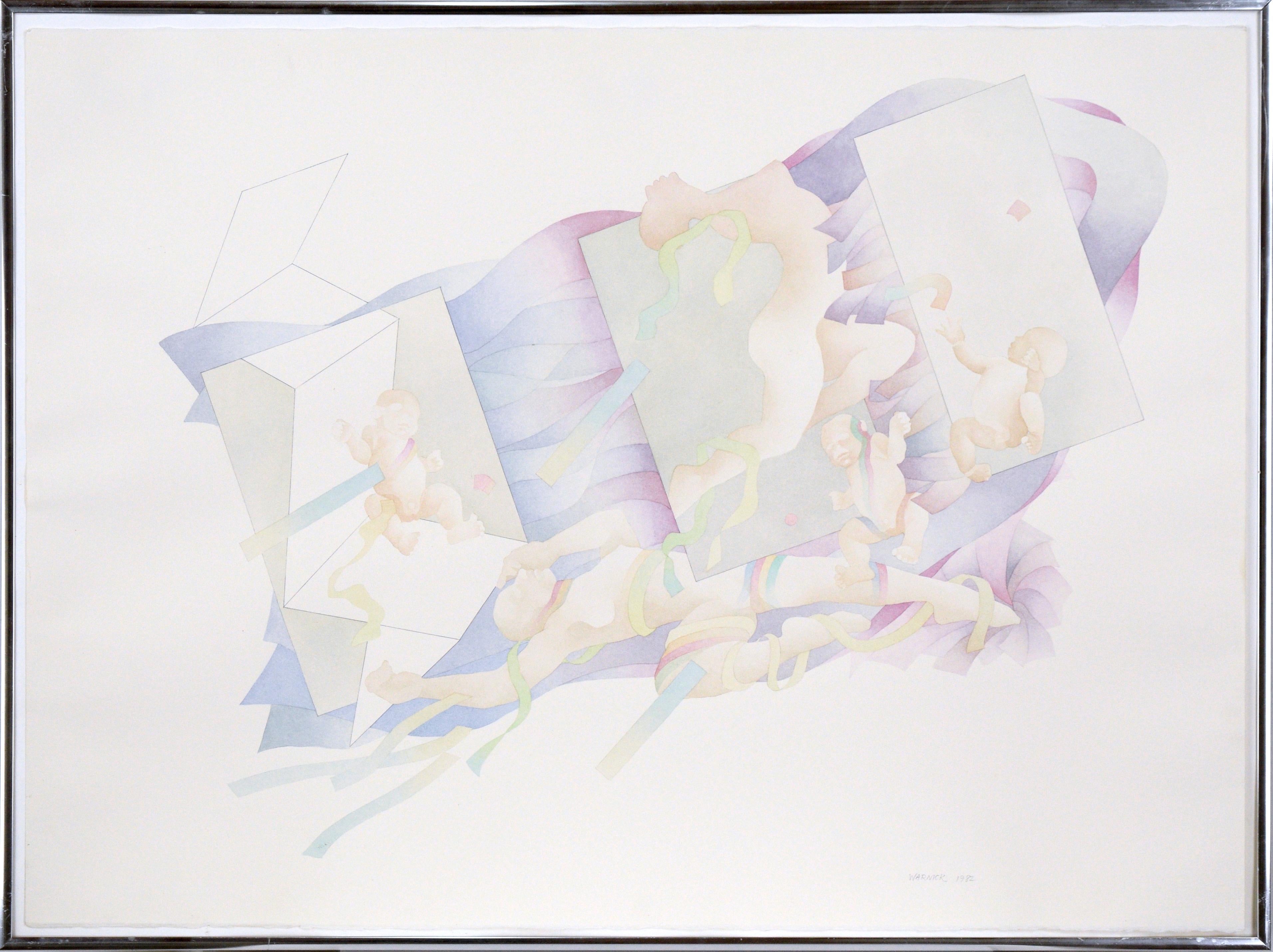
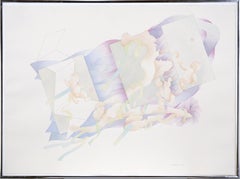
Subtly shaded abstract figurative illustration by Elsa Warnick (American, 1942-2013). Two adult and three baby figures are rendered with subtle tan shading, against an abstract background with geometric shapes and swirling ribbons. One of the two adult figures is laying down, while the other appears to be jumping or dancing. Notable is the skillful use of negative space to balance the composition.
Signed and dated "Warnick 1982" in the lower right corner.
Signed, titled, and dated with materials information on verso.
Presented in a silver aluminum frame.
Frame size: 23.5"H x 31.25"W
Paper size: 23.25"H x 31"W
Elsa Warnick (American, 1942-2013) was born and raised in Tacoma, Washington. She moved to Portland to attend the Reed College/Museum Art School joint five year program. Warnick went on to create many works of art as well as teach art and illustration. She is mostly known for her watercolor paintings, including the illustration of several children's books. Some of her pieces are held in the Portland Art Museum’s collection.
Selected Exhibitions:
1974: University Center Gallery, Willamette University - Salem, OR
1978: Mayer Gallery...
Category
1980s American Modern Figurative Drawings and Watercolors
Materials
Paper, Watercolor, Pencil
"NY Street Signs" Mid-20th Century WPA 1938 Modernist Abstract Realism Pop Art
By Stuart Davis
Located in New York, NY
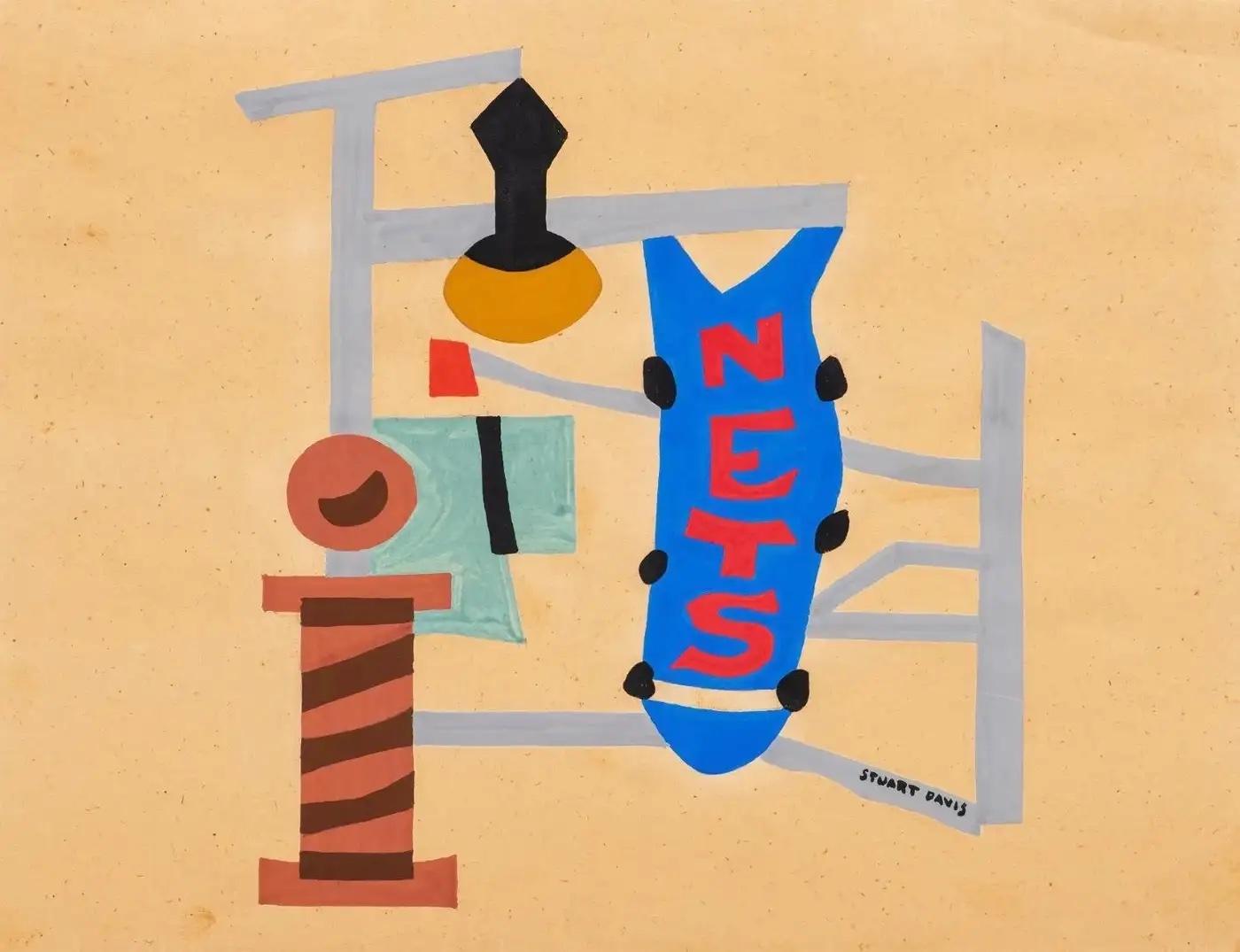
"NY Street Signs" Mid-20th Century WPA 1938 Modernist Abstract Realism Pop Art
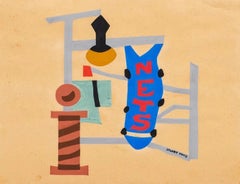
Stuart Davis (American, 1892-1964) "Street Signs" Modernist gouache and traces of pencil on paper in the proto-pop art style Davis is celebrated for, 1938, signed to lower right, framed. Image: 11 1/4 x 15 1/4 inches. Frame by Bark: 18 1/2 x 22 inches.
LITERATURE: A, Boyajian, M. Rutkowski, Stuart Davis, A Catalogue Raisonne, Vol. 2, New Haven, Connecticut, 2007, vol. II, p. 632, no. 1232, illustrated.
EXHIBITIONS: ACA Galleries, New York American Artists' Congress: Group Exhibition of Paintings and Sculpture, Dec. 3-16, 1939 (SDAB I, 12/3/39, p. 129). Outlines Gallery, Pittsburgh, Stuart Davis, Mar. 3-16, 1946. Coleman Art Gallery, Philadelphia, 5 Prodigal Sons: Former Philadelphia Artists: Ralston Crawford, Stuart Davis, Charles Demuth, Julian Levi, Charles Sheeler, Oct 4 - 30, 1947 (pamphlet), no. 12.
PROVENANCE: The artist; Mr. and Mrs. Frank Bowles, New York, Apr. 3, 1956; thence by descent, Private Collection, New York.
NOTES: According to the Catalogue Raissonne, "the title 'Street Signs' is recorded in the artist's account books...
Category
1930s American Modern Abstract Drawings and Watercolors
Materials
Paper, Gouache, Pencil
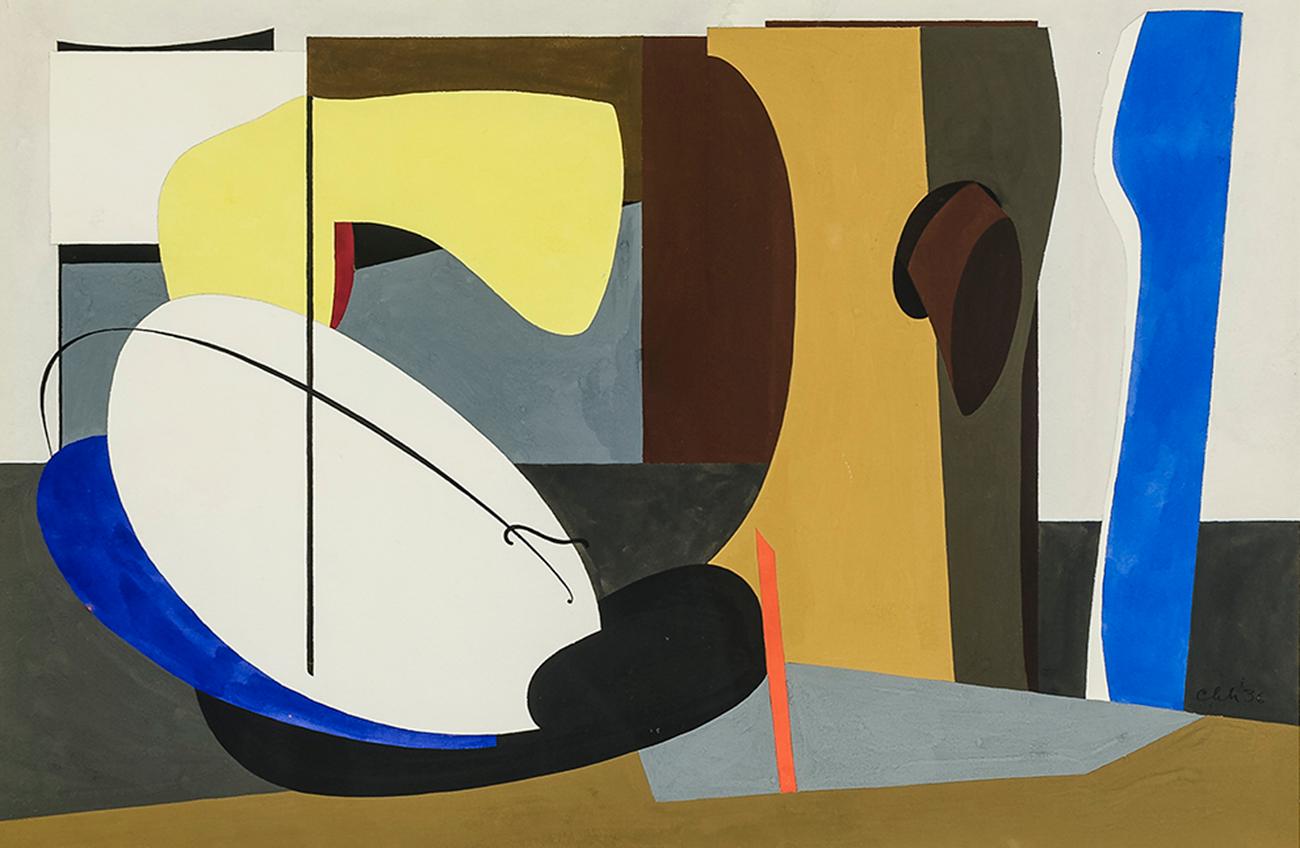
Untitled
By Charles Houghton Howard
Located in New York, NY
Charles Houghton Howard was born in Montclair, New Jersey, the third of five children in a cultured and educated family with roots going back to the Massachusetts Bay colony. His father, John Galen Howard, was an architect who had trained at M.I.T. and the École des Beaux-Arts in Paris and apprenticed in Boston with Henry Hobson Richardson. In New York, the elder Howard worked for McKim, Mead and White before establishing a successful private practice. Mary Robertson Bradbury Howard, Charles’s mother, had studied art before her marriage. John Galen Howard moved his household to California in 1902 to assume the position of supervising architect of the new University of California campus at Berkeley and to serve as Professor of Architecture and the first Dean of the School of Architecture (established in 1903). The four Howard boys grew up to be artists and all married artists, leaving a combined family legacy of art making in the San Francisco Bay area that endures to this day, most notably in design, murals, and reliefs at the Coit Tower and in buildings on the Berkeley campus.
Charles Howard graduated from the University of California at Berkeley in 1921 as a journalism major and pursued graduate studies in English at Harvard and Columbia Universities before embarking on a two-year trip to Europe. Howard went to Europe as a would-be writer. But a near-religious experience, seeing a picture by Giorgione in a remote town outside of Venice, proved a life-altering epiphany. In his own words, “I cut the tour at once and hurried immediately back to Paris, to begin painting. I have been painting whenever I could ever since” (Charles Howard, “What Concerns Me,” Magazine of Art 39 [February 1946], p. 63). Giorgione’s achievement, in utilizing a structured and rational visual language of art to convey high emotion on canvas, instantly convinced Howard that painting, and not literature, offered the best vehicle to express what he wanted to say. Howard returned to the United States in 1925, confirmed in his intent to become an artist.
Howard settled in New York and supported himself as a painter in the decorating workshop of Louis Bouché and Rudolph Guertler, where he specialized in mural painting. Devoting spare time to his own work, he lived in Greenwich Village and immersed himself in the downtown avant-garde cultural milieu. The late 1920s and early 1930s were the years of Howard’s art apprenticeship. He never pursued formal art instruction, but his keen eye, depth of feeling, and intense commitment to the process of art making, allowed him to assimilate elements of painting intuitively from the wide variety of art that interested him. He found inspiration in the modernist movements of the day, both for their adherence to abstract formal qualities and for the cosmopolitan, international nature of the movements themselves. Influenced deeply by Surrealism, Howard was part of a group of American and European Surrealists clustered around Julien Levy. Levy opened his eponymously-named gallery in 1931, and rose to fame in January 1932, when he organized and hosted Surrealisme, the first ever exhibition of Surrealism in America, which included one work by Howard. Levy remained the preeminent force in advocating for Surrealism in America until he closed his gallery in 1949. Howard’s association with Levy in the early 1930s confirms the artist’s place among the avant-garde community in New York at that time.
In 1933, Howard left New York for London. It is likely that among the factors that led to the move were Howard’s desire to be a part of an international art community, as well as his marriage to English artist, Madge Knight...
Category
20th Century American Modern Abstract Drawings and Watercolors
Materials
Paper, Gouache, Graphite
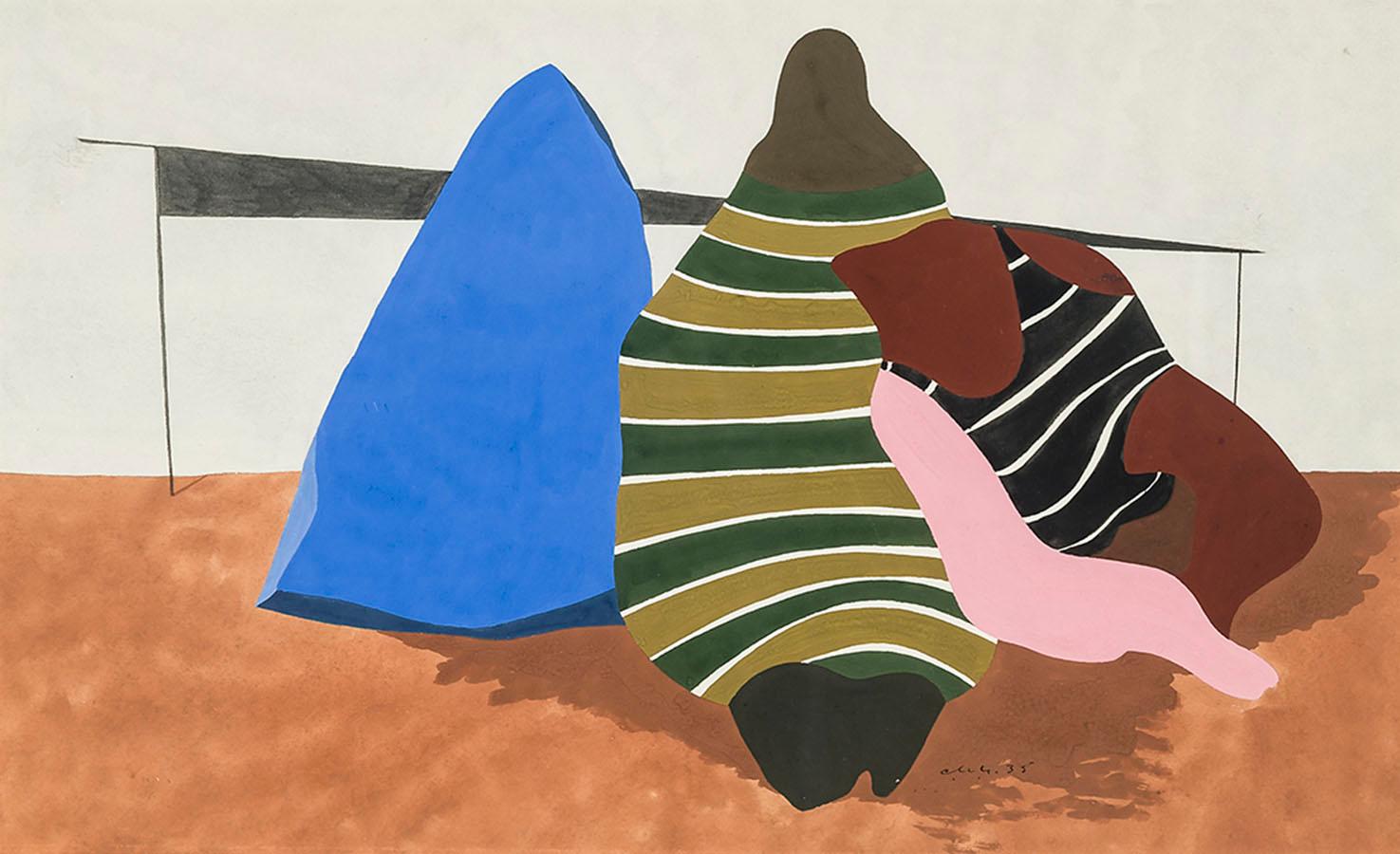
Untitled
By Charles Houghton Howard
Located in New York, NY
Charles Houghton Howard was born in Montclair, New Jersey, the third of five children in a cultured and educated family with roots going back to the Massachusetts Bay colony. His father, John Galen Howard, was an architect who had trained at M.I.T. and the École des Beaux-Arts in Paris and apprenticed in Boston with Henry Hobson Richardson. In New York, the elder Howard worked for McKim, Mead and White before establishing a successful private practice. Mary Robertson Bradbury Howard, Charles’s mother, had studied art before her marriage. John Galen Howard moved his household to California in 1902 to assume the position of supervising architect of the new University of California campus at Berkeley and to serve as Professor of Architecture and the first Dean of the School of Architecture (established in 1903). The four Howard boys grew up to be artists and all married artists, leaving a combined family legacy of art making in the San Francisco Bay area that endures to this day, most notably in design, murals, and reliefs at the Coit Tower and in buildings on the Berkeley campus.
Charles Howard graduated from the University of California at Berkeley in 1921 as a journalism major and pursued graduate studies in English at Harvard and Columbia Universities before embarking on a two-year trip to Europe. Howard went to Europe as a would-be writer. But a near-religious experience, seeing a picture by Giorgione in a remote town outside of Venice, proved a life-altering epiphany. In his own words, “I cut the tour at once and hurried immediately back to Paris, to begin painting. I have been painting whenever I could ever since” (Charles Howard, “What Concerns Me,” Magazine of Art 39 [February 1946], p. 63). Giorgione’s achievement, in utilizing a structured and rational visual language of art to convey high emotion on canvas, instantly convinced Howard that painting, and not literature, offered the best vehicle to express what he wanted to say. Howard returned to the United States in 1925, confirmed in his intent to become an artist.
Howard settled in New York and supported himself as a painter in the decorating workshop of Louis Bouché and Rudolph Guertler, where he specialized in mural painting. Devoting spare time to his own work, he lived in Greenwich Village and immersed himself in the downtown avant-garde cultural milieu. The late 1920s and early 1930s were the years of Howard’s art apprenticeship. He never pursued formal art instruction, but his keen eye, depth of feeling, and intense commitment to the process of art making, allowed him to assimilate elements of painting intuitively from the wide variety of art that interested him. He found inspiration in the modernist movements of the day, both for their adherence to abstract formal qualities and for the cosmopolitan, international nature of the movements themselves. Influenced deeply by Surrealism, Howard was part of a group of American and European Surrealists clustered around Julien Levy. Levy opened his eponymously-named gallery in 1931, and rose to fame in January 1932, when he organized and hosted Surrealisme, the first ever exhibition of Surrealism in America, which included one work by Howard. Levy remained the preeminent force in advocating for Surrealism in America until he closed his gallery in 1949. Howard’s association with Levy in the early 1930s confirms the artist’s place among the avant-garde community in New York at that time.
In 1933, Howard left New York for London. It is likely that among the factors that led to the move were Howard’s desire to be a part of an international art community, as well as his marriage to English artist, Madge Knight...
Category
20th Century American Modern Abstract Drawings and Watercolors
Materials
Paper, Watercolor, Gouache, Graphite
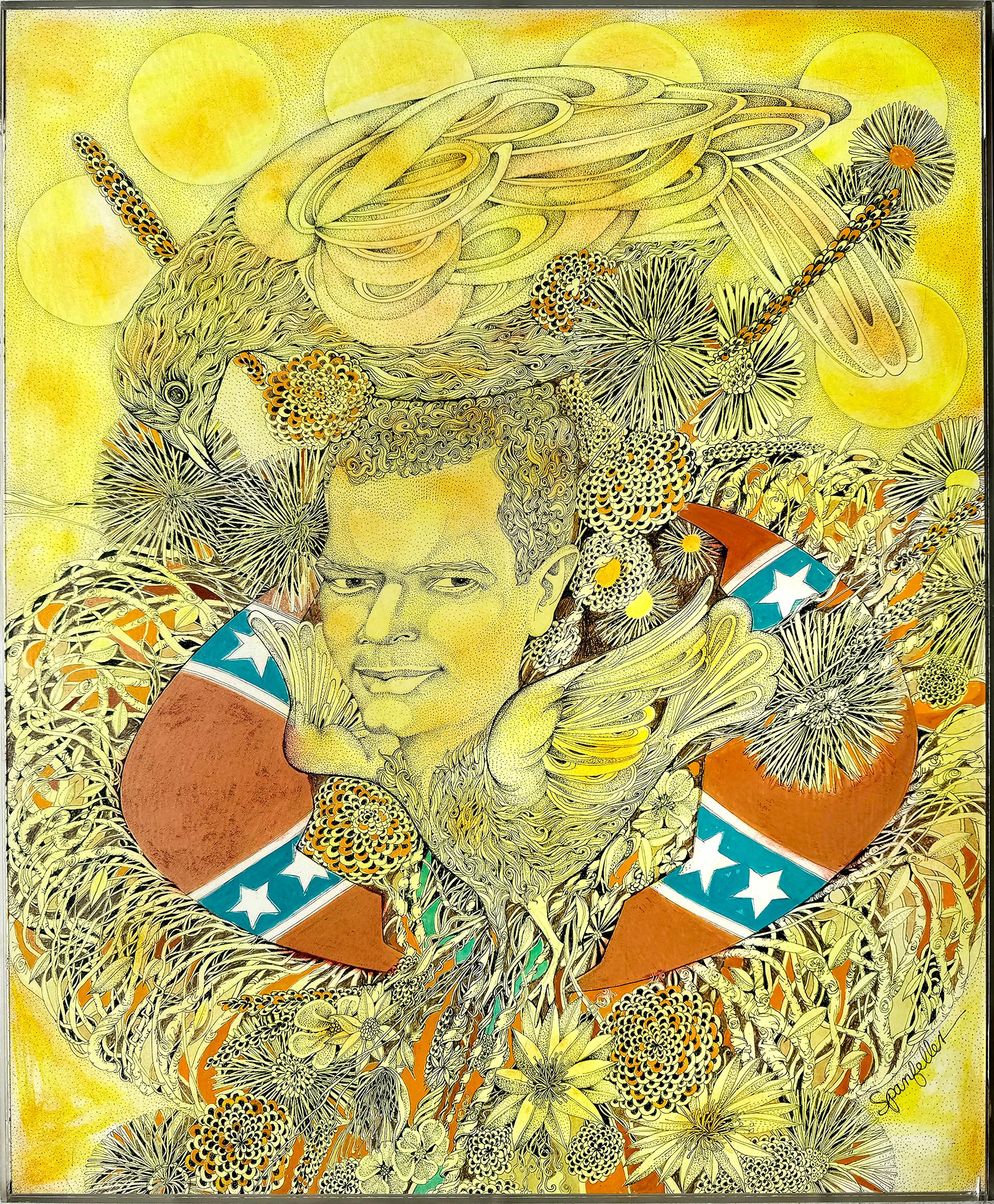
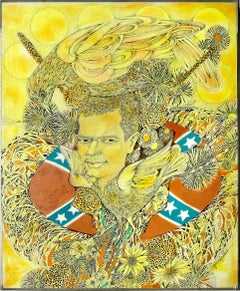
Civil Rights, Anti Racism Portrait of Black Politician Julian Bond
Located in Miami, FL
It's 1970 in America, and the vanguard thinking from the editors of Playboy magazine propelled them to do a cutting-edge feature on a new breed of politician. Enter Julian Bond - a y...
Category
1970s American Modern Portrait Drawings and Watercolors
Materials
Paper, Ink, Watercolor, Pencil
A 1950s Red, White
Blue Textile Design by Artist Andre Delfau
By Andre Delfau
Located in Chicago, IL
A 1950s bright, geometric textile design (In red, white & blue) by stage and costume designer Andre Delfau.
Born in Paris, France in 1914, Andre Delf...
Category
1950s American Modern Abstract Drawings and Watercolors
Materials
Ink, Gouache, Graphite, Paper