Want more images or videos?
Request additional images or videos from the seller
1 of 7
Michael BrennanUntitled, (6)1997
1997
Price:$800
$1,000List Price
About the Item
- Creator:Michael Brennan (1965, British)
- Creation Year:1997
- Dimensions:Height: 17.5 in (44.45 cm)Width: 15.25 in (38.74 cm)
- Medium:
- Movement Style:
- Period:
- Condition:Measurements include frame.
- Gallery Location:Surfside, FL
- Reference Number:1stDibs: LU38211568842
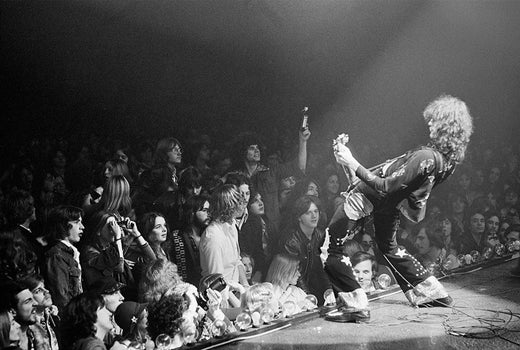
Michael Brennan
Award-winning photographer Michael Brennan’s work covers a wide range of historical events, celebrity portraits, candid’s and world famous athletes. After winning the British News Picture of the Year for his coverage of the death of Donald Campbell in 1967, which was featured in Life magazine, he went on to work for several newspapers and covered important news events as well as capturing images of notable names. He was awarded British Photographer of the Year in 1969. His archive includes images of Led Zeppelin, Freddie Mercury, Mick Jagger, President Jimmy Carter, Princess Diana, John Lennon, and sport legends George Best, Pele, George Foreman, Mike Tyson and Muhammad Ali. His work has been featured in newspapers and magazines world-wide, including Sports Illustrated, Life, Rolling Stone, Stern, The New York Times, The Sunday Times, The Observer, and the Times of London. One of his most iconic portraits of Muhammad Ali is in the collection of the Smithsonian’s National Portrait Gallery.
About the Seller
4.9
Platinum Seller
Premium sellers with a 4.7+ rating and 24-hour response times
Established in 1995
1stDibs seller since 2014
1,845 sales on 1stDibs
Typical response time: 1 hour
Authenticity Guarantee
In the unlikely event there’s an issue with an item’s authenticity, contact us within 1 year for a full refund. DetailsMoney-Back Guarantee
If your item is not as described, is damaged in transit, or does not arrive, contact us within 7 days for a full refund. Details24-Hour Cancellation
You have a 24-hour grace period in which to reconsider your purchase, with no questions asked.Vetted Professional Sellers
Our world-class sellers must adhere to strict standards for service and quality, maintaining the integrity of our listings.Price-Match Guarantee
If you find that a seller listed the same item for a lower price elsewhere, we’ll match it.Trusted Global Delivery
Our best-in-class carrier network provides specialized shipping options worldwide, including custom delivery.You May Also Like
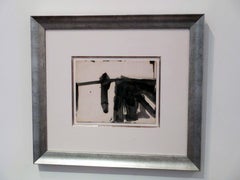
Untitled
By Franz Kline
Located in Beverly Hills, CA
Provenance:
Marlborough Gallery
David McKee, Inc.
Manny Silverman Gallery
Private collection, Los Angeles
Category
1950s Abstract Expressionist Abstract Drawings and Watercolors
Materials
Paper, Ink
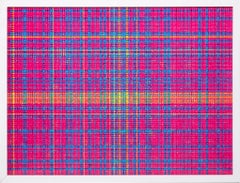
"NGC-3201, " Pigment Ink on Paper
By Jan Pieter Fokkens
Located in Chicago, IL
Chicago-based artist Jan Pieter Fokkens uses his work as a means of processing the incomprehensible. Navigating the relationship between algorithmic abstraction and the tangible qualities of pattern and color, Fokkens meditates on how reality is mediated by digital image.
Entitled "NGC-3201," this vibrant drawing offers a representation of the globular cluster NGC-3201. Using an image taken by the NASA/ESA Hubble Space Telescope...
Category
21st Century and Contemporary Abstract Geometric Abstract Paintings
Materials
Archival Ink, Photographic Paper
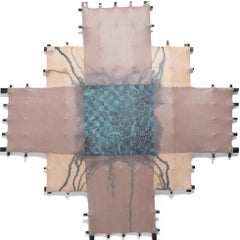
"River and Pond Kite, " Mixed Media Kite
By Michael Thompson
Located in Chicago, IL
Chicago-based artist Michael Thompson creates unique kites crafted from split bamboo frames covered with stretched muslin and a collage of vintage Asian ephemera—including fragments ...
Category
21st Century and Contemporary Abstract Abstract Paintings
Materials
Muslin, Wood, Ink, Watercolor, Rice Paper
"NGC-6397, " Pigment Ink on Paper
By Jan Pieter Fokkens
Located in Chicago, IL
Chicago-based artist Jan Pieter Fokkens uses his work as a means of processing the incomprehensible. Navigating the relationship between algorithmic abstraction and the tangible qualities of pattern and color, Fokkens meditates on how reality is mediated by digital image. Entitled "NGC-6397," this vibrant drawing offers a representation of the globular cluster NGC-6397, also known as Caldwell 87, located 7,800 light-years from Earth. Using an image taken by the NASA/ESA Hubble Space Telescope...
Category
21st Century and Contemporary Abstract Geometric Abstract Paintings
Materials
Archival Ink, Photographic Paper
"Study for Event Horizon, " Archival Ink on Paper, 2020
By Jan Pieter Fokkens
Located in Chicago, IL
The colorful paintings of Jan Pieter Fokkens transport us to distant worlds beyond our comprehension. Within seemingly infinite networks of lines, dots, and crosses, he decodes the r...
Category
21st Century and Contemporary Abstract Geometric Abstract Paintings
Materials
Archival Ink, Photographic Paper
$2,280
H 24 in W 24 in D 1 in
"E0102-72.3, " Pigment Ink on Photo Paper
By Jan Pieter Fokkens
Located in Chicago, IL
The colorful paintings of Jan Pieter Fokkens transport us to distant worlds beyond our comprehension. Within his seemingly infinite networks of lines, dots, and crosses, he decodes the recognizable to create something unfamiliar.
Each work begins with a colorized photo captured by a deep-space...
Category
21st Century and Contemporary Abstract Geometric Abstract Paintings
Materials
Ink, Photographic Paper
$3,680
H 42.5 in W 42.5 in D 1.25 in
"Study for SWEEPS, " Pigment Ink on Photo Paper
By Jan Pieter Fokkens
Located in Chicago, IL
The colorful paintings of Jan Pieter Fokkens transport us to distant worlds beyond our comprehension. Within seemingly infinite networks of lines, dots, and crosses, he decodes the recognizable to create something unfamiliar.
Each work begins with a colorized photo captured by a deep-space telescope...
Category
21st Century and Contemporary Abstract Geometric Abstract Paintings
Materials
Ink, Photographic Paper
$1,680
H 24.5 in W 24.5 in D 1.25 in
Untitled #1 - Emmanuelle Messika, 21st Century, Abstract drawing
By Emmanuelle Messika
Located in Paris, FR
Coloured inks and pastel on paper
Signed
Gestural abstraction
Outsider art
Artist’s statement :
"Painting, for me, is an expressive endeavor in which one depicts the evolution of the various facets of the artistic self. There is, on each canvas, a tension where violence and stillness naturally coexist. By playing with different materials, I seek to establish a sort of unexpected dialogue between these states, and aspire to express this tension through profusion of color.
The canvas is the stage that allows me to unite narration with the action of painting the fantastic—even the outrageous---and the everyday. I develop scenarios borrowed from the imagination, which join fantasy, even fables, with the everyday. Pulling threads from each domain, I bring together the mythical and the quotidian, so that the worlds of reality and fantasy merge.
I rely on “creatures,” improbable little characters that could exist in some other realm or dimension. They materialize, issuing forth from the surprising, unbelievable and wondrous world of childhood. Human or animal, both find themselves entangled in inextricable and melancholic situations. These inextricable situations create distance; the humor comes through this breach. It is the absurdity of their predicaments that manifests the humor in the work.
In each of my paintings, the sentiments are heightened by an intentional, provocative tone that transforms the work. An Otherness is attributed to objects; objects become personified, and by their very presence, they become witnesses or guinea pigs torn between and bound to their dilemma.
The titles of my paintings, whether invented or quotations taken out of context, come from literature, theater, or song lyrics.
Accident and chance are often major actors in my work.”
Emmanuelle Messika
BIOGRAPHY :
Emmanuelle Messika was born in France in 1979.
She works and lives in Paris.
STUDIES
1999-2005
École Nationale Supérieure des Beaux-Arts de Paris
Diplômée en Juin 2005
2004
Échange universitaire à Hunter College, New York NY, USA
1993-1999
Ateliers des Beaux-Arts de la Ville de Paris, Montparnasse
PERSONAL EXHIBITIONS :
2019
Claire Corcia Gallery, Paris
2018
Claire Corcia Gallery, Paris
Outsider Art Fair, Paris
2012
Art Contemporain Sèvres, "La Chartreuse", Sèvres
2011
Espace Seven, Galerie De Vos, Paris
2010
Les Trois Baudets, Paris
Galerie Mariska Hammoudi, Paris
Galerie Crous -Beaux-Arts, Paris
L'Apparemment Café, Paris
2009
Espace Rachi, Paris
2008
Galerie Console, Paris
2007
Exposition Place du Québec, Mairie du sixième, Paris
2006
Galerie Eonnet-Dupuis, Paris
2005
Galerie Crous Beaux Arts, Paris
2004
The Mark Bar, "Bring your own flashlight", Brooklin, New York
2003
Le Glaz’art, Paris
2002
9 rue Dauphine, Paris
2001
Galerie Gauche, École des Beaux-Arts, Paris
2000
La grosse caisse, Paris
La liberté, Paris
GROUP SHOWS
2011
Chic Art Fair, Galerie Mariska Hammoudi
Galerie De Vos, Espace Seven
2010
Galerie Mariska Hammoudi, Paris
Chic Dessin, avec Cherry Gallery...
Category
2010s Abstract Expressionist Abstract Drawings and Watercolors
Materials
Paper, Pastel, Ink
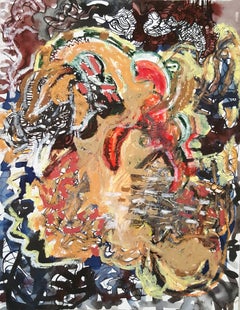
$1,795
H 12.8 in W 9.85 in
Violent delights, violent ends - Daniel Erban, 21st century, Drawing
By Daniel Erban
Located in Paris, FR
Ink on paper
Signed
Unique work
Category
1990s Abstract Expressionist Abstract Drawings and Watercolors
Materials
Paper, Ink
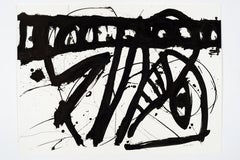
$2,274
H 22.05 in W 29.93 in
Untitled #2 - Emmanuelle Messika, 21st Century, Abstract drawing
By Emmanuelle Messika
Located in Paris, FR
Coloured inks and pastel on paper
Signed
Gestural abstraction
Outsider art
Artist’s statement :
"Painting, for me, is an expressive endeavor in which one depicts the evolution of the various facets of the artistic self. There is, on each canvas, a tension where violence and stillness naturally coexist. By playing with different materials, I seek to establish a sort of unexpected dialogue between these states, and aspire to express this tension through profusion of color.
The canvas is the stage that allows me to unite narration with the action of painting the fantastic—even the outrageous---and the everyday. I develop scenarios borrowed from the imagination, which join fantasy, even fables, with the everyday. Pulling threads from each domain, I bring together the mythical and the quotidian, so that the worlds of reality and fantasy merge.
I rely on “creatures,” improbable little characters that could exist in some other realm or dimension. They materialize, issuing forth from the surprising, unbelievable and wondrous world of childhood. Human or animal, both find themselves entangled in inextricable and melancholic situations. These inextricable situations create distance; the humor comes through this breach. It is the absurdity of their predicaments that manifests the humor in the work.
In each of my paintings, the sentiments are heightened by an intentional, provocative tone that transforms the work. An Otherness is attributed to objects; objects become personified, and by their very presence, they become witnesses or guinea pigs torn between and bound to their dilemma.
The titles of my paintings, whether invented or quotations taken out of context, come from literature, theater, or song lyrics.
Accident and chance are often major actors in my work.”
Emmanuelle Messika
BIOGRAPHY :
Emmanuelle Messika was born in France in 1979.
She works and lives in Paris.
STUDIES
1999-2005
École Nationale Supérieure des Beaux-Arts de Paris
Diplômée en Juin 2005
2004
Échange universitaire à Hunter College, New York NY, USA
1993-1999
Ateliers des Beaux-Arts de la Ville de Paris, Montparnasse
PERSONAL EXHIBITIONS :
2019
Claire Corcia Gallery, Paris
2018
Claire Corcia Gallery, Paris
Outsider Art Fair, Paris
2012
Art Contemporain Sèvres, "La Chartreuse", Sèvres
2011
Espace Seven, Galerie De Vos, Paris
2010
Les Trois Baudets, Paris
Galerie Mariska Hammoudi, Paris
Galerie Crous -Beaux-Arts, Paris
L'Apparemment Café, Paris
2009
Espace Rachi, Paris
2008
Galerie Console, Paris
2007
Exposition Place du Québec, Mairie du sixième, Paris
2006
Galerie Eonnet-Dupuis, Paris
2005
Galerie Crous Beaux Arts, Paris
2004
The Mark Bar, "Bring your own flashlight", Brooklin, New York
2003
Le Glaz’art, Paris
2002
9 rue Dauphine, Paris
2001
Galerie Gauche, École des Beaux-Arts, Paris
2000
La grosse caisse, Paris
La liberté, Paris
GROUP SHOWS
2011
Chic Art Fair, Galerie Mariska Hammoudi
Galerie De Vos, Espace Seven
2010
Galerie Mariska Hammoudi, Paris
Chic Dessin, avec Cherry Gallery...
Category
2010s Abstract Expressionist Abstract Drawings and Watercolors
Materials
Paper, Pastel, Ink
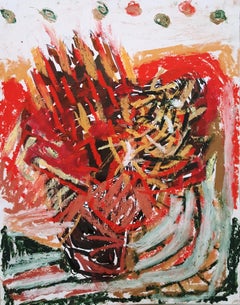
$1,795
H 12.8 in W 9.85 in
More From This Seller
View AllVeiled Series L, Abstract Expressionist Organic Drawing Watercolor Painting
By Dorothy Gillespie
Located in Surfside, FL
Dorothy Gillespie (June 29, 1920 – September 30, 2012) was an American artist and sculptor who became known for her large and colorful abstract metal sculptures. Gillespie became best known for the aluminum sculptures she started to produce at the end of the 1970s. She would paint sheets of the metal, cut them into strips and connect the strips together to resemble cascades or starbursts of bright colored ribbon. The New York Times once summarized her work as “topsy-turvy, merrymaking fantasy,” and in another review declared, “The artist’s exuberant sculptures of colorful aluminum strips have earned her an international reputation.Her works are featured at her alma mater (Radford University) in Virginia, where she later returned to teach, as well as in New York (where she was artist in residence for the feminist Women's Interart Center), Wilmington, North Carolina and Florida.
She enrolled both at Radford University near her hometown, and the Maryland Institute College of Art in Baltimore, Maryland. The director of the Maryland Institute, Hans Schuler, helped foster her career in fine art.
On June 5, 1943, aged 23, Gillespie moved to New York City. There she took a job at the B. Altman department store as assistant art director. She also joined the Art Students League where she was exposed to new ideas about techniques, materials, and marketing. She also created works at Atelier 17 printmaking studio, where Stanley William Hayter encouraged to experiment with her own ideas.
She and her husband, Bernard Israel, opened a restaurant and night club in Greenwich Village to support their family. She returned to making art in 1957, and worked at art full-time after they sold the nightclub in the 1970.
In 1977 Gillespie gave her first lecture series at the New School for Social Research, and she would give others there until 1982. She taught at her alma mater as a Visiting Artist (1981-1983) and gave Radford University some of her work to begin its permanent art collection. Gillespie then served as Woodrow Wilson visiting Fellow (1985-1994), visiting many small private colleges to give public lectures and teach young artists. She returned to Radnor University to teach as Distinguished Professor of Art (1997–99).[8] She also hosted a radio program, the Dorothy Gillespie Show on Radio Station WHBI in New York from 1967-1973.
Gillespie began moving away from realism and into the abstraction that marked her career. Gillespie returned to New York City in 1963 to continue her career. She maintained a studio through the 70s and advocate worked towards feminist goals in the art industry, picketing the Whitney Museum, helping to organize the Women's Interart Center, curating exhibitions of women's art, and writing articles raising awareness of her cause. Gillespie numbered among her acquaintances such art-world luminaries as Jackson Pollock, Lee Krasner, Alice Neel, Louise Nevelson and Georgia O’Keeffe. “She had amazing stories that unfortunately are gone,” her son said.
During the 1960s, she built multimedia art installations that made political statements, such as 1965’s “Made in the USA,” that used blinking colored lights, mirrors, shadow boxes, rotating figures and tape recordings to convey a chaotic look at American commercial fads. The floor was strewn with real dollar bills, which visitors assumed were fake.
By the 1980s, Gillespie's work had come to be known internationally. She completed many commissions for sculptures in public places, including Lincoln Center, Rockefeller Center and Walt Disney World Epcot Center in Orlando, Florida. Her work is in many collections across the United States, including the Delaware Museum, the Solomon R. Guggenheim Museum, and the National Museum of Women in the Arts. Her sculptures can also be found in the Frankfurt Museum in Germany and the Tel Aviv Museum in Israel.
Group Shows Conceived and Curated by Dorothy Gillespie
Women's Interart Center, New York, NY 1974 included: Betty Parsons, Elsie Asher, Alice Baber, Minna Citron, Nancy Spero, Seena Donneson, Alice Neel, Natalie Edgar, Dorothy Gillespie, and Anita Steckel...
Category
Early 2000s Abstract Expressionist Abstract Drawings and Watercolors
Materials
Paper, Ink, Watercolor, Permanent Marker
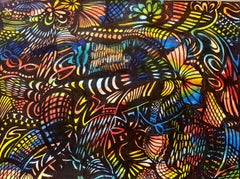
Veiled Series X , Abstract Expressionist Organic Drawing Watercolor Painting
By Dorothy Gillespie
Located in Surfside, FL
Dorothy Gillespie (June 29, 1920 – September 30, 2012) was an American artist and sculptor who became known for her large and colorful abstract metal sculptures. Gillespie became best known for the aluminum sculptures she started to produce at the end of the 1970s. She would paint sheets of the metal, cut them into strips and connect the strips together to resemble cascades or starbursts of bright colored ribbon. The New York Times once summarized her work as “topsy-turvy, merrymaking fantasy,” and in another review declared, “The artist’s exuberant sculptures of colorful aluminum strips have earned her an international reputation.Her works are featured at her alma mater (Radford University) in Virginia, where she later returned to teach, as well as in New York (where she was artist in residence for the feminist Women's Interart Center), Wilmington, North Carolina and Florida.
She enrolled both at Radford University near her hometown, and the Maryland Institute College of Art in Baltimore, Maryland. The director of the Maryland Institute, Hans Schuler, helped foster her career in fine art.
On June 5, 1943, aged 23, Gillespie moved to New York City. There she took a job at the B. Altman department store as assistant art director. She also joined the Art Students League where she was exposed to new ideas about techniques, materials, and marketing. She also created works at Atelier 17 printmaking studio, where Stanley William Hayter encouraged to experiment with her own ideas.
She and her husband, Bernard Israel, opened a restaurant and night club in Greenwich Village to support their family. She returned to making art in 1957, and worked at art full-time after they sold the nightclub in the 1970.
In 1977 Gillespie gave her first lecture series at the New School for Social Research, and she would give others there until 1982. She taught at her alma mater as a Visiting Artist (1981-1983) and gave Radford University some of her work to begin its permanent art collection. Gillespie then served as Woodrow Wilson visiting Fellow (1985-1994), visiting many small private colleges to give public lectures and teach young artists. She returned to Radnor University to teach as Distinguished Professor of Art (1997–99).[8] She also hosted a radio program, the Dorothy Gillespie Show on Radio Station WHBI in New York from 1967-1973.
Gillespie began moving away from realism and into the abstraction that marked her career. Gillespie returned to New York City in 1963 to continue her career. She maintained a studio through the 70s and advocate worked towards feminist goals in the art industry, picketing the Whitney Museum, helping to organize the Women's Interart Center, curating exhibitions of women's art, and writing articles raising awareness of her cause. Gillespie numbered among her acquaintances such art-world luminaries as Jackson Pollock, Lee Krasner, Alice Neel, Louise Nevelson and Georgia O’Keeffe. “She had amazing stories that unfortunately are gone,” her son said.
During the 1960s, she built multimedia art installations that made political statements, such as 1965’s “Made in the USA,” that used blinking colored lights, mirrors, shadow boxes, rotating figures and tape recordings to convey a chaotic look at American commercial fads. The floor was strewn with real dollar bills, which visitors assumed were fake.
By the 1980s, Gillespie's work had come to be known internationally. She completed many commissions for sculptures in public places, including Lincoln Center, Rockefeller Center and Walt Disney World Epcot Center in Orlando, Florida. Her work is in many collections across the United States, including the Delaware Museum, the Solomon R. Guggenheim Museum, and the National Museum of Women in the Arts. Her sculptures can also be found in the Frankfurt Museum in Germany and the Tel Aviv Museum in Israel.
Group Shows Conceived and Curated by Dorothy Gillespie
Women's Interart Center, New York, NY 1974 included: Betty Parsons, Elsie Asher, Alice Baber, Minna Citron, Nancy Spero, Seena Donneson, Alice Neel, Natalie Edgar, Dorothy Gillespie, and Anita Steckel...
Category
Early 2000s Abstract Expressionist Abstract Drawings and Watercolors
Materials
Paper, Ink, Watercolor, Permanent Marker
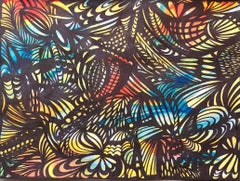
Veiled Series LX , Abstract Expressionist Organic Drawing Watercolor Painting
By Dorothy Gillespie
Located in Surfside, FL
Dorothy Gillespie (June 29, 1920 – September 30, 2012) was an American artist and sculptor who became known for her large and colorful abstract metal sculptures. Gillespie became best known for the aluminum sculptures she started to produce at the end of the 1970s. She would paint sheets of the metal, cut them into strips and connect the strips together to resemble cascades or starbursts of bright colored ribbon. The New York Times once summarized her work as “topsy-turvy, merrymaking fantasy,” and in another review declared, “The artist’s exuberant sculptures of colorful aluminum strips have earned her an international reputation.Her works are featured at her alma mater (Radford University) in Virginia, where she later returned to teach, as well as in New York (where she was artist in residence for the feminist Women's Interart Center), Wilmington, North Carolina and Florida.
She enrolled both at Radford University near her hometown, and the Maryland Institute College of Art in Baltimore, Maryland. The director of the Maryland Institute, Hans Schuler, helped foster her career in fine art.
On June 5, 1943, aged 23, Gillespie moved to New York City. There she took a job at the B. Altman department store as assistant art director. She also joined the Art Students League where she was exposed to new ideas about techniques, materials, and marketing. She also created works at Atelier 17 printmaking studio, where Stanley William Hayter encouraged to experiment with her own ideas.
She and her husband, Bernard Israel, opened a restaurant and night club in Greenwich Village to support their family. She returned to making art in 1957, and worked at art full-time after they sold the nightclub in the 1970.
In 1977 Gillespie gave her first lecture series at the New School for Social Research, and she would give others there until 1982. She taught at her alma mater as a Visiting Artist (1981-1983) and gave Radford University some of her work to begin its permanent art collection. Gillespie then served as Woodrow Wilson visiting Fellow (1985-1994), visiting many small private colleges to give public lectures and teach young artists. She returned to Radnor University to teach as Distinguished Professor of Art (1997–99).[8] She also hosted a radio program, the Dorothy Gillespie Show on Radio Station WHBI in New York from 1967-1973.
Gillespie began moving away from realism and into the abstraction that marked her career. Gillespie returned to New York City in 1963 to continue her career. She maintained a studio through the 70s and advocate worked towards feminist goals in the art industry, picketing the Whitney Museum, helping to organize the Women's Interart Center, curating exhibitions of women's art, and writing articles raising awareness of her cause. Gillespie numbered among her acquaintances such art-world luminaries as Jackson Pollock, Lee Krasner, Alice Neel, Louise Nevelson and Georgia O’Keeffe. “She had amazing stories that unfortunately are gone,” her son said.
During the 1960s, she built multimedia art installations that made political statements, such as 1965’s “Made in the USA,” that used blinking colored lights, mirrors, shadow boxes, rotating figures and tape recordings to convey a chaotic look at American commercial fads. The floor was strewn with real dollar bills, which visitors assumed were fake.
By the 1980s, Gillespie's work had come to be known internationally. She completed many commissions for sculptures in public places, including Lincoln Center, Rockefeller Center and Walt Disney World Epcot Center in Orlando, Florida. Her work is in many collections across the United States, including the Delaware Museum, the Solomon R. Guggenheim Museum, and the National Museum of Women in the Arts. Her sculptures can also be found in the Frankfurt Museum in Germany and the Tel Aviv Museum in Israel.
Group Shows Conceived and Curated by Dorothy Gillespie
Women's Interart Center, New York, NY 1974 included: Betty Parsons, Elsie Asher, Alice Baber, Minna Citron, Nancy Spero, Seena Donneson, Alice Neel, Natalie Edgar, Dorothy Gillespie, and Anita Steckel...
Category
Early 2000s Abstract Expressionist Abstract Drawings and Watercolors
Materials
Paper, Ink, Watercolor, Permanent Marker
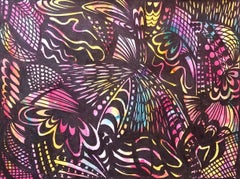
Veiled Series XXX, Abstract Expressionist Organic Drawing Watercolor Painting
By Dorothy Gillespie
Located in Surfside, FL
Dorothy Gillespie (June 29, 1920 – September 30, 2012) was an American artist and sculptor who became known for her large and colorful abstract metal sculptures. Gillespie became best known for the aluminum sculptures she started to produce at the end of the 1970s. She would paint sheets of the metal, cut them into strips and connect the strips together to resemble cascades or starbursts of bright colored ribbon. The New York Times once summarized her work as “topsy-turvy, merrymaking fantasy,” and in another review declared, “The artist’s exuberant sculptures of colorful aluminum strips have earned her an international reputation.Her works are featured at her alma mater (Radford University) in Virginia, where she later returned to teach, as well as in New York (where she was artist in residence for the feminist Women's Interart Center), Wilmington, North Carolina and Florida.
She enrolled both at Radford University near her hometown, and the Maryland Institute College of Art in Baltimore, Maryland. The director of the Maryland Institute, Hans Schuler, helped foster her career in fine art.
On June 5, 1943, aged 23, Gillespie moved to New York City. There she took a job at the B. Altman department store as assistant art director. She also joined the Art Students League where she was exposed to new ideas about techniques, materials, and marketing. She also created works at Atelier 17 printmaking studio, where Stanley William Hayter encouraged to experiment with her own ideas.
She and her husband, Bernard Israel, opened a restaurant and night club in Greenwich Village to support their family. She returned to making art in 1957, and worked at art full-time after they sold the nightclub in the 1970.
In 1977 Gillespie gave her first lecture series at the New School for Social Research, and she would give others there until 1982. She taught at her alma mater as a Visiting Artist (1981-1983) and gave Radford University some of her work to begin its permanent art collection. Gillespie then served as Woodrow Wilson visiting Fellow (1985-1994), visiting many small private colleges to give public lectures and teach young artists. She returned to Radnor University to teach as Distinguished Professor of Art (1997–99).[8] She also hosted a radio program, the Dorothy Gillespie Show on Radio Station WHBI in New York from 1967-1973.
Gillespie began moving away from realism and into the abstraction that marked her career. Gillespie returned to New York City in 1963 to continue her career. She maintained a studio through the 70s and advocate worked towards feminist goals in the art industry, picketing the Whitney Museum, helping to organize the Women's Interart Center, curating exhibitions of women's art, and writing articles raising awareness of her cause. Gillespie numbered among her acquaintances such art-world luminaries as Jackson Pollock, Lee Krasner, Alice Neel, Louise Nevelson and Georgia O’Keeffe. “She had amazing stories that unfortunately are gone,” her son said.
During the 1960s, she built multimedia art installations that made political statements, such as 1965’s “Made in the USA,” that used blinking colored lights, mirrors, shadow boxes, rotating figures and tape recordings to convey a chaotic look at American commercial fads. The floor was strewn with real dollar bills, which visitors assumed were fake.
By the 1980s, Gillespie's work had come to be known internationally. She completed many commissions for sculptures in public places, including Lincoln Center, Rockefeller Center and Walt Disney World Epcot Center in Orlando, Florida. Her work is in many collections across the United States, including the Delaware Museum, the Solomon R. Guggenheim Museum, and the National Museum of Women in the Arts. Her sculptures can also be found in the Frankfurt Museum in Germany and the Tel Aviv Museum in Israel.
Group Shows Conceived and Curated by Dorothy Gillespie
Women's Interart Center, New York, NY 1974 included: Betty Parsons, Elsie Asher, Alice Baber, Minna Citron, Nancy Spero, Seena Donneson, Alice Neel, Natalie Edgar, Dorothy Gillespie, and Anita Steckel...
Category
Early 2000s Abstract Expressionist Abstract Drawings and Watercolors
Materials
Paper, Ink, Watercolor, Permanent Marker
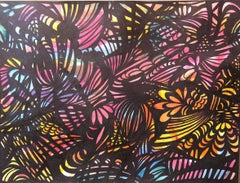
Veiled Series XX , Abstract Expressionist Organic Drawing Watercolor Painting
By Dorothy Gillespie
Located in Surfside, FL
Dorothy Gillespie (June 29, 1920 – September 30, 2012) was an American artist and sculptor who became known for her large and colorful abstract metal sculptures. Gillespie became best known for the aluminum sculptures she started to produce at the end of the 1970s. She would paint sheets of the metal, cut them into strips and connect the strips together to resemble cascades or starbursts of bright colored ribbon. The New York Times once summarized her work as “topsy-turvy, merrymaking fantasy,” and in another review declared, “The artist’s exuberant sculptures of colorful aluminum strips have earned her an international reputation.Her works are featured at her alma mater (Radford University) in Virginia, where she later returned to teach, as well as in New York (where she was artist in residence for the feminist Women's Interart Center), Wilmington, North Carolina and Florida.
She enrolled both at Radford University near her hometown, and the Maryland Institute College of Art in Baltimore, Maryland. The director of the Maryland Institute, Hans Schuler, helped foster her career in fine art.
On June 5, 1943, aged 23, Gillespie moved to New York City. There she took a job at the B. Altman department store as assistant art director. She also joined the Art Students League where she was exposed to new ideas about techniques, materials, and marketing. She also created works at Atelier 17 printmaking studio, where Stanley William Hayter encouraged to experiment with her own ideas.
She and her husband, Bernard Israel, opened a restaurant and night club in Greenwich Village to support their family. She returned to making art in 1957, and worked at art full-time after they sold the nightclub in the 1970.
In 1977 Gillespie gave her first lecture series at the New School for Social Research, and she would give others there until 1982. She taught at her alma mater as a Visiting Artist (1981-1983) and gave Radford University some of her work to begin its permanent art collection. Gillespie then served as Woodrow Wilson visiting Fellow (1985-1994), visiting many small private colleges to give public lectures and teach young artists. She returned to Radnor University to teach as Distinguished Professor of Art (1997–99).[8] She also hosted a radio program, the Dorothy Gillespie Show on Radio Station WHBI in New York from 1967-1973.
Gillespie began moving away from realism and into the abstraction that marked her career. Gillespie returned to New York City in 1963 to continue her career. She maintained a studio through the 70s and advocate worked towards feminist goals in the art industry, picketing the Whitney Museum, helping to organize the Women's Interart Center, curating exhibitions of women's art, and writing articles raising awareness of her cause. Gillespie numbered among her acquaintances such art-world luminaries as Jackson Pollock, Lee Krasner, Alice Neel, Louise Nevelson and Georgia O’Keeffe. “She had amazing stories that unfortunately are gone,” her son said.
During the 1960s, she built multimedia art installations that made political statements, such as 1965’s “Made in the USA,” that used blinking colored lights, mirrors, shadow boxes, rotating figures and tape recordings to convey a chaotic look at American commercial fads. The floor was strewn with real dollar bills, which visitors assumed were fake.
By the 1980s, Gillespie's work had come to be known internationally. She completed many commissions for sculptures in public places, including Lincoln Center, Rockefeller Center and Walt Disney World Epcot Center in Orlando, Florida. Her work is in many collections across the United States, including the Delaware Museum, the Solomon R. Guggenheim Museum, and the National Museum of Women in the Arts. Her sculptures can also be found in the Frankfurt Museum in Germany and the Tel Aviv Museum in Israel.
Group Shows Conceived and Curated by Dorothy Gillespie
Women's Interart Center, New York, NY 1974 included: Betty Parsons, Elsie Asher, Alice Baber, Minna Citron, Nancy Spero, Seena Donneson, Alice Neel, Natalie Edgar, Dorothy Gillespie, and Anita Steckel...
Category
Early 2000s Abstract Expressionist Abstract Drawings and Watercolors
Materials
Paper, Ink, Watercolor, Permanent Marker
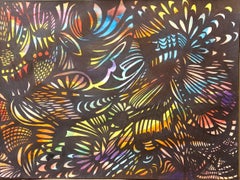
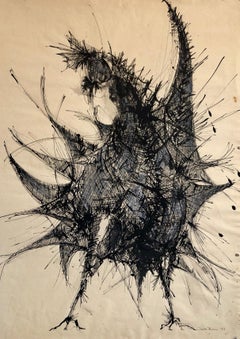
Large Ink Drawing Abstract Expressionist Rooster Woman Artist Judith Brown
By Judith Brown
Located in Surfside, FL
Judith Brown (December 17, 1931 – May 11, 1992) was a dancer and a sculptor who was drawn to images of the body in motion and its effect on the cloth surrounding it. She welded crushed automobile scrap metal into energetic moving torsos, horses, and flying draperies.
Brown attended Sarah Lawrence College in Yonkers, New York (B.A., 1954), where she learned to weld from her teacher, Theodore Roszak, a pioneering abstract expressionist sculptor. This is done in a style similar to Leonard Baskin.
Select Commissions
Mural Sculpture, Lobby, Louisville Radio Station WAVE
Fountain, commissioned by Architectural Interiors, New York City
Model, designed and executed for Festival of Two Worlds, Spoleto, Italy
Sculpture, designed for Electra Film Productions, NYC
Noah's Ark, exhibited at Bronx Zoo, New York City, at Rochester Museum and Science Center, Rochester, New York, and at Hopkins Center, Hanover, New Hampshire
Store Windows, executed Tiffany & Company Windows, New York City, Christmas 1957, 1959, 1962, October 1969, Spring 1979, and October 1980
Wall Sculptures: for Youngstown Research Center (1963-4), commissioned by Youngstown Steel Company, Youngstown, Ohio; for Hecht and Company, Landmark Shopping Center, Alexandria, Virginia, Daniel Schwartzman, Architect; for Lobby, 570 Seventh Avenue, New York City, Giorgio Cavaglieri, Architect; for Lobby, Cities Service Company's New Research Center, Cranbury, New Jersey; for Ottauquechee Health Center, Woodstock, Vermont
Eternal Lights: for Congregation Beth-El, South Orange, New Jersey; for Congregation Sharey Tefilo, East Orange, New Jersey
Menorahs: commissioned by Architect Fritz Nathan for the Permanent Collection of the Jewish Museum, New York City; commissioned by Smith College for the Helen Hill Chapel, Northampton, Massachusetts; commissioned by Jules Scherman, of Wisteria Press, Inc., New York City
Altar Cross, commissioned by Smith College for the Helen Hill Chapel, Northampton, Massachusetts
Landscape, Memorial Piece for Gustave Heller, YM-YWCA, Essex County, New Jersey
Memorial Plaque for Robert A. Ferguson, Westchester County Airport, Purchase, New York
Sculpture for Vice President's office, Atlantic Richfield Company, New York City
Bronze Relief Sculpture for Gymnasium Lobby, South Richmond High School, Staten Island, New York, Daniel Schwartzman, Architect
Poster, Stratton Arts Festival, Stratton, Vermont
Medallion, commissioned by Brandeis University National Women's Committee, New York City
Model for Fountain for the Plaza at Windsor, Vermont
Bronze Sculpture, commissioned by Intramural, Inc. for Building Lobby, N/E Cor. 79th Street and Second Avenue, New York City
Presentation Piece, commissioned by Graphic Arts Associates of Delaware Valley, Philadelphia, Pennsylvania
Wall Mural, Noah's Ark, Roosevelt Hospital, New York City
1977: Designed and executed Hanes Hosiery "Million Dollar Award"; Designed and executed "Old Spice" Smart Ship Award
1978: Commissioned to design and execute the "Walter White Award" for the NAACP for presentation to Hubert Humphrey; Commissioned to design and execute the Award for the Honorees of the National Board YWCA's First Tribute to Women in International Industry
1979: Designed and executed Jewelry for the Museum of Modern Art, New York City; Designed and executed limited edition of Mazuzas for Brandeis University-National Women's Committee, New York City
1980: Bronze Cross commissioned for St. James Episcopal Church, Woodstock, Vermont
1982: Eubie Award, New York Chapter of the National Academy of Recording Arts and Sciences
1985: Two Sculptures, Marriott Hotel, Orlando, Florida
1986: Two large Sculptures for indoor reflecting pools, Palm Desert Hotel, Palm Springs, California; John Portman, Eight Sculptures for Peachtree Plaza Hotel, Atlanta, Georgia; John Portman, Beach House, Sea Island, Georgia
1987: Loan Installation, DeCordova Museum, Lincoln, Massachusetts
1988: Eleven foot outdoor Sculpture for Front Plaza, River Court, Charles River, East Cambridge, Massachusetts, H. J. Davis Development Corp.; Tomie dePaola...
Category
1950s Abstract Expressionist Animal Drawings and Watercolors
Materials
India Ink, Handmade Paper
Still Thinking About These?
All Recently ViewedMore Ways To Browse
American Express
The Hunter Watercolor Drawing 20th Century
Abstract Floral Watercolor
Used Sea Pen
Original Abstract Pencil Drawings
Ink Drawings Large
Joseph Campbell
Triptych Drawings
Italian Love Art
Shell Watercolor
21st Century Watercolour Artists
Black Ink Minimalist Drawings
Shanthi Chandrasekar
Valente Painting
Beaver Painting
Train Depot
Vintage Watercolor Palette
Vintage Watercolour Palette