Want more images or videos?
Request additional images or videos from the seller
1 of 10

Pablo Picasso
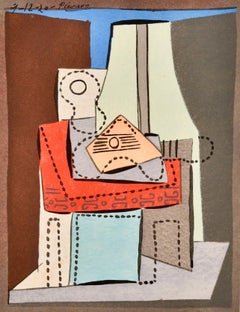
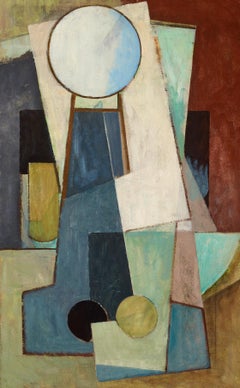
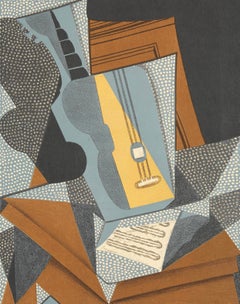
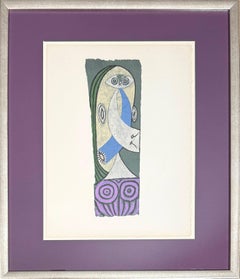
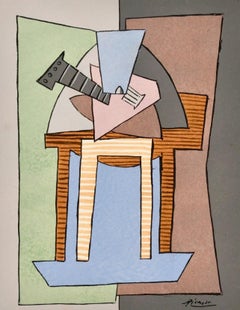
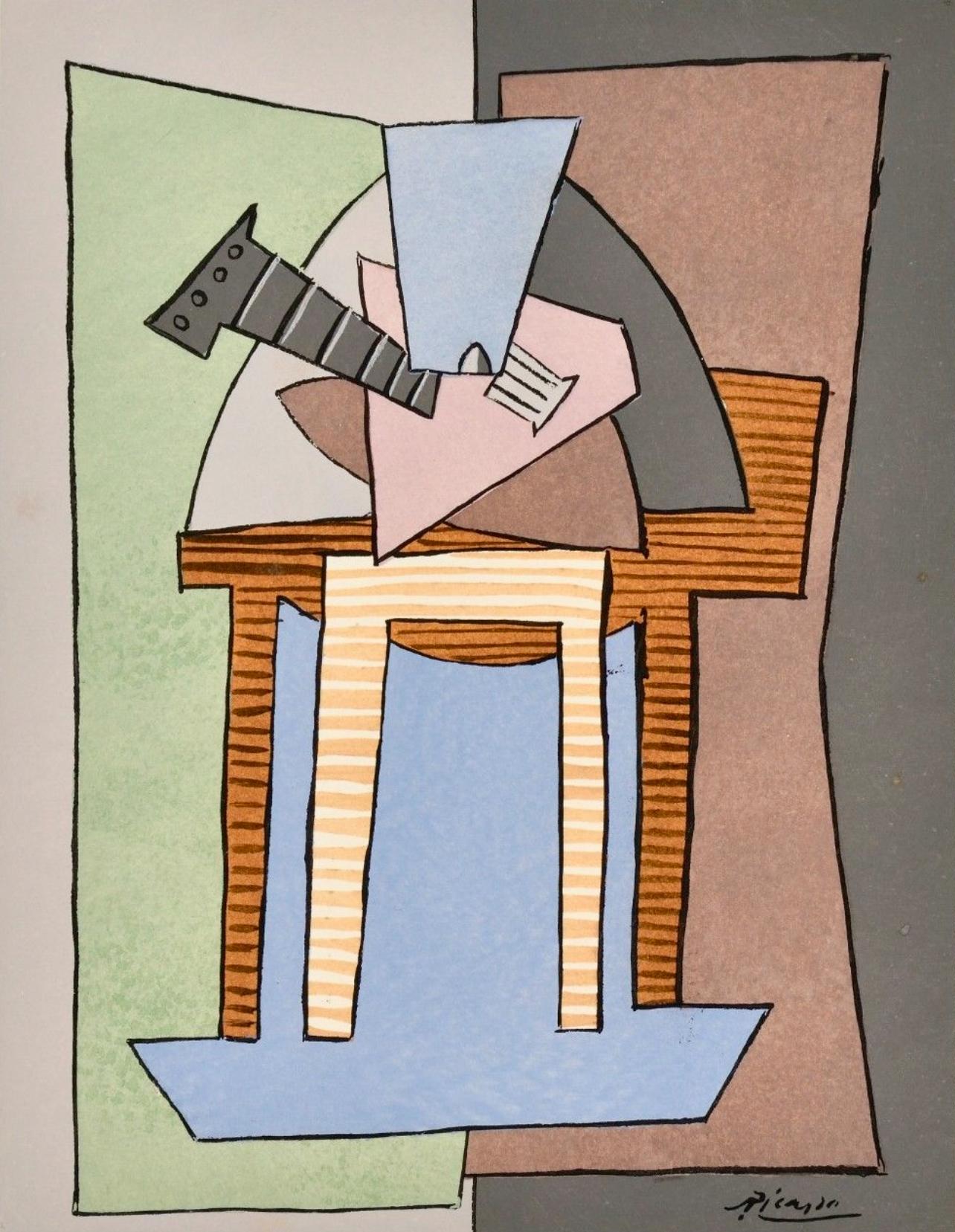
Guitare sur un guéridon by Pablo Picasso

1920

Price Upon Request
Price Upon Request
Price Upon Request
Price Upon Request
Price Upon Request
Price Upon Request
Price Upon Request
Price Upon Request
Price Upon Request
Price Upon Request

About the Item

Pablo Picasso 1881-1973 Spanish Guitare sur un guéridon (Guitar on a pedestal) Gouache on Western wove paper laid on board Signed “Picasso” (upper left) Picasso’s prolific career has been marked by many grand love affairs, both romantic, intellectual and creative. Beyond his lovers like Olga Khoklova and Dora Maar and his intellectual muses like Georges Braques and Gertrude Stein, Picasso’s greatest love and inspiration was perhaps a humble instrument: the guitar. Whether it be the Old Guitarist from his early blue period, his groundbreaking series of three-dimensional guitar sculptures from his nascent explorations in Cubism, or his Mandolin and Guitar composition’s grander explorations with color and biomorphic shapes, the guitar is an elusive calling card for modern art’s greatest genius. In Guitare sur un guéridon, Picasso intertwines his signature guitar and a bowl of fruit. These two elements are playfully brought together and skillfully anchored on the tabletop by a square positioned at the center of the composition. The result is a captivating and harmonious arrangement that showcases Picasso's artistic ingenuity in blending these everyday objects into a visually striking and cohesive composition. This rare gouache was created during the pivotal summer of 1920. During this time, Picasso lived in Juan-les-Pins, a small coastal resort town in the South of France away from the confines of the city and the fallout of World War I. With this newfound freedom, Picasso entered an exciting and innovative creative period and began to interrogate the connections between Neoclassicism and Cubism. Picasso created a series of gouache paintings characterized by their flat, geometric nature, sinuous contours and strikingly vivid colors. Though not a complete departure from his previous Cubist works, this series showcased the influence of the Surrealists, especially the biomorphic subconscious explorations of Joan Miró, upon Picasso’s oeuvre. While the breadth of his creativity grew, he returned back to a familiar motif — the guitar — with a renewed sense of vigor and excitement. Guitare sur un guéridon’s undulating lines and biomorphic appeal bring Picasso's preoccupation with the guitar into deeper focus. The sinuous lines of guitar mirror the sensuous lines of the female form — the other most prevalent subject in Picasso's oeuvre. This beautiful and colorful gouache work illustrates the seminal movement in Picasso's oeuvre from Analytic Cubism toward the evolved sensual, biomorphic style that would characterize Picasso's later works. Similar gouaches from this time can be found in the permanent collections of the Solomon R. Guggenheim Museum in New York and the National Gallery of Art in Washington DC. Born in 1881 in Málaga, Spain, Picasso spent his childhood studying drawing and painting under his father, Jose Ruíz, who taught at the local art school. Picasso spent a year at the Academy of Arts in Madrid, before traveling to Paris in 1900. Landing in the center of the European art world, Picasso began to mingle in the company of other artists, quickly establishing himself as a critical figure in the thriving Parisian art scene. Critics have often divided Picasso’s artistic output into distinct phases based on his color scheme and style of painting. It was around 1907 that Picasso became very influenced by African masks and art which began making their way into Parisian museums following the expansion of the French Empire into Africa. The faces and simplified, angular planes of the women in Picasso’s Les Demoiselles d’Avignon clearly derive their style from African masks and sculptures, and this painting is often heralded as the beginning of Cubism. Pushing the boundaries of his own creativity throughout his long career, Picasso devoted himself to artistic production. The result was one of the richest and most important oeuvres in art history. Dated 1920 Paper: 11” high by 8 1/4” wide (27.94 x 20.64 cm) Frame: 22 5/8" high by 19 5/8" wide by 1 1/2" deep (57.15 x 49.85 cm) Exhibitions: Roslyn Harbor, New York, The Manes Art Education Center, Nassau County Museum of Art, Long Island Collections: May 12-August 4, 2002 Roslyn Harbor, New York, The Manes Art Education Center, Nassau County Museum of Art, European Art Between World Wars: May 9-August 1, 2004 Roslyn Harbor, New York, The Manes Art Education Center, Nassau County Museum of Art, Picasso: February 20-April 17, 2005 Roslyn Harbor, New York, The Manes Art Education Center, Nassau County Museum of Art, Picasso and the School of Paris: Nov. 19, 2006-Feb. 4, 2007 Roslyn Harbor, New York, The Manes Art Education Center, Nassau County Museum of Art, The Jazz Age: March 23-July 8, 2018 Roslyn Harbor, New York, The Manes Art Education Center, Nassau County Museum of Art, Selections from the Collection of Dr. Harvey Manes, January 19 - May 12, 2019 Literature: Pablo Picasso: Supplement aux Annies 1920-1929, Vol. 30, Paris, 1975, by Christian Zervos, p. 30, no. 73 Provenance: Justin K. Tannhauser, New York Galerie Beyeler, Basel, Switzerland Sale: Sotheby’s, New York, May 16,1984, lot 134 Sale: Sotheby's New York, November 4, 1993 Private Collection, New York M.S. Rau, New Orleans
  • Creator:
    Pablo Picasso (1881-1973, Spanish)
  • Creation Year:
    1920
  • Dimensions:
    Height: 22.5 in (57.15 cm)Width: 19.63 in (49.87 cm)Depth: 1.5 in (3.81 cm)
  • Medium:
  • Movement Style:
  • Period:
  • Condition:
  • Gallery Location:
    New Orleans, LA
  • Reference Number:
    Seller: 31-77961stDibs: LU18612991162

More From This Seller

View All
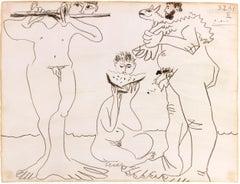
Homme à l agneau, mangeur de pastèque et flûtiste
By Pablo Picasso
Located in New Orleans, LA
Signed, dated and numbered “Picasso / 3.2.67 / II” (upper right) Crayon on paper Hailed among the fathers of modern art, Pablo Picasso possessed a seemingly e...
Category

20th Century Modern Nude Drawings and Watercolors

Materials

Paper, Crayon

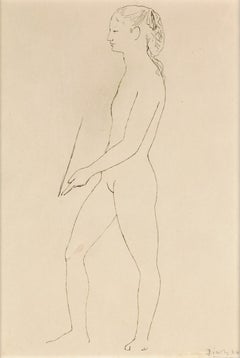
Nu tenant un miroir by Pablo Picasso
By Pablo Picasso
Located in New Orleans, LA
Pablo Picasso 1881-1973 Spanish Nu tenant un miroir (Nude holding a mirror) Signed "Picasso" (lower right) Pen and ink on paper Pablo Picasso's Rose Period is among the most icon...
Category

Early 20th Century Nude Drawings and Watercolors

Materials

Paper, Ink, Pen

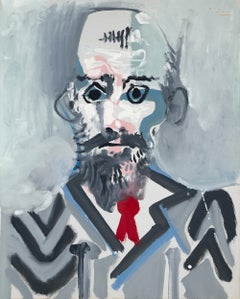
Buste d homme barbu by Pablo Picasso
By Pablo Picasso
Located in New Orleans, LA
Pablo Picasso 1881-1973 Spanish Buste d'homme barbu (Bust of a Bearded Man) Signed "Picasso" (upper right) and dated "8.4.65" (en verso) Oil on canvas Pablo Picasso and his work transcend art history: they have achieved global celebrity within both academic circles and popular culture. More than any other artist, his ever-evolving, evocative style has come to define modern art of the 20th century, and to this day he continues to gain recognition. The most compelling of his works offer a glimpse into the psyche of the master himself, and the present work can be counted among these. Combining saturated color with a jarring simplicity, Buste d'homme barbu represents an important series of bearded men portraits that the artist composed during the last few years of his life. These works are among the most highly personal and intimate of his career, and they serve as remarkable examples of his mature style with their highly modern expressivity. Many of Picasso's works from his last years capture the visage of his wife Jacqueline, who was his chief model during this period. In April, however, at his home studio in Mougins, France, Picasso changed direction and produced a series of individual portraits of men. His male subjects derive from various sources. Often they were self-referential portraits; often they referenced his father, Spanish painter José Ruiz...
Category

20th Century Post-Impressionist Portrait Paintings

Materials

Oil, Canvas

Untitled by George Terzian
By Georges Terzian
Located in New Orleans, LA
Georges Terzian 1939-2021 French Untitled Signed “G.TERZIAN” (upper right); signed, titled and dated “GEORGES TERZIAN MARS 2005” (en verso) Oil on c...
Category

21st Century and Contemporary Post-Impressionist Abstract Paintings

Materials

Canvas, Oil

Kronen-Narr by Paul Klee
By Paul Klee
Located in New Orleans, LA
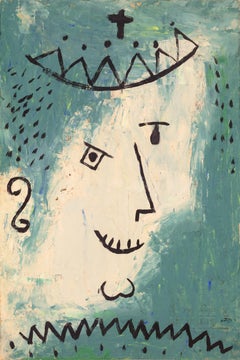
Paul Klee 1879-1940 Swiss-German Kronen-Narr (Crown Fool) Signed "Klee" (lower right) Gouache and ink on newsprint on cardboard One of the most important artists of the 20th cent...
Category

20th Century Abstract Paintings

Materials

Ink, Gouache, Cardboard, Newsprint

Two of Swords by Salvador Dalí
By Salvador Dalí­
Located in New Orleans, LA
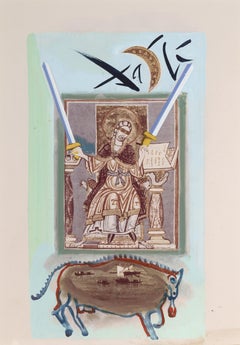
Salvador Dalí 1904-1989 Spanish Two of Swords Signed “Dalí” (upper right) Gouache on photographic background Representing a unique blend of spiritualism and Surrealism, this goua...
Category

20th Century Modern Abstract Paintings

Materials

Gouache, Photographic Paper

You May Also Like

Picasso, Homme dans un interiéur jouant de la guitare
By Pablo Picasso
Located in Miami, FL
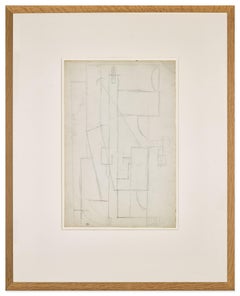
Drawn in 1912 by Picasso, this fine piece of work is a recognizable mark of his unique style. "Homme dans un interiéur jouant de la guitare", 1912 is on cream laid paper, with abstra...
Category

1910s Abstract Abstract Drawings and Watercolors

Materials

Paper, Pencil

Pablo Picasso, Seated Woman in an Armchair, from Oeuvres 1920-1926 (after)
By Pablo Picasso
Located in Southampton, NY
This exquisite lithograph and pochoir after Pablo Picasso (1881–1973), titled Femme Assise dans un Fauteuil (Seated Woman in an Armchair), from the album, Picasso, Oeuvres 1920-1926, 1926, originates from the 1926 edition published and printed by Editions des Cahiers d'Art, Paris, under the direction of Christian Zervos, Editeur, Paris, December 10, 1926. Femme Assise dans un Fauteuil (Seated Woman in an Armchair) captures Picasso’s evolving exploration of form, movement, and emotion during the mid-1920s—a pivotal period in which he redefined the relationship between classical representation and modern abstraction. With its bold contouring, stylized anatomy, and rhythmic color balance, the composition embodies the harmony between structural precision and sensual fluidity that characterized Picasso’s work in this era. Executed as a lithograph and pochoir on velin paper, this work measures 11 x 8.75 inches. Signed in the plate and unnumbered as issued. The edition exemplifies the refined craftsmanship of Editions des Cahiers d'Art and the technical excellence of Parisian printmaking in the interwar period. Artwork Details: Artist: After Pablo Picasso (1881–1973) Title: Femme Assise dans un Fauteuil (Seated Woman in an Armchair), from the album, Picasso, Oeuvres 1920-1926, 1926 Medium: Lithograph and pochoir on velin paper Dimensions: 11 x 8.75 inches (27.94 x 22.23 cm) Inscription: Signed in the plate and unnumbered as issued Date: 1926 Publisher: Editions des Cahiers d'Art, Paris, under the direction of Christian Zervos, Editeur, Paris Printer: Ducros & Colas, Paris Catalogue raisonne references: Cramer, Patrick. Pablo Picasso, The Illustrated Books: Catalogue Raisonne. Patrick Cramer, 1983, illustration 15; Bloch, Georges. Pablo Picasso: Catalogue of the Printed Graphic Work 1904–1967. Kornfeld & Klipstein, 1968, illustration 56 Condition: Well preserved, consistent with age and medium Provenance: From the album, Picasso, Oeuvres 1920-1926, published and printed by Editions des Cahiers d'Art, Paris, under the direction of Christian Zervos, Editeur, Paris, 1926 Notes: Excerpted from the album (translated from French), This volume was completed to be printed by the Ducros & Colas printing house, 7, rue Croulebarbe in Paris, for the Editions des Cahiers d'Art, on December 10th MCMXXVI, DCC numbered examples, VI on Japon Imperial with an etching by Picasso, numbered from I to VI, L examples on paper by papier de Hollande, Van Gelder, with an etching by Picasso, numbered from VII to LVI, DCXL examples on velin, numbered from LVII to DCC, plus II examples intended for legal deposit. About the Publication: The album Picasso, Oeuvres 1920-1926 was issued in 1926 by Editions des Cahiers d'Art under the direction of Christian Zervos, one of the most influential editors, critics, and publishers of 20th-century modernism. Conceived as both a visual and intellectual tribute to Pablo Picasso’s mastery during a crucial transitional period, the volume presents a series of lithographs and pochoirs that chronicle his stylistic evolution from synthetic Cubism toward a renewed engagement with the human figure. Published in conjunction with the legendary Cahiers d'Art journal, the edition reflects Zervos’s vision of uniting scholarship, craftsmanship, and artistic authenticity in the modern book arts. Each composition was executed by the master printers Ducros & Colas and colored using the pochoir technique, faithfully translating the tonal subtleties and compositional balance of Picasso’s original drawings and gouaches. Completed on December 10, 1926, the edition comprised DCC examples—VI on Japon Imperial, L on Hollande Van Gelder, and DCXL on velin paper, plus II copies reserved for legal deposit—each numbered and printed to exacting standards. The volume stands as one of the earliest major Cahiers d'Art collaborations with Picasso, preceding the monumental Catalogue Raisonne des Oeuvres de Picasso that Zervos would later dedicate his life to producing. Today, Picasso, Oeuvres 1920-1926 remains a cornerstone of interwar art publishing, representing the confluence of avant-garde innovation, technical excellence, and intellectual rigor that defined the Parisian art world of the 1920s. About the Artist: Pablo Picasso (1881–1973) was a Spanish painter, sculptor, printmaker, and ceramicist whose extraordinary vision revolutionized modern art and defined the visual language of the 20th century. A child prodigy from Malaga, Spain, Picasso's career spanned more than seven decades and encompassed an astonishing range of styles and innovations—from the melancholic Blue and romantic Rose periods to his pioneering invention of Cubism with Georges Braque, which shattered conventional notions of perspective and form. Influenced by the bold expressiveness of El Greco, the structure of Cezanne, and the vitality of African and Iberian sculpture, Picasso became a central figure of the Paris avant-garde, working in creative dialogue with contemporaries such as Henri Matisse, Alexander Calder, Alberto Giacometti, Salvador Dali, Joan Miro, Wassily Kandinsky, Marcel Duchamp, and Man Ray. His insatiable experimentation extended across painting, drawing, printmaking, ceramics, and sculpture, forever expanding the boundaries of artistic expression. A master of reinvention, Picasso profoundly shaped generations of artists who followed—from Andy Warhol, Roy Lichtenstein, David Hockney, and Jean-Michel Basquiat to Jeff Koons and Banksy—cementing his status as a timeless cultural icon whose works remain among the most sought after worldwide. His landmark painting Les Femmes d'Alger (Version O) achieved a record-breaking sale of 179,365,000 USD at Christie's, New York, on May 11, 2015, affirming Picasso's enduring legacy as one of the most influential and valuable artists in history. Pablo Picasso Femme Assise dans un Fauteuil (Seated Woman in an Armchair), Picasso Oeuvres 1920-1926, Picasso Zervos Cahiers d'Art, Picasso pochoir...
Category

1920s Cubist Still-life Prints

Materials

Lithograph, Stencil

Figure with Guitar II
By Henry Fitch Taylor
Located in Bryn Mawr, PA
Provenance Noah Goldowsky Gallery, New York; Collection of Jeptha H. Wade and Emily Vanderbilt Wade, Boston, until 2025 Exhibitions Cleveland Museum of Art, Art for Collectors, 1971...
Category

1910s American Modern Abstract Paintings

Materials

Canvas, Oil

Juan Gris, Guitar, from Au Soleil du Plafond, 1955 (after)
By Juan Gris
Located in Southampton, NY
This exquisite lithograph after Juan Gris (1887–1927), titled Guitare (Guitar), from the folio Au Soleil du Plafond (In the Sunlight of the Ceiling), originates from the 1955 edition...
Category

1950s Cubist Abstract Prints

Materials

Lithograph

Figure
By Pablo Picasso
Located in OPOLE, PL
Pablo Picasso (1881-1973) - Figure Lithograph from 1957. The edition no. 211/275. With Arches watermark. Dimensions of work: 44.5 x 33.5 cm. Publisher: Fernand Mourlot Éditeur, ...
Category

1950s Modern More Prints

Materials

Lithograph

Figure
$1,436 Sale Price
20% Off
Pablo Picasso, Guitarist, from Oeuvres 1920-1926 (after)
By Pablo Picasso
Located in Southampton, NY
This exquisite lithograph and pochoir after Pablo Picasso (1881–1973), titled Guitariste (Guitarist), from the album, Picasso, Oeuvres 1920-1926, 1926, originates from the 1926 edition published and printed by Editions des Cahiers d'Art, Paris, under the direction of Christian Zervos, Editeur, Paris, December 10, 1926. Guitariste (Guitarist) captures Picasso’s evolving exploration of form, movement, and emotion during the mid-1920s—a pivotal period in which he redefined the relationship between classical representation and modern abstraction. With its bold contouring, stylized anatomy, and rhythmic color balance, the composition embodies the harmony between structural precision and sensual fluidity that characterized Picasso’s work in this era. Executed as a lithograph and pochoir on velin paper, this work measures 11 x 8.75 inches. Signed in the plate and unnumbered as issued. The edition exemplifies the refined craftsmanship of Editions des Cahiers d'Art and the technical excellence of Parisian printmaking in the interwar period. Artwork Details: Artist: After Pablo Picasso (1881–1973) Title: Guitariste (Guitarist), from the album, Picasso, Oeuvres 1920-1926, 1926 Medium: Lithograph and pochoir on velin paper Dimensions: 11 x 8.75 inches (27.94 x 22.23 cm) Inscription: Signed in the plate and unnumbered as issued Date: 1926 Publisher: Editions des Cahiers d'Art, Paris, under the direction of Christian Zervos, Editeur, Paris Printer: Ducros & Colas, Paris Catalogue raisonne references: Cramer, Patrick. Pablo Picasso, The Illustrated Books: Catalogue Raisonne. Patrick Cramer, 1983, illustration 15; Bloch, Georges. Pablo Picasso: Catalogue of the Printed Graphic Work 1904–1967. Kornfeld & Klipstein, 1968, illustration 56 Condition: Well preserved, consistent with age and medium Provenance: From the album, Picasso, Oeuvres 1920-1926, published and printed by Editions des Cahiers d'Art, Paris, under the direction of Christian Zervos, Editeur, Paris, 1926 Notes: Excerpted from the album (translated from French), This volume was completed to be printed by the Ducros & Colas printing house, 7, rue Croulebarbe in Paris, for the Editions des Cahiers d'Art, on December 10th MCMXXVI, DCC numbered examples, VI on Japon Imperial with an etching by Picasso, numbered from I to VI, L examples on paper by papier de Hollande, Van Gelder, with an etching by Picasso, numbered from VII to LVI, DCXL examples on velin, numbered from LVII to DCC, plus II examples intended for legal deposit. About the Publication: The album Picasso, Oeuvres 1920-1926 was issued in 1926 by Editions des Cahiers d'Art under the direction of Christian Zervos, one of the most influential editors, critics, and publishers of 20th-century modernism. Conceived as both a visual and intellectual tribute to Pablo Picasso’s mastery during a crucial transitional period, the volume presents a series of lithographs and pochoirs that chronicle his stylistic evolution from synthetic Cubism toward a renewed engagement with the human figure. Published in conjunction with the legendary Cahiers d'Art journal, the edition reflects Zervos’s vision of uniting scholarship, craftsmanship, and artistic authenticity in the modern book arts. Each composition was executed by the master printers Ducros & Colas and colored using the pochoir technique, faithfully translating the tonal subtleties and compositional balance of Picasso’s original drawings and gouaches. Completed on December 10, 1926, the edition comprised DCC examples—VI on Japon Imperial, L on Hollande Van Gelder, and DCXL on velin paper, plus II copies reserved for legal deposit—each numbered and printed to exacting standards. The volume stands as one of the earliest major Cahiers d'Art collaborations with Picasso, preceding the monumental Catalogue Raisonne des Oeuvres de Picasso that Zervos would later dedicate his life to producing. Today, Picasso, Oeuvres 1920-1926 remains a cornerstone of interwar art publishing, representing the confluence of avant-garde innovation, technical excellence, and intellectual rigor that defined the Parisian art world of the 1920s. About the Artist: Pablo Picasso (1881–1973) was a Spanish painter, sculptor, printmaker, and ceramicist whose extraordinary vision revolutionized modern art and defined the visual language of the 20th century. A child prodigy from Malaga, Spain, Picasso's career spanned more than seven decades and encompassed an astonishing range of styles and innovations—from the melancholic Blue and romantic Rose periods to his pioneering invention of Cubism with Georges Braque, which shattered conventional notions of perspective and form. Influenced by the bold expressiveness of El Greco, the structure of Cezanne, and the vitality of African and Iberian sculpture, Picasso became a central figure of the Paris avant-garde, working in creative dialogue with contemporaries such as Henri Matisse, Alexander Calder, Alberto Giacometti, Salvador Dali, Joan Miro, Wassily Kandinsky, Marcel Duchamp, and Man Ray. His insatiable experimentation extended across painting, drawing, printmaking, ceramics, and sculpture, forever expanding the boundaries of artistic expression. A master of reinvention, Picasso profoundly shaped generations of artists who followed—from Andy Warhol, Roy Lichtenstein, David Hockney, and Jean-Michel Basquiat to Jeff Koons and Banksy—cementing his status as a timeless cultural icon whose works remain among the most sought after worldwide. His landmark painting Les Femmes d'Alger (Version O) achieved a record-breaking sale of 179,365,000 USD at Christie's, New York, on May 11, 2015, affirming Picasso's enduring legacy as one of the most influential and valuable artists in history. Pablo Picasso Guitariste (Guitarist), Picasso Oeuvres 1920-1926, Picasso Zervos Cahiers d'Art, Picasso pochoir...
Category

1920s Cubist Still-life Prints

Materials

Lithograph, Stencil