Items Similar to Vigilant Fox - The psyche of the fox -
Video Loading
Want more images or videos?
Request additional images or videos from the seller
1 of 6
Carl Friedrich DeikerVigilant Fox - The psyche of the fox -1854
1854
$1,674.48
£1,243.40
€1,400
CA$2,300.49
A$2,501.10
CHF 1,326.08
MX$29,981.80
NOK 16,853.85
SEK 15,440.42
DKK 10,672.49
About the Item
Carl Friedrich Deiker (1838 Wetzlar - 1892 Düsseldorf). Vigilant fox. Pencil drawing on brown paper, 18 × 29.5 cm (inside measurement), 31.5 x 43.5 cm (mount), signed and dated "Deiker [18]54" at lower right.
- a little bit stained, with a light water stain at lower right
About the artwork
Carl Friedrich Deiker's consummate ability to depict animals is already evident in this early work. He brought a whole new psychological dimension to animal painting, so that one could literally speak of animal portraits.
The naturalistic appearance of the fox alone makes it seem alive. Every strand of muscle, even every hair, is captured, which requires an intensive artistic study of animal anatomy and physiology. But the fox's real liveliness comes not from its natural appearance, but from its internal movement: Stretched out, it has been brought out of rest. It turns around and, with its ears pricked up, looks intently in the direction from which it has seen something. His mouth is slightly open and his pointed teeth are bared, as if he were growling. Tension gradually takes hold of his whole body. While the hind legs were still in a relaxed position, closely observed by Deiker, one front leg was already raised, ready to begin a rising movement. The fox seems so alarmed with all its senses that one gets the impression that, at any moment, its tail will move jerkily and the animal will jump up.
While wild animals have traditionally been portrayed as beasts or anthropomorphised, often for caricatural purposes, Deiker explores their inherent nature by attempting to capture their psychic impulses. The wild animal is neither bestial nor human, but a creature in its own right, valued by Deiker for its own sake. In this way, he brought the dignity of the animal into representation and raised animal painting to a whole new artistic level.
About the artist
Carl Friedrich Deiker was the son of the drawing teacher Christian Friedrich Deiker and the younger brother of the animal painter Johannes Deiker. In addition to the family art lessons, Christian Friedrich shared a studio with his brother Johannes at Braunfels Castle, Deiker attended the drawing academy in Hanau, and from 1858 he was a student at the Karlsruhe Art Academy, where he studied under the landscape painter Johann Wilhelm Schirmer. Carl Friedrich Deiker was already in demand as an artist during his first year: Grand Duke Frederick I of Baden, Margrave Max of Baden and Grand Duke Michael of Russia bought hunting scenes by him.
In 1859 he went on a study trip to the Reinhardswald. Just as the Barbizon School had rediscovered the landscape, Deiker opened up the forest for animal painting.
From 1861-64 Deiker had his own studio in Karlsruhe, then moved to Düsseldorf, where his brother Johannes followed four years later. Deiker married a daughter of the landscape painter Karl Hilger and remained in Düsseldorf until his death.
In 1868 he finally achieved international fame with his painting 'Pursued Noble Deer' and was regarded as a virtuoso new founder of animal painting.
"Deiker brought for the first time a truly great artistic quality to animal painting [...]".
- Hans Vollmer
From 1870 he participated in the academic art exhibitions in Berlin, Dresden, Munich and Hanover. He was also very busy as an illustrator. He drew for the Gartenlaube, the Salon, the Universum, and produced many of the finely illustrated hunting and animal books of the period. He also worked as a printmaker, while his oil paintings circulated as reprints by Franz Dinger.
From 1865 to 1892 Deiker was a member of the artists' association Malkasten.
Carl Friedrich Deiker's life's work was honoured with a large posthumous memorial exhibition at the Düsseldorf Kunsthalle in 1892.
His son Carl Deiker, born in 1879, also became a painter.
Selection of art museums that own works by Carl Friedrich Deiker:
Hamburger Kunsthalle / Kunsthalle Karlsruhe / Kunstmuseum Düsseldorf / Wallraff Richartz Cologne.
Selected Bibliography
H. Schmidt: Johannes and Carl Friedrich Deiker. A contribution to animal and hunting painting in the 19th century, Wetzlar 1986.
Thank you for your interest! I hope I have been able to explain to you the special character of the artwork. If you have any questions of any kind, please feel free to contact me.
I wish you many more discoveries in the realm of art,
Dr Martin Kirves
GERMAN VERSION
Carl Friedrich Deiker (1838 Wetzlar - 1892 Düsseldorf). Wachsamer Fuchs. Bleistiftzeichnung auf braunem Papier, 18 × 29,5 cm (Innenmaß), 31,5 x 43,5 (Passepartout), rechts unten signiert und datiert „Deiker [18]54“.
- etwas stockfleckig, rechts unten mit leichtem Wasserrand
zum Werk
Bereits bei diesem frühen Werk Carl Friedrich Deikers zeigt sich die vollendete Fähigkeit des Künstlers, Tiere darzustellen. Er bringt eine ganz neue psychologische Dimension in die Tiermalerei ein, so dass regelrecht von Tierporträts gesprochen werden kann.
Schon aufgrund seiner naturalistischen Erscheinung wirkt der Fuchs wie lebendig. Jeder Muskelstrang, ja jedes einzelne Härchen ist ‚haargenau‘ getroffen, was ein intensives künstlerisches Studium der Tieranatomie und -physiologie voraussetzt. Seine eigentliche Lebendigkeit gewinnt der Fuchs aber nicht durch seine naturgemäße Erscheinung, sondern durch seine innere Regung: Ausgestreckt hingelagert, wurde er aus der Ruhe gebracht. Er wendet sich um und blickt mit gespitzten Ohren gespannt in die Richtung, aus welcher er etwas gewahrt hat. Dabei ist sein Maul leicht geöffnet und die spitzen Zähne entblößt als ob er knurren würde. Die Anspannung nimmt allmählich von seinem ganzen Körper Besitz. Während die Hinterläufe noch in einer von Deiker genau beobachteten entspannten Haltung liegen, ist der eine Vorderlauf bereits aufgerichtet, bereit eine Aufstehbewegung zu initiieren. Der Fuchs wirkt mit allen seinen Sinnen derart alarmiert, dass sich der Eindruck einstellt, sein Schwanz würde sich im nächsten Augenblick ruckartig bewegen und das Tier aufspringen.
Waren Wildtiere zuvor vor allem als Bestien dargestellt oder – oftmals zu karikierenden Zwecken – anthropomorphisiert worden, erkundet Deiker das ihnen eigene Wesen, indem er die psychischen Regungen der Tiere zu erfassen sucht. Das Wildtier ist weder bestialisch noch menschlich, sondern ein ganz eigenes Geschöpf, das von Deiker um seiner selbst willen gewürdigt wird. Damit bringt er die Würde des Tieres zur Darstellung und hebt die Tiermalerei auf ein ganz neues künstlerisches Niveau.
zum Künstler
Carl Friedrich Deiker war Sohn des Zeichenlehrers Christian Friedrich Deiker und der jüngere Bruder des Tiermalers Johannes Deiker. Neben dem familiären künstlerischen Unterricht, Christian Friedrich teilte sich zusammen mit seinem Bruder Johannes ein Atelier im Schloss Braunfels, besuchte Deiker die Zeichenakademie in Hanau und war ab 1858 Student der Kunstakademie Karlsruhe, wo er bei dem Landschaftsmaler Johann Wilhelm Schirmer lernte. Bereits im ersten Studienjahr war Carl Friedrich Deiker ein gefragter Künstler: Der Großherzog Friedrich I. von Baden, der Markgraf Max von Baden und Großfürst Michael von Russland erwarben Jagdstücke aus seiner Hand.
1859 erfolgte eine Studienreise in den Reinhardswald. So wie die Schule von Barbizon die Landschaft für die Landschaftsmalerei neu entdeckte, erschloss Deiker den Wald für die Tiermalerei.
Von 1861-64 führte Deiker ein eigenes Atelier in Karlsruhe, um dann nach Düsseldorf überzusiedeln, wohin ihm sein Bruder Johannes vier Jahre später nachfolgte. Deiker ehelichte eine Tochter des Landschaftsmalers Karl Hilger und verblieb bis zu seinem Tod in Düsseldorf. Mit dem Bild „Verfolgter Edelhirsch“ gelangte er 1868 endgültig zu internationalem Renommee und galt als virtuoser Neubegründer der Tiermalerei.
„Deiker brachte zuerst einen wirklich großen künstlerischen Zug in die Tiermalerei […].“
- Hans Vollmer
Ab 1870 beschickte er die akademische Kunstausstellungen in Berlin, Dresden, München und Hannover. Zudem war er eifrig als Illustrator tätig. Er zeichnete für die Gartenlaube, den Salon, das Universum und fertigte zahlreiche Vorlagen für die damals hochwertig illustrierten Jagd- und Tierbücher an. Auch war er selbst als Druckgrafiker tätig, während seine Ölbilder als Nachstiche von Franz Dinger kursierten.
Von 1865 bis 1892 war Deiker Mitglied in der Künstlervereinigung Malkasten.
Mit einer großen posthumen Gedächtnisausstellung in der Düsseldorfer Kunsthalle wurde 1892 das Lebenswerk Carl Friedrich Deikers gewürdigt.
Sein 1879 geborener Sohn, Carl Deiker, wurde ebenfalls Maler.
Auswahl an Kunstmuseen, die Werke von Carl Friedrich Deiker besitzen:
Hamburger Kunsthalle / Kunsthalle Karlsruhe / Kunstmuseum Düsseldorf / Wallraff Richartz Köln
Auswahlbibliographie
H. Schmidt: Johannes und Carl Friedrich Deiker. Ein Beitrag zur Tier- und Jagdmalerei im 19. Jahrhundert, Wetzlar 1986.
Vielen Dank für Ihr Interesse! Ich hoffe, ich habe Ihnen den besonderen Charakter des Kunstwerks näherbringen können. Bei Fragen jeglicher Art können Sie mich gerne kontaktieren.
Ich wünsche Ihnen noch viele Entdeckungen im Reich der Kunst,
Dr. Martin Kirves
- Creator:Carl Friedrich Deiker (German)
- Creation Year:1854
- Dimensions:Height: 7.09 in (18 cm)Width: 11.62 in (29.5 cm)
- Medium:
- Movement Style:
- Period:
- Condition:
- Gallery Location:Berlin, DE
- Reference Number:1stDibs: LU2438212304312
About the Seller
5.0
Vetted Professional Seller
Every seller passes strict standards for authenticity and reliability
Established in 2014
1stDibs seller since 2023
23 sales on 1stDibs
- ShippingRetrieving quote...Shipping from: Berlin, Germany
- Return Policy
More From This Seller
View AllWoodland / - The Inner Drama of the Landscape -
Located in Berlin, DE
Eduard Peithner von Lichtenfels (1833 Vienna - 1913 Berlin), Woodland, 1884. Watercolor and pen and ink on drawing paper, 30.4 cm x 22.5 cm, signed, dated and inscribed by the artist...
Category
1880s Landscape Drawings and Watercolors
Materials
Paper
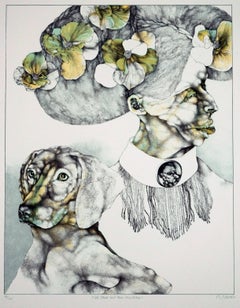
The Lady with the Dog / - Like the master, so the dog -
By Reiner Schwarz
Located in Berlin, DE
Reiner Schwarz (*1940 Hirschberg), The Lady with the Dog, 1971. Lithograph, 33 cm x 26 (image), 59 cm x 42 cm (sheet size), signed in pencil at lower right "R.[ein] Schwarz", dated "...
Category
1960s Surrealist Figurative Prints
Materials
Paper
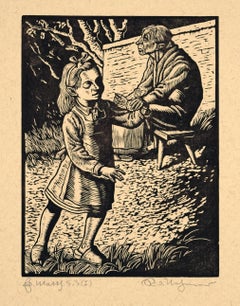
Blessed are the spiritually poor / - The Abundance of Poverty -
Located in Berlin, DE
Rudolf Nehmer (1912 Bobersberg - 1983 Dresden), Blessed are the spiritually poor, 1948. Woodcut on yellowish wove paper, 20 cm x 15 cm (image), 45 cm x 30 cm (sheet size), signed “Ru...
Category
1940s Realist Figurative Prints
Materials
Woodcut
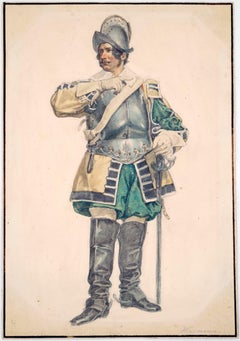
The actor Karl Seydelmann, probably as Max Piccolomini / - Theatrical Realism -
Located in Berlin, DE
Theodor Hosemann (1807 Brandenburg - 1875 Berlin), The actor Karl Seydelmann probably as Max Piccolomini, around 1840. Watercolor with pencil, 20.5 cm (height) x 14.7 cm (width), sig...
Category
1840s Realist Figurative Drawings and Watercolors
Materials
Paper
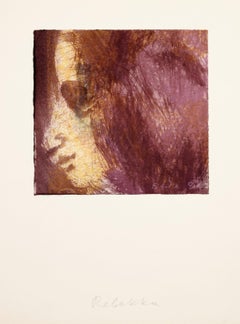
Rebekka / - Rebekka
s Appearance -
Located in Berlin, DE
Emil Wachter (1921 Neuburgweiser - 2012 Karlsruhe), Rebekka, 1987. Watercolor mounted on cardboard, 13.5 (height) x 14 cm (width). Signed “E.[mil] Wa[chter]” in pencil within the ima...
Category
1980s Realist Figurative Drawings and Watercolors
Materials
Paper
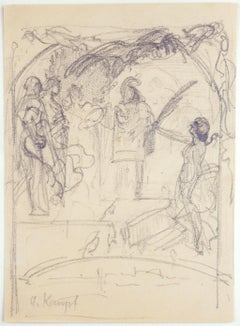
Study for an allegory of victory / - A virtuoso victory -
By Arthur Kampf
Located in Berlin, DE
Arthur Kampf (1864 Aachen - 1950 Castorp-Rauxel), Study to an allegory of victory, around 1900. Pencil on paper, 21 cm x 18 cm, signed lower left "A. Kampf".
- slightly darkened, otherwise in good condition
- A virtuoso victory -
About the artwork
The vertical-format sketch illustrates a plateau to which a staircase leads up from the right. Arthur Kampf thus takes up a typical baroque disposition for the depiction of allegories. And indeed, a female figure climbs the steps to hand the palm of victory to a figure that is probably also female. Other persons standing on the plateau pay homage to her, whereby the figure on the left edge of the picture may represent a warrior.
The scene is framed by an ornamentally decorated arch field, which additionally emphasizes the allegorical-historical content of the depiction. An arch can also be seen under the staircase, suggesting that this may be a design for a supraport.
The sheet could have been created in the wake of Arthur Kampf's appointment in 1899 as head of the studio for history painting at the Berlin Art Academy. The drawing style, which only outlines the idea of the picture and yet is determined by concise lines, corresponds to the sketchiness of the Baroque and testifies to Arthur Kampfs intensive study of this heyday of history painting.
About the artist
Arthur Kampf was the son of the Aachen painter and imperial court photographer August Kampf. His older brother Eugen and his son Herbert were also painters.
Arthur Kampf studied at the Düsseldorf Academy of Art from 1879 under Eduard von Gebhardt and Peter Janssen the Elder, whose master pupil he was from 1883 to 1891. Influenced by the naturalistic paintings of Jules Bastien-Lepage, which Kampf saw on a trip to Paris in 1885, he created the painting "The Last Statement" in 1886, which was based on a personal experience. It shows a man mortally wounded by knife wounds. The oppressive drasticness of the almost life-size depiction caused a sensation and controversial criticism.
The first successes were achieved: At the Berlin Jubilee Exhibition of 1886, Kampf received an honorable mention, and at the Munich Annual Exhibition of 1890, he was awarded a gold medal. Between 1886 and 1936, Kampf participated in all the major German exhibitions.
In 1887 the artist painted his first fresco, which was the beginning of a series of monumental compositions. With the highly successful painting "The Burial of the Corpse of Kaiser Wilhelm I in the Berlin Cathedral" (1888), Kampf established himself as a painter of contemporary history, following in the footsteps of Adolph von Menzel, whose oeuvre he immediately took up with the painting "Speech by Frederick the Great to His Generals in Koeben" (1893). The pictures of his Liberation War cycle were included in school textbooks and distributed in large editions as postcards.
As for his academic career, Kampf became an assistant professor at the Düsseldorf Academy of Art in 1887, and in 1894 he was appointed professor of the class for antiquities and nature, and in 1897 he became head of the painting class. In 1899 Kampf was appointed director of the history painting studio at the Berlin Academy of Art. In 1901 he became a full member of the academy and was its president from 1907 to 1912. As Anton von Werner's successor, Kampf directed the Academy of Fine Arts in Charlottenburg from 1915 to 1925.
Among his monumental works is the painting of the assembly hall of the Aachen town hall, done between 1898 and 1902. It focuses on the social welfare of the state and the work of the people. Important subsequent commissions include the painting of the reading room of the new Royal Library in Berlin and the new auditorium of the University of Berlin with "Fichte's Speech to the German Nation". During World War I, at the request of General Ewald von Lochow, Kampf traveled to the Western theaters of war, including Warsaw in 1916.
In addition to painting, Kampf was also intensively involved in printmaking and, together with his brother Eugen and artist friends such as Alexander Frenz and Olof Jernberg, was considered an innovator of lithography in Düsseldorf. From 1913 on, he worked continuously as an illustrator of historical works and literary classics such as Shakespeare and Goethe.
Kampf remained a recognized artist after 1933. On the occasion of the retrospective of his complete works at the "Great German Art Exhibition", he was awarded the "Eagle Shield of the German Reich". During the final phase of World War II, Kampf was placed on Hitler's "Gottbegnadetenliste," which protected him from military service. After World War II, Kampf, whose work was largely destroyed, fell into obscurity.
Arthur Kampf belonged to numerous artists' associations. He was a member of the "Rheinisch-Westfälischer Künstlerbund", the "Society of German Watercolorists", the "Association of German Illustrators", the "Malkasten", the "Künstlerclub St. Lucas", the "Düsseldorfer Künstlerbund", the "Freie Vereinigung Düsseldorfer Künstler" and the "Berliner Künstlerbund".
Arthur Kampf's sister was married to the painter Alexander Frenz.
"Kampf's public recognition in the German Empire later led to his being one-sidedly labeled as a history painter and representative of the Wilhelmine era. This classification does not do justice to the artist's oeuvre as a whole. His early talent did not experience a rapid development later on, but it reached an ever greater mastery in the sense of an impressively relaxed realism and extended thematically beyond history. Kampf was also an excellent draughtsman, etcher and lithographer. Many of his works have been destroyed or lost, and some lead a shadowy existence in museum storerooms."
- Otto Zirk
"His importance as a Wilhelminian painter and cultural politician has been forgotten in favor of an exaggerated reception of his work during the Third Reich.
- Andreas Schroyen
Selection of public collections that own works by Arthur Kampf:
Altonaer Museum Hamburg, Berlinische Galerie, Burg Frankenberg Aachen, Busch-Reisinger Museum Cambridge/Mass., Deutsches Historisches Museum Berlin, Government Art Collection London, Kulturhistorisches Museum Magdeburg, Kunsthalle Hamburg, Museum für Kunst- und Kulturgeschichte Dortmund, Museum Kunstpalast Düsseldorf, Neue Nationalgalerie Berlin, Suermondt-Ludwig-Museum Aachen, Van der Heydt-Museum Wuppertal.
Selected Bibliography
Hans W...
Category
Early 20th Century Realist Figurative Drawings and Watercolors
Materials
Paper
You May Also Like
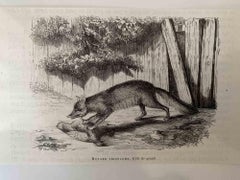
The Hunting Fox - Lithograph by Paul Gervais - 1854
By Paul Gervais
Located in Roma, IT
The Hunting Fox is an original lithograph on ivory-colored paper, realized by Paul Gervais (1816-1879). The artwork is from The Series of "Les Trois Règn...
Category
1850s Modern Animal Prints
Materials
Paper, Lithograph
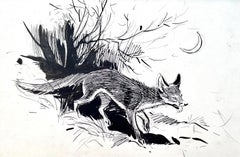
Eileen Soper - 20th Century British Wildlife Drawing of a Fox
By Eileen Soper
Located in London, GB
EILEEN SOPER
(1905-1990)
Fox
Pen and ink over traces of pencil
Framed
12.5 by 19 cm., 5 by 7 ½ in.
(frame size 28 by 33.5 cm., 11 by 13 ¼ in.)
Provenance:
The artist’s estate;
Ch...
Category
Late 20th Century Realist Animal Drawings and Watercolors
Materials
Paper, Ink, Pencil
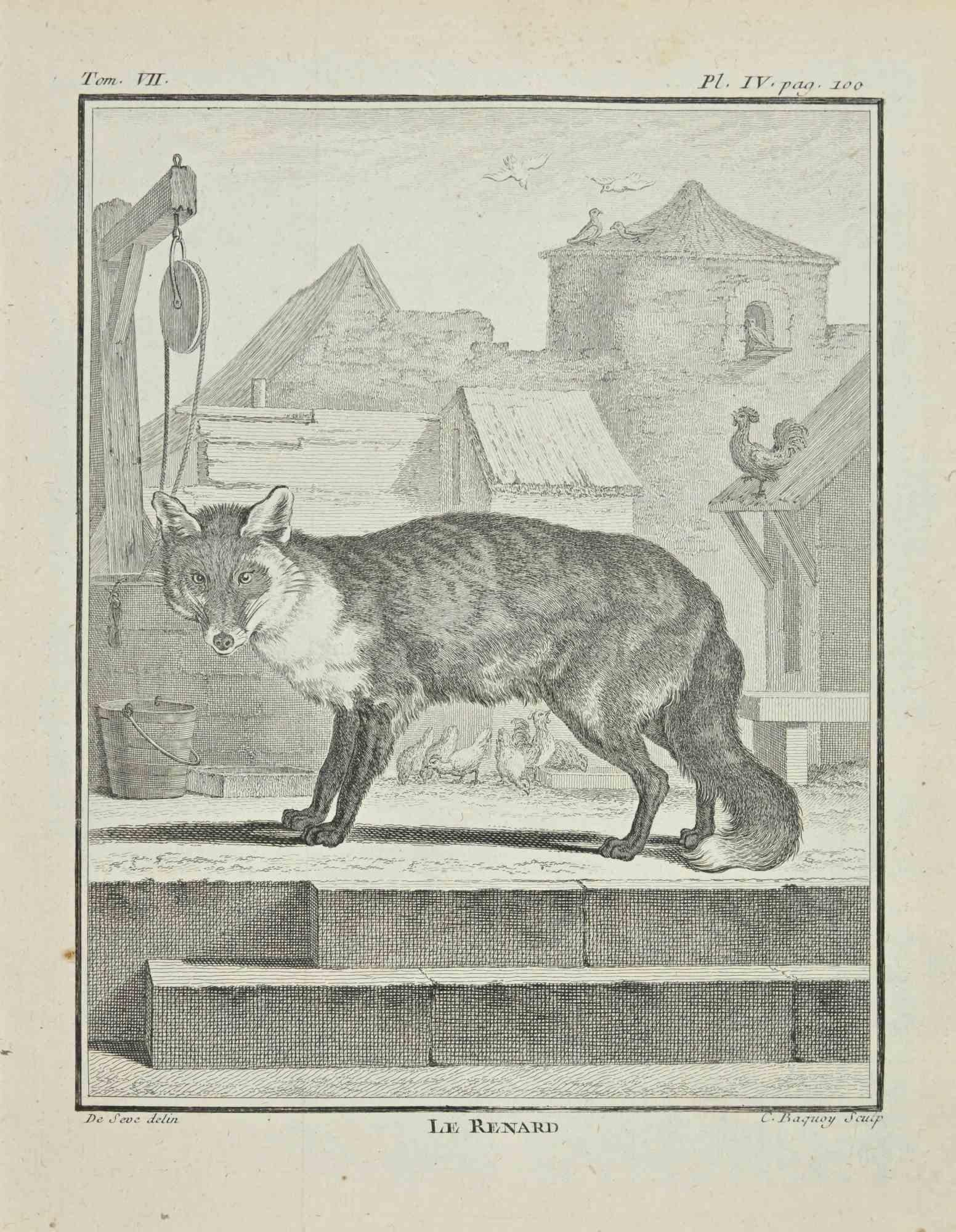
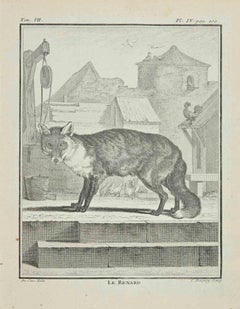
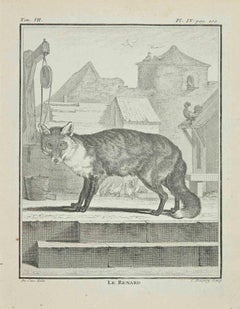
Le Renard - Etching by Jean C. Baquoy - 1771
Located in Roma, IT
Etching realized by Jean Charles Baquoy in 1771.
It belongs to the first edition of the suite "Histoire Naturelle de Buffon".
Good conditions with slight foxing.
Category
1770s Modern Figurative Prints
Materials
Etching
$119 Sale Price
50% Off
Le Renard - Etching by Jean Charles Baquoy - 1771
Located in Roma, IT
Le Renard is an etching realized by Jean Charles Baquoy in 1771.
It belongs to the suite "Histoire Naturelle de Buffon".
The Artist's signature is engraved lower right.
Good condi...
Category
1770s Modern Figurative Prints
Materials
Etching
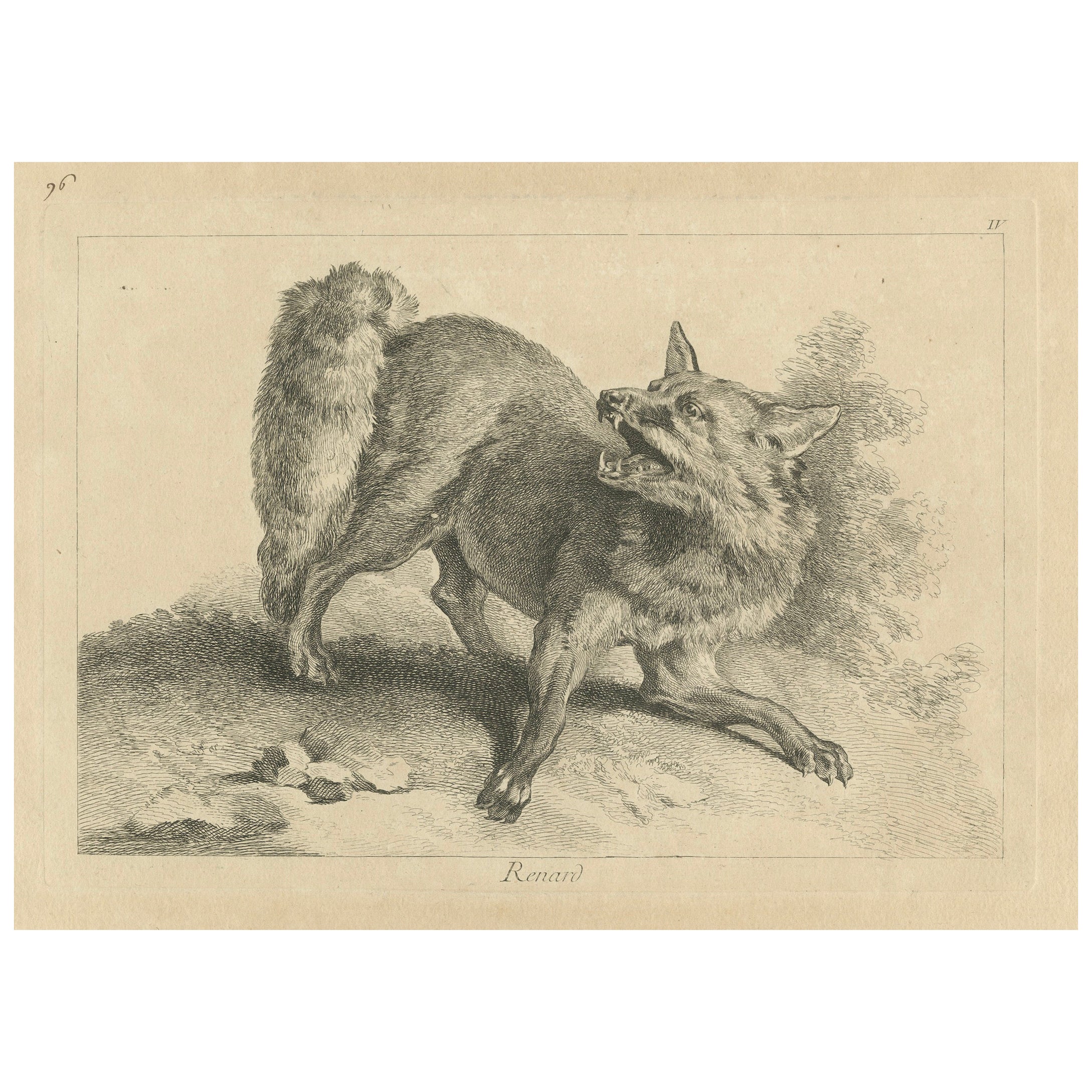
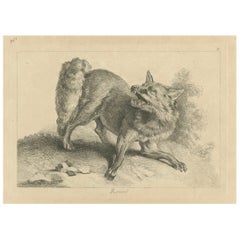
Renard, The Red Fox: An Original Detailed Etching - circa 1740
Located in Langweer, NL
This etching and engraving, titled "Renard," depicts a fox in a dynamic and alert posture. The artwork captures the fox's thick fur, bushy tail, and sharp features with exquisite det...
Category
Antique 1740s French Prints
Materials
Paper
$421 Sale Price
20% Off
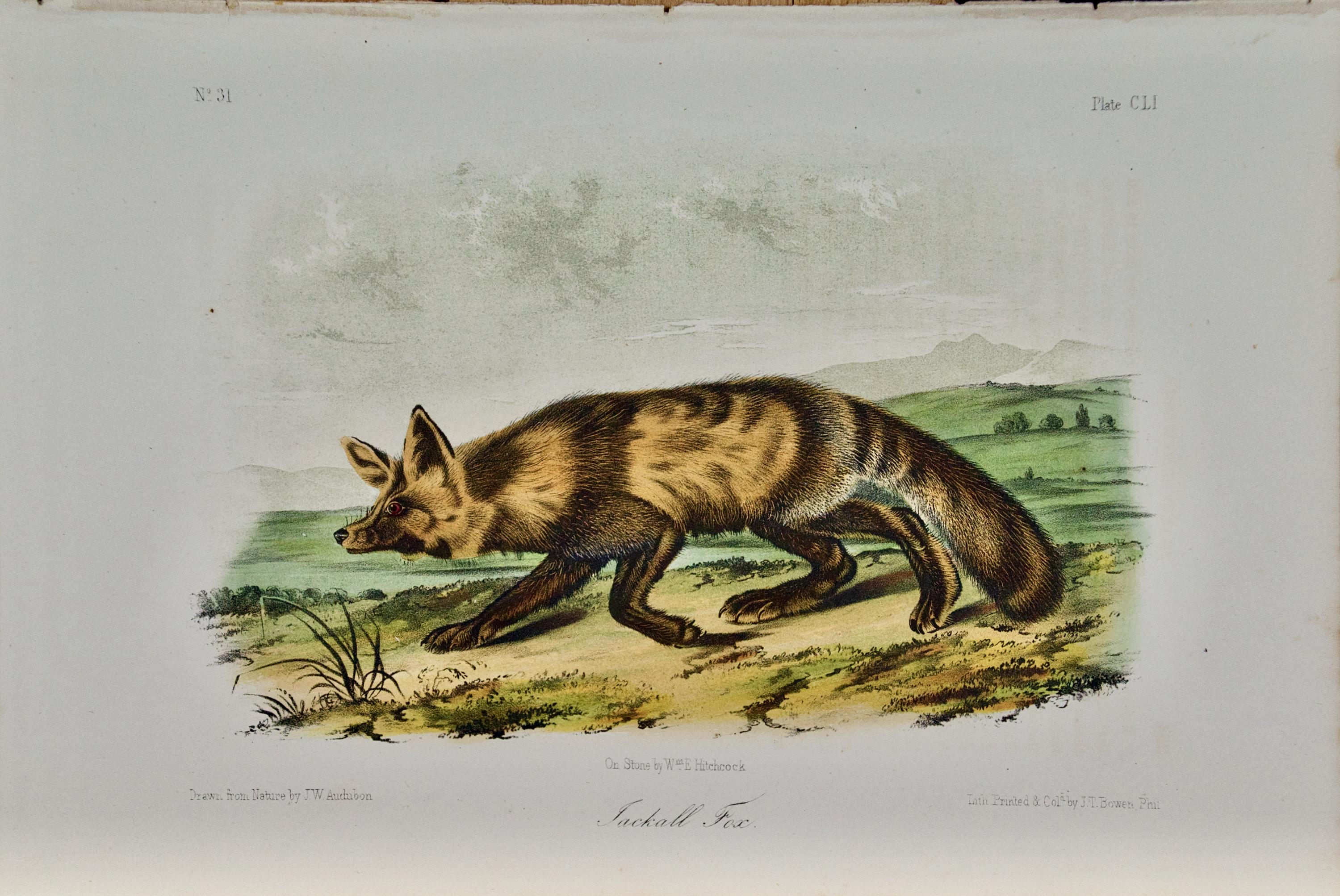
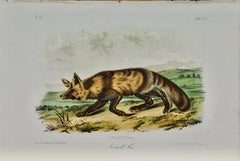
Jackall Fox: An Original 19th C. Hand-colored Lithograph by John J. Audubon
By John James Audubon
Located in Alamo, CA
This is an original 19th century John James Audubon hand colored lithograph entitled "Jackall Fox", No. 31, Plate CLI, 151, from Audubon's "Quadrupeds of North America", printed and ...
Category
Mid-19th Century Naturalistic Animal Prints
Materials
Lithograph
More Ways To Browse
19th Century Male Oil Paintings
Large Hunting Landscape Oil Paintings
Antique Fox Painting
Antique Deer Painting
Animals Forest Painting
Antique Growlers
19th Century Oil Painting Forest Deer
Carl Wilhelms
Antique Hunting Books
Watercolor Of Horse
Watercolor Butterfly
Lion Drawing
George Edwards Engravings
Horse Ink Drawing
Chinese Watercolor Birds Painting On Paper
Juxtapoz Magazine
Tiger Drawing
Parrot Watercolor