Items Similar to Resting Dromedar, 1861
Want more images or videos?
Request additional images or videos from the seller
1 of 10
Egron Sellif LundgrenResting Dromedar, 18611861
1861
$11,386.86
£8,518.12
€9,500
CA$15,677.29
A$17,156.91
CHF 9,065.92
MX$204,779.06
NOK 115,692.45
SEK 105,810.16
DKK 72,379.27
About the Item
Egron Sellif Lundgren (1815–1875) Sweden
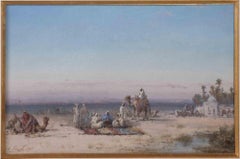
Resting Dromedar, 1861
watercolour heightened with white
unframed 21 x 29.2 cm (8 ¼ x 11 ½ in.)
framed 40 x 48 cm (15 ¾ x 18 ⅞ in.)
Provenance:
Sale, Stockholm, Bukowskis, 12 December 1894, lot 42;
Signe and Ernst Trygger (1857–1943), Villa Trygger, Stockholm. Ernst Trygger was Swedish Prime Minister (1923–24), Minister of Foreign Affairs (1928–30) and University Chancellor (1926–37); A Swedish private collection.
Literature:
Förteckning på oljemålningar, aquareller och handteckningar m.m. av Egron Lundgren utställda i Akademien för de fria konsterna, 1876, no. 259.
Karl Asplund, Egron Lundgren, Vol. II, 1940, p. 40, note 1, p. 166.
Exhibited:
The Royal Academy, Egron Lundgren, 10 April 1876, no. 259.
Sveriges Allmänna Konstförening, Memorial Exhibition, February 1915, no. 70, Hvilande kameler (owner Ernst Trygger).
The Royal Academy, Svenska Akvareller (Swedish Watercolor Exhibition), 1925, no. 224, Vilande kameler (owner Signe Trygger).
Essay:
This delicate watercolour, executed during Lundgren’s first journey to Egypt in the winter of 1861–62, depicts a resting dromedary in the shade at Giza. Painted in transparent washes with touches of white gouache, the work captures the intense desert light and atmosphere with a remarkable immediacy. The reclining animal dominates the composition, rendered in warm ochres and browns against a cool, shadowy background, while highlights on its saddle and coat give the scene a subtle radiance. The quiet stillness of the subject reflects Lundgren’s sensitivity to the everyday motifs of the Orient, which he observed and painted directly on site.
Lundgren travelled to Egypt in the company of two British artists, Frank Dillon (1823-1909) and George Price Boyce (1926-1897). They initially rented a house by the Nile in the village of Giza, living in what Lundgren described as “oriental style,” before moving on to Cairo in January 1862. From there, they explored and painted the surrounding landscape, monuments, and urban life. The presence of camels and dromedaries in daily scenes around the Nile provided him with natural subjects for study. This watercolour likely belongs to that body of work, in which Lundgren combined sharp observation with a painterly freshness, setting him apart from the more academic studio-bound orientalists of his time.
On 15th January Lundgren wrote from Kairo (G. Nordensvan, Egron Lundgren, Reseskildringar, anteckningar och bref, 1905, p. 248):
”Vårt fattiga lilla Gizeh med sina lerhus och palmer, tält och kameler snarare hviskar ännu om patriarkernas tidsålder och tycks vara så gammalt som Genesis. Glittrar den breda Nilen ännu såsom när Moses stod på dess strand, och i stilla kvällen, när fårskockar och getter, lägra sig nere vid vattenbrynet, sitta de trötta herdarna i aftonsolen så bruna som om de var var porfyrstoder, nyss uppgrävda från något underjordiskt tempel. Här flyger Ibis ännu över de tysta vattendragen i palmskogarna, och om natten går månen upp på den underligt klara stjärnhimmeln och tyckes liksom söka sin gamla Isis-dyrkan. De mysteriösa, uråldriga pyramiderna stodo hvar morgon där spöklika, gåtlika med den tomma öknen bakom sig, och det var därföre icke att undra på om dagen blev full af drömmar om långt förflutna tider.” (“Our poor little Giza with its mud houses and palm trees, tents and camels rather still whispers of the age of the patriarchs and seems to be as old as Genesis. Does the wide Nile still glitter as when Moses stood on its banks?, and in the still evening, when sheepherds and goats, camp down by the water's edge, the weary shepherds sit in the evening sun as brown as if they were pillars of porphyry, just dug up from some subterranean temple. Here the ibis still flies over the quiet watercourses in the palm groves, and at night the moon rises in the strangely clear starry sky and seems to seek her old worship of Isis. The mysterious, ancient pyramids stood every morning ghostly, enigmatic with the empty desert behind them, and it was therefore no wonder if the day became full of dreams of times long past.”
In En målares anteckningar (A Painters diary), Vol. III, 1873, Lundgren writes in details about his stay in Egypt. His description of the house they rented in Gizeh is of great interest since it shows that foreign artists lived a most comfortable life when they visited the orient, also remote parts (p. 12):
”Vi tåga in och taga i besittning ett stort stenhus, som tillhörde Fuad el Pascha. Nilen sqvalpade upp mot ena sidan så att vi hade kunnat meta från fönsterna. Huset var för övrigt alldeles tomt, så att vi måste från Cairo låta hämta husgeråd, sängkläder, betjening, en kock med tillbehör och mycket, som icke omtalas i tusen och en natt, men som ändock är svårt att undvara. Det blev också nödvändigt att skaffa oss ett slags österländsk klädebonad för att kunna vara mer ogenerade, och såsom skydd mot solhettan lindades turbaner omkring hattarna; min var broderad med gult silke, som lyste likt guld. Vi redo på små smalbenta borickor [åsnor] med granna utstickande marokindsadlar, och var och en hade sin löpare efter sig. /Vårt hus låg , som sagt, alldeles ned vid flodbrädden och över porten hängde, enligt bruket i Egypten, skinnet af en stor krokodil, vilket tros, om icke medföra lycka åtminstone skrämma bort mycket ont och vara en talisman emot all slags förtrollning. Vi hade en portfaktare, Mahommed, en gammal gråskäggige Nubier, och dessutom två karlar, Ibrahim kammartjenare och Abdallah kock. / I övre våningen hade vi flera rymliga och ljusa rum med divaner och balkonger, ifrån hvilka utsikterna voro vidsträckta och vackra.” (We march in and take possession of a large stone house, which belonged to Fuad el Pascha. The Nile squalled up to one side so that we could have ten fishing from the windows. The house was otherwise completely empty, so that we had to have order household utensils, bedding, servants, a cook with accessories and much more from Cairo, which is not mentioned in a thousand and one nights, but which is nevertheless difficult to do without. It also became necessary to get us a kind of Eastern clothing in order to be more insolent, and as a protection against the heat of the sun turbans were wrapped around the hats; mine was embroidered with yellow silk, which shone like gold. We were ready on small narrow-legged boricas [donkeys] with protruding moroccon saddles, and each had his runner behind him. / Our house was, as I have mentioned, located by the river and over the gate hung, according to the custom in Egypt, the skin of a large crocodile, which is believed to, if not bring happiness, at least scare away much evil and be a talisman against all kinds of enchantment. We had a porter, Mahommed, an old grey-bearded Nubian, and also two men, Ibrahim the butler and Abdallah the cook. / On the upper floor we had several spacious and bright rooms with divans and balconies, from which the views were extensive and beautiful.)
The Egyptian journey marked an important stage in Lundgren’s career. Already well established as a painter of Spanish scenes and as a celebrated war correspondent and artist during the Indian Rebellion, he now turned his attention to the landscapes and people of the Middle East. The Orientalist subjects he produced in Egypt resonated with the European fascination for the exotic and the ancient, but they also carry a sense of authenticity, born from direct encounter and the spontaneity of watercolour.
Lundgren’s international career had taken him from studies in Paris and Rome to long residencies in Spain and London, where he gained the patronage of Queen Victoria. His mastery of watercolour brought him election to the Royal Society of Painters in Water Colours in 1864, and his works were admired both in Sweden and abroad. The Egyptian sojourn of 1861–62 enriched his oeuvre with luminous Orientalist motifs, among which Resting Dromedar stands as a fine example. Exhibited in Sweden on several occasions, including the memorial exhibition of 1915, and with a provenance linking it to the Trygger collection, the painting today survives as both a lyrical desert study and a cultural document of Lundgren’s artistic journeys.
References
Egron Lundgren, En målares anteckningar (A Painter’s Diary), Vols. I–III, 1871–73.
Karl Asplund, Egron Lundgren, Vols. I–II, Stockholm, 1914–40.
J. L. Roget, A History of the Old Watercolour Society, Vol. II, London 1891.
G. Nordensvan, Egron Lundgren. Reseskildringar, anteckningar och bref, Stockholm, 1905.
Svenskt Biografiskt Lexikon, “Egron S. Lundgren.”
Nationalmuseum, Svenska akvarellmålare under 1800-talet, exhibition catalogue, Stockholm 1981.
- Creator:Egron Sellif Lundgren (1815 - 1875, Swedish)
- Creation Year:1861
- Dimensions:Height: 8.27 in (21 cm)Width: 11.42 in (29 cm)
- Medium:
- Movement Style:
- Period:
- Condition:Very good condition. UV protected art-glass.
- Gallery Location:Stockholm, SE
- Reference Number:1stDibs: LU1445216918502
About the Seller
5.0
Platinum Seller
Premium sellers with a 4.7+ rating and 24-hour response times
Established in 2020
1stDibs seller since 2020
221 sales on 1stDibs
Typical response time: 1 hour
Associations
International Confederation of Art and Antique Dealers
Associations
- ShippingRetrieving quote...Shipping from: Stockholm, Sweden
- Return Policy
More From This Seller
View AllStudy of a horse lying on its right side seen from the front
By Adam Frans van der Meulen
Located in Stockholm, SE
Provenance:
Jean-Marc Du Pan (1785–1838), Geneva (L. 1440), passed to his brother
Alexandre-Louis Du Pan (1787–1846);
his sale, Geneva, March 26–28, 1840, included in lots 913–917;
...
Category
17th Century Old Masters Animal Drawings and Watercolors
Materials
Paper, Crayon
Lost in Thoughts, Oil Sketch Painted in Brittany (Bretagne), Before 1890
Located in Stockholm, SE
We are delighted to offer a unique and evocative piece by the Swedish artist Ingeborg Westfelt-Eggertz. This small oil sketch captures a moment in time, portraying a young man seated...
Category
1880s Landscape Paintings
Materials
Canvas, Masonite, Oil
Drawing from Hagbynäs Sweden, 1779
Located in Stockholm, SE
Jonas Carl Linnerhielm (1758–1829)
Hagbynäs
Dated and titled “1779 in Aug. Vid Hagbynäs”
Red chalk on paper
21.3 × 33.4 cm (8.4 × 13.1 in.)
with frame 40.5 x 51 cm (15 ⁷/⁸ x 20 ⅛ i...
Category
1770s Romantic Landscape Drawings and Watercolors
Materials
Paper, Chalk
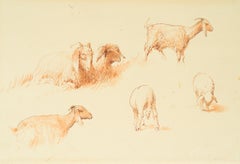
Studies of Goats and Sheep, Cairo (c. 1871)
Located in Stockholm, SE
Swedish artist Egron Lundgren sketched a small herd of goats and sheep resting together in this scene. Two goats recline quietly at the center while another stands nearby, creating a...
Category
1870s Academic Animal Drawings and Watercolors
Materials
Paper, Watercolor
Sleeping Youth, 1895 – Early Academic Study by Paul Ehrenberg, Age 19
Located in Stockholm, SE
Paul Ehrenberg (1876–1949)
Sleeping Boy, 1895
Red chalk on paper
sheet 38 × 52 cm (14.96 × 20.47 inches)
framed 61 × 74 cm (24.02 × 29.13 inches)
signed and dated twice
Essay:
Thi...
Category
1890s Impressionist Figurative Drawings and Watercolors
Materials
Paper, Chalk
A Young Woman With Her Animals, Original Oil Painting From 1862
Located in Stockholm, SE
This painting by Gustaf Brandelius, a 19th-century Swedish artist, evokes the pastoral tranquility and rural life of the era. Brandelius was not only a painter but also served in the...
Category
19th Century Animal Paintings
Materials
Canvas, Oil
$1,977 Sale Price
25% Off
You May Also Like
A Moment
s Rest, 19th Century Graphite Orientalist
By Carl Friedrich Heinrich Werner
Located in London, GB
CARL FRIEDRICH HEINRICH WERNER
1808 - 1894
A Moment's Rest
Graphite on Paper
Gilt Frame
Image Size: 10 x 17 ¼ inches
SKETCHES OF CARL WERNER EXHIBITION
AT OUR GALLERY 1st - 9TH D...
Category
19th Century Figurative Drawings and Watercolors
Materials
Paper, Graphite
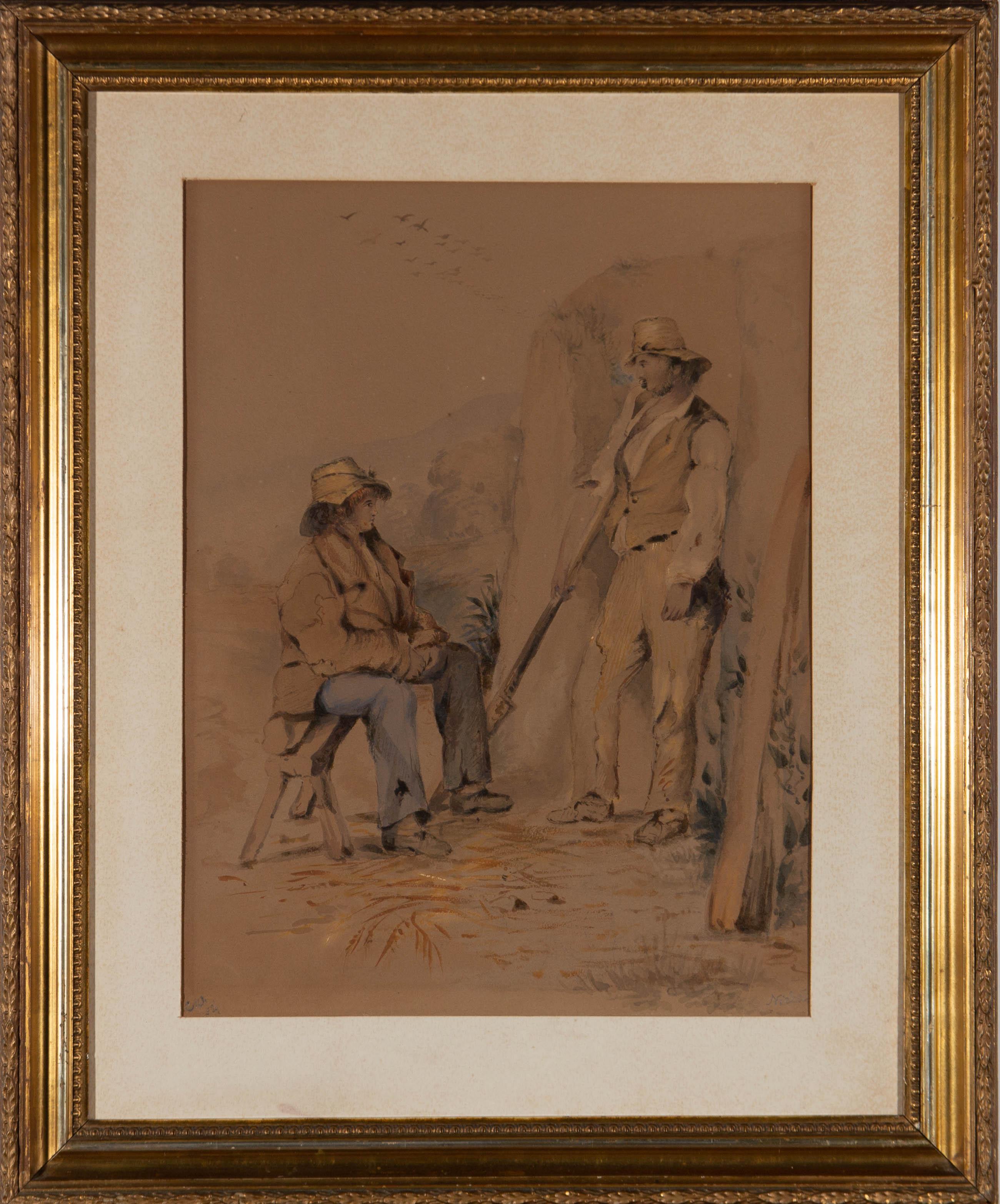
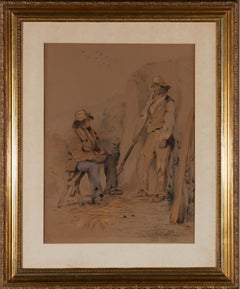
Manner of Erskine Nicol (1825–1904) - 1854 Watercolour, A Moment
s Rest
Located in Corsham, GB
A charmingly rustic watercolour showing two men resting from their work, having a conversation. This watercolour is in the manner of the Scottish genre scene painter, Erskine Nicol...
Category
19th Century Portrait Drawings and Watercolors
Materials
Watercolor
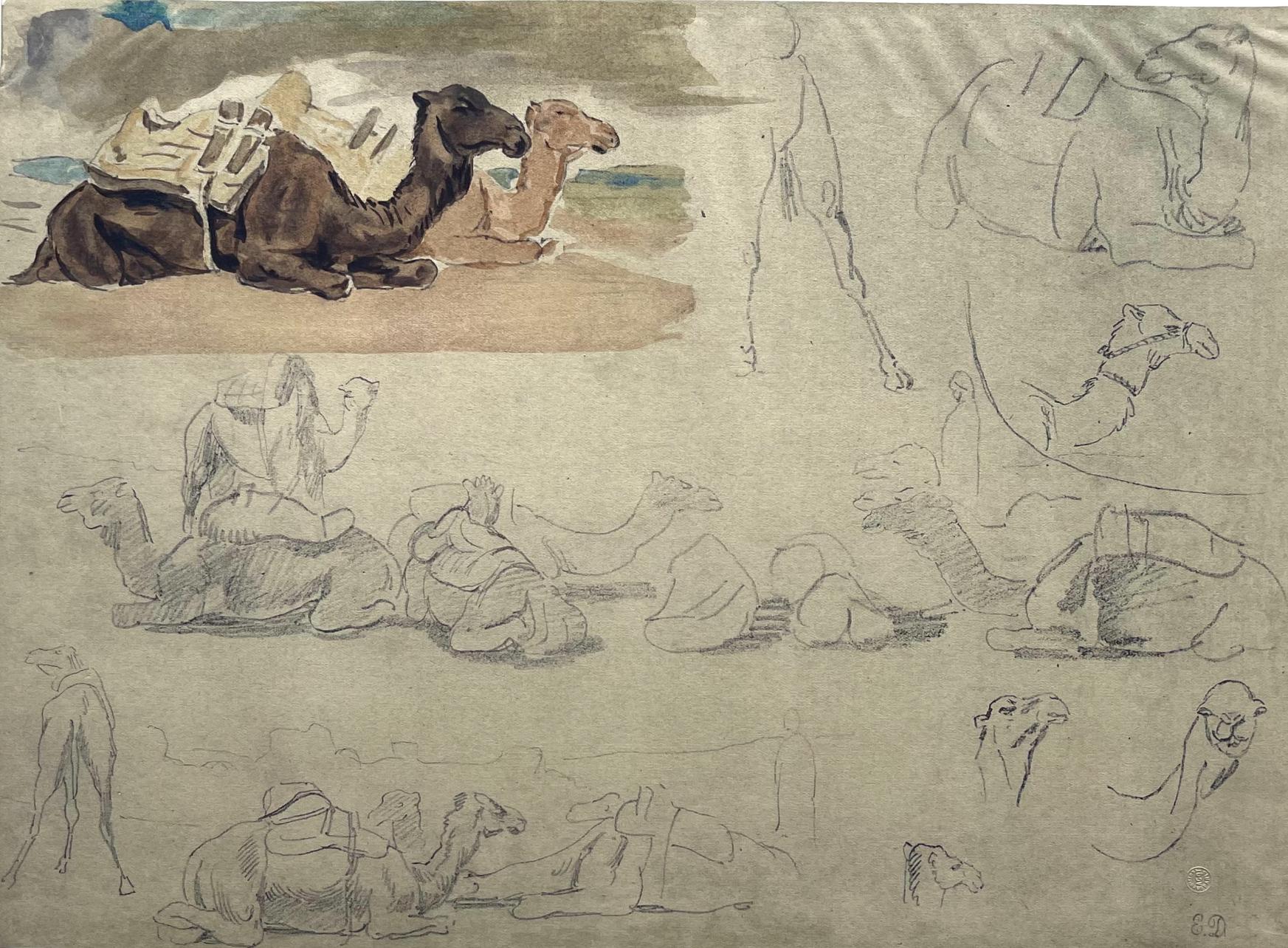
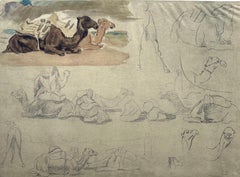
Delacroix, Composition, Trente et un Dessins et Aquarelles du Maroc (after)
By Eugène Delacroix
Located in Southampton, NY
Lithograph on fine vélin paper, mounted on archival mat-board, as issued. Unsigned and unnumbered, as issued. Good Condition; never framed or matted. Notes: From the folio, Eugène De...
Category
1920s Romantic Landscape Prints
Materials
Lithograph
$1,436 Sale Price
20% Off
Free Shipping
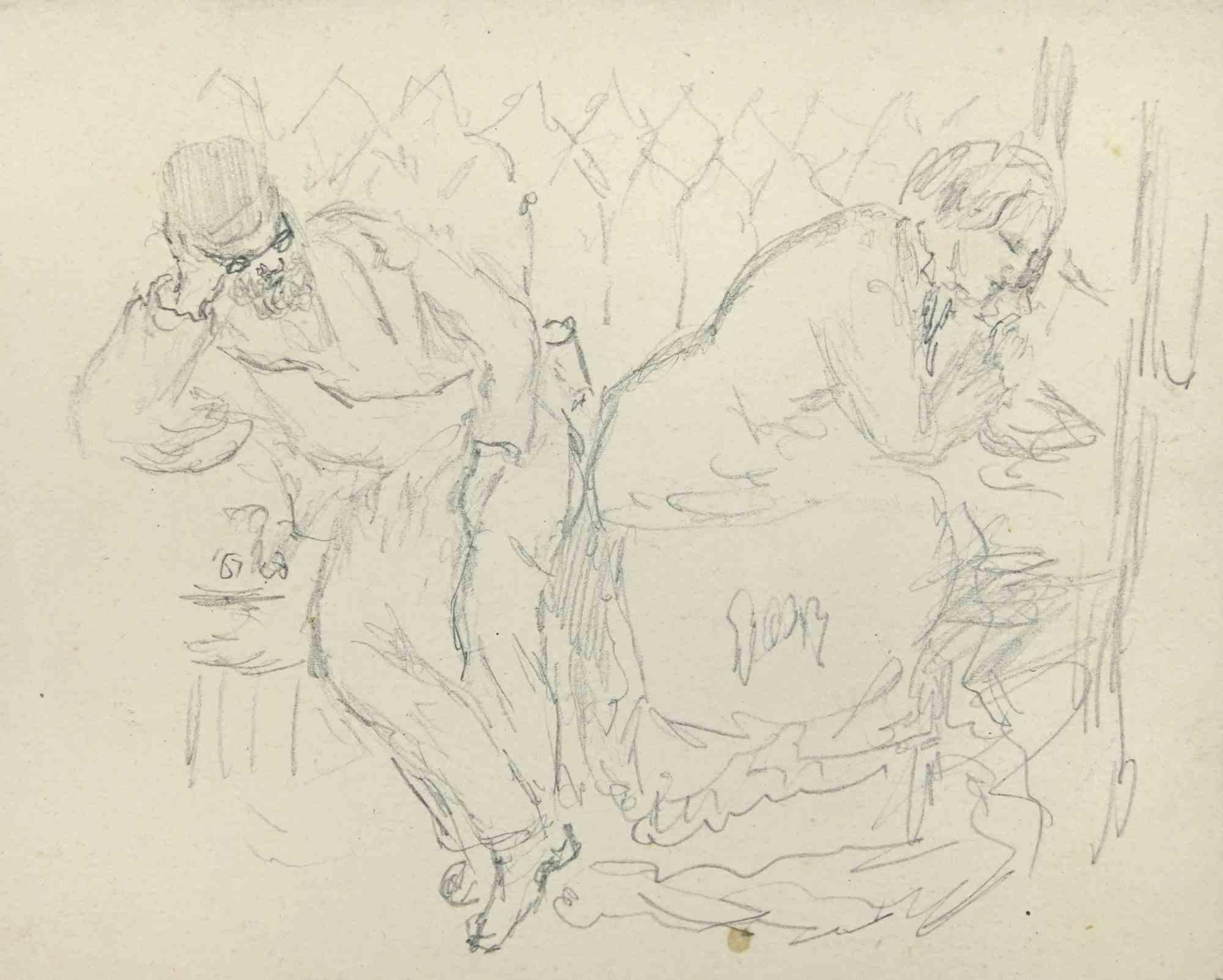
Getting Rest - Drawing by Joseph Alexander Colin - Mid-20th Century
Located in Roma, IT
Getting Rest is a drawing realized by Joseph Alexander Colin in the Mid-20th Century.
Pencil ivory-colored paper.
Good conditions with slight foxing.
The artwork is realized throu...
Category
Mid-20th Century Modern Figurative Drawings and Watercolors
Materials
Paper, Pencil
Rest at the Caravanserail - Gouache by Paul Pascal - 1885
By Paul Pascal
Located in Roma, IT
Rest at the caravanserail is an original old masters artwork realized by Paul Pascal in 1885.
Mixed colored gouache on paper.
Included an elegant frame.
Hand signed by the artist ...
Category
19th Century Modern Figurative Paintings
Materials
Gouache
Mid 19th Century Watercolour - Resting On The Style
Located in Corsham, GB
A charming watercolour finished with graphic black hatching, showing a woman and three young girls resting on a style overlooking a beautiful valley. The woman and young girls are sm...
Category
19th Century Landscape Drawings and Watercolors
Materials
Watercolor
$301 Sale Price
20% Off