Items Similar to Bull
Want more images or videos?
Request additional images or videos from the seller
1 of 11
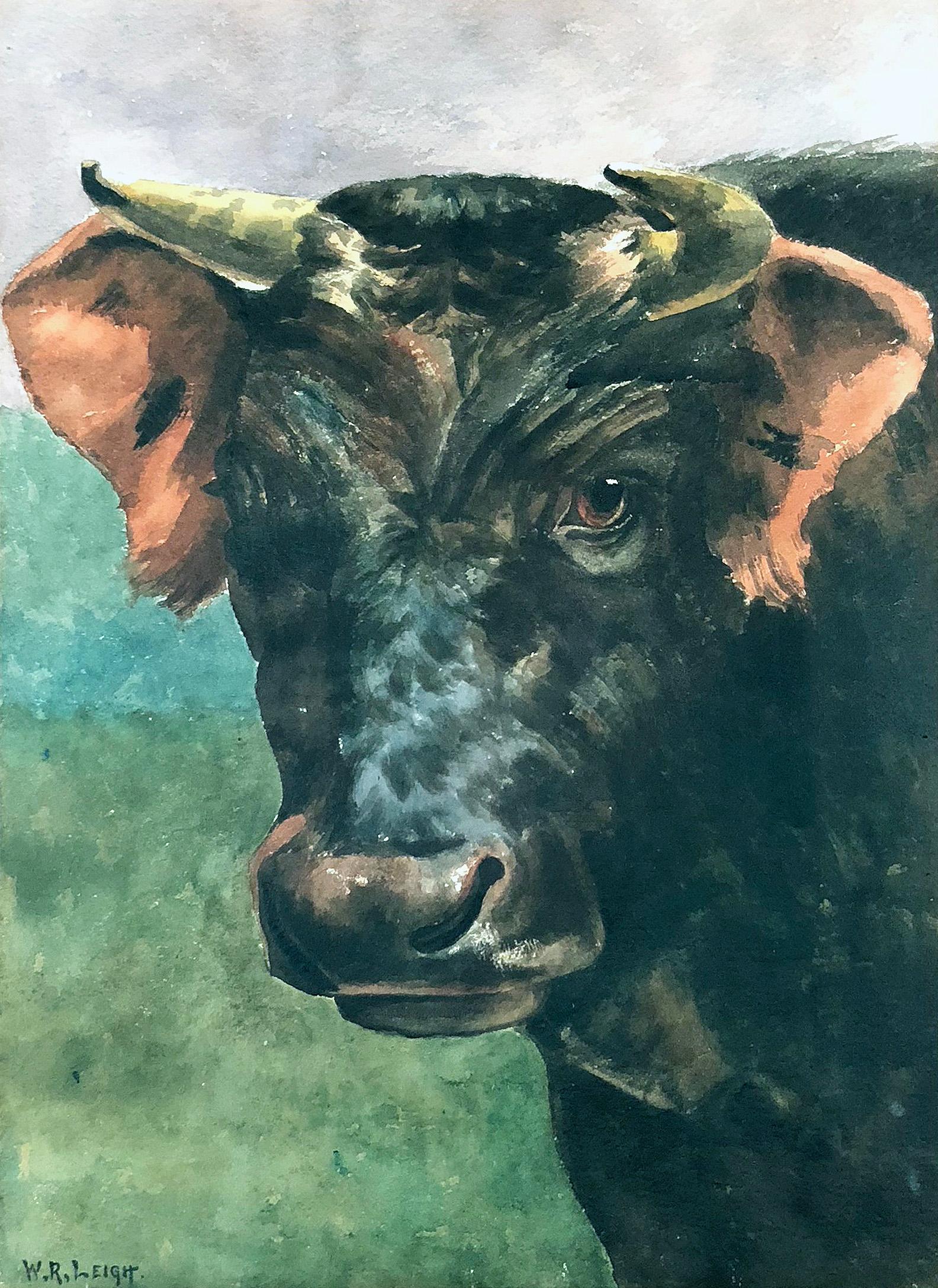
William Robinson LeighBullUnknown
Unknown
Price Upon Request
Price Upon Request
Price Upon Request
Price Upon Request
Price Upon Request
Price Upon Request
Price Upon Request
Price Upon Request
Price Upon Request
Price Upon Request
About the Item
Bull by W. R. Leigh (1866-1955)
Signed Lower Left
Unframed: 20" x 16"
Framed: 33.25" x 27.25"
Born near Falling Waters, West Virginia on a plantation a year after the Civil War, and raised in Baltimore, William Leigh became one of the foremost painters of the American West with a career of seventy-five years. Some people referred to him as the "Sagebrush Rembrandt".
He was the son of impoverished Southern aristocrats and took his first art training at age 14 from Hugh Newell (1830-1915) at the Maryland Institute where he was regarded as one of the best students in his class. From 1883 to 1895, he studied in Europe, mainly at the Royal Academy in Munich with Ludwig Loefftz. From 1891 to 1896, he painted six cycloramas or murals in the round, a giant German panorama.
In 1896, he began working as a magazine illustrator in New York City for Scribner's and Collier's Weekly Magazine, and he also painted portraits, landscapes, and genre scenes. However, he was not a very successful artist in those years in New York.
Trips to the Southwest began in 1906 when he made an agreement with William Simpson, Santa Fe Railway advertising manager, to paint the Grand Canyon in exchange for free transportation West. In 1907, he completed his Grand Canyon painting, which led to many more commissions and an extensive painting trip through Arizona and New Mexico. These travels inspired him to paint western subjects for the next 50 years, but it was not until the 1940s that he received much recognition. He painted in the Southwest nearly every summer between 1912 and 1926 and focused on the Hopi and Navajo Indians.
In 1910, he traveled to Wyoming, where he painted in Yellowstone Park and did sketches, many which he later converted into large canvases such as Lower Falls of the Yellowstone (1915) and Grand Canyon of the Yellowstone (1911).
His style was realistic, and his palette invariably had the Southwestern hues of soft pinks, reds, yellows and purples. In fact, his critics who knew little of the Southwest accused him of fabricating the colors.
As an older man he was described as a big, powerful man with gray hair and a white handlebar mustache and a deep base voice. He was highly opinionated and absolutely hated modern, abstract art. During the latter part of his career, he painted a series of American historical murals as well as paintings based on his travels to Africa funded by the Eastman Kodak Company and the American Museum of Natural History in New York. For many years, his work was handled exclusively in New York at the Grand Central Art Galleries at the Biltmore Hotel.
Many of his works are at the Gilcrease Museum in Tulsa, Oklahoma. In March, 1999, the Historical Center of Cody, Wyoming held an exhibition of his field sketches and finished works depicting his experiences near Cody, Wyoming in the early part of the century, between 1910 and 1921. These years, many which he spent painting in the Carter Mountain vicinity, were considered crucial to his artistic development because he was exposed to western landscape. His companion during these travels was Cody taxidermist Will Richard who stirred his interest in wildlife.
- Creator:William Robinson Leigh (1866 - 1955, American)
- Creation Year:Unknown
- Dimensions:Height: 20 in (50.8 cm)Width: 16 in (40.64 cm)
- Medium:
- Movement Style:
- Period:
- Condition:
- Gallery Location:Missouri, MO
- Reference Number:1stDibs: LU747310363112
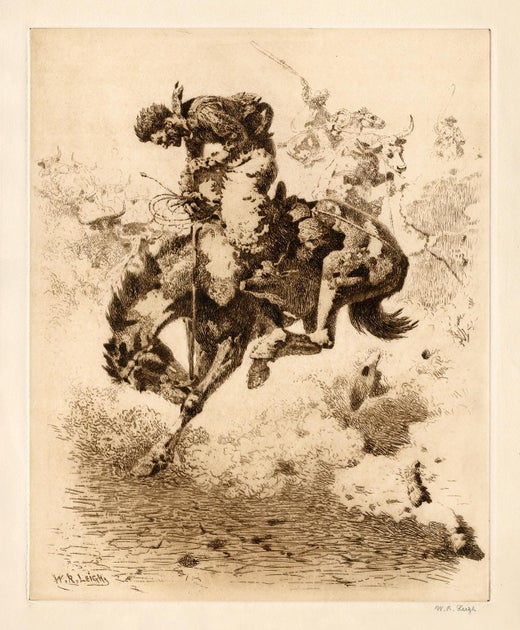
William Robinson Leigh
William R. Leigh was born in Berkeley County, West Virginia in 1866 and spent his boyhood on a farm. At the age of fourteen he was sent to the Maryland Institute in Baltimore to begin his art training. Although from a very poor family, he managed to spend twelve years in Europe where he studied at the Royal Academy in Munich, Germany. Upon returning to the United States he opened a studio in New York and did illustrations for "Scribner's Magazine". It was not until he was forty years old that he was able to see the West which had occupied his thoughts for such a long time. His bold use of color depicted the clear light and brilliant hues of the West as he saw it. It was during this phase of his career that he came to be known as the "Sagebrush Rembrandt". In 1921 Leigh married Ethel Traphagen, a women's clothing designer, and together they established the successful Traphagen School of Fashion in New York City. In 1926 and 1928 he made two trips to Africa. On these trips he did many paintings of big game, and returning to New York he did the backgrounds for animal habitat groups. He painted in the Southwest nearly every summer between 1912 and 1926. His style was realistic and his palette invariably had the Southwestern hues of soft pinks, reds, yellows and purples. In fact, his critics who knew little of the Southwest accused him of fabricating the colors. He died in 1955.
About the Seller
5.0
Vetted Professional Seller
Every seller passes strict standards for authenticity and reliability
Established in 1970
1stDibs seller since 2017
156 sales on 1stDibs
Typical response time: Several days
- ShippingRetrieving quote...Shipping from: Missouri, MO
- Return Policy
More From This Seller
View AllThe Noble Bull
By William Robinson Leigh
Located in Missouri, MO
William Robinson Leigh
"The Noble Bull"
Watercolor on Paper
Signed Lower Left
Site Size: 20 x 15 inches
Framed Size: approx. 33.5 inches x 27 inches
Born near Falling Waters, West Virginia on a plantation a year after the Civil War, and raised in Baltimore, William Leigh became one of the foremost painters of the American West with a career of seventy-five years. Some people referred to him as the "Sagebrush Rembrandt".
He was the son of impoverished Southern aristocrats and took his first art training at age 14 from Hugh Newell (1830-1915) at the Maryland Institute where he was regarded as one of the best students in his class. From 1883 to 1895, he studied in Europe, mainly at the Royal Academy in Munich with Ludwig Loefftz. From 1891 to 1896, he painted six cycloramas or murals in the round, a giant German panorama.
In 1896, he began working as a magazine illustrator in New York City for Scribner's and Collier's Weekly Magazine, and he also painted portraits, landscapes, and genre scenes. However, he was not a very successful artist in those years in New York.
Trips to the Southwest began in 1906 when he made an agreement with William Simpson, Santa Fe Railway advertising manager, to paint the Grand Canyon in exchange for free transportation West. In 1907, he completed his Grand Canyon painting...
Category
Early 20th Century American Realist Animal Drawings and Watercolors
Materials
Paper, Watercolor
Price Upon Request
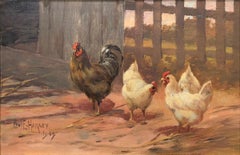
Feeding Time
By Paul E. Harney Jr.
Located in Missouri, MO
Paul E. Harney, Jr.
"Feeding Time" 1909
Oil on Wood Panel
Signed and Dated
Panel Size: approx 8 x 12 inches
Framed Size: approx. 16 x 19 inches
Paul Harney (1850-1915)
Born in New ...
Category
Early 1900s American Realist Animal Paintings
Materials
Oil, Wood Panel
Price Upon Request
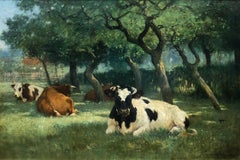
Made in the Shade
By William Henry Howe
Located in Missouri, MO
William Henry Howe (1846-1929)
"Made in the Shade" 1887
Oil on Canvas
Signed and Dated
Site Size: approx. 14.5 x 21.5 inches
Frames Size: approx. 17.5 x 24.5 inches
Provenance: Private Collection, St. Louis, Missouri thence by descent
William Henry Howe was born in Ravenna, Ohio in 1846. Of him it was written: "In the late nineteenth century no American artist was more thoroughly identified with the painting of cows than William Henry Howe." (Richter 128). In a style that combined Tonalism and Realism, he was a painter of light-filled pastoral landscapes that sometimes had sheep as well as cattle tended by their shepherds and herders.
He began a career as a businessman in St. Louis, and in his mid-thirties, changed course and went to Dusseldorf Germany to study art at the Royal Academy. In 1881, he went to Paris and studied with animal painters Felix Vuillefroy and Otto de Thoren. He also exhibited his work at the Paris Salons and the Paris Universal Exposition of 1889.
Travels in Holland in the 1880s with other artists inspired his interest in pastoral subjects, and during that time he began his cattle paintings...
Category
1880s American Impressionist Animal Paintings
Materials
Canvas, Oil
Price Upon Request
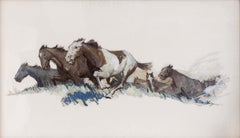
The Painted Stallion
By William Henry Dethlef Koerner
Located in Missouri, MO
The Painted Stallion
William Henry Dethlef Koerner (German, American, 1878-1938)
Oil on Panel
Signed Lower Right
Titled Verso
21.5 x 37 inches
26.5 x 42.5 inches with frame
Written ...
Category
Early 20th Century American Modern Landscape Paintings
Materials
Oil, Panel
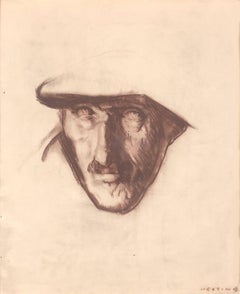
Self-Portrait
By Sean Keating
Located in Missouri, MO
Sean Keating (Irish 1889-1977)
"Self Portrait" c. 1950s
Charcoal on Paper
Signed Lower Right
Framed Size: approx 20 x 16 inches
A noted portrait and figure painter, influenced by both Romanticism and Realism, Sean Keating was an Irish nationalist painter who executed several iconic images of the Irish Civil war era, and of the ensuing period of industrialization. One of the great exemplars of representational painting in Ireland, Keating was an intellectual artist in that he set out to depict the birth and development of the Republic of Ireland, and his pictures are deliberately idealized even heroic. However, he held very conservative views about art - verging on the academic style - and was a committed defender of traditional Irish painting, considering much modern art to be bogus.
Born in Limerick, Sean Keating studied drawing at the Limerick Technical School before winning a scholarship, arranged for him by William Orpen, to study fine art painting at the Metropolitan School of Art in Dublin. In 1914 he won the Taylor Scholarship and the following year exhibited three paintings at the Royal Hibernian Academy.
Over the next period of years he spent time on the Aran Islands off County Galway, and then in London. He returned to Ireland in 1916 and painted the war of independence and the subsequent civil war. Works he completed at this time include the painting: Men of the South (1921) depicting a group of IRA men about to stage a military ambush, and An Allegory (c. 1922) which features a cluster of figures representing the fractures in the young Irish state.
Meantime, in 1919, Keating was appointed an assistant teacher at the Dublin Metropolitan School of Art. Then in 1921, he staged his first one-man show at The Hall, Leinster Street. In 1923, he was elected to the Royal Hibernian Academy.
In a Dublin exhibition of Irish art held in 1924, Keating was awarded the gold medal for his picture Homage to Hugh Lane - now hanging in the Hugh Lane Gallery. In the late 1920s, Keating was commissioned to record the building of the hydro-electric power generator at Ardnacrusha, near Limerick. He painted a number of paintings of this scheme. Not unlike the Soviet Realism School of painting, these paintings sought to promote the construction work as an achievement of heroic proportions.
Keating's works began to attract interest abroad. He exhibited at the Royal Academy in London and, in 1930, he held a one-man show at the Hackett Gallery, New York. In 1931 Keating's one-person exhibition was staged at the Victor Waddington Galleries, Dublin. In 1934 he was made professor of the National College of Art in Dublin, and Professor of Painting, three years later. His 1937 exhibition at the Victor Waddington Galleries attracted considerable interest. In 1939, he was asked to paint a wall-painting for the Irish pavilion at the New York World Fair and duly created a huge mural of fifty-four panels. He was President of the Royal Hibernian Academy from 1949 to 1962, exhibiting nearly 300 works during the period. In 1963, a retrospective exhibition was staged at the Municipal Gallery of Modern Art, which was opened by Irish President de Valera...
Category
1950s Realist Figurative Drawings and Watercolors
Materials
Charcoal, Archival Paper
Price Upon Request
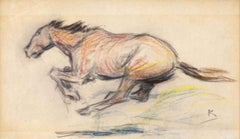
Running Horse
By William Henry Dethlef Koerner
Located in Missouri, MO
Running Horse
William Henry Dethlef Koerner (German, American, 1878-1938)
Pencil on Paper
Signed Lower Right
5 x 8 inches
12 x 15 inches with frame
William Henry Dethlef Koerner is ...
Category
Early 20th Century American Modern Animal Drawings and Watercolors
Materials
Paper, Pencil, Color Pencil
You May Also Like
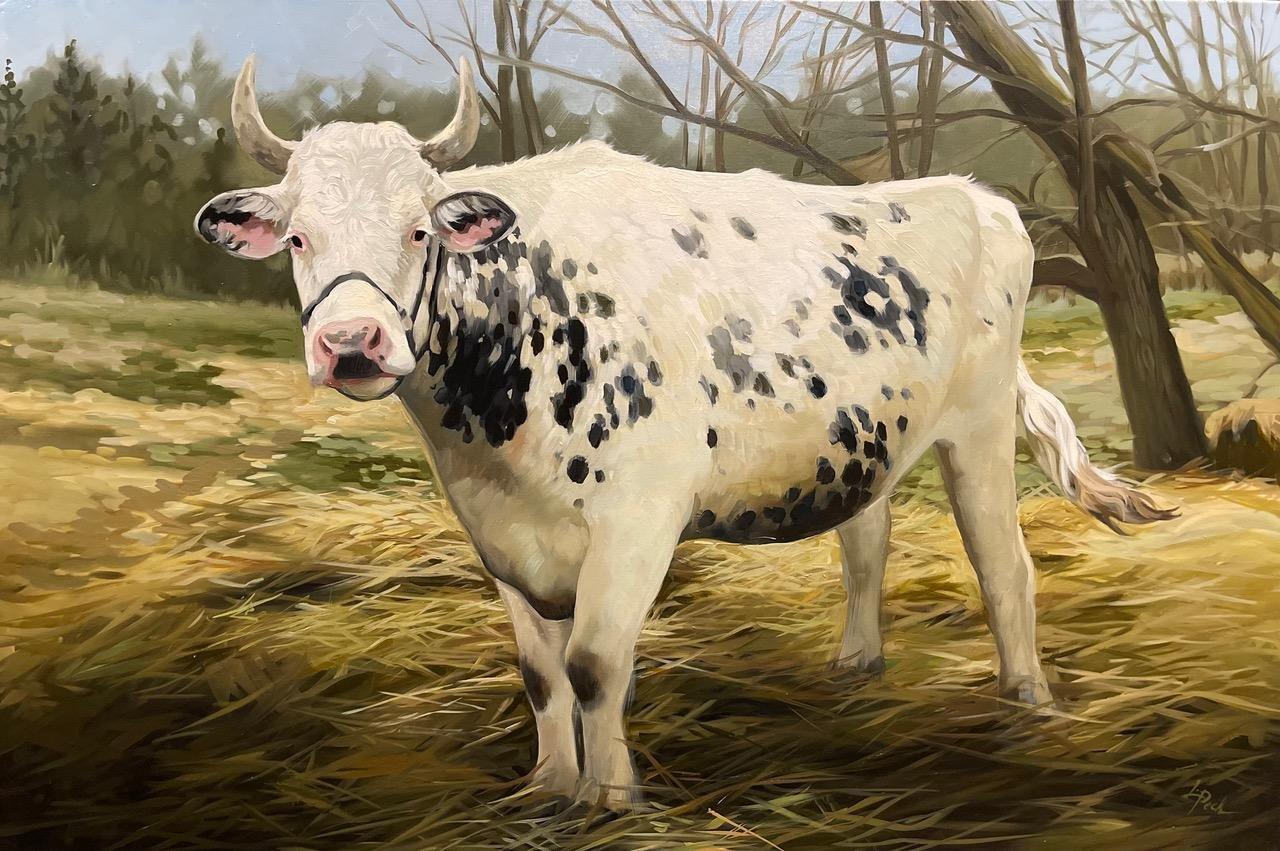
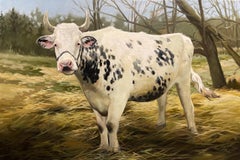
Leslie Peck, "Spotted Bull", 24x36 Farm Country Cow Oil Painting Landscape
Located in Saratoga Springs, NY
"Spotted Bull", is a 24x36 oil painting on board by artist Leslie Peck featuring a majestic white bull with black spots, standing in the pasture. Fresh thr...
Category
2010s Realist Animal Paintings
Materials
Canvas, Oil
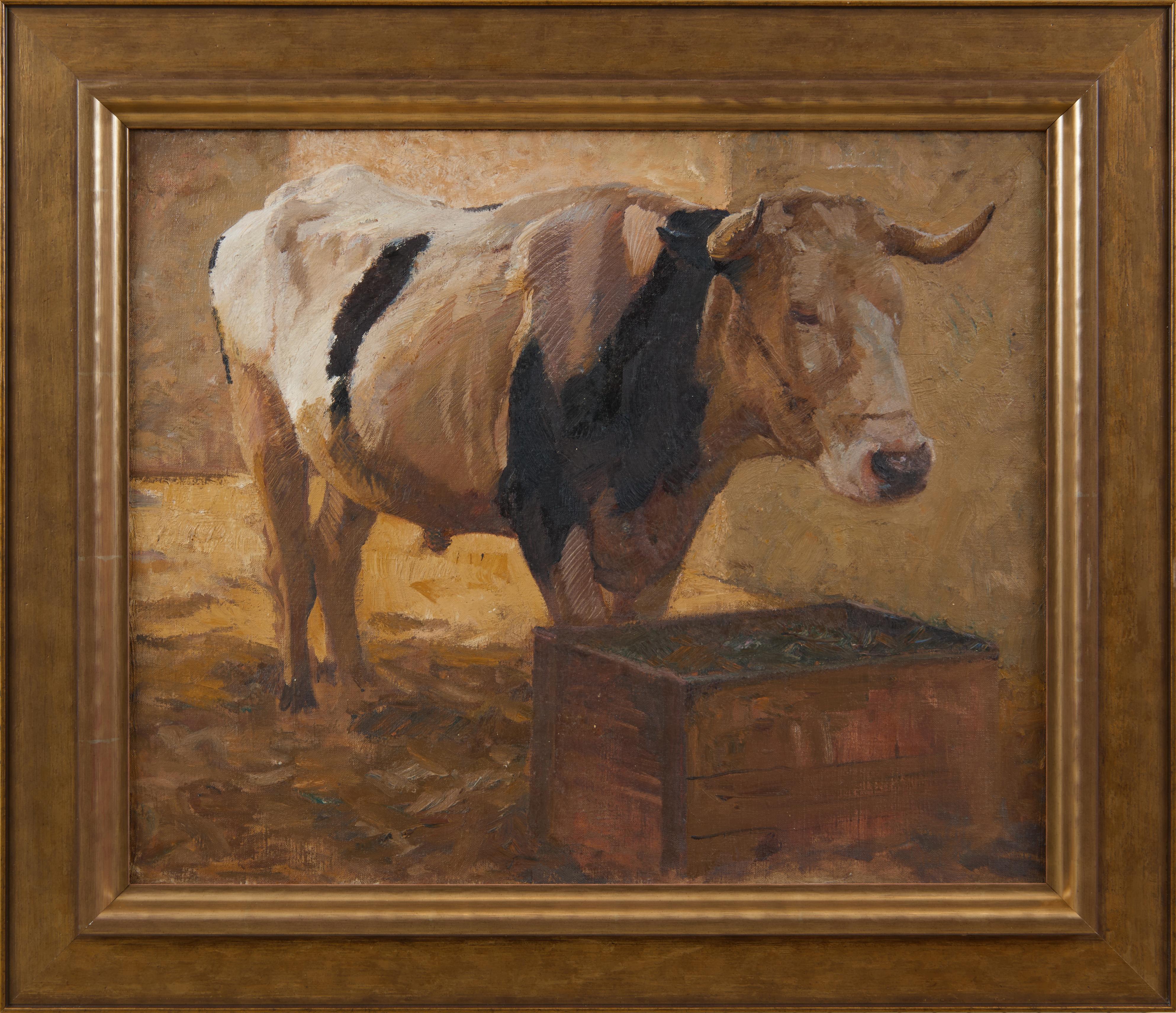
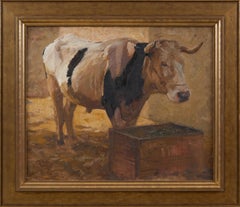
Cattle Series Study, Early 20th Century Bovine/Cow, Cleveland School artist
By Henry George Keller
Located in Beachwood, OH
Henry George Keller (American, 1868-1949)
Cattle Series Study, 1901
Oil on canvas
Signed verso
22 x 26 inches
28.5 x 33 inches, framed
Keller, a leading painter in Cleveland, was born at sea, off Nova Scotia on April 3, 1869. His earliest training was in Karlsruhe, Germany under Hermann Baisch (1846-1894), then at the Cleveland School of Art...
Category
Early 1900s Animal Paintings
Materials
Oil
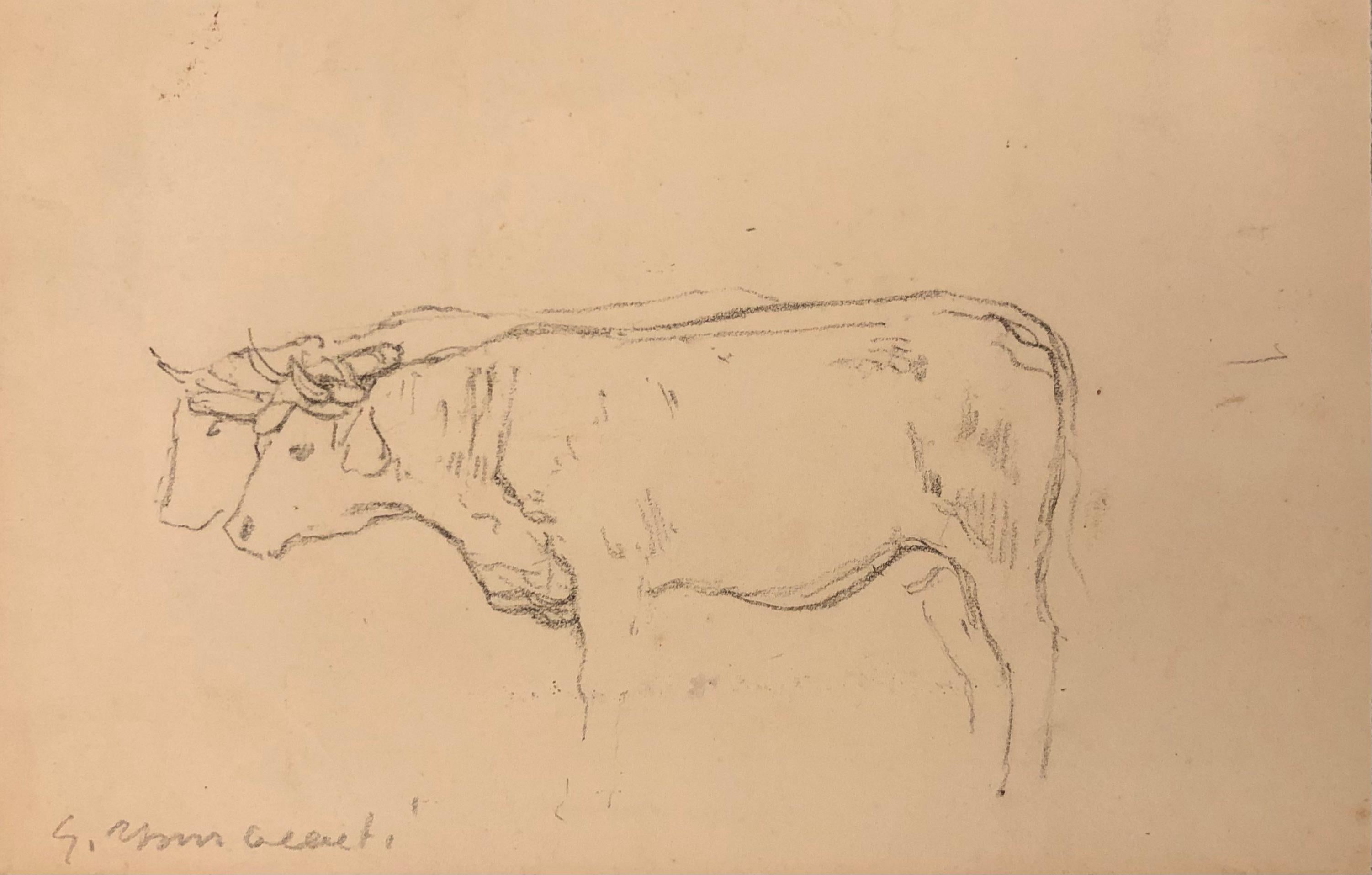
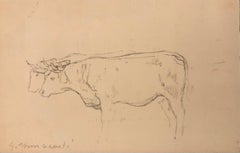
Cow study
By Guglielmo Innocenti
Located in Genève, GE
Work on paper
Support size
17 x 24 x 0.4 cm
Category
20th Century Italian School Still-life Drawings and Watercolors
Materials
Crayon
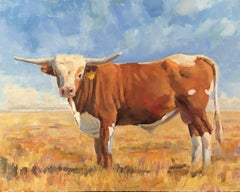
Bevo (Contemporary Realistic Cow Oil Painting)
Located in New Orleans, LA
Deborah Newman can paint just about anything, including stunning landscapes, and here she shows her chops with an animal whose essence is hard to captur...
Category
2010s Realist Animal Paintings
Materials
Oil
$960 Sale Price
20% Off
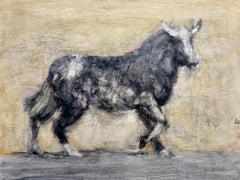
Summer Bull
By Alicia Rothman
Located in New York, NY
oil and gold leaf on wood panel
Category
2010s Contemporary Animal Paintings
Materials
Oil, Wood Panel
$1,480 Sale Price
20% Off
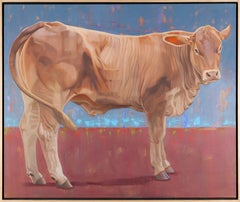
Young Bull
Located in Columbia, MO
Nora Othic is considered one of the top regionalist painters in the Midwest. She builds on a legacy from her artistic predecessors such as Grant Wood, Thomas Hart Benton and the WPA ...
Category
21st Century and Contemporary American Realist Animal Paintings
Materials
Canvas, Oil
More Ways To Browse
Antique Bull
Animal Bull
Antique Robinson
Colliers Magazine
Used Newells
16x20 Antique Frame
Biltmore Hotel
Grand Canyon Painting
Bull Paintings Antique
Painting Of A Bull
Black Bull Paintings
Hopi Indian
Original Watercolor Paintings Of Animals
Birds Watercolor
Horse Drawing
Artyom Abrahamyan
Horse Watercolour
Horses Watercolors