Items Similar to Antique Horse "Heads, Hooves, Rump 1838" Wouterus Verschuur (Dutch, 1812-1874)
Want more images or videos?
Request additional images or videos from the seller
1 of 8
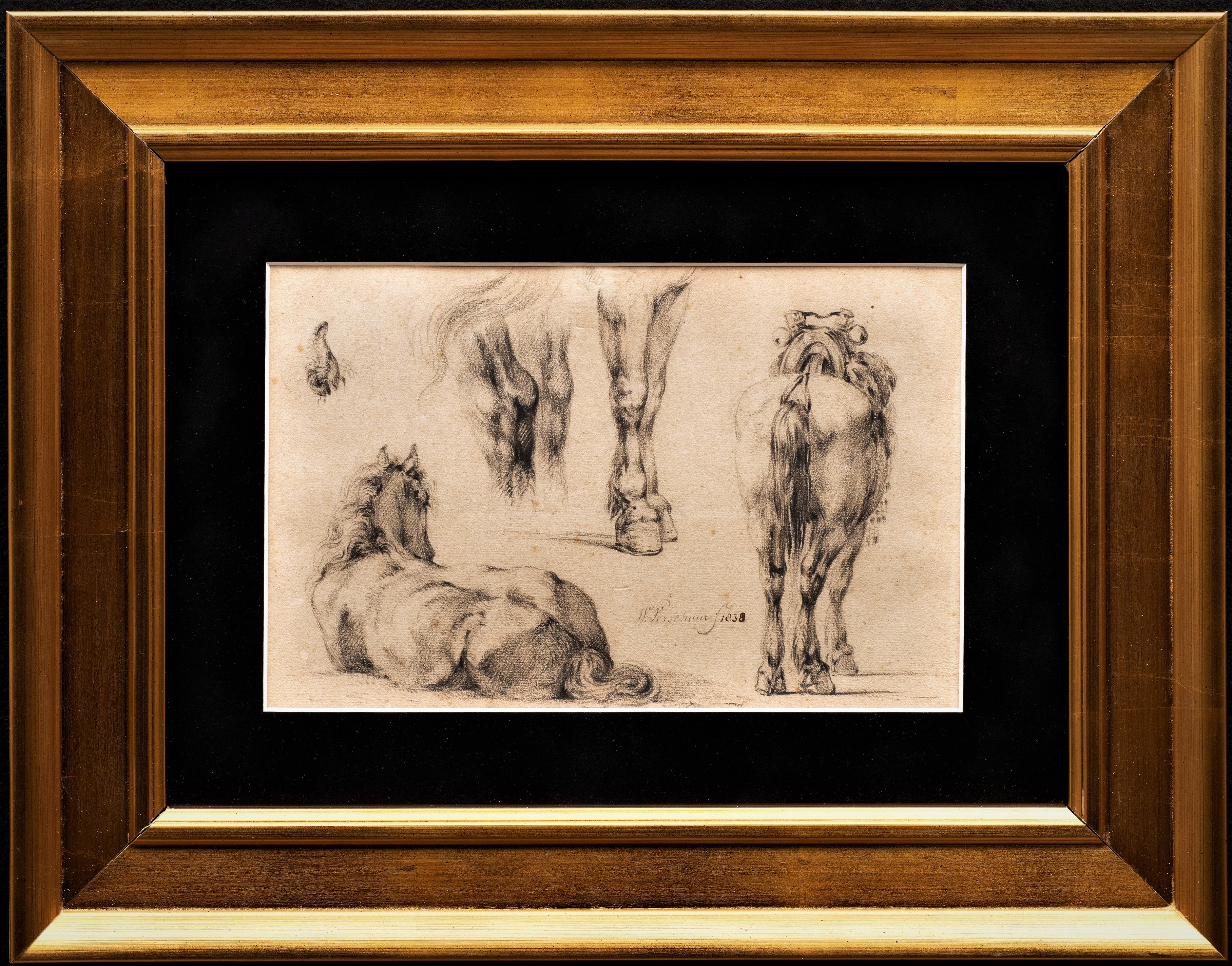
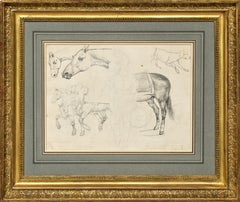
Wouterus Verschuur lAntique Horse "Heads, Hooves, Rump 1838" Wouterus Verschuur (Dutch, 1812-1874)
$5,850
£4,418.31
€5,103.84
CA$8,241.82
A$8,826.99
CHF 4,745.33
MX$107,208.94
NOK 59,959.54
SEK 54,897.41
DKK 38,135
About the Item
Antique Horse Study
"Heads, Hooves and Rump, 1838"
Wouterus Verschuur (Dutch, 1812-1874)
Pencil on paper
Signed and Dated "W Verschuuur 1838"
10 x 6 1/2 (17 1/2 x 14 frame) inches
In his time Wouterus Verschuur was an acclaimed and celebrated painter of horses. Through careful observation he learned to capture their physique and movement to perfection. As a true-born romanticist he was also interested in their character, thereby painting powerful carthorses in their stable, thoroughbred saddled horses during an afternoon ride or harnessed horses in action.
He was born to an Amsterdam jeweler and received his training from the landscape and cattle painters Pieter Gerardus van Os and Cornelis Steffelaar. As part of this education Verschuur had to copy works by the 17th century painter Philips Wouwerman. Like Wouwerman, Verschuur's subjects consist mostly of stable scenes, landscapes with horses and coastal landscape. These works reflect the enduring influence of the northern Baroque masters on nineteenth century art, revealing the artist's close study of his Dutch and Flemish predecessors harking back to Peter Paul Rubens.
Showing talent from a very early age, at 15 Verschuur had a painting exhibited at the "Exhibition of Living Masters" at Amsterdam in 1828. In 1832 and 1833 he won the gold medal at the annual exhibition at Felix Meritis. In 1833 he was appointed a member of the Royal Academy in Amsterdam. In 1839 he joined the artists' society, Arti et Amicitiae.
His reputation was also considerable abroad. He was often featured in the annual exhibitions which travelled the large European cities at that time. In 1855 Napoleon III purchased one of his paintings at the Exposition Universelle* in Paris.
The Verschuur horse revels in its physicality, like a quintessential Baroque horse, built with the distinct meaty roundness popularized by Rubens and passed down through his student Van Dyck. These details of realism reveal years of close observation of equine physiology. He was well-respected and admired by his peers for his technical skill his ability to capture the power and beauty of working horses, understanding of the fluidity of a horse's movement.
Like his contemporary Rosa Bonheur, Verschuur found great commercial success during his lifetime, travelling frequently to Paris and exhibiting at the 1855 Exposition Universelle in the newly built Palais de L’Industrie, where his works were purchased by Emperor Napoleon III. This royal patronage acknowledged Verschuur’s status as a continuation of the proud international tradition of horse painting set forth by Rubens, Van Dyck, and George Stubbs, celebrated for the careful representation of great sporting and war horses, while extending this treatment to the glory of the everyday working horse.
During one of his frequent trips Wouterus Verschuur died on July 4 in the town of Vorden in the Eastern Netherlands. He left behind an oeuvre of about four hundred paintings and over two thousand drawings. Amongst his students were his son Wouterus Verschuur Jr. and Anton Mauve.
The work of Verschuur is represented in several museums including the Stedelijk Museum, Amsterdam, the Rijksmuseum Twenthe, Enschede and Amsterdam Museum.
- Creator:Wouterus Verschuur l (1812 - 1874)
- Dimensions:Height: 17.5 in (44.45 cm)Width: 12 in (30.48 cm)
- Medium:
- Movement Style:
- Period:
- Condition:The paper is in good condition; some slight foxing, small losses, etc. The frames are new.
- Gallery Location:SANTA FE, NM
- Reference Number:1stDibs: LU1408211978572
About the Seller
5.0
Platinum Seller
Premium sellers with a 4.7+ rating and 24-hour response times
Established in 1995
1stDibs seller since 2020
130 sales on 1stDibs
Typical response time: 2 hours
- ShippingRetrieving quote...Shipping from: Santa Fe, NM
- Return Policy
More From This Seller
View AllAntique Horse Study; Legs and Rumps, 1838" Wouterus Verschuur (Dutch, 1812-1874)
Located in SANTA FE, NM
Antique Horse Study
"Legs and Rumps, 1838"
Wouterus Verschuur l (Dutch, 1812-1874)
Pencil on paper
Signed and Dated "W Verschuur 1838"
10 x 6 1/2 (17 1/2 x 14 frame) inches
In his time Wouterus Verschuur was an acclaimed and celebrated painter of horses. Through careful observation he learned to capture their physique and movement to perfection. As a true-born romanticist he was also interested in their character, thereby painting powerful carthorses in their stable, thoroughbred saddled horses during an afternoon ride or harnessed horses in action.
He was born to an Amsterdam jeweler and received his training from the landscape and cattle painters Pieter Gerardus van Os and Cornelis Steffelaar. As part of this education Verschuur had to copy works by the 17th century painter Philips Wouwerman. Like Wouwerman, Verschuur's subjects consist mostly of stable scenes, landscapes with horses and coastal landscape. These works reflect the enduring influence of the northern Baroque masters on nineteenth century art, revealing the artist's close study of his Dutch and Flemish predecessors harking back to Peter Paul Rubens.
Showing talent from a very early age, at 15 Verschuur had a painting exhibited at the "Exhibition of Living Masters" at Amsterdam in 1828. In 1832 and 1833 he won the gold medal at the annual exhibition at Felix Meritis. In 1833 he was appointed a member of the Royal Academy in Amsterdam. In 1839 he joined the artists' society, Arti et Amicitiae.
His reputation was also considerable abroad. He was often featured in the annual exhibitions which travelled the large European cities at that time. In 1855 Napoleon III purchased one of his paintings at the Exposition Universelle in Paris.
The Verschuur horse revels in its physicality, like a quintessential Baroque horse...
Category
1830s Romantic Animal Drawings and Watercolors
Materials
Paper, Pencil
Galloping Horse and Rider Alessio Issupoff (1889 Russia-1957 Rome)
Located in SANTA FE, NM
"Galloping Horse and Rider"
Alessio Issupoff (1889 Russia-1957 Rome)
Oil on wood panel
Signed lower right
5 1/2 x8 1/2 (13 1/2 x 16 1/2 frame) inches
This is such a stunning little jewel, it's almost hard to believe.
Alessio Issupoff dedicated his whole life to art and was shaped by his years at the Moscow School of Painting, and later absorbed a great deal from Impressionism and the work of the Italian Renaissance masters. But he kept his distinctive style and remained true to the idea that excited the generation of painters of the turn of the 20th century — “the embodiment of the great beauty of everything alive.”
Alexei Vladimirovich Isupov, known by his Italianized name Alessio Issupoff, was born in Vyatka (now Kirov) on March 10, 1889. The son of an icon carver and gilder, he learned to paint from the artisan painters who worked with his father. Wanting to give expression to his own artistic creativity, the young Alexei did not take up his father's trade but left Vyatka for Moscow where he attended the School of Painting, Sculpture and Architecture.
His mentor was the painter Apollinary Mikhailovich Vasnetsov, brother of Viktor, who introduced him to the Moscow artistic milieu and helped him find work.
By studying and visiting museums, Issupoff formed his own aesthetic “taste” by modifying it on contemporary Russian and French Renaissance art...
Category
1920s Animal Paintings
Materials
Oil, Wood Panel
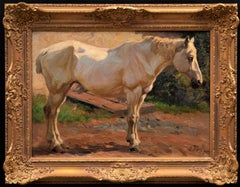
Antique Horse Painting "Standing Grey Horse, Facing Right" Georg Wolf dated 1907
Located in SANTA FE, NM
Antique Horse Painting
“Standing Grey Horse, Facing Right”
Georg Wolf (Germany 1882-1962)
Oil on canvas
Signed and dated 1907 lower right
27 x 19 (35 x 27 frame) inches
With it's bobbed tail cut short so it doesn't become tangled, it's apparent that this fine specimen was a draught horse...
Category
Early 20th Century Post-Impressionist Animal Paintings
Materials
Canvas, Oil
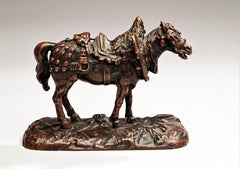
Antique Exceptional Bronze Draft Horse by Pierre Jules Mêne (French, 1810-1879)
Located in SANTA FE, NM
Antique Horse Bronze
Exceptional Bronze of a Draft Horse
Pierre Jules Mêne (French, 1810-1879)
Circa 1860s
4 3/4 (W) x 3.25 (H)
As Mêne personally ov...
Category
Mid-19th Century Romantic Figurative Sculptures
Materials
Bronze
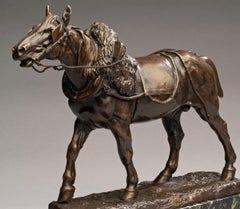
Antique Bronze Portrait Draft Horse by Isidore Jules Bonheur (France, 1827-1901)
By Isidore Jules Bonheur
Located in SANTA FE, NM
Antique Bronze Portrait of a Draft Horse
Isidore Jules Bonheur (France, 1827-1901)
Circa 1840s
Cast bronze mounted on a rectangular plinth atop a marble s...
Category
1870s Realist Figurative Sculptures
Materials
Bronze
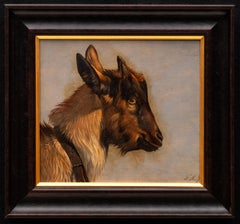
"Study of a Goat
s Head" Frans Lebret (Dutch, 1820-1909)
Located in SANTA FE, NM
"Study of a Goat"
Frans Lebret (Netherlands, 1820-1909)
Oil on paper on wood panel
9 x 10 (13 1/2 x 14 1/4 frame) inches
Initialled lower right
This is a simply stunning and deeply ...
Category
1870s Realist Animal Paintings
Materials
Paper, Oil, Wood Panel
You May Also Like
Double-sided Horse Studies by Théodore Géricault
By Jean Louis Andre Theodore Gericault
Located in PARIS, FR
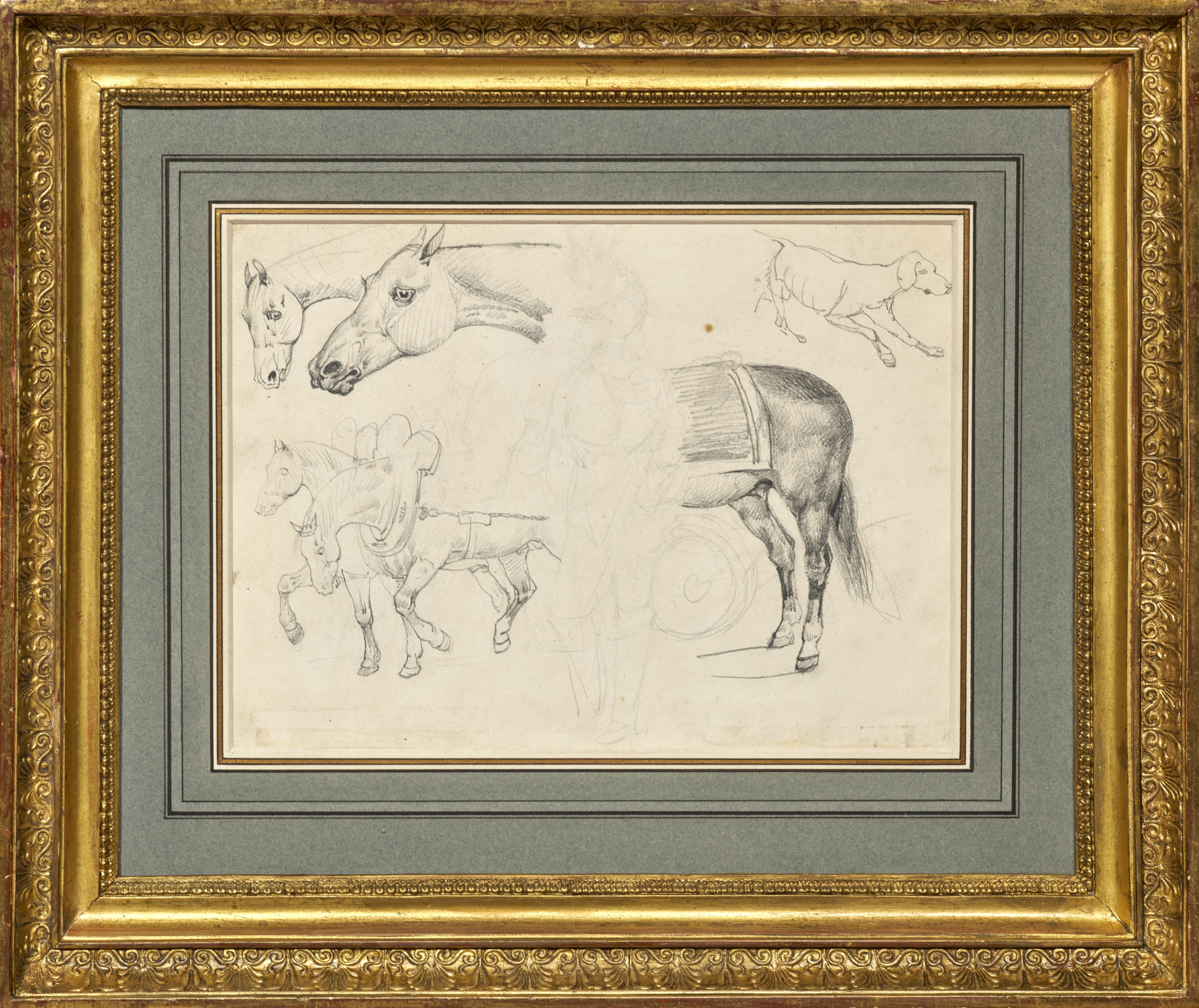
Recto: two horses, preparatory study for the lithograph "Les Boueux" ("The Muddy Ones")
Verso: four studies of horse heads (including two preparatory studies for the watercolor "Plowing in England"), a study of a life guard with the rump of his horse (preparatory to the lithograph "A Party of Life...
Category
1820s Old Masters Animal Drawings and Watercolors
Materials
Carbon Pencil
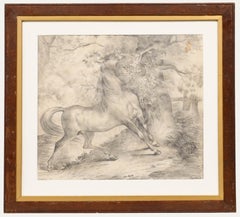
After Carle Vernet (1758-1836) - 1833 Graphite Drawing, Wild Horse
Located in Corsham, GB
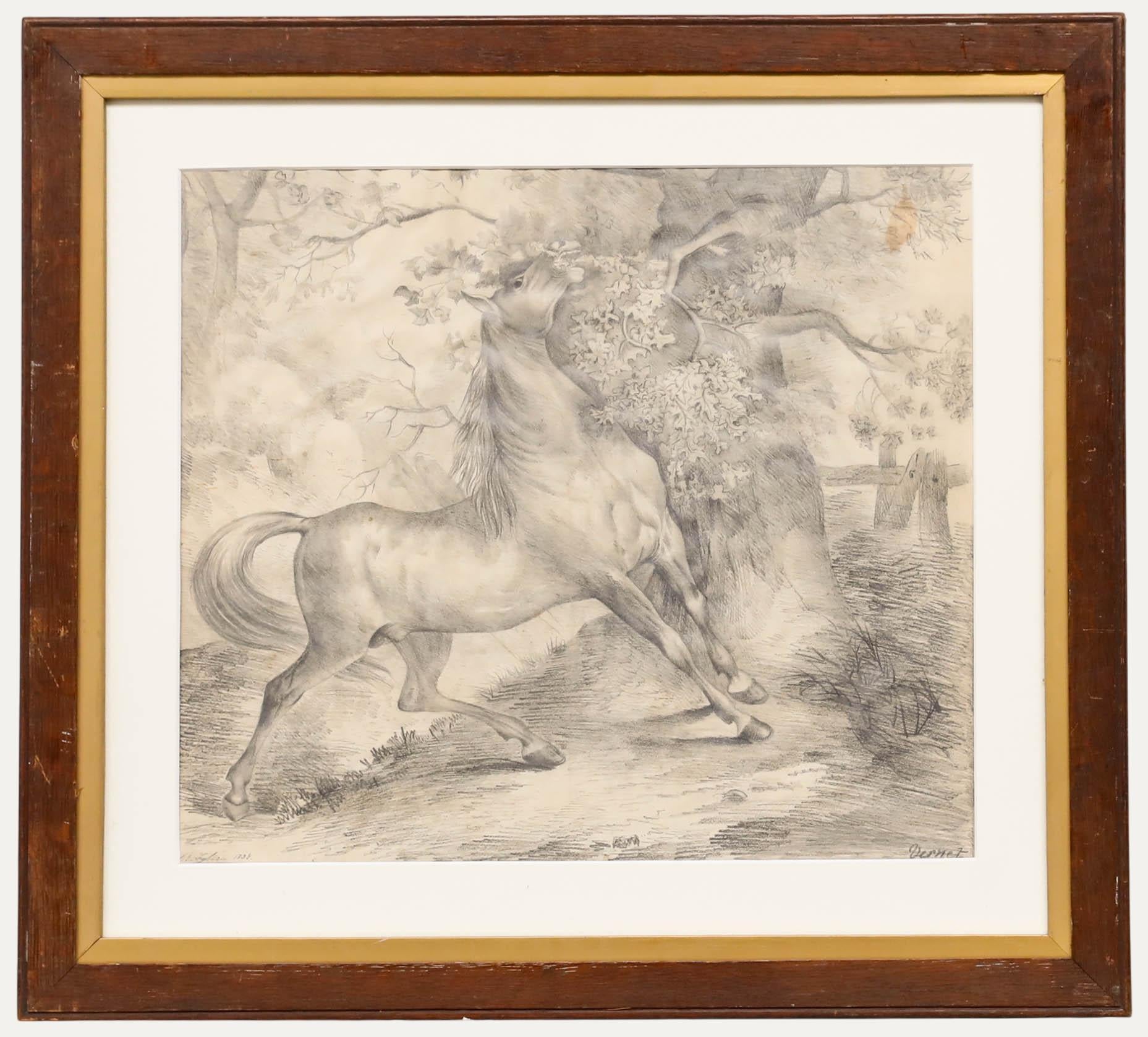
A careful graphite study of a wild stallion after the French painter Carle Vernet (1758-1836). Signed and dated to the lower left, possibly 'L. E. Tyler'. Well presented in a wooden ...
Category
Early 19th Century Animal Drawings and Watercolors
Materials
Graphite
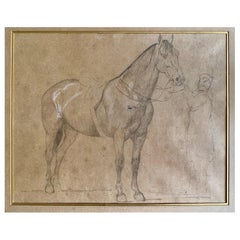
19th Century Horse Study — Pencil Drawing - Framed - France
Located in Beuzevillette, FR
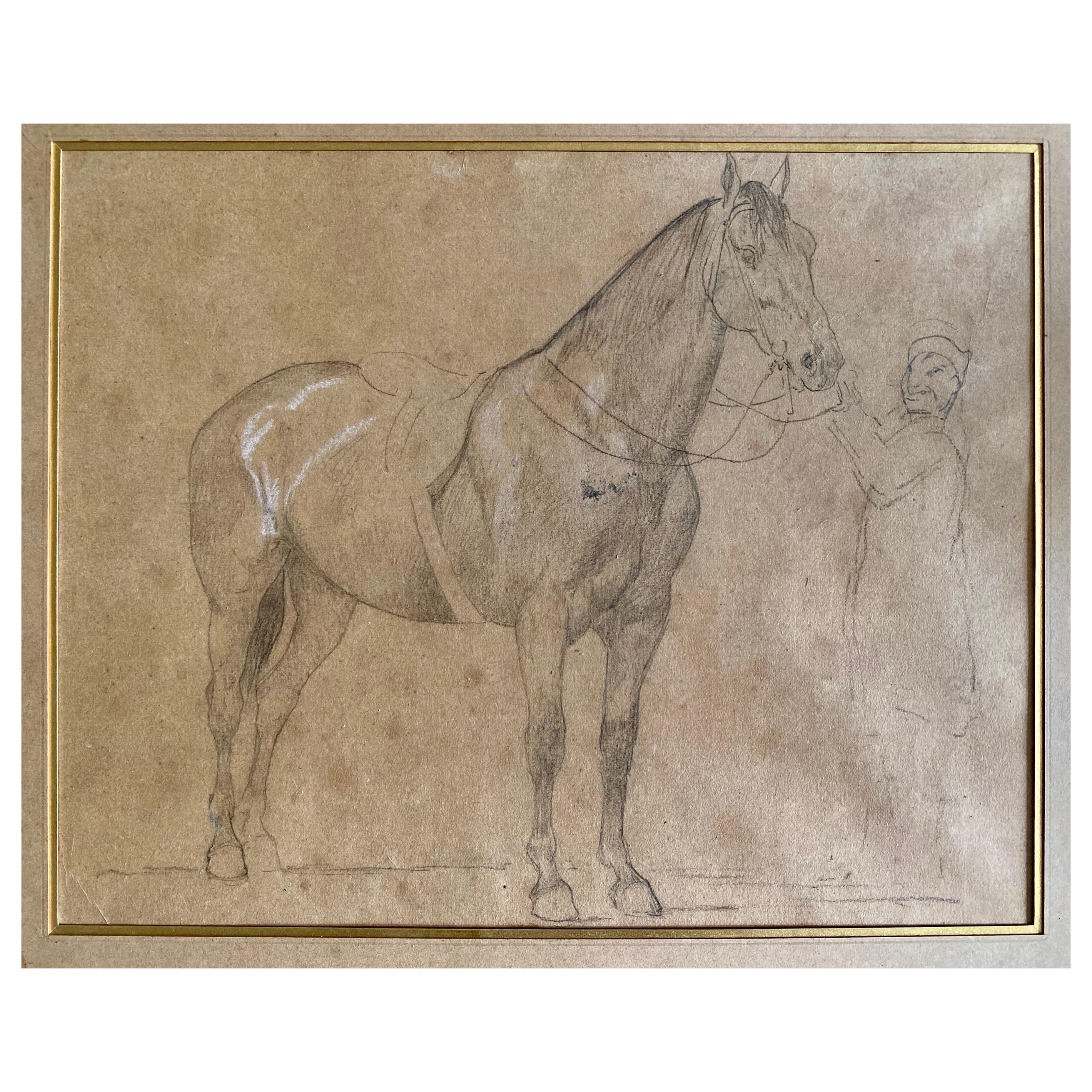
Dessin d'étude de cheval du XIXᵉ siècle, réalisée au crayon. Le rendu est fin et précis en ce qui concerne le dessin du cheval, tant sur le plan anatomique que dans la capture de l’a...
Category
Antique Late 19th Century French Drawings
Materials
Paper, Crayon
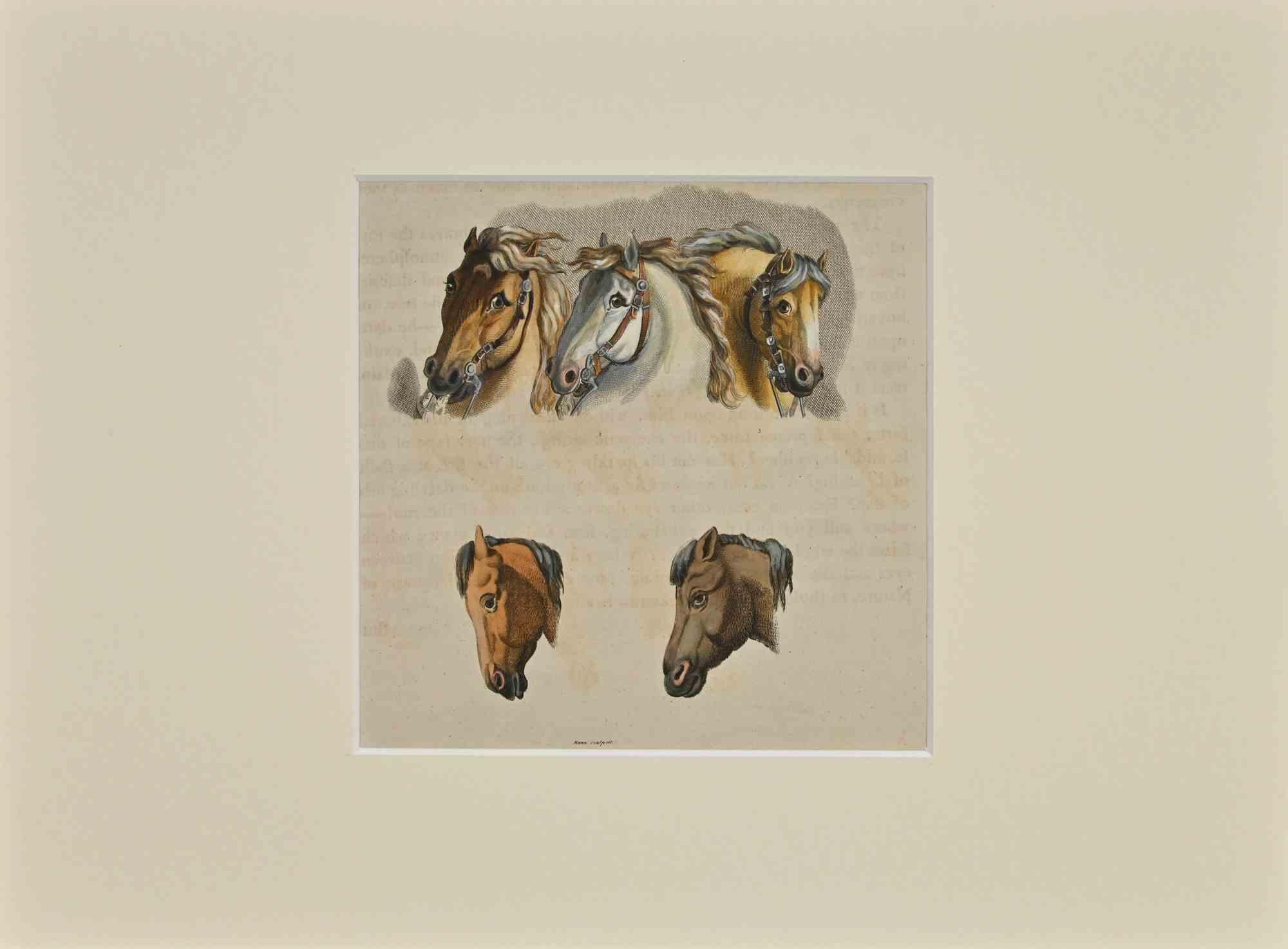
Horses - Etching by Thomas Holloway - 1810
By Thomas Holloway
Located in Roma, IT
Horses is an etching realized by Thomas Holloway for Johann Caspar Lavater's "Essays on Physiognomy, Designed to Promote the Knowledge and the Love of Mankind", London, Bensley, 1810.
Good conditions.
Johann Caspar Lavater was a swiss theologian and philosopher known throughout Europe for his studies on physiognomy. Following the physiognomy tradition of Della Porta and of many Renaissance and Baroque philosophers, he believed that the character of a person could be elucidated through examining their “lines of countenance" i.e. tracing a profile outline portrait. Being able to "read outside" was the key to "know the inside". Lavater's thought largely influenced Art in the late 18th and early 19th century, as in the case of Johann Fuseli and William Blake (who realized two etchings for Lavater's English edition of his Essay).
Lavater was convinced that he could show his theories by analyzing the portraits of some of the main historical figures of the past, in some cases taken from paintings or (mainly for antiquity...
Category
1810s Modern Figurative Prints
Materials
Etching

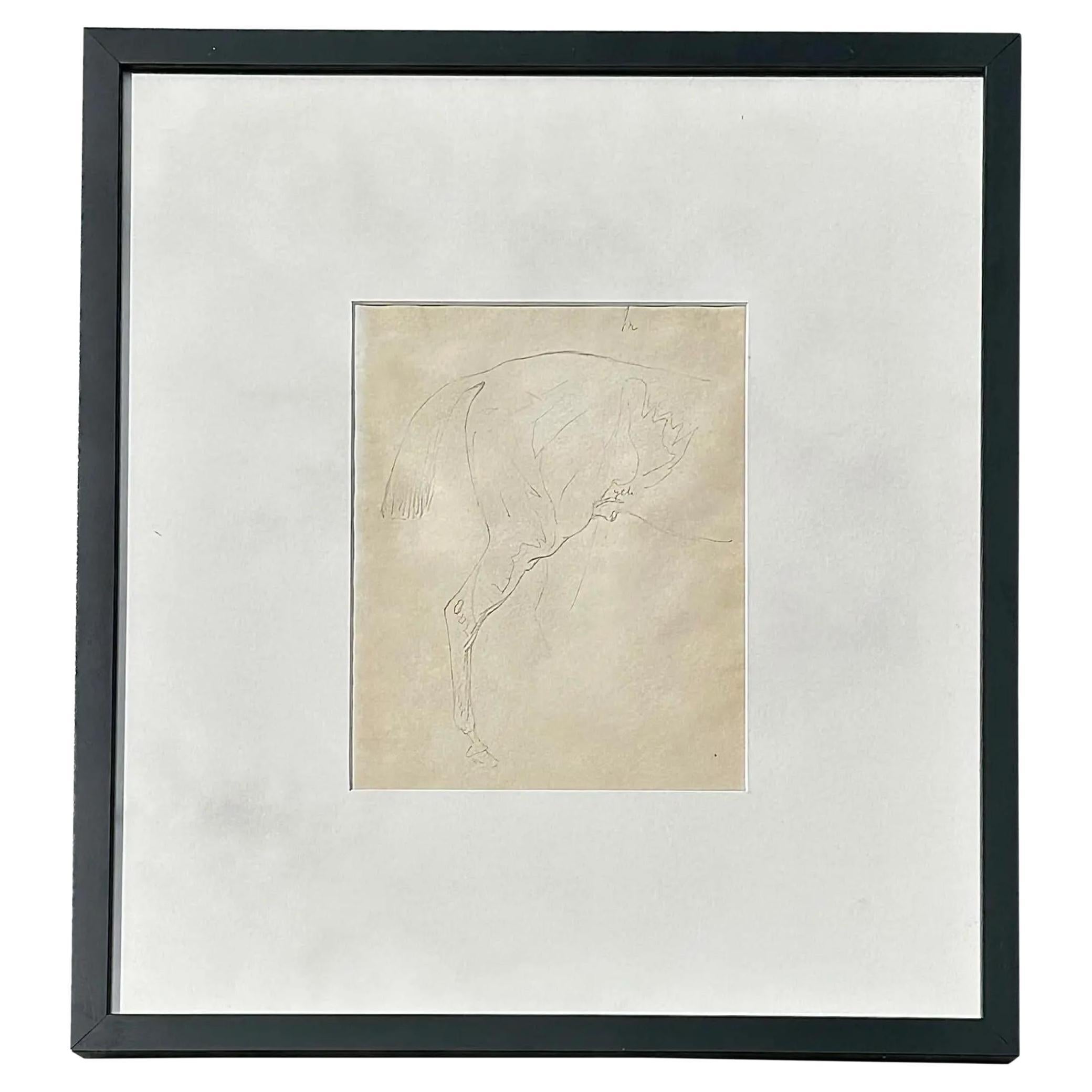
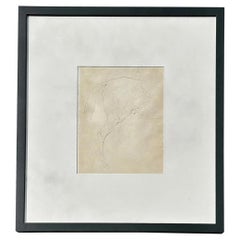
Vintage Vertical Horse Hind Legs Sketch Drawing
Located in West Palm Beach, FL
A fantastic vintage sketch of a horses hind legs on paper with pencil. The sketch comes framed and protected with glass. Acquired at a Palm Beach estate.
Category
21st Century and Contemporary American Regency Paintings
Materials
Glass, Paper
Pieter Frederick van Os (1808-1892) - 20th Century Oil, A Horse Watering
By Pieter Frederik van Os
Located in Corsham, GB
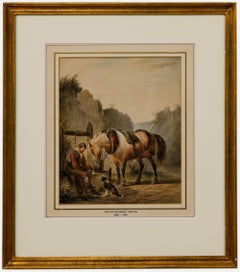
This atmospheric painting depicts a tranquil rural scene, with a figure tending to a draught horse on a dusty path amid towering cliffs. The composition balances the intimate foregro...
Category
20th Century Animal Paintings
Materials
Oil
More Ways To Browse
Antique Horse Heads
Horse Stable
Horse Head Art
Dutch Watercolour
Holland Watercolors
Thoroughbred Horse
Harness Horse
War Horse
17th Century Paintings Peter Paul Rubens
George Stubbs
Dutch Romantic Paintings
Antique Horse Harnesses
Philips Wouwerman
Horse Head Painting
Anton Mauve
Wouterus Verschuur
Pen And Ink Cat Drawing
Watercolor Of Horse