Items Similar to WPA 1940s Framed Figurative Village Landscape with Figures, Houses
Mountains
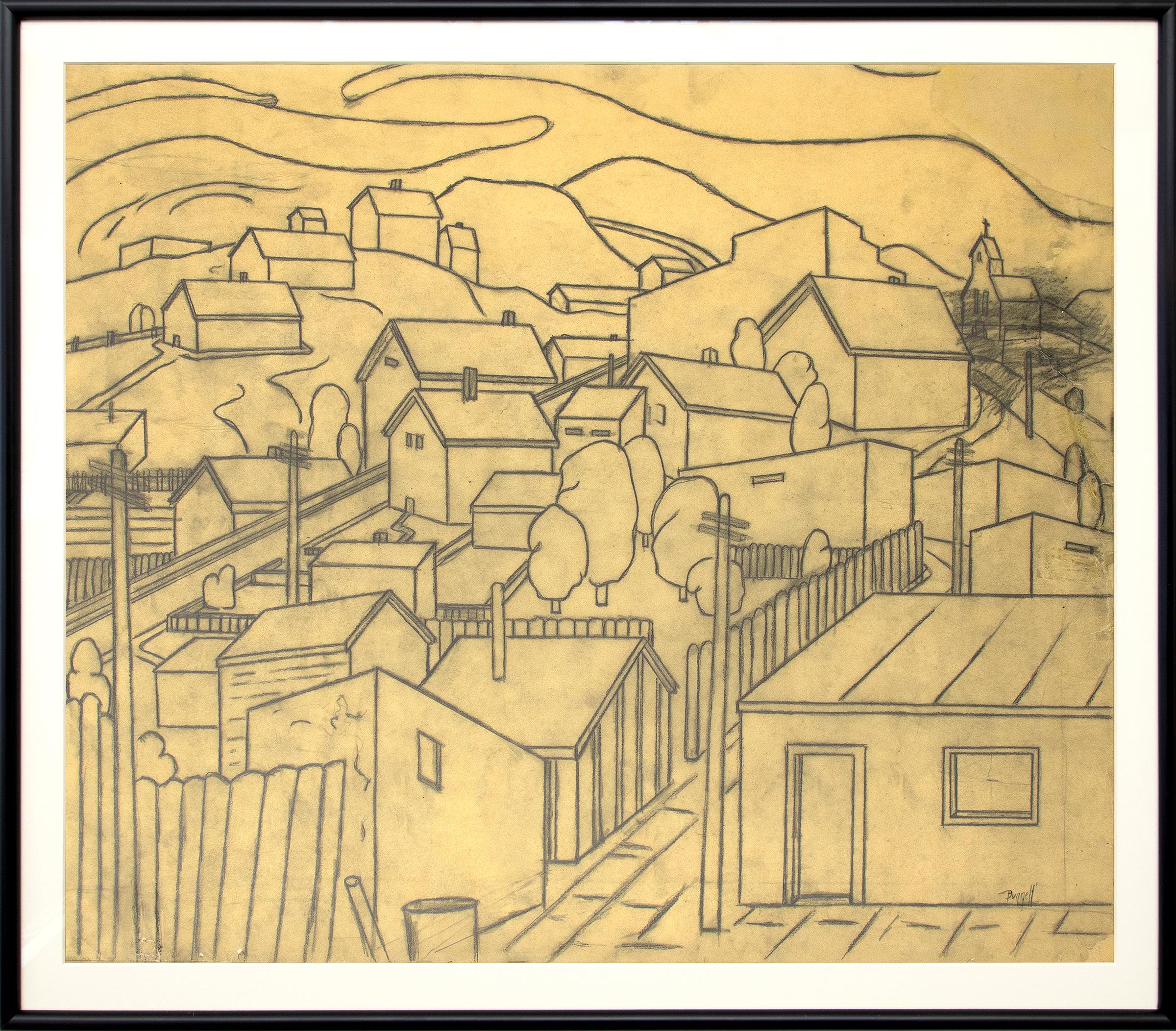
Want more images or videos?
Request additional images or videos from the seller
1 of 15
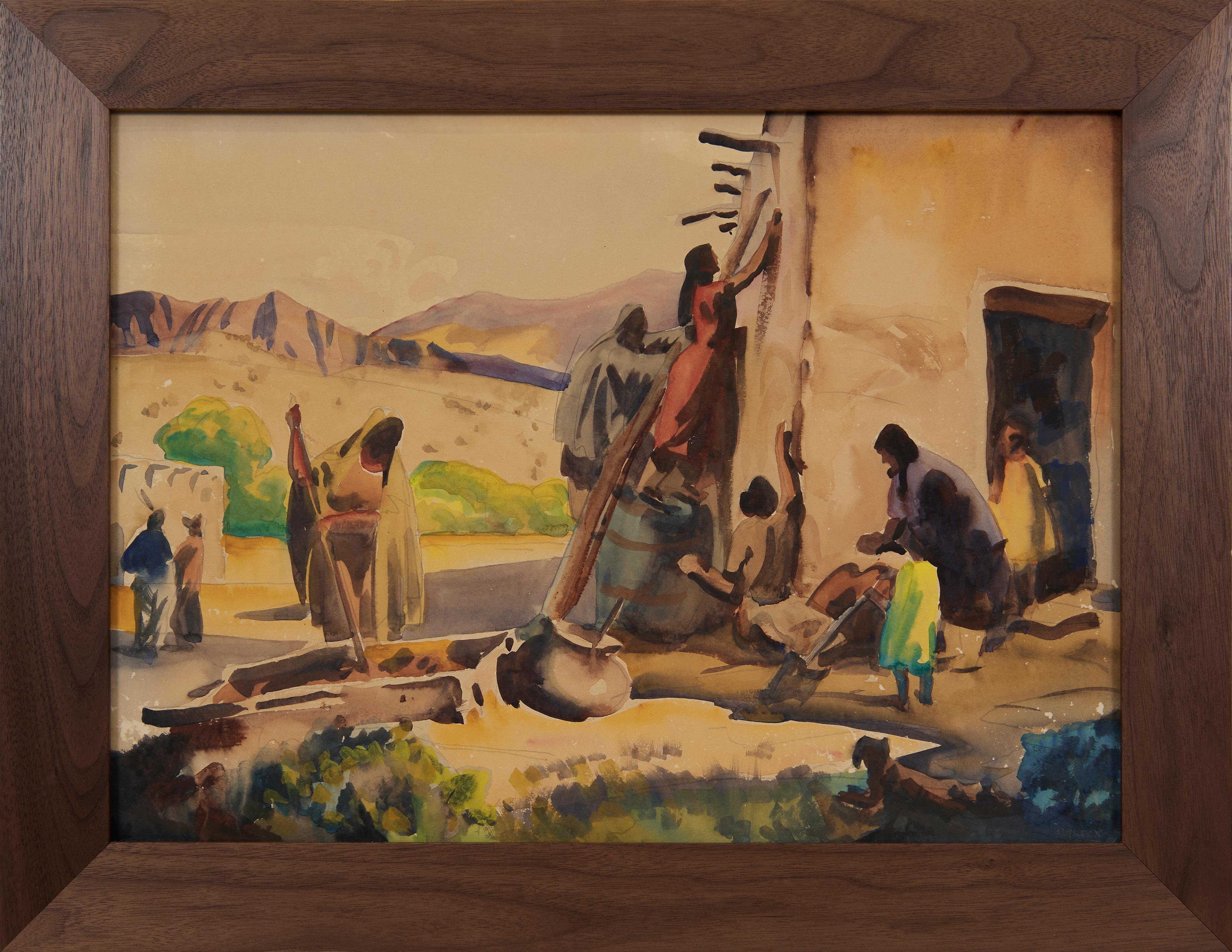
Charles Ragland BunnellWPA 1940s Framed Figurative Village Landscape with Figures, Houses
Mountains1940
1940
$4,950
$8,25040% Off
£3,751.05
£6,251.7640% Off
€4,322.66
€7,204.4340% Off
CA$7,000.67
CA$11,667.7840% Off
A$7,528.63
A$12,547.7240% Off
CHF 4,025.57
CHF 6,709.2940% Off
MX$90,793.13
MX$151,321.8940% Off
NOK 50,906.12
NOK 84,843.5440% Off
SEK 46,382.03
SEK 77,303.3940% Off
DKK 32,299.82
DKK 53,833.0440% Off
About the Item
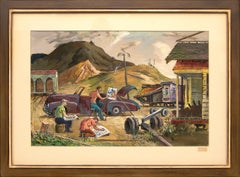
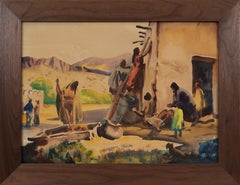
This evocative watercolor on paper painting, titled The Way War First Comes (1940), was created by noted American artist Charles Ragland Bunnell (1897-1968) during the Depression era. The piece captures a dramatic outdoor village scene, reflecting Bunnell’s unique ability to intertwine landscape with the broader human experience. The painting is presented in a custom black frame with archival materials to preserve its integrity, with outer dimensions of 26 x 35 ½ x ⅝ inches, and an image size of 15 ¼ x 24 ⅝ inches. Signed by the artist in the lower right corner.
Provenance: Private Collection, Colorado
About the Artist:
Charles Ragland Bunnell, often referred to as “Charlie,” was an American artist whose work spanned multiple styles throughout his career. Known for his versatility, Bunnell believed in constantly evolving his artistic approach, famously stating, “I’ve got to paint a thousand different ways.” His career saw him explore both representational and abstract forms, making him one of the few Colorado artists to incorporate modern trends from New York and Europe after World War II.
Although Bunnell did not receive widespread critical acclaim during his lifetime, his work garnered significant recognition, especially in the late 1940s when his painting Why? was chosen by curator Katherine Kuh for an important exhibition of abstract and surrealist art at the Art Institute of Chicago. His art was featured in traveling shows to ten other American museums, marking a high point in his career.
Born in Kansas City, Bunnell moved to Colorado Springs in 1917, where he would spend the majority of his life. After serving in World War I, Bunnell pursued commercial art and later studied at the Broadmoor Art Academy. His studies with renowned artists like Birger Sandzén and Ernest Lawson influenced his distinctive landscape work. In the 1930s, he began painting Colorado’s mining towns and valleys, contrasting the grandeur of mountain scenery with stark industrial subjects.
Bunnell’s involvement with New Deal art projects, including the Treasury Relief Art Project and Federal Art Project, shaped much of his work during the Great Depression. His early engagement with these programs, especially his murals for Colorado Springs schools, reflects his commitment to the American Scene style.
As the years progressed, Bunnell’s work evolved into more abstract forms, influenced by his personal experiences and the tumultuous events of the time, including the loss of his son and the impact of World War II. His later abstract works, such as the Black and Blue series, were deeply spiritual, drawing on diverse philosophies and offering a window into the artist’s evolving emotional and intellectual journey.
A dedicated teacher, Bunnell continued to mentor younger artists throughout his life, sharing his knowledge and encouraging experimentation. His legacy includes solo exhibitions at prestigious institutions like the Kansas City Art Institute, New Mexico Museum of Art, and the Colorado Springs Fine Arts Center.
Bunnell’s work can be found in major collections across the United States, including the Denver Art Museum, Art Institute of Chicago, and Colorado Springs Fine Arts Center, among others.
- Creator:Charles Ragland Bunnell (1897-1968, American)
- Creation Year:1940
- Dimensions:Height: 26 in (66.04 cm)Width: 35.5 in (90.17 cm)Depth: 0.5 in (1.27 cm)
- Medium:
- Movement Style:
- Period:
- Framing:Frame IncludedFraming Options Available
- Condition:
- Gallery Location:Denver, CO
- Reference Number:Seller: 258591stDibs: LU27310432072
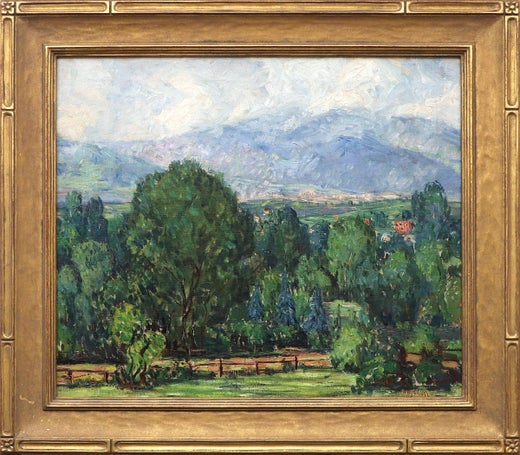
Charles Ragland Bunnell
Charles Bunnell developed a love for art at a very young age. As a child in Kansas City, Missouri, he spent much of his time drawing. When he was unable to find paper he drew on walls and in the margins of textbooks for which he was often fined. Around 1915, Bunnell moved with his family to Colorado Springs, Colorado. He served in World War I and later used his GI Training to study at the Broadmoor Art Academy (later renamed the Colorado Springs Fine Arts Center) during 1922 and 1923. In 1922, he married fellow student, Laura Palmer. He studied with Ernest Lawson in 1927-1928 and, in the winter of 1928-1929, he served as Lawson’s assistant. In the late 1920’s, the Bunnell’s settled just west of Colorado Springs and 1928, they welcomed the first of their three children. Their one-acre homesite, which they referred to as “Old Home Place”, was situated between two sets of railroad tracks at the foot of Pike’s Peak. Charlie converted an old railroad boxcar into his studio, where he later gave lessons. Beginning in 1931, Bunnell spent a year and a half studying under Boardman Robinson. The two men clashed constantly due to a generation gap and markedly different philosophies. Robinson encouraged his students not to stray from realism and though Bunnell mastered Robinson’s preferred style of American Scene painting, he regularly irritated his professor with his abstract sketches. Bunnell taught at the Kansas City Art Institute during the summers of 1929, 1930, 1940, and 1941. Between 1934 and 1941, he painted and taught under federal projects which included assisting Frank Mechau on murals for the Colorado Springs Post Office. However, he did not take to mural making and, after criticism from Boardman Robinson about his use of “heavy daubs which have no place in mural work,” he abandoned mural-making altogether. By the late 1930’s, Bunnell’s work departed from the American Scene/Modernist style he was trained in towards abstraction. This is marked by his “Black and Blue” series, consisting of 83 abstracted ink and watercolors. Affected by the Second World War and the loss of his 10-year old son, Bunnell’s work of the early 1940’s took on a Transcendental and Surrealist tone. The works from this period are moody and readily reflect the political and personal turmoil experienced by the artist. In the late 1940’s, Bunnell began experimenting with Abstract Expressionism. He alone is credited with introducing Colorado Springs to the new style as it was excluded from the Fine Art Center’s curriculum by Boardman Robinson. Bunnell excelled in Abstract Expressionism and continued to evolve in the style through the 1950’s continuing to his death in 1968. He was recently recognized as a premier American Abstract Expressionist by his inclusion in the book American Abstract Expressionism of the 1950’s: An Illustrated Survey. © David Cook Galleries, LLC
About the Seller
5.0
Gold Seller
Premium sellers maintaining a 4.3+ rating and 24-hour response times
Established in 1979
1stDibs seller since 2013
300 sales on 1stDibs
Typical response time: 1 hour
- ShippingRetrieving quote...Shipping from: Denver, CO
- Return Policy
More From This Seller
View All1930s American Modern Farm Landscape Watercolor with Barns, Windmill
Fields
By Samuel Bolton Colburn
Located in Denver, CO
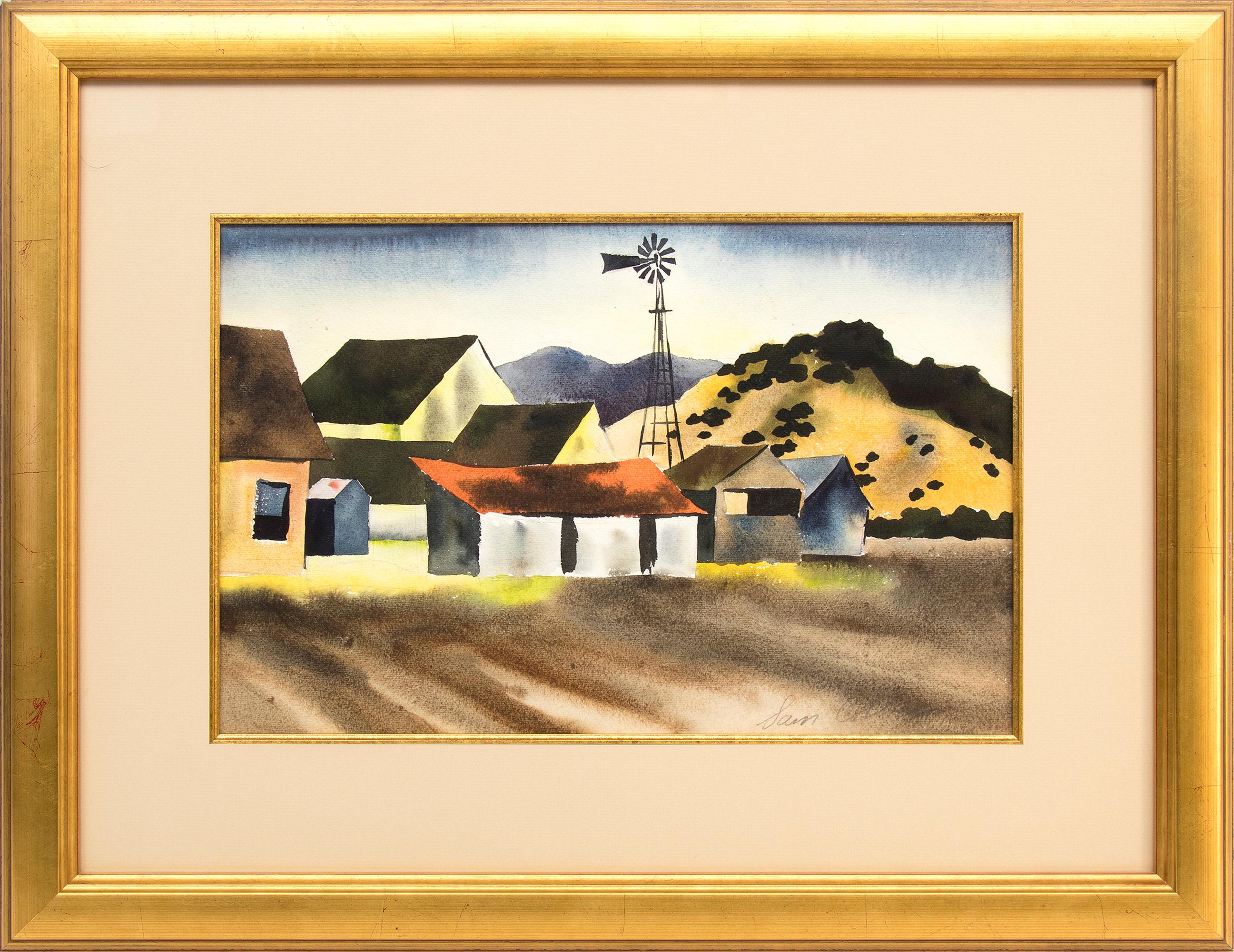
This original watercolor painting by acclaimed American artist Samuel Bolton Colburn captures a quiet farmstead nestled in a mountain valley. Rendered with Colburn’s signature contro...
Category
1930s American Modern Landscape Drawings and Watercolors
Materials
Watercolor
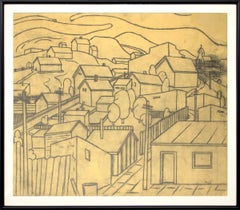
Charles Ragland Bunnell 1935 Graphite Drawing, Colorado Modernist Cityscape
By Charles Ragland Bunnell
Located in Denver, CO
This circa 1935 graphite on paper drawing by Charles Ragland Bunnell (1897–1968) depicts a modernist cityscape of houses perched on a hill in Colorado, reflecting the vibrancy and in...
Category
1930s American Modern Landscape Drawings and Watercolors
Materials
Graphite
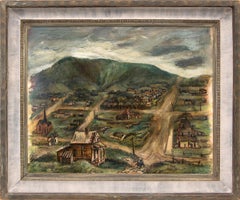
1942 Martyl Schweig “Victor, Colorado” Ghost Town Landscape Oil Painting
By Martyl Suzanne Schweig Langsdorf
Located in Denver, CO
This original 1942 oil painting, titled “Victor, Colorado,” is a vivid and historically important landscape by acclaimed American artist Martyl Suzanne Schweig (1918–2013). Painted en plein air during a 1940s tour of Colorado’s fading mining towns with noted artist Adolph Dehn...
Category
1940s American Modern Landscape Paintings
Materials
Masonite, Oil
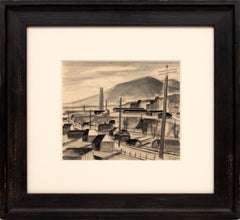
1940s WPA Watercolor by Charles Ragland Bunnell, Golden Cycle Mill, Colorado
By Charles Ragland Bunnell
Located in Denver, CO
This original 1940s grayscale watercolor by Charles Ragland Bunnell depicts a semi-abstracted view of the Golden Cycle Mill in Colorado Springs, Colorado. Rendered in subtle gradations of black and gray, the composition reflects the influence of WPA-era Modernism, combining industrial subject matter with expressive abstraction. The work is a notable example of mid-20th-century American Regionalism, capturing both a sense of place and a forward-looking artistic vision.
Bunnell’s restrained palette and simplified architectural forms transform the industrial landscape into a dynamic modern composition, emphasizing structure, rhythm, and atmosphere. The subject references the Golden Cycle Mining and Reduction Company, a major contributor to Colorado’s early 20th-century mining industry, located in what is now Old Colorado City. Through this modernist lens, the painting documents an important chapter of Western industrial history.
The watercolor measures 8 1/8 x 9 5/8 inches (sight size) and is presented in a custom black frame measuring 18 x 19 ½ x 1 ⅜ inches, making it a refined, display-ready piece for collectors of American Modern art, WPA works, and industrial landscapes.
Charles Ragland Bunnell (1897–1968) was a pioneering Colorado modernist, New Deal art...
Category
1940s American Modern Landscape Paintings
Materials
Watercolor
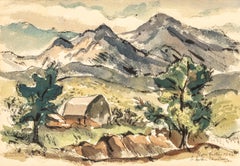
Edgar Britton 1946 Watercolor, Colorado Mountain Landscape, American Modernist
Located in Denver, CO
This exquisite original watercolor by American artist Edgar Britton (1901–1982) captures the serene beauty of a Colorado mountain landscape. Painted in 1946, the composition features...
Category
1940s American Modern Landscape Drawings and Watercolors
Materials
Watercolor
Artists Sketching, California, 1940s Large Modernist Gouache Painting, Landscape
By Frederick Shane
Located in Denver, CO
This original 1940s American Modernist gouache on archival paper painting, "Artists Sketching (California)," captures a dynamic scene of three artists at work against a majestic mountain backdrop. With expressive brushwork and a rich color palette, the piece embodies Frederick E. Shane’s signature blend of realism and modernist abstraction. Signed, titled, and dated by the artist in the lower margin, this remarkable artwork reflects the era’s Regionalist influence and the artist’s keen eye for capturing creative moments in the natural landscape.
The painting is professionally housed in a custom archival frame, ensuring long-term preservation. Frame dimensions: 25.5 x 37.5 x 1.5 inches. Image size: 20.25 x 29.75 inches.
Provenance: Estate of the Artist, Frederick Shane
About the Artist: Frederick E. Shane (1906-1992)
A celebrated Missouri Regionalist painter and printmaker, Frederick E. Shane was known for his compelling genre scenes, landscapes, seascapes, and portraits in a variety of media, including oil, watercolor, gouache, tempera, and lithography. While fundamentally a realist, Shane often incorporated elements of abstraction, expressionism, and surrealism, adding depth and emotion to his compositions.
During the summers of 1925-26, Shane studied under Randall Davey at the Broadmoor Academy in Colorado Springs, an institution founded in 1919 by philanthropists Spencer and Julie Penrose. Shane remained closely connected to the Colorado Springs Fine Arts Center, the Academy’s successor, throughout the 1940s and early 1950s, participating in Artists West of the Mississippi exhibitions and forming lasting friendships with key figures like Boardman Robinson and Adolph Dehn...
Category
1940s American Modern Landscape Paintings
Materials
Gouache
You May Also Like
1940
s Americana WPA Modernist Watercolor Painting Catskill Mountains Bungalow
By Samuel Grunvald
Located in Surfside, FL
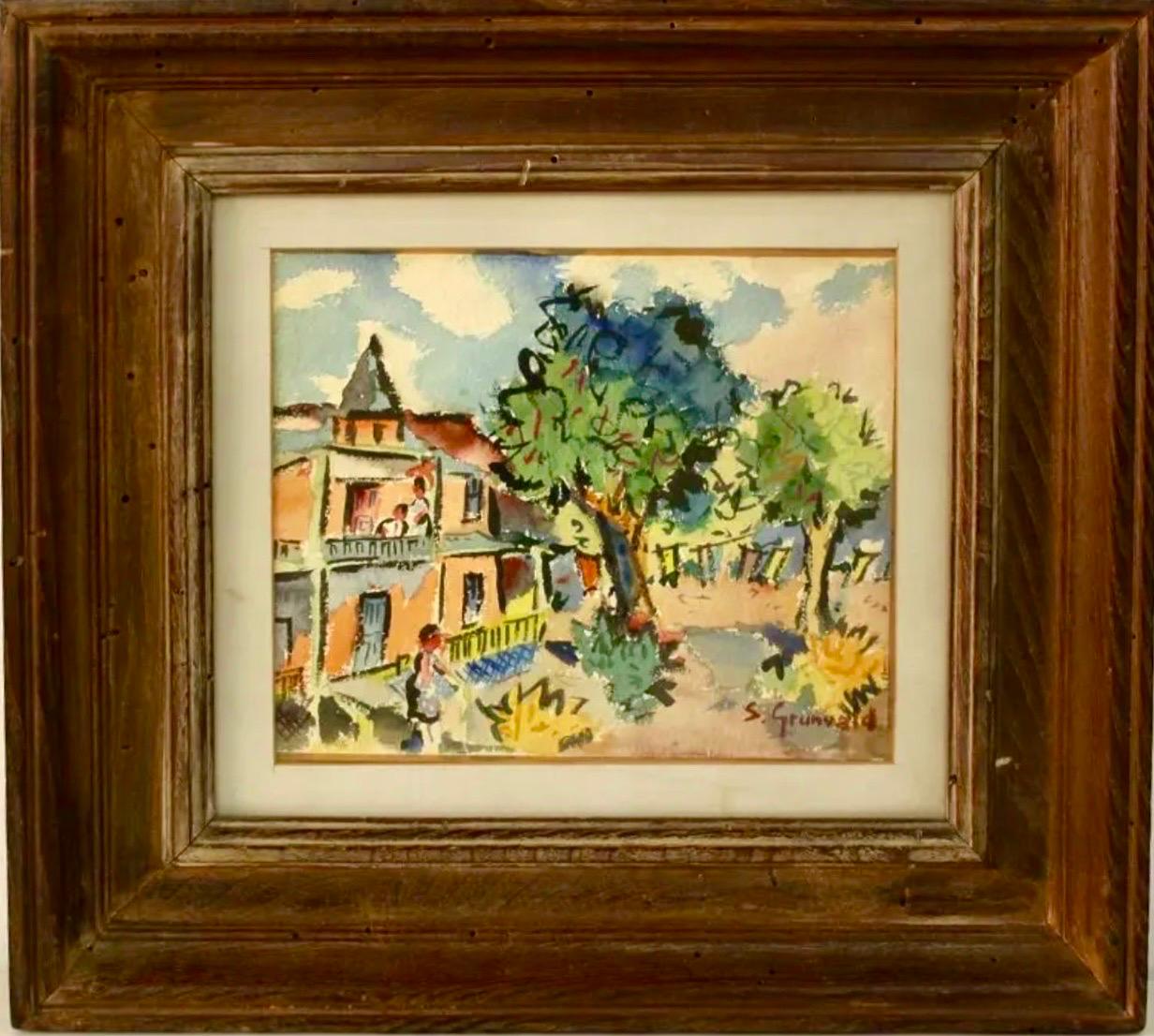
Bungalow (fauvist painting of New York scene) 1940's.
image is 10X 11.5 inches. Hand signed lower right
Watercolor painting on paper board
Country Scene
Samuel Grunvald was a Hunga...
Category
1940s Modern Figurative Drawings and Watercolors
Materials
Watercolor, Paper, Board
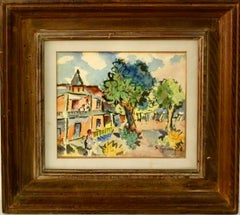
"To Market To Market", Early 20th Century Figurative Brooklyn Cityscape
Located in Soquel, CA
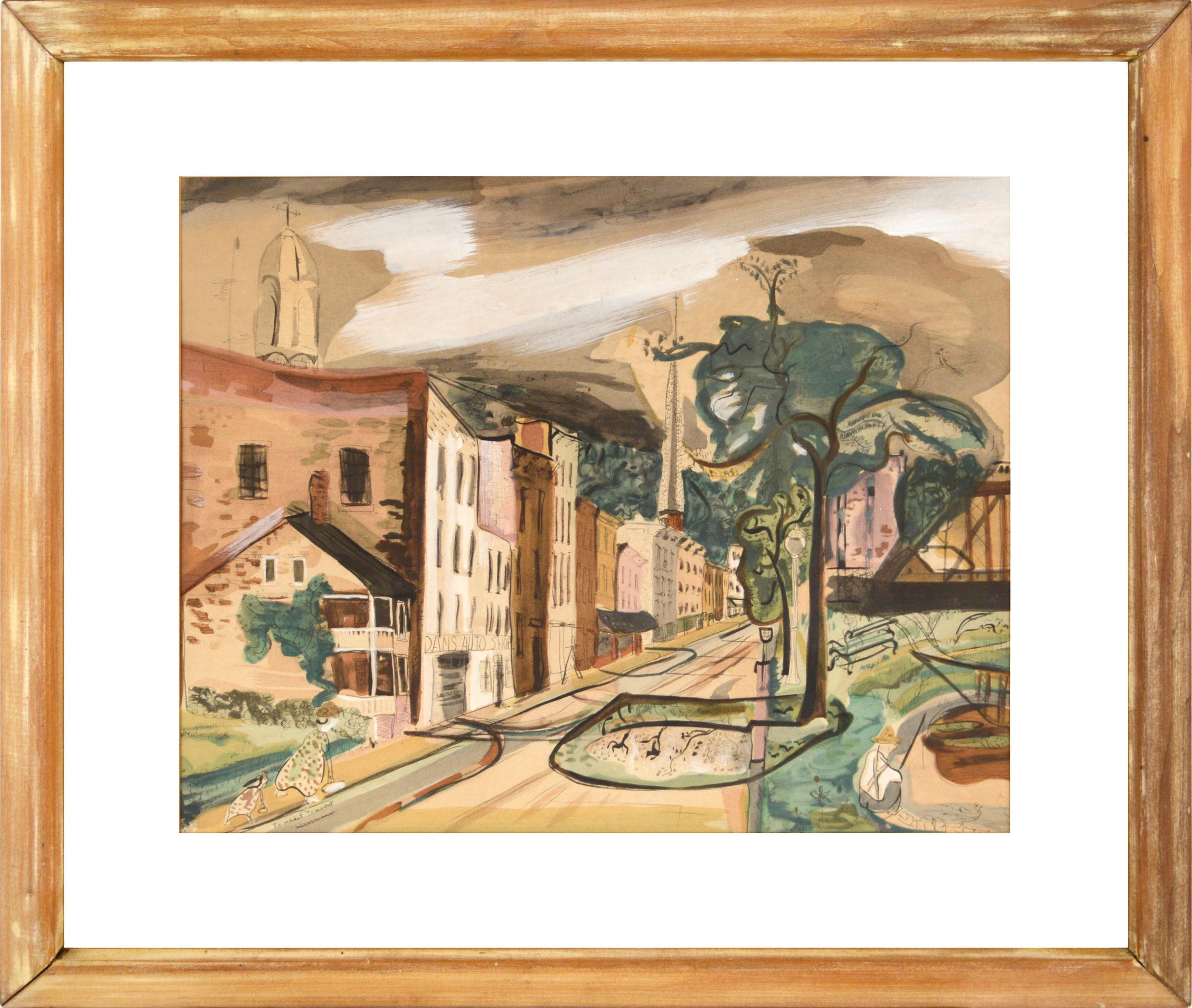
"To Market To Market", a whimsical early 20th century modern figurative village landscape by Frank Simon Herrmann (American, 1866-1942). In this charming scene of a downtown village ...
Category
Early 20th Century Modern Landscape Drawings and Watercolors
Materials
Paper, Gouache
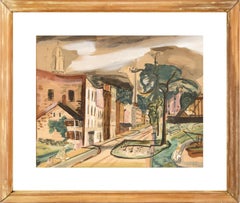
Mid Century Country House Landscape
By Rene Weaver
Located in Soquel, CA
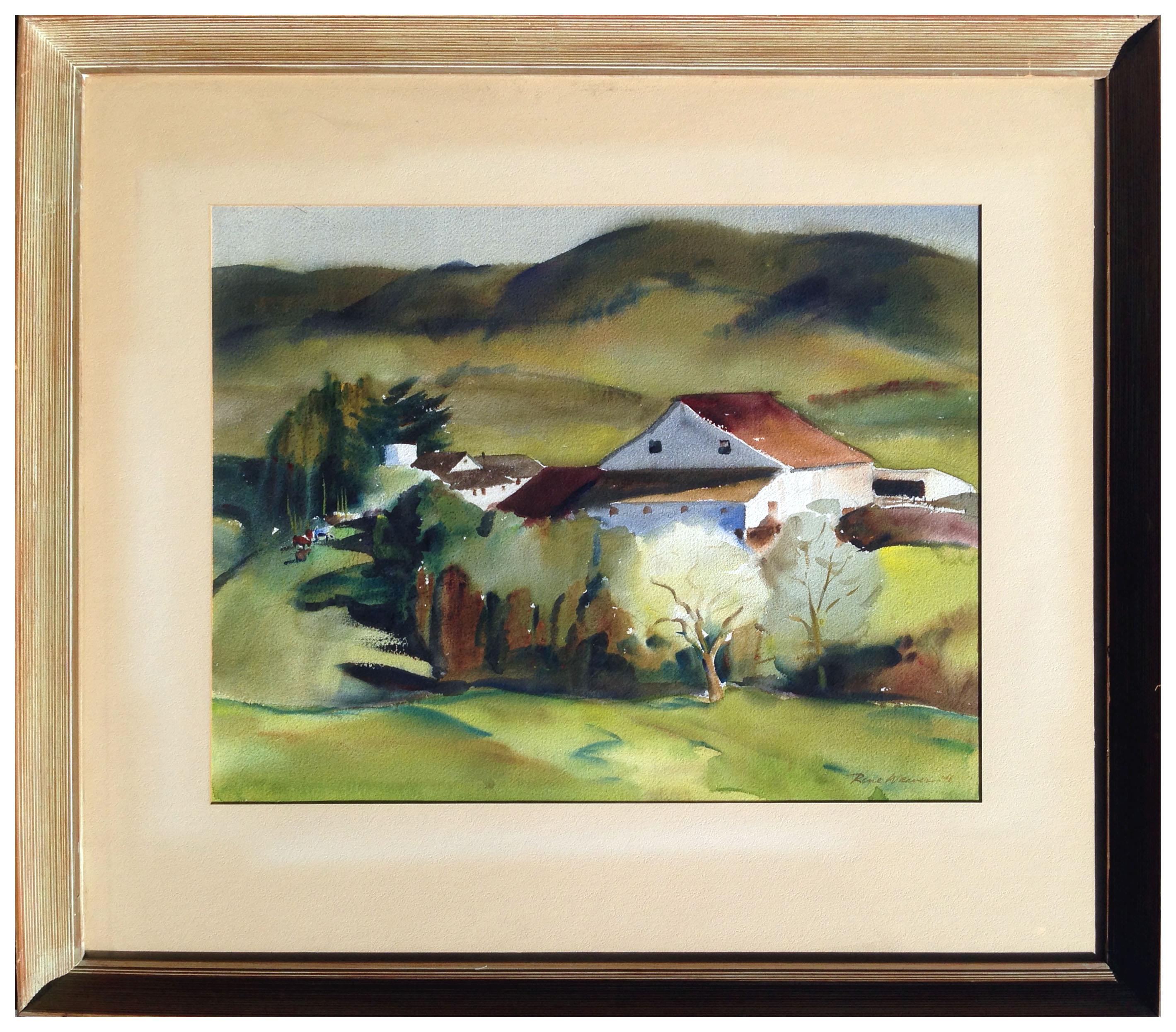
Vivid watercolor of a country house and grove of trees in a rural landscape of rolling green hills, with farm animals in the distance, by California artist Rene Weaver (American, 189...
Category
1940s American Impressionist Landscape Drawings and Watercolors
Materials
Paper, Watercolor
$1,116 Sale Price
20% Off
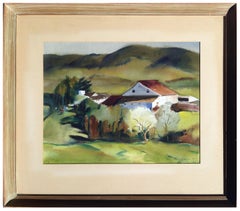
The Adobe, Early 20th Century Western Village Landscape, Cleveland School Artist
By Frank Wilcox
Located in Beachwood, OH
Frank Nelson Wilcox (American, 1887–1964)
The Adobe, c. 1940-41
Watercolor on paper
Signed lower right
14 x 20 inches
18.5 x 24 inches framed
Frank Nelson Wilcox (October 3, 1887 –...
Category
1940s American Modern Landscape Drawings and Watercolors
Materials
Watercolor
A Picturesque 1945 Landscape Watercolor of Calais, Vermont, The Artist
s Studio
By Harold Haydon
Located in Chicago, IL
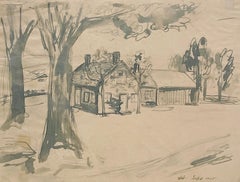
A Charming, Picturesque 1945 Landscape Watercolor of Calais, Vermont, The Artist's Studio, by noted Chicago Artist, Harold Haydon (Am. 1909-1994). For many years, Haydon and his wif...
Category
Mid-20th Century American Modern Landscape Drawings and Watercolors
Materials
Paper, Watercolor, Pencil
Jean Dulac (1902-1968) - Framed Mid 20th Century Gouache, House in the Orchard
Located in Corsham, GB
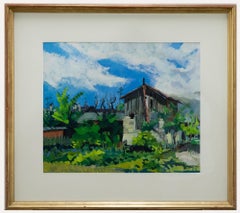
A vibrant and expressive oil painting of rural buildings, screened by a verdant orchard. Signed to the lower left. Presented in a large gilt-effect frame with new card mount. On paper.
Category
20th Century Landscape Drawings and Watercolors
Materials
Gouache
More Ways To Browse
Colorado Artists
Vintage Lawson
American Painting 1940s
Mountain House Art
Mining Paintings
Wpa Art Charles
Drawing Cartoon
Fine Art Pencil Drawings
French Charcoal Painting
Germany Watercolor
Pencil Drawings Figure
Drawings Of Women
Large Scale Drawing
Surreal Drawing
Graphite And Charcoal Drawings
Woman Charcoal Drawing
Male Figure Drawing
Pastel Drawing Woman