1 of 4
Christiaan van Geelen II19th C Dutch Old Master Drawing by Christiaan van Geelen II Study of a Mancirca 1820
circa 1820
$1,132.88List Price
About the Item
- Creator:Christiaan van Geelen II (1794 - 1826)
- Creation Year:circa 1820
- Dimensions:Height: 7.6 in (19.3 cm)Width: 7.29 in (18.5 cm)
- Medium:
- Movement Style:
- Period:
- Condition:
- Gallery Location:Gouda, NL
- Reference Number:1stDibs: LU116014262832
Authenticity Guarantee
In the unlikely event there’s an issue with an item’s authenticity, contact us within 1 year for a full refund. DetailsMoney-Back Guarantee
If your item is not as described, is damaged in transit, or does not arrive, contact us within 7 days for a full refund. Details24-Hour Cancellation
You have a 24-hour grace period in which to reconsider your purchase, with no questions asked.Vetted Professional Sellers
Our world-class sellers must adhere to strict standards for service and quality, maintaining the integrity of our listings.Price-Match Guarantee
If you find that a seller listed the same item for a lower price elsewhere, we’ll match it.Trusted Global Delivery
Our best-in-class carrier network provides specialized shipping options worldwide, including custom delivery.You May Also Like
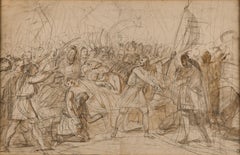
French School, early 19th century - Battle Scene between Greeks and Ottomans
Located in Paris, Île-de-France
French School, early 19th century
Battle Scene between Greeks and Ottomans, circa 1820–1830
Pencil and brown wash on paper,
30 × 46 cm
Unsigned
Provenance:
Former collection of P...
Category
Early 19th Century Old Masters Figurative Drawings and Watercolors
Materials
Chalk, Crayon
$4,770
H 11.82 in W 18.12 in
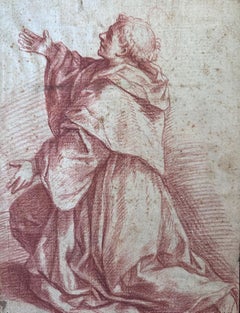
Italian School, 17th century - Study for the Vision of Saint Anthony
Located in Paris, Île-de-France
Italian School, 17th century
Study for the Vision of Saint Anthony
Red chalk on paper
247 x 185 mm
Unsigned
Provenance
Private collection, Paris
Collection of Count Alessandro Mag...
Category
17th Century Old Masters Figurative Drawings and Watercolors
Materials
Chalk
$3,339
H 9.73 in W 7.29 in
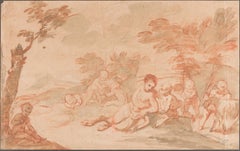
Fauness and Putti
Located in Paris, Île-de-France
Nicolas Chaperon (1612–1653/4)
Fauness and Putti
Black chalk, red chalk, wash in red chalk and grey on paper,
195 x 313 mm
Unsigned
Provenance:
Private collection
Expert opinion ...
Category
1620s Old Masters Figurative Drawings and Watercolors
Materials
Chalk
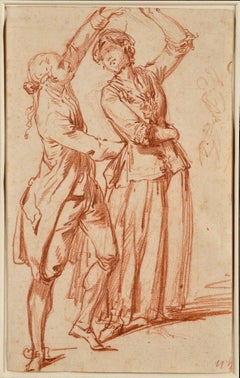
Le Menuet
Located in Paris, Île-de-France
Attributed to Gabriel-Jacques de Saint-Aubin (Paris, 1724 – 1780)
Le Menuet, circa 1765–1770
Red chalk on paper
13 3/8 x 8 1/4 in (34 x 21 cm)
Verso: black chalk and red chalk
Unsi...
Category
Late 18th Century Old Masters Figurative Drawings and Watercolors
Materials
Chalk, Laid Paper
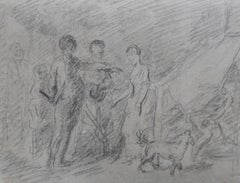
France 18th Century, The Surprised Lovers, original drawing
Located in Paris, FR
France circa 1770
Two lovers surprised in bed
Black chalk on paper
13 x 17 cm
Modern frame : 34 x 38 cm
This drawing had been attributed to Gabriel de Saint Aubin (1724-1780). It's...
Category
1760s Old Masters Interior Drawings and Watercolors
Materials
Chalk
$934 Sale Price
20% Off
H 5.12 in W 6.7 in
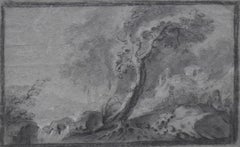
France 18th Century, Pastorale (Arcadian Landscape), original drawing
Located in Paris, FR
France 18th Century,
Pastorale (Arcadian Landscape)
Black chalk and heightenings of white gouache on blue-grey paper
19 x 31 cm
Framed : 34.5 x 46.5 cm
The atmosphere and the subje...
Category
1760s Old Masters Landscape Drawings and Watercolors
Materials
Chalk
$1,016 Sale Price
20% Off
H 7.49 in W 12.21 in
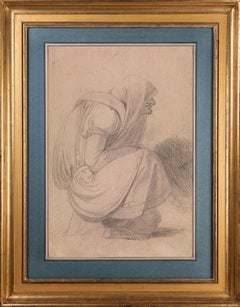
Drawing of a captive woman
By Henry Fuseli
Located in London, GB
Collections:
Sir Thomas Lawrence, who acquired the contents of Fuseli’s studio;
Susan, Countess of Guilford, née Coutts (1771-1837), acquired from the Lawrence estate;
Susan, Baroness North (1797-1884), daughter of the above;
Mrs A. M. Jaffé, acquired in France, c. 1950 to 2016.
Black chalks, on buff-coloured paper
Stamped verso: ‘Baroness Norths Collection / of Drawings by H Fuseli Esq.’
Framed dimensions: 26.38 x 20.63 inches
This boldly drawn sheet depicting a seated figure was made by Fuseli at an important and highly productive moment in his career. The monumental drawing is closely related to another sheet by Fuseli in the British Museum which Schiff published as subject unknown. Both drawings were made when Fuseli was designing his most important sequence of historical works, including scenes from Shakespeare and Milton, The Nightmare and The Death of Dido which was exhibited at the Royal Academy to great critical acclaim in 1781. The present drawing does not relate directly to any of Fuseli’s finished historical paintings of the period, but evidently the image of a slightly menacing, seated and covered old woman was precisely the sort of motif he was playing with. It is notable that the same figure reappears later in Fuseli’s work as the witch from Ben Jonson’s Witch’s Song which Fuseli produced as both a painting and engraving in 1812.
Fuseli returned to London in 1779 from a highly creative and productive period in Rome and established himself as one of the leading history painters of the period. Fuseli re-established contact with his old mentor Sir Joshua Reynolds, becoming a regular guest at his dinner table and visitor to his studio. The earliest and most striking manifestation of this strategy was Fuseli's Death of Dido, exhibited in 1781 at the Royal Academy. Executed on the same scale as Reynolds's version (Royal Collection), Fuseli's vertically oriented picture was hung directly opposite Reynolds's with its horizontal orientation, inevitably inviting comparison between the two works and garnering Fuseli much publicity and favourable reviews in the newspapers.
The present, previously unpublished sheet, relates closely to a drawing now in the British Museum. That sheet shows the same seated old woman, drawn on a smaller scale and more schematic in design, seated next to an anatomical drawing of a man. The pose of this figure is related to the pose of Dido in his Death of Dido; the foreshortened torso, arrangement of head, oblique view of Dido’s features and arms all suggest that the study can be viewed as an initial thought for the composition. Fuseli may have initially thought of including the figure of the hunched and covered old woman. Drawn on identical paper to the British Museum sheet, our study is an enlarged depiction of the same figure, more elaborately delineated and developed. The presence of a chain to the right of the figure, suggests that the iconography was related in some way to a scene of imprisonment.
Fuseli had first explored the motif of the hooded old woman in an early Roman drawing, 'The Venus Seller'. The idea of a grotesque old woman, hooded and with angular nose and projecting chin seen in profile was most spectacularly used by Fuseli in his sequence of paintings depicting The Three Witches from Macbeth. Fuseli seems to have kept the present sheet and may have returned to it when preparing a painting of The Witch and the Mandrake from Ben Jonson’s Witch’s Song from his Masque of Queens in 1812. Here the same seated figure looks out from under her hood and picks a mandrake by moonlight. Jonson’s drama had been performed at the court of James I in 1609, inspired the subject. To throw the nobility of the queens into relief, the poet added a coven of witches, one of whom declares: ‘I last night lay all alone, On the ground, to hear the mandrake groan; And plucked him up, though he grew full low, And, as I had done, the cock did crow.’ The figure was reversed in the associated etching which was published in 1812. It seems likely that the present drawing remained as part of Fuseli’s working archive of figure studies.
The present drawing was presumably purchased with the bulk of Fuseli’s drawings after the artist’s death by Sir Thomas Lawrence. Lawrence’s large group of Fuseli drawings were then acquired by Susan, Countess of Guildford (1771-1837). Lady Guildford was the eldest daughter of the banker Thomas Coutts (1735-1822), who himself had supported Fuseli’s journey to Rome in the 1770s and had remained one of the artist’s key...
Category
18th Century Old Masters Figurative Drawings and Watercolors
Materials
Chalk
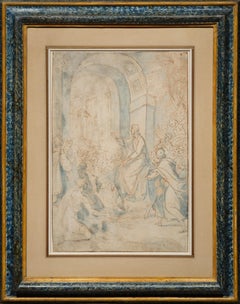
A large drawing by Il Cigoli depicting Christ
s Entry into Jerusalem
Located in PARIS, FR
This large sheet, delicately enhanced with blue ink wash, was created by Lodovico Cardi, known as Il Cigoli, the most prominent painter in Florence at the end of the 16th century. It...
Category
16th Century Old Masters Figurative Drawings and Watercolors
Materials
Paper, Chalk, Ink, Pen
$10,136
H 24.38 in W 19.25 in
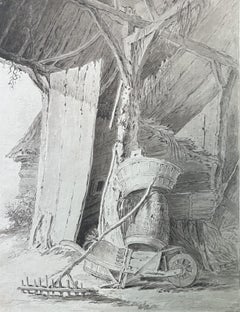
French School 18th century, Interior of a barn, drawing
Located in Paris, FR
French School 18th century,
Interior of a barn
Black chalk and black ink wash on paper
30.8 x 23.6 cm
Bears a mention " Le Prince" on the back of the sheet (see photograph)
In good ...
Category
1750s Old Masters Still-life Drawings and Watercolors
Materials
Chalk, Ink
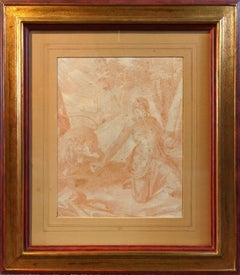
Saint Jerome in the Desert, Prague school sanguine drawing
Located in New York, NY
Saint Jerome in the Desert Prague school sanguine drawing.
Category
Early 17th Century Old Masters Figurative Drawings and Watercolors
Materials
Paper, Chalk
$4,000
Free Shipping
H 11.42 in W 9.06 in D 0.4 in