Items Similar to Original German Expressionist Drawing Ernst Ludwig Kirchner Women Dancing
Want more images or videos?
Request additional images or videos from the seller
1 of 22
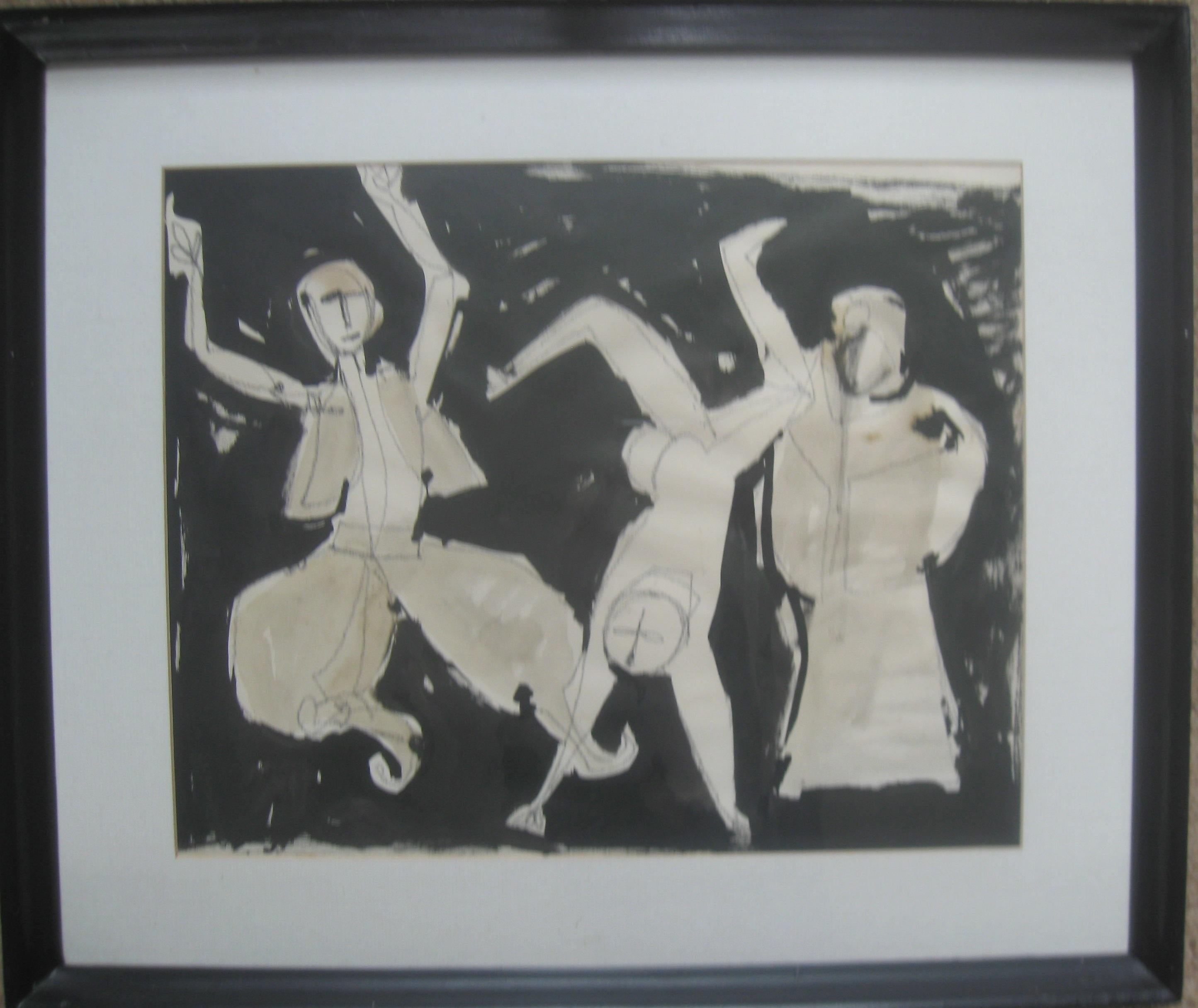
Original German Expressionist Drawing Ernst Ludwig Kirchner Women Dancingc.1905-1915
c.1905-1915
$15,000
£11,409.82
€13,152.23
CA$21,296.84
A$22,856.29
CHF 12,251.87
MX$275,064.93
NOK 154,477.98
SEK 140,862.51
DKK 98,247.11
About the Item
Ernst Ludwig Kirchner ( Germany 1880-1938 )
Expressionist Female Women Dancing Mixed Media on Paper Drawing or Painting Expressionism
Dimensions: 20" L 16" H in
This bore a sticker from Christies auction house and another collection sticker verso but they have been inadvertently removed. I do have the photo.
Ernst Ludwig Kirchner (1880 – 1938) was a German expressionist painter and printmaker and one of the founders of the artists group Die Brücke or "The Bridge", a key group leading to the foundation of Expressionism in 20th-century art. He volunteered for army service in the First World War, but soon suffered a breakdown and was discharged. His work was branded as "Entartete Kunst" or "degenerate" by the Nazis in 1933, and in 1937 more than 600 of his works were sold or destroyed.
Ernst Ludwig Kirchner was born in Aschaffenburg, Bavaria. His parents were of Prussian descent and his mother was a descendant of the Huguenots, a fact to which Kirchner often referred. As Kirchner's father searched for a job, the family moved frequently and Kirchner attended schools in Frankfurt and Perlen until his father earned the position of Professor of Paper Sciences at the College of technology in Chemnitz, where Kirchner attended secondary school. Although Kirchner's parents encouraged his artistic career they also wanted him to complete his formal education so in 1901, he began studying architecture at the Königliche Technische Hochschule (royal technical university) of Dresden. The institution provided a wide range of studies in addition to architecture, such as freehand drawing, perspective drawing and the historical study of art. While in attendance, he became close friends with Fritz Bleyl, whom Kirchner met during the first term. They discussed art together and also studied nature, having a radical outlook in common. Kirchner continued studies in Munich from 1903 to 1904, returning to Dresden in 1905 to complete his degree.
In 1905, Kirchner, along with Bleyl and two other architecture students, Karl Schmidt-Rottluff and Erich Heckel, founded the artists group Die Brücke ("The Bridge") later to include Emil Nolde, Max Pechstein and Otto Mueller. From then on, he committed himself to art. The group aimed to eschew the prevalent traditional academic style and find a new mode of artistic expression, which would form a bridge (hence the name) between the past and the present. They responded both to past artists such as Albrecht Dürer, Matthias Grünewald and Lucas Cranach the Elder, as well as contemporary international avant-garde movements. As part of the affirmation of their national heritage, they revived older media, particularly woodcut or woodblock prints.
Kirchner's studio became a venue which overthrew social conventions to allow casual love-making and frequent nudity. Group life-drawing sessions took place using nude models from the social circle, rather than professionals, and choosing quarter-hour poses to encourage spontaneity. In 1911, he moved to Berlin, where he founded a private art school, MIUM-Institut, in collaboration with Max Pechstein with the aim of promulgating "Moderner Unterricht im Malen" (modern teaching of painting). This was not a success and closed the following year, when he also began a relationship with Erna Schilling that lasted the rest of his life. In 1917, at the suggestion of Eberhard Grisebach [de], Helene Spengler invited Kirchner to Davos where he viewed an exhibition of Ferdinand Hodler paintings. "When I was leaving, I thought of Vincent Van Gogh's fate and thought that it would be his as well, sooner or later. Only later will people understand and see how much he has contributed to painting".
In 1921 Kirchner visited Zurich at the beginning of May and met the dancer, Nina Hard, whom he invited back to Frauenkirch (despite Erna's objections). Nina Hard would become an important model for Kirchner and would be featured in many of his works. Kirchner began creating designs for carpets which were then woven by Lise Gujer.
In 1925, Kirchner became close friends with fellow artist, Albert Müller and his family. Rot-Blau, a new art group based in Basel, was formed by Hermann Scherer, Albert Müller, Paul Camenisch and Hans Schiess, who all visited Kirchner and worked under his guidance. At the end of 1925, Kirchner returned to Germany and made his rounds to Frankfurt, Chemnitz (where his mother was living), and Berlin where he met with Karl Schmidt-Rottluff who wanted Kirchner to form a new artist's group; Kirchner politely refused. Kirchner continued to work in Frauenkirch, his style growing increasingly abstract. In 1931, he was made a member of the Prussian Academy of Arts in Berlin. As the Nazi party took power in Germany, it became impossible for Kirchner to sell his paintings. In 1937, he was forced to resign from the Prussian Academy of Arts. Kirchner became increasingly disturbed by the situation in Germany, writing: "Here we have been hearing terrible rumours about torture of the Jews, but it's all surely untrue. I'm a little tired and sad about the situation up there. There is a war in the air. In the museums, the hard-won cultural achievements of the last 20 years are being destroyed, and yet the reason why we founded the Brücke was to encourage truly German art, made in Germany. And now it is supposed to be un-German. Dear God. It does upset me".
In 1934, Kirchner visited Berne and Zurich, finding the former more pleasing than the latter, and met Paul Klee. In the winter of 1935, a new school was being planned to be built in Frauenkirch and Kirchner offered to paint a mural. In 1913, the first public showing in the United States of Kirchner's work took place at the Armory Show, which was also the first major display of modern art in America. In 1921, U.S. museums began to acquire his work and did so increasingly thereafter. His first solo museum show in the US was at the Detroit Institute of Arts in 1937.[ In 1969, a major retrospective of paintings, drawings, and prints traveled to the Seattle Art Museum, the Pasadena Art Museum, and the Museum of Fine Arts, Boston. In 1992, the National Gallery of Art, Washington, held a monographic show, using its existing collection; a major international loan exhibition took place in 2003. In November 2006 at Christie's, Kirchner's Street Scene, Berlin (1913) fetched $38 million, a record for the artist. From 3 August to 10 November 2008, the Museum of Modern Art in New York held a major exhibition that "probably comprises the very best of his oeuvre."
Many of Kirchner's collectors were Jewish and persecuted by the Nazis for that reason. They either sold off their collections in order to flee the Nazis or had their collections seized. The Kirchner paintings "Berlin Street Scene" and "Judgement of Paris" were owned by the Jewish art collector Alfred Hess whose widow was forced to relinquish them before fleeing. Kirchner's 1915 painting Artillerymen was owned by the important art dealer of modern art, the German Jewish Alfred Flechtheim whose art gallery was Aryanized (seized by Nazis) in 1933 before he fled Germany. Kirchner's painting Sand Hills in Engadine, which had been seized by the Nazis in 1935 after its owner, Max Fischer, fled Germany for the United States, found its way into the collection of the MoMA, but was returned to Fischer's heirs in 2015. His monumental Bathers (1916), destroyed by the Nazis, has been re-created at the Kirchner Museum in Davos.
- Attributed to:Ernst Ludwig Kirchner (1880-1938, German)
- Creation Year:c.1905-1915
- Dimensions:Height: 16 in (40.64 cm)Width: 20 in (50.8 cm)
- Medium:
- Movement Style:
- Period:
- Condition:Please see photos.
- Gallery Location:Surfside, FL
- Reference Number:1stDibs: LU38211932652
About the Seller
4.9
Platinum Seller
Premium sellers with a 4.7+ rating and 24-hour response times
Established in 1995
1stDibs seller since 2014
1,861 sales on 1stDibs
Typical response time: <1 hour
- ShippingRetrieving quote...Shipping from: Surfside, FL
- Return Policy
More From This Seller
View AllCabaret Dancer (ala Toulouse Lautrec)
By Marcel Vertès
Located in Surfside, FL
This is an original hand signed (I believe it is also hand colored but i am not positive) Artists Proof Lithograph of a Circus scene. This depicts a Cabaret Dancer.
This came from a...
Category
1940s Art Deco Figurative Prints
Materials
Lithograph
Bauhaus Moshe Raviv Moi Ver Abstract Dancing Painting Lithuanian Israeli Modern
Located in Surfside, FL
Dancing Jesters or Clowns (colorful Chassidim dancing)
Gouache on paper
Sheet is 19.25 X 25.25
Image is 13.5 X 19.25
Moshé Raviv-Vorobeichic, known as Moi Ver, born Moses Vorobeichik (1904–1995) was an Israeli photographer and painter.
Moi Ver (Moshe Raviv) was born in 1904 in Vilnius, Lithuania as Moshe Vorobeichic.
Moshe Vorobeichic received his initial artistic training in the early 1920s in Vilnius, Lithuania, where he studied painting, architecture, and photography. Having become an important figure in the Yiddish avant-garde culture, he exhibited his first works. From October 1927, he studied at the Bauhaus school in Dessau (Germany), with photographer-visual artist Laszlo Moholy Nagy and painters Josef Albers, Paul Klee, Wassily Kandinsky, and Hinnerk Scheper.
In his book Moi Ver: Paris, he produced avant-garde photomontages. Originally published in 1931 by Editions Jeanne Walter with an introduction by futurist Fernand Leger.
In 1932 Raviv was sent by the weekly La Vie Parisienne to British Mandate Palestine as photo reporter. Raviv illustrated many books. Raviv was a founder of the Artists' Colony in Safed.
At the height of 20th Century modernism and one of the followers of Laszlo Moholy Nagy and his concept of New Vision, Moin Ver was one of the rising stars in European photography. Born in Lebedeva, in Belarus, he wandered through Europe until he immigrated to Palestine in 1934. His well known yet partly forgotten three photographic projects in 1931, The Ghetto Lane in Wilna, Paris: 80 Photographies de Moi Ver and Ci-Contre – 110 Photos de Moi Ver (that was not published at the time), have remained milestones in the art of the 1930s as he created and imposed a new visionary style in photography.
As a contemporary of artists such as Man Ray, Ilse Bing...
Category
20th Century Bauhaus Mixed Media
Materials
Paper, Gouache
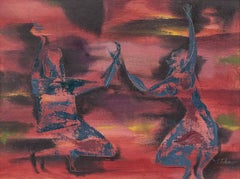
Israeli "Inbal Dancers at Midnight" Modernist Dance painting
By Joseph Wolins
Located in Surfside, FL
Genre: Expressionist
Subject: Figures
Medium: Oil
Surface: Board
Country: United States
Dimensions: 18" x 24"
Dimensions w/Frame: 23 1/4" x 29 1/2"
Joseph Wolins
1915-1999
Wolins ...
Category
Mid-20th Century Modern Figurative Paintings
Materials
Oil
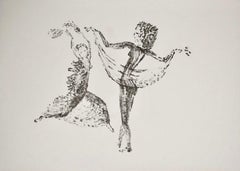
Apeles Fenosa Spanish Sculptor Mourlot Lithograph Abstract Expressionist Figures
By Apelles Fenosa
Located in Surfside, FL
This is from a hand signed, limited edition (edition of 125) folio or full page lithographs some having a poem verso. The individual sheets are not signed or numbered. This listing ...
Category
1970s Expressionist Figurative Prints
Materials
Lithograph
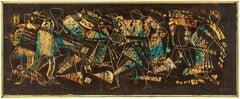
Dancing Figures, Oil on Board
By David Rosen (b.1912)
Located in Surfside, FL
DAVID ROSEN
Toronto, Canada, b. 1912, d. 2004
Painter David Rosen emerged onto the art scene while the country was wrought with unimaginable economic turmoil. Like most other America...
Category
20th Century Modern Figurative Paintings
Materials
Oil, Board
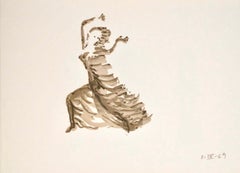
Apeles Fenosa Spanish Sculptor Mourlot Lithograph Abstract Expressionist Figures
By Apelles Fenosa
Located in Surfside, FL
This is from a hand signed, limited edition (edition of 125) folio or full page lithographs some having a poem verso. The individual sheets are not signed or numbered. This listing ...
Category
1970s Expressionist Figurative Prints
Materials
Lithograph
You May Also Like
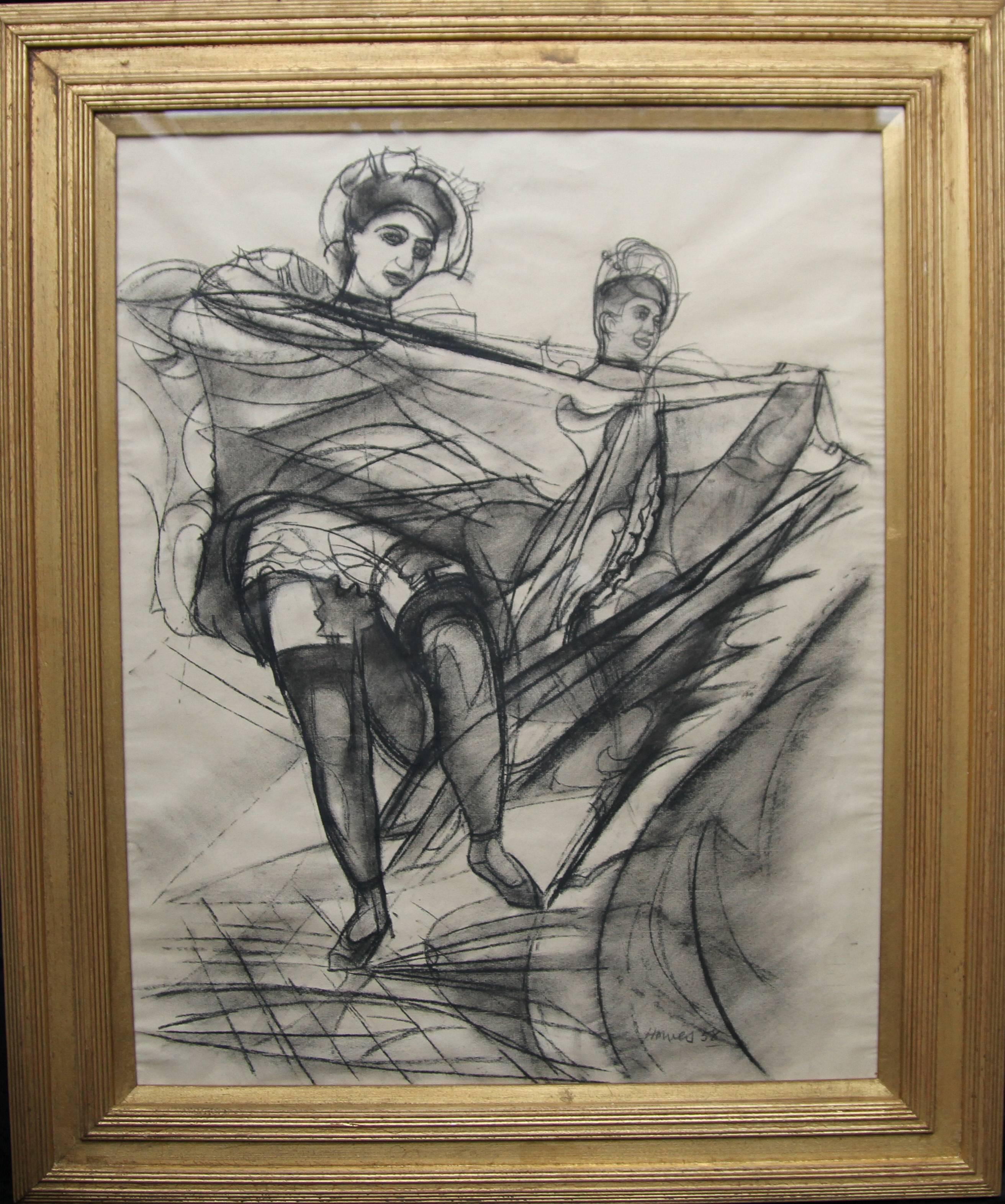
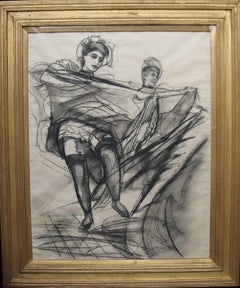
Can Can Dancers - British Art Deco drawing Burlesque women dancers VG provenance
By Frank G. Howes
Located in Hagley, England
A large, detailed Art Deco pencil charcoal impressionist depiction of Can Can dancers which was executed circa 1956 by Frank G Howes. Excellent provenance.
Signed lower right.
Prov...
Category
1950s Art Deco Figurative Drawings and Watercolors
Materials
Charcoal, Pencil
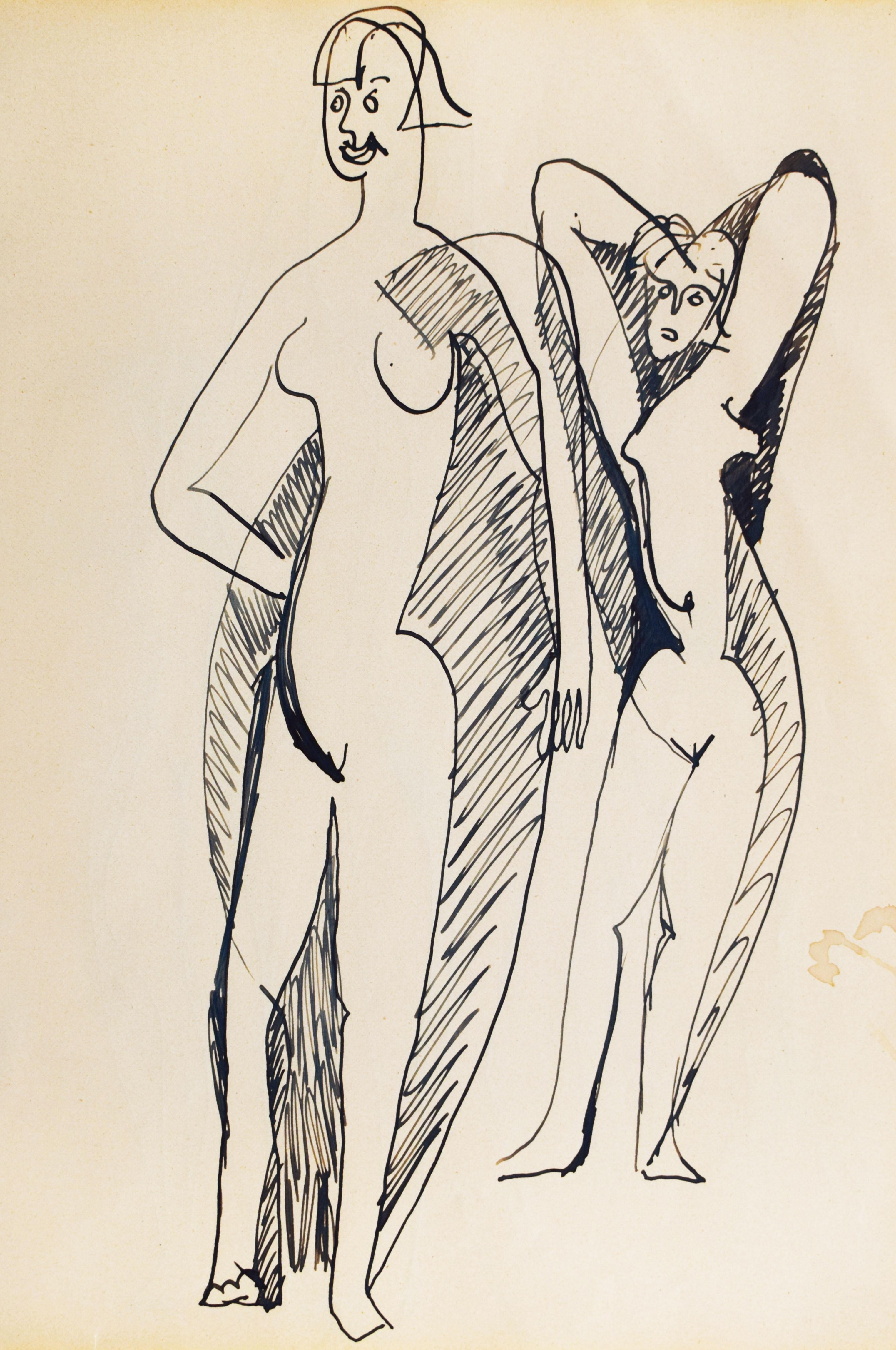
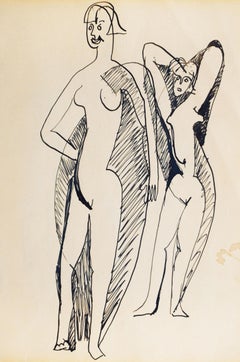
Two Standing Nudes/ Four Figures - Double-Sided Drawing German Expressionism
By Ernst Ludwig Kirchner
Located in London, GB
This double-sided ink and pencil drawing is by the German artist Ernst Ludwig Kirchner.
The work is unsigned. It was created between 1932-34 and was part of one of the artist’s sketc...
Category
1930s Expressionist Figurative Drawings and Watercolors
Materials
Paper, Ink, Pencil
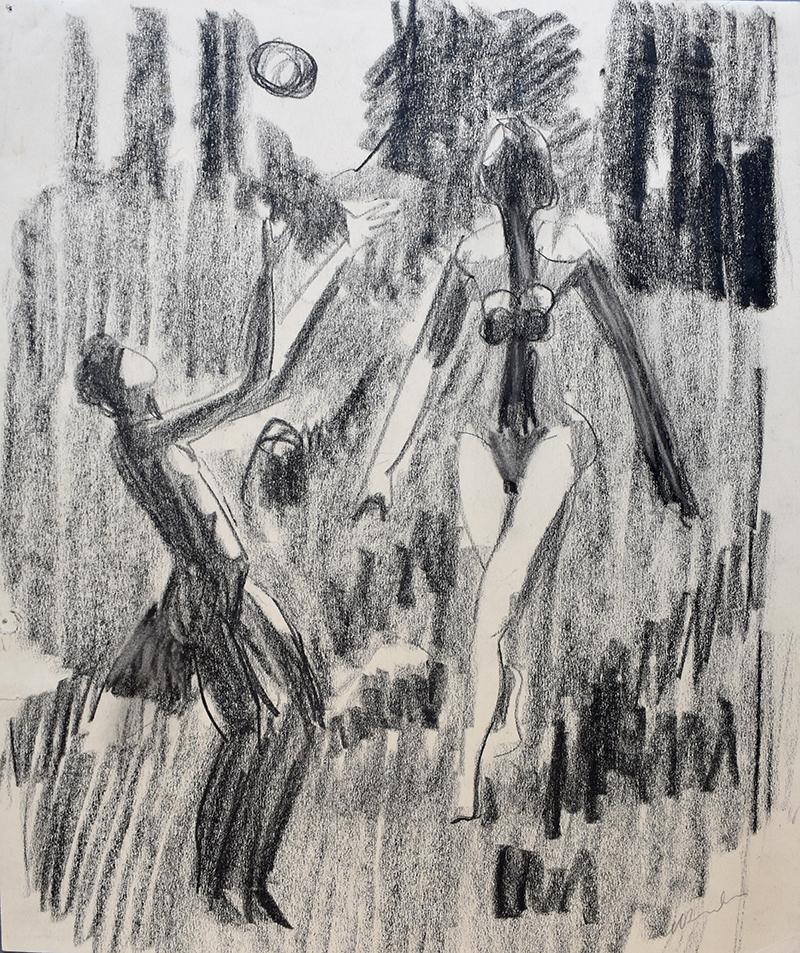
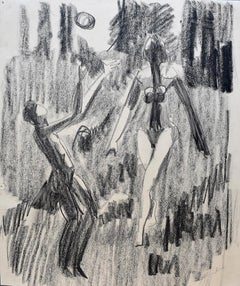
Ball Playing Nudes
By Ernst Ludwig Kirchner
Located in London, GB
ERNST LUDWIG KIRCHNER 1880-1938 (German)
Aschaffenburg 1880 - 1938 Davos
Title: Ball Playing Nudes Ballspielende Akte, 1932
Technique: Chalk Drawing on Smooth Wove Paper
Paper s...
Category
1930s Expressionist Figurative Drawings and Watercolors
Materials
Chalk
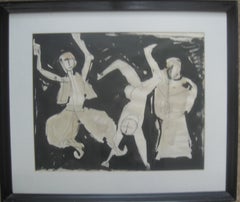
Acrobatic Dancers
Pencil , pen and ink on paper, circa 1950
s.
Located in Frome, Somerset
An original pencil and indian ink drawing by listed Swedish Artist. Adolfo Rasmussum. He specialized in the movement of the human body when seeing a performance. His works are conce...
Category
Early 20th Century Modern Figurative Drawings and Watercolors
Materials
India Ink
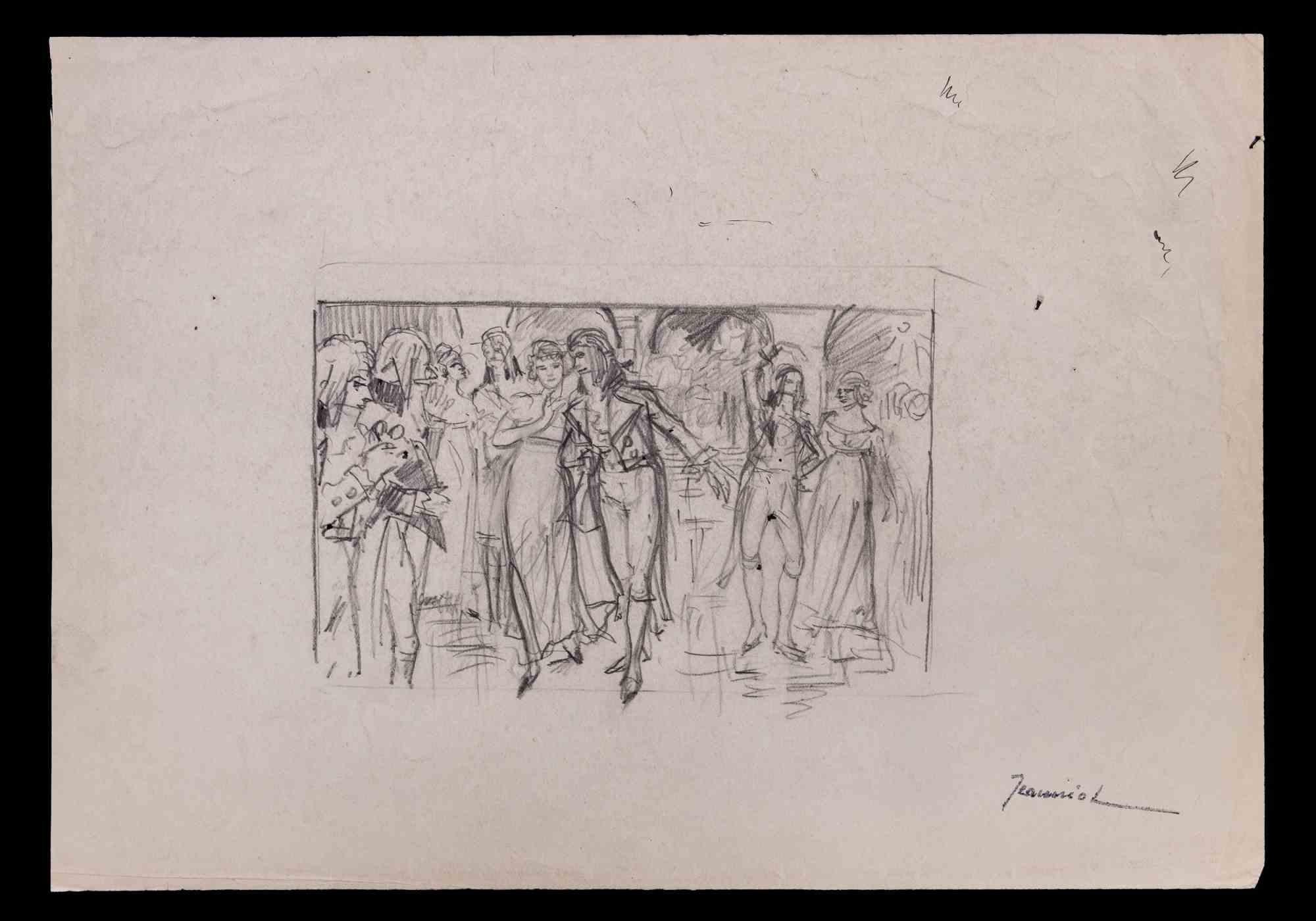
Dance Party - Original Drawing By Pierre Georges Jeanniot - Early 20th century
By Pierre Georges Jeanniot
Located in Roma, IT
Dance Party is an original Drawing on paper realized by painter Pierre Georges Jeanniot (1848-1934).
Drawing in Pencil.
Hand-signed on the lower.
Good conditions.
Pierre-Georges ...
Category
Early 20th Century Modern Portrait Drawings and Watercolors
Materials
Pencil
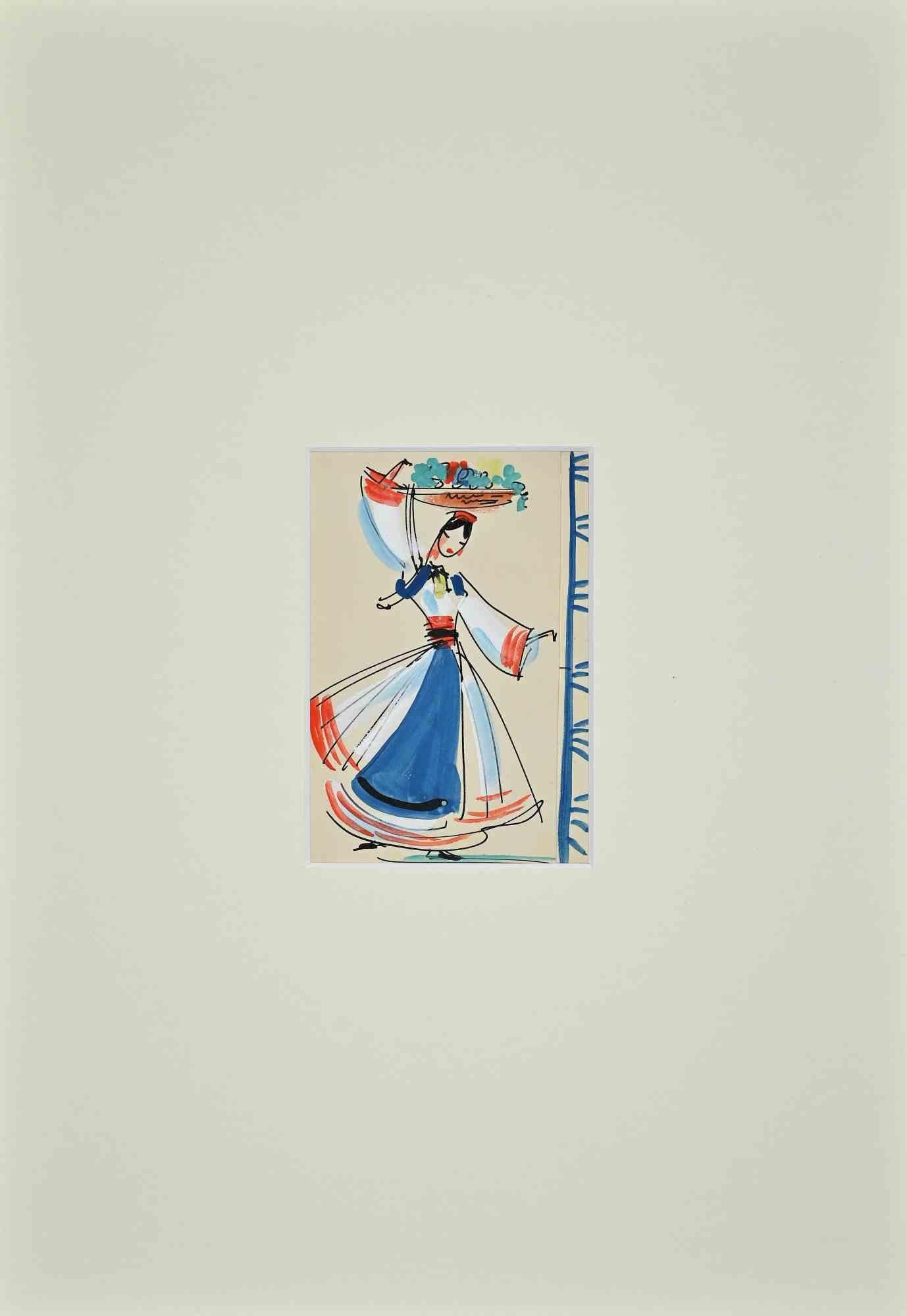
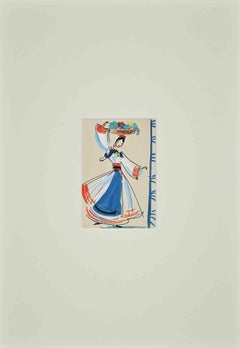
Woman Dancing - Original Drawing by Andrea Preger - 19th Century
Located in Roma, IT
Woman dancing is an original drawing realized by Andrea Preger in 19th Century.
Beautiful watercolour and tempera drawing on ivory-colored paper. Included...
Category
19th Century Modern Figurative Drawings and Watercolors
Materials
Tempera, Watercolor
More Ways To Browse
Antique Architectural Drawings
German Early 20th Century Expressionist Painting
Entartete Kunst
Antique Jewish Art
Die Brucke
Karl Schmidt Rottluff
German Expressionists Drawings
Judgement Of Paris
Women Dancing Painting
Paul Mullally
Kirchner Print
Shoe Drawing
Nude China Ink Drawings
Vintage Black And White Sketches
Female Studio Nude
Vintage Animation Cels
Vintage Flying A Sign
Watercolour Egypt