Items Similar to Study of a farmer lying down
Want more images or videos?
Request additional images or videos from the seller
1 of 10
FRANÇOIS ALFRED DELOBBEStudy of a farmer lying downCirca 1870
Circa 1870
$1,930.49
£1,414.80
€1,600
CA$2,649.70
A$2,799.84
CHF 1,505.77
MX$33,519.34
NOK 18,865.55
SEK 17,278.10
DKK 12,189.13
About the Item
François Alfred DELOBBE
Paris 1835 - 1920
Study of a Breton peasant lying down
Black chalk on blue-gray paper
Stamp from the studio sale in the lower left corner
30 x 45 cm sheet
45 x 60 cm frame
Beautiful frame with inverted profile in gilded wood, late 19th century
Good condition, tiny foxing on the right edge
A painter of genre scenes, portraits, and landscapes, Delobbe was born in Paris in 1835. In 1851, he entered the Académie des Beaux-Arts and studied under Thomas Couture and Adolphe Bouguereau. He began exhibiting at the Salon des Artistes Français in 1861, with a portrait of his mother that attracted a great deal of attention. He received numerous distinctions and awards (a medal in 1874 for his painting “Musique Champêtre” and in 1875 for “Pyrame et Thisbée”), as well as official commissions, such as the decoration of the town hall of the 15th arrondissement of Paris.
An excellent portraitist but also an Orientalist painter, Delobbe's work is best known for its naturalistic approach, which was in vogue throughout the last third of the 19th century.
From 1875 until his death, he stayed regularly in Concarneau, where he became friends with the painter Alfred Guillou, sometimes staying at his house (he also painted a portrait of Mélanie Guillou, his host's sister), but he also stayed at the Hôtel de France near the Concarneau train station. He simply painted genre scenes, landscapes inspired by this region of Brittany, portraits of children or young women, and scenes often depicting peasant life, all in soft, golden light.
Our drawing fits perfectly into this naturalistic vision of the peasant figure and evokes Jean-Francois Millet's famous compositions of reclining peasants, which in turn inspired Vincent Van Gogh.
Museums :
Bremen, Breslau, Digne, Dijon, Rochefort
Museums of Fine Arts in Quimper,
Museum of Brittany
Museum of Liverpool
Bibliography :
Belboech Henri, “Les peintres de Concarneau” (The Painters of Concarneau). Benezit, “Dictionary of Painters, Sculptors, Draftsmen, and Engravers,” Gründ 1999 Schurr
Cabanne, “Dictionary of Minor Masters of Painting, 1820-1920,” Ed. de l'Amateur, Paris 1996
- Creator:FRANÇOIS ALFRED DELOBBE (1835 - 1920, French)
- Creation Year:Circa 1870
- Dimensions:Height: 11.82 in (30 cm)Width: 17.72 in (45 cm)
- Medium:
- Movement Style:
- Period:
- Condition:Good condition, tiny foxing on the right edge.
- Gallery Location:PARIS, FR
- Reference Number:1stDibs: LU2709217537342
About the Seller
5.0
Vetted Professional Seller
Every seller passes strict standards for authenticity and reliability
1stDibs seller since 2024
7 sales on 1stDibs
Typical response time: 13 hours
- ShippingRetrieving quote...Shipping from: PARIS, France
- Return Policy
More From This Seller
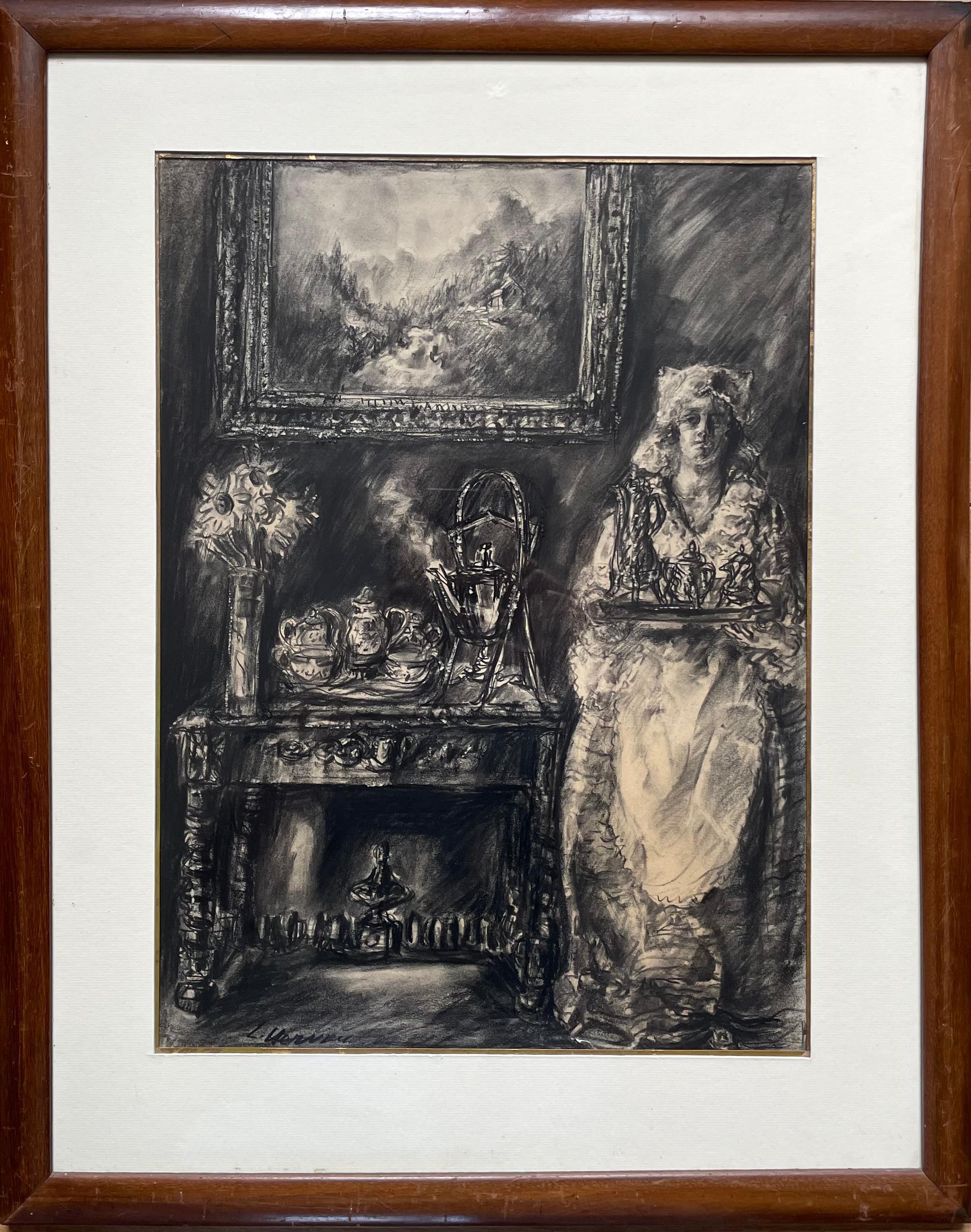
View AllThe Magnificent Servant Circa 1925 Charcoal and black chalk Signed
Located in PARIS, FR
Louise HERVIEU
Alençon 1878 - Versailles 1954
The Magnificent Servant
Circa 1925
Charcoal and black chalk
Signed lower left
43 x 32 cm sheet
60 x 43 cm frame
Provenanc...
Category
1920s French School Figurative Drawings and Watercolors
Materials
Chalk, Charcoal
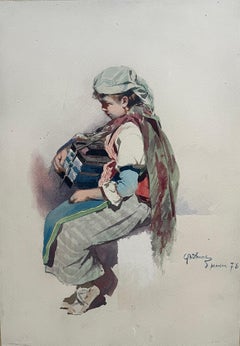
Gypsy Girl with Accordion Watercolor Signed, dated 1878, and located Menton
Located in PARIS, FR
Gaston BETHUNE
Paris 1856 - 1897
Little Gypsy Girl with Accordion
Watercolor
Signed, dated 1878, and located Menton (Azur coast) in the lower right corner
30 x 20.5 cm shee...
Category
1870s French School Portrait Drawings and Watercolors
Materials
Watercolor
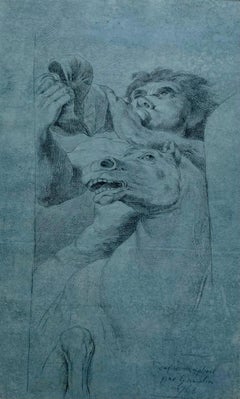
Jacques Gamelin (1738-1803) Study After Raphaël, 1768, Black Stone White Chalk
Located in PARIS, FR
Jacques GAMELIN
Carcassone 1738-1803
Study after the triton of the Triumph of Galatea by Raphaël
1768
Black stone and light white chalk on blue paper
Signed and dated lower right
41...
Category
18th Century French School Figurative Drawings and Watercolors
Materials
Handmade Paper, Chalk
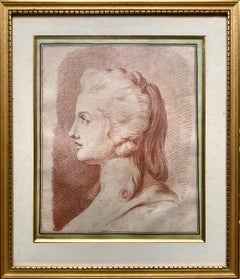
Bust Of A Woman In Profile, Sanguine On Paper, Signed And Dated
Located in PARIS, FR
Nicolas-André COURTOIS
Paris 1734-1806
Bust of a woman in profile
1791
Sanguine
Signed and dated lower left on the original mount
43.5 x 37 cm framed
19 x 25 cm
Category
Late 18th Century French School Portrait Drawings and Watercolors
Materials
Chalk
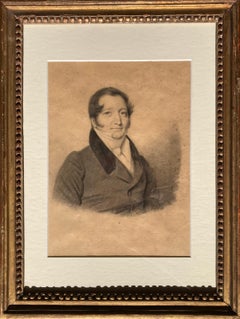
Jules Boilly (1796-1874) Portrait Of A Man, Black chalk
Located in PARIS, FR
Julien Leopold BOILLY
Paris 1796-1874
Portrait of a man
First third of the 19th century
Pierre noire
Signed on the right
23,5 x 17 cm
38 x 29 cm framed
Small stains
Category
Early 19th Century French School Portrait Drawings and Watercolors
Materials
Laid Paper
$511 Sale Price
29% Off
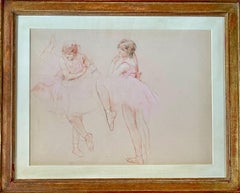
Large Drawing, Study Of Dancers
Located in PARIS, FR
Henri ROYER
Nancy 1869 - 1938 Paris
Study of dancers
Sanguine pastel and charcoal on cream white paper
Circa 1900-1910
Unsigned
47 x 62.5 cm sheet
67 x 83 cm cm frame
Provenance: Es...
Category
Early 20th Century French School Figurative Drawings and Watercolors
Materials
Chalk, Charcoal, Pastel, Mixed Media
You May Also Like
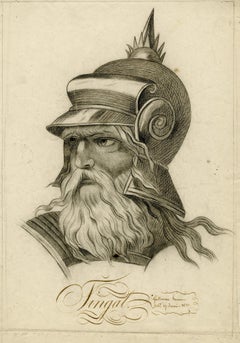
Portrait of Fingal / Finn MacCool - A moving portrait of an Irish literary hero
Located in Middletown, NY
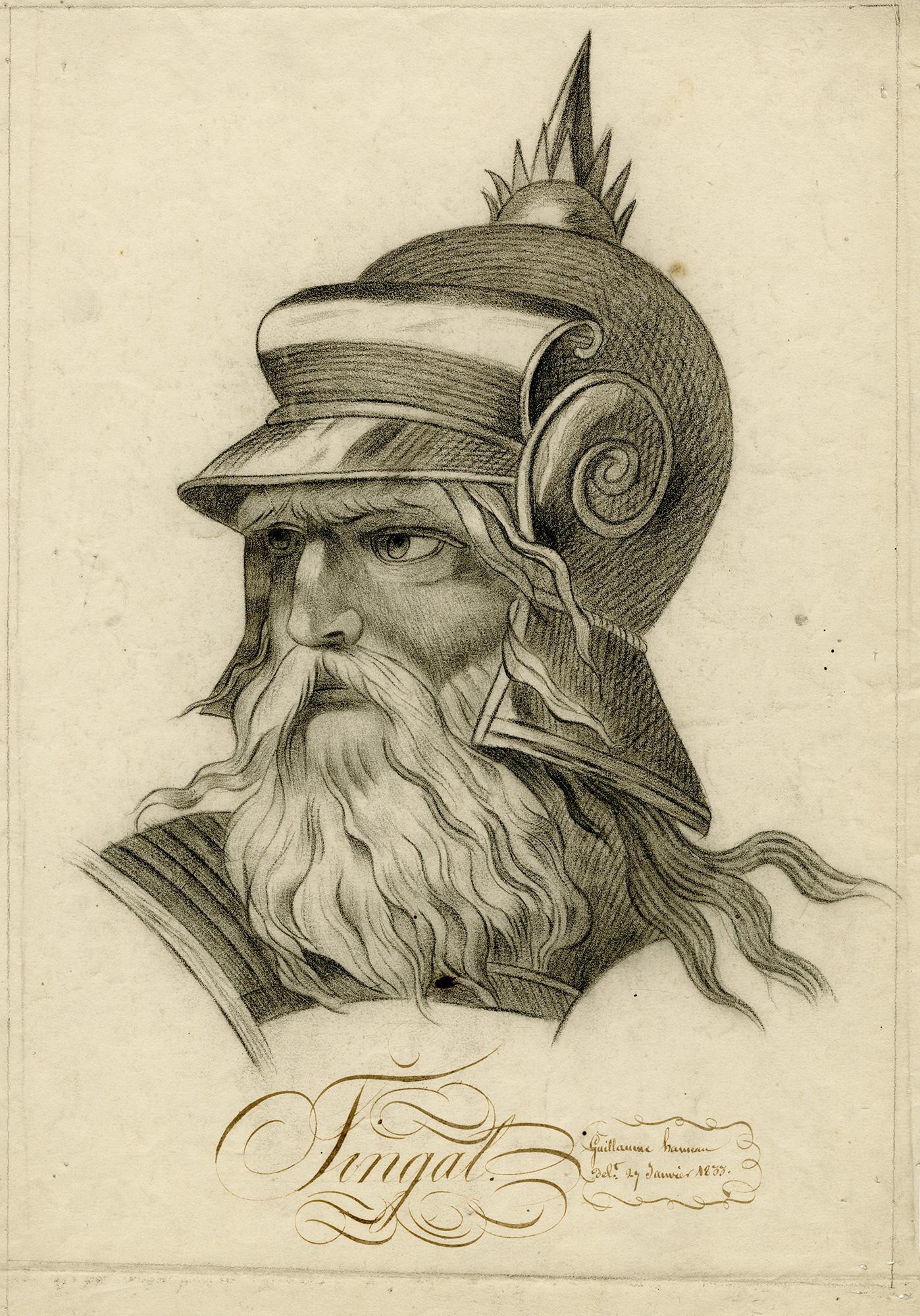
Black chalk and graphite on light weight cream wove paper, 16 1/8 x 11 1/4 inches, (410 x 286 mm), the full sheet. Signed, titled, and dated in sepia ink in the lower-center sheet area. With horizontal folds approximately 1-inch from the sheet edge at each of the four sheets. The drawing appears to have been folded at the sheet edges to fit into a frame.
Finn mac Cumail (or mac Umaill), often anglicized Finn McCool or MacCool, is a hero in Irish mythology, as well as in later Scottish and Manx folklore. He is the leader of the Fianna bands of young roving hunter-warriors, as well as being a seer and poet. He is said to have a magic thumb that bestows him with great wisdom. He is often depicted hunting with his hounds Bran and Sceólang, and fighting with his spear and sword. Fionn MacCumhail was transformed into the character "Fingal" in James Macpherson's poem cycle Ossian (1760), which Macpherson claimed was translated out of discovered Ossianic poetry written in the Scottish Gaelic language.
Fionn MacCumhail features heavily in modern Irish literature. Most notably he makes several appearances in James Joyce's Finnegans Wake...
Category
Early 19th Century French School Portrait Drawings and Watercolors
Materials
Handmade Paper, Chalk, Graphite
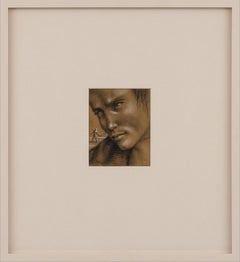
Portrait of a Man
Located in London, GB
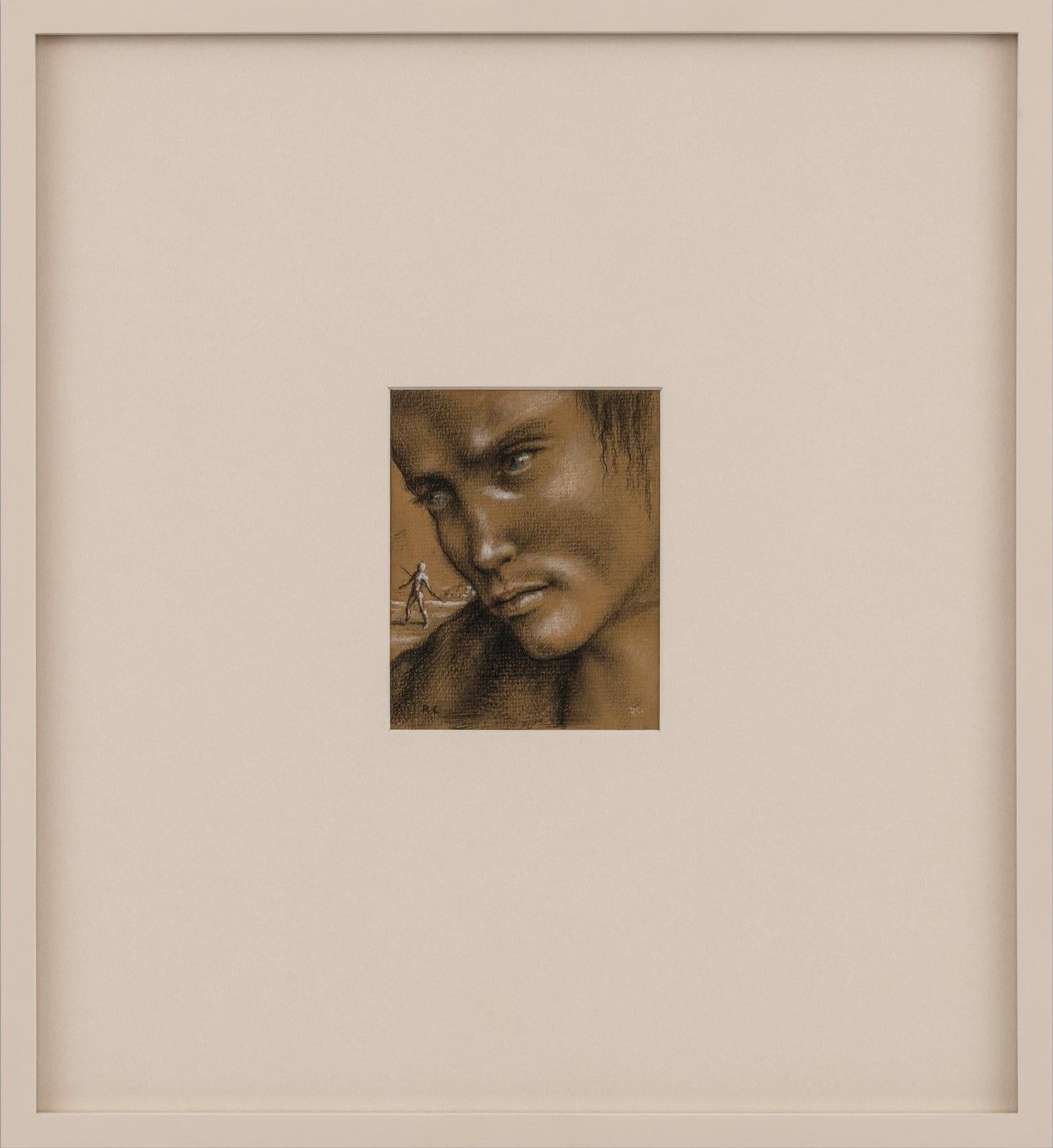
Charcoal, chalk and red chalk
Initialled (lower left and right)
12cm × 9.5cm (41cm × 37cm framed)
A French actor and artist. He is known for acting in several French films in the 1...
Category
20th Century French School Figurative Drawings and Watercolors
Materials
Paper, Chalk, Charcoal
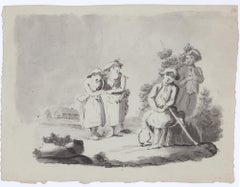
The Introduction, French School, 18th century
Located in Middletown, NY
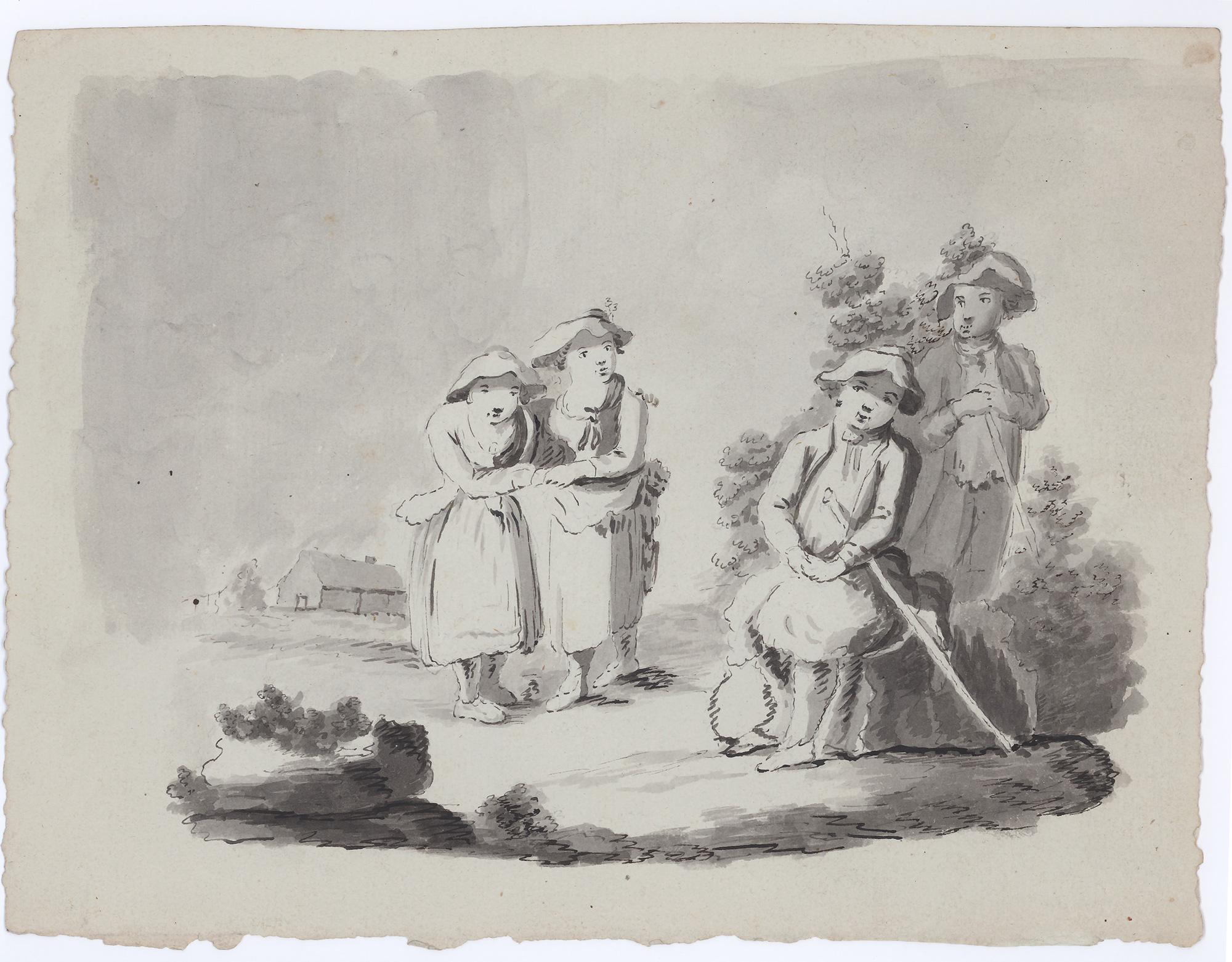
In this charming scene a maid appears bashful as she is introduced by her mother to the shepherd’s son.
Ink and wash on hand made, cool-toned cream laid paper, 6 3/4 x 8 7/8 inches...
Category
Mid-18th Century French School Figurative Drawings and Watercolors
Materials
Ink, Watercolor, Handmade Paper, Laid Paper
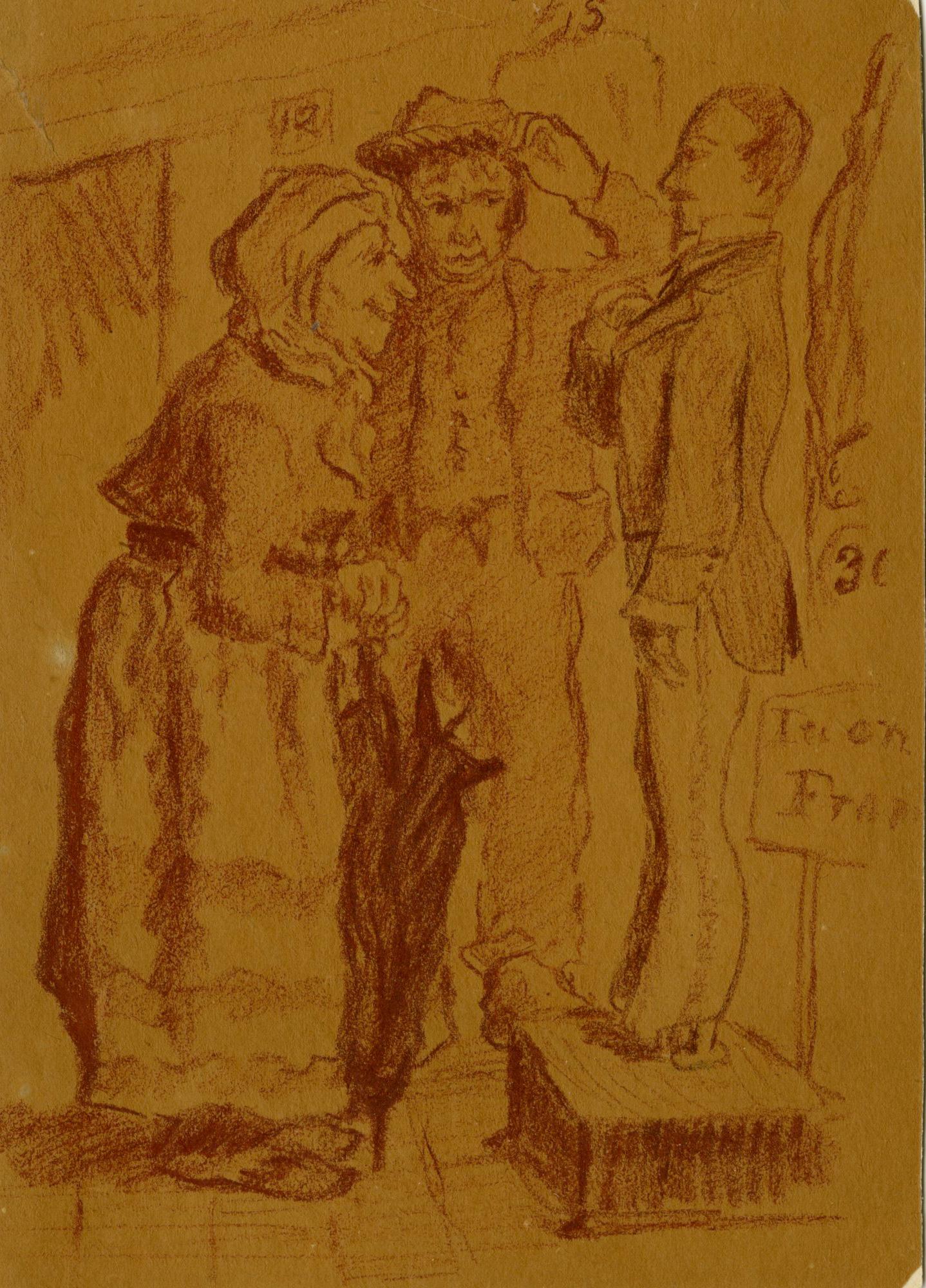
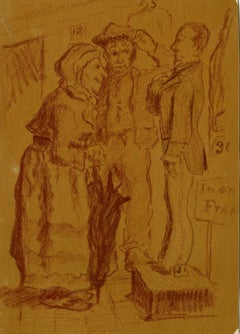
Rural couple examining a traveling carnival display – French School, 19th cent.
Located in Middletown, NY
Red crayon on brown light-wove paper, 6 3/4 x 4 3/4 inches (172 x 121 mm). Light toning and extremely minor, small losses at the very extreme top right and left corners (1/8-inch).
Category
Mid-19th Century French School Figurative Drawings and Watercolors
Materials
Handmade Paper, Crayon
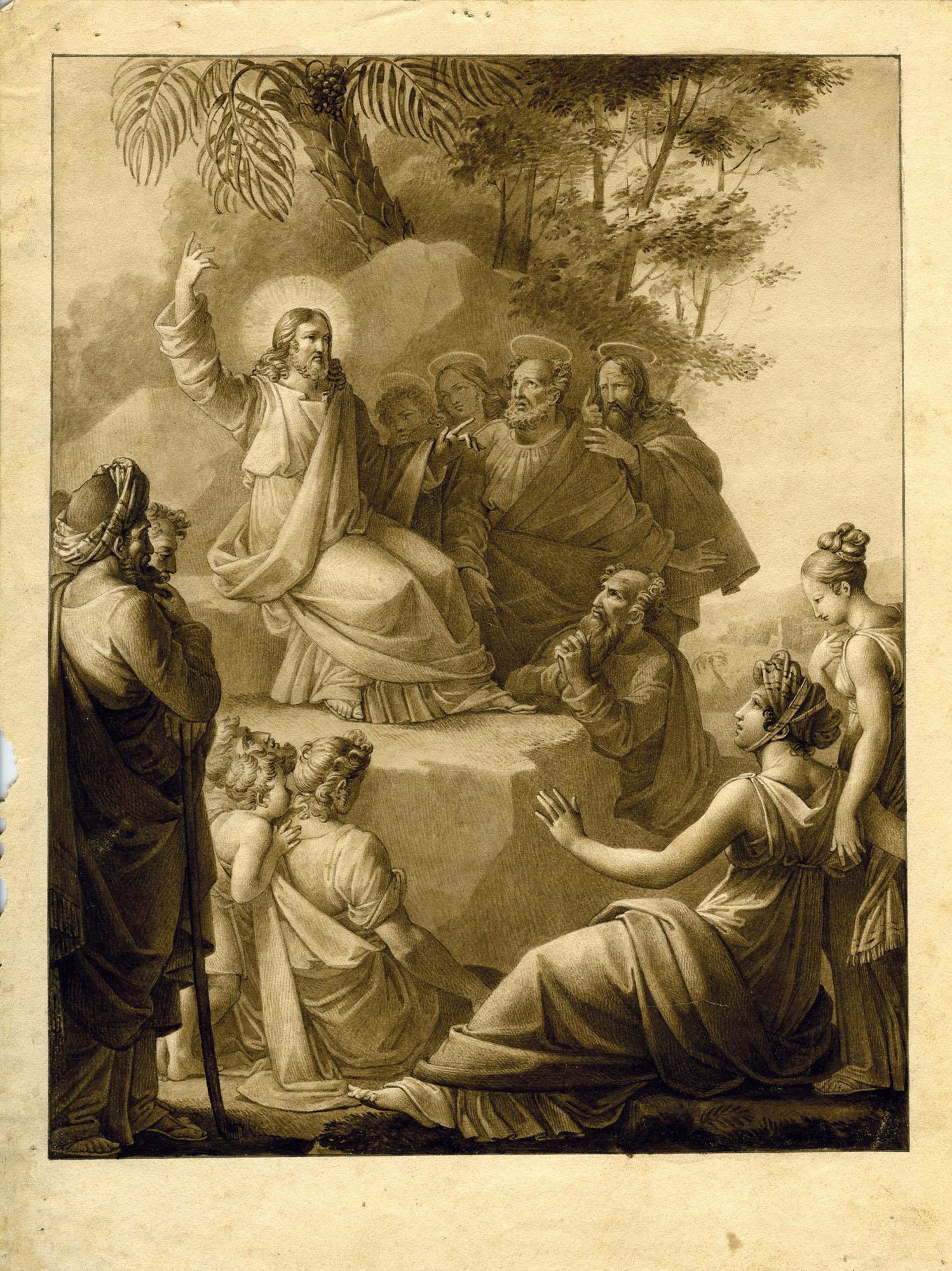
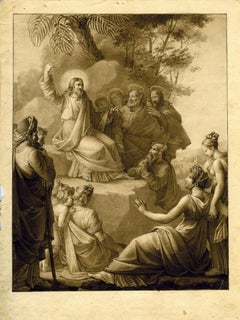
The Sermon on the Mount – French School, 19th century
Located in Middletown, NY
Pen and ink with wash on watermarked J Whatman 1814 paper, 11 x 8 1/4 (280 x 210 mm). Scattered minor edge losses at the left sheet edge, well outside of image area. Minor handling w...
Category
19th Century French School Figurative Drawings and Watercolors
Materials
Ink, Handmade Paper
Portrait of Leopold Myers by Sir William Rothenstein
By Sir William Rothenstein
Located in Soquel, CA
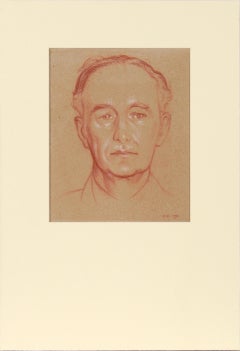
Stately sanguine portrait of Leopold Hamilton Myers (Novelist) by Sir William Rothenstein (English, 1872-1945). Captured in Rothenstein's characteristic style, Myers looks directly at the viewer with a neutral expression. Although this portrait uses only two colors and minimal shading, the likeness of Myers is incredibly well captured. Leo (Leopold) Hamilton Myers (1881 – 1944) was a British novelist. Numerous examples like this one of the writer are in the Tate Museum.
Initialed and dated in the lower right corner ("W.R. 1936")
Inscription on verso indicating materials, subject, and artist.
Presented in a new cream colored mat with foamcore backing.
Mat size: 18"H x 12"W
Paper size: 15.25"H x 10.75"W
William Rothenstein (English, 1872-1945) was born into a German-Jewish family in Bradford, West Yorkshire. His father, Moritz, emigrated from Germany in 1859 to work in Bradford's burgeoning textile industry. Soon afterwards he married Bertha Dux, and they had six children, of which William was the fifth. Rothenstein was knighted in 1931.
Rothenstein left Bradford Grammar School at the age of sixteen to study at the Slade School of Art*, London (1888-1893), where he was taught by Alphonse Legros, and the Académie Julian* in Paris (1889-1893), where he met and was encouraged by James McNeill Whistler, Edgar Degas and Henri Toulouse-Lautrec. Whilst in Paris he also befriended the Anglo-Australian artist Charles Conder, with whom he shared a studio in Montmartre. In 1893 he returned to England to work on "Oxford Characters" a series of lithographic* portraits.
In Oxford he met and became a close friend of the caricaturist* and parodist Max Beerbohm, who later immortalised him in the short story Enoch Soames (1919). During the 1890s Rothenstein exhibited with the New English Art Club* and, in 1900, won a silver medal for his painting The Doll's House at the Exposition Universelle. In 1898 he co-founded the Carfax Gallery in St. James' Piccadilly with John Fothergill. During its early years the gallery was closely associated with such artists as Charles Conder, Philip Wilson Steer, Charles Ricketts and Augustus John. It also exhibited the work of Auguste Rodin, whose growing reputation in England owed much to Rothenstein's friendship and missionary zeal. The gallery was later the home for all three exhibitions of The Camden Town Group*, led by Rothenstein's friend and close contemporary Walter Sickert.
Rothenstein is best known for his portrait drawings of famous individuals and for being an official war artist in both World War I and World War II. He was also a member of the International Society of Sculptors, Painters & Gravers. The style and subject of his paintings varies, though certain themes reappear, in particular an interest in 'weighty' or 'essential' subjects tackled in a restrained manner. Good examples include Parting at Morning (1891), Mother and Child (1903) and Jews Mourning at a Synagogue (1907) - all of which are owned by the Tate Gallery. The National Portrait Gallery owns over two hundred of his portraits. In 2011 the BBC and the Public Catalogue Foundation began cataloguing all of his paintings in public ownership online.
Between 1902 and 1912 Rothenstein lived in Hampstead, London, where his social circle included such names as H.G.Wells, Joseph Conrad and the artist Augustus John. Amongst the young artists to visit Rothenstein in Hampstead were Mark Gertler...
Category
1930s Realist Portrait Drawings and Watercolors
Materials
Conté, Handmade Paper