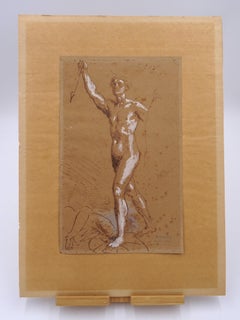
Items Similar to Pre-Raphaelite, early 19th Century drawing by the British artist Lord Leighton
Want more images or videos?
Request additional images or videos from the seller
1 of 11
Frederic LeightonPre-Raphaelite, early 19th Century drawing by the British artist Lord Leighton
$5,590.80
£4,100
€4,760.88
CA$7,703.85
A$8,468.41
CHF 4,445.87
MX$100,695.46
NOK 57,095.13
SEK 52,007.49
DKK 35,571.39
About the Item
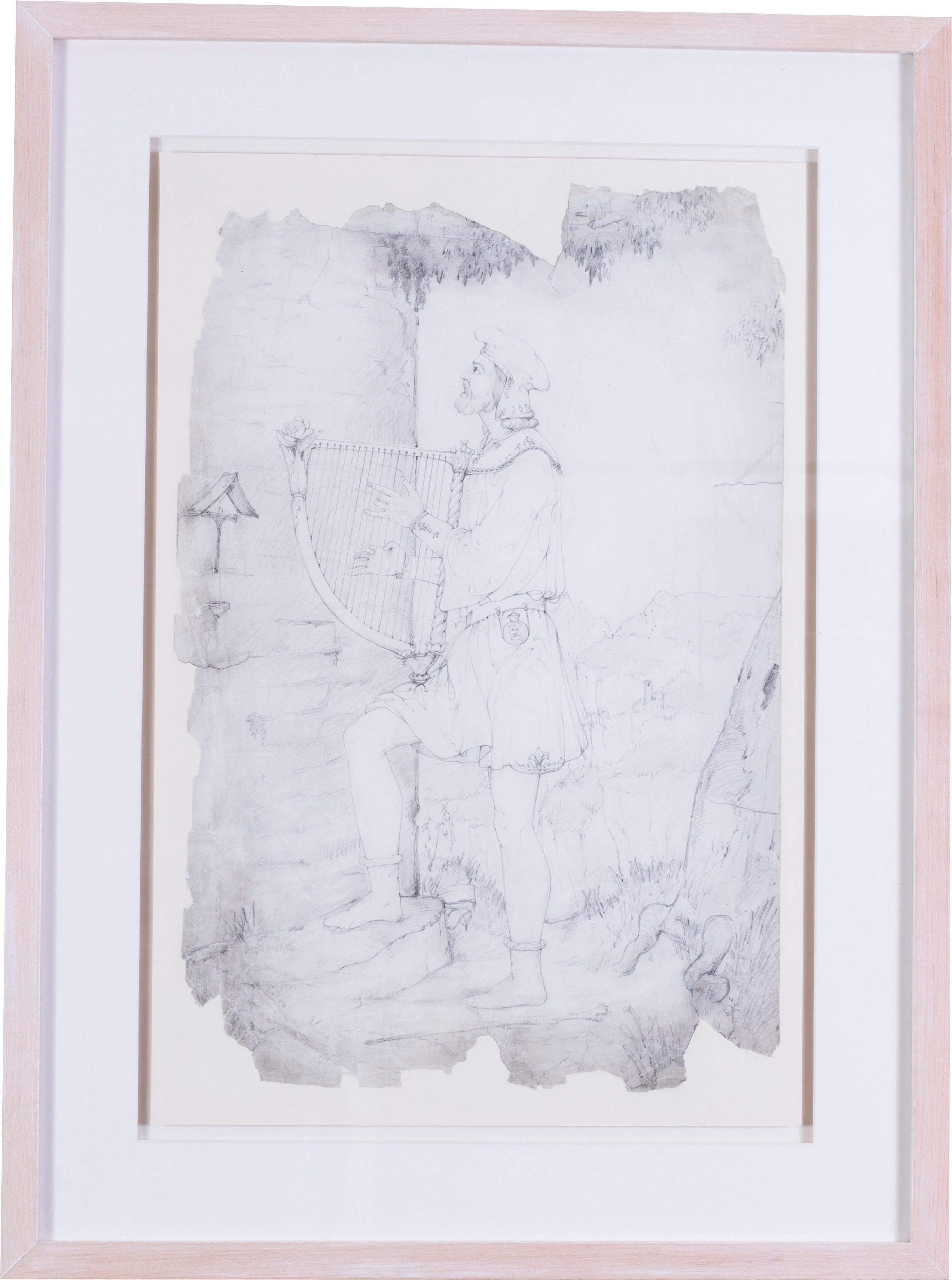
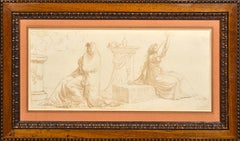
Lord Frederick Leighton (British, 1830-1896)
A Medieval Allegory
Not signed
pencil on paper
the fragment measures approx. 19.1/2 x 13 in.
(49.5 x 33 cm.)
Provenance: Gifted by Leighton to his cousin Edith Emily Jellicorse, nee Garnham, and thence by descent.
We would like to thank Daniel Robins, the curator at Leighton House for the authenticating this work in full.
Daniel has suggested this study would have been executed when Leighton was studying in Frankfurt
Leighton was born in Scarborough to Augusta Susan and Dr. Frederic Septimus Leighton. He received his artistic training on the European continent, first from Eduard von Steinle and then from Giovanni Costa. According to Daniel Robbins, the curator at Leighton House, This drawing comes from the time Leighton studied under Eduard von Steinle. He then studied at the Accademia di Belle Arti in Florence. From 1855 to 1859 he lived in Paris, where he met Ingres, Delacroix, Corot and Millet. In 1860, he moved to London, where he associated with the Pre-Raphaelites. In 1864 he became an associate of the Royal Academy and in 1878 he became its President (1878–96). American art critic Earl Shinn claimed at the time that "Except Leighton, there is scarce any one capable of putting up a correct frescoed figure in the archway of the Kensington Museum." His paintings represented Britain at the great 1900 Paris Exhibition. Leighton was knighted at Windsor in 1878 and was created a baronet, of Holland Park Road eight years later. He was the first painter to be given a peerage. Leighton remained a bachelor and rumours of him having an illegitimate child with one of his models, in addition to the supposition that Leighton may have been a homosexual, continue to be debated. On his death his barony was extinguished after existing for only a day; this is a record in the Peerage. His house in Holland Park, London has been turned into a museum. It contains many of his drawings and paintings, as well as some of his former art collection including a painting dedicated to Leighton by Sir John Everett Millais. The house also features many of Leighton's inspirations, including his collection of Iznik tiles. Its centrepiece is the magnificent Arab Hall. Leighton was an enthusiastic volunteer soldier, enrolling with the first group to join the 38th Middlesex (Artists') Rifle Volunteer Corps (later to be known as the Artists Rifles) on 5 October 1860. The painter James Whistler famously described the then, Sir Frederic Leighton, the commanding officer of the Artists Rifles, as the: “Colonel of the Royal Academy and the President of the Artists Rifles – aye, and he paints a little!" At his funeral, on 3 February 1896, his coffin was carried into St Paul's Cathedral, past a guard of honour formed by the Artists Rifles.
- Creator:Frederic Leighton (1830 - 1896, British)
- Dimensions:Height: 19.5 in (49.53 cm)Width: 13 in (33.02 cm)Depth: 1 in (2.54 cm)
- Medium:
- Movement Style:
- Period:
- Condition:Recently restored. The edges are uneven, stabilised on paper in a pop out frame with a separate mount behind glass in limed wood frame.
- Gallery Location:Petworth, GB
- Reference Number:1stDibs: LU540313099792
About the Seller
4.9
Gold Seller
Premium sellers maintaining a 4.3+ rating and 24-hour response times
Established in 2010
1stDibs seller since 2017
277 sales on 1stDibs
Typical response time: 3 hours
- ShippingRetrieving quote...Shipping from: Petworth, United Kingdom
- Return Policy
More From This Seller
View AllAn early 19th Century drawing by the British pre-Raphaelite artist Lord Leighton
By Frederic Leighton
Located in Petworth, West Sussex
Lord Frederick Leighton (British, 1830-1896)
A very early study of a Medieval Minstrel
pencil on paper
Not signed
the fragment measures approx. 19.1/2 x 13 in.
(49.5 x 33 cm.)
Provenance: Gifted by Leighton to his cousin Edith Emily Jellicorse, nee Garnham, and thence by descent.
We would like to thank Daniel Robins, the curator at Leighton House for the authenticating this work in full.
Daniel has suggested this study would have been executed when Leighton was studying in Frankfurt
Leighton was born in Scarborough to Augusta Susan and Dr. Frederic Septimus Leighton. He received his artistic training on the European continent, first from Eduard von Steinle and then from Giovanni Costa. According to Daniel Robbins, the curator at Leighton House, This drawing comes from the time Leighton studied under Eduard von Steinle. He then studied at the Accademia di Belle Arti in Florence. From 1855 to 1859 he lived in Paris, where he met Ingres, Delacroix, Corot and Millet.
In 1860, he moved to London, where he associated with the Pre-Raphaelites. In 1864 he became an associate of the Royal Academy and in 1878 he became its President (1878–96). American art critic Earl Shinn claimed at the time that "Except Leighton, there is scarce any one capable of putting up a correct frescoed figure in the archway of the Kensington Museum." His paintings represented Britain at the great 1900 Paris Exhibition.
Leighton was knighted at Windsor in 1878 and was created a baronet, of Holland Park Road eight years later. He was the first painter to be given a peerage.
Leighton remained a bachelor and rumours of him having an illegitimate child with one of his models, in addition to the supposition that Leighton may have been a homosexual, continue to be debated. On his death his barony was extinguished after existing for only a day; this is a record in the Peerage. His house in Holland Park, London has been turned into a museum. It contains many of his drawings and paintings, as well as some of his former art collection including a painting dedicated to Leighton by Sir John Everett Millais. The house also features many of Leighton's inspirations, including his collection of Iznik tiles. Its centrepiece is the magnificent Arab Hall.
Leighton was an enthusiastic volunteer soldier, enrolling with the first group to join the 38th Middlesex (Artists') Rifle Volunteer Corps (later to be known as the Artists Rifles...
Category
19th Century Pre-Raphaelite Figurative Drawings and Watercolors
Materials
Paper, Pencil
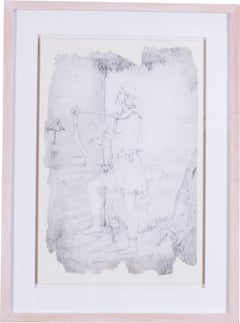
Lord Frederick Leighton drawing, British pre-Raphaelite, original
By Frederic Leighton
Located in Petworth, West Sussex
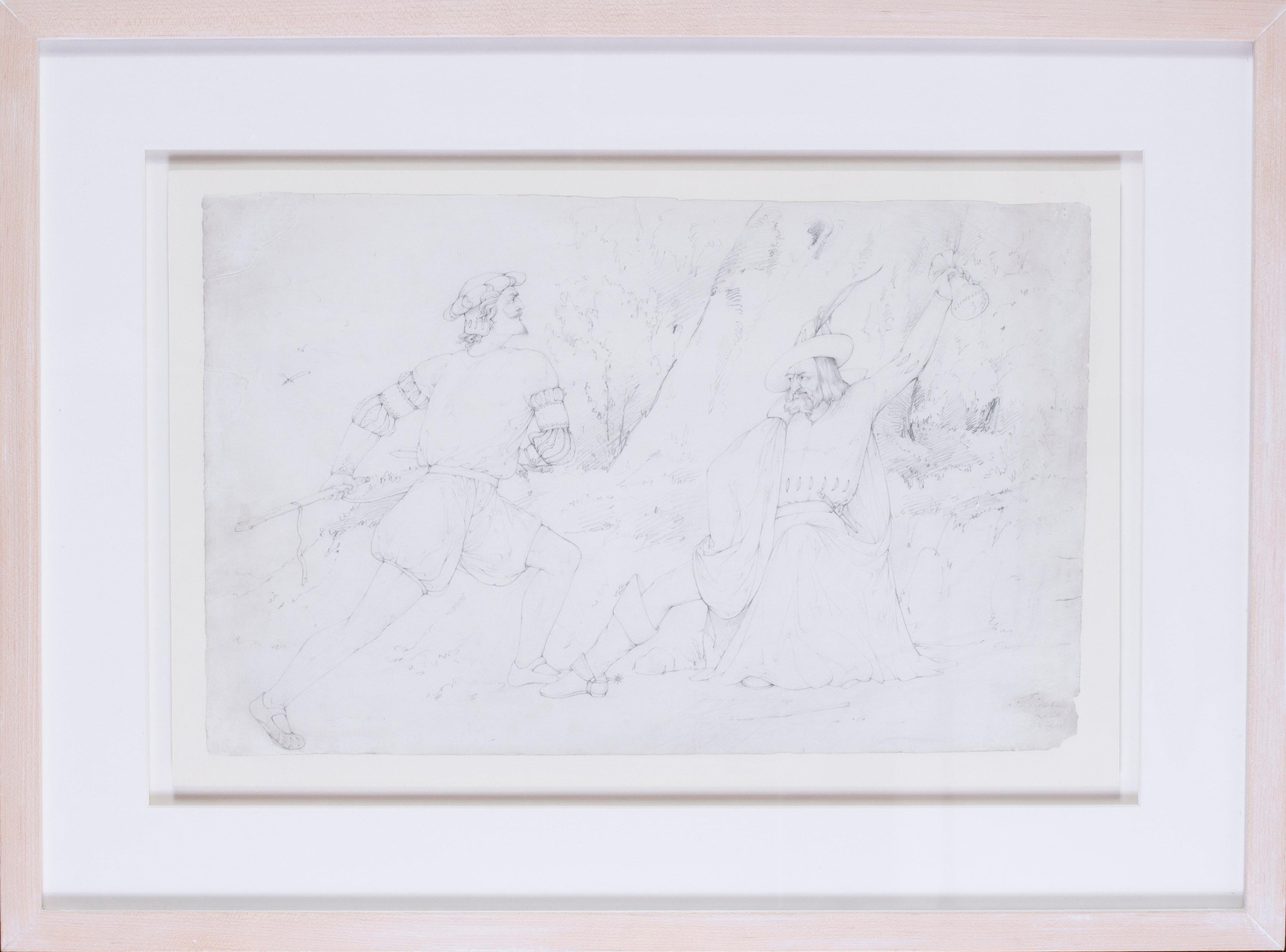
Lord Frederick Leighton (British, 1830-1896)
Apprehending a thief
pencil on paper
the fragment measures approx. 17.1/3 x 11in. (44 x 28cm.)
signed ‘F Leighton’ (lower right)
Provenance: Gifted by Leighton to his cousin Edith Emily Jellicorse, nee Garnham, and thence by descent
We would like to thank Daniel Robins, the curator at Leighton House for the authenticating this work in full.
Daniel has suggested this study would have been executed when Leighton was studying in Frankfurt
Leighton was born in Scarborough to Augusta Susan and Dr. Frederic Septimus Leighton. He received his artistic training on the European continent, first from Eduard von Steinle and then from Giovanni Costa. According to Daniel Robbins, the curator at Leighton House, This drawing comes from the time Leighton studied under Eduard von Steinle. He then studied at the Accademia di Belle Arti in Florence. From 1855 to 1859 he lived in Paris, where he met Ingres, Delacroix, Corot and Millet. In 1860, he moved to London, where he associated with the Pre-Raphaelites. In 1864 he became an associate of the Royal Academy and in 1878 he became its President (1878–96). American art critic Earl Shinn claimed at the time that "Except Leighton, there is scarce any one capable of putting up a correct frescoed figure in the archway of the Kensington Museum." His paintings represented Britain at the great 1900 Paris Exhibition. Leighton was knighted at Windsor in 1878 and was created a baronet, of Holland Park Road eight years later. He was the first painter to be given a peerage. Leighton remained a bachelor and rumours of him having an illegitimate child with one of his models, in addition to the supposition that Leighton may have been a homosexual, continue to be debated. On his death his barony was extinguished after existing for only a day; this is a record in the Peerage. His house in Holland Park, London has been turned into a museum. It contains many of his drawings and paintings, as well as some of his former art collection including a painting dedicated to Leighton by Sir John Everett Millais. The house also features many of Leighton's inspirations, including his collection of Iznik tiles. Its centrepiece is the magnificent Arab Hall. Leighton was an enthusiastic volunteer soldier, enrolling with the first group to join the 38th Middlesex (Artists') Rifle Volunteer Corps (later to be known as the Artists Rifles...
Category
19th Century Pre-Raphaelite Figurative Drawings and Watercolors
Materials
Paper, Pencil
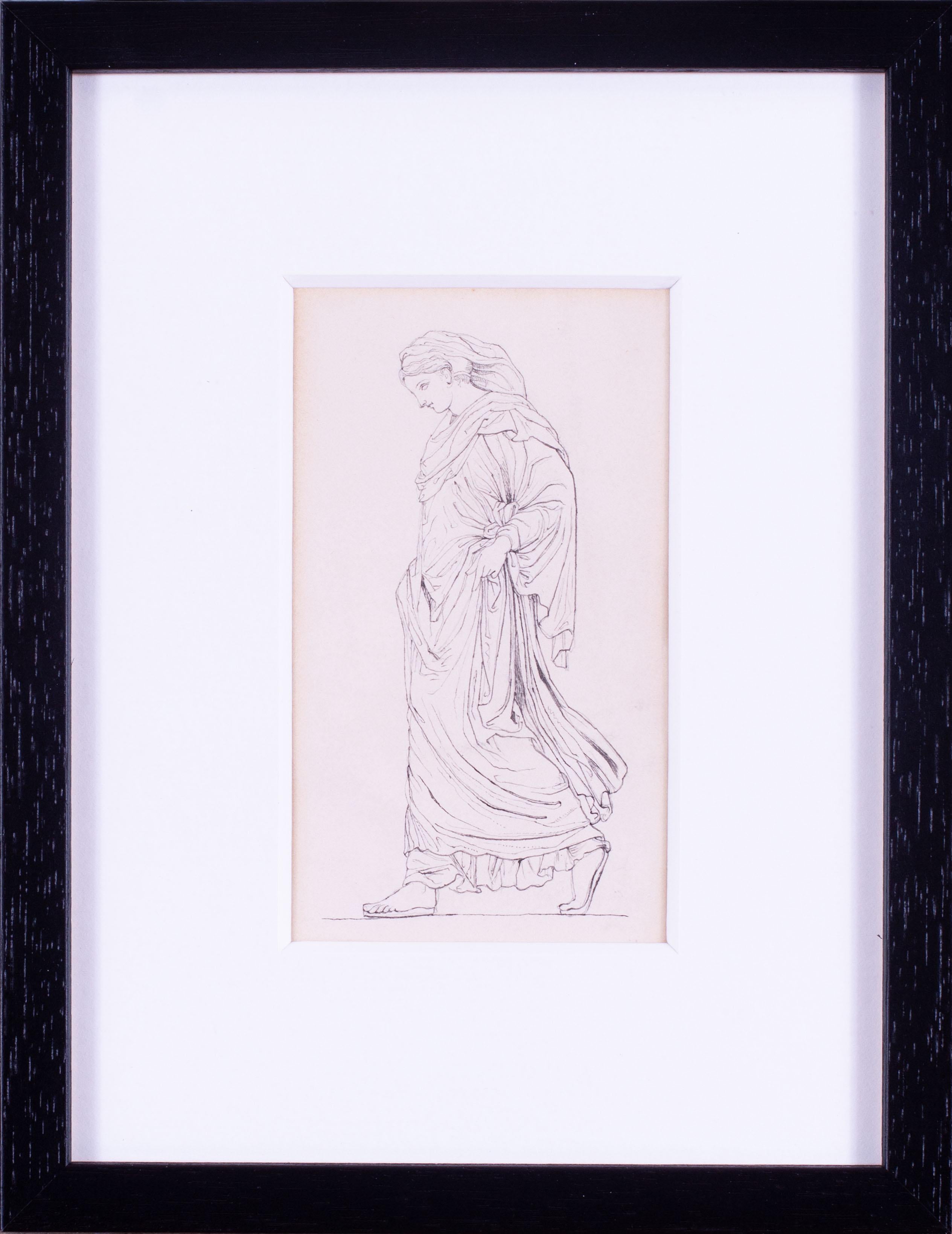
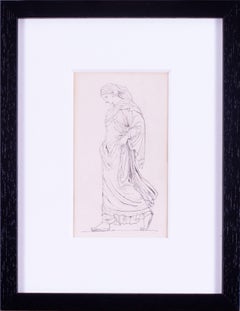
19th Century drawing attributed to John Flaxman of a classical maiden
By John Flaxman
Located in Petworth, West Sussex
Attributed to John Flaxman (British, 1755- 1826)
Study of a classical maiden
Pen and ink on paper
5.1/2 x 3.1/8 in. (14 x 8 cm.)
Category
19th Century Academic Figurative Drawings and Watercolors
Materials
Paper, Ink, Pen
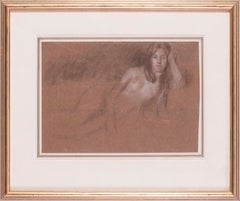
British 19th Century drawing of a nude by Edward Stott
By Edward Stott
Located in Petworth, West Sussex
Edward Stott, ARA (British, 1859 - 1918)
Reclining nude
Pastel and black crayon
8.1/2 x 12.1/4 in. (21.7 x 31.2 cm.)
Provenance: Abbott and Holder, London
A few years after its foundation in 1886, a critic referred to the New English Art Club as that Steery, Starry, Stotty. Stotty referred to William Stott of Oldham and Edward William Stott. The four men had in common the love French plein air painting...
Category
19th Century Academic Nude Drawings and Watercolors
Materials
Crayon, Pastel
Signed art deco woodcut, by Edward Gordon Craig
Army of Fortinbras
Located in Petworth, West Sussex
Edward Gordon Craig (British, 1872 – 1966)
Army of Fortinbras
Woodcut
Signed with monogram (lower right)
4.3/4 x 8.1/4 in. (12 x 20.8cm.)
A beauti...
Category
20th Century Art Deco Figurative Prints
Materials
Woodcut
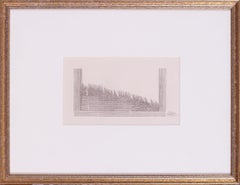
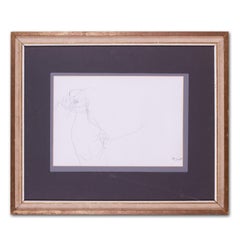
1988 pencil drawing by British 20th Century artist William Scott
By William Scott
Located in Petworth, West Sussex
William Scott (British, 1930 – 1989)
Lyrical
Pencil on paper
Signed ‘W Scott’ (lower right), further inscribed and dated ‘October 23 1988 / Lyrical… by William Scott’ (on the reverse...
Category
20th Century Abstract Abstract Drawings and Watercolors
Materials
Paper, Pencil
You May Also Like
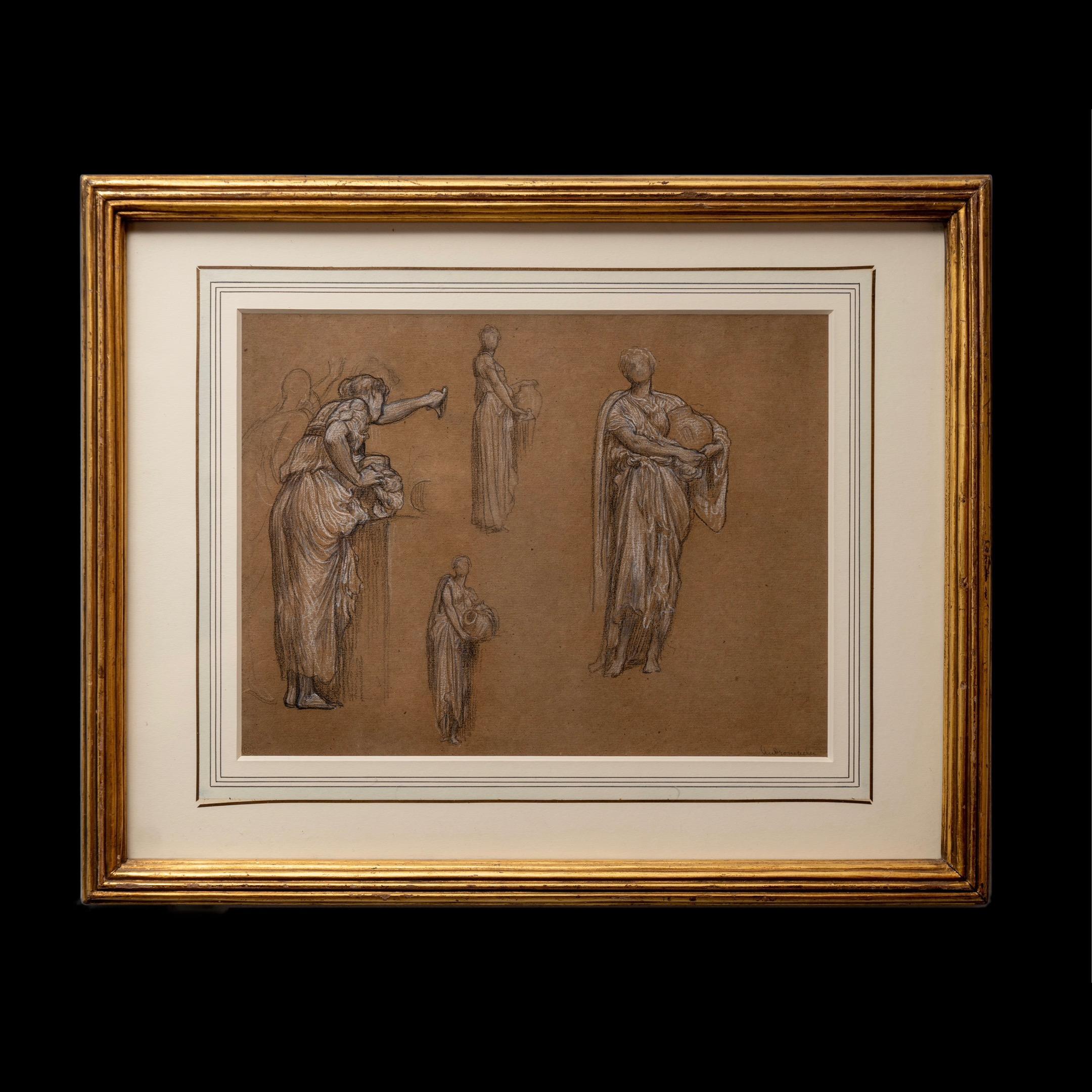
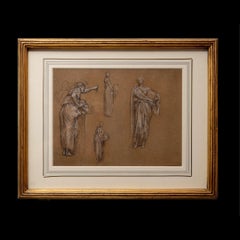
Lord Leighton (1830-1896), Studies for Captive Andromache
By Frederic Leighton
Located in Oxford, GB
Frederic Leighton, 1st Baron Leighton, P.R.A. (1830-1896)
Studies for Captive Andromache
With the artist studio stamp (Lugt 1741a) (lower left); inscribed 'Andromache' (lower right)
...
Category
1880s Figurative Drawings and Watercolors
Materials
Chalk, Charcoal
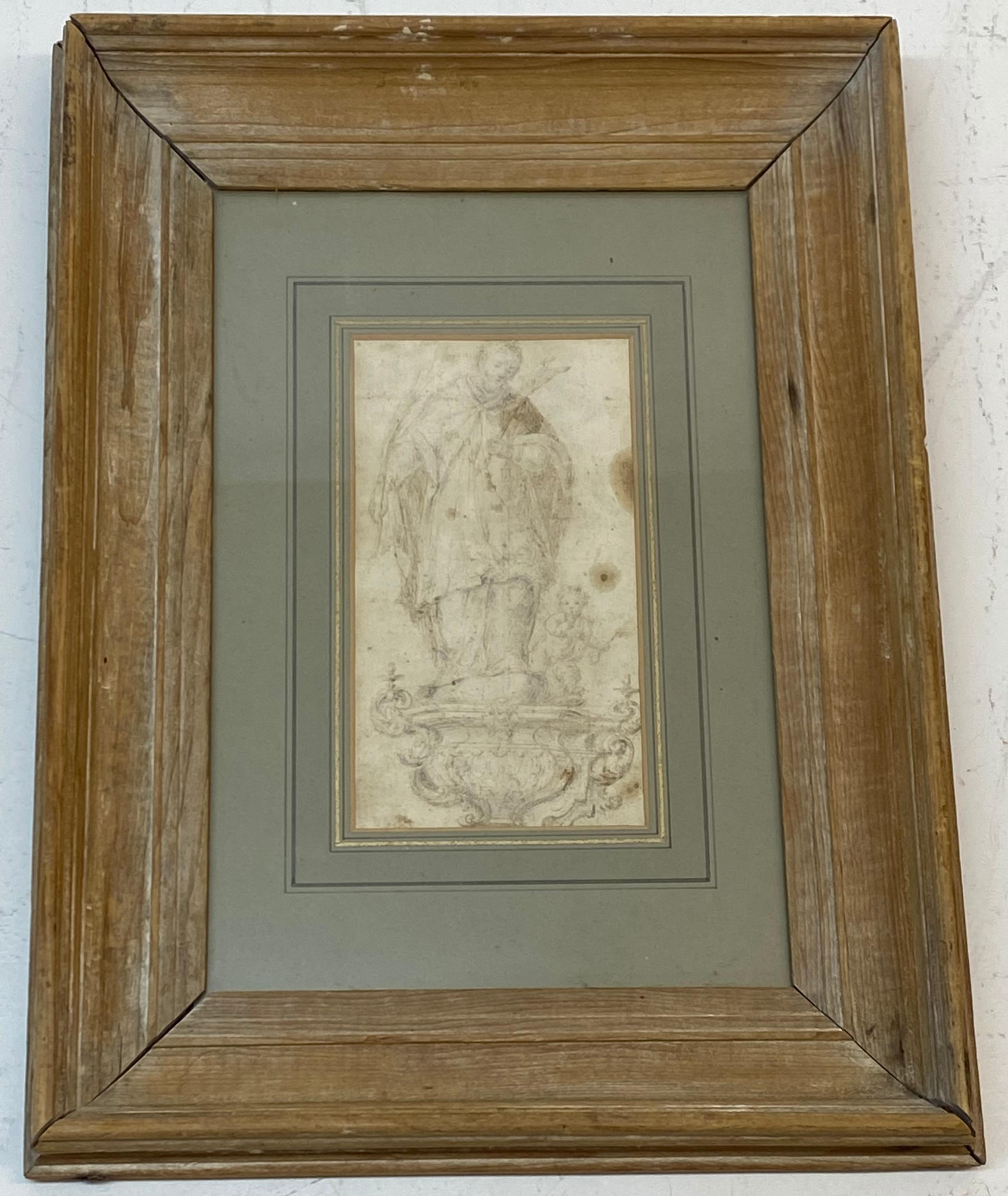
17th Century Old Master Drawing
Located in San Francisco, CA
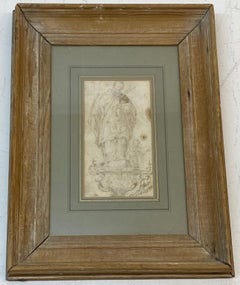
17th Century Old Master Drawing
Old master drawing with figure and putti
Housed in a handsome contemporary wooden frame
Drawing dimensions 4...
Category
17th Century Old Masters Figurative Drawings and Watercolors
Materials
Graphite
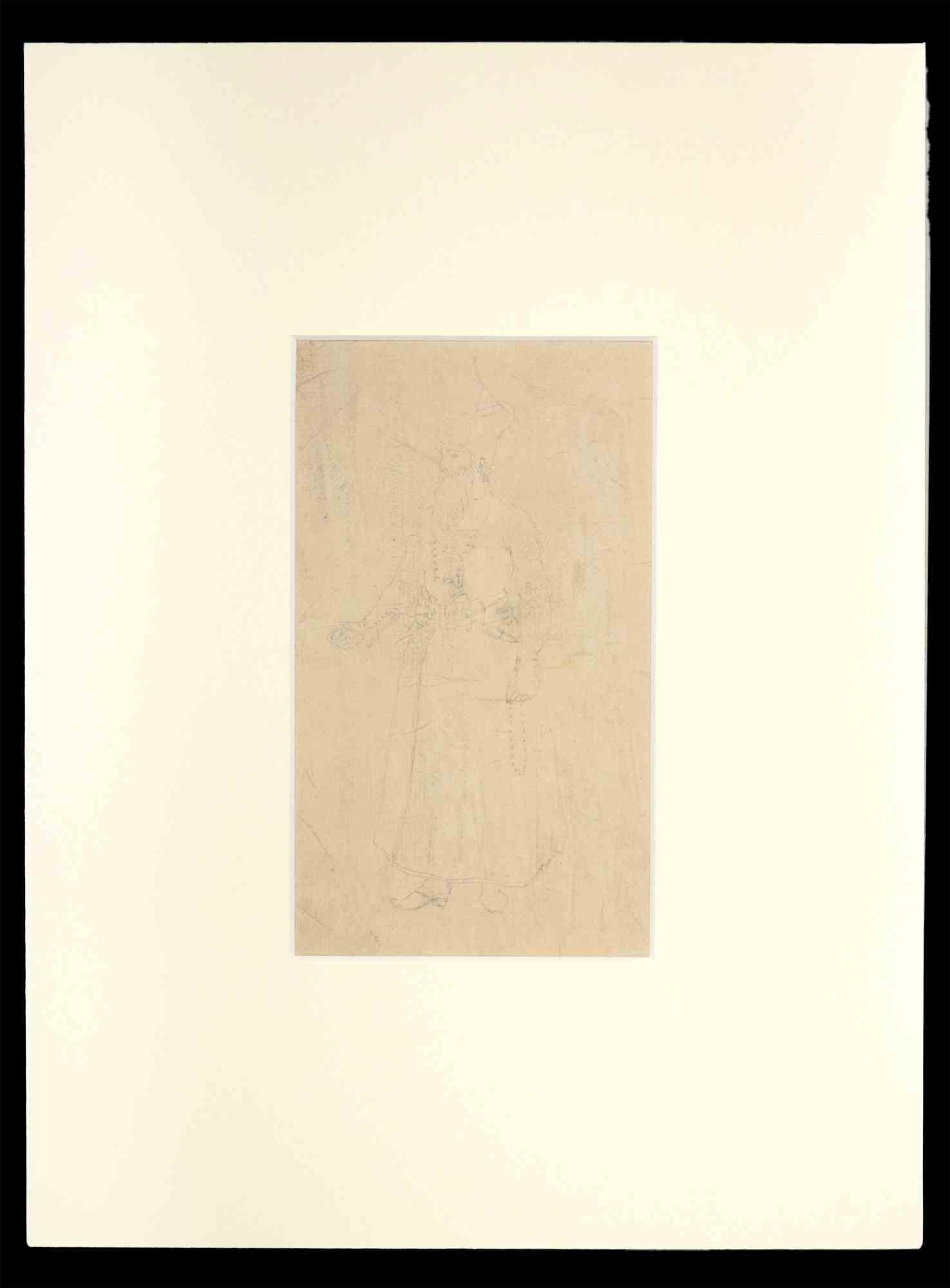
Portrait of Man - Original Drawing - Late 19th Century
Located in Roma, IT
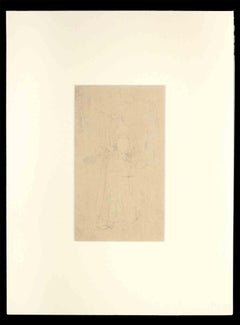
Portrait of Man is an original drawing in Pencil realized by an unknown Artist in the 19th Century.
Good Conditions.
The artwork is depicted through soft strokes in a well-balanced...
Category
Late 19th Century Modern Figurative Drawings and Watercolors
Materials
Pencil
A rare neoclassical drawing by Jean-Pierre Péquignot, Girodet
s friend
Located in PARIS, FR
This neoclassical frieze, executed with great meticulousness in pen and ink, is a moving and rare testimony to the work of Jean-Pierre Péquignot, an extremely talented and particular...
Category
1790s Old Masters Figurative Drawings and Watercolors
Materials
Paper, Ink, Felt Pen
L
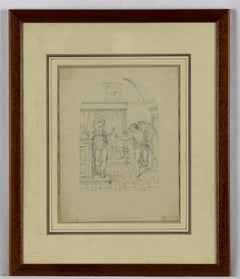
Annunziata in S. M. - Drawing by Giovanni Fontana - 16th Century
By Giovanni Fontana
Located in Roma, IT
L'Annunziata in S. M. sopra Minerva is an original old master artwork realized by Giovanni Fontana.
Ivory colored sheet attached on an ivory colored cardboard ( cm 35.8 x 26.7)
Bea...
Category
16th Century Old Masters Figurative Drawings and Watercolors
Materials
Paper, Pencil
$4,401 Sale Price
25% Off
Preparatory drawing in pencil on paper by Théodore Chassériau, ca. 1850
By Théodore Chassériau
Located in Vicenza, VI
Preparatory drawing/study made in pencil and white chalk on paper by French artist Théodore Chassériau in the early 1850s.
The drawing in question, depicting a male nude, is a prepa...
Category
1850s Other Art Style Nude Drawings and Watercolors
Materials
Chalk, Pencil