Items Similar to Stooped Old Man with Walking Stick and Cigarette, c. 1910 / - The sum of life -
Want more images or videos?
Request additional images or videos from the seller
1 of 7
Hans ThomaStooped Old Man with Walking Stick and Cigarette, c. 1910 / - The sum of life -c. 1910
c. 1910
$3,843.19
£2,847.74
€3,200
CA$5,256.06
A$5,731.65
CHF 3,030.58
MX$68,946.44
NOK 38,458.48
SEK 35,246.84
DKK 24,380.05
About the Item
Hans Thoma (1839 Bernau - 1924 Karlsruhe), Stooped Old Man with Walking Stick and Cigarette, circa 1900. Watercolor and pastel on paper, mounted on cardboard, 29.5 cm x 23.5 cm (sheet size), 45 cm x 38 cm (frame), monogrammed “HTh” lower left, framed behind glass.
- Slightly rubbed in places, overall in very good condition, frame with newly glued joint.
- The sum of life -
Against a purple background, an old man painted in earthy colors stands out, looking down with his eyes almost closed. His face is heavily shadowed and furrowed. The earthy colors make it look like the landscape of life, while the cigarette burned down to a stub makes it clear that life has been lived almost to the full. The old man seems to be moving forward toward the end, pausing as he does so, leaning on his walking stick. Within him is gathered the life he has lived, which was above all hardship, as evidenced by his stooped posture, his rough hands, and above all his furrowed face. A hardship that will lead to the redemption of eternal rest. But the hardship was by no means in vain. Having repeatedly taken on the burden of life gives the man the dignity of having steadfastly mastered the pilgrimage of life to the end. This dignity of a hard-working life is expressed in color, with the man's uniform yellowish tone making him stand out from the purple background, while the colorfulness of the background creates a mysterious, fluctuating, auratic effect. An unheroic hero with whom Hans Thoma identifies, as evidenced by the placement of the monogram under the hands. After all, Thoma also created everything he created with his hands.
About the artist
After failing to complete his apprenticeship as a lithographer, painter and clockmaker, Hans Thoma trained as an autodidact painter. In 1859 he won a scholarship to the Karlsruhe Art School, where he became a student of Wilhelm Schirmer and Ludwig Des Coudres. After graduating in 1866, Thoma spent time in Basel and Düsseldorf. He met Otto Scholderer, with whom he traveled to Paris in 1868. There he was impressed by the art of Gustave Courbet and the Barbizon School. After his works were rejected by the Karlsruhe Kunstverein, Thoma moved to Munich in 1870, where he was close to the Leibl circle. Wilhelm Trüber worked for a time in Thoma's studio in Munich. In 1874 he made the first of a series of trips to Italy with the painter Albert Lang, where he met Hans von Marées and Adolph von Hildebrand and became friends with Arnold Böcklin, whose art made a lasting impression on Thoma. On his return to Munich, Thoma became a student of Cella Berteneder, whom he married in 1877.
Thoma traveled to England in 1879 at the invitation of art collector Charles Minoprio. Over the years, Minoprio acquired more than 60 oil paintings by Thoma and organized the first exhibition of his art abroad in Liverpool in 1884. Thoma had lived in Frankfurt since 1878. The following year, the Frankfurter Kunstverein organized the first solo exhibition of his work. After a trip to the Netherlands, Thoma moved to Kronberg im Taunus in 1899, where the Kronberg painters' colony was based. That same year he was appointed professor at the Karlsruhe Art School and director of the Karlsruhe Kunsthalle. In 1901, together with Wilhelm Süs, Hans Thoma founded the Grand Ducal Majolica Manufactory in Karlsruhe, for which he supplied designs from then on.
Thoma was now at the height of his artistic fame. The 1909 edition of Meyer's Großes Konversations-Lexikon noted that Thoma had become one of the German people's favorite painters. On the occasion of his 80th birthday in 1919, Ernst Oppler and Lovis Corinth organized a large celebration. After Thoma's death, the Berlin National Gallery dedicated a major exhibition to him in 1922, and the Basel Kunsthalle in 1924.
GERMAN VERSION
Hans Thoma (1839 Bernau - 1924 Karlsruhe), Gebeugter alter Mann mit Gehstock und Zigarette, um 1900. Aquarell und Pastell auf Papier, auf Karton montiert, 29,5 cm x 23,5 cm (Blattgröße), 45 cm x 38 cm (Rahmen), links unten mit „HTh“ monogrammiert, hinter Glas gerahmt.
- partiell leicht berieben, insgesamt in sehr gutem Zustand, Rahmen mit neu verklebter Fuge
- Die Summe des Lebens -
Vor einem violetten Hintergrund hebt sich ein in irdenen Farben gemalter alter Mann ab, der mit beinahe geschlossenen Augen nach unten schaut. Sein Gesicht ist stark verschattet und zerfurcht. Durch die irdenen Farben wirkt es wie die Landschaft des Lebens, während die zum Stummel heruntergebrannte Zigarette verdeutlicht, dass das Leben nahezu gänzlich durchlebt worden ist. Der alte Mann scheint sich nach vorne auf das Ende hin zuzubewegen und dabei – auf den Gehstock gestützt – innezuhalten. In ihm sammelt sich das gelebte Leben, das vor allem Mühsal war, wovon die gebeugte Haltung, die hervorgehobenen groben Hände und vor allem das zerfurchte Antlitz zeugen. Eine Mühsal, die in die Erlösung der ewigen Ruhe einmünden wird. Doch die Mühsal war keineswegs vergebens. Die Last des Lebens immer wieder auf sich genommen zu haben, verleiht dem Mann die Würde, unbeirrbar den Pilgerweg des Lebens bis zum Ende gemeistert zu haben. Diese Würde des arbeitsamen Lebens artikuliert sich farblich, indem der Mann durch seinen einheitlich wirkenden gelblichen Ton von dem violetten Fond gradewegs aufstrahlt, während die Farbigkeit des Fonds eine geheimnisvolle fluktuierend-auratische Wirkung verbreitet. Ein unheroischer Heros, mit dem sich Hans Thoma identifiziert, wovon die Platzierung des Monogramms unter den Händen zeugt. Hat doch auch Thoma alles, was er geschaffen hat, mit seinen Händen hervorgebracht.
zum Künstler
Nachdem er Lehren als Lithograph, Anstreicher und Uhrschildmaler abgebrochen hatte, bildete sich Hans Thoma autodidaktisch als Kunstmaler. Dies brachte ihm 1859 ein Stipendium für die Kunstschule in Karlsruhe ein, wo er Schüler von Wilhelm Schirmer und Ludwig Des Coudres wurde. Nach Abschluss des Studiums, 1866, hielt sich Thoma in Basel und Düsseldorf auf. Er lernte Otto Scholderer kennen, mit dem er 1868 nach Paris reiste. Dort beeindruckten ihn die Kunst Gustave Courbets und die Schule von Barbizon. Nach der Ablehnung seiner Werke im Karlsruher Kunstverein wurde Thoma 1870 in München ansässig, wo er dem Leibl-Kreis nahestand. In München arbeitete Wilhelm Trüber zeitweise in Thomas Atelier. 1874 erfolgte zusammen mit dem Maler Albert Lang die erster einer Reihe von Italienreisen, auf der er Hans von Marées und Adolph von Hildebrand kennenlernte und mit Arnold Böcklin Freundschaft schloss, dessen Kunst Thoma nachhaltig beeindruckte. Nach seiner Rückkehr nach München wurde Cella Berteneder Thomas Schülerin, die er 1877 ehelichte.
Auf Einladung des Kunstsammlers Charles Minoprio reiste Thoma 1879 nach England. Im Laufe der Jahre erwarb Minoprio mehr als 60 Ölbilder Thomas und veranstaltete 1884 die erste Auslandsausstellung seiner Kunst in Liverpool. Ab 1878 lebte Thoma in Frankfurt. Im Folgejahr zeigte der Frankfurter Kunstverein die erste Einzelausstellung seiner Werke. Nach einer Reise in die Niederlande zog Thoma 1899 nach Kronberg im Taunus, wo die Kronberger Malerkolonie ansässig war. Im selben Jahr wurde er zum Professor der Karlsruher Kunstschule und zum Direkter der Karlsruher Kunsthalle berufen. 1901 war Hans Thoma mit Wilhelm Süs Gründer der Großherzoglichen Majolika-Manufaktur Karlsruhe, für die er fortan Entwürfe lieferte.
Thoma stand nun auf dem Höhepunkt seines künstlerischen Ruhmes. Meyers Großes Konversations-Lexikon stellt in der 1909 erschienen Auflage fest, Thoma sei zu einem Lieblingsmaler des deutschen Volkes geworden. Anlässlich des 80. Geburtstags, 1919, organisierten Ernst Oppler und Lovis Corinth eine große Feierlichkeit. Nachdem Thoma verstorben war, widmete ihm die Berliner Nationalgalerie 1922 und die Basler Kunsthalle 1924 eine große Werkschau.
- Creator:Hans Thoma (1839 - 1904, German)
- Creation Year:c. 1910
- Dimensions:Height: 11.62 in (29.5 cm)Width: 9.26 in (23.5 cm)Depth: 0.4 in (1 cm)
- Medium:
- Movement Style:
- Period:
- Condition:
- Gallery Location:Berlin, DE
- Reference Number:1stDibs: LU2438217395082
About the Seller
5.0
Vetted Professional Seller
Every seller passes strict standards for authenticity and reliability
Established in 2014
1stDibs seller since 2023
23 sales on 1stDibs
- ShippingRetrieving quote...Shipping from: Berlin, Germany
- Return Policy
More From This Seller
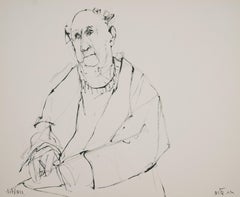
View AllContemplating old man / - The View into Life -
By Ruth Schloss
Located in Berlin, DE
Ruth Schloss (1922 Nuremberg - 2013 Kfar Shmaryahu), Contemplating old man, around 1990. Mixed media on watercolor paper, 33 cm x 40 cm, signed “Schloss” lower left and again in Hebr...
Category
1990s Realist Figurative Drawings and Watercolors
Materials
Paper
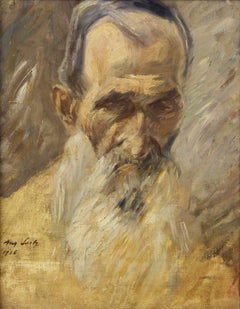
Half-length portrait of an elderly bearded man - Melancholy of a prophet -
Located in Berlin, DE
Friedrich August Seitz (1902 Staffort - 1944 Belgrade). Half-length portrait of an elderly man with a beard. Oil on canvas, 42 x 34 cm (visible seize), 58 x 50 cm (frame), signed and...
Category
1920s Expressionist Figurative Paintings
Materials
Oil
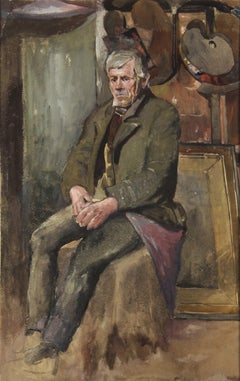
Man sitting in the studio - Thinking about art -
Located in Berlin, DE
Adolph Eduard Otto von Faber du Faur (1828 Ludwigsburg - 1901 Munich). Man sitting in the studio. Watercolour painting, 43 x 27 cm (visible size), 73 x 53 cm (frame), monogrammed at lower right, estate stamp.
Upper right corner neatly repaired, small tear in the wall to the left of the sitter.
- Thinking about art -
About the artwork
The sitter, an elderly man, is seated in a studio on a pedestal reminiscent of an academy hall. The earthy, dark tones give the scene a weighty quality. The lightest tones are found in the incarnate parts of the figure, which do not stand out from the other colours of the picture, but are linked to them. As a result, the sitter's face is both part of and the highlight of the colour references in the picture. The colour of the sitter's skin is reflected in his pink coat, while his white-grey hair matches the colour of the wall next to him. This almost monochrome wall surface, in turn, is connected across the portrait to the framed picture standing on the floor, which seems to have been erased by this correspondence with the empty wall surface. Through the palette, which is positioned directly behind the sitter's head, the reference to painting, which is already given by the studio space, is explicitly linked to the sitter, who thus seems to be contemplating the question of the meaning of art.
This raises the question of whether Faber Du Faur, who had become lonely in his old age, might have painted a self-portrait here in his later years. In addition to the studio setting, the sitter's explicit reference to the palette and the fact that the picture was part of his estate, the only summary elaboration of the body suggests a self-portrait, while the representation of the face is concretised with the wide-open eyes typical of a self-portrait. This concentration on the face gives the impression of the artist's melancholy introspection, captured by the palette and related to the meaning of painting, whose dark character is reinforced by the concealment of the palette hanging on the right of the picture in the light tones so characteristic of Faber Du Faur. In the course of this resignation, Faber du Faur advises his son Hans, who has also become a painter: "Promise me one thing: never move to Munich, they'll kill you here!"
Whoever the sitter may be, the references to painting make the portrait a resigned self-contemplation by Faber Du Faur, focused on art.
About the artist
After leaving school, Otto Faber du Faur entered the service of the Württemberg army, at the same time cultivating his artistic talent. In 1851, on the recommendation of his father Christian Wilhelm, who was himself a battle painter, he spent six months in Munich as an apprentice to Alexander von Kotzebue. In 1852 he was granted a year's leave of absence from military service to study battle painting in the studio of Adolphe Yvon...
Category
1890s Realist Portrait Drawings and Watercolors
Materials
Watercolor
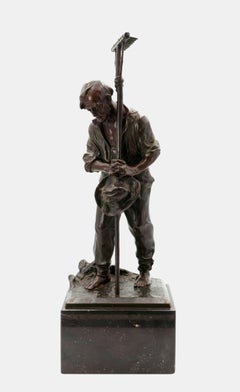
Field worker with rake / - The Humility of the Farm Worker -
Located in Berlin, DE
Paul Ludwig Kowalczewski (1865 Mieltschin - 1910 Berlin), Field worker with rake, around 1900. Brown and brown-greenish patinated bronze with ...
Category
Early 1900s Realist Figurative Sculptures
Materials
Bronze
The Fieldman and Death / - Sowing and Harvest -
Located in Berlin, DE
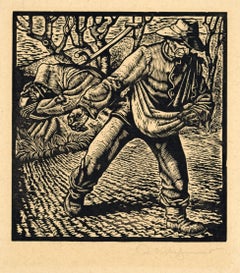
Rudolf Nehmer (1912 Bobersberg - 1983 Dresden), The Fieldman and Death, around 1948. Woodcut on yellowish wove paper, 16.8 cm x 15.8 cm (depiction), 42 cm x 30 cm (sheet size), signe...
Category
1940s Realist Figurative Prints
Materials
Woodcut
Man in a wheelchair / - Looking to the future -
By Ruth Schloss
Located in Berlin, DE
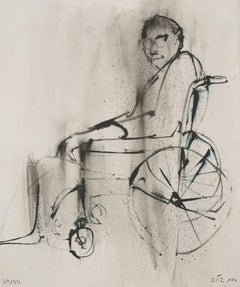
Ruth Schloss (1922 Nuremberg - 2013 Kfar Shmaryahu), Man in a wheelchair, around. 1990. Mixed media on watercolor paper, 38.5 cm x 33 cm, signed “Schloss” lower left and again in Heb...
Category
1990s Realist Figurative Drawings and Watercolors
Materials
Paper
You May Also Like
Portrait of an Old Man with Cane, Important Chicago Modernist WPA Artist
By William S. Schwartz
Located in Surfside, FL
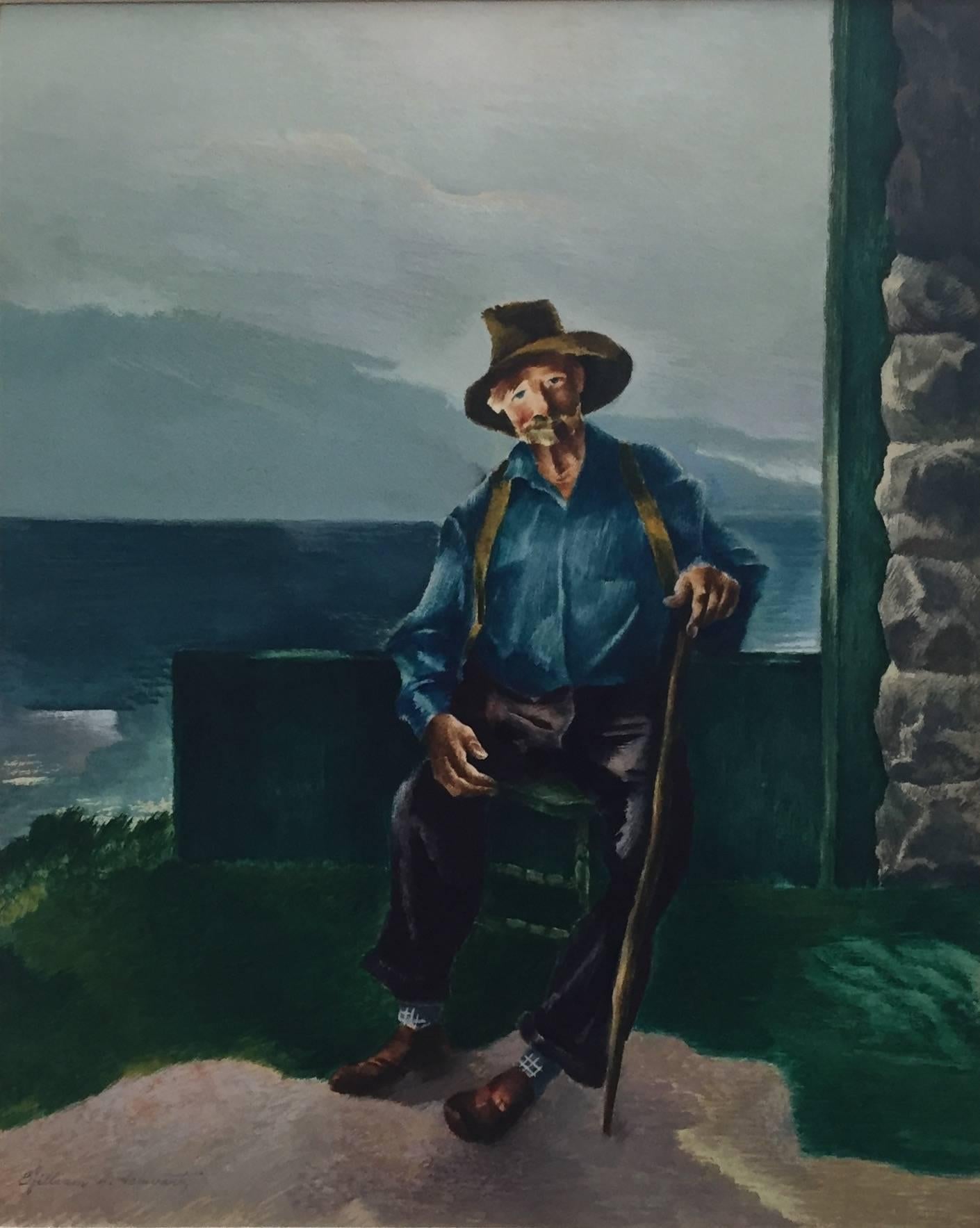
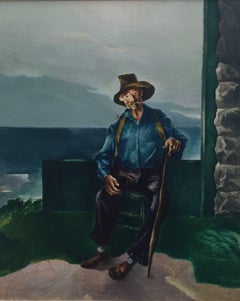
William Samuel Schwartz (American, 1896-1977)
"Portrait of an Old Man with Cane"
c. 1940
Gouache on board,
21" x 17"
Hand signed lower left
A beautiful painting of an old man sitti...
Category
1940s American Modern Figurative Paintings
Materials
Gouache, Board
Portrait of an Elderly Man, 1913
Located in Stockholm, SE
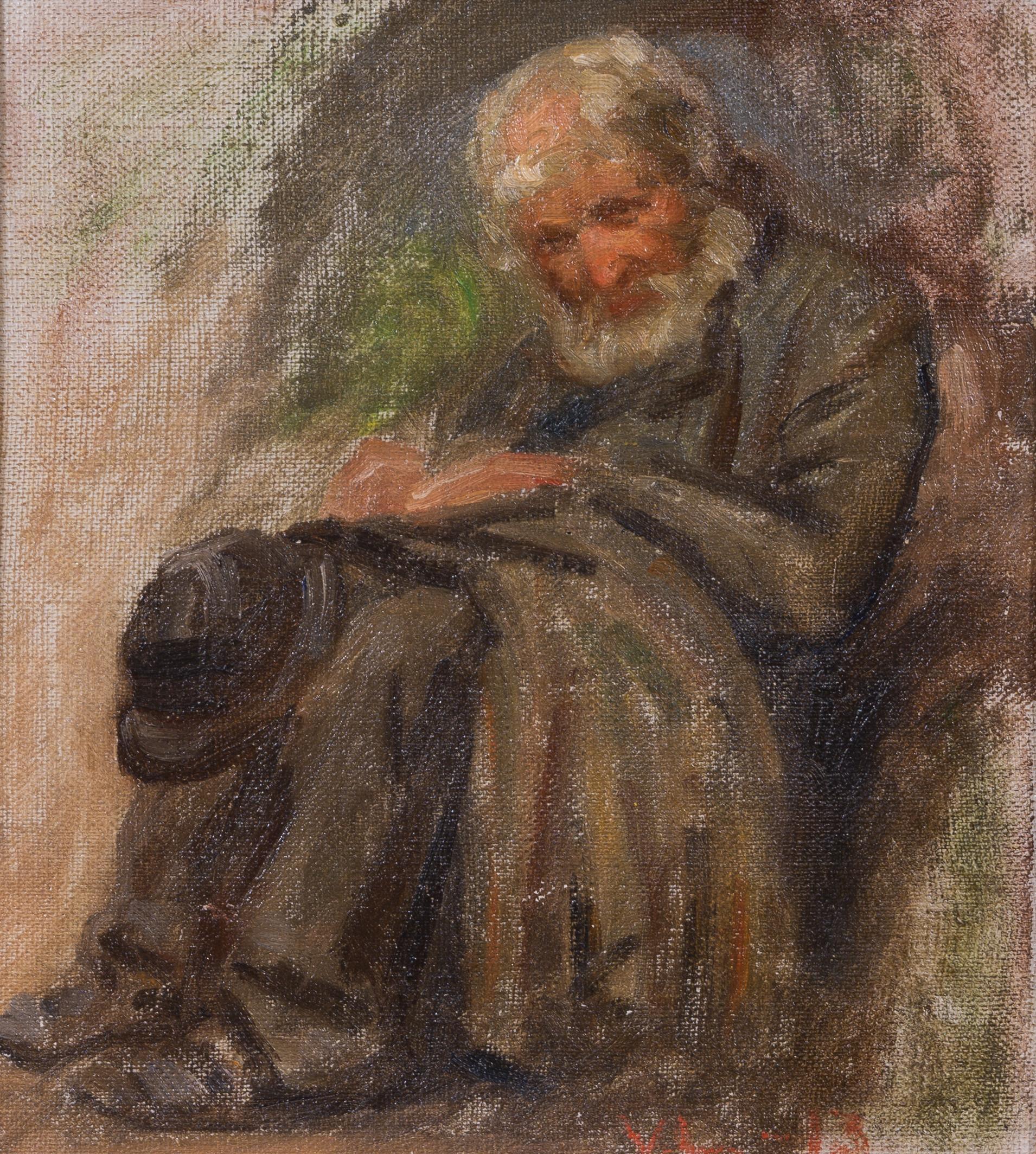
Victor Lagerström (1864–1948) Sweden
Portrait of an Elderly Man, 1913
oil on canvas
signed “V.L” and dated “13”
unframed: 24.5 × 22 cm (9.65 × 8.66 in)
framed: 42 × 39 cm (16.54 ×...
Category
1910s Post-Impressionist Figurative Paintings
Materials
Canvas, Oil
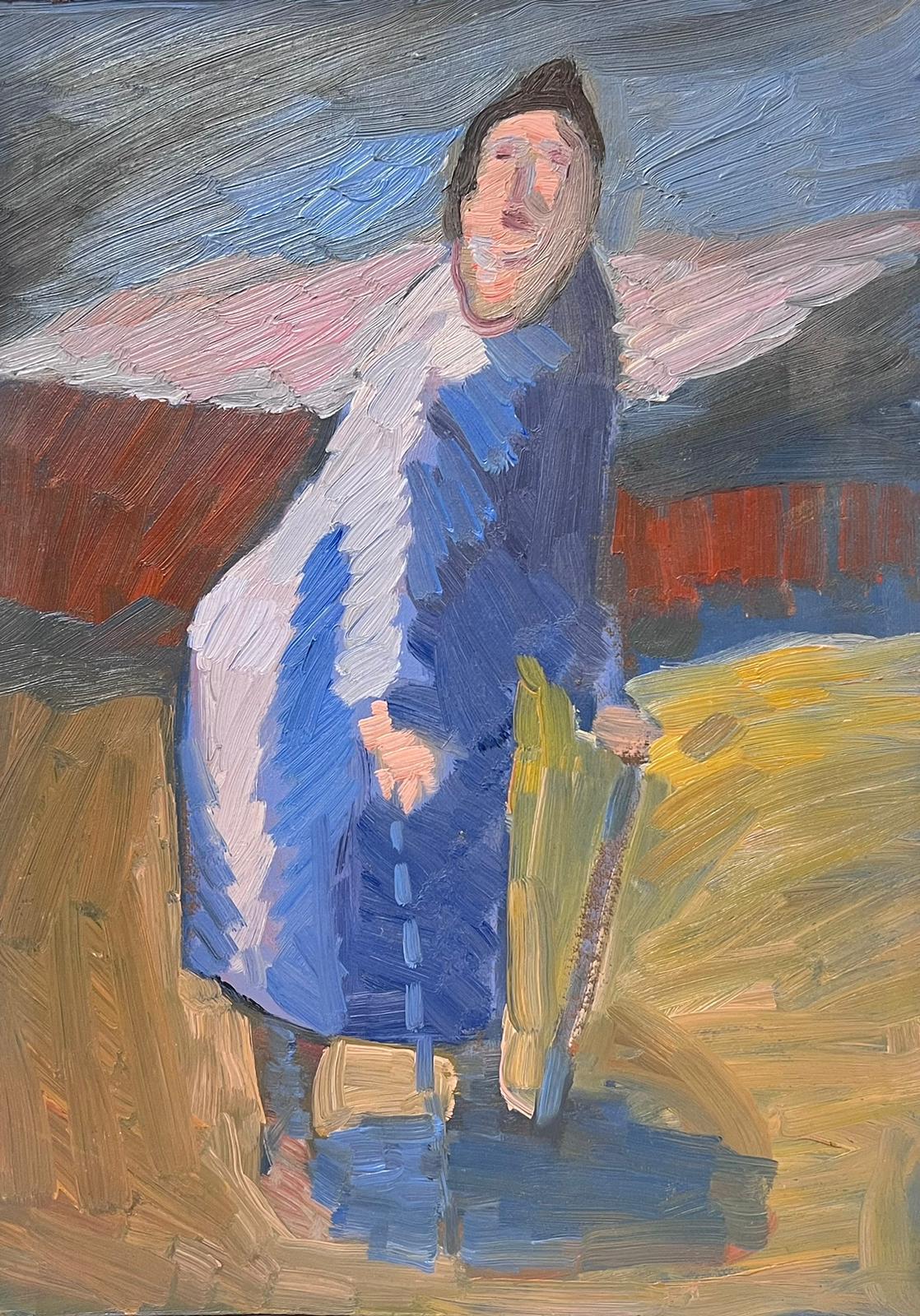
20th Century French Modernist Oil Painting Elderly Lady Walking with Sticks
Located in Cirencester, Gloucestershire
oil on board, unframed
board: 13 x 9.5 inches
provenance: private collection, France
condition: very good and sound condition
Category
Late 20th Century Modern Figurative Paintings
Materials
Oil
$385 Sale Price
20% Off
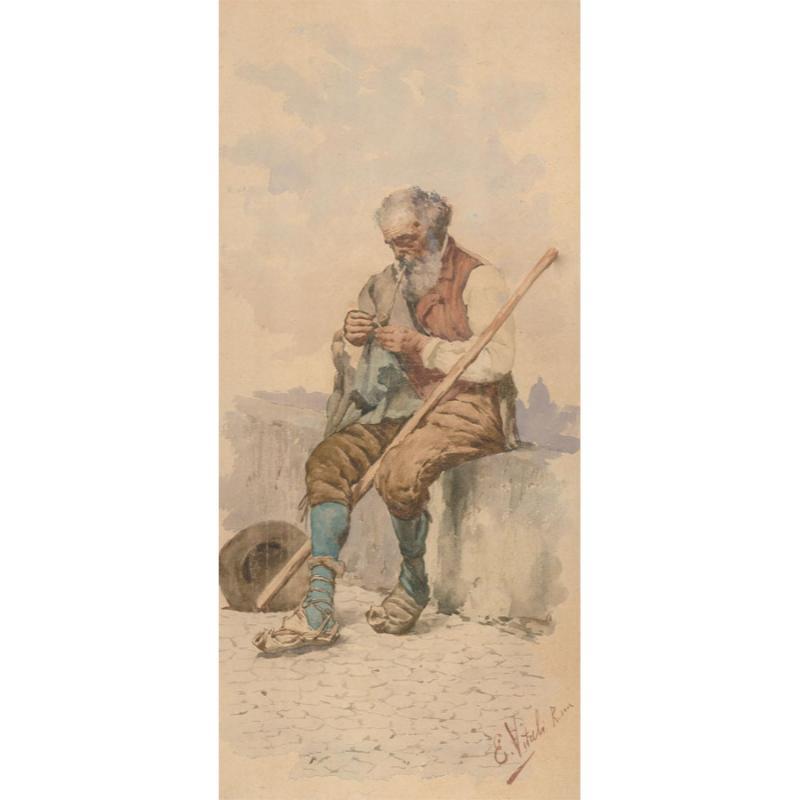
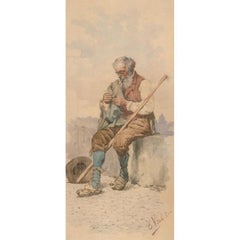
Edouardo Vitali - Late 19th Century Watercolour, Old Man with a Pipe
Located in Corsham, GB
Signed to the lower right. On paper.
Category
Late 19th Century Portrait Drawings and Watercolors
Materials
Watercolor
$340 Sale Price
20% Off
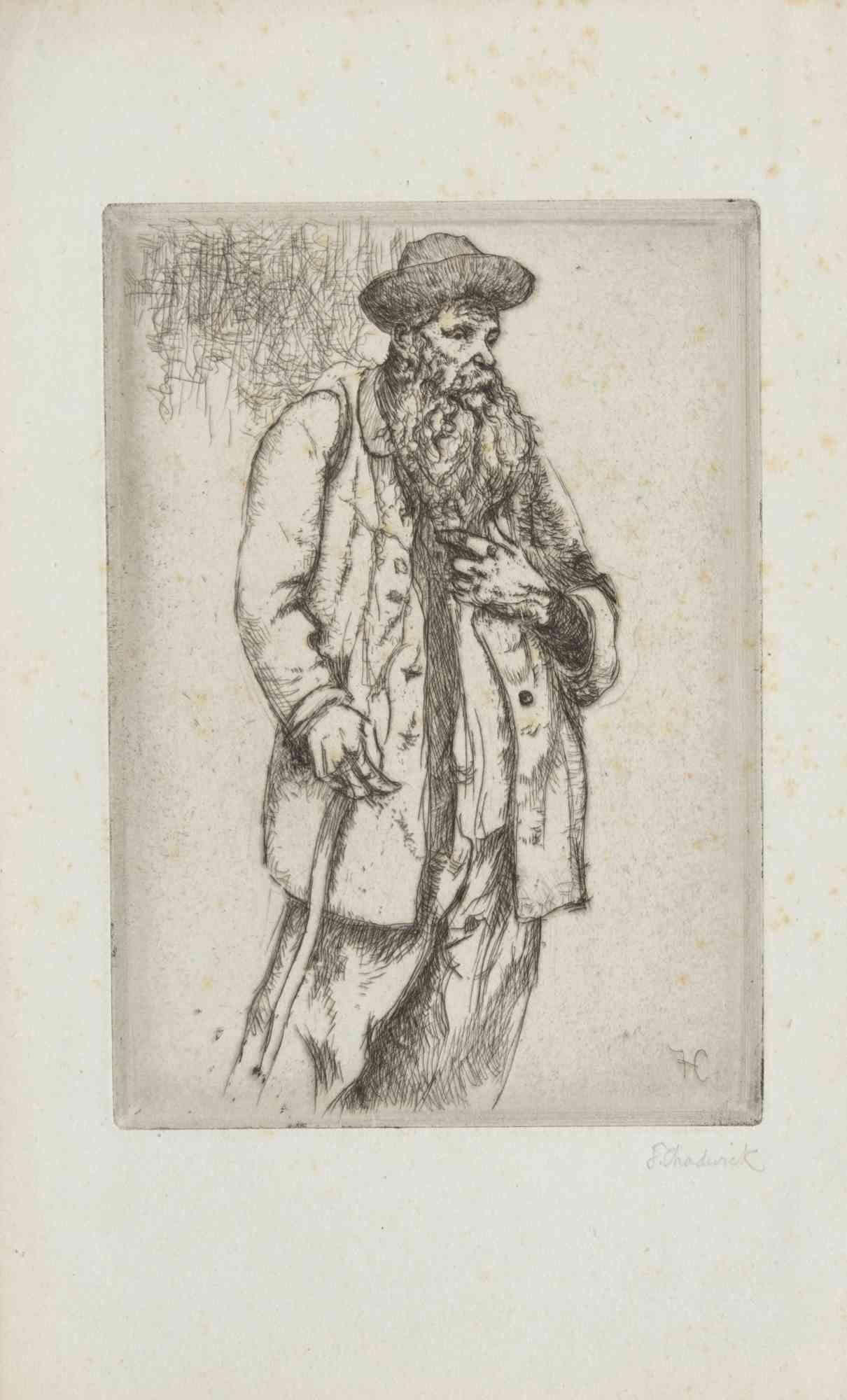
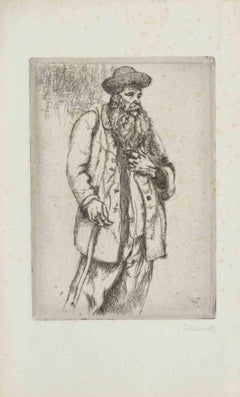
Portrait of Old Man - Etching by Francis Brooks Chadwick - 1915
By Francis Brooks Chadwick
Located in Roma, IT
Etching and drypoint realized by Chadwick in 1915.
Hand signed in pencil lower right.
Very good condition.
Category
1910s Modern Figurative Prints
Materials
Etching
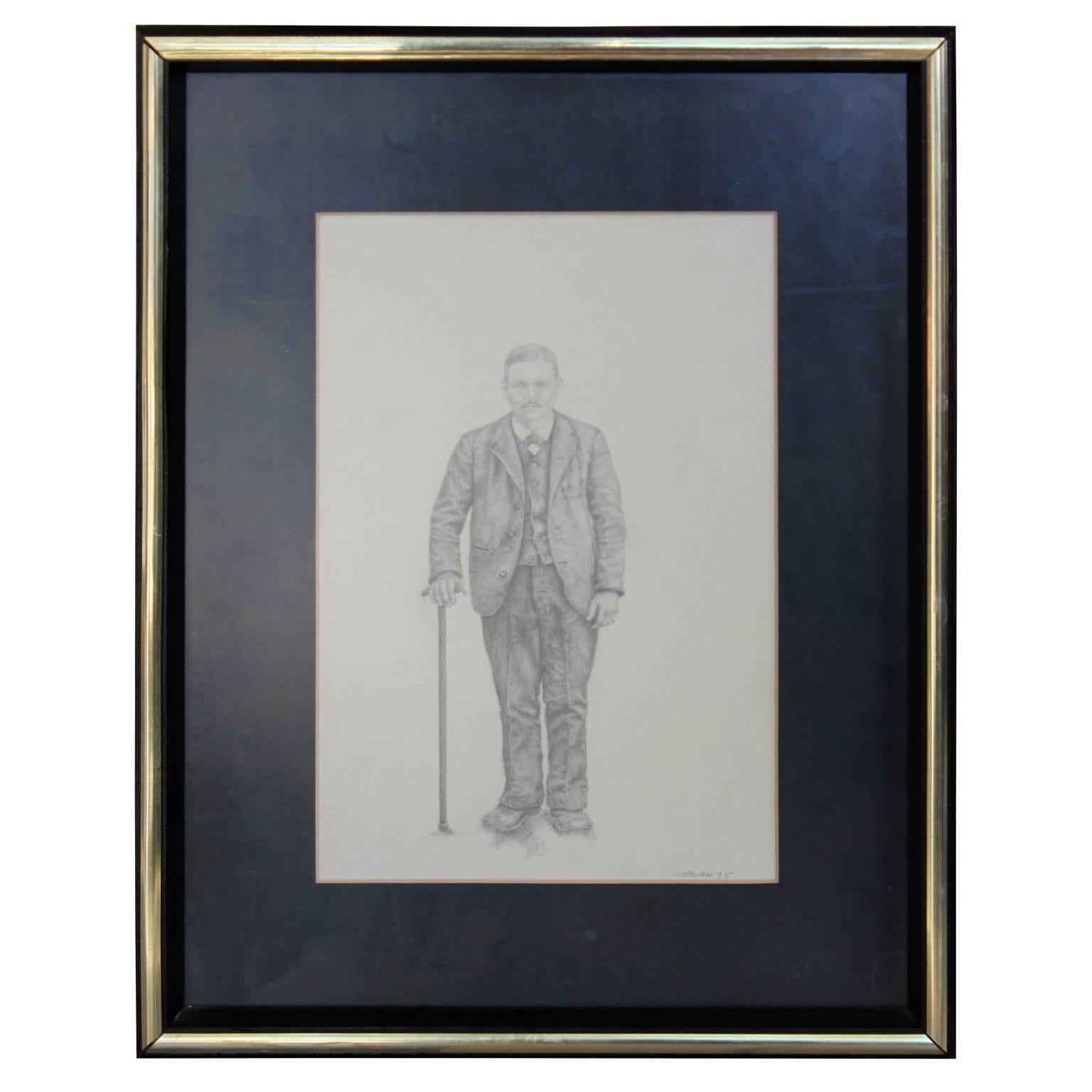
Portrait Sketch of Man with a Cane
Located in Houston, TX
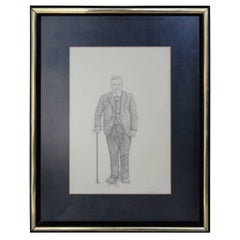
Gorgeous and detailed portrait sketch of a man in a suit with a cane by artist C. Hallam in 1975.
Category
1970s Modern Portrait Drawings and Watercolors
Materials
Pencil