Items Similar to Book of Verses
Want more images or videos?
Request additional images or videos from the seller
1 of 8
Lilian Westcott HaleBook of Verses1924
1924
$125,000
£94,969.14
€109,139.49
CA$175,577.83
A$191,112.05
CHF 101,263.43
MX$2,298,411.52
NOK 1,287,538.73
SEK 1,179,886.79
DKK 815,265.35
About the Item
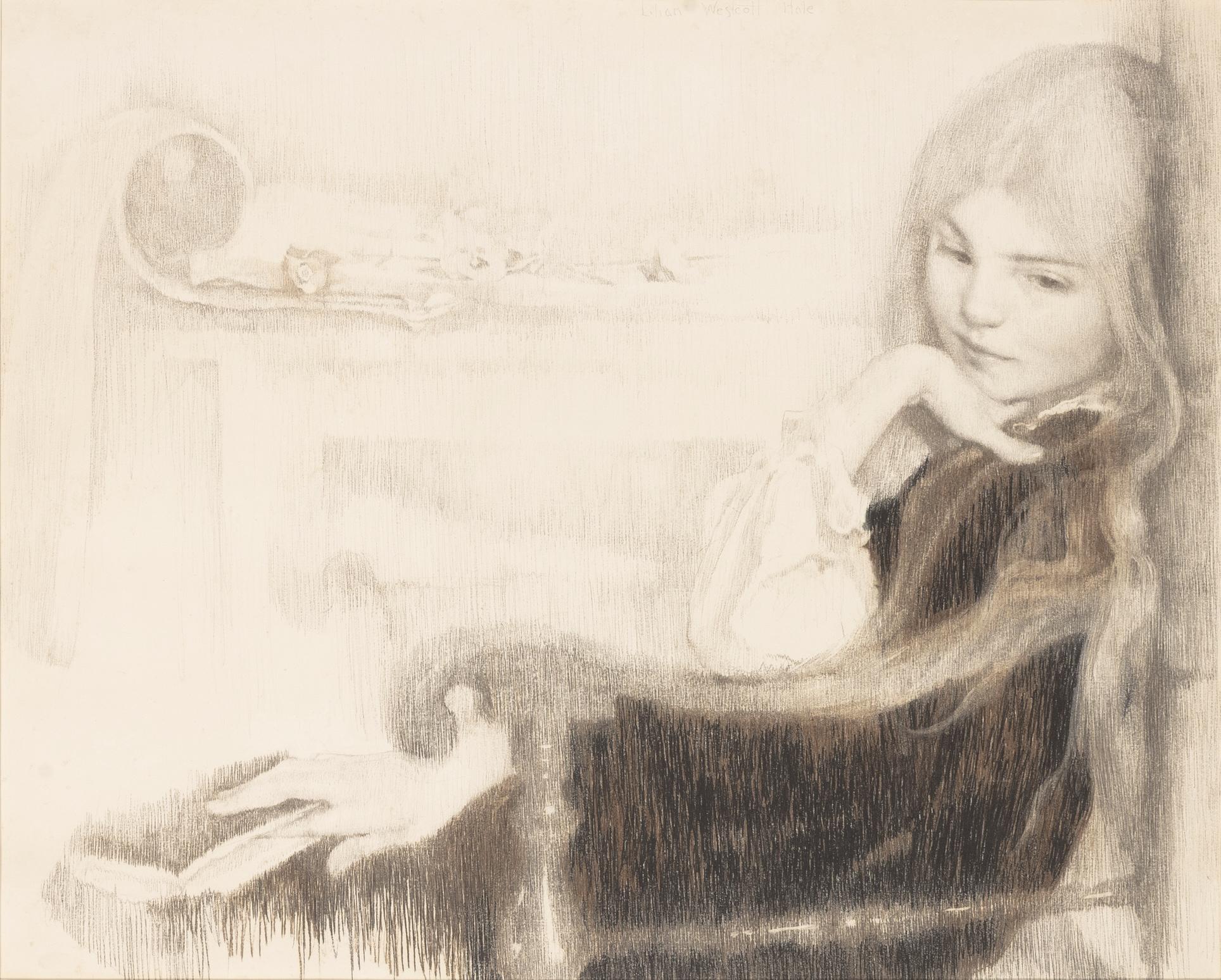
Book of Verses, 1924
Charcoal on paper
29 x 23 inches (73.7 x 58.4 cm)
Framed dimensions: 33 3/8 x 27 5/8 inches
Signed upper right: Lilian Westcott Hale
Provenance
The artist;
Vose Galleries, Boston, (unknown inventory no.), ca. April 1924, eventually returned to the artist;
Private collection, Dover, Massachusetts;
Vose Galleries, Boston, inventory no. 32693, December 1998;
Private collection, Boston;
Private collection, New York until 2025
Exhibitions
(Possibly) Pennsylvania Academy of the Fine Arts, 23rd Annual Watercolor Exhibition, November 8- December 13, 1925.
(Possibly) Concord Art Association, Massachusetts, 9th Annual Exhibition, May 3-July 1, 1925.
The Art Institute of Chicago, Sixth International Watercolor Exhibition, May 3-30, 1926, no. 87, as Book of Verses.
Avery Galleries, Bryn Mawr, Pennsylvania, American Women Artists, 1860-1960, October 13-November 10, 2017.
Literature
Avery Galleries, Bryn Mawr, Pennsylvania, American Women Artists, 1860-1960, exhibition catalogue (2017), pp. 40-43.
Lilian Westcott Hale showed an exceptional talent for and dedication to art from a very early age. She first began studying at the Hartford Art School in Connecticut where she caught the eye of the important teacher and Impressionist painter, William Merritt Chase. Hale went on to attend his summer school at Shinnecock, and indeed, Chase was so impressed with the young student that he was “afraid to interfere with what she was doing.”28 In 1900, she won a scholarship to begin studying at the Museum School in Boston. Her instructors included Edmund C. Tarbell and Philip Leslie Hale, whom she fell in love with and married in 1902.
The choice to marry Philip was not an easy one, particularly at a time when so many women artists believed that for “the vast majority of women it is impossible to practice art after marriage.”29 As Hale carefully weighed the decision, her sister encouraged her, saying: “Mr. Hale seems a man very congenial in his tastes to yours, and I do not see why [by] loving and marrying him you would break your vow of everlasting faithfulness to your work.”30 While she ultimately accepted his proposal and the marriage was a happy one, it was not without its complications. Philip was very supportive of Hale’s painting career, but as her talent quickly outshone his and her work became more successful, tensions arose; she sought to dispel them by overcompensating in her deference towards her husband, addressing him in a way that still “suggested the relationship of master and pupil.”31 In 1908, their daughter Nancy was born, and Hale became increasingly occupied with the responsibilities of motherhood. She moved her studio out of the Fenway Studio Building and into their home. Nevertheless, she managed to balance her maternal duties with her art; her daughter became one of her primary subjects, which enabled her to both mind her child and produce work at the same time.
Hale painted portraits, figure studies, still lifes, and landscapes; moreover, she also produced finished charcoal drawings which she often displayed alongside her paintings and considered them to be of equal importance. She developed a sensitive and delicate style, and her drawings are especially extraordinary in that regard. As one contemporary reviewer remarked, “But in her drawing, it is safe to say that she is without a rival. The delicacy of her black and white is indescribable; the whiteness of the white, and the paleness of the gray are notable always, but the subtlety of the two as they become one, tests the eye of the average observer.”32 Her drawing technique is also particularly singular—the subtle modulation of tone is created by parallel vertical lines, layered with varying density, which contrast with the white of the untouched paper.
Completed in 1924, Book of Verses is a superb exampe of Hale’s mature drawing style. The entirety of the image is fully rendered with an extraordinary breadth of tones, ranging from the pale and delicate values in the sitter’s face and hair to a deep rich charcoal gray in her dress. While the most careful attention is given to the young woman’s face and hand, including her elaborate ruffed collar and sleeve, the background is also rendered with considerable detail—Hale has deliberately drawn in the woven pattern of the wicker chair and even faintly delineated the molding on the mantelpiece along with the sparse objects arranged above it. While the identity of the sitter in Book of Verses is unknown, it most likely depicts Hale’s daughter Nancy, who would have been sixteen at the time. Nancy had continued to serve as a model for her mother as she grew older, however she often asked to be allowed to read while posing, so that she could pursue her favorite pastime during the long hours that it took to complete such a finished drawing. Here, she looks up from the book in her hand with her mouth slightly open, perhaps reciting a passage from the “book of verses” that she has just been reading. Aptly titled, Book of Verses possesses a visual poetry of its own, and this exquisite work of art amply demonstrates the mature mastery of Hale’s unique drawing style.
- Creator:Lilian Westcott Hale (1881 - 1963, American)
- Creation Year:1924
- Dimensions:Height: 29 in (73.66 cm)Width: 23 in (58.42 cm)
- Medium:
- Movement Style:
- Period:
- Condition:
- Gallery Location:Bryn Mawr, PA
- Reference Number:1stDibs: LU2773217213482
About the Seller
5.0
Recognized Seller
These prestigious sellers are industry leaders and represent the highest echelon for item quality and design.
Established in 2001
1stDibs seller since 2024
7 sales on 1stDibs
Typical response time: 1 hour
- ShippingRetrieving quote...Shipping from: Bryn Mawr, PA
- Return Policy
More From This Seller
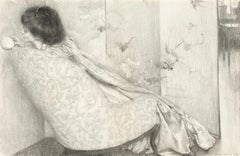
View AllStudy of Ruth
By Lilian Westcott Hale
Located in Bryn Mawr, PA
Study of Ruth, c. 1925
Charcoal and sepia ink on paper
22 1/4 x 27 3/4 inches (56.5 x 70.5 cm)
Signed upper center: Lillian Westcott Hale
Lilian Westcott Hale...
Category
1920s American Impressionist Figurative Drawings and Watercolors
Materials
Paper, Charcoal, Ink
Reading Tea Leaves
By Lilian Westcott Hale
Located in Bryn Mawr, PA
Reading Tea Leaves, 1907
Pencil on paper, 14 1/2 x 22 1/2 inches (36.8 x 57.1 cm)
Framed dimensions: 26 x 33 3/4 inches
Signed and dated lower right: Lilian Westcott Hale...
Category
Early 1900s American Impressionist Portrait Drawings and Watercolors
Materials
Paper, Pencil
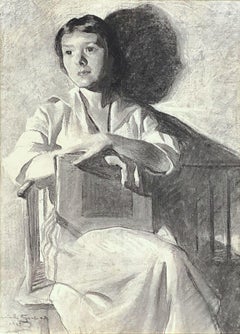
Elsa
By Daniel Garber
Located in Bryn Mawr, PA
Elsa, 1915
Charcoal on paper, 14 x 11 inches (35.6 x 27.9 cm)
Signed and dated lower left: Daniel Garber / 1915
Provenance
The artist;
Estate of the artist, 1958;
Tanis Garber Page,...
Category
Early 20th Century Figurative Drawings and Watercolors
Materials
Charcoal
$14,500
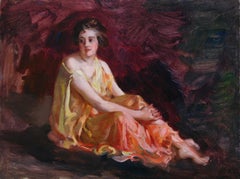
Dance Interlude, c. 1910-20
Located in Bryn Mawr, PA
Oil on board
Provenance
Estate of Marjorie MacMonnies Wysong (the artist's granddaughter); Hap Moore Auctions; Martin Ferrick Antiques
Exhibitions
Avery Galleries, Bryn Mawr, Pennsylvania, American Women Artists: 1860–1960, October 13–November 10, 2017.
Description
During her expatriate career, between the mid-1880s and return to the United States in 1920, painter and muralist Mary Fairchild MacMonnies (later Low) was one of the most successful American women artists of her generation. Mary Fairchild was born in Connecticut, but was raised largely in St. Louis, Missouri. Inspired by her mother's work as a painter of miniatures and dissatisfied as a school teacher, she enrolled in the St. Louis School of Fine Arts, where she led a movement for women to be permitted to draw model posed in the nude, an important component of artistic training then considered improper for well-bred young women. Impressed by her talent and drive, the school's director, Halsey Ives...
Category
1910s American Impressionist Portrait Paintings
Materials
Oil
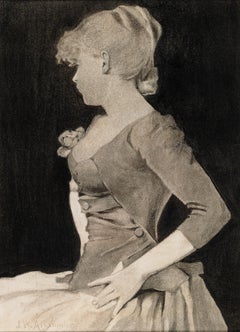
Silhouette of a Young Girl
By John White Alexander
Located in Bryn Mawr, PA
Silhouette of a Young Girl
Charcoal on paper
14 1/2 x 10 3/4 inches (36.8 x 27.3 cm)
Signed lower left: J.W. Alexander
Provenance
Grand Central Art Galleries, New York;
Samuel B. an...
Category
Late 19th Century Aesthetic Movement Figurative Drawings and Watercolors
Materials
Paper, Charcoal
In Venice
By Charles Webster Hawthorne
Located in Bryn Mawr, PA
Like his mentor the great American Impressionist William Merritt Chase, Charles Webster Hawthorne was equally admired in his own day as both a talented painter and a highly influential instructor. Hawthorne first studied with Chase at his Shinnecock Summer School of Art, which was specifically dedicated to open-air landscape painting. Not only did Hawthorne quickly absorb all the principles of Chase’s instruction, but he also became determined to found his own school based on the same model. In 1899 Hawthorne discovered the small fishing village of Provincetown on the furthermost tip of Cape Cod, and after purchasing a large house on Miller Hill, he opened the Cape Cod School of Art, which proved to be an immediate success.
While Hawthorne’s own approach as a teacher owed much to Chase, he developed a distinctly unique painting style and teaching method that defies easy categorization. He was greatly impressed with the work of Franz Hals, which he was exposed to during his trip to Holland in the summer of 1898. Hawthorne was particularly struck by Hals’ Regentesses of the Old Men’s Almhouse, and from this work he absorbed a deep appreciation for the power of human expression and an economy of technique. Hawthorne applied these lessons to his own realistic portraits of Provincetown fishermen and their families; these works have a somber, almost melancholy quality to them, and they reveal a sense of the vulnerability of the human condition.
Stylistically, Hawthorne maintained a life-long commitment to the importance of color. “Beauty in art,” he said, “is the delicious notes of color one against the other.” Of equal importance to him was capturing the effects of light. He told his students: “Everything in painting is a matter of silhouettes. Hold light against shadow, not light against light.” He developed a particular technique of layering glazes and texturing the surface of his paintings, which heightens the relationship between the colors and creates a light effect that seems to emanate from within the painting. These stylistic techniques in combination with his straightforward compositions of one or more figures shown at close range create the hallmarks of Hawthorne’s best paintings.
Hawthorne and his wife Ethel’s 1905-1907 trip to Italy did not result in a drastic impact on his artistic style. Nonetheless, it proved to be a transformative and enlightening voyage. The extensive trip was financed by collectors who paid in advance for a painting to be produced abroad. On the trip, Hawthorne explored the work of old masters and was struck particularly by the paintings of Titian, which to Hawthorne, demonstrated the master’s true adoration for the act of painting itself through his handling of paint and color. Where Titian’s paintings...
Category
Early 1900s Abstract Impressionist Figurative Paintings
Materials
Oil, Panel
You May Also Like
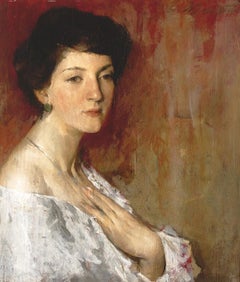
"Portrait of a Lady (Study for Harriet Blake)" Lilian Westcott Hale, Painting
By Lilian Westcott Hale
Located in New York, NY
Lilian Westcott Hale
Portrait of a Lady (Study for Harriet Blake)
Oil on canvas
40 ¼ x 30 ¼ inches
A leading American Impressionist working at t...
Category
1920s Impressionist Figurative Paintings
Materials
Canvas, Oil
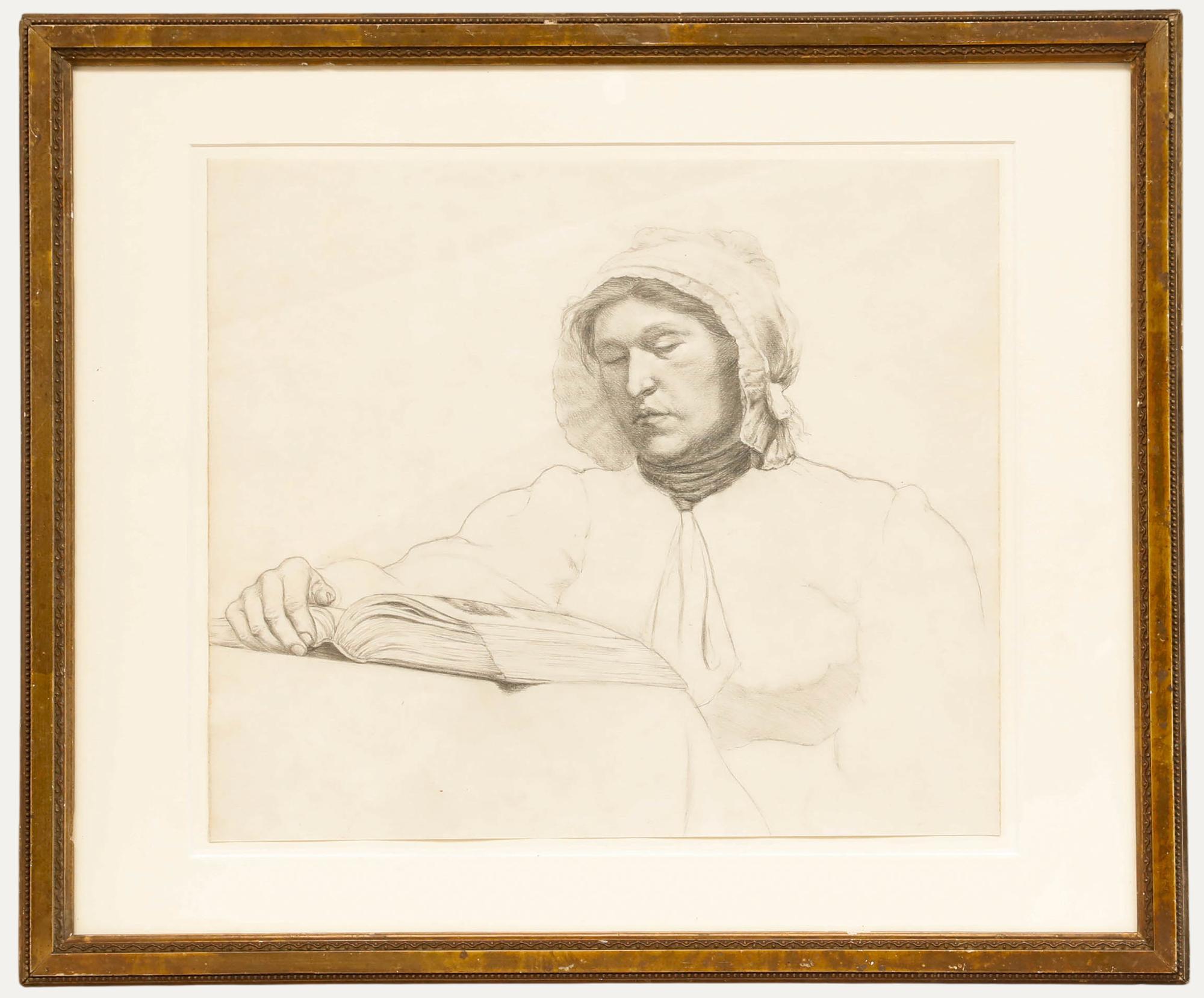
William Henry Ladd - Early 20th Century Oil, The Reader
Located in Corsham, GB
Unsigned. Presented in a gilt frame. On paper.
Category
20th Century Portrait Paintings
Materials
Oil
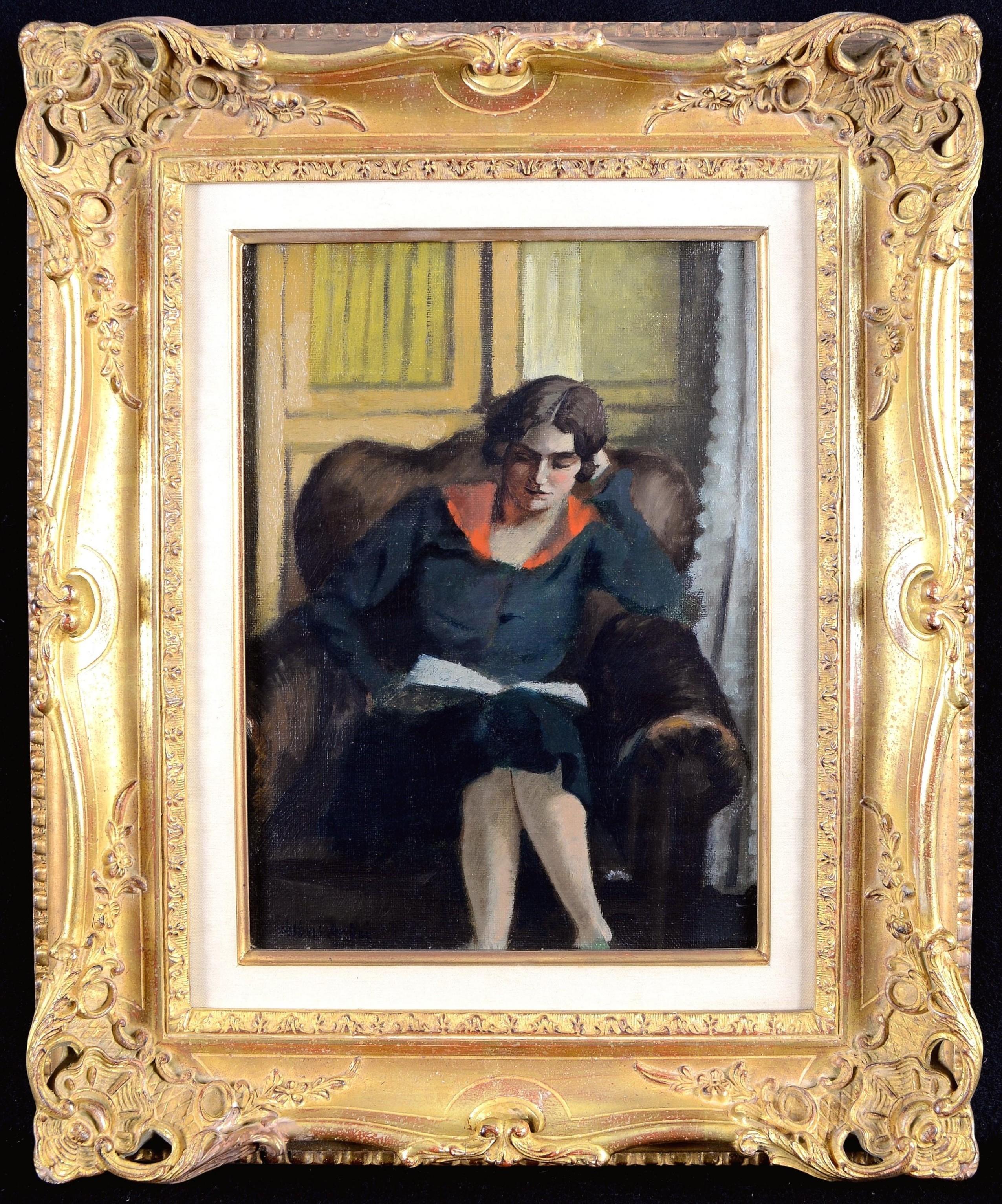
Lady Reading - Early 20th Century French Figurative Portrait Oil Painting
Located in Sevenoaks, GB
A beautiful 1930's French oil on canvas portrait of a seated lady reading in an interior.
Superb quality and striking work in very good original condition. Indistinctly signed lower...
Category
Early 20th Century Portrait Paintings
Materials
Oil, Canvas
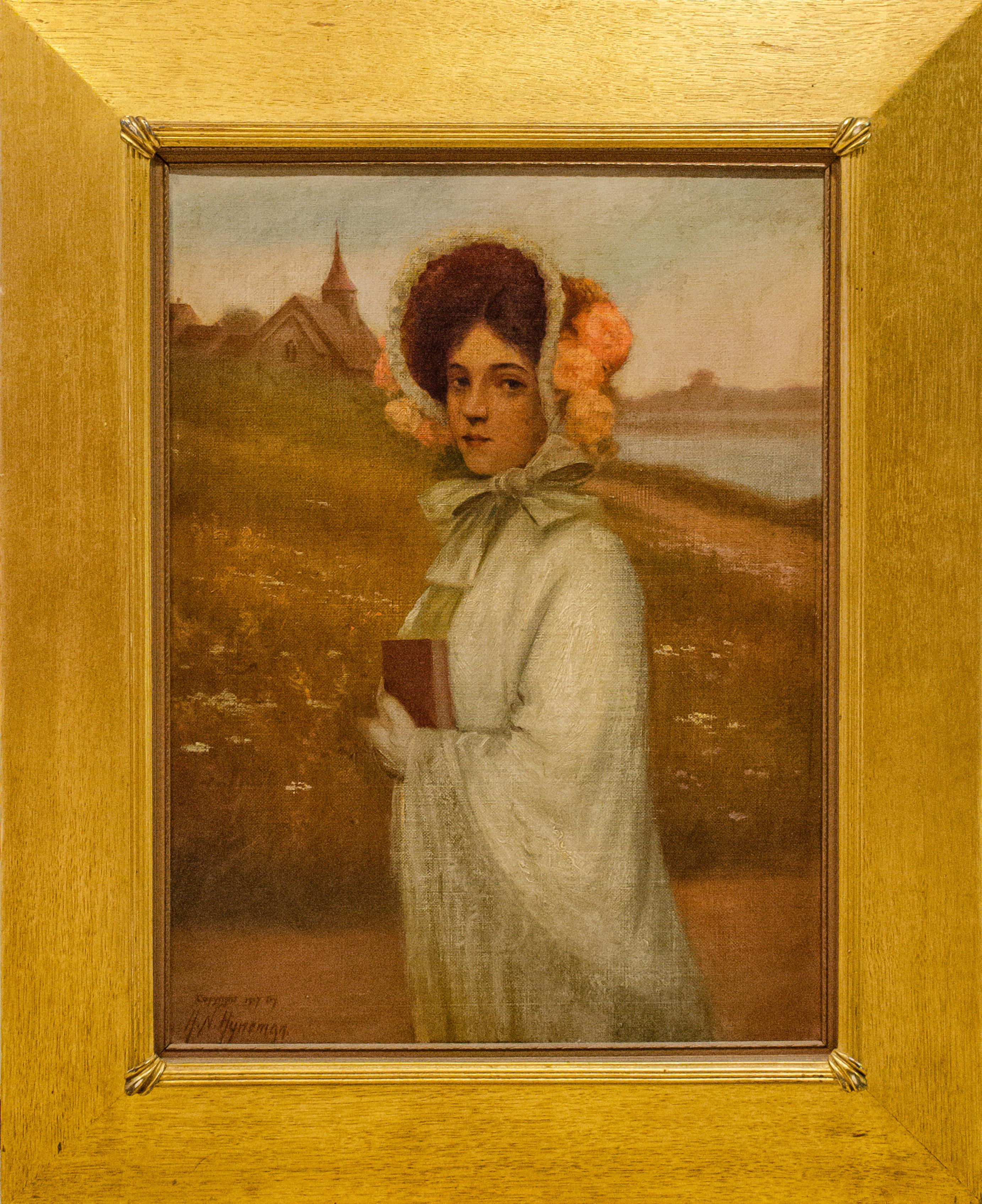
Herman Hyneman Original American Portrait, Signed and Dated 1907
By Herman Hyneman
Located in New York, NY
Herman Hyneman (1849-1907)
Sunday Morning, 1907
Oil on board
15 3/4 x 11 1/2 in.
Framed: 21 1/3 x 17 1/2 in.
Signed lower right: Copyright 1907 by H.N. Hyneman
Inscribed verso: Sunday Morning by H.N. Hyneman
The following is from Peter Jung who credits "a friend named Jeff Gold on Long Island."
Herman N. Hyneman (1849 - 1907) was born in 1849 to one of the most prominent Jewish families in Philadelphia. Unlike most Jewish families of the time, his embraced and encouraged his artistic talent. In 1874, Hyneman followed his first cousin Moses Ezekiel, National Academy member, to Europe to study. They first went to Germany and then to France where Hyneman began eight years of study with Leon Bonnat, the French Master.
In Paris, the twenty-five year old Hyneman resided in a studio building at 75 Boulevard Clichy, with expatriates Frederic Arthur Bridgeman, Charles Sprague Pearce, Milne Ramsey, and Edwin Blashfield. Hyneman was clearly exposed to the works of these more experienced artists, as well as that of Walter Gay.
In 1879, one of Hyneman's genre paintings, entitled "Desdemona", was accepted into the Paris Salon. That painting received favorable reviews both in Europe, and later in Philadlephia where it was exhibited alongside the works of other Philadelphia Artists exhibiting at the Salon that included Thomas Eakins, Pearce, Edward May...
Category
Early 1900s American Impressionist Figurative Paintings
Materials
Oil, Board
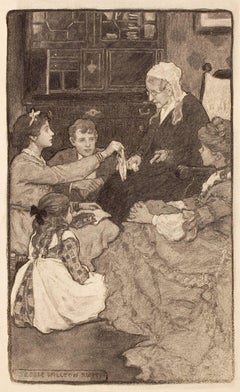
Alcott
s Old Fashioned Girl
By Jessie Willcox Smith
Located in Fort Washington, PA
"'I choose this,' said Polly, holding up a long white kid glove, shrunken and yellow with time, but looking as if it had a history."
Illustration for An Old-Fashioned Girl by Louisa...
Category
20th Century Other Art Style Paintings
Materials
Board, Charcoal
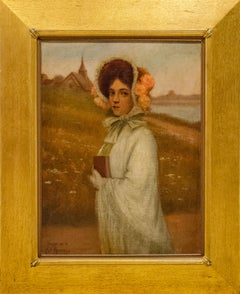
Fine American Impressionist Interior and Portrait Painting, 1922, Boston area
Located in Baltimore, MD
Born in Cambridge, Massachusetts in 1891, John Gilmore Wolcott graduated from Harvard in 1914 and continued studies in art with Charles Woodbury. He was active in the Boston art scen...
Category
1920s American Impressionist Interior Paintings
Materials
Oil