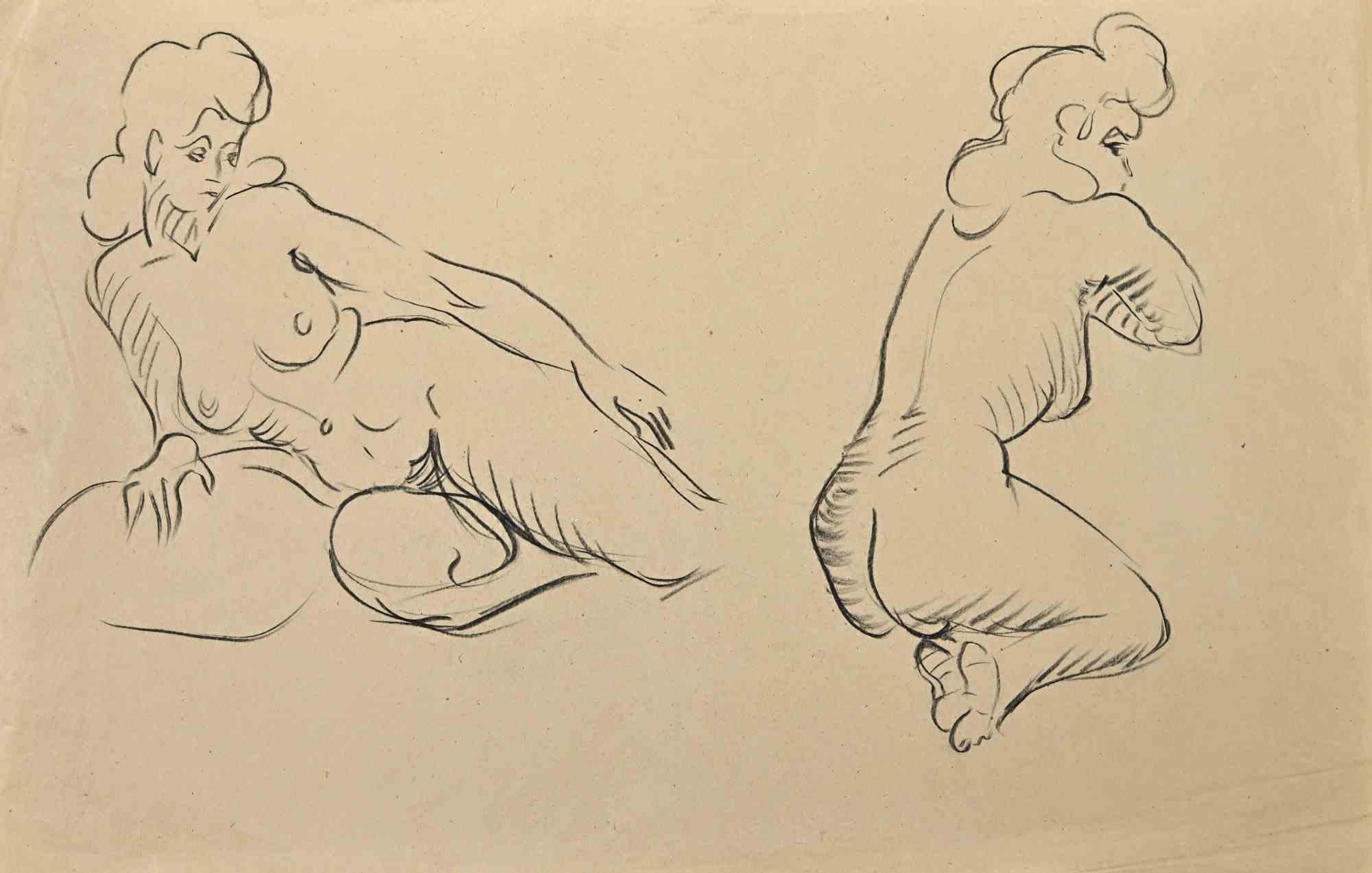
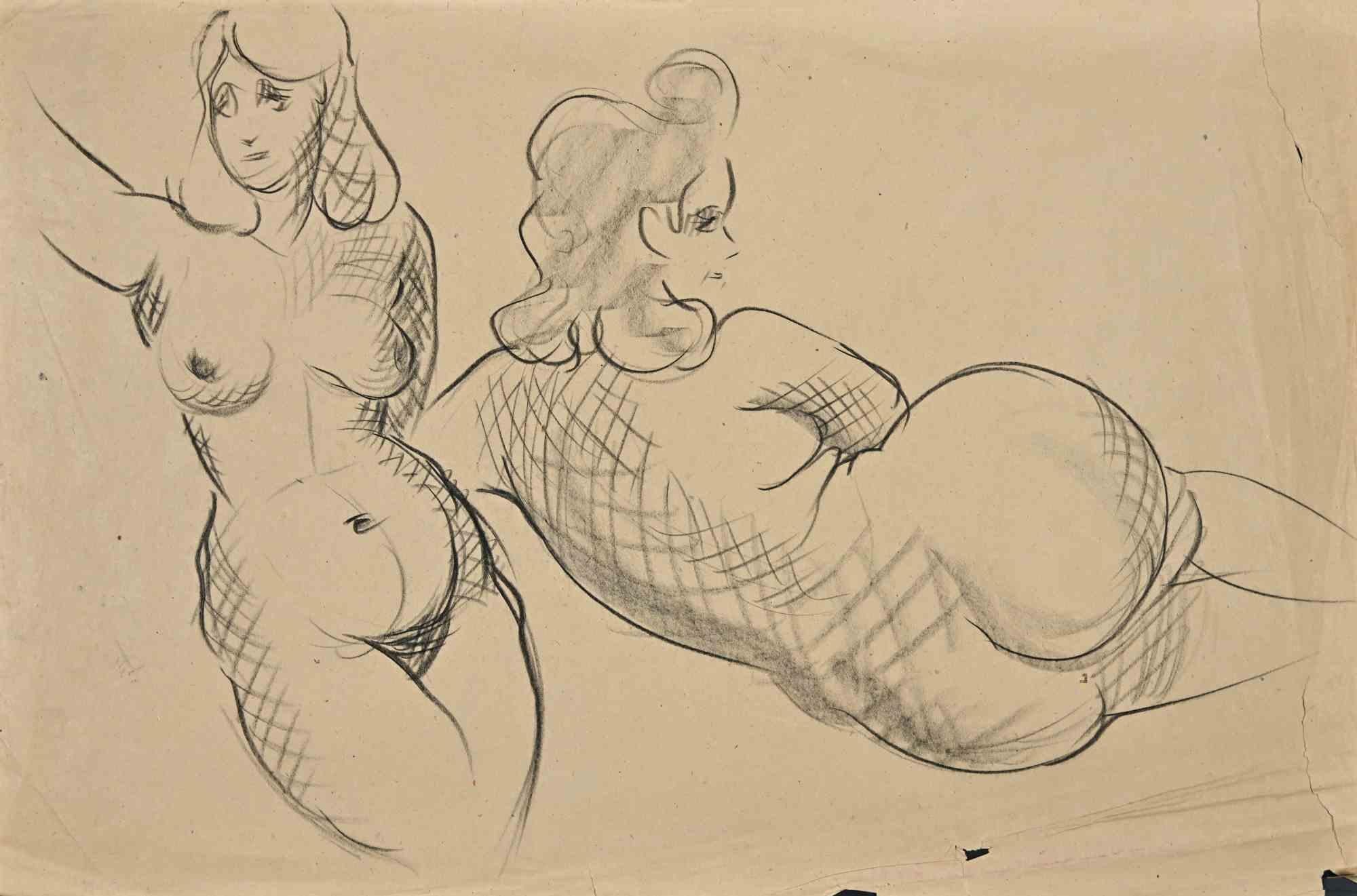
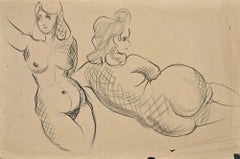
Items Similar to Nude Study, Drawing, Ink, Painting by Horace Brodzky, 1931
Want more images or videos?
Request additional images or videos from the seller
1 of 3
UnknownNude Study, Drawing, Ink, Painting by Horace Brodzky, 19311931
1931
$1,583.74
£1,150
€1,345.18
CA$2,166.48
A$2,357.80
CHF 1,249.87
MX$28,366.12
NOK 15,852.33
SEK 14,503.77
DKK 10,049.49
About the Item
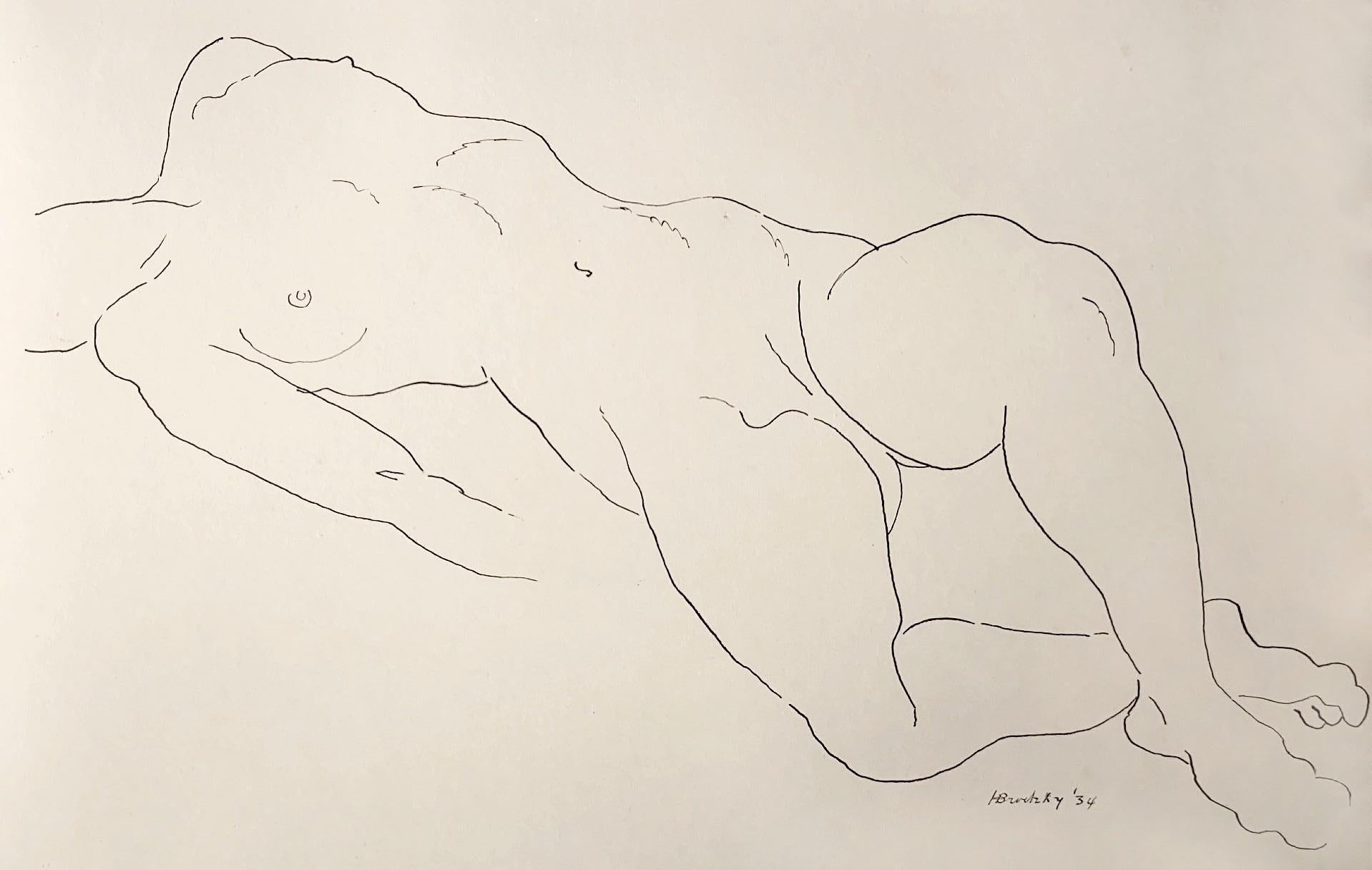
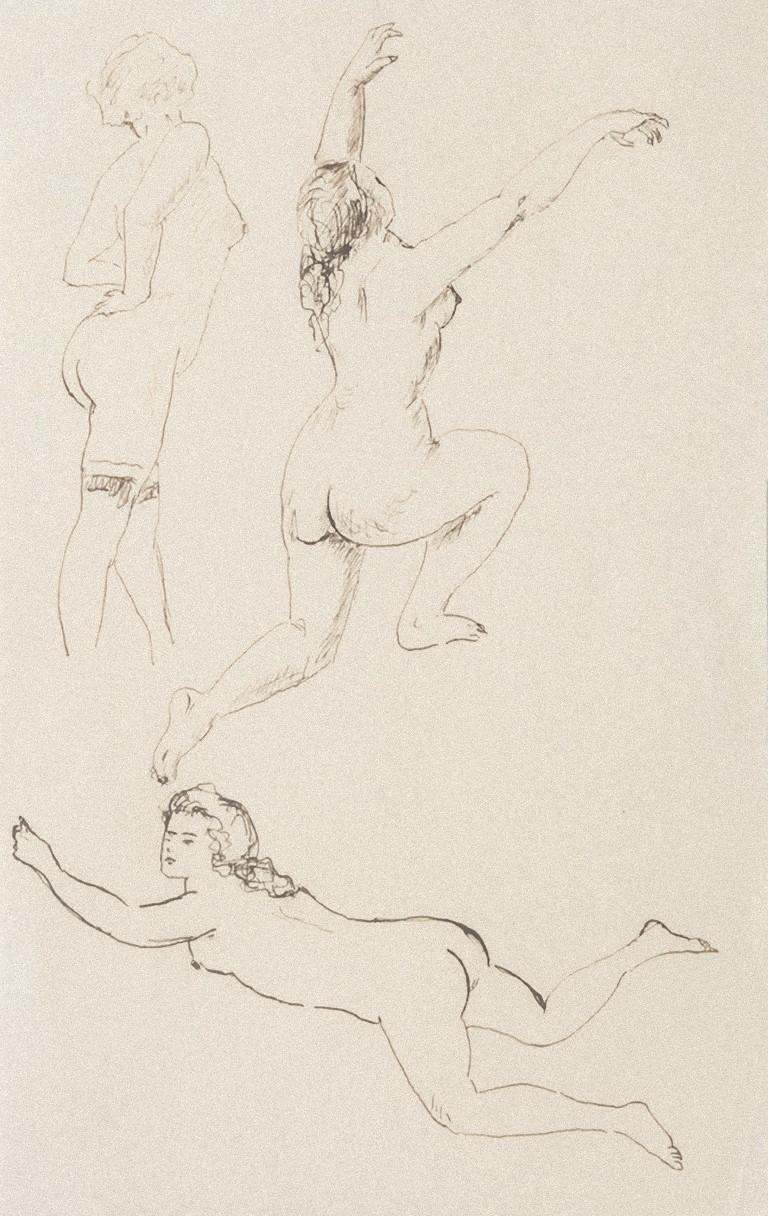
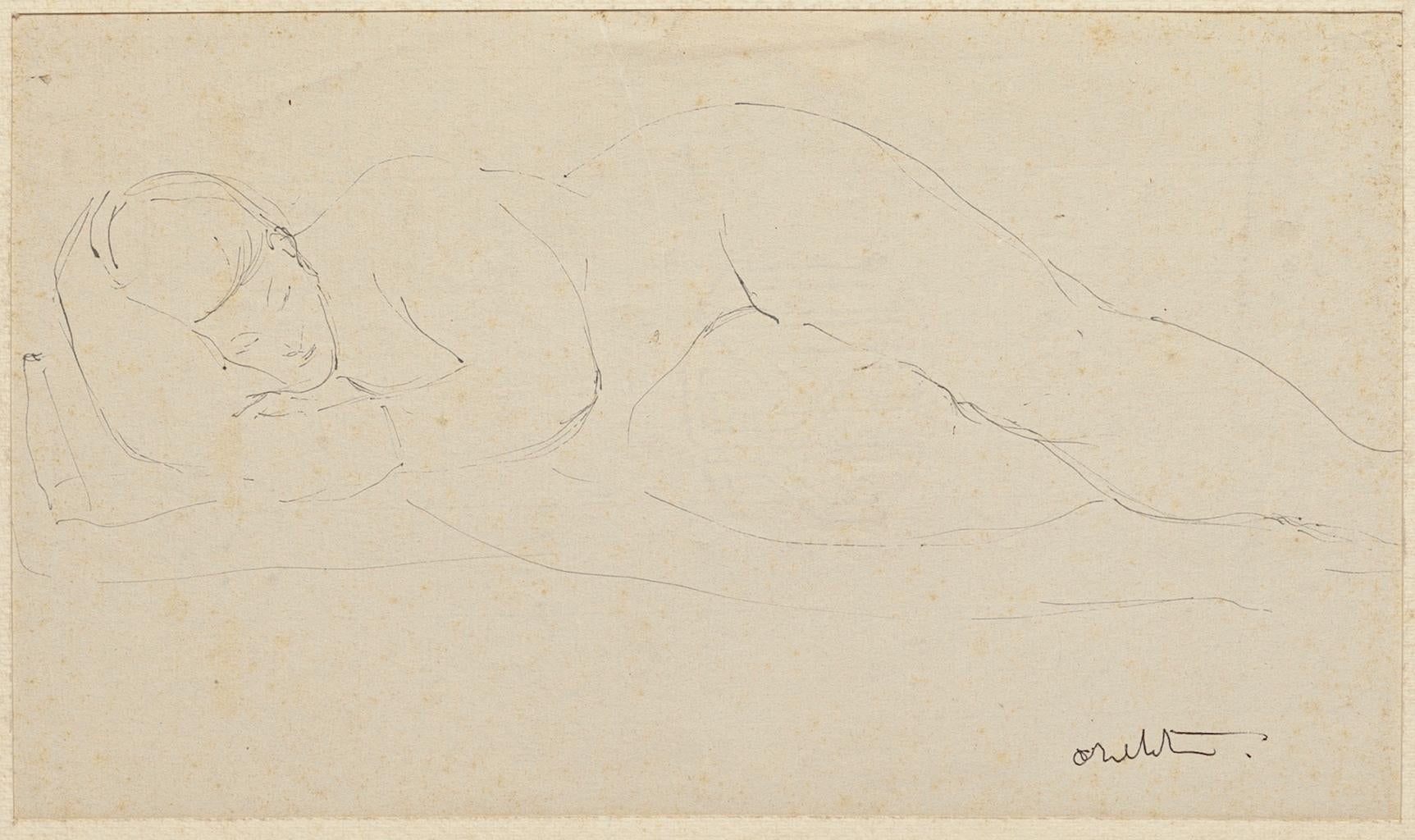
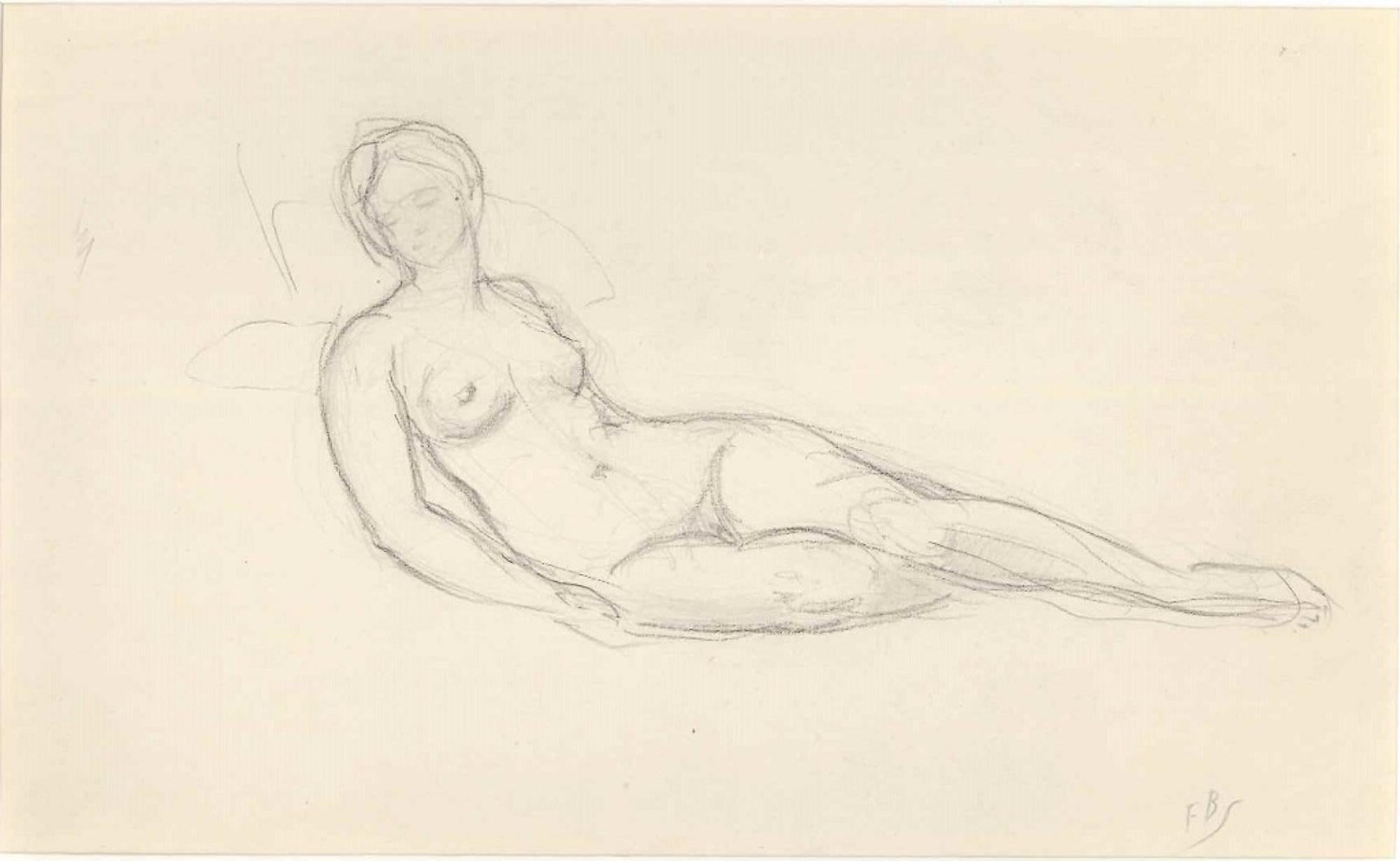
Nude Study, Drawing, Ink, Painting by Horace Brodzky, 1931
Additional information:
Medium: Drawing, ink
18.4 x 38.1 cm
7 1/4 x 15 in
Signed and dated
- Creation Year:1931
- Dimensions:Height: 7.25 in (18.42 cm)Width: 15 in (38.1 cm)
- Medium:
- Period:
- Condition:
- Gallery Location:Kingsclere, GB
- Reference Number:1stDibs: LU2718214573272
About the Seller
No Reviews Yet
Vetted Professional Seller
Every seller passes strict standards for authenticity and reliability
Established in 2010
1stDibs seller since 2024
44 sales on 1stDibs
Typical response time: 9 hours
- ShippingRetrieving quote...Shipping from: Kingsclere, United Kingdom
- Return Policy
More From This Seller
View AllStudy of Young Girl - 20th Century Portrait Drawing in Ink, Pencil and Crayon
By Jacob Kramer
Located in Kingsclere, GB
Study of Young Girl, Ink and Crayon Painting by Jacob Kramer
Additional information:
Medium: Ink, pencil and crayon
20.3 x 17.8 cm
8 x 7 in
Signed
Provenance
Private Collection, UK.
Category
20th Century Portrait Drawings and Watercolors
Materials
Ink, Crayon, Pencil
Dorelia Looking Up, Pencil on Paper Drawing by Augustus John
By Augustus John
Located in Kingsclere, GB
Dorelia Looking Up, Pencil on Paper Drawing by Augustus John 1878-1961
Additional information:
Medium: Pencil on paper
39.4 x 20.3 cm
15 1/2 x 8 in
Signed
Provenance
Arthur Tooth &...
Category
20th Century Portrait Drawings and Watercolors
Materials
Pencil
Girl, 4 from Europäische Graphik VI, Black and White Lithograph Print, 1968-9
By Reg Butler
Located in Kingsclere, GB
Girl, 4 from Europäische Graphik VI, Lithograph on Arches Paper (Unframed) Painting by Reg Butler, 1968-9
Additional information:
Medium: Lithograph on Arches paper (unframed)
54 x ...
Category
21st Century and Contemporary Nude Prints
Materials
Lithograph
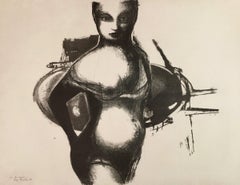
Italian Scene, Pen and Ink with Wash Painting by Reginald Brill, 1950s circa
By Reginald Brill
Located in Kingsclere, GB
Italian Scene, Pen and Ink with Wash Painting by Reginald Brill, 1950s circa
Additional information:
Medium: Pen and ink with wash
33 x 48.3 cm
13 x 19 in
Reginald " Reggie" Brill was a versastile 20th century artist and teacher.
Brill was born in London in 1902 and spent his early childhood there and in Yorkshire. By the time of the First World War, at the age of 13, he was living in lodgings in London, working in a City office and attending St Martins School of Art in the evenings. Considering his lack of education, winning a scholarship to The Slade (now part of University College London) in 1921 where he studied under Henry Tonks for three years, was a huge achievement.
On leaving The Slade he found patronage in Lincolnshire, but by the time of the General Strike (1926) he had returned to London and was working on Lansbury's Labour Weekly. He married Rosalie, also an artist, and in 1927 won the Prix de Rome in Decorative Painting. Following two years at The British School in Rome, Brill went to teach at Blackheath School of Art. During 1930 he spent three months painting in Egypt and it was there that he met Col. T G Gayer-Anderson, one of the twin brothers who were to bequeath The Little Hall in Lavenham as a hostel for art students. It was there that Brill retired to act as warden, thus continuing his nurturing of art students until his death in 1972.
Brill took up his appointment at The School of Art, Kingston upon Thames in January 1934. It was situated in the Technical Institute (Kingston Hall Road) and Brill found it bohemian and disorganised. He proceeded to inject enthusiasm, order and discipline. Within 5 years of his appointment a purpose-built School of Art was opened in Knights Park. It remained open throughout the war and by 1945 there was a waiting list for places. Under the skilled and totally dedicated direction of Brill, Kingston School of Art became established with national reputation for excellence. In 1961 Sir Charles Wheeler opened the new building at Knights Park. Costing £100,000, this more than doubled the size of the Art School.
Brill, was a well-known figure in Kingston. His eloquence made him popular as a guest speaker and his promotion of Art and Design stretched well beyond the doors of Knights Park. Apart from establishing two of the main buildings which makeup what is now known as the Faculty of Design, one of the most visible local contributions he made was the setting up of a topographical collection of paintings depicting Kingston, which has since become known as The Brill Collection at Kingston Museum. Brill gained huge respect and admiration from the hundreds of pupils who studied at Kingston during his 30-year leadership.
He published two books, Modern Painting 1946 and Art as a Career 1962, both bearing a strong educational angle. He regularly exhibited along with leading artists of his era at The Royal Academy, both his paintings and his acutely observed drawings. All the while he was a prolific artist, although reading his diaries, intensely self-critical. His perfectionism, acute powers of observation and relentless research can be seen in his drawings, which via the media and methods he explored throughout his life reflect mid 20th century British Art at its most typical. His major series of work, known as 'The Martyrdom of Man', was carried on in parallel to his career as a teacher. These paintings reflect his care for fellow man and depict people at work, e.g., The Operation, The Jury, Linemen, Waiting Room and Rest, which recently sold at Sotheby’s and was specially restored for The Brill Retrospective. His smaller works also play with the theme of everyday events and communication amongst people, such as The Bull Ring and Market Place paintings.
Brill's name is associated particularly with human figure compositions, but he also worked on landscapes, portraits and details of plants, animals, interiors etc. As one would expect he moved from one media to another, and his unusual hand painted and cut paper mosaics...
Category
20th Century Landscape Paintings
Materials
Pen

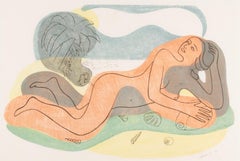
Mexican Idyll, 1936 - 20th Century Nude Linocut Print with Trees and Shells
By Leon Underwood
Located in Kingsclere, GB
Leon Underwood was a British sculptor, wood engraver, painter and writer of the twentieth century. Underwood was born 25 December 1890 in London, and studied at the Regent Street Pol...
Category
20th Century Nude Prints
Materials
Linocut
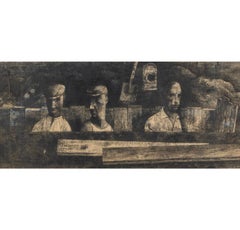
Study for Men in the Trench, Pen, Ink
Watercolour on Paper Painting 1950 circa
By Reginald Brill
Located in Kingsclere, GB
Study for Men in the Trench, Pen, Ink & Watercolour on Paper Painting 1950 circa
Additional information:
Medium: Pen, ink and watercolour on paper
11 3/4 x 26 in
29.8 x 68.5 cm
Reginald " Reggie" Brill was a versastile 20th century artist and teacher.
Brill was born in London in 1902 and spent his early childhood there and in Yorkshire. By the time of the First World War, at the age of 13, he was living in lodgings in London, working in a City office and attending St Martins School of Art in the evenings. Considering his lack of education, winning a scholarship to The Slade (now part of University College London) in 1921 where he studied under Henry Tonks for three years, was a huge achievement.
On leaving The Slade he found patronage in Lincolnshire, but by the time of the General Strike (1926) he had returned to London and was working on Lansbury's Labour Weekly. He married Rosalie, also an artist, and in 1927 won the Prix de Rome in Decorative Painting. Following two years at The British School in Rome, Brill went to teach at Blackheath School of Art. During 1930 he spent three months painting in Egypt and it was there that he met Col. T G Gayer-Anderson, one of the twin brothers who were to bequeath The Little Hall in Lavenham as a hostel for art students. It was there that Brill retired to act as warden, thus continuing his nurturing of art students until his death in 1972.
Brill took up his appointment at The School of Art, Kingston upon Thames in January 1934. It was situated in the Technical Institute (Kingston Hall Road) and Brill found it bohemian and disorganised. He proceeded to inject enthusiasm, order and discipline. Within 5 years of his appointment a purpose-built School of Art was opened in Knights Park. It remained open throughout the war and by 1945 there was a waiting list for places. Under the skilled and totally dedicated direction of Brill, Kingston School of Art became established with national reputation for excellence. In 1961 Sir Charles Wheeler opened the new building at Knights Park. Costing £100,000, this more than doubled the size of the Art School.
Brill, was a well-known figure in Kingston. His eloquence made him popular as a guest speaker and his promotion of Art and Design stretched well beyond the doors of Knights Park. Apart from establishing two of the main buildings which makeup what is now known as the Faculty of Design, one of the most visible local contributions he made was the setting up of a topographical collection of paintings depicting Kingston, which has since become known as The Brill Collection at Kingston Museum. Brill gained huge respect and admiration from the hundreds of pupils who studied at Kingston during his 30-year leadership.
He published two books, Modern Painting 1946 and Art as a Career 1962, both bearing a strong educational angle. He regularly exhibited along with leading artists of his era at The Royal Academy, both his paintings and his acutely observed drawings. All the while he was a prolific artist, although reading his diaries, intensely self-critical. His perfectionism, acute powers of observation and relentless research can be seen in his drawings, which via the media and methods he explored throughout his life reflect mid 20th century British Art at its most typical. His major series of work, known as 'The Martyrdom of Man', was carried on in parallel to his career as a teacher. These paintings reflect his care for fellow man and depict people at work, e.g., The Operation, The Jury, Linemen, Waiting Room and Rest, which recently sold at Sotheby’s and was specially restored for The Brill Retrospective. His smaller works also play with the theme of everyday events and communication amongst people, such as The Bull Ring and Market Place paintings.
Brill's name is associated particularly with human figure compositions, but he also worked on landscapes, portraits and details of plants, animals, interiors etc. As one would expect he moved from one media to another, and his unusual hand painted and cut paper mosaics...
Category
20th Century Figurative Drawings and Watercolors
Materials
Pen
You May Also Like
Essence of Line, Ink Nude Study, Early 20th Century Drawing, Signed and Dated
Located in London, GB
Ink on paper, signed and dated '34 lower left
Image size: 9 3/4 x 15 inches (24.75 x 24.5 cm)
Mounted and framed
A unique drawing, this work is typical of Brodzky's early nudes with its economy in the use of the line and the seemingly relaxed, informal pose of the model. The spontaneous feel of many of Brodsky's drawings does in a way indicate that the works, such as the present drawing, are purely sketches and studies. In fact, Brodsky was known for making perhaps twenty or thirty drawings at a sitting and of those he preserved perhaps only a handful, only those that 'pass his rigorous censorship sum up qualities resulting from the perfect collaboration of hand and eye and sensibility' (Forty Drawings by Horace Brodsky, by James Laver, 1935, p.15).
Laver continued to write that 'Brodsky preferred a pose that showed the body from an unexpected angle, daringly foreshortened or with the weight of the various parts freed from the monotony of the standing pose. He liked to see his models from above, the limbs relaxed, and.... he made many of his drawings from a step-ladder drawn up close to the platform on which the model is lying'.
Horace Brodsky
Horace Ascher Brodzky (30 January 1885 – 11 February 1969) was an Australian-born artist and writer most of whose work was created in London and New York. His work included paintings, drawings and linocuts, of which he was an early pioneer. An associate in his early career of many leading artists working in Britain of his period, including Henri Gaudier-Brzeska, Mark Gertler, and members of the Vorticism movement, he ended his life relatively neglected.
Brodzky was born in Kew, Melbourne in 1885 to the Australian journalist Maurice Brodzky (a Jewish immigrant to Australia from Poland), and his wife Flora, née Leon. In his youth he assisted his father in the production of the magazine Table Talk.
Brodzky studied initially at the National Gallery School in Melbourne. In 1904 his father was bankrupted after exposing corruption, and Horace moved with his family to San Francisco.
In 1908, Brodzky went to London where he studied during 1911 at the City and Guilds South London Technical Art School. He became an acquaintance and follower of Walter Sickert. Amongst his friends was Henri Gaudier-Brzeska who created in 1913 a portrait bust of Brodzky (now in the Tate Gallery, London), and whose biography he wrote in 1933. Brodzky is said to have been so engrossed in talk when he visited Gaudier-Brzeska's studio in the King's Road, that he missed the last bus to Herne Hill where he lived.
Brodzky travelled to Italy with the poet John Gould Fletcher and this led to his first London exhibition, "Paintings and Sketches of Italian and Sicilian Scenes" (c. 1911), of which one painting was selected for the 1912 Venice Biennale. He was in fact the first Australian to be exhibited at the Biennale. In 1914 his work was exhibited along with that of other Jewish artists, including Mark Gertler and David Bomberg, in the Whitechapel Gallery. Brodzky became a member of The London Group. During this period he was a pioneer of the technique of linocut, in which medium he has been said to have "excelled". His early oils reveal the influence of both Gertler and Bomberg. Among his works of this period are portraits of Jacob Epstein and Jacob Kramer.
In 1915 Brodzky moved to New York, with an introduction to the art patron John Quinn. There he worked as a poster artist and an arts journalist, and in 1917 helped Quinn organize a New York exhibition of Vorticist artists. In 1919 he married Bertha Greenfield; they were to have three sons. In 1920 Egmont Arens...
Category
1930s Modern Nude Drawings and Watercolors
Materials
Paper, Ink
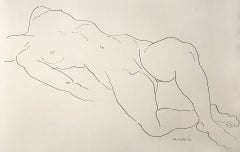
Nude - Original Ink on Paper - 1930s
Located in Roma, IT
Nude is an original modern drawing in pen on paper realized in 1930 ca. by a French Anonymous artist of the 20th Century.
With the blue stamp of " Collezione Contessa Anna Labtita Pe...
Category
Mid-20th Century Figurative Drawings and Watercolors
Materials
Pen
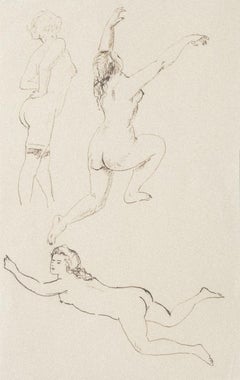
Nude - Original Pen on Paper by Angelo Sabbatini - 20th Century
Located in Roma, IT
Nude is an original drawing in pen on ivory paper realized by the Italian Artist Angelo Sabbatini.
Hand-signed on the lower right in pen
The state of preservation is very good, exc...
Category
20th Century Figurative Drawings and Watercolors
Materials
Pen
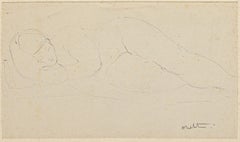
Lying Nude - Original Drawing - Early 20th Century
Located in Roma, IT
Lying Nude is an original artwork realized in the first years of the 20th century by an Anonymous French artist.
Pencil on paper. The initials of the artist are on the lower right. ...
Category
Early 20th Century Modern Nude Drawings and Watercolors
Materials
Paper, Pencil
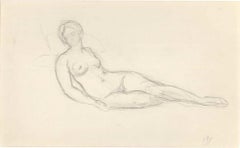
Posing Nude - Drawing by Jean Chapin- 1950s
By Jean Chapin
Located in Roma, IT
Posing Nude is a charcoal drawing realized by Jean Chapin in the 1950s.
Good condition and aged with slight folding on the margins.
Jean Chapin is a French painter and lithographer...
Category
1950s Modern Figurative Drawings and Watercolors
Materials
Paper, Charcoal
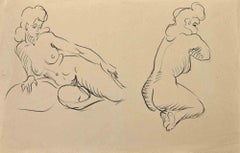
Nudes - Drawing in Ink - Mid-20th Century
Located in Roma, IT
Nudes is an original Pencil drawing on paper. Realized in the mid-20th Century.
Mint Conditions.
The artwork id depicted through soft strokes in a well-balanced compositions.
Category
Mid-20th Century Modern Figurative Drawings and Watercolors
Materials
Paper, Pencil
More Ways To Browse
Nude Study
Pencil Drawings Of Flowers
S Warren Art
Vibert Jehan Georges
Wes Lang
Alexander Dobkin
Antonio Ruiz
Antonio Sciortino
Charcoal Drawings Nature
Charles Francois Prosper Guerin
Couture Drawing
David Hart
Emmy Lou Packard
Etienne Berne Bellecour
Francisca Ahlers
Isadora Duncan Walkowitz
Pie Bird Vintage
South Africa Watercolor