Items Similar to Whimsical Illustration Skiing Cartoon, 1938 Mt Tremblant Ski Lodge William Steig

Want more images or videos?
Request additional images or videos from the seller
1 of 7
William Steig (b.1907)Whimsical Illustration Skiing Cartoon, 1938 Mt Tremblant Ski Lodge William Steig1938
1938
$3,500
£2,652.60
€3,042.30
CA$4,890.16
A$5,334.90
CHF 2,829.52
MX$64,273.57
NOK 35,912.17
SEK 32,878.56
DKK 22,721.46
About the Item
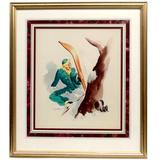
Lighthearted Illustration of Outdoor Pursuits This one being a Skiing scene, a boy and a girl on skis. signed W. Steig
Provenance: from Mrs. Joseph B. Ryan, Commissioned by Joe Ryan for the bar at his ski resort, Mount Tremblant Lodge, in 1938.
Mont Tremblant, P.Q., Canada
Watercolor and ink on illustration board, sights sizes 8 1/2 x 16 1/2 in., framed.
In 1938 Joe Ryan, described as a millionaire from Philadelphia, bushwhacked his way to the summit of Mont Tremblant and was inspired to create a world class ski resort at the site. In 1939 he opened the Mont Tremblant Lodge, which remains part of the Pedestrian Village today. This original illustration is on Whatman Illustration board. the board measures 14 X 22 inches. label from McClees Galleries, Philadelphia, on the frame backing paper.
William Steig, 1907 – 2003 was an American cartoonist, sculptor, and, in his later life, an illustrator and writer of children's books. Best known for the picture books Sylvester and the Magic Pebble, Abel's Island, and Doctor De Soto, he was also the creator of Shrek!, which inspired the film series of the same name. He was the U.S. nominee for both of the biennial, international Hans Christian Andersen Awards, as a children's book illustrator in 1982 and a writer in 1988.
Steig was born in Brooklyn, New York in 1907, and grew up in the Bronx. His parents were Polish-Jewish immigrants from Austria, both socialists. His father, Joseph Steig, was a house painter, and his mother, Laura Ebel Steig, was a seamstress who encouraged his artistic leanings. As a child, he dabbled in painting and was an avid reader of literature. Among other works, he was said to have been especially fascinated by Pinocchio.He graduated from Townsend Harris High School at 15 but never completed college, though he attended three, spending two years at City College of New York, three years at the National Academy of Design and a mere five days at the Yale School of Fine Arts before dropping out of each.
Hailed as the "King of Cartoons" Steig began drawing illustrations and cartoons for The New Yorker in 1930, producing more than 2,600 drawings and 117 covers for the magazine. Steig, later, when he was 61, began writing children's books. In 1968, he wrote his first children's book. He excelled here as well, and his third book, Sylvester and the Magic Pebble (1969), won the Caldecott Medal. He went on to write more than 30 children's books, including the Doctor DeSoto series, and he continued to write into his nineties. Among his other well-known works, the picture book Shrek! (1990) formed the basis for the DreamWorks Animation film Shrek (2001). After the release of Shrek 2 in 2004, Steig became the first sole-creator of an animated movie franchise that went on to generate over $1 billion from theatrical and ancillary markets after only one sequel. Along with Maurice Sendak, Saul Steinberg, Ludwig Bemelmans and Laurent de Brunhofff his is one of those rare cartoonist whose works form part of our collective cultural heritage.
In 1984, Steig's film adaptation of Doctor DeSoto directed by Michael Sporn was nominated for the Academy Award for Best Animated Short Film. As one of the most admired cartoonists of all time, Steig spent seven decades drawing for the New Yorker magazine. He touched generations of readers with his tongue–in–cheek pen–and–ink drawings, which often expressed states of mind like shame, embarrassment or anger. Later in life, Steig turned to children's books, working as both a writer and illustrator.
Steig's children's books were also wildly popular because of the crazy, complicated language he used—words like lunatic, palsied, sequestration, and cleave. Kids love the sound of those words even if they do not quite understand the meaning. Steig's descriptions were also clever. He once described a beached whale as "breaded with sand."
Throughout the course of his career, Steig compiled his cartoons and drawings into books. Some of them were published first in the New Yorker. Others were deemed too dark to be printed there. Most of these collections centered on the cold, dark psychoanalytical truth about relationships. They featured husbands and wives fighting and parents snapping at their kids. His first adult book, Man About Town, was published in 1932, followed by About People, published in 1939, which focused on social outsiders. Sick of Each Other, published in 2000, included a drawing depicting a wife holding her husband at gunpoint, saying, "Say you adore me."
According to the Los Angeles Times, fellow New Yorker artist Edward Sorel once wrote a review of Steig in which he said: "If we consider his entire oeuvre: his prolific output; the inventiveness of his stories, so often involving transformation; his precise and demanding language; and the sheer beauty of his pictures, then his legacy can only be described as unprecedented."
Steig also liked to take credit for changing the focus of the contemporary greeting card industry. According to the Washington Post, Steig said, "Greeting cards used to be all sweetness and love. I started doing the complete reverse—almost a hate card—and it caught on."
Steig continued to work well into his last year. At age 95, he died on October 3, 2003, at his home in Boston, Massachusetts.
- Creator:William Steig (b.1907) (1907 - 2003, American)
- Creation Year:1938
- Dimensions:Height: 16 in (40.64 cm)Width: 24 in (60.96 cm)
- Medium:
- Movement Style:
- Period:
- Condition:During cataloguing only one work was opened, Skiing, and it was found that the water staining was confined to the mat only and did not reach through to th.
- Gallery Location:Surfside, FL
- Reference Number:1stDibs: LU38212389872
About the Seller
4.9
Platinum Seller
Premium sellers with a 4.7+ rating and 24-hour response times
Established in 1995
1stDibs seller since 2014
1,853 sales on 1stDibs
Typical response time: 1 hour
- ShippingRetrieving quote...Shipping from: Surfside, FL
- Return Policy
More From This Seller
View AllWhimsical Illustration "Snow" Cartoon, 1938 Mt Tremblant Ski Lodge William Steig
By William Steig (b.1907)
Located in Surfside, FL
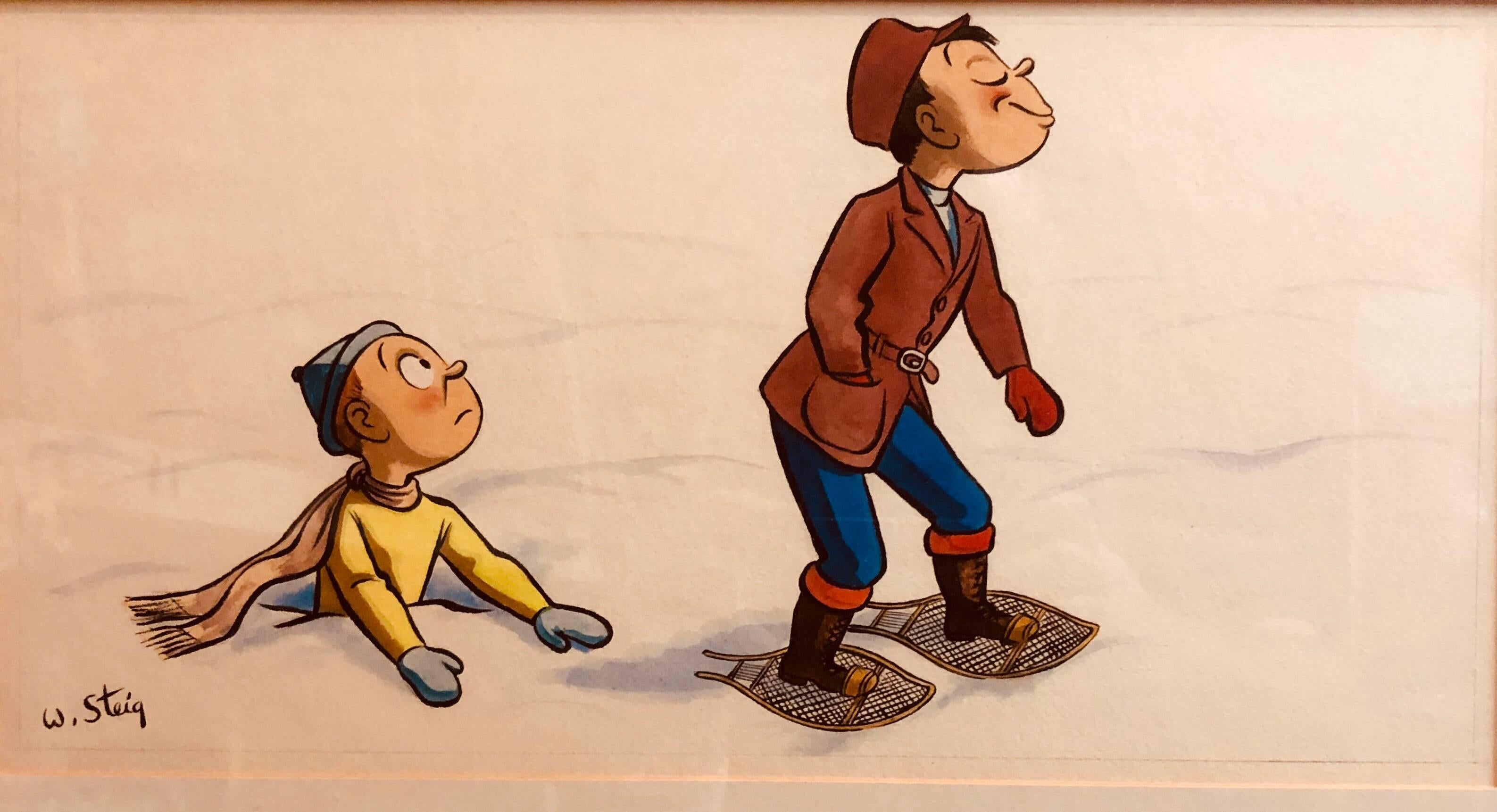
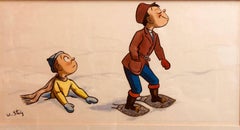
Lighthearted Illustration of Outdoor Pursuits This one being cross country Snow Shoes signed "W. Steig"
Provenance: from Mrs. Joseph B. Ryan, Commissioned by ...
Category
1930s American Modern Figurative Drawings and Watercolors
Materials
India Ink, Watercolor, Illustration Board
Whimsical Illustration Hiking Cartoon, 1938 Mt Tremblant Ski Lodge William Steig
By William Steig (b.1907)
Located in Surfside, FL
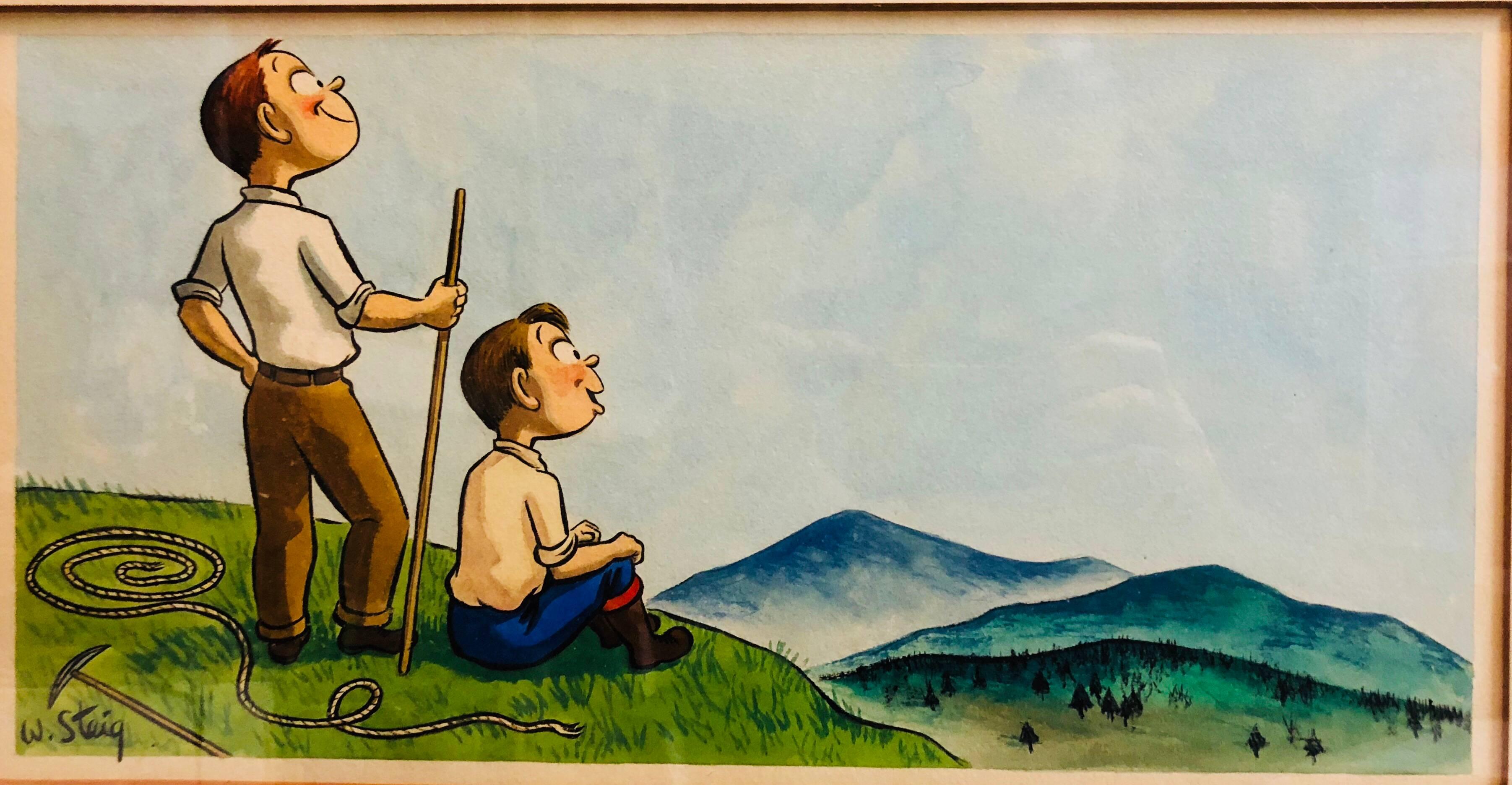
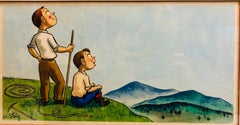
Lighthearted Illustration of Outdoor Pursuits This one being cross country hiking signed "W. Steig"
Provenance: from Mrs. Joseph B. Ryan, Commissioned by Joe Ryan for the bar at his ski resort, Mount Tremblant Lodge, in 1938.
Mont Tremblant, P.Q., Canada
Watercolor and ink on illustration board, sights sizes 8 1/2 x 16 1/2 in., framed.
In 1938 Joe Ryan, described as a millionaire from Philadelphia, bushwhacked his way to the summit of Mont Tremblant and was inspired to create a world class ski resort at the site. In 1939 he opened the Mont Tremblant Lodge, which remains part of the Pedestrian Village today. This original illustration is on Whatman Illustration board. the board measures 14 X 22 inches. label from McClees Galleries, Philadelphia, on the frame backing paper.
William Steig, 1907 – 2003 was an American cartoonist, sculptor, and, in his later life, an illustrator and writer of children's books. Best known for the picture books Sylvester and the Magic Pebble, Abel's Island, and Doctor De Soto, he was also the creator of Shrek!, which inspired the film series of the same name. He was the U.S. nominee for both of the biennial, international Hans Christian Andersen Awards, as a children's book illustrator in 1982 and a writer in 1988.
Steig was born in Brooklyn, New York in 1907, and grew up in the Bronx. His parents were Polish-Jewish immigrants from Austria, both socialists. His father, Joseph Steig, was a house painter, and his mother, Laura Ebel Steig, was a seamstress who encouraged his artistic leanings. As a child, he dabbled in painting and was an avid reader of literature. Among other works, he was said to have been especially fascinated by Pinocchio.He graduated from Townsend Harris High School at 15 but never completed college, though he attended three, spending two years at City College of New York, three years at the National Academy of Design and a mere five days at the Yale School of Fine Arts before dropping out of each.
Hailed as the "King of Cartoons" Steig began drawing illustrations and cartoons for The New Yorker in 1930, producing more than 2,600 drawings and 117 covers for the magazine. Steig, later, when he was 61, began writing children's books. In 1968, he wrote his first children's book. He excelled here as well, and his third book, Sylvester and the Magic Pebble (1969), won the Caldecott Medal. He went on to write more than 30 children's books, including the Doctor DeSoto series, and he continued to write into his nineties. Among his other well-known works, the picture book Shrek! (1990) formed the basis for the DreamWorks Animation film Shrek (2001). After the release of Shrek 2 in 2004, Steig became the first sole-creator of an animated movie franchise that went on to generate over $1 billion from theatrical and ancillary markets after only one sequel. Along with Maurice Sendak, Saul Steinberg, Ludwig Bemelmans and Laurent de Brunhofff his is one of those rare cartoonist whose works form part of our collective cultural heritage.
In 1984, Steig's film adaptation of Doctor DeSoto directed by Michael Sporn was nominated for the Academy Award for Best Animated Short Film. As one of the most admired cartoonists of all time, Steig spent seven decades drawing for the New Yorker magazine. He touched generations of readers with his tongue–in–cheek pen–and–ink drawings, which often expressed states of mind like shame, embarrassment or anger. Later in life, Steig turned to children's books, working as both a writer and illustrator.
Steig's children's books were also wildly popular because of the crazy, complicated language he used—words like lunatic, palsied, sequestration, and cleave. Kids love the sound of those words even if they do not quite understand the meaning. Steig's descriptions were also clever. He once described a beached whale as "breaded with sand."
Throughout the course of his career, Steig compiled his cartoons and drawings into books. Some of them were published first in the New Yorker. Others were deemed too dark to be printed there. Most of these collections centered on the cold, dark psychoanalytical truth about relationships. They featured husbands and wives fighting and parents snapping at their kids. His first adult book, Man About Town, was published in 1932, followed by About People, published in 1939, which focused on social outsiders. Sick of Each Other, published in 2000, included a drawing depicting a wife holding her husband at gunpoint, saying, "Say you adore me."
According to the Los Angeles Times, fellow New Yorker artist Edward Sorel...
Category
1930s Naturalistic Figurative Drawings and Watercolors
Materials
Archival Ink, Watercolor, Illustration Board
Whimsical Fishing Illustration Cartoon 1938 Mt Tremblant Ski Lodge William Steig
By William Steig (b.1907)
Located in Surfside, FL
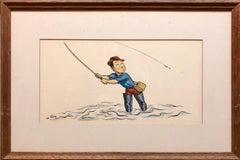
Lighthearted Illustration of Outdoor Pursuits This one of a fisherman signed "W. Steig"
Provenance: from Mrs. Joseph B. Ryan, Commissioned by Joe Ryan for the bar at his ski resort, Mount Tremblant Lodge, in 1938.
Mont Tremblant, P.Q., Canada
Watercolor and ink on illustration board, sights sizes 8 1/2 x 16 1/2 in., framed.
In 1938 Joe Ryan, described as a millionaire from Philadelphia, bushwhacked his way to the summit of Mont Tremblant and was inspired to create a world class ski resort at the site. In 1939 he opened the Mont Tremblant Lodge, which remains part of the Pedestrian Village today. This original illustration is on Whatman Illustration board. the board measures 14 X 22 inches. label from McClees Galleries, Philadelphia, on the frame backing paper.
William Steig, 1907 – 2003 was an American cartoonist, sculptor, and, in his later life, an illustrator and writer of children's books. Best known for the picture books Sylvester and the Magic Pebble, Abel's Island, and Doctor De Soto, he was also the creator of Shrek!, which inspired the film series of the same name. He was the U.S. nominee for both of the biennial, international Hans Christian Andersen Awards, as a children's book illustrator in 1982 and a writer in 1988.
Steig was born in Brooklyn, New York in 1907, and grew up in the Bronx. His parents were Polish-Jewish immigrants from Austria, both socialists. His father, Joseph Steig, was a house painter, and his mother, Laura Ebel Steig, was a seamstress who encouraged his artistic leanings. As a child, he dabbled in painting and was an avid reader of literature. Among other works, he was said to have been especially fascinated by Pinocchio.He graduated from Townsend Harris High School at 15 but never completed college, though he attended three, spending two years at City College of New York, three years at the National Academy of Design and a mere five days at the Yale School of Fine Arts before dropping out of each.
Hailed as the "King of Cartoons" Steig began drawing illustrations and cartoons for The New Yorker in 1930, producing more than 2,600 drawings and 117 covers for the magazine. Steig, later, when he was 61, began writing children's books. In 1968, he wrote his first children's book. He excelled here as well, and his third book, Sylvester and the Magic Pebble (1969), won the Caldecott Medal. He went on to write more than 30 children's books, including the Doctor DeSoto series, and he continued to write into his nineties. Among his other well-known works, the picture book Shrek! (1990) formed the basis for the DreamWorks Animation film Shrek (2001). After the release of Shrek 2 in 2004, Steig became the first sole-creator of an animated movie franchise that went on to generate over $1 billion from theatrical and ancillary markets after only one sequel. Along with Maurice Sendak, Saul Steinberg, Ludwig Bemelmans and Laurent de Brunhofff his is one of those rare cartoonist whose works form part of our collective cultural heritage.
In 1984, Steig's film adaptation of Doctor DeSoto directed by Michael Sporn was nominated for the Academy Award for Best Animated Short Film. As one of the most admired cartoonists of all time, Steig spent seven decades drawing for the New Yorker magazine. He touched generations of readers with his tongue–in–cheek pen–and–ink drawings, which often expressed states of mind like shame, embarrassment or anger. Later in life, Steig turned to children's books, working as both a writer and illustrator.
Steig's children's books were also wildly popular because of the crazy, complicated language he used—words like lunatic, palsied, sequestration, and cleave. Kids love the sound of those words even if they do not quite understand the meaning. Steig's descriptions were also clever. He once described a beached whale as "breaded with sand."
Throughout the course of his career, Steig compiled his cartoons and drawings into books. Some of them were published first in the New Yorker. Others were deemed too dark to be printed there. Most of these collections centered on the cold, dark psychoanalytical truth about relationships. They featured husbands and wives fighting and parents snapping at their kids. His first adult book, Man About Town, was published in 1932, followed by About People, published in 1939, which focused on social outsiders. Sick of Each Other, published in 2000, included a drawing depicting a wife holding her husband at gunpoint, saying, "Say you adore me."
According to the Los Angeles Times, fellow New Yorker artist...
Category
1930s American Modern Figurative Drawings and Watercolors
Materials
India Ink, Watercolor, Illustration Board
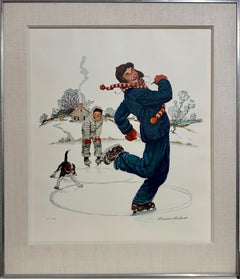
Norman Rockwell Original Lithograph Ice Skating Hand Signed Americana
By Norman Rockwell
Located in Surfside, FL
Norman Rockwell (1894-1978)
Ice Skating, from Grandpa and Me Suite
Offset lithograph print, hand signed in pencil, numbered AP E 9/10
27 x 23 in. (sight), 34.75 x 30 in. (frame).
...
Category
1970s American Realist Figurative Prints
Materials
Lithograph, Offset
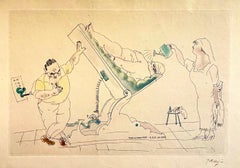
Etching with Hand Watercolor Painting Jules Pascin Pencil Signed
By Jules Pascin
Located in Surfside, FL
Genre: German Expressionist
Subject: Figures
Medium: etching, watercolor paint
Surface: Paper
This is hand signed lower right.. there does not seem to be an edition size although th...
Category
Early 20th Century Expressionist Figurative Drawings and Watercolors
Materials
Paper, Watercolor, Etching
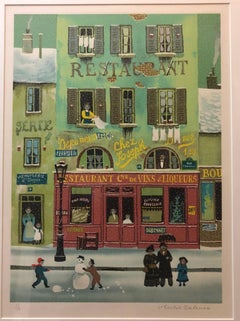
Hand signed Folk Art Naive lithograph on Arches Paper Paris Snowman Scene
By Michel Delacroix
Located in Surfside, FL
Lithograph in colors depicting an enchanted evening in Paris with a snowman and children playing outside the restaurant Chez Joseph on a winter day. Signed in bottom right margin "M...
Category
20th Century Folk Art Figurative Prints
Materials
Lithograph
You May Also Like
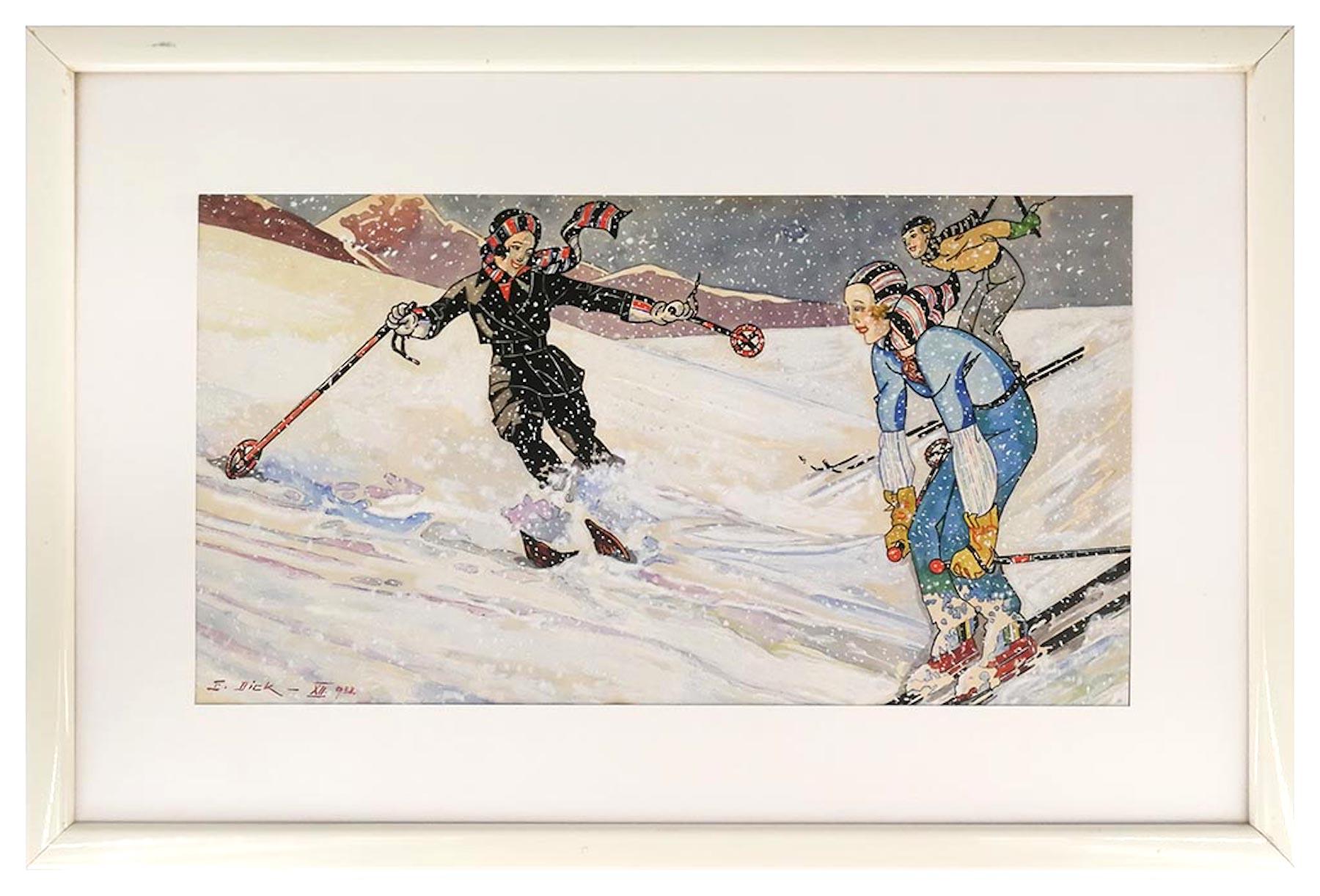
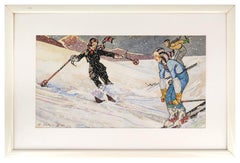
Skiers XII (December) - Original Tempera and Watercolor by Ernesto Dick - 1933
Located in Roma, IT
Nice vintage tempera and watercolor by the italian painter and illustrator Ernesto Dick.
Signed, titled and dated lower left.
Very good conditions.
This artwork is shipped from Ital...
Category
1930s Art Nouveau Figurative Drawings and Watercolors
Materials
Tempera, Watercolor
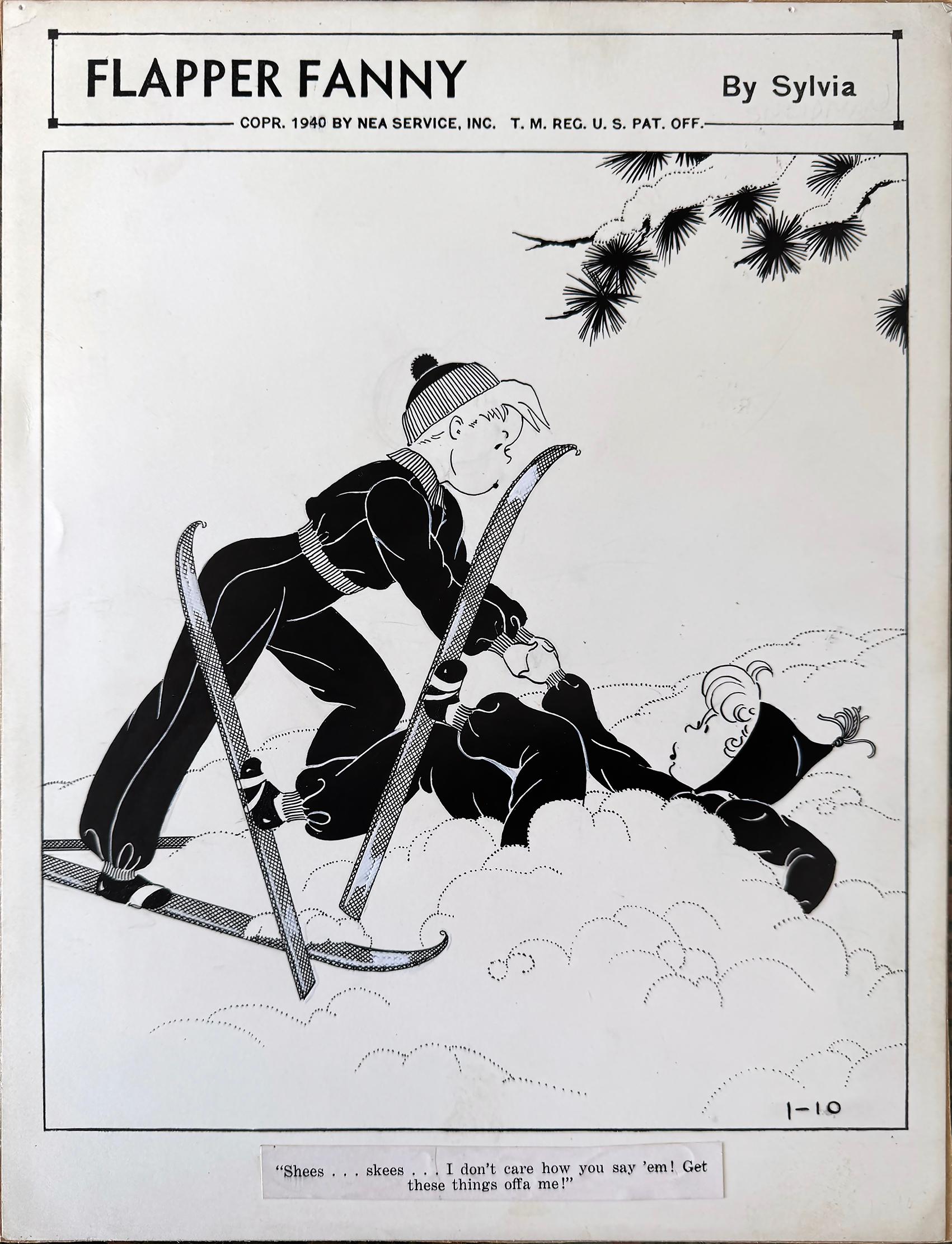
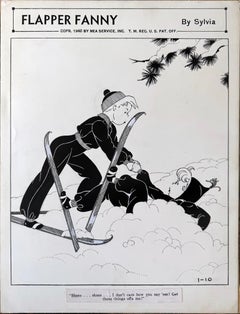
Flapper Fanny - Female Cartoonist of the Golden Age
Located in Miami, FL
Flapper Fanny - Female Cartoonist of the Golden Age
Sylvia Sneidman was originally a fashion illustrator, but assumed the helm of the famous jazz-age panel cartoon "Flapper Fanny Sa...
Category
1940s American Modern Figurative Drawings and Watercolors
Materials
India Ink, Archival Paper
"Ski Bunny" 1950s Illustration Watercolor and Guache Framed
Located in Wiscasset, ME
Signed Dick Williams, who was a major illustrator for companies like Coca Cola from the 1930s to the 1960s.
Category
Vintage 1950s American Decorative Art

$1,600 Sale Price
27% Off
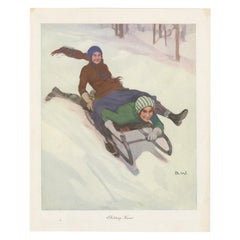
Winter Sports Print – "Achtung, Kurve!" – Sledding in the Snow, c. 1920
Located in Langweer, NL
Title:
Winter Sports Print – "Achtung, Kurve!" – Sledding in the Snow, c. 1920
Description:
This charming vintage print, titled "Achtung, Kurve!" (Watch Out, Curve!), captures the t...
Category
Vintage 1920s Prints
Materials
Paper
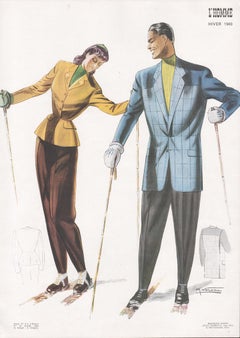
French Mid-Century Winter 1949 Fashion Design Skiing Skiers Lithograph Print
By Jean Darroux
Located in Melbourne, Victoria
French skiing fashion design published as a Supplement to 'L'Homme', a Parisien fashion periodical. Jean Darroux was a Parisien tailor, who designed several series of designs, probab...
Category
Mid-20th Century Post-War Figurative Prints
Materials
Lithograph
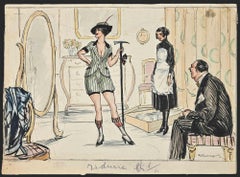
The Alpine - Drawing by Luigi Bompard - 1930s
Located in Roma, IT
The Alpine is a watercolor and ink drawing on ivory-colored paper, in the 1930s realized by Luigi Bompard (1879-1953).
Hand-signed on the lower margin.
In good condition, except fo...
Category
1930s Art Deco Figurative Drawings and Watercolors
Materials
Ink, Watercolor
More Ways To Browse
Vintage Ski
Vintage Cartoons
New Yorker Magazine
Vintage Cartoon Art
Cartoon Illustration
Vintage Boy And Girl
Kids On The Beach Paintings
Ski Paintings
Ski Girl
Ski Signs Vintage
Dome Of The Rock
German Expressionists Drawings
India Watercolour 19th Century
Muybridge Horse
Pencil Drawing Church
The Scarecrow
Bust Drawing
Drawing In Sanguine