Items Similar to Two Dancing Figures
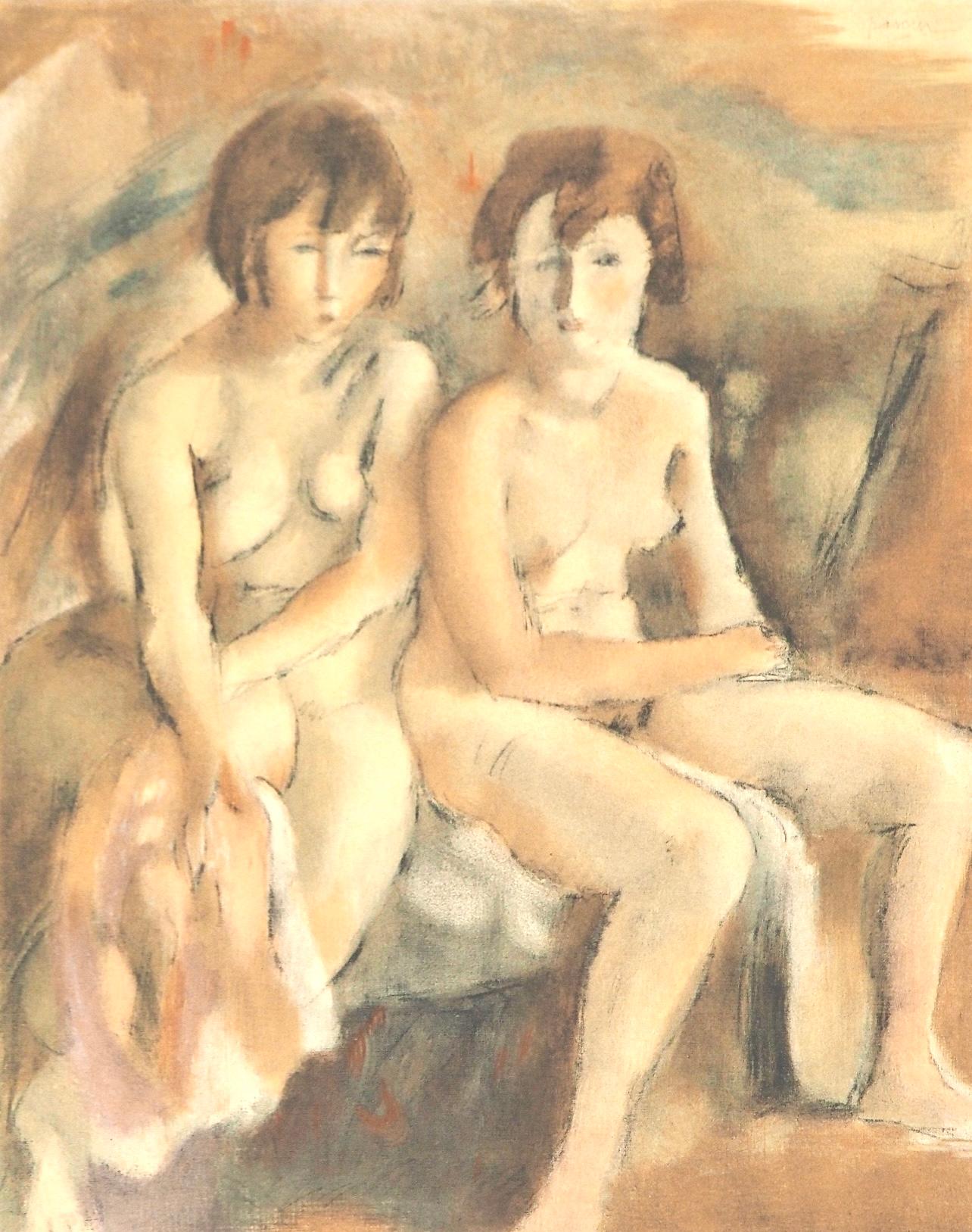
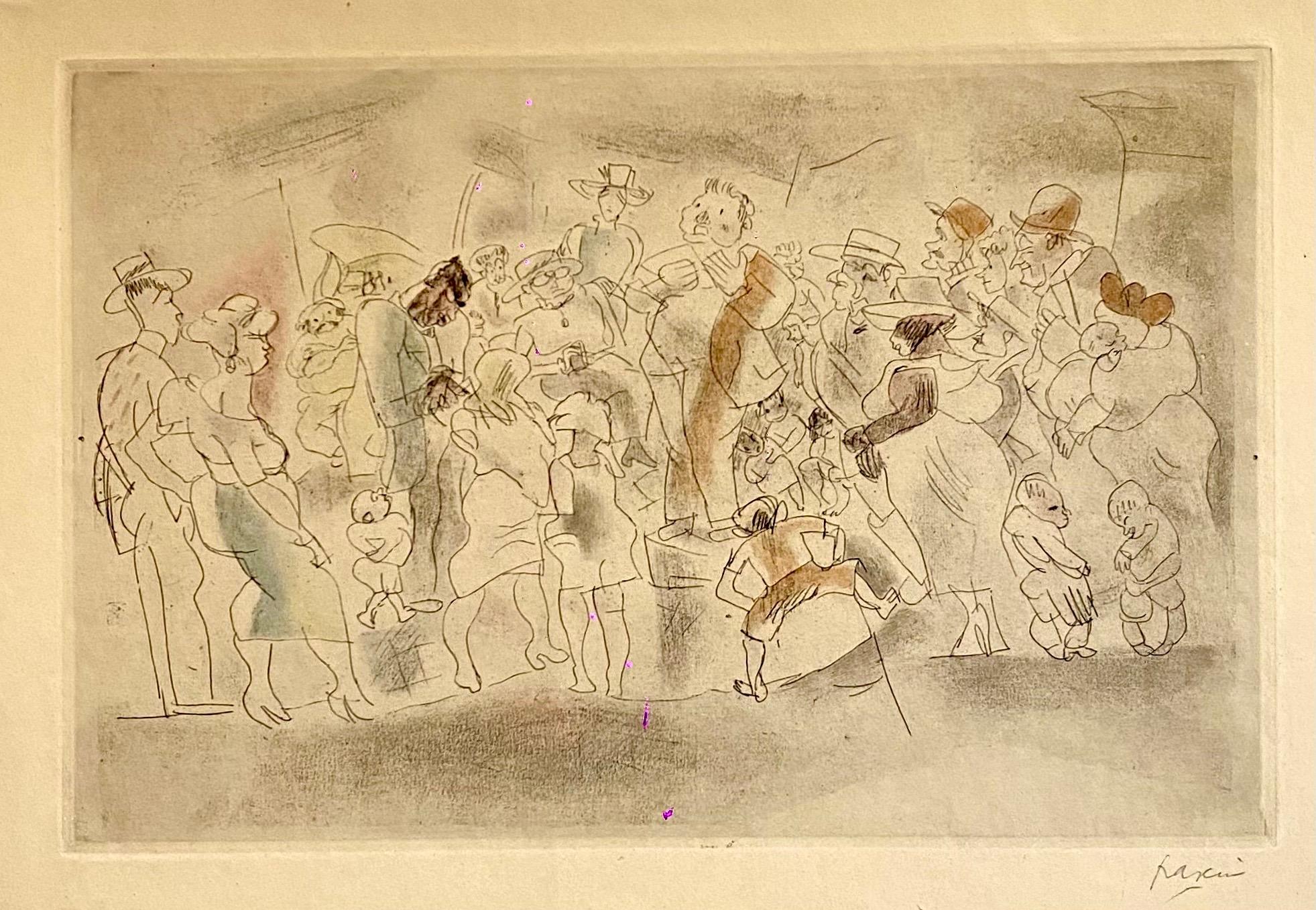
Want more images or videos?
Request additional images or videos from the seller
1 of 5
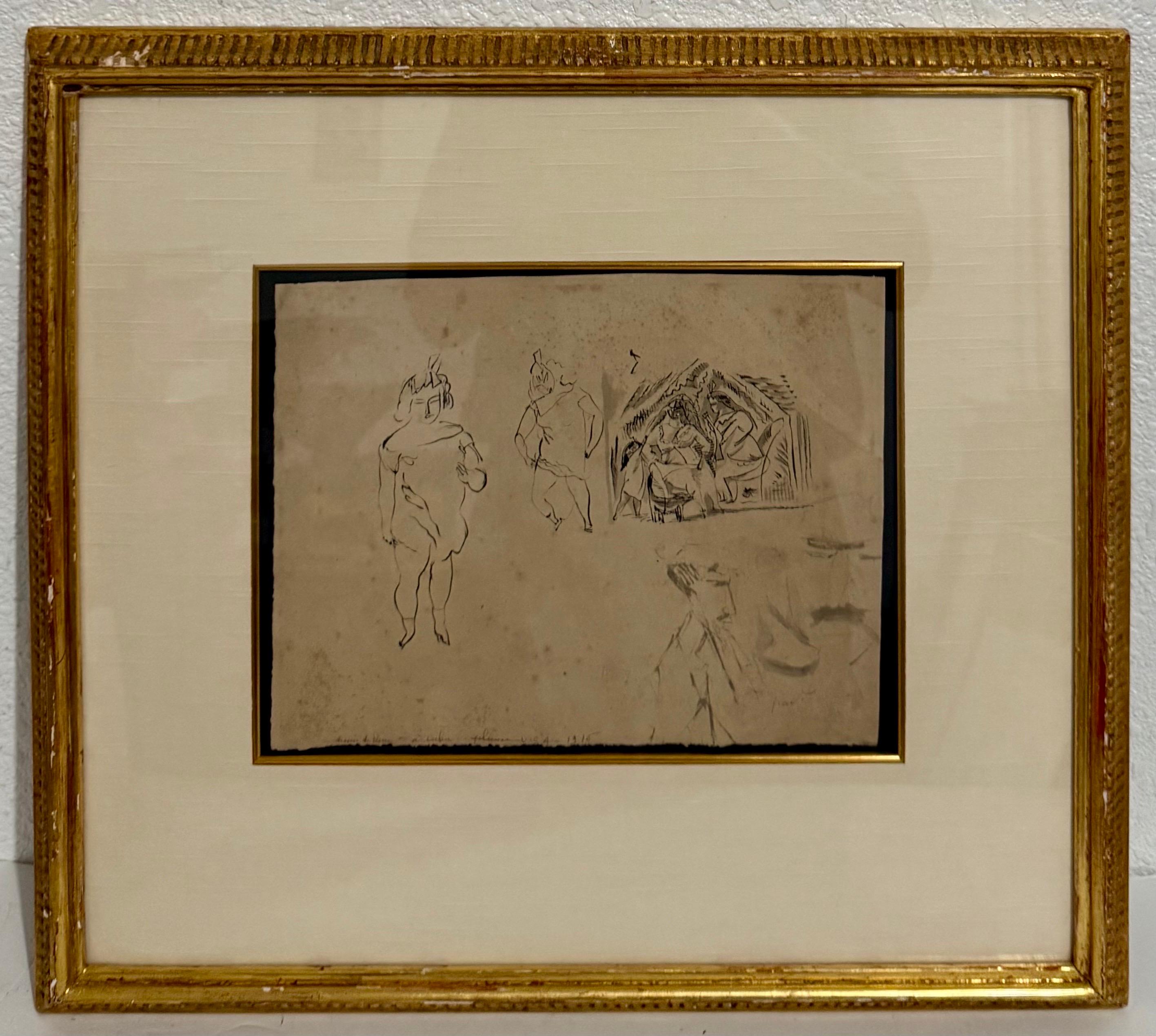
Jules PascinTwo Dancing Figures1885-1930
1885-1930
$1,700
£1,284.73
€1,475.74
CA$2,391.18
A$2,531.63
CHF 1,370.05
MX$30,257.65
NOK 17,077.46
SEK 15,616.73
DKK 11,021.92
About the Item
JULES PASCIN 1885-1930
Vidin, Bulgaria 1885-1930 Paris (Bulgarian/French/American)
Title: Two Dancing Figures
Technique: Original Stamp Signed and Inscribed Pencil Drawing on paper.
size: 27 x 21 cm / 10.5 x 8.2 in
Additional information: The work is Stamp Signed with the signature stamp of the artist "Pascin" at the lower right part.
The work is also Stamp Signed with the Pascin Atelier Stamp on the right hand side, beside the Stamp Sign Signature. These stamps appear in the book of complete Artist and Collectors stamps by Lugt as reference Lugt 2014b and Lugt 2014a.
The stamp was used to identify and authenticate the works that were left to the estate of the artist.
Condition: Good condition.
- Creator:Jules Pascin (1885-1930, Bulgarian, French)
- Creation Year:1885-1930
- Dimensions:Height: 10.5 in (26.67 cm)Width: 8.2 in (20.83 cm)
- Medium:
- Movement Style:
- Period:
- Condition:
- Gallery Location:London, GB
- Reference Number:1stDibs: LU1806195622
Jules Pascin
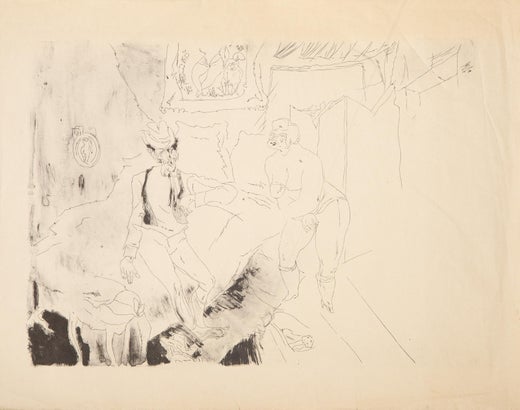
Jules Pascin was born Julius Mordecai Pincas, in Widdin, Bulgaria to a Spanish-Sephardic Jewish father and a Serbian-Italian mother. His early artistic training was in Vienna and Munich. In 1905, at the age of 20, he adopted the pseudonym Pascin (an anagram of Pincas). About the same time, he began contributing drawings to Simplicissimus, a satirical magazine published in Munich. In December 1905, Pascin moved to Paris, becoming part of the great migration of artists to that city at the start of the 20th century. In 1907, Pascin met Hermine Lionette Cartan David, also a painter, and they became lovers. They lived together until Pascin left for America on October 3, 1914. A few weeks later on October 31, Hermine David sailed for the United States to join Pascin. Pascin lived in the United States from 1914 to 1920, sitting out World War I. He taught at the Telfair Academy in Savannah, Georgia, associated with the Telfair Art Museum. He and Hermine painted in New York City as well as in Miami, New Orleans, and Cuba. Despite his social life, Pascin created thousands of watercolors and sketches, plus drawings and caricatures, which he sold to various newspapers and magazines. He studied the art of drawing at the Académie Colarossi and, like Henri de Toulouse-Lautrec, he drew upon his surroundings and his friends, both male and female, as subjects. He wanted to become a serious painter, but in time, he became deeply depressed over his inability to achieve critical success with his efforts. During the 1920s, Pascin mostly painted fragile petites filles, prostitutes waiting for clients, or models waiting for the sitting to end. His fleetingly rendered paintings sold readily, but the money he made was quickly spent. Famous as the host of numerous large parties in his flat, whenever he was invited elsewhere for dinner, he arrived with as many bottles of wine as he could carry. He frequently led a large group of friends on summer picnics beside the River Marne, where their excursions lasted all afternoon. Ernest Hemingway's chapter titled "With Pascin At the Dôme," in A Moveable Feast, recounted a night in 1923 when he had stopped off at Le Dôme and met Pascin escorted by two models. Hemingway's portrayal of the evening is considered one of the defining images of Montparnasse at the time. Pascin struggled with depression and alcoholism. "[D]riven to the wall by his own legend," according to art critic Gaston Diehl, he committed suicide at the age of 45 on the eve of a prestigious solo show. He slit his wrists and hung himself in his studio in Montmartre. On the wall he left a message written in blood, to a former lover, Cecile (Lucy) Vidil Krohg In his last will and testament, Pascin left his estate equally to his wife, Hermine David, and his mistress Lucy Krohg.
About the Seller
4.8
Vetted Professional Seller
Every seller passes strict standards for authenticity and reliability
Established in 1981
1stDibs seller since 2013
176 sales on 1stDibs
Typical response time: 8 hours
- ShippingRetrieving quote...Shipping from: London, United Kingdom
- Return Policy
More From This Seller
View AllTwo Standing Nudes/ Four Figures - Double-Sided Drawing German Expressionism
By Ernst Ludwig Kirchner
Located in London, GB
This double-sided ink and pencil drawing is by the German artist Ernst Ludwig Kirchner.
The work is unsigned. It was created between 1932-34 and was part of one of the artist’s sketc...
Category
1930s Expressionist Figurative Drawings and Watercolors
Materials
Paper, Ink, Pencil
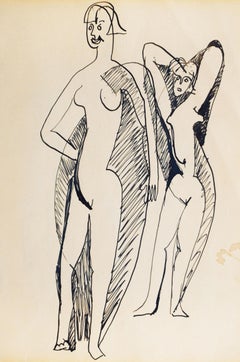
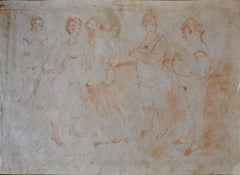
A Group of Prostitutes
By Jules Pascin
Located in London, GB
JULES PASCIN 1885-1930
Vidin, Bulgaria 1885-1930 Paris ( Bulgarian / French / American)
Title: A Group of Prostitutes
Technique:Original Hand Signed Sanguine Crayon Drawing on Chi...
Category
1970s Impressionist Paintings
Materials
Crayon
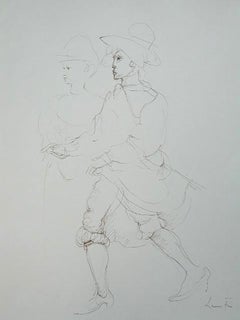
The Dance
By Leonor Fini
Located in London, GB
LEONOR FINI 1908-1996
Buenos Aires 1908-1996 Paris
Title: The Dance, ca. 1965
Technique: Original Signed Sepia Ink Drawing on paper
size: 40.5 x 33 cm / 12.6 x 15.9 in
Additional Information: This work by Leonor Fini is hand signed in the lower right part "Léonor Fini"
It is probably a study for one of the illustrations Fini created for the publication "Aveuglément Orphée" by Jacques Izoard.
Provenance: Photo Certificate by Richard Overstreet...
Category
1960s Surrealist Drawings and Watercolor Paintings
Materials
Ink
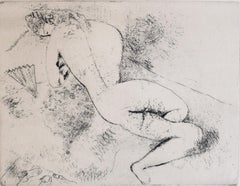
Nude with a Fan - Female Nude with Fan French Russian Ecole de Paris
By Marc Chagall
Located in London, GB
This original etching with drypoint is hand signed in pencil by the artist "Marc Chagall" at the lower right corner.
It is also hand numbered 6 in pencil from the edition of 100, at...
Category
1920s Modern Nude Prints
Materials
Drypoint, Etching
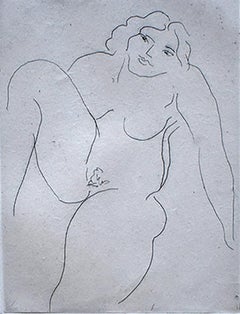
Frontal Nude, Right Leg Folded Nu de face, jambe droite repliée, 1929
By Henri Matisse
Located in London, GB
HENRI MATISSE 1869-1954
(Emile Benoît)
Le Cateau-Cambrésis 1869-1954 Nice (French)
Title: Frontal Nude, Right Leg Folded Nu de face, jambe droite repliée, 1929
Technique: Original...
Category
1920s Impressionist Nude Prints
Materials
Etching
The Dance
By Georges Braque
Located in London, GB
GEORGES BRAQUE 1882-1963
Argenteuil-sur-Seine, 1882-1963 Paris
Title: The Dance, 1934
Technique: Original Hand Signed Etching with Aquatint on paper
Paper...
Category
1930s Cubist More Prints
Materials
Etching
You May Also Like
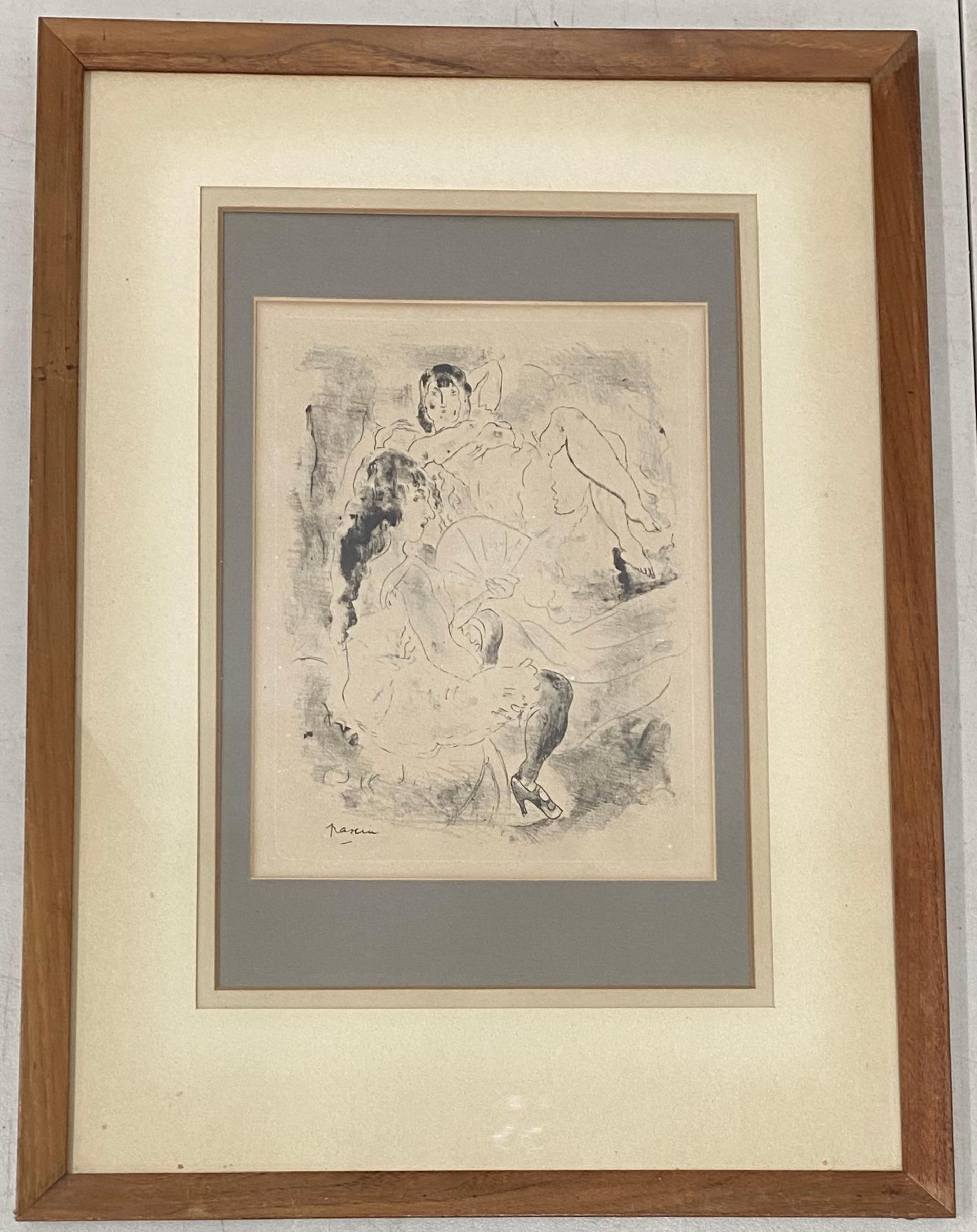
Jules Pascin (French, 1885-1930) "Two Women Reclining" Original Etching C.1920
By Jules Pascin
Located in San Francisco, CA
Jules Pascin (French, 1885-1930) "Two Women Reclining" Original Etching C.1920
Plate dimensions 9" wide x 12" high
Frame dimensions 19.5" wide x 26.5" high
Plate signed
The etchi...
Category
Early 20th Century Impressionist Figurative Prints
Materials
Etching
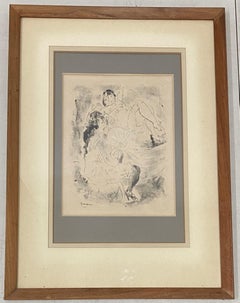
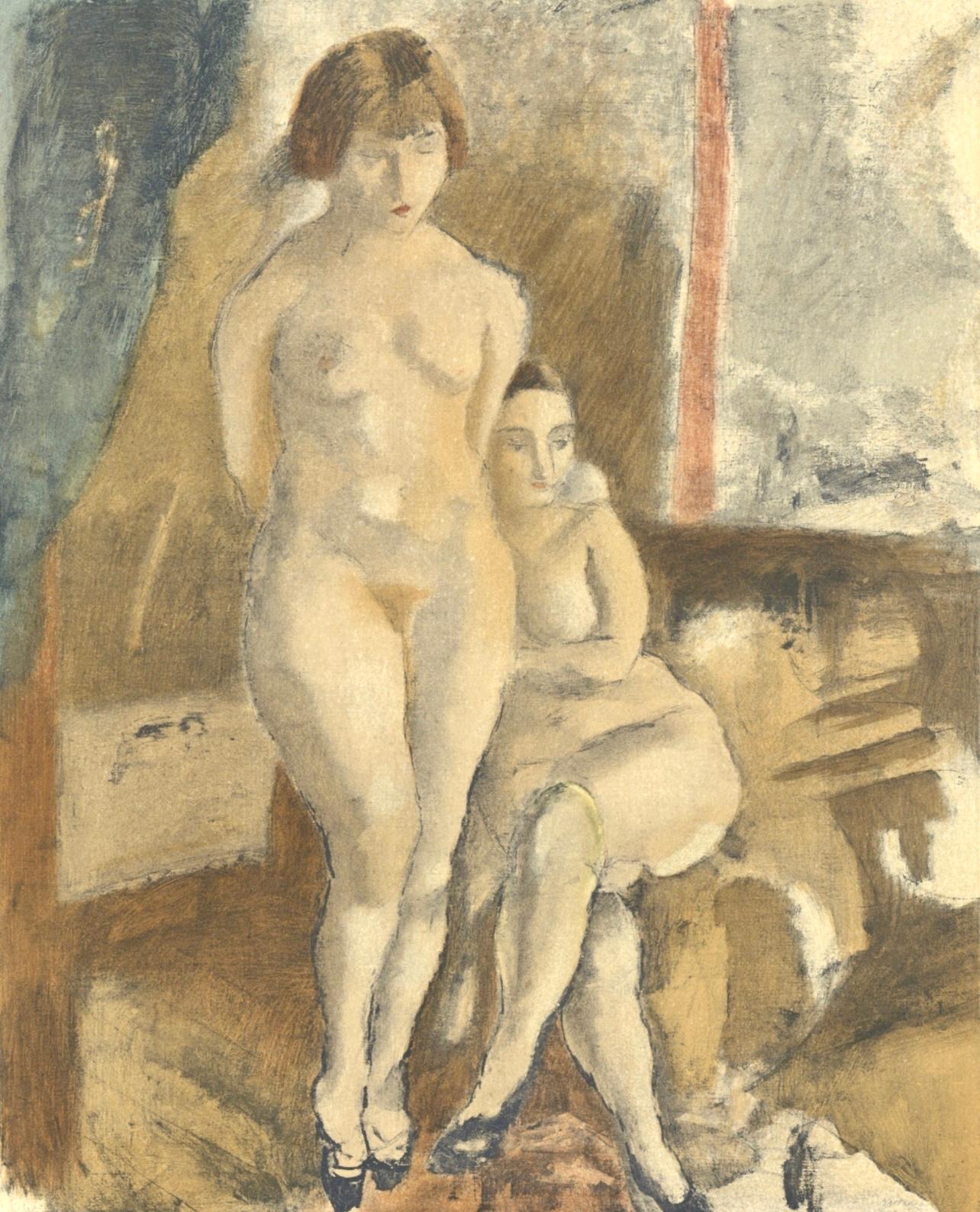
Jules Pascin, The Two Models, from Pascin, 1954 (after)
By Jules Pascin
Located in Southampton, NY
This exquisite lithograph after Jules Pascin (1885–1930), titled Les deux modeles (The Two Models), from the album Pascin, originates from the 1954 edition published by Editions du l...
Category
1950s Modern Figurative Prints
Materials
Lithograph
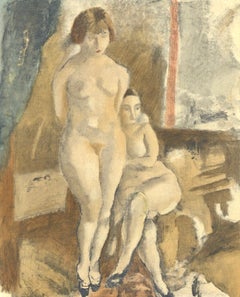
German Expressionist Drawing, Watercolor Painting Jules Pascin Cuba Scene 1910
By Jules Pascin
Located in Surfside, FL
Genre: German Expressionist
Subject: Woman, Cuban Scene
Medium: watercolor paint, ink or pencil
Surface: Paper
This is hand signed lower right.
There is an inscription at bottom e...
Category
1910s Expressionist Figurative Drawings and Watercolors
Materials
Paper, Ink, Watercolor

Femininity - Lithograph
By Jules Pascin
Located in Collonge Bellerive, Geneve, CH
(after) Jules Pascin
Title: Femininity
Signed in the plate
Dimensions: 38 x 28 cm
from the edition of 250 as issued in Warnod, Andre, "Les Peintres mes amis" (Paris: Les Heures Claires, 1965)
Jules Pascin, born Julius Mordechai Pincas, was a Bulgarian Jewish painter sometimes referred to as "the Prince of Montparnasse."
He was born on March 31, 1885 in Vidin, Bulgaria to a Spanish-Sephardic Jewish father and a Serbian-Italian mother, the eighth of eleven children. The Pincas family moved to Bucharest, Romania in 1892 and Pascin was raised there until he left for boarding school in Vienna in 1896.
While briefly working for his father’s grain merchant firm in Bucharest at fifteen, Pascin spent much of his time completing his earliest drawings in the local bordello, where he was residing under the Madame’s protection. In 1902, at the age of seventeen, Pascin moved to Vienna to study painting. The next year, he studied at the Heymann Art School in Munich. There, he supported himself by selling satirical drawings to Simplicissimus and other German magazines. Pascin would contribute drawings to a Munich daily through 1929.
Pascin’s contributions were widely recognized for their wit and insight, and upon his arrival in Paris in 1905 he was welcomed at the Gare Montparnasse by an international group of artists and writers who gathered at the Café du Dôme, which Pascin soon began to frequent regularly. The group included Grossman, Grosz, William Howard, Levy, and Emil Orlik. Pascin was also a close friend of Amadeo Modigliani.
Upon his arrival in Paris, Julius Mordechai Pincas changed his name to Jules Pascin and soon became the symbol of the Montparnasse artist community. Always in his bowler hat, he was a witty presence at Le Dôme café, Le Jockey club, and the others haunts of the area’s bohemian society, and was known for hosting legendary all-night parties. In his story, A Moveable Feast, Ernest Hemingway wrote a chapter titled With Pascin At the Dôme, recounting a night in 1923 when he had stopped off at Le Dôme and met Pascin escorted by two models. Hemingway's depiction of the events of that night is considered one of the defining images of Montparnasse at the time.
In 1907, Pascin had his first solo exhibition at Paul Cassirer Gallery in Berlin. Three years later, Cassirir commissioned Pascin to illustrate Heinrich Heine's Aus den Memoiren des Herrn von Schnabelewopski. In 1911, Pascin exhibited his work at Berlin Secession and a year later at the Sonderbund-Aussstellung in Cologne. The artist’s first exhibition in the United States was at the Armory Show in New York, where he exhibited twelve of his works.
Upon the outbreak of World War I, Pascin left Paris for London in order to avoid conscription in the Bulgarian Army. In October 1914, he immigrated to New York, where he stayed through 1920 and would later return again in 1927. Pascin was immediately welcomed into an artists circle based around the Penguin Club and became acquainted with John Quinn, an important art collector. A short time after his arrival in New York, Pascin was given a one-man show by the Berlin Photographic Company, a Madison Avenue gallery. While in New York, Pascin became associated with several progressive painters, including Walt Kuhn, Yasuo Kuniyoshi, and Max Weber. Many of these painters were influenced by Pascin’s unique style, in which he combined elements from Expressionism and Cubism with his own personal view of his environment.
Pascin used his time in the United States to travel extensively, especially in the southern states and the Caribbean islands, recording his travels in sketches that were widely acclaimed. Pascin married Hermine David in 1918. In 1920, Pascin was awarded American citizenship with support from Alfred Stieglitz and Maurice Sterne. He returned to Paris in October of that same year and met his future mistress, Lucy Krohg, the wife of the Norwegian painter Per Krohg...
Category
1960s Modern Portrait Prints
Materials
Lithograph
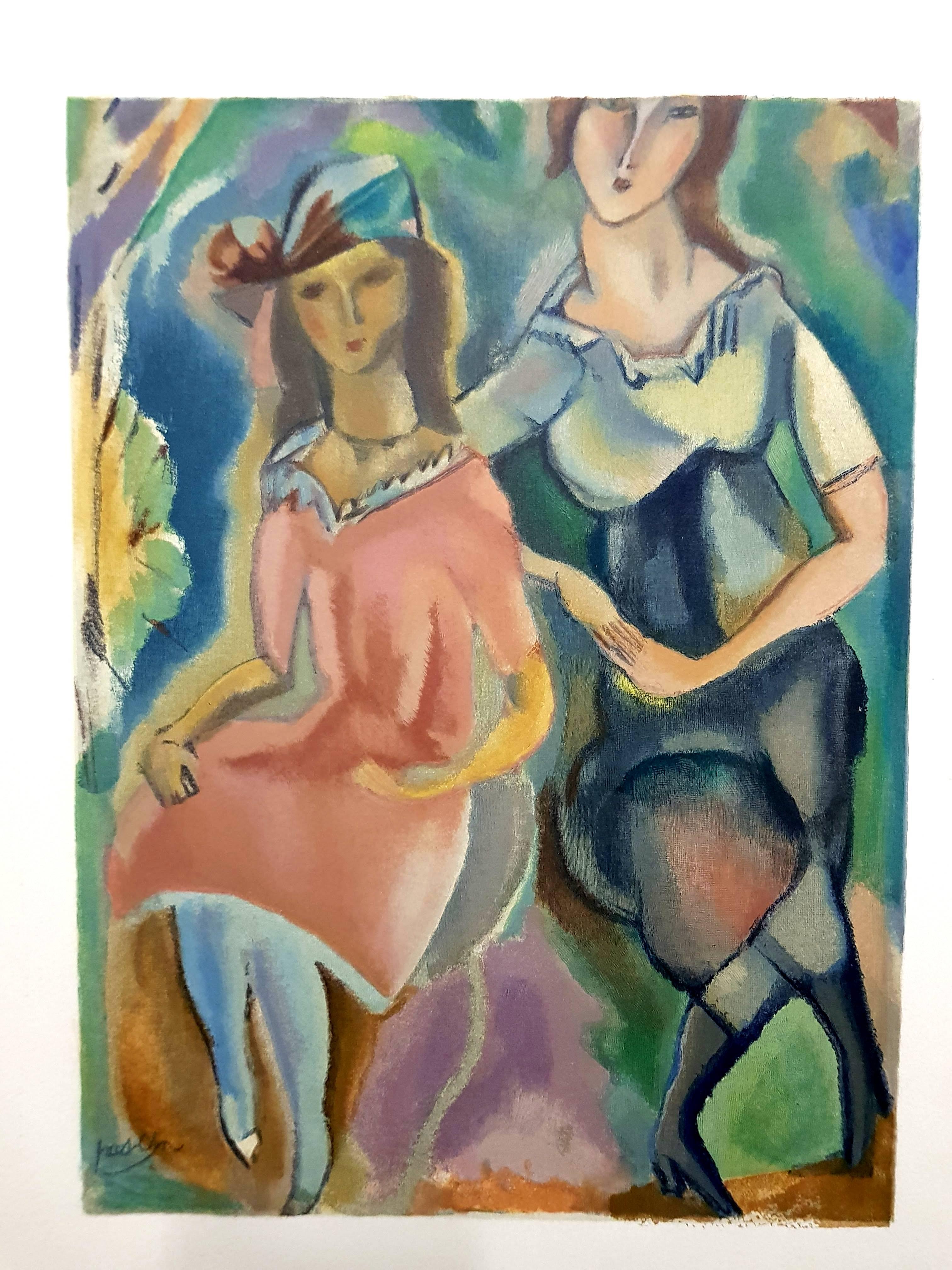
Jules Pascin, Two Nudes, from Pascin, 1954 (after)
By Jules Pascin
Located in Southampton, NY
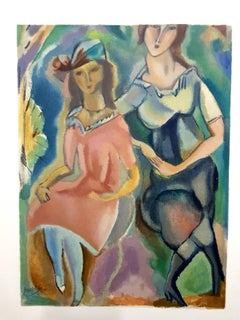
This exquisite lithograph after Jules Pascin (1885–1930), titled Deux nus (Two Nudes), from the album Pascin, originates from the 1954 edition published by Editions du livre, Monte-Carlo, under the direction of Andre Sauret, Editeur, Monte-Carlo, and printed by Mourlot Freres, Paris, March 3, 1954. Deux nus captures Pascin’s delicate mastery of line and his profound sensitivity to the human form, embodying the poetic lyricism and emotional intimacy that define his work.
Executed as a lithograph on grand velin Renage paper, this work measures 12.25 x 9.5 inches. Signed in the plate and unnumbered as issued. The edition exemplifies the refined craftsmanship of Mourlot Freres, Paris, and the exceptional production standards of Editions du livre, Monte-Carlo.
Artwork Details:
Artist: After Jules Pascin (1885–1930)
Title: Deux nus (Two Nudes), from the album Pascin
Medium: Lithograph on grand velin Renage paper
Dimensions: 12.25 x 9.5 inches (31.1 x 24.1 cm)
Inscription: Signed in the plate and unnumbered as issued
Date: 1954
Publisher: Editions du livre, Monte-Carlo, under the direction of Andre Sauret, Editeur, Monte-Carlo
Printer: Mourlot Freres, Paris
Condition: Well preserved, consistent with age and medium
Provenance: From the album Pascin, published by Editions du livre, Monte-Carlo, 1954
Notes:
Excerpted from the album (translated from French), This album, published under the direction of Andre Sauret, was completed on March 3, 1954. The color plates were executed in the workshops of Mourlot Freres, lithographes, in Paris. Typography of L'Imprimerie Union. The original etchings attached to the C head examples were printed on Roger Lacouriere's presses. The total edition was drawn in MM examples, decomposing as follows: C examples numbered from I to C with III original etchings, MCM examples from CI to MM.
About the Publication:
Pascin, published in Monte-Carlo in 1954 under the direction of Andre Sauret and printed by Mourlot Freres, Paris, stands as one of the most refined tributes to the artist’s oeuvre within the distinguished postwar series of French art albums. The album combines impeccable lithographic craftsmanship with scholarly presentation, highlighting the poetic subtlety and expressive line central to Pascin’s artistic legacy. Printed on grand velin Renage paper, the publication exemplifies the collaboration between Sauret and Mourlot that defined a generation of fine art editions, uniting artists, printers, and publishers dedicated to preserving the vitality of modern art in print. The album reflects the technical mastery of Mourlot’s atelier—celebrated for its work with Picasso, Matisse, Chagall, Braque, and Léger—while reinforcing Editions du livre’s commitment to producing luxurious, museum-quality publications that captured the spirit and emotion of twentieth-century masters. As a fine art album, Pascin occupies a central place among mid-century European art editions, representing both a celebration of the artist’s humanistic vision and a testament to the collaborative artistry that sustained modern printmaking.
About the Artist:
Jules Pascin (1885–1930) was a Bulgarian-born French painter and draftsman whose exquisite sensitivity, refined draftsmanship, and poetic vision made him one of the most evocative and influential figures of early modern art. Known as “the Prince of Montparnasse,” Pascin became a central figure of the Ecole de Paris and a defining presence in the bohemian world of early 20th-century Paris. Born Julius Mordecai Pincas in Vidin, Bulgaria, to a wealthy Sephardic Jewish family, he studied in Vienna and Munich before moving to Paris in 1905, where he quickly established himself among the leading modernists of his era, including Pablo Picasso, Amedeo Modigliani, Chaim Soutine, Georges Braque, and Marc Chagall. Deeply influenced by Edgar Degas, Henri de Toulouse-Lautrec, and Paul Cezanne, Pascin created paintings and drawings distinguished by their delicate lines, soft tonal harmonies, and psychological depth. His nudes, portraits, and scenes of Parisian cafe life radiate an atmosphere of quiet intimacy and emotional nuance, capturing the fragility and beauty of human existence. Unlike contemporaries such as Picasso, Joan Miro, Salvador Dali, Wassily Kandinsky, Marcel Duchamp, Alexander Calder, Alberto Giacometti, and Man Ray, who pushed toward abstraction and surrealism, Pascin remained devoted to figuration, exploring the subtleties of light, gesture, and emotion with unmatched tenderness. His works express sensuality without artifice, revealing the vulnerability and inner life of his subjects through line and color that seem to breathe with human feeling. His studio became a gathering place for artists and writers such as Ernest Hemingway, Henry Miller, and Anais Nin, who admired his introspection and his ability to translate psychological complexity into visual poetry. Though his life was marked by emotional turbulence and melancholy, his art radiated a timeless empathy that transcended style, influencing later artists including Balthus, Lucian Freud, Francis Bacon, Egon Schiele, and Eric Fischl, who drew inspiration from his fusion of sensuality, sensitivity, and psychological depth. Today, his works are held in major institutions including the Centre Pompidou, Musee d’Orsay, Tate Modern, and the Museum of Modern Art in New York, where they continue to resonate for their humanism and grace. Standing alongside Picasso, Calder, Giacometti, Dali, Miro, Kandinsky, Duchamp, and Man Ray, Jules Pascin helped define the emotional vocabulary of modern painting, and his legacy endures as one of the most intimate and humanist voices of his century. The highest auction record for Jules Pascin was achieved by Portrait de jeune fille en robe rouge sur fond bleu (1928), which sold for $2,950,500 USD at Sotheby’s, New York, on May 8, 2008, confirming his enduring reputation as one of the most refined, psychologically profound, and collectible artists of modern art history.
Jules Pascin Deux nus Two Nudes Pascin Editions du livre Monte-Carlo 1954 lithograph...
Category
1950s Modern Figurative Prints
Materials
Lithograph
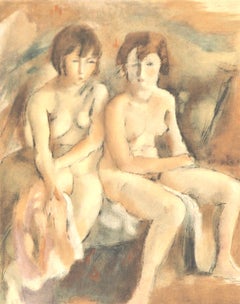
Etching with Hand Watercolor Painting Jules Pascin Pencil Signed
By Jules Pascin
Located in Surfside, FL
Genre: German Expressionist
Subject: Figures
Medium: etching, watercolor paint
Surface: Paper
This is hand signed lower right.. there does not seem to be an edition size although th...
Category
Early 20th Century Expressionist Figurative Drawings and Watercolors
Materials
Paper, Watercolor, Etching

More Ways To Browse
Pascin Jules
Cigarette Cards
Naked Woman Art
Vintage Garden Drawing
Academic Drawing Male Nude
Drawing Cathedral
Butterfly Drawing
Interior Design Watercolor
Vintage Cinderella
Spring Landscape Watercolor
Orientalist Watercolor
Drawings Of Churches
Nude Man Drawing
Nude Embrace
The Hunter Watercolor Drawing 20th Century
1930s Modern Painting Male Nude
Ireland Watercolor
Irish Watercolour