Items Similar to
Storm Clouds (Arizona)
— Early 20th-Century American Impressionism
Want more images or videos?
Request additional images or videos from the seller
1 of 3
Albert Groll
Storm Clouds (Arizona)
— Early 20th-Century American Impressionismc. 1914
c. 1914
$900
£685.82
€790.94
CA$1,278.27
A$1,373.43
CHF 736.84
MX$16,180.58
About the Item
Albert Lorey Groll, 'Storm Clouds (Arizona)', graphite on paper, c. 1914. Signed in pencil, in the image, lower left. A fine spontaneous rendering on heavy buff, wove paper, with margins (1 1/2 to 2 inches); slight toning at the sheet edges, in good condition. With a pen and ink landscape drawing, verso.
Image size 7 5/8 x 10 inches; sheet size 10 3/4 x 13 5/8 inches. Matted to museum standards, unframed.
Provenance: Ex. collection Kennedy Galleries, New York.
ABOUT THE ARTIST
Albert Lorey Groll (1866-1910) was born in New York in 1866, the son of a pharmacist immigrant from Darmstadt, Germany. During his early years, he traveled to Europe to study at the Royal Academy of Fine Arts in Munich under Nicholas Gysis and Ludwig von Löfftz. He further pursued his studies in London and at the Royal Academy of Fine Arts in Antwerp, Belgium. Groll returned to New York in 1895 and moved from figure to landscape painting while expanding his interests to printmaking.
In 1904 Groll made the first of several trips to the American Southwest, traveling to Arizona with ethnographer Stewart Culin of the Brooklyn Museum. Later he went to New Mexico with his friend, the artist and illustrator William Robinson Leigh (see our 1stDibs listing no. LU53239015112 ). He focused on impressionistic scenes of Native American lands. The Laguna Pueblo people admired Groll's paintings, honoring him with the name "Chief Bald Head Eagle Eye."
Groll kept a studio in the Gainsborough Studios in Manhattan and won several awards for his work in Arizona and New York, including the Salmagundi Club Shaw Prize in 1904 and a gold medal at the Pennsylvania Academy of Fine Arts in 1906. He was also awarded the George Inness gold medal from the National Academy of Design in 1912 for his painting of Lake Louise in the Canadian Rockies.
In 1910 he was elected into the National Academy of Design and, in 1919, an associate member of the Taos Society of Artists (1919); in 1933, he became a member of the National Institute of Arts and Letters. He was also an esteemed member of the American Watercolor Society.
Groll's works are included in the collections of the Brooklyn Museum of Art, The Fine Art Museums of San Francisco, Gilcrease Museum, Metropolitan Museum of Art, Richmond Art Museum, Smithsonian American Art Museum, University of Arizona Museum of Art, and the San Diego Museum of Art.
- Creator:Albert Groll (1866 - 1952, American)
- Creation Year:c. 1914
- Dimensions:Height: 7.63 in (19.39 cm)Width: 10 in (25.4 cm)
- Medium:
- Movement Style:
- Period:
- Condition:
- Gallery Location:Myrtle Beach, SC
- Reference Number:Seller: 986051stDibs: LU53237433302
About the Seller
5.0
Recognized Seller
These prestigious sellers are industry leaders and represent the highest echelon for item quality and design.
Platinum Seller
Premium sellers with a 4.7+ rating and 24-hour response times
Established in 1995
1stDibs seller since 2016
336 sales on 1stDibs
Typical response time: 1 hour
Associations
International Fine Print Dealers Association
- ShippingRetrieving quote...Shipping from: Myrtle Beach, SC
- Return Policy
More From This Seller
View All
Black Hawk Country
— Early 20th-Century American Impressionism
Located in Myrtle Beach, SC
Ralph M. Pearson, 'Black Hawk Country', etching, second state, edition not stated, 1912. Signed, and titled in pencil. Inscribed 'Rock River Series Second...
Category
1910s American Impressionist Landscape Prints
Materials
Etching
Old Cedars
– Early New Mexico Landscape, Southwest Regionalism
By George Elbert Burr
Located in Myrtle Beach, SC
George Elbert Burr, 'Old Cedars – New Mexico', etching, 1920, edition 40, Seeber 218. Signed and annotated '(c) George Elbert Burr Del. et Imp.' in pencil. ...
Category
1920s Realist Landscape Prints
Materials
Etching
Navajo Country
— Southwest Regionalism, Native American Subject
By Ira Moskowitz
Located in Myrtle Beach, SC
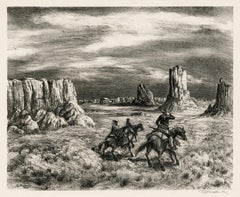
Ira Moskowitz, 'Navajo Reservation Landscape', lithograph, 1945, edition c. 30. Signed and titled in pencil. Signed and dated in the stone, lower left. A fine, richly-inked impressio...
Category
1940s Landscape Prints
Materials
Lithograph
Navajo Trading Post
— Southwest Regionalism, Native American Subject
By Ira Moskowitz
Located in Myrtle Beach, SC
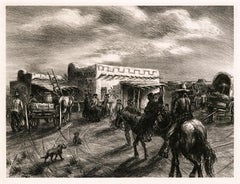
Ira Moskowitz, 'Navajo Trading Post', lithograph, 1946, edition 30, Czestochowski 161. Signed and dated in the stone, lower left. A fine, richly-inked impression, on cream wove paper...
Category
1940s American Modern Landscape Prints
Materials
Lithograph
Taos Placita
— American Southwest Regionalist Masterwork
By Gustave Baumann
Located in Myrtle Beach, SC
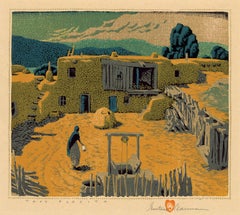
Gustave Baumann, 'Taos Placita', color woodcut, 1947, edition 125. Baumann 132. Signed, titled, and numbered '20-125' in pencil; with the artist’s Hand-in-Heart chop. A superb, richly-inked impression, with fresh colors, on fibrous oatmeal wove paper; the full sheet with margins (2 to 3 1/8 inches); slight rippling at the left sheet edge, in excellent condition. Matted to museum standards, unframed.
Image size 9 5/8 x 11 1/4 inches (244 x 286 mm); sheet size 13 1/4 x 17 inches (337 x 432 mm).
Collections: Harwood Museum of Art, New Mexico Museum of Art, Phoenix Art Museum, Scottsdale Art Museum, Wichita Art Museum.
ABOUT THE ARTIST
Gustave Baumann (1881-1971) was a renowned printmaker and a leading figure of the American color woodcut revival whose exquisite craftsmanship and vibrant imagery captured the essence of the Southwest.
"A brilliant printmaker, Baumann brought to the medium a full mastery of the craft of woodworking that he acquired from his father, a German cabinetmaker. This craftsmanship was coupled with a strong artistic training that resulted in the handsome objects we see in the exhibition today. After discovering New Mexico in 1918, Baumann began to explore in his woodblock prints of this period the light. color, and architectural forms of that landscape. His prints of this period are among the most beautiful and poetic images of the American West."
—Lewis I. Sharp, Director, Denver Art Museum
Baumann, the son of a craftsman, immigrated to the United States from Germany with his family when he was ten, settling in Chicago. From 1897 to 1904, he studied in the evenings at the Art Institute of Chicago, working in a commercial printmaking shop during the day. In 1905, he returned to Germany to attend the Kunstwerbe Schule in Munich, where he decided on a career in printmaking. He returned to Chicago in 1906 and worked for a few years as a graphic designer of labels.
Baumann made his first prints in 1909 and exhibited them at the Art Institute of Chicago the following year. In 1910, he moved to the artists’ colony in Nashville, Indiana, where he explored the creative and commercial possibilities of a career as a printmaker. In 1915, he exhibited his color woodcuts at the Panama-Pacific International Exposition in San Francisco, winning the gold medal.
Among Baumann’s ongoing commercial activities was his work for the Packard Motor Car Company from 1914 to 1920 where he produced designs, illustrations, and color woodcuts until 1923.
In 1919, Baumann’s printmaking work dominated the important exhibition of American color woodcuts at the Detroit Institute of Arts. Twenty-six of his prints were included, far more than the works of any other artist. A set of his blocks, a preparatory drawing, and seven progressive proofs complemented the exhibition. That same year, Baumann worked in New York and, over the summer, in Provincetown, Massachusetts. His airy images of Cape Cod employed soft, pastel colors and occasionally showed the influence of the white-line woodcut technique.
Many of his Chicago artist friends had traveled to the southwest, and Baumann became intrigued by their paintings, souvenirs, and stories of an exotic place named Taos, New Mexico. In the summer of 1918, he spent the summer in Taos sketching and painting before visiting Santa Fe. Paul Walter, the director of the Museum of New Mexico, offered him a studio in the museum's basement. Inspired by the rugged beauty of the Southwest—the vibrant colors and dramatic landscapes of the region became a central theme in his work, influencing his artistic style and subject matter for the remainder of his career. Later in the decade, he traveled to the West Coast and made prints of California landscape.
Baumann's prints became synonymous with the Southwest, capturing the spirit of its place in America's identity with a unique sense of authenticity and reverence. His iconic images of desert vistas, pueblo villages, and indigenous cultures served as visual tributes to the region's rich cultural heritage, earning him a dedicated following among collectors and curators alike.
A true craftsman and artist, Baumann completed every step of the printmaking process himself, cutting each block, mixing the inks, and printing every impression on the handmade paper he selected. His dedication to true craftsmanship and his commitment to preserving the integrity of his artistic vision earned him widespread acclaim and recognition within the art world. About the vibrant colors he produced, Baumann stated, “A knowledge of color needs to be acquired since they don’t all behave the same way when ground or mixed...careful chemistry goes into the making of colors, with meticulous testing for permanence. While complicated formulae evolve new colors, those derived from Earth and metal bases are still the most reliable.”
In the 1930s, Baumann became interested in puppet theater. He designed and carved his own marionettes and established a little traveling company. From 1943 to 1945, the artist carved an altarpiece for the Episcopal Church of the Holy Faith in Santa Fe. In 1952, a retrospective exhibition of his prints was mounted at the New Mexico Museum of Fine Arts. Throughout his prolific career, Baumann executed nearly four hundred color woodcuts.
Baumann’s woodcuts...
Category
1940s American Modern Landscape Prints
Materials
Woodcut
Riders at Sundown
— Mid-Century Southwest Regionalism
By Gene Kloss
Located in Myrtle Beach, SC
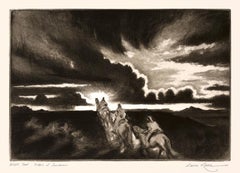
'Riders at Sundown', aquatint and drypoint, edition 75, 1953, Kloss 451. Signed, titled, and annotated 'Artist's Proof' in pencil. A superb, richly-inked, atmospheric impression, in ...
Category
1950s American Modern Landscape Prints
Materials
Drypoint, Aquatint
You May Also Like
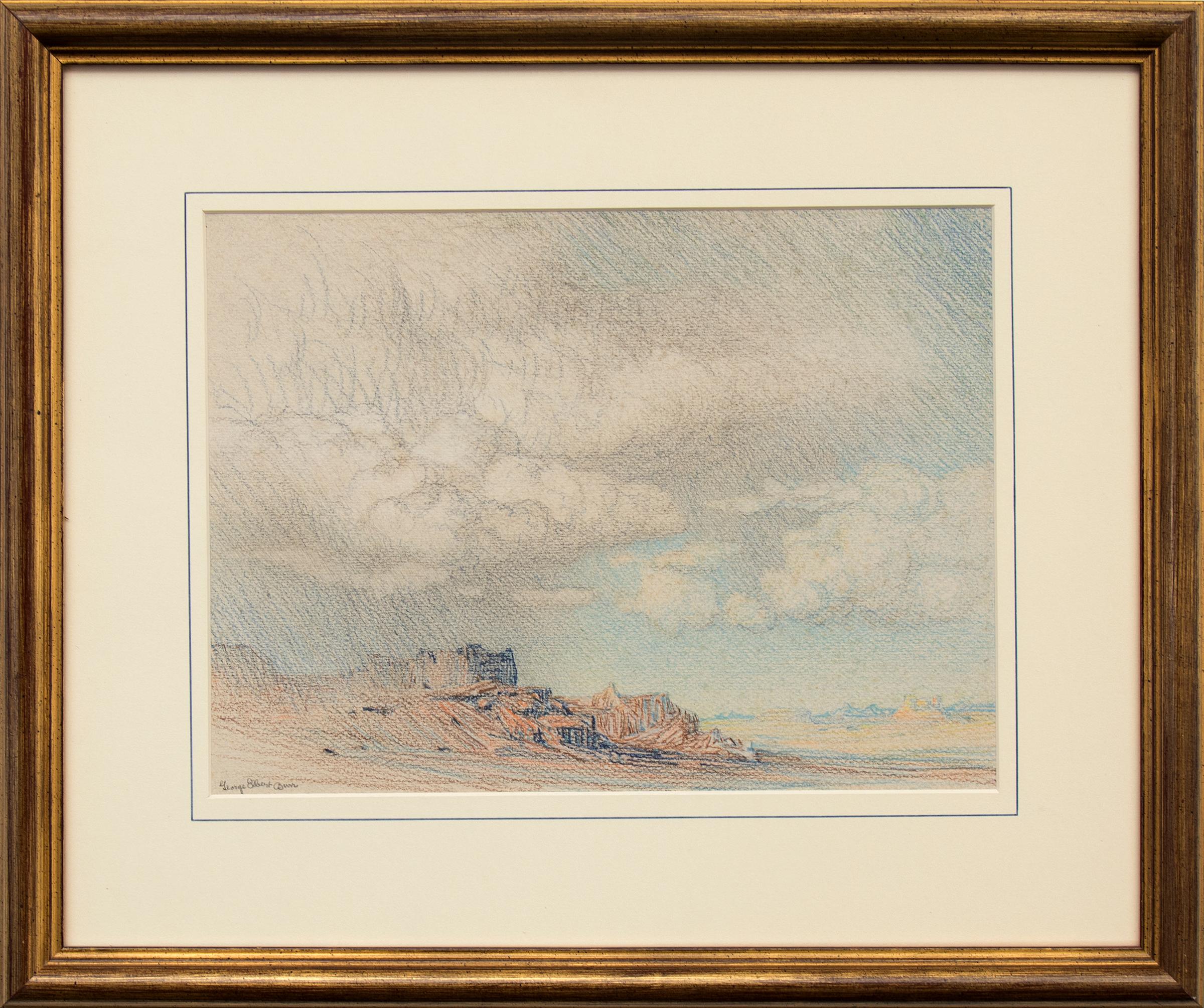
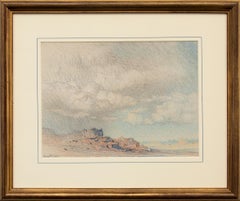
George Elbert Burr 1924 Drawing – Storm over Arizona Desert Landscape, Southwest
By George Elbert Burr
Located in Denver, CO
This rare 1924 colored pencil drawing by renowned American artist George Elbert Burr (1859–1939) beautifully captures the raw, untamed drama of the Arizona de...
Category
Early 20th Century American Impressionist Landscape Drawings and Waterco...
Materials
Paper, Color Pencil
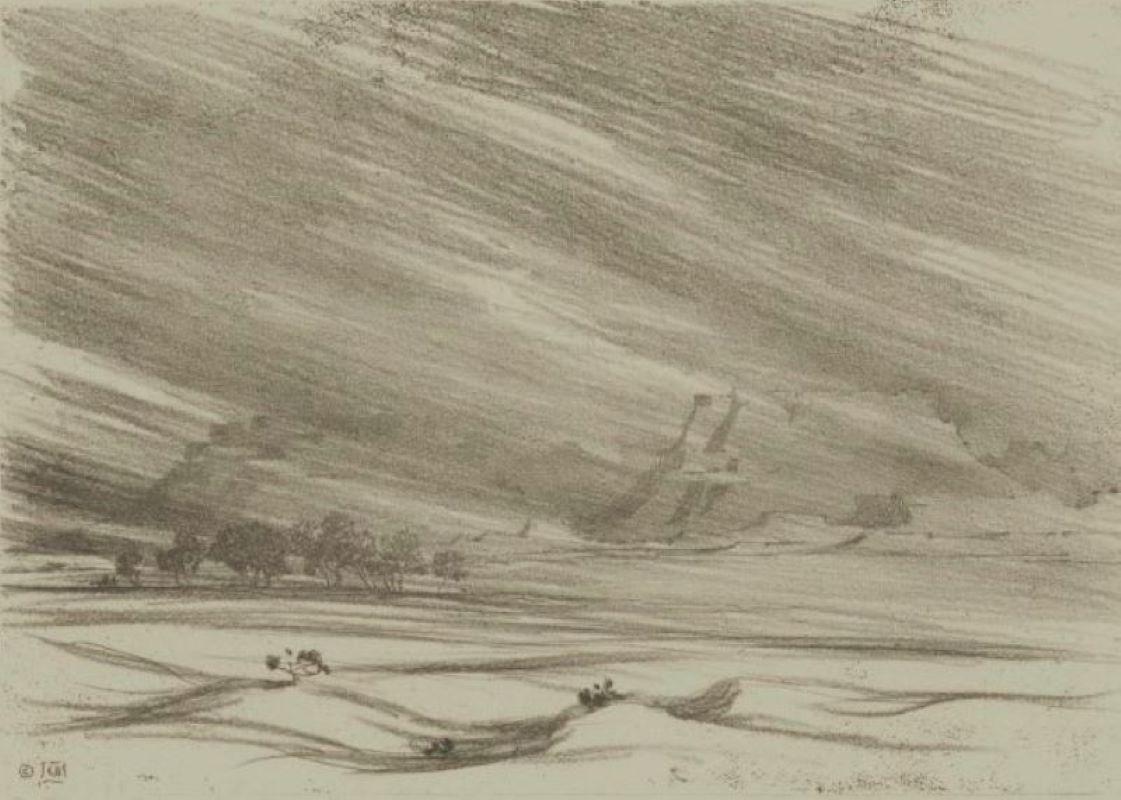
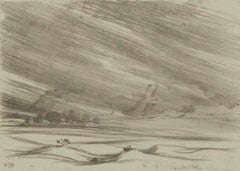
A Sandstorm on the Little Colorado River, Arizona
By George Elbert Burr
Located in Plano, TX
A Sandstorm on the Little Colorado River, Arizona. 1920. Soft-ground etching. Seeber 189. 6 7/8 x 9 3/4 (sheet 9 5/8 x 13). Edition 40, #6. Series: Desert Set. Illustrated: American ...
Category
Early 20th Century American Modern Landscape Prints
Materials
Watercolor
$750 Sale Price
25% Off
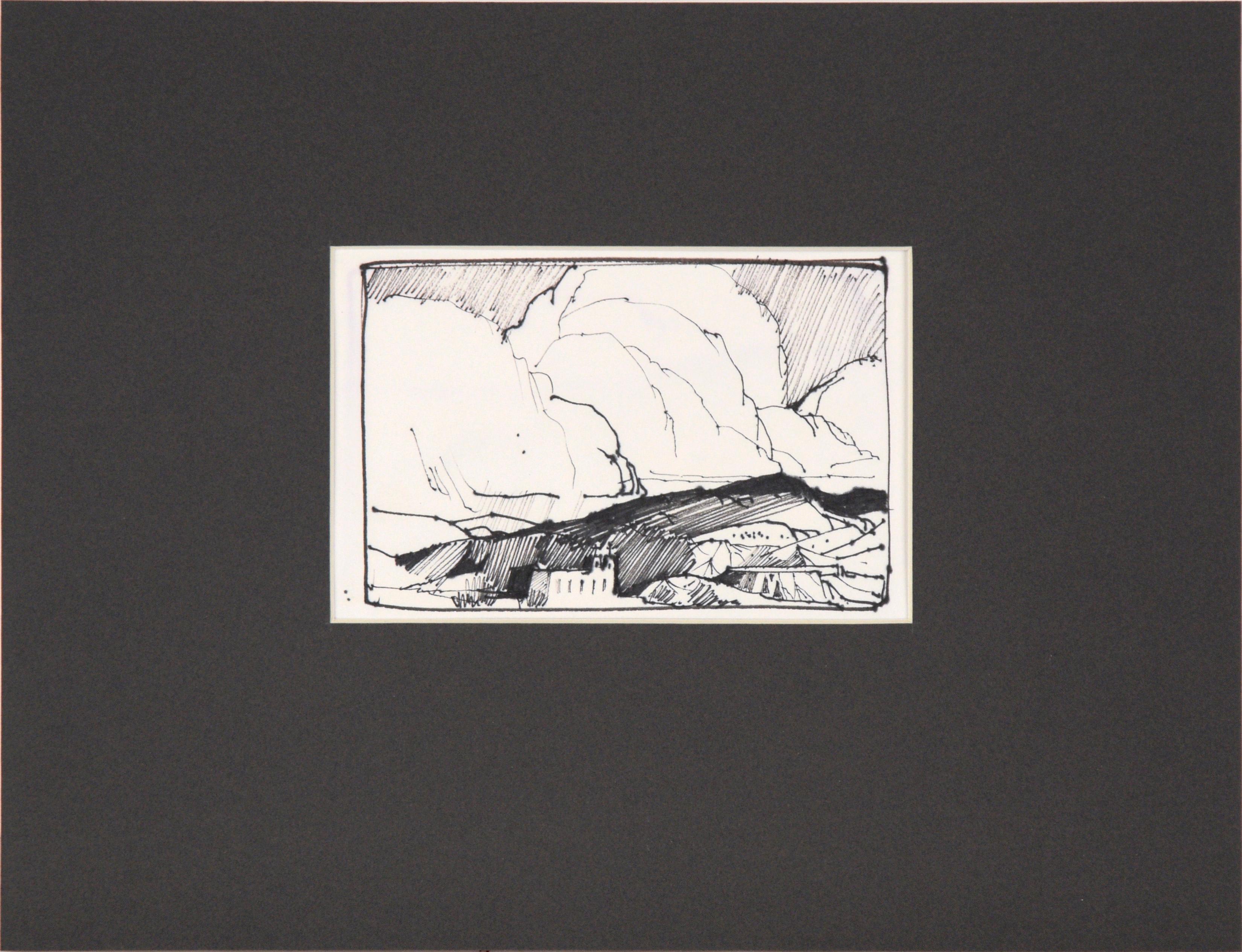
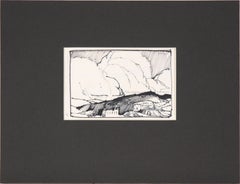
Clouds Above the High Desert - Line Drawing Landscape in Ink on Paper
By Laurence Sisson
Located in Soquel, CA
Clouds Above the High Desert - Line Drawing Landscape in Ink on Paper
Bold landscape line drawing by listed Maine artist Laurence Sisson (American, 1928-2015). Giant cumulous clouds...
Category
Late 20th Century American Impressionist Landscape Drawings and Watercolors
Materials
Paper, Permanent Marker
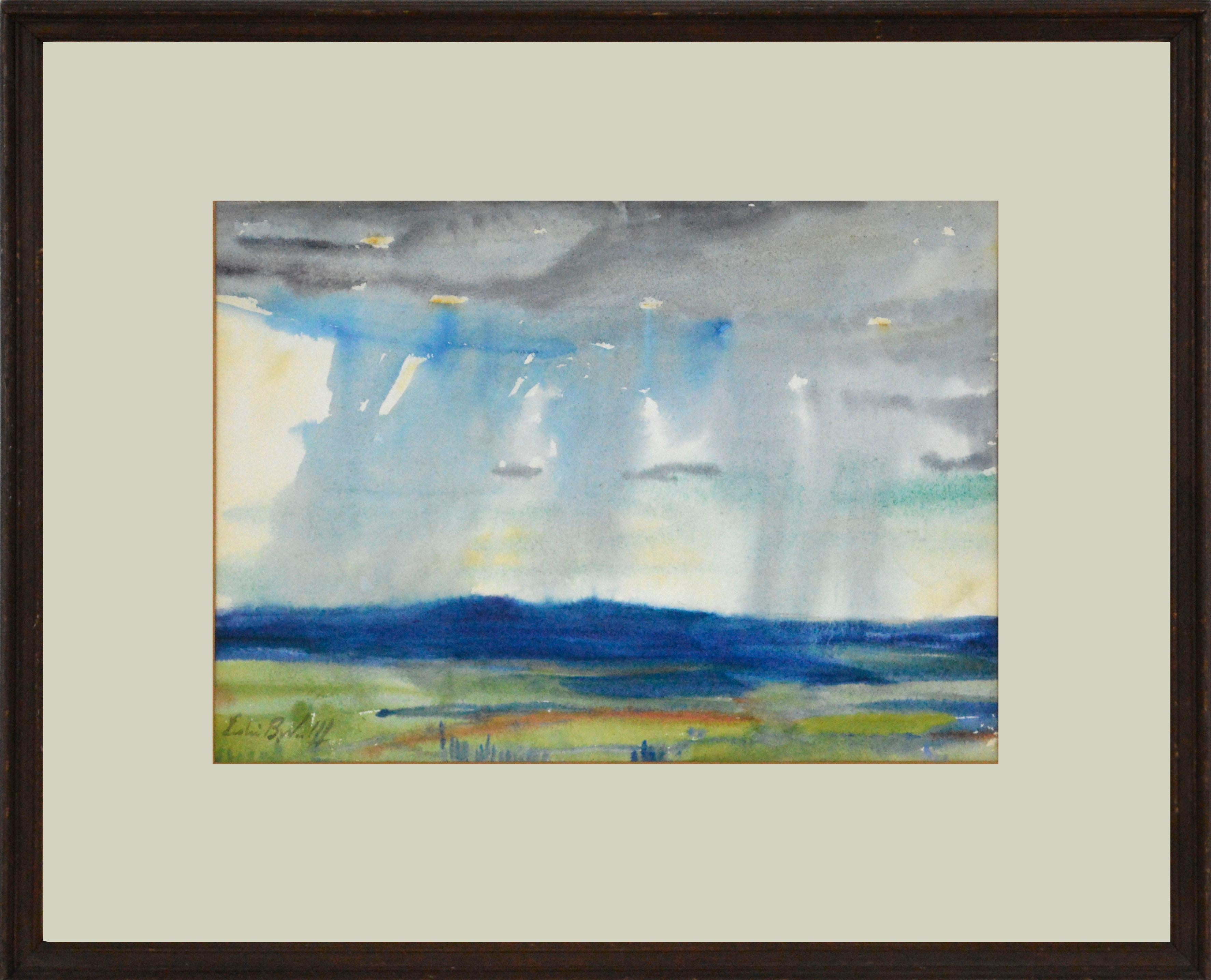
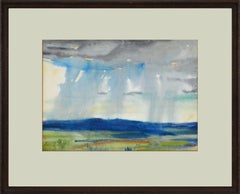
"Approaching Storm", Mid-1930s California Rainstorm Landscape Watercolor
By Leslie Bruner Wulff
Located in Soquel, CA
Beautiful mid-1930's watercolor landscape of a vast valley with a rainstorm far in the distance by California artist Leslie Bruner Wulff (American, 1890-1968). The atmosphere and fee...
Category
1930s American Impressionist Landscape Drawings and Watercolors
Materials
Paper, Watercolor
Arizona Landscape – Dramatic Skies and Desert Light by Carl Oscar Borg
By Carl Oscar Borg
Located in Stockholm, SE
In this expressive gouache study, Carl Oscar Borg captures the dramatic sweep of the Arizona highlands, where storm clouds gather over layered mesas and valleys bathed in shifting li...
Category
Early 20th Century Romantic Landscape Drawings and Watercolors
Materials
Gouache
1888 George Elbert Burr Southwest Desert Landscape Drawing, Morning Near Arizona
By George Elbert Burr
Located in Denver, CO
This original 1888 color pencil drawing, Morning Near Arizona, is a luminous Southwestern landscape by acclaimed American artist George Elbert Burr (1859–1939). Rendered with Burr’s ...
Category
1880s American Impressionist Landscape Drawings and Watercolors
Materials
Color Pencil
More Ways To Browse
German Early 20th Century Painting
Belgian Early 20th Century Painting
Arizona Painting
Kennedy Galleries
Canadian Landscape Artists Early 20th Century
American Impressionism Painting
Artist Robinson
20th Century Impressionism Paintings
Antique Cloud Painting
Pueblo Painting
Arizona Landscape Painting
Storm Cloud Painting
Taos Society Of Artists
Lake Louise
Samuel Morse Painting
Thomas J Owen
Tom Sawyer Paintings
Tom Wern