Items Similar to
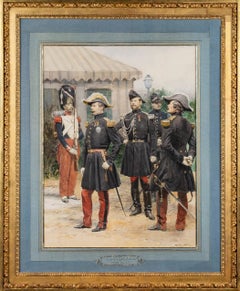
Napoleonic Guard at the Cathedral of Uspensky Sobor
, Moscow, French Militaria
Want more images or videos?
Request additional images or videos from the seller
1 of 14
Charles Hoffbauer
Napoleonic Guard at the Cathedral of Uspensky Sobor
, Moscow, French MilitariaCirca 1900
Circa 1900
$1,687.50
$2,25025% Off
£1,285
£1,713.3325% Off
€1,479.64
€1,972.8525% Off
CA$2,391.34
CA$3,188.4525% Off
A$2,572.22
A$3,429.6325% Off
CHF 1,374.67
CHF 1,832.8925% Off
MX$30,319.19
MX$40,425.5925% Off
NOK 17,331.38
NOK 23,108.5125% Off
SEK 15,844.17
SEK 21,125.5625% Off
DKK 11,055.40
DKK 14,740.5325% Off
About the Item
Initialed lower left, 'C.H.' for Charles Constantine Hoffbauer (French, 1875-1957) and painted circa 1900.
Accompanied by the original artist-signed mat, original backing with inscription and newspaper clipping from Los Angeles Times' review of Hoffbauer's 1949 Legion of Honor Exhibition.
Mat dimensions: 12.75 x 13.5 Inches
An exceptionally fine and detailed, cabinet-sized gouache showing members of the Napoleonic guard relaxing in the courtyard of the Cathedral of Uspensky Sobor during France's brief occupation of Moscow during the fall of 1812.
Born in Paris in 1875, Charles Hoffbauer studied at the Ecole des Beaux-Arts under Fernand Cormon and Gustave Moreau and, during his studies, became acquainted with Matisse, Rouault, and Marquet. He was the recipient of numerous prizes, medals and juried awards including an Honorable Mention in the Salon of 1896, and prizes at the Salons of 1898 and 1899. He was awarded a bronze medal at the Paris Universal Exposition of 1900 and, in the same year, a French government scholarship, the Prix National du Salon, that allowed him to travel and study in Italy, Greece and Egypt. In 1902, he won the Prix Rosa Bonheur. At the Salon of 1904, the French government purchased 'Champs de Bataille' for the Musée du Luxembourg and Hoffbauer was elected a member of the Legion of Honor.
Hoffbauer served in the French Army as an official war artist during the first world war, winning the Croix de Guerre and acting as liaison officer to the American camouflage section. On the recommendation of the mural painter, James Wall Finn, Hoffbauer received the 1935 commission to paint the murals for Battle Abbey, the Confederate memorial in Richmond, Virginia. He revisited America to accept a commission for the mural in the Missouri State Capitol, and was appointed to membership of the jury of the 1937 International Exposition. Two years later, he became an American citizen and settled in Rockport, Massachusetts. Charles Hoffbauer's work may be found in the permanent collections of numerous national museums including the Museum of Modern Art in Paris.
Reference:
Who Was Who in American Art 1564-1975: 400 Years of Artists in America, Peter Hastings Falk, Sound View Press 1999, Vol. 2, p. 1585; Thieme-Becker Allgemeines Lexikon der Bildenden Künstler von der Antike bis zu Gengenwart, Ulrich Thieme and Felix Becker, Deutscher Taschenbuch Verlag 1992, Vol. 17/18, p. 246; E. Benezit, Dictionnaire des Peintres, Sculpteurs, Dessinateurs, et Graveurs, Jacques Busse, 1999 Nouvelle Édition, Gründ 1911, Vol. 7, p. 105; Biographical Encyclopedia of American Painters, Sculptors
Engravers of the U.S.: Colonial to 2002, Bob Creps, Dealer’s Choice Books, Inc. 2002, Vol. 1, p. 643; Steen, James T. "The Story of a Painting," Carnegie Magazine 31/32 (February 1957): 57-59; Charles Hoffbauer (1875-1957). Drawings, Temperas
Oil Paintings. Exh. cat. Somerville, MA: Gropper Art Gallery, 1977; Glueck, Grace. New York: The Painted City. Salt Lake City: Peregrine Smith Books, 1992, pp. 38-39; et al.
- Creator:Charles Hoffbauer (1875-1957, French)
- Creation Year:Circa 1900
- Dimensions:Height: 6.88 in (17.48 cm)Width: 7.32 in (18.6 cm)
- Medium:
- Movement Style:
- Period:
- Condition:paper laid down on archival card, minor losses, restoration, minor toning; unframed; shows well.
- Gallery Location:Santa Cruz, CA
- Reference Number:1stDibs: LU34416848692
About the Seller
5.0
Platinum Seller
Premium sellers with a 4.7+ rating and 24-hour response times
Established in 1982
1stDibs seller since 2013
772 sales on 1stDibs
Typical response time: 1 hour
- ShippingRetrieving quote...Shipping from: Santa Cruz, CA
- Return Policy
More From This Seller
View All
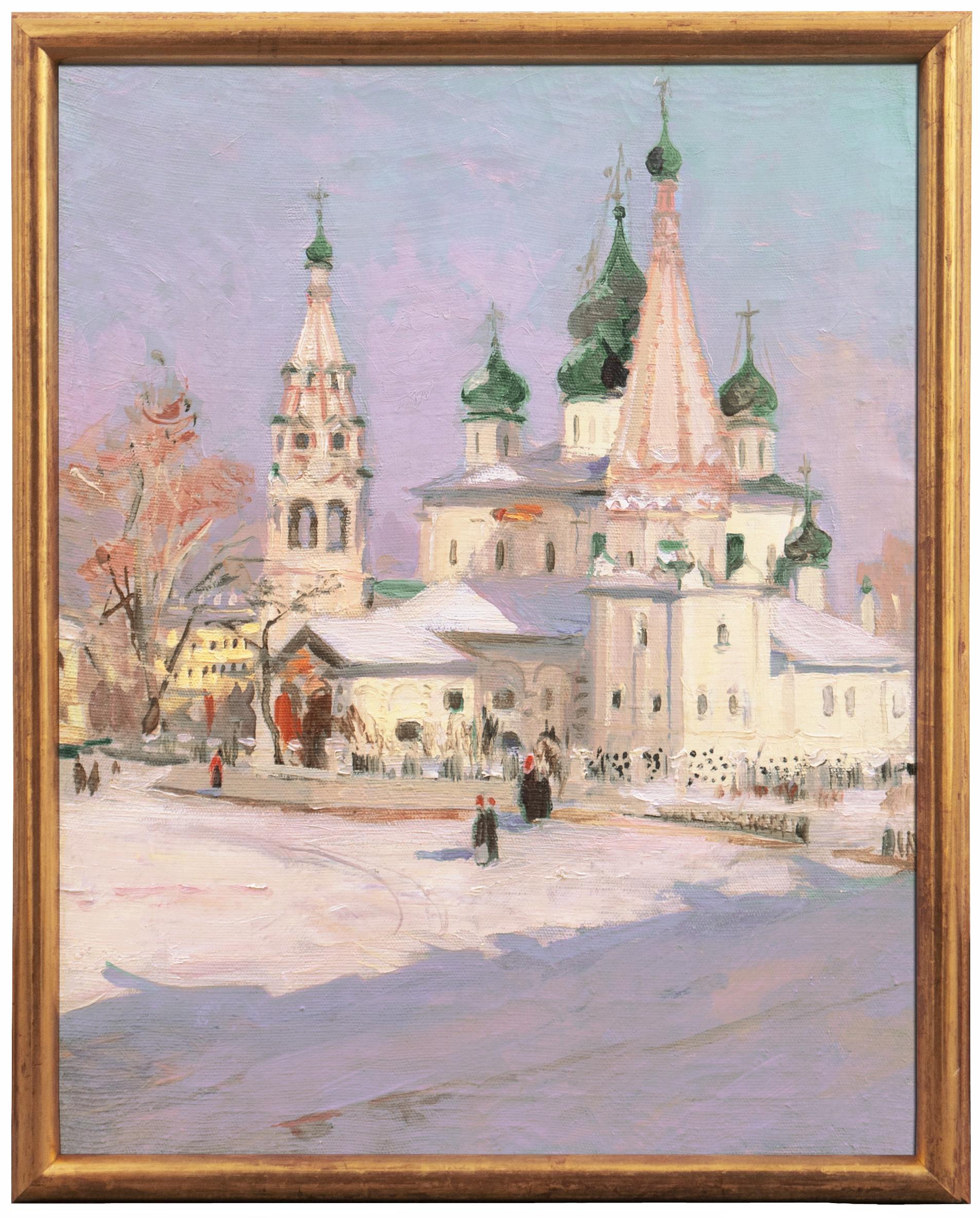
Church of Elijah the Prophet, Yarolsavl City
, Ilaskaya Church, Russia, Oil
Located in Santa Cruz, CA
Signed, verso, in Cyrillic, 'Leontev V.E.' for Valentin Nikolaevich Leontiev (Russian, 1912-1984) and inscribed, 'City of Yarolsavl on the River Volga. Painter, Leontev V.E. Showing ...
Category
1960s Impressionist Landscape Paintings
Materials
Canvas, Oil
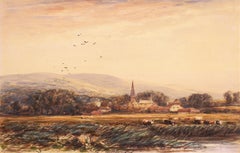
Village with Church Spire
, English mid-19th Century Watercolor, David Cox
By James Orrock
Located in Santa Cruz, CA
Signed lower left, 'J. Orrock' for James Orrock (British, 1829-1913) and dated 1845.
Matted Dimensions: 14.5 H x 19 W x .25 D Inches.
A well composed and freshly painted, mid-ninete...
Category
1840s Landscape Drawings and Watercolors
Materials
Paper, Watercolor, Gouache
$1,087 Sale Price
25% Off
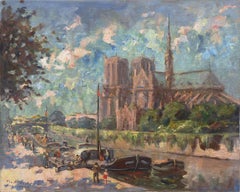
View of Notre Dame
the Île de la Cité
, Seine, Paris, Thieme Becker, Budapest
Located in Santa Cruz, CA
'View of Notre Dame & the Île de la Cité' by Friderika Bendéné Kovacsev.
Seine, Paris, Thieme Becker, Budapest
------
Signed lower left, 'Frid. J. Bende.' for Friderika Bendéné Kova...
Category
1950s Landscape Paintings
Materials
Canvas, Oil, Masonite
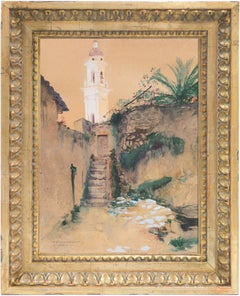
Menton, France
, École des Beaux-Arts, student of Gustave Boulanger and Gerome
By Auguste François Gorguet
Located in Santa Cruz, CA
Signed lower left, 'A.F. Gorguet' for Auguste François Gorguet (French, 1862-1927), titled 'Menton' and dated with roman numerals 'XI' for 1911; bearing old 'P. Navez' exhibition lab...
Category
1910s Landscape Drawings and Watercolors
Materials
Paper, Watercolor, Gouache, Board
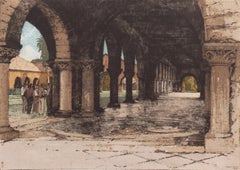
Stanford University, the Quad
, Palo Alto, Vienna Academy, Metropolitan Museum
By Luigi Kasimir
Located in Santa Cruz, CA
Signed lower center, in pencil, 'Luigi Kasimir' (Austro-Hungarian, 1881-1962), and with title and date, 'Palo Alto, 1931'. at lower right.
Paper dimensions: 12.25 x 16 inches.
N.B. This is an original etching by Luigi Kasimir and is hand-signed by the artist.
The notable etcher and painter, Luigi Kasimir, attended the Vienna Academy of Art where he studied under William Unger, who introduced him to colored etching. Kasimir was influenced by Anders Zorn and Karl von Kalckreuth and he furthered his studies with Sigmund L'Allemand.
A pioneer in the technique of hand-colored etching, Kasimir began exhibiting in 1905 and received immediate critical recognition. Starting with a sketch, usually in pastel, Kasimir would transfer the design, by hand, onto as many as six plates, applying the color by hand to each plate. Luigi Kasimir's work is held in private and public collections throughout the world including in the permanent collections of New York's Metropolitan Museum and Smithsonian Museum, among others.
Reference:
E. Benezit, Dictionnaire des Peintres, Sculpteurs, Dessinateurs, et Graveurs, Jacques Busse...
Category
1930s Landscape Prints
Materials
Paper, Color, Etching
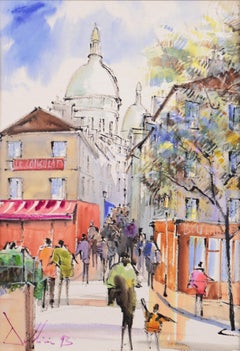
Le Consulat, Montmartre
, Paris Cafe, Cathedral of Sacré-Cœur, Basilica
Located in Santa Cruz, CA
20th Century French School; Signed indistinctly, lower left, 'De Mini? and dated 1993.
A Post-Impressionist style, Parisian cityscape showing a view of Montmartre with numerous pede...
Category
1990s Landscape Drawings and Watercolors
Materials
Paper, Watercolor, Gouache
You May Also Like
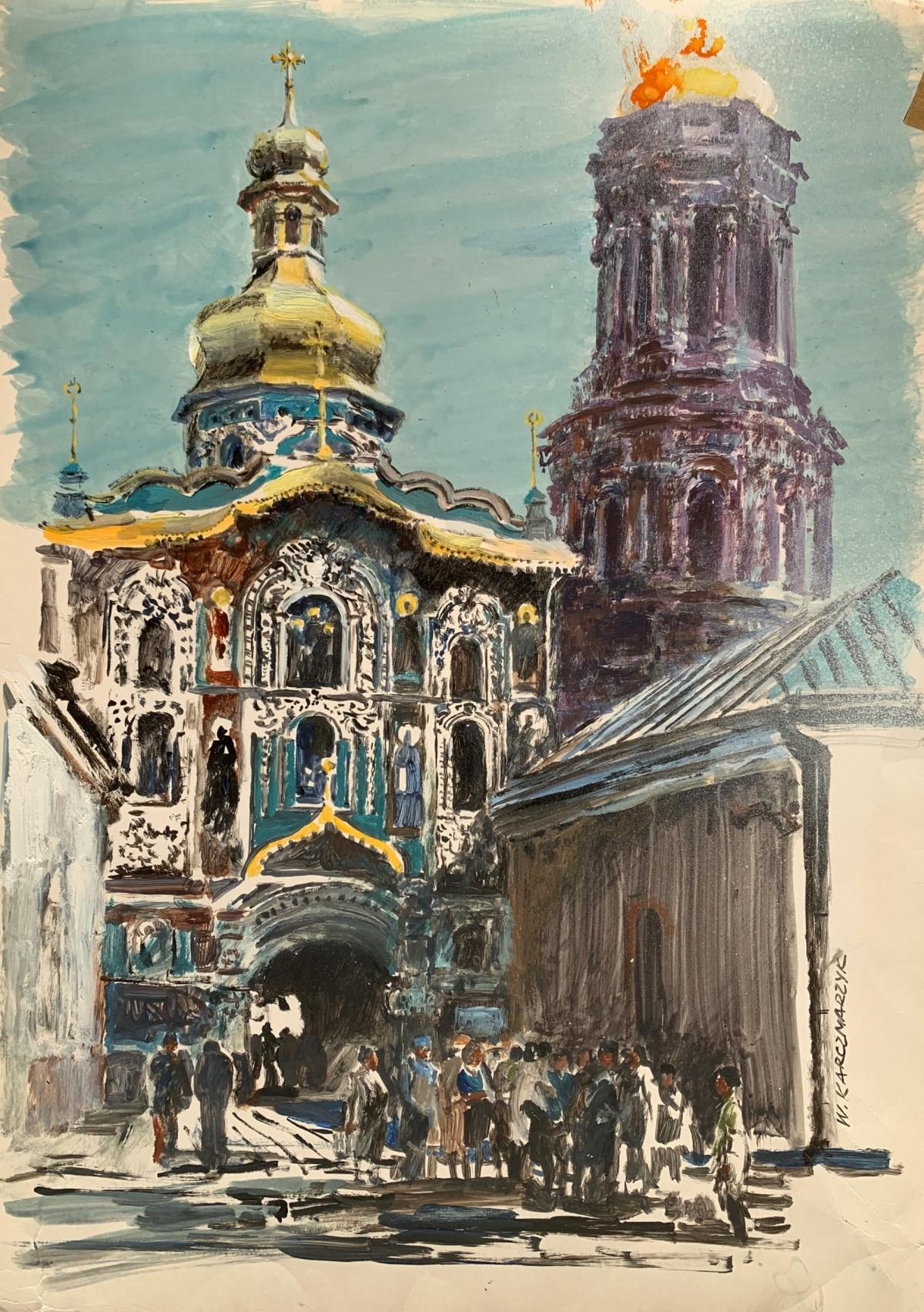
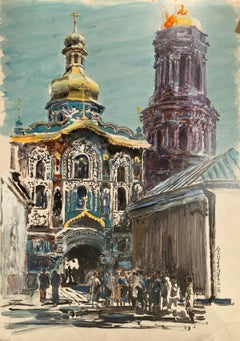
Kyiv, Lavra. Acrylic on paper, Architecture, Classic, Polish artist
By Włodzimierz Karczmarzyk
Located in Warsaw, PL
Contemporary acrylic painting on paper by Polish artist Wlodzimierz Karczmarzyk. Artwork depicts achitecture of Kyiv, Ukraine. Artwork's style is sketch-like but realistic at the sam...
Category
Early 2000s Other Art Style Landscape Drawings and Watercolors
Materials
Paper, Acrylic
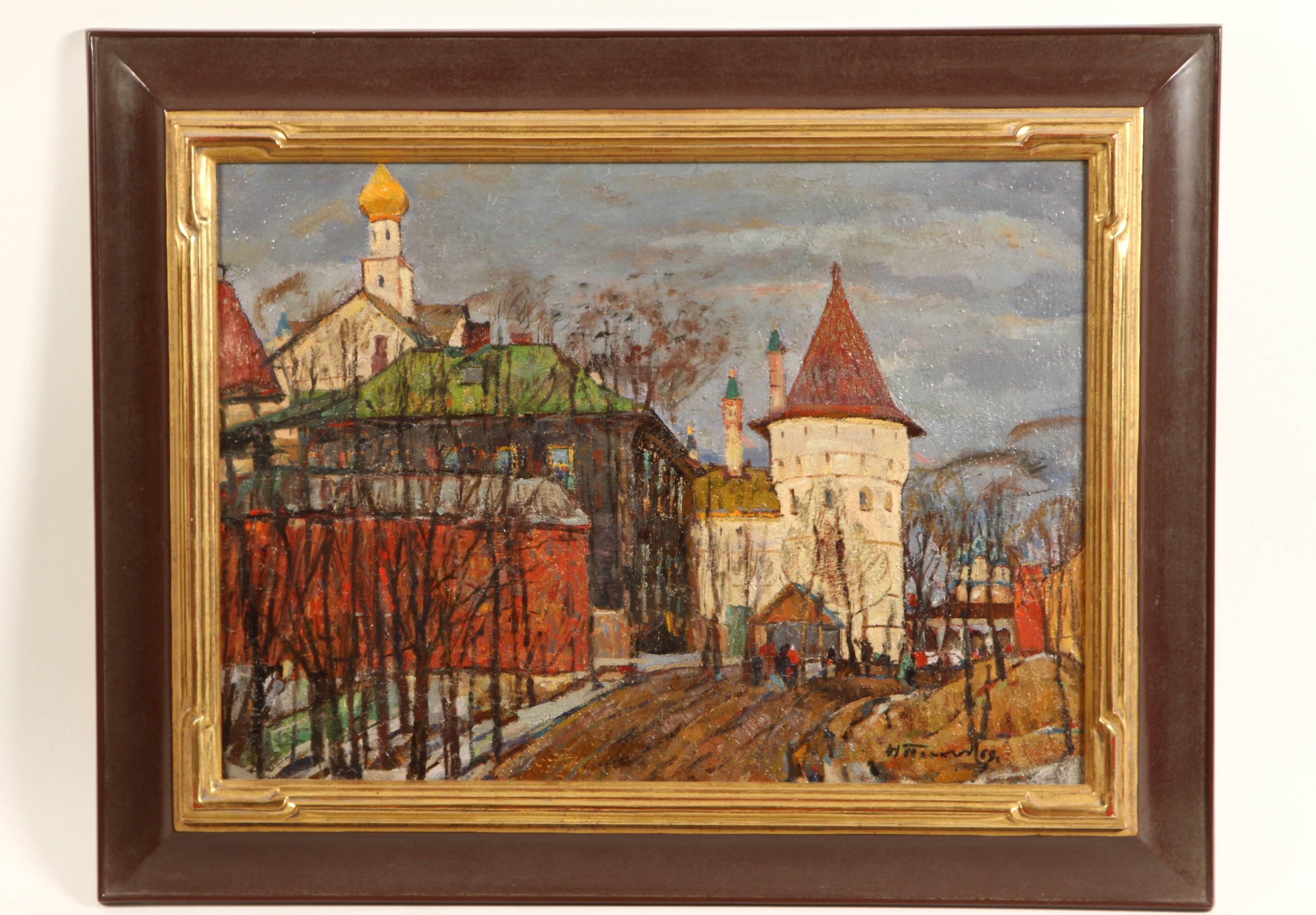
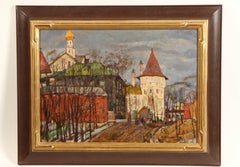
The Kremlin at Rostov by Nicolai Timkov
By Nikolai Timkov
Located in San Marino, CA
Painted in 1969 at the height of Timkov's ability, this painting depicts the Kremlin in Rostov, one of Timko's favorite, non-landscape subjects. Signed and dated onthe reverse and si...
Category
Late 20th Century Russian Modern Paintings
Materials
Wood
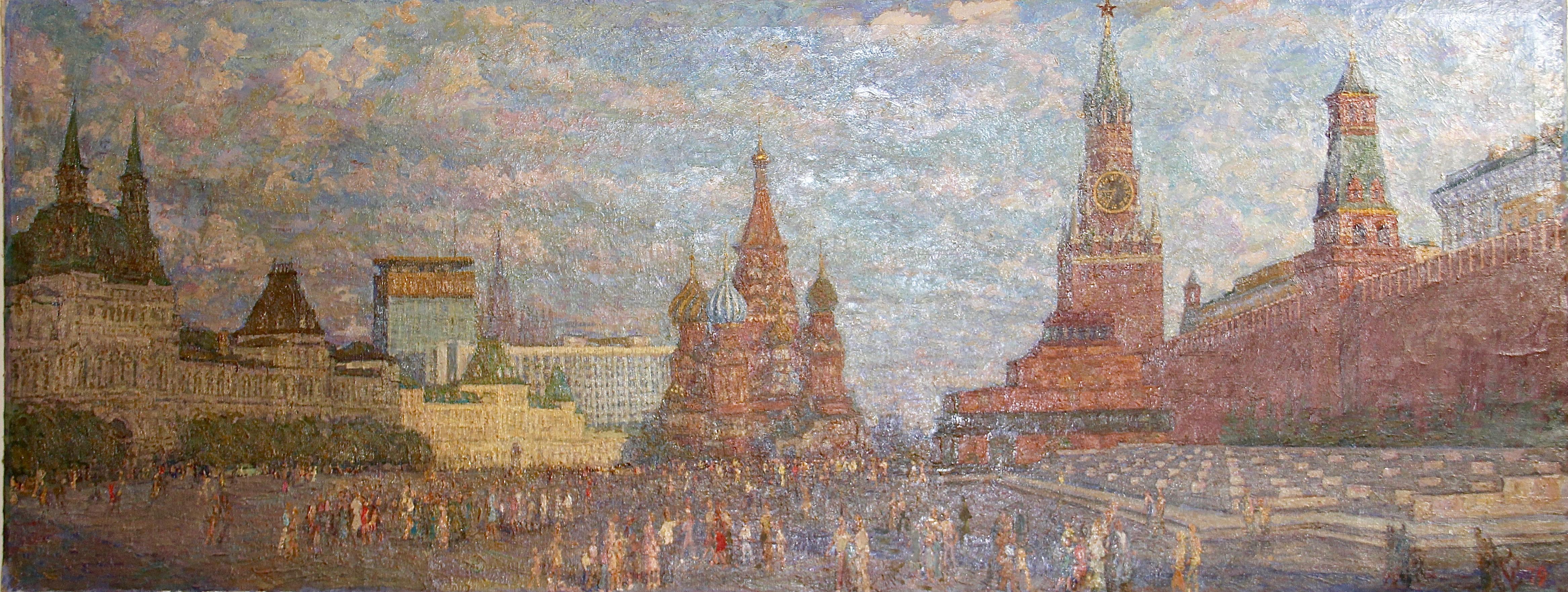
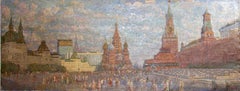
On the Red Square, Kremlin, Moscow - Realist, Landscape Painting, 20th Century
Located in Berlin, DE
Moscow. "On the red square". Kremlin, St. Basil's Cathedral. Russian art.
Very good condition. Unframed.
Solovykh Gennady Ivanovich (1932, Moscow).
Member of the Union of Artists ...
Category
1970s Realist Figurative Paintings
Materials
Canvas, Oil
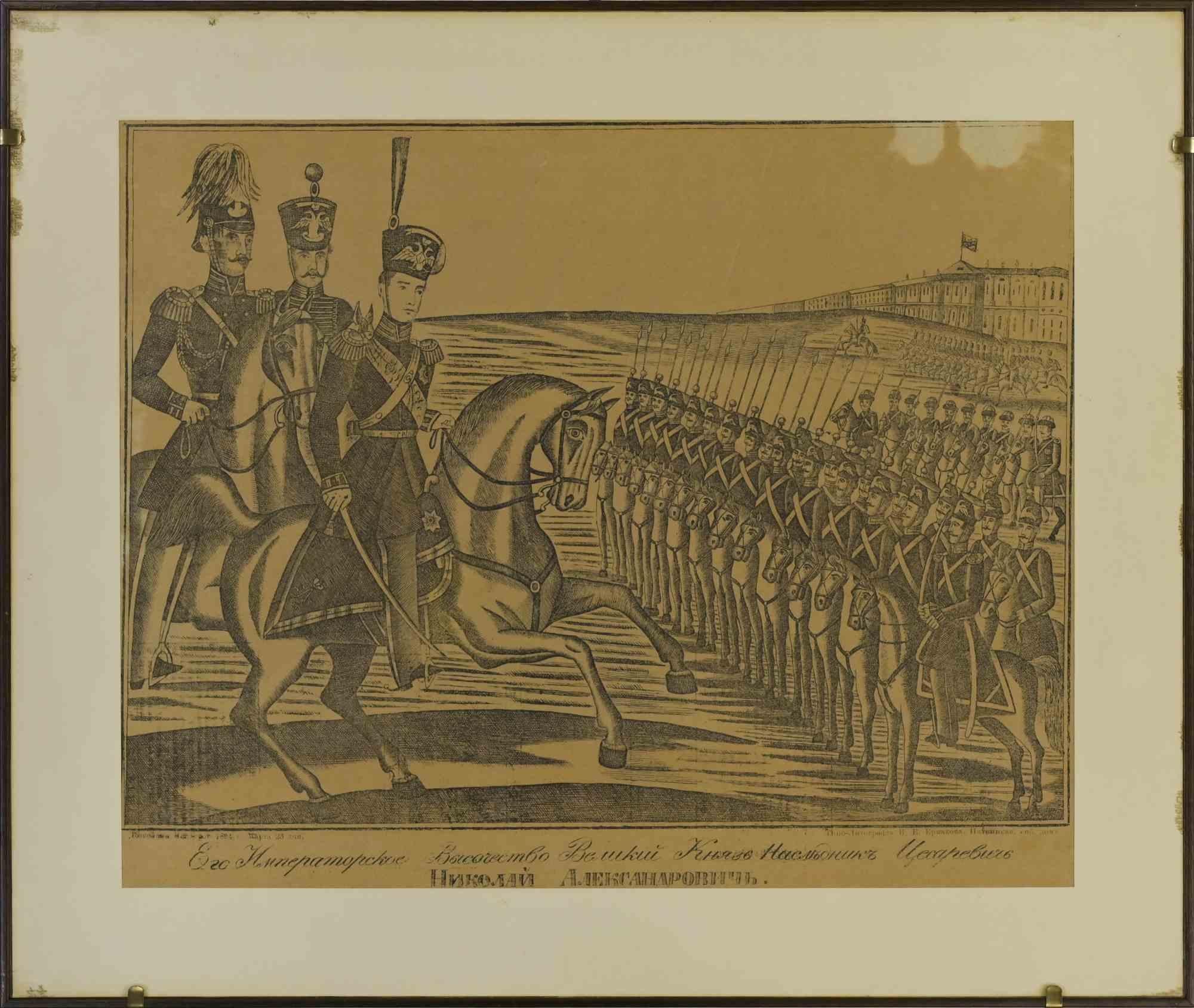
Soldiers - Lithograph by Vladimir Vasilyev - 19th Century
Located in Roma, IT
Soldiers is a modern artwork realized by Vladimir Vasilyev in 1880s
Lithograph on paper
Original title: Tsarevich Nikolai Aleksandrovich Romanov
Includes frame: 38 x 45 cm
Category
19th Century Modern Figurative Prints
Materials
Lithograph
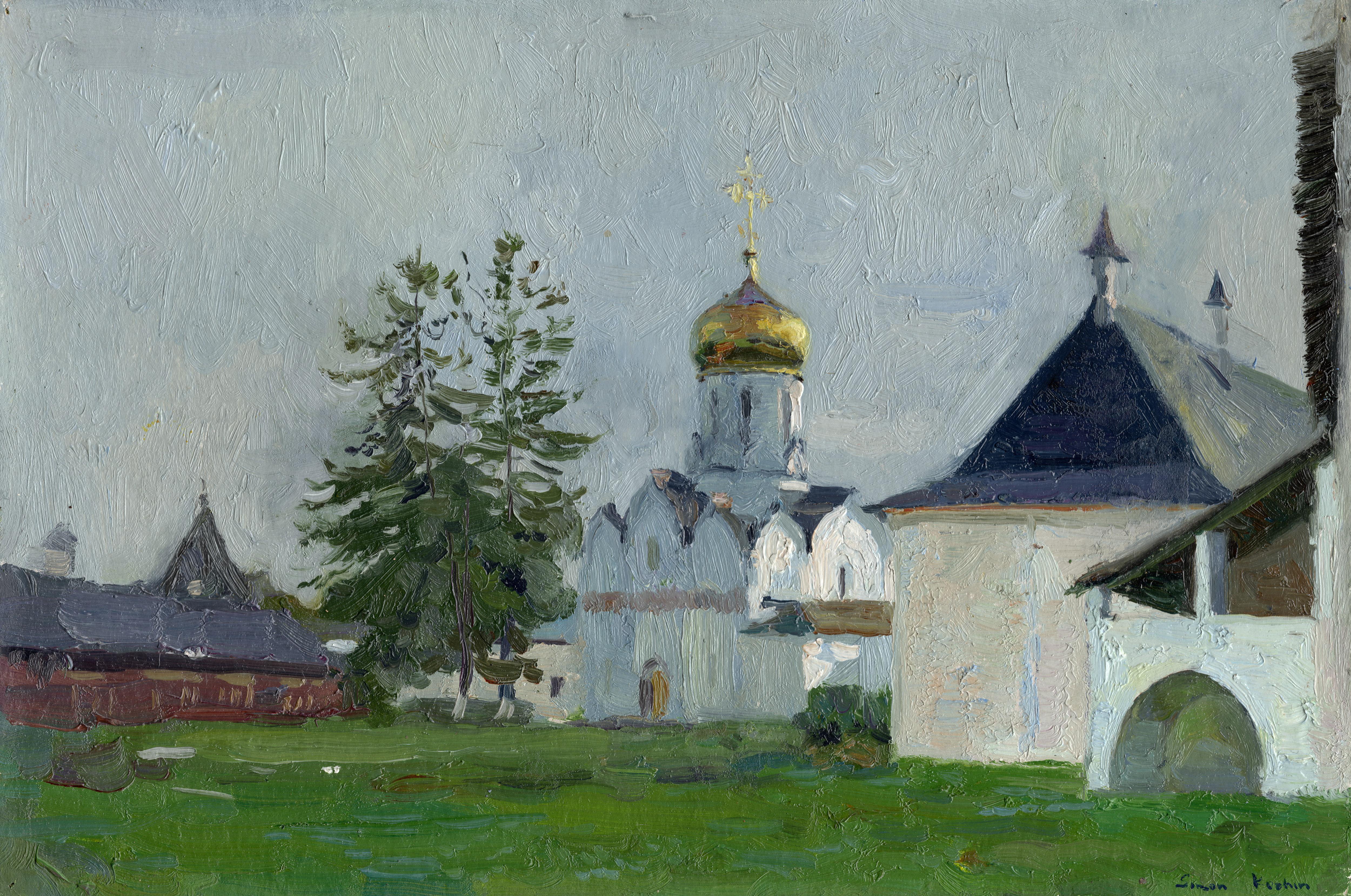
Zvenigorod Monastery
By Simon Kozhin
Located in Zofingen, AG
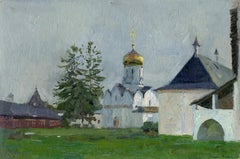
The Zvenigorod Monastery is located on the high bank of the Storozhe River, overlooking the Moscow River. The Cathedral of the Nativity of the Virgin, the beginning of the 15th centu...
Category
Early 2000s Impressionist Landscape Paintings
Materials
Canvas, Oil
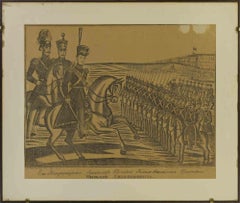
Napoleon III-Review by Edouard Detaille - Tempera - signed lower right
By Jean Baptiste Édouard Detaille
Located in PARIS, FR
Conditions: Very good condition. In its original frame and glass. A similar composition, but less accomplished, is currently part of the collections of the Musée des Invalides. Signed at the bottom and dated.
Complementary shipping worlwide by DHL, FEDEX.
Returning customers : 25% OFF listed price on all Belfort SAS catalogue.
Description:
This work of art, framed by a majestic golden frame, accurately depicts a group of soldiers in 19th-century uniforms. Every detail, from the golden buttons to the epaulettes, finely illustrates the military equipment of the time. Behind them stands a sober architectural structure, evoking a barracks or a guard post. The color palette, dominated by earthy tones and dark shades of blue, gives a solemn and dignified atmosphere to the scene. The disposition of the soldiers, turned towards the artist, with an attitude both alert and relaxed, captures a moment of daily military life. This painting, with its attention to detail and harmonious composition, transports the viewer into a bygone era, inviting reflection on history and military traditions.
EDOUARD DETAILLE
The emperor is accompanied by his aide-de-camp, Colonel Castelnau, and Marshal Canrobert. In a gilded wooden frame, under a Marie Louise blue background.
Life and time
Born in 1848 into a close-knit bourgeois family, Édouard Detaille, the eldest of eight children, displayed early talent in drawing. “He was a prodigy,” notes François Robichon. By the age of thirteen, he exhibited an astonishing surety of hand and a phenomenal sense of composition. His father, connected to Horace Vernet, encouraged him. At seventeen, after passing his baccalaureate, he entered Meissonier’s studio. This relationship, which developed into mutual affection, spared Detaille the academic detour through the École des Beaux-Arts. Rather than dictating an official art style, Meissonier, at the peak of his fame, traveled with his students, introducing them to the nuances of Titian, Rembrandt, and Rubens in Brussels and Lille.
In 1867, the Paris of “free trade” dominated the world through the technological revolutions of the Universal Exhibition, and the amiable young man, striking in appearance, discovered the salon of Princess Mathilde and the theater of Dumas fils. He even approached the Empress, noting in his journals, “Not bad, the Empress.” This observation encapsulated Detaille: he had no doubts about his talent, cultivated panache, enjoyed the company of beautiful women, and aimed to conquer the circles of power without sacrificing his freedom.
From childhood, he listened to his calling: “Before I could read, I could guess the subjects of battles, the names of famous generals, the weapons of officers and soldiers from the images I admired in the books of Norvins and Laurent de l'Ardèche.” He mingled with collectors and regularly attended military reviews on the Champs-Élysées. His first painting exhibited at the Salon in 1868, “La Halte de tambours,” was praised by critics who immediately recognized “a remarkable truth of observation and simplicity of effect.” The purchase of this work by Princess Mathilde, cousin of Emperor Louis-Napoleon, made Detaille, at twenty, an envied celebrity known to Sainte-Beuve, Théophile Gautier, the Goncourt brothers, and Flaubert. The young artist’s humanistic vision contrasted with the compositions of his predecessors, depicting soldiers in maneuvers, contemplative and resigned as war loomed.
**The Combatant’s Vision**
The Siege of Paris, where he nearly lost his life in 1870, and the deaths of two brothers in that defeat darkened his outlook. From 1871 onward, Detaille no longer concealed the cruelties of war: German riflemen mowed down by machine gun fire, cavalrymen and panicked horses caught in ambushes, fields plowed by shells strewn with dead animals. The unvarnished tragedy: “It is an absolute fact that no painter has ever rendered a battlefield covered with corpses as it is,” commented Jules Claretie. The fallen bodies still bear the appearance of life in their frozen rigidity. Detaille’s testimony of the devastating defeat and the catastrophic effects of the first total war in history was not a celebration of heroism but a lament, a “lesson in darkness.” “From war, once considered the supreme effort of human genius, we now see only melancholy and horrors,” judged one writer in response to his canvases.
“Detaille experienced the reality of combat at a young age during a war that foreshadowed the two world conflicts of the 20th century,” explains François Robichon. With great realism, Detaille painted war from the perspective of the combatant. He introduced a humanity and a critical lucidity regarding the evolution of warfare. His works intensely captured the violence and firepower of new weapons like machine guns. Before he turned thirty, Detaille had become a chronicler of these painful years. He exhibited, as a critic noted, a “striking portrait of modern war” that both French civilians and soldiers had experienced firsthand. He embodied a youth humiliated and eager for revenge. Yet this scrupulous artist also remembered, in his expansive landscapes—from the chalky plateaus of Île-de-France to the Russian plains—the lessons of Corot and Courbet. Manet was not far off. “I wouldn’t want my art to be reduced to mere patriotic art,” he asserted. “A system I often employ and love is to first execute the landscape, very effective, very tight, based on nature…” Echoing Meissonier’s advice: “Always nature, always nature!” Detaille remained close to this father figure, constructing a grand townhouse next to his mentor’s studio at 129 boulevard Malesherbes at the age of 26, having purchased 425 m² of land from the Pereire brothers. He even chose the same architect as Meissonier: Paul Boesvilwald. A bachelor and incorrigible seducer, the painter welcomed his conquests, including Valtesse de la Bigne, amidst his collections, having built his studio in the courtyard.
Diplomatic Actor
As Detaille’s fame grew, his Malesherbes townhouse quickly became a gathering place for foreign princes, politicians, and heads of state, where Juliette Adam, Léon Gambetta’s muse, offered him valuable advice. The Prince of Wales, the future Edward VII, developed a genuine friendship with the painter. “This fervent patriot, friend of Déroulède, was extraordinarily open to the world,” recounts François Robichon. In just a few years, he gained considerable social, cultural, and international stature. Received at Windsor, at the English court, he was close to Tsar Alexander III and a great friend of Félix Faure.
In this capacity, Detaille played a decisive role in the Entente Cordiale, signed in 1904 between England and France, and in the Franco-Russian alliance of 1894, thereby contributing to the Triple Entente among the three powers. An engaged witness of his time—associated with the birth of the “Ligue des Patriotes” alongside Alphonse de Neuville...
Category
Late 19th Century Academic Landscape Paintings
Materials
Gouache