Items Similar to Charles Ragland Bunnell 1935 Graphite Drawing, Colorado Modernist Cityscape
Video Loading
Want more images or videos?
Request additional images or videos from the seller
1 of 18
Charles Ragland BunnellCharles Ragland Bunnell 1935 Graphite Drawing, Colorado Modernist Cityscapecirca 1935
circa 1935
$2,750
£2,098.18
€2,388.61
CA$3,865.16
A$4,248.75
CHF 2,230.57
MX$50,520.66
NOK 28,645.62
SEK 26,093.06
DKK 17,846.78
About the Item
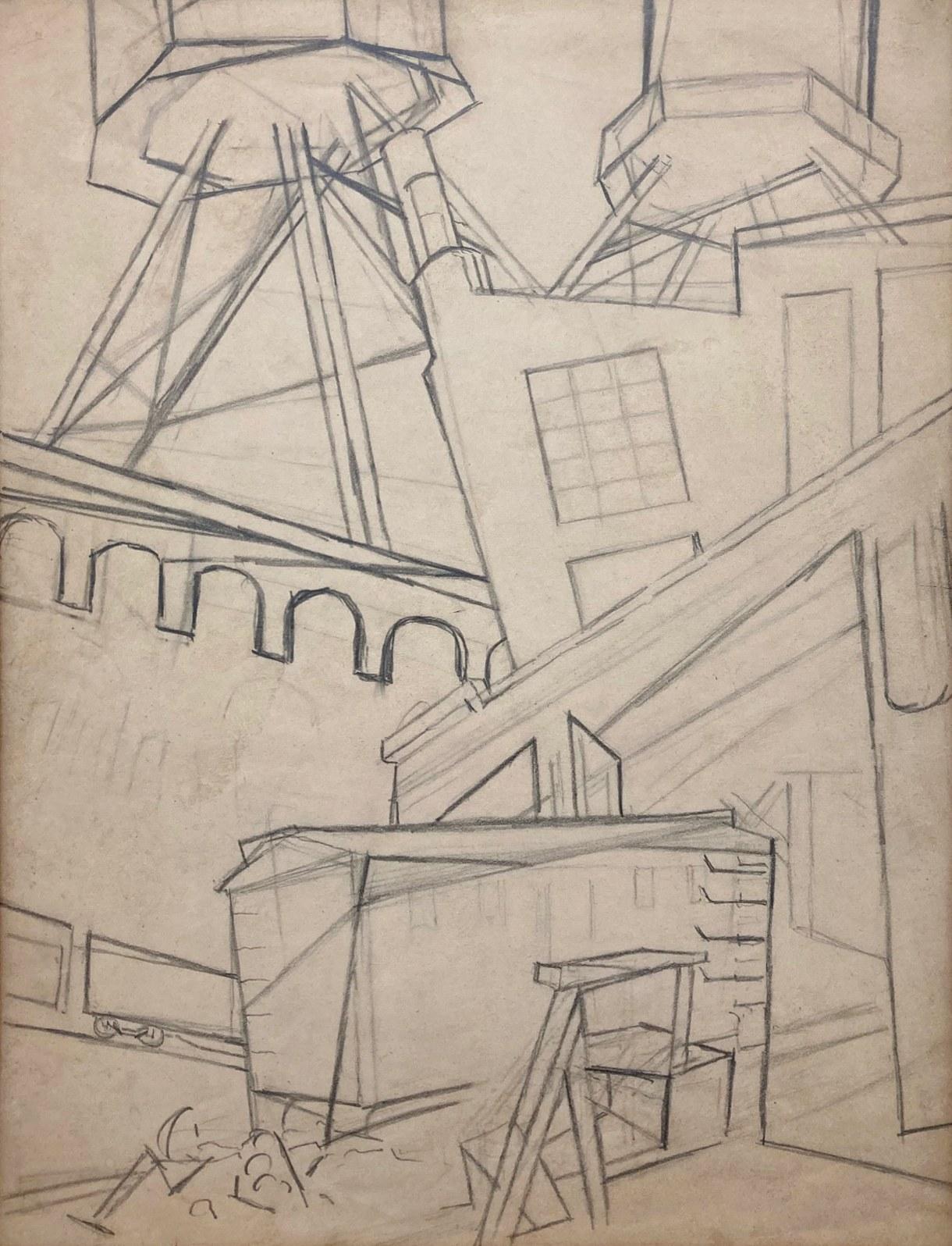
This circa 1935 graphite on paper drawing by Charles Ragland Bunnell (1897–1968) depicts a modernist cityscape of houses perched on a hill in Colorado, reflecting the vibrancy and innovation of American modernism during the WPA era. Rendered with precise lines and thoughtful composition, the drawing captures both architectural detail and a sense of place, offering a compelling glimpse into Bunnell’s early modernist approach.
Presented in a custom hardwood frame with archival materials and UV-protective glass, the piece measures 21 x 21 ½ x ½ inches, with an image size of 22 x 25 ¾ inches. Provenance: Estate of Charles Ragland Bunnell. The work is in excellent vintage condition, with detailed condition reports available upon request.
About the Artist:
Charles Bunnell was a pioneering American modernist and educator, whose work spans representational and abstract styles. Influenced by the WPA, New York and European modernist movements, and mentors like Boardman Robinson and Ernest Lawson, Bunnell evolved from Colorado landscapes and mining towns to surrealist and transcendental abstractions. A key figure in introducing Abstract Expressionism to Colorado Springs in the late 1940s, his career included solo exhibitions at major institutions like the New Mexico Museum of Art and the University of Illinois. Bunnell’s legacy endures through both his art and his mentorship of generations of Colorado artists.
This drawing is a remarkable example of 1930s American modernism, Colorado cityscapes, and WPA-era art, making it a significant addition to any collection of early 20th-century American art.
- Creator:Charles Ragland Bunnell (1897-1968, American)
- Creation Year:circa 1935
- Dimensions:Height: 21 in (53.34 cm)Width: 21.5 in (54.61 cm)Depth: 0.5 in (1.27 cm)
- Medium:
- Movement Style:
- Period:
- Framing:Frame IncludedFraming Options Available
- Condition:Very good to excellent vintage condition. Detailed condition report available upon request.
- Gallery Location:Denver, CO
- Reference Number:Seller: 134811stDibs: LU27312493462
Charles Ragland Bunnell
Charles Bunnell developed a love for art at a very young age. As a child in Kansas City, Missouri, he spent much of his time drawing. When he was unable to find paper he drew on walls and in the margins of textbooks for which he was often fined. Around 1915, Bunnell moved with his family to Colorado Springs, Colorado. He served in World War I and later used his GI Training to study at the Broadmoor Art Academy (later renamed the Colorado Springs Fine Arts Center) during 1922 and 1923. In 1922, he married fellow student, Laura Palmer. He studied with Ernest Lawson in 1927-1928 and, in the winter of 1928-1929, he served as Lawson’s assistant. In the late 1920’s, the Bunnell’s settled just west of Colorado Springs and 1928, they welcomed the first of their three children. Their one-acre homesite, which they referred to as “Old Home Place”, was situated between two sets of railroad tracks at the foot of Pike’s Peak. Charlie converted an old railroad boxcar into his studio, where he later gave lessons. Beginning in 1931, Bunnell spent a year and a half studying under Boardman Robinson. The two men clashed constantly due to a generation gap and markedly different philosophies. Robinson encouraged his students not to stray from realism and though Bunnell mastered Robinson’s preferred style of American Scene painting, he regularly irritated his professor with his abstract sketches. Bunnell taught at the Kansas City Art Institute during the summers of 1929, 1930, 1940, and 1941. Between 1934 and 1941, he painted and taught under federal projects which included assisting Frank Mechau on murals for the Colorado Springs Post Office. However, he did not take to mural making and, after criticism from Boardman Robinson about his use of “heavy daubs which have no place in mural work,” he abandoned mural-making altogether. By the late 1930’s, Bunnell’s work departed from the American Scene/Modernist style he was trained in towards abstraction. This is marked by his “Black and Blue” series, consisting of 83 abstracted ink and watercolors. Affected by the Second World War and the loss of his 10-year old son, Bunnell’s work of the early 1940’s took on a Transcendental and Surrealist tone. The works from this period are moody and readily reflect the political and personal turmoil experienced by the artist. In the late 1940’s, Bunnell began experimenting with Abstract Expressionism. He alone is credited with introducing Colorado Springs to the new style as it was excluded from the Fine Art Center’s curriculum by Boardman Robinson. Bunnell excelled in Abstract Expressionism and continued to evolve in the style through the 1950’s continuing to his death in 1968. He was recently recognized as a premier American Abstract Expressionist by his inclusion in the book American Abstract Expressionism of the 1950’s: An Illustrated Survey. © David Cook Galleries, LLC
About the Seller
5.0
Vetted Professional Seller
Every seller passes strict standards for authenticity and reliability
Established in 1979
1stDibs seller since 2013
299 sales on 1stDibs
Typical response time: 1 hour
- ShippingRetrieving quote...Shipping from: Denver, CO
- Return Policy
More From This Seller
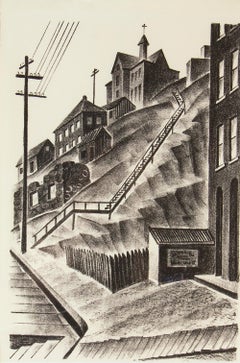
View AllWPA-Era Central City, Colorado, 1930s Modernist Lithograph, Cityscape 3/25
By Arnold Rönnebeck
Located in Denver, CO
This 1933 lithograph, Central City, Colorado 3/25, by Arnold Rönnebeck, captures the architectural essence of a historic mining town during the Great Depression. Rendered in black an...
Category
1930s American Modern Figurative Prints
Materials
Lithograph
$1,350 Sale Price
50% Off
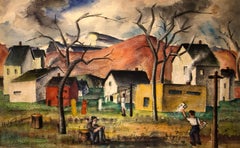
WPA 1940s Framed Figurative Village Landscape with Figures, Houses
Mountains
By Charles Ragland Bunnell
Located in Denver, CO
This evocative watercolor on paper painting, titled The Way War First Comes (1940), was created by noted American artist Charles Ragland Bunnell (1897-1968) during the Depression era...
Category
1940s American Modern Figurative Drawings and Watercolors
Materials
Watercolor
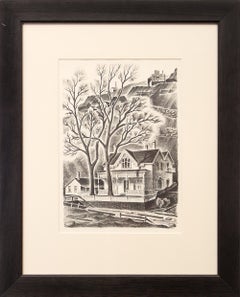
Arnold Ronnebeck Lithograph of Gregory Point, Colorado, 1930s Modernist Print
By Arnold Rönnebeck
Located in Denver, CO
This original 1930s lithograph by renowned modernist artist Arnold Ronnebeck (1885–1947) captures a historic home at Gregory Point, near Central City, Colorado. Part of a limited edi...
Category
1930s American Modern Landscape Prints
Materials
Lithograph, Paper
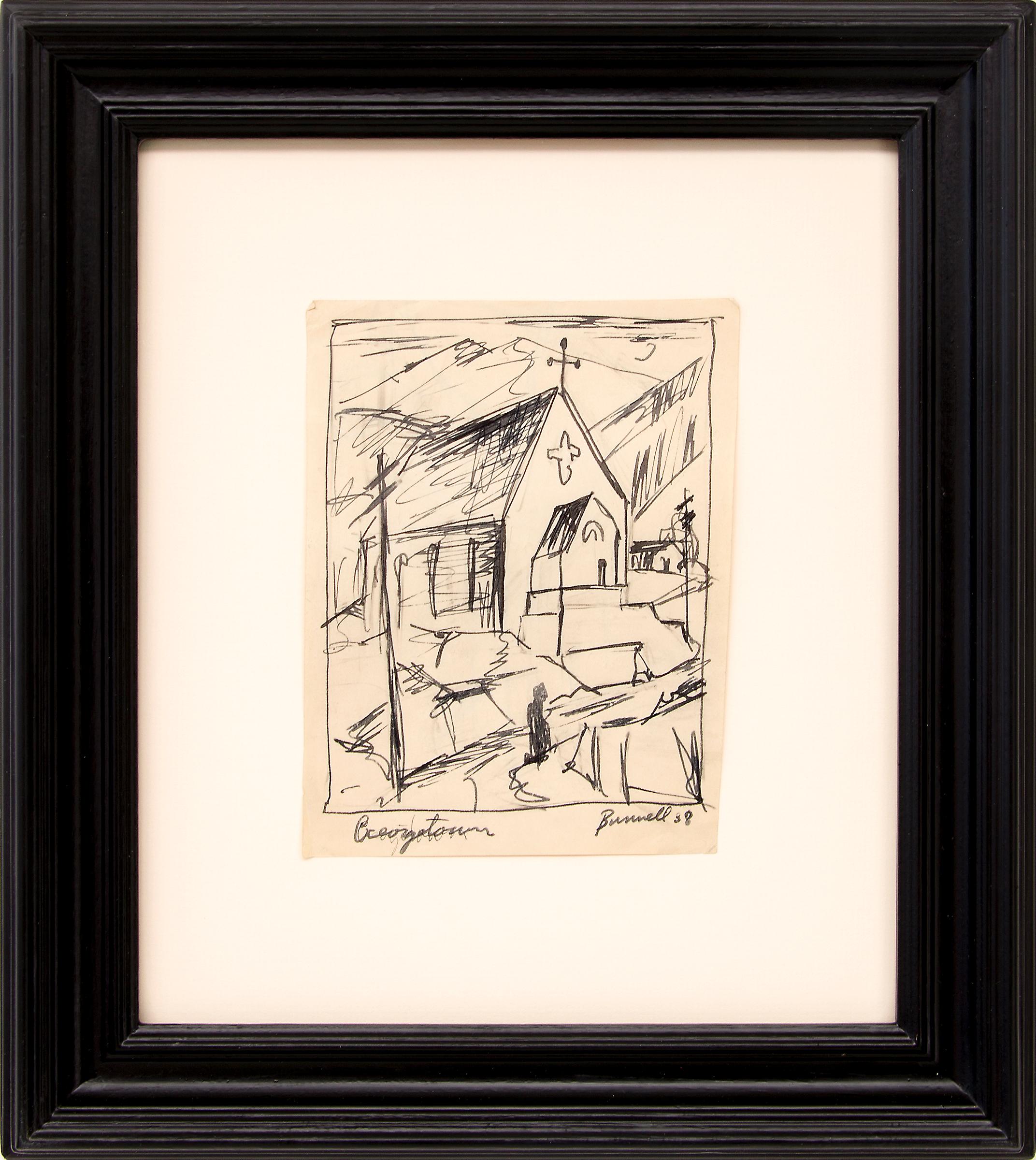
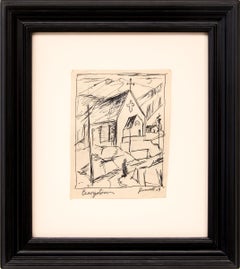
Charles Ragland Bunnell 1938 Ink Drawing of Church in Rocky Mountains, Colorado
By Charles Ragland Bunnell
Located in Denver, CO
This vintage 1938 ink drawing by Charles Ragland Bunnell (1897–1968) beautifully depicts a church nestled amid the dramatic Rocky Mountains of Georgetown, Colorado. Executed in bold ...
Category
1930s American Modern Landscape Drawings and Watercolors
Materials
Ink
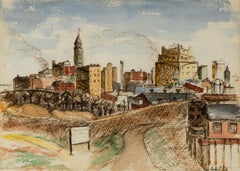
1950s Denver Skyline Painting – Graphite
Watercolor Colorado Cityscape Art
Located in Denver, CO
A captivating midcentury cityscape titled "Denver Skyline", this original 1950s watercolor and graphite painting offers a rare industrial-era view of lower downtown Denver, Colorado....
Category
1950s American Impressionist Landscape Paintings
Materials
Watercolor, Graphite
1940s WPA Watercolor by Charles Ragland Bunnell, Golden Cycle Mill, Colorado
By Charles Ragland Bunnell
Located in Denver, CO
This original 1940s grayscale watercolor by Charles Ragland Bunnell depicts a semi-abstracted view of the Golden Cycle Mill in Colorado Springs, Colorado. Rendered in subtle gradations of black and gray, the composition reflects the influence of WPA-era Modernism, combining industrial subject matter with expressive abstraction. The work is a notable example of mid-20th-century American Regionalism, capturing both a sense of place and a forward-looking artistic vision.
Bunnell’s restrained palette and simplified architectural forms transform the industrial landscape into a dynamic modern composition, emphasizing structure, rhythm, and atmosphere. The subject references the Golden Cycle Mining and Reduction Company, a major contributor to Colorado’s early 20th-century mining industry, located in what is now Old Colorado City. Through this modernist lens, the painting documents an important chapter of Western industrial history.
The watercolor measures 8 1/8 x 9 5/8 inches (sight size) and is presented in a custom black frame measuring 18 x 19 ½ x 1 ⅜ inches, making it a refined, display-ready piece for collectors of American Modern art, WPA works, and industrial landscapes.
Charles Ragland Bunnell (1897–1968) was a pioneering Colorado modernist, New Deal art...
Category
1940s American Modern Landscape Paintings
Materials
Watercolor
You May Also Like
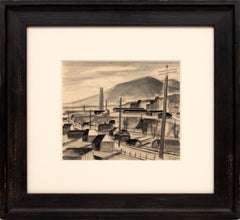
A ca. 1940s Graphite on Paper Mural Study of a City Scene by Rudolph Weisenborn
By Rudolph Weisenborn
Located in Chicago, IL
A ca. 1940s graphite on paper mural study of a Chicago city scene by notable Modern artist Rudolph Weisenborn. Artwork size: 12 1/2" x 9 1/4". Archivally matted to 18" x 16". Provenance: Estate of the artist.
Rudolph Weisenborn was born in Strassburg, Germany in 1881, but was orphaned at the age of nine. He was taken-in by Mid-Western farmer Thomas Westaby and spent his early years in Wisconsin, Iowa and North Dakota. Weisenborn first attended the University of North Dakota in 1898, then the Students School of Art in Denver. Various accounts have him working out west as a gold miner and cowboy.
Around 1912, he settled in Chicago and worked as a window designer for Marshall Field’s. Weisenborn is best known as the founder of the Chicago No-Jury Society of Artists. The group was founded because many artists could not get their work accepted into the mainstream Art Institute shows. Weisenborn is quoted as saying that he harbored feelings of disdain for any jury and that his own paintings were frequently rejected by conservative jurors. He was also involved and helped found other radical artist’s groups such as the Salon des Refuses, Cor Ardens and Neo-Arlimusic. In 1936, he helped found the New York-based American Abstract Artist’s Group. He created the only abstract mural for the 1933 Century of Progress Exhibition in Chicago and also worked for the Federal Arts Project in the Easel Division. His WPA murals can be found in Crane Technical High School and Nettlehorst Elementary School in Chicago, IL. In 1945, Chicago businessman Herman Spertus...
Category
1940s American Modern Landscape Drawings and Watercolors
Materials
Paper, Graphite
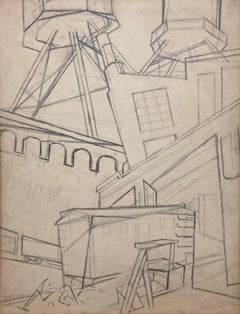
Cincinnati Ohio cityscape drawing WPA era
Located in Wilton Manors, FL
Beautiful original drawing by American artist, Albert Sway (b.1913). Cincinnati Cityscape, ca. 1935. Ink on paper measures 9.5 x 12 inches. Signed lower right. Good condition with no...
Category
1930s American Realist Landscape Drawings and Watercolors
Materials
Paper, Ink
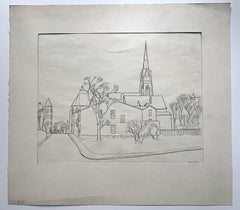
Cincinnati Ohio cityscape drawing WPA era
Located in Wilton Manors, FL
Beautiful original drawing by American artist, Albert Sway (b.1913). Cincinnati Cityscape, ca. 1935. Ink on paper measures 10 x 15 inches. Signed lower left. Good condition with no d...
Category
1930s American Realist Landscape Drawings and Watercolors
Materials
Paper, Ink
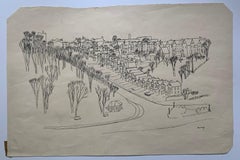
Cincinnati Ohio cityscape drawing WPA era
Located in Wilton Manors, FL
Beautiful original drawing by American artist, Albert Sway (b.1913). Cincinnati Cityscape, ca. 1935. Ink on paper measures 11 x 17 inches. Signed lower right. Good condition with no ...
Category
1930s American Realist Landscape Drawings and Watercolors
Materials
Paper, Ink
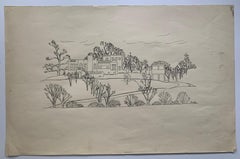
Cincinnati Ohio cityscape drawing WPA era
Located in Wilton Manors, FL
Beautiful original drawing by American artist, Albert Sway (b.1913). Cincinnati Cityscape, ca. 1935. Ink on paper measures, sheet measures 11 x 17 inches. Signed lower right. No da...
Category
1930s American Realist Landscape Drawings and Watercolors
Materials
Paper, Ink
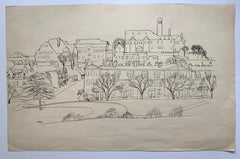
Cincinnati Ohio cityscape drawing WPA era
Located in Wilton Manors, FL
Beautiful original drawing by American artist, Albert Sway (b.1913). Cincinnati Cityscape, ca. 1935. Ink on paper measures 11 x 17 inches. Signed lower right. Good condition with a 1...
Category
1930s American Realist Landscape Drawings and Watercolors
Materials
Paper, Ink
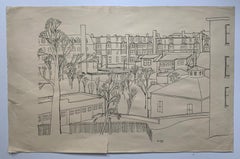
More Ways To Browse
Colorado Artists
American Cityscape
Vintage Lawson
Modernist Cityscape Painting
Cannes Watercolour
Drawing Of The Taj Mahal
Hans Berger
Neel Reid
Vermont Watercolors
Charles March Gere
John Aldridge
Paul Marny
British Landscape 1930s
Cargo Ship Art
Emile Rampelberg
John Varley Early
Lake District Watercolour
Raphael Tuck And Sons