Items Similar to Christian Rohlfs "Mountain", German Expressionist, drawing, 1920s
Want more images or videos?
Request additional images or videos from the seller
1 of 4
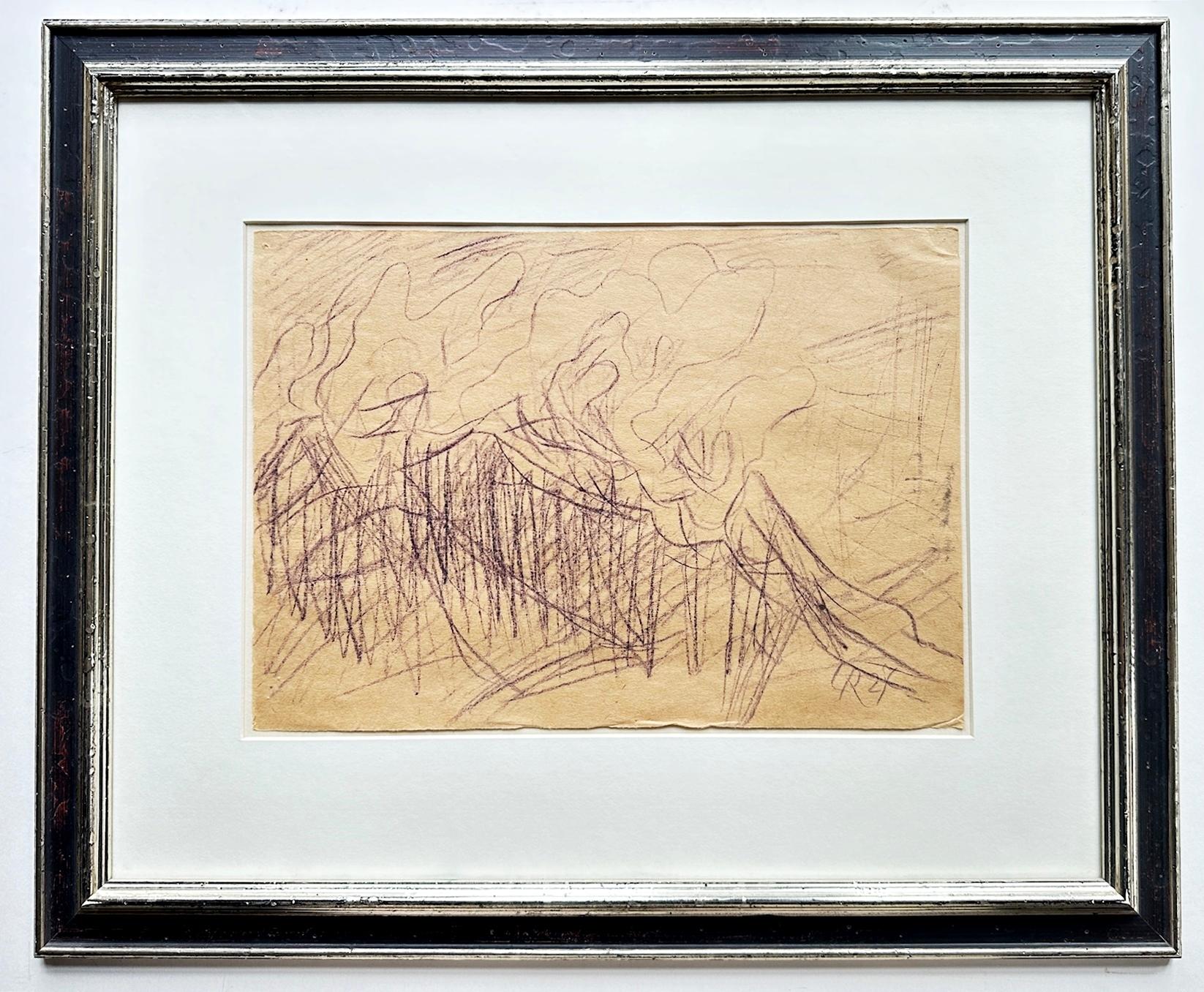
Christian RohlfsChristian Rohlfs "Mountain", German Expressionist, drawing, 1920s1927
1927
$1,490.67
£1,109.84
€1,250
CA$2,060.29
A$2,190.52
CHF 1,184.57
MX$26,056.86
NOK 14,838.36
SEK 13,551.84
DKK 9,524.69
About the Item
Christian Rohlfs
1849 Niendorf/Holstein - 1938 Hagen
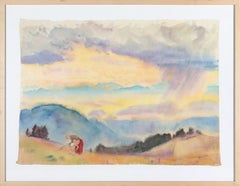
Berg
Coloured pencil on paper
Sheet size: approx. 14.2 x 18 cm
Frame: 19.5 x 25.5 cm
Provenance: Paul Vogt Collection, private collection, Rhineland
Expertise Galerie Utermann, Dortmund
Viewing and collection are possible by prior appointment.
Paul Vogt (born 29 May 1926 in Essen-Holsterhausen; died 1 October 2017 in Münster) was a German art historian and university lecturer.
Prof. Paul Vogt studied art history, archaeology and prehistory in Göttingen and received his doctorate in philosophy in 1950 under Heinz Rudolf Rosemann (1900–1977) with a dissertation on The Landscape in 16th-Century Dutch Printmaking. He was curator from 1954 and, as successor to Heinz Köhn, director of the Museum Folkwang in Essen from 1963 to 1988. This also made him director of the German Poster Museum. In 1977, he was appointed to the University of Duisburg-Essen.
Prof. Paul Vogt was an honorary member of the Folkwang Museum Association and a member of the Ruhr Cultural Foundation since 1984. He was awarded the Cross of Merit on Ribbon of the Order of Merit of the Federal Republic of Germany.
400 of the works in the Rohlfs Collection at the Osthaus Museum originate from donations by Prof. Dr. Paul Vogt from Essen. Prof. Vogt, former chairman of the Ruhr Cultural Foundation and former director of the Museum Folkwang in Essen, as well as nephew of the artist, was the administrator of Christian Rohlfs' estate.
Christian Rohlfs was born on 20 December 1849 as the youngest son of a smallholder in Niendorf. At the age of 15, he injured his right knee and had to spend two years in bed. During this period of illness, Christian Rohlfs began to draw. The poet Theodor Storm, who saw the boy's drawings, sent him to the art critic Ludwig Pietsch in Berlin in 1869. Pietsch gave him a letter of recommendation for the Grand Ducal Academy in Weimar, where Rohlfs studied from 1870 to 1874. Rohlfs was supported by the Grand Duke, which enabled him to live and work in financial security for many years. In 1871, his leg condition worsened, and in 1873 his right leg was finally amputated.
In 1876, Rohlfs transferred to the academy in Weimar. From 1884 onwards, Christian Rohlfs worked as a freelance painter.
In 1901, Rohlfs met Karl Ernst Osthaus through Henry van de Velde. Osthaus invited him to join the planned Folkwang School in Hagen, but the school never came into being. In 1903, Rohlfs saw works by Vincent van Gogh and contemporary French painters for the first time at the Folkwang Museum.
Christian Rohlfs' early painting style was influenced by the naturalism of the Weimar school of painting, before he turned to impressionism around 1880. In the 1890s, his paintings became more colourful. After a Neo-Impressionist phase, Christian Rohlfs arrived at his expressive late style around 1906. His turn to Expressionism probably came after he met Emil Nolde, whom Rohlfs got to know in 1905 during his summer stay in Soest. Christian Rohlfs then created his actual work in the following years, already over 50 years old. He painted his most powerful works between the ages of 70 and 80.
In 1907, Christian Rohlfs joined the "Sonderbund westdeutscher Kunstfreunde und Künstler" (Special Association of West German Art Lovers and Artists), which was led by Karl Ernst Osthaus. In 1911, he became a member of the "Neue Secession" (New Secession), and in 1914 of the "Freie Secession" (Free Secession). On his 75th birthday, the city of Hagen honours him by naming him an honorary citizen. In the same year, Rohlfs also becomes a member of the Prussian Academy of Arts.
In 1937, Rohlfs is ostracized by the Nazis and banned from exhibiting his work. 412 of his works are removed from German museums as "degenerate art".
From 1927 to 1937, Christian Rohlfs spent every summer in Ascona. In 1929, the Christian Rohlfs Museum was founded in Hagen in honour of his 80th birthday. Christian Rohlfs died in Hagen on 8 January 1938.
- Creator:Christian Rohlfs (1849-1938, German)
- Creation Year:1927
- Dimensions:Height: 5.6 in (14.2 cm)Width: 7.09 in (18 cm)Depth: 0.04 in (1 mm)
- Medium:
- Movement Style:
- Period:
- Condition:
- Gallery Location:Eltville am Rhein, DE
- Reference Number:1stDibs: LU2910217510902
About the Seller
New to 1stDibs
Joined in the past six months.
No Reviews Yet
Vetted Professional Seller
Every seller passes strict standards for authenticity and reliability
1stDibs seller since 2025
- ShippingRetrieving quote...Shipping from: Eltville am Rhein, Germany
- Return Policy
More From This Seller
View AllChristian Rohlfs "Clouds over Monte Tamaro, 1927", German Expressionist
By Christian Rohlfs
Located in Eltville am Rhein, DE
Christian Rohlfs
1849 Niendorf/Holstein – 1938 Hagen
Clouds over Monte Tamaro, 1927
Copying pencil on brownish paper, 1927
Monogrammed and dated (19)27 lower right
Sheet size: appr...
Category
1920s Expressionist Landscape Drawings and Watercolors
Materials
Charcoal
Landscape 1927, By German Expressionist, Watercolor, Pupil Of Ferdinand Hodler
By Hans Brasch
Located in Eltville am Rhein, DE
Hans Brasch
Karlsruhe 1882 – 1973 Murrhardt
"Landscape, 1928"
Watercolor on Japanese paper
Signed lower left and dated "1927"
Image: 62.5 x 86 cm
Frame: 80 x 104 cm
Good condition,...
Category
1920s Expressionist Landscape Drawings and Watercolors
Materials
Watercolor
Lovis Corinth "Burg am See 1923" Color Lithograph, German Impressionist, Signed
By Lovis Corinth
Located in Eltville am Rhein, DE
Lovis Corinth
Tapiau 1858 - 1925 Zandvoort
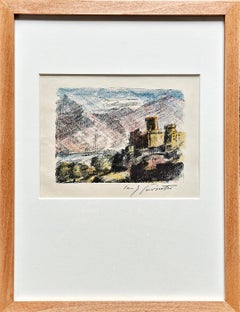
Castle by the Lake 1923,
Color lithograph on handmade paper
Signed in pencil lower right
Sheet 2 of the portfolio Swiss Landscapes
One of 75 copies on this paper
Image size: 13 x 18 cm
Sheet size: 40 x 30 cm
Frame: 43 x 33 cm
Catalogue raisonné Müller 793
Further photos available on request
Viewing and collection possible by prior appointment
Authenticity confirmed in writing.
Lovis Corinth was born on July 21, 1858, in the town of Tapiau in East Prussia (now Gwardejsk, Russia). While attending high school in Königsberg, he developed an interest in Greek and Roman mythology as well as the Christian stories of the Bible. From 1876, Lovis Corinth attended the art academy in Königsberg, where he studied under Otto Günther, who introduced him to Weimar plein air painting. In 1880, he transferred to the Munich Academy. Works from his Munich period demonstrate his orientation towards the naturalistic painting style of Wilhelm Leibl's circle.
In 1883, Lovis Corinth traveled to Italy with his father, and in 1884 he spent three months in Antwerp, where he took painting lessons from Paul Eugène Gorge. From 1884 to 1887, Corinth studied at the Académie Julian in Paris. The artist then traveled to Berlin, where he probably painted his first self-portrait in 1887/88, which was followed by numerous others over the years.
From 1891 to 1899, Corinth lived as a freelance painter in Munich, where he belonged to the Secession. After meeting Max Liebermann and Walter Leistikow in the winter of 1898/99, he decided to move to Berlin, where he settled in 1901. Prior to this, his work "Salomé with the Head of John the Baptist...
Category
1920s Impressionist Landscape Prints
Materials
Lithograph
Karl Schmidt-Rottluff Haus mit Pappeln 1913 Woodcut German Expressionism
Located in Eltville am Rhein, DE
Karl Schmidt-Rottluff
1884 Rottluff - 1976 Berlin
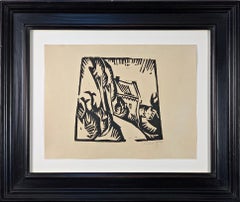
Haus mit Pappeln, 1913
Woodcut on firm brownish paper
Signed in pencil lower right
Image: 23.5 x 24.7 cm
Frame: 51 x 61 cm
Publishe...
Category
1910s Expressionist Landscape Prints
Materials
Woodcut
Karl Bohrmann, Mixed Media, 1996, Signed, Provenance: Galerie Meyer-Ellinger
Located in Eltville am Rhein, DE
Karl Bohrmann
Mannheim 1928 - 1998 Cologne
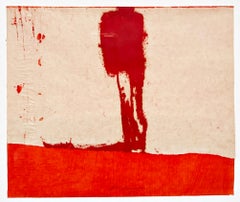
Trees, 1996
Oil pastel, watercolour and collage
Signed and dated lower centre
Paper size: approx. 22.5 x 27 cm
Frame: 59 x 41.5 cm
Proven...
Category
1990s Abstract Drawings and Watercolors
Materials
Mixed Media
Lovis Corinth "Alphütte 1923" Color Lithograph, German Impressionist, Signed
By Lovis Corinth
Located in Eltville am Rhein, DE
Lovis Corinth
Born 1858 - 1925 Zandvoort
Alpine Hut, 1923
Color lithograph on handmade paper
Signed in pencil lower right
Sheet 3 of the portfolio Swiss Landscapes
One of 75 copies on this paper
Image size: 15.5 x 18 cm
Sheet size: 40 x 30 cm
Frame: 43 x 33 cm
Catalogue raisonné Müller 794
Further photos available on request
Viewing and collection possible by prior appointment
Authenticity will be confirmed in writing.
Lovis Corinth was born on July 21, 1858, in the town of Tapiau in East Prussia (now Gwardejsk, Russia). While attending high school in Königsberg, he developed an interest in Greek and Roman mythology as well as the Christian stories of the Bible. From 1876, Lovis Corinth attended the art academy in Königsberg, where he studied under Otto Günther, who introduced him to Weimar plein air painting. In 1880, he transferred to the Munich Academy. Works from his Munich period demonstrate his orientation towards the naturalistic painting style of Wilhelm Leibl's circle.
In 1883, Lovis Corinth traveled to Italy with his father, and in 1884 he spent three months in Antwerp, where he took painting lessons from Paul Eugène Gorge. From 1884 to 1887, Corinth studied at the Académie Julian in Paris. The artist then traveled to Berlin, where he probably painted his first self-portrait in 1887/88, which was followed by numerous others over the years.
From 1891 to 1899, Corinth lived as a freelance painter in Munich, where he belonged to the Secession. After meeting Max Liebermann and Walter Leistikow in the winter of 1898/99, he decided to move to Berlin, where he settled in 1901. Prior to this, his work "Salomé with the Head of John the Baptist...
Category
1920s Impressionist Landscape Prints
Materials
Lithograph
You May Also Like
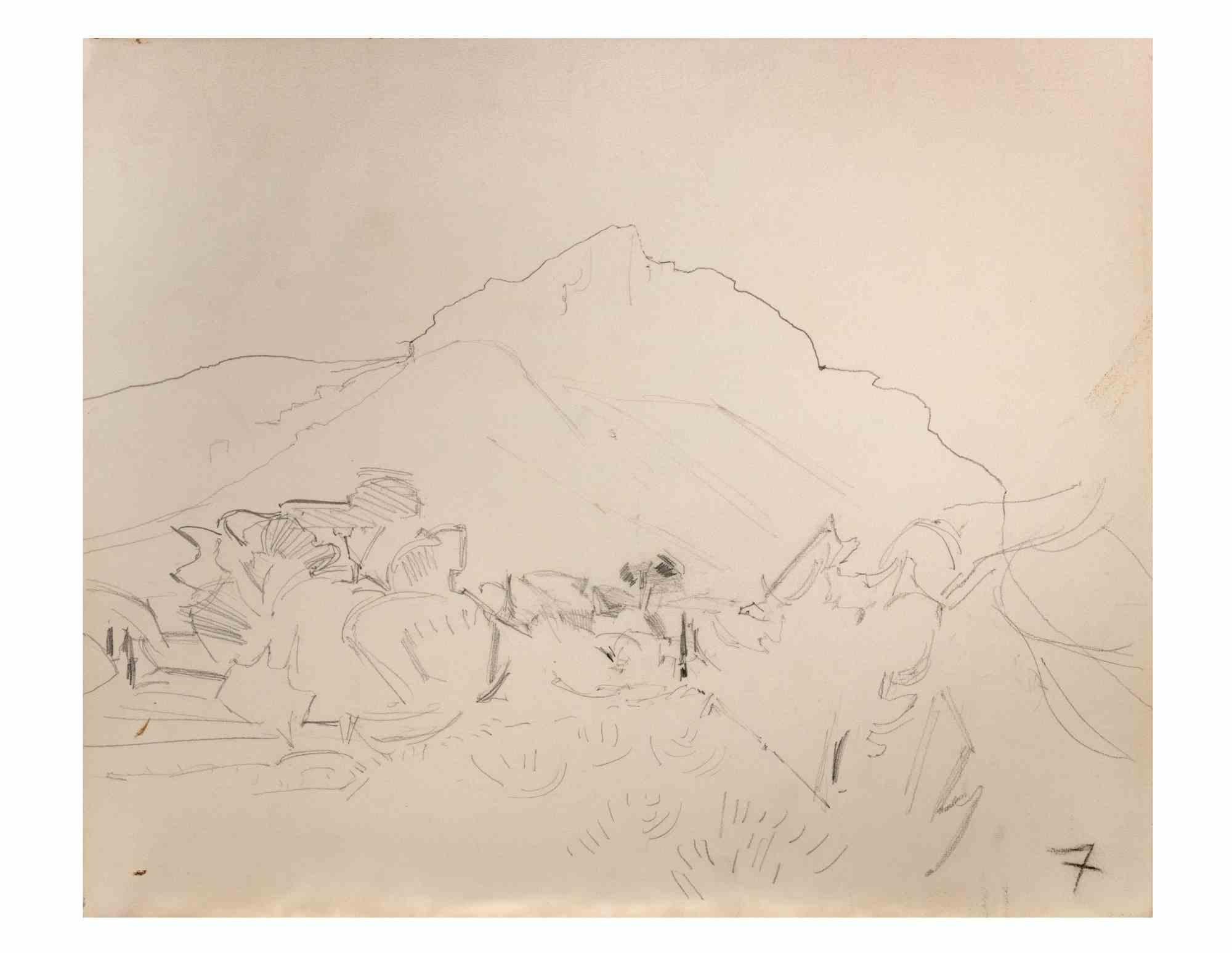
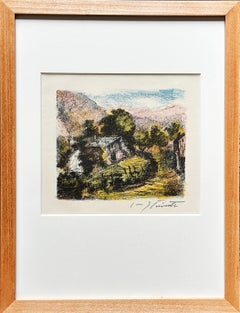
Landscape - Drawing By Reynold Arnould - Mid-20th Century
Located in Roma, IT
Landscape is a pencil drawing realized by Reynold Arnould (Le Havre 1919 - Parigi 1980).
Good condition on a yellowed paper, no signature.
Reynold Arnould was born in Le Havre, Fr...
Category
Mid-20th Century Modern Landscape Drawings and Watercolors
Materials
Pencil
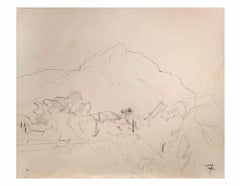
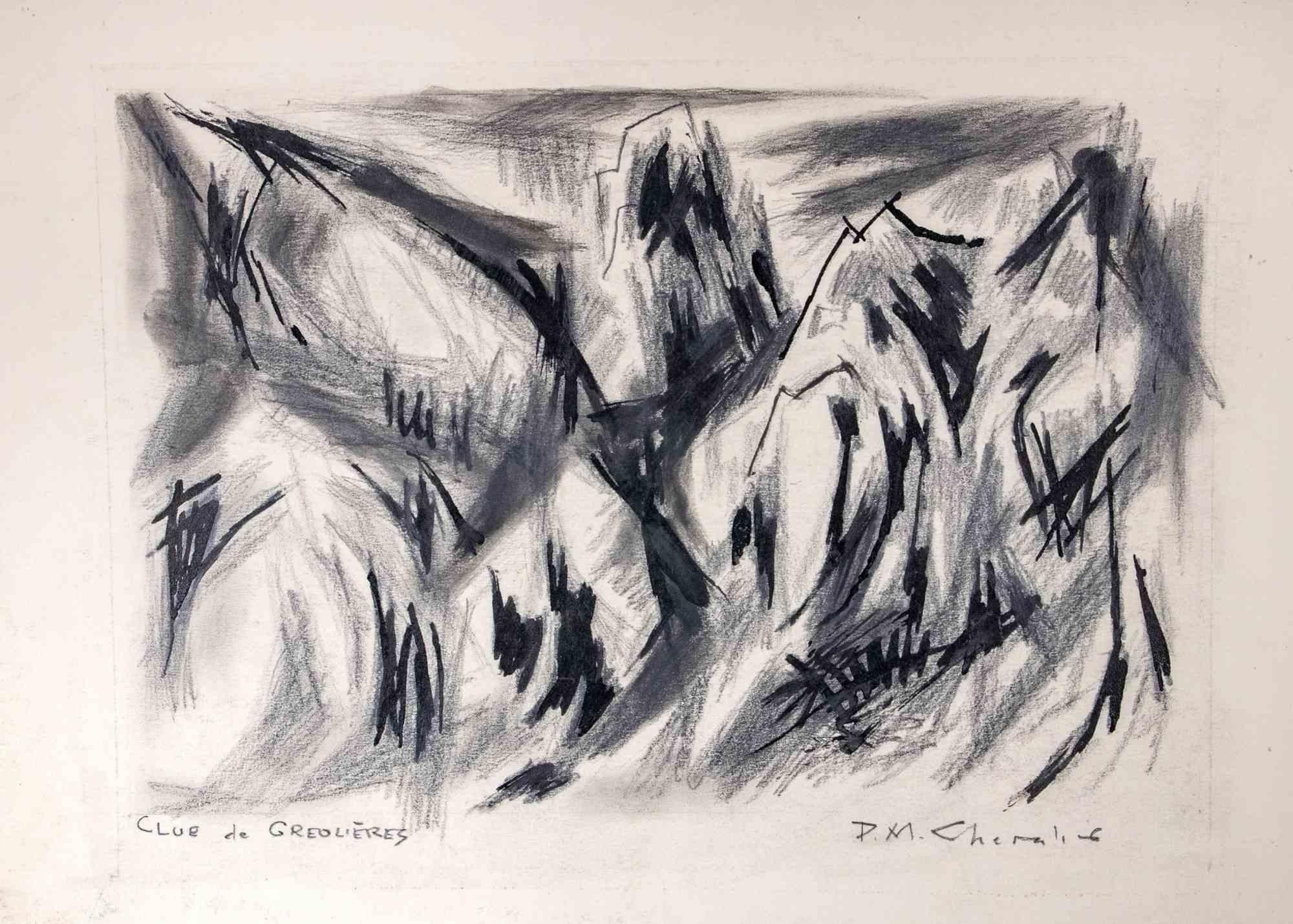
Mountains - Drawing by Paul-Maurice Chevalier - Early 20th Century
Located in Roma, IT
Mountains is a drawing on paper realized in the mid-20th Century by Paul-Maurice Chevalier. (1898-1984).
Ink, Charcoal, and Watercolor on paper.
Hand-signed on the lower.
Good con...
Category
Early 20th Century Modern Abstract Paintings
Materials
Paper, Charcoal, Ink, Watercolor
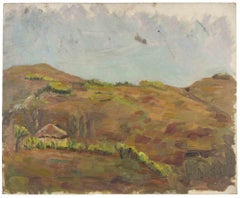
Mountain Landscape - Painting by Francesco Settimj - 1930s
Located in Roma, IT
Oil on canvas mounted on cardboard.
Realized in 1930s.
Good condition.
Category
1930s Modern Figurative Paintings
Materials
Oil
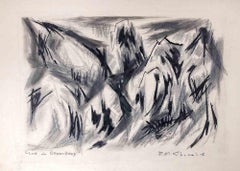
German Israeli Expressionist Abstract Lithograph Of Judeah Hills
By Anna Ticho
Located in Surfside, FL
Anna Ticho (אנה טיכו ) (1894-1980) was a Jewish artist who became famous for her drawings of the Jerusalem hills.
Anna Ticho was born in Brno, Moravia, then part of the Austro-Hungarian Empire (today the Czech Republic) in 1894. At the age of 15, she began to study drawing in Vienna in an art school under the directorship of Ernst Nowak...
Category
20th Century Expressionist Landscape Prints
Materials
Charcoal, Lithograph
ALPSPITZE #3 (with Zabriskie Gallery Label), original pencil drawing of Bavaria
By Marsden Hartley
Located in New York, NY
Marsden Hartley
ALPSPITZE #3 (with Zabriskie Gallery Label), 1933
Pencil on cream wove paper. In original vintage frame with Zabriskie Gallery label
Sticker label, framed with Zabris...
Category
1930s Modern Landscape Drawings and Watercolors
Materials
Pencil
Mountainous Landscape
Located in Douglas, Isle of Man
Raymond James Coxon 1896-1997, was an English landscape and portrait painter, he was a war artist during the second World war after which his works became more abstract. He studied a...
Category
Mid-20th Century Landscape Drawings and Watercolors
Materials
Paper, Watercolor