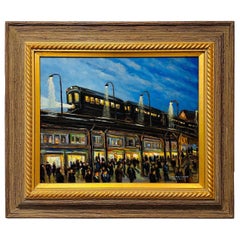
Items Similar to Erie Station, Elmira, New York Railroad Hub, Early 20th Century Cleveland School
Video Loading
Want more images or videos?
Request additional images or videos from the seller
1 of 18
Clarence Holbrook CarterErie Station, Elmira, New York Railroad Hub, Early 20th Century Cleveland School1931
1931
$9,000
£6,853.31
€7,891.40
CA$12,753.79
A$13,718.53
CHF 7,331.58
MX$161,702.36
NOK 92,434.04
SEK 84,502.26
DKK 58,962.11
About the Item
Clarence Holbrook Carter (American, 1904-2000)
Erie Station, Elmira,1931
Watercolor on paper
Signed and dated lower right
19.25 x 14.25 inches
26.75 x 21.75 inches, framed
Clarence Holbrook Carter achieved a level of national artistic success that was nearly unprecedented among Cleveland School artists of his day, with representation by major New York dealers, scores of awards and solo exhibits, and streams of praise flowing from pens of the top art critics. Over the course of his 60+ year career Carter evolved from an exceptionally fine American Scene painter capable of evoking deep reservoirs of mood, into an abstractionist with a strongly surrealist bent.
While his two bodies of work seem at first to be worlds apart, owing to their different formal vocabularies, they, in fact, explore virtually the same subject: the nexus between life and death and the transition from earth to spirit. The early work finds its expressive power through specific people, events, and landscapes—most of which are drawn from his experiences growing up in the river town of Portsmouth, Ohio—while the later work from the 1960s on evokes potent states of being through pure flat shape, color and form that read as universals. As his primary form he adopted the ovoid or egg shape, endowing it with varying degrees of transparency. Alone or in multiples, the egg moves through Carter’s landscapes and architectural settings like a sentient spirit on a restless quest.
Born and raised in southern Ohio along the banks of the mercurial Ohio River and its treacherous floods, Carter developed a love of drawing as a child, and was encouraged by both his parents. He was self-directed, found inspiration all around him, and was strongly encouraged by the fact that his teenage work consistently captured art prizes in county and state fairs. Although money was tight after his father (who was a postal worker) died suddenly of a stroke, Carter’s mother supported his desire to study at the Cleveland School of Art from 1923-27, where he trained under painters Henry Keller, Frank Wilcox and Paul Travis.
In the summer of 1927, Carter studied in Capri with the modernist Hans Hofmann, where he carried out compositional exercises in charcoal and paint, recording the lucid spatial order of stairs, walls, roofs, arches and other elements of the island’s compressed architecture. Returning to Cleveland in 1929, Carter had his first solo show, and through Milliken taught studio classes at the Cleveland Museum of Art from 1930-37. In 1934, he worked under the auspices of the Public Works of Art Project and won a commission to paint two murals in Cleveland’s Public Auditorium. In 1936, he painted a post office mural in Ravenna, Ohio, as well as one for the post office in his hometown of Portsmouth, where his father had worked. He then headed the Northeast Ohio division of the painting projects arm of the Works Progress Administration, a subsequent government art program. In 1938, he moved to Pittsburgh to teach at the Carnegie Institute of Technology until 1944. Carter’s American Scene paintings of the ’30s and ’40s, which launched his artistic star, are the works for which the artist remains best known.
During and immediately after World War II, Clarence Carter realized his attraction to bold pattern, dramatic perspective and eye-catching hard-edged design was a poor fit with the prevailing style of Abstract Expressionism. Fortunately, these same hallmarks of his style were prized within the realm of commercial art. Thus, from 1944-1959, Carter became a veritable “Mad Man [Madison Avenue Man],” designing ambitious series of advertisements for major corporations such as Alcoa and The National City Bank of New York (Citibank) which appeared on the back covers of Fortune magazine, and on inside pages of Time, Newsweek, Business Week, and US News
World Report. Carter described this period of his life as one of incredible inventiveness and imagination. It freed him up to be far more experimental in his approach to image-making.
Around 1964 Carter acknowledged a need to break from the confines of representational painting. Once Carter had found a potent symbol in the egg, he used it to create an astounding body of imagery for the rest of his life. Among the most ambitious of all his later paintings were his Transections, a theological term meaning to cross, specifically between life and death.
- Creator:Clarence Holbrook Carter (1904-2000, American)
- Creation Year:1931
- Dimensions:Height: 26.75 in (67.95 cm)Width: 21.75 in (55.25 cm)
- Medium:
- Movement Style:
- Period:
- Condition:
- Gallery Location:Beachwood, OH
- Reference Number:1stDibs: LU1768217483422
Clarence Holbrook Carter
Clarence Holbrook Carter achieved a level of national artistic success that was nearly unprecedented among Cleveland School artists of his day, with representation by major New York dealers, scores of awards and solo exhibits, and streams of praise flowing from pens of the top art critics. Over the course of his 60+ year career Carter evolved from an exceptionally fine American Scene painter capable of evoking deep reservoirs of mood, into an abstractionist with a strongly surrealist bent. While his two bodies of work seem at first to be worlds apart, owing to their different formal vocabularies, they, in fact, explore virtually the same subject: the nexus between life and death and the transition from earth to spirit. The early work finds its expressive power through specific people, events, and landscapes—most of which are drawn from his experiences growing up in the river town of Portsmouth, Ohio—while the later work from the 1960s on evokes potent states of being through pure flat shape, color and form that read as universals. As his primary form he adopted the ovoid or egg shape, endowing it with varying degrees of transparency. Alone or in multiples, the egg moves through Carter’s landscapes and architectural settings like a sentient spirit on a restless quest. Born and raised in southern Ohio along the banks of the mercurial Ohio River and its treacherous floods, Carter developed a love of drawing as a child, and was encouraged by both his parents. He was self-directed, found inspiration all around him, and was strongly encouraged by the fact that his teenage work consistently captured art prizes in county and state fairs. Carter studied at the Cleveland School of Art from 1923-27, where he trained under painters Henry Keller, Frank Wilcox and Paul Travis. Returning to Cleveland in 1929, Carter had his first solo show, and through Milliken taught studio classes at the Cleveland Museum of Art from 1930-37. In 1938, he moved to Pittsburgh to teach at the Carnegie Institute of Technology until 1944. Carter’s American Scene paintings of the ’30s and ’40s, which launched his artistic star, are the works for which the artist remains best known. During and immediately after World War II, Clarence Carter realized his attraction to bold pattern, dramatic perspective and eye-catching hard-edged design was a poor fit with the prevailing style of Abstract Expressionism. Fortunately, these same hallmarks of his style were prized within the realm of commercial art. Around 1964 Carter acknowledged a need to break from the confines of representational painting. Once Carter had found a potent symbol in the egg, he used it to create an astounding body of imagery for the rest of his life. Among the most ambitious of all his later paintings were his Transections, a theological term meaning to cross, specifically between life and death.
About the Seller
5.0
Gold Seller
Premium sellers maintaining a 4.3+ rating and 24-hour response times
Established in 1975
1stDibs seller since 2022
46 sales on 1stDibs
Typical response time: 1 hour
- ShippingRetrieving quote...Shipping from: Beachwood, OH
- Return Policy
More From This Seller
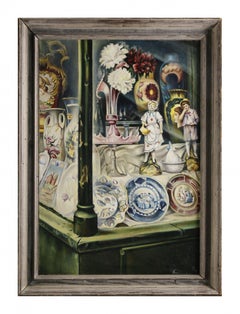
View AllHospitalities Long Past, 1940s Oil Painting of Store Front
By Clarence Holbrook Carter
Located in Beachwood, OH
Clarence Holbrook Carter (American, 1904-2000)
Hospitalities Long Past, 1941
Oil on canvas
Signed and dated lower right
37 x 27 inches
"Looking into store front windows has always i...
Category
1940s American Modern Figurative Paintings
Materials
Oil
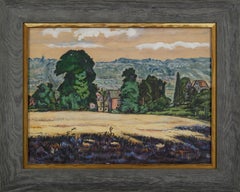
Houses in Zoar, Ohio Landscape, Early 20th Century Cleveland School
By August F. Biehle
Located in Beachwood, OH
August Frederick Biehle (1885-1979)
Houses in Zoar, c. 1921
Gouache, litho crayon, colored pencil and graphite on paper
Signed lower right
14 x 19 inches
20.25 x 25.25 inches, framed...
Category
1920s American Modern Landscape Paintings
Materials
Crayon, Gouache, Color Pencil, Graphite
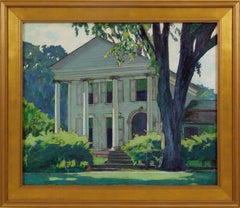
House in Hudson, Ohio, Late 19th Century Painting by Cleveland School Artist
Located in Beachwood, OH
Ora Coltman (American, 1858-1940)
House in Hudson, OH
Oil on canvas
Signed lower left
22 x 26 inches
27.5 x 31.5 inches, framed
21 Aurora Street is locally known as the Isham-Beebe ...
Category
Late 19th Century American Modern Figurative Paintings
Materials
Oil
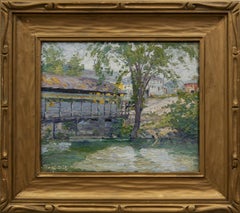
Early 20th Century Landscape with Covered Bridge, Female Cleveland School Artist
By May Ames
Located in Beachwood, OH
May Lydia Ames (American, 1863-1943)
Landscape with Covered Bridge
Oil on canvas
Signed lower left
9.75 x 8 inches
14.5 x 13 inches, framed
May Ames was born in Cleveland in 1863 an...
Category
Early 20th Century American Impressionist Figurative Paintings
Materials
Oil
Stevedores, Ohio River, Early 20th Century Cleveland School Artist
By Frank Wilcox
Located in Beachwood, OH
Frank Nelson Wilcox (American, 1887-1964)
Stevedores, Ohio River, c. 1920
Watercolor on paper
Signed lower right
21.5 x 29. 5 inches
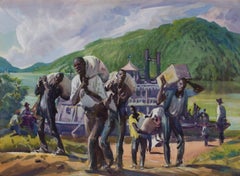
"The trip Otto Ege and I made from Pittsburgh to Marietta by riverboat and then by train to Mammoth Cave, was the next high spot in my artistic explorations. We saw something of the Old Southern river life on the way - the roustabouts, the showboat and river town life at Point Pleasant, and then to the sombre tonal mysteries of the Cave. These sights added much to my pictorial vocabulary..." - Frank Wilcox
Frank Nelson Wilcox (October 3, 1887 – April 17, 1964) was a modernist American artist and a master of watercolor. Wilcox is described as the "Dean of Cleveland School...
Category
1920s American Modern Landscape Drawings and Watercolors
Materials
Watercolor
Zoar, Ohio Landscape w/ Tree, Early 20th Century Midwest Town
By Adam Lehr
Located in Beachwood, OH
Adam Lehr (American, 1853-1924)
Zoar Landscape
Oil on board
Signed lower right
20.75 x 27.75 inches
30 x 37 inches, framed
Known primarily as a still-life and landscape painter, Ada...
Category
Early 20th Century Landscape Paintings
Materials
Oil

You May Also Like
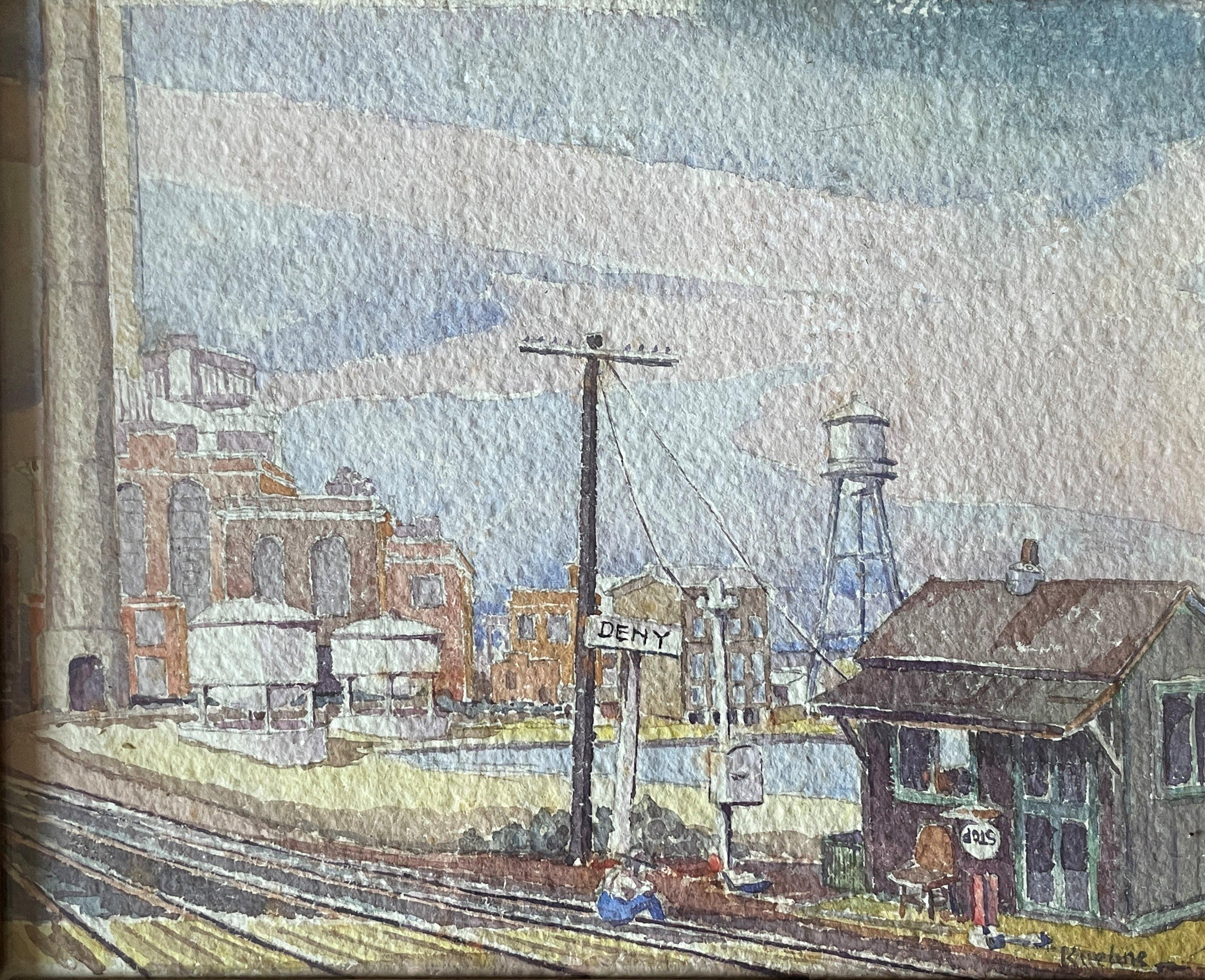
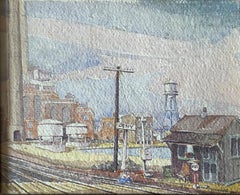
"Train Station, " Max Kuehne, Industrial City Scene, American Impressionism
By Max Kuehne
Located in New York, NY
Max Kuehne (1880 - 1968)
Train Station, circa 1910
Watercolor on paper
8 1/4 x 10 1/4 inches
Signed lower right
Provenance:
Private Collection, Illinois
Max Kuehne was born in Halle, Germany on November 7, 1880. During his adolescence the family immigrated to America and settled in Flushing, New York. As a young man, Max was active in rowing events, bicycle racing, swimming and sailing. After experimenting with various occupations, Kuehne decided to study art, which led him to William Merritt Chase's famous school in New York; he was trained by Chase himself, then by Kenneth Hayes Miller. Chase was at the peak of his career, and his portraits were especially in demand. Kuehne would have profited from Chase's invaluable lessons in technique, as well as his inspirational personality. Miller, only four years older than Kuehne, was another of the many artists to benefit from Chase's teachings. Even though Miller still would have been under the spell of Chase upon Kuehne's arrival, he was already experimenting with an aestheticism that went beyond Chase's realism and virtuosity of the brush. Later Miller developed a style dependent upon volumetric figures that recall Italian Renaissance prototypes.
Kuehne moved from Miller to Robert Henri in 1909. Rockwell Kent, who also studied under Chase, Miller, and Henri, expressed what he felt were their respective contributions: "As Chase had taught us to use our eyes, and Henri to enlist our hearts, Miller called on us to use our heads." (Rockwell Kent, It's Me O Lord: The Autobiography of Rockwell Kent. New York: Dodd, Mead and Co., 1955, p. 83). Henri prompted Kuehne to search out the unvarnished realities of urban living; a notable portion of Henri's stylistic formula was incorporated into his work.
Having received such a thorough foundation in art, Kuehne spent a year in Europe's major art museums to study techniques of the old masters. His son Richard named Ernest Lawson as one of Max Kuehne's European traveling companions. In 1911 Kuehne moved to New York where he maintained a studio and painted everyday scenes around him, using the rather Manet-like, dark palette of Henri.
A trip to Gloucester during the following summer engendered a brighter palette. In the words of Gallatin (1924, p. 60), during that summer Kuehne "executed some of his most successful pictures, paintings full of sunlight . . . revealing the fact that he was becoming a colorist of considerable distinction." Kuehne was away in England the year of the Armory Show (1913), where he worked on powerful, painterly seascapes on the rocky shores of Cornwall. Possibly inspired by Henri - who had discovered Madrid in 1900 then took classes there in 1906, 1908 and 1912 - Kuehne visited Spain in 1914; in all, he would spend three years there, maintaining a studio in Granada. He developed his own impressionism and a greater simplicity while in Spain, under the influence of the brilliant Mediterranean light. George Bellows convinced Kuehne to spend the summer of 1919 in Rockport, Maine (near Camden). The influence of Bellows was more than casual; he would have intensified Kuehne's commitment to paint life "in the raw" around him.
After another brief trip to Spain in 1920, Kuehne went to the other Rockport (Cape Ann, Massachusetts) where he was accepted as a member of the vigorous art colony, spearheaded by Aldro T. Hibbard. Rockport's picturesque ambiance fulfilled the needs of an artist-sailor: as a writer in the Gloucester Daily Times explained, "Max Kuehne came to Rockport to paint, but he stayed to sail." The 1920s was a boom decade for Cape Ann, as it was for the rest of the nation. Kuehne's studio in Rockport was formerly occupied by Jonas Lie.
Kuehne spent the summer of 1923 in Paris, where in July, André Breton started a brawl as the curtain went up on a play by his rival Tristan Tzara; the event signified the demise of the Dada movement. Kuehne could not relate to this avant-garde art but was apparently influenced by more traditional painters — the Fauves, Nabis, and painters such as Bonnard. Gallatin perceived a looser handling and more brilliant color in the pictures Kuehne brought back to the States in the fall. In 1926, Kuehne won the First Honorable Mention at the Carnegie Institute, and he re-exhibited there, for example, in 1937 (Before the Wind). Besides painting, Kuehne did sculpture, decorative screens, and furniture work with carved and gilded molding. In addition, he designed and carved his own frames, and John Taylor Adams encouraged Kuehne to execute etchings. Through his talents in all these media he was able to survive the Depression, and during the 1940s and 1950s these activities almost eclipsed his easel painting. In later years, Kuehne's landscapes and still-lifes show the influence of Cézanne and Bonnard, and his style changed radically.
Max Kuehne died in 1968. He exhibited his work at the National Academy of Design, the Art Institute of Chicago, the Carnegie Institute in Pittsburgh, the Memorial Art Gallery of the University of Rochester, and in various New York City galleries. Kuehne's works are in the following public collections: the Detroit Institute of Arts (Marine Headland), the Whitney Museum (Diamond Hill...
Category
1910s American Impressionist Landscape Drawings and Watercolors
Materials
Paper, Watercolor
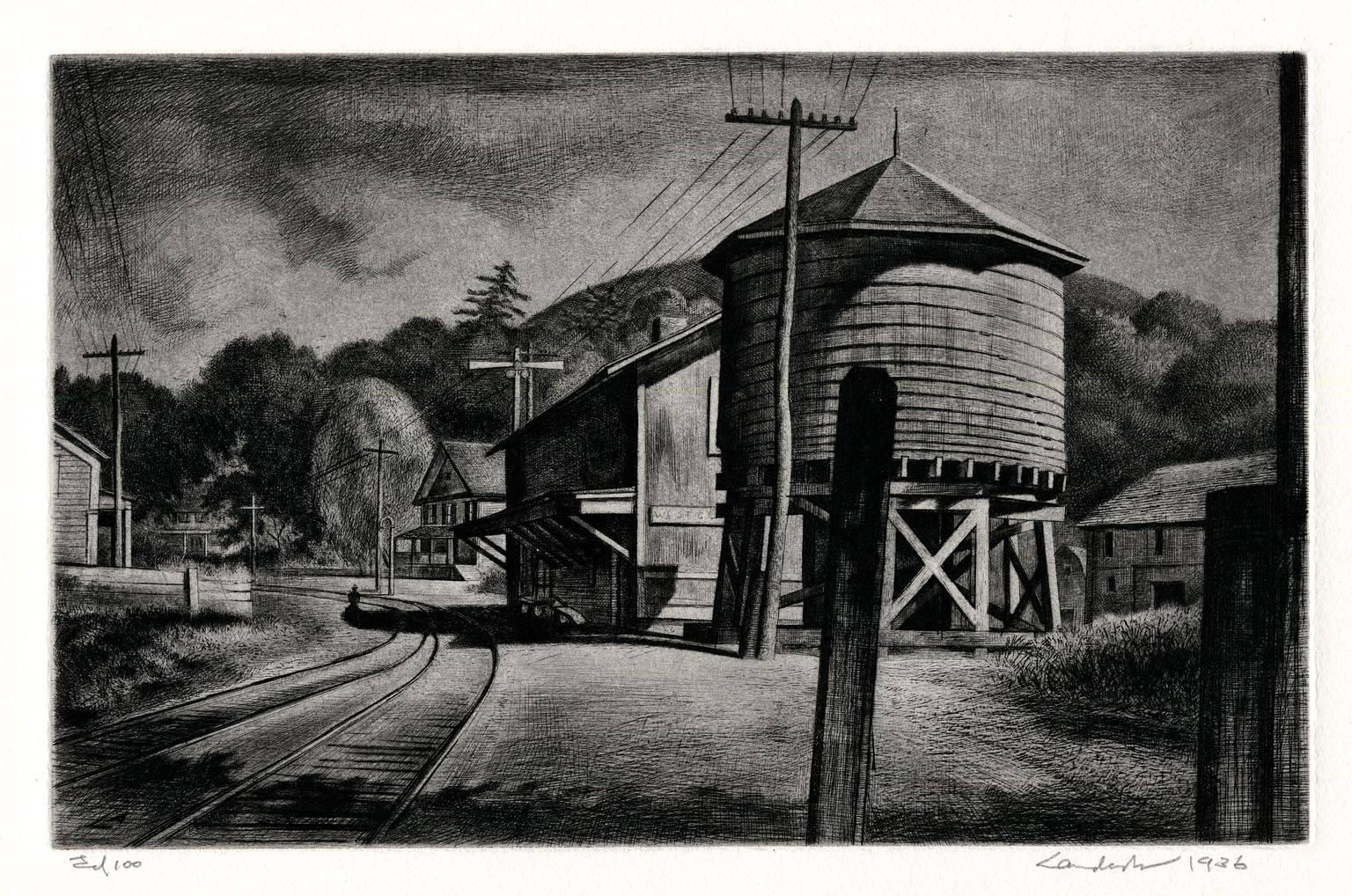
West Cornwall Station.
By Armin Landeck
Located in New York, NY
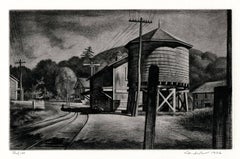
Armin Landeck created this 1936 drypoint was printed in an edition of 100. The image size is 6 7/8 x 10 7/8" and the paper size 12 1/2 x 16". It is Signed and dated in the...
Category
Mid-20th Century American Realist Landscape Prints
Materials
Drypoint
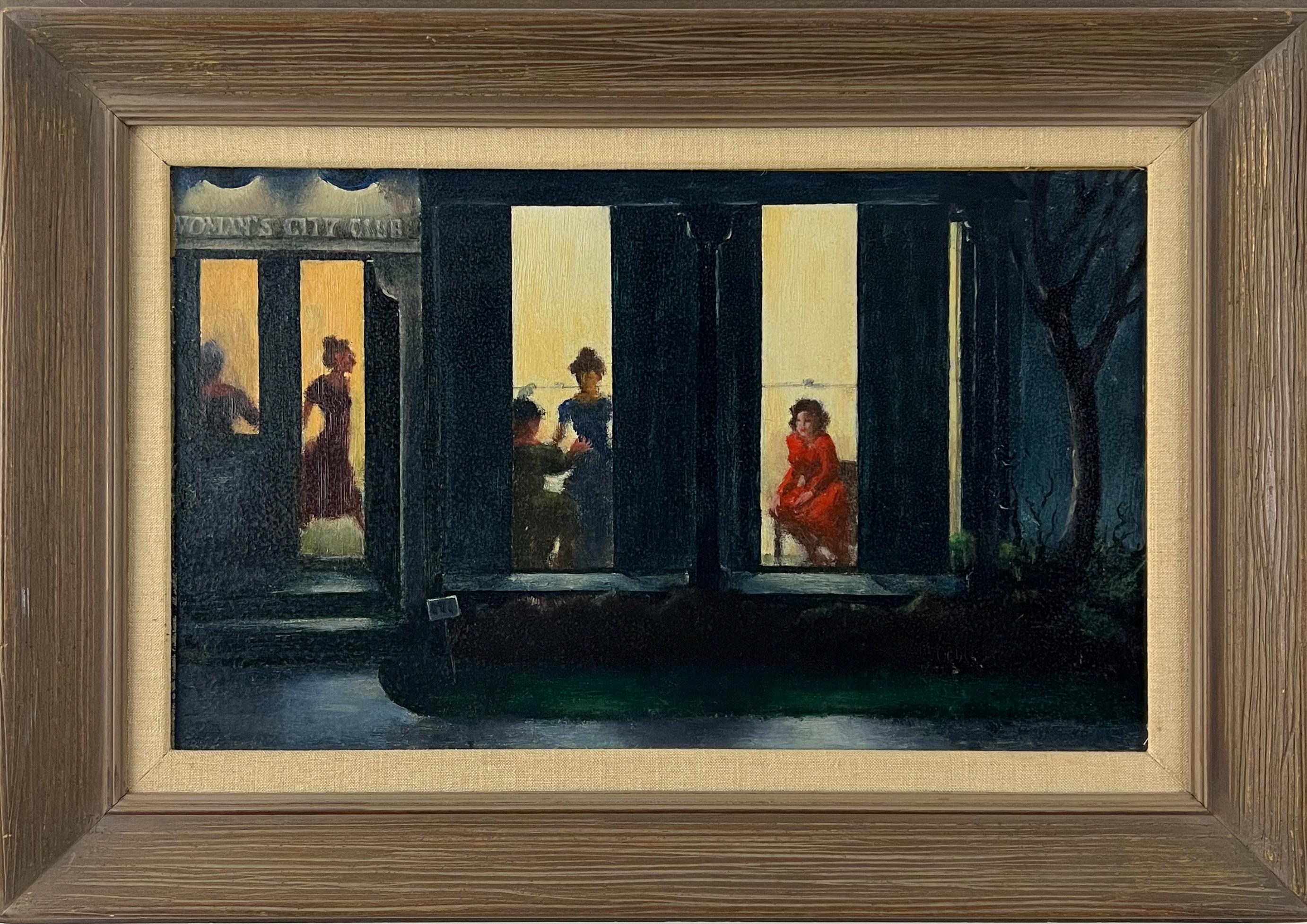
Women
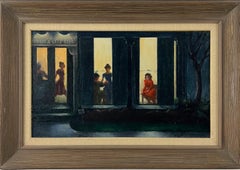
s City Club, Youngstown, Ohio. American Historical Scene Painting.
Located in Marco Island, FL
An accomplished American Scene painter, Clyde Singer successfully captured everyday life during his long career. A unique aspect of American life is depicted in this painting, entitl...
Category
1940s American Realist Landscape Paintings
Materials
Oil, Board
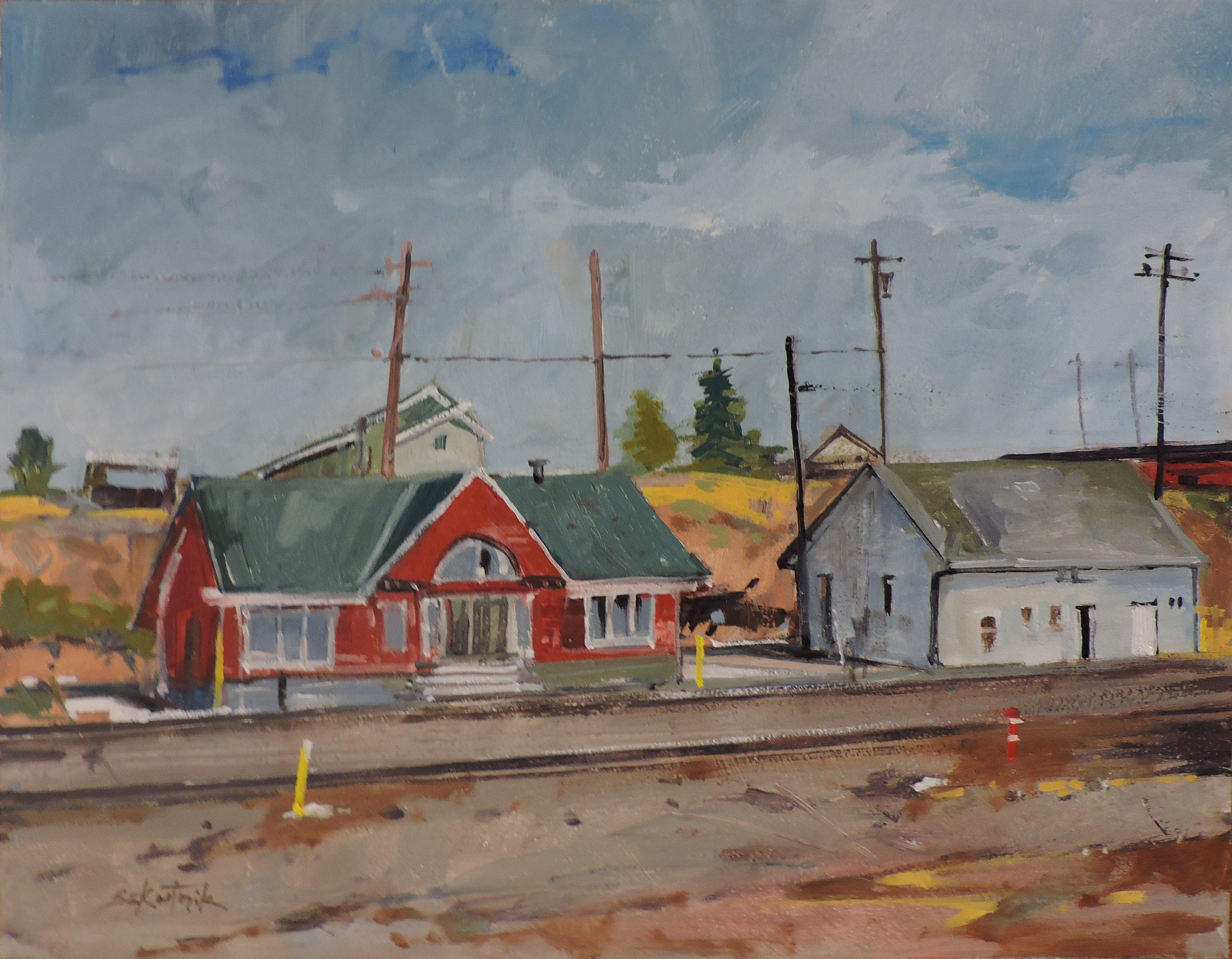
Gramby Station, Painting, Oil on Wood Panel
By Richard Szkutnik
Located in Yardley, PA
original oil on panel paint in Gramby, Colorado :: Painting :: Impressionist :: This piece comes with an official certificate of authenticity signed by the artist :: Ready to Hang: N...
Category
21st Century and Contemporary Impressionist Paintings
Materials
Oil
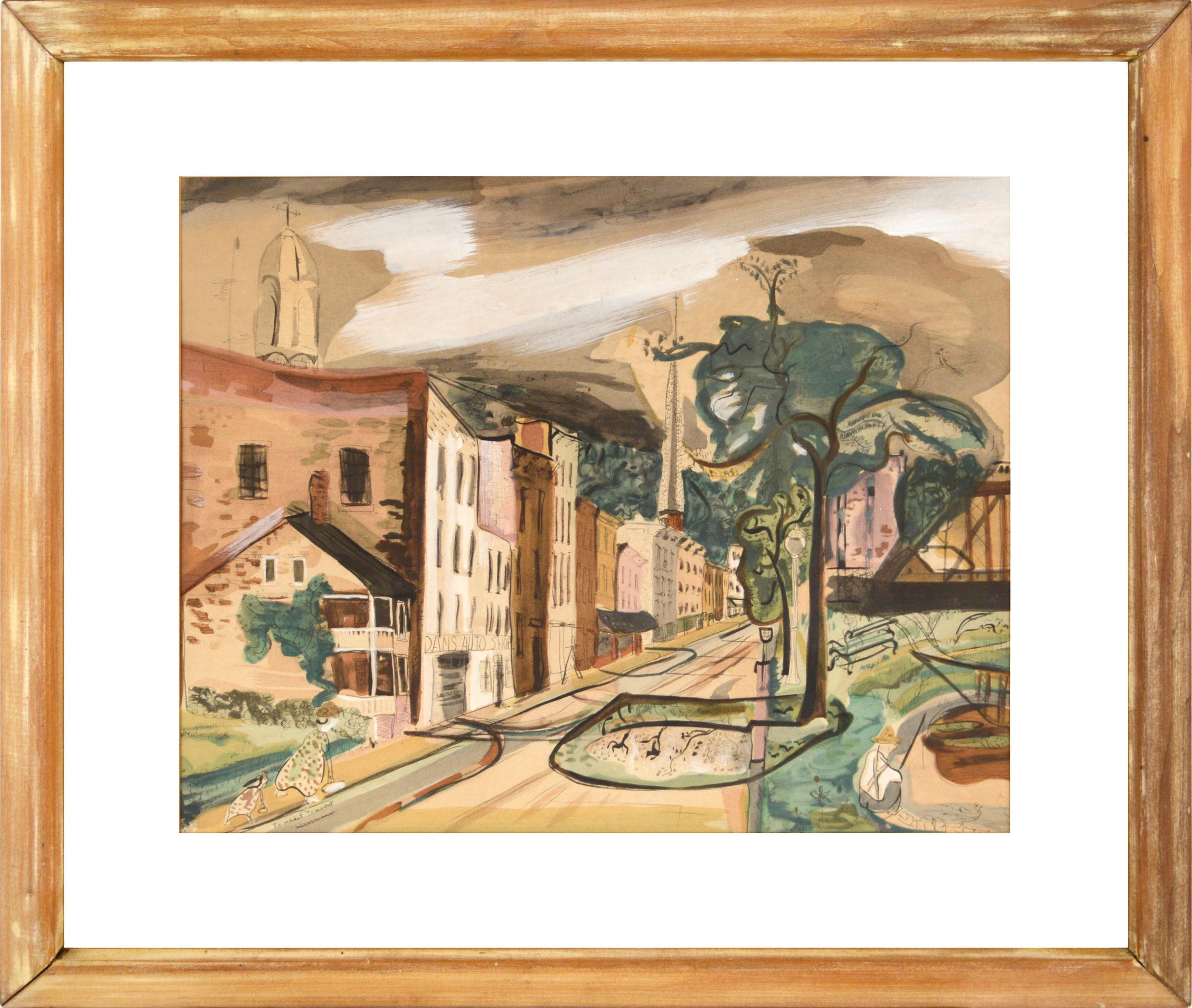
"To Market To Market", Early 20th Century Figurative Brooklyn Cityscape
Located in Soquel, CA
"To Market To Market", a whimsical early 20th century modern figurative village landscape by Frank Simon Herrmann (American, 1866-1942). In this charming scene of a downtown village ...
Category
Early 20th Century Modern Landscape Drawings and Watercolors
Materials
Paper, Gouache
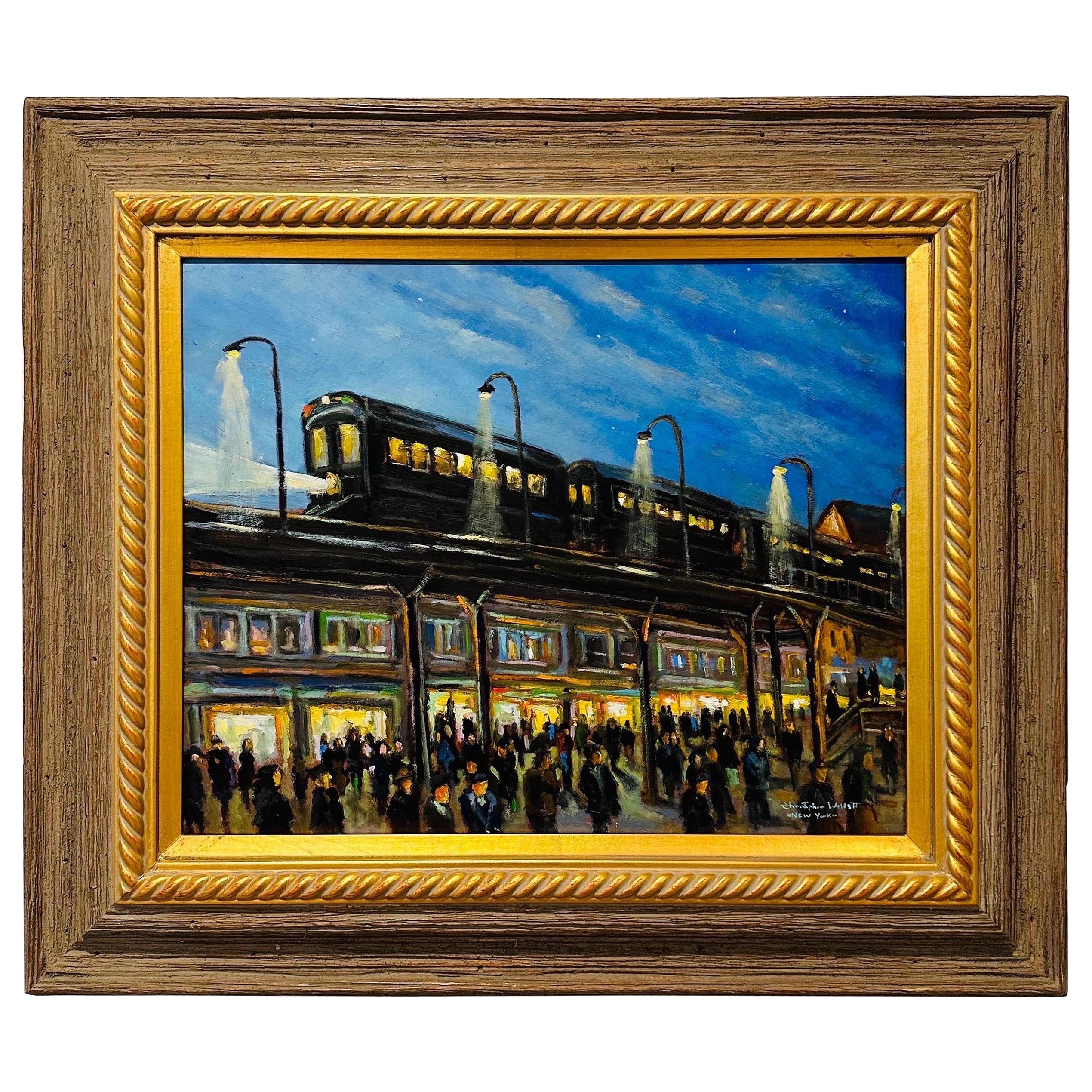
"The EL, New York City" Impressionist Busy Train Station Oil Painting by Willett
By Christopher Willett
Located in Philadelphia, PA
Impressionist New York City bustling train station city-scene depicting the "EL" train with pedestrians in a starry, yet energetic way. Busy New Yorker’s daily travels with the sun setting on the elevated train. From early childhood to the present, Willett, a natural talent carried on the tradition in the arts. Currently as a painter in the New Hope, Bucks County Impressionist...
Category
20th Century American American Classical Paintings
Materials
Acrylic