Items Similar to Phlox, ca. 1906

Want more images or videos?
Request additional images or videos from the seller
1 of 4
Hugh Henry BreckenridgePhlox, ca. 1906ca. 1906
ca. 1906
$29,500
£22,445.18
€25,861.42
CA$41,880.77
A$44,930.57
CHF 24,099.83
MX$540,958.02
NOK 303,806.69
SEK 277,029.60
DKK 193,219.32
About the Item
Provenance
David Ramus, Ltd.;
Menconi and Schoelkopf Fine Art, New York;
Private collection, Atlanta, Georgia, until 2010
Exhibitions
Philadelphia, Pennsylvania Academy of the Fine Arts, The Artist's Garden: American Impressionism and the Garden Movement, 1887-1920, February 12-May 24, 2015. Exhibition also traveled to
Chrysler Museum of Art, June 16- September 6, 2015; Reynolds House Museum of American Art, October 1, 2015- January 3, 2016.
Avery Galleries, Bryn Mawr, Pennsylvania, Living Color Modern Life: Hugh Henry Breckenridge and Arthur B. Carles, October 5-November 2, 2018.
Distinguished as an influential art teacher for more than forty years, Hugh Henry Breckenridge was born in Leesburg, Virginia, but spent most of his adult life in Philadelphia. Breckenridge enrolled as a student at the Pennsylvania Academy of the Fine Arts in 1887, and three years later he was awarded the prestigious Cresson Traveling Scholarship, which enabled him to spend a year abroad in Europe. Breckenridge was deeply influenced by the Impressionist art that he encountered there, and during a subsequent trip to Europe in 1909, he was also exposed to more recent trends in avant-garde art. Breckenridge painted landscapes consistently throughout his career using a diverse range of stylistic approaches.
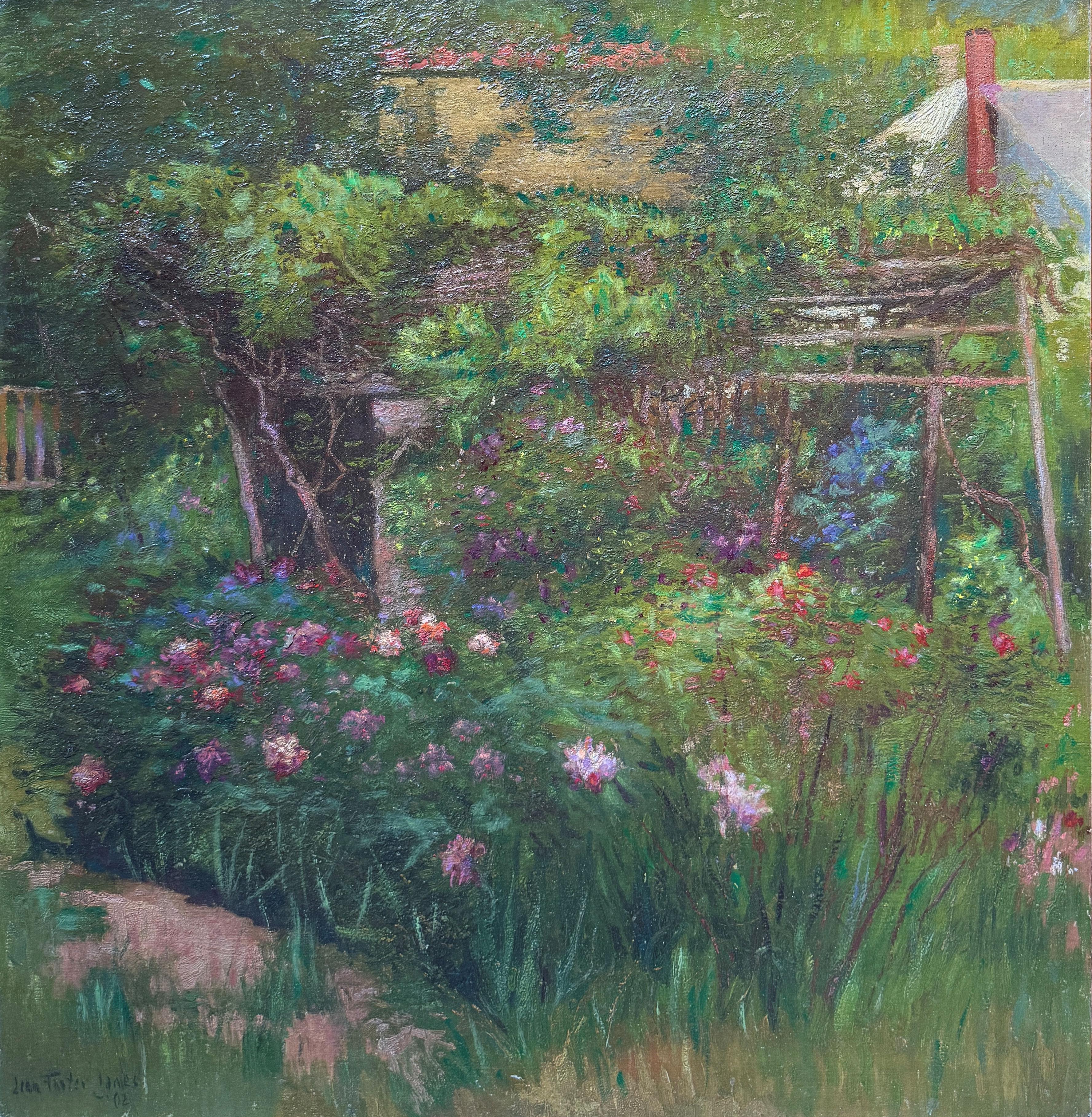
During the early part of his career, Breckenridge adopted the stylistic tendencies of the French Impressionists to convey his unique painterly vision, and later in life he reflected, “I must have been born an Impressionist.” This influence can clearly be seen in his pastel titled Phlox from circa 1906. This work was no doubt executed at Breckenridge’s home in Fort Washington, Pennsylvania, which he nicknamed “Phloxdale,” due to the beautiful phlox garden which he and his wife cultivated there. Breckenridge settled in Fort Washington in 1902, when he and Anshutz found it necessary to move the Darby School to that area after it had outgrown its previous location. Breckenridge’s idyllic garden at Phloxdale was the subject of a number of his finest impressionist paintings, such as Phlox and Hollyhocks from circa 1907. As was often the case, his primary interest in these works seems to be in creating beautiful and vibrant color harmonies, rather than depicting “realistic” views of the outdoors. In Phlox, Breckenridge focuses the composition on a small section of the garden, offering a close-up glimpse of the blossoms and only loosely suggesting the surrounding foliage. He created this piece using pastels, and interestingly, many of his finished works from this period were executed in that medium. Breckenridge actually manufactured his own chalks to ensure that they would maintain as much color permanence as possible. Indeed, the colors in Phlox are remarkable for their brilliance. The purple and white of the flowers seem to vibrate alongside the surrounding ouches of deep blue, green, and even hints of bright orange and red. Breckenridge applied these colors in bold dashes and scribbles in a loose, haphazard manner, which is almost pointillist in its effect.
- Creator:Hugh Henry Breckenridge (1870-1937, American)
- Creation Year:ca. 1906
- Dimensions:Height: 9.5 in (24.13 cm)Width: 12.5 in (31.75 cm)
- Medium:
- Movement Style:
- Period:
- Condition:All works offered by this seller are in very good to excellent condition. Please contact us for a detailed condition report.
- Gallery Location:Bryn Mawr, PA
- Reference Number:1stDibs: LU2773214899872
Hugh Henry Breckenridge
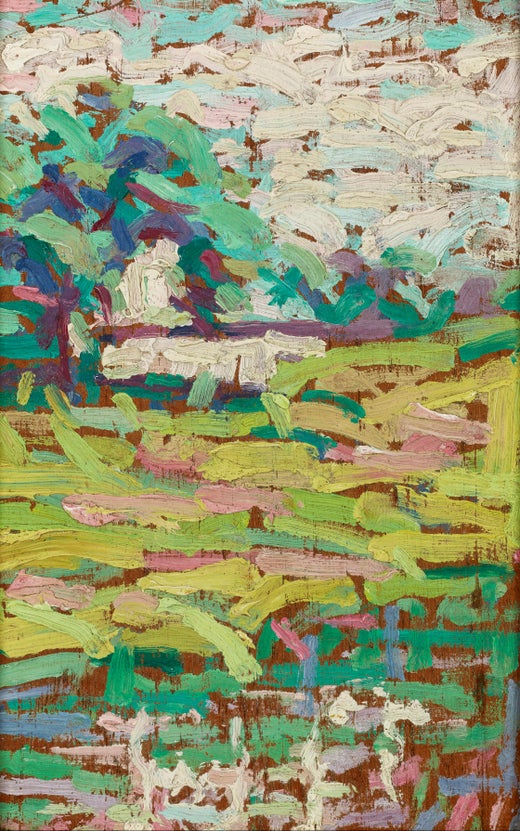
Born in Leesburg, Virginia in 1870, Breckenridge drew incessantly as a child, and through the encouragement of his teacher Paul Laughlin, he decided to pursue a career as an artist. When he turned fifteen, his parents reluctantly allowed him to open a studio in Leesburg so that he could earn the tuition necessary to attend the Pennsylvania Academy of the Fine Arts. In 1887, he enrolled in the Academy, an institution with which he would be affiliated for the majority of his life. Breckenridge won the Academy’s Charles Toppan’s First Prize in 1890 and in 1891, he was awarded the Cresson Traveling Scholarship, which allowed him to pursue his dream of continuing his studies abroad. Breckenridge went to Paris in 1892 and enrolled in the Académie Julian as a student under William Bouguereau, William G. Ferrier, and Lucien Doucet. The academic training Breckenridge received proved beneficial for the portrait work he often did to earn a living, but he was more interested in nonacademic approaches to art. Like many artists at the end of the nineteenth century, he responded enthusiastically to the new and exciting changes in art that were rapidly taking place in Europe and America. He was particularly interested in the exploration of color and color theories. During his time in Paris, he became captivated with Impressionism and his paintings soon began to reflect that interest. Upon his return to the States in 1893, he experimented with Impressionist techniques of painting color and light in landscapes, figurative paintings, and portraits. Back in Philadelphia, Breckenridge began his lifelong teaching career. He first taught classes at the Springside School for Girls in Chestnut Hill, Pennsylvania. In addition, he was offered the post of Secretary of the Faculty at the Pennsylvania Academy of the Fine Arts in 1894 and taught there until his death in 1937. In 1900, he and Thomas Anshutz opened the Darby Summer School of Painting outside of Philadelphia, which they relocated to Fort Washington, Pennsylvania, in 1902. Although Anshutz died in 1913, Breckenridge maintained the Darby School until 1918. From 1920 until 1937, he ran the Breckenridge School of Art in Gloucester, Massachusetts, during the summer months. During his second trip abroad during the summer of 1909, Breckenridge was exposed to the latest experiments in painting led by the Post-Impressionists and the Fauves. These experiences made him an early convert to Modernism, which he pursued in his paintings upon his return to America. He kept abreast of the Modernist movement through visits to Alfred Stieglitz’s 291 Gallery in New York, and he subscribed to Stieglitz’s highly influential journal of avant-garde art, Camera Work. In 1913, he shared a studio with Arthur B. Carles in the Fuller Building in New York. The two painters became very close, often painting the same subjects and in the same manner, inspired by Paul Cézanne’s structural brush work and Matisse’s vivid colors. This resulted in what Breckenridge called his “‘tapestry paintings,’ which combined broad, checkerboard brushwork with a vigorous Neo-Impressionist technique.”
About the Seller
5.0
Recognized Seller
These prestigious sellers are industry leaders and represent the highest echelon for item quality and design.
Established in 2001
1stDibs seller since 2024
7 sales on 1stDibs
Typical response time: 1 hour
- ShippingRetrieving quote...Shipping from: Bryn Mawr, PA
- Return Policy
More From This Seller
View AllLandscape Sketch
By Hugh Henry Breckenridge
Located in Bryn Mawr, PA
Hugh Breckenridge’s artistic training began at the Pennsylvania Academy of the Fine Arts in 1887. The academic precision and attention to detail that mark his portraits and still lif...
Category
Early 20th Century Post-Impressionist Landscape Paintings
Materials
Oil, Board
Gladioli
By Samuel George Phillips
Located in Bryn Mawr, PA
Gladioli
Oil on canvas on board
25 x 30 inches (63.5 x 76.2 cm)
Framed dimensions: 35 3/4 x 30 3/4 inches
Signed lower left: S. George Phillips
A magazine illustrator early in his c...
Category
Mid-20th Century American Impressionist Still-life Paintings
Materials
Canvas, Oil, Board
Untitled (Pastel #3)
Located in Bryn Mawr, PA
A native of Philadelphia, John Pierce Barnes began his artistic training at the Philadelphia School of Industrial Design. He then attended the Pennsylvania Academy of the Fine Arts, ...
Category
Early 20th Century American Impressionist Landscape Drawings and Waterco...
Materials
Pastel
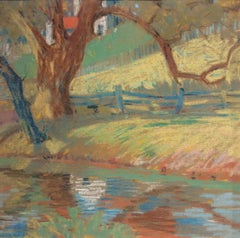
Giverny
By John Leslie Breck
Located in Bryn Mawr, PA
Giverny, 1888
Oil on canvas, 11 x 14 inches (27.9 x 35.6 cm)
Framed dimensions: 18 5/8 x 22 1/4 inches
Signed and dated lower right: John Leslie Breck 88
Provenance
Private collect...
Category
1880s American Impressionist Landscape Paintings
Materials
Canvas, Oil
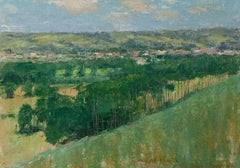
Flowers in a Greenhouse
By Theodore Wendel
Located in Bryn Mawr, PA
Wendel was born in Midway, Ohio, and trained at the McMicken School of Design where he met and befriended Joseph DeCamp. Together, the two artists traveled to Munich in 1878 to study...
Category
Late 19th Century American Impressionist Landscape Paintings
Materials
Canvas, Oil
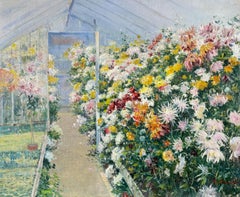
Flowers
By Julian Alden Weir
Located in Bryn Mawr, PA
Flowers, 1882
Gouache and watercolor on paper
14 x 20 1/8 inches (35.6 x 51.1 cm)
Framed dimensions: 23 x 29 1/4 inches
Signed and dated lower right: J. Alden Weir / '82
Signed lowe...
Category
1880s American Impressionist Still-life Drawings and Watercolors
Materials
Paper, Watercolor, Gouache
You May Also Like
"Phlox"
By Cora S. Brooks
Located in Lambertville, NJ
Jim's of Lambertville Fine Art Gallery is proud to offer this work by Cora S. Brooks (1885 - 1930).
Cora S. Brooks was born in New Brunswick, New Jersey in 1885. Her father, Edward F. Brooks, was the General Superintendent of the Pennsylvania Railroad. In 1902, her family moved to Lansdowne, PA. She attended the Philadelphia School of Design for Women (now the Moore College of Art & Design). Brooks specialized in flower still lives, but also was known to paint landscapes, and do an occasional portrait. She was one of the founding members of the Philadelphia Ten, a group of women artists who emerged out of the Philadelphia art...
Category
1920s Impressionist Still-life Paintings
Materials
Canvas, Oil
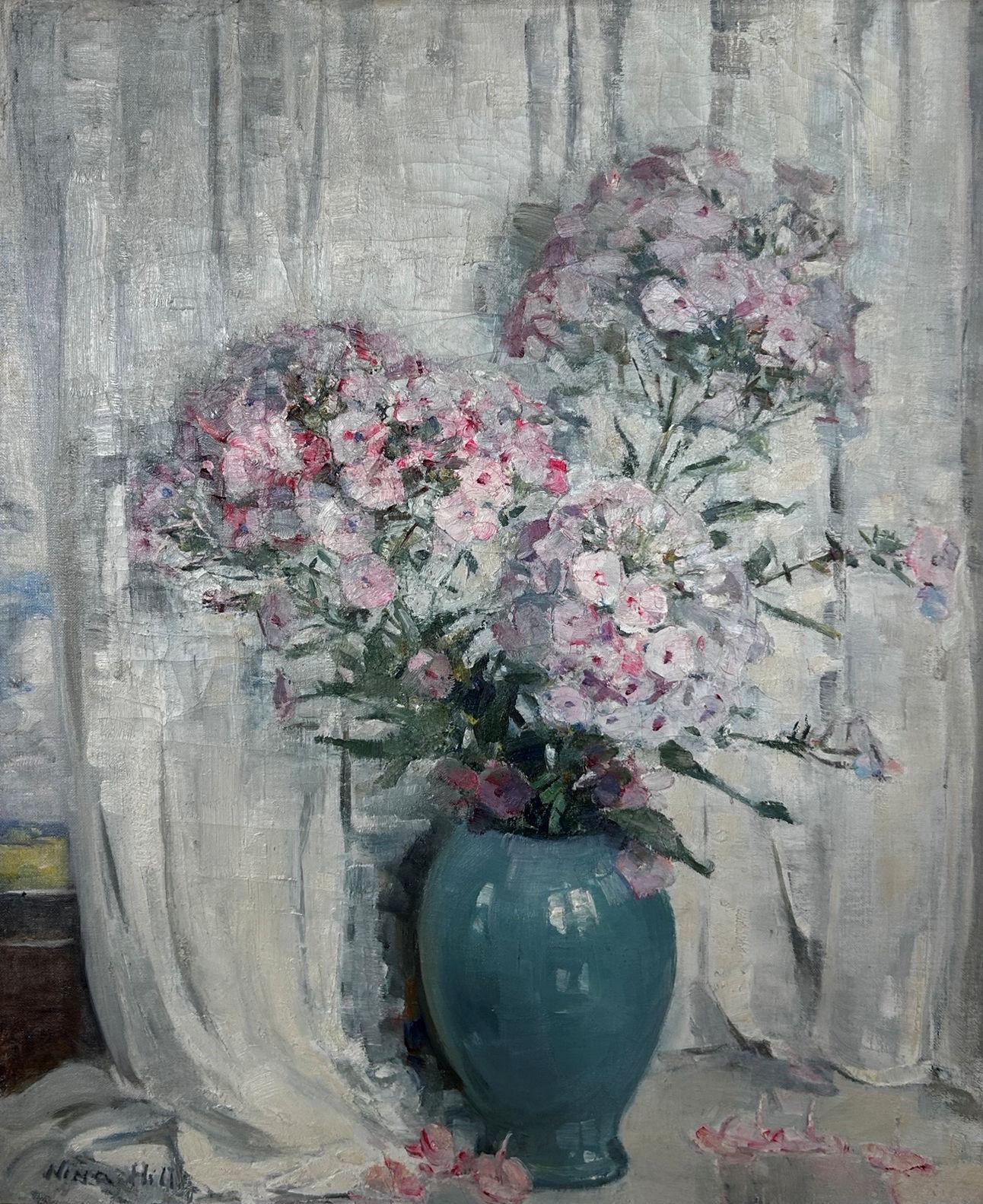
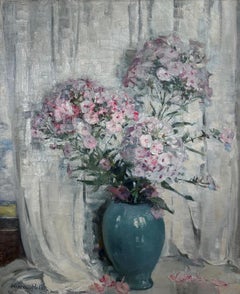
"Phlox" Nina Hill, Pastel Colors, Pink Impressionist Flowers Still Life
Located in New York, NY
Nina Hill
Phlox, circa 1925
Signed lower left
Oil on canvas
24 x 20 inches
Newcomb Macklin Frame
Category
1920s Impressionist Figurative Paintings
Materials
Canvas, Oil
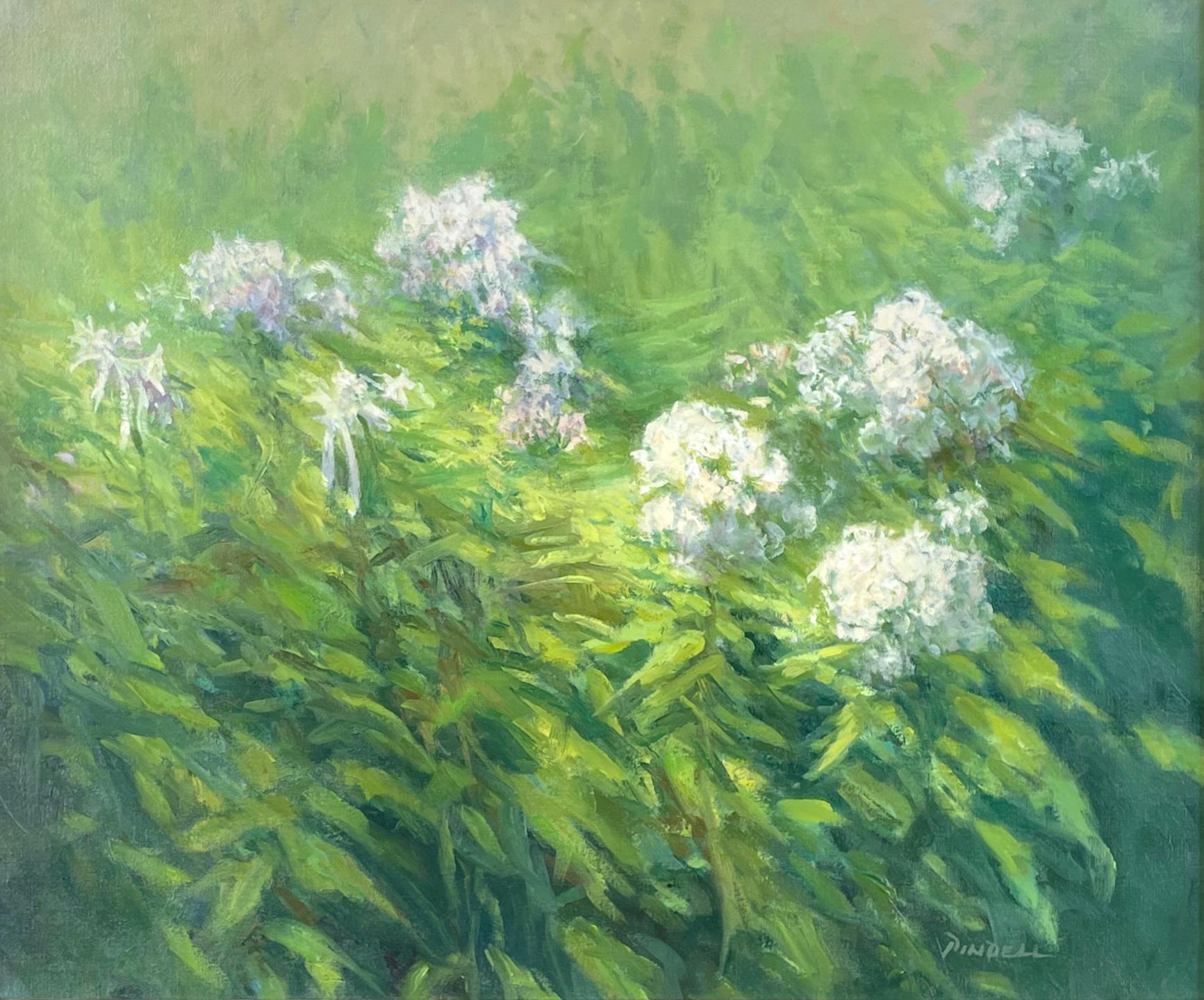
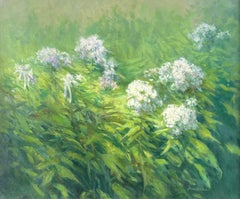
Garden Phlox
Located in Greenwich, CT
Signed lower right
Unframed dimensions: 30 x 36 inches
Framed dimensions: 34 x 41 inches
Category
2010s American Realist Landscape Paintings
Materials
Linen, Oil
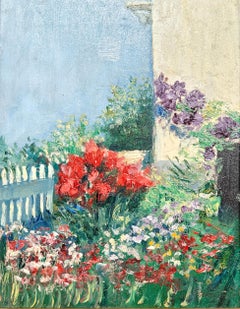
"A Sunny Corner" Eugenie M. Heller, Impressionist Garden Landscape In Bloom
Located in New York, NY
Eugenie M. Heller
A Sunny Corner, circa 1900
Signed lower right
Oil on board
10 1/2 x 8 1/2 inches
Eugenie M. Heller (1867 - 1952) was active/lived in New York, Massachusetts.
Heller studied with Weir, Whistler, Amen-Jean, Grasset and Rodin. Eugenie Heller...
Category
Early 1900s American Impressionist Figurative Paintings
Materials
Oil, Board
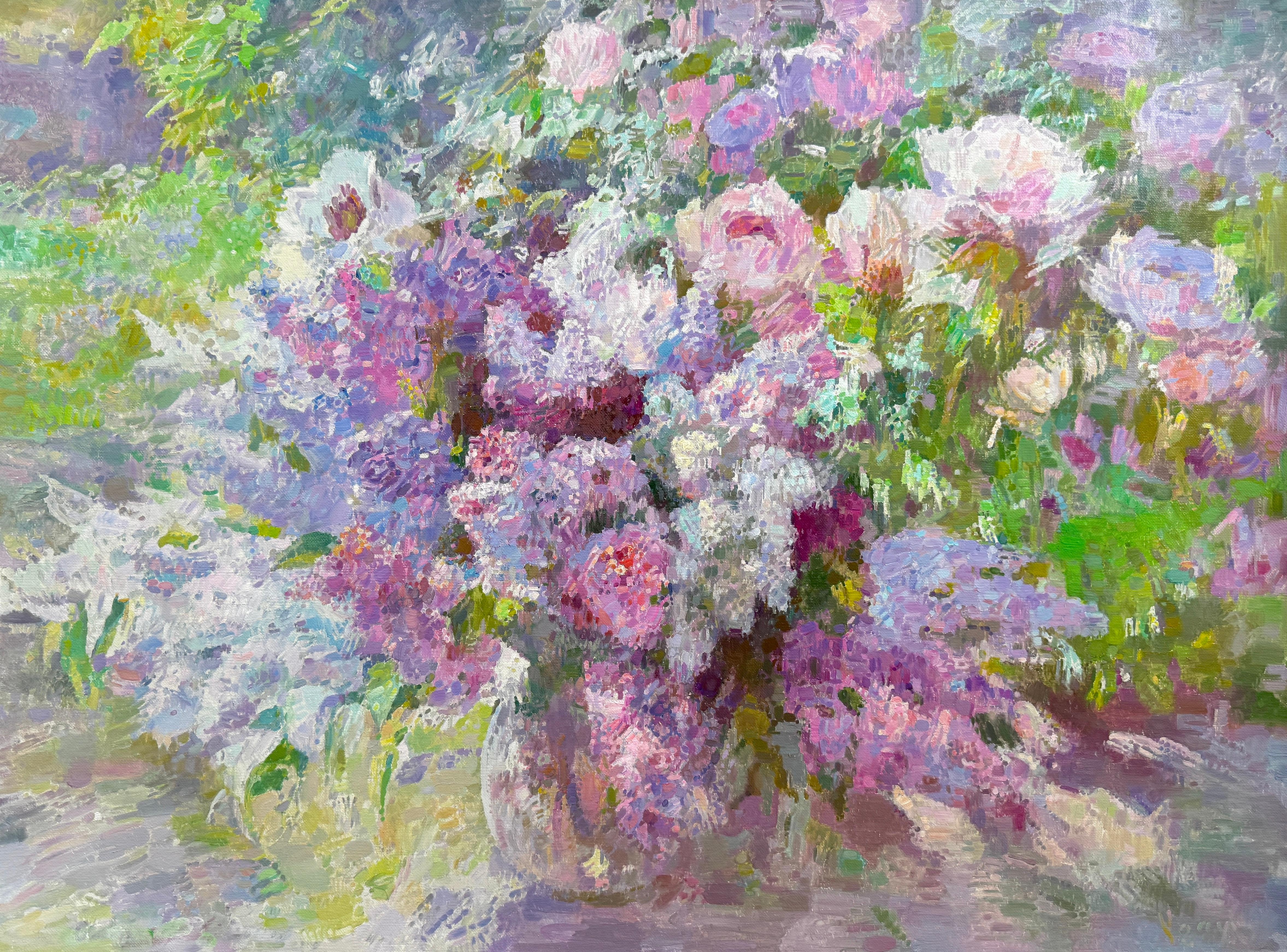
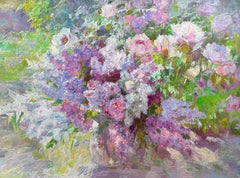
Garden Lilacs, Flowers, Original Oil Painting, Handmade Artwork, One of a Kind
Located in Granada Hills, CA
Artist: Ashot Muradyan
Work: Original Painting, Handmade Artwork, One of a Kind
Medium: Oil on Linen
Year: 2024
Style: Impressionism,
Subject: Garden Lilacs,
Size: 22" x 29.5" x 0....
Category
2010s Impressionist Still-life Paintings
Materials
Canvas, Oil
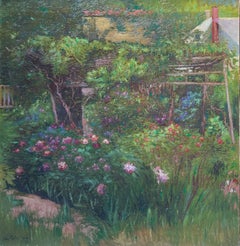
"Corner of my Garden" Leon Foster Jones, Impressionist, Blooming Spring Flora
Located in New York, NY
Leon Foster Jones
Corner of my Garden, 1902
Signed and dated lower left
Oil on canvas
26 x 25 inches
Provenance
Goldfield Galleries, Los Angeles, California
Private Collection, Virginia Beach, Virginia
Leon Foster Jones was a painter of landscapes, an etcher, a lithographer, and an educator. He was born in Manchester, New Hampshire, his father held the position of overseer in one of the hosiery mills in the Manchester area. In approximately 1901, he married Josephine Currier. During the initial years of their marriage, the couple resided in Concord, New Hampshire. They made Port Jefferson, Long Island, New York their permanent home in 1910, although the artist had begun working there as early as 1907.
Numerous sources indicate that throughout his life, Jones gained recognition primarily for his paintings and etchings featuring historical sites across Long Island. His artistic education included four years at the Cowles Art School in Boston, Massachusetts, where he studied under Joseph Rodefer DeCamp...
Category
Early 1900s American Impressionist Figurative Paintings
Materials
Canvas, Oil
More Ways To Browse
Antique Avery
Arthur B Carles
M Vernon
Maria Ada Gianni
Retro Donald Art Company
Taxco Watercolor
Thomas Tyndale
Victorian House Drawing
Warwick Castle Painting
Watercolour Landscape Vienna Paintings
William Leighton Leitch
Alfred Bell
Anna Boghiguian
Antique Pea Sheller
Benjamin Dominguez
Betty Guy
Canal Luciano
Charles Burchfield Trees