Items Similar to The Ruins of St. Clement
s Church in Visby, Sweden / - Real romanticism -
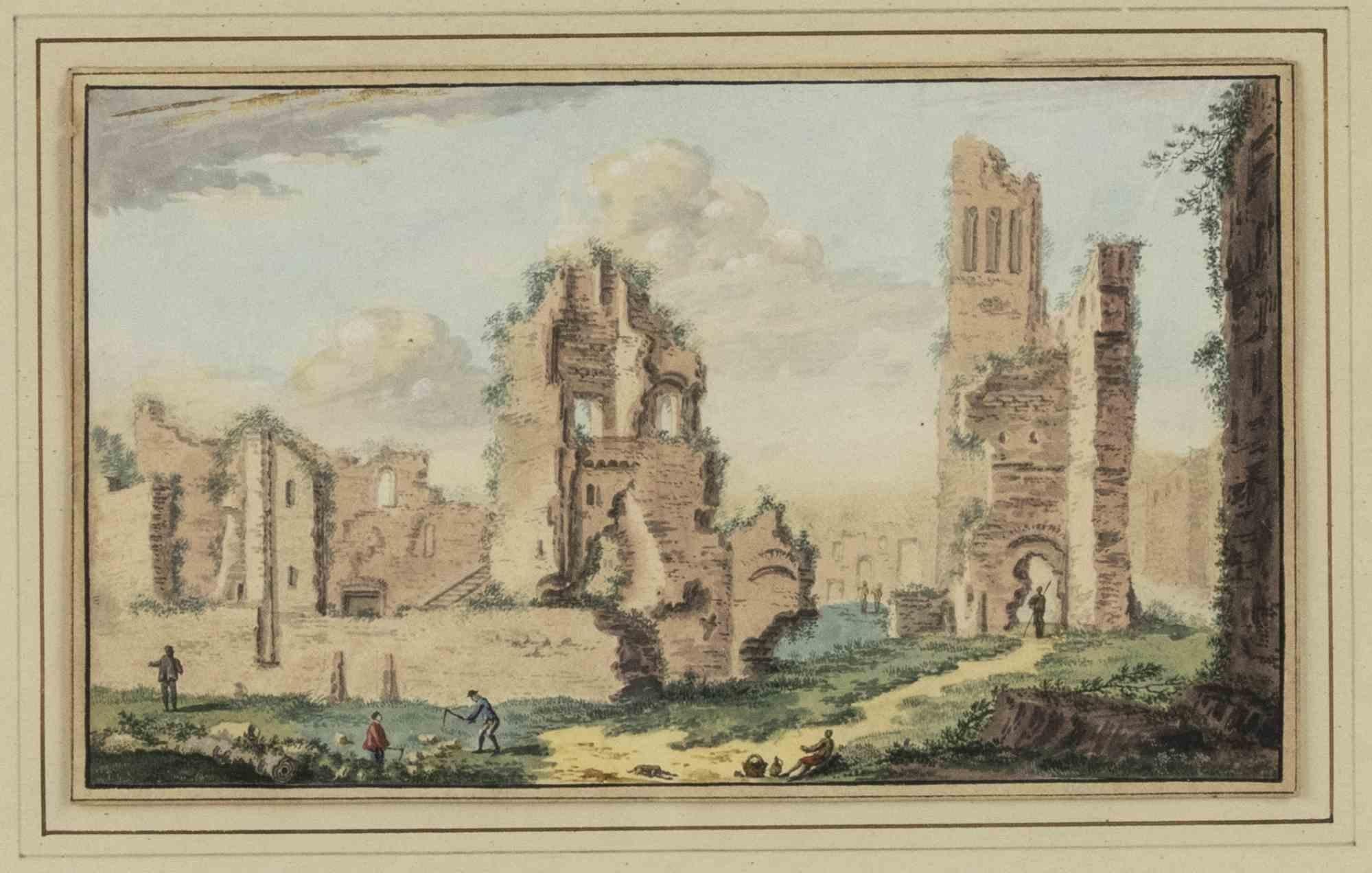
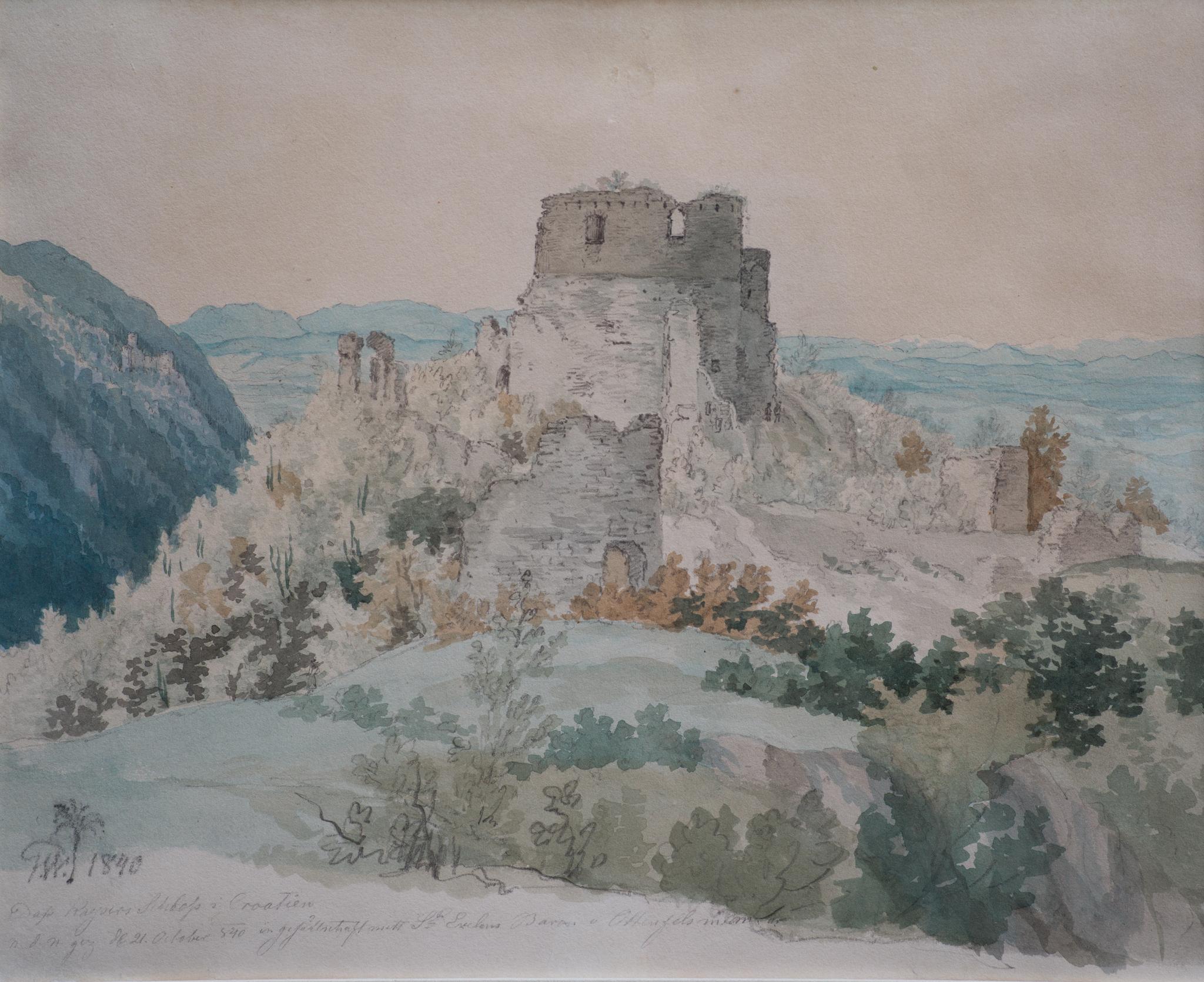
Want more images or videos?
Request additional images or videos from the seller
1 of 7
Otto Günther-NaumburgThe Ruins of St. Clement
s Church in Visby, Sweden / - Real romanticism -c. 1900
c. 1900
$539.98
£400.16
€450
CA$738
A$803.37
CHF 426.43
MX$9,666.25
NOK 5,403.43
SEK 4,951.07
DKK 3,427.78
About the Item
Otto Günther-Naumburg (1856-1941), The Ruins of St. Clement's Church in Visby, Sweden. Watercolor and ink, heightened with white, on sand-colored paper, mounted on cardboard, 33 x 24 cm, signed at lower left "Günther-Naumburg" and inscribed "Wisby. St. Clemens".
- At the margins remains of an old mounting, otherwise good condition.
- Real romanticism -
About the artwork
In the Middle Ages, Visby on Gotland had a total of 14 churches in a very small area, of which only the cathedral remains today. Most of the churches were destroyed in the course of the Reformation and the Danish war of succession between Christian II and Frederik I in the 16th century, so that for a long time Visby resembled a landscape of sacral ruins.
With Otto Günther-Naumburg we stand in the former choir of St. Clement's and look through the preserved triumphal arch into the ruined nave with its narthex and the remains of the façade. Although the vault is missing, the monumental arch has retained its static strength and now offers a view of the sky, so that the sacred building has in no way lost its sacred character despite its ruinous state. In the art of Caspar David Friedrich, church ruins have become a special place of longing, exuding an intense sacral aura. This romantic dimension is also found in the gate, which, although closed, offers a view of the sunset behind it. A sphere, however, that is not yet accessible to us from this side.
The brown tonality of the paper determines the appearance of the image. Starting from this basic tone, Günther-Naumburg creates the stones of the masonry with glazed black, which he skillfully accentuates with white highlights. The virtuoso green of the vegetation contrasts harmoniously with the brown, so that the viewer's gaze is constantly exploring the ruin. In addition to the romantic content of the picture, the watercolor is also a historical snapshot of how St. Clemens in Visby looked around 1900.
About the artist
Otto Günther-Naumburg, who had lived in Berlin since 1861, studied at the Berlin Academy of Arts from 1873 to 1877, first with Albert Hertel and then with his successor Christian Wilberg. From 1877 he exhibited at the Academy Exhibition, from 1891 at the Munich Glass Palace, and from 1893 at the Great Berlin Art Exhibition. Study trips took him to Southern Germany, Tyrol, Switzerland, Italy and Sweden.
Otto Günther-Naumburg developed a special mastery in watercolor painting, which he taught as a professor at the Technical University in Berlin from 1892. He also produced large-format paintings and fulfilled public commissions. He decorated the town hall of Dillingen, created the cityscapes "Posen" and "Breslau" for the Prussian House of Representatives, and designed a view of the city for the Potsdam Town Hall. In addition, Otto Günther-Naumburg worked as an illustrator for the Leipziger Illustrierte Zeitung, Daheim and the Gartenlaube, which made him widely known and appreciated.
Selected Bibliography
Thieme-Becker. Allgemeines Lexikon der Bildenden Künstler von der Antike bis zur Gegenwart, Band 15, Leipzig 1922, S. 210.
Saur. Allgemeines Künstler-Lexikon, Band 64, München - Leipzig 2009, S. 415.
GERMAN VERSION
Otto Günther-Naumburg (1856-1941), Die Kirchenruine St. Clemens im schwedischen Visby. Aquarell und Tusche, weiß gehöht, auf sandfarbenem Papier, auf Karton montiert, 33 x 24 cm, unten links mit „Günther-Naumburg“ signiert und mit „Wisby. St. Clemens“ bezeichnet.
- an den Randbereichen Reste einer alten Montage, sonst in gutem Zustand
- Reale Romantik -
zum Kunstwerk
Visby auf Gotland hatte im Mittelalter auf engstem Raum insgesamt 14 Kirchen, von denen heutzutage nur noch der Dom erhalten geblieben ist. Die meisten Gotteshäuser wurden im Zuge der Reformation und des dänischen Thronfolgestreits zwischen Christian II. und Frederik I. im 16. Jahrhundert zerstört, so dass Visby lange einer sakralen Ruinenlandschaft glich.
Mit Otto Günther-Naumburg stehen wir im ehemaligen Chor von St. Clemens und blicken durch den erhaltenen Triumphbogen in das ruinöse Langhaus, mit seiner Vorhalle und den Überresten des Fassadenaufbaus. Auch wenn das Gewölbe fehlt, hat der monumental wirkende Bogen seine statische Kraft bewahrte und gibt nun den Blick in den Himmel frei, wodurch der Sakralbau trotz seines ruinösen Zustandes keineswegs seinen sakralen Charakter verloren hat. Mit der Kunst Caspar David Friedrichs sind Kirchenruinen zu einem besonderen Sehnsuchtsort geworden, der eine intensive sakrale Aura verbreitet. Diese romantische Dimension findet sich auch in der Pforte, die zwar verschlossen ist und dennoch einen Durchblick auf den jenseitigen Sonnenuntergang freigibt. Eine Sphäre, die uns diesseitig allerdings noch nicht zugänglich ist.
Die Brauntonalität des verwendeten Papiers bestimmt die Erscheinung des Bildes. Von diesem Grundton ausgehend, kreiert Günther-Naumburg mit lasierend aufgetragenem Schwarz die Steine des Gemäuers, die er gekonnt durch Weißhöhungen akzentuiert. Mit dem Braun tritt das virtuos gesetzte Grün der Vegetation in einen harmonischen Kontrast, so dass der Blick immer wieder von Neuem die Ruine erkundet. Neben dem romantischen Gehalt des Bildes ist das Aquarell zugleich eine historische Momentaufnahme wie S. Clemens in Visby um 1900 ausgesehen hat.
zum Künstler
Ab 1861 in Berlin ansässig, studierte Otto Günther-Naumburg von 1873-1877 an der Berliner Akademie der Künste, zunächst bei Albert Hertel und dann unter dessen Nachfolger Christian Wilberg. Von 1877 an beschickte er die Akademie-Ausstellung, ab 1891 war er im Münchner Glaspalast vertreten und ab 1893 wurden Werke von ihm auf der Großen Berliner Kunstausstellung gezeigt. Studienreisen führten ihn nach Süddeutschland, Tirol, Schweiz, Italien und nach Schweden.
Eine besondere Meisterschaft entwickelte Otto Günther-Naumburg in der Aquarellmalerei, die er ab 1892 als Professor an der Technischen Hochschule Berlin lehrte. Er fertigte aber auch großformatige Gemälde an und kam öffentlichen Aufträgen nach. So stattete er unter anderem den Rathaussaal von Dillingen aus, schuf für das Preußische Abgeordnetenhaus die Städtebilder ‚Posen‘ und ‚Breslau‘ und gestaltetet für das Potsdamer Rathaus eine Ansicht der Stadt. Zudem war Otto Günther-Naumburg als Illustrator für die Leipziger illustrierte Zeitung, Daheim und die Gartenlaube tätig, wodurch er weithin bekannt und geschätzt wurde.
Auswahlbibliographie
Thieme-Becker. Allgemeines Lexikon der Bildenden Künstler von der Antike bis zur Gegenwart, Band 15, Leipzig 1922, S. 210.
Saur. Allgemeines Künstler-Lexikon, Band 64, München - Leipzig 2009, S. 415.
- Creator:Otto Günther-Naumburg (1856 - 1941, German)
- Creation Year:c. 1900
- Dimensions:Height: 13 in (33 cm)Width: 9.45 in (24 cm)Depth: 0.4 in (1 cm)
- Medium:
- Movement Style:
- Period:
- Condition:
- Gallery Location:Berlin, DE
- Reference Number:1stDibs: LU2438212631852
About the Seller
5.0
Vetted Professional Seller
Every seller passes strict standards for authenticity and reliability
Established in 2014
1stDibs seller since 2023
23 sales on 1stDibs
- ShippingRetrieving quote...Shipping from: Berlin, Germany
- Return Policy
More From This Seller
View AllAgony - The architecture of decay -
Located in Berlin, DE
Jörg Olberg (*1956 Dresden), Agony, 1987. etching, E.A. (edition of 30), 24 x 17 cm (image), 46 x 37 cm (sheet), each signed in pencil lower right "Olberg" and dated "IX [19]87", inscribed lower left "E.A. [Epreuve d'Artiste]".
- minimal crease and dust stains in the broad margin
- The architecture of decay -
About the artwork
Jörg Olberg draws here the sum of his artistic study of the Berlin ruins, which were still present in the cityscape well into the 80s. With his work "Agony" he creates an allegory of decay. Positioned in the landscape of ruins, a ruined house grows before the viewer, rising like the Tower of Babel into the sky, its roof and gable brightly illuminated by the sun. But already the roof shows mostly only the rafters, and as the gaze is drawn further down, the building visibly disintegrates, the beams protruding in all directions looking like splintered bones. Slowly but inexorably - in agony - the house will collapse in on itself and become nothing more than the burial mound of itself. At the same time, the small-scale stone composition and the plaster form a pattern-like ornamentation of decay.
The tension in the picture is fed by the counter-movement of growth and collapse, which is heightened by the dramatic formation of clouds. The swirls of clouds are reminiscent of a world landscape...
Category
1980s Realist Figurative Prints
Materials
Etching, Paper
View of a coastal town / - The Pilgrim
s View -
Located in Berlin, DE
Albert Ernst (1909 Fronhofen - 1996 Hamburg), View of a Coastal Town, etching, 30 x 37 cm (picture), 45 x 50.5 cm (frame), signed in pencil lower right "Albert Ernst", framed under g...
Category
Mid-20th Century Realist Landscape Prints
Materials
Etching
Low Mountain Landscape with Rocks - The mystery of an inconspicuous place -
Located in Berlin, DE
Heinz Roder (1895-1965), Low Mountain Landscape with Rocks, oil on painting cardboard, 30 x 40 cm (visual size), 40 x 50 cm (frame), signed and dated "[19]34" at lower right. In a de...
Category
1930s Landscape Paintings
Materials
Cardboard
Woodland / - The Inner Drama of the Landscape -
Located in Berlin, DE
Eduard Peithner von Lichtenfels (1833 Vienna - 1913 Berlin), Woodland, 1884. Watercolor and pen and ink on drawing paper, 30.4 cm x 22.5 cm, signed, dated and inscribed by the artist...
Category
1880s Landscape Drawings and Watercolors
Materials
Paper

S. Anton Patenkirchen / - The Home of the Landscape -
Located in Berlin, DE
Hans Thoma (1839 Bernau - 1924 Karlsruhe), S. Anton Patenkirchen, 1895. Algraph on strong wove paper, published by Breitkopf und Härtel in Leipzig as ‘Zeitgenössisches Kunstblatt Nr....
Category
1890s Realist Figurative Prints
Materials
Paper
Southern German summer landscape / - The profile of the landscape -
Located in Berlin, DE
Hans Thoma (1839 Bernau - 1924 Karlsruhe), Southern German summer landscape, around 1897. Algraph on strong wove paper, published by Breitkopf und Härtel in Leipzig as ‘Zeitgenössisc...
Category
1890s Realist Figurative Prints
Materials
Paper
You May Also Like
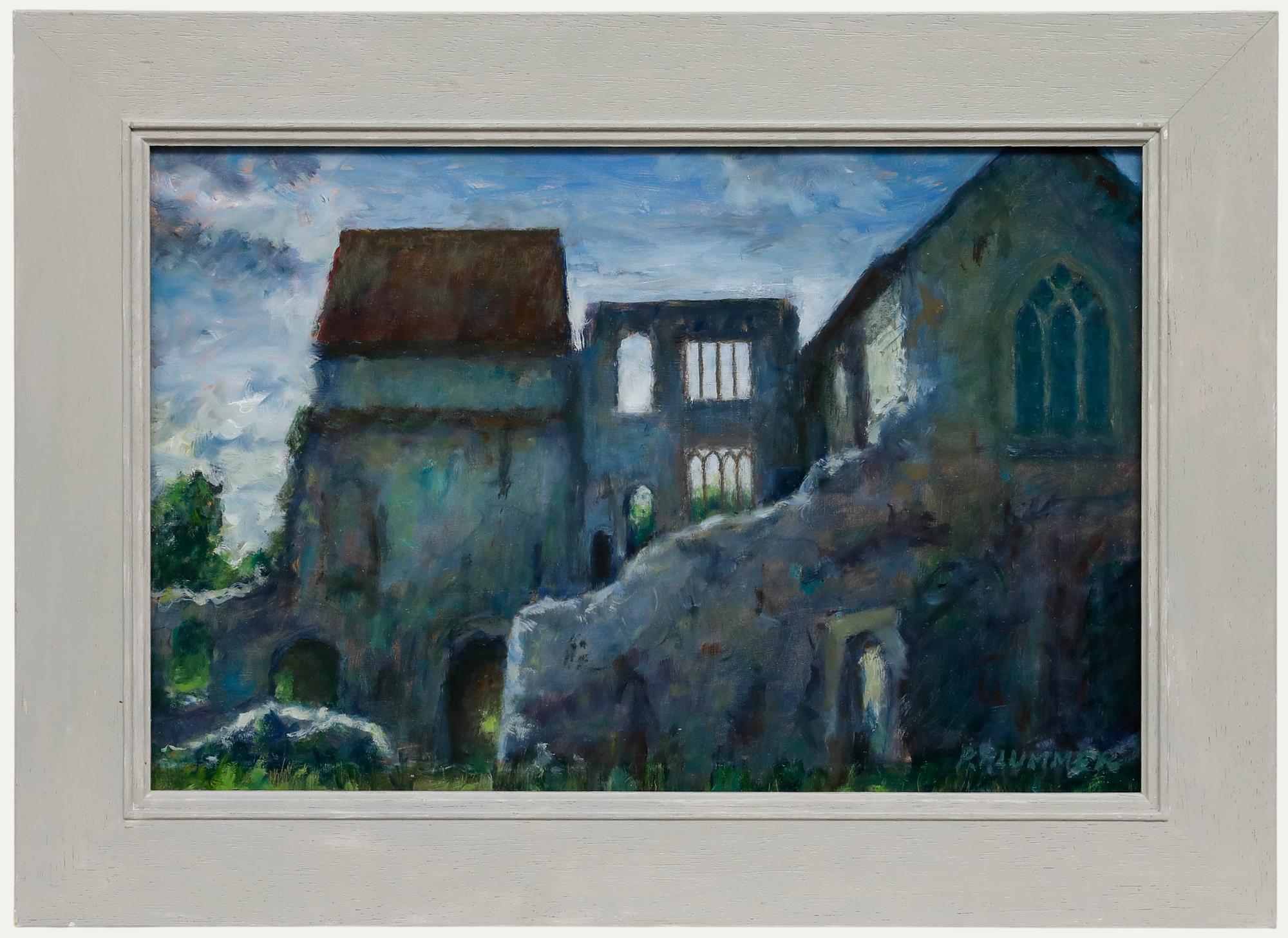
Pauline Plummer (b.1933) - 20th Century Oil, Abbey Ruins
Located in Corsham, GB
An atmospheric study depicting abbey ruins under a cloudy sky. Signed to the lower right. Presented in a light wooden frame. On board.
Category
20th Century Landscape Paintings
Materials
Oil
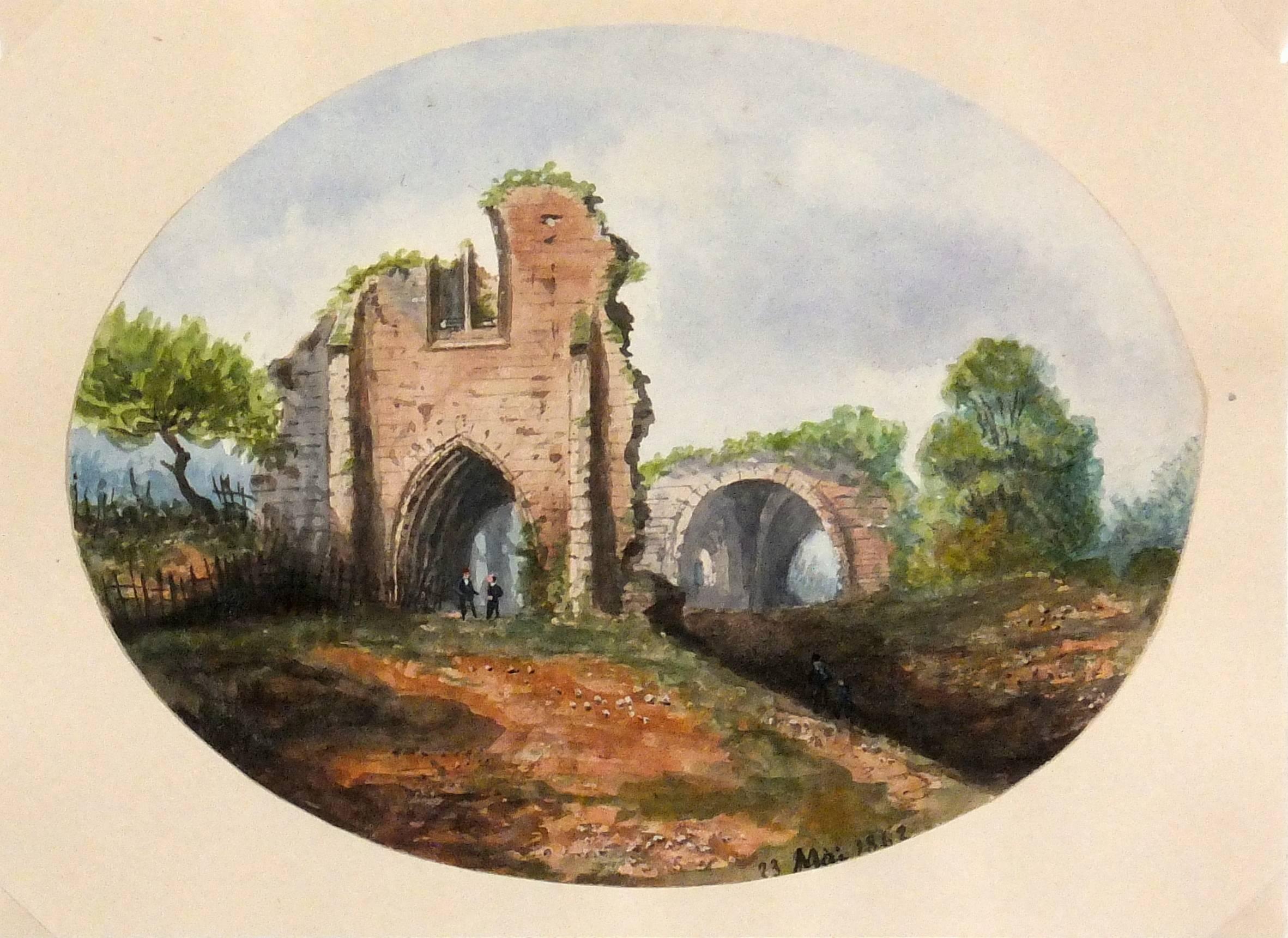
Old Ruins Near Paris
Located in Houston, TX
Beautifully detailed 19th century watercolor of ruins near Paris by artist Delastre, 1862.
Original artwork on paper displayed on a white mat with a gold border. Mat fits a standar...
Category
1860s Landscape Drawings and Watercolors
Materials
Watercolor
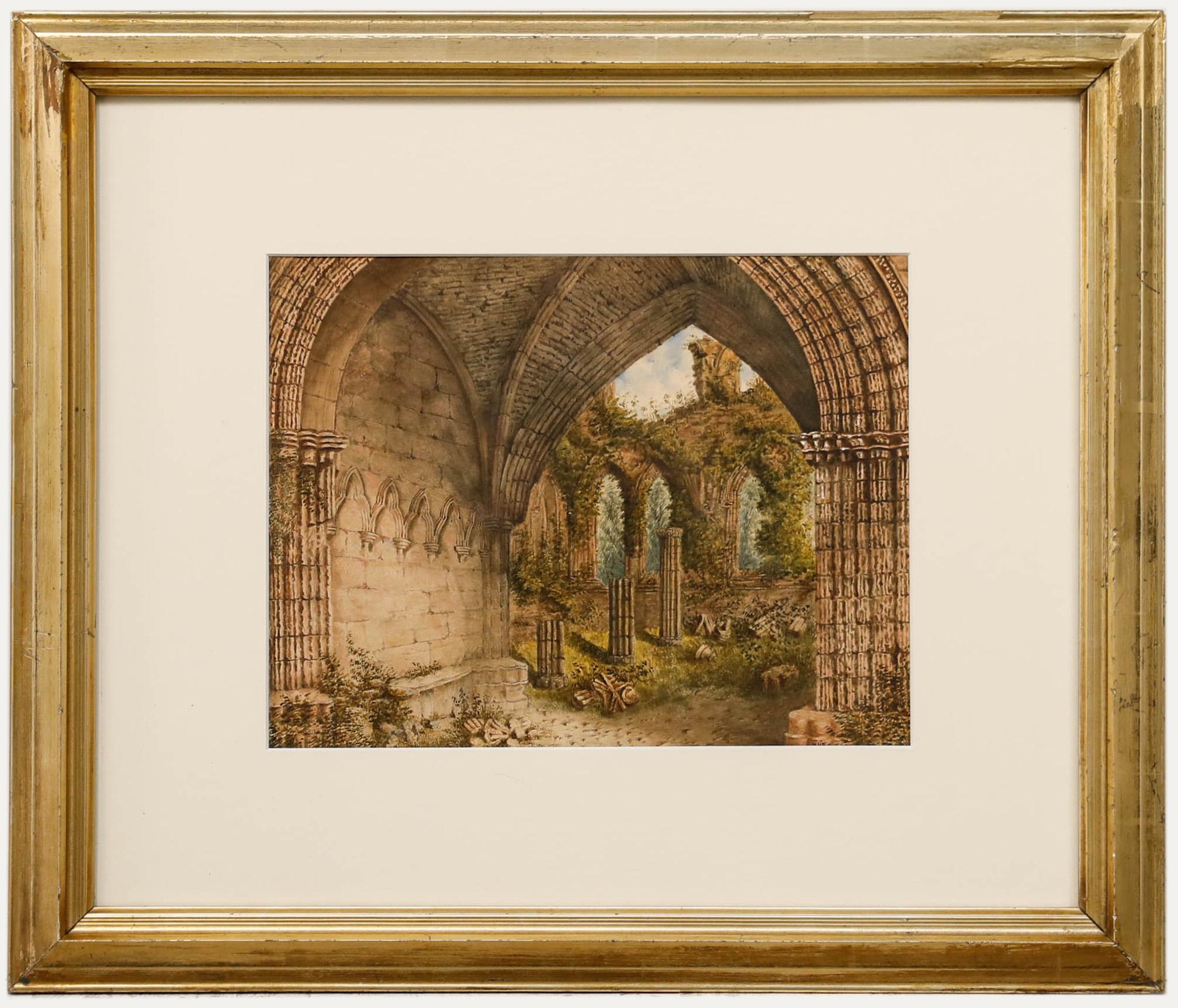
Framed 19th Century Watercolour - Abbey Ruins
Located in Corsham, GB
This beautiful 19th-century watercolour captures the haunting beauty of abbey ruins. The artist skilfully frames crumbling Gothic arches and ivy-covered walls through a large foregro...
Category
19th Century Landscape Drawings and Watercolors
Materials
Watercolor
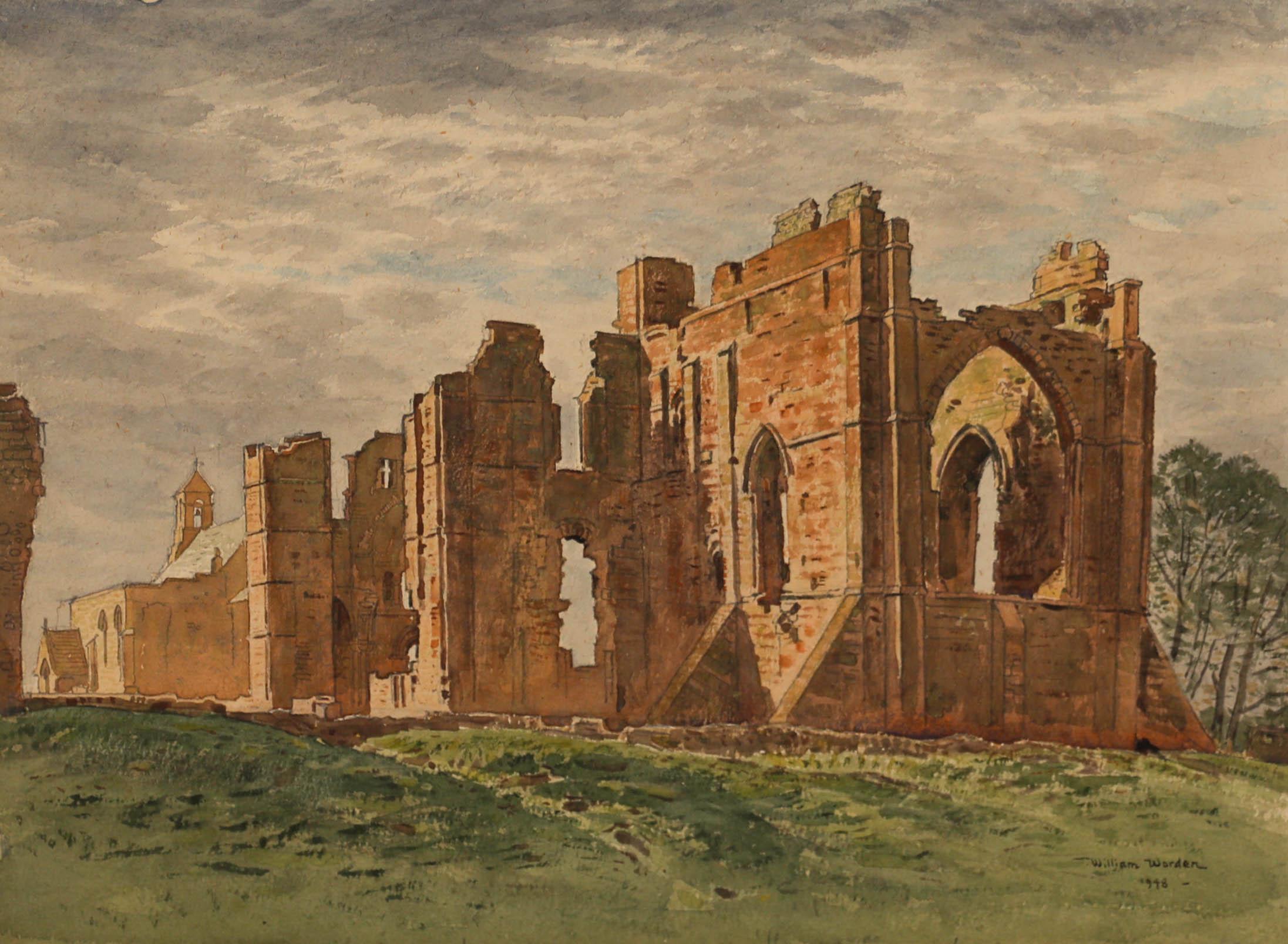
William Warden (1908-1982) - 1948 Watercolour, Ruined Church
Located in Corsham, GB
Signed and dated. On watercolour paper.
Category
Mid-20th Century Landscape Drawings and Watercolors
Materials
Watercolor
$248 Sale Price
20% Off
Ancient Ruins - Watercolor by Abraham Rademaker - 18th Century
Located in Roma, IT
Ancient Ruins is an original old master artwork realized by Abraham Rademaker (1677-1735) in 18th Century
Wonderful watercolor by the famous 18th-centur...
Category
18th Century Modern Landscape Drawings and Watercolors
Materials
Paper, Watercolor
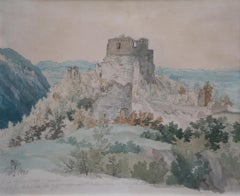
Ruins of the Imperial Castle Outside Split in Croatia
Located in Stockholm, SE
Gustaf Wilhelm Palm (1810–1890) Sweden
Ruins of the Imperial Castle Outside Split in Croatia
pencil and watercolour
unframed: 23.6 x 29.2 cm (9 1/4 x 11 1/2 in)
framed: 40 x 45 cm...
Category
1840s Romantic Landscape Drawings and Watercolors
Materials
Paper, Watercolor
More Ways To Browse
German Antiques
Antique Nun
The Real Real
Landscape With Ruins
Romanticism Painting
Caspar David Friedrich
Visby Sweden
Lake District Watercolour
Raphael Tuck And Sons
Tuck And Sons
Windsor Castle Watercolor
Antique English Cottage Watercolours
Boat Italy Drawing
Castle Chillon
Charles Culver Paintings
Charles De Wolf Brownell
Crashing Waves Watercolor
Groups Of Women Paintings