Items Similar to untitled (Street Scene Mexico)
Want more images or videos?
Request additional images or videos from the seller
1 of 6
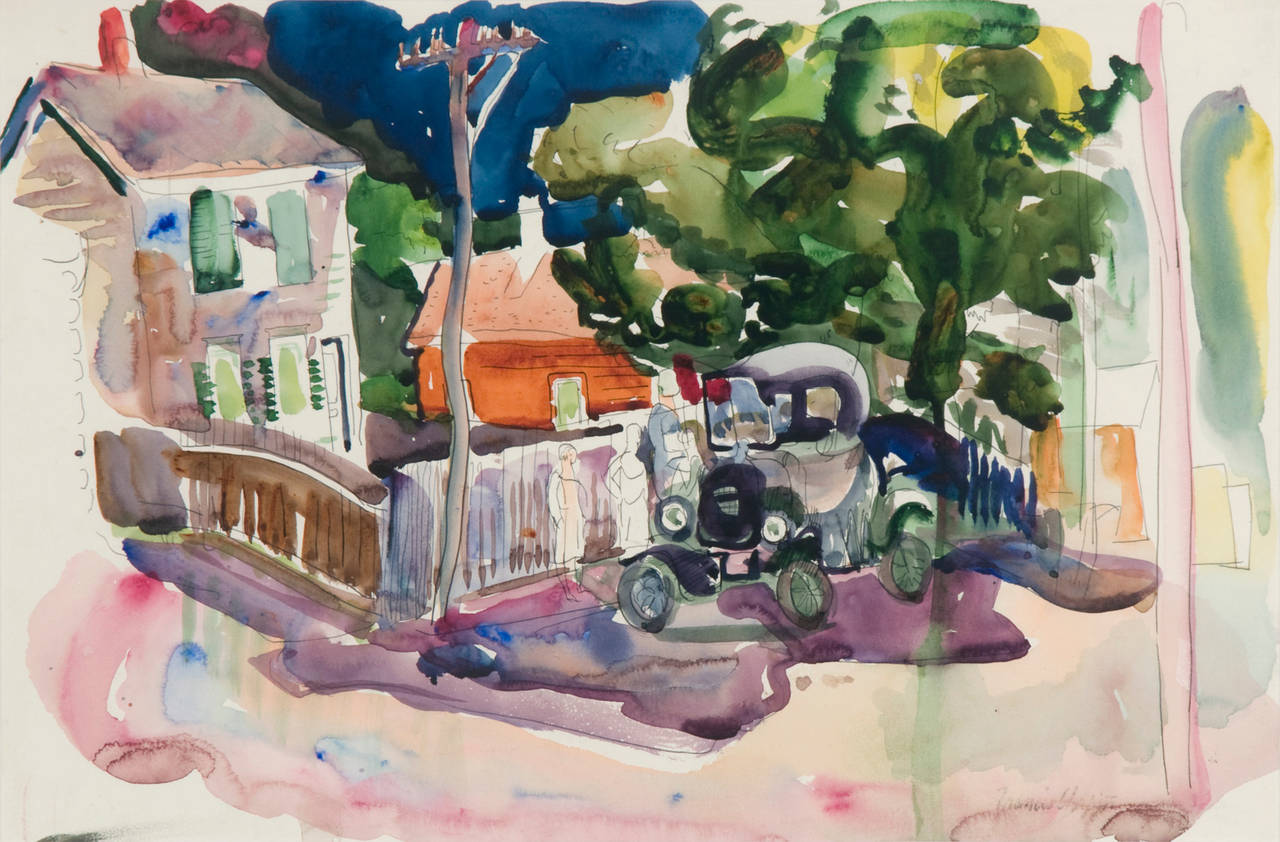
William Graueruntitled (Street Scene Mexico)c. 1930
s
c. 1930 s
$500
$70028% Off
£380.74
£533.0428% Off
€438.41
€613.7828% Off
CA$708.54
CA$991.9628% Off
A$762.14
A$1,06728% Off
CHF 407.31
CHF 570.2328% Off
MX$8,983.46
MX$12,576.8528% Off
NOK 5,135.22
NOK 7,189.3128% Off
SEK 4,694.57
SEK 6,572.4028% Off
DKK 3,275.67
DKK 4,585.9428% Off
About the Item
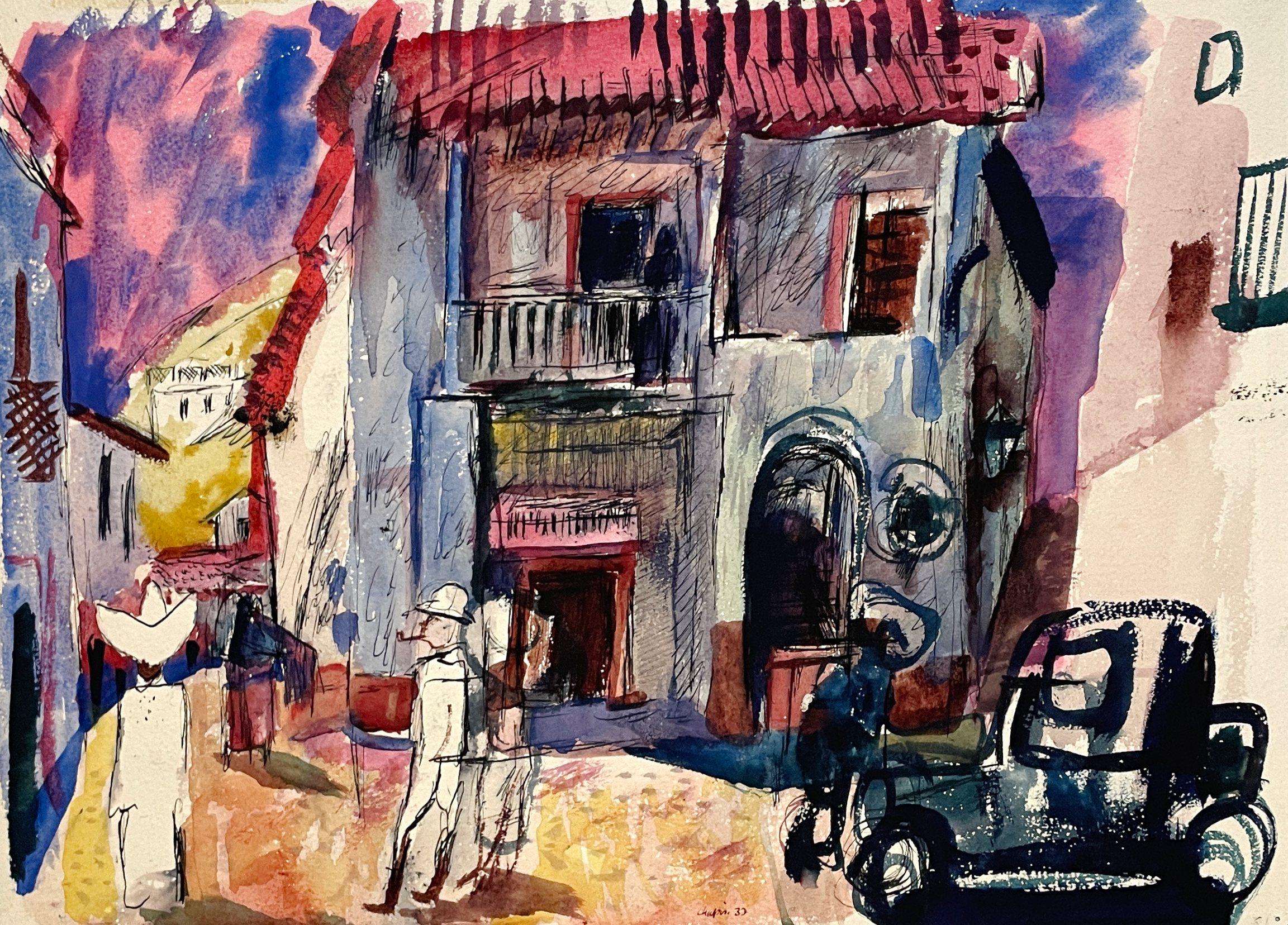
Untitled Mexican Landscape (Man Walking on Street)
Ink and watercolor on paper.
Signed with the estate stamp lower right (see photo)
From the Estate of the Artist with the artist's estate stamp lower right.
C. 1960's
Condition: excellent
Image/Sheet size: 9 7/8 x 7 5/8 inches
William C. Grauer (1895-1985)
William C. Grauer (1895-1985) was born in Philadelphia to German immigrant parents. After attending the Philadelphia Museum School of Industrial Art, Grauer received a four year scholarship from the City of Philadelphia to pursue post graduate work. It was during this time that Grauer began working as a designer at the Decorative Stained Glass Co. in Philadelphia.
Following his World War I service in France, Grauer moved to Akron, Ohio where he opened a studio in 1919 with his future brother-in-law, the architect George Evans Mitchell. Soon, the Rorimer-Brooks design company, the developer Van Swerngen brothers, as well as the Sterling Welch and Halle Bros. department stores realized the extent of Grauer's talent and eagerly employed him. Grauer’s work during this time included architectural renderings for Shaker Square, Moreland Courts, and other many other projects commissioned by Cleveland architects. Grauer also remained true to his roots as a master designer of stained glass windows. With his work in such high demand, Grauer received a commission in 1921 to paint murals for the French Grill Room of the Kansas City Club. Later, he also worked for the Cleveland Builders Exchange in 1928.
In the 1920s, Grauer had a studio in the Old Fine Arts Building in Cleveland, where he met his future wife and fellow Philadelphian, Natalie Eynon Grauer, whom he married in 1924. After creating murals for the Greenbrier Hotel in White Sulfur Springs, West Virginia in 1932, together Grauer and his wife founded and co-directed the successful Old White Art Colony, School and Gallery, which they continued to frequent during the summer months in the 1930s and 1940s. Grauer’s involvement in West Virginia also included his West Virginia murals for the West Virginia exhibitions at the 1933 Century of Progress Exhibition in Chicago and the 1939 World’s Fair in New York City.
Back in Ohio, Grauer became affiliated with Cleveland College, one of the component colleges of Western Reserve University, which later became Case Western Reserve University. According to Jill Tatem, assistant university archivist with Case Western Reserve University, Grauer was a lecturer in art at Cleveland College from 1934 to 1948, associate professor of art from 1948 to 1966, and then an associate professor emeritus. Following the death of his wife in 1955, he married another Cleveland College art instructor, Dorothy Turobinski, in 1964. After Grauer retired from Western Reserve University in 1966, he continued to paint and teach privately until his death in 1985 at age 89.
Grauer's work is in the collections of numerous Museums including The Cleveland Museum of Art, the Whitney Museum of American Art in New York, and the Smithsonian Institution in Washington D.C.
- Creator:William Grauer (1896 - 1985, American)
- Creation Year:c. 1930 s
- Dimensions:Height: 9.88 in (25.1 cm)Width: 7.63 in (19.39 cm)
- Medium:
- Movement Style:
- Period:
- Condition:Very good original condition.
- Gallery Location:Fairlawn, OH
- Reference Number:Seller: FA55011stDibs: LU1402543183
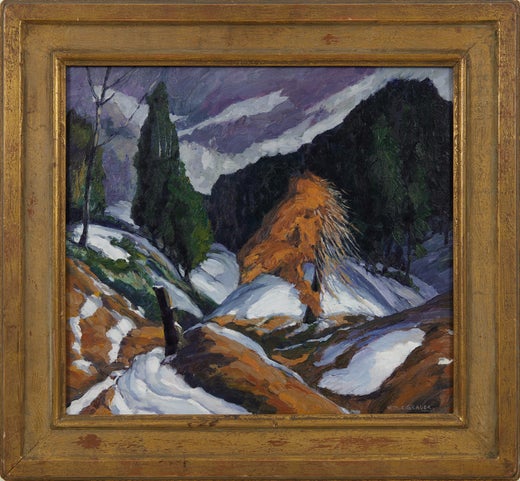
William Grauer
William C. Grauer (2 Dec. 1895-6 Apr. 1985) was a painter, muralist, and art teacher active in Cleveland for nearly 60 years. Born in Philadelphia, he graduated from the Pennsylvania Museum School of Industrial Art in 1914 and saw service in France during World War I. Coming to Cleveland as a free-lance artist in 1927, he married Natalie Eynon (1888-1955), a fellow native Philadelphian and artist with whose career his own became intertwined. Invited to contribute murals to the President's Cottage at White Sulphur Springs, W. Va., in 1932, they returned to found and co-direct the Old White Art Colony, School and Gallery there during the summers from 1934-40. During the same period they also started the art department at Cleveland College of Western Reserve University. Grauer painted murals for the West Virginia exhibitions in both the Chicago Century of Progress (1933) and the New York World's Fair (1939). Residents of Ambleside Dr. near University Circle, the Grauers also maintained a summer home and studio in E. Claridon, Geauga County. They had 2 daughters, Blanche E. and Gretchen. Following the death of his wife, Grauer married another Cleveland College art instructor, Dorothy Turobinski, in 1964. He retired from WRU as associate professor of art in 1966 but continued to paint and to teach privately. Increasingly abstract in style in his later years, his work had been exhibited in 55 May Shows at the Cleveland Museum of Art.
About the Seller
5.0
Recognized Seller
These prestigious sellers are industry leaders and represent the highest echelon for item quality and design.
Platinum Seller
Premium sellers with a 4.7+ rating and 24-hour response times
Established in 1978
1stDibs seller since 2013
840 sales on 1stDibs
Typical response time: <1 hour
Associations
International Fine Print Dealers Association
- ShippingRetrieving quote...Shipping from: Fairlawn, OH
- Return Policy
More From This Seller
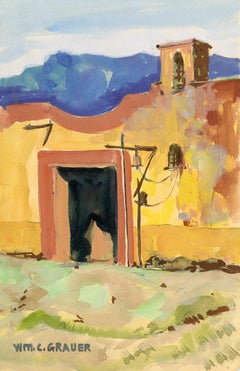
View Alluntitled (Yellow Adobe Building with Bell)
By William Grauer
Located in Fairlawn, OH
Untitled (Mexican Village)
Ink and watercolor on paper, c. 1960
Estate Stamp Lower Left
Provenance: estate of the Artist
Condition: Excelleent
Image/Sheet size; 8 3/4 x 5 3/4 inches
...
Category
20th Century Landscape Drawings and Watercolors
Materials
Ink, Watercolor
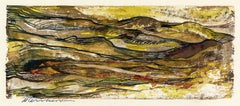
Mountainous Landscape, Mexico
Located in Fairlawn, OH
Mountainous Landscape, Mexico
Monotype in colors on heavy paper, c. 1960's
Signed in ink lower left "G Ceniceros"
Condition: Excellent
Image size: 6 x 14 1/2" (15.24 x 36.83cm)
Sheet size: 12 7/8 x 19 11/16 inches
Guillermo Ceniceros (born May 7, 1939) is a Mexican painter and muralist, best known for his mural work in Mexico City, as well as his figurative easel work. He began his mural painting career as an assistant to mural painters such as Federico Cantú, Luis Covarrubias and then David Alfaro Siqueiros who was a mentor and a key influence. Ceniceros is the most notable of Siqueiros' assistants. While he has experimented with abstract expression, his easel work mostly classifies as figurativism and is influenced by the geometrical construct of Mexican muralism. He has had over 300 individual and collective exhibitions in Mexico and the International stage. His work has been recognized by the Mexican Ministry of Culture and several of its institutions. He has painted over 20 large scale Mural Paintings with some of the most notable being the large scale work for the Legislative Palace of San Lazaro (Mexico's Legislative Building) as well as his murals in the Metro Subway System. He is a member of the Salón de la Plástica Mexicana. In 1995, the State of Durango, Ceniceros' native state, opened to the public the Guillermo Ceniceros Art Museum within the oversight of the Ministry of Culture. Ceniceros has been reviewed by notable critics such as Berta Taracena, Raquel Tibol, Alaide Foppa, Graciela Kartofel, José Angel Leyva and Eduardo Blackaller among others. There are several publications about his work including a vast review of his art life endeavors developed by the Ministries of Culture of Durango and Nuevo León. He is married to the artist Esther González and lives in his studio house in the Colonia Roma of Mexico City.
Life
Interview with the subject Ceniceros and Siqueiros
Ceniceros was born in a small village called El Salto, located in the municipality of Pueblo Nuevo in the Mexican state of Durango. His father was a woodworker who made toys and furniture in his workshop. His father's shop would become an influence in Ceniceros' life long interest in developing his own innovative working tools. When he was twelve the family moved to Monterrey to seek better economic opportunities. There he attended school and when he was fourteen he entered the Fabricación de Máquinas, S.A. (FAMA), a school/business, where he studied industrial drawing. He considers this early training important as it taught him the importance of geometry, use of space and materials. While at FAMA he met painters Gerardo Cantú and Ignacio Ortiz, and collaborated with them on sketches for publications of Alfonso Reyes, Pedro Garfias and other notable writers.
In 1955, he enrolled in the Taller de Artes Plásticas at the Universidad Autónoma de Nuevo León, graduating in 1958. At the Taller he met fellow Mexican artist Esther González, whom he married and with whom he has two children.
In 1962 he moved to Mexico City with the goal of working in the Taller of the Maestro David Alfaro Siqueiros. He became Siqueiros' first assistant working on his last murals while at the same time working at night on his easel painting work. Siqueiros supported Ceniceros decision to leave his Taller and supported him in his career until his death in 1974. By then Ceniceros was already a break thru artist having had several individual exhibitions including the prestigious Palacio De Bellas Artes as well as other recognitions. Thru the 70's and 80s Ceniceros continued his work with an emphasis on exhibits and exchanges abroad and traveling to Eastern Europe, Cuba, China, Chile, Ecuador, Italy and the United States. His Mexico City contemporaries and circle would include names that today have become reference such as Sebastian, José Luis Cuevas, Gilberto Aceves Navarro, Benjamin Dominguez, Gustavo Arias Murueta, Byron Galvez, Leonel Maciel among others. In the 70's his Row-House neighbors in the colonia Roma were Francisco Toledo and Alejandro Jodorowski.
His focus on mural painting is renewed in the mid 80's thru his large scale work in the Metro Subway System with him working on major commissions consistently and into the new century. While the Mexican school of Muralism had been challenged by the Ruptura members, the interest in Mural painting as a unique national form of expression continues.
He lives in Mexico City at a studio/home in the Colonia Roma. His home is a frequent gathering place for writers, poets, painters, singers, actors and journalists. He has a strong interest in Spanish language literature. Juan Rulfo...
Category
1960s Modern Landscape Drawings and Watercolors
Materials
Monotype
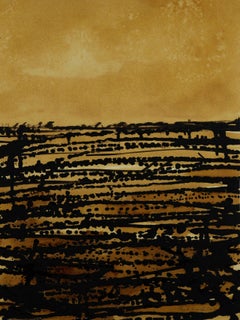
Untitled
By Ray H. French
Located in Fairlawn, OH
Signed and dated "1962" by the artist lower right.
Mixed media on heavy paper.
Done for a show to fund a trip to Italy.
Category
1960s Abstract Abstract Drawings and Watercolors
Materials
Ink, Mixed Media
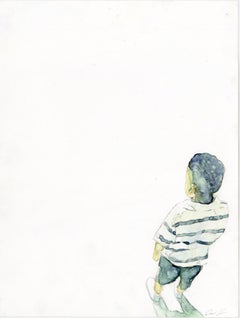
Read the Signs #3
By Darius Steward
Located in Fairlawn, OH
Read the Signs #3
Watercolor on Yupo paper, 2013
Signed lower right (see photo)
Series: Read the Signs (22 watercolors)
Depicts the artist's relative Jaylen
...
Category
2010s Contemporary Figurative Drawings and Watercolors
Materials
Watercolor
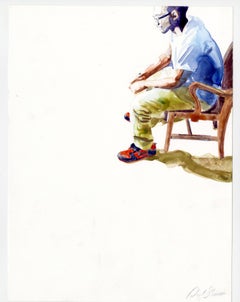
Read the Signs, No. 13
By Darius Steward
Located in Fairlawn, OH
Read the Signs, No. 13
Watercolor on Yupo paper, 2013
Signed lower right corner (see photo)
Series: Read the Signs (22 watercolors)
Exhibited: William Busta Gallery, Read the Signs, 2014
Canton Museum of Art, Our Separated Selves, 2018 (label)
Note: Depicts Randy, a student at St. Ignatius High School in Cleveland, where the artist taught
Condition: Excellent
Image size: 12 x 9 inches
Frame size: 16 1/4 x 13 1/4 inches
Darius Steward Biography
Darius Steward is establishing himself as a master of the medium of watercolor and large public murals. In 2018, Steward created two large public murals, “Breaker of Chains”, a 200’ by 6’ in height mural for the Midtown Cleveland/Cleveland State University and “Support” on Detroit Avenue in Cleveland. A new mural “Waiting Room” has been finished at SUMMA Health Care Tower, Akron, Ohio. Darius is currently working on a public sculpture commission for the Cleveland Public Library...
Category
2010s Contemporary Figurative Drawings and Watercolors
Materials
Watercolor
Read the Signs, No. 13
By Darius Steward
Located in Fairlawn, OH
Read the Signs, No. 13
Watercolor on Yupo paper, 2013
Signed lower right corner (see photo)
Series: Read the Signs (22 watercolors)
Exhibited: William Busta Gallery, Read the Signs, ...
Category
2010s Contemporary Figurative Drawings and Watercolors
Materials
Watercolor
You May Also Like
MOMA Exhibited Watercolor by Chicago Artist Francis Chapin, "Tourists in Taxco"
By Francis Chapin
Located in Chicago, IL
A charming, vibrant, early Mexican city street scene by famed Chicago Modern artist Francis Chapin (Am. 1899-1965). Titled "Tourists in Taxco", the watercolor was exhibited at the M...
Category
1930s American Modern Landscape Drawings and Watercolors
Materials
Paper, Watercolor

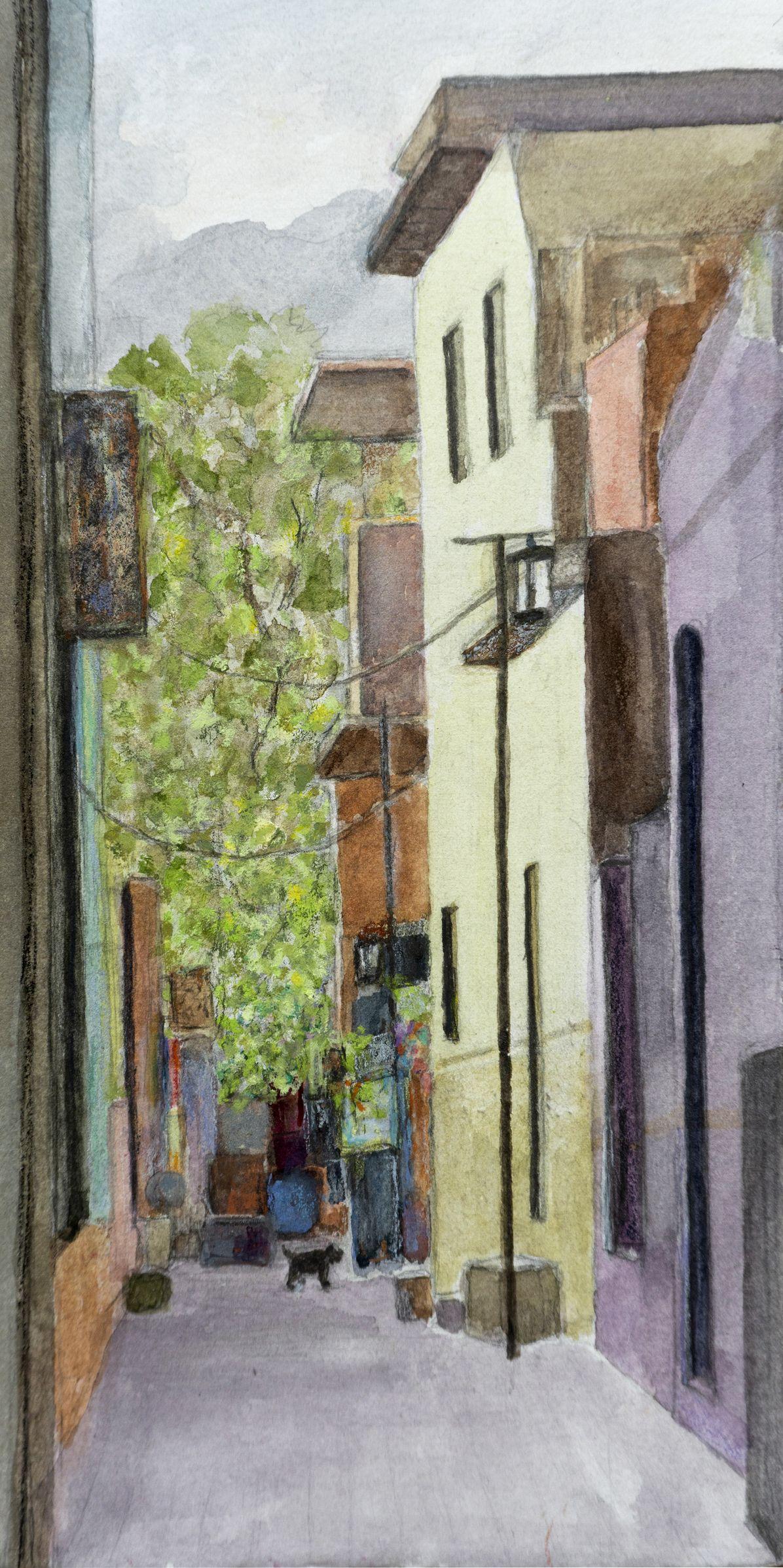
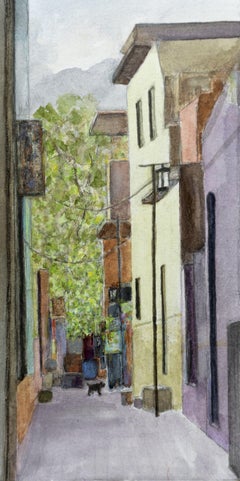
Obregon Alley, Painting, Watercolor on Paper
Located in Yardley, PA
Obregon Alley was painted in Ajijic, Mexico in late afternoon light. It is a view of a narrow alley, emphasizing windows and doors, with trees and a mountain in the background. There...
Category
21st Century and Contemporary Modern Drawings and Watercolor Paintings
Materials
Watercolor
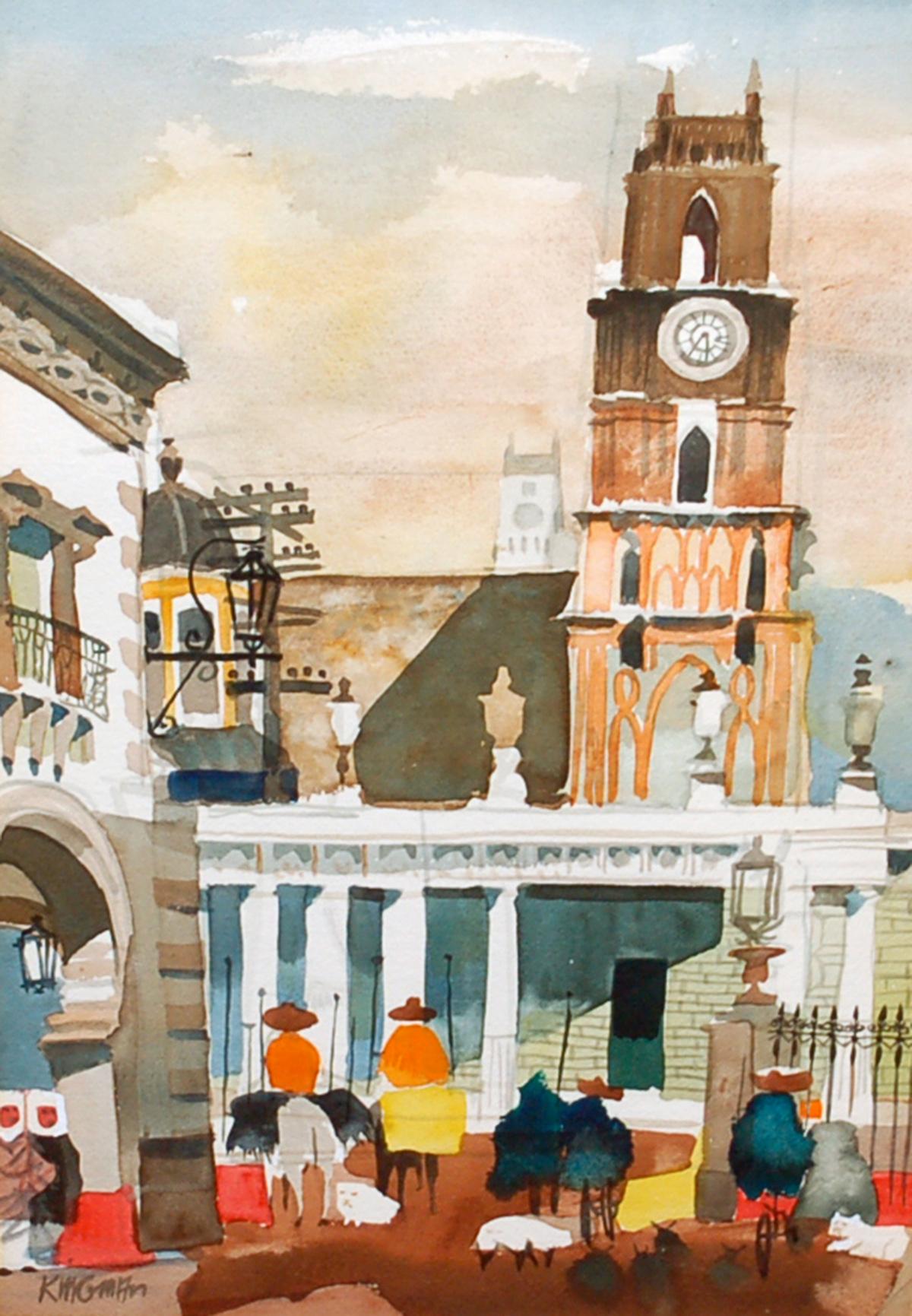
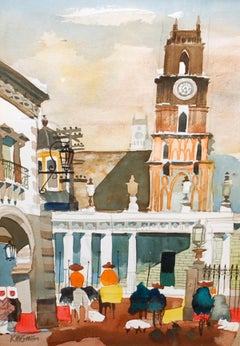
San Miguel, Mexico
By Dong Kingman
Located in Missouri, MO
San Miguel, Mexico
By Dong Kingman (American, 1911-2000)
Unframed: 22" x 15"
Framed: 31" x 24"
Signed Lower Left
Born in Oakland, CA on March 31, 1911. When Kingman was five, his family moved to Hong Kong where he grew up and attended Lingnan Grammar School. The headmaster of the school, Szetu Wei, had studied painting in Paris and recognized his budding artistic talent. For several years he trained young Kingman in both oriental and occidental approaches to painting. Returning to San Francisco in 1929, Kingman became active in the local art scene and began painting scenes of the city. His first solo show at the San Francisco Art Center in 1936 brought immediate recognition. During the 1930s he spent five years working on commissions for the Federal Public Works of Art Project. During WWII he created maps and charts for the O.S.S. After the war Kingman settled in NYC and taught at Columbia University. His paintings were used as backdrops for the movie "Flower Drum Song...
Category
20th Century American Modern Landscape Drawings and Watercolors
Materials
Watercolor
Price Upon Request
1930s Mexican City Scene by Famed Chicago Artist Francis Chapin, Guaymas, Mexico
By Francis Chapin
Located in Chicago, IL
A charming, vibrant, early Mexican city street scene by famed Chicago Modern artist Francis Chapin (Am. 1899-1965). Depicting a quiet street in the historic, picturesque city of Gua...
Category
1930s American Modern Landscape Paintings
Materials
Masonite, Oil
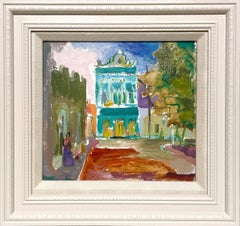
Pawel Kontny “New Mexico” 20th-Century Southwestern Modernist Watercolor
By Pawel Kontny
Located in Denver, CO
This 20th-century watercolor painting, “New Mexico,” by Polish-American artist Pawel Kontny, captures the enduring architecture and serene spirit of the American Southwest. The work ...
Category
Mid-20th Century American Modern Still-life Paintings
Materials
Watercolor
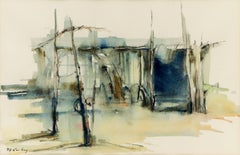
Untitled
By Francis Chapin
Located in Dallas, TX
Francis Chapin was one of the most celebrated painters in Chicago during his lifetime. When he was a young art student, Valley House founder, Donald Vogel, painted with "Chape" on th...
Category
1930s American Modern Landscape Drawings and Watercolors
Materials
Ink, Paper, Watercolor
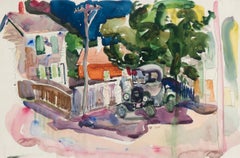
More Ways To Browse
Modern Mexican Art
Watercolor Mexico
Architectural Rendering
Mexico Landscapes Paintings
Vintage Architectural Renderings
Modern American Street Scene
Mexican Street Art
Robert T Hayes
Robert William Arthur Rouse
Roosevelt Hotel
Roy Wilhelm
Rufus Way Smith
Sailboat Painting Florida
Sei Niimi
Sharon Galligan
Stefan Bleekrode
Steven Kozar On Sale
Thomas Edward Francis