Want more images or videos?
Request additional images or videos from the seller
1 of 5

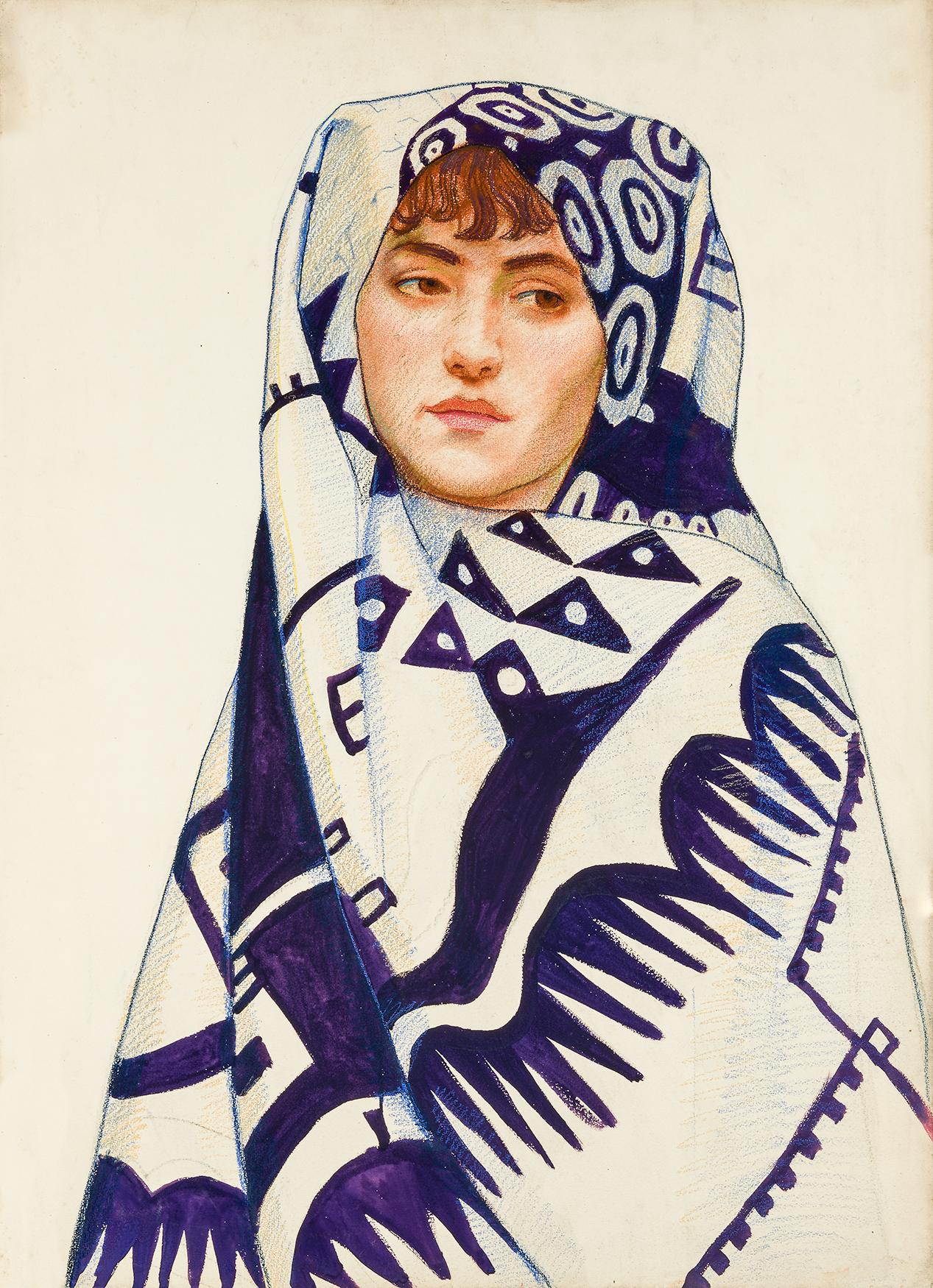
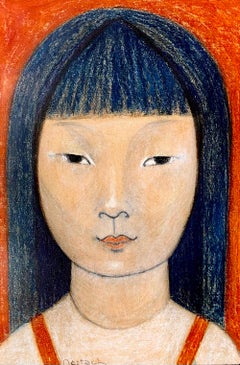
Winold Reiss
Japanese Girl

Price Upon Request
Price Upon Request
Price Upon Request
Price Upon Request
Price Upon Request
Price Upon Request
Price Upon Request
Price Upon Request
Price Upon Request
Price Upon Request

About the Item

Signed (at lower right): WINOLD/REISS
  • Creator:
    Winold Reiss (1886-1953, American)
  • Dimensions:
    Height: 15 in (38.1 cm)Width: 15 in (38.1 cm)
  • Medium:
  • Movement Style:
  • Period:
  • Condition:
  • Gallery Location:
    New York, NY
  • Reference Number:
    1stDibs: LU2310629932

More From This Seller

View All
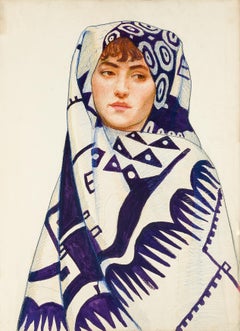
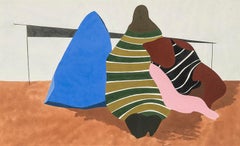
Girl in Decorative Wrap
By Winold Reiss
Located in New York, NY
Winold Reiss (1886-1953), who scholars increasingly recognize as a pivotal figure in early 20th-century American art, is known for his evocative portraits that capture the spirit and...
Category

20th Century American Modern Portrait Drawings and Watercolors

Materials

Mixed Media, Board

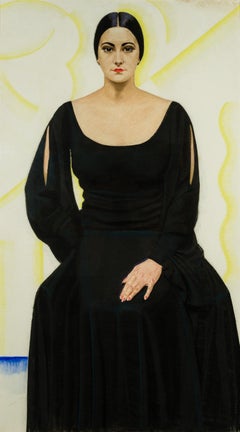
Rosalee Sondheimer I
By Winold Reiss
Located in New York, NY
Winold Reiss (1886-1953), who scholars increasingly recognize as a pivotal figure in early 20th-century American art, is known for his evocative portraits that capture the spirit and...
Category

20th Century American Modern Portrait Drawings and Watercolors

Materials

Pastel, Board

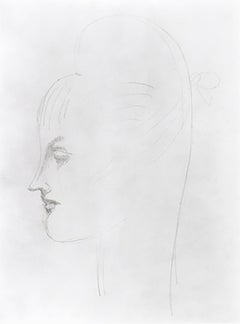
Profile of a Woman
By Elie Nadelman
Located in New York, NY
Pencil on paper
Category

Early 20th Century American Modern Drawings and Watercolor Paintings

Materials

Pencil

Untitled
By Charles Houghton Howard
Located in New York, NY
Charles Houghton Howard was born in Montclair, New Jersey, the third of five children in a cultured and educated family with roots going back to the Massachusetts Bay colony. His father, John Galen Howard, was an architect who had trained at M.I.T. and the École des Beaux-Arts in Paris and apprenticed in Boston with Henry Hobson Richardson. In New York, the elder Howard worked for McKim, Mead and White before establishing a successful private practice. Mary Robertson Bradbury Howard, Charles’s mother, had studied art before her marriage. John Galen Howard moved his household to California in 1902 to assume the position of supervising architect of the new University of California campus at Berkeley and to serve as Professor of Architecture and the first Dean of the School of Architecture (established in 1903). The four Howard boys grew up to be artists and all married artists, leaving a combined family legacy of art making in the San Francisco Bay area that endures to this day, most notably in design, murals, and reliefs at the Coit Tower and in buildings on the Berkeley campus. Charles Howard graduated from the University of California at Berkeley in 1921 as a journalism major and pursued graduate studies in English at Harvard and Columbia Universities before embarking on a two-year trip to Europe. Howard went to Europe as a would-be writer. But a near-religious experience, seeing a picture by Giorgione in a remote town outside of Venice, proved a life-altering epiphany. In his own words, “I cut the tour at once and hurried immediately back to Paris, to begin painting. I have been painting whenever I could ever since” (Charles Howard, “What Concerns Me,” Magazine of Art 39 [February 1946], p. 63). Giorgione’s achievement, in utilizing a structured and rational visual language of art to convey high emotion on canvas, instantly convinced Howard that painting, and not literature, offered the best vehicle to express what he wanted to say. Howard returned to the United States in 1925, confirmed in his intent to become an artist. Howard settled in New York and supported himself as a painter in the decorating workshop of Louis Bouché and Rudolph Guertler, where he specialized in mural painting. Devoting spare time to his own work, he lived in Greenwich Village and immersed himself in the downtown avant-garde cultural milieu. The late 1920s and early 1930s were the years of Howard’s art apprenticeship. He never pursued formal art instruction, but his keen eye, depth of feeling, and intense commitment to the process of art making, allowed him to assimilate elements of painting intuitively from the wide variety of art that interested him. He found inspiration in the modernist movements of the day, both for their adherence to abstract formal qualities and for the cosmopolitan, international nature of the movements themselves. Influenced deeply by Surrealism, Howard was part of a group of American and European Surrealists clustered around Julien Levy. Levy opened his eponymously-named gallery in 1931, and rose to fame in January 1932, when he organized and hosted Surrealisme, the first ever exhibition of Surrealism in America, which included one work by Howard. Levy remained the preeminent force in advocating for Surrealism in America until he closed his gallery in 1949. Howard’s association with Levy in the early 1930s confirms the artist’s place among the avant-garde community in New York at that time. In 1933, Howard left New York for London. It is likely that among the factors that led to the move were Howard’s desire to be a part of an international art community, as well as his marriage to English artist, Madge Knight...
Category

20th Century American Modern Abstract Drawings and Watercolors

Materials

Paper, Watercolor, Gouache, Graphite

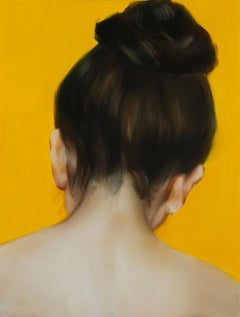
A late frost drifted back
By Angela Fraleigh
Located in New York, NY
Signed on back
Category

2010s Contemporary Figurative Paintings

Materials

Linen, Oil

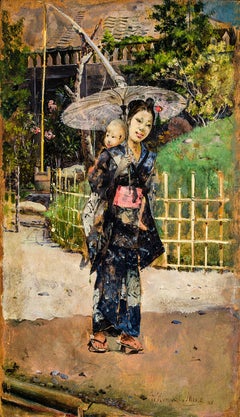
Japanese Girl Promenading
By Harry Humphrey Moore
Located in New York, NY
Harry Humphrey Moore led a cosmopolitan lifestyle, dividing his time between Europe, New York City, and California. This globe-trotting painter was also active in Morocco, and most importantly, he was among the first generation of American artists to live and work in Japan, where he depicted temples, tombs, gardens, merchants, children, and Geisha girls. Praised by fellow painters such as Thomas Eakins, John Singer Sargent, and Jean-Léon Gérôme, Moore’s fame was attributed to his exotic subject matter, as well as to the “brilliant coloring, delicate brush work [sic] and the always present depth of feeling” that characterized his work (Eugene A. Hajdel, Harry H. Moore, American 19th Century: Collection of Information on Harry Humphrey Moore, 19th Century Artist, Based on His Scrap Book and Other Data [Jersey City, New Jersey: privately published, 1950], p. 8). Born in New York City, Moore was the son of Captain George Humphrey, an affluent shipbuilder, and a descendant of the English painter, Ozias Humphrey (1742–1810). He became deaf at age three, and later went to special schools where he learned lip-reading and sign language. After developing an interest in art as a young boy, Moore studied painting with the portraitist Samuel Waugh in Philadelphia, where he met and became friendly with Eakins. He also received instruction from the painter Louis Bail in New Haven, Connecticut. In 1864, Moore attended classes at the Mark Hopkins Institute in San Francisco, and until 1907, he would visit the “City by the Bay” regularly. In 1865, Moore went to Europe, spending time in Munich before traveling to Paris, where, in October 1866, he resumed his formal training in Gérôme’s atelier, drawing inspiration from his teacher’s emphasis on authentic detail and his taste for picturesque genre subjects. There, Moore worked alongside Eakins, who had mastered sign language in order to communicate with his friend. In March 1867, Moore enrolled at the prestigious École des Beaux-Arts, honing his drawing skills under the tutelage of Adolphe Yvon, among other leading French painters. In December 1869, Moore traveled around Spain with Eakins and the Philadelphia engraver, William Sartain. In 1870, he went to Madrid, where he met the Spanish painters Mariano Fortuny and Martin Rico y Ortega. When Eakins and Sartain returned to Paris, Moore remained in Spain, painting depictions of Moorish life in cities such as Segovia and Granada and fraternizing with upper-crust society. In 1872, he married Isabella de Cistue, the well-connected daughter of Colonel Cistue of Saragossa, who was related to the Queen of Spain. For the next two-and-a-half years, the couple lived in Morocco, where Moore painted portraits, interiors, and streetscapes, often accompanied by an armed guard (courtesy of the Grand Sharif) when painting outdoors. (For this aspect of Moore’s oeuvre, see Gerald M. Ackerman, American Orientalists [Courbevoie, France: ACR Édition, 1994], pp. 135–39.) In 1873, he went to Rome, spending two years studying with Fortuny, whose lively technique, bright palette, and penchant for small-format genre scenes made a lasting impression on him. By this point in his career, Moore had emerged as a “rapid workman” who could “finish a picture of given size and containing a given subject quicker than most painters whose style is more simple and less exacting” (New York Times, as quoted in Hajdel, p. 23). In 1874, Moore settled in New York City, maintaining a studio on East 14th Street, where he would remain until 1880. During these years, he participated intermittently in the annuals of the National Academy of Design in New York and the Pennsylvania Academy of the Fine Arts in Philadelphia, exhibiting Moorish subjects and views of Spain. A well-known figure in Bay Area art circles, Moore had a one-man show at the Snow & May Gallery in San Francisco in 1877, and a solo exhibition at the Bohemian Club, also in San Francisco, in 1880. Indeed, Moore fraternized with many members of the city’s cultural elite, including Katherine Birdsall Johnson (1834–1893), a philanthropist and art collector who owned The Captive (current location unknown), one of his Orientalist subjects. (Johnson’s ownership of The Captive was reported in L. K., “A Popular Paris Artist,” New York Times, July 23, 1893.) According to one contemporary account, Johnson invited Moore and his wife to accompany her on a trip to Japan in 1880 and they readily accepted. (For Johnson’s connection to Moore’s visit to Japan, see Emma Willard and Her Pupils; or, Fifty Years of Troy Female Seminary [New York: Mrs. Russell Sage, 1898]. Johnson’s bond with the Moores was obviously strong, evidenced by the fact that she left them $25,000.00 in her will, which was published in the San Francisco Call on December 10, 1893.) That Moore would be receptive to making the arduous voyage across the Pacific is understandable in view of his penchant for foreign motifs. Having opened its doors to trade with the West in 1854, and in the wake of Japan’s presence at the Philadelphia Centennial Exposition of 1876, American artists were becoming increasingly fascinated by what one commentator referred to as that “ideal dreamland of the poet” (L. K., “A Popular Paris Artist”). Moore, who was in Japan during 1880–81, became one of the first American artists to travel to the “land of the rising sun,” preceded only by the illustrator, William Heime, who went there in 1851 in conjunction with the Japanese expedition of Commodore Matthew C. Perry; Edward Kern, a topographical artist and explorer who mapped the Japanese coast in 1855; and the Boston landscapist, Winckleworth Allan Gay, a resident of Japan from 1877 to 1880. More specifically, as William H. Gerdts has pointed out, Moore was the “first American painter to seriously address the appearance and mores of the Japanese people” (William H. Gerdts, American Artists in Japan, 1859–1925, exhib. cat. [New York: Hollis Taggart Galleries, 1996], p. 5). During his sojourn in Japan, Moore spent time in Tokyo, Yokohama, Kyoto, Nikko, and Osaka, carefully observing the local citizenry, their manners and mode of dress, and the country’s distinctive architecture. Working on easily portable panels, he created about sixty scenes of daily life, among them this sparkling portrayal of a young woman dressed in a traditional kimono and carrying a baby on her back, a paper parasol...
Category

Late 19th Century Figurative Paintings

Materials

Oil, Wood Panel

You May Also Like

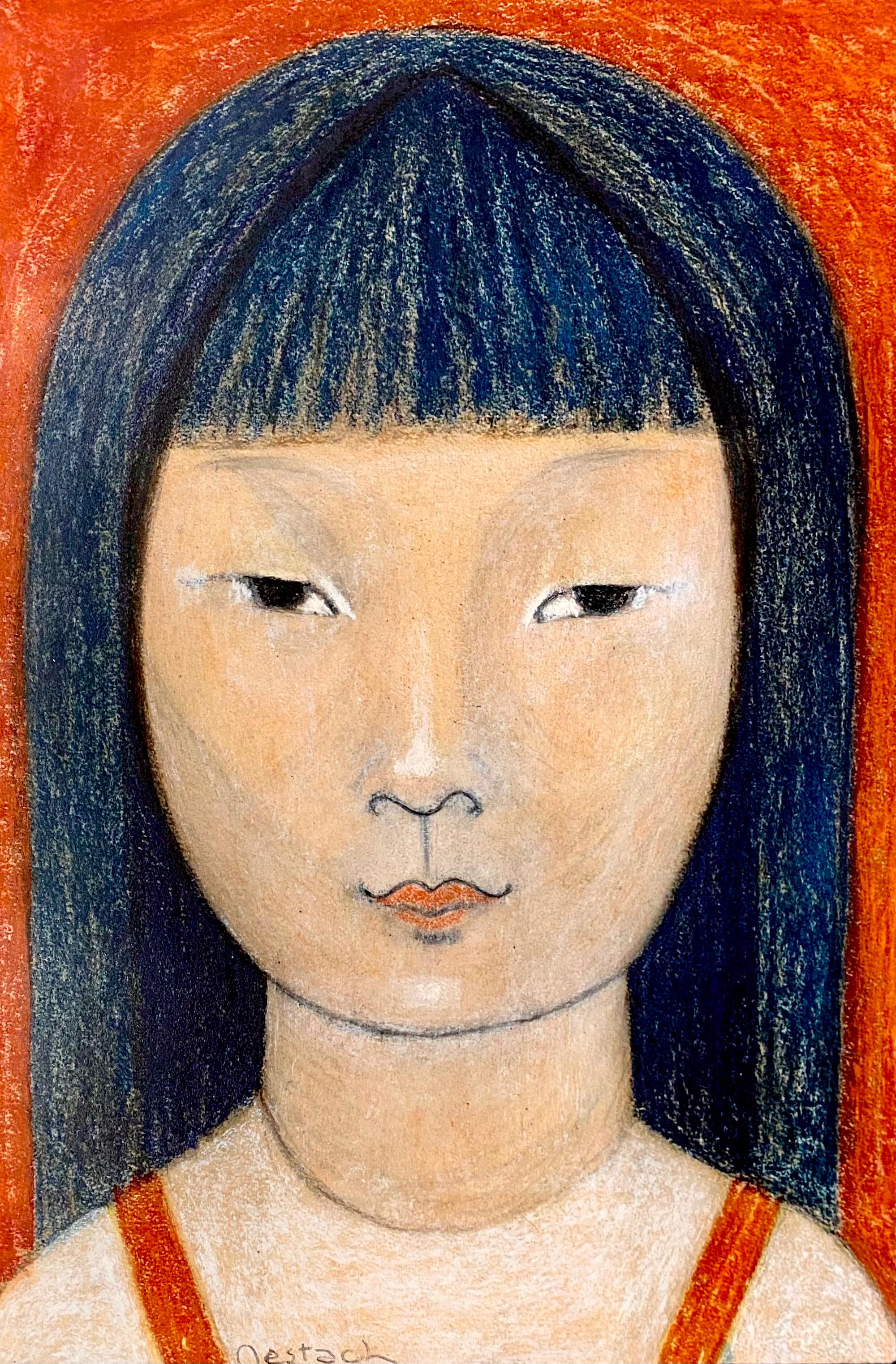
Portrait of an Asian Girl by Jean Willy Mestach ( 1936 – 2014 )
Located in Knokke, BE
Jean Willy Mestach 1936 – Ghent – 2014 Belgian Painter and Sculptor 'Portrait of an Asian Girl' Signature: signed lower middle left 'Mestach' Medium: oil pastel on paper Dimension...
Category

Late 20th Century Post-War Portrait Paintings

Materials

Paper, Oil Pastel

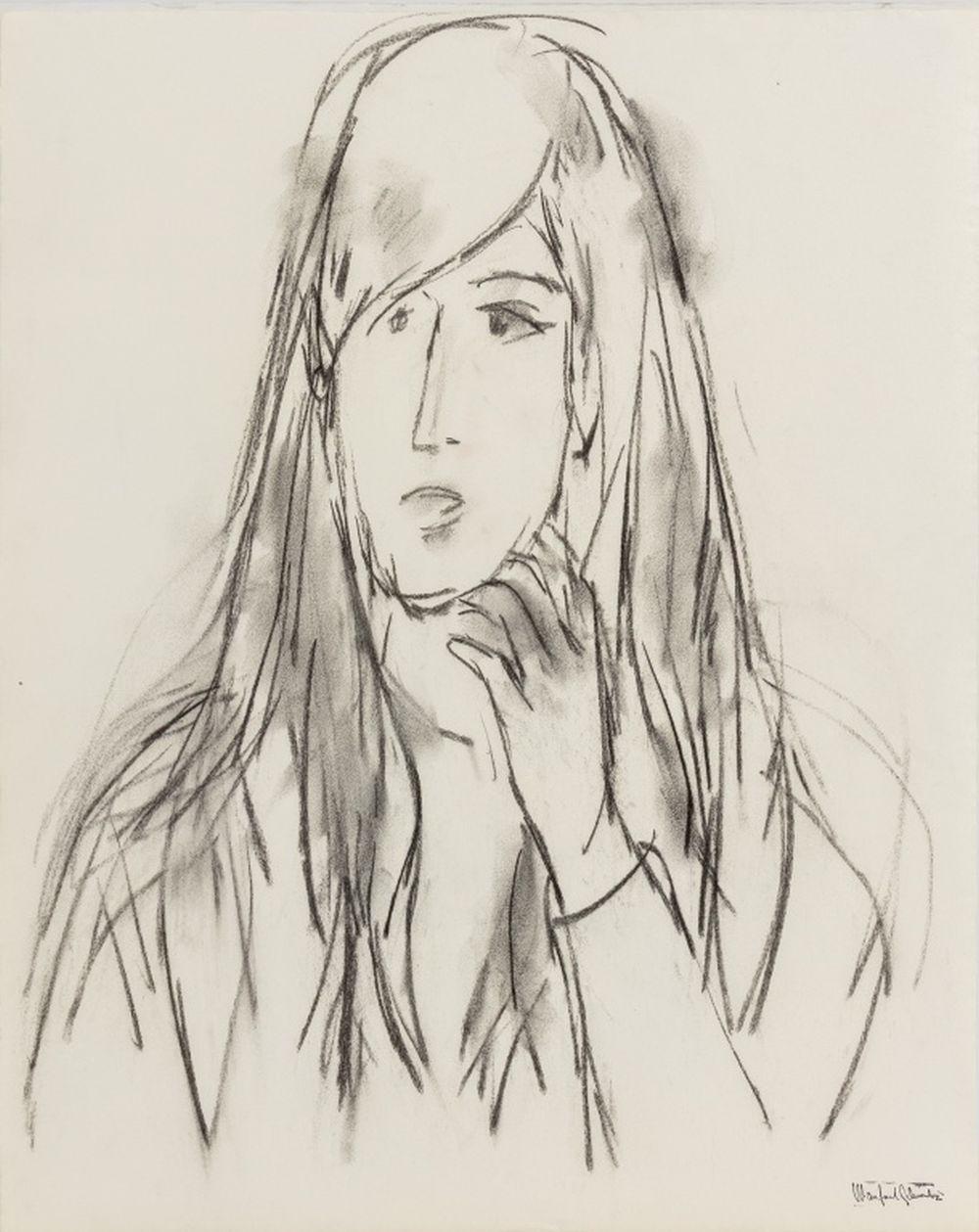
Portrait of a Woman
By Manfred Schwartz
Located in Astoria, NY
Manfred Schwartz (American, b. Poland, 1909-1970), Portrait of a Woman, Charcoal on Paper, with the artist's signature stamped lower right, unframed. 24" H x 19" W. Provenance: From ...
Category

Mid-20th Century Modern Portrait Drawings and Watercolors

Materials

Paper, Charcoal

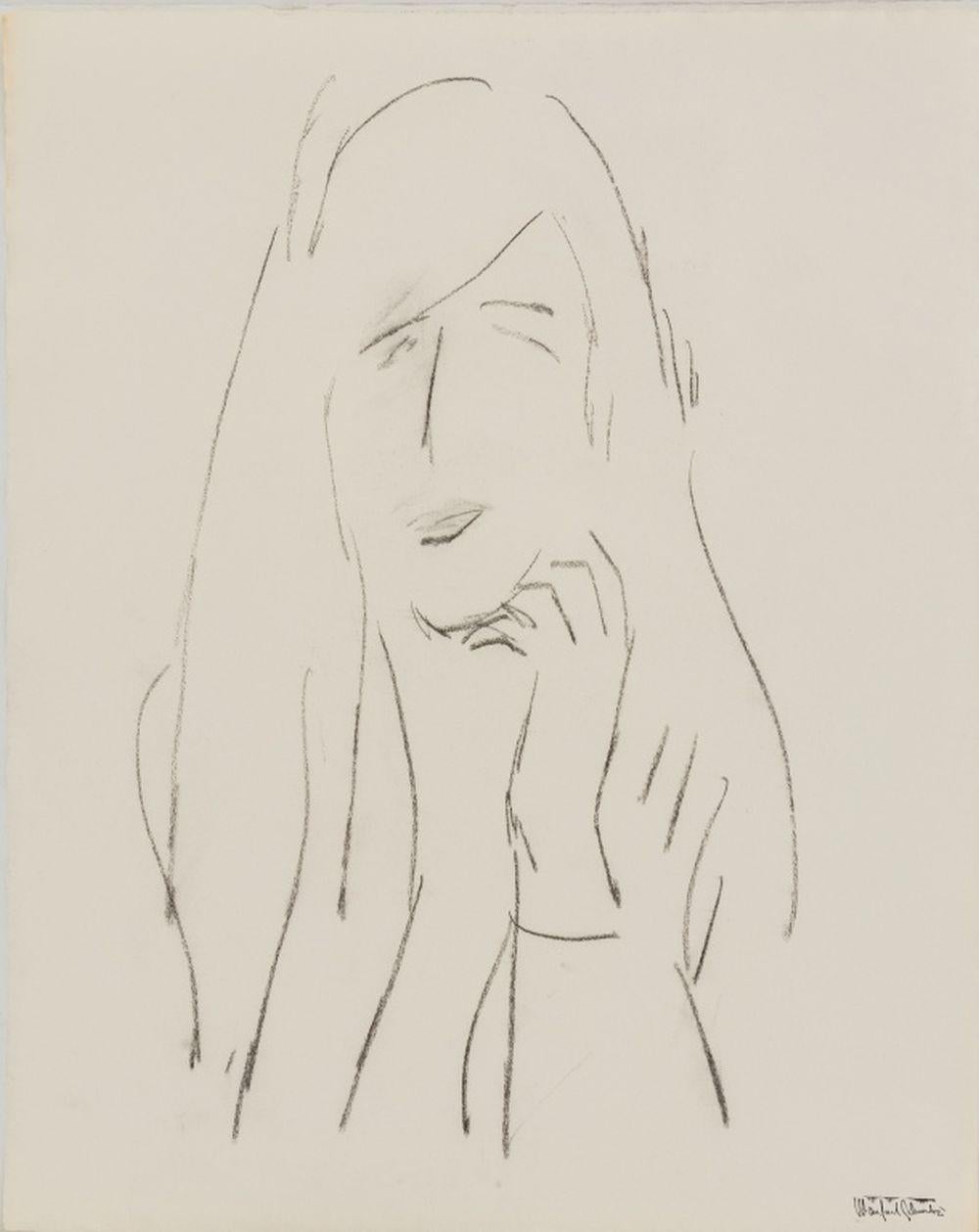
Portrait of a Woman
By Manfred Schwartz
Located in Astoria, NY
Manfred Schwartz (American, b. Poland, 1909-1970), Portrait of a Woman, Charcoal on Paper, with the artist's signature stamped lower right, unframed. 24" H x 19" W. Provenance: From ...
Category

Mid-20th Century Modern Portrait Drawings and Watercolors

Materials

Paper, Charcoal

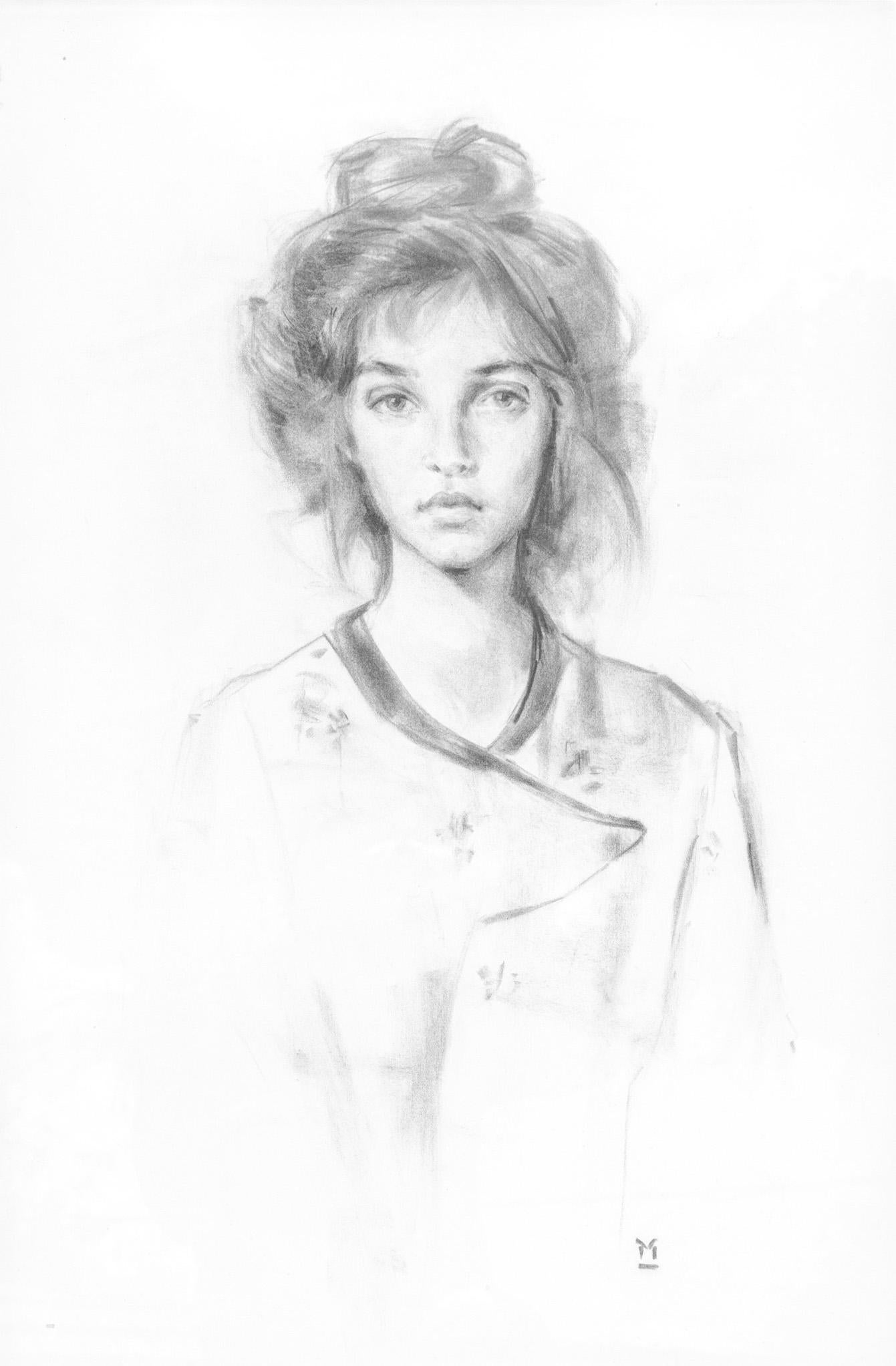
Portrait of a Girl
Located in Austin, TX
Charcoal portrait drawing of a woman by Miles Mathis. 27.75" x 18.25" About the Artist: Miles Mathis is an American artist known for his nude portrait pa...
Category

21st Century and Contemporary Portrait Drawings and Watercolors

Materials

Charcoal, Archival Paper

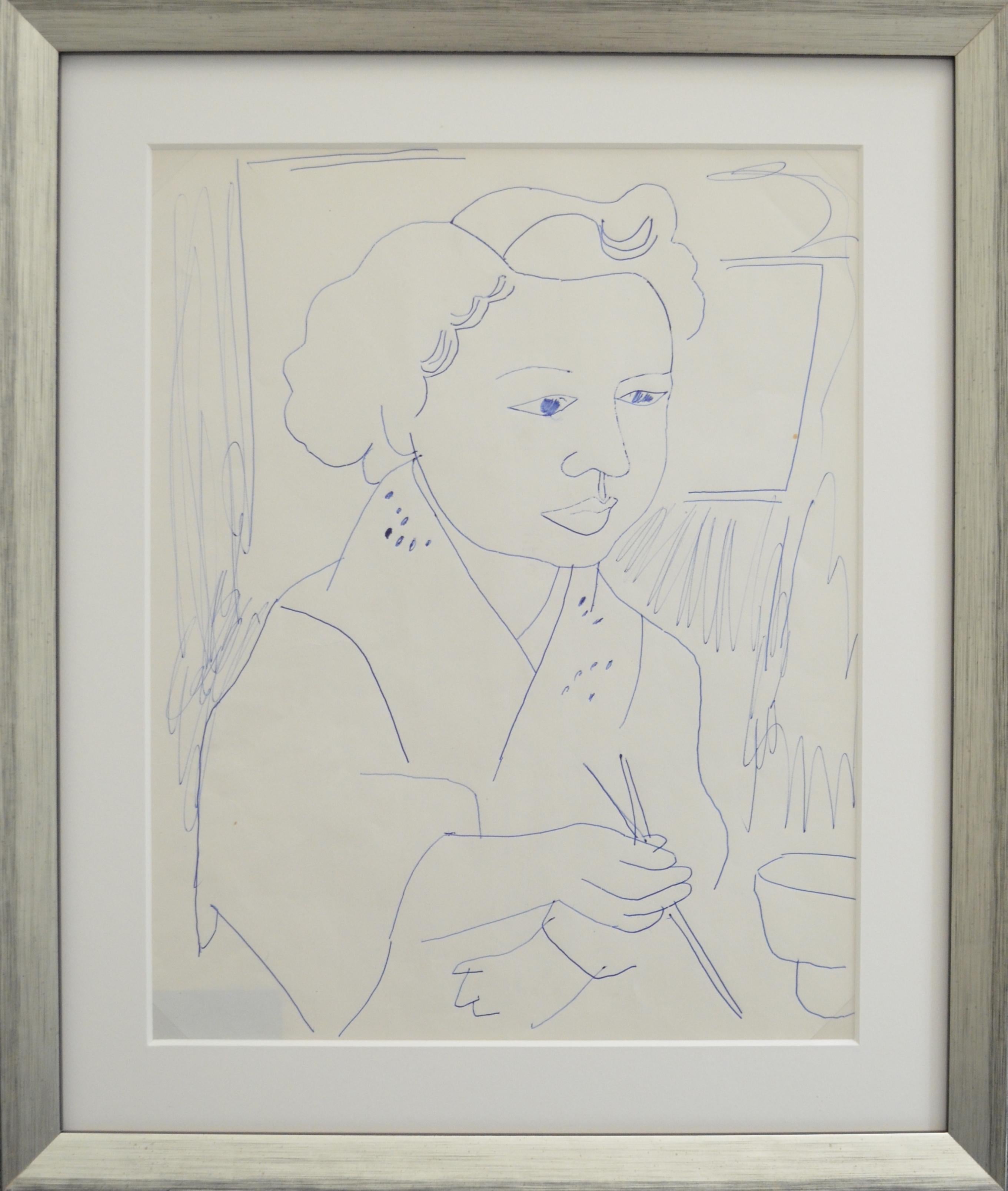
Japanese Woman
By Andy Warhol
Located in Indianapolis, IN
Andy Warhol (1928-1987) Japanese Woman (circa 1956) Blue ballpoint pen on paper Size: 13.625 x 10.875 in (34.6 x 27.6 cm) Frame size: 17.375 x 14.625 in (44.1 x 37.1 cm) Unsigned A...
Category

1950s Pop Art Figurative Drawings and Watercolors

Materials

Paper, Ballpoint Pen

Portrait of a Woman
By Manfred Schwartz
Located in Astoria, NY
Manfred Schwartz (American, b. Poland, 1909-1970), Portrait of a Woman, Charcoal on Paper, with the artist's signature stamped lower right, unframed. 19" H x 24" W. Provenance: From ...
Category

Mid-20th Century Modern Portrait Drawings and Watercolors

Materials

Paper, Charcoal