Items Similar to Flowers
Want more images or videos?
Request additional images or videos from the seller
1 of 10
Julian Alden WeirFlowers1882
1882
$38,500
£29,337.71
€33,834.48
CA$54,681.51
A$58,752.24
CHF 31,520.46
MX$692,169.09
About the Item
Flowers, 1882
Gouache and watercolor on paper
14 x 20 1/8 inches (35.6 x 51.1 cm)
Framed dimensions: 23 x 29 1/4 inches
Signed and dated lower right: J. Alden Weir / '82
Signed lower left: J. Alden Weir
Provenance
Private collection
[Hirschl
Adler Galleries, New York]
Corporate collection, acquired directly from the above, 1991
[Sale: Sotheby’s New York, December 11, 2020, lot 141]
Private collection, acquired directly from the above
Exhibitions
New York, Metropolitan Museum of Art, J. Alden Weir: An American Impressionist, October 13, 1983 – January 8, 1984, n.p., no. 12, illus. (this exhibition traveled to Los Angeles, California, The Los Angeles County Museum of Art, February 9 – May 6, 1984 and Denver, Colorado, The Denver Art Museum, June 13 – August 19, 1984)
Julian Alden Weir and Anna Dwight Baker had only known each other a little over a year when they were married on April 24, 1883. Anna, who first saw Weir when she accompanied a friend to a class he was teaching, returned for two additional sessions, despite the fact that her interest was theater. The two also had a connection with the West Point Military Academy; Weir’s father Robert was an esteemed professor of drawing at the Academy for forty-two years (1832–1876) and Anna’s father served as instructor of tactics there from 1845 to 1851. Julian Alden Weir was born at West Point in 1852.
Nonetheless, their backgrounds were different. Anna came from a privileged and affluent family. Her parents, both of Puritan ancestry, were wealthy and traveled to Europe frequently with their children. Weir had been raised in a more humble environment, yet one richly steeped in culture. He was educated by his father and studied the enormous collection of prints and books that Robert had acquired in Italy in the late 1820s. His father introduced him to leading figures in the Hudson River School, including Thomas Cole, Asher B. Durand, and Frederic Church.
His half-brother, John Ferguson Weir, also expanded his artistic horizons. When John traveled to Europe from 1868 to 1872, he let his younger sibling stay in his studio in New York’s Tenth Street Studio Building, home to many of the leading artists of the day. J.A. Weir enhanced his own worldliness in European study and travel. From 1873 through 1877, he lived in Paris, where he was a favorite student of Jean Léon Gérôme at the Ecole des Beaux Arts. He also received instruction privately from Gustave Boulanger and attended the Gratuite de Dessin (the Petite Ecole), where he drew from life and the Antique and studied sculpture with Amédee Faure and Aimé Millet. In the summers, he painted in Brittany and traveled to Holland, Belgium, Spain, and London, where he visited James McNeill Whistler.
Given the differences in their upbringing, Weir feared that that he could not give Anna the “comforts and luxuries” to which she was accustomed, and he wished he had been able to be successful before asking her to marry him. However, to Anna, this was of little importance. The couple had a long honeymoon in Europe. Between April and September 1883, they visited Paris, Stuttgart, Nuremberg, Munich, Tyrol, Venice, Dordrecht, and The Hague. On a trip to London, Weir acted on behalf of the banker and philanthropist Henry Gurdon Marquand, purchasing paintings for the latter’s collection, including a work by Rembrandt.
From Paris, Weir wrote to his brother John, expressing his feeling that as a married man, it was time for him to return home, where the “main stay” of his life might be “found better.” He planned to “hammer at portraits” to make a living. Accordingly, the Weirs returned to America in September of 1883, settling into a tiny New York apartment at 31 West 10th Street. On March 24, 1884, they welcomed their first child, Caroline Alden Weir, whom they called Caro.
Although Weir had expected to support himself from portraiture on returning from his honeymoon, the growing popularity of artistic photography made it difficult for him to obtain portrait commissions, and he therefore relied on the salary he received from teaching art classes at Cooper Union and the Art Students League. After selling his large allegorical canvas, The Muse of Music (1881–1884, private collection) in 1884, the family spent the summer in the farmhouse in Branchville, Connecticut, that Weir had purchased in 1882. At the end of the year, they returned to the city, where Weir focused his efforts on painting those close to him, especially Anna and Caro, in lieu of portrait commissions. These paintings, often large-scale works, show the progression from Weir’s earlier academic approach to a more progressive painting style.
From the 1880s until the early 1890s, in addition to painting his wife and daughters (Caro, Dorothy, born in 1890, and Cora, born in 1893), Weir established a reputation as a still life painter. As a student in Paris, his still life works were mostly kitchen objects, but by 1884, he was painting flowers and other decorative objects. The current example shows the artist’s interest in Impressionism and, specifically, exploring light and atmosphere in his compositions. Although a tabletop still life, the flowers are not formally arranged in a vase, but loosely scattered across the surface. The range of sizes and colors of the various blooms pop against the neutral background, while an unseen light source highlights the petals of several of the larger flowers.
The informal arrangement of Flowers is unusual within the artist’s other still life paintings from the early 1880s. Most works from this period are large-scale, vertical format compositions with flowers in a tall vase against a dark background. Examples include Flower Piece, 1882 (Portland Art Museum, Oregon) and Roses, 1883 – 1884 (The Phillips Collection, Washington, DC). The more intimate nature of this watercolor suggests that it was done for a friend instead of for exhibition, similar to another work from that year, Silver Cup with Roses (Thyssen-Bornemisza Collection), which was a birthday gift from the artist to Anna.
In the early 1890s, Weir began to adopt fully the Impressionist painting style, which suited his growing interest in depicting landscapes. He was soon considered a leading member of the new Impressionist group of painters emerging in America at that time. In 1898, he became one of the founding members of The Ten, which was a group including Childe Hassam, Willard Metcalf and John Henry Twachtman, among others. His homes at Branchville and Windham provided endless inspiration for his lyrical landscapes made up of loose brushwork and pale colors, often shades of blue, yellow, and green. This period from 1900 until his death in 1919 brought the artist his greatest success and recognition.
- Creator:Julian Alden Weir (1852-1919, American)
- Creation Year:1882
- Dimensions:Height: 14 in (35.56 cm)Width: 17 in (43.18 cm)
- Medium:
- Movement Style:
- Period:
- Condition:Excellent condition. Evidence of incidental natural aging and deterioration commensurate with materials.
- Gallery Location:Bryn Mawr, PA
- Reference Number:1stDibs: LU2773217099022
About the Seller
5.0
Recognized Seller
These prestigious sellers are industry leaders and represent the highest echelon for item quality and design.
Established in 2001
1stDibs seller since 2024
7 sales on 1stDibs
Typical response time: 1 hour
- ShippingRetrieving quote...Shipping from: Bryn Mawr, PA
- Return Policy
More From This Seller
View AllStill Life with Flowers
By Irving Ramsey Wiles
Located in Bryn Mawr, PA
Irving Ramsey Wiles (1861-1948)
Still Life with Flowers, c. 1915
Oil on canvas
14 x 12 inches (35.6 x 30.5 cm)
Signed upper right: Irving R. Wiles
Provenance
Thomas Colville Fine Ar...
Category
1910s American Impressionist Still-life Paintings
Materials
Canvas, Oil
Still Life of Red Geraniums
By Henry Bayley Snell
Located in Bryn Mawr, PA
Signed lower right: Henry B. Snell
Provenance
Private collection
Born in Richmond, England, on September 29, 1858, Henry Bayley Snell was the son of Edward and Elizabeth Snell. At ...
Category
20th Century American Impressionist Still-life Drawings and Watercolors
Materials
Pastel, Watercolor
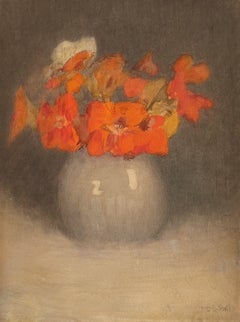
Still Life
By John White Alexander
Located in Bryn Mawr, PA
John White Alexander's graceful depictions of beautiful women earned him critical acclaim both in Europe and America. However, his career did not get off to an easy start—Alexander b...
Category
1880s American Impressionist Still-life Paintings
Materials
Canvas, Oil
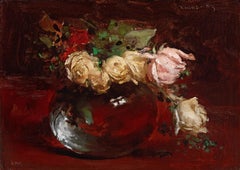
Still Life with Flowers
By Arthur Beecher Carles
Located in Bryn Mawr, PA
Arthur B. Carles
(1882-1952)
Still Life with Flowers
Oil on canvas, 21 1/8 x 16 inches (53.7 x 40.6 cm)
Framed dimensions: 28 x 22 7/8 inches
Signed lower right: CARLES
Provenance
M...
Category
Early 20th Century American Modern Still-life Paintings
Materials
Canvas, Oil
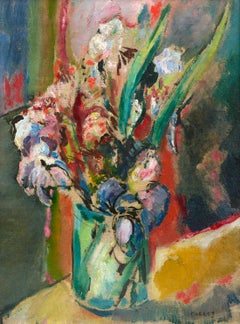
Fleurs des Champs
By Marcel Dyf
Located in Bryn Mawr, PA
Fleurs des Champs
Oil on canvas, 36 1/4 x 28 3/4 inches (91.4 x 73 cm)
Framed dimensions: 43 1/2 x 36 1/4 inches
Signed lower right: Dyf
Provenance
Private collection;
Sotheby's, Ne...
Category
Mid-20th Century Post-Impressionist Still-life Paintings
Materials
Canvas, Oil
$22,500
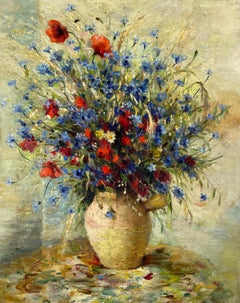
Roses and Chrysanthemums in a Vase
Located in Bryn Mawr, PA
An expatriate painter, noted for figurative paintings of peasants as well as classical works, Biblical scenes, mythological subjects, and still lifes, William Babcock was born in Bos...
Category
1870s Victorian Still-life Paintings
Materials
Canvas, Oil
You May Also Like
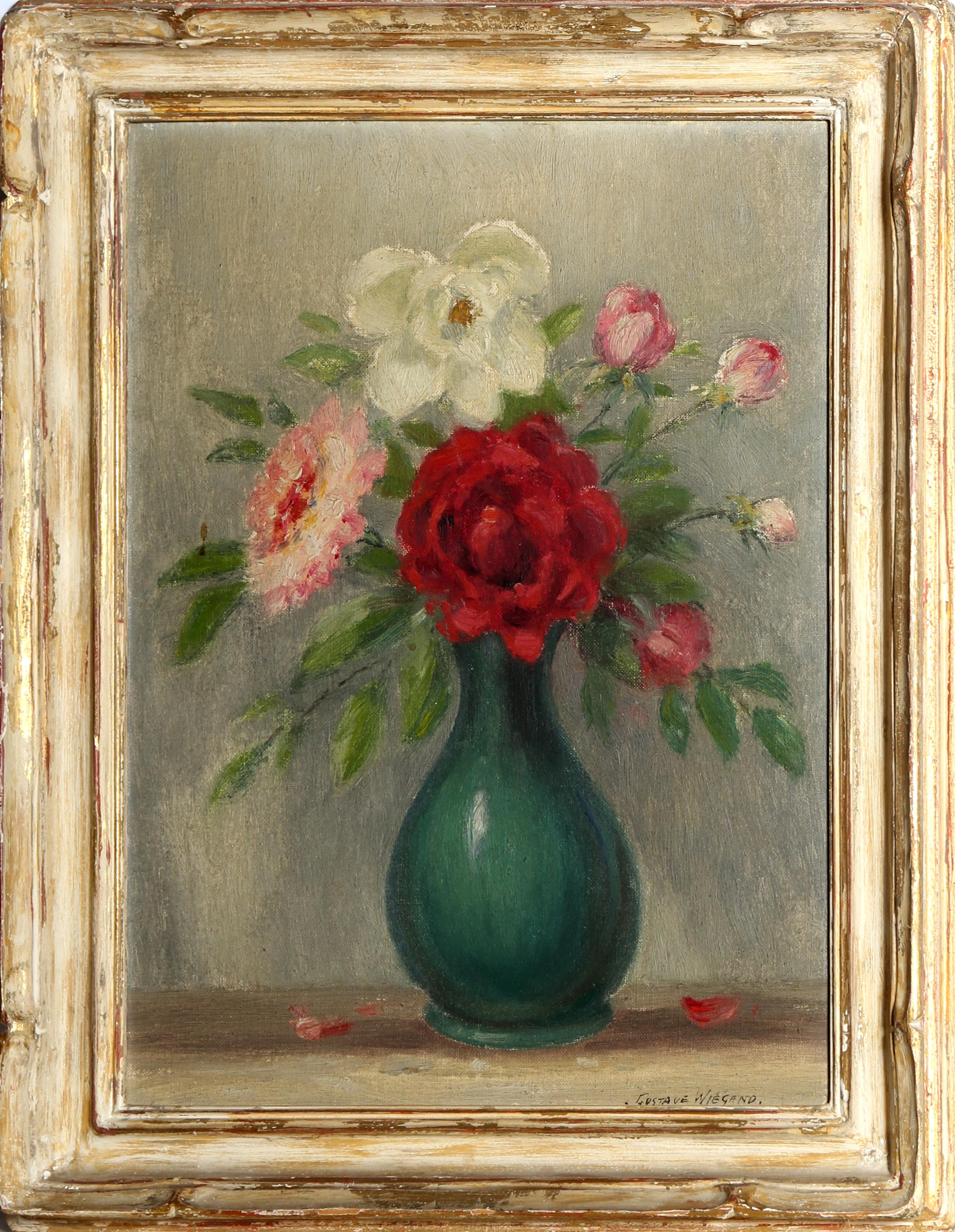
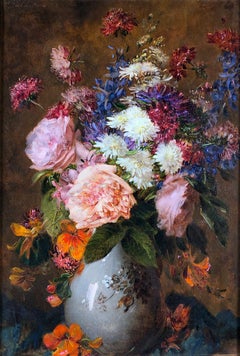
Flower Still Life, Impressionist Oil Painting by Gustave Weigand
By Gustave Weigand
Located in Long Island City, NY
An oil on board painting by Gustave Weigand (1870 - 1957), signed lower right. Painting measures 16 x 12 inches. Wiegand was born in Bremen, Germany in 1870. Wiegand studied at the R...
Category
1940s American Impressionist Still-life Paintings
Materials
Oil
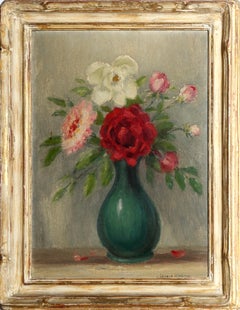
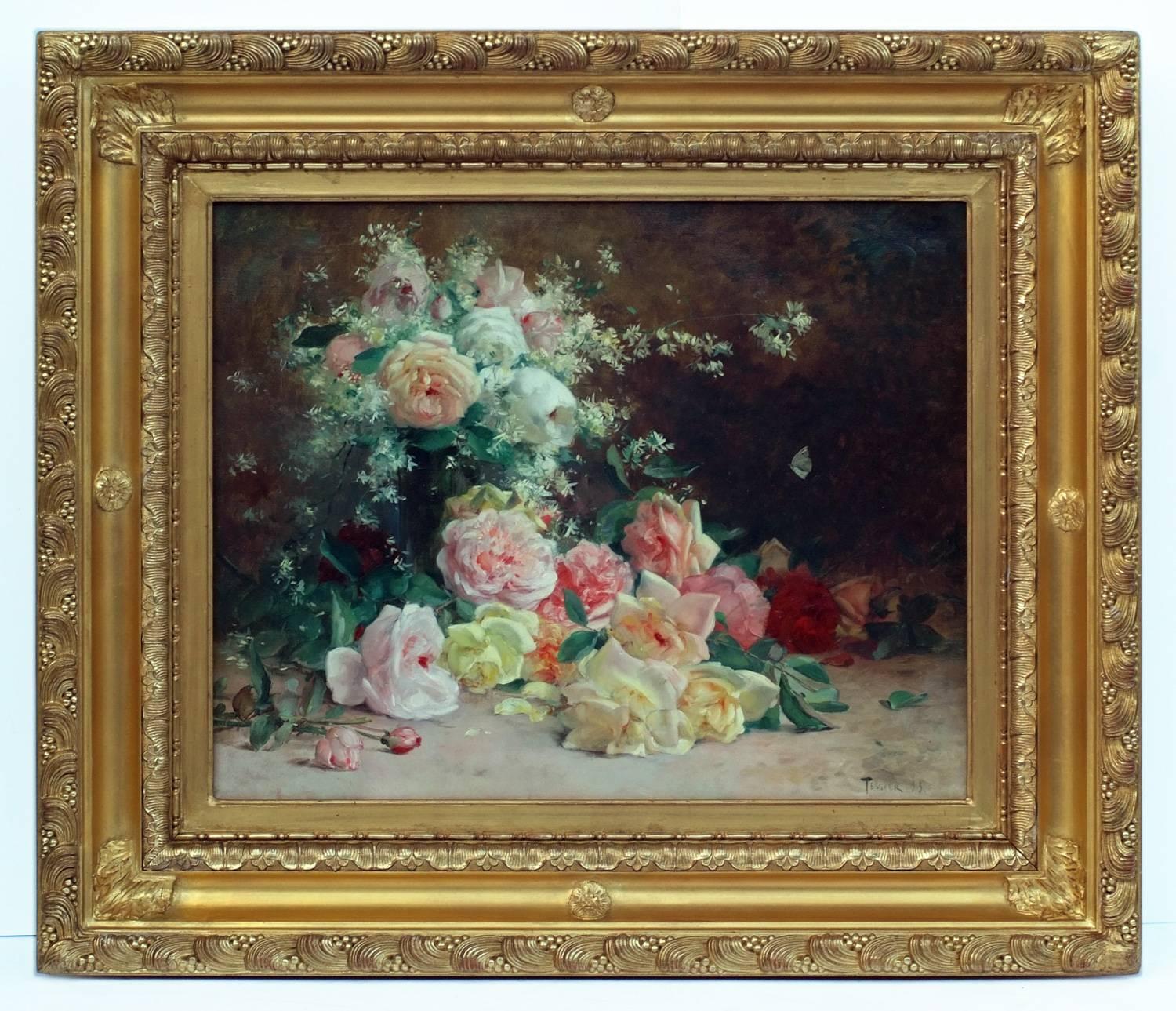
Painting 19th Century Flowers
By Louis Adolphe Tessier
Located in Saint-Ouen, FR
TESSIER Louis Adolphe (1858-1915)Flowers
Oil on canvas signed low right and dated 1893
Old original frame gilded with leaves
Dim canvas : 53 X 67 cm
Dim frame : 78 X 91 cm
Certificat...
Category
Late 19th Century Academic Still-life Paintings
Materials
Oil
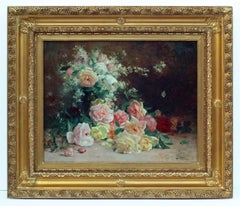
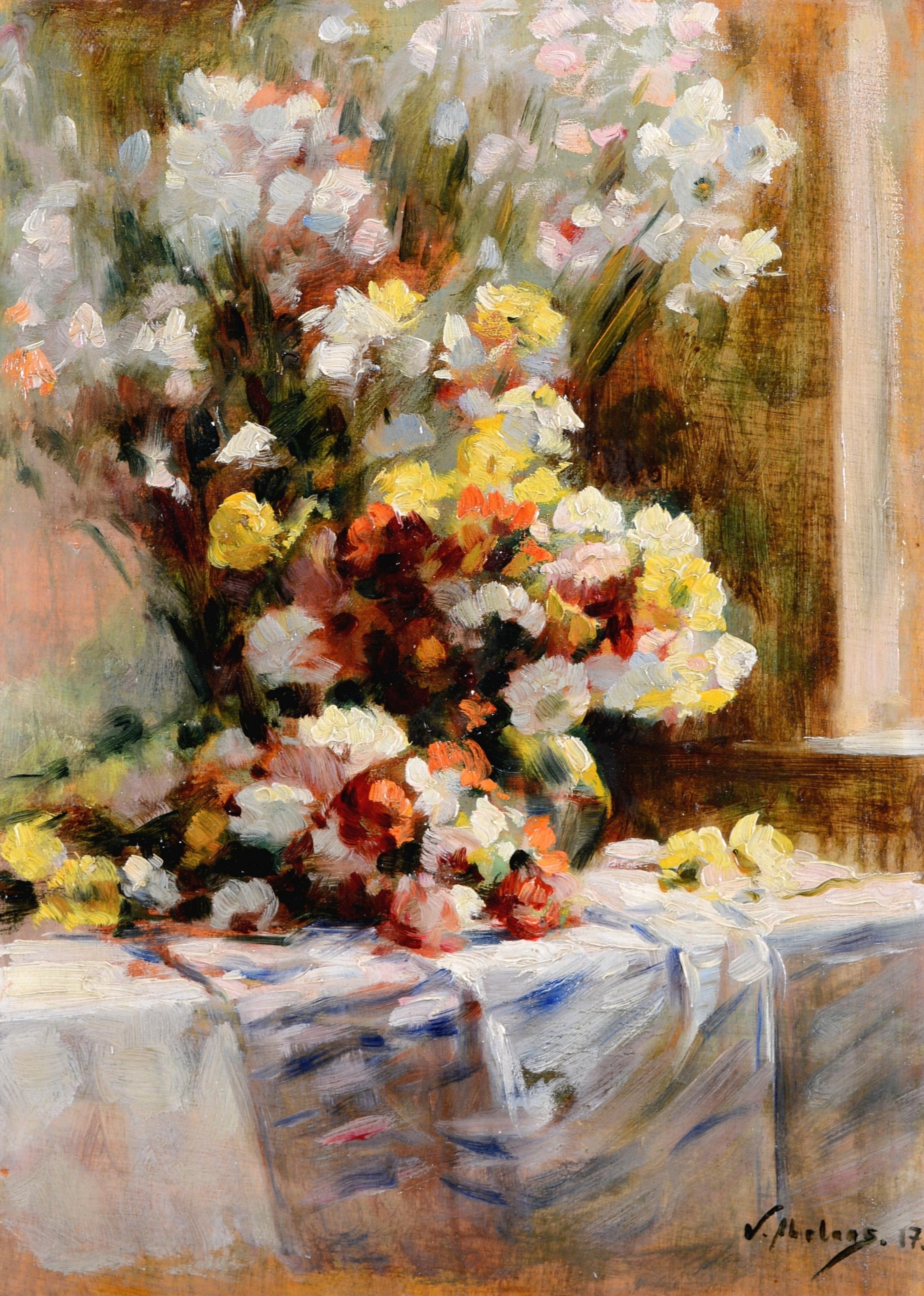
Flowers on a Table - Antique Belgian Impressionist Still Life Oil Painting
By Victor Abeloos
Located in Sevenoaks, GB
A beautiful signed and dated 1917 oil on panel still life depicting flowers on a table, by Belgian painter Victor Abeloos.
Excellent quality Art Deco period still life of the colour...
Category
1910s Impressionist Still-life Paintings
Materials
Oil, Panel
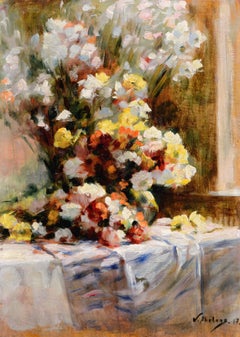
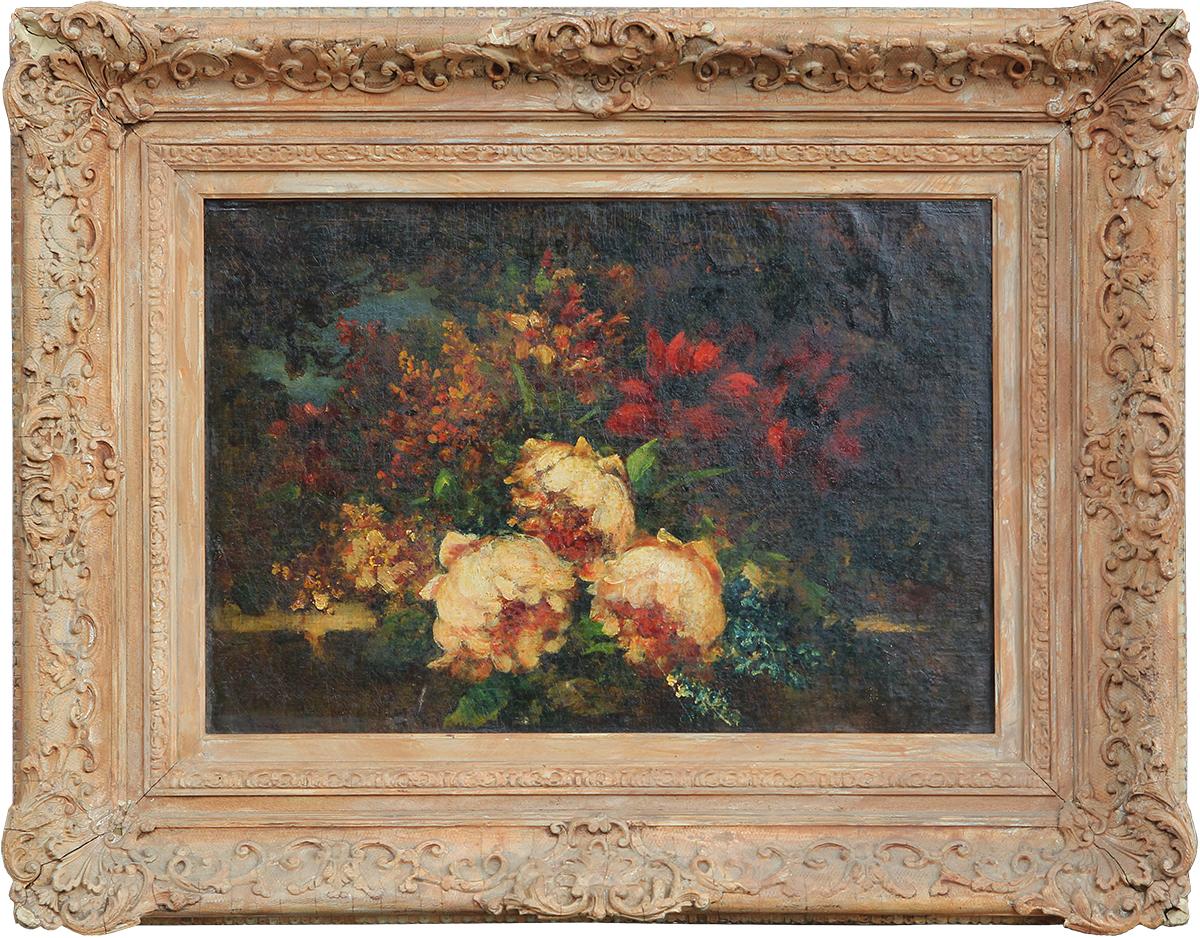
Nineteenth Century Assorted Flowers Still Life Painting
By Narcisse Virgilio Díaz de la Peña
Located in Houston, TX
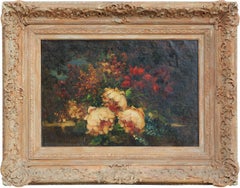
Realist still life painting depicting light orange peonies and various flowers native to France. Framed in a gold antique frame. Signed by artist at the bottom left.
Dimensions Without Frame: H 14.375 in. x W 21.25 in.
Artist Biography: Diaz was born to Spanish parents, but following their early deaths was raised by a protestant minister near Paris. In 1823 he worked in the same porcelain factory as Jules-Louis Dupré...
Category
Mid-19th Century Realist Still-life Paintings
Materials
Canvas, Oil
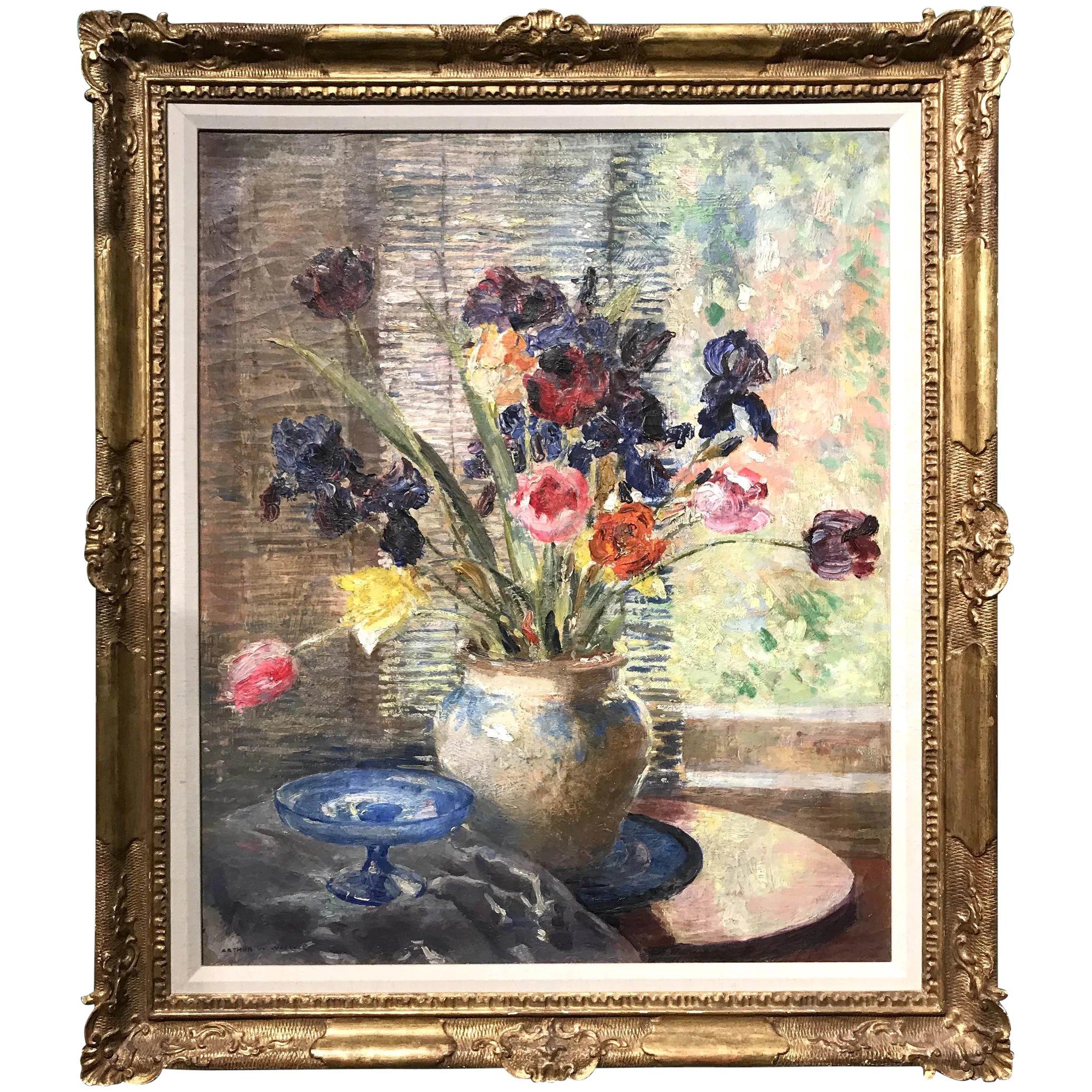
Still Life with Flowers
By Arthur Woelfle
Located in Milford, NH
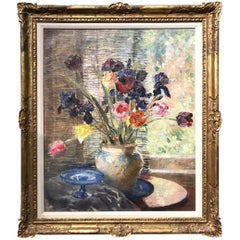
A fine impressionist still life with tulips and irises in a stoneware vase on a table by American artist Arthur Woelfle (1873-1936). Woelfle was born in Trenton, New Jersey, studied ...
Category
Early 20th Century American Impressionist Still-life Paintings
Materials
Canvas, Oil
Bouquet de Fleurs" par Eugène Cauchois (1850-1911)
Located in GOUVIEUX, FR
"Bouquet of Flowers" by Eugène Cauchois (1850–1911)
• This magnificent painting, measuring 67 x 83 cm (38 x 56 cm without frame), Signed at the bottom right. depicts a richly detail...
Category
1870s Still-life Paintings
Materials
Oil