Want more images or videos?
Request additional images or videos from the seller
1 of 10

Lowell Nesbitt
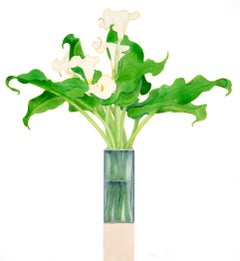
"White Calla Lily" Lowell Nesbitt, Modernist Floral Still Life

1983

$2,000
£1,511.10
€1,731.26
CA$2,790.65
A$3,041.66
CHF 1,608.10
MX$36,615.87
NOK 20,410.81
SEK 18,712.54
DKK 12,932.58

About the Item

Lowell Nesbitt White Calla Lily, 1983 Signed, titled and dated Colored pencil on paper Diameter 19 1/2 inches Lowell Blair Nesbitt (1933–1993) was a prolific American painter, draughtsman, printmaker, and sculptor known for his technically precise and diverse body of work. While often associated with Photorealism, Nesbitt defied categorization, blending realism with surreal and conceptual elements. His subjects ranged from botanical studies and urban architecture to x-ray figures, computer components, and animals, making him one of the most versatile visual artists of his time. Born in Towson, Maryland, Nesbitt earned his BFA from the Tyler School of Art and studied on fellowship at the Royal College of Art in London. After serving in the U.S. Army, he moved to Washington, D.C., later settling in New York City to pursue a full-time art career. Nesbitt gained national attention following his 1964 debut at the Corcoran Gallery of Art, transitioning from abstraction to realism under the encouragement of artist Robert Indiana. His meticulously rendered floral paintings led to a career-defining moment in 1980 when the United States Postal Service issued four stamps based on his artwork. He also served as the official artist for NASA’s Apollo 9 and Apollo 13 missions, and in 1976, completed what was then the largest mural in the U.S. for the Navy's administration building on Treasure Island. Nesbitt passed away in his New York studio in 1993, leaving behind a legacy of innovation, scale, and visual exploration.
  • Creator:
    Lowell Nesbitt (1933-1993, American)
  • Creation Year:
    1983
  • Dimensions:
    Height: 26 in (66.04 cm)Width: 26 in (66.04 cm)
  • Medium:
  • Movement Style:
  • Period:
  • Condition:
    Some foxing.
  • Gallery Location:
    New York, NY
  • Reference Number:
    1stDibs: LU1841216951672

More From This Seller

View All
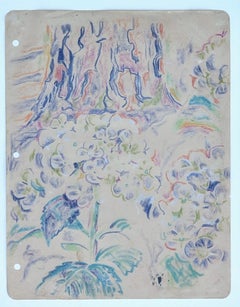
"Flowers" Joseph Stella, Vibrant Modernist Flower Composition on Paper
By Joseph Stella
Located in New York, NY
Joseph Stella Flowers Signed lower center Crayon and pencil on paper 13 1/4 x 10 1/4 inches Stella was born June 13, 1877 at Muro Lucano, Italy, a mountain village not far from Nap...
Category

Early 20th Century Modern Figurative Drawings and Watercolors

Materials

Paper, Crayon, Pencil

"Untitled" Albert Heckman, Still Life, Floral Abstracted Modernist Composition
By Albert Heckman
Located in New York, NY
Albert Heckman Untitled, circa 1950 Signed lower right Oil on canvas 25 1/4 x 32 1/4 inches Albert Heckman was born in Meadville, Western Pennsylvania, 1893. He went to New York City to try his hand at the art world in 1915 after graduating from high school and landing a job at the Meadville Post Office. In 1917, at the age of 24, Heckman enrolled part-time in Teachers' College, Columbia University's Fine Arts Department to begin his formal art education. He worked as a freelance ceramic and textile designer and occasionally as a lecturer at the Metropolitan Museum of Art. In the early 1920s, at the age of almost 30, he graduated with a Bachelor of Arts degree from Columbia Teachers College. He was especially impacted by his instructor at Columbia, Arthur Wesley Dow. After graduating, he was hired by the Teachers' College as a Fine Arts instructor. He stayed with Columbia Teachers' College until 1929, when he left to attend the Leipzig Institute of Graphic Arts in Leipzig, Germany. Isami Doi (1903-1965), who was born in Hawaii, was arguably his most impressive student at Columbia. Doi is now regarded as one of the most prominent artists hailing from Hawaii. Heckman became an active member and officer of the Keramic Society and Design Guild of New York in the 1920s as part of his early commercial art career. The Society's mission was to share knowledge and showcase textile and ceramic design exhibits. In 1922, Heckman married Florence Hardman, a concert violinist. Mrs. Heckman's concert schedule during the 1920s kept Albert and Florence Heckman apart for a significant portion of the time, but they spent what little time they had together designing and building their Woodstock, New York, summer house and grounds. A small house and an acre of surrounding land on Overlook Mountain, just behind the village of Woodstock, were purchased by Albert and Florence Heckman at the time of their marriage. Their Woodstock home, with its connections, friendships, and memories, became a central part of their lives over the years, even though they had an apartment in New York City. Heckman's main artistic focus shifted to the house on Overlook Mountain and the nearby towns and villages, Kingston, Eddyville, and Glasco. After returning from the Leipzig Institute of Graphic Arts in 1930, Mr. Heckman joined Hunter College as an assistant professor of art. He worked there for almost thirty years, retiring in 1956. Throughout his tenure at Hunter, Mr. Heckman and his spouse spent the summers at their Woodstock residence and the winters in New York City. They were regular and well-known guests at the opera and art galleries in New York. Following his retirement in 1956, the Heckmans settled in Woodstock permanently, with occasional trips to Florida or Europe during the fall and winter. Mr. Heckman's close friends and artistic career were always connected to Woodstock or New York City. He joined the Woodstock art group early on and was greatly influenced by artists like Paul and Caroline Rohland, Emil Ganso, Yasuo Kuniyoshi, Andre Ruellan, and her husband, Jack Taylor. Heckman operated a summer art school in Woodstock for several years in the 1930s with support from Columbia University, where these and other Woodstock artists gave guest lectures. The Potter's Shop in New York City hosted Mr. Heckman's first art show in December 1928. The exhibit received some positive reviews from critics. The American Institute of Graphic Arts chose the plate of "Wehlen, Saxony" as one of the "Fifty Prints of the Year in 1929." There were sixteen etchings displayed. The remaining plates depicted scenes in Saxony, Germany, while five of the plates were based on scenes in Rondout, New York. Heckman started switching from etching to black and white lithography by the early 1930s. A lifelong admirer of Heckman's artwork, Mr. Gustave von Groschwitz organized a significant exhibition of Heckman etchings and lithographs at the Ferargil Gallery in New York City in 1933. The exhibition traveled to the Stendahl Galleries in Los Angeles (May 1933), the Charles Lessler Gallery in Philadelphia (May 1933), J.L. Hudson in Detroit (June 1933), and Gumps in San Francisco (July 1933). Together with his early etchings, the exhibition featured brand-new black and white lithographs depicting scenes in and around Woodstock as well as "A View from Tudor City...
Category

1950s Abstract Figurative Paintings

Materials

Canvas, Oil

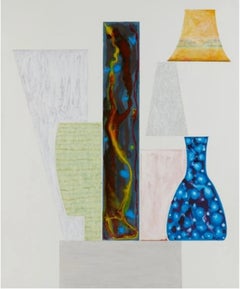
"Abstract (with Two White Vases) " Ed Baynard, Still Life Composition
By Ed Baynard
Located in New York, NY
Ed Baynard Abstract (with Two White Vases), 2005 Signed, titled, and dated along the verso Acrylic on canvas 48 x 40 inches
Category

Early 2000s Abstract Abstract Paintings

Materials

Canvas, Acrylic

"Hydrangeas, " Walter Inglis Anderson, Mississippi Southern Illustrator, Flowers
Located in New York, NY
Walter Anderson ( American, 1903 - 1965) Hydrangeas, circa 1950 Mixed media on paper 11 x 8 1/2 inches Provenance: Luise Ross Gallery, New York Private Collection, New Jersey Acquired from the estate of the above, 2021 Walter Anderson firmly believed that quality art was an important part of life and should be made available to everyone. As he said, "There should be simple, good decorations, to be sold at prices to rival the five-and-ten." Noticing that only poor quality art was available in stores and little was available for children, he resolved to make art which could be reproduced easily and sell inexpensively — linoleum block prints. This technique enabled him to provide affordable, quality art. The technique of linoleum block printing is a simple concept; however, it requires much skill and talent to actually produce memorable art. Anderson purchased surplus "battleship linoleum," thicker than ordinary linoleum with a burlap backing for better support, to create his blocks. During the mid-1940s, he created almost 300 linocuts working in the attic of the sea-side plantation house, Oldfields, his wife's family home in Gautier. Masses of linoleum chips accumulated at the foot of the attic stairs as he often worked night and day. He began with sketching out a design directly on the linoleum. Once he had carved the image into the surface, he used the back of faded, surplus stock wallpaper that a friend sent him, laying long strips on top of the inked linoleum. A roller made of sewer pipe filled with sand served as his press. When the print was completed, he often colored it by hand with bold strokes and vivid colors. The prints were sold at Shearwater Pottery, the family business, for a mere dollar a foot. But "what about a well-designed fairy tale for a child's room?" he asked himself. Since there was a lack of affordable art for children, much of his work with linoleum blocks focused on subjects for children. He depicted fables and fairy tales ranging from Arabian Nights, to Germany and the Grimm Brothers' Rapunzel, to the French story of The White Cat, to the Greek tales such as Europa and the Bull, and to tales from China, India, and other cultures. Anderson also created "mini" books featuring the alphabet and Robinson Cat. The blocks are not only alive with the story being depicted, but they are also filled with designs taken from Best-Maugard's Method for Creative Design. Swirls, half-circles and zig-zag lines fill every available space on the linoleum block making them come alive and capture their audience. But fairy tales, children's verses and the "mini" books, consisting of about 90 blocks, were not the sole subject of Anderson's linoleum block prints. In total, he created approximately 300 linoleum blocks with subjects ranging from coastal flora and fauna, coastal animals, and sports and other coastal activities. Anderson even created linoleum blocks to be used to print tablecloths and clothing, some worn by his own children. Color and subjects of the linoleum block prints were not the only things that got them noticed. In 1945 when Anderson was creating these prints, the standard size of linoleum block prints was only 12 by 18 inches. These small dimensions were due to the common size of the paper available and the restrictions made by national competitions. Since Anderson used wallpaper...
Category

Mid-20th Century American Modern Landscape Paintings

Materials

Paper, Crayon

"Untitled" Albert Heckman, Modernist Saturated Blue and Yellow Still Life
By Albert Heckman
Located in New York, NY
Albert Heckman Untitled, circa 1950 Signed lower right Oil on canvas 18 x 24 inches Albert Heckman was born in Meadville, Western Pennsylvania, 1893. He went to New York City to try his hand at the art world in 1915 after graduating from high school and landing a job at the Meadville Post Office. In 1917, at the age of 24, Heckman enrolled part-time in Teachers' College, Columbia University's Fine Arts Department to begin his formal art education. He worked as a freelance ceramic and textile designer and occasionally as a lecturer at the Metropolitan Museum of Art. In the early 1920s, at the age of almost 30, he graduated with a Bachelor of Arts degree from Columbia Teachers College. He was especially impacted by his instructor at Columbia, Arthur Wesley Dow. After graduating, he was hired by the Teachers' College as a Fine Arts instructor. He stayed with Columbia Teachers' College until 1929, when he left to attend the Leipzig Institute of Graphic Arts in Leipzig, Germany. Isami Doi (1903-1965), who was born in Hawaii, was arguably his most impressive student at Columbia. Doi is now regarded as one of the most prominent artists hailing from Hawaii. Heckman became an active member and officer of the Keramic Society and Design Guild of New York in the 1920s as part of his early commercial art career. The Society's mission was to share knowledge and showcase textile and ceramic design exhibits. In 1922, Heckman married Florence Hardman, a concert violinist. Mrs. Heckman's concert schedule during the 1920s kept Albert and Florence Heckman apart for a significant portion of the time, but they spent what little time they had together designing and building their Woodstock, New York, summer house and grounds. A small house and an acre of surrounding land on Overlook Mountain, just behind the village of Woodstock, were purchased by Albert and Florence Heckman at the time of their marriage. Their Woodstock home, with its connections, friendships, and memories, became a central part of their lives over the years, even though they had an apartment in New York City. Heckman's main artistic focus shifted to the house on Overlook Mountain and the nearby towns and villages, Kingston, Eddyville, and Glasco. After returning from the Leipzig Institute of Graphic Arts in 1930, Mr. Heckman joined Hunter College as an assistant professor of art. He worked there for almost thirty years, retiring in 1956. Throughout his tenure at Hunter, Mr. Heckman and his spouse spent the summers at their Woodstock residence and the winters in New York City. They were regular and well-known guests at the opera and art galleries in New York. Following his retirement in 1956, the Heckmans settled in Woodstock permanently, with occasional trips to Florida or Europe during the fall and winter. Mr. Heckman's close friends and artistic career were always connected to Woodstock or New York City. He joined the Woodstock art group early on and was greatly influenced by artists like Paul and Caroline Rohland, Emil Ganso, Yasuo Kuniyoshi, Andre Ruellan, and her husband, Jack...
Category

1950s Modern Interior Paintings

Materials

Canvas, Oil

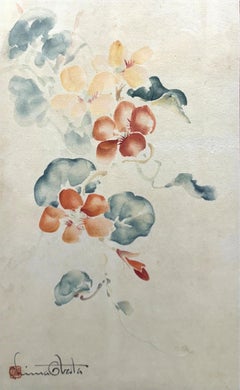
"Nasturtiums" Chiura Obata, Japanese American, Red and Blue Delicate Flowers
By Chiura Obata
Located in New York, NY
Chiura Obata Nasturtiums, circa 1940 Signed and stamped lower left Watercolor on paper 15 x 9 5/8 inches Born in the Okayama prefecture of Japan, Chiura Obata was adopted by his uncle, an artist. As a child he was trained in ink painting, and at 14 he was apprenticed to the painter Murata Tanryo in Tokyo. He also studied with Kogyo Terasaki and Goho Hasimoto. In 1903, Obata moved to San Francisco and began working as an illustrator for The New World and The Japanese American, two of the city's Japanese newspapers. He also did work as a commercial designer. Obata helped establish the East West Art Society in San Francisco in 1921, which sought to promote cross-cultural understanding through art. This goal was reflected in his embrace of the Nihonga style, which fused traditional Japanese sumi-e ink painting with the conventions of western naturalism. He spent much of the 1920s painting landscapes throughout California, and among his favorite subjects were mountain landscapes. In 1927, he visited Yosemite and the Sierra Nevada, creating over a hundred paintings and sketches of the high country. Obata stayed in the USA until the death of his father in 1928. Between 1928 and 1932, he worked in Tokyo as a painter and transformed his California landscape watercolors...
Category

1940s Modern Still-life Drawings and Watercolors

Materials

Paper, Watercolor

You May Also Like

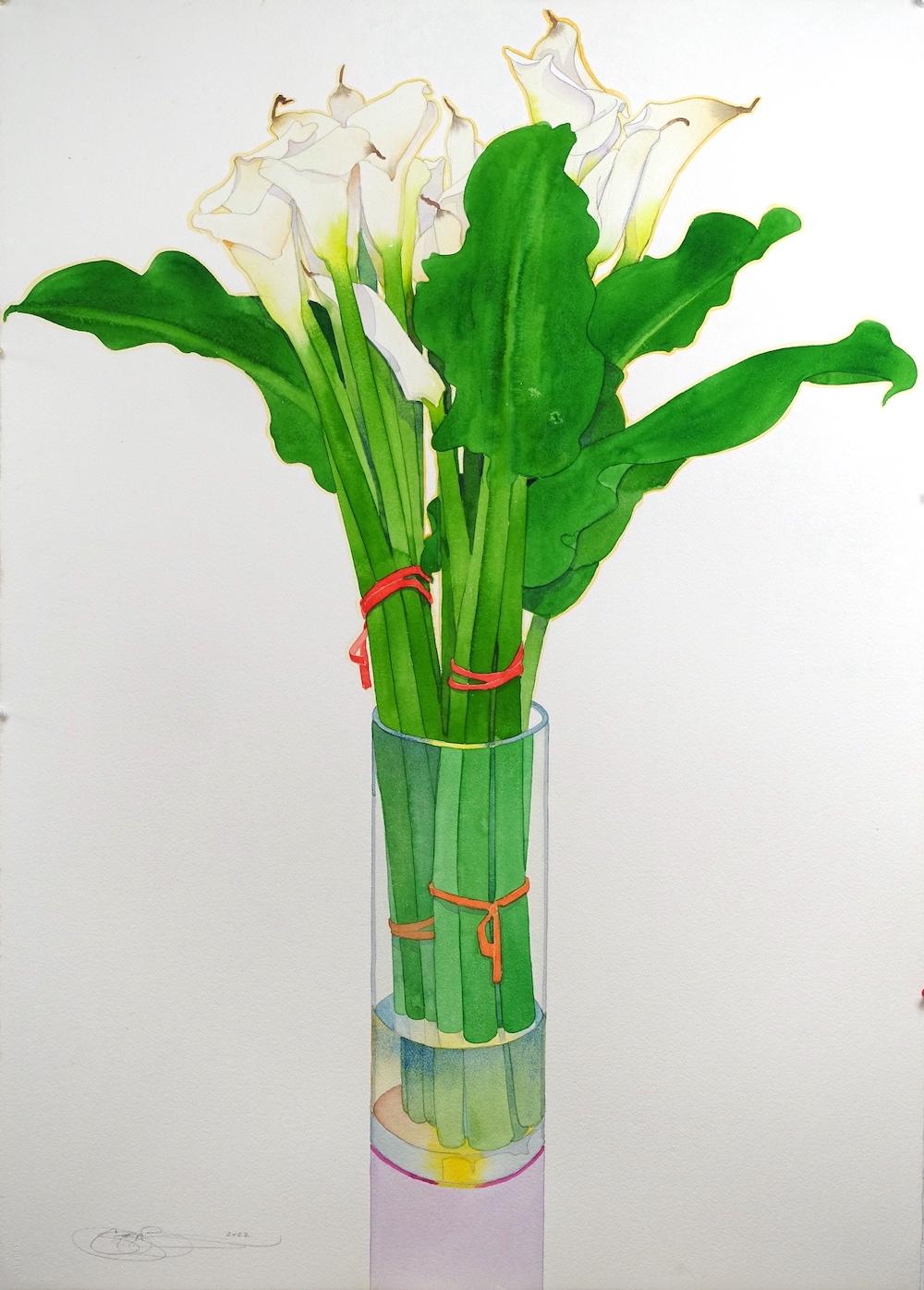
Calla Lily
By Gary Bukovnik
Located in Burlingame, CA
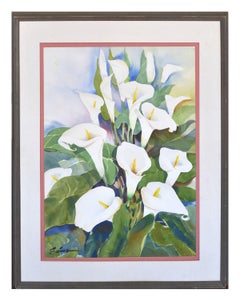
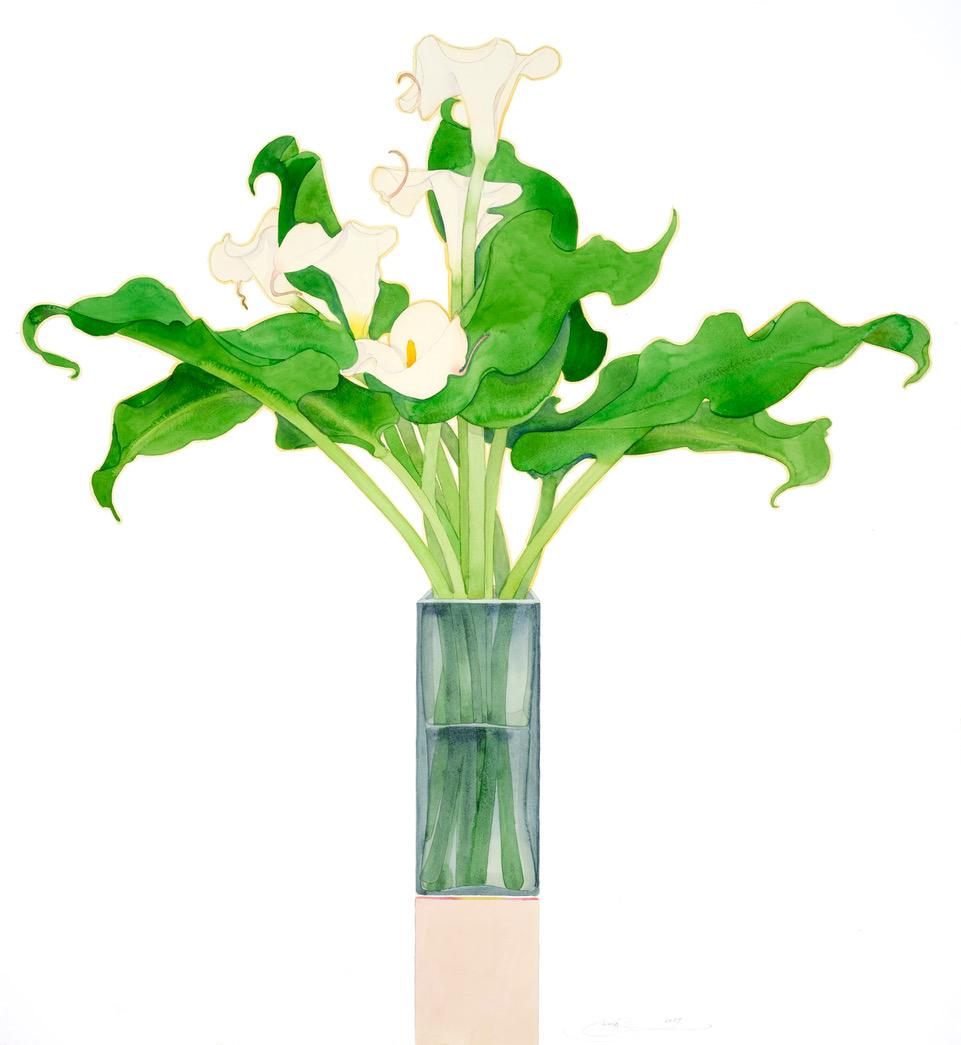
'Calla Lily' watercolor on paper. Gary Bukovnik, who fuses sensual vitality with fluid yet powerful colorations to create floral images of great depth, intensity, and size. Internat...
Category

21st Century and Contemporary Contemporary Still-life Drawings and Water...

Materials

Paper, Watercolor

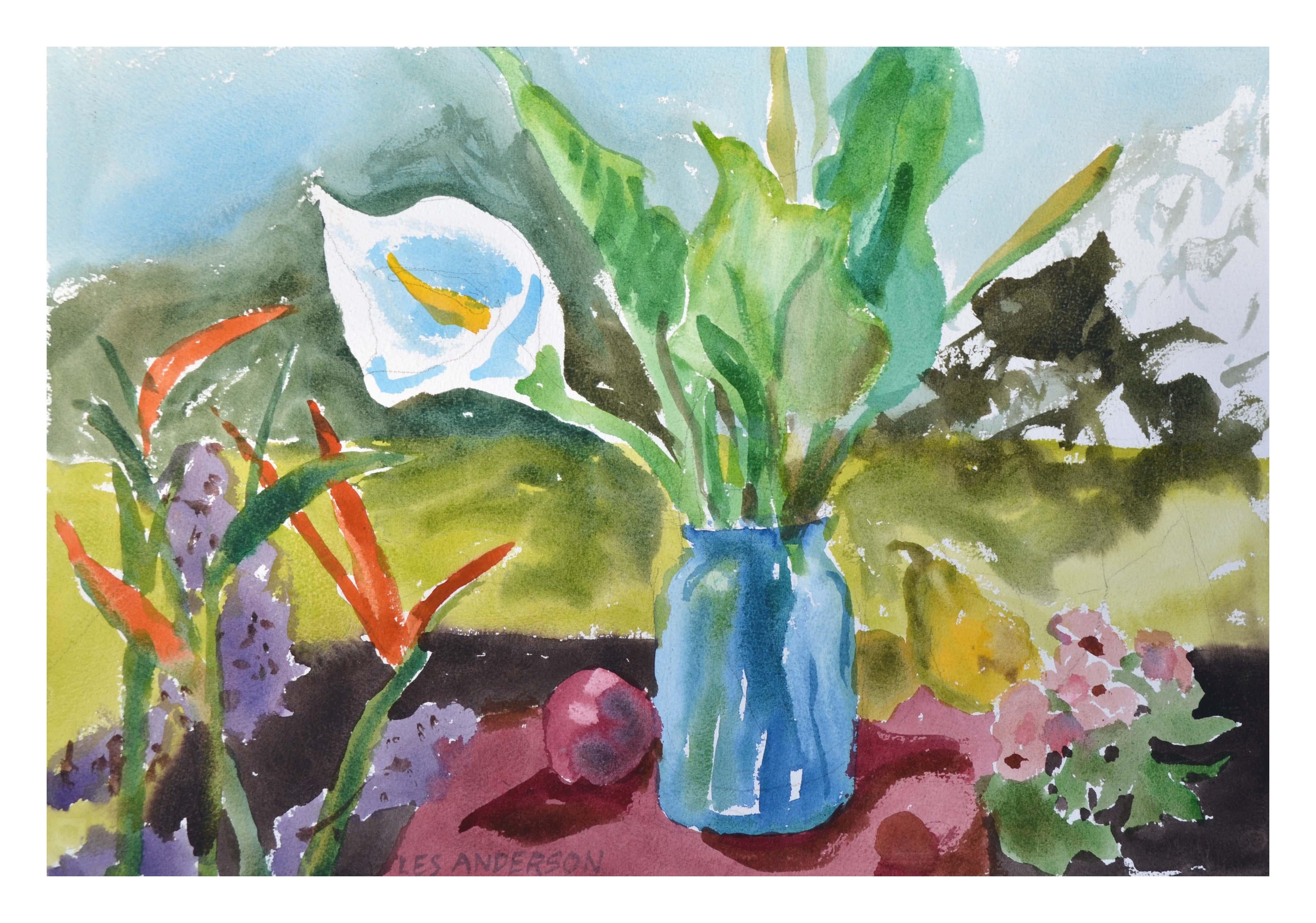
Calla Lily Floral Still-Life
By Les Anderson
Located in Soquel, CA
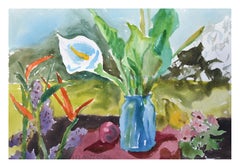
Beautiful watercolor still-life of Calla lily and other flowers by Les (Leslie Luverne) Anderson (American, 1928-2009). From the estate of Les Anderson in Monterey, California. Signe...
Category

Late 20th Century American Impressionist Still-life Drawings and Waterco...

Materials

Watercolor, Archival Paper

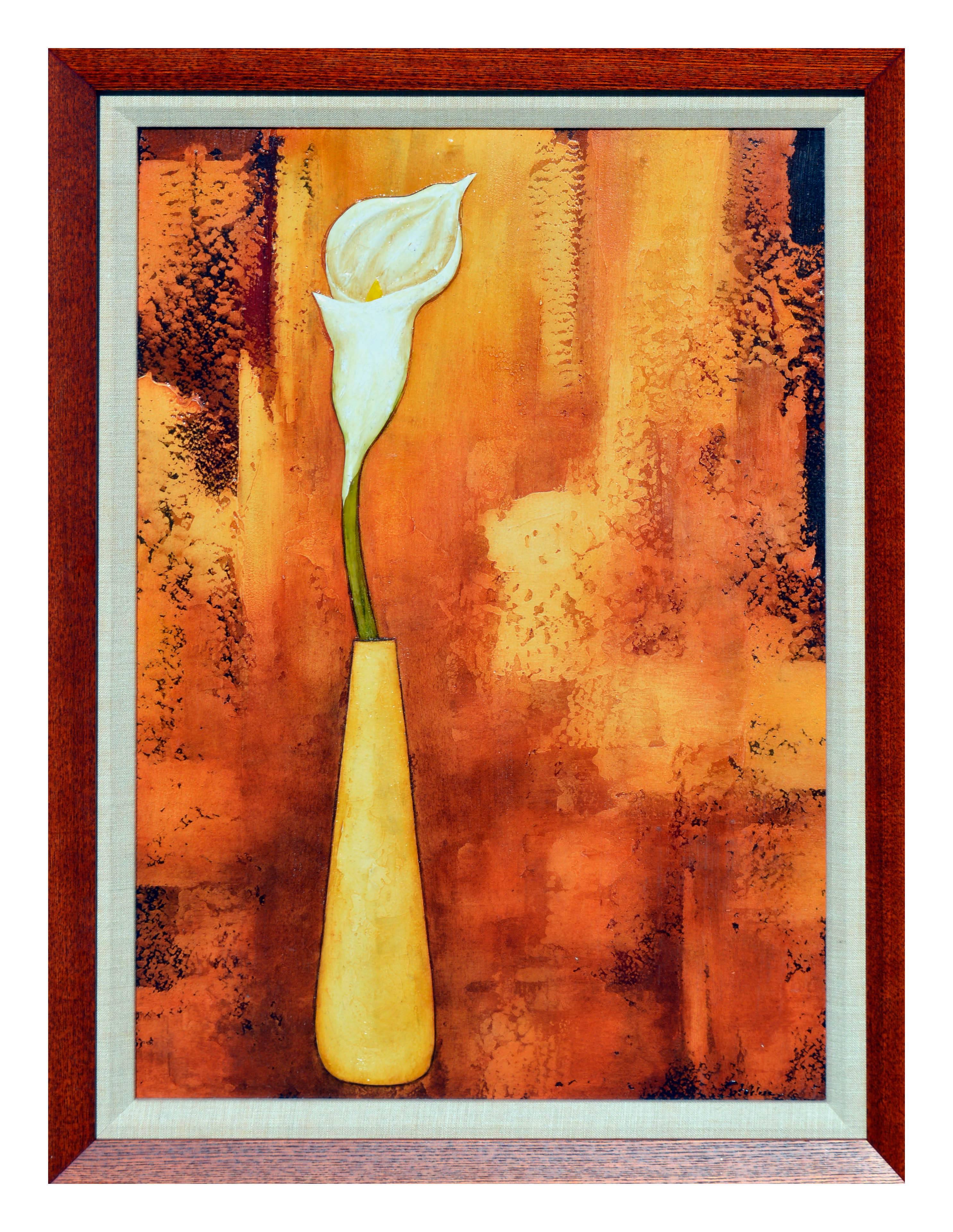
Mid Century Modern Calla Lily in Bloom Still-Life
By Agnes Stoklosa
Located in Soquel, CA
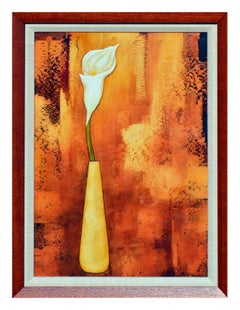
Mid Century Modern Calla Lily in Bloom Still-Life in Oil on Board Gorgeous Mid Century Modern still life of Calla Lily with orange background by Agnes Stoklosa (American, 20th Centu...
Category

1960s American Modern Still-life Paintings

Materials

Oil, Board

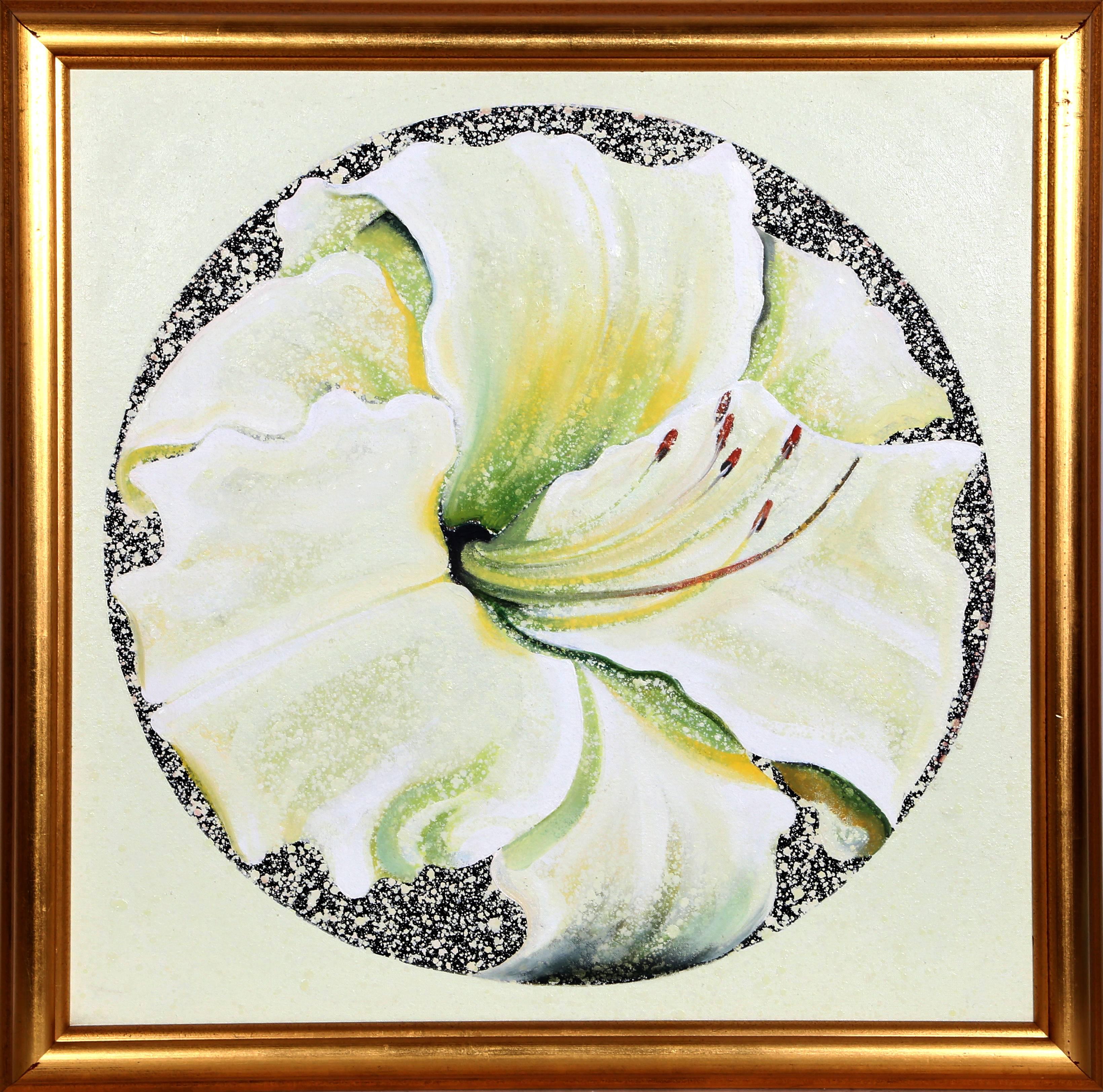
Lemon White Lily, Still Life Photorealist Oil Painting by Lowell Nesbitt
By Lowell Nesbitt
Located in Long Island City, NY
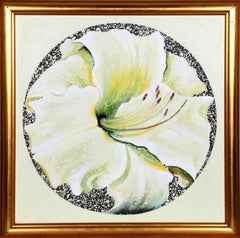
Artist: Lowell Blair Nesbitt, American (1933 - 1993) Title: Lemon White Lily Year: 1982 Medium: Oil on Canvas, signed and dated verso Size: 26 x 26 in. (66.04 x 66.04 cm)
Category

1980s American Realist Still-life Paintings

Materials

Oil

Calla Lilies
By Gary Bukovnik
Located in Burlingame, CA
'Calla Lilies' by master watercolorist Gary Bukovnik, who fuses sensual vitality with fluid yet powerful colorations to create floral images of great dep...
Category

21st Century and Contemporary Contemporary Still-life Drawings and Water...

Materials

Watercolor

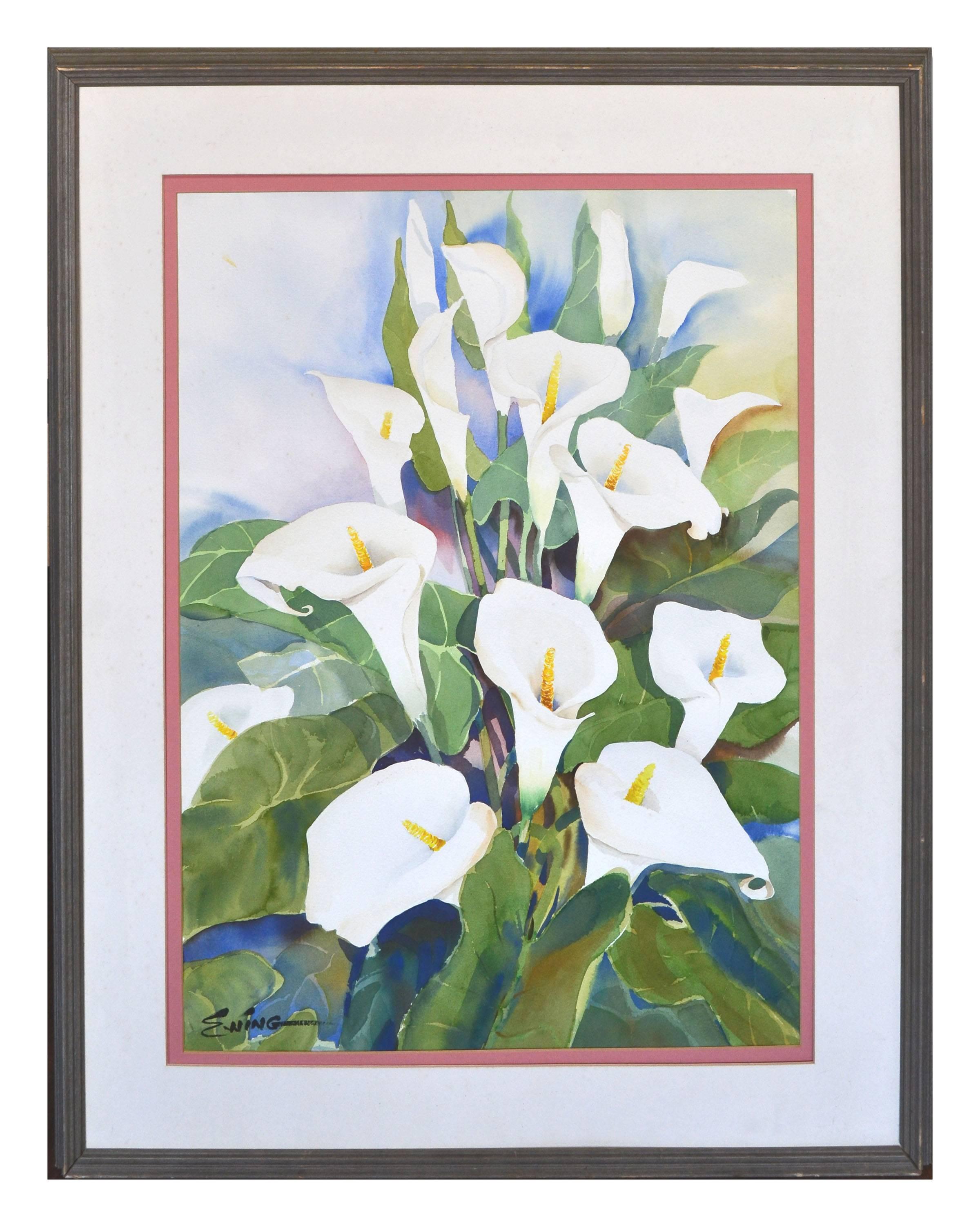
Calla Lilies Floral Still Life
By Edgar Ewing
Located in Soquel, CA
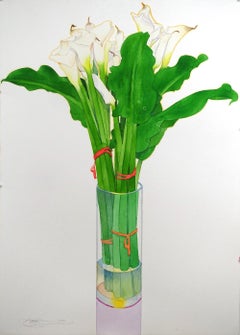
Large-scale watercolor painting of calla lilies. Signed "Ewing" lower left. Displayed in a rustic wood frame with gray stain. Shipped without glass. Mat board has some light foxing a...
Category

1980s American Impressionist Still-life Paintings

Materials

Paper, Watercolor