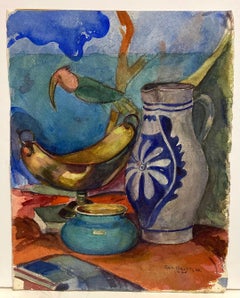
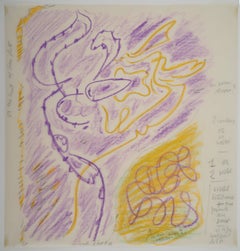
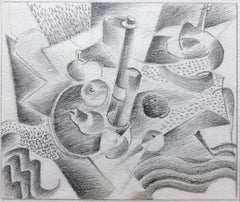
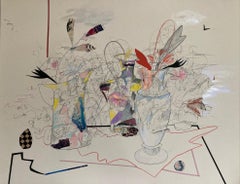
Modern Still-life Drawings and Watercolors

MODERN STYLE

The first decades of the 20th century were a period of artistic upheaval, with modern art movements including Cubism, Surrealism, Futurism and Dadaism questioning centuries of traditional views of what art should be. Using abstraction, experimental forms and interdisciplinary techniques, painters, sculptors, photographers, printmakers and performance artists all pushed the boundaries of creative expression.

Major exhibitions, like the 1913 Armory Show in New York City — also known as the “International Exhibition of Modern Art,” in which works like the radically angular Nude Descending a Staircase by Marcel Duchamp caused a sensation — challenged the perspective of viewers and critics and heralded the arrival of modern art in the United States. But the movement’s revolutionary spirit took shape in the 19th century.

The Industrial Revolution, which ushered in new technology and cultural conditions across the world, transformed art from something mostly commissioned by the wealthy or the church to work that responded to personal experiences. The Impressionist style emerged in 1860s France with artists like Claude Monet, Paul Cézanne and Edgar Degas quickly painting works that captured moments of light and urban life. Around the same time in England, the Pre-Raphaelites, like Edward Burne-Jones and Dante Gabriel Rossetti, borrowed from late medieval and early Renaissance art to imbue their art with symbolism and modern ideas of beauty.

Emerging from this disruption of the artistic status quo, modern art went further in rejecting conventions and embracing innovation. The bold legacy of leading modern artists Georges Braque, Pablo Picasso, Frida Kahlo, Salvador Dalí, Henri Matisse, Joan Miró, Marc Chagall, Piet Mondrian and many others continues to inform visual culture today.

Find a collection of modern paintings, sculptures, prints and other fine art on 1stDibs.

to
23
70
42
43
7
9
Overall Width
to
Overall Height
to
2
149
20
1
1
16
9
14
9
10
11
1
507
283
105
70
34
33
25
25
24
22
4
1
88
77
4
43
42
42
35
31
21
18
15
13
10
9
8
8
8
7
5
5
4
4
4
88
82
66
39
23
9
7
6
5
4
60
35
102
55
Style: Modern
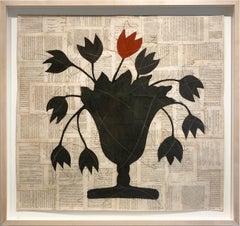
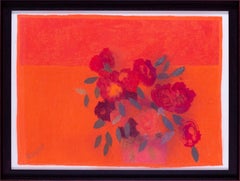
One Red One (Abstract Still Life Drawing of Black Red Flowers in a Vase)
Located in Hudson, NY
Figurative, still life chalk drawing of flowers in a vase against collaged vintage book pages 'One Red One' by Louise Laplante in 2024 pastel on collaged vintage book pages 27.5 x 29...
Category

2010s Modern Still-life Drawings and Watercolors

Materials

Paper, Chalk

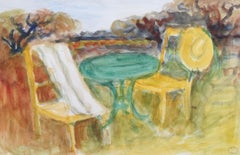
The Terrace
Located in London, GB
'The Terrace', watercolour on art paper, by Maurice Savin (circa 1950s). An inviting scene from the South of France depicts a quiet sun terrace on a balmy day with azure skies. The v...
Category

1950s Modern Still-life Drawings and Watercolors

Materials

Paper, Watercolor

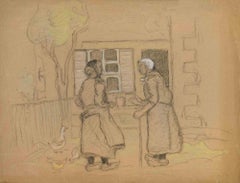
Figures in the Countryside - Drawing by Augustus Koopman - Early 20th century
Located in Roma, IT
Figures in the Countryside is an original artwork realized by Augustus Koopman (1869-1914) during the early 20th century. Good condition apart some tear on the edge. Pencil drawing.
Category

Early 20th Century Modern Still-life Drawings and Watercolors

Materials

Paper, Pencil

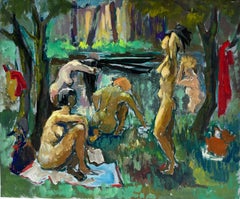
Nude Bathers by the River French Modern Oil Painting by Guy Nicod
Located in Cirencester, Gloucestershire
Title: Nude Bathers by the River French Modern Oil Painting by Guy Nicod Guy Nicod (French 1923 - 2021) Oil on artist paper attached to a board, unframed Size: 16.5 x 19.75 inches (...
Category

Mid-20th Century Modern Still-life Drawings and Watercolors

Materials

Oil

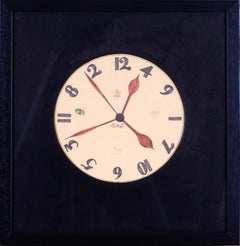
Mid Century Modern British What s the Time? by British German Kapp, 1975
Located in Petworth, West Sussex
Eduard Xavier Kapp (British, 1890 – 1978) What’s the Time? Pen and crayon, tondo Signed and dated ‘Kapp 75’ (in the centre) 8.1/2 x 8.1/2 in. (21.6 x 21.6 cm.) Edmond Kapp was born in Islington, London, on 5 November 1890, of American and German Jewish parentage. He gave himself the middle initial ‘X’ – sometimes said to stand for Xavier – to distinguish himself from his father Emil Kapp, who was a wine merchant. However, his parents called him ‘Eddie’ while his wife and friends knew him as ‘Peter’. During his early years, Kapp was continually ill and, while convalescing, entertained himself by drawing at home. As his health improved, he attended Dame Alice Owen’s School, Islington (1903-10), with periods at Berlin University (1909) and L’Institut Français pour les Etrangers, Paris (1909). He then read Languages at Christ’s College, Cambridge (1910-13), though spent most of his time writing and drawing. Kapp took a studio in London, and worked intensively until the outbreak of the First World War, contributing to the Daily News, the Onlooker and other periodicals. During the war, he served as a 2nd Lieutenant in the Royal Sussex Regiment on the Western Front, and then in Intelligence, rising to the position of Staff Captain on Haig’s Staff. Finally, he founded and directed the Neutral Press Counter-propaganda Section. In 1919, Kapp returned to London and, after abortive periods at three art schools, worked alone. In that year, he made his name with an exhibition of caricatures, held at Furst’s Gallery, London, and accompanied by a catalogue introduced by Max Beerbohm. This soon led to contracts with three London periodicals and a book of caricatures, Personalities, published by Martin Secker. Through the 1920s and 30s, his drawings of musicians and other personalities appeared in a wide variety of periodicals, most notably Time & Tide; were collected in further volumes; and were exhibited at the Leicester Galleries. He considered himself to be a ‘character-portraitist’, producing images of psychological not satirical power, and disliking the term ‘caricature’. Between the wars, Kapp developed other aspects of his artistic talents, the desire to study and the search for subject matter often taking him abroad. For instance, work at the British Academy, Rome, under Antonio Sciortino...
Category

Mid-20th Century Modern Still-life Drawings and Watercolors

Materials

Pen

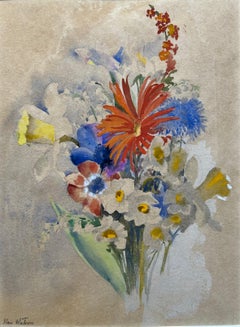
Flower Bouquet
Located in Los Angeles, CA
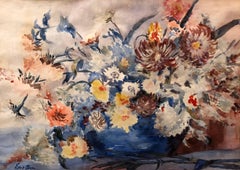
(Note: This work is part of our exhibition Connected by Creativity: WPA Era Works from the Collection of Leata and Edward Beatty Rowan) Watercolor on paper, 12 x 9 ½ inches unframed sheet, 15 x 12 ½ inches framed, signed lower left About the Artist: Nan Watson...
Category

1930s Modern Still-life Drawings and Watercolors

Materials

Watercolor

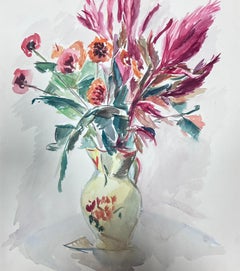
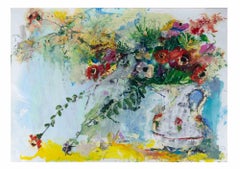
Mid 20th Century French Painting Pink Poppies and Ferns In China Vase
Located in Cirencester, Gloucestershire
French Expressionist by Guy Nicod (French 1923 - 2021) watercolour on artist paper, unframed painting : 16.75 x 15 inches provenance: artists estate, France condition: very good and ...
Category

Mid-20th Century Modern Still-life Drawings and Watercolors

Materials

Watercolor

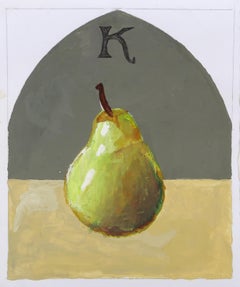
Pear Still Life, Modern Gouache Painting on paper by Robert Kulicke
Located in Long Island City, NY
Robert Kulicke, American (1924 - 2007) - Pear Still Life, Medium: Gouache on paper, monogramed on top in pencil, Image Size: 8 x 6.5 inches, Size: 8.5 x 7 in. (21.59 x 17.78 cm)
Category

Mid-20th Century Modern Still-life Drawings and Watercolors

Materials

Gouache

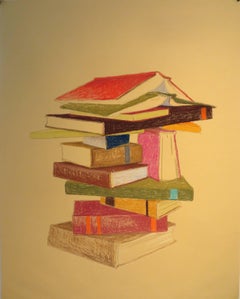
KK Kozik, Bookstack 2, 2016, Conté, Rag Paper
Located in Darien, CT
KK Kozik is an artist living and working in Sharon, CT and Brooklyn, NY. Her paintings have ben exhibited widely in the United States and abroad and have been reviewed in publicat...
Category

2010s Modern Still-life Drawings and Watercolors

Materials

Conté, Rag Paper

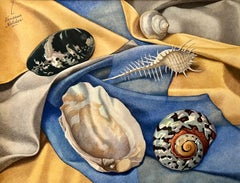
Sea Shells – Blue Gold
Located in Los Angeles, CA
Sea Shells – Blue & Gold, c. 1940s, watercolor on paper, signed upper left, 15 x 19 ¼ inches (image); title and artist’s name and address inscribed verso, presented in a newer glazed...
Category

1940s Modern Still-life Drawings and Watercolors

Materials

Paper, Watercolor

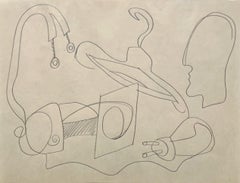
1930s Surrealist Still Life with Profile and Hanger by Artist Jan Matulka
Located in Chicago, IL
A 1930 graphite on pencil drawing of Surrealist still life of an egg beater by notable artist Jan Matulka. Image size: 8 1/2" x 11". Archivally matted to...
Category

1930s Modern Still-life Drawings and Watercolors

Materials

Paper, Graphite

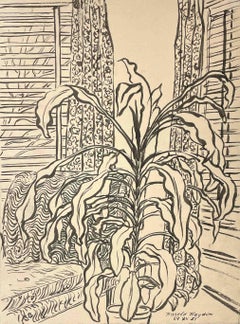
1951 Ink Drawing Still Life, Studio Interior by Chicago Artist, Harold Haydon
Located in Chicago, IL
A highly finished, 1951 detailed ink drawing of a still-life and studio interior by notable Chicago Modern artist, Harold Haydon. A striking drawing completed on fine, hand-made pap...
Category

1950s Modern Still-life Drawings and Watercolors

Materials

Paper, Ink

Blue and Pink Composition : Surrealist Bouquet- Original Handsigned Pastel
Located in Paris, IDF
Claude GAVEAU Blue and Pink Composition : Surrealist Bouquet (Silence in petals) Original pastel drawing Handsigned in pencil Countersigned on the back (with another drawing on the ...
Category

Late 20th Century Modern Still-life Drawings and Watercolors

Materials

Pastel

A Stunning ca. 1950s Cubist Watercolor of Irises by Rita Duis (Astley-Bell)
Located in Chicago, IL
A stunning Modern Cubist watercolor on paper of purple irises by Chicago and New York artist Rita Duis (Astley-Bell). Signed and inscribed "Duis A.W.S." (American Watercolor Society...
Category

1950s Modern Still-life Drawings and Watercolors

Materials

Watercolor, Paper

Garden Flowers
Located in New York, NY
Charles Demuth was one of the most complex, talented, and deeply sensitive artists of the American modern period. Whether he was painting floral still lifes, industrial landscapes, or Turkish bathhouses, art was, for Demuth, fraught with personal meaning. A fixture of the vanguard art scene in New York, Demuth navigated the currents of Modernism, producing some of the most exquisite watercolors and original oil paintings in twentieth-century American art. Demuth was born in Lancaster, Pennsylvania, the only child of a well-to-do family. He had an awkward and introverted childhood shaped by a childhood illness, Perthes, a disease of the hip that not only left him permanently lame, but, as part of the “cure,” bedridden for two years in the care of his mother. This long period of incapacitation had a deep impact on Demuth, who came to see himself as an invalid, an outsider who was different from everyone else. It was perhaps during this period of indoor confinement that his keen interest in art developed. Several relatives on his father’s side had been amateur artists, and, following his convalescence, his mother encouraged his artistic pursuits by sending him to a local painter for instruction. The majority of his early pictures are of flowers, a subject for which Demuth maintained a lifelong passion. Following high school, Demuth enrolled at the Drexel Institute of Art in Philadelphia, a school renowned for its commercial arts program. He advanced through the program rapidly, and, in 1905, at the encouragement of his instructors, he began taking courses at the Pennsylvania Academy of the Fine Arts. The two leading teachers then at the Academy were William Merritt Chase and Thomas Anshutz. Anshutz, himself a former student of Thomas Eakins, was well liked by his students, and is best known as the teacher of Robert Henri, John Sloan, and several of the other artists of the Ashcan School. Demuth, too, adopted a similar idiom, working in a controlled, realistic manner while at the Academy, where he remained until 1910. In 1907, Demuth made his first trip to Europe, staying in Paris. He spent time on the periphery of the art scene composed of the numerous American artists there, including John Marin and Edward Steichen. He returned to Philadelphia five months later, and immediately resumed courses at the Academy. Despite his introduction to advanced modern styles in Europe, Demuth’s work of this period retains the academic style he practiced before the trip. It wasn’t until he had summered at New Hope, Pennsylvania, in 1908 and 1911, that his style began to evolve. New Hope was a prominent American Impressionist art colony whose members were largely affiliated with the Pennsylvania Academy. Demuth dropped the conservative tone of his style and adopted a freer and more colorful palette. Although he remained based in Philadelphia, Demuth frequently went to New York during this period. Many of the same American artists of the Parisian art scene Demuth had encountered on his earlier European trip now formed the nucleus of New York’s avant-garde, which centered around Alfred Stieglitz’s 291 gallery. It wasn’t long before Demuth began to apply modernist-inspired strategies to his work. He was particularly influenced by the watercolor work of John Marin, also a former student of Anshutz, whose bold use of color in the medium Demuth freely adapted into looser washes of color. In 1912, Demuth again left for Paris, this time studying in the Académie Moderne, Académie Colorossi, and Académie Julian. In Paris Demuth met the American modernist Marsden Hartley. Hartley, a principal figure in the expatriate art circle, acted as a mentor to Demuth, and introduced him to the wide array of modern styles currently practiced in Europe. Hartley also introduced Demuth to many of the members of the Parisian avant-garde, including Gertrude Stein. Demuth was an aspiring writer, and he spent many hours in conversation with Stein. He wrote extensively during this period, and published two works shortly after his return to America. He also developed an interest in illustrating scenes from literary texts. From 1914 to 1919, Demuth produced a series of watercolors of scenes from books such as Emile Zola’s Nana and Henry James’s The Turn of the Screw. Upon his return to America, Demuth settled in New York. In 1914, Demuth had his first one-man show at Charles Daniel’s gallery, which promoted emerging modern American artists, including Man Ray, Rockwell Kent, Yasuo Kuniyoshi, Stuart Davis, and Max Weber. Demuth drew closer to the artistic vanguard in New York, becoming friends with many in the Stieglitz and Daniel circles, including Georgia O’Keeffe, Marcel Duchamp, Carl Van Vechten, and Edward Fiske. New York’s cosmopolitan atmosphere and active nightlife appealed greatly to Demuth. In a sketchy style well suited to watercolor, he painted many vaudeville and circus themes, as well as nightclub, café, and bathhouse scenes. Often with Duchamp, Demuth took part in an urban subculture replete with nightclubs, bars, drugs, and sexual permissiveness, which, for a homosexual artist like himself, allowed room for previously unattainable personal expression. Demuth’s pictures of sailors, bathhouses, and circus performers embody a sensual and sexual undercurrent, expressing the artist’s sense of comfort and belonging in the bohemian subculture of New York. Simultaneously, Demuth deepened his interest in floral pictures, painting these almost exclusively in watercolor. His style evolved from the broad color washes of his earlier pictures to more spare, flattened, and sinuous compositions, inspired by the drawings of Aubrey Beardsley and other artists of the Aesthetic Movement. Demuth’s flower watercolors are moody and atmospheric, sensuous and elegant, introspective and yet full of expressive power. Moreover they are beautiful, and are unequivocally among the finest still lifes in American art. Despite numerous subsequent artistic undertakings that led him in a variety of directions, Demuth never stopped painting flower pictures, ultimately adding fruits and other still-life objects to his repertoire. In 1916, Demuth began to develop a style later known as Precisionism, a form of landscape painting infused with Cubism, in which space is divided into precisely drawn geometric regions of color. Demuth first began to paint the landscape in an appropriated Cubist mode while on a trip with Hartley to Bermuda. In these early landscapes, in which the curvilinear forms of trees intersect the geometrically articulated architectural forms, Demuth explored ideas that shaped the future development of modernism in America. The full realization of Demuth’s explorations came after his return to America in 1917, when he turned his attention to industrial subjects. These works derive from a “machine aesthetic,” espoused by New York artists such as Francis Picabia, Joseph Stella, Albert Gleizes, and Duchamp, by which artists viewed machines as embodying mystical, almost religious significance as symbols of the modern world. Rather than painting the skyscrapers and bridges of New York as did most of his like-minded contemporaries, Demuth returned to his home town of Lancaster, where he painted factories and warehouses in a Precisionist idiom. The titles for these pictures are often contain literary references, which serve as clues for the viewer to aid in the decoding of the artist’s meaning. In 1923, Demuth planned a series of abstract “poster portraits” of his friends and contemporaries in the New York art and literary scene. In these “portraits,” Demuth combined text and symbolic elements to evoke the essential nature of his sitters’ distinguishing characteristics. In this fashion, he painted portraits of such artists as Georgia O’Keeffe, John Marin, and Arthur Dove. His most famous poster portrait, I Saw the Figure 5 in Gold...
Category

20th Century Modern Still-life Drawings and Watercolors

Materials

Paper, Watercolor

Still Life - Drawing By Reynold Arnould - Mid-20th Century
Located in Roma, IT
Still Life is a Pencil Drawing realized by Reynold Arnould (Le Havre 1919 - Parigi 1980) in 1970. Good condition included a white cardboard passpartout (50x35 cm). Monogrammed by ...
Category

Mid-20th Century Modern Still-life Drawings and Watercolors

Materials

Paper, Pencil

George Drittler, (Still Life)
Located in New York, NY
British-born, New Jersey-based, George Drittler was primarily know for landscapes. In this still life that expansive approach serves him well. Richly drawn, with pottery, books and a...
Category

Mid-20th Century Modern Still-life Drawings and Watercolors

Materials

Watercolor

Surrealistic flower - Original Colour Pencil Drawing
Located in Paris, IDF
André Masson (1896-1987) Surrealistic flower Original colour pencil drawing Signed with the artist's stamp on the back (see photo) On 30.5 x 29 cm tracing paper (11.8 x 11.4 inche...
Category

Mid-20th Century Modern Still-life Drawings and Watercolors

Materials

Pencil, Carbon Pencil

A Striking 1940s Cubist Still Life Drawing by Modern Artist Stanley Bielecky
By Stanley Bielecky
Located in Chicago, IL
A striking 1940s Modern cubist still life drawing by Notable Chicago and Michigan artist Stanley Bielecky. Image size: 4 x 5 inches. Archivally matted to 13 1/4 x 16 inches. Estate stamped and numbered 58, lower left. Stanley Bielecky was an Indiana artist who painted the American Scene, from the industrial factories and workers around East Chicago to the pastoral settings of Mackinac Island...
Category

1940s Modern Still-life Drawings and Watercolors

Materials

Graphite, Paper

Zig Zag Zoom
Located in Westport, CT
Nancy Lasar’s work is described as “drawing with light”, “condensed energy and flow”, “calm and crazy”, and “organized chaos”. The lines in Lasar’s works that are electrifying. They ...
Category

2010s Modern Still-life Drawings and Watercolors

Materials

Mixed Media, Rag Paper, Graphite

Checks and Balance
Located in Westport, CT
Nancy Lasar’s work is described as “drawing with light”, “condensed energy and flow”, “calm and crazy”, and “organized chaos”. The lines in Lasar’s works that are electrifying. They ...
Category

2010s Modern Still-life Drawings and Watercolors

Materials

Mixed Media, Rag Paper, Graphite

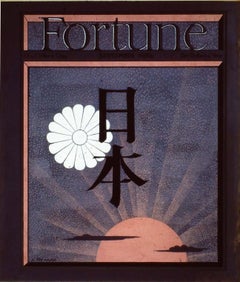
Japan Issue Fortune Magazine Cover Proposal Japanese Mid-Century Illustration
Located in New York, NY
Japan Issue Fortune Magazine Cover Proposal Japanese Mid-Century Illustration Antonio Petruccelli (1907 - 1994) JAPAN ISSUE Fortune cover proposal, c. 1936 14 1/4 x 12 inches (sight) Framed 19 3/4 X 17 3/4 Inches Gouache on board Signed lower left BIOGRAPHY: Antonio Petruccelli (1907-1994) began his career as a textile designer. He became a freelance illustrator in 1932 after winning several House Beautiful cover illustration contests. In addition to 24 Fortune magazine covers, four New Yorker covers, several for House Beautiful, Collier’s, and other magazines he did numerous illustrations for Life magazine from the 1930s – 60s. ‘Tony was Mr. Versatility for Fortune. He could do anything, from charts and diagrams to maps, illustrations, covers, and caricatures,’ said Francis Brennan, the former art director for Fortune. Over the course of his career, Antonio won several important design awards, designing a U.S. Postage Stamp Commemorating the Steel Industry and designing the Bicentennial Medal...
Category

1930s Modern Still-life Drawings and Watercolors

Materials

Gouache, Board

Flowers Still Life
Located in Los Angeles, CA
(Note: This work is part of our exhibition Connected by Creativity: WPA Era Works from the Collection of Leata and Edward Beatty Rowan) Watercolor...
Category

1930s Modern Still-life Drawings and Watercolors

Materials

Watercolor

Flower
Located in Dallas, TX
Robert Peterson, "Flower," pastel on paper, 19 x 26 1/4 inches paper size, 27 1/4 x 35 inches including white mat and frame. The artwork is floated in the mat and only hinged at the...
Category

20th Century Modern Still-life Drawings and Watercolors

Materials

Paper, Pastel

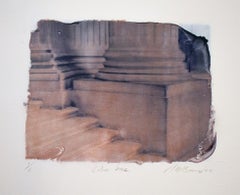
Untitled 30 (Polaroid Transfer Drawing of a Classical Column Base by Mark Beard)
Located in Hudson, NY
Polaroid transfer drawing of a Classical column base on Rives BFK paper by Mark Beard 7 x 9.5 inch image size 22 x 15 inch paper size Ed. 1/6, Polaroid Transfer on Rives BFK paper, u...
Category

1990s Modern Still-life Drawings and Watercolors

Materials

Archival Paper, Polaroid

Still Life - Drawing by Louis Gabriel Croison - 1930
Located in Roma, IT
Still Life is an artwork realized by Louis Gabriel Croison (Paris, 1890 - Paris, 1963) in 1930. Good condition. Ink and watercolour.
Category

1930s Modern Still-life Drawings and Watercolors

Materials

Paper, Ink

Flower Pot - Watercolor by Fiorenzo Tomea - 1950s
By Fiorenzo Tomea
Located in Roma, IT
Flowers Pot is an original contemporary artwork realized by Fiorenzo Tomea (1910-1960) in the mid-20th Century. Mixed colored watercolor. Hand signed on the lower margin. Includes...
Category

Mid-20th Century Modern Still-life Drawings and Watercolors

Materials

Watercolor

Still Life - Drawing by Sante Monachesi - 1939
Located in Roma, IT
Still Life is a modern artwork realized by Sante Monachesi in 1939. Charcoal drawing on paper. Hand signed and dated on the lower margin. Includes frame.
Category

Mid-20th Century Modern Still-life Drawings and Watercolors

Materials

Charcoal

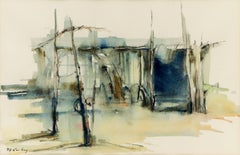
Pawel Kontny “New Mexico” 20th-Century Southwestern Modernist Watercolor
Located in Denver, CO
This 20th-century watercolor painting, “New Mexico,” by Polish-American artist Pawel Kontny, captures the enduring architecture and serene spirit of the American Southwest. The work ...
Category

Mid-20th Century Modern Still-life Drawings and Watercolors

Materials

Watercolor

Abstract Floral Still Life, 20th Century Cleveland School Artist
Located in Beachwood, OH
August Frederick Biehle (American, 1885-1979) Abstract Floral Still Life Watercolor and pencil on paper Signed lower right 24 x 19 inches 29.5 x 24.5 inches, framed A versatile pain...
Category

Mid-20th Century Modern Still-life Drawings and Watercolors

Materials

Watercolor, Pencil

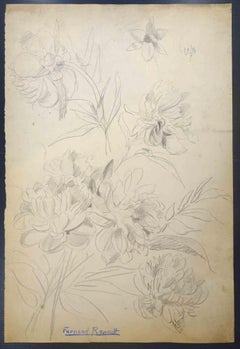
Flowers - Drawing by Albert Fernand-Renault - 1950s
Located in Roma, IT
Flowers is a drawing realized by Albert Fernand-Renault in the early 20th Century. Pencil on paper. Stamped signed. Good Conditions with diffused foxing. The artwork is realized ...
Category

1950s Modern Still-life Drawings and Watercolors

Materials

Pencil

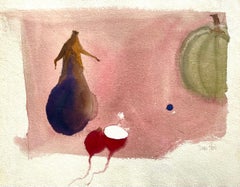
Watercolor Still life Painting Vegetables Claus Hoien Greengrocer Kitchen Series
Located in Surfside, FL
Delicate watercolor of vegetables. Japanese eggplant and radishes and a squash gourd. Framed 18 X 20 image is 11 X 13.5 Claus Hoie was a Norwegian-American...
Category

20th Century Modern Still-life Drawings and Watercolors

Materials

Watercolor

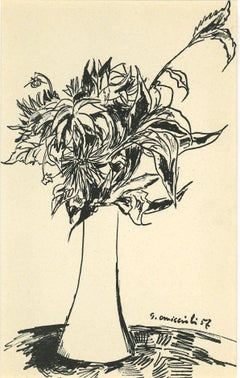
Vase of Flowers - Drawing In Pen by Giovanni Omiccioli - 1957
Located in Roma, IT
Vase of Flowers is a beautiful drawing in pen, realized in 1957 by the Italian artist Giovanni Omiccioli (Rome, 1901-1975). Hand-signed in pencil on the lower right and dated. In v...
Category

1950s Modern Still-life Drawings and Watercolors

Materials

Pen

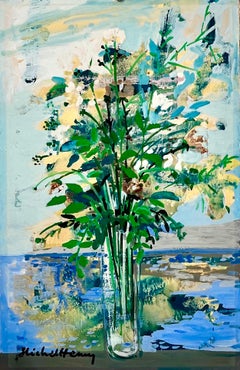
Small, Charming, Fauvist Painting Michel Henry French Modernist School of Paris
Located in Surfside, FL
Michel-Henry was born in Langres in 1928 and has shown strong passion for drawing since his childhood. Michel-Henry is acknowledged as an important painter in French contemporary a...
Category

1960s Modern Still-life Drawings and Watercolors

Materials

Paper, Gouache

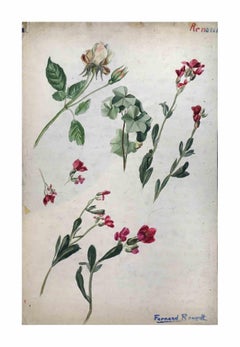
Flowers - Drawing by Albert Fernand-Renault - 1950s
Located in Roma, IT
Flowers is a drawing realized in 1950s by Albert Fernand-Renault. Watercolour and ink on paper. Hand-signed. Good condition with diffused foxing and a cutting at the top left margi...
Category

1950s Modern Still-life Drawings and Watercolors

Materials

Ink, Watercolor

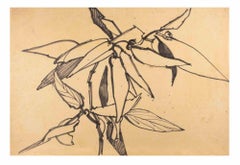
Flowers - Drawing By Reynold Arnould - 1970
Located in Roma, IT
Flowers is a Color Marker Drawing realized by Reynold Arnould (Le Havre 1919 - Parigi 1980). Good condition on a yellowed paper. No signature. Reynold Arnould was born in Le Havr...
Category

1970s Modern Still-life Drawings and Watercolors

Materials

Paper, Permanent Marker

Pink Flowers with Greenery, Modern Tempera on Paper by Biagio Civale
Located in Long Island City, NY
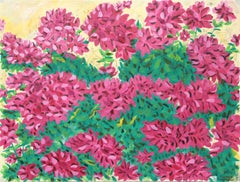
Biagio Civale, Italian/American (1936 - ) - Pink Flowers with Greenery, Medium: Tempera on paper, signed lower left, Size: 19 x 25 in. (48.26 x 63.5 cm)
Category

1980s Modern Still-life Drawings and Watercolors

Materials

Tempera

Pink Flowers, Modern Tempera on Paper by Biagio Civale
Located in Long Island City, NY
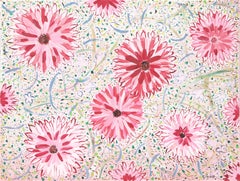
Biagio Civale, Italian/American (1936 - ) - Pink Flowers, Medium: Tempera on paper, signed lower left, Size: 18 x 24 in. (45.72 x 60.96 cm)
Category

1980s Modern Still-life Drawings and Watercolors

Materials

Tempera

Still Life
Located in Bryn Mawr, PA
Best known as an impassioned supporter and avid collector of modern art, Earl Horter was also an artist himself. Largely self-taught, Horter was a highly skilled draftsman and engrav...
Category

1930s Modern Still-life Drawings and Watercolors

Materials

Paper, Pastel

Flower Vase, Mixed media on paper by Drawings by Modern Indian Artist "In Stock"
Located in Kolkata, West Bengal
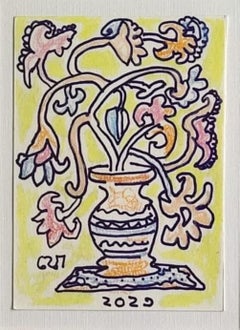
Jogen Chowdhury - Flower Vase 7 x 5 Inches Mixed media on Paper 2023 Style : He has immense contribution in inspiring young artists of India. Jogen Chowdhury had developed his indiv...
Category

2010s Modern Still-life Drawings and Watercolors

Materials

Ink, Postcard

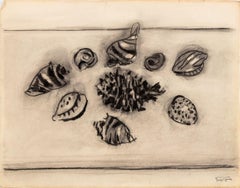
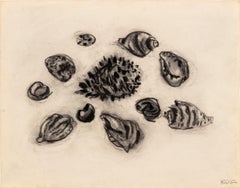
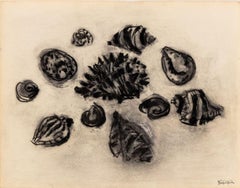
Still Life of Seashells
Located in Astoria, NY
Manfred Schwartz (American, b. Poland, 1909-1970), Still Life of Seashells, Charcoal on Paper, with the artist's signature stamped lower right, unframed. 20" H x 25.75" W. Provenance...
Category

Mid-20th Century Modern Still-life Drawings and Watercolors

Materials

Paper, Charcoal

British Modernist Vibrant Watercolor Painting of Flowers, Sir Jacob Epstein
Located in Surfside, FL
Sir Jacob Epstein KBE (10 November 1880 – 19 August 1959) was an American British sculptor who helped pioneer modern sculpture. He was born in the United States, and moved to Europe in 1902, becoming a British subject in 1911. He often produced controversial works which challenged ideas on what was appropriate subject matter for public artworks. He also made paintings and drawings, and often exhibited his work. Epstein's parents were Polish Jewish refugees, living on New York's Lower East Side. He studied art in his native New York as a teenager, sketching the city, and joined the Art Students League of New York in 1900. For his livelihood, he worked in a bronze foundry by day, studying drawing and sculptural modelling at night. Epstein's first major commission was to illustrate Hutchins Hapgood's 1902 book Spirit of the Ghetto. Epstein used the money from the commission to move to Paris. Moving to Europe in 1902, he studied in Paris at the Académie Julian and the École des Beaux-Arts. He settled in London in 1905 and married Margaret Dunlop in 1906. Epstein became a British subject on 4 January 1911. Many of Epstein's works were sculpted at his two cottages in Loughton, Essex, where he lived first at number 49 then 50, Baldwin's Hill (there is a blue plaque on number 50). He served briefly in the 38th Battalion of the Royal Fusiliers, known as the Jewish Legion during World War I; following a breakdown, he was discharged in 1918 without having left England. In London, Epstein involved himself with a bohemian and artistic crowd. Revolting against ornate, pretty art, he made bold, often harsh and massive forms of bronze or stone. His sculpture is distinguished by its vigorous rough-hewn realism. Avant-garde in concept and style, his works often shocked his audience. This was not only a result of their (often explicit) sexual content, but also because they deliberately abandoned the conventions of classical Greek sculpture favoured by European Academic sculptors to experiment instead with the aesthetics of art traditions as diverse as those of India, West Africa, and the Pacific Islands. Between 1913 and 1915, Epstein was associated with the short-lived Vorticism movement and produced one of his best known sculptures The Rock Drill. Between the late 1930s and the mid-1950s, numerous works by Epstein were exhibited in Blackpool. Adam, Consummatum Est, Jacob and the Angel and Genesis, and other works, were initially displayed in an old drapery shop surrounded by red velvet curtains. The crowds were ushered in at the cost of a shilling by a barker on the street. After a small tour of American fun fairs, the works were returned to Blackpool and were exhibited in the anatomical curiosities section of Louis Tussaud's waxworks. Bronze portrait sculpture formed one of Epstein's staple products, and perhaps the best known. These sculptures were often executed with roughly textured surfaces, expressively manipulating small surface planes and facial details. Some fine examples are in the National Portrait Gallery. He completed a bust of Winston Churchill...
Category

1930s Modern Still-life Drawings and Watercolors

Materials

Paper, Watercolor

Israeli Yosl Bergner Modernist Watercolor Painting Drawing Pots, Pans
Located in Surfside, FL
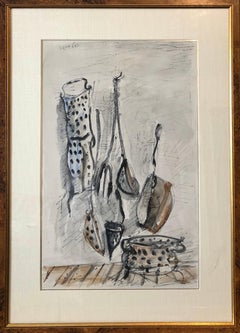
Abstract Composition, Kitchen Utensils. Ink and watercolor of kitchen implements. Hand signed in Hebrew upper left. Dimensions: (Frame) H 25" x 18" (Sight) H 18.5" x W 11.75" Bergn...
Category

Mid-20th Century Modern Still-life Drawings and Watercolors

Materials

Archival Ink, Watercolor

Springtime Floral Bouquet
Located in Surfside, FL
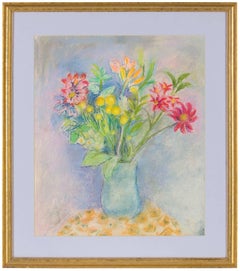
Pastel, circa 20th century
Category

20th Century Modern Still-life Drawings and Watercolors

Materials

Paper, Oil Pastel

Still Life - Paint by Sandro Trotti - 1970s
Located in Roma, IT
Outstanding tempera on hard paper realized by Sandro Trotti in 1970s. Hand signed in pencil. Excellent condition.
Category

1970s Modern Still-life Drawings and Watercolors

Materials

Paper, Tempera

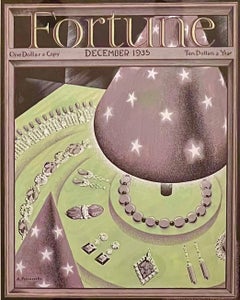
Original Painting Published Fortune Mag Cover 1935 Jewels Jewelry Illustration
Located in New York, NY
Original Painting Published Fortune Mag Cover 1935 Jewels Jewelry Illustration Antonio Petruccelli (1907 – 1994) Fortune cover published, Decembe...
Category

1930s Modern Still-life Drawings and Watercolors

Materials

Gouache, Board

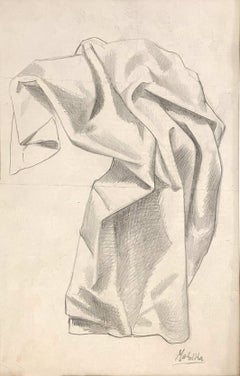
A Fine 1930s Modern Drawing of Classical Drapery by NY Artist, Jan Matulka
Located in Chicago, IL
A fine ca. 1938 graphite on paper, study of classical drapery by notable New York Modernist artist, Jan Matulka. The image is drawn on the back of a typewritten, folded sheet of bus...
Category

1930s Modern Still-life Drawings and Watercolors

Materials

Paper, Graphite

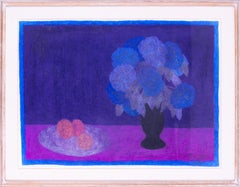
Bernard Myers pastel on paper Blue Hydrangeas , British 20th Century still life
Located in Petworth, West Sussex
A beautifully observed pastel still life, Blue Hydrangeas exemplifies Bernard Myers’ refined command of colour and light. Signed B Myers lower right, the work reflects the artist’s m...
Category

20th Century Modern Still-life Drawings and Watercolors

Materials

Paper, Pastel

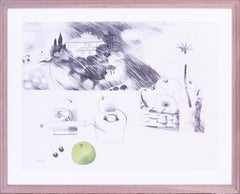
Mary Fedden The Green Apple 1979, pencil and watercolour, signed, British
Located in Petworth, West Sussex
Mary Fedden (British, 1915–2012) The Green Apple Pencil and watercolour Signed and dated ‘Fedden 1979’ (lower left); further signed and titled ‘Mary Fedden, The Green Apple’ (on the ...
Category

20th Century Modern Still-life Drawings and Watercolors

Materials

Paper, Watercolor, Pencil

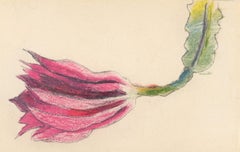
Cactus Flower
Located in Bryn Mawr, PA
Silverpoint and crayon on paper 4 11/16 x 3 inches 11.9 x 7.6 cm Framed dimensions 8 1/8 x 9 7/8 inches Provenance The artist; By bequest to his nephew, Sergio Stella, 1946; By desc...
Category

20th Century Modern Still-life Drawings and Watercolors

Materials

Crayon

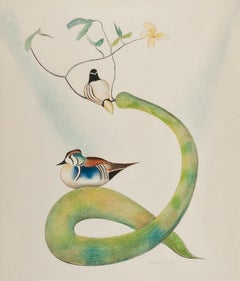
Two Wood Ducks on a Flowering Branch
Located in New York, NY
Joseph Stella was a visionary artist who painted what he saw, an idiosyncratic and individual experience of his time and place. Stella arrived in New York in 1896, part of a wave of Italian immigrants from poverty-stricken Southern Italy. But Stella was not a child of poverty. His father was a notary and respected citizen in Muro Locano, a small town in the southern Appenines. The five Stella brothers were all properly educated in Naples. Stella’s older brother, Antonio, was the first of the family to come to America. Antonio Stella trained as a physician in Italy, and was a successful and respected doctor in the Italian community centered in Greenwich Village. He sponsored and supported his younger brother, Joseph, first sending him to medical school in New York, then to study pharmacology, and then sustaining him through the early days of his artistic career. Antonio Stella specialized in the treatment of tuberculosis and was active in social reform circles. His connections were instrumental in Joseph Stella’s early commissions for illustrations in reform journals. Joseph Stella, from the beginning, was an outsider. He was of the Italian-American community, but did not share its overwhelming poverty and general lack of education. He went back to Italy on several occasions, but was no longer an Italian. His art incorporated many influences. At various times his work echoed the concerns and techniques of the so-called Ashcan School, of New York Dada, of Futurism and, of Cubism, among others. These are all legitimate influences, but Stella never totally committed himself to any group. He was a convivial, but ultimately solitary figure, with a lifelong mistrust of any authority external to his own personal mandate. He was in Europe during the time that Alfred Stieglitz established his 291 Gallery. When Stella returned he joined the international coterie of artists who gathered at the West Side apartment of the art patron Conrad Arensberg. It was here that Stella became close friends with Marcel Duchamp. Stella was nineteen when he arrived in America and studied in the early years of the century at the Art Students League, and with William Merritt Chase, under whose tutelage he received rigorous training as a draftsman. His love of line, and his mastery of its techniques, is apparent early in his career in the illustrations he made for various social reform journals. Stella, whose later work as a colorist is breathtakingly lush, never felt obliged to choose between line and color. He drew throughout his career, and unlike other modernists, whose work evolved inexorably to more and more abstract form, Stella freely reverted to earlier realist modes of representation whenever it suited him. This was because, in fact, his “realist” work was not “true to nature,” but true to Stella’s own unique interpretation. Stella began to draw flowers, vegetables, butterflies, and birds in 1919, after he had finished the Brooklyn Bridge series of paintings, which are probably his best-known works. These drawings of flora and fauna were initially coincidental with his fantastical, nostalgic and spiritual vision of his native Italy which he called Tree of My Life (Mr. and Mrs. Barney A. Ebsworth Foundation and Windsor, Inc., St. Louis, illus. in Barbara Haskell, Joseph Stella, exh. cat. [New York: Whitney Museum of American Art, 1994], p. 111 no. 133). Two Wood Ducks...
Category

20th Century Modern Still-life Drawings and Watercolors

Materials

Color Pencil

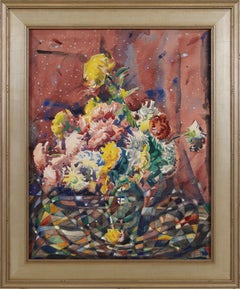
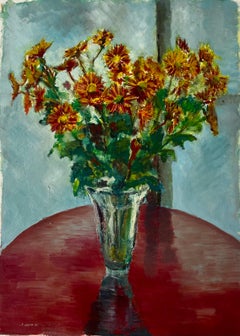
Still Life with Chrysanthemums in Glass Vase French Modern Floral Oil Painting
Located in Cirencester, Gloucestershire
Title: Still Life with Chrysanthemums in Glass Vase French Modern Floral Oil Painting Guy Nicod (French 1923 - 2021) Oil on artist paper, unframed Size: 25.5 x 19.75 inches (height ...
Category

Mid-20th Century Modern Still-life Drawings and Watercolors

Materials

Oil

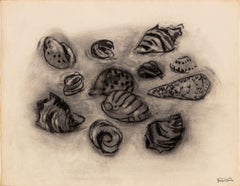
Still Life of Seashells
Located in Astoria, NY
Manfred Schwartz (American, b. Poland, 1909-1970), Still Life of Seashells, Charcoal on Paper, with the artist's signature stamped lower right, unframed. 20" H x 25.75" W. Provenance...
Category

Mid-20th Century Modern Still-life Drawings and Watercolors

Materials

Paper, Charcoal

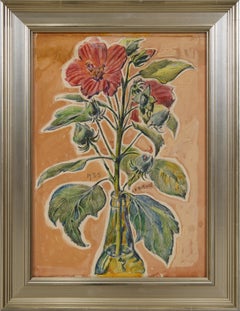
Hibiscus Floral Still Life, Early 20th Century Cleveland School
Located in Beachwood, OH
August Frederick Biehle (American, 1885–1979) Hibiscus, 1935 Gouache, graphite and colored pencil on paper Signed and dated center 16.5 x 11.5 inches 21 x 15.75 inches, framed A ver...
Category

1930s Modern Still-life Drawings and Watercolors

Materials

Gouache, Color Pencil, Graphite

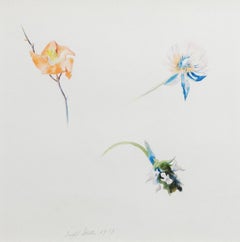
Three Flowers
Located in New York, NY
Joseph Stella was a visionary artist who painted what he saw, an idiosyncratic and individual experience of his time and place. Stella arrived in New York in 1896, part of a wave of ...
Category

20th Century Modern Still-life Drawings and Watercolors

Materials

Paper, Crayon

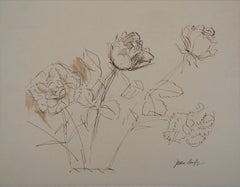
Bouquet of Roses - Original ink drawing, Signed
Located in Paris, IDF
Jean DUFY (1888-1964) Bouquet of Roses Original ink and lavish drawing Signed with the artist stamp On paper 29 x 36 cm (c. 12 x 14 in) Very good condition, paper lightly yellowed
Category

Mid-20th Century Modern Still-life Drawings and Watercolors

Materials

India Ink

Modern British pastel study of Red Peonies by Bernard Myers
Located in Petworth, West Sussex
Bernard Myers (British, 1925 – 2007) Red Peonies Pastel on paper Signed ‘B. Myers’ (lower left) 24 x 31.3/4 in. (61 x 80.7 cm.) (including frame) From the estate of Bernard Myers Be...
Category

20th Century Modern Still-life Drawings and Watercolors

Materials

Paper, Pastel

Still Life of Seashells
Located in Astoria, NY
Manfred Schwartz (American, b. Poland, 1909-1970), Still Life of Seashells, Charcoal on Paper, with the artist's signature stamped lower right, unframed. 20" H x 25.75" W. Provenance...
Category

Mid-20th Century Modern Still-life Drawings and Watercolors

Materials

Paper, Charcoal

Still Life of Seashells
Located in Astoria, NY
Manfred Schwartz (American, b. Poland, 1909-1970), Still Life of Seashells, Charcoal on Paper, with the artist's signature stamped lower right, unframed. 20" H x 25.5" W. Provenance:...
Category

Mid-20th Century Modern Still-life Drawings and Watercolors

Materials

Paper, Charcoal

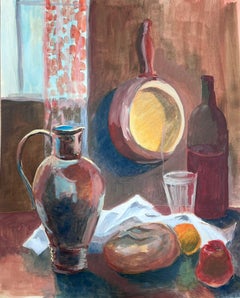
Jugs and Pan Kitchen Table French Still Life Modernist Painting
Located in Cirencester, Gloucestershire
French Expressionist by Guy Nicod (French 1923 - 2021) watercolour on artist paper, unframed painting : 18 x 14.5 inches provenance: artists estate, France condition: very good and s...
Category

Mid-20th Century Modern Still-life Drawings and Watercolors

Materials

Watercolor

Modern still-life drawings and watercolors for sale on 1stDibs.

Find a wide variety of authentic Modern still-life drawings and watercolors available for sale on 1stDibs. Works in this style were very popular during the 21st Century and Contemporary, but contemporary artists have continued to produce works inspired by this movement. If you’re looking to add still-life drawings and watercolors created in this style to introduce contrast in an otherwise neutral space in your home, the works available on 1stDibs include elements of blue, orange, purple and other colors. Many Pop art paintings were created by popular artists on 1stDibs, including Nancy Lasar, Ian Hornak, Sylvia Spicuzza, and Jan Matulka. Frequently made by artists working with Paint, and Paper and other materials, all of these pieces for sale are unique and have attracted attention over the years. Not every interior allows for large Modern still-life drawings and watercolors, so small editions measuring 0.5 inches across are also available. Prices for still-life drawings and watercolors made by famous or emerging artists can differ depending on medium, time period and other attributes. On 1stDibs, the price for these items starts at $88 and tops out at $375,000, while the average work sells for $1,450.

Still Thinking About These?

All Recently Viewed