Want more images or videos?
Request additional images or videos from the seller
1 of 2

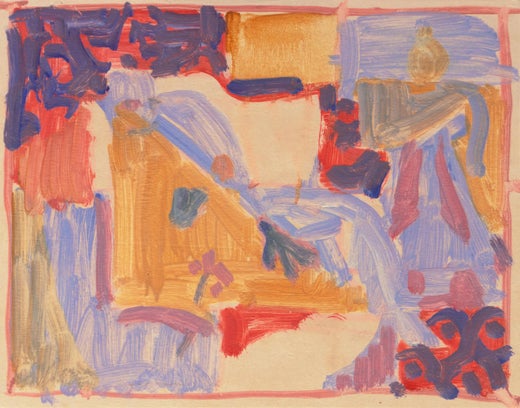
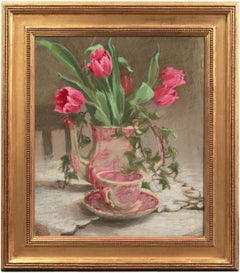
Victor Di Gesu
Still Life , Paris, Louvre, Salon d Automne, Academie Chaumière, LACMA, SFAA

Circa 1955

$1,250List Price

You May Also Like

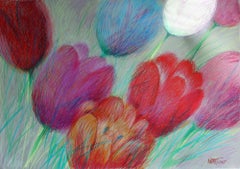
Tulips , White
Located in Zofingen, AG
In this piece, I poured vibrant emotions through acrylic, oil pastel, and colored pencil, blending expressionism, impressionism, and pop art to capture the delicate yet bold spirit o...
Category

2010s Pointillist Still-life Drawings and Watercolors

Materials

Oil Pastel, Acrylic, Archival Paper

Tulips , White
$598
H 23.63 in W 33.86 in D 0.08 in
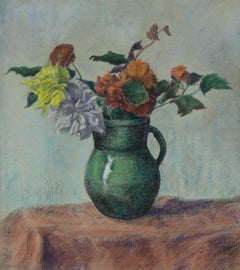
Vase de fleurs by Paul Ranson, Pastel on paper, Still life, Drawing
By Paul Elie Ranson
Located in London, GB
Vase de fleurs by Paul Ranson (1864-1909) Pastel on paper 46.5 x 41.5 cm (18 ¹/₄ x 16 ³/₈ inches) Signed lower right, P. Ranson Executed circa 1900 Proven...
Category

Early 1900s Post-Impressionist Still-life Drawings and Watercolors

Materials

Paper, Pastel

Le Bouquet de Ghassan by Lélia Pissarro - Pastel on paper, Bouquet of flowers
By Lelia Pissarro
Located in London, GB
Le Bouquet de Ghassan by Lélia Pissarro (b. 1963) Pastel on paper 25.4 x 35.5 cm (10 x 14 inches) Signed lower left, Lélia Pissarro Signed and titled on the reverse This work is acc...
Category

1990s Post-Impressionist Still-life Drawings and Watercolors

Materials

Paper, Pastel

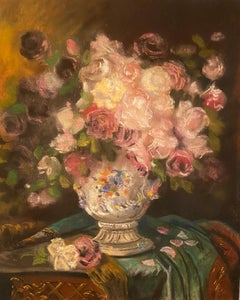
“Roses in a Porcelain Vase”
By Marcel Vertès
Located in Southampton, NY
Here for your consideration is a very well executed oil pastel on archival paper by the well known French artist, Marcel Vertes. Signed lower right. Condition is excellent. Circa 1...
Category

1930s Post-Impressionist Still-life Drawings and Watercolors

Materials

Oil Pastel, Archival Paper

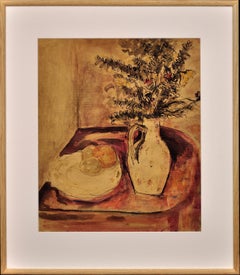
1940s Wartime Still Life Watercolor Painting By A Famous Ceramic Potter Sculptor
By James Tower
Located in Sutton Poyntz, Dorset
James Tower. English ( b.1919 - d.1988 ). Still Life Of Flowers In A Jug And A Plate Of Fruit. Watercolor & Ink. Image size 15.4 inches x 13 inches ( 39cm x 33cm ). Frame size 22.2 ...
Category

Mid-20th Century Post-Impressionist Still-life Drawings and Watercolors

Materials

Paper, Ink, Watercolor

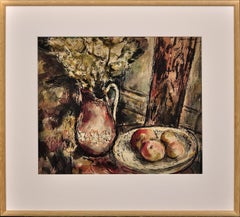
1944 Wartime Still Life Watercolor Painting Influential Ceramic Artist Teacher
By James Tower
Located in Sutton Poyntz, Dorset
James Tower. English ( b.1919 - d.1988 ). Still Life Of Flowers In A Jug And A Bowl Of Apples, 1944. Watercolor & Ink. Signed & Dated Upper Right. Image size 11.4 inches x 13.2 inch...
Category

Mid-20th Century Post-Impressionist Still-life Drawings and Watercolors

Materials

Paper, Ink, Watercolor

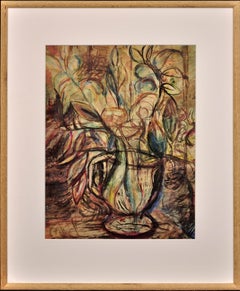
1945 Wartime Still Life Watercolor English Coveted Ceramic Artist And Teacher
By James Tower
Located in Sutton Poyntz, Dorset
James Tower. English ( b.1919 - d.1988 ). Still Life Of Cut Flowers In A Pottery Jug, 1945. Watercolor & Ink. Signed & Dated Lower Right. Image size 13.2 inches x 10 inches ( 33.5c...
Category

Mid-20th Century Post-Impressionist Still-life Drawings and Watercolors

Materials

Paper, Ink, Watercolor

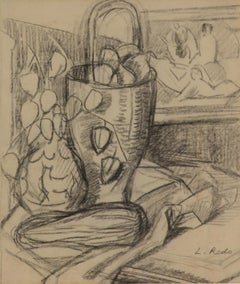
Still Life by Ludovic-Rodo Pissarro - Charcoal on paper
By Ludovic-Rodo Pissarro
Located in London, GB
Still Life by Ludovic-Rodo Pissarro (1878-1952) Charcoal on paper 28.4 x 24.3 cm (11 ⅛ x 9 ⅝ inches) Signed lower right, L. Rodo Provenance Private Collection, London This work is ...
Category

Early 20th Century Post-Impressionist Still-life Drawings and Watercolors

Materials

Paper, Charcoal

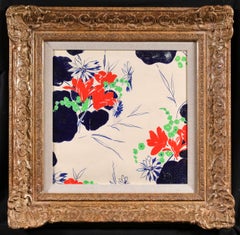
Projet de Tissus - Fauvist Flowers Watercolor Gouache by Raoul Dufy
By Raoul Dufy
Located in Marlow, Buckinghamshire
Botanical watercolour and gouache on paper circa 1920 by French fauvist painter Raoul Dufy. The work depicts flowers in red, blue and green. This work was executed by Dufy as a fabric design. Dimensions: Framed: 19.5"x19.5" Unframed: 12"x12" Provenance: Private collection of works by Raoul Dufy for Bianchini Ferier Bianchini Ferrier Collection - Christie's London - July 2001 SF Fall Show Raoul Dufy was one of a family of nine children, including five sisters and a younger brother, Jean Dufy, also destined to become a painter. Their father was an accountant in the employ of a major company in Le Havre. The Dufy family was musically gifted: his father was an organist, as was his brother Léon, and his youngest brother Gaston was an accomplished flautist who later worked as a music critic in Paris. Raoul Dufy's studies were interrupted at the age of 14, when he had to contribute to the family income. He took a job with an importer of Brazilian coffee, but still found time from 1892 to attend evening courses in drawing and composition at the local college of fine arts under Charles Marie Lhullier, former teacher of Othon Friesz and Georges Braque. He spent his free time in museums, admiring the paintings of Eugène Boudin in Le Havre and The Justice of Trajan in Rouen. A municipal scholarship enabled him to leave for Paris in 1900, where he lodged initially with Othon Friesz. He was accepted by the École des Beaux-Arts, where he studied under Léon Bonnat, whose innate conservatism prompted Dufy to remark later that it was 'good to be at the Beaux-Arts providing one knew one could leave'. And leave he did, four years later, embarking with friends and fellow students on the rounds of the major Paris galleries - Ambroise Vollard, Durand-Ruel, Eugène Blot and Berheim-Jeune. For Dufy and his contemporaries, Impressionism represented a rejection of sterile academism in favour of the open-air canvases of Manet, the light and bright colours of the Impressionists, and, beyond them, the daringly innovative work of Gauguin and Van Gogh, Seurat, Cézanne, Toulouse-Lautrec and others. Dufy was an out-and-out individualist, however, and was not tempted to imitate any of these artists. He produced, between 1935 and 1937, Fée Electricité (Spirit of Electricity), the emblem for the French utilities company Electricité de France (EDF). Dufy visited the USA for the first time in 1937, as a member of the Carnegie Prize jury. In 1940, the outbreak of war (and his increasingly rheumatic condition) persuaded him to settle in Nice. When he eventually returned to Paris 10 years later, his rheumatism had become so debilitating that he immediately left for Boston to follow a course of pioneering anti-cortisone treatment. He continued working, however, spending time first in Harvard and then in New York City before moving to the drier climate of Tucson, Arizona. The cortisone treatment was by and large unsuccessful, although he did recover the use of his fingers. He returned to Paris in 1951 and decided to settle in Forcalquier, where the climate was more clement. Within a short time, however, he was wheelchair-bound. He died in Forcalquier in March 1953 and was buried in Cimiez. Between 1895 and 1898, Raoul Dufy painted watercolours of landscapes near his native Le Havre and around Honfleur and Falaise. By the turn of the century, however, he was already painting certain subjects that were to become hallmarks of his work - flag-decked Parisian cityscapes, Normandy beaches teeming with visitors, regattas and the like, including one of his better-known early works, Landing Stage at Ste-Adresse. By 1905-1906 Friesz, Braque, Matisse, Derain, Vlaminck, Van Dongen and Rouault were described collectively as Fauves (the wild beasts). What they had in common was a desire to innovate, but they felt constrained nonetheless to meet formally to set out the guiding principles of what promised to be a new 'movement'. Dufy quickly established that those principles were acceptable; moreover, he was most impressed by one particular painting by Henri Matisse ( Luxury, Calm and Voluptuousness) which, to Dufy, embodied both novelty and a sense of artistic freedom. Dufy promptly aligned himself with the Fauves. Together with Albert Marquet in particular, he spent his time travelling the Normandy coast and painting views similar...
Category

1920s Fauvist Still-life Drawings and Watercolors

Materials

Paper, Watercolor, Gouache

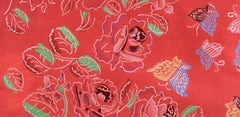
Fleurs et Papillons - Fauvist Flowers Watercolor Gouache by Raoul Dufy
By Raoul Dufy
Located in Marlow, Buckinghamshire
Botanical watercolour and gouache on paper circa 1920 by French fauvist painter Raoul Dufy. The work depicts flowers in red and butterflies in blues, yellows, black and white. This work was executed by Dufy as a fabric design. Dimensions: Framed: 17"x27" Unframed: 10"x20" Provenance: Private collection of works by Raoul Dufy for Bianchini Ferier Bianchini Ferrier Collection - Christie's London - July 2001 SF Fall Show Raoul Dufy was one of a family of nine children, including five sisters and a younger brother, Jean Dufy, also destined to become a painter. Their father was an accountant in the employ of a major company in Le Havre. The Dufy family was musically gifted: his father was an organist, as was his brother Léon, and his youngest brother Gaston was an accomplished flautist who later worked as a music critic in Paris. Raoul Dufy's studies were interrupted at the age of 14, when he had to contribute to the family income. He took a job with an importer of Brazilian coffee, but still found time from 1892 to attend evening courses in drawing and composition at the local college of fine arts under Charles Marie Lhullier, former teacher of Othon Friesz and Georges Braque. He spent his free time in museums, admiring the paintings of Eugène Boudin in Le Havre and The Justice of Trajan in Rouen. A municipal scholarship enabled him to leave for Paris in 1900, where he lodged initially with Othon Friesz. He was accepted by the École des Beaux-Arts, where he studied under Léon Bonnat, whose innate conservatism prompted Dufy to remark later that it was 'good to be at the Beaux-Arts providing one knew one could leave'. And leave he did, four years later, embarking with friends and fellow students on the rounds of the major Paris galleries - Ambroise Vollard, Durand-Ruel, Eugène Blot and Berheim-Jeune. For Dufy and his contemporaries, Impressionism represented a rejection of sterile academism in favour of the open-air canvases of Manet, the light and bright colours of the Impressionists, and, beyond them, the daringly innovative work of Gauguin and Van Gogh, Seurat, Cézanne, Toulouse-Lautrec and others. Dufy was an out-and-out individualist, however, and was not tempted to imitate any of these artists. He produced, between 1935 and 1937, Fée Electricité (Spirit of Electricity), the emblem for the French utilities company Electricité de France (EDF). Dufy visited the USA for the first time in 1937, as a member of the Carnegie Prize jury. In 1940, the outbreak of war (and his increasingly rheumatic condition) persuaded him to settle in Nice. When he eventually returned to Paris 10 years later, his rheumatism had become so debilitating that he immediately left for Boston to follow a course of pioneering anti-cortisone treatment. He continued working, however, spending time first in Harvard and then in New York City before moving to the drier climate of Tucson, Arizona. The cortisone treatment was by and large unsuccessful, although he did recover the use of his fingers. He returned to Paris in 1951 and decided to settle in Forcalquier, where the climate was more clement. Within a short time, however, he was wheelchair-bound. He died in Forcalquier in March 1953 and was buried in Cimiez. Between 1895 and 1898, Raoul Dufy painted watercolours of landscapes near his native Le Havre and around Honfleur and Falaise. By the turn of the century, however, he was already painting certain subjects that were to become hallmarks of his work - flag-decked Parisian cityscapes, Normandy beaches teeming with visitors, regattas and the like, including one of his better-known early works, Landing Stage at Ste-Adresse. By 1905-1906 Friesz, Braque, Matisse, Derain, Vlaminck, Van Dongen and Rouault were described collectively as Fauves (the wild beasts). What they had in common was a desire to innovate, but they felt constrained nonetheless to meet formally to set out the guiding principles of what promised to be a new 'movement'. Dufy quickly established that those principles were acceptable; moreover, he was most impressed by one particular painting by Henri Matisse ( Luxury, Calm and Voluptuousness) which, to Dufy, embodied both novelty and a sense of artistic freedom. Dufy promptly aligned himself with the Fauves. Together with Albert Marquet in particular, he spent his time travelling the Normandy coast and painting views similar...
Category

1920s Fauvist Still-life Drawings and Watercolors

Materials

Paper, Watercolor, Gouache

More From This Seller

View All
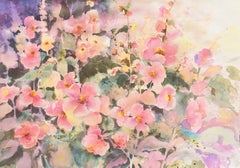
Pink Daisies , California Watercolor Society, SWA, Woman Artist, Zoltan Szabo
By Beverly Fields
Located in Santa Cruz, CA
Signed lower right, 'Beverly Fields' (American, 20th century) and painted circa 1985. This listed California artist has exhibited widely and with success and is the recipient of num...
Category

1980s Post-Impressionist Still-life Drawings and Watercolors

Materials

Watercolor, Laid Paper

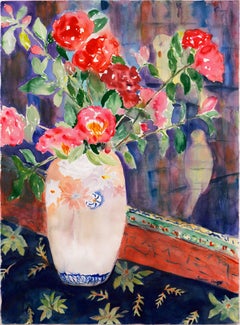
Dog Roses in a Satsuma Vase , Japanese Decorative Arts, Lacquer Mirror
By Thomas Haight
Located in Santa Cruz, CA
A substantial and vibrant watercolor still-life showing a loose group of pink and red dog-roses informally arranged in an ivory-field, satsuma vase, set on a floral-pattern tableclot...
Category

1980s Post-Impressionist Still-life Drawings and Watercolors

Materials

Paper, Watercolor, Board

Untitled No. 1 , Royal Society of Artists, Edinburgh Academy, Palo Alto
By Thomas Guise
Located in Santa Cruz, CA
'Untitled No. 1' by Thomas Guise, 1967. Royal Society of Artists, Edinburgh Academy, Palo Alto ----- Signed lower right, 'T.G.M. Guise' for Thomas Gladstone Middleton Guise (Scottish, 1916-1984) and dated 1967. Previously with: Los Robles Gallery, Palo Alto, California. Thomas Guise studied art at Edinburgh College of Art under Thomson Adam Bruce, RSA (1947-1949) before serving with the Royal Artillery between 1939 and 1946. After returning to Scotland, Guise began working professionally as an artist and commenced his fruitful association with the Featherhal Press. Over the course of his career, he was the recipient of numerous prizes, medals and juried awards including the Award for Life Drawing (1947). Guise exhibited internationally with success and was a member of the Royal Society of Arts, the Royal Society of British Artists and the Royal Scottish Society of Painters in Watercolor among others. Accompanied by an artist catalogue, 'T.G.M. Guise: Propinquity', Featherhall Press Limited, Edinburgh 1996. Selected Group Shows 1948 - 1984: RBA, RSA, RI, RSW, RGI, SSA, NEAC. Arun Art Centre The Bath Festival Exhibition Selected Solo Shows: 1966 - Randolph Gallery, Edinburgh Festival 1967 - Encina Gallery Stanford University, California, United States 1968 - Los Robles Gallery, Palo Alto, California, United States 1968 - Randolph Gallery Edinburgh Festival 1970 - Clarkson Gallery, Victoria Street...
Category

1960s Pointillist Abstract Drawings and Watercolors

Materials

Watercolor, Pen, Gouache

Still Life, Red Tulips with Japanese Porcelain , Belgian Lace, Japonaiserie
Located in Santa Cruz, CA
A finely-drawn, pastel still-life showing red tulips informally arranged in a Chelsea soft paste porcelain Chocolate pot decorated in the Japanese style and set beside a cup and sauc...
Category

1890s Academic Still-life Drawings and Watercolors

Materials

Gold Leaf

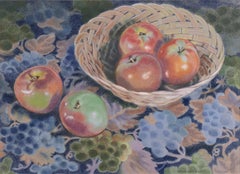
Basket of Apples , California League of Woman Artists, Sacramento, Boise Museum
Located in Santa Cruz, CA
Signed lower right, 'Maria Winkler' (American, born 1946) and dated 1991. Professor Emeritus of the Art Department at California State University, Sacramento, Maria Winkler earned her MFA in painting...
Category

1990s Still-life Drawings and Watercolors

Materials

Pastel, Laid Paper

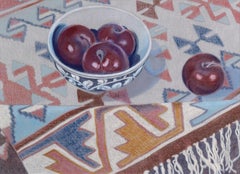
Still Life, Plums with a Navaho Blanket , California League of Woman Artists
Located in Santa Cruz, CA
Signed lower right, 'Maria Winkler' (American, 20th century) and dated 1991. Professor Emeritus of the Art Department at California State University, Sacramento, Maria Winkler earne...
Category

1990s Still-life Drawings and Watercolors

Materials

Pastel, Laid Paper

Still Thinking About These?

All Recently Viewed