Edo Drawings and Watercolor Paintings

to
10
3
14
6
3
Overall Width
to
Overall Height
to
5
1
20
1
7,379
7,211
5,002
3,105
924
641
536
414
404
317
249
211
61
48
23
3
22
22
10
9
7
7
6
3
2
2
2
2
1
1
1
1
1
1
1
1
25
20
18
18
17
1
8
22
4
Style: Edo
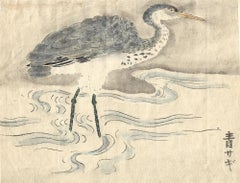
A heron fishing – Edo School, 19th century
Located in Middletown, NY
Ink and watercolor on fibrous Japon paper laid down to period cream laid paper, 6 x 7 1/2 inches (155 x 190 mm). Minor toning and some insect damage on the mount, painting itself rem...
Category

Mid-19th Century Edo Drawings and Watercolor Paintings

Materials

Ink, Watercolor, Handmade Paper, Laid Paper
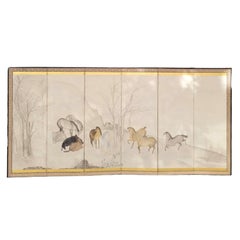
Hasegawa School Edo Folding Screen with Horses Byobu Horses Japan
Located in Valladolid, ES
One of a kind and incredible six-panel Hasegawa school folding screen, featuring horses, is an exceptional piece. "Scene with Wild Horses" (Kōgen Bashu-zu in Japanese) is in the styl...
Category

1850s Edo Drawings and Watercolor Paintings

Materials

Paper

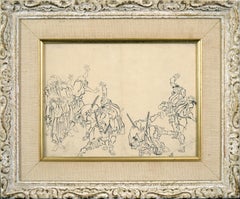
Laughing Monks and Soldiers - Mid 19th Century Japanese Ink Drawing
Located in Soquel, CA
Laughing Monks and Soldiers - Mid 19th Century Japanese Ink Drawing Lively ink drawing showing monks and soldiers laughing, jumping, and dancing. The monks stand in a group to the l...
Category

1850s Edo Drawings and Watercolor Paintings

Materials

India Ink, Laid Paper

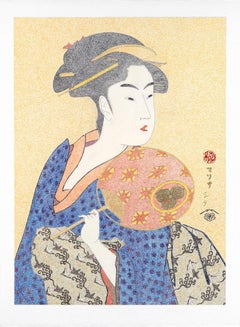
Japanese Art Ukiyo-e Figurative Painting, Takashimayaoisha, Edo period
Located in Segovia, ES
Beijing-ga Series XXX (nº 30) Title: “Takashimaohisa” Ohisa, along with Okita and Tomimoto Toyohina, were the three most famous beauties of the time. The first two were waitresses...
Category

2010s Edo Drawings and Watercolor Paintings

Materials

Paper, Crayon, Oil Crayon, Graphite

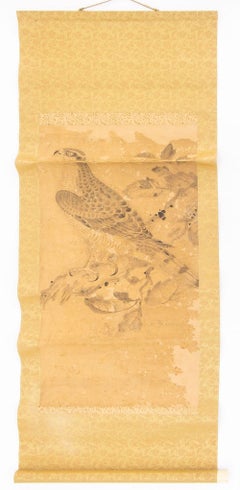
Japanese School Perched Hawk Scroll Painting
Located in Astoria, NY
Japanese School, Landscape Scene of a Perched Hawk, Ink on Paper, 19th century, mounted on a silk scroll, remnants of chop seal mark lower right, together with wooden box with callig...
Category

19th Century Edo Drawings and Watercolor Paintings

Materials

Silk, Paper, Ink

Japanese Art Ukiyo-e Figurative Painting, Bijin Ôkubi, Edo Period
Located in Segovia, ES
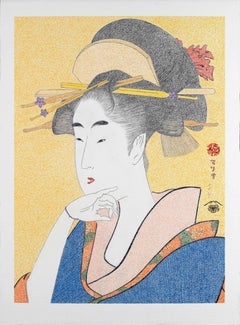
Bijin-ga series XXIX (Nº 29) Title: Bijin Ôkubi Upper torso portrait of a Japanese beauty, depicted with a graceful hand gesture and an ornate headdress. Her soft round features contrast with the colourful sharp angles of the collars of her kimono. Her elongated oval face, straight nose and red butterfly lips are typical of the prototype of a beautiful woman, Bijin-ga. Her upper torso and face occupying the central section of the picture show a composition type that became known in time as Large-head pictures, or Okubi-e; compositions with which Utamaro became a model for generations of woodblock artists. This image is part of the Bijin-ga series (“Pretty women”) drawn by Mario BGil, based in the Kitigawa Utamaro woodblock print...
Category

2010s Edo Drawings and Watercolor Paintings

Materials

Paper, Crayon, Oil Crayon, Graphite

Japanese Art Ukiyo-e Figurative painting, Reflective Love, Edo period
Located in Segovia, ES
Bijing-Ga Series XII (Nº 12) Title: Reflective Love. Lovely portrait of a beauty looking over her shoulder. In Reflective Love (from the Utamaro...
Category

2010s Edo Drawings and Watercolor Paintings

Materials

Paper, Crayon, Oil Crayon, Graphite

Japanese Art Ukiyo-e Figurative Painting, Hairdresser, Edo period
Located in Segovia, ES
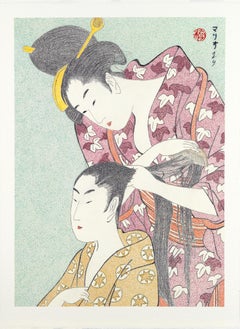
Bijin-ga series II (nº 02) Title: “Hairdresser” The interest in this picture is focused on the hairstyles of both women, a hairdresser leaning forward with a bow of intense black color, arranging his client's especially long hair. The ways of gripping both the hair and the comb, making it slide through the ocher-scented kimono of the customer, decorated with sea stars, stand out. Highlighting with great detail the drawing of loose hair on the obi of white lines on a red background, and the kosode of plum color. This image is part of the Bijin-ga Series (“Pretty women”) drawn by Mario BGil, based in the Kitigawa Utamaro woodblock print "Hairdresser" (1798-1799), 39,8 x 26,8 cm. Museum of Fine Arts. Boston-USA. Utamaro drawn a series of twelve prints whose themes were related to the manual works of women, and this "Hairdresser" is one of them. Mario BGil reproduces the seal of the censor (Kiwame) and writes his own signature, Mario BGil, in Japanese, with the date 14 (2014). The mesaurements of the drawing are 76 x 56 cm. (29,92 x 22,05 in.), with a painted surface of 67 x 49,5 cm. With his work on the bijing-ga series, Mario BGil wanted to embellish, give brilliance and volume to the images presented by japanese artist Kitigawa Utamaro in those beautiful engravings, ennobled with the patina of time, which have served as inspiration. The result obtained is almost life-size portraits, endowed with strong chromaticism and valuable contrasts, all enhanced, in turn, with the volume provided by the weight and rigidity of the paper, and its thick texture (Fabriano Artistico “grana grosso”, 640g/m2; the thickness and hardness of the paper makes it necessary to transport it without rolling). In this way, Mario BGil pays tribute to his admired artist and offers us a new and enriched vision of this popular facet of oriental art from the 18th and 19th centuries. ABOUT THE ARTIST Mario BGil is a self-taught artist who for years has combined his creative activity with his work in the business world, away from commercial art galleries. Man of very diverse interests and great artistic sensitivity, studied Art History and in 2012, a deep interest in oriental art was awakened in him so that he began to study the great masters of Japanese Ukiyo-e prints, who had such an influence on the European avant-garde of the late 19th century. The discovery of Kitagawa Utamaro (1753-1806), a key figure in the metropolitan culture of Edo (now Tokyo), and a point of reference in the history of Japanese engraving...
Category

2010s Edo Drawings and Watercolor Paintings

Materials

Paper, Crayon, Oil Crayon, Graphite

Couple Embracing in Street at Night
Located in Fairlawn, OH
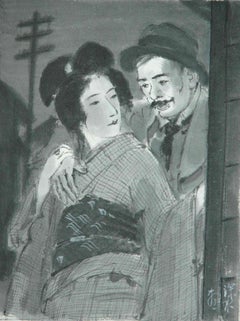
Sumi ink drawing, c. 1928 Signed in the lower right corner (see detail) Original illustration for the novel "Gunmo" (Hoi Polloi or Blind and Foolish Masses), volume 4 in the "Complete Works of Burafu Nakamura." Nakamura, a popular Japanese novelist and playwright, lived from 1886-1949. Framed in acid free rag matting, OP3 Acrylic and a rounded corner metal leaf frame Sight size: 6-3/4 x 5-3/8" Frame size: 14-5/8 x 12-5/8 x 3/4" Shinsui Itō...
Category

1920s Edo Drawings and Watercolor Paintings

Materials

Sumi Ink

Japanese Art Ukiyo-e Figurative Painting, Karagoto of the Chojiya, Edo period
Located in Segovia, ES
Bijin-ga Series I (Nº1) Title: Karagoto of The Chojiya Head and bust portrait of the beautiful courtesan Karagoto, of the Chojiya House, who appears looking to her left while drying her right ear with the sleeve of her yukata (a fine summer garment, normally made of cotton that was normally used after bathing). The wide sleeve falls from her ear covering her right breast and leaving the left one uncovered. This image is part of the bijin-ga series (“Pretty women”) drawn by Mario BGil, based in the Kitigawa Utamaro woodblock print...
Category

2010s Edo Drawings and Watercolor Paintings

Materials

Paper, Crayon, Oil Crayon, Graphite

Japanese Art Ukiyo-e Figurative painting, Love for a farmer´s wife, Edo period
Located in Segovia, ES
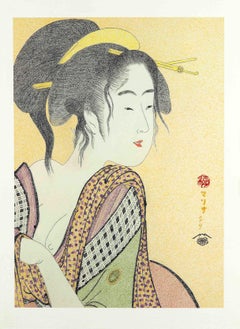
Bijin-ga Series XVII (nº 17) Title: Love for a farmer´s wife Sensual portrait of a young and beautiful farmer´s wife. Her cheerful and careless gesture, showing her chest between the open folds of the neckline of his humble dress; the strands of hair falling on her temples, and her smiling gesture denote the state of happiness enjoying love, in a well-deserved break from her hard work. This image is part of the bijin-ga series (“Pretty women”) drawn by Mario BGil, based in the Kitigawa Utamaro woodblock...
Category

2010s Edo Drawings and Watercolor Paintings

Materials

Paper, Crayon, Oil Crayon, Graphite

Japanese Art Ukiyo-e Figurative Painting, Snow Moon and Flowers, Edo period
Located in Segovia, ES
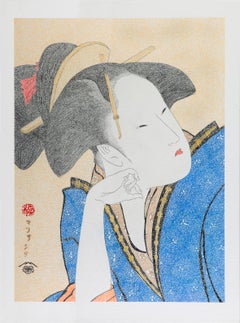
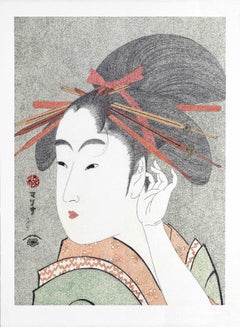
SNOW, MOON AND FLOWERS OF THE ÔGIYA TEA HOUSE Head and shoulders portrait of a beautiful courtesan of the Ôgiya Tea House. With an attentive gesture, she brings her left hand behind her ear with delicate wrist and finger motion. This image is part of the bijin-ga series, “Pretty women”, drawn by Mario BGil, based in the Kitigawa Utamaro woodblock print “Snow, moon and flowers from the Ôgiya Tea House” (1793-1795). The tittle is a Japanese topic in art and design originating from a poem by Tang dynasty poet Bai Juyi. It became popular in the late Edo used to describe serene beauty. The artist reproduces the seal of the censor (Kiwame) and from the original publisher (Tsutaya, climbing leaf)), as it appears in the woodblock print used as a model; between the two, the signature of Mario BGil written in Japanese, with the date 14 (2014). The mesaurements of the drawing are 76 x 56 cm., with a painted surface of 67 x 49,5 cm. (the woodblock print is 36,2 x 25,9 cm.). With his work on the bijing-ga series, Mario BGil wanted to embellish, give brilliance and volume to the images presented by japanese artist Kitigawa Utamaro in those beautiful engravings, ennobled with the patina of time, which have served as inspiration. The result obtained is almost life-size portraits, endowed with strong chromaticism and valuable contrasts, all enhanced, in turn, with the volume provided by the weight and rigidity of the paper, and its thick texture (Fabriano Artistico “grana grosso”, 640g/m2; the thickness and hardness of the paper makes it necessary to transport it without rolling). In this way, Mario BGil pays tribute to his admired artist and offers us a new and enriched vision of this popular facet of oriental art from the 18th and 19th centuries. ABOUT THE ARTIST Mario BGil is a self-taught artist who for years has combined his creative activity with his work in the family business, away from commercial art galleries. In 2012, a deep interest in oriental art was awakened in him and he began to study the great masters of Japanese Ukiyo-e prints, who had such an influence on the European avant-garde of the late XIX century. The discovery of Kitagawa Utamaro (1753-1806), a key figure in the metropolitan culture of Edo (now Tokyo), and a point of reference in the history of Japanese engraving...
Category

2010s Edo Drawings and Watercolor Paintings

Materials

Paper, Carbon Pencil, Color Pencil

Japanese Art Ukiyo-e Figurative Painting, Hitomoto of the Daimonjiya, Edo period
Located in Segovia, ES
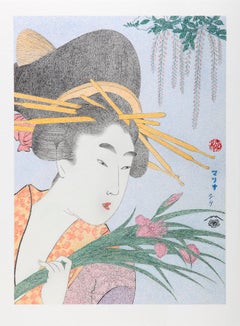
“Hitomoto of The Daimonjiya in Kyô-Machi Itchôme” Hitomoto holds a bouquet of flowers looking to her left, with a surprised face, and with her mouth aj...
Category

2010s Edo Drawings and Watercolor Paintings

Materials

Paper, Crayon, Oil Crayon, Graphite

Japanese Art Ukiyo-e Figurative painting, Courtesan Hanaôgi, Edo period
Located in Segovia, ES
Bijin-ga Series XXVI (Nº 26) Title: Hanaôgi of the Ôgiya House Hanaôgi, one of the most famous courtesans of the Edo period working in the Ôgiya House, an exclusive brothel in the Yoshiwara appears beautifully dressed holding a writing brush on her right hand and a decorated piece of paper in the shape of a “cartuche”, maybe to write a message of love for a client. This image is part of the bijin-ga series (“Pretty women”) drawn by Mario BGil, based in the Kitigawa Utamaro woodblock print...
Category

2010s Edo Drawings and Watercolor Paintings

Materials

Paper, Crayon, Oil Crayon, Graphite

Japanese Art Ukiyo-e Figurative Painting, Miyahito of The Ôgiya, Edo Period
Located in Segovia, ES
Bijin-ga Series XXXIV (Nº 34) Title: Miyahito of the Ôgiya Three quarter portrait of the elegant courtesan Miyahito of the Ôgiya House. This beautifully dressed japanese woman wears a solid grey outer robe, which contrasts with her soft rose kimono and the colored obi with an intricate geometric pattern. Her hair is arranged high atop her head, adorned with several hairpins. A classic Utamaro beauty print recreated with extraordinary taste and subtlety by Mario BGil in this delicate drawing. This image is part of the bijin-ga series (“Pretty women”) drawn by Mario BGil, based in the Kitigawa Utamaro woodblock print...
Category

2010s Edo Drawings and Watercolor Paintings

Materials

Paper, Crayon, Oil Crayon, Graphite

Japanese Art Ukiyo-e Figurative Painting, Woman reading a letter, Edo period
Located in Segovia, ES
WOMAN READING A LETTER Three-quarter portrait of an Edo period Japanese courtesan caught reading a letter. Her clothing is simple: an inner pink kimono peeks out from the collar and short sleeves of the outer gray kimono with black trim. The note of color is provided by the obi tied at the waist at the front, the ribbon around the bow and the light turquoise background. This image is part of the bijin-ga series (“Pretty women”) drawn by Mario BGil, based in the Kitigawa Utamaro woodblock print “Woman reding a letter” (1792-17993). The artist reproduces also the seal of the censor (Kiwame) and the original publisher's seal (Tsutaya, climbing leaf), as it appears in the woodblock print used as a model; between the two, the signature of Mario BGil written in Japanese, with the date 14 (2014). The measurements of the woodblock print are 37,2 x 24,5 cm., the drawing made by Mario BGil is 76 x 56 cm. / 29,92 x 22.05 in. With his work on the bijing-ga series, Mario BGil wanted to embellish, give brilliance and volume to the images presented by japanese artist Kitigawa Utamaro in those beautiful engravings, ennobled with the patina of time, which have served as inspiration. The result obtained is almost life-size portraits, endowed with strong chromaticism and valuable contrasts, all enhanced, in turn, with the volume provided by the weight and rigidity of the paper, and its thick texture (Fabriano Artistico “grana grosso”, 640g/m2); the thickness and hardness of the paper makes it necessary to transport it without rolling). In this way, Mario BGil pays tribute to his admired artist and offers us a new and enriched vision of this popular facet of oriental art from the 18th and 19th centuries. ABOUT THE ARTIST Mario BGil is a self-taught artist who for years has combined his creative activity with his work in the family business, away from commercial art galleries. In 2012, a deep interest in oriental art was awakened in him and he began to study the great masters of Japanese Ukiyo-e prints, who had such an influence on the European avant-garde of the late s...
Category

21st Century and Contemporary Edo Drawings and Watercolor Paintings

Materials

Paper, Pencil, Color Pencil

Japanese Art Ukiyo-e Figurative Painting, Tatsumi Roko, Edo Period
Located in Segovia, ES
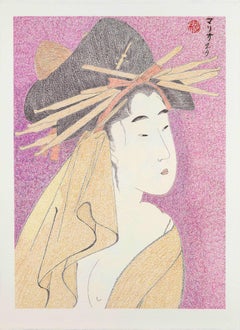
Bijin-ga series XXVIII (Nº 28) Title: Tatsumi Roko Portrait of Tatsumi Roko, a geisha of the pleasure quarters in the Edo period. The image belongs to the series Renowed Beauties Likened to the Six Inmortal Poets. The popular top-class geishas of the day , known as “oiran”, were depicted in this type of print. In ukiyo-e woodblock prints, this close-up portrait view of the upper body is known as an okubi-e (bust portrait). This image is part of the bijin-ga series (“Pretty women”) drawn by Mario BGil, based in the Kitigawa Utamaro woodblock print...
Category

2010s Edo Drawings and Watercolor Paintings

Materials

Paper, Crayon, Oil Crayon, Graphite

Japanese Art Figurative Painting, Love for a street-walker, Edo period
Located in Segovia, ES
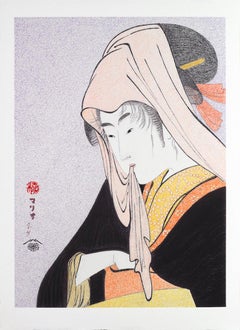
LOVE FOR A STREET-WALKER Crayon, graphite, pencil on paper. Measurements: (H) 76 x (W) 56 cm. Attractive portrait of an Edo prostitute hurrying through the streets. She wears a black kimono over layers of colored kimono, tucking her hand into the "obi" at her waist. A white scarf is draped over her head, the edge caught between her teeth, and loose wisps of hair framed her face. There is an impressive contrast between the black kimono and the yellow-orange of collars, sleeves and "obi", balancing the composition the pastel pink of the scarf that covers her head. This image is part of the "bijin-ga" series, Pretty Women, drawn by Mario BGil, based in the Kitigawa Utamaro woodblock print "Love for a street-walker" (1795), 37,2 x 24,6 cm. The British Musem. London, UK. The artist reproduces the seal of the censor (Kiwame) and from the original publisher ("Tsutaya", climbing leaf)), between the two, the signature of Mario BGil written in Japanese, with the date 14 (2014). The mesaurements of the drawing are 76 x 56 cm. (29,92 x 22,05 in.), with a painted surface of 67 x 49,5 cm. With his work on the "bijing-ga" series, Mario BGil wanted to embellish, give brilliance and volume to the images presented by japanese artist Kitigawa Utamaro in those beautiful engravings, ennobled with the patina of time, which have served as inspiration. The result obtained is almost life-size portraits, endowed with strong chromaticism and valuable contrasts, all enhanced, in turn, with the volume provided by the weight and rigidity of the paper, and its thick texture (Fabriano Artistico “grana grosso”, 640g/m2; the thickness and hardness of the paper makes it necessary to transport it without rolling). In this way, Mario BGil pays tribute to his admired artist and offers us a new and enriched vision of this popular facet of oriental art from the 18th and 19th centuries. ABOUT THE ARTIST Mario BGil is a self-taught artist who for years has combined his creative activity with his work in the family business, away from commercial art galleries. In 2012, a deep interest in oriental art was awakened in him and he began to study the great masters of Japanese Ukiyo-e prints, who had such an influence on the European avant-garde of the late 19th century. The discovery of Kitagawa Utamaro (1753-1806), a key figure in the metropolitan culture of Edo (now Tokyo), and a point of reference in the history of Japanese engraving...
Category

2010s Edo Drawings and Watercolor Paintings

Materials

Paper, Crayon, Pencil, Graphite

Japanese Art Ukiyo-e Figurative Painting, Tomimoto Toyohina, Edo period
Located in Segovia, ES
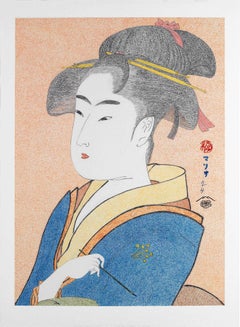
Bijing-Ga series XXVII (Nº 27) Title: Tomomoto Toyohina Tomimoto Toyohina was a much sought-after geisha (entertainer) who performed narrative ballads accompanied by the shamisen. She was one of several non-prostitute beauties, including teahouse waitresses, whom Utamaro depicted repeatedly in the early to mid 1790s. She appears here with a brush in hand, dressed and combed with simple elegance. This composition is from a six-print series comprising half-length portraits of famous beauties (Famous beauties of Edo). Utamaro elevated Tomimoto Toyohina to the status of one of the three most renowned beauties of her age (together with Okita and Ohisa). She was from a prominent family of musicians that provided entertainment in the Yoshiwara. Toyohina’s appeal undoubtedly was as much due to her appearance as to her skills in singing, and Utamaro’s celebration of her would have further elevated the status of an already well-known lineage. This image is part of the bijin-ga series (“Pretty women”) drawn by Mario BGil, based in the Kitigawa Utamaro woodblock print...
Category

2010s Edo Drawings and Watercolor Paintings

Materials

Paper, Crayon, Oil Crayon, Graphite

Japanese Art Ukiyo-e Figurative Painting, The fickle type, Edo period
Located in Segovia, ES
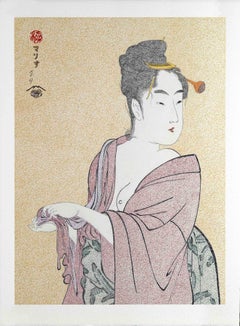
Bijing-ga Series XXII (Nº 22) Title: THE FLICKLE TYPE Upper half of the body of a woman in yukata (summer kymono) with part of her chest bare. Depicted just after a bath, she is turning her head and drying her hands with the towel hang on her shoulder. Her just-washed hair is tied around an ornate hairpin, the hair style called bai-mage (spiral-shell chignon). The unkempt hair of the nape and the movement of the hands one on the other are clear examples of Utamaro's mastery, who had an exceptionally observant eye for women. The Fickle ( or Fancy-free) Type is flirting with more than one member of the opposite sex This image is part of the bijin-ga series (“Pretty women”) drawn by Mario BGil, based in the Kitigawa Utamaro woodblock print...
Category

2010s Edo Drawings and Watercolor Paintings

Materials

Paper, Crayon, Oil Crayon, Graphite

Japanese Art Ukiyo-e Figurative Painting, Somenosuke of the Matsubaya Edo period
Located in Segovia, ES
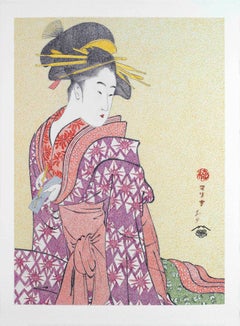
Bijin-ga series XXV (Nº 25) Title: SOMENOSUKE OF THE MATSUBAYA Somenosuke of house Matsubaya, known as a youthful courtesan who quickly rose through the ranks of popularity is shown producing a concealed letter, glancing about to confirm she is indeed alone. The highlights of the drawing are the fine carving of the courtesan´s hair-line and the fine dress; an elegant kimono with vivid colors and intricate dessing. This image is part of the bijin-ga series (“Pretty women”) drawn by Mario BGil, based in the Kitigawa Utamaro woodblock print...
Category

2010s Edo Drawings and Watercolor Paintings

Materials

Paper, Crayon, Oil Crayon, Graphite

Japanese Art Ikiyo-e Figurative Painting, Obvious Love Arawaruru Koi, Edo period
Located in Segovia, ES
BIJIN-GA SERIES XVIII (Nº 18) Title: Obvious Love (Arawaruru Koi) This image is part of the bijin-ga series (“Pretty women”) drawn by Mario BGil, based in the Kitigawa Utamaro woodblock print Obvious Love (Arawaruru Koi) (1793-94); 38,8 x 26,2 cm.. Art Institute Chicago, USA. A sensual woman seems to care little that her kimono is open, exposing a breast. Her hair is in disarray , the hairpin at the front about to fall and she holds one of the hairpins in her left hand. She appears to be looking down outside the frame of the picture, perhaps in mid-conversation. The term “arawaruru” refers to a love so wholehearted that it expresses itself in the lover´s face and mannerisms. In the 1780's and 90's the publisher Tsutaya Juzaburo and the designer Kitagawa Utamaro worked together on the production of many woodblock prints, most of them of the bijin-ga type. One of their most popular productions was a set of images that purported to depict psychological classifications of women - 'fickle', 'interesting', etc.. Perhaps in response to this success, they then came up with something similar - a set of prints...
Category

2010s Edo Drawings and Watercolor Paintings

Materials

Paper, Graphite, Crayon, Oil Crayon

Japanese Art Ukiyo-e Figurative Painting, Hanamurasaki of the Tamaya, Edo period
Located in Segovia, ES
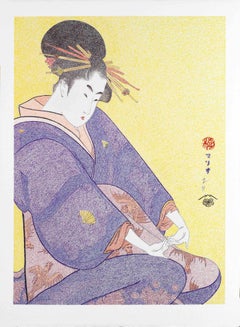
Portrait of the top-class courtesan Hanamurasaki elegantly combed, and dressed in a simple formal kimono and obi, adorned with symbols of her okiya. She is sitting on her knees in a graceful pose, stretching her arms forward and crossing her fingers with a delicate movement of the wrists. This image is part of the “bijin-ga series” (Pretty women) drawn by Mario BGil, based in the Kitigawa Utamaro woodblock print “Hanamurasaky of the Tamaya”, (from the series: “Array of supreme beauties of the Present Day”, 1794), 36,2 x 25 cm. Museum of Fine Arts. Boston, USA. The artist reproduces the seal of the censor (Kiwame) and from the original publisher ("Tsutaya", climbing leaf)), between the two, the signature of Mario BGil written in Japanese, with the date 14 (2014). The mesaurements of the drawing are 76 x 56 cm. (29,92 x 22,05 in.), with a painted surface of 67 x 49,5 cm. With his work on the "bijing-ga series", Mario BGil wanted to embellish, give brilliance and volume to the images presented by japanese artist Kitigawa Utamaro in those beautiful engravings, ennobled with the patina of time, which have served as inspiration. The result obtained is almost life-size portraits, endowed with strong chromaticism and valuable contrasts, all enhanced, in turn, with the volume provided by the weight and rigidity of the paper, and its thick texture (Fabriano Artistico “grana grosso”, 640g/m2; the thickness and hardness of the paper makes it necessary to transport it without rolling). In this way, Mario BGil pays tribute to his admired artist and offers us a new and enriched vision of this popular facet of oriental art from the 18th and 19th centuries. ABOUT THE ARTIST Mario BGil is a self-taught artist who for years has combined his creative activity with his work in the business world, away from commercial art galleries. Man of very diverse interests and great artistic sensitivity, studied Art History and in 2012, a deep interest in oriental art was awakened in him so that he began to study the great masters of Japanese Ukiyo-e prints, who had such an influence on the European avant-garde of the late 19th century. The discovery of Kitagawa Utamaro (1753-1806), a key figure in the metropolitan culture of Edo (now Tokyo), and a point of reference in the history of Japanese engraving...
Category

2010s Edo Drawings and Watercolor Paintings

Materials

Paper, Crayon, Oil Crayon, Graphite

Japanese Art Ukiyo-e Figurative Painting, Hanazuma of the Hyôgaya House
Located in Segovia, ES
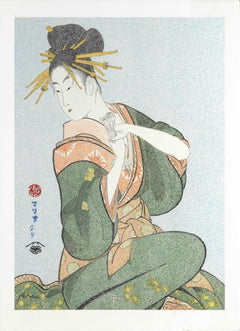
Hanazuma, a beautiful high-class courtesan of the Hyôgaya House, appears sitting sideways on her legs, twisting a letter between her hands at the height of her heart. It is perhaps its message that makes her throw her head back with a beautiful turn of her entire body allowing us to contemplate the frontal details of her kimono and her obi, in green and orange, with beautiful ornaments. This image is part of the “bijin-ga” series (Pretty women) drawn by Mario BGil, based in the Kitigawa Utamaro woodblock print “Hanazuma of the Hyôgaya House”, (1794), 38,8 x 25,9 cm. The Japan Ukiyo-e Museum. Matsumoto, Japan. The artist reproduces the seal of the censor (Kiwame) and from the original publisher (“Tsutaya”, climbing leaf)), between the two, the signature of Mario BGil written in Japanese, with the date 14 (2014). The mesaurements of the drawing are 76 x 56 cm. (29,92 x 22,05 in.), with a painted surface of 67 x 49,5 cm. With his work on the bijing-ga series, Mario BGil wanted to embellish, give brilliance and volume to the images presented by japanese artist Kitigawa Utamaro in those beautiful engravings, ennobled with the patina of time, which have served as inspiration. The result obtained is almost life-size portraits, endowed with strong chromaticism and valuable contrasts, all enhanced, in turn, with the volume provided by the weight and rigidity of the paper, and its thick texture (Fabriano Artistico “grana grosso”, 640g/m2; the thickness and hardness of the paper makes it necessary to transport it without rolling). In this way, Mario BGil pays tribute to his admired artist and offers us a new and enriched vision of this popular facet of oriental art from the 18th and 19th centuries. ABOUT THE ARTIST Mario BGil is a self-taught artist who for years has combined his creative activity with his work in the business world, away from commercial art galleries. Man of very diverse interests and great artistic sensitivity, studied Art History and in 2012, a deep interest in oriental art was awakened in him so that he began to study the great masters of Japanese Ukiyo-e prints, who had such an influence on the European avant-garde of the late 19th century. The discovery of Kitagawa Utamaro (1753-1806), a key figure in the metropolitan culture of Edo (now Tokyo), and a point of reference in the history of Japanese engraving...
Category

2010s Edo Drawings and Watercolor Paintings

Materials

Paper, Crayon, Oil Crayon, Graphite

Japanese Art Ukiyo-e Figurative Painting, The courtese Hinakoto, Edo period
Located in Segovia, ES
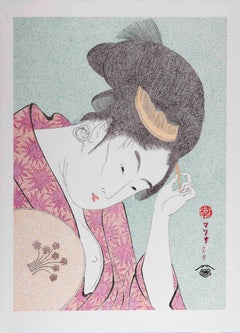
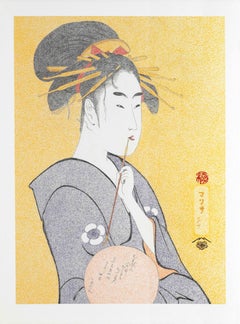
Bijin-ga series XXI (Nº 21) Title: The courtese Hinakoto of the Hyôgorô House of Edo The courtesan Hinakoto is depicted by smoking tobacco. She takes the pipe delicately in her left hand and, in her right hand, she seems to be holding a “uchiwa” (rigid hand fan) that comes out from the bottom of the drawing, decorated with written calligraphy. Some strands of hair that fall on her temple and her scant clothing show that the painter has surprised her in a relaxed moment in which she does not lose her elegance and slenderness. This image is part of the bijin-ga series (“Pretty women”) drawn by Mario BGil, based in the Kitigawa Utamaro woodblock print...
Category

2010s Edo Drawings and Watercolor Paintings

Materials

Paper, Crayon, Oil Crayon, Graphite

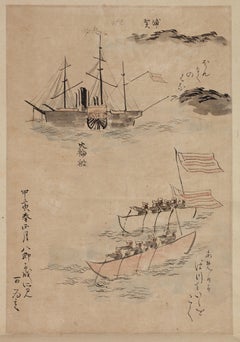
Scroll painting of the American ship commanded by Commodore Matthew Perry
Located in Amsterdam, NL
Attributed to Ukita Ikkei (1795-1859) Hanging scroll painting of the American ship commanded by Commodore Matthew Perry in Uraga Bay, annotate...
Category

Mid-19th Century Edo Drawings and Watercolor Paintings

Materials

Paper, Ink

Related Items
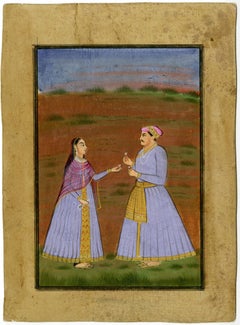
Mughal School, 18th Century Emperor Jahangir with Empress Nur Jahan
Located in Middletown, NY
Emperor Jahangir and Empress Nur Jahan exchanging lotus blossoms; a symbol of beauty, purity, honesty, rebirth, self-regeneration, and enlightenment....
Category

18th Century Edo Drawings and Watercolor Paintings

Materials

Gold

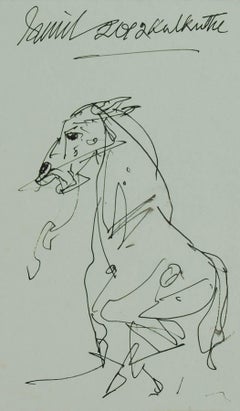
Horse, Drawing, Ink on Paper, Black, Grey by Indian Artist Sunil Das "In Stock"
Located in Kolkata, West Bengal
Sunil Das - Horse - 8 x 5 inches (unframed size) Ink on Paper ( Unframed & Delivered ) Sunil Das was one of India's most important postmodernist painters and rose to prominence thro...
Category

2010s Edo Drawings and Watercolor Paintings

Materials

Paper, Ink, Pen

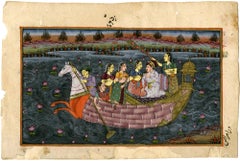
Mughal School, 18th century Emperor Jangahir on a pleasure boat with his harem a
Located in Middletown, NY
Emperor Jahangir depicted with his harem attendees aboard a pleasure cruise, the water filled with lotus blossoms; symbols of paradise itself. Circa 1750. Gouache and ink with gold ...
Category

18th Century Edo Drawings and Watercolor Paintings

Materials

Gold

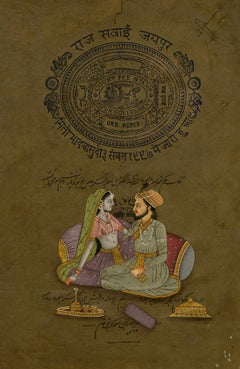
Shah Jahan taking tea with a concubine. Rajasthani School, 19th century
Located in Middletown, NY
Ink and gouache with gold heightening on brown laid paper with a Jaipur Court Fee tax stamp in black ink, 13 3/8 x 8 3/4 inches (340 x 222 mm). Toning, handling creases and minor sca...
Category

19th Century Edo Drawings and Watercolor Paintings

Materials

Gold

Mughal School, 18th century Emperor Jahangir taking tea in his harem
Located in Middletown, NY
An illuminated page from a book likely in reference to palace life during Emperor Jahangir's reign over the Mughal Empire. circa 1750. Gouache and ink with heightening in gold on li...
Category

18th Century Edo Drawings and Watercolor Paintings

Materials

Gold

Mughal School, 17th century – Emperor Jahangir reclining in his harem
Located in Middletown, NY
An illuminated page from a book likely in reference to palace life during Emperor Jahangir's reign over the Mughal Empire. Circa 1690. Gouache and ink with gold heightening on light...
Category

18th Century Edo Drawings and Watercolor Paintings

Materials

Gold

Mughal School, 18th century Emperor Jahangir with Empress Nur Jahan concubine
Located in Middletown, NY
An illuminated page from a book likely in reference to palace life during Emperor Jahangir's reign over the Mughal Empire. circa 1750. Gouache and ink with heightening in gold on li...
Category

17th Century Edo Drawings and Watercolor Paintings

Materials

Gold

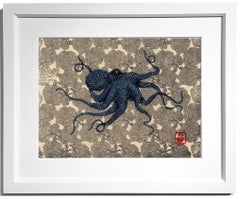
Silver Lining: Blue Hue - Gyotaku Style Sumi Ink Octopus Painting, Framed
Located in Chicago, IL
A small octopus is inked in the Japanese style of Gyo-Taku print making. Using sumi ink to "print" the octopus, the artist then embellishes it with colored pencil to convey an extra...
Category

21st Century and Contemporary Edo Drawings and Watercolor Paintings

Materials

Sumi Ink, Watercolor, Mulberry Paper, Color Pencil
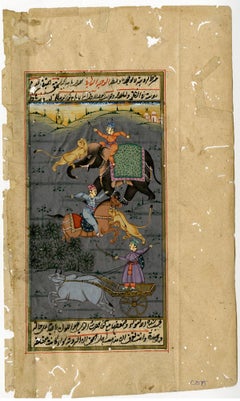
Mughal School, 17th century Tiger Hunt near the Jahangir Maha, Agra
Located in Middletown, NY
An illuminated page from a book likely in reference to palace life during Emperor Jahangir's reign over the Mughal Empire. c 1690. Gouache and ink with heightening in gold on light ...
Category

17th Century Edo Drawings and Watercolor Paintings

Materials

Gold

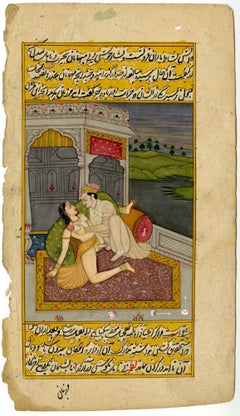
Mughal School, 18th century – Emperor Jahangir in his harem in flagrante delicto
Located in Middletown, NY
An illuminated page from a book likely in reference to palace life during Emperor Jahangir's reign over the Mughal Empire. Circa 1750. Gouache and ink with gold heightening on cre...
Category

18th Century Edo Drawings and Watercolor Paintings

Materials

Gold

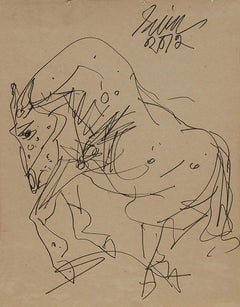
Horse, Drawing, Ink on Paper, Brown, Black by Modern Indian Artist "In Stock"
Located in Kolkata, West Bengal
Sunil Das - Horse - 9.5 x 7 inches (unframed size) Ink on Paper Inclusive of shipment in ready to hang form. Sunil Das was one of India's most important postmodernist painters and r...
Category

2010s Edo Drawings and Watercolor Paintings

Materials

Paper, Ink, Pen

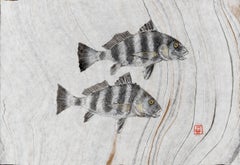
Two Black Drums - Japanese Style Gyotaku Painting on Mulberry Paper of Two Fish
Located in Chicago, IL
Artist Jeff Conroy is an avid fisherman. He is also an accomplished artist. He brought these two disciplines together by learning the art of Gyotaku Painting. After having caught ...
Category

21st Century and Contemporary Edo Drawings and Watercolor Paintings

Materials

Sumi Ink, Watercolor, Mulberry Paper

Previously Available Items
Japanese Hanging Scroll of the Goddess of Mercy, c. 1800
Located in Chicago, IL
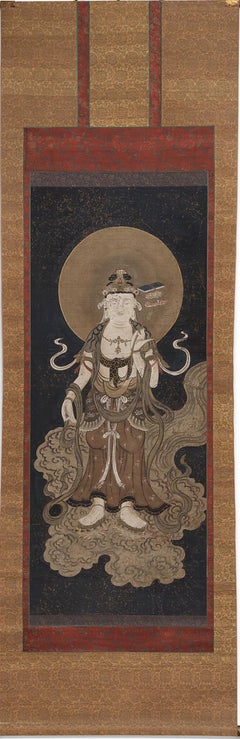
This exquisite hanging scroll painting from the late 18th century depicts the sacred form of the bodhisattva Guanyin, known in Japanese Buddhism as Shō Kannon, or Guze Kannon. Described as the "Buddha of Infinite Compassion" or the “Goddess of Mercy,” Kannon is the embodiment of empathy and grace and makes herself available to all who call upon her with all their mind. Typically depicted as a woman in Chinese and Japanese art, Kannon can take many forms and is often invoked to encourage fertility or alleviate suffering. This painted scroll depicts the goddess Kannon standing upon a swirling cloud with lotus flowers beneath her feet. Backed by a moon-like halo, she exudes calm and elegance, dressed in flowing robes and intricate jewelry as she gazes downwards at the viewer. Her right hand is held towards the ground in vitarka mudra, a gesture of wisdom and teaching. In her left hand she holds a lotus flower which in turn supports the book of knowledge...
Category

Late 18th Century Edo Drawings and Watercolor Paintings

Materials

Copper

Japanese Geisha or Miko in Kimono with Fan Painting on Silk
Located in Houston, TX
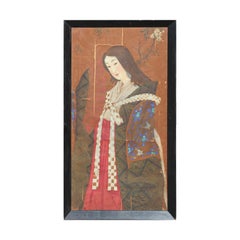
Beautiful portrait of a Japanese woman dressed in a white shirt and bright red pants (hakama). She is dressed as a miko, or shrine maiden, a type of priest who works at a Japanese Shinto shrine...
Category

20th Century Edo Drawings and Watercolor Paintings

Materials

Silk

"Green Haron" Traditional Japanese Bird by Seikwa
Located in Houston, TX
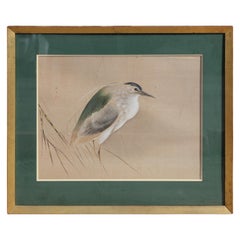
Traditional Japanese haron painted in a naturalistic style. The piece is framed in a gold frame with a green matte. The piece has a sticker on the...
Category

20th Century Edo Drawings and Watercolor Paintings

Materials

Watercolor

Akita Puppy with Bamboo.
Located in Storrs, CT
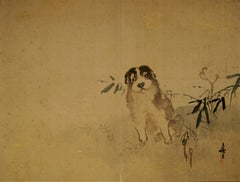
Maruyama School. Akita puppy with bamboo. c. 1900. Ink, watercolor, and gold on silk mounted on mulberry paper. The two panels form a table screen. Each panel 22 3/4 x 13 3/4 inches. Signed and sealed, lower right. Extensive scattered foxing, commensurate with age. Akita. Ink, watercolor and gold on silk mounted on mulberry paper. Two panels forming a table screen. Each panel 22 3/4 x 13 3/4 inches. Signed and sealed, lower right. The 2 sections of the table screen will be sent in a 24 x 20-inch folder, ready to be framed. Maruyama-Shijo school, which developed in Kyoto in the late eighteenth and early nineteenth centuries, owes its name to the school’s founders: Maruyama Okyo...
Category

Late 19th Century Edo Drawings and Watercolor Paintings

Materials

Gold

Akita Puppy with Bamboo.
H 22.75 in W 27.5 in D 0.5 in
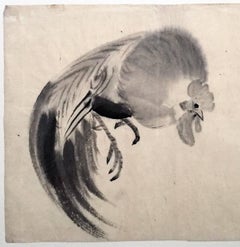
Kako Morita: Japanese Fighting Rooster
Located in Storrs, CT
Kako Morita: Japanese Fighting Rooster. c. 1889. Sumi ink and watercolor on mulberry paper. Rooster image: 8 7/8 x 7 1/2. Full sheet size: 9 3/4 x ...
Category

Late 19th Century Edo Drawings and Watercolor Paintings

Materials

Sumi Ink, Watercolor

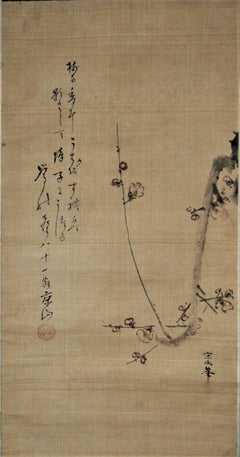
Plum Blossom on a Branch
By Iwase Kyosui
Located in Storrs, CT
Plum Blossoms. Ink and watercolor on silk, mounted as a scroll. 20 1/4 x 10 1/8. ( scroll 43 1/2 x 13 5/8. ) Signed. Kyosui f Sealed Hyakkaku. The artis...
Category

Mid-19th Century Edo Drawings and Watercolor Paintings

Materials

Sumi Ink, Watercolor

Tree Peonies
Located in Storrs, CT
Ink and watercolor on Japanese mulberry paper. Unsigned. Housed in a 16 x 20-inch archival mat suitable for framing. Tree peonies are commonly depicted in traditional Japanese art. ...
Category

Late 19th Century Edo Drawings and Watercolor Paintings

Materials

Sumi Ink, Watercolor

Tree Peonies
Tree Peonies
H 20 in W 16 in D 2 in
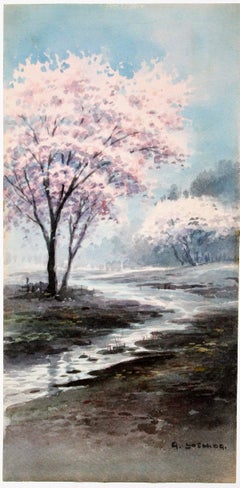
Cherry Blossoms in a Misty Landscape
By A. Yoshida
Located in Storrs, CT
Cherry Blossoms in a Misty Landscape. c. 1920. Watercolor on paper. 13 1/2 x 6 1/2 (image and sheet). Signed "A. Yoshida' lower right. Housed in a 20 ...
Category

1910s Edo Drawings and Watercolor Paintings

Materials

Watercolor

Edo drawings and watercolor paintings for sale on 1stDibs.

Find a wide variety of authentic Edo drawings and watercolor paintings available for sale on 1stDibs. Works in this style were very popular during the 21st Century and Contemporary, but contemporary artists have continued to produce works inspired by this movement. Many Pop art paintings were created by popular artists on 1stDibs, including and Ito Shinsui. Frequently made by artists working with Paper, and Pencil and other materials, all of these pieces for sale are unique and have attracted attention over the years. Not every interior allows for large Edo drawings and watercolor paintings, so small editions measuring 5.38 inches across are also available. Prices for drawings and watercolor paintings made by famous or emerging artists can differ depending on medium, time period and other attributes. On 1stDibs, the price for these items starts at $350 and tops out at $5,537, while the average work sells for $2,430.

Still Thinking About These?

All Recently Viewed