Art by Medium: Charcoal

to
851
1,099
867
758
467
736
Overall Width
to
Overall Height
to
8
116
1,515
2,289
37
41
59
165
71
101
175
107
70
71
4
1,157
659
599
160
85
82
46
45
37
37
22
11
8
3
2,462
1,108
331
2,001
1,293
1,059
888
765
383
377
338
335
261
187
107
90
75
67
65
60
42
39
32
3,928
184,748
97,287
78,598
77,692
191
101
78
76
54
884
864
1,819
1,434
Medium: Charcoal
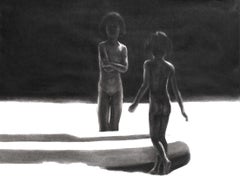
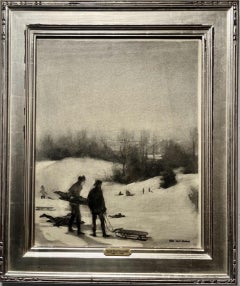
Sledders - Winter Snow Scene - Kids playing on Sleds, Charcoal drawing c 1950-60
By Alice Kent Stoddard
Located in Rancho Santa Fe, CA
Alice Kent Stoddard 1885-1976 Sledders (circa 1950-1960) Black chalk on card Image Dimensions: 19.75 x 16 inches (50.2 x 40.6 cm) Framed Dimensions: 26.5 x 22.3 inches Signed lower right: Alice Kent Stoddard Alice Kent Stoddard was born in Connecticut, but spent much of her career as an artist in Philadelphia and on Monhegan Island in Maine. She studied with Thomas Eakins, William Merritt Chase and Thomas Anshutz at the Pennsylvania Academy of Fine Arts, as well as at the Philadelphia School of Design for Women. While serving with the YMCA in France during World War I, Stoddard executed many drawings and paintings of the battlefield. However, she is most widely recognized for her bold landscapes and marine paintings of Maine...
Category

Mid-20th Century American Impressionist Art by Medium: Charcoal

Materials

Charcoal, Cardboard

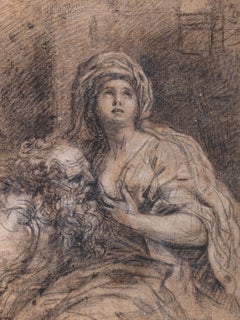
Roman Charity (Cimon and Pero)
Located in Paris, Île-de-France
Michel CORNEILLE the Younger (Paris, 1642 – 1708) Roman Charity (Cimon and Pero) Black chalk with white highlights on beige paper Height: 28 cm – Width: 20 cm Unsigned France, cir...
Category

Late 17th Century Old Masters Art by Medium: Charcoal

Materials

Paper, Chalk, Charcoal

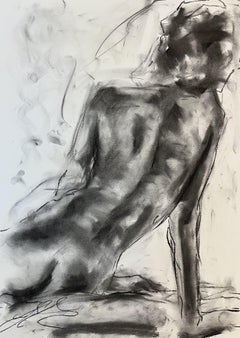
Ask, Drawing, Charcoal on Paper
Located in Yardley, PA
Original charcoal drawing on paper by James Shipton My works are heavily influenced by the art work of Degas and Gustav Klimt. My desire is to capture the beauty of the human for...
Category

2010s Impressionist Art by Medium: Charcoal

Materials

Charcoal

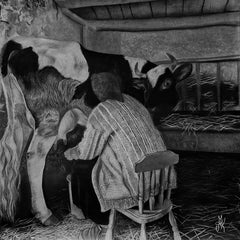
"Warm Evening"
Located in Zofingen, AG
A summer evening when time slows down and hearts are filled with peace. A grandmother milking a cow, giving her heart to a simple but so dear routine. The smell of fresh milk, a ligh...
Category

2010s Photorealist Art by Medium: Charcoal

Materials

Charcoal, Archival Paper

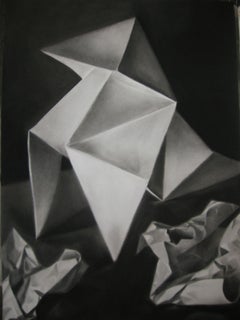
Pajarita, Drawing, Charcoal on Paper
Located in Yardley, PA
Charcoal on archival quality Ingres paper. I love working with charcoal. It creates wonderful velvety blacks. I set this composition one day when making some origami figures for my s...
Category

2010s Contemporary Art by Medium: Charcoal

Materials

Charcoal

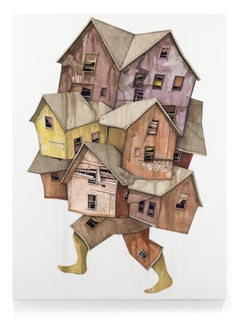
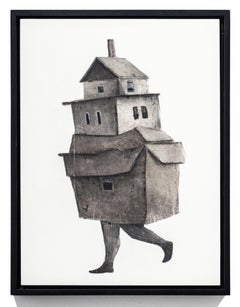
"Wanderer 12" Collaged Houses in Decay with Acrylic and Graphite on Wood
Located in Philadelphia, PA
This piece, titled "Wanderer 12" is an original artwork by Seth Clark as part of his newest solo exhibition, "Passing Through". made of collage, charcoal, pastel, acrylic, and graphi...
Category

21st Century and Contemporary Contemporary Art by Medium: Charcoal

Materials

Wood, Paper, Charcoal, Pastel, Acrylic, Graphite

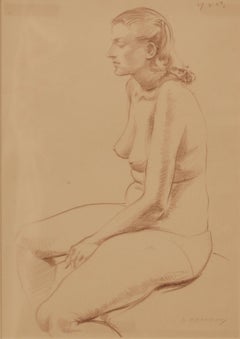
Nude Woman Still Life - Pencil Figurative Still Life of Nude Lady by A. Bradbury
Located in Watford, Hertfordshire
Born on the 17th September 1892 in Preston, Lancashire. He specialised in painting portraits, landscapes and marines on oil, watercolour and pastel and was an accomplished etcher and...
Category

1950s Post-Impressionist Art by Medium: Charcoal

Materials

Paper, Charcoal

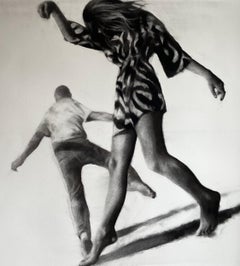
Shape Shifters, Charcoal drawing of dancing couple, groovy disco festive feeling
Located in Dallas, TX
Shape Shifters Charcoal on Fabriano paper 37 × 36 inches 94 × 92 cm Patsy McArthur’s Shape Shifters is a powerful and dynamic charcoal drawing that captures the human figure at the...
Category

2010s Realist Art by Medium: Charcoal

Materials

Charcoal, Archival Paper

Christian Julia (1921-1991) - Mid 20th Century Charcoal Drawing, At Work
Located in Corsham, GB
An intriguing charcoal study by the artist Christian Julia (1921-1991) depicting a craftsperson at work. Signed to the lower margin. Well presented in a slim wooden frame. On paper. ...
Category

20th Century Art by Medium: Charcoal

Materials

Charcoal

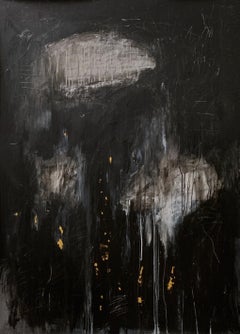
Shadow Fog V
Located in New York, NY
Shadow & Fog V, 2018 Oil and charcoal on canvas 42 x 57 inches Signed and dated on verso The Decent Series The realization that wholeness comes from self reflection and a dive into ...
Category

2010s Abstract Art by Medium: Charcoal

Materials

Canvas, Charcoal, Oil

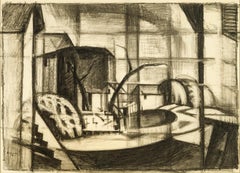
Study for Old Canal, Red and Blue (Rockaway, Morris Canal)
Located in New York, NY
Oscar Bluemner was a German and an American, a trained architect who read voraciously in art theory, color theory, and philosophy, a writer of art criticism both in German and English, and, above all, a practicing artist. Bluemner was an intense man, who sought to express and share, through drawing and painting, universal emotional experience. Undergirded by theory, Bluemner chose color and line for his vehicles; but color especially became the focus of his passion. He was neither abstract artist nor realist, but employed the “expressional use of real phenomena” to pursue his ends. (Oscar Bluemner, from unpublished typescript on “Modern Art” for Camera Work, in Bluemner papers, Archives of American Art, Smithsonian Institution, as cited and quoted in Jeffrey R. Hayes, Oscar Bluemner [1991], p. 60. The Bluemner papers in the Archives [hereafter abbreviated as AAA] are the primary source for Bluemner scholars. Jeffrey Hayes read them thoroughly and translated key passages for his doctoral dissertation, Oscar Bluemner: Life, Art, and Theory [University of Maryland, 1982; UMI reprint, 1982], which remains the most comprehensive source on Bluemner. In 1991, Hayes published a monographic study of Bluemner digested from his dissertation and, in 2005, contributed a brief essay to the gallery show at Barbara Mathes, op. cit.. The most recent, accessible, and comprehensive view of Bluemner is the richly illustrated, Barbara Haskell, Oscar Bluemner: A Passion for Color, exhib. cat. [New York: Whitney Museum of American Art, 2005.]) Bluemner was born in the industrial city of Prenzlau, Prussia, the son and grandson of builders and artisans. He followed the family predilection and studied architecture, receiving a traditional and thorough German training. He was a prize-winning student and appeared to be on his way to a successful career when he decided, in 1892, to emigrate to America, drawn perhaps by the prospect of immediate architectural opportunities at the Chicago World’s Fair, but, more importantly, seeking a freedom of expression and an expansiveness that he believed he would find in the New World. The course of Bluemner’s American career proved uneven. He did indeed work as an architect in Chicago, but left there distressed at the formulaic quality of what he was paid to do. Plagued by periods of unemployment, he lived variously in Chicago, New York, and Boston. At one especially low point, he pawned his coat and drafting tools and lived in a Bowery flophouse, selling calendars on the streets of New York and begging for stale bread. In Boston, he almost decided to return home to Germany, but was deterred partly because he could not afford the fare for passage. He changed plans and direction again, heading for Chicago, where he married Lina Schumm, a second-generation German-American from Wisconsin. Their first child, Paul Robert, was born in 1897. In 1899, Bluemner became an American citizen. They moved to New York City where, until 1912, Bluemner worked as an architect and draftsman to support his family, which also included a daughter, Ella Vera, born in 1903. All the while, Oscar Bluemner was attracted to the freer possibilities of art. He spent weekends roaming Manhattan’s rural margins, visiting the Bronx, Brooklyn, Queens, and New Jersey, sketching landscapes in hundreds of small conté crayon drawings. Unlike so many city-based artists, Bluemner did not venture out in search of pristine countryside or unspoiled nature. As he wrote in 1932, in an unsuccessful application for a Guggenheim Fellowship, “I prefer the intimate landscape of our common surroundings, where town and country mingle. For we are in the habit to carry into them our feelings of pain and pleasure, our moods” (as quoted by Joyce E. Brodsky in “Oscar Bluemner in Black and White,” p. 4, in Bulletin 1977, I, no. 5, The William Benton Museum of Art, Storrs, Connecticut). By 1911, Bluemner had found a powerful muse in a series of old industrial towns, mostly in New Jersey, strung along the route of the Morris Canal. While he educated himself at museums and art galleries, Bluemner entered numerous architectural competitions. In 1903, in partnership with Michael Garven, he designed a new courthouse for Bronx County. Garven, who had ties to Tammany Hall, attempted to exclude Bluemner from financial or artistic credit, but Bluemner promptly sued, and, finally, in 1911, after numerous appeals, won a $7,000 judgment. Barbara Haskell’s recent catalogue reveals more details of Bluemner’s architectural career than have previously been known. Bluemner the architect was also married with a wife and two children. He took what work he could get and had little pride in what he produced, a galling situation for a passionate idealist, and the undoubted explanation for why he later destroyed the bulk of his records for these years. Beginning in 1907, Bluemner maintained a diary, his “Own Principles of Painting,” where he refined his ideas and incorporated insights from his extensive reading in philosophy and criticism both in English and German to create a theoretical basis for his art. Sometime between 1908 and 1910, Bluemner’s life as an artist was transformed by his encounter with the German-educated Alfred Stieglitz, proprietor of the Little Galleries of the Photo-Secession at 291 Fifth Avenue. The two men were kindred Teutonic souls. Bluemner met Stieglitz at about the time that Stieglitz was shifting his serious attention away from photography and toward contemporary art in a modernist idiom. Stieglitz encouraged and presided over Bluemner’s transition from architect to painter. During the same period elements of Bluemner’s study of art began to coalesce into a personal vision. A Van Gogh show in 1908 convinced Bluemner that color could be liberated from the constraints of naturalism. In 1911, Bluemner visited a Cézanne watercolor show at Stieglitz’s gallery and saw, in Cézanne’s formal experiments, a path for uniting Van Gogh’s expressionist use of color with a reality-based but non-objective language of form. A definitive change of course in Bluemner’s professional life came in 1912. Ironically, it was the proceeds from his successful suit to gain credit for his architectural work that enabled Bluemner to commit to painting as a profession. Dividing the judgment money to provide for the adequate support of his wife and two children, he took what remained and financed a trip to Europe. Bluemner traveled across the Continent and England, seeing as much art as possible along the way, and always working at a feverish pace. He took some of his already-completed work with him on his European trip, and arranged his first-ever solo exhibitions in Berlin, Leipzig, and Elberfeld, Germany. After Bluemner returned from his study trip, he was a painter, and would henceforth return to drafting only as a last-ditch expedient to support his family when his art failed to generate sufficient income. Bluemner became part of the circle of Stieglitz artists at “291,” a group which included Marsden Hartley, John Marin, and Arthur Dove. He returned to New York in time to show five paintings at the 1913 Armory Show and began, as well, to publish critical and theoretical essays in Stieglitz’s journal, Camera Work. In its pages he cogently defended the Armory Show against the onslaught of conservative attacks. In 1915, under Stieglitz’s auspices, Bluemner had his first American one-man show at “291.” Bluemner’s work offers an interesting contrast with that of another Stieglitz architect-turned-artist, John Marin, who also had New Jersey connections. The years after 1914 were increasingly uncomfortable. Bluemner remained, all of his life, proud of his German cultural legacy, contributing regularly to German language journals and newspapers in this country. The anti-German sentiment, indeed mania, before and during World War I, made life difficult for the artist and his family. It is impossible to escape the political agenda in Charles Caffin’s critique of Bluemner’s 1915 show. Caffin found in Bluemner’s precise and earnest explorations of form, “drilled, regimented, coerced . . . formations . . . utterly alien to the American idea of democracy” (New York American, reprinted in Camera Work, no. 48 [Oct. 1916], as quoted in Hayes, 1991, p. 71). In 1916, seeking a change of scene, more freedom to paint, and lower expenses, Bluemner moved his family to New Jersey, familiar terrain from his earlier sketching and painting. During the ten years they lived in New Jersey, the Bluemner family moved around the state, usually, but not always, one step ahead of the rent collector. In 1917, Stieglitz closed “291” and did not reestablish a Manhattan gallery until 1925. In the interim, Bluemner developed relationships with other dealers and with patrons. Throughout his career he drew support and encouragement from art cognoscenti who recognized his talent and the high quality of his work. Unfortunately, that did not pay the bills. Chronic shortfalls were aggravated by Bluemner’s inability to sustain supportive relationships. He was a difficult man, eternally bitter at the gap between the ideal and the real. Hard on himself and hard on those around him, he ultimately always found a reason to bite the hand that fed him. Bluemner never achieved financial stability. He left New Jersey in 1926, after the death of his beloved wife, and settled in South Braintree, Massachusetts, outside of Boston, where he continued to paint until his own death in 1938. As late as 1934 and again in 1936, he worked for New Deal art programs designed to support struggling artists. Bluemner held popular taste and mass culture in contempt, and there was certainly no room in his quasi-religious approach to art for accommodation to any perceived commercial advantage. His German background was also problematic, not only for its political disadvantages, but because, in a world where art is understood in terms of national styles, Bluemner was sui generis, and, to this day, lacks a comfortable context. In 1933, Bluemner adopted Florianus (definitively revising his birth names, Friedrich Julius Oskar) as his middle name and incorporated it into his signature, to present “a Latin version of his own surname that he believed reinforced his career-long effort to translate ordinary perceptions into the more timeless and universal languages of art” (Hayes 1982, p. 189 n. 1). In 1939, critic Paul Rosenfeld, a friend and member of the Stieglitz circle, responding to the difficulty in categorizing Bluemner, perceptively located him among “the ranks of the pre-Nazi German moderns” (Hayes 1991, p. 41). Bluemner was powerfully influenced in his career by the intellectual heritage of two towering figures of nineteenth-century German culture, Johann Wolfgang von Goethe and Georg Wilhelm Friedrich Hegel. A keen student of color theory, Bluemner gave pride of place to the formulations of Goethe, who equated specific colors with emotional properties. In a November 19, 1915, interview in the German-language newspaper, New Yorker Staats-Zeitung (Abendblatt), he stated: I comprehend the visible world . . . abstract the primary-artistic . . . and after these elements of realty are extracted and analyzed, I reconstruct a new free creation that still resembles the original, but also . . . becomes an objectification of the abstract idea of beauty. The first—and most conspicuous mark of this creation is . . . colors which accord with the character of things, the locality . . . [and which] like the colors of Cranach, van der Weyden, or Durer, are of absolute purity, breadth, and luminosity. . . . I proceed from the psychological use of color by the Old Masters . . . [in which] we immediately recognize colors as carriers of “sorrow and joy” in Goethe’s sense, or as signs of human relationship. . . . Upon this color symbolism rests the beauty as well as the expressiveness, of earlier sacred paintings. Above all, I recognize myself as a contributor to the new German theory of light and color, which expands Goethe’s law of color through modern scientific means (as quoted in Hayes 1991, p. 71). Hayes has traced the global extent of Bluemner’s intellectual indebtedness to Hegel (1991, pp. 36–37). More specifically, Bluemner made visual, in his art, the Hegelian world view, in the thesis and antithesis of the straight line and the curve, the red and the green, the vertical and the horizontal, the agitation and the calm. Bluemner respected all of these elements equally, painting and drawing the tension and dynamic of the dialectic and seeking ultimate reconciliation in a final visual synthesis. Bluemner was a keen student of art, past and present, looking, dissecting, and digesting all that he saw. He found precedents for his non-naturalist use of brilliant-hued color not only in the work Van Gogh and Cezanne, but also in Gauguin, the Nabis, and the Symbolists, as well as among his contemporaries, the young Germans of Der Blaue Reiter. Bluemner was accustomed to working to the absolute standard of precision required of the architectural draftsman, who adjusts a design many times until its reality incorporates both practical imperatives and aesthetic intentions. Hayes describes Bluemner’s working method, explaining how the artist produced multiple images playing on the same theme—in sketch form, in charcoal, and in watercolor, leading to the oil works that express the ultimate completion of his process (Hayes, 1982, pp. 156–61, including relevant footnotes). Because of Bluemner’s working method, driven not only by visual considerations but also by theoretical constructs, his watercolor and charcoal studies have a unique integrity. They are not, as is sometimes the case with other artists, rough preparatory sketches. They stand on their own, unfinished only in the sense of not finally achieving Bluemner’s carefully considered purpose. The present charcoal drawing is one of a series of images that take as their starting point the Morris Canal as it passed through Rockaway, New Jersey. The Morris Canal industrial towns that Bluemner chose as the points of departure for his early artistic explorations in oil included Paterson with its silk mills (which recalled the mills in the artist’s childhood home in Elberfeld), the port city of Hoboken, Newark, and, more curiously, a series of iron ore mining and refining towns, in the north central part of the state that pre-dated the Canal, harkening back to the era of the Revolutionary War. The Rockaway theme was among the original group of oil paintings that Bluemner painted in six productive months from July through December 1911 and took with him to Europe in 1912. In his painting journal, Bluemner called this work Morris Canal at Rockaway N.J. (AAA, reel 339, frames 150 and 667, Hayes, 1982, pp. 116–17), and exhibited it at the Galerie Fritz Gurlitt in Berlin in 1912 as Rockaway N. J. Alter Kanal. After his return, Bluemner scraped down and reworked these canvases. The Rockaway picture survives today, revised between 1914 and 1922, as Old Canal, Red and Blue (Rockaway River) in the collection of the Hirshhorn Museum and Sculpture Garden, Smithsonian Institution, Washington D. C. (color illus. in Haskell, fig. 48, p. 65). For Bluemner, the charcoal expression of his artistic vision was a critical step in composition. It represented his own adaptation of Arthur Wesley’s Dow’s (1857–1922) description of a Japanese...
Category

20th Century American Modern Art by Medium: Charcoal

Materials

Paper, Charcoal

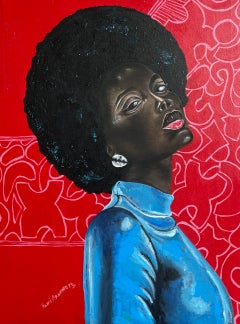
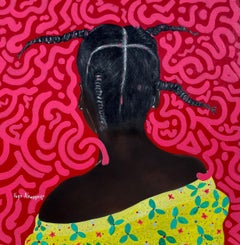
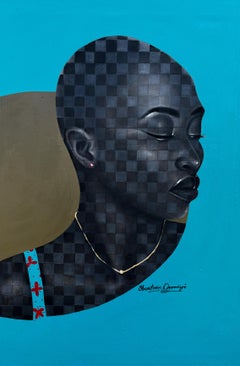
Mixed Feeling 1 - 21st Century, Contemporary, Figurative Portrait, Modern, Women
Located in Ibadan, Oyo
“Mixed Feelings” is a visual series that captures the emotional complexity of Black womanhood, strength, softness, pride, visibility, and invisibility. Each portrait in this series h...
Category

21st Century and Contemporary Contemporary Art by Medium: Charcoal

Materials

Canvas, Charcoal, Mixed Media, Acrylic

"Doctor III"
Located in Zofingen, AG
“Doctor III” — artwork from the “Portraits Without Faces” series. This series is a tribute to people who devote themselves wholeheartedly to their work — those who create, heal, tea...
Category

2010s Photorealist Art by Medium: Charcoal

Materials

Charcoal, Archival Paper

"Doctor II"
Located in Zofingen, AG
“Doctor II” — artwork from the “Portraits Without Faces” series. This series is a tribute to people who devote themselves wholeheartedly to their work — those who create, heal, teac...
Category

2010s Photorealist Art by Medium: Charcoal

Materials

Charcoal, Archival Paper

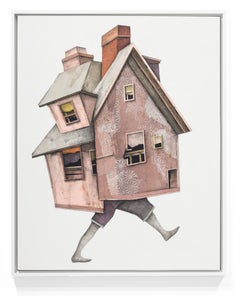
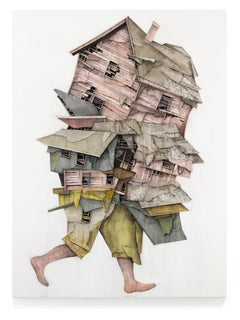
"Wanderer Study 2" Acrylic, Pastel and Collaged Painting of Moving House
Located in Philadelphia, PA
This piece, titled "Wanderer Study 2"is an original artwork by Seth Clark as part of his newest solo exhibition, "Passing Through". made of collage, charcoal, pastel, acrylic, and gr...
Category

21st Century and Contemporary Contemporary Art by Medium: Charcoal

Materials

Wood, Paper, Charcoal, Pastel, Acrylic, Graphite

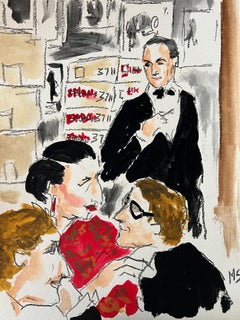
Diana Vreeland and Saint Laurent at the Opium Party
Located in Miami Beach, FL
Movies, TV and magazines are constant source of inspiration. Fame, as fleckring and shallow it can be sometimes, is very intriguing to him. The worlds of fashion, society and pop cu...
Category

21st Century and Contemporary Contemporary Art by Medium: Charcoal

Materials

Watercolor, Charcoal, Pencil

"Tenderness"
Located in Zofingen, AG
This drawing conveys the quiet depth of human emotion through a moment of intimate connection. A young woman, viewed from behind, is gently embraced by a man whose form softly dissol...
Category

2010s Photorealist Art by Medium: Charcoal

Materials

Charcoal, Archival Paper

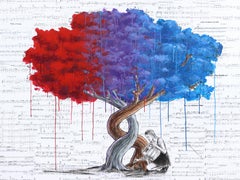
The Nature of Growth - Original Mixed Media Surrealist Figurative Still Life Art
Located in Los Angeles, CA
Robert Lebsack creates artworks using mixed media with ink, acrylic, and charcoal on archival copies of newspapers, textbooks, and sheet music. As a visionary artist, Lebsack weaves ...
Category

21st Century and Contemporary Pop Art Art by Medium: Charcoal

Materials

Charcoal, Ink, Mixed Media, Acrylic, Wood Panel, Archival Paper

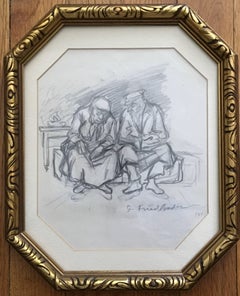
RARE WPA ARTIST ISAAC FRIEDLANDER Judaica Drawing 1946
Located in Surfside, FL
Artist: Friedlander, Isaac American (1890-1968) Isac Friedlander Latvian-born American Printmaker, 1890-1968 was born in Mitau, Latvia. He studied art at the Academy of Rome. He...
Category

20th Century American Realist Art by Medium: Charcoal

Materials

Charcoal, Pencil

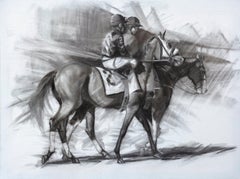
Shawn Faust, "Stepping onto the Track", Black and White Equine Horse Race
Located in Saratoga Springs, NY
This equine drawing, "Stepping onto the Track" is a 30x40" black and white charcoal on canvas by artist Shawn Faust depicting a horse and jockey heading towards the big race. Complimentary to Faust's traditional oil works, these charcoal on canvas sketches boast a clean and contemporary feeling exhibiting the muscle tone and mass of these majestic creatures. Fixed with varnish, these charcoal works are permanent and best framed or unframed. About the artist: Shawn’s love and fascination for drawing came as an unexpected gift from his grandfather at the age of 5. Young Faust was a tag-a-long during his grandfather’s impromptu plein air art lesson with his older brother in the back yard of his Aunt’s house. A retired director for the American Red Cross, Shawn’s grandfather, who had only recently picked up the brush himself, began a charcoal sketch that would forever change how Faust would see the world. From that brief lesson, Faust recalls vividly, “The techniques I witnessed from my grandfather that day, were pure magic!” With his newfound gift of magic, Shawn quickly began practicing his art of 3D illusion for anyone who wanted to see it. During his childhood, you would be hard pressed not to find Shawn doodling on a piece of paper at some point during the day. Among his favorite things to draw as a youngster were his comic book heroes. Intsead of reading the comics, he spent all his time studying the line work and muscle forms of the comic book characters. And so, began his interest in portraying the human form. Upon entering college at the University Of Delaware, Shawn enrolled as an accounting major yet emerged with a Bachelor of Fine Arts Degree in 1990. At the U of D he is forever grateful for the privilege of studying under distinguished artists Stephen Tanis, Charles Rowe, Robert Straight and Rosemary Lane. Shortly after graduating, Shawn embarked on a career in Illustration. By 1993 he had quickly become one of Delaware’s prominent architectural illustrators working for more than 75% of the homebuilders in Delaware. Between illustration jobs, Shawn pursued his interest in portrait painting. In 1992 Faust was commissioned to paint the official portrait of outgoing Delaware Governor, Michael Castle. Continuing his quest to learn more about portrait painting, Faust studied with Daniel Greene in 1995. He credits Daniel Greene for giving him the greatest key to unlocking a whole new way of seeing and interpreting color. By 1995, Shawn’s portrait commissions and easel paintings were supporting him as much as his illustration jobs, so he decided to focus entirely on his fine art career. This included opening a gallery and custom frame shop with his wife and brother. During the twelve years of owning and operating the gallery, Shawn continued his intense portrait research by focusing his studies on the eyes of his favorite subject, the horse. His head studies of horses caught the attention of Mr. Richard Golden, a prominent horse owner in Chesapeake City, MD and president of Northview Stallion Station. Northview is best know for standing Northern Dancer...
Category

2010s Realist Art by Medium: Charcoal

Materials

Canvas, Charcoal, Varnish

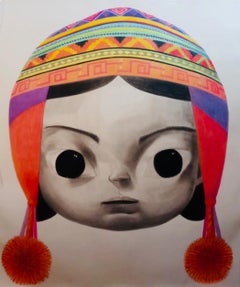
Amerindian (ANDEAN GIRL AMERINDIAN EYES OF THE ANDES)
Located in Miami, FL
Alberto Echegaray Guevara (or Cayman) is an artist and entrepreneur from Argentina, he currently lives and works in Buenos Aires, Argentina. His works explore ancient symbolism, mone...
Category

2010s Art by Medium: Charcoal

Materials

Charcoal, Pastel, Pencil

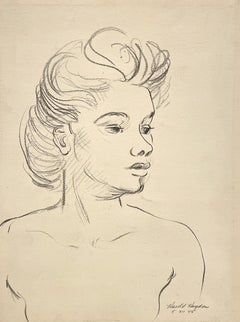
A Striking 1940s Mid-Century Modern Portrait of a Young Woman by Harold Haydon
Located in Chicago, IL
A Striking 1940s Mid-Century Modern Portrait of a Young Woman by Notable Chicago Artist, Harold Haydon (Am. 1909-1994). An exquisite studio portrait study, charcoal on paper, dating...
Category

Mid-20th Century American Modern Art by Medium: Charcoal

Materials

Paper, Charcoal

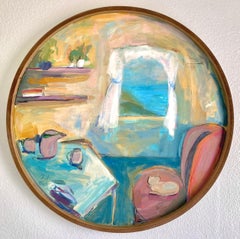
"Sanctuary" (2025) Original Acrylic Painting, Whimsical Interior
Located in Denver, CO
Leigh Ann Van Fossan's "Sanctuary" is an original acrylic and pastel painting depicting a warm interior with a cozy cat perched on a chair peering out a picturesque window. Van Fos...
Category

2010s Expressionist Art by Medium: Charcoal

Materials

Canvas, Charcoal, Acrylic

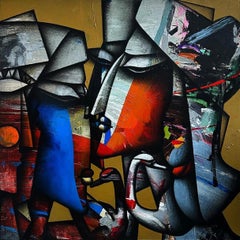
Bond of Love Series, Charcoal, Acrylic on Canvas, Contemporary Artist "In Stock"
Located in Kolkata, West Bengal
Jagannath Paul - Bond of Love Series 60 x 60 inches Charcoal & Acrylic on Canvas, 2025 (Rolled & Delivered) A lovely figurative work in Charcoal and Acrylic in red, blue, Orange, ye...
Category

2010s Contemporary Art by Medium: Charcoal

Materials

Canvas, Charcoal, Acrylic

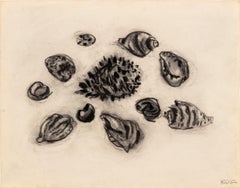
Still Life of Seashells
Located in Astoria, NY
Manfred Schwartz (American, b. Poland, 1909-1970), Still Life of Seashells, Charcoal on Paper, with the artist's signature stamped lower right, unframed. 20" H x 25.75" W. Provenance...
Category

Mid-20th Century Modern Art by Medium: Charcoal

Materials

Paper, Charcoal

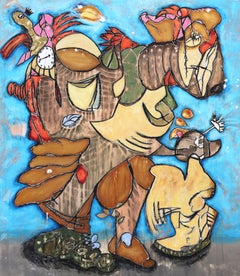
I Believe I Can Fly - Large Original Abstract Expressionism Colorful Painting
Located in Los Angeles, CA
The paintings of Bruce Rubenstein seamlessly marry sophistication with affordability. His original art merges the creative attitudes of the two distinct art hot spots of New York and...
Category

21st Century and Contemporary Abstract Art by Medium: Charcoal

Materials

Canvas, Charcoal, Oil Pastel, Mixed Media, Acrylic

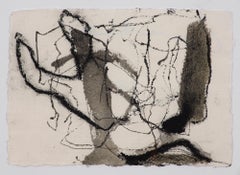
Quarantine Drawing 1
Located in New Orleans, LA
medium: Chinese ink, ink stick, and charcoal on handmade paper ANASTASIA PELIAS was born in New Orleans, LA to Greek parents. Her artistic practice is roote...
Category

21st Century and Contemporary Contemporary Art by Medium: Charcoal

Materials

Charcoal, Ink, Handmade Paper

Kyle Andrew Szpyrka - Infinite Self, Painting 2009
Located in Stamford, CT
Sutra, a Sanskrit word meaning “thread”, is a word or small group of words that summarize an entire complex web of ideas, truths, wisdoms, or teachings all woven together into a sing...
Category

Early 2000s Contemporary Art by Medium: Charcoal

Materials

Paper, Charcoal

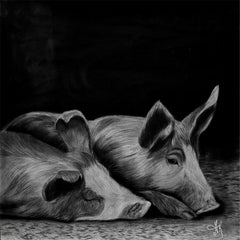
"Lunchtime Dream"
Located in Zofingen, AG
Two slightly lazy friends who are allowed to lie on their sides day and night. When the sun is hot, they both lie under the rays by the door and enjoy it, falling asleep. This artwo...
Category

2010s Photorealist Art by Medium: Charcoal

Materials

Charcoal, Archival Paper

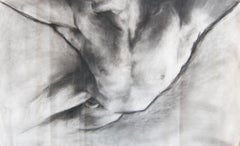
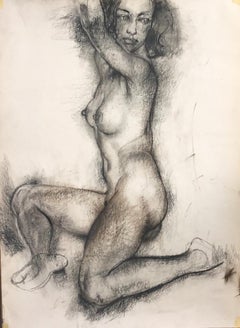
Model - Charcoal on Paper Grey Color
Located in Sofia, BG
"Model" by the impressionist Maestro Alexandr Reznichenko. About the artwork: TECHNIQUE: charcoal on paper STYLE: Impressionist, Contemporary Edition : Unique, signed The painti...
Category

2010s Impressionist Art by Medium: Charcoal

Materials

Paper, Charcoal

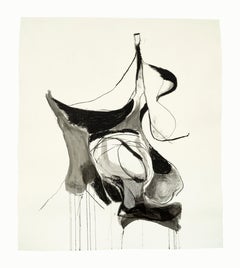
Meander, abstract, contemporary, black and white, drawing, painting, mixed media
Located in Basalt, CO
This 60" x 36" charcoal and acrylic mixed media painting takes the viewer on a dive into the subconscious, wandering from thought to thought along the...
Category

2010s Abstract Art by Medium: Charcoal

Materials

Charcoal, Acrylic

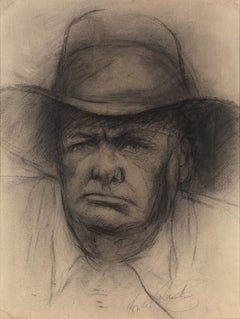
Charcoal Portrait of Sir Winston Churchill, Circa 1935
Located in New Orleans, LA
Portrait of Sir Winston Churchill English I 1874-1965 Charcoal on paper Signed lower right (indiscernible) This lifetime charcoal portrait of Winston Churchill, dating to around 19...
Category

20th Century Realist Art by Medium: Charcoal

Materials

Paper, Charcoal

"The Meeting 26" Painting with Ink Transfer, Charcoal, Graphite and Pastel
Located in Philadelphia, PA
This piece, titled "The Meeting 26" is an original artwork by Seth Clark as part of his newest solo exhibition, "Passing Through". made of ink transfer, charcoal, pastel, acrylic, a...
Category

21st Century and Contemporary Contemporary Art by Medium: Charcoal

Materials

Wood, Paper, Charcoal, Pastel, Acrylic, Graphite

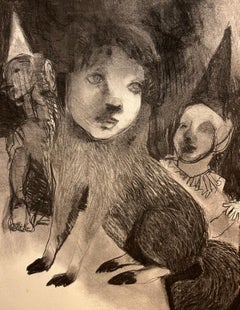
Did you say weird ? Zahra Zeinali Contemporary drawing clown animal circus art
Located in Paris, FR
Charcoal on paper Unique work Hand-signed by the artist
Category

2010s Contemporary Art by Medium: Charcoal

Materials

Paper, Charcoal

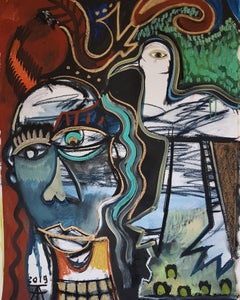
The first seagull -Timothy Archer, 21st Century painting, Figurative art
Located in Paris, FR
Oil paint, pastel and charcoal on paper Signed and dated by the artist lower left
Category

2010s Contemporary Art by Medium: Charcoal

Materials

Paper, Charcoal, Oil Pastel, Oil

"Wanderer 14" Collapsing Architecture Collaged Painting by Seth Clark
Located in Philadelphia, PA
This piece, titled "Wanderer 14" is an original artwork by Seth Clark as part of his newest solo exhibition, "Passing Through". made of collage, charcoal, pastel, acrylic, and graphi...
Category

21st Century and Contemporary Contemporary Art by Medium: Charcoal

Materials

Wood, Paper, Charcoal, Pastel, Acrylic, Graphite

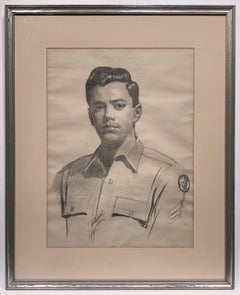
Portrait of a Young Handsome Man (Army GI)
Located in Wilton Manors, FL
Beautiful WWII era portrait of a young man by Louis Krupp (1888-1978). Charcoal on paper measures 16.5 x 22.5 inches, 25 X 30 IN MATTING. Signed and dated...
Category

Mid-20th Century Realist Art by Medium: Charcoal

Materials

Charcoal

Woman with Deep Thought (Feminine Epidemic Series) II
Located in Ibadan, Oyo
This is a universal problem that needs to be addressed, firstly in law 70% of woman has no right, and moreover, in the past and in some culture, your parent choose who you ought to marry and you can never say no... some mentality were been driven by poverty, and moreover, we also have this cultural belief that a girl supposed to be in his husband’s house, they don’t have right to education, they are not supposed to be in power. Painting Ships in a well-protected tube from Nigeria This work is unique, not a print or other type of copy. Signed on the front side and accompanied by a Certificate of Authenticity About Artist Oluwatosin Ogunniyi is a young talented artist born in 1998 around the rural rusty roof of Eruwa town. that hail from Eruwa Oyo state Nigeria. He had his (ND) National diploma at Ibarapa Polytechnic Eruwa where he studied fine Art, and he currently studying for a degree in creative Art at the University of Lagos He continues his quest for knowledge as he had his industrial training at Oluwole...
Category

21st Century and Contemporary Contemporary Art by Medium: Charcoal

Materials

Canvas, Charcoal, Acrylic

Symphonic
Located in Napa, CA
Alison Haley Paul is a contemporary painter of lavishly textured landscapes full of nuanced color. Her work conjures up connotations and geographical memories: that summer you spent ...
Category

2010s Contemporary Art by Medium: Charcoal

Materials

Canvas, Charcoal, Wax, Oil, Graphite, Pigment

"Exquisite"
Located in Zofingen, AG
This artwork is part of my “Interior” series – artworks created to bring lightness and beauty into your space. The series is designed to please the eye without overwhelming it, addin...
Category

2010s Photorealist Art by Medium: Charcoal

Materials

Charcoal, Archival Paper

Portrait of African American Woman
Located in Fredericksburg, VA
This striking charcoal portrait captures the essence of an African American woman with a unique black and white afro. The monochromatic medium emphasize...
Category

21st Century and Contemporary Contemporary Art by Medium: Charcoal

Materials

Paper, Charcoal

Untitled (13-J1)
Located in New Orleans, LA
The piece is unframed. It is mounted in an archival white mat, with an overall mat size of 30 x 24 inches. Fritz Bultman set himself apart from other Abstract Expressionists with h...
Category

1930s Abstract Expressionist Art by Medium: Charcoal

Materials

Paper, Charcoal

"Jon Snow"
Located in Zofingen, AG
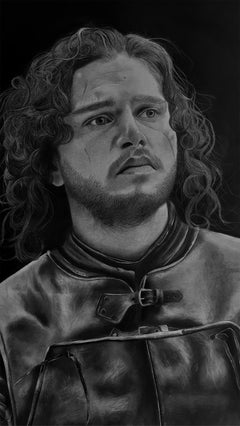
Original artwork description: Step into the world of Westeros through this meticulously crafted graphite and charcoal drawing of Jon Snow. Every detail – from the texture of his cloa...
Category

2010s Photorealist Art by Medium: Charcoal

Materials

Charcoal, Archival Paper

Children 13 - Contemporary Figurative Drawing, Black And White, Realism, Boat
Located in Salzburg, AT
Artodyssey "Julita Malinowska's paintings belong to those, which once seen - are never forgotten. The open spaces, sometimes cool and bright, at other times heavily saturated with co...
Category

Early 2000s Contemporary Art by Medium: Charcoal

Materials

Paper, Charcoal

Embodied VI
Located in New Orleans, LA
Pelias expounds on her new works . . .   In this group of oil paintings on canvas, I am inspired and informed by my personal history and collective lived experience, as well as the...
Category

21st Century and Contemporary Contemporary Art by Medium: Charcoal

Materials

Paper, Charcoal, Sumi Ink

Attunement - 21st Century Contemporary Charcoal Drawing of a Girl
Located in Nuenen, Noord Brabant
Rosanna Gaddoni Attunement 66 x 48 cm Charcoal and graphite on Rives Arches Paper 175 gm2 crème white Framed the size is 78 x 58,5 cm ( Frame is included in price) Framed in a natu...
Category

2010s Contemporary Art by Medium: Charcoal

Materials

Charcoal, Laid Paper

Selvas Negras #1 by Calo Carratalá - Tropical forest landscape, Amazonian Jungle
Located in Paris, FR
Selvas Negras #1 is a unique pencil and charcoal on canvas diptych painting by contemporary artist Calo Carratalá. Dimensions are 212 × 656 cm (83.5 × 258.3 in), composed by two pane...
Category

2010s Contemporary Art by Medium: Charcoal

Materials

Canvas, Charcoal, Pencil

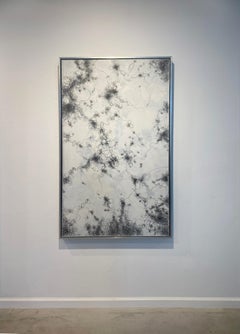
Entangled, abstract, contemporary, black and white, drawing, painting
Located in Basalt, CO
This 72x36" charcoal and acrylic mixed media painting takes the viewer on a dive into the subconscious, wandering from thought to thought along the do...
Category

2010s Abstract Art by Medium: Charcoal

Materials

Charcoal, Acrylic

Figurative Original Portrait Painting by Cuban Artist Hector Frank
Located in Brooklyn, NY
Original Mixed Media Figurative Painting by Cuban Painter Hector Frank. International acclaim as one Cuba’s foremost living artists, Havana born Hector Frank. Now, in his artistic p...
Category

2010s Folk Art Art by Medium: Charcoal

Materials

Canvas, Charcoal, Oil Pastel, Acrylic

Ventana
Located in Napa, CA
Oil, charcoal, wax, pigment, and graphite on canvas. Alison Haley Paul is a contemporary painter of lavishly textured landscapes full of nuanced color. Her work conjures up connotat...
Category

2010s Contemporary Art by Medium: Charcoal

Materials

Canvas, Charcoal, Wax, Oil, Graphite, Pigment

A Stunning Mid-Century Modern Watercolor, Harbor Scene Rooftops by Rudolph Pen
Located in Chicago, IL
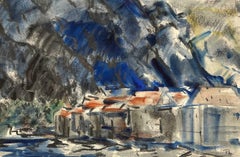
A Stunning Mid-Century Modern Cubist Watercolor, Harbor Scene & Rooftops by Noted Chicago Artist, Rudolph T. Pen. A vivid European harbor scene, depicting the whitewashed buildings ...
Category

Mid-20th Century American Modern Art by Medium: Charcoal

Materials

Paper, Charcoal, Watercolor

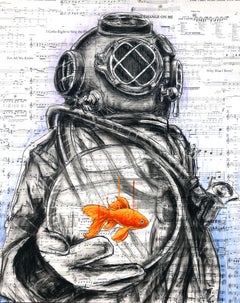
Remembering to Forget - Abstract Figurative Diver Mixed Media Surrealist Artwork
Located in Los Angeles, CA
Robert Lebsack creates artworks using mixed media with ink, acrylic, and charcoal on archival copies of newspapers, textbooks, and sheet music. As a visionary artist, Lebsack weaves ...
Category

21st Century and Contemporary Pop Art Art by Medium: Charcoal

Materials

Charcoal, Ink, Mixed Media, Acrylic, Wood Panel

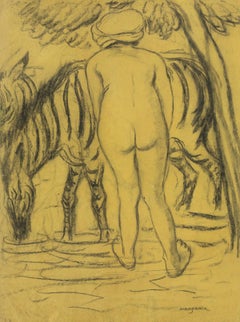
Jeune Femme de Dos au Zèbre by Georges Manzana Pissarro, circa 1915
Located in London, GB
Jeune Femme de Dos au Zèbre by Georges Manzana Pissarro (1871 - 1961) Charcoal on paper 66 x 49 cm (26 x 19 ¼ inches) Signed lower right, Manzana Executed circa 1915 This work is ac...
Category

1910s Art Deco Art by Medium: Charcoal

Materials

Paper, Charcoal

Identity 1 - 21st Century, Contemporary, Portrait, Mixed Media, African Woman
Located in Ibadan, Oyo
Shipping Procedure FREE Shipping Worldwide Ships in a well-protected tube from Nigeria This work is unique, not a print or other type of copy. Signed on the front side and accompanie...
Category

21st Century and Contemporary Contemporary Art by Medium: Charcoal

Materials

Canvas, Charcoal, Mixed Media, Acrylic

Embodied III
Located in New Orleans, LA
Pelias expounds on her new works . . .   In this group of oil paintings on canvas, I am inspired and informed by my personal history and collective lived experience, as well as the...
Category

21st Century and Contemporary Contemporary Art by Medium: Charcoal

Materials

Paper, Charcoal, Sumi Ink

It s Okay To Not Be Okay - 21st Century Contemporary, Figurative, Relaxation
Located in Ibadan, Oyo
Shipping Procedure Ships in a well-protected tube. This work is unique, not a print or other type of copy. Accompanied by a Certificate of Authenticity. About the Artist Joy Eyitayo...
Category

21st Century and Contemporary Contemporary Art by Medium: Charcoal

Materials

Canvas, Charcoal, Mixed Media, Acrylic

Chaise 19, Minimalist, Pop Art, painting, Figurative, Poolside, Male
Located in Riverdale, NY
Chaise #19 by California artist Jeffrey Palladini is a minimalist figurative painting featuring a male figure. It is Oil and Charcoal on Wood Panel. It is 12x48. With the wood fram...
Category

2010s Contemporary Art by Medium: Charcoal

Materials

Charcoal, Oil, Wood Panel

Beach Seascape
Located in Astoria, NY
Manfred Schwartz (American, b. Poland, 1909-1970), Beach Seascape, Charcoal on Paper, with the artist's signature stamped lower right, unframed. 20" H x 25.5" W. Provenance: From a 3...
Category

Mid-20th Century Modern Art by Medium: Charcoal

Materials

Paper, Charcoal

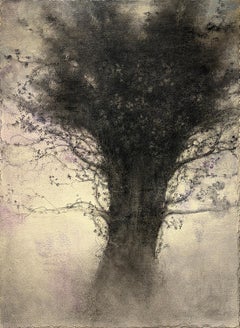
Arborescent (Expressionist Charcoal Tree Landscape Painting on Paper on Canvas)
Located in Hudson, NY
Romantic, tonalist style charcoal drawing of a tree in isolation by Sue Bryan "Arborescent", 2025 charcoal, acrylic, and pastel on paper dry mounted to canvas 30 x 22 inches 31.25 x ...
Category

2010s Contemporary Art by Medium: Charcoal

Materials

Canvas, Charcoal, Pastel, Acrylic

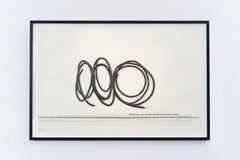
Bernar Venet Position of Three Undetermined Lines Charcoal and Collage on Paper
Located in Paris, FR
1984 Unique artwork Charcoal, cardboard, collage on paper Signed, dated and titled lower right Registered under the inventory number bv84d5 at Bernar Venet Studio 70.5 x 113.5 cm   ...
Category

1980s Conceptual Art by Medium: Charcoal

Materials

Paper, Charcoal, Cardboard

Charcoal art for sale on 1stDibs.

Find a wide variety of authentic Charcoal art available on 1stDibs. While artists have worked in this medium across a range of time periods, art made with this material during the 21st Century is especially popular. There are many well-known artists whose body of work includes ceramic sculptures. Popular artists on 1stDibs associated with pieces like this include Robert Lebsack, Pamela Holmes, Federico Castellon, and Richard Shaoul. Frequently made by artists working in the Contemporary, Abstract, all of these pieces for sale are unique and many will draw the attention of guests in your home. Not every interior allows for large Charcoal art, so small editions measuring 1 inches across are also available Prices for art made by famous or emerging artists can differ depending on medium, time period and other attributes. On 1stDibs, the price for these items starts at $1 and tops out at $1,450,000, while the average work can sell for $1,424.

Recently Viewed

View All