Art by Medium: Drypoint

to
96
315
61
50
3
3
Overall Width
to
Overall Height
to
23
417
4
3
24
55
55
14
62
23
23
4
186
170
71
70
26
18
16
14
12
2
2
284
147
1
305
255
157
99
96
79
57
45
27
17
16
16
16
12
11
10
10
9
9
9
1,417
10,818
10,467
9,945
6,060
34
23
21
18
17
44
127
243
133
Style: Modern
Medium: Drypoint
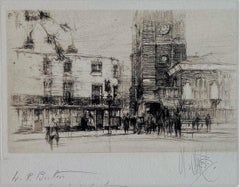
Chelsea Old Church, London
Located in Plano, TX
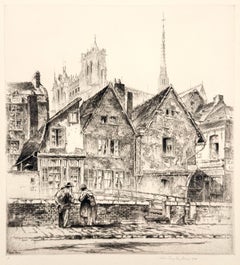
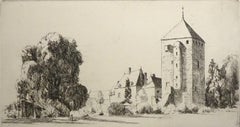
Chelsea Old Church. 1924. Etching, drypoint, and aquatint. Dickins 94. 5 3/8 x 8 (sheet 8 1/2 x 9 3/4). Edition 100 for The Print Collector's Club. A fine proof with tonal wiping, printed on cream wove paper. Signed and dedicated "W.R. Button from W. Walcot London 1930" in pencil. Chelsea Old Church, also known as All Saints, is an Anglican church, on Old Church Street, Chelsea, London SW3, England, near Albert Bridge. It is the church for a parish in the Diocese of London, part of the Church of England. Inside the Grade I listed building, there is seating for 400 people. There is a memorial plaque to the author Henry James (1843–1916) who lived nearby on Cheyne Walk. To the west of the church is a small public garden containing a sculpture by Sir Jacob Epstein. When he was seventeen,William Walcot began to study architecture under Louis Benois at the Imperial Academy of Art in Saint Petersburg. He went to Paris where he continued his studies at the Ecole des Beaux-Arts and the Atelier Redon. He practiced as an architect briefly in Moscow, designing the Hotel Metropole...
Category

Early 20th Century Modern Art by Medium: Drypoint

Materials

Drypoint, Etching, Aquatint

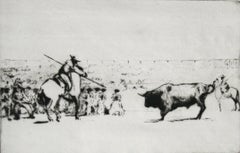
The Picador Incites the Bull.
Located in Plano, TX
The Picador Incites the Bull. 1911. Drypoint. Hardie 104. 6 1/4 x 9 7/8 (sheet 8 1/4 x 11 7/8). Edition 30, #5. Slight mat line, 1 hinge stain in the lower margin, well outside the i...
Category

1910s Modern Art by Medium: Drypoint

Materials

Drypoint

San Marco [Venice].
Located in Plano, TX
William Walcot. R.E., R.I.B.A. San Marco. Etching with drypoint and aquatint. Dickins 66, Harvey-Lee 91. 3 7/8 x 5 7/8 (sheet 9 1/4 x 12 1/8). Venice set, # 2. Edition 415. A rich impression printed on cream wove paper. Fold in the margin, well outside the image; otherwise good condition. Signed in pencil. Housed in a 16 x 20-inch archival mat. Soon after Walcot's arrival in England, the Fine Art Society sponsored a trip sent to Italy. This scene is one of four small drypoints that resulted from the artist’s stay in Venice. When he was seventeen, he began to study architecture under Louis Benois at the Imperial Academy of Art in Saint Petersburg. He went to Paris where he continued his studies at the Ecole des Beaux-Arts and the Atelier Redon. He practiced as an architect briefly in Moscow, designing the Hotel Metropole...
Category

Early 20th Century Modern Art by Medium: Drypoint

Materials

Drypoint, Etching, Aquatint

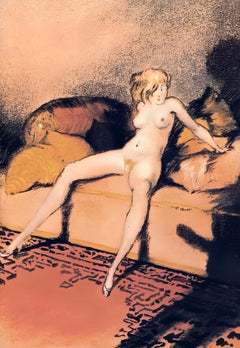
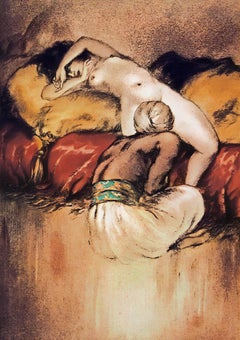
Icart, Sans titre, Le Sopha (after)
Located in Southampton, NY
La pointe sèche etching on vélin de Rives filigrané à notre nom paper. Paper size: 9.5 x 7.5 inches; image size: 6.5 x 4.5 inches. Inscription: unsigned and unnumbered, as issued. No...
Category

1930s Modern Art by Medium: Drypoint

Materials

Drypoint, Etching

Mein Weg mit dem Weib, plate 7
Located in Roma, IT
Drypoint and aquatint (brown ink) on cream paper. Signed in pencil on the lower right margin. Titled and numbered in pencil on the lower left margin. Edition of 25 prints. From the s...
Category

1910s Modern Art by Medium: Drypoint

Materials

Aquatint, Drypoint

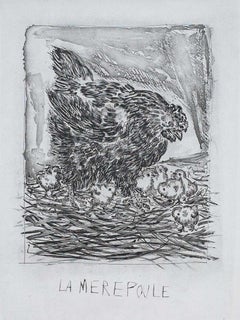
The Mother Hen, 1942 (Histoire Naturelle - Textes de Buffon, B.345)
Located in Greenwich, CT
The Mother Hen is an aquatint and drypoint print on chine from one of the deluxe copies of Picasso's 1942 Histoire Naturelle - Textes de Buffon series. The image size is 10.6 x 8 inc...
Category

20th Century Modern Art by Medium: Drypoint

Materials

Drypoint, Aquatint

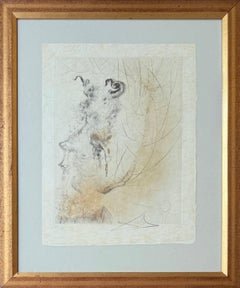
Tete de Veau (Calf s Head)
Located in OPOLE, PL
Salvador Dali (1904-1989) - Tete de Veau (Calf's Head) Drypoint etching and watercolor from 1968. The edition 25/145. Dimensions of work: 38.5 x 28.5 cm. Hand signed. The work i...
Category

1960s Modern Art by Medium: Drypoint

Materials

Drypoint, Etching

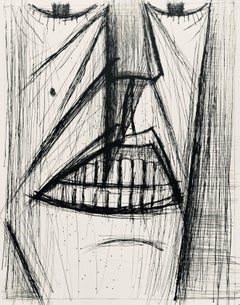
Composition (Reinz 208-222), Voyages Fantastiques, Bernard Buffet
Located in Southampton, NY
Drypoint etching on papier de Rives B.F.K. pur fil paper. Unsigned and unnumbered, as issued. Good condition. Notes: From the folio, Voyages fantastiques aux États et empires de la l...
Category

1950s Modern Art by Medium: Drypoint

Materials

Drypoint, Etching

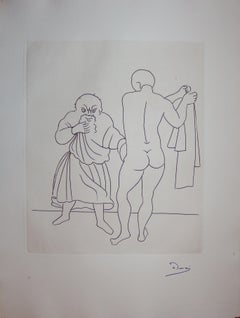
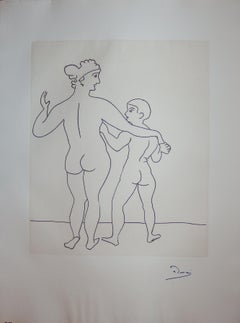
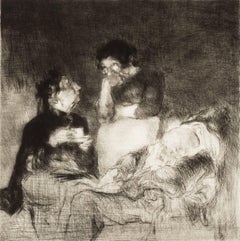
The Examination - Original etching - 1951
Located in Paris, IDF
Andre DERAIN The Examination Original drypoint etching Stamp signature of the artist On vellum 45 x 34 cm (c. 18 x 14 in) Excellent condition
Category

1950s Modern Art by Medium: Drypoint

Materials

Drypoint, Etching

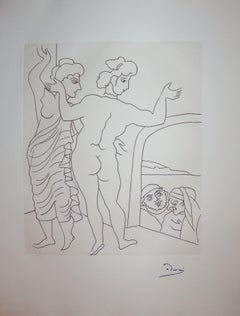
Two Nude Women Surprised - Original etching - 1951
Located in Paris, IDF
Andre DERAIN Two Nude Women Surprised Original drypoint etching Stamp signature of the artist On vellum 45 x 34 cm (c. 18 x 14 in) Excellent condition
Category

1950s Modern Art by Medium: Drypoint

Materials

Drypoint, Etching

Such a Tall Woman - Original etching - 1951
Located in Paris, IDF
Andre DERAIN Such a Tall Woman Original drypoint etching Stamp signature of the artist On vellum 45 x 34 cm (c. 18 x 14 in) Excellent condition
Category

1950s Modern Art by Medium: Drypoint

Materials

Drypoint, Etching

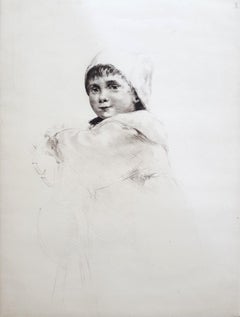
Molly /// Antique Victorian Etching Portrait Figurative British Children Child
Located in Saint Augustine, FL
Artist: Sidney Tushingham (English, 1884-1968) Title: "Molly" *Signed by Tushingham in pencil lower right. It is also monogram signed in the plate (printed signature) upper right Cir...
Category

1920s Modern Art by Medium: Drypoint

Materials

Laid Paper, Drypoint, Etching, Intaglio

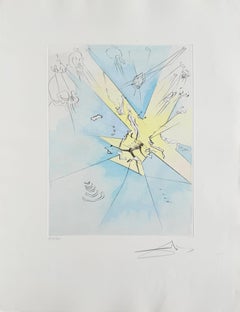
A Shattering Entrance upon the American Stage
Located in OPOLE, PL
Salvador Dali (1904-1989) - A Shattering Entrance upon the American Stage Drypoint etching with stencil from 1973. Editon A 55/195 on Arches paper. Dimensions of work: 65.4 x 50.4...
Category

1970s Modern Art by Medium: Drypoint

Materials

Drypoint, Etching

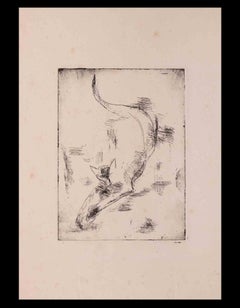
The Cat - Etching and Drypoint by Giselle Halff- 1950s
Located in Roma, IT
The Cat is an Original etching and drypoint print on paper realized by an Anonymous artist in 1950 ca. Good conditions with some foxing.
Category

1950s Modern Art by Medium: Drypoint

Materials

Drypoint, Etching

Prayer to a Divinity - Original etching - 1951
Located in Paris, IDF
Andre DERAIN Prayer to a Divinity Original drypoint etching Stamp signature of the artist On vellum 45 x 34 cm (c. 18 x 14 in) Excellent condition
Category

1950s Modern Art by Medium: Drypoint

Materials

Drypoint, Etching

Picabia, Composition, Du cubisme (after)
Located in Southampton, NY
Drypoint on vélin du Lana Papiers Spéciaux pure rag paper. Unsigned and unnumbered, as issued. Good Condition. Notes: From the folio, Du Cubisme, 1947. Published by Compagnie Françai...
Category

1940s Modern Art by Medium: Drypoint

Materials

Drypoint

Le Viol II
Located in Wien, 9
- handsigned on the lower right - dated and unreadable inscripted in the plate - from the Suite Vollard - plate size: 19,5 x 27,6 cm; sheetsize: 34 x 44,5 cm - edition of 260, unnumb...
Category

1930s Modern Art by Medium: Drypoint

Materials

Drypoint, Etching, Aquatint

Woman s Head - Woman s Head in Profile (left) (Havard)
Located in Fairlawn, OH
Woman's Head - Woman's Head in Profile (left) (Havard) Drypoint, 1920 Unsigned (as issued) From: The Drypoints of Elie Nadelman, 21 unpublished prints by the sculptor, proof from th...
Category

1920s American Modern Art by Medium: Drypoint

Materials

Drypoint

Figure - Original Etching and Drypoint - Mid-20th Century
Located in Roma, IT
Figure in Landscape is an original print in etching, aquatint and drypoint on paper realized by an anonymous artist of the mid-20th Century. In very good conditions. The artwork cr...
Category

Mid-20th Century Modern Art by Medium: Drypoint

Materials

Drypoint, Etching

Le peintre au cirque
Located in Wien, 9
- Plate 55 from the Suite 156 - with stamp signature - dated in the plate 2.3.70 - edition 26/50 - cat. raisonné Bloch 1910
Category

1970s Modern Art by Medium: Drypoint

Materials

Drypoint, Etching

Icart, Sans titre, Le Sopha (after)
Located in Southampton, NY
La pointe sèche etching on vélin de Rives filigrané à notre nom paper. Paper size: 9.5 x 7.5 inches; image size: 6.5 x 4.5 inches. Inscription: unsigned and unnumbered, as issued. No...
Category

1930s Modern Art by Medium: Drypoint

Materials

Drypoint, Etching

Mein Weg mit dem Weib, plate 10
Located in Roma, IT
Drypoint and aquatint (brown ink) on cream paper. Signed "Rehn" in pencil on the lower right margin. Titled and numbered in pencil on the lower left margin. Edition of 25 prints. Fro...
Category

1910s Modern Art by Medium: Drypoint

Materials

Drypoint, Etching, Aquatint

The Butterfly.
Located in Plano, TX
Edmund Blampied, R.E. The Butterfly. 1928-29. Drypoint. Appleby 133. 9 5/8 x 7 7/8). Etching (sheet 15 1/4 x 10 3/16)on 100. A rich impression printed on cream-colored laid 'F.J.He...
Category

Early 20th Century Modern Art by Medium: Drypoint

Materials

Drypoint, Etching

Icart, Sans titre, Le Sopha (after)
Located in Southampton, NY
La pointe sèche etching on vélin de Rives filigrané à notre nom paper. Paper size: 9.5 x 7.5 inches; image size: 6.5 x 4.5 inches. Inscription: unsigned and unnumbered, as issued. No...
Category

1930s Modern Art by Medium: Drypoint

Materials

Drypoint, Etching

Sexual Encounter - Etching ad Drypoint by A. Doré - Late 1900
Located in Roma, IT
Sexual Encounter is a beautiful drypoint made by the French painter, illustrator, and writer Amandine Doré in the second half of the 20th century. The st...
Category

Late 20th Century Modern Art by Medium: Drypoint

Materials

Drypoint, Etching

Amiens; The Cathedral of Notre Dame, from the Lower Town
Located in Middletown, NY
A superb impression from the artist's own collection. Etching with drypoint on watermarked FJ Head & Co. handmade laid paper, 10 3/4 x 9 7/8 inches (272 x 252 mm); sheet 18 1/8 x 14 ...
Category

Early 20th Century American Modern Art by Medium: Drypoint

Materials

Handmade Paper, Laid Paper, Etching, Drypoint

The Barnyard
Located in Middletown, NY
An extremely scare impression of an image Landeck etched while touring Europe after his graduation from Columbia University. Drypoint etching on Japon paper, 9 11/16 x 9 7/8 inches ...
Category

Mid-20th Century American Modern Art by Medium: Drypoint

Materials

Handmade Paper, Drypoint, Etching

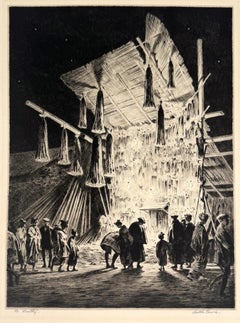
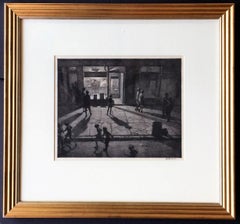
Street Booth, Tokyo, New Year s Eve
Located in Middletown, NY
A superb impression of Martin Lewis's consummate image of Japan. Etching with drypoint on fine cream laid paper, 13 7/8 x 10 3/8 inches (352 x 265 mm); sheet 17 3/4 x 14 1/4 inches ...
Category

Mid-20th Century American Modern Art by Medium: Drypoint

Materials

Handmade Paper, Laid Paper, Drypoint, Etching

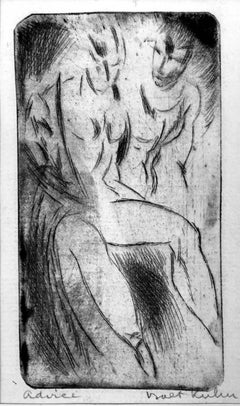
Advice
Located in New York, NY
Walt Kuhn (1877-1949), Advice, etching and drypoint, 1915, signed in pencil lower right and titled lower left. In generally good condition but obviously a proof impression, with marg...
Category

1910s American Modern Art by Medium: Drypoint

Materials

Drypoint, Etching

"Le Bouclier, " Original Drypoint Etching signed by Claude Weisbuch
Located in Milwaukee, WI
"Le Bouclier" is an original drypoint etching by Claude Weisbuch. The artist signed the piece lower right and wrote the edition number (25/100) in the lower left. This piece depicts ...
Category

1970s Modern Art by Medium: Drypoint

Materials

Drypoint, Etching

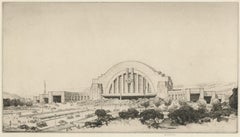
Cincinnati Union Terminal, Perspective From East
Located in Fairlawn, OH
Cincinnati Union Terminal, Perspective From East Drypoint, 1930-1931 Signed in pencil lower right (see photo) Initialed and dated the the plate above the pencil signature From: Cincinnati Series (8 Plates), this No. 2 Edition: 155, completed May 4, 1931 Delivered to Fellheimer & Wagner, 1931 Louis Conrad Rosenberg 1890-1983 An American architectural etcher and engraver of the 1920's and 1930's era, Louis Conrad Rosenberg first studied at the Massachusetts Institute of Technology...
Category

1930s American Modern Art by Medium: Drypoint

Materials

Drypoint

Icart, Sans titre, Le Sopha (after)
Located in Southampton, NY
La pointe sèche etching on vélin de Rives filigrané à notre nom paper. Paper size: 9.5 x 7.5 inches; image size: 6.5 x 4.5 inches. Inscription: unsigned and unnumbered, as issued. No...
Category

1930s Modern Art by Medium: Drypoint

Materials

Drypoint, Etching

The Centenarian
Located in Plano, TX
The Centenarian. 1930-31. Drypoint. Appleby 144. 10 5/16 x 10 3/8 (sheet 17 3/8 by 12 3/8). Edition 100. A rich impression on cream-colored 'Whatman' laid paper with full margins. Signed and numbered in ink. Edmund Blampied was a painter, etcher, lithographer and sculptor. Born in 1886 to a family of three boys in St. Martin, Jersey, Blampied became interested in drawing at an early age. After visiting the studio of John Helier Lander in 1899, Blampied decided to make a career as an artist. In 1903 he went to London to attend Lambeth Art School, where he studied etching under Walter Seymour. In 1905, he joined the Daily Chronicle as an artist. In that year he was awarded a scholarship to Bolt Court Scool of Photo-engraving and Lithography. In 1912 he left the Chronicle and established his own studio. He earned a living by illustrating novels and short stories. In 1913, he had his first exhibition at the Leicester Gallery in London. The following year he married Marianne Van Abbé. During the 1920's, he became a member of the Royal Society of Painter-Etchers and Engravers. During the 1920s Blampied became a member of the Royal Society of Painters-Etchers and Engravers and exhibited in London to critical acclaim. He produced a folio of comic drawings in the 1930s which was published in New York in 1934 and another that was published in London in 1936. The Keeper of Prints and Drawings at the British Museum published a mongraph on his work. His London exhibitions were highly successful. In 1938, he moved to Bulwarks, St.Aubin in Jersey, but at the onset of the Occupation, had to relocate to Route Orange, St. Brelade. remained there throughout World War II during the German Occupation, despite the fact that his wife was Jewish. During the Occupation he designed bank...
Category

1930s Modern Art by Medium: Drypoint

Materials

Drypoint, Etching

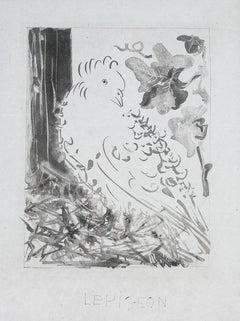
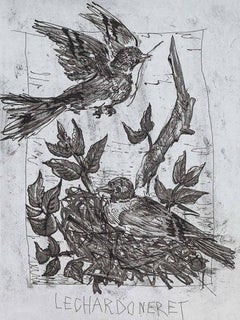
The Pigeon, 1942 (Histoire Naturelle - Textes de Buffon, B.347)
Located in Greenwich, CT
The Pigeon is an aquatint and drypoint print on chine from one of the deluxe copies of Picasso's 1942 Histoire Naturelle - Textes de Buffon series. The image size is 10.75x 8 inches, unsigned as issued, and framed in a contemporary silver and gray moulding. One of about 36 prints that exist with Picasso's remarqued title in French, from the edition of 262 (there were 226 portfolios, some with additional sets on varying papers). Catalogue - Cramer #37 The exceptional etchings from Picasso’s Histoire Naturelle – Textes de Buffon are a masterful combination of sugar-lift aquatint and drypoint, showcasing a full range of gray tonalities. The etchings of animals, birds and insects are considered some of the most beautiful and most unusual examples of Picasso’s graphic work. Roger Lacourière, Picasso’s master printer, pulled the prints for each etching between 1939-1942. It was Lacourière who taught Picasso the sugar-lift aquatint technique which allowed him to mimic the effect of brushstrokes in these etched images. Picasso first explored the technique in his plates for the Vollard Suite, but it was in the creation of the Buffon images that he fully realized its stunning, painterly potential. For the edition, 226 portfolios were produced with the first thirty-six counting as deluxe compilations. These rare deluxe sets were on diverse papers (chine, japon or vergé ancien) and each included a complete additional suite showing Picasso’s title remarques along the bottom. As such, the remarqued versions of the prints are quite rare with just thirty-six of each produced for the edition (with the exception of The Wolf which is never remarqued – the image always fills the entire etching plate). These prints are based on the writings of French naturalist Georges-Louis Leclerc, Comte de Buffon, who extensively documented the natural world in his monumental work Histoire Naturelle. Picasso’s association with the project to illustrate parts of the Buffon came during a tumultuous time in European history – the prelude to, and early years of, World War II. As the continent was ravaged, Picasso lived through the disaster in Paris, which the Germans occupied in 1940. These prints could be seen as a political statement – Picasso channeling his artistic expression into a form of resistance art...
Category

20th Century Modern Art by Medium: Drypoint

Materials

Drypoint, Aquatint

French Village with Church - Etching by Eugene Corneau - Mid-20th Century
Located in Roma, IT
French Village with Church is an artwork realized in the first half of the 20th century by Eugène Corneau. Etching and drypoint on paper. Monogrammed in pencil by the artist on the ...
Category

Mid-20th Century Modern Art by Medium: Drypoint

Materials

Drypoint, Etching

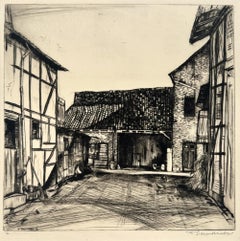
Market Square, Rothenburg, Germany
Located in Middletown, NY
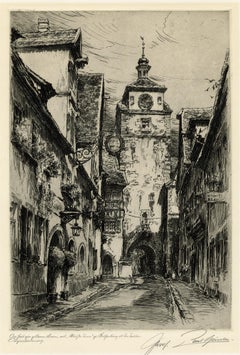
Etching and drypoint on cream wove paper, 10 3/4 x 7 1/2 inches (270 x 190 mm), full margins. Signed, inscribed and titled in pencil, lower margin. In good condition with minor mat t...
Category

Early 20th Century Modern Art by Medium: Drypoint

Materials

Handmade Paper, Drypoint, Etching

The Sparrow Hawk, 1942 (Histoire Naturelle - Textes de Buffon, B.342)
Located in Greenwich, CT
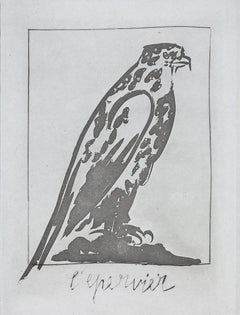
The Sparrow Hawk is an aquatint and drypoint print on chine from one of the deluxe copies of Picasso's 1942 Histoire Naturelle - Textes de Buffon series. The image size is 10.5 x 8 inches, unsigned as issued, and framed in a contemporary silver and gray moulding. One of about 36 prints that exist with Picasso's remarqued title in French, from the edition of 262 (there were 226 portfolios, some with additional sets on varying papers). Catalogue - Cramer #37 The exceptional etchings from Picasso’s Histoire Naturelle – Textes de Buffon are a masterful combination of sugar-lift aquatint and drypoint, showcasing a full range of gray tonalities. The etchings of animals, birds and insects are considered some of the most beautiful and most unusual examples of Picasso’s graphic work. Roger Lacourière, Picasso’s master printer, pulled the prints for each etching between 1939-1942. It was Lacourière who taught Picasso the sugar-lift aquatint technique which allowed him to mimic the effect of brushstrokes in these etched images. Picasso first explored the technique in his plates for the Vollard Suite, but it was in the creation of the Buffon images that he fully realized its stunning, painterly potential. For the edition, 226 portfolios were produced with the first thirty-six counting as deluxe compilations. These rare deluxe sets were on diverse papers (chine, japon or vergé ancien) and each included a complete additional suite showing Picasso’s title remarques along the bottom. As such, the remarqued versions of the prints are quite rare with just thirty-six of each produced for the edition (with the exception of The Wolf which is never remarqued – the image always fills the entire etching plate). These prints are based on the writings of French naturalist Georges-Louis Leclerc, Comte de Buffon, who extensively documented the natural world in his monumental work Histoire Naturelle. Picasso’s association with the project to illustrate parts of the Buffon came during a tumultuous time in European history – the prelude to, and early years of, World War II. As the continent was ravaged, Picasso lived through the disaster in Paris, which the Germans occupied in 1940. These prints could be seen as a political statement – Picasso channeling his artistic expression into a form of resistance art...
Category

20th Century Modern Art by Medium: Drypoint

Materials

Drypoint, Aquatint

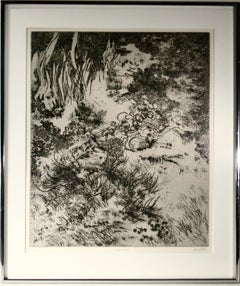
Vegetation I
Located in San Francisco, CA
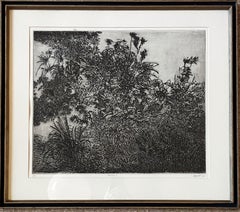
This artwork titled "Vegetation I" 1962, is an original drypoint etching by noted American artist Peter Winslow Milton, b.1930. It is hand signed, dated and numbered 8/40 in pencil b...
Category

Mid-20th Century American Modern Art by Medium: Drypoint

Materials

Drypoint, Etching

Icart, Composition, Le Sopha (after)
Located in Southampton, NY
La pointe sèche etching on vélin de Rives filigrané à notre nom paper. Paper size: 9.5 x 7.5 inches; image size: 6.5 x 4.5 inches. Inscription: unsigned and unnumbered, as issued. No...
Category

1930s Modern Art by Medium: Drypoint

Materials

Drypoint, Etching

Spring Night, Greenwich Village
Located in Plano, TX
Spring Night, Greenwich Village. 1930. Drypoint and sand ground. McCarron 85. 10 x 12 3/8 (sheet 13 1/4 x 15 5/8)). Edition 92. A rich, tonal impress...
Category

1930s American Modern Art by Medium: Drypoint

Materials

Drypoint, Etching

A Sunset in Ireland.
Located in Plano, TX
A Sunset in Ireland. 1863. Etching and drypoint. Schneiderman catalog number 47 state vii/xiv. 5 1/2 x 8 1/2 (sheet 6 7/8 x 9 1/2). An extremely rich impression with drypoint burr, p...
Category

19th Century Modern Art by Medium: Drypoint

Materials

Drypoint, Etching

Windy Night, Stockholm.
Located in Plano, TX
Windy Night, Stockholm. 1935. Drypoint. Dodgson 457.x. 11 7/8 x 7 5/8 (sheet 15 1/2 x 10 7/8). Edition of 80 in this state (total 93 in 10 states). Illustrated: Guichard, British Etc...
Category

1930s Modern Art by Medium: Drypoint

Materials

Drypoint, Etching

The Goldfinch, 1942 (Histoire Naturelle - Textes de Buffon, B.348 )
Located in Greenwich, CT
The Goldfinch is an aquatint and drypoint print on chine from one of the deluxe copies of Picasso's 1942 Histoire Naturelle - Textes de Buffon series. The image size is 11.2 x 8.25 inches, unsigned as issued, and framed in a contemporary silver and gray moulding. One of about 36 prints that exist with Picasso's remarqued title in French, from the edition of 262 (there were 226 portfolios, some with additional sets on varying papers). Catalogue - Cramer #37 The exceptional etchings from Picasso’s Histoire Naturelle – Textes de Buffon are a masterful combination of sugar-lift aquatint and drypoint, showcasing a full range of gray tonalities. The etchings of animals, birds and insects are considered some of the most beautiful and most unusual examples of Picasso’s graphic work. Roger Lacourière, Picasso’s master printer, pulled the prints for each etching between 1939-1942. It was Lacourière who taught Picasso the sugar-lift aquatint technique which allowed him to mimic the effect of brushstrokes in these etched images. Picasso first explored the technique in his plates for the Vollard Suite, but it was in the creation of the Buffon images that he fully realized its stunning, painterly potential. For the edition, 226 portfolios were produced with the first thirty-six counting as deluxe compilations. These rare deluxe sets were on diverse papers (chine, japon or vergé ancien) and each included a complete additional suite showing Picasso’s title remarques along the bottom. As such, the remarqued versions of the prints are quite rare with just thirty-six of each produced for the edition (with the exception of The Wolf which is never remarqued – the image always fills the entire etching plate). These prints are based on the writings of French naturalist Georges-Louis Leclerc, Comte de Buffon, who extensively documented the natural world in his monumental work Histoire Naturelle. Picasso’s association with the project to illustrate parts of the Buffon came during a tumultuous time in European history – the prelude to, and early years of, World War II. As the continent was ravaged, Picasso lived through the disaster in Paris, which the Germans occupied in 1940. These prints could be seen as a political statement – Picasso channeling his artistic expression into a form of resistance art...
Category

20th Century Modern Art by Medium: Drypoint

Materials

Drypoint, Aquatint

Fallscape
Located in San Francisco, CA
This artwork titled "Fallscape" 1961, is an original drypoint etching by noted American artist Peter Winslow Milton, b.1930. It is hand signed, dated and numbered 15/40 in pencil by ...
Category

Mid-20th Century American Modern Art by Medium: Drypoint

Materials

Drypoint, Etching

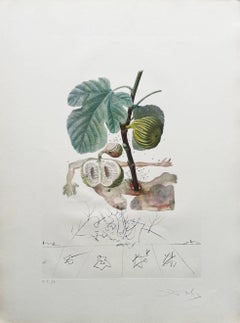
Homme figuier (Fig Man)
Located in OPOLE, PL
Salvador Dali (1904-1989) - Holed Fruit from Flordali suite Lithograph with drypoint etching from 1969. The edition 16/35 on Rives paper. Dimensions of work: 74.5 x 54.5 cm. Hand...
Category

1960s Modern Art by Medium: Drypoint

Materials

Drypoint, Etching

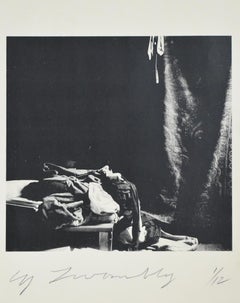
CY TWOMBLY BLACK WHITE PHOTO PHOTOGRAPHY MID CENTURY 1 OF 12
Located in San Antonio, TX
Cy Twombly (1928-2011) Virginia/ New York / Italy Image Size: 16 x 11 Visible inside matboard is 12 x 11 Frame Size: 21.5 x 19 Medium: Photograph Edition 1/12 Signed with the edition number "Black and White" 1954 This is an original. The same photo in the Twombly book is a dry point on cardboard but is unsigned by hand. Cy Twombly (1928-2011) Following is the obituary of the artist by Randy Kennedy, The New York Times, July 5, 2011 Cy Twombly, whose spare, childlike scribbles and poetic engagement with antiquity left him stubbornly out of step with the movements of postwar American art even as he became one of the era's most important painters, died on Tuesday in Rome. He was 83. His death was announced by the Gagosian Gallery, which represents his work. Mr. Twombly had battled cancer for several years. In a career that slyly subverted Abstract Expressionism, toyed briefly with Minimalism, seemed barely to acknowledge Pop art and anticipated some of the concerns of Conceptualism, Mr. Twombly was a divisive artist almost from the start. The curator Kirk Varnedoe, on the occasion of a 1994 retrospective at the Museum of Modern Art, wrote that his work was "influential among artists, discomfiting to many critics and truculently difficult not just for a broad public, but for sophisticated initiates of postwar art as well." The critic Robert Hughes called him "the Third Man, a shadowy figure, beside that vivid duumvirate of his friends Jasper Johns and Robert Rauschenberg." Mr. Twombly's decision to settle permanently in southern Italy in 1957 as the art world shifted decisively in the other direction, from Europe to New York, was only the most symbolic of his idiosyncrasies. He avoided publicity throughout his life and mostly ignored his critics, who questioned constantly whether his work deserved a place at the forefront of 20th century abstraction, though he lived long enough to see it arrive there. It didn't help that his paintings, because of their surface complexity and whirlwinds of tiny detail — scratches, erasures, drips, penciled fragments of Italian and classical verse amid scrawled phalluses and buttocks — lost much of their power in reproduction. But Mr. Twombly, a tall, rangy Virginian who once practiced drawing in the dark to make his lines less purposeful, steadfastly followed his own program and looked to his own muses — often literary ones, like Catullus, Rumi, Pound and Rilke. He seemed to welcome the privacy that came with unpopularity. "I had my freedom and that was nice," he said in a rare interview, with Nicholas Serota, the director of the Tate, before a 2008 survey of his career at the Tate Modern. The critical low point probably came after a widely panned 1964 exhibition at the Leo Castelli Gallery in New York. The artist and writer Donald Judd, who was hostile toward painting in general, was especially damning, calling the show a fiasco. "There are a few drips and splatters and an occasional pencil line," he wrote in a review. "There isn't anything to these paintings." But by the 1980s, with the rise of neo-Expressionism, a generation of younger artists like Jean-Michel Basquiat found inspiration in Mr. Twombly's skittery bathroom-graffiti scrawl. Coupled with rising interest in European artists whose work shared unexpected ground with Twombly's, like Joseph Beuys, the newfound attention brought him a kind of critical favor he had never enjoyed before. And by the next decade, he was highly sought after not only by European museums and collectors, who had discovered his work early on, but also by those back in his homeland who had not known what to make of him two decades before. In 1989, the Philadelphia Museum of Art opened permanent rooms dedicated to his monumental 10-painting cycle, Fifty Days at Iliam, based on Alexander Pope's translation of The Iliad. (Mr. Twombly said that he purposely misspelled Ilium, a Latin name for Troy, with an "a," to refer to Achilles.) That same year, Mr. Twombly's work passed the million dollar mark at auction. In 1995, the Menil Collection in Houston opened a new gallery dedicated to his work, designed by Renzo Piano after a plan by Mr. Twombly himself. Despite this growing acceptance, Mr. Varnedoe still felt it necessary to include an essay in the Modern's newsletter at the time of the retrospective, titled "Your Kid Could Not Do This, and Other Reflections on Cy Twombly." In the only written statement Mr. Twombly ever made about his work, a short essay in an Italian art journal in 1957, he tried to make clear that his intentions were not subversive but elementally human. Each line he made, he said, was "the actual experience" of making the line, adding: "It does not illustrate. It is the sensation of its own realization." Years later, he described this more plainly. "It's more like I'm having an experience than making a picture," he said. The process stood in stark contrast to the detached, effete image that often clung to Mr. Twombly. After completing a work, in a kind of ecstatic state, it was as if the painting existed but he himself barely did anymore: "I usually have to go to bed for a couple of days," he said. Edwin Parker Twombly Jr., was born in Lexington, Va., on April 25, 1928, to parents who had moved to the South from New England. His father, a talented athlete who pitched a summer for the Chicago White Sox and went on to become a revered college swimming coach, was nicknamed Cy, after Cy Young, the Hall of Fame pitcher. The younger Mr. Twombly (pronounced TWAHM-blee) inherited the name, though he was much more bookish than athletic as a child, with stooped shoulders and a high ponderous forehead. He read avidly and, discovering his calling early, he worked from art kits he ordered from the Sears Roebuck catalog. As a teenager, he studied with the Spanish painter Pierre Daura, who had left Europe after the Spanish Civil War and settled in Lexington. Daura's wife, Louise Blair, studied cave paintings and may have sparked Mr. Twombly's early interest in Paleolithic art. In 1947 he attended the Boston Museum School, where German Expressionism was the rage, but Mr. Twombly gravitated to his own interests, like Dada and Kurt Schwitters and particularly to Jean Dubuffet and Alberto Giacometti, two important early influences. He moved back to Lexington in 1949 and studied art at Washington and Lee University, where his talent impressed teachers. By 1950, he was in New York, the recipient of a scholarship to the Art Students League. Later in his life, he cited visiting Willem de Kooning's studio and seeing an Arshile Gorky retrospective at the Whitney Museum of American Art as important moments in his young painting life. But he also came to New York at the heyday of the New York School and was exposed to the work of almost all its giants in the city's galleries. He turned down an offer for a solo show of his paintings at the Art Students League in 1950, saying that he felt it was too early for him. He met Rauschenberg, a fellow student at the league, during his second semester, and Rauschenberg later persuaded Mr. Twombly to enroll at Black Mountain College in North Carolina, which had become a crucible for the American avant-garde, with John Cage, Merce Cunningham, Ray Johnson, Dorothea Rockburne and John Chamberlain among its faculty and students. Mr. Twombly, who studied with Ben Shahn, stayed at the college only briefly and was a bit of an outsider even then. As he told Mr. Serota: "I was always doing my own thing. I always wondered why there are books with photographs of all the artists of that period and I was only in one! I thought: 'Where was I?' " In the summer of 1952, after receiving a grant from the Virginia Museum of Fine Arts, Mr. Twombly traveled to Europe for the first time and met up with Rauschenberg. The two wandered through Italy, North Africa and Spain, an experience that later yielded some of the first paintings to be considered a part of Mr. Twombly's mature work. "Tiznit," made with white enamel house paint and pencil and crayon, with gouges and scratches in the surface, was named for a town in Morocco that he had visited, and the painting's primitivist shapes were inspired by tribal pieces he saw at the ethnographic museum in Rome, as well as by artists like Dubuffet, de Kooning and Franz Kline. The painting, along with another based on tribal motifs, was exhibited in 1953 at Eleanor Ward's Stable Gallery on West 58th Street along with monochromatic paintings by Rauschenberg. The show was generally savaged. (Early this year, the Museum of Modern Art acquired "Tiznit," along with another early work, which Mr. Twombly had kept in his personal collection.) Mr. Twombly was drafted and spent more than a year in the Army, where he was assigned to cryptography work in Washington. On weekends and leaves, he continued to paint and draw, sometimes at night with the lights out to try to lose techniques he had learned in art classes and to express himself more instinctively. After receiving a medical discharge and teaching for a time in Virginia, Mr. Twombly returned to New York and worked in a studio on William Street, near both Rauschenberg and Johns, who helped choose titles for his paintings during this period. Mr. Twombly tried without success for several months to get a grant to go back to Europe and in 1957, with Ward's help, he spent several months in Italy, where he met Tatiana Franchetti...
Category

1950s Modern Art by Medium: Drypoint

Materials

Drypoint

Siena [Large Version] - British Modernism Italian Architecture Siena
Located in London, GB
This original etching and drypoint is hand signed in pencil by the artist "Nicholson" at the lower left margin and dated “65” next to the signature. It is also hand numbered from the...
Category

1960s Modern Art by Medium: Drypoint

Materials

Drypoint, Etching

Erotic Scene - Etching ad Drypoint by A. Doré -1950s
Located in Roma, IT
Erotic Scene is a fun and pleasant drypoint realized by the French painter, illustrator, and writer Amandine Doré around the mid-20th century. The state...
Category

1950s Modern Art by Medium: Drypoint

Materials

Drypoint, Etching

Icart, Sans titre, Le Sopha (after)
Located in Southampton, NY
La pointe sèche etching on vélin de Rives filigrané à notre nom paper. Paper size: 9.5 x 7.5 inches; image size: 6.5 x 4.5 inches. Inscription: unsigned and unnumbered, as issued. No...
Category

1930s Modern Art by Medium: Drypoint

Materials

Drypoint, Etching

Icart, Sans titre, Le Sopha (after)
Located in Southampton, NY
La pointe sèche etching on vélin de Rives filigrané à notre nom paper. Paper size: 9.5 x 7.5 inches; image size: 6.5 x 4.5 inches. Inscription: unsigned and unnumbered, as issued. No...
Category

1930s Modern Art by Medium: Drypoint

Materials

Drypoint, Etching

Fonte Nuova, Siena
Located in Middletown, NY
Etching with drypoint on lightweight Japon paper, 9 3/4 x 9 7/8 inches ( 247 x 250 mm); sheet 14 x 12 3/4 inches (355 x 324 mm), full margins. Signed in pencil in the lower margin. I...
Category

Late 19th Century American Modern Art by Medium: Drypoint

Materials

Handmade Paper, Drypoint, Etching

Mokihana (Hawaii) — Classic Polynesian Portrait
Located in Myrtle Beach, SC
John Melville Kelly, 'Mokihana (Hawaii)', drypoint, 1946. Signed, titled, and annotated 'No 5' in pencil. A superb, finely nuanced impression, in dark brown ink, on cream wove Japan ...
Category

1940s American Modern Art by Medium: Drypoint

Materials

Drypoint

Framboisier (Raspberry Bush)
Located in OPOLE, PL
Salvador Dali (1904-1989) - Holed Fruit from Flordali suite Lithograph with drypoint etching from 1969. The edition 16/35 on Rives paper. Dimensions of work: 74.5 x 54.5 cm. Hand...
Category

1960s Modern Art by Medium: Drypoint

Materials

Drypoint, Etching

Sexual Encounter - Original Etching ad Drypoint by A. Doré - Late 1900
Located in Roma, IT
Sexual Encounter is a beautiful drypoint made by the French painter, illustrator, and writer Amandine Doré in the second half of the 20th century. The st...
Category

Late 20th Century Modern Art by Medium: Drypoint

Materials

Drypoint, Etching

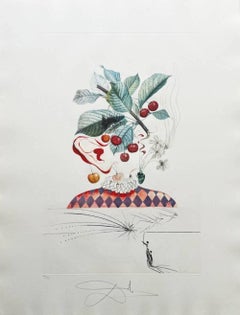
Cérises Pierrot (Pierrot Cherries)
Located in OPOLE, PL
Salvador Dali (1904-1989) - Holed Fruit from Flordali suite Lithograph with drypoint etching from 1969. The edition 16/35 on Rives paper. Dimensions of work: 74.5 x 54.5 cm. Hand...
Category

1960s Modern Art by Medium: Drypoint

Materials

Drypoint, Etching

Vegetation III
Located in San Francisco, CA
This artwork titled "Vegetation III" 1963, is an original drypoint etching by noted American artist Peter Winslow Milton, b.1930. It is hand signed, titled, dated and numbered 14/50 ...
Category

Mid-20th Century American Modern Art by Medium: Drypoint

Materials

Drypoint, Etching

La Mort du Chat Murr - Etching by Jean François Raffaëlli - 1875
Located in Roma, IT
Etching on laid paper Inscribed in pencil: Épreuve tirée de la planche donnée personnellement par l’artiste pour la Société des Aquafortistes Published by Cadart Luquet, Éditeu...
Category

1870s Modern Art by Medium: Drypoint

Materials

Drypoint, Etching

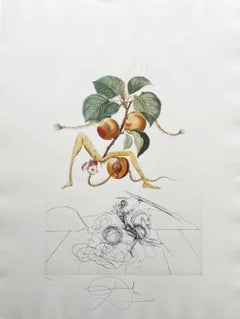
Abricot chevalier (Apricot Knight)
Located in OPOLE, PL
Salvador Dali (1904-1989) - Holed Fruit from Flordali suite Lithograph with drypoint etching from 1969. The edition 16/35 on Rives paper. Dimensions of work: 74.5 x 54.5 cm. Hand...
Category

1960s Modern Art by Medium: Drypoint

Materials

Drypoint, Etching

Marshland
Located in San Francisco, CA
This artwork titled "Marshland" 1962, is an original drypoint etching by noted American artist Peter Winslow Milton, b.1930. It is hand signed, dated, titled and numbered 31/40 in pe...
Category

Mid-20th Century American Modern Art by Medium: Drypoint

Materials

Drypoint, Etching

The Cabin - Drypoint by Francis Saymour-Haden - 1877
Located in Roma, IT
The Cabin is an original Modern artwork realized by Sir Francis Saymour-Haden (16 September 1818 – 1 June 1910) in 1877. Beautiful Proof on vélin fort, with stamp "Lugt 1048”. Full ...
Category

1870s Modern Art by Medium: Drypoint

Materials

Drypoint, Etching

Drypoint art for sale on 1stDibs.

Find a wide variety of authentic Drypoint art available on 1stDibs. While artists have worked in this medium across a range of time periods, art made with this material during the 21st Century is especially popular. If you’re looking to add art created with this material to introduce a provocative pop of color and texture to an otherwise neutral space in your home, the works available on 1stDibs include elements of orange, yellow, green, red and other colors. There are many well-known artists whose body of work includes ceramic sculptures. Popular artists on 1stDibs associated with pieces like this include Salvador Dalí, Pablo Picasso, André Derain, and Anselmo Bucci. Frequently made by artists working in the Modern, Contemporary, all of these pieces for sale are unique and many will draw the attention of guests in your home. Not every interior allows for large Drypoint art, so small editions measuring 0.01 inches across are also available