Art by Medium: Linocut
to
75
191
78
91
43
24
Overall Width
to
Overall Height
to
46
381
1
1
4
1
16
12
427
207
110
55
24
18
14
7
7
4
2
1
202
156
69
129
74
74
62
58
51
48
39
39
37
31
27
23
21
21
19
19
18
14
13
1,161
39,130
28,830
22,816
20,557
38
24
23
20
18
33
43
278
136
Style: Contemporary
Medium: Linocut
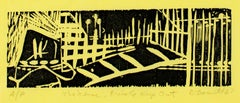
"The Fence, Private Keep Out, " Original Linocut on Yellow Paper
Located in Milwaukee, WI
"The Fence, Private Keep Out" is an original linocut print on yellow paper by David Barnett. The artist signed the piece lower right, wrote the title lower center, and wrote the edit...
Category
1960s Contemporary Art by Medium: Linocut
Materials
Linocut
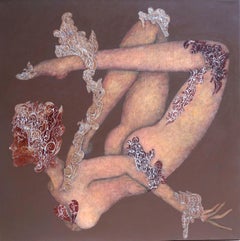
Pendragone
Located in Brooklyn, NY
Linen, acrylic paint, linocut.
Category
2010s Contemporary Art by Medium: Linocut
Materials
Linen, Acrylic, Linocut

$4,320 Sale Price
20% Off
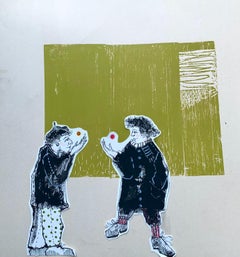
Georgian Contemporary Art by Nina Narimanishvili - Balls of Hope
Located in Paris, IDF
Ink & linocut on paper - sold with a frame 39 x 37 x 4 cm
Nina Narimanishvili is a Georgian artist born in 1999 who lives and works in Tbilisi, Georgia. Nina has been painting since...
Category
2010s Contemporary Art by Medium: Linocut
Materials
Paper, Ink, Linocut
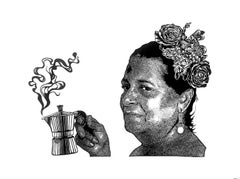
Dame, My Dear Dame : linocut print
Located in New York, NY
FDEZ’s artwork draws on allegory, sarcasm, symbolism & impactful images, to compose works that critique social and political issues from the world we live in, with the intent to capt...
Category
2010s Contemporary Art by Medium: Linocut
Materials
Linocut
Elder, My Dear Elder : linocut print
Located in New York, NY
FDEZ’s artwork draws on allegory, sarcasm, symbolism & impactful images, to compose works that critique social and political issues from the world we live in, with the intent to capt...
Category
2010s Contemporary Art by Medium: Linocut
Materials
Linocut
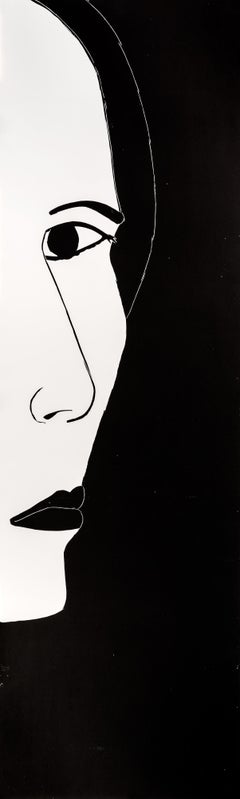
Nicole (12/12)
By Alex Katz
Located in Fort Lauderdale, FL
Alex Katz was born in Brooklyn, New York in 1927. In 1928, at the outset of the Depression, his family moved to St. Albans, a diverse suburb of Queens that had sprung up between the two wars. Katz was raised in St. Albans by his Russian parents. His mother had been an actress and possessed a deep interest in poetry and his father, a businessman, also had an interest in the arts. Katz attended Woodrow Wilson High School for its unique program that allowed him to devote his mornings to academics and his afternoons to the arts. In 1946, Katz entered The Cooper Union Art School in Manhattan, a prestigious college of art, architecture, and engineering. At The Cooper Union, Katz studied painting under Morris Kantor and was trained in Modern art theories and techniques. Upon graduating in 1949, Katz was awarded a scholarship for summer study at the Skowhegan School for Painting and Sculpture in Maine, a grant that he would renew the following summer.
During his years at Cooper Union, Katz had been exposed primarily to modern art and was taught to paint from drawings. Skowhegan exposed him to painting from life, which would prove pivotal in his development as a painter and remains a staple of his practices today. Katz explains that Skowhegan’s plein air painting gave him “a reason to devote my life to painting.” Katz’s first one-person show was held at the Roko Gallery in 1954. Katz had begun to develop greater acquaintances with the New York School and their allies in the other arts; he counted amongst his friends’ figurative painters Larry Rivers and Fairfield Porter, photographer Rudolph Burckhardt, and poets John Ashbery, Edwin Denby, Frank O’Hara, and James Schuyler. From 1955 to 1959, usually following a day of painting, Katz made small collages of figures in landscapes from hand-colored strips of delicately cut paper.
In the late 1950s, he moved towards greater realism in his paintings. Katz became increasingly interested in portraiture, and painted his friends and his wife and muse, Ada. He embraced monochrome backgrounds, which would become a defining characteristic of his style, anticipating Pop Art and separating him from gestural figure painters and the New Perceptual Realism. In 1959, Katz made his first cutout, which would grow into a series of flat “sculptures;” freestanding or relief portraits that exist in actual space.
In the early 1960s, influenced by films, television, and billboard advertising, Katz began painting large-scale paintings, often with dramatically cropped faces. In 1965, he also embarked on a prolific career in printmaking. Katz would go on to produce many editions in lithography, etching, silkscreen, woodcut and linoleum cut. After 1964, Katz increasingly portrayed groups of figures.
He would continue painting these complex groups into the 1970s, portraying the social world of painters, poets, critics, and other colleagues that surrounded him. He began designing sets and costumes for choreographer Paul Taylor in the early 1960s, and he has painted many images of dancers throughout the years. In the 1980s, Katz took on a new subject in his work: fashion models in designer clothing. In the late 1980s and 1990s, Katz focused much of his attention on large landscape paintings, which he characterizes as “environmental.” Rather than observing a scene from afar, the viewer feels enveloped by nearby nature. Katz began each of these canvases with “an idea of the landscape, a conception,” trying to find the image in nature afterwards. In his landscape paintings, Katz loosened the edges of the forms, executing the works with greater painterliness than before in these allover canvases. In 1986, Katz began painting a series of night pictures—a sharp departure from the sunlit landscapes he had previously painted, forcing him to explore a new type of light. Variations on the theme of light falling through branches appear in Katz’s work throughout the 1990s and into the 21st century.
At the beginning of the new millennium, Katz also began painting flowers in profusion, covering canvases in blossoms similar to those he had first explored in the late 1960s, when he painted large close-ups of flowers in solitude or in small clusters. More recently Katz began painting a series of dancers and one of nudes, which was the subject of a 2011 exhibition at the Kestnergesellschaft in Hanover. Katz’s work continues to grow and evolve today. Alex Katz's work has been the subject of more than 200 solo exhibitions and nearly 500 group exhibitions internationally since 1951. In 2010, Alex Katz Prints was on view at the Albertina Museum in Vienna, which showed a retrospective survey of over 150 graphic works from a recent donation to the museum by Katz of his complete graphic oeuvre. The National Portrait Gallery in London presented an exhibition titled Alex Katz Portraits.
In June 2010, The Farnsworth Art Museum in Rockland, Maine opened Alex Katz: New Work, exhibiting recent large-scale paintings inspired by his summers spent in Maine. Katz was also represented in a show at the Metropolitan Museum of Art, New York, curated by Marla Prather, entitled Facing the Figure: Selections from the Permanent Collection, 2010. In 2009-2010, Alex Katz: An American Way Of Seeing was on view at the Sara Hildén Art Museum, Tampere, Finland; Musée Grenoble, Grenoble, France; and the Museum Kurhaus Kleve, Kleve, Germany. In 2007, Alex Katz: New York opened at the Irish Museum of Modern Art, Dublin, Ireland. The show, which included approximately 40 paintings and aquatints, was the first exhibition to concentrate primarily on Katz’s relationship with his native city.
The Jewish Museum, New York, presented Alex Katz Paints Ada in 2006-2007, an exhibition of 40 paintings focused on Katz’s wife, Ada, dating from 1957 to 2005. It coincided with an exhibition devoted to Katz’s paintings of the 1960s at PaceWildenstein, Alex Katz: The Sixties, on view from April 27 through June 17, 2006 at 545 West 22nd Street. Alex Katz in Maine, an exhibition of landscapes and portraits made over six decades, opened at The Farnsworth Art Museum and Wyeth...
Category
2010s Contemporary Art by Medium: Linocut
Materials
Linocut
Price Upon Request
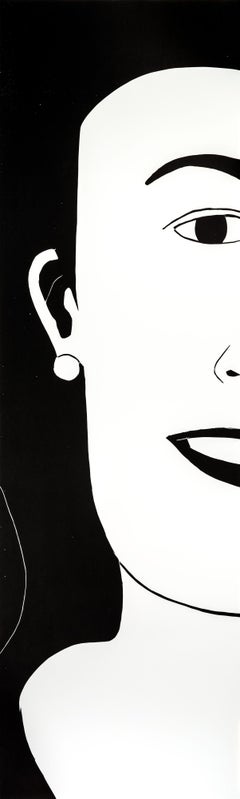
Halsey (12/12)
By Alex Katz
Located in Fort Lauderdale, FL
Alex Katz was born in Brooklyn, New York in 1927. In 1928, at the outset of the Depression, his family moved to St. Albans, a diverse suburb of Queens that had sprung up between the two wars. Katz was raised in St. Albans by his Russian parents. His mother had been an actress and possessed a deep interest in poetry and his father, a businessman, also had an interest in the arts. Katz attended Woodrow Wilson High School for its unique program that allowed him to devote his mornings to academics and his afternoons to the arts. In 1946, Katz entered The Cooper Union Art School in Manhattan, a prestigious college of art, architecture, and engineering. At The Cooper Union, Katz studied painting under Morris Kantor and was trained in Modern art theories and techniques. Upon graduating in 1949, Katz was awarded a scholarship for summer study at the Skowhegan School for Painting and Sculpture in Maine, a grant that he would renew the following summer.
During his years at Cooper Union, Katz had been exposed primarily to modern art and was taught to paint from drawings. Skowhegan exposed him to painting from life, which would prove pivotal in his development as a painter and remains a staple of his practices today. Katz explains that Skowhegan’s plein air painting gave him “a reason to devote my life to painting.” Katz’s first one-person show was held at the Roko Gallery in 1954. Katz had begun to develop greater acquaintances with the New York School and their allies in the other arts; he counted amongst his friends’ figurative painters Larry Rivers and Fairfield Porter, photographer Rudolph Burckhardt, and poets John Ashbery, Edwin Denby, Frank O’Hara, and James Schuyler. From 1955 to 1959, usually following a day of painting, Katz made small collages of figures in landscapes from hand-colored strips of delicately cut paper.
In the late 1950s, he moved towards greater realism in his paintings. Katz became increasingly interested in portraiture, and painted his friends and his wife and muse, Ada. He embraced monochrome backgrounds, which would become a defining characteristic of his style, anticipating Pop Art and separating him from gestural figure painters and the New Perceptual Realism. In 1959, Katz made his first cutout, which would grow into a series of flat “sculptures;” freestanding or relief portraits that exist in actual space.
In the early 1960s, influenced by films, television, and billboard advertising, Katz began painting large-scale paintings, often with dramatically cropped faces. In 1965, he also embarked on a prolific career in printmaking. Katz would go on to produce many editions in lithography, etching, silkscreen, woodcut and linoleum cut. After 1964, Katz increasingly portrayed groups of figures.
He would continue painting these complex groups into the 1970s, portraying the social world of painters, poets, critics, and other colleagues that surrounded him. He began designing sets and costumes for choreographer Paul Taylor in the early 1960s, and he has painted many images of dancers throughout the years. In the 1980s, Katz took on a new subject in his work: fashion models in designer clothing. In the late 1980s and 1990s, Katz focused much of his attention on large landscape paintings, which he characterizes as “environmental.” Rather than observing a scene from afar, the viewer feels enveloped by nearby nature. Katz began each of these canvases with “an idea of the landscape, a conception,” trying to find the image in nature afterwards. In his landscape paintings, Katz loosened the edges of the forms, executing the works with greater painterliness than before in these allover canvases. In 1986, Katz began painting a series of night pictures—a sharp departure from the sunlit landscapes he had previously painted, forcing him to explore a new type of light. Variations on the theme of light falling through branches appear in Katz’s work throughout the 1990s and into the 21st century.
At the beginning of the new millennium, Katz also began painting flowers in profusion, covering canvases in blossoms similar to those he had first explored in the late 1960s, when he painted large close-ups of flowers in solitude or in small clusters. More recently Katz began painting a series of dancers and one of nudes, which was the subject of a 2011 exhibition at the Kestnergesellschaft in Hanover. Katz’s work continues to grow and evolve today. Alex Katz's work has been the subject of more than 200 solo exhibitions and nearly 500 group exhibitions internationally since 1951. In 2010, Alex Katz Prints was on view at the Albertina Museum in Vienna, which showed a retrospective survey of over 150 graphic works from a recent donation to the museum by Katz of his complete graphic oeuvre. The National Portrait Gallery in London presented an exhibition titled Alex Katz Portraits.
In June 2010, The Farnsworth Art Museum in Rockland, Maine opened Alex Katz: New Work, exhibiting recent large-scale paintings inspired by his summers spent in Maine. Katz was also represented in a show at the Metropolitan Museum of Art, New York, curated by Marla Prather, entitled Facing the Figure: Selections from the Permanent Collection, 2010. In 2009-2010, Alex Katz: An American Way Of Seeing was on view at the Sara Hildén Art Museum, Tampere, Finland; Musée Grenoble, Grenoble, France; and the Museum Kurhaus Kleve, Kleve, Germany. In 2007, Alex Katz: New York opened at the Irish Museum of Modern Art, Dublin, Ireland. The show, which included approximately 40 paintings and aquatints, was the first exhibition to concentrate primarily on Katz’s relationship with his native city.
The Jewish Museum, New York, presented Alex Katz Paints Ada in 2006-2007, an exhibition of 40 paintings focused on Katz’s wife, Ada, dating from 1957 to 2005. It coincided with an exhibition devoted to Katz’s paintings of the 1960s at PaceWildenstein, Alex Katz: The Sixties, on view from April 27 through June 17, 2006 at 545 West 22nd Street. Alex Katz in Maine, an exhibition of landscapes and portraits made over six decades, opened at The Farnsworth Art Museum and Wyeth...
Category
2010s Contemporary Art by Medium: Linocut
Materials
Linocut
Price Upon Request
Linocut art for sale on 1stDibs.
Find a wide variety of authentic Linocut art available on 1stDibs. While artists have worked in this medium across a range of time periods, art made with this material during the 21st Century is especially popular. If you’re looking to add art created with this material to introduce a provocative pop of color and texture to an otherwise neutral space in your home, the works available on 1stDibs include elements of blue, purple, orange, green and other colors. There are many well-known artists whose body of work includes ceramic sculptures. Popular artists on 1stDibs associated with pieces like this include Mino Maccari, (after) Pablo Picasso, Rob Barnes, and Pablo Picasso. Frequently made by artists working in the Contemporary, Modern, all of these pieces for sale are unique and many will draw the attention of guests in your home. Not every interior allows for large Linocut art, so small editions measuring 0.01 inches across are also available