Art by Medium: Woodcut
to
173
2,390
243
153
97
182
Overall Width
to
Overall Height
to
6
544
2,074
443
18
31
183
230
92
120
129
97
89
66
5
2,436
587
250
215
203
114
61
44
42
25
5
3
1
1
2,091
879
81
1,388
720
558
491
394
362
346
278
261
230
213
212
187
158
141
118
108
101
71
68
4,879
49,991
39,053
25,556
25,498
132
50
30
29
27
136
1,643
1,289
833
Style: Modern
Style: Contemporary
Style: Art Deco
Medium: Woodcut
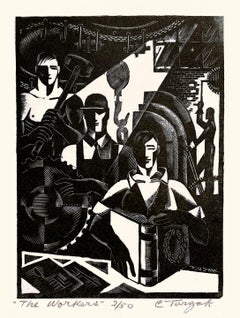
The Workers (No. 2)
— 1930s WPA Modernist Woodcut
Located in Myrtle Beach, SC
Charles Turzak, 'The Workers (No. 2)', woodcut, edition 50, c. 1935. Signed and numbered 2/50 in pencil. A fine, richly-inked impression, on cream wove Japan paper, with full margin...
Category
1930s American Modern Art by Medium: Woodcut
Materials
Woodcut
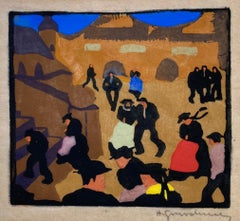
VILLAGE SCENE / TOWN FESTIVAL
By Herbert Gurschner
Located in Santa Monica, CA
HERBERT GURSCHNER (Austrian / English (1901-1975)
VILLAGE SCENE / TOWN FESTIVAL ca.1924
Color woodcut 4 ¾ x 5 3/8” Signed in pencil. Good strong colors. On thin paper. Faint darkeni...
Category
1920s Modern Art by Medium: Woodcut
Materials
Woodcut, Linocut
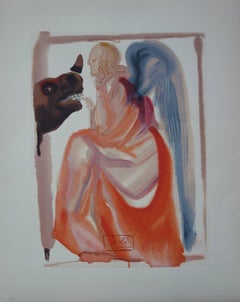
Paradise 6 - The Heaven of Mercury (Rhinoceros) - woodcut - 1963 (Field p 189)
Located in Paris, IDF
Salvador Dali (1904-1989)
Paradadise 6 - The Heaven of Mercury
From the Divine Comedy (Dante)
Woodcut in color
Signature printed in the plate
1960/63
On BFK Rives vellum 32,8 x 26,4...
Category
1960s Modern Art by Medium: Woodcut
Materials
Woodcut
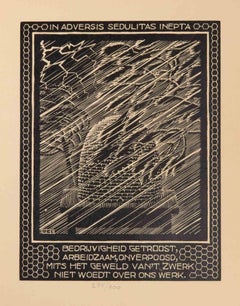
Beehive - Woodcut by Maurits Cornelis Escher - 1931
Located in Roma, IT
Woodcut print realized by Escher for the series "Emblemata", and published in 1931.
On Hollande van Gelder paper.
Edition of 300.
Unsigned, as issued. Excellent condition, matted....
Category
1930s Modern Art by Medium: Woodcut
Materials
Woodcut
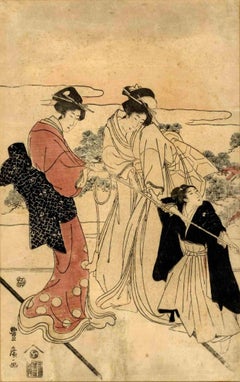
Bijinga - Woodcut by Utagawa Toyohiro - Early 19th Century
Located in Roma, IT
Bijinga (New year festivities) is an original modern artwork realized by Utagawa Toyohiro in the Early 19th Century.
Woodcut Print Oban Format
New year festivities, two elegant la...
Category
19th Century Modern Art by Medium: Woodcut
Materials
Paper, Woodcut
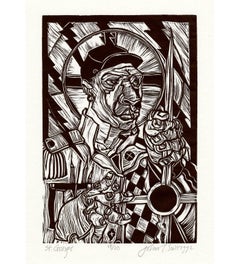
St. George — African American artist
By John Tarrell Scott
Located in Myrtle Beach, SC
John Tarrell Scott, 'St. George', woodcut, edition 20, 1992. Signed, dated, titled, and numbered '18/20' in pencil. A fine, black impression, on off-white, laid Japan paper, with ful...
Category
1990s Contemporary Art by Medium: Woodcut
Materials
Woodcut
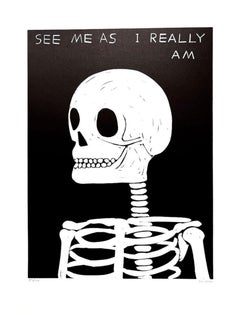
David Shrigley - See Me As I Really Am - Contemporary Art, Skeleton
Located in London, GB
David Shrigley
See Me As I Really Am, 2024
Woodcut
65 x 50 cm
Edition of 100
hand-signed and numbered by the artist
published by Shäfer Editions and comes with COA from the publisher...
Category
2010s Contemporary Art by Medium: Woodcut
Materials
Woodcut
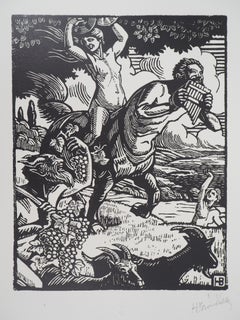
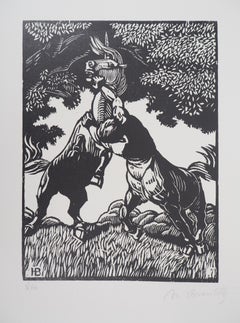
Mythology : Grape Harvest with Faun and Centaur - Original wooodcut, Handsigned
Located in Paris, IDF
Honoré BROUTELLE (1866-1929)
Mythology : Grape Harvest with Faun and Centaur, 1921
Original woodcut
Handsigned in pencil
Numbered /125
On vellum 32.5 x 25.5 cm (c. 13 x 10 in)
Bears...
Category
1920s Modern Art by Medium: Woodcut
Materials
Woodcut
Centaur and Unicorn - Original wooodcut, Handsigned
numbered /160
Located in Paris, IDF
Honoré BROUTELLE (1866-1929)
Centaur and Unicorn, 1929
Original woodcut
Handsigned in pencil
Numbered /160
On vellum 32.5 x 25.5 cm (c. 13 x 10 in)
Bears the blind stamp of the edit...
Category
1920s Modern Art by Medium: Woodcut
Materials
Woodcut
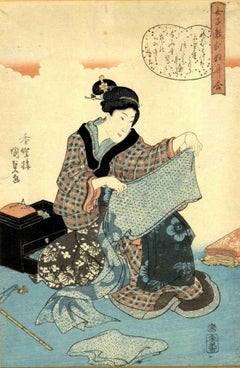
Bijinga - Woodcut Print by Utagawa Kunisada - 1842
Located in Roma, IT
Bijinga is an original modern artwork realized by Utagawa Kunisada in 1842.
Woodcut Print Oban Format.
From the series "Joshi kyôkun kyôka awase" (A collection of comic poems for t...
Category
1840s Modern Art by Medium: Woodcut
Materials
Woodcut
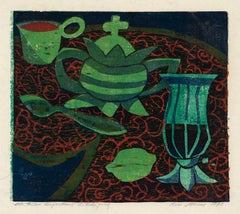
The Green Sugarbowl — Mid-Century Color Woodcut
Located in Myrtle Beach, SC
William Ross Abrams, 'The Green Sugarbowl', color woodcut, 1949, edition 24. Signed, titled, dated, and annotated 'Artist’s proof' in pencil. A fin...
Category
1940s Modern Art by Medium: Woodcut
Materials
Woodcut
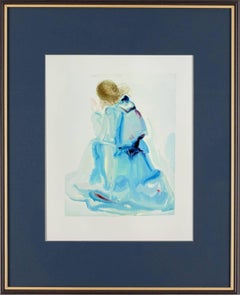
The Paradise, Canto 2 - The Angel
Located in OPOLE, PL
Salvador Dali (1904-1989) - The Paradise, Canto 2 - The Angel
Original woodcut from 1960.
Dimensions of work: 33 x 26.2 cm
Publisher: Les Heures Claires, Paris.
Reference: Catalo...
Category
1960s Modern Art by Medium: Woodcut
Materials
Woodcut
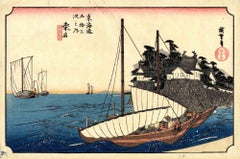
Kuwana Station - Woodcut after Utagawa Hiroshige -1920s
Located in Roma, IT
Kuwana Station is an original modern artwork realized after Utagawa Hiroshige (1797 – 12 October 1858) in 1920s.
Original woodcut print oban yokoe. After the famous Tokaido series, ...
Category
1920s Modern Art by Medium: Woodcut
Materials
Woodcut
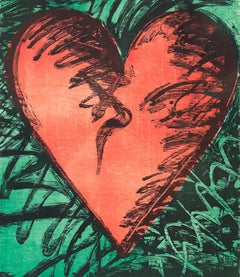
$270 Sale Price
25% Off
Rancho Woodcut Heart, 1982
By Jim Dine
Located in Palo Alto, CA
One of Jim Dine’s most iconic motifs, the romantic Rancho Woodcut Heart work illustrates the story of hope and love through a symbolic image of a large red heart. With the contrast o...
Category
1980s Modern Art by Medium: Woodcut
Materials
Woodcut
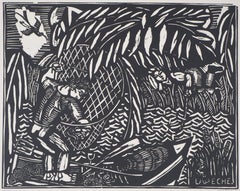
The Fisherman (Angling) - Original woodcut - Signed
By Raoul Dufy
Located in Paris, IDF
Raoul DUFY
The Fisherman (Angling)
Original woodcut
Signed stamp of the artist's studio
Justified Artist Proof (aside the edition numbered on /220)
Titled in the board
50.5 x 65.4 c...
Category
Late 20th Century Modern Art by Medium: Woodcut
Materials
Woodcut
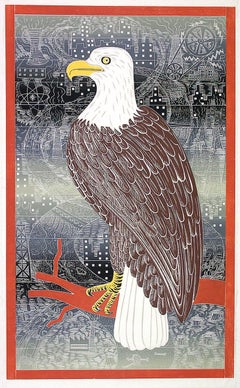
American Eagle/The Great Divide
By John Buck
Located in Lyons, CO
Color woodcut, Edition 15
John Buck is both a sculptor and a printmaker. He works with two interrelated bodies of work: carved wood, assemblage and bronze sculptures, and large, m...
Category
1990s Contemporary Art by Medium: Woodcut
Materials
Woodcut
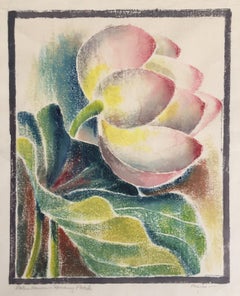
LOTUS FLOWER - ROEDING PARK - Provincetown Style
By Mary Travis
Located in Santa Monica, CA
MARY TRAVIS (Active 1935 - 40)
LOTUS FLOWER ROEDING PARK. c.1935-40
White line color woodcut. Signed and titled in pencil. Small edition. 10” x 8”. Full sheet. tears
in upper margin. Travis worked in Berkeley, California and was probably a follower of William S...
Category
1930s American Modern Art by Medium: Woodcut
Materials
Woodcut

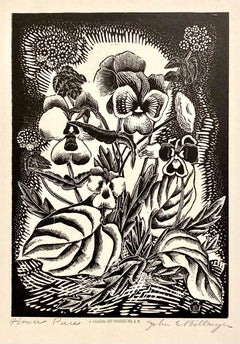
$2,000 Sale Price
20% Off
John E. Billmyer, Flower Piece, WPA wood engraving
Located in New York, NY
'Flower Piece' shows the artist, John Billmyer, to be a highly accomplished wood engraver. There are endless patterns and created details -- all executed flawlessly. Mostly made up o...
Category
Mid-20th Century American Modern Art by Medium: Woodcut
Materials
Woodcut
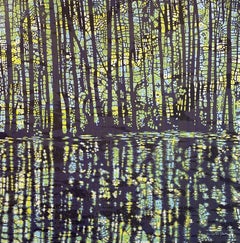
Cove Variation Eight, Trees, Water, Lime Green, Sky Blue, Dark Violet Forest
By Eve Stockton
Located in Kent, CT
This woodcut print on paper evokes the peacefulness of looking across a stream towards a thicket of trees in a forest in shades of light grass green, yellow, sky blue and dark violet...
Category
2010s Contemporary Art by Medium: Woodcut
Materials
Archival Ink, Archival Paper, Monotype, Woodcut
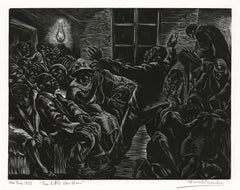
Run Little Chillun
also
Revival
— African American Subject
Located in Myrtle Beach, SC
Isac Friedlander, 'Run Little Chillun' also 'Revival', wood engraving, 1933, edition 50. Signed, titled and annotated 'New York 1933' in pencil. A sup...
Category
1930s American Modern Art by Medium: Woodcut
Materials
Woodcut
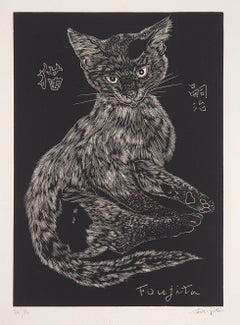
Cat - Original woodcut, Handsigned and Numbered /160 - Buisson #27-03
Located in Paris, IDF
Leonard Tsuguharu FOUJITA
Cat, 1927
Original woodcut
Handsigned with ink
Numbered /160
Bears the blind stamp of the editor (Lugt 1140a)
On Vellum 32.5 x 25.5 cm (c. 13 x 10 inch)
R...
Category
1920s Modern Art by Medium: Woodcut
Materials
Woodcut
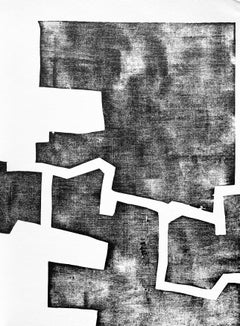
Eduardo Chillida, Untitled, from Derriere le Miroir, 1968
Located in Southampton, NY
This exquisite woodcut by Eduardo Chillida (1924–2002), titled Sans titre (Untitled), originates from the historic 1968 folio Derriere le Miroir, No. 174. Published by Maeght Editeur...
Category
1960s Modern Art by Medium: Woodcut
Materials
Woodcut
$716 Sale Price
20% Off
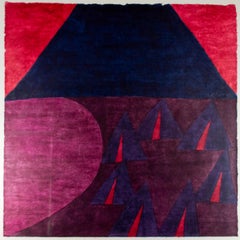
"Little Wolf
s Last Camp, " Colored Woodblock A/P signed by Carol Summers
Located in Milwaukee, WI
"Little Wolf's Last Camp" is a colored woodblock A/P signed by Carol Summers. In the image, a mountain looms over a circle of teat the edge of a lake, a scene likely inspired by the life events of the Northern Cheyenne Chief Little Wolf (c. 1820-1904) and his leadership during the Northern Cheyenne Exodus. The drama of the image is enhanced by Summers' signature printmaking technique, which allows the ink from the woodblock to seep through the paper, blurring the edges of each form.
Frame: 37 x 37 in
This is an artist's proof from the edition of 100
Carol Summers (1925-2016) has worked as an artist throughout the second half of the 20th century and into the first years of the next, outliving most of his mid-century modernist peers. Initially trained as a painter, Summers was drawn to color woodcuts around 1950 and it became his specialty thereafter. Over the years he has developed a process and style that is both innovative and readily recognizable. His art is known for it’s large scale, saturated fields of bold color, semi-abstract treatment of landscapes from around the world and a luminescent quality achieved through a printmaking process he invented.
In a career that has extended over half a century, Summers has hand-pulled approximately 245 woodcuts in editions that have typically run from 25 to 100 in number. His talent was both inherited and learned. Born in 1925 in Kingston, a small town in upstate New York, Summers was raised in nearby Woodstock with his older sister, Mary. His parents were both artists who had met in art school in St. Louis. During the Great Depression, when Carol was growing up, his father supported the family as a medical illustrator until he could return to painting. His mother was a watercolorist and also quite knowledgeable about the different kinds of papers used for various kinds of painting. Many years later, Summers would paint or print on thinly textured paper originally collected by his mother.
From 1948 to 1951, Carol Summers trained in the classical fine and studio arts at Bard College and at the Art Students League of New York. He studied painting with Steven Hirsh and printmaking with Louis Schanker. He admired the shapes and colors favored by early modernists Paul Klee (Sw: 1879-1940) and Matt Phillips (Am: b.1927- ). After graduating, Summers quit working as a part-time carpenter and cabinetmaker (which had supported his schooling and living expenses) to focus fulltime on art. That same year, an early abstract, Bridge No. 1 was selected for a Purchase Prize in a competition sponsored by the Brooklyn Museum.
In 1952, his work (Cathedral, Construction and Icarus) was shown the first time at the Museum of Modern Art in New York City in an exhibition of American woodcuts. In 1954, Summers received a grant from the Italian government to study for a year in Italy. Woodcuts completed soon after his arrival there were almost all editions of only 8 to 25 prints, small in size, architectural in content and black and white in color. The most well-known are Siennese Landscape and Little Landscape, which depicted the area near where he resided. Summers extended this trip three more years, a decision which would have significant impact on choices of subject matter and color in the coming decade.
After returning from Europe, Summers’ images continued to feature historical landmarks and events from Italy as well as from France, Spain and Greece. However, as evidenced in Aetna’s Dream, Worldwind and Arch of Triumph, a new look prevailed. These woodcuts were larger in size and in color. Some incorporated metal leaf in the creation of a collage and Summers even experimented with silkscreening. Editions were now between 20 and 50 prints in number. Most importantly, Summers employed his rubbing technique for the first time in the creation of Fantastic Garden in late 1957.
Dark Vision of Xerxes, a benchmark for Summers, was the first woodcut where Summers experimented using mineral spirits as part of his printmaking process. A Fulbright Grant as well as Fellowships from the Louis Comfort Tiffany Foundation and the Guggenheim Foundation followed soon thereafter, as did faculty positions at colleges and universities primarily in New York and Pennsylvania. During this period he married a dancer named Elaine Smithers with whom he had one son, Kyle. Around this same time, along with fellow artist Leonard Baskin, Summers pioneered what is now referred to as the “monumental” woodcut. This term was coined in the early 1960s to denote woodcuts that were dramatically bigger than those previously created in earlier years, ones that were limited in size mostly by the size of small hand-presses. While Baskin chose figurative subject matter, serious in nature and rendered with thick, striated lines, Summers rendered much less somber images preferring to emphasize shape and color; his subject matter approached abstraction but was always firmly rooted in the landscape.
In addition to working in this new, larger scale, Summers simultaneously refined a printmaking process which would eventually be called the “Carol Summers Method” or the “ Carol Summers Technique”. Summers produces his woodcuts by hand, usually from one or more blocks of quarter-inch pine, using oil-based printing inks and porous mulberry papers. His woodcuts reveal a sensitivity to wood especially its absorptive qualities and the subtleties of the grain. In several of his woodcuts throughout his career he has used the undulating, grainy patterns of a large wood plank to portray a flowing river or tumbling waterfall. The best examples of this are Dream, done in 1965 and the later Flash Flood Escalante, in 2003. In the majority of his woodcuts, Summers makes the blocks slightly larger than the paper so the image and color will bleed off the edge.
Before printing, he centers a dry sheet of paper over the top of the cut wood block or blocks, securing it with giant clips. Then he rolls the ink directly on the front of the sheet of paper and pressing down onto the dry wood block or reassembled group of blocks. Summers is technically very proficient; the inks are thoroughly saturated onto the surface of the paper but they do not run into each other. The precision of the color inking in Constantine’s Dream in 1969 and Rainbow Glacier in 1970 has been referred to in various studio handbooks. Summers refers to his own printing technique as “rubbing”. In traditional woodcut printing, including the Japanese method, the ink is applied directly onto the block. However, by following his own method, Summers has avoided the mirror-reversed image of a conventional print and it has given him the control over the precise amount of ink that he wants on the paper. After the ink is applied to the front of the paper, Summers sprays it with mineral spirits, which act as a thinning agent. The absorptive fibers of the paper draw the thinned ink away from the surface softening the shapes and diffusing and muting the colors. This produces a unique glow that is a hallmark of the Summers printmaking technique. Unlike the works of other color field artists or modernists of the time, this new technique made Summers’ extreme simplification and flat color areas anything but hard-edged or coldly impersonal.
By the 1960s, Summers had developed a personal way of coloring and printing and was not afraid of hard work, doing the cutting, inking and pulling himself. In 1964, at the age of 38, Summers’ work was exhibited for a second time at the Museum of Modern Art. This time his work was featured in a one-man show and then as one of MOMA’s two-year traveling exhibitions which toured throughout the United States. In subsequent years, Summers’ works would be exhibited and acquired for the permanent collections of multiple museums throughout the United States, Europe and Asia. Summers’ familiarity with landscapes throughout the world is firsthand. As a navigator-bombardier in the Marines in World War II, he toured the South Pacific and Asia.
Following college, travel in Europe and subsequent teaching positions, in 1972, after 47 years on the East Coast, Carol Summers moved permanently to Bonny Doon in the Santa Cruz Mountains in Northern California. There met his second wife, Joan Ward Toth, a textile artist who died in 1998; and it was here his second son, Ethan was born. During the years that followed this relocation, Summers’ choice of subject matter became more diverse although it retained the positive, mostly life-affirming quality that had existed from the beginning. Images now included moons, comets, both sunny and starry skies, hearts and flowers, all of which, in one way or another, remained tied to the landscape.
In the 1980s, from his home and studio in the Santa Cruz mountains, Summers continued to work as an artist supplementing his income by conducting classes and workshops at universities in California and Oregon as well as throughout the Mid and Southwest. He also traveled extensively during this period hiking and camping, often for weeks at a time, throughout the western United States and Canada. Throughout the decade it was not unusual for Summers to backpack alone or with a fellow artist into mountains or back country for six weeks or more at a time. Not surprisingly, the artwork created during this period rarely departed from images of the land, sea and sky. Summers rendered these landscapes in a more representational style than before, however he always kept them somewhat abstract by mixing geometric shapes with organic shapes, irregular in outline. Some of his most critically acknowledged work was created during this period including First Rain, 1985 and The Rolling Sea, 1989. Summers received an honorary doctorate from his alma mater, Bard College in 1979 and was selected by the United States Information Agency to spend a year conducting painting and printmaking workshops at universities throughout India. Since that original sabbatical, he has returned every year, spending four to eight weeks traveling throughout that country.
In the 1990s, interspersed with these journeys to India have been additional treks to the back roads and high country areas of Mexico, Central America, Nepal, China and Japan. Travel to these exotic and faraway places had a profound influence on Summers’ art. Subject matter became more worldly and nonwestern as with From Humla to Dolpo, 1991 or A Former Life of Budha, 1996, for example. Architectural images, such as The Pillars of Hercules, 1990 or The Raja’s Aviary, 1992 became more common. Still life images made a reappearance with Jungle Bouquet in 1997. This was also a period when Summers began using odd-sized paper to further the impact of an image.
The 1996 Night, a view of the earth and horizon as it might be seen by an astronaut, is over six feet long and only slightly more than a foot-and-a-half high. From 1999, Revuelta A Vida (Spanish for “Return to Life”) is pie-shaped and covers nearly 18 cubic feet. It was also at this juncture that Summers began to experiment with a somewhat different palette although he retained his love of saturated colors. The 2003 Far Side of Time is a superb example of the new direction taken by this colorist.
At the turn of the millennium in 1999, “Carol Summers Woodcuts...
Category
1970s Contemporary Art by Medium: Woodcut
Materials
Woodcut
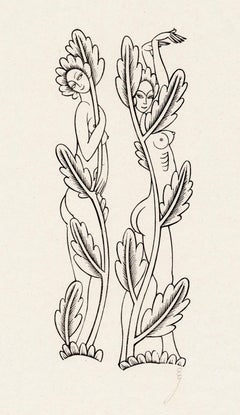
Naked Girl in Spray, Head Thrown Back
— 1930s Modernist Female Nude
By Eric Gill
Located in Myrtle Beach, SC
Eric Gill, 'Naked Girl in Spray, Head Thrown Back to Left, Four Leaves' and 'Naked Girl in Spray, Head Upright, Hands Over Head', wood engraving, 1930, edit...
Category
1930s Art Deco Art by Medium: Woodcut
Materials
Woodcut
$960 Sale Price
20% Off
All The Things - Surfing Art - Figurative - Woodcut Print By Marc Zimmerman
Located in Carmel, CA
All The Things - Surfing Art - Figurative - Woodcut Print By Marc Zimmerman
Limited Edition 01/04
This masterwork is exhibited in the Zimmerman Gallery, Carmel CA.
Immerse yoursel...
Category
2010s Contemporary Art by Medium: Woodcut
Materials
Woodcut
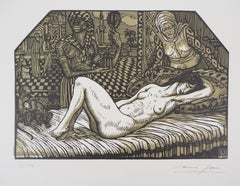
Mythology : Danae Sleeping - Original wooodcut, Handsigned
Numbered
Located in Paris, IDF
Louis JOU (1881-1968)
Mythology : Danae Sleeping, 1921
Original woodcut
Handsigned in pencil
Numbered /125
On vellum 32.5 x 25.5 cm (c. 13 x 10 in)
Bears the blind stamp of the edit...
Category
1920s Modern Art by Medium: Woodcut
Materials
Woodcut
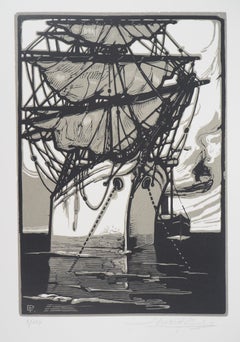
The Sailboat - Original woodcut, Handsigned
Located in Paris, IDF
Edward PELLENS
The Sailboat, 1922
Original woodcut
Handsigned in pencil
Numbered /154
On vellum 32.5 x 25.5 cm (c. 13 x 10 in)
Bears the blind stamp of t...
Category
1920s Art Deco Art by Medium: Woodcut
Materials
Woodcut
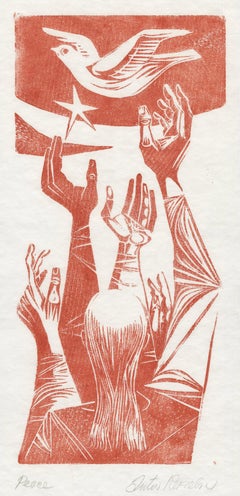
Peace
Located in Fairlawn, OH
Peace
Woodcut printed in orange red ink on japanese paper
Signed and titled in pencil lower right (see photo)
Titled lower left (see photo)
Created along with an illustrated book project Song of Peace, 1950-1959.
Condition: Excellent
Image: 10 1/2 x 4 7/8"
Sheet: 16 1/8 x 7";
Anton Refregier (March 20, 1905 – October 10, 1979) was a painter and muralist active in Works Progress Administration Federal Art Project commissions, and in teaching art. He was a Russian immigrant to the United States.
Among his best-known works is his mural series The History of San Francisco, located in the Rincon Center in downtown San Francisco, California. It depicts the city's history across twenty seven panels that he painted from 1940 to 1948.
Life and early career
Refregier was born in Moscow and emigrated to the United States in 1920. After working various odd jobs in New York City, he earned a scholarship to the Rhode Island School of Design in 1921. After finishing school, Refregier moved back to New York in 1925. To earn a living, Refregier worked for interior decorators, creating replicas of François Boucher and Jean-Honoré Fragonard paintings...
Category
1950s American Modern Art by Medium: Woodcut
Materials
Woodcut
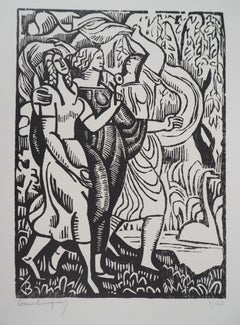
Three Cubist Women - Original wooodcut, Handsigned
Numbered
Located in Paris, IDF
Louis BOUQUET (1885-1952)
Three Cubist Women, 1921
Original woodcut
Handsigned in pencil
Numbered /125
On vellum 32.5 x 25.5 cm (c. 13 x 10 in)
Bears the blind stamp of the editor '...
Category
1920s Modern Art by Medium: Woodcut
Materials
Woodcut
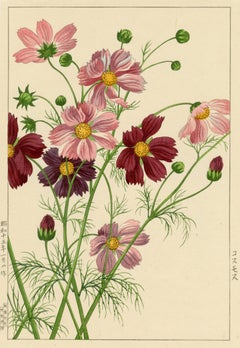
Cosmos
Located in Fairlawn, OH
Cosmos
Color woodcut with gauffage (embossing), January 1940
Unsigned (as usual)
Publisher: Takemura Hideo
(active Yokohama 1926-1940)
Condition: excellent
Image size: 14 3/8 x 9 5/8 inches
Provenance: Robert O. Muller Estate
Biography
Hodo Nishimura...
Category
1940s Modern Art by Medium: Woodcut
Materials
Woodcut
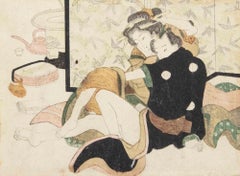
Shunga - Woodcut attr. Keisai Eisen - Mid-19th Century
By Keisai Eisen
Located in Roma, IT
Woodcut shunga print attributed to Keisai Eisen and realized in the early 19th century.
Good condition except for some signs of time.
Category
Mid-19th Century Modern Art by Medium: Woodcut
Materials
Woodcut
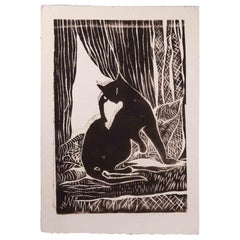
Black Cat by the Window - Woodcut Print by Giselle Halff - Early 20th century
Located in Roma, IT
Black Cat by the Window is a woodcut print on paper realized by Giselle Halff in the early 20th century.
Good conditions.
The delicate and beautiful fine strokes of the artwork sho...
Category
Early 20th Century Modern Art by Medium: Woodcut
Materials
Woodcut
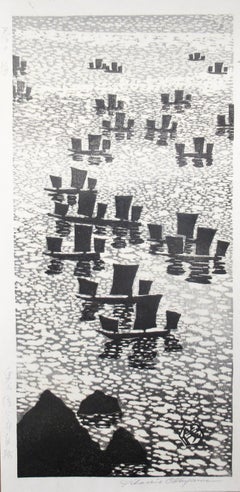
Fishing Boats in Cap Muroto
Located in San Francisco, CA
This artwork Titled "Fishing Boats in Cap Muroto" c.1950, is an original woodcut on paper by Japanese artist Gihachiro Okuyama, 1907-1981. It is hand signed and inscribed in Japanese...
Category
Mid-20th Century Modern Art by Medium: Woodcut
Materials
Woodcut
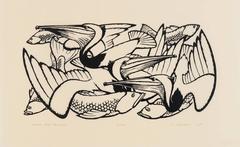
Fishes and Pelicans
Located in Dallas, TX
David Everett was born in Beaumont, Texas, and received both his B.F.A. and M.F.A. from The University of Texas at Austin. Valley House began showing his multi-articulated, painted w...
Category
1990s Contemporary Art by Medium: Woodcut
Materials
Woodcut
Still Life - Woodcut - 1936
Located in Roma, IT
Still, Life is a woodcut print on paper, realized by an Anonymous artist in 1936
It is monogrammed and dated on the lower with pencil and numbered, rare edition of 1/20 prints.
Goo...
Category
1930s Modern Art by Medium: Woodcut
Materials
Woodcut
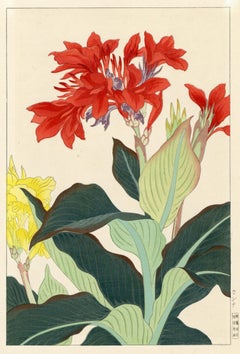
Canna Lily
Located in Fairlawn, OH
Canna Lily
Color woodcut, 1939
Unsigned (as usual)
Publisher: Takemura Hideo
(active Yokohama 1926-1939)
Format: oban
Condition: Excellent
Image/Sheet size: 15 5/8 x 11 inches
Provenance: Robert O. Muller
There is little biographical data available about the Japanese printmaker Hodo Nishimura...
Category
1930s Modern Art by Medium: Woodcut
Materials
Woodcut
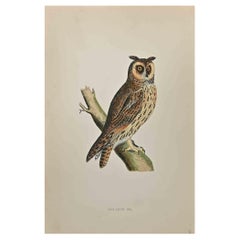
Long-Eared Owl - Woodcut Print by Alexander Francis Lydon - 1870
Located in Roma, IT
Long-Eared Owl is a modern artwork realized in 1870 by the British artist Alexander Francis Lydon (1836-1917) .
Woodcut print, hand colored, published by London, Bell & Sons, 1870....
Category
1870s Modern Art by Medium: Woodcut
Materials
Woodcut
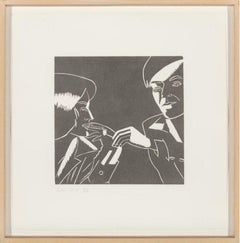
Alex Katz from
A Tremor in the Morning
signed, limited edition woodcut print
By Alex Katz
Located in San Rafael, CA
Alex Katz (b. 1927)
Untitled, from the portfolio 'A Tremor in the Morning', 1986
Woodcut on wove paper
Edition 32/45
Signed and numbered in pencil lower left
Sheet: 20 x 19.75 inches...
Category
1980s Contemporary Art by Medium: Woodcut
Materials
Lithograph, Woodcut
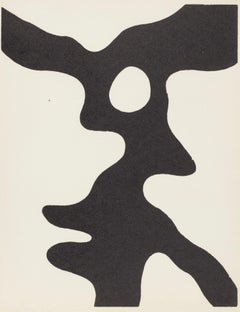
Composition (Arntz 148-175; Hagenbach A 25; Bolliger 54), Dreams and Projects
By Jean Arp
Located in Southampton, NY
Woodcut on vélin d’Arches paper. Inscription: Unsigned and unnumbered, as issued. Good condition. Notes: From the folio, Jean Arp, Dreams and Projects, 1951-1952. Published by Curt V...
Category
1950s Modern Art by Medium: Woodcut
Materials
Woodcut
$5,996 Sale Price
20% Off
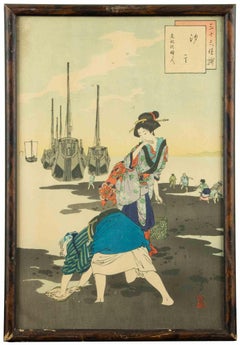
Sanjûroku Kasen... - Woodcut by Mizuno Toshikata - 1893
Located in Roma, IT
Nishiki-e (woodcut print), in vertical oban format (31x20.5) realized by Mizuno Toshikata in 1893 (Meiji 26).
Belongs to the Series "Sanjûroku Kasen" (Thirty-Six Beauties in Compari...
Category
1890s Modern Art by Medium: Woodcut
Materials
Woodcut
Carp - Woodcut by Jean Lurçat - 1948
By Jean Lurçat
Located in Roma, IT
Carp is a vintage woodcut print realized by Jean Lucrat in 1948.
Good condition on a cream colored paper.
No signature, on the back the title in french language.
Jean Lurçat (French: 1 July 1892 – 6 January 1966) was a French artist noted for his role in the revival of contemporary tapestry. In order to fully appreciate and understand the works of Jean Lurçat, one must view them in the context of the history of tapestry, in particular, the downfall of its existence during the rise of the Renaissance. It was during this time that tapestry was somewhat re-invented, where by traditional techniques were misplaced in the likening of tapestry to paintings by artists of the likes of Raphael. Jean Lurçat is largely responsible for its revival in the 20th century when he redefined the importance of designing tapestry in a way that embraced the integrity of authentic tapestry...
Category
Mid-20th Century Modern Art by Medium: Woodcut
Materials
Woodcut
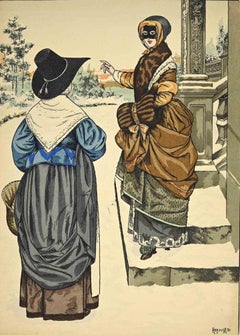
The Lovely Discussion - Woodcut by Mathilde Hérouard - 1920s
Located in Roma, IT
Woodcut print realized by Mathilde Hérouard in the 1920s.
Mounted on paper.
Signed in the plate.
Very good condition.
Category
1920s Modern Art by Medium: Woodcut
Materials
Woodcut
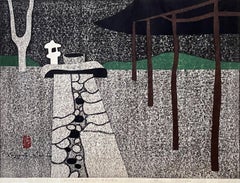
Katsura Kyoto (L)
Located in San Francisco, CA
Artist: Kiyoshi Saito – Japanese – (1907-1997)
Title: Katsura, Kyoto (L)
Year: 1964
Medium: Woodblock
Image size: 18 x 24 inches.
Sheet size: 21.5x 28.5 inches.
Signature: Signed, ...
Category
1960s Modern Art by Medium: Woodcut
Materials
Paper, Woodcut
Japanese Christmas Tree - Woodcut Print - Mid-20th Century
Located in Roma, IT
Japanese Christmas Tree is an original modern artwork realized by a Japanese artist in the mid-20th Century.
Original colored woodcut on cardboard. Image Dimensions: 15 x 10 cm
Th...
Category
Mid-20th Century Modern Art by Medium: Woodcut
Materials
Woodcut

Schwarzer Stier
Located in New York, NY
1922
Initialed, titled, and dated in pencil, lower margin
Woodcut on cream wove paper with original colophon (Edition of 125)
10 x 15 inches (25.4 x 38.1 cm), sheet
This work is ...
Category
1920s Contemporary Art by Medium: Woodcut
Materials
Woodcut
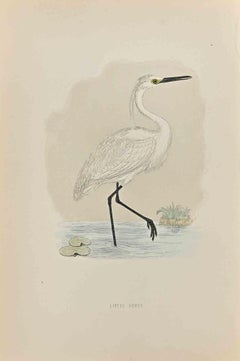
Little Egret - Woodcut Print by Alexander Francis Lydon - 1870
Located in Roma, IT
Little Egret is a modern artwork realized in 1870 by the British artist Alexander Francis Lydon (1836-1917).
Woodcut print on ivory-colored paper.
Hand-colored, published by London...
Category
1870s Modern Art by Medium: Woodcut
Materials
Woodcut
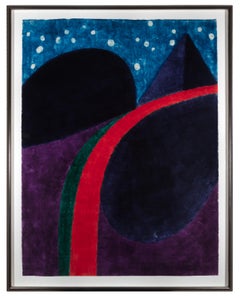
"The Bighorn at Night, " a Woodcut, Signed
Located in Milwaukee, WI
"The Bighorn at Night" is an original woodcut signed and titled by the artist, Carol Summers. It is edition 48/50. Catalogue raisonné listing: cat. 105...
Category
1970s Contemporary Art by Medium: Woodcut
Materials
Woodcut
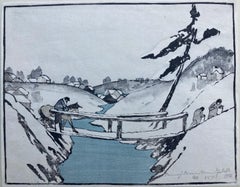
The Bridge
Located in Santa Monica, CA
B. J. O. NORDFELDT (Bror Julius Olsson) 1878-1955)
THE BRIDGE, 1906
Color woodcut signed, dated 1906 and numbered 150 in pencil. Image 8 x 10 - small margins as issued. 4 corners tipped to acid free support board. Nordfelt is one of the most important early twentieth century American Masters of the Color woodcut. This 1906 work predates many of the other woodcut masters. Nordfeldt had a peculiar numbering system. The number is not necessarily the edition number.
Frances H. Gearhart, Blanche Lazzell, William S. Rice, Gustave Baumann, Margaret Patterson, Norma Basset Hall. Waldo Chase.
Category
Early 1900s American Modern Art by Medium: Woodcut
Materials
Woodcut
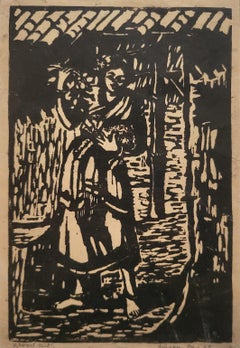
Return from the market, Woodcut on Paper, Figurative by Haren Das "In Stock"
By Haren Das
Located in Kolkata, West Bengal
Haren Das - Untitled (Return from the Market)
Woodcut on Paper
6.8 x 10 inches
( Unframed & Delivered )
Born in Dinajpur in present day Bangladesh on 1 February 1921, Das took a dip...
Category
1990s Modern Art by Medium: Woodcut
Materials
Paper, Woodcut
Jose Ignacio Cervantes, ¨Cirugia III¨, 2007, Woodcut, 22.4x18.9 in
Located in Miami, FL
Jose Ignacio Cervantes (Mexico, 1969)
'Cirugia III', 2007
woodcut on paper Guarro Super Alpha 250g.
22.5 x 18.9 in. (57 x 48 cm.)
ID: CEJ-101
Unframed
Category
Early 2000s Contemporary Art by Medium: Woodcut
Materials
Paper, Woodcut
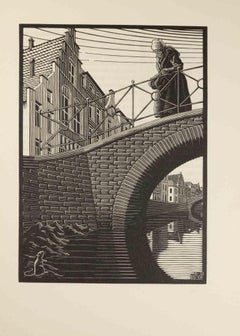
The Bridge - Woodcut by Maurits Cornelis Escher - 1932
Located in Roma, IT
Woodcut print from the Series "Der vreeselijke avonturen vas Scholastica" (The Terrible Adventures of Scholastica).
Edition of 300, published by A. J. van Dishoeck.
Unsigned, ass i...
Category
1930s Modern Art by Medium: Woodcut
Materials
Woodcut
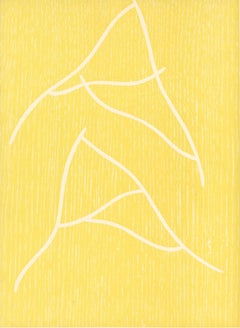
Arp, Composition, Arp: On My Way (after)
By Jean Arp
Located in Southampton, NY
Woodcut on wove paper. Inscription: Unsigned and unnumbered, as issued. Good Condition. Notes: From the folio, The Documents of Modern Art. Arp: On My Way, Poetry And Essays 1912 - 1...
Category
1940s Modern Art by Medium: Woodcut
Materials
Woodcut
$716 Sale Price
34% Off
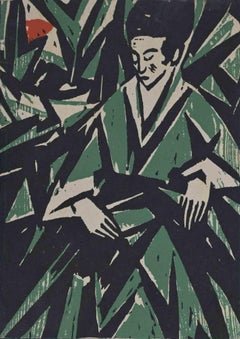
Woman in Green - Woodcut by Otto Lange - 1916
Located in Roma, IT
Woman in Green is a Colored print on paper, realized by Otto Lange in 1916
Woodcut on paper.
Good conditions.
Category
1910s Modern Art by Medium: Woodcut
Materials
Woodcut
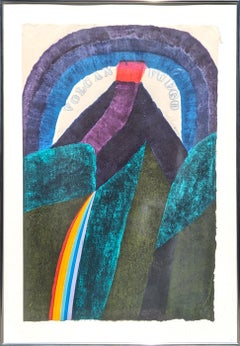
“Volcano Fuego” Modern Colorful Abstract Landscape Woodcut Print Ed. 74/75
Located in Houston, TX
Colorful abstract landscape woodcut print by modern artist Carol Summers. The work features a color blocked depiction of a volcano with a rainbow. Signed, titled, and editioned withi...
Category
1970s Contemporary Art by Medium: Woodcut
Materials
Woodcut
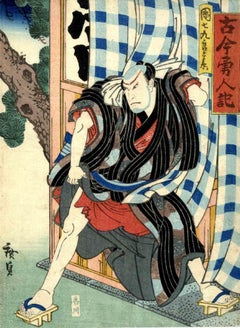
The Actor Nakamura Shikan II - Woodcut Print by Utagawa Hirosada - 1850
Located in Roma, IT
The Actor Nakamura Shikan II is an original modern artwork realized by Utagawa Hirosada (Japanese, active 1825–75) in 1850.
Original woodcut print chuban format, 1850. Signed Hirosada. Publisher: Kagawa. From the series "Kokon yujin ki" (Transcription on past and present heroes). The actor Nakamura Shikan II as Danshichi Kurobei in the play Natsumatsuri Naniwa kagami.
Excellent impression, fresh in colour, with blindstamping (floral design), visible wood grain (grey kimono...
Category
19th Century Modern Art by Medium: Woodcut
Materials
Woodcut
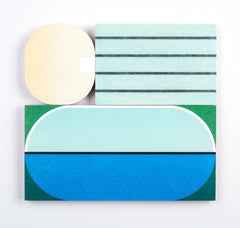
pool ground
yellow
Located in Columbia, MO
Kristen Martincic earned her BFA from Bowling Green State University and her MFA from the University of Nebraska-Lincoln. The artist, who currently lives and works in Columbia, Misso...
Category
21st Century and Contemporary Contemporary Art by Medium: Woodcut
Materials
Birch, Acrylic, Woodcut
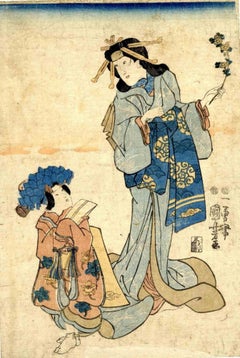
Actor in Onnagata Role - Woodcut Print by Utagawa Kuniyoshi - 1850s
Located in Roma, IT
Actor in onnagata role accompanied by a kamuro is an original artwork realized in the 1850s by Utagawa Kuniyoshi (January 1, 1798– April 14, 1861).
Woodcut Print.
Sign.: Ichiyusai ...
Category
1850s Modern Art by Medium: Woodcut
Materials
Woodcut
Delicate Makeup in Fashion - Woodcut Print by Utagawa Kunisada - 1830
Located in Roma, IT
Delicate makeup in fashion is an original modern artwork realized by Utagawa Kunisada in 1830s.
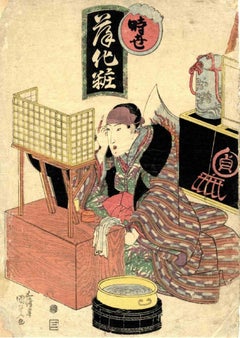
Woodcut Print Oban Dyptich Format. From the series "Jisei usugesho" (Delicate makeup in fashion). An actor prepares him self for a rolle as Onnagata in a Shosagoto play, with the ghost characters of the sister Matsukaze and Murasame. He sits in front of a makeup table and applies makeup to his eyebrows, behind him on a black lacquer shelf...
Category
19th Century Modern Art by Medium: Woodcut
Materials
Woodcut
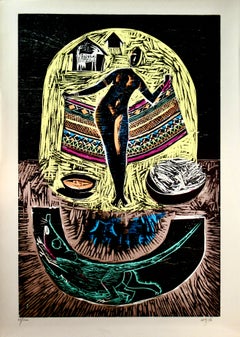
"Lendas Africanas Da Bahia" from the suite.
Located in San Francisco, CA
This artwork titled " Lendas Africanas Da Bahia" from the suite, 1978, is an original colors woodcut by renown Brazilian/Argentinian artist Hector Julio Paride Barnabo Carybe, 1911-1997. It is hand signed and numbered 83/200 in pencil by the artist. The Wood block mark (image) is 23.65 x 15.75 inches, sheet size is 26.75 x 19 inches. It is in excellent condition, has never been framed. It will be shipped in a 8 inches diameter heavy duty tube.
About the artist:
Héctor Julio Páride Bernabó (7 February 1911 – 2 October 1997) was an Argentine-Brazilian artist, researcher, writer, historian and journalist. His nickname and artistic name, Carybé, a type of piranha, comes from his time in the scouts. He died of heart failure after the meeting of a candomblé community's lay board of directors, the Cruz Santa Opô Afonjá Society, of which he was a member.
Quick Facts Born, Died ...
Carybé
Born
Héctor Julio Páride Bernabó
7 February 1911
Lanús, Argentina
Died
2 October 1997 (aged 86)
Salvador, Bahia, Brazil
Nationality
Brazilian
Known for
Painter, engraver, draughtsman, illustrator, potter, sculptor, mural painter, researcher, historian and journalist
Close
He produced thousands of works, including paintings, drawings, sculptures and sketches. He was an Obá de Xangô, an honorary position at Ilê Axé Opô Afonjá.
Orixá Panels in the Afro-Brazilian Museum in Salvador
Some of Carybé's work can be found in the Afro-Brazilian Museum in Salvador: 27 cedar panels representing different orixás or divinities of the Afro-Brazilian religion candomblé. Each panel shows a divinity with their associated implements and animal. The work was commissioned by the former Banco da Bahia S.A., now Banco BBM S.A., which originally installed them in its branch on Avenida Sete de Setembro in 1968.
Murals at Miami International Airport
American Airlines, Odebrecht and the Miami-Dade Aviation Department partnered to install two of Carybé's murals at Miami International Airport. They have been displayed in the American Airlines terminal at John F. Kennedy International Airport in New York since 1960. The 16.5 x 53-foot murals were accredited when Carybé won the first and the second prize in a contest of public art pieces for JFK airport.
As its terminal at that airport was due for demolition, American Airlines donated the murals to Miami-Dade County, and Odebrecht invested in a project to remove, restore, transport and install the murals at Miami International Airport.
The mural "Rejoicing and Festival of the Americas" portrays colorful scenes from popular festivals throughout the Americas, and "Discovery and Settlement of the West" depicts the pioneers’ journey into the American West.
Carybé's Woodcuts in Gabriel García Márquez's Books
Carybé illustrated four books by the Colombian writer Gabriel García Márquez, including One Hundred Years of Solitude, The Autumn of the Patriarch, Chronicle of a Death Foretold, and Love in the Time of Cholera "Carybé: um mestre da cultura baiana". ArqBahia Arquitetura, design, arte e lifestyle (in Brazilian Portuguese). 26 April 2023.. In particular, the woodcuts in One Hundred Years of Solitude are well-known for providing a visual image of the fictional town of Macondo, where the story takes place. The illustrations depict the colorful and winding houses, the railway bridge, and the hot and humid climate of the region, contributing to the reader's immersion in the story.
Carybé's woodcuts are, therefore, an important part of Gabriel García Márquez's literary legacy, bringing a visual dimension to his stories that further enriches the reader's experience.
Timeline
1911 — Birth in Lanús, Argentina.
1919 — Moved to Brazil.
1921 — The name Carybé is first given to him by the Clube do Flamengo scouts group, in Rio de Janeiro.
1925 — Beginning of his artistic endeavours, going to the pottery workshop of his elder brother, Arnaldo Bernabó, in Rio de Janeiro.
1927–1929 — Studies at the National School of Fine Arts, in Rio de Janeiro.
1930 — Worked for the newspaper Noticias Gráficas, in Buenos Aires, Argentina.
1935–1936 — Works with the writer Julio Cortázar and as a draughtsman for the El Diario newspaper.
1938 — Sent to Salvador by newspaper Prégon.
1939 — First collective exhibition, with the artist Clemente Moreau, at the Buenos Aires City Museum of Fine Arts, Argentina; illustrates the book Macumba, Relatos de la Tierra Verde, by Bernardo Kardon, published by Tiempo Nuestro.
1940 — Illustrates the book Macunaíma, by Mário de Andrade.
1941 — Draws the Esso Almanach, the payment for which allows him to set on a long journey through Uruguay, Brazil, Bolivia, and Argentina.
1941–1942 — Study trip around several South American countries.
1942 — Illustration for the book La Carreta by Henrique Amorim, published by El Ateneo (Buenos Aires, Argentina).
1943 — Together with Raul Brié, translates the book Macunaíma, by Mário de Andrade, into Spanish; produces the illustrations for the works Maracatu, Motivos Típicos y Carnavalescos, by Newton Freitas, published by Pigmaleon, Luna Muerta, by Manoel Castilla, published by Schapire, and Amores de Juventud, by Casanova Callabero; also publishes and illustrates Me voy al Norte, for the quarterly magazine Libertad Creadora; awarded First Prize by the Cámara Argentina del Libro (Argentine Book Council) for the illustration of the book Juvenília, by Miguel Cané (Buenos Aires, Argentina).
1944 — Illustrates the books The Complete Poetry of Walt Whitmann and A Cabana do Pai Tomás, both published by Schapire ; as well as and Los Quatro Gigantes del Alma by Mira y Lopez, Salvador BA; attends capoeira classes, visits candomblé meetings and makes drawings and paintings.
1945 — Does the illustrations for Daniel Defoe's Robinson Crusoe, for the Viau publishing house.
1946 — Helps in setting up the Tribuna da Imprensa newspaper, in Rio de Janeiro.
1947 — Works for the O Diário Carioca newspaper, in Rio de Janeiro.
1948 — Produces texts and illustrations for the book Ajtuss, Ediciones Botella al Mar (Buenos Aires, Argentina).
1949–1950 — Invited by Carlos Lacerda to work at the Tribuna da Imprensa, in Rio de Janeiro.
1950 — Invited by the Education Secretary Anísio Teixeira, moves to Bahia, and produces two panels for the Carneiro Ribeiro Education Center (Park School), in Salvador, Bahia.
1950–1997 — Settles in Salvador, Bahia.
1950–1960 — Actively participate in the plastic arts renewal movement, alongside Mário Cravo Júnior, Genaro de Carvalho, and Jenner Augusto.
1951 — Produces texts and illustrations for the works of the Coleção Recôncavo, published by Tipografia Beneditina and illustrations for the book, Bahia, Imagens da Terra e do Povo, by Odorico Tavares, published by José Olímpio in Rio de Janeiro; for the latter work he receives the gold medal at the 1st Biennial of Books and Graphic Arts.
1952 — Makes roughly 1,600 drawings for the scenes of the movie O Cangaceiro, by Lima Barreto; also works as the art director and as an extra on the film (São Paulo, SP).
1953 — Illustrations for the book A Borboleta Amarela, by Rubem Braga, published by José Olímpio (Rio de Janeiro, RJ).
1955 — Illustrates the work O Torso da Baiana, edited by the Modern Art Museum of Bahia.
1957 — Produces etchings, with original designs, for the special edition of Mário de Andrade's Macunaíma, published by the Sociedade dos 100 Bibliófilos do Brasil.
1958 — Makes an oil painting mural for the Petrobras Office in New York, USA; illustrates the book As Três Mulheres de Xangô, by Zora Seljan, published by Editora G. R. D. (Rio de Janeiro, RJ); Receives a scholarship grant in New York, USA.
1959 — Takes part in the competition for the New York International Airport panels project, in New York, USA, winning first and second prizes.
1961 — Illustrates the book Jubiabá, by Jorge Amado, published by Martins Fontes (São Paulo, SP).
1963 — Awarded the title of Honorary Citizen of Salvador, Bahia.
1965 — Illustrates A Muito Leal e Heróica Cidade de São Sebastião do Rio de Janeiro, published by Raymundo Castro Maya (Rio de Janeiro, RJ).
1966 — With Jorge Amado, co-authors Bahia, Boa Terra Bahia, published by Image (Rio de Janeiro, RJ); writes and illustrates the book Olha o Boi, published by Cultrix (São Paulo, SP).
1967 — Receives the Odorico Tavares Prize – Best Plastic Artist of 1967, in a competition ran by the state government to stimulate the development of plastic arts in Bahia; makes the Orixás Panels for the Banco da Bahia (currently at the UFBA Afro-Brazilian Museum) (Salvador, BA).
1968 — Illustrates the books Carta de Pero Vaz de Caminha ao Rei Dom Manuel, published by Sabiá (Rio de Janeiro) and Capoeira Angolana, by Waldeloir Rego, published by Itapoã (Bahia).
1969 — Produces the illustrations for the book Ninguém Escreve ao Coronel, by Gabriel Garcia Marquez, published by Sabiá (Rio de Janeiro, RJ).
1970 — Illustrates the books O Enterro do Diabo and Os Funerais de Mamãe Grande, published by Sabiá (Rio de Janeiro, RJ), Agotimé her Legend, by Judith Gleason, published by Grossman Publishers (New York, USA).
1971 — Illustrates the books One Hundred Years of Solitude, by Gabriel Garcia Marquez and A Casa Verde by Mario Vargas Llosa, both published by Sabiá (Rio de Janeiro, RJ); produces texts and illustrations for the book Candomblé da Bahia, published by Brunner (São Paulo, SP).
1973 — Illustrations for Gabriel Garcia Marquez's A Incrível e Triste História de Cândida Erendira e sua Avó Desalmada (Rio de Janeiro, RJ); paints the mural for the Legislative Assembly and the panel for the Bahia State Secretary of the Treasury.
1974 — Produces woodcuts for the book Visitações da Bahia, published by Onile.
1976 — Illustrates the book O Gato Malhado e a Andorinha Sinhá: uma história de amor, by Jorge Amado (Salvador, BA); receives the title of Knight of the Order of Merit of Bahia.
1977 — Certified with the Honor for Afro-Brazilian Cult Spiritual Merit, Xangô das Pedrinhas ao Obá de Xangô Carybé (Magé, RJ).
1978 — Makes the concrete sculpture Oxóssi, in the Catacumba Park; illustrates the book A Morte e a Morte de Quincas Berro D´Água, by Jorge Amado, published by Edições Alumbramento (Rio de Janeiro, RJ).
1979 — Produces woodcuts for the book Sete Lendas Africanas da Bahia, published by Onile.
1980 — Designs the costumes and scenery for the ballet Quincas Berro D´Água, at the Teatro Municipal in Rio de Janeiro.
1981 — Publication of the book Iconografia dos Deuses Africanos no Candomblé da Bahia (Ed. Raízes), following thirty years of research.
1982 — Receives the title of Honorary Doctor of the Federal University of Bahia.
1983 — Makes the panel for the Brazilian Embassy in Lagos, Nigeria.
1984 — Receives the Jerônimo Monteiro Commendation – Level of Knight (Espírito Santo); receives the Castro Alves Medal of Merit, granted by the UFBA Academy of Arts and Letters; makes the bronze sculpture Homenagem à mulher baiana (Homage to the Bahian woman), at the Iguatemi Shopping Center (Salvador, BA).
1985 — Designs the costumes and sets for the spectacle La Bohème, at the Castro Alves Theater; illustrates the book Lendas Africanas dos Orixás, by Pierre Verger, published by Currupio.
1992 — Illustrates the book O sumiço da santa: uma história de feitiçaria, by Jorge Amado (Rio de Janeiro, RJ).
1995 — Illustration of the book O uso das plantas na sociedade iorubá, by Pierre Verger (São Paulo, SP).
1996 — Making of the short film Capeta Carybé, by Agnaldo Siri Azevedo, adapted from the book O Capeta Carybé, by Jorge Amado, about the artist Carybé, who was born in Argentina and became the most Bahian of all Brazilians.
1997 — Illustration of the book Poesias de Castro Alves.
Exhibitions
ммIndividual Exhibitions:
1943 — Buenos Aires (Argentina) — First individual exhibition, at the Nordiska Gallery
1944 — Salta (Argentina) — at the Consejo General de Educacion
1945 — Salta (Argentina) — Amigos del Arte, Buenos Aires (Argentina) — Motivos de América, at the Amauta Gallery, Rio de Janeiro RJ — individual exhibition at the IAB/RJ
1947 — Salta (Argentina) — Agrupación Cultural Femenina
1950 — Salvador BA — First individual exhibit in Bahia, at the Bar Anjo Azul; São Paulo SP — MASP.
1952 — São Paulo SP — MAM/SP
1954 — Salvador BA — Oxumaré Gallery
1957 — New York (USA) — Bodley Gallery; Buenos Aires (Argentina) — Bonino Gallery * 1958 - New York (USA) — Bodley Gallery
1962 — Salvador BA - MAM/BA
1963 — Rio de Janeiro RJ — Bonino Gallery
1965 — Rio de Janeiro RJ — Bonino Gallery
1966 — São Paulo SP — Astrea Gallery
1967 — Rio de Janeiro RJ — Santa Rosa Gallery
1969 — London (England) — Varig Airlines
1970 — Rio de Janeiro RJ — Galeria da Praça
1971 — Rio de Janeiro RJ — MAM/RJ, São Paulo SP — A Galeria; Belo Horizonte MG, Brasília DF, Curitiba PR, Florianopolis SC, Porto Alegre RS, Rio de Janeiro RJ and São Paulo SP — The Orixás Panel (exhibition tour), at the Casa da Cultura in Belo Horizonte, MAM/DF, the Public Library of Paraná, the Legislative Assembly of Santa Catarina State, the Legislative Assembly of Rio Grande do Sul, MAM/RJ and MAM/SP
1972 — The Orixás Panel in Fortaleza CE — at the Ceará Federal University Art Museum, and in Recife PE — at the Santa Isabel Theater
1973 — São Paulo SP — A Galeria
1976 — Salvador BA — at the Church of the Nossa Senhora do Carmo Convent
1980 — São Paulo SP — A Galeria
1981 — Lisbon (Portugal) — Cassino Estoril
1982 — São Paulo SP — Renot Art Gallery, São Paulo SP — A Galeria
1983 — New York (USA) — Iconografia dos Deuses Africanos no Candomblé da Bahia, The Caribbean Cultural Center
1984 — Philadelphia (USA) — Art Institute of Philadelphia; Mexico — Museo Nacional de Las Culturas; São Paulo SP — Galeria de Arte André
1986 — Lisbon (Portugal) — Cassino Estoril; Salvador BA — As Artes de Carybé, Núcleo de Artes Desenbanco
1989 — Lisbon (Portugal) — Cassino Estoril; São Paulo SP — MASP
1995 — São Paulo SP — Documenta Galeria de Arte, São Paulo SP — Casa das Artes Galeria, Campinas SP — Galeria Croqui, Curitiba PR — Galeria de Arte Fraletti e Rubbo, Belo Horizonte MG — Nuance Galeria de Arte, Foz do Iguaçu PR — Ita Galeria de Arte, Porto Alegre RS — Bublitz Decaedro Galeria de Artes, Cuiabá MT — Só Vi Arte Galeria, Goiânia GO — Época Galeria de Arte, São Paulo SP — Artebela Galeria Arte Molduras, Fortaleza CE — Galeria Casa D'Arte, Salvador BA — Oxum Casa de Arte
Collective Exhibitions:
1939 — Buenos Aires (Argentina) — Carybé and Clemente Moreau Exhibition, at the Museo Municipal de Belas Artes
1943 — Buenos Aires (Argentina) — 29th Salon de Acuarelistas y Grabadores — first prize
1946 — Buenos Aires (Argentina) — Drawings by Argentine Artists, at the Kraft Gallery
1948 — Washington (USA) — Artists of Argentina, at the Pan American Union Gallery
1949 — Buenos Aires (Argentina) — Carybé and Gertrudis Chale, at the Viau Gallery; Salvador BA — Bahian Showroom of Fine Arts, at the Hotel Bahia
1950 — Salvador BA — 2nd Bahian Showroom of Fine Arts; São Paulo SP — MAM/SP
1951 — São Paulo SP — 1st São Paulo Art Biennial, Trianon Pavilion.
1952 — Salvador BA — 3rd Bahian Showroom of Fine Arts, at Belvedere da Sé; São Paulo SP — MAM/SP
1953 — Recife PE — Mario Cravo Júnior and Carybé, at the Santa Isabel Theater; São Paulo SP — 2nd São Paulo Art Biennial, at MAM/SP
1954 — Salvador BA — 4th Bahian Showroom of Fine Arts, at the Hotel Bahia. — Bronze medal
1955 — São Paulo SP — 3rd São Paulo Art Biennial, at MAM/SP — first prize for drawing
1956 — Salvador BA — Modern Artists of Bahia, at the Oxumaré Gallery; Venice (Italy) — 28th Venice Biennial
1957 — Rio de Janeiro RJ — 6th National Modern Art Show — exemption from the jury; São Paulo SP — Artists from Bahia, at the MAM/SP
1958 — San Francisco (USA) — Works by Brazilian Artists, at the Fine Arts Museums of San Francisco, Washington and New York (USA) — Works by Brazilian Artists, at the Pan American Union and the MoMA
1959 — Seattle (USA) — 30th International Exhibition, at the Seattle Art Museum; Salvador BA — Modern Artists of Bahia, at the Dentistry School.
1961 — São Paulo SP — 6th São Paulo Art Biennial, at MAM/SP — special room
1963 — Lagos (Nigeria) — Brazilian Contemporary Artists, at the Nigerian Museum; São Paulo SP — 7th São Paulo Art Biennial Bienal, at the Fundação Bienal
1964 — Salvador BA — Christmas Exhibition, at the Galeria Querino
1966 — Baghdad (Iraq) — collective exhibition sponsored by the Calouste Gulbenkian Foundation; Madrid (Spain) — Artists of Bahia, at the Hispanic Culture Institute; Rome (Italy) — Piero Cartona Palace; Salvador BA — 1st National Biennial of Plastic Arts (Bienal da Bahia) — special room; Salvador BA — Draughtsmen of Bahia, at the Convivium Gallery
1967 — Salvador BA — Christmas Exhibition at the Panorama Art Gallery; São Paulo SP — Artists of Bahia, at the A Gallery
1968 — São Paulo SP — Bahian Artists, at the A Gallery
1969 — London (England) — Tryon Gallery; São Paulo SP — 1st Panorama of Current Brazilian Art at the MAM/SP; São Paulo SP — Carybé, Carlos Bastos...
Category
Late 20th Century Modern Art by Medium: Woodcut
Materials
Woodcut
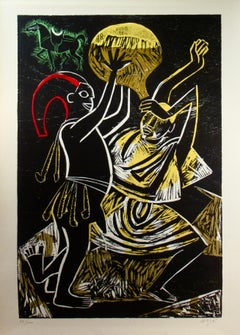
"Lendas Africanas Da Bahia" from the suite.
Located in San Francisco, CA
This artwork titled " Lendas Africanas Da Bahia" from the suite, 1978, is an original colors woodcut by renown Brazilian/Argentinian artist Hector Julio Paride Barnabo Carybe, 1911-1997. It is hand signed and numbered 83/200 in pencil by the artist. The Wood block mark (image) is 23.65 x 15.75 inches, sheet size is 26.75 x 19 inches. It is in excellent condition, has never been framed. It will be shipped in a 8 inches diameter heavy duty tube.
About the artist:
Héctor Julio Páride Bernabó (7 February 1911 – 2 October 1997) was an Argentine-Brazilian artist, researcher, writer, historian and journalist. His nickname and artistic name, Carybé, a type of piranha, comes from his time in the scouts. He died of heart failure after the meeting of a candomblé community's lay board of directors, the Cruz Santa Opô Afonjá Society, of which he was a member.
Quick Facts Born, Died ...
Carybé
Born
Héctor Julio Páride Bernabó
7 February 1911
Lanús, Argentina
Died
2 October 1997 (aged 86)
Salvador, Bahia, Brazil
Nationality
Brazilian
Known for
Painter, engraver, draughtsman, illustrator, potter, sculptor, mural painter, researcher, historian and journalist
Close
He produced thousands of works, including paintings, drawings, sculptures and sketches. He was an Obá de Xangô, an honorary position at Ilê Axé Opô Afonjá.
Orixá Panels in the Afro-Brazilian Museum in Salvador
Some of Carybé's work can be found in the Afro-Brazilian Museum in Salvador: 27 cedar panels representing different orixás or divinities of the Afro-Brazilian religion candomblé. Each panel shows a divinity with their associated implements and animal. The work was commissioned by the former Banco da Bahia S.A., now Banco BBM S.A., which originally installed them in its branch on Avenida Sete de Setembro in 1968.
Murals at Miami International Airport
American Airlines, Odebrecht and the Miami-Dade Aviation Department partnered to install two of Carybé's murals at Miami International Airport. They have been displayed in the American Airlines terminal at John F. Kennedy International Airport in New York since 1960. The 16.5 x 53-foot murals were accredited when Carybé won the first and the second prize in a contest of public art pieces for JFK airport.
As its terminal at that airport was due for demolition, American Airlines donated the murals to Miami-Dade County, and Odebrecht invested in a project to remove, restore, transport and install the murals at Miami International Airport.
The mural "Rejoicing and Festival of the Americas" portrays colorful scenes from popular festivals throughout the Americas, and "Discovery and Settlement of the West" depicts the pioneers’ journey into the American West.
Carybé's Woodcuts in Gabriel García Márquez's Books
Carybé illustrated four books by the Colombian writer Gabriel García Márquez, including One Hundred Years of Solitude, The Autumn of the Patriarch, Chronicle of a Death Foretold, and Love in the Time of Cholera "Carybé: um mestre da cultura baiana". ArqBahia Arquitetura, design, arte e lifestyle (in Brazilian Portuguese). 26 April 2023.. In particular, the woodcuts in One Hundred Years of Solitude are well-known for providing a visual image of the fictional town of Macondo, where the story takes place. The illustrations depict the colorful and winding houses, the railway bridge, and the hot and humid climate of the region, contributing to the reader's immersion in the story.
Carybé's woodcuts are, therefore, an important part of Gabriel García Márquez's literary legacy, bringing a visual dimension to his stories that further enriches the reader's experience.
Timeline
1911 — Birth in Lanús, Argentina.
1919 — Moved to Brazil.
1921 — The name Carybé is first given to him by the Clube do Flamengo scouts group, in Rio de Janeiro.
1925 — Beginning of his artistic endeavours, going to the pottery workshop of his elder brother, Arnaldo Bernabó, in Rio de Janeiro.
1927–1929 — Studies at the National School of Fine Arts, in Rio de Janeiro.
1930 — Worked for the newspaper Noticias Gráficas, in Buenos Aires, Argentina.
1935–1936 — Works with the writer Julio Cortázar and as a draughtsman for the El Diario newspaper.
1938 — Sent to Salvador by newspaper Prégon.
1939 — First collective exhibition, with the artist Clemente Moreau, at the Buenos Aires City Museum of Fine Arts, Argentina; illustrates the book Macumba, Relatos de la Tierra Verde, by Bernardo Kardon, published by Tiempo Nuestro.
1940 — Illustrates the book Macunaíma, by Mário de Andrade.
1941 — Draws the Esso Almanach, the payment for which allows him to set on a long journey through Uruguay, Brazil, Bolivia, and Argentina.
1941–1942 — Study trip around several South American countries.
1942 — Illustration for the book La Carreta by Henrique Amorim, published by El Ateneo (Buenos Aires, Argentina).
1943 — Together with Raul Brié, translates the book Macunaíma, by Mário de Andrade, into Spanish; produces the illustrations for the works Maracatu, Motivos Típicos y Carnavalescos, by Newton Freitas, published by Pigmaleon, Luna Muerta, by Manoel Castilla, published by Schapire, and Amores de Juventud, by Casanova Callabero; also publishes and illustrates Me voy al Norte, for the quarterly magazine Libertad Creadora; awarded First Prize by the Cámara Argentina del Libro (Argentine Book Council) for the illustration of the book Juvenília, by Miguel Cané (Buenos Aires, Argentina).
1944 — Illustrates the books The Complete Poetry of Walt Whitmann and A Cabana do Pai Tomás, both published by Schapire ; as well as and Los Quatro Gigantes del Alma by Mira y Lopez, Salvador BA; attends capoeira classes, visits candomblé meetings and makes drawings and paintings.
1945 — Does the illustrations for Daniel Defoe's Robinson Crusoe, for the Viau publishing house.
1946 — Helps in setting up the Tribuna da Imprensa newspaper, in Rio de Janeiro.
1947 — Works for the O Diário Carioca newspaper, in Rio de Janeiro.
1948 — Produces texts and illustrations for the book Ajtuss, Ediciones Botella al Mar (Buenos Aires, Argentina).
1949–1950 — Invited by Carlos Lacerda to work at the Tribuna da Imprensa, in Rio de Janeiro.
1950 — Invited by the Education Secretary Anísio Teixeira, moves to Bahia, and produces two panels for the Carneiro Ribeiro Education Center (Park School), in Salvador, Bahia.
1950–1997 — Settles in Salvador, Bahia.
1950–1960 — Actively participate in the plastic arts renewal movement, alongside Mário Cravo Júnior, Genaro de Carvalho, and Jenner Augusto.
1951 — Produces texts and illustrations for the works of the Coleção Recôncavo, published by Tipografia Beneditina and illustrations for the book, Bahia, Imagens da Terra e do Povo, by Odorico Tavares, published by José Olímpio in Rio de Janeiro; for the latter work he receives the gold medal at the 1st Biennial of Books and Graphic Arts.
1952 — Makes roughly 1,600 drawings for the scenes of the movie O Cangaceiro, by Lima Barreto; also works as the art director and as an extra on the film (São Paulo, SP).
1953 — Illustrations for the book A Borboleta Amarela, by Rubem Braga, published by José Olímpio (Rio de Janeiro, RJ).
1955 — Illustrates the work O Torso da Baiana, edited by the Modern Art Museum of Bahia.
1957 — Produces etchings, with original designs, for the special edition of Mário de Andrade's Macunaíma, published by the Sociedade dos 100 Bibliófilos do Brasil.
1958 — Makes an oil painting mural for the Petrobras Office in New York, USA; illustrates the book As Três Mulheres de Xangô, by Zora Seljan, published by Editora G. R. D. (Rio de Janeiro, RJ); Receives a scholarship grant in New York, USA.
1959 — Takes part in the competition for the New York International Airport panels project, in New York, USA, winning first and second prizes.
1961 — Illustrates the book Jubiabá, by Jorge Amado, published by Martins Fontes (São Paulo, SP).
1963 — Awarded the title of Honorary Citizen of Salvador, Bahia.
1965 — Illustrates A Muito Leal e Heróica Cidade de São Sebastião do Rio de Janeiro, published by Raymundo Castro Maya (Rio de Janeiro, RJ).
1966 — With Jorge Amado, co-authors Bahia, Boa Terra Bahia, published by Image (Rio de Janeiro, RJ); writes and illustrates the book Olha o Boi, published by Cultrix (São Paulo, SP).
1967 — Receives the Odorico Tavares Prize – Best Plastic Artist of 1967, in a competition ran by the state government to stimulate the development of plastic arts in Bahia; makes the Orixás Panels for the Banco da Bahia (currently at the UFBA Afro-Brazilian Museum) (Salvador, BA).
1968 — Illustrates the books Carta de Pero Vaz de Caminha ao Rei Dom Manuel, published by Sabiá (Rio de Janeiro) and Capoeira Angolana, by Waldeloir Rego, published by Itapoã (Bahia).
1969 — Produces the illustrations for the book Ninguém Escreve ao Coronel, by Gabriel Garcia Marquez, published by Sabiá (Rio de Janeiro, RJ).
1970 — Illustrates the books O Enterro do Diabo and Os Funerais de Mamãe Grande, published by Sabiá (Rio de Janeiro, RJ), Agotimé her Legend, by Judith Gleason, published by Grossman Publishers (New York, USA).
1971 — Illustrates the books One Hundred Years of Solitude, by Gabriel Garcia Marquez and A Casa Verde by Mario Vargas Llosa, both published by Sabiá (Rio de Janeiro, RJ); produces texts and illustrations for the book Candomblé da Bahia, published by Brunner (São Paulo, SP).
1973 — Illustrations for Gabriel Garcia Marquez's A Incrível e Triste História de Cândida Erendira e sua Avó Desalmada (Rio de Janeiro, RJ); paints the mural for the Legislative Assembly and the panel for the Bahia State Secretary of the Treasury.
1974 — Produces woodcuts for the book Visitações da Bahia, published by Onile.
1976 — Illustrates the book O Gato Malhado e a Andorinha Sinhá: uma história de amor, by Jorge Amado (Salvador, BA); receives the title of Knight of the Order of Merit of Bahia.
1977 — Certified with the Honor for Afro-Brazilian Cult Spiritual Merit, Xangô das Pedrinhas ao Obá de Xangô Carybé (Magé, RJ).
1978 — Makes the concrete sculpture Oxóssi, in the Catacumba Park; illustrates the book A Morte e a Morte de Quincas Berro D´Água, by Jorge Amado, published by Edições Alumbramento (Rio de Janeiro, RJ).
1979 — Produces woodcuts for the book Sete Lendas Africanas da Bahia, published by Onile.
1980 — Designs the costumes and scenery for the ballet Quincas Berro D´Água, at the Teatro Municipal in Rio de Janeiro.
1981 — Publication of the book Iconografia dos Deuses Africanos no Candomblé da Bahia (Ed. Raízes), following thirty years of research.
1982 — Receives the title of Honorary Doctor of the Federal University of Bahia.
1983 — Makes the panel for the Brazilian Embassy in Lagos, Nigeria.
1984 — Receives the Jerônimo Monteiro Commendation – Level of Knight (Espírito Santo); receives the Castro Alves Medal of Merit, granted by the UFBA Academy of Arts and Letters; makes the bronze sculpture Homenagem à mulher baiana (Homage to the Bahian woman), at the Iguatemi Shopping Center (Salvador, BA).
1985 — Designs the costumes and sets for the spectacle La Bohème, at the Castro Alves Theater; illustrates the book Lendas Africanas dos Orixás, by Pierre Verger, published by Currupio.
1992 — Illustrates the book O sumiço da santa: uma história de feitiçaria, by Jorge Amado (Rio de Janeiro, RJ).
1995 — Illustration of the book O uso das plantas na sociedade iorubá, by Pierre Verger (São Paulo, SP).
1996 — Making of the short film Capeta Carybé, by Agnaldo Siri Azevedo, adapted from the book O Capeta Carybé, by Jorge Amado, about the artist Carybé, who was born in Argentina and became the most Bahian of all Brazilians.
1997 — Illustration of the book Poesias de Castro Alves.
Exhibitions
ммIndividual Exhibitions:
1943 — Buenos Aires (Argentina) — First individual exhibition, at the Nordiska Gallery
1944 — Salta (Argentina) — at the Consejo General de Educacion
1945 — Salta (Argentina) — Amigos del Arte, Buenos Aires (Argentina) — Motivos de América, at the Amauta Gallery, Rio de Janeiro RJ — individual exhibition at the IAB/RJ
1947 — Salta (Argentina) — Agrupación Cultural Femenina
1950 — Salvador BA — First individual exhibit in Bahia, at the Bar Anjo Azul; São Paulo SP — MASP.
1952 — São Paulo SP — MAM/SP
1954 — Salvador BA — Oxumaré Gallery
1957 — New York (USA) — Bodley Gallery; Buenos Aires (Argentina) — Bonino Gallery * 1958 - New York (USA) — Bodley Gallery
1962 — Salvador BA - MAM/BA
1963 — Rio de Janeiro RJ — Bonino Gallery
1965 — Rio de Janeiro RJ — Bonino Gallery
1966 — São Paulo SP — Astrea Gallery
1967 — Rio de Janeiro RJ — Santa Rosa Gallery
1969 — London (England) — Varig Airlines
1970 — Rio de Janeiro RJ — Galeria da Praça
1971 — Rio de Janeiro RJ — MAM/RJ, São Paulo SP — A Galeria; Belo Horizonte MG, Brasília DF, Curitiba PR, Florianopolis SC, Porto Alegre RS, Rio de Janeiro RJ and São Paulo SP — The Orixás Panel (exhibition tour), at the Casa da Cultura in Belo Horizonte, MAM/DF, the Public Library of Paraná, the Legislative Assembly of Santa Catarina State, the Legislative Assembly of Rio Grande do Sul, MAM/RJ and MAM/SP
1972 — The Orixás Panel in Fortaleza CE — at the Ceará Federal University Art Museum, and in Recife PE — at the Santa Isabel Theater
1973 — São Paulo SP — A Galeria
1976 — Salvador BA — at the Church of the Nossa Senhora do Carmo Convent
1980 — São Paulo SP — A Galeria
1981 — Lisbon (Portugal) — Cassino Estoril
1982 — São Paulo SP — Renot Art Gallery, São Paulo SP — A Galeria
1983 — New York (USA) — Iconografia dos Deuses Africanos no Candomblé da Bahia, The Caribbean Cultural Center
1984 — Philadelphia (USA) — Art Institute of Philadelphia; Mexico — Museo Nacional de Las Culturas; São Paulo SP — Galeria de Arte André
1986 — Lisbon (Portugal) — Cassino Estoril; Salvador BA — As Artes de Carybé, Núcleo de Artes Desenbanco
1989 — Lisbon (Portugal) — Cassino Estoril; São Paulo SP — MASP
1995 — São Paulo SP — Documenta Galeria de Arte, São Paulo SP — Casa das Artes Galeria, Campinas SP — Galeria Croqui, Curitiba PR — Galeria de Arte Fraletti e Rubbo, Belo Horizonte MG — Nuance Galeria de Arte, Foz do Iguaçu PR — Ita Galeria de Arte, Porto Alegre RS — Bublitz Decaedro Galeria de Artes, Cuiabá MT — Só Vi Arte Galeria, Goiânia GO — Época Galeria de Arte, São Paulo SP — Artebela Galeria Arte Molduras, Fortaleza CE — Galeria Casa D'Arte, Salvador BA — Oxum Casa de Arte
Collective Exhibitions:
1939 — Buenos Aires (Argentina) — Carybé and Clemente Moreau Exhibition, at the Museo Municipal de Belas Artes
1943 — Buenos Aires (Argentina) — 29th Salon de Acuarelistas y Grabadores — first prize
1946 — Buenos Aires (Argentina) — Drawings by Argentine Artists, at the Kraft Gallery
1948 — Washington (USA) — Artists of Argentina, at the Pan American Union Gallery
1949 — Buenos Aires (Argentina) — Carybé and Gertrudis Chale, at the Viau Gallery; Salvador BA — Bahian Showroom of Fine Arts, at the Hotel Bahia
1950 — Salvador BA — 2nd Bahian Showroom of Fine Arts; São Paulo SP — MAM/SP
1951 — São Paulo SP — 1st São Paulo Art Biennial, Trianon Pavilion.
1952 — Salvador BA — 3rd Bahian Showroom of Fine Arts, at Belvedere da Sé; São Paulo SP — MAM/SP
1953 — Recife PE — Mario Cravo Júnior and Carybé, at the Santa Isabel Theater; São Paulo SP — 2nd São Paulo Art Biennial, at MAM/SP
1954 — Salvador BA — 4th Bahian Showroom of Fine Arts, at the Hotel Bahia. — Bronze medal
1955 — São Paulo SP — 3rd São Paulo Art Biennial, at MAM/SP — first prize for drawing
1956 — Salvador BA — Modern Artists of Bahia, at the Oxumaré Gallery; Venice (Italy) — 28th Venice Biennial
1957 — Rio de Janeiro RJ — 6th National Modern Art Show — exemption from the jury; São Paulo SP — Artists from Bahia, at the MAM/SP
1958 — San Francisco (USA) — Works by Brazilian Artists, at the Fine Arts Museums of San Francisco, Washington and New York (USA) — Works by Brazilian Artists, at the Pan American Union and the MoMA
1959 — Seattle (USA) — 30th International Exhibition, at the Seattle Art Museum; Salvador BA — Modern Artists of Bahia, at the Dentistry School.
1961 — São Paulo SP — 6th São Paulo Art Biennial, at MAM/SP — special room
1963 — Lagos (Nigeria) — Brazilian Contemporary Artists, at the Nigerian Museum; São Paulo SP — 7th São Paulo Art Biennial Bienal, at the Fundação Bienal
1964 — Salvador BA — Christmas Exhibition, at the Galeria Querino
1966 — Baghdad (Iraq) — collective exhibition sponsored by the Calouste Gulbenkian Foundation; Madrid (Spain) — Artists of Bahia, at the Hispanic Culture Institute; Rome (Italy) — Piero Cartona Palace; Salvador BA — 1st National Biennial of Plastic Arts (Bienal da Bahia) — special room; Salvador BA — Draughtsmen of Bahia, at the Convivium Gallery
1967 — Salvador BA — Christmas Exhibition at the Panorama Art Gallery; São Paulo SP — Artists of Bahia, at the A Gallery
1968 — São Paulo SP — Bahian Artists, at the A Gallery
1969 — London (England) — Tryon Gallery; São Paulo SP — 1st Panorama of Current Brazilian Art at the MAM/SP; São Paulo SP — Carybé, Carlos Bastos...
Category
Late 20th Century Modern Art by Medium: Woodcut
Materials
Woodcut
Woodcut art for sale on 1stDibs.
Find a wide variety of authentic Woodcut art available on 1stDibs. While artists have worked in this medium across a range of time periods, art made with this material during the 21st Century is especially popular. If you’re looking to add art created with this material to introduce a provocative pop of color and texture to an otherwise neutral space in your home, the works available on 1stDibs include elements of orange, yellow, purple, blue and other colors. There are many well-known artists whose body of work includes ceramic sculptures. Popular artists on 1stDibs associated with pieces like this include Mino Maccari, Utagawa Kunisada (Toyokuni III), Eric Gill, and Utagawa Hiroshige. Frequently made by artists working in the Modern, Contemporary, all of these pieces for sale are unique and many will draw the attention of guests in your home. Not every interior allows for large Woodcut art, so small editions measuring 0.04 inches across are also available