Art by Medium: Woodcut
to
184
2,390
243
153
97
182
Overall Width
to
Overall Height
to
6
544
2,074
443
18
31
183
230
92
120
129
97
89
66
5
2,436
587
250
215
203
114
61
44
42
25
5
3
1
1
2,091
879
81
1,388
720
558
491
394
362
346
278
261
230
213
212
187
158
141
118
108
101
71
68
4,879
49,991
39,051
25,562
25,499
132
50
30
29
27
136
1,643
1,289
833
Style: Modern
Style: Contemporary
Style: Art Deco
Medium: Woodcut
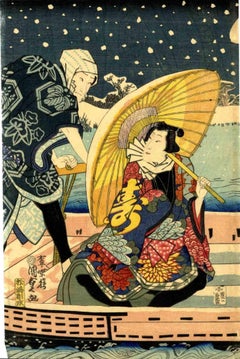
Kabuki - Woodcut by Utagawa Kunisada II - 1862
Located in Roma, IT
Kabuki is an original artwork realized in 1862 by Utagawa Kunisada II (1823-1880).
Boatman with elegant passenger in snowy landscape.
Sign: Kochoro Kuni...
Category
1860s Modern Art by Medium: Woodcut
Materials
Woodcut
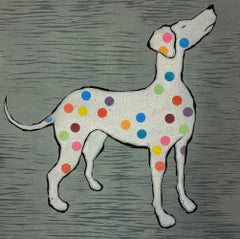
Damien Hirst
s Dog, Pictures of Famous Artist
s Pets, Damien Hirst Spots Style
Located in Deddington, GB
Damien Hirst’s Dog by Mychael Barratt
Limited edition art print
Handmade Woodcut on paper
Edition of 100
Signed and Titled
Complete size of sheet: 63 ...
Category
2010s Contemporary Art by Medium: Woodcut
Materials
Paper, Woodcut
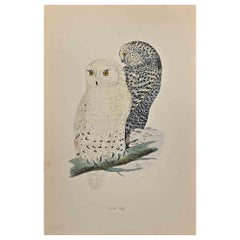
Snowy Owl - Woodcut Print by Alexander Francis Lydon - 1870
Located in Roma, IT
Snowy Owl a modern artwork realized in 1870 by the British artist Alexander Francis Lydon (1836-1917) .
Woodcut print, hand colored, published by London, Bell & Sons, 1870. Name ...
Category
1870s Modern Art by Medium: Woodcut
Materials
Woodcut
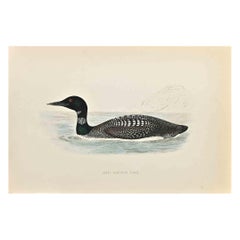
Great Northern Diver - Woodcut Print by Alexander Francis Lydon - 1870
Located in Roma, IT
Great Northern Diver is a modern artwork realized in 1870 by the British artist Alexander Francis Lydon (1836-1917).
Woodcut print on ivory-colored pap...
Category
1870s Modern Art by Medium: Woodcut
Materials
Woodcut
Black Hat -- Woodcut, Print, Portrait by Alex Katz
By Alex Katz
Located in London, GB
Black Hat, 2012
Alex Katz
Woodcut, on Somerset satin white
Signed and numbered from the edition of 25
Printed by Collaborative Art Editions, Tampa
Published by Lococo Fine Art Publi...
Category
2010s Contemporary Art by Medium: Woodcut
Materials
Woodcut

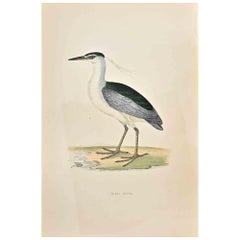
Night Heron - Woodcut Print by Alexander Francis Lydon - 1870
Located in Roma, IT
Night Heron is a modern artwork realized in 1870 by the British artist Alexander Francis Lydon (1836-1917).
Woodcut print on ivory-colored paper.
Hand-colored, published by London,...
Category
1870s Modern Art by Medium: Woodcut
Materials
Woodcut
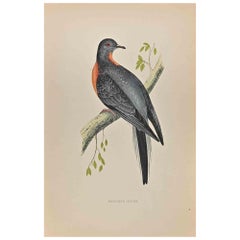
Passenger Pigeon - Woodcut Print by Alexander Francis Lydon - 1870
Located in Roma, IT
Passenger Pigeon is a modern artwork realized in 1870 by the British artist Alexander Francis Lydon (1836-1917) .
Woodcut print, hand colored, publi...
Category
1870s Modern Art by Medium: Woodcut
Materials
Woodcut
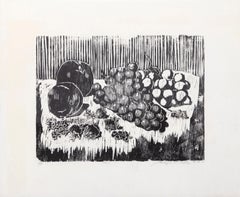
Fruits, Modern Woodcut on thin tissue paper by Biagio Civale
Located in Long Island City, NY
Biagio Civale, Italian/American (1936 - ) - Fruits, Year: 1991, Medium: Woodcut on thin tissue paper, Signed, numbered, and dated in pencil, Edition: A/P, Image Size: 11.5 x 15.5...
Category
1990s Modern Art by Medium: Woodcut
Materials
Woodcut
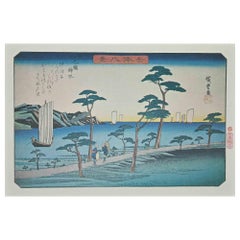
The Sea-Eight Scenic Spots in Kanazawa
Located in Roma, IT
The Sea-Eight Scenic Spots in Kanazawa is a modern artwork realized in the Mid-20th Century.
Mixed colored lithograph after a woodcut realized by the great Japanese artist Utagawa H...
Category
Mid-20th Century Modern Art by Medium: Woodcut
Materials
Woodcut
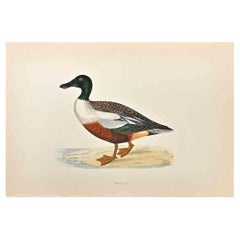
Shoveler - Woodcut Print by Alexander Francis Lydon - 1870
Located in Roma, IT
Shoveler is a modern artwork realized in 1870 by the British artist Alexander Francis Lydon (1836-1917) .
Woodcut print, hand colored, published by London, Bell & Sons, 1870. Nam...
Category
1870s Modern Art by Medium: Woodcut
Materials
Woodcut
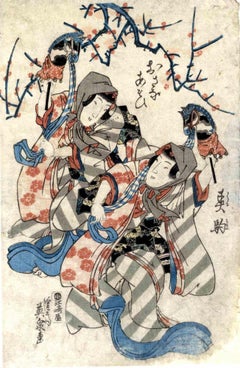
Little Spring Horse - Woodcut Print by Keisai Eisen - 1830s
By Keisai Eisen
Located in Roma, IT
Little Spring Horse is an original modern artwork realized by Keisai Eisen in 1820-30.
Woodcut Print Oban Format From the series "Osana asobi" (Children'...
Category
19th Century Modern Art by Medium: Woodcut
Materials
Woodcut
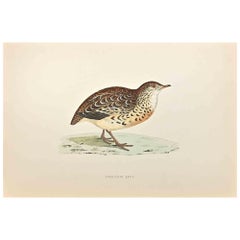
Andalusian Quail - Woodcut Print by Alexander Francis Lydon - 1870
Located in Roma, IT
Andalusian Quail is a modern artwork realized in 1870 by the British artist Alexander Francis Lydon (1836-1917).
Woodcut print on ivory-colored paper.
Hand-colored, published by Lo...
Category
1870s Modern Art by Medium: Woodcut
Materials
Woodcut
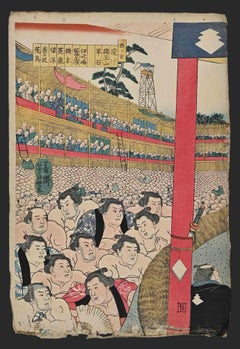
Sumo - Woodcut by Utagawa Kunisada - Mid 19th century
Located in Roma, IT
Sumo Tournament is a Woodcut print realized in the first half of the 19th century by Utagawa Kunisada.
Good condition and Beautiful colored woodblock print.
This wonderful modern artwork represents Japanese Sumo...
Category
Mid-19th Century Modern Art by Medium: Woodcut
Materials
Woodcut
A Rural Genji - Woodcut by Utagawa Kunisada - 1829-1842
Located in Roma, IT
A rural Genji is an original artwork realized in 1829-1842 by Utagawa Kunisada (1786-1865).
Illustrated book in two volumes. Book title "Nise Murasaki Inaka Jenji", 9th instalment....
Category
19th Century Modern Art by Medium: Woodcut
Materials
Woodcut
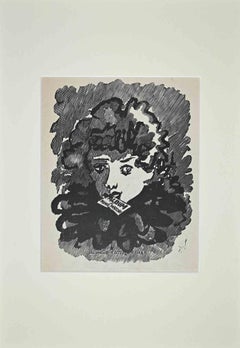
Portrait - Original Woodcut print by Mino Maccari - Mid-20th Century
By Mino Maccari
Located in Roma, IT
Portrait is an original print realized by Mino Maccari in Mid-20th Century.
Beautiful black and woodcut print on ivory-colored paper. Included a passport: 49 x 34 cm.
Good conditio...
Category
Mid-20th Century Modern Art by Medium: Woodcut
Materials
Woodcut
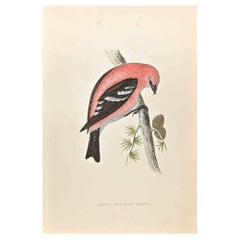
American White-Winged Crossbi - Woodcut Print by Alexander Francis Lydon - 1870
Located in Roma, IT
American White-Winged Crossbill is a modern artwork realized in 1870 by the British artist Alexander Francis Lydon (1836-1917) .
Woodcut print, hand colored, published by London, B...
Category
1870s Modern Art by Medium: Woodcut
Materials
Woodcut
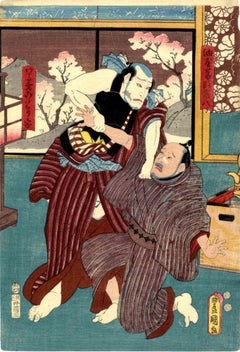
Yakushae - Woodcut Print by Utagawa Kunisada - 1863
Located in Roma, IT
Yakushae is an original modern artwork realized by Utagawa Kunisada in 1863.
Woodcut print oban from a tryptich. Signed Toyokuni ga. Publisher: Izutsuya. Scene from the play "Yowa Nasake Ukina no Yokogushi". Yasugoro, the thief with the bat tattoo on his cheek, enters the oil merchant's house at night...
Category
19th Century Modern Art by Medium: Woodcut
Materials
Woodcut
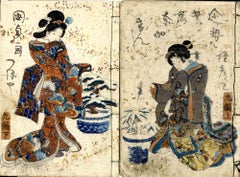
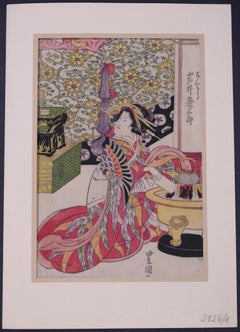
The Japanese Tea Ritual - Woodcut print - 1850s
Located in Roma, IT
The Japanese tea ritual is a breathtaking ukiyo-e, a original woodblock print on paper, realized at the half of trhe 19th century by the great master, Utagawa Toyokuni II...
Category
1850s Modern Art by Medium: Woodcut
Materials
Paper, Woodcut
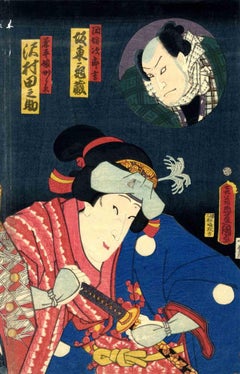
Kabuki - Woodcut by Sawamura Tanosuke - 1862
Located in Roma, IT
Kabuki is an original artwork realized in 1862.
Breast portrait of the actor Sawamura Tanosuke in front of a dark blue background, as Kanehira's daughter, in the inset portrait of B...
Category
1860s Modern Art by Medium: Woodcut
Materials
Woodcut
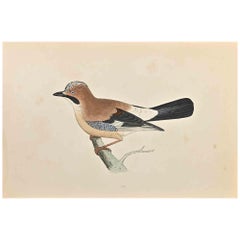
Jay - Woodcut Print by Alexander Francis Lydon - 1870
Located in Roma, IT
Jay is a modern artwork realized in 1870 by the British artist Alexander Francis Lydon (1836-1917).
Woodcut print on ivory-colored paper.
Hand-colored, published by London, Bell & ...
Category
1870s Modern Art by Medium: Woodcut
Materials
Woodcut
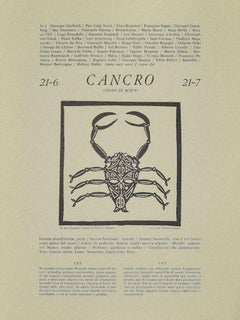
Cancer - Original Woodcut Print by P. C. Antinori - 1970s
Located in Roma, IT
Zodiac Signs - Cancer is original Black and white xilography artwork, realized by Italian artist Piero C. Antinori.
Excellent condition.
Written on the lower left; original woodcut...
Category
1970s Contemporary Art by Medium: Woodcut
Materials
Woodcut
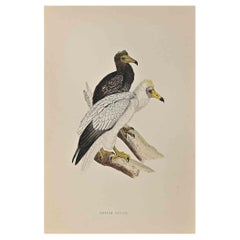
Egyptian Vulture - Woodcut Print by Alexander Francis Lydon - 1870
Located in Roma, IT
Egyptian Vulture is a modern artwork realized in 1870 by the British artist Alexander Francis Lydon (1836-1917) .
Woodcut print, hand colored, publi...
Category
1870s Modern Art by Medium: Woodcut
Materials
Woodcut
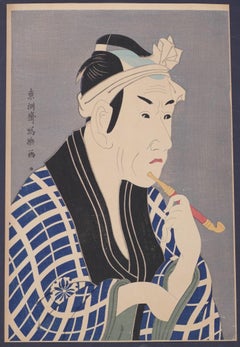
Portrait of Man with a Pipe - Woodcut print after Utagawa Kuniyoshi
Located in Roma, IT
Portrait of Man with Pipe is a superb color woodblock print on paper, from the Japanese print-series “Taiheiki eiyu den”, 'Tale of Grand Pacification', designed by Utagawa Kuniyoshi ...
Category
1850s Modern Art by Medium: Woodcut
Materials
Paper, Woodcut
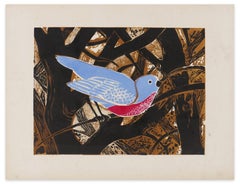
Oiseau Bleu - Woodcut Print by G. Halff - Late 1900
Located in Roma, IT
Oiseau Bleu is a beautiful original colored xylograph on wove paper, realized by the French artist Giselle Halff between the half and the end of XX century...
Category
Late 20th Century Contemporary Art by Medium: Woodcut
Materials
Woodcut
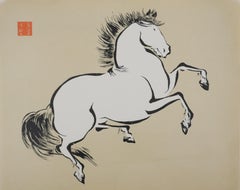
Japanese Print, Rearing Horse - Signed Woodcut
Located in Paris, IDF
Mokuchu URUSHIBARA
Rearing Horse, c. 1930
Woodcut after on an ink drawing
Signed with the artist's stamp
On paper 26 x 32 cm (c. 10,2 x 12.5 in)
INFORMATION : Engraving published b...
Category
1930s Modern Art by Medium: Woodcut
Materials
Woodcut
Portrait of Piero Belli - Original Woodcut by A. Giuliani - Early 20th century
Located in Roma, IT
Portrait of Piero Belli is an original woodcut print by Attilio Giuliani in the early 20th Century.
Good conditions.
The artwork is depicted through strong strokes in a well-balanc...
Category
Early 20th Century Modern Art by Medium: Woodcut
Materials
Woodcut
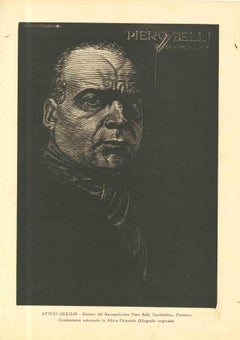
Osakae - Woodcut by Ichiyôsai Yoshitaki - 1860s
Located in Roma, IT
Osakae is an original artwork realized in the 1861 by Ichiyôsai Yoshitaki.
Woodcut print Chuban Diptych.
The actor Nakamura Jakuemon I as Matsushita Kaheiji, Arashi Rikan III as Ak...
Category
1860s Modern Art by Medium: Woodcut
Materials
Woodcut
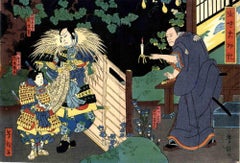
The House of Naiads - Woodcut Print by G. Verna - 1946
Located in Roma, IT
Image dimension 36.5 x 18 cm.
Hand Signed. Edition of 100 pieces.
Category
1940s Contemporary Art by Medium: Woodcut
Materials
Woodcut
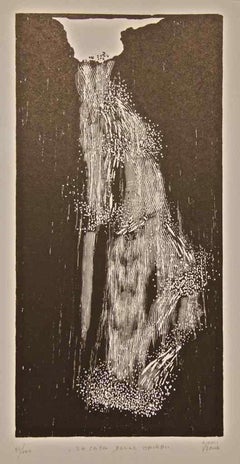
Kabuki Aizurie - Woodcut by Utagawa Kunisada - 1852
Located in Roma, IT
Kabuki Aizurie is an original artwork realized in 1852 by Utagawa Kunisada (1786-1865).
The lovers Osome and Hisamatsu on the run at night, the roles played by Ichikawa Danjuro and...
Category
1860s Modern Art by Medium: Woodcut
Materials
Woodcut
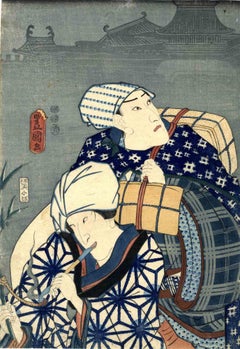
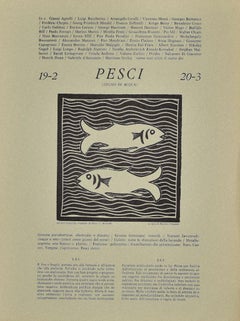
The Two Fishes - Original Woodcut by P. C. Antinori - 20th Century
Located in Roma, IT
Zodiac Signs - The Two Fish is original Black and white woodcut, realized by Italian artist Piero C. Antinori.
Excellent condition.
Written on the lower left; Original woodcut of P...
Category
20th Century Contemporary Art by Medium: Woodcut
Materials
Woodcut
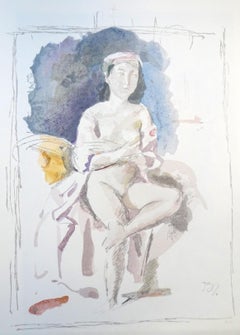
Japanese Print, The Cat - Signed Woodcut
Located in Paris, IDF
Mokuchu URUSHIBARA
The Cat, c. 1930
Woodcut after on an ink drawing
Signed with the artist's stamp
On paper 27 x 39 cm (c. 10,6 x 15,3 in)
INFORMATION : Engraving published by Moku...
Category
1930s Modern Art by Medium: Woodcut
Materials
Woodcut

Sight and Sound - 1990s - Balthus - Xilograph - Contemporary
Located in Roma, IT
Sight and Sound is an original portfolio by Balthus including three coloured xilograph.
Hand signed lower right. Edition of 51 numbered copies plus 5 a...
Category
1990s Contemporary Art by Medium: Woodcut
Materials
Woodcut
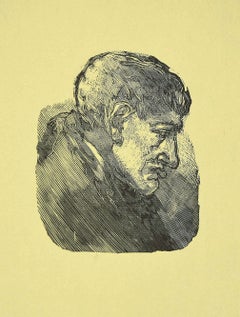
Portrait of Giorgio Morandi - Woodcut Print by Mino Maccari - 1950s
By Mino Maccari
Located in Roma, IT
Portrait of Giorgio Morandi is an original modern artwork realized the half of the XX Century by the Italian artist Mino Maccari (Siena, 1898 - Rome, 1989).
Original woodcut print o...
Category
1950s Modern Art by Medium: Woodcut
Materials
Woodcut
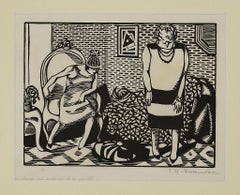
The Conversation - Woodcut Print by Hermann-Paul - 1920s
Located in Roma, IT
The Conversation is an original Modern artwork realized by Hermann-Paul (Paris,1864 – 1940).
Original woodcut ph on paper.
Hand-signed in pencil on the lower right corner.
Passep...
Category
1920s Modern Art by Medium: Woodcut
Materials
Woodcut
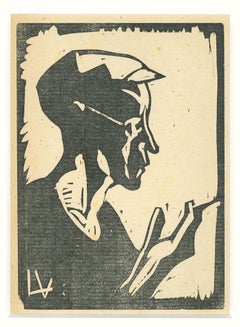
Sailor - Woodcut Print by Lorenzo Viani - 1930 ca.
Located in Roma, IT
Sailor is an original xilograph on ivory-colored, realized by the Italian Artist Lorenzo Viani in 1930ca.
Monogram of the artist on the lower left" LV"....
Category
1930s Modern Art by Medium: Woodcut
Materials
Woodcut
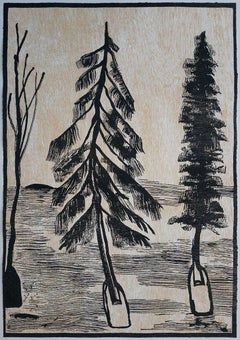
Kcho, Untitled I, 2019 Original Woodcut 45x31in landscape abstract povera art
Located in Miami, FL
Kcho (Alexis Leiva Machado) (Cuba, 1970)
'Untitled I', 2019
woodcut, silkscreen on paper Intaglio 300 g.
44.7 x 31.2 in. (113.5 x 79 cm.)
Edition of 30
ID: KCH-121
Unframed
Category
2010s Contemporary Art by Medium: Woodcut
Materials
Woodcut, Ink
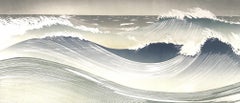
Tide Race, Japanese Woodcut Art, Ocean Art, Art for your Beach House, Coastal
Located in Deddington, GB
Tide Race by Artist Rod Nelson is a limited edition print. The scene captures the violently beautiful way in which waves crash.
Rod Nelson is a printmaker w...
Category
21st Century and Contemporary Contemporary Art by Medium: Woodcut
Materials
Paper, Woodcut
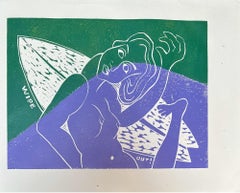
Wipe Out - Surfing Art -
Located in Carmel, CA
Wipe Out - Surfing Art - Figurative - Woodcut Print By Marc Zimmerman
Limited Edition 01/04 more colorways available
This masterwork is exhibited in the Zimmerman Gallery, Carmel C...
Category
2010s Contemporary Art by Medium: Woodcut
Materials
Woodcut
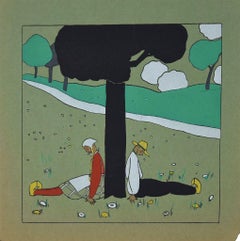
Children Asleep Under A Tree - Original Illustration for a book by C. Farrère
Located in Roma, IT
Children Asleep Under A Tree is a graceful hand-colored xylograph print, born presumably as an illustration of a book for children, unidentified, written by the French author Claude ...
Category
Mid-20th Century Modern Art by Medium: Woodcut
Materials
Woodcut
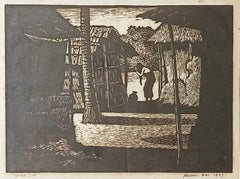
Untitled, Woodcut on Paper, Figurative by Haren Das "In Stock"
By Haren Das
Located in Kolkata, West Bengal
Haren Das - Untitled
Woodcut on Paper
12.28 x 9 inches, 1991
( Unframed & Delivered )
This 1991 print by Haren Das beautifully captures a serene rural scene with fine detailing and ...
Category
1990s Modern Art by Medium: Woodcut
Materials
Paper, Woodcut
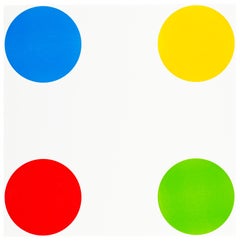
Norcamphor from “40 Woodcut Spots"
By Damien Hirst
Located in Calabasas, CA
Artist: Damien Hirst
Title: Norcamphor from “40 Woodcut Spots"
Year: 2011
Medium: Woodcut on 410gsm Somerset White Paper
Edition: 43/55; signed (recto) and numbered (verso) in penci...
Category
2010s Contemporary Art by Medium: Woodcut
Materials
Woodcut
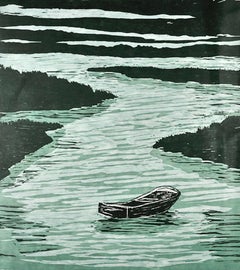
Estuary
Located in New York, NY
Richard Bosman (b. 1944) is a painter and printmaker known for his woodcuts depicting turbulent seascapes. He studied at Bryam Shaw School of Painting and Drawing in London, The New ...
Category
Late 20th Century Modern Art by Medium: Woodcut
Materials
Woodcut
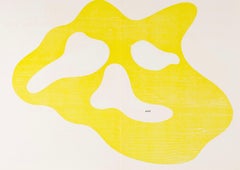
Hans Jean Arp, Yellow, from Derriere le miroir, 1950
Located in Southampton, NY
This exquisite woodcut by Hans Jean Arp (1886–1966), titled Jaune (Yellow), from the folio Derriere le miroir, No. 33, originates from the 1950 edition published by Maeght Editeur, P...
Category
1950s Modern Art by Medium: Woodcut
Materials
Woodcut

$716 Sale Price
20% Off
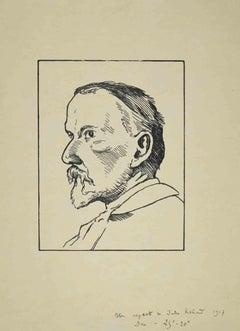
Portrait of Jules Lenard - Woodcut by Paul Emile Colin - 1907
Located in Roma, IT
Woodcut print realized by Paul Emile Colin in the 1907.
Not signed.
Very good condition.
Category
Early 1900s Modern Art by Medium: Woodcut
Materials
Woodcut
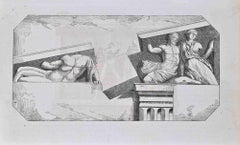
Divinity (from Parthenon) - Woodcut Print - 1862
Located in Roma, IT
Divinity is an artwork realized from 1856 to 1862 .
Black and white woodcut.
Category
19th Century Modern Art by Medium: Woodcut
Materials
Woodcut
$180 Sale Price
25% Off
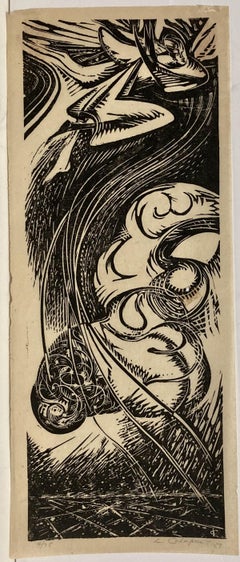
Letterio Calapai, (Sky Abstraction), 1957, mid-century wood engraving
Located in New York, NY
Letterio Calapai is widely recognized as a major American artist of the twentieth century. He is widely respected as a printmaker, especially for engravings and wood engravings, and ...
Category
1950s American Modern Art by Medium: Woodcut
Materials
Woodcut
Beyond talk/Über das Reden hinaus
Located in New Orleans, LA
edition 2/5
BARBARA KUEBEL is a Daphne, AL-based artist who uses oil and pencil for her works on paper and on canvas. She was born and raised in Austria and earned two art degrees f...
Category
21st Century and Contemporary Contemporary Art by Medium: Woodcut
Materials
Paper, Woodcut
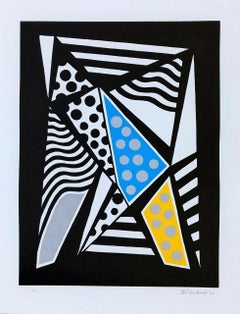
Bernardo Navarro Tomas, ¨Untitled¨, 2021, Woodcut, 27.8x21.5 in
Located in Miami, FL
Bernardo Navarro Tomas (Cuba, 1977)
'Untitled (circulos plateados)', 2021
woodcut, silkscreen on paper Guarro Biblos 250g.
27.8 x 21.5 in. (70.5 x 54.5 cm.)
Edition of 20
ID: NAA-113...
Category
2010s Contemporary Art by Medium: Woodcut
Materials
Paper, Woodcut
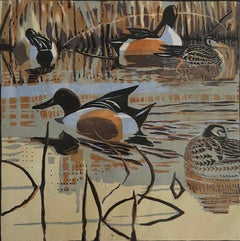
Robert Greenhalf, Shoverlers, Limited Edition Print, Bird Print, Wildlife Art
Located in Deddington, GB
Robert Greenhalf
Shoverlers
Limited Edition Print
Woodcut on Paper
Edition of 100
Paper Size: H 38.5cm x W 41 cm
Image Size: H 27.5cm x W 27.5cm
Sold ...
Category
21st Century and Contemporary Contemporary Art by Medium: Woodcut
Materials
Paper, Woodcut
"Pura Vida" original color woodcut print signed by Carol Summers
Located in Milwaukee, WI
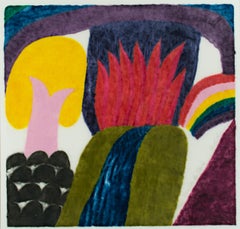
"Pura Vida" is an original color woodcut signed by Carol Summers. A multi-colored piece shows a waterfall with red flames behind it in the middle of the piece. On the left stands a tree with yellow leaves on a hill. To the right is a rainbow. This is an excellent example of Summer's printmaking, not just because of the technique and imagery, but because it numbered 1 of the edition of 125. In addition, it contains a personal inscription to the Milwaukee gallerist David Barnett, who has championed the work of Summers and produced catalogs of his work. Indeed, this print appears as no. 189 in the David Barnett Gallery's 1988 catalogue raisonné of Summer's woodcuts.
Feel free to inquire if you would like to purchase a copy of the catalogue raisonné along with your Carol Summers print.
Art: 24.25 x 24.75 in
Frame: 36 x 35 in
signed lower right
titled and inscribed to David [Barnett] lower right
edition (1/125) lower right
Carol Summers (1925-2016) has worked as an artist throughout the second half of the 20th century and into the first years of the next, outliving most of his mid-century modernist peers. Initially trained as a painter, Summers was drawn to color woodcuts around 1950 and it became his specialty thereafter. Over the years he has developed a process and style that is both innovative and readily recognizable. His art is known for it’s large scale, saturated fields of bold color, semi-abstract treatment of landscapes from around the world and a luminescent quality achieved through a printmaking process he invented.
In a career that has extended over half a century, Summers has hand-pulled approximately 245 woodcuts in editions that have typically run from 25 to 100 in number. His talent was both inherited and learned. Born in 1925 in Kingston, a small town in upstate New York, Summers was raised in nearby Woodstock with his older sister, Mary. His parents were both artists who had met in art school in St. Louis. During the Great Depression, when Carol was growing up, his father supported the family as a medical illustrator until he could return to painting. His mother was a watercolorist and also quite knowledgeable about the different kinds of papers used for various kinds of painting. Many years later, Summers would paint or print on thinly textured paper originally collected by his mother.
From 1948 to 1951, Carol Summers trained in the classical fine and studio arts at Bard College and at the Art Students League of New York. He studied painting with Steven Hirsh and printmaking with Louis Schanker. He admired the shapes and colors favored by early modernists Paul Klee (Sw: 1879-1940) and Matt Phillips (Am: b.1927- ). After graduating, Summers quit working as a part-time carpenter and cabinetmaker (which had supported his schooling and living expenses) to focus fulltime on art. That same year, an early abstract, Bridge No. 1 was selected for a Purchase Prize in a competition sponsored by the Brooklyn Museum.
In 1952, his work (Cathedral, Construction and Icarus) was shown the first time at the Museum of Modern Art in New York City in an exhibition of American woodcuts. In 1954, Summers received a grant from the Italian government to study for a year in Italy. Woodcuts completed soon after his arrival there were almost all editions of only 8 to 25 prints, small in size, architectural in content and black and white in color. The most well-known are Siennese Landscape and Little Landscape, which depicted the area near where he resided. Summers extended this trip three more years, a decision which would have significant impact on choices of subject matter and color in the coming decade.
After returning from Europe, Summers’ images continued to feature historical landmarks and events from Italy as well as from France, Spain and Greece. However, as evidenced in Aetna’s Dream, Worldwind and Arch of Triumph, a new look prevailed. These woodcuts were larger in size and in color. Some incorporated metal leaf in the creation of a collage and Summers even experimented with silkscreening. Editions were now between 20 and 50 prints in number. Most importantly, Summers employed his rubbing technique for the first time in the creation of Fantastic Garden in late 1957.
Dark Vision of Xerxes, a benchmark for Summers, was the first woodcut where Summers experimented using mineral spirits as part of his printmaking process. A Fulbright Grant as well as Fellowships from the Louis Comfort Tiffany Foundation and the Guggenheim Foundation followed soon thereafter, as did faculty positions at colleges and universities primarily in New York and Pennsylvania. During this period he married a dancer named Elaine Smithers with whom he had one son, Kyle. Around this same time, along with fellow artist Leonard Baskin, Summers pioneered what is now referred to as the “monumental” woodcut. This term was coined in the early 1960s to denote woodcuts that were dramatically bigger than those previously created in earlier years, ones that were limited in size mostly by the size of small hand-presses. While Baskin chose figurative subject matter, serious in nature and rendered with thick, striated lines, Summers rendered much less somber images preferring to emphasize shape and color; his subject matter approached abstraction but was always firmly rooted in the landscape.
In addition to working in this new, larger scale, Summers simultaneously refined a printmaking process which would eventually be called the “Carol Summers Method” or the “ Carol Summers Technique”. Summers produces his woodcuts by hand, usually from one or more blocks of quarter-inch pine, using oil-based printing inks and porous mulberry papers. His woodcuts reveal a sensitivity to wood especially its absorptive qualities and the subtleties of the grain. In several of his woodcuts throughout his career he has used the undulating, grainy patterns of a large wood plank to portray a flowing river or tumbling waterfall. The best examples of this are Dream, done in 1965 and the later Flash Flood Escalante, in 2003. In the majority of his woodcuts, Summers makes the blocks slightly larger than the paper so the image and color will bleed off the edge.
Before printing, he centers a dry sheet of paper over the top of the cut wood block or blocks, securing it with giant clips. Then he rolls the ink directly on the front of the sheet of paper and pressing down onto the dry wood block or reassembled group of blocks. Summers is technically very proficient; the inks are thoroughly saturated onto the surface of the paper but they do not run into each other. The precision of the color inking in Constantine’s Dream in 1969 and Rainbow Glacier in 1970 has been referred to in various studio handbooks. Summers refers to his own printing technique as “rubbing”. In traditional woodcut printing, including the Japanese method, the ink is applied directly onto the block. However, by following his own method, Summers has avoided the mirror-reversed image of a conventional print and it has given him the control over the precise amount of ink that he wants on the paper. After the ink is applied to the front of the paper, Summers sprays it with mineral spirits, which act as a thinning agent. The absorptive fibers of the paper draw the thinned ink away from the surface softening the shapes and diffusing and muting the colors. This produces a unique glow that is a hallmark of the Summers printmaking technique. Unlike the works of other color field artists or modernists of the time, this new technique made Summers’ extreme simplification and flat color areas anything but hard-edged or coldly impersonal.
By the 1960s, Summers had developed a personal way of coloring and printing and was not afraid of hard work, doing the cutting, inking and pulling himself. In 1964, at the age of 38, Summers’ work was exhibited for a second time at the Museum of Modern Art. This time his work was featured in a one-man show and then as one of MOMA’s two-year traveling exhibitions which toured throughout the United States. In subsequent years, Summers’ works would be exhibited and acquired for the permanent collections of multiple museums throughout the United States, Europe and Asia. Summers’ familiarity with landscapes throughout the world is firsthand. As a navigator-bombardier in the Marines in World War II, he toured the South Pacific and Asia.
Following college, travel in Europe and subsequent teaching positions, in 1972, after 47 years on the East Coast, Carol Summers moved permanently to Bonny Doon in the Santa Cruz Mountains in Northern California. There met his second wife, Joan Ward Toth, a textile artist who died in 1998; and it was here his second son, Ethan was born. During the years that followed this relocation, Summers’ choice of subject matter became more diverse although it retained the positive, mostly life-affirming quality that had existed from the beginning. Images now included moons, comets, both sunny and starry skies, hearts and flowers, all of which, in one way or another, remained tied to the landscape.
In the 1980s, from his home and studio in the Santa Cruz mountains, Summers continued to work as an artist supplementing his income by conducting classes and workshops at universities in California and Oregon as well as throughout the Mid and Southwest. He also traveled extensively during this period hiking and camping, often for weeks at a time, throughout the western United States and Canada. Throughout the decade it was not unusual for Summers to backpack alone or with a fellow artist into mountains or back country for six weeks or more at a time. Not surprisingly, the artwork created during this period rarely departed from images of the land, sea and sky. Summers rendered these landscapes in a more representational style than before, however he always kept them somewhat abstract by mixing geometric shapes with organic shapes, irregular in outline. Some of his most critically acknowledged work was created during this period including First Rain, 1985 and The Rolling Sea, 1989. Summers received an honorary doctorate from his alma mater, Bard College in 1979 and was selected by the United States Information Agency to spend a year conducting painting and printmaking workshops at universities throughout India. Since that original sabbatical, he has returned every year, spending four to eight weeks traveling throughout that country.
In the 1990s, interspersed with these journeys to India have been additional treks to the back roads and high country areas of Mexico, Central America, Nepal, China and Japan. Travel to these exotic and faraway places had a profound influence on Summers’ art. Subject matter became more worldly and nonwestern as with From Humla to Dolpo, 1991 or A Former Life of Budha, 1996, for example. Architectural images, such as The Pillars of Hercules, 1990 or The Raja’s Aviary, 1992 became more common. Still life images made a reappearance with Jungle Bouquet in 1997. This was also a period when Summers began using odd-sized paper to further the impact of an image.
The 1996 Night, a view of the earth and horizon as it might be seen by an astronaut, is over six feet long and only slightly more than a foot-and-a-half high. From 1999, Revuelta A Vida (Spanish for “Return to Life”) is pie-shaped and covers nearly 18 cubic feet. It was also at this juncture that Summers began to experiment with a somewhat different palette although he retained his love of saturated colors. The 2003 Far Side of Time is a superb example of the new direction taken by this colorist.
At the turn of the millennium in 1999, “Carol Summers Woodcuts...
Category
1980s Contemporary Art by Medium: Woodcut
Materials
Woodcut
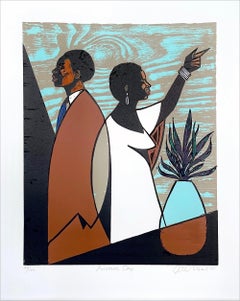
ANOTHER DAY Signed Woodcut, Modern Portrait, Black Couple, Brown, Blue, Beige
By Otto Neals
Located in Union City, NJ
ANOTHER DAY is an original limited edition woodcut by the American painter and sculptor, Otto Neals. The woodblock used to print ANOTHER DAY was hand carved by Otto Neals and printed...
Category
Early 2000s Contemporary Art by Medium: Woodcut
Materials
Woodcut
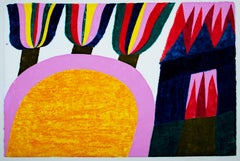
"Ravanna
s Palace Burning, " Woodcut Landscape signed by Carol Summers
Located in Milwaukee, WI
"Ravanna's Palace Burning" is a woodcut signed by Carol Summers. The image combines landscape and architecture, which is typical of the works Summers produced during the 1980s and '90s. In the image, a dark building stands burning, bright red flames licking from the windows and rooftop. It stands beside an orange field framed in pink, probably representing a plaza. Beyond the plaza are multicolored trees, their branches reaching upward like the flames on the building. The playfulness of the image is enhanced by Summers' signature printmaking technique, which allows the ink from the woodblock to seep through the paper, blurring the edges of each form.
Art: 24.5 x 37.25 in
Frame: 30 x 42.75 in
Numbered 53 of the edition of 125
Carol Summers (1925-2016) has worked as an artist throughout the second half of the 20th century and into the first years of the next, outliving most of his mid-century modernist peers. Initially trained as a painter, Summers was drawn to color woodcuts around 1950 and it became his specialty thereafter. Over the years he has developed a process and style that is both innovative and readily recognizable. His art is known for it’s large scale, saturated fields of bold color, semi-abstract treatment of landscapes from around the world and a luminescent quality achieved through a printmaking process he invented.
In a career that has extended over half a century, Summers has hand-pulled approximately 245 woodcuts in editions that have typically run from 25 to 100 in number. His talent was both inherited and learned. Born in 1925 in Kingston, a small town in upstate New York, Summers was raised in nearby Woodstock with his older sister, Mary. His parents were both artists who had met in art school in St. Louis. During the Great Depression, when Carol was growing up, his father supported the family as a medical illustrator until he could return to painting. His mother was a watercolorist and also quite knowledgeable about the different kinds of papers used for various kinds of painting. Many years later, Summers would paint or print on thinly textured paper originally collected by his mother.
From 1948 to 1951, Carol Summers trained in the classical fine and studio arts at Bard College and at the Art Students League of New York. He studied painting with Steven Hirsh and printmaking with Louis Schanker. He admired the shapes and colors favored by early modernists Paul Klee (Sw: 1879-1940) and Matt Phillips (Am: b.1927- ). After graduating, Summers quit working as a part-time carpenter and cabinetmaker (which had supported his schooling and living expenses) to focus fulltime on art. That same year, an early abstract, Bridge No. 1 was selected for a Purchase Prize in a competition sponsored by the Brooklyn Museum.
In 1952, his work (Cathedral, Construction and Icarus) was shown the first time at the Museum of Modern Art in New York City in an exhibition of American woodcuts. In 1954, Summers received a grant from the Italian government to study for a year in Italy. Woodcuts completed soon after his arrival there were almost all editions of only 8 to 25 prints, small in size, architectural in content and black and white in color. The most well-known are Siennese Landscape and Little Landscape, which depicted the area near where he resided. Summers extended this trip three more years, a decision which would have significant impact on choices of subject matter and color in the coming decade.
After returning from Europe, Summers’ images continued to feature historical landmarks and events from Italy as well as from France, Spain and Greece. However, as evidenced in Aetna’s Dream, Worldwind and Arch of Triumph, a new look prevailed. These woodcuts were larger in size and in color. Some incorporated metal leaf in the creation of a collage and Summers even experimented with silkscreening. Editions were now between 20 and 50 prints in number. Most importantly, Summers employed his rubbing technique for the first time in the creation of Fantastic Garden in late 1957.
Dark Vision of Xerxes, a benchmark for Summers, was the first woodcut where Summers experimented using mineral spirits as part of his printmaking process. A Fulbright Grant as well as Fellowships from the Louis Comfort Tiffany Foundation and the Guggenheim Foundation followed soon thereafter, as did faculty positions at colleges and universities primarily in New York and Pennsylvania. During this period he married a dancer named Elaine Smithers with whom he had one son, Kyle. Around this same time, along with fellow artist Leonard Baskin, Summers pioneered what is now referred to as the “monumental” woodcut. This term was coined in the early 1960s to denote woodcuts that were dramatically bigger than those previously created in earlier years, ones that were limited in size mostly by the size of small hand-presses. While Baskin chose figurative subject matter, serious in nature and rendered with thick, striated lines, Summers rendered much less somber images preferring to emphasize shape and color; his subject matter approached abstraction but was always firmly rooted in the landscape.
In addition to working in this new, larger scale, Summers simultaneously refined a printmaking process which would eventually be called the “Carol Summers Method” or the “ Carol Summers Technique”. Summers produces his woodcuts by hand, usually from one or more blocks of quarter-inch pine, using oil-based printing inks and porous mulberry papers. His woodcuts reveal a sensitivity to wood especially its absorptive qualities and the subtleties of the grain. In several of his woodcuts throughout his career he has used the undulating, grainy patterns of a large wood plank to portray a flowing river or tumbling waterfall. The best examples of this are Dream, done in 1965 and the later Flash Flood Escalante, in 2003. In the majority of his woodcuts, Summers makes the blocks slightly larger than the paper so the image and color will bleed off the edge.
Before printing, he centers a dry sheet of paper over the top of the cut wood block or blocks, securing it with giant clips. Then he rolls the ink directly on the front of the sheet of paper and pressing down onto the dry wood block or reassembled group of blocks. Summers is technically very proficient; the inks are thoroughly saturated onto the surface of the paper but they do not run into each other. The precision of the color inking in Constantine’s Dream in 1969 and Rainbow Glacier in 1970 has been referred to in various studio handbooks. Summers refers to his own printing technique as “rubbing”. In traditional woodcut printing, including the Japanese method, the ink is applied directly onto the block. However, by following his own method, Summers has avoided the mirror-reversed image of a conventional print and it has given him the control over the precise amount of ink that he wants on the paper. After the ink is applied to the front of the paper, Summers sprays it with mineral spirits, which act as a thinning agent. The absorptive fibers of the paper draw the thinned ink away from the surface softening the shapes and diffusing and muting the colors. This produces a unique glow that is a hallmark of the Summers printmaking technique. Unlike the works of other color field artists or modernists of the time, this new technique made Summers’ extreme simplification and flat color areas anything but hard-edged or coldly impersonal.
By the 1960s, Summers had developed a personal way of coloring and printing and was not afraid of hard work, doing the cutting, inking and pulling himself. In 1964, at the age of 38, Summers’ work was exhibited for a second time at the Museum of Modern Art. This time his work was featured in a one-man show and then as one of MOMA’s two-year traveling exhibitions which toured throughout the United States. In subsequent years, Summers’ works would be exhibited and acquired for the permanent collections of multiple museums throughout the United States, Europe and Asia. Summers’ familiarity with landscapes throughout the world is firsthand. As a navigator-bombardier in the Marines in World War II, he toured the South Pacific and Asia.
Following college, travel in Europe and subsequent teaching positions, in 1972, after 47 years on the East Coast, Carol Summers moved permanently to Bonny Doon in the Santa Cruz Mountains in Northern California. There met his second wife, Joan Ward Toth, a textile artist who died in 1998; and it was here his second son, Ethan was born. During the years that followed this relocation, Summers’ choice of subject matter became more diverse although it retained the positive, mostly life-affirming quality that had existed from the beginning. Images now included moons, comets, both sunny and starry skies, hearts and flowers, all of which, in one way or another, remained tied to the landscape.
In the 1980s, from his home and studio in the Santa Cruz mountains, Summers continued to work as an artist supplementing his income by conducting classes and workshops at universities in California and Oregon as well as throughout the Mid and Southwest. He also traveled extensively during this period hiking and camping, often for weeks at a time, throughout the western United States and Canada. Throughout the decade it was not unusual for Summers to backpack alone or with a fellow artist into mountains or back country for six weeks or more at a time. Not surprisingly, the artwork created during this period rarely departed from images of the land, sea and sky. Summers rendered these landscapes in a more representational style than before, however he always kept them somewhat abstract by mixing geometric shapes with organic shapes, irregular in outline. Some of his most critically acknowledged work was created during this period including First Rain, 1985 and The Rolling Sea, 1989. Summers received an honorary doctorate from his alma mater, Bard College in 1979 and was selected by the United States Information Agency to spend a year conducting painting and printmaking workshops at universities throughout India. Since that original sabbatical, he has returned every year, spending four to eight weeks traveling throughout that country.
In the 1990s, interspersed with these journeys to India have been additional treks to the back roads and high country areas of Mexico, Central America, Nepal, China and Japan. Travel to these exotic and faraway places had a profound influence on Summers’ art. Subject matter became more worldly and nonwestern as with From Humla to Dolpo, 1991 or A Former Life of Budha, 1996, for example. Architectural images, such as The Pillars of Hercules, 1990 or The Raja’s Aviary, 1992 became more common. Still life images made a reappearance with Jungle Bouquet in 1997. This was also a period when Summers began using odd-sized paper to further the impact of an image.
The 1996 Night, a view of the earth and horizon as it might be seen by an astronaut, is over six feet long and only slightly more than a foot-and-a-half high. From 1999, Revuelta A Vida (Spanish for “Return to Life”) is pie-shaped and covers nearly 18 cubic feet. It was also at this juncture that Summers began to experiment with a somewhat different palette although he retained his love of saturated colors. The 2003 Far Side of Time is a superb example of the new direction taken by this colorist.
At the turn of the millennium in 1999, “Carol Summers Woodcuts...
Category
1980s Contemporary Art by Medium: Woodcut
Materials
Woodcut
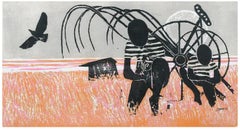
Harvest #2
Located in New York, NY
Color woodcut. Signed by the artist in pencil, lower right. Titled "Harvest 2" in pencil, lower center. Numbered "2nd 5/12 Special Edition" in pencil, lower left.
Framed dimensi...
Category
1960s Modern Art by Medium: Woodcut
Materials
Woodcut, Color
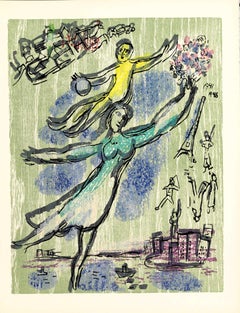
Répit, 1968 (Poèmes, #9)
By Marc Chagall
Located in Greenwich, CT
Répit (Respite) is a woodcut on paper from Marc Chagall's Poèmes portfolio, published in 1968. The image size is 13 x 10 inches and the art is framed in an ornate, gold-tone frame. U...
Category
20th Century Modern Art by Medium: Woodcut
Materials
Paper, Woodcut
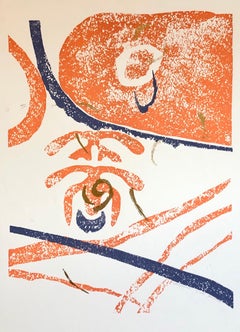
Motif, Gold Abstract African American Artist Viola Leak Woodcut Silkscreen Print
Located in Surfside, FL
Motif (Abstract) in orange, blue and gold abstract.
From the small edition of 10. from 1982. I am not sure if this is a woodcut or woodblock print or a silkscreen screenprint or some combination.
Viola Burley Leak, American (1944 - )
Viola Leak was born in Nashville, Tennessee, she received a B.A. in Art from Fisk University, a B.F.A. in Fashion Design from Pratt Institute, Brooklyn, an M.A. from Hunter College, NY and an M.F.A. in Media from Howard University, Washington, DC. Leak was an art consultant for both the New York State Board of Education and the Metropolitan Museum of Art's Print Department, in addition to working for the Experimental Gallery of Art at the Smithsonian Institute. Her mixed media work often references religious motifs and those of her African-American experience and heritage.
She is a multimedia artist, her works include printmaking, textile designing, soft sculpture, appliqué tapestries, doll making, and multi-media.
Viola has studied with many renowned artists such as Aaron Douglas, Romare Bearden, Robert Blackburn, and Charles White. Her works can be found in the collections of World Federation of United Nations, New York State Office Building, Manufacturers of Hanover Trust Company, Atlanta Life Insurance Company and many more organizations.
Viola's exhibition experience is extensive - more than 100 showings over a decade, national and international. Her quilts exude a miraculous and magical presence. They have traveled in two international shows and three national quilt projects in the past three years.
A proud moment for her was being featured in the December 20, 2000 of the Smithsonian magazine; the article praised her mural "Afro Dance Scan" as one of the outstanding artworks in the "When the Spirit Moves: African American Dance...
Category
1980s Contemporary Art by Medium: Woodcut
Materials
Screen, Woodcut
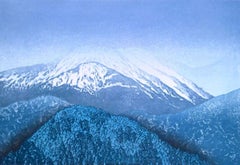
Blue, Ukiyo-e landscape woodcut print, 2014
Located in New York, NY
Keiji Shinohara was born and raised in Osaka, Japan. After 10 years as an apprentice to the renowned Keiichiro Uesugi in Kyoto, he became a Master Printmaker and moved to the United ...
Category
2010s Contemporary Art by Medium: Woodcut
Materials
Woodcut
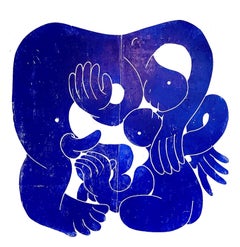
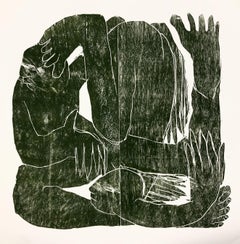
Turning to one point, Hand Printed Work, Woodcut
Located in Yardley, PA
This work is about exploring space and volume in a given space. I compared the arrangement of bodies with a knot that is constructed from two same sized parts but the way to combine ...
Category
21st Century and Contemporary Contemporary Art by Medium: Woodcut
Materials
Woodcut
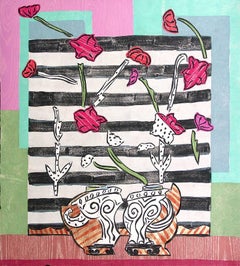
Sienna
Located in Lyons, CO
Color woodcut/lithograph with chine collé, gold leaf and collage, Edition 30
Betty Woodman is a leading American ceramist whose dazzling inventions with form and color have moved be...
Category
Early 2000s Contemporary Art by Medium: Woodcut
Materials
Woodcut
$10,000
Leviathin II # VIII
Located in Lyons, CO
Hand colored woodcut, Edition 10.
William Wiley uses current political and social issues to comment on life in our time. His stunning draftsmanship, and freeform love of language ar...
Category
1990s Contemporary Art by Medium: Woodcut
Materials
Woodcut
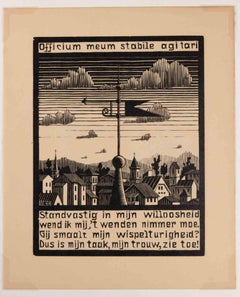
Weather Vane - Woodcut by Maurits Cornelis Escher - 1931
Located in Roma, IT
Woodcut print realized by Escher for the series "Emblemata", and published in 1931.
On Hollande van Gelder paper.
Edition of 300.
Unsigned, as issued. Excellent condition, matted....
Category
1930s Modern Art by Medium: Woodcut
Materials
Woodcut
Woodcut art for sale on 1stDibs.
Find a wide variety of authentic Woodcut art available on 1stDibs. While artists have worked in this medium across a range of time periods, art made with this material during the 21st Century is especially popular. If you’re looking to add art created with this material to introduce a provocative pop of color and texture to an otherwise neutral space in your home, the works available on 1stDibs include elements of orange, yellow, purple, blue and other colors. There are many well-known artists whose body of work includes ceramic sculptures. Popular artists on 1stDibs associated with pieces like this include Mino Maccari, Utagawa Kunisada (Toyokuni III), Eric Gill, and Utagawa Hiroshige. Frequently made by artists working in the Modern, Contemporary, all of these pieces for sale are unique and many will draw the attention of guests in your home. Not every interior allows for large Woodcut art, so small editions measuring 0.04 inches across are also available