Items Similar to In the Parlor with a Book
Want more images or videos?
Request additional images or videos from the seller
1 of 4
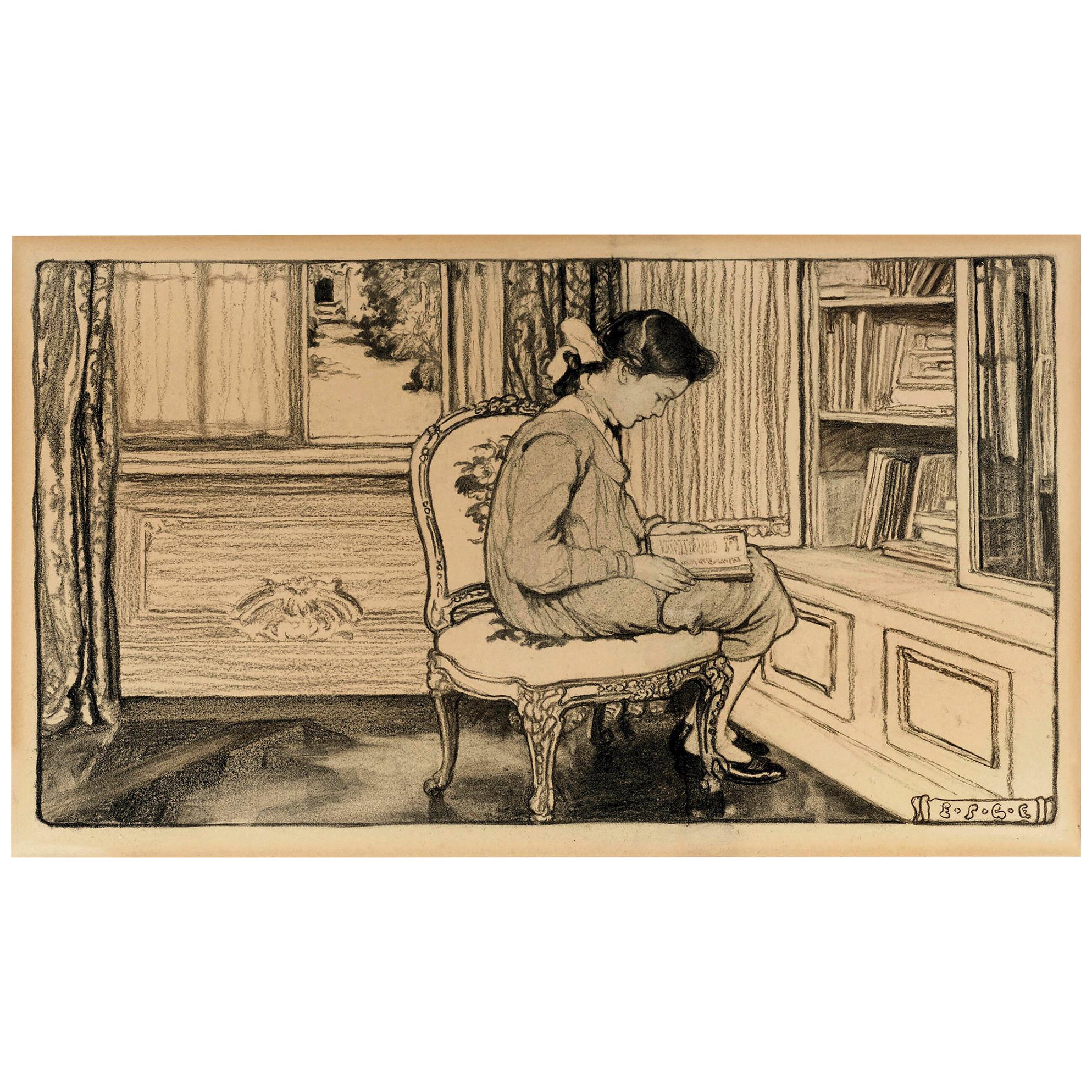
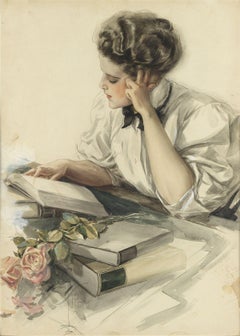
Elizabeth Shippen GreenIn the Parlor with a Book
$27,000
£20,560.48
€23,478.76
CA$37,938.33
A$41,625.58
CHF 21,926.36
MX$495,180.19
NOK 280,873.99
SEK 256,476.30
DKK 175,408.92
About the Item
Initialed Lower Right
Story illustration for “Endymion Uncut” by Arthur Stanwood Pier, Harper's Monthly for April 1909.
“He was not much given to reading”
- Creator:Elizabeth Shippen Green (1871 - 1954)
- Dimensions:Height: 12.25 in (31.12 cm)Width: 15 in (38.1 cm)
- Medium:
- Period:
- Condition:
- Gallery Location:Fort Washington, PA
- Reference Number:Seller: 35531stDibs: LU38434855141
About the Seller
5.0
Recognized Seller
These prestigious sellers are industry leaders and represent the highest echelon for item quality and design.
Established in 1995
1stDibs seller since 2016
140 sales on 1stDibs
Typical response time: 1 hour
- ShippingRetrieving quote...Shipping from: Fort Washington, PA
- Return Policy
More From This Seller
View AllIllustration for
Aurélie
by Arthur Sherburne Hardy
By Elizabeth Shippen Green
Located in Fort Washington, PA
Medium: Graphite on Paper
Signature: Initialed Lower Left and Identified by a Label on Verso
The Harpers Monthly, August 1909
Category
Early 1900s Figurative Drawings and Watercolors
Materials
Paper, Graphite
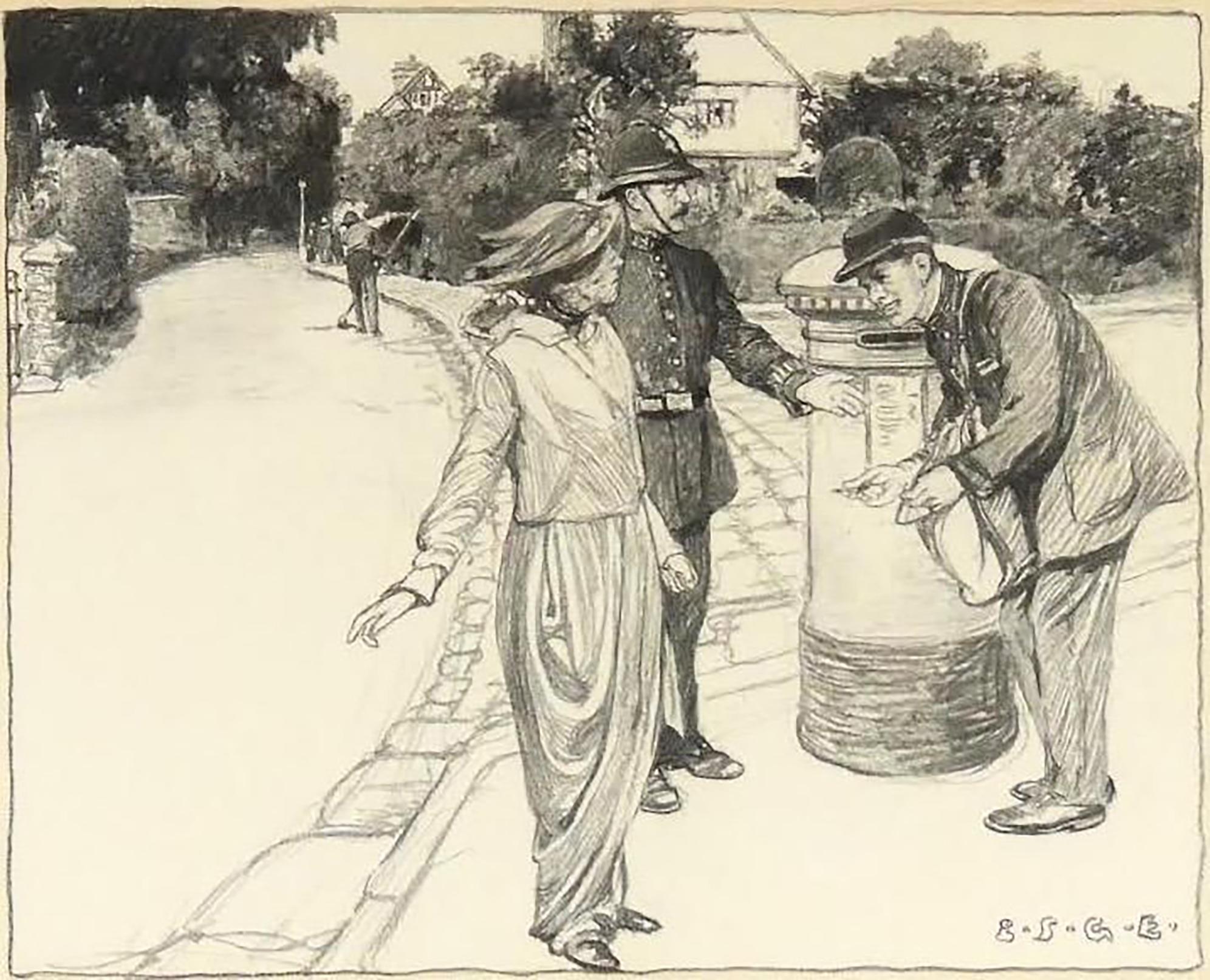
The Suspected Suffragette
By Elizabeth Shippen Green
Located in Fort Washington, PA
Signed with the artist's initials E.S.G.E. (lower right)
Exhibited:
Philadelphia, Pennsylvania, Pennsylvania Academy of the Fine Arts, Thirteenth Annual Philadelphia Water Color Ex...
Category
1910s Mixed Media
Materials
Charcoal, Board, Pencil
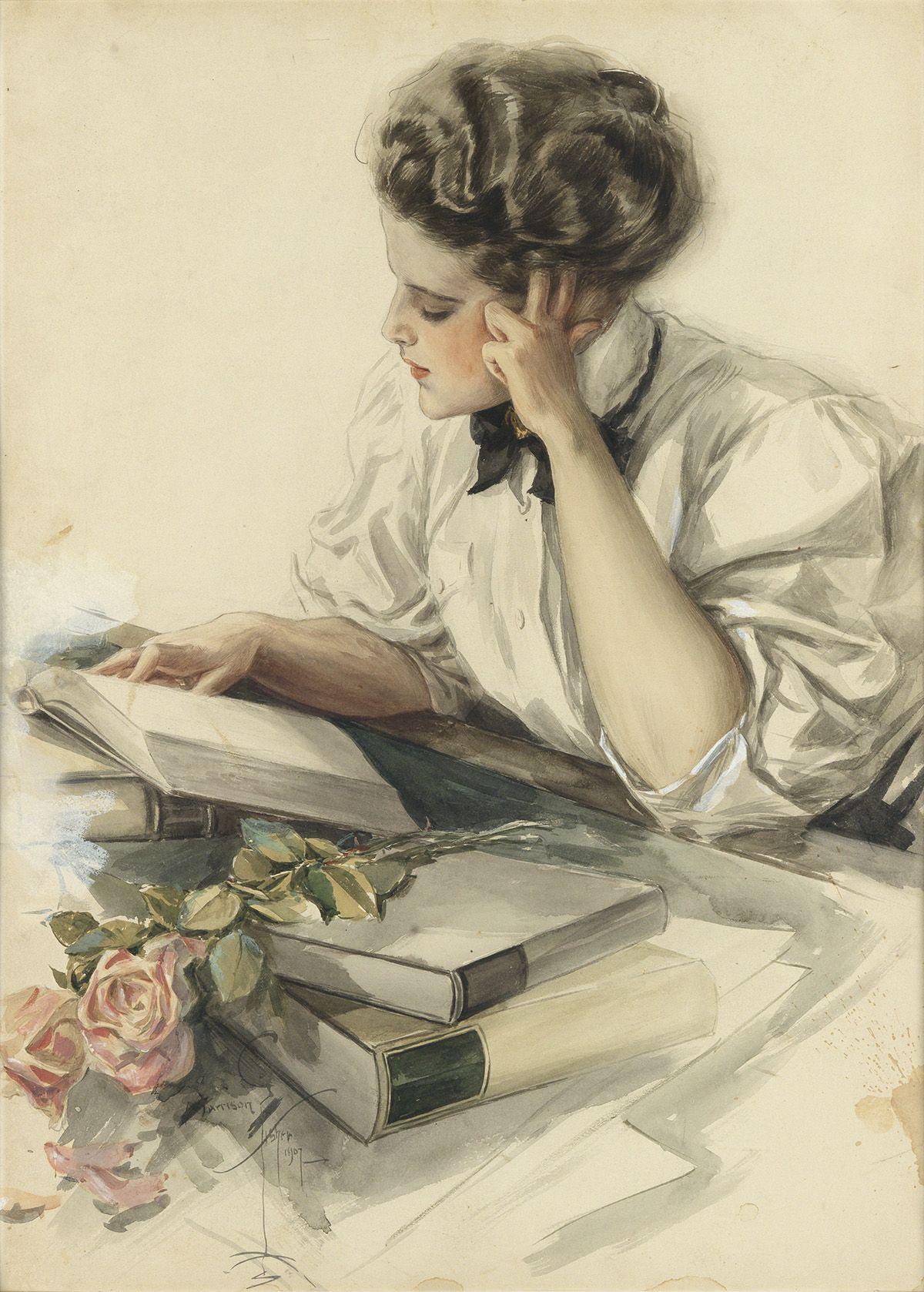
"The Study Hour, " Illustration for The Ladies
Home Journal, April 1908
By Harrison Fisher
Located in Fort Washington, PA
Medium: Watercolor, Graphite, and Wash on Board
Signature: Signed Lower Left
"The Study Hour (The College Girl at Her Studies)." Illustration for the Colleg...
Category
Early 1900s Portrait Drawings and Watercolors
Materials
Watercolor, Graphite
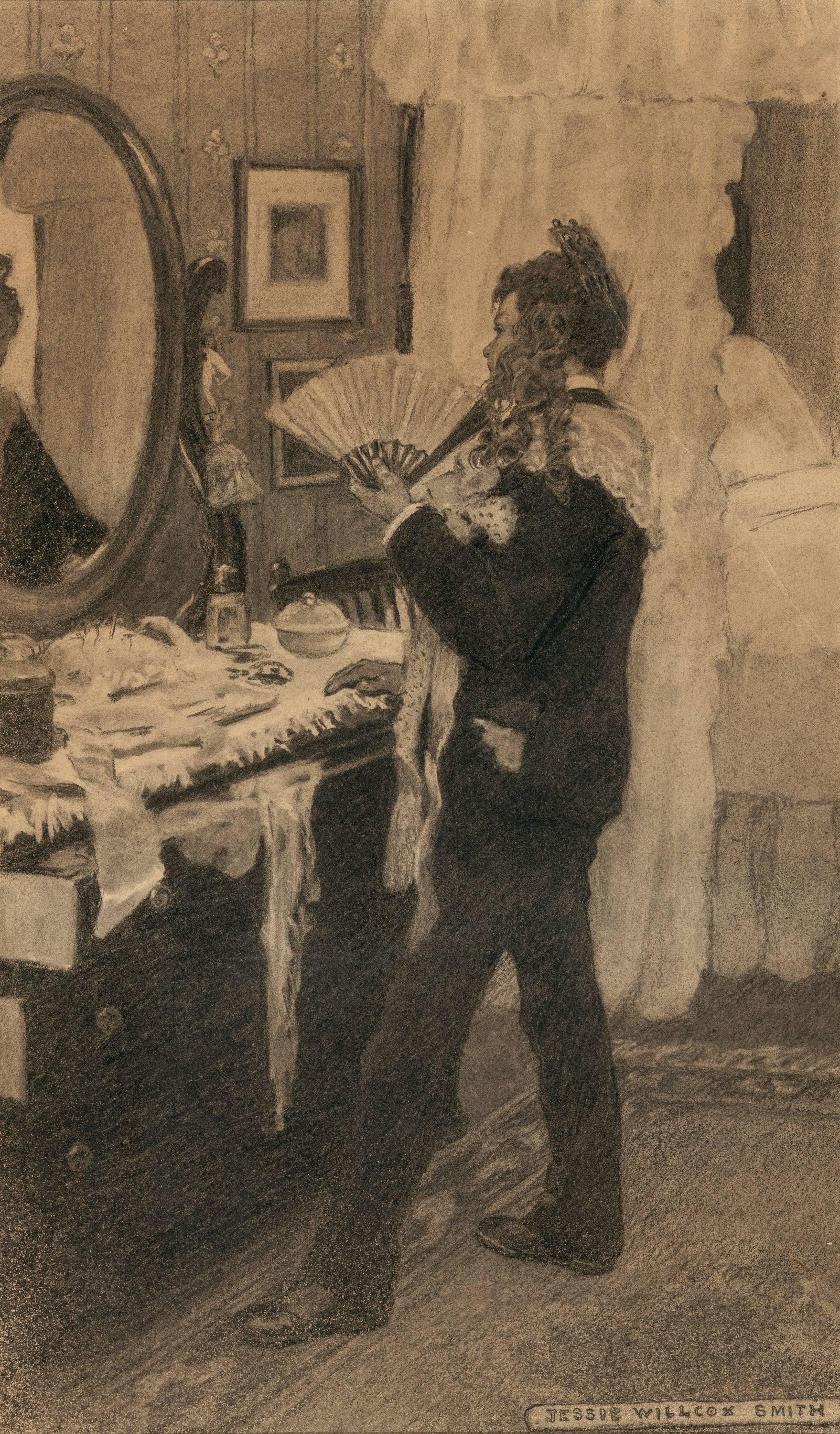
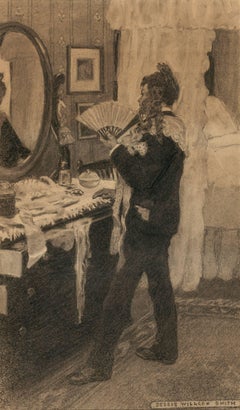
Boy Playing Dress-Up, Story Illustration
By Jessie Willcox Smith
Located in Fort Washington, PA
"He surveyed himself with satisfaction." Illustration for An Old-Fashioned Girl by Louisa May Alcott, published in 1902 by Little, Brown, & Company
Smith, Jessie Willcox: Born in Philadelphia, Pennsylvania in 1863 to an affluent family, Jessie Willcox Smith attended private schools in that city, as well as in Cincinnati, Ohio. At age 20, she went to work as a kindergarten teacher but soon learned that she could not handle the stress of dealing with small children. On a suggestion from one of her cousins, Smith took art classes, first at the School of Design for Women, then at the Pennsylvania Academy of Fine Arts. Later, Smith went on to study at Drexel University. It was at that school she became good friends with two other artists, Elizabeth Shippen Green and Violet Oakley. The trio dubbed themselves "The Red Rose Girls...
Category
20th Century Other Art Style Paintings
Materials
Board, Charcoal
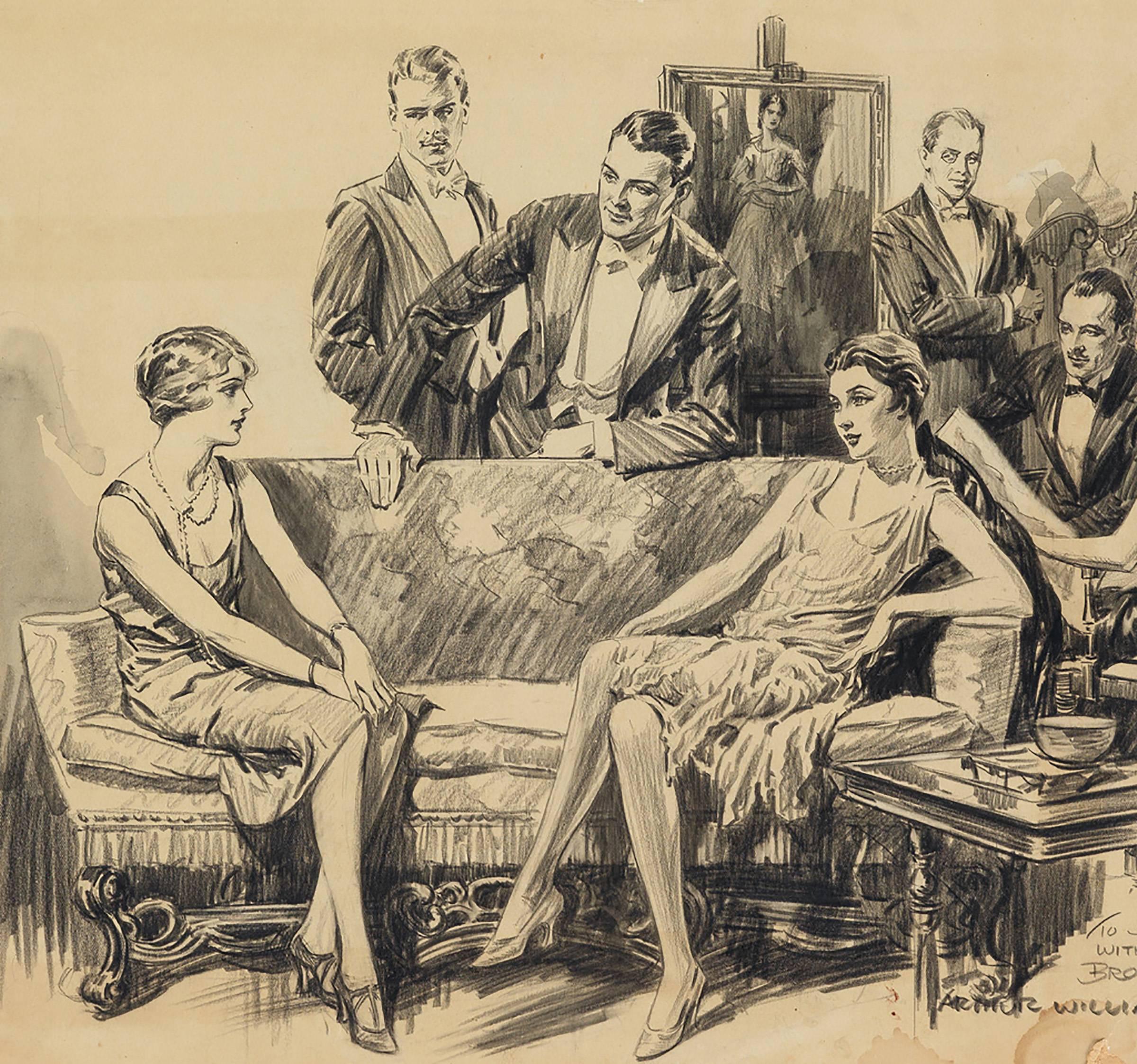
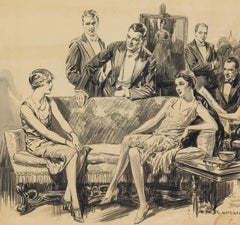
Saturday Evening Post story, 1920s Parlor Scene
By Arthur William Brown
Located in Fort Washington, PA
Date: 1920
Medium: Charcoal and Watercolor on Board
Dimensions: 16.00" x 19.00"
Signature: Signed and Inscription Lower Right Corner
1920s parlor scene. ...
Category
1920s Figurative Drawings and Watercolors
Materials
Charcoal, Watercolor, Board
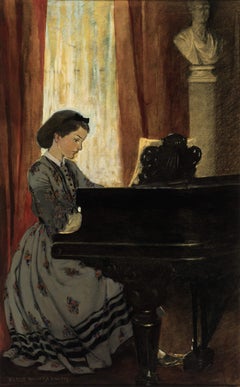
The Great Drawing- Room Was Haunted by a Tuneful Spirit That Came and Went
By Jessie Willcox Smith
Located in Fort Washington, PA
Story illustration for Louisa May Alcott's classic story Little Women featuring Beth March playing the piano in Mr. Laurence's grand house.
The full...
Category
1910s Mixed Media
Materials
Charcoal, Watercolor, Gouache, Board
You May Also Like
Studious Girl Reading a Book - Women
s Education - Female Illustrator
By Elizabeth Shippen Green
Located in Miami, FL
The work represents a carefully rendered and meticulously observed environmental portrait of a young girl absorbed in study in front of a book case. It celebrates the intelligence of womanhood from a woman's perspective. Initialed in cartouche lower right
literature: "The Silver Pencil", Hardy, Harper's Monthly, June 1912, pg. 22
Elizabeth Shippen Green (September 1, 1871 – May 29, 1954) was an American illustrator. She illustrated children's books and worked for publications such as The Ladies' Home Journal, The Saturday Evening Post and Harper's Magazine.
Education
Green enrolled at the Pennsylvania Academy of the Fine Arts in 1887 and studied with the painters Thomas Pollock Anshutz, Thomas Eakins, and Robert Vonnoh.[2] She then began study with Howard Pyle at Drexel Institute where she met Violet Oakley and Jessie Willcox Smith.
New Woman
As educational opportunities were made more available in the 19th century, women artists became part of professional enterprises, including founding their own art associations. Artwork made by women was considered to be inferior, and to help overcome that stereotype women became “increasingly vocal and confident” in promoting women's work, and thus became part of the emerging image of the educated, modern and freer “New Woman”.[4] Artists "played crucial roles in representing the New Woman...
Category
1910s Academic Figurative Drawings and Watercolors
Materials
Paper, Chalk, Charcoal
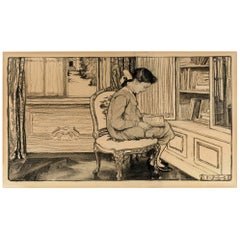
Evening Reading - Paint by Emile François Rouseau - 1910
Located in Roma, IT
Oil on board realized by Emile François Rouseau in 1910.
Hand signed, dated and dedicated by the author.
Includes a coeval gilded wooden frame.
Category
1910s Modern Figurative Paintings
Materials
Oil, Panel
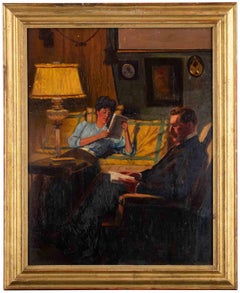
Book of Verses
By Lilian Westcott Hale
Located in Bryn Mawr, PA
Book of Verses, 1924
Charcoal on paper
29 x 23 inches (73.7 x 58.4 cm)
Framed dimensions: 33 3/8 x 27 5/8 inches
Signed upper right: Lilian Westcott Hale...
Category
1920s American Impressionist Figurative Drawings and Watercolors
Materials
Paper, Charcoal
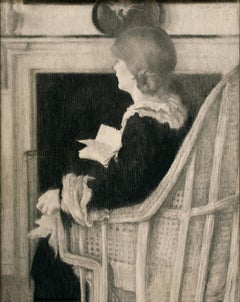
Reading Letter - Drawing by Luigi Bompard - 1920s
Located in Roma, IT
Reading Letter is a watercolor and ink drawing on ivory-colored paper, in the 1920s realized by Luigi Bompard (1879-1953).
Hand-signed in pen on the lower margin.
In good condition...
Category
1920s Art Deco Figurative Drawings and Watercolors
Materials
Ink, Watercolor
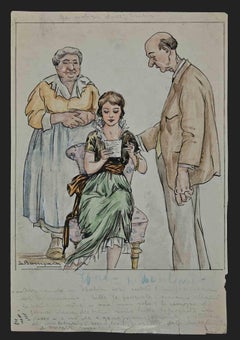
Reading Tea Leaves
By Lilian Westcott Hale
Located in Bryn Mawr, PA
Reading Tea Leaves, 1907
Pencil on paper, 14 1/2 x 22 1/2 inches (36.8 x 57.1 cm)
Framed dimensions: 26 x 33 3/4 inches
Signed and dated lower right: Lilian Westcott Hale...
Category
Early 1900s American Impressionist Portrait Drawings and Watercolors
Materials
Paper, Pencil
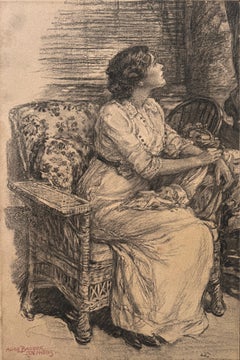
Attractive Young Woman Sitting in Chair and Looking Upwards in Domestic Setting
By Alice Barber Stephens
Located in Miami, FL
Female Illustrator of the Golden Age Alice Barber Stephens renders in an academic style and women sitting in a chair and responding to something outside of the frame.
Signed lower left. Most likely done for a major newsstand magazine like Harper's, Century or Scribner's Monthly.
Work is framed under glass in a simple black wood frame. Perhaps period. Matt is new. Frame size: 20.5 x 14.5
From: Wikipedia
Alice Barber Stephens (July 1, 1858 – July 13, 1932) was an American painter and engraver, best remembered for her illustrations. Her work regularly appeared in magazines such as Scribner's Monthly, Harper's Weekly, and The Ladies Home Journal.
Early life and education
Alice Barber was born near Salem, New Jersey. She was the eighth of nine children born to Samuel Clayton Barber and Mary Owen, who were Quakers.
She attended local schools until she and her family moved to Philadelphia, Pennsylvania. At age 15 she became a student at the Philadelphia School of Design for Women (now Moore College of Art & Design), where she studied wood engraving.
The Women's Life Class (1879), Pennsylvania Academy of the Fine Arts, Philadelphia, Pennsylvania.
She was admitted to the Pennsylvania Academy of the Fine Arts in 1876 (the first year women were admitted), studying under Thomas Eakins. Among her fellow students at the Academy were Susan MacDowell, Frank Stephens, David Wilson Jordan, Lavinia Ebbinghausen, Thomas Anshutz, and Charles H. Stephens (whom she would marry). During this time, at the academy, she began to work with a variety of media, including black-and-white oils, ink washes, charcoal, full-color oils, and watercolors. In 1879, Eakins chose Stephens to illustrate an Academy classroom scene for Scribner's Monthly. The resulting work, Women's Life Class, was Stephens' first illustration credit.
New Woman
As educational opportunities were made more available in the nineteenth century, women artists became part of professional enterprises, including founding their own art associations. Artwork made by women was considered to be inferior by the art world, and to help overcome that stereotype women became "increasingly vocal and confident" in promoting women's work, and thus became part of the emerging image of the educated, modern and freer "New Woman". Artists then, "played crucial roles in representing the New Woman, both by drawing images of the icon and exemplifying this emerging type through their own lives."
Alice Barber Stephens, The Women Business, oil, 1897, Brandywine River Museum, Chadds Ford, Pennsylvania
One example of overcoming women stereotypes was Stephens' Woman in Business from 1897, which showed how women could focus not only in the home, but also in the economic world.[8] As women began to work, their career choices broadened and illustration became a commendable occupation. People's ideas about education and art started to merge, and the outcome of a certain sensitivity to the arts began to be seen as uplifting and educational. By using illustration as a means to further their practices, women were able to fit the traditional gender role while still being active in their pursuits for the "New Woman". According to Rena Robey of Art Times, "The early feminists began to leave the home to participate in clubs as moral and cultural guardians, focused on cleaning up cities and helping African Americans, impoverished women, working children, immigrants, and other previously ignored groups." Stephens took advantage of the explosion of illustration opportunities, including the opportunity to work from home.
Women's education
Edwin Forrest House, formerly the home of the Philadelphia School of Design for Women.
Throughout the period before the civil war, textile and other decorative work became acceptable occupations for those who aspired to be in the middle class. The Philadelphia School of Design for Women, founded in 1848 by Sarah Worthington Peter was first among a group of women's design schools established in the 1850s and 1860s; others appeared in Boston, New York, Pittsburgh, and Cincinnati. It began as a charitable effort to train needy and deserving young women in textile and wallpaper design, wood engraving, and other salable artistic skills, providing a means for training women who needed wage work.
The Pennsylvania Academy of the Fine Arts (PAFA) was established in 1805 by painter and scientist Charles Willson Peale, sculptor William Rush...
Category
Early 1900s Academic Drawings and Watercolor Paintings
Materials
Charcoal, Board
More Ways To Browse
Antique Green Art
Original World War One Posters
Vintage Animal Lithographs
Vintage Black And White Photos Paris
Paper Sculpture Art
Vintage American Posters
1960s Photos
Children Black And White Photography
Modern Black And White Etchings
Signed And Numbered Salvador Dali
Sculpture By African American Artists
Original Abstract Lithographs
Paper Press
Antique Vintage Photos
Jewish Artist
Large Scale Photographs
Vintage Beastiality
Vintage Fred