Items Similar to Mid-Century Navajo-Style Yei Dancers Mosaic Panel by I. Henry, California 1960s
Video Loading
Want more images or videos?
Request additional images or videos from the seller
1 of 19
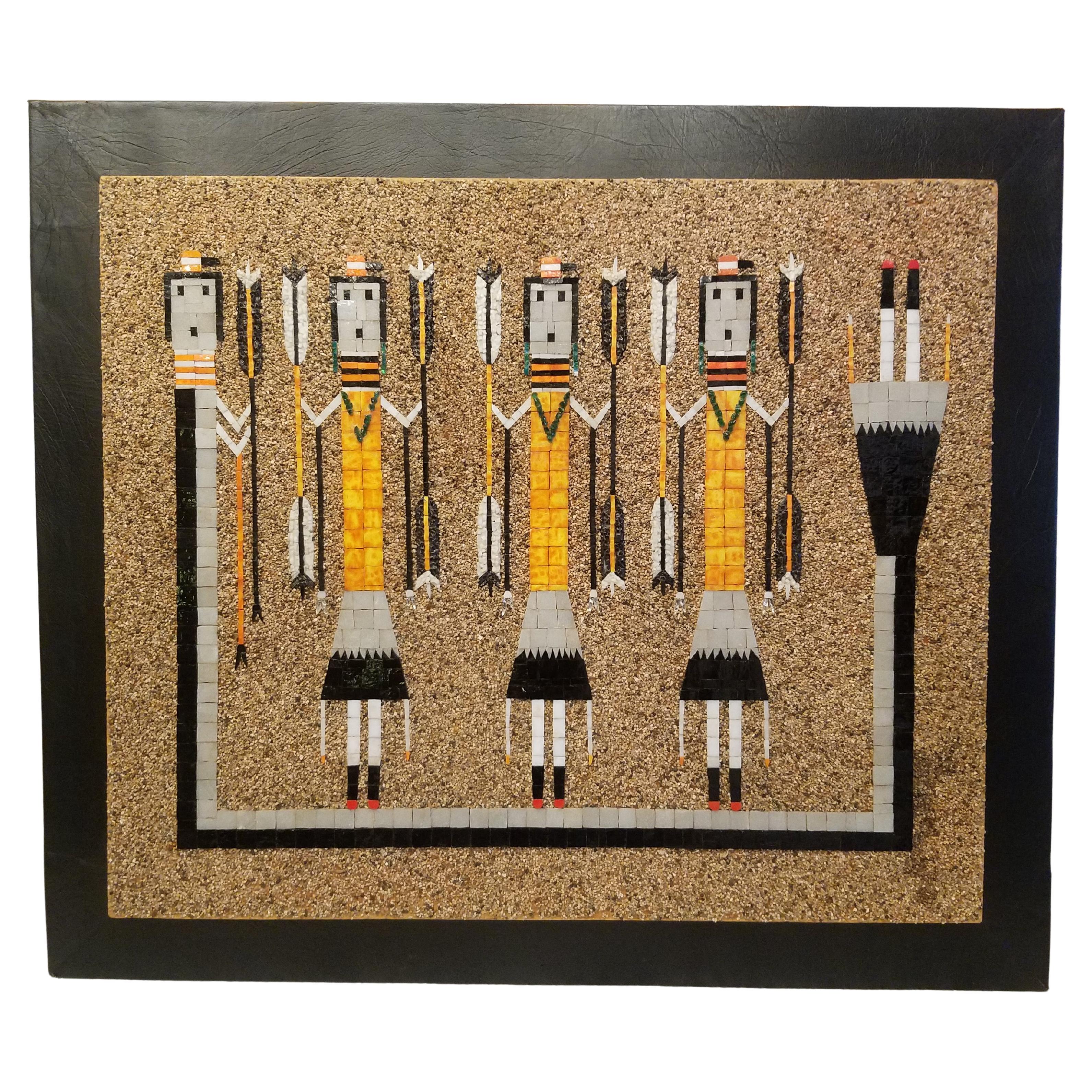
Mid-Century Navajo-Style Yei Dancers Mosaic Panel by I. Henry, California 1960s
$3,800
£2,840.39
€3,277.40
CA$5,319.62
A$5,620.65
CHF 3,023.25
MX$67,298.21
NOK 37,877.82
SEK 34,690.59
DKK 24,473.06
About the Item
This substantial mid-century mosaic panel depicts a procession of Navajo-style Yei figures—often referred to as Yei Dancers or Rainbow Guardians—executed in mixed media including ceramic tile, glass, and sand. The composition presents a linear arrangement of highly stylized figures, each rendered with elongated proportions, geometric facial features, and formalized gestures, framed within a rectilinear border that establishes a strong architectural presence.
The figures are articulated through carefully set tesserae in a restrained but vivid palette of gray, black, ochre, white, green, and red. Their rhythmic repetition across the surface creates a sense of ceremonial procession, while vertical staff-like elements interspersed between the figures introduce visual cadence and symbolic balance. The sand-textured ground provides a rich, tactile contrast to the crisp geometry of the mosaic elements, reinforcing the work’s material complexity and depth.
The panel is attributed to I. Henry Studio, Tehachapi, California, and dates to the 1960s. Although little archival documentation survives, I. Henry is understood to have operated as a regional studio or artisan workshop producing decorative and architectural artworks influenced by Southwestern and Native American visual traditions. Tehachapi’s geographic position between Southern California and the Southwest places the studio within an important mid-century corridor of artistic exchange, where Indigenous-inspired motifs were frequently interpreted through modern materials and design frameworks.
The Yei figure—central to Navajo cosmology as a mediator between the human and spiritual realms—became a popular subject within mid-20th-century studio craft, particularly in mosaic and architectural wall works intended for private residences and commercial interiors. This example reflects that cultural moment, translating ceremonial imagery into a permanent, non-ceremonial art object designed for enduring display.
Mounted on a sturdy panel backing with original hanging hardware on the reverse, the work is well suited for wall installation. Its scale, symmetry, and graphic clarity make it a compelling example of mid-century Southwestern-inspired mosaic art, appealing to collectors of American studio craft, Indigenous-influenced design, and architectural wall pieces from the postwar era.
The work is in very good vintage condition, exhibiting surface characteristics typical of mid-century studio craft. Minor edge wear and small variations in tesserae placement are present and consistent with the handmade construction. The sand-textured surface remains largely intact with no evident restorations or structural issues. The backing panel and hanging system appear original and secure.
- Attributed to:I. Henry (American)
- Dimensions:Height: 36 in (91.44 cm)Width: 42 in (106.68 cm)Depth: 2 in (5.08 cm)
- More Editions Sizes:36 x 42Price: $3,800
- Medium:
- Movement Style:
- Period:
- Condition:The work is in very good vintage condition, exhibiting surface characteristics typical of mid-century studio craft. Minor edge wear and small variations in tesserae placement are present and consistent with the handmade construction.
- Gallery Location:Camden, ME
- Reference Number:Seller: APPA 0071stDibs: LU2917217326732
About the Seller
New to 1stDibs
Joined in the past six months.
No Reviews Yet
Vetted Professional Seller
Every seller passes strict standards for authenticity and reliability
1stDibs seller since 2025
- ShippingRetrieving quote...Shipping from: Camden, ME
- Return Policy
More From This Seller
View AllNavajo-Style Thunderbird Sand Painting Mosaic Panel, Mixed Media, 1960s CA.
Located in Camden, ME
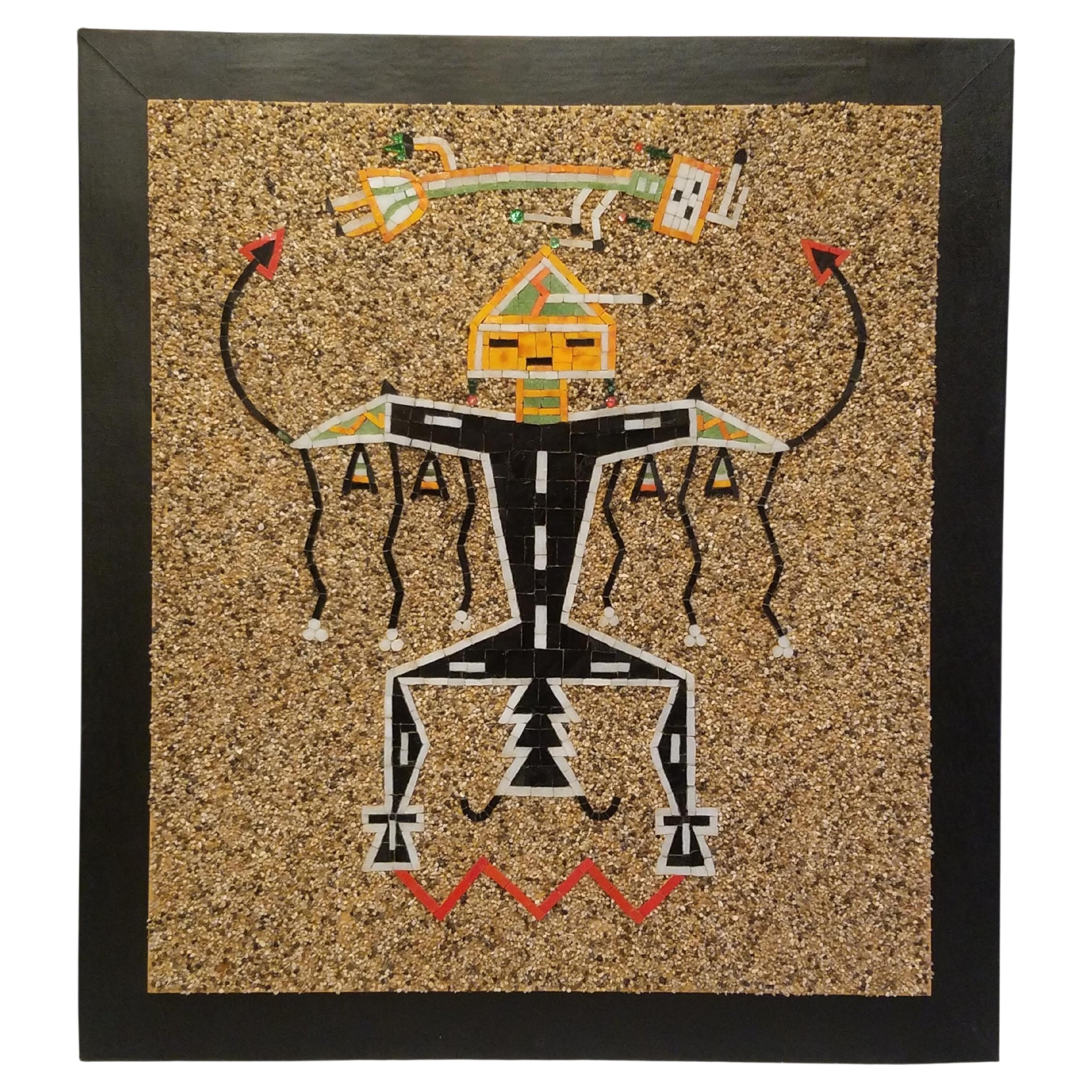
This powerful mid-century mosaic panel presents a Navajo-style Thunderbird figure rendered in richly textured mixed media, combining ceramic tile, colored glass, and sand. The compos...
Category
1960s Assemblage Mixed Media
Materials
Ceramic, Glass, Wood, Plywood, Glitter, Mosaic
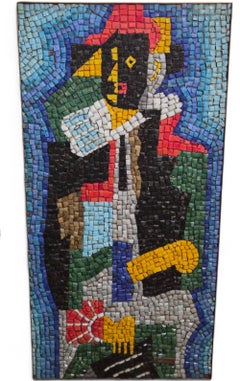
Romanos Mexican Glass Mosaic Panel, Campesino Figure, c. 1950s-1960s
Located in Camden, ME
This mid-century mosaic panel is signed Romanos and was produced in Mexico circa the 1950s–1960s, representing a refined example of postwar Mexican studio mosaic work that merges mod...
Category
1950s Cubist Mixed Media
Materials
Bronze
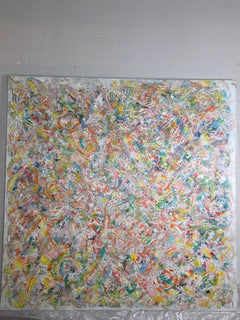
Zoragozo Signed Abstract Acrylic on Layered Panels c. 1970 63 x 63 inches
Located in Camden, ME
This large-scale abstract painting, executed circa 1970 and signed “Zoragozo”, is a dynamic example of postwar abstract expressionist–influenced painting. The standard board is mount...
Category
Late 20th Century Abstract Expressionist Abstract Paintings
Materials
Acrylic, Canvas
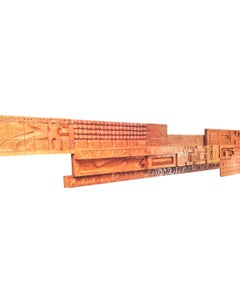
"Untitled" 1963 16 foot Douglas Fir Commission National Bank of Portland Oregon
Located in Camden, ME
This monumental wood sculpture by Leroy Setziol (1915–2005) is a rare and significant early commission, created in 1963 for the National Bank of Portland, Oregon. Measuring an impres...
Category
1960s Abstract Abstract Sculptures
Materials
Wood
"Untitled" (Tulips) 1967 Acrylic on Canvas 1967 84" x 72"
Located in Camden, ME
Monumental large-scale floral abstraction by Margaret Milliken, associated with the American Abstract
Expressionist movement. Executed in richly textured acrylic impasto, the canvas ...
Category
1960s Abstract Expressionist Abstract Paintings
Materials
Canvas, Acrylic

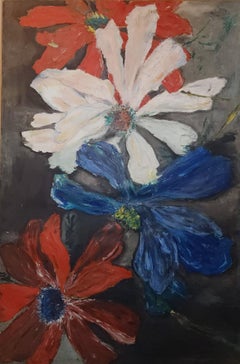
"Untitled" (Cosmos) Acrylic on Canvas 84" x 54" c. 1966
Located in Camden, ME
Untitled (Cosmos), c.1966, is a large-scale acrylic on canvas by American painter Margaret Milliken (1913–1968), whose work embodies the vibrant spirit of the postwar Abstract Expres...
Category
1960s Abstract Expressionist Abstract Paintings
Materials
Canvas, Acrylic
You May Also Like
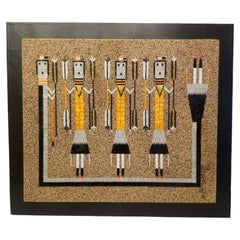
California Studio Mosaic Navajo Sand Painting Yei Dancers Rainbow 1960 Guardians
By I. D. Henny
Located in Camden, ME
A Navajo sand painting mosaic art wall panel of the Navajo mythological Yei Dancers Rainbow Guardians created in the 1960s in a non traditional fo...
Category
Vintage 1960s American Mid-Century Modern Decorative Art
Materials
Stone
$2,100 Sale Price
25% Off
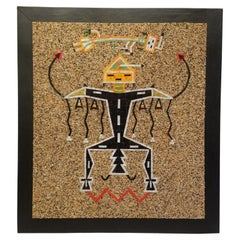
California Studio Navajo Sand Painting Mosaic Art Panel of Thunderbird, 1960s
By I. D. Henny
Located in Camden, ME
A Navajo sand painting mosaic art wall panel of the Navajo mythological Father Sky or Thunderbird created in the 1960s in a non traditional format...
Category
Mid-20th Century American Mid-Century Modern Decorative Art
Materials
Ceramic
$1,800 Sale Price
25% Off
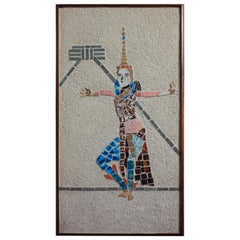
Richard Hohenberg Mosaic
By Richard Hohenberg
Located in Brooklyn, NY
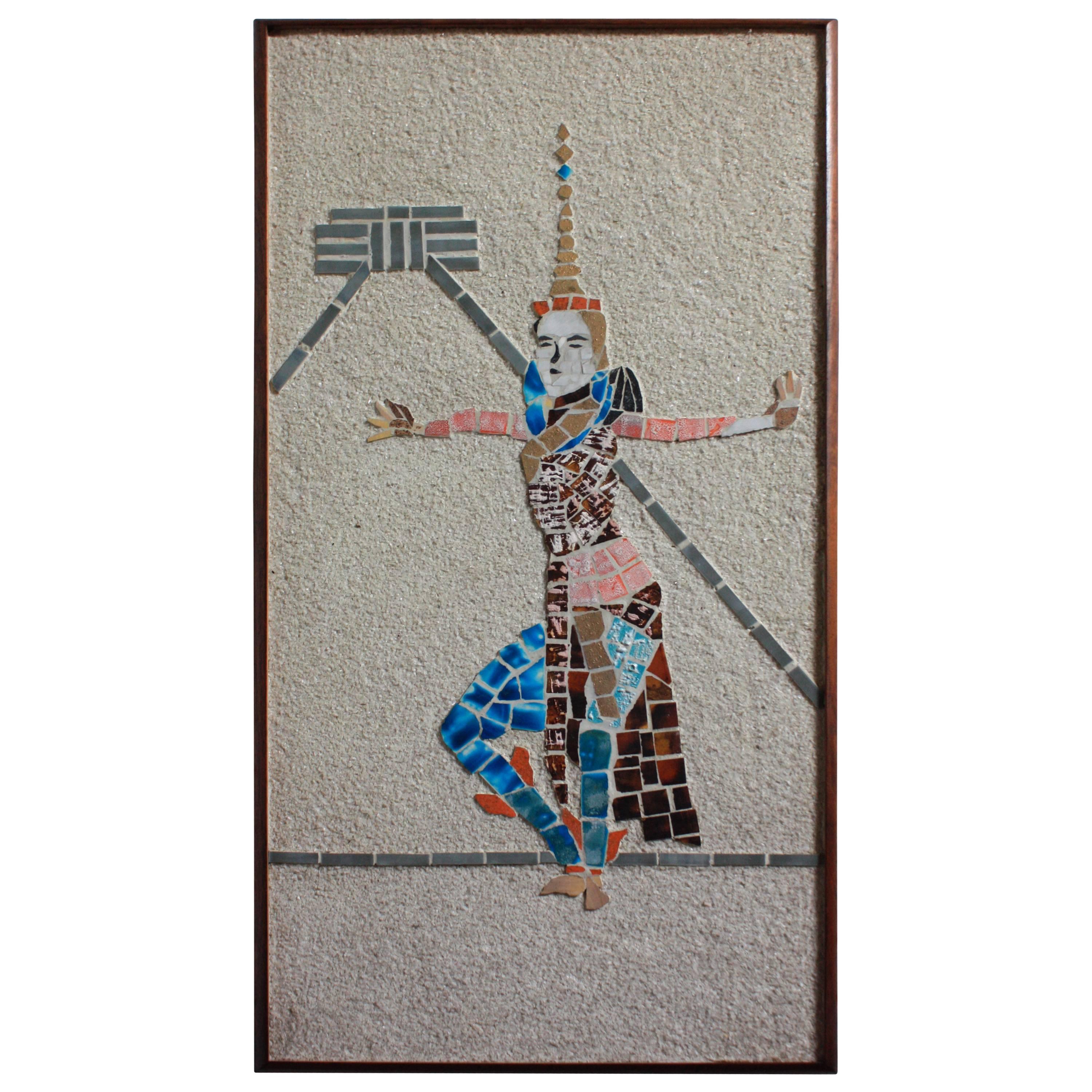
This Hohenberg Mosaic depicts a classical Thai dancer and is comprised of glass and ceramic tiles against a crystalline incrustation. The frame is solid walnut and the piece is stencil signed on the reverse 'Hohenberg Original.'
Category
Vintage 1950s American Mid-Century Modern Wall-mounted Sculptures
Materials
Ceramic, Glass, Walnut
$2,900
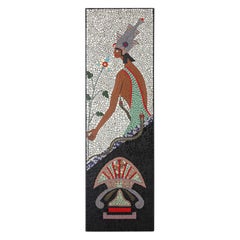
Mid-Century Egyptian Goddess Mosaic
Located in Las Vegas, NV
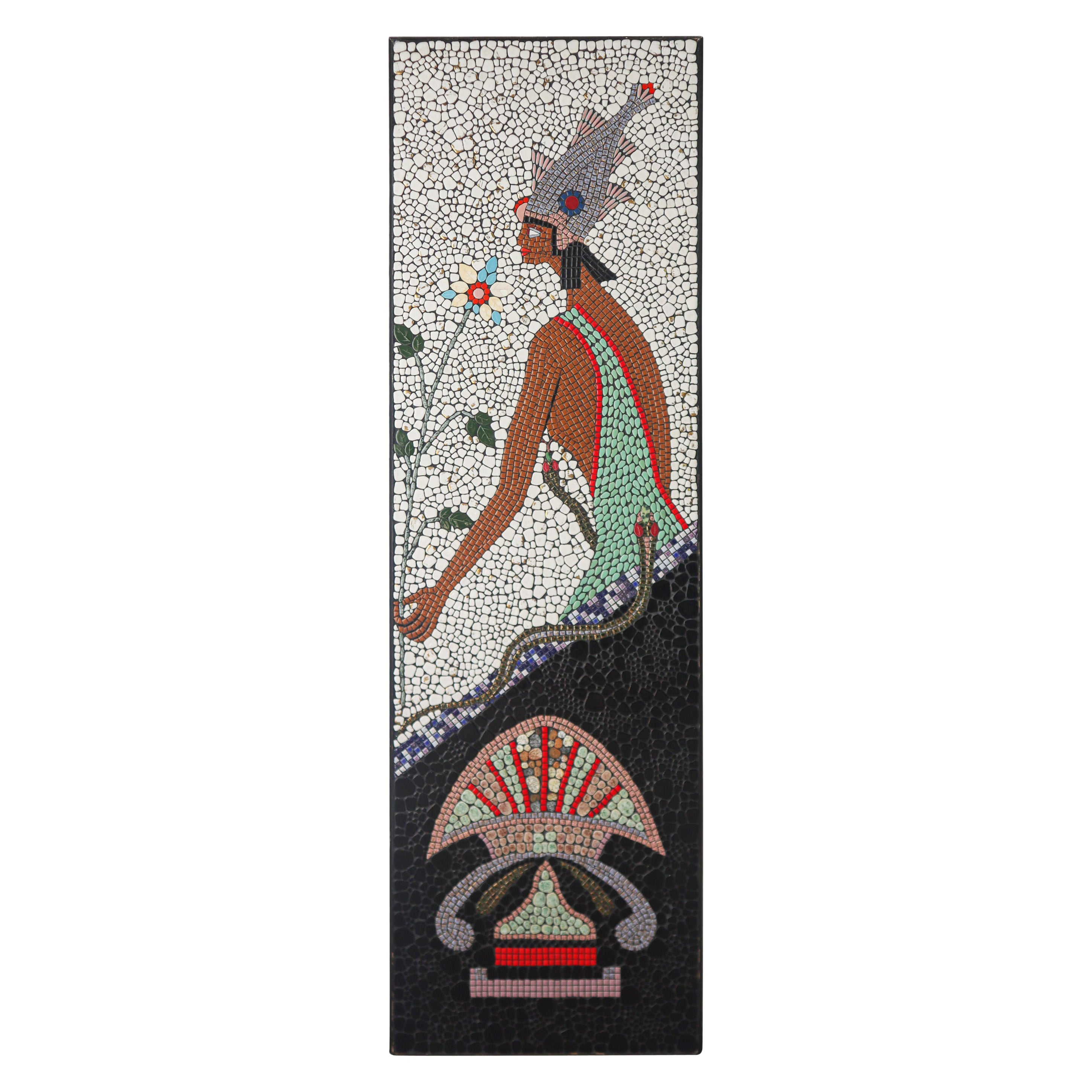
Unique mid-century mosaic depicting and Egyptian Goddess, possibly Hatmehyt, the Egyptian Goddess of Fish.
The mosaic stands 6.5ft tall and is constructed out of rounded pebble l...
Category
Mid-20th Century Mid-Century Modern Decorative Art
Materials
Stone
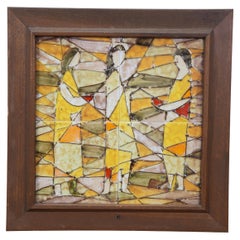
Harris G. Strong Ceramic MCM Female Figures Mosaic Tile Art Plaque 16"
Located in Dayton, OH
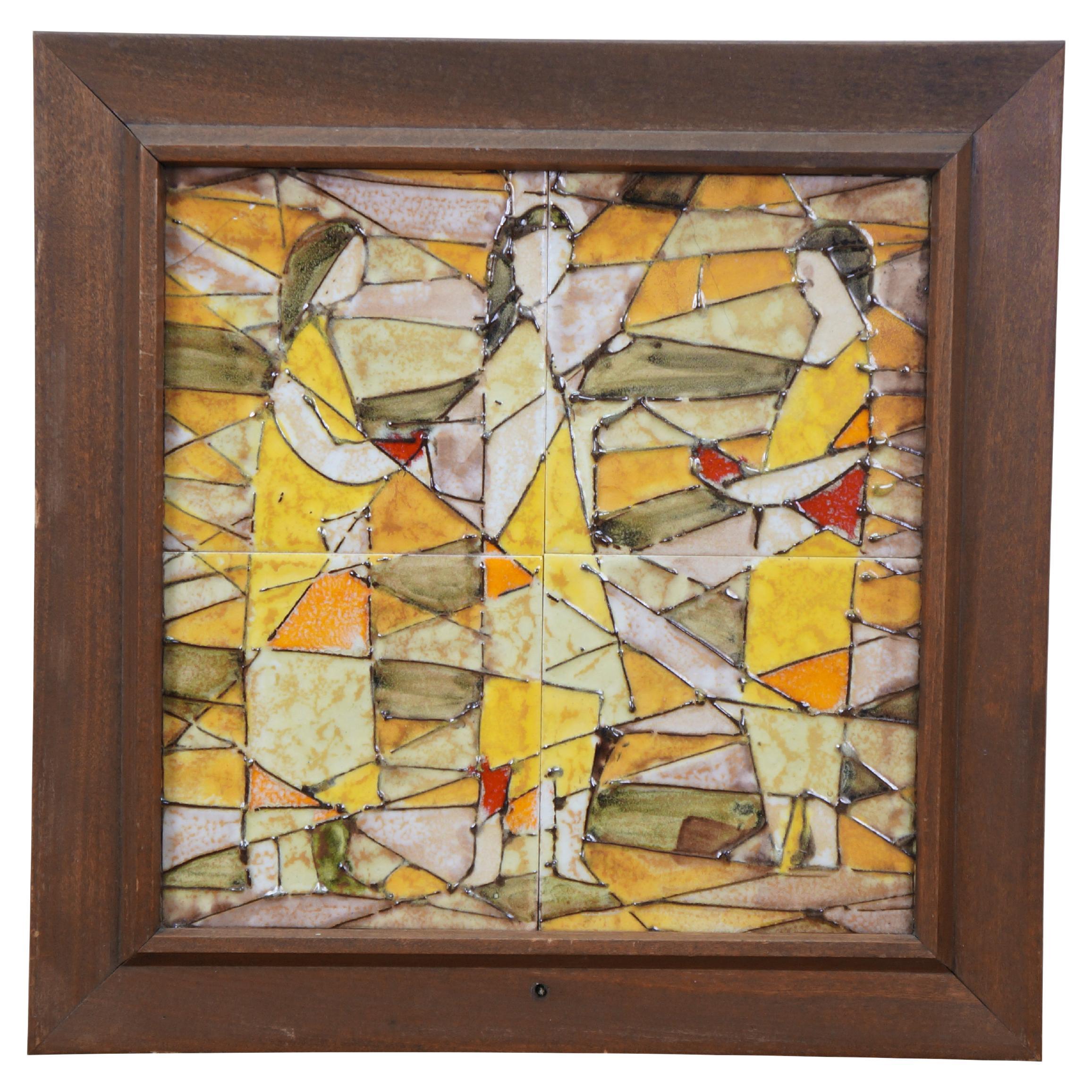
Mid century modern ceramic tile art by Harris G. Strong - depicts three female figures formed through four stained glass mosaic style tiles. Wood frame.
Harris G. Strong was born Ju...
Category
Mid-20th Century American Mid-Century Modern Decorative Art
Materials
Ceramic
$1,050 Sale Price
30% Off
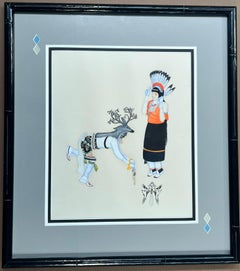
Deer Dance, painting by Tonita Pena, Santa Fe, Cochiti, Pueblo, male, female
Located in Santa Fe, NM
Deer Dance, painting by Tonita Pena, Santa Fe, Cochiti, Pueblo, male, female
Tonita Peña (born 1893 in San Ildefonso, died 1949 in Kewa Pueblo, New Mexico) was born as Quah Ah (meaning white coral beads) but also used the name Tonita Vigil Peña and María Antonia Tonita Peña. Peña was a renowned Pueblo artist, specializing in pen and ink on paper embellished with watercolor. She was a well-known and influential Native American artist and art teacher of the early 1920s and 1930s.
Tonita Peña was born on May 10, 1893, at San Ildefonso Pueblo, to Ascensión Vigil Peña and Natividad Peña of San Ildefonso Pueblo, New Mexico. When she was 12, her mother and younger sister died, as a result of complications due to the flu. Her father was unable to care for her and she was taken to Cochití Pueblo and was brought up by her aunt Martina Vigil Montoya, a prominent Cochití Pueblo potter. Peña attended St. Catherine Indian School in Santa Fe.
Edgar Lee Hewett, an anthropologist involved in supervising the nearby Frijoles Canyon excavations (now Bandelier National Monument) was instrumental in developing the careers of several San Ildefonso “self-taught” artists including Tonita Peña. Hewett purchased Peña's paintings for the Museum of New Mexico and supplied her with quality paint and paper. Peña began gaining more notoriety by the end of the 1910s selling an increasing amount of her work to collectors and the La Fonda Hotel. Much of this early work was done of Pueblo cultural subject matter, in a style inspired by historic Native American works, however, her use of an artist's easel and Western painting mediums gained her acceptance among her European-American contemporaries in the art world. At the age of 25, she exhibited her work at museums and galleries in the Santa Fe and Albuquerque area.
In the early 1920s, Tonita did not know how much her painting sold for at the Museum of New Mexico, so she wrote letters to the administrators because a local farmer was worried that she got paid too little.
In the 1930s Peña was an instructor at the Santa Fe Indian School and at the Albuquerque Indian School and the only woman painter of the San Ildefonso Self-Taught Group, which included such noted artists as Alfonso Roybal, Julian Martinez, Abel Sánchez (Oqwa Pi), Crecencio Martinez, and Encarnación Peña. As children, these artists attended San Ildefonso day school which was part of the institution of the Dawes Act of 1887, designed to indoctrinate and assimilate Native American children into mainstream American society.
In 1931, Tonita Peña exhibited at the Exposition of Indian Tribal Arts which was presented at the Grand Central Art Galleries in New York City. Works from this exhibition were shown at the 1932 Venice Biennial. That year is the only time Native American artists have shown in the official United States pavilion at that biennial, and Tonita Peña's paintings were part of that exhibition.[1 Her painting Basket Dance, that had shown in the Venice Biennial was acquired by the Whitney Museum of American Art in New York for $225. This was the highest price paid up to this time for a Pueblo painting...
Category
1940s Tribal Figurative Drawings and Watercolors
Materials
Paint, Paper