18th Century and Earlier Mixed Media

to
5
2
1
1
4
Overall Width
to
Overall Height
to
77
3,004
19,638
23
27
26
52
47
107
310
401
603
540
6
3
1
1
1
7
6
4
4
3
3
3
1
1
1
1
1
1
6
5
Period: 18th Century and Earlier
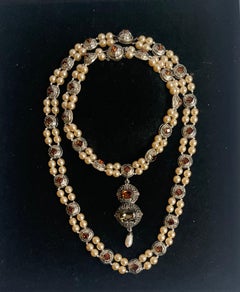
The Necklace of Jane Seymour, Henry VIII s Third Wife, Limited Edition, Signed
Located in New York, NY
Hiroshi Sugimoto The Necklace of Jane Seymour, Henry VIII's Third Wife, 2000 Limited Edition Signed pendant of silver-plated brass, imitation pearls, Swarovski glass stones, handmade...
Category

Old Masters 18th Century and Earlier Mixed Media

Materials

Metal

Rare Viking Twisted Ring c.866–1067 AD, Size 9
Located in Los Angeles, CA
Cambridgeshire, England – site of early Viking invasion and conquest of Anglo-Saxon natives Ring Size: 9 Relief twist modeling (spiral/helix motif), covering over half the circumfere...
Category

18th Century and Earlier Mixed Media

Materials

Gold

Edo-Period Maki-e Lacquer Drum Box with Phoenix and Paulownia
Located in Taichung, TW
This Edo-period drum box features a black lacquer ground decorated with gold maki-e. A majestic phoenix spreads its wings across the lid, its long tail flowing in elegant arcs while ...
Category

Other Art Style 18th Century and Earlier Mixed Media

Materials

Wood, Lacquer

Large Chrysanthemum Carved Lacquer Box
Located in Taichung, TW
This Large Chrysanthemum Carved Lacquer Box by Chen Wu is an Edo-period example of Kamakura-bori lacquerware. Built on a solid wooden core, it is finished with layers of dark lacquer...
Category

Other Art Style 18th Century and Earlier Mixed Media

Materials

Lacquer, Wood

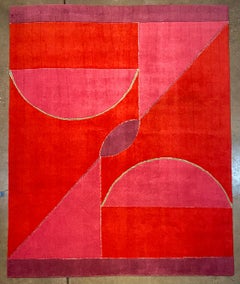
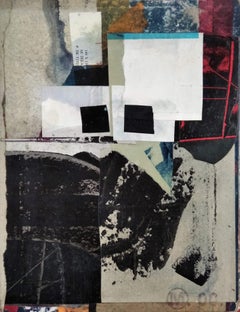
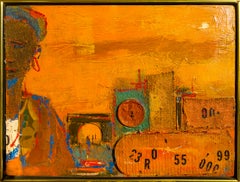
Untitled
Located in Barcelona, BARCELONA
The painting is being offered with a work and authenticity certificate
Category

Abstract 18th Century and Earlier Mixed Media

Materials

Mixed Media

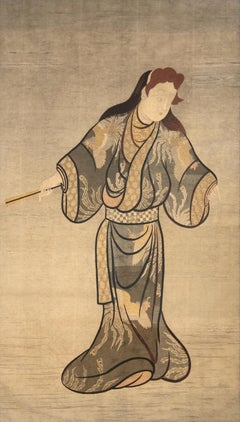
Figure of a Beauty, Japan, Edo Period
Located in Palm Desert, CA
A Japanese embroidery from the Edo Period. “Figure of a Beauty” is a portrait embroidery, silk and gold thread in golds and grays. Provenance: Priv...
Category

Edo 18th Century and Earlier Mixed Media

Materials

Silk

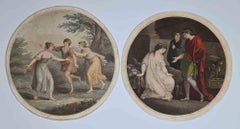
Genre Scenes Compositions - Original Artwork after Angelika Kauffmann - 1780
Located in Roma, IT
Genre Scenes Compositions is an original artwork realized in 1780s After Angelika Kauffmann. The artwork consist in a pair of mixed colored hand wa...
Category

Modern 18th Century and Earlier Mixed Media

Materials

Paper, Etching, Watercolor

"Burn Scar (No. 4)" Mixed Media Forest Fragment on Canvas by Katherine Filice
Located in Hollister, CA
"Burn Scar (No. 4)" is a 16.5 x 23-inch work made with ink, paper, burnt branches, charcoal, and stucco on buried canvas. Katherine Filice uses scorched natural materials to tell a s...
Category

Abstract 18th Century and Earlier Mixed Media

Materials

Canvas, Charcoal, Found Objects, Archival Ink, Acrylic, Archival Paper, ...

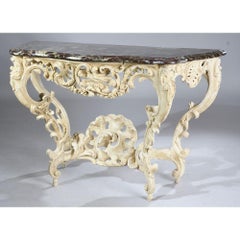
Console Louis XV
Located in ROUEN, FR
"Louis 15th Console" Louis XV console in an eventful shape with 4 legs. It is in cream rechampi oak with carved decoration of split shells, scrolls, garlands of flowers. It rests on ...
Category

18th Century and Earlier Mixed Media

Materials

Marble

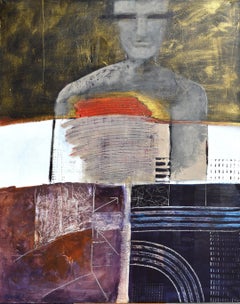
INFLUENCER, Mixed Media on Canvas
Located in Yardley, PA
Inspired by the psychology and intellectual condition of modern man. I like to experiment with color, textures, mixed media and design to create paintings that leave something for t...
Category

Abstract Expressionist 18th Century and Earlier Mixed Media

Materials

Mixed Media

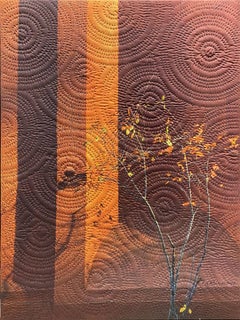
Laguardia Place- Last Leaves, Mixed Media on Canvas
Located in Yardley, PA
digitally manipulated photography, pigment printed on cotton, hand quilted, gallery-wrapped on stretched canvas :: Mixed Media :: Contemporary :: This piece comes with an official ce...
Category

Contemporary 18th Century and Earlier Mixed Media

Materials

Mixed Media

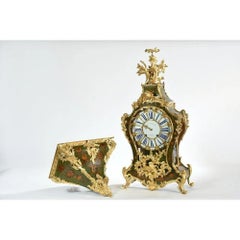
Spectacular Cartel Louis XV Signed Etienne Baillon in Paris
Located in ROUEN, FR
"Spectacular Cartel Louis XV Signed Etienne Baillon In Paris" SPECTACULAR CARTEL LOUIS XV and its tail lamp in Martin varnish with a green background and decorated with garlands of f...
Category

18th Century and Earlier Mixed Media

Materials

Gold

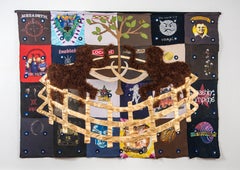
Concert Tee shirt Tapestry: The Mammoth Tapestry
Located in New York, NY
Inspired by amateur archaeologists such as Heinrich Schliemann who discovered Troy and by past elaborate hoaxes like that of the Piltdown Man, Joshua travels the world performing sta...
Category

Conceptual 18th Century and Earlier Mixed Media

Materials

Gold Leaf

Related Items
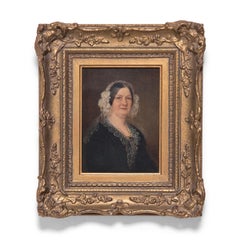
Oil Portrait of a Victorian Lady, c. 1850
Located in Chicago, IL
Painted in the 19th century, this exquisite miniature portrait wonderfully exemplifies realism in traditional oil painting. The small artwork is painted in the conventional portraiture style of the Old Masters, and achieves soft realism with fine brushwork and a subdued, neutral palette. The half length portrait depicts a fine Victorian woman dressed in all black with a delicate lace collar and bonnet. She wears a ruby broach...
Category

Old Masters 18th Century and Earlier Mixed Media

Materials

Oil

Oil Portrait of a Victorian Lady, c. 1850
$1,480
H 13.75 in W 11.5 in D 1.75 in
Surfacing II, by Dragana Milovic, Mixed Media Painting
Located in Oklahoma City, OK
This 48" x 34" mixed media painting, 'Surfacing II,' by Dragana Milovic features an abstracted geometric composition featuring 3d objects adhered to th...
Category

Abstract Geometric 18th Century and Earlier Mixed Media

Materials

Gold Leaf

"Streamliner II" Monochrome Modern Wall Sculpture- blue, gray, minimalism, mcm
Located in Marmora, NJ
Note: Streamliner I is shown with Streamliner II in some of the photos. Streamliner II is the Darker of the two sculptures and shown on the right (When both are shown in same photo)...
Category

Modern 18th Century and Earlier Mixed Media

Materials

Wood, Lacquer, Paint

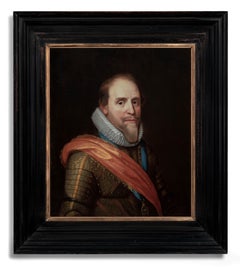
Dutch Old Master Portrait of Maurits, Prince of Orange-Nassau, Oil on Panel
Located in London, GB
In 1607, the Delft city council decided to commission a portrait of Stadholder Maurits of Nassau for the town hall, with Michiel van Mierevelt as the chosen artist due to the passing...
Category

Old Masters 18th Century and Earlier Mixed Media

Materials

Oil, Wood Panel

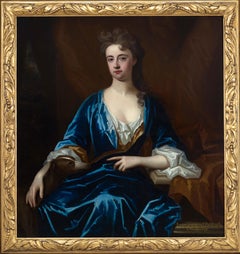
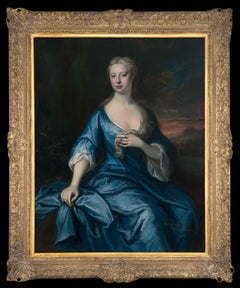
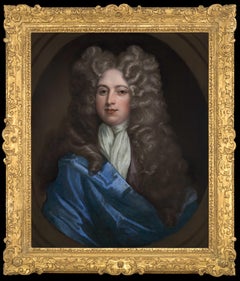
Portrait of Lady, Barbara Herbert, Countess of Pembroke c.1708, Large Painting
Located in London, GB
Portrait of Barbara Herbert, Countess of Pembroke c.1708 Charles d’Agar (1669-1723) This magnificent large-scale portrait, presented by Titan Fine Art, depicts the British court of...
Category

Old Masters 18th Century and Earlier Mixed Media

Materials

Cotton Canvas, Oil

Tondo Arboretum - Circular Contemporary Abstract Sage Green Botanical Painting
Located in Los Angeles, CA
Harrison Gilman's large original artworks begin with a layer of fast-paced gestural abstraction followed by organic shapes and geometric structures. Some of his paintings remain in t...
Category

Abstract 18th Century and Earlier Mixed Media

Materials

Canvas, Mixed Media, Acrylic

"Kings Remains" 24K Gold Sculpture 8 x 2 in Ed. of 10 by Colin Burn
Located in Culver City, CA
"Kings Remains" 24K Gold Sculpture 8 x 2 in Ed. of 10 by Colin Burn Medium: 24K Yellow Gold, 18K White Gold Diamonds Edition of 10 NOTE: preparation time may take up to 8 weeks. Pure 24k yellow gold skull and spinal olisbos sculpture featuring an 18k solid white gold royal crown, set with 10 carats of flawless sparkling white diamonds. Sculpture comes with Limited Edition Artist Certificate of Authenticity and Jewelry Certificate of Materials. The crypt of the Kings Remains represents mortality and preserved sexual energy. The sexual spirit lives beyond the grave, etched into history and carried forward by those who have experienced this erotic power. The energy of an erotic past runs through us all, leaving a perpetual sexual imprint for others to follow and immortalize. “The encasing of mind, body and soul as entombed sexual energy, preserved among the ruins of life” - Colin Burn Inspiration Context - Immortality was the underlying inspiration when creating this sculpture. A Vanitas reflecting on ancient royal entombment as man’s vain attempt to remain immortal by being buried with ones treasures. I wanted the sculpture to represent the encasing of mind, body and soul as entombed sexual energy, preserved among the ruins of life. The sculpture symbolizes how ones sexual energy is at the core of their being and how it can transcend beyond the grave for others pleasure and satisfaction. Materials - Electroformed from pure 24k gold featuring a solid 18k white gold royal crown, set with 10 carats of flawless diamonds. ABOUT COLIN BURN: Australian artist Colin Burn is a bold provocateur in the world of conceptual art, using his work to disrupt societal norms and spark critical dialogue often around uncomfortable truths. His art pushes boundaries, urging viewers to rethink their assumptions on value, power, and meaning, especially in contexts often deemed taboo or overlooked. Known for his masterful fusion of symbolism and opulence, Burn transforms ordinary objects into potent allegories, frequently employing their high monetary value to amplify the emotional and intellectual resonance of his themes. He understands that society frequently ties value to price, and this awareness is central to his approach. With an attention-grabbing allure, Burn’s work invites viewers to look beyond the surface, encouraging them to explore the deeper, often concealed meanings behind what they see—reminding them that true value lies not only in the material cost, but in the idea or theme that it represents. A compelling example of this is his Pearl Royale chess set...
Category

Contemporary 18th Century and Earlier Mixed Media

Materials

Gold

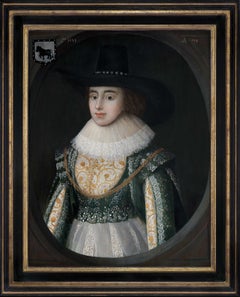
Portrait of lady, Mary Hammond in Rich Attire, Jewels, Lace c.1618-22 Historical
By Cornelius Johnson
Located in London, GB
Portrait of Mary Hammond in Sumptuous Attire, Jewels and Lace c.1618-22 Circle of Cornelius Johnson (1593-1661) This portrait of a lady, presented by Titan Fine Art, is an exquisite example of early seventeenth-century portraiture, remarkable both for the lavishness of its subject’s attire and for the distinguished provenance that has accompanied it across four centuries that adds a rich layer of historical significance. It was once part of the notable collection of Sir William Temple, 1st Baronet (1628–1699) at Moor Park, a stately mansion in Hertfordshire. Temple was a diplomat, essayist, philosopher, and the patron of Jonathan Swift. He was a key participate at an important period in English history, helping not only to negotiate the Triple Alliance, but also the marriage between William of Orange and Princess Mary. His collection at Moor Park was well known in its day, reflecting both his cultivated taste in art and literature and his international connections. Its fabulous attire, rendered with almost microscopic attention, is not merely decorative but emblematic of a world in which visual display was a language of power. Its provenance, stretching from the English country house and Enlightenment scholarship to modernist circles, forms a microcosm of cultural exchange across four centuries. Thus, the portrait of Mary Hammond stands as both a masterpiece of early seventeenth-century craftsmanship and a witness to the grand narrative of collecting and connoisseurship—a testament to the enduring fascination of beauty, status, and history intertwined. By tradition the portrait depicts Mary Hammond (born c.1602), who was Sir William Temple’s mother, and the daughter of the royal physician who served James I, Dr John Hammond (c.1555–1617) and whose family owned Chertsey Abbey in Surrey. The woman appears between 18 and 25 years old, and Mary would be about 18–20 when the portrait was painted circa 1620, therefore this matches the apparent age of the sitter and the fashion perfectly. Mary stood at the intersection of learned/courtly and gentry worlds. On 22 June 1627 she married her first cousin (a common practice for consolidating family wealth and influence during that era.) Sir John Temple (1600-1677) at St Michael, Cornhill in the City of London. The couple resided nearby, at Blackfriars. Her marriage to Sir Temple placed her at the heart of the social and political circles that shaped British history. The couple had at least five children, and they became highly significant historical figures: The eldest son, Sir William Temple, 1st Baronet, became a distinguished diplomat, statesman, and essayist, famous for his role in the Triple Alliance and as a patron and mentor to the writer Jonathan Swift – our portrait was in his collection. Their daughter, Martha Temple, later Lady Giffard, was a notable figure in her own right. She became her brother William's first biographer and a respected letter-writer, providing a rare female perspective on the events and high society of the time. Another son, also named Sir John Temple, became Attorney General for Ireland and was involved in the turbulent politics surrounding the English Civil War and the Act of Settlement in Ireland. Mary died in November 1638 after giving birth to twins and was buried at Penshurst, Kent. The family's connection to Penshurst Place is a major point of interest as this historic manor was the seat of the Sidney family, a major aristocratic and literary dynasty. The portrait was in the collection of the Mary’s son, Sir William Temple. From there it descended to his daughter, and then to her nephew, the Reverend Nicholas Bacon of Spixworth Park, Norfolk (his mother was Dorothy Temple who died in 1758). Indeed, by this time, many Temple relics were in the collection at Spixworth including the engagement ring of the illustrious Dorothy Osborne, Lady Temple, wife of Sir William Temple. The portrait thus linked two prominent English families—the Temples and the Bacons—for generations. It is listed in a Spixworth Park inventory of 27 October 1910 by the local collector and art historian, Prince Duleep Singh. He described it with characteristic precision as: “No. 69. Lady Half Length, body and face turned towards the sinister, hazel eyes upwards to the dexter, red hair dressed low and over the ears, a jewelled coronet behind, pearl ear-rings tied with black strings. Dress: black, bodice cut low and square, with lace all round the opening and over shoulders, sleeves with double slashes showing red lining and lace under, falling thin pleated lace collar, black strings tied behind it, a jewel suspended on a black string round the neck, and a double row of agate and silver beads all round to the shoulders. M. In brown veined stone frame. Age 30. Date c.1620. It is called ‘Dutch portrait from Moor Park, mentioned by Nicholas Bacon of Coddenham and Shrubland as a very valuable painting.’ A few years later, when Robert Bacon Longe’s executors sold the contents of Spixworth Park (19–22 May 1912), the portrait appeared as lot 262, described as: “A very valuable half-length portrait on panel, ‘Dutch Lady, with deep lace collar and pearl and amethyst necklace, pendant, and ear-rings, and auburn hair, with coronet’ Early Dutch School 1620.” Following this sale the painting entered the collection of David and Constance Garnett, prominent literary figures of the early twentieth century, before being gifted to Andre Vladimervitch Tchernavin by 1949, and subsequently passed by him to the present owners in 1994. The two great houses associated with the painting, Moor Park and Spixworth Park, further underscore its pedigree. Moor Park, in Hertfordshire, was among the grandest country estates of seventeenth-century England—its gardens famously redesigned by Sir William Temple himself and later influencing landscape design across Europe. Sir William's Temple's secretary was Jonathan Swift, who lived at Moor Park between 1689 and 1699. Swift began to write "A Tale of the Tub" and "The Battle of the Books" at Moor Park. Spixworth Park, near Norwich, was an Elizabethan country house in Spixworth, Norfolk, located just north of the city of Norwich. It was home to successive generations of the Bacon family, one of Norfolk’s most distinguished dynasties (later, the Bacon Longe family), who were considerable land owners (owning Reymerston Hall, Norfolk, Hingham Hall, Norfolk, Dunston Hall, Norfolk, Abbot's Hall, Stowmarket, and Yelverton Hall, Norfolk). Spixworth Hall and the surrounding parkland remained in the Longe family for 257 years until 1952, when it was demolished. Rendered with meticulous precision and sumptuous detail, the painting depicts an elegantly dressed woman—her poise, costume, and jewels all communicating a message of wealth, refinement, and social rank. Every brushstroke conveys an artist deeply attuned to the textures of luxury and the nuances of feminine dignity. The sitter’s attire is nothing short of magnificent. Her bodice and sleeves are fashioned from the finest black silk or satin, the fabric absorbing and reflecting light in equal measure, suggesting both depth and lustre. Around her shoulders lies an opulent lace ruff—a deep, radiating lace collar worked in such intricate detail that it testifies to both the artist’s technical skill and the sitter’s extravagant taste. Lace of this quality, especially Venetian or Flemish bobbin lace, was one of the costliest materials available in early seventeenth-century Europe, its weight worth more than gold, and was a marker of prestige that rivalled jewels in value. The painter has taken great care to delineate every loop and scallop of the lace, achieving an almost tactile realism. Pale skin was also a desired beauty standard, sometimes accentuated with contrasting black ribbons or strings. Her jewels amplify this display of affluence. Matching earrings and a delicate coronet or jewelled hair ornament with a feather adorn her hair, which is styled in the modest yet fashionable manner of the time. These details are far from decorative excess—they serve as visual emblems of social standing, refinement, and lineage. Portraits of this kind were statements of both identity and aspiration, intended to project a family’s prosperity and moral virtue to posterity. The portrait was most likely painted in London around 1618-1622. The low-cut, décolletage-revealing neckline was fashionable in the courts of England and France during the late Elizabethan and Jacobean eras (c. 1590s-1610s), this style did not prevail in the public fashion of the Low Countries at this time. This style of lace ruff — delicate needle lace with geometric openwork — was fashionable from c.1615 to 1622, and the jewelled caul (hair net) and lace edging over a stiffened coif are consistent with high-status English women’s portraiture between 1610–1620. The puffed sleeve slash and the use of pink satin beneath black velvet belong squarely to the late Jacobean...
Category

Old Masters 18th Century and Earlier Mixed Media

Materials

Oil, Panel

Portrait of a Lady, Mrs Wray in a Silk Dress Pink Wrap c.1698, Oil on canvas
Located in London, GB
Portrait of a Lady, Mrs Wray in a Silk Dress & Pink Wrap c.1698 Circle of Michael Dahl (1659-1743) This delightful work, presented by Titan Fine Art, is a fine example of British po...
Category

Old Masters 18th Century and Earlier Mixed Media

Materials

Cotton Canvas, Oil

Seventeenth Century Old Master Biblical Oil Painting Joseph recounts his Dream
Located in ludlow, GB
Seventeenth Century Old Master Biblical themed Oil Painting on Panel of Joseph recounting his Dream. A Follower of Rembrandt Harmensz Van Rijn 1606 - 1669. This painting follows a ...
Category

Old Masters 18th Century and Earlier Mixed Media

Materials

Oil

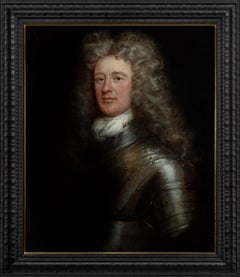
Portrait of a Gentleman, David Erskine, 13th Laird of Dun, Wearing Armour c.1700
Located in London, GB
The gentleman in this exquisite oil on canvas portrait, presented by Titan Fine Art, is shown with the grandiloquence characteristic of the English School of painting. He is portray...
Category

Old Masters 18th Century and Earlier Mixed Media

Materials

Oil, Canvas

Dragonfly
Located in Sante Fe, NM
The Element ‘Gold, (Au) can only be make in the nuclear reactor of stars. It came to our planet when the Earth was first forming, as dust from catastrophic astronomical events –sta...
Category

Contemporary 18th Century and Earlier Mixed Media

Materials

Gold Leaf

Dragonfly
$950
H 3 in W 5 in
Previously Available Items
Florentine Pietre Dure Plaque
Located in New Orleans, LA
Florentine Pietre Dure Plaque 18th Century A triumph of Florentine craftsmanship, this monumental pietre dure panel stands among the finest surviving examples of its kind. Created i...
Category

18th Century and Earlier Mixed Media

Materials

Stone, Alabaster, Marble

Late 17th-Century Continental School, Extended Fan Leaf
Located in Cheltenham, GB
This late 17th-century Italian/French extended fan leaf depicts Nicolas Poussin’s ‘A Dance to the Music of Time’. Over several centuries, exquisite fan d...
Category

Baroque 18th Century and Earlier Mixed Media

Materials

Gouache, Wood Panel, Vellum

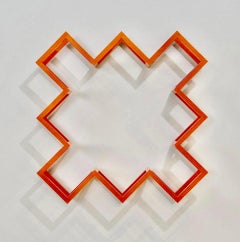
Orange Garden Bright Orange Geometric Painted Wood Wall Relief, Minimal and Op
By Emi Ozawa
Located in Wellesley, MA
Emi Ozawa's elegant painted wood geometric wall sculptures of acrylic on poplar are beautifully executed reliefs with a fresh and zingy presence both Minimal and Op. Closely related...
Category

Abstract Geometric 18th Century and Earlier Mixed Media

Materials

Wood, Acrylic

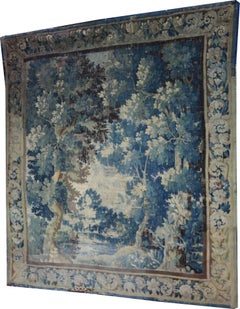
Huge 17th/18th Century French Aubusson Tapestry Landscape with Trees
Located in Cirencester, Gloucestershire
"Verdure aux arbres" original tapestry from the Royal Aubusson, France dates to the late 17th century - beginning of the 18th century Woven in wool and silk H. 234cm x L. 200cm The...
Category

Baroque 18th Century and Earlier Mixed Media

Materials

Tapestry

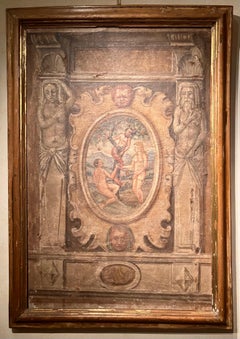
Italian Renaissance Egg Tempera Fresco on Canvas, The Temptation of Adam and Eve
Located in Firenze, IT
This art piece is a Florentine Renaissance period fresco of late 1500 hand painted with egg tempera representing the temptation of Adam and Eve, this pivotal moment in the history of genesis is framed in an oval scrolled cartouche and flanked by architectural pillars featured as two sculptural male and female caryatids holding the entablature of the palazzo. This antique Italian old master...
Category

Renaissance 18th Century and Earlier Mixed Media

Materials

Cotton Canvas, Egg Tempera

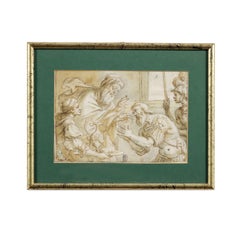
The meeting of the Centurion Cornelius with the Apostle Peter, Religious Subject
Located in Milan, IT
Mixed technique on paper (charcoal, pen, brown ink, watercolor and white lead). Signed Pasqual Otin lower left; coming from a private collection, there are the brands of two previous...
Category

Other Art Style 18th Century and Earlier Mixed Media

Materials

Charcoal

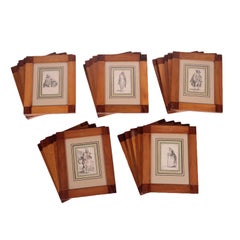
Les Gueux, 1622 (complete series), Jacques Callot Etchings On Paper
Located in Milan, IT
Etchings. This is the complete series of 25 engravings on paper of the "Beggars" (Les Gueux), made by the French engraver in Nancy, and widely reproduced for the popularity it obtain...
Category

Other Art Style 18th Century and Earlier Mixed Media

Materials

Other Medium

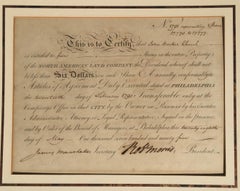
Signer of the DECLARATION OF INDEPENDENCE. - ROBERT MORRIS, 1795
Located in Santa Monica, CA
SIGNED LAND DOCUMENT BY ROBERT MORRIS, 1795 ROBERT MORRIS (1735 - 1806) Signer of all Three Foundational Documents including: the Declaration of Independence, the Articles of Confederation, and the United States Constitution...
Category

Folk Art 18th Century and Earlier Mixed Media

Materials

Ink

MASSACHUSETTS BAY COLONY DOCUMENT, 1754 Signed by Wm. Shirley
Located in Santa Monica, CA
MASSACHUSETTS BAY COLONY, (Boston - September 10, 1754) William Shirley (Captain General and Governor in Chief) Printed and manuscript Document signed. 13 x 17" Complete with official seal...
Category

Other Art Style 18th Century and Earlier Mixed Media

Materials

Ink

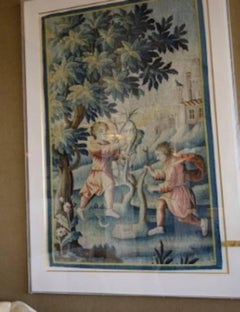
Pair of Aubusson Style Verdure Tapestry Panels, 18th century
Located in Santa Fe, NM
Pair of Aubusson Style Verdure Tapestry Panels Artist/maker: Unknown Origin/country: French Medium: Wool and Silk Dimensions: Height: 77”x Width: 39” (right) Height: 78”x Width: 45” ...
Category

18th Century and Earlier Mixed Media

Materials

Wool, Silk

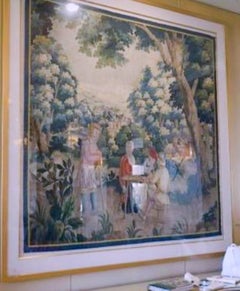
Aubusson Style Verdure Tapestry panel, trees, people, French, late 18th century
Located in Santa Fe, NM
Origin/country: French Medium: Wool and Silk Dimensions: Height: 70”x Width: 79” Date/period: Late 18th Century Signature/markings: N/A Condition: Good
Category

18th Century and Earlier Mixed Media

Materials

Wool, Silk

Buddhist Embroidery
Located in Palm Desert, CA
Category

18th Century and Earlier Mixed Media

Recently Viewed

View All