Want more images or videos?
Request additional images or videos from the seller
1 of 8
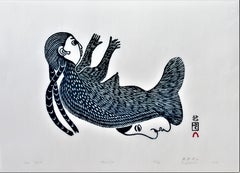
Richard (Rick) Lisle SmithFishing1979
1979
$700List Price
About the Item
- Creator:Richard (Rick) Lisle Smith (1937 - 2010, American)
- Creation Year:1979
- Dimensions:Height: 15.65 in (39.76 cm)Width: 18.5 in (46.99 cm)Depth: 1.75 in (4.45 cm)
- Medium:
- Movement Style:
- Period:
- Condition:
- Gallery Location:San Francisco, CA
- Reference Number:Seller: smi/fis/011stDibs: LU666315430982
About the Seller
5.0
Platinum Seller
Premium sellers with a 4.7+ rating and 24-hour response times
Established in 1999
1stDibs seller since 2017
876 sales on 1stDibs
Authenticity Guarantee
In the unlikely event there’s an issue with an item’s authenticity, contact us within 1 year for a full refund. DetailsMoney-Back Guarantee
If your item is not as described, is damaged in transit, or does not arrive, contact us within 7 days for a full refund. Details24-Hour Cancellation
You have a 24-hour grace period in which to reconsider your purchase, with no questions asked.Vetted Professional Sellers
Our world-class sellers must adhere to strict standards for service and quality, maintaining the integrity of our listings.Price-Match Guarantee
If you find that a seller listed the same item for a lower price elsewhere, we’ll match it.Trusted Global Delivery
Our best-in-class carrier network provides specialized shipping options worldwide, including custom delivery.You May Also Like
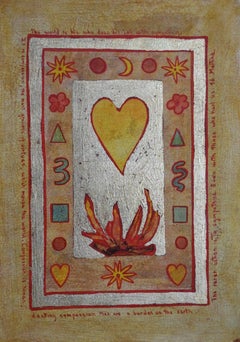
Lacking Compassion Men are a Burden On The Earth: Contemporary Mixed Media
By Martine Barnard
Located in Brecon, Powys
Oil and gold leaf on arches paper with a crackled varnish finish.
Matted 18" x 14"
Image 14" x 10"
Signed and dated upper right
Category
1990s Outsider Art Figurative Paintings
Materials
Gold Leaf
Band, Mixed Media by Joyce Roybal
Located in Long Island City, NY
Band
Joyce Roybal, (1955)
Date: circa 1980
Oil and Mixed media on Canvas, signed lower right
Size: 36.5 x 24.5 in. (92.71 x 62.23 cm)
Category
1980s Folk Art Mixed Media
Materials
Mixed Media, Oil

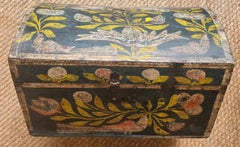
European 19th Century Folk Art Painted Wooden Hope, Bridal Wedding Chest
Located in Cotignac, FR
Early 19th century European folk art painted wood wedding, hope or bridal chest.
A superb example of a European hope or wedding chest in remarkable condition Of characteristic dome ...
Category
Early 19th Century Folk Art More Art
Materials
Iron
$2,162
H 11.03 in W 17.72 in D 11.82 in
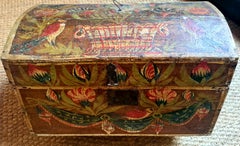
Wedding Chest of Corinne de Blaru, French 19th Century Folk Art Painted
Located in Cotignac, FR
Vintage French folk art, Early 19th century, painted wood wedding, hope or bridal chest, for the wedding of Charles Herbert Frederic and Corinne de Blaru in 1848. The names and dates...
Category
Early 19th Century Folk Art More Art
Materials
Iron
$2,162
H 11.03 in W 17.72 in D 11.82 in
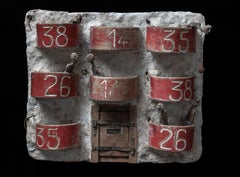
Outsider Art Wall Sculpture:
Numbers
By Gerard Cambon
Located in New York, NY
Gérard Cambon was born in 1960 in Toulouse (Fr).
He has a degree in political science and is a self-taught artist.
In the earlier years of his life practiced and experimented with collage and model making. Later, with an interest in old machines and patinas he started collecting old and used objects, tools, and fragments of items whose previous lives remained obvious. When he travels, one of his greatest pleasures is to find materials in antique shops or ironmongeries.
In 1994, he began creating Locomobiles and reliefs and presented them to the public for the first time at “La Jeune Peinture,” a Parisian art fair.
In 1995 , he stayed during 8 months in the hospital for eight months (leukaemia) where he began preparing and creating plans for new Locomobiles and reliefs. As his health improved, he committed himself to his artwork and during the same year met a Parisian gallery owner who decided to organize a solo show for him, Le Galerie Beatrice Soulie in Saint Germain des Pres.
He has shown his work since 1996 in Paris and since 2000 in the United States (New York, Los Angeles, Chicago, Seattle). He is currently being shown by galleries in France, Belgium, Switzerland, Luxembourg , Denmark, and the United States.
He keeps on trying out new materials (fabric, leather, glass, plants, metals,…) that he integrates into his bas-reliefs: traction engines...
Category
2010s Outsider Art Figurative Sculptures
Materials
Metal
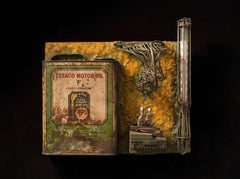
Outsider Art Wall Sculpture:
TEXACO
By Gerard Cambon
Located in New York, NY
Gérard Cambon was born in 1960 in Toulouse (Fr).
He has a degree in political science and is a self-taught artist.
In the earlier years of his life practiced and experimented with collage and model making. Later, with an interest in old machines and patinas he started collecting old and used objects, tools, and fragments of items whose previous lives remained obvious. When he travels, one of his greatest pleasures is to find materials in antique shops or ironmongeries.
In 1994, he began creating Locomobiles and reliefs and presented them to the public for the first time at “La Jeune Peinture,” a Parisian art fair.
In 1995 , he stayed during 8 months in the hospital for eight months (leukaemia) where he began preparing and creating plans for new Locomobiles and reliefs. As his health improved, he committed himself to his artwork and during the same year met a Parisian gallery owner who decided to organize a solo show for him, Le Galerie Beatrice Soulie in Saint Germain des Pres.
He has shown his work since 1996 in Paris and since 2000 in the United States (New York, Los Angeles, Chicago, Seattle). He is currently being shown by galleries in France, Belgium, Switzerland, Luxembourg , Denmark, and the United States.
He keeps on trying out new materials (fabric, leather, glass, plants, metals,…) that he integrates into his bas-reliefs: traction engines...
Category
2010s Outsider Art Figurative Sculptures
Materials
Metal
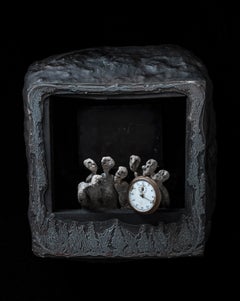
Outsider Art Wall Sculpture:
It
s Time
By Gerard Cambon
Located in New York, NY
Gérard Cambon was born in 1960 in Toulouse (Fr).
He has a degree in political science and is a self-taught artist.
In the earlier years of his life practiced and experimented with collage and model making. Later, with an interest in old machines and patinas he started collecting old and used objects, tools, and fragments of items whose previous lives remained obvious. When he travels, one of his greatest pleasures is to find materials in antique shops or ironmongeries.
In 1994, he began creating Locomobiles and reliefs and presented them to the public for the first time at “La Jeune Peinture,” a Parisian art fair.
In 1995 , he stayed during 8 months in the hospital for eight months (leukaemia) where he began preparing and creating plans for new Locomobiles and reliefs. As his health improved, he committed himself to his artwork and during the same year met a Parisian gallery owner who decided to organize a solo show for him, Le Galerie Beatrice Soulie in Saint Germain des Pres.
He has shown his work since 1996 in Paris and since 2000 in the United States (New York, Los Angeles, Chicago, Seattle). He is currently being shown by galleries in France, Belgium, Switzerland, Luxembourg , Denmark, and the United States.
He keeps on trying out new materials (fabric, leather, glass, plants, metals,…) that he integrates into his bas-reliefs: traction engines...
Category
2010s Outsider Art Figurative Sculptures
Materials
Metal
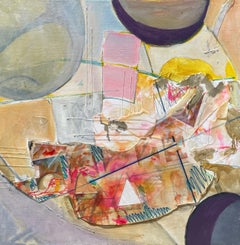
"Untitled" by Steven H. Rehfeld - Blue, Orange, and Earth Tone Abstract Painting
By Steven H. Rehfeld
Located in Carmel, CA
Steven H. Rehfeld (American, born 1954)
"Untitled" 1992
Oil Paint, Paper, Ink, Mixed Media, Canvas, Stretcher Bars
The artist signed the back of the painting.
"Untitled" by Steven H...
Category
1990s Outsider Art Abstract Paintings
Materials
Canvas, Paper, Ink, Mixed Media, Oil, Stretcher Bars
$15,000
H 36 in W 36 in D 1 in
The Tapestry of Consciousness
by Rehfeld - Colorful Mixed Media Abstract Art
By Steven H. Rehfeld
Located in Carmel, CA
Steven H. Rehfeld (American, born 1954)
'Quantum Identities: The Tapestry of Consciousness' 2022
Oil paint, Tissue paper, Newsprint, Ripped canvas, Wood
The artist signed the back of...
Category
2010s Outsider Art Abstract Paintings
Materials
Wood, Mixed Media, Oil, Newsprint, Tissue Paper
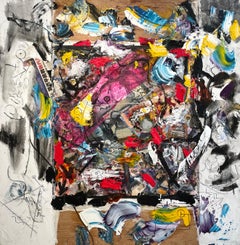
Steven H. Rehfeld
The Tapestry of Consciousness
by Rehfeld - Colorful Mixed Media Abstract Art, 2022
$31,000
H 60.25 in W 59.25 in D 1.5 in
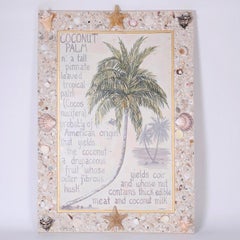
Palm Tree Painting on Canvas with Seashell Frame
Located in Palm Beach, FL
Charming palm tree painting on canvas with a mixed media approach using oil, gouache, and watercolor. Featuring a three-dimensional folky sea shell and sea life...
Category
20th Century Folk Art Landscape Paintings
Materials
Oil, Watercolor, Gouache
More From This Seller
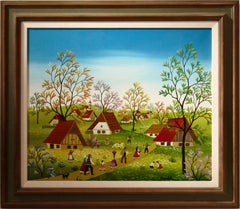
View AllPeople of the Village
Located in San Francisco, CA
This artwork titled "People of the Village" c.1980, is an oil painting on canvas by Hungarian artist Anton Kowalski, b.1926. It is signed at the lower right corner by the artist. The canvas size is 21 x 24 inches, framed size is 26.5 x 30.5 inches. Framed in original dark wood and green frame, with fabric liner. It is in excellent condition.
About the artist:
The artist was born in Sopron in Hungary in 1926. He was a student of the Academy of Budapest and during the uprising in 1956 against Communism he escaped from Hungary to Vienna where he now lives and works.
He has become internationally known for his (typically East European style) “Naive” paintings depicting Village life in the four seasons in glorious color. Children especially like his works as each one tells a story.
He has exhibited in many Galleries throughout Europe, particularly in Munich, Vienna, Tokyo, and Harrods in London. His work has been on permanent exhibition at the Stewart Gallery...
Category
Mid-20th Century Folk Art Figurative Paintings
Materials
Oil
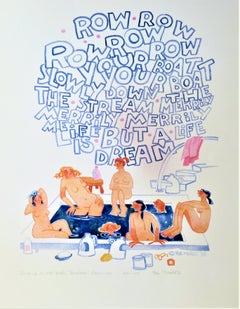
Singing in the Bath, Tenakee Springs
Located in San Francisco, CA
This artwork titled "Singing in the Bath, Tenakee Springs" 1996 is a color offset lithograph on paper by noted American artist Rie Mounier Munoz, 1921-2015. It is hand signed and numbered 1077/1100 in pencil by the artist. The image size is 13.5 x 10 inches, sheet size is 16 x 12.35 inches. It is in excellent condition, has never been framed.
About the artist:
Alaska painter Rie Mounier Munoz was the child of Dutch parents who immigrated to California, where she was born and raised. She is known for her colorful scenes of everyday life in Alaska.
Rie (from Marie) Munoz (moo nyos), studied art at Washington and Lee University in Virginia. In 1950, she traveled up the Inside Passage by steamship, fell in love with Juneau, and gave herself until the boat left the next day to find a job and a place to live. Since then Juneau has been home to Munoz. She began painting small vignettes of Alaska soon after arriving in Juneau, and also studied art at the University of Alaska-Juneau.
Munoz painted in oils in what she describes as a "painstakingly realistic" style, which she found stiff and "somewhat boring." Her breakthrough came a few years later when an artist friend introduced her to a versatile, water-soluble paint called casein. The immediacy of this inexpensive medium prompted an entirely new style. Rie's paintings became colorful and carefree, mirroring her own optimistic attitude toward life. With her newfound technique she set about recording everyday scenes of Alaskans at work and at play.
Of the many jobs she has held journalist, teacher, museum curator, artist, mother, Munoz recalls one of her most memorable was as a teacher on King Island in 1951, where she taught 25 Eskimo children. The island was a 13-hour umiak (a walrus skin boat) voyage from Nome, an experience she remembers vividly. After teaching in the Inupiat Eskimo village on the island with her husband during one school year, she felt a special affinity for Alaska's Native peoples and deliberately set about recording their traditional lifestyles that she knew to be changing very fast.
For the next twenty years, Rie practiced her art as a "Sunday painter," in and around prospecting with her husband, raising a son, and working as a freelance commercial artist, illustrator, cartoonist, and curator of exhibits for the Alaska State Museum. During her years in Alaska, Munoz has lived in a variety of small Alaskan communities, including prospecting and mining camps.
Her paintings reflect an interest in the day-to-day activities of village life such as fishing, berry picking, children at play, as well as her love of folklore and legends. Munoz says that what has appealed to her most were "images you might not think an artist would want to paint," such as people butchering crab, skinning a seal, or doing their laundry in a hand-cranked washing machine.
In 1972, with her hand-cut stencil and serigraph prints selling well in four locations in Alaska, she felt confident enough to leave her job at the Alaska State Museum and devote herself full time to her art. Freed from the constraints of an office job, she began to produce close to a hundred paintings a year, in addition to stone lithograph and serigraph prints.
From her earliest days as an artist, Rie had firm beliefs about selling her work. First, she insisted the edition size should be kept modest. When she decided in 1973 to reproduce Eskimo Story Teller as an offset lithography print and found the minimum print run to be 500, she destroyed 200 of the prints. She did the same with King Island, her second reproduction. Reluctantly, to meet market demand, she increased the edition size of the reproductions to 500 and then 750. The editions stayed at that level for almost ten years before climbing to 950 and 1250.
Her work has been exhibited many solo watercolor exhibits in Alaska, Oregon and Washington State, including the Charles and Emma Frye Art Museum, Alaska State Museum in Juneau, Anchorage Historical and Fine Arts Museum, Tongass Historical Museum in Ketchikan, and Yukon Regional Library in Whitehorse; Yukon Territory, and included in exhibits at the Smithsonian Institute and Russell Senate Office Building in Washington, D.C.
Munozs paintings have graced the covers of countless publications, from cookbooks to mail order catalogs, and been published in magazines, newspapers, posters, calendars, and two previous collections of her work: Rie Munoz...
Category
Late 20th Century Folk Art Nude Prints
Materials
Lithograph
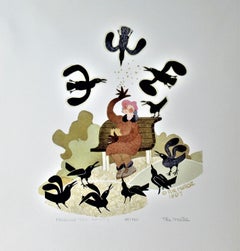
Feeding the Ravens
Located in San Francisco, CA
This artwork titled "Feeding the Ravens" 1997 is a color offset lithograph on paper by noted American artist Rie Mounier Munoz, 1921-2015. It is hand signed and numbered 29/950 in pencil by the artist. The image size is 9.65 x 8.35 inches, sheet size is 13.85 x 12.25 inches. It is in excellent condition, has never been framed.
About the artist:
Alaska painter Rie Mounier Munoz was the child of Dutch parents who immigrated to California, where she was born and raised. She is known for her colorful scenes of everyday life in Alaska.
Rie (from Marie) Munoz (moo nyos), studied art at Washington and Lee University in Virginia. In 1950, she traveled up the Inside Passage by steamship, fell in love with Juneau, and gave herself until the boat left the next day to find a job and a place to live. Since then Juneau has been home to Munoz. She began painting small vignettes of Alaska soon after arriving in Juneau, and also studied art at the University of Alaska-Juneau.
Munoz painted in oils in what she describes as a "painstakingly realistic" style, which she found stiff and "somewhat boring." Her breakthrough came a few years later when an artist friend introduced her to a versatile, water-soluble paint called casein. The immediacy of this inexpensive medium prompted an entirely new style. Rie's paintings became colorful and carefree, mirroring her own optimistic attitude toward life. With her newfound technique she set about recording everyday scenes of Alaskans at work and at play.
Of the many jobs she has held journalist, teacher, museum curator, artist, mother, Munoz recalls one of her most memorable was as a teacher on King Island in 1951, where she taught 25 Eskimo children. The island was a 13-hour umiak (a walrus skin boat) voyage from Nome, an experience she remembers vividly. After teaching in the Inupiat Eskimo village on the island with her husband during one school year, she felt a special affinity for Alaska's Native peoples and deliberately set about recording their traditional lifestyles that she knew to be changing very fast.
For the next twenty years, Rie practiced her art as a "Sunday painter," in and around prospecting with her husband, raising a son, and working as a freelance commercial artist, illustrator, cartoonist, and curator of exhibits for the Alaska State Museum. During her years in Alaska, Munoz has lived in a variety of small Alaskan communities, including prospecting and mining camps.
Her paintings reflect an interest in the day-to-day activities of village life such as fishing, berry picking, children at play, as well as her love of folklore and legends. Munoz says that what has appealed to her most were "images you might not think an artist would want to paint," such as people butchering crab, skinning a seal, or doing their laundry in a hand-cranked washing machine.
In 1972, with her hand-cut stencil and serigraph prints selling well in four locations in Alaska, she felt confident enough to leave her job at the Alaska State Museum and devote herself full time to her art. Freed from the constraints of an office job, she began to produce close to a hundred paintings a year, in addition to stone lithograph and serigraph prints.
From her earliest days as an artist, Rie had firm beliefs about selling her work. First, she insisted the edition size should be kept modest. When she decided in 1973 to reproduce Eskimo Story Teller as an offset lithography print and found the minimum print run to be 500, she destroyed 200 of the prints. She did the same with King Island, her second reproduction. Reluctantly, to meet market demand, she increased the edition size of the reproductions to 500 and then 750. The editions stayed at that level for almost ten years before climbing to 950 and 1250.
Her work has been exhibited many solo watercolor exhibits in Alaska, Oregon and Washington State, including the Charles and Emma Frye Art Museum, Alaska State Museum in Juneau, Anchorage Historical and Fine Arts Museum, Tongass Historical Museum in Ketchikan, and Yukon Regional Library in Whitehorse; Yukon Territory, and included in exhibits at the Smithsonian Institute and Russell Senate Office Building in Washington, D.C.
Munozs paintings have graced the covers of countless publications, from cookbooks to mail order catalogs, and been published in magazines, newspapers, posters, calendars, and two previous collections of her work: Rie Munoz...
Category
Late 20th Century Folk Art Animal Prints
Materials
Lithograph
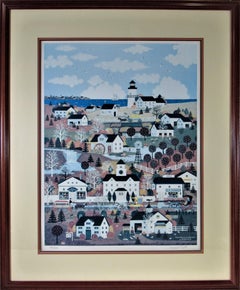
Indian Summer in Nantuckett
By Jane Wooster Scott
Located in San Francisco, CA
This artwork titled "Indian Summer in Nantuckett" is an original offset lithograph on wove paper by American artist Jane Wooster Scott, born 1933. It is hand signed and numbered 681/750 in pencil by the artist. The image size is 27 x 20 inches, framed size is 39 x 32.25 inches. It is beautifully framed in a custom wood frame. It is in excellent condition.
About the artist.
Jane Wooster Scott grew up in the Philadelphia area and moved West following her dream to be a movie star. She quickly learned that goal was not for her, but became the host of a talk show where she interviewed movie stars.
She photographs what she sees to recapture them later on canvas. However, few of her paintings are real, existing scenes. They are compositions drawn from her personal imagination. She has been exhibiting her work in Los Angeles and New York and most of her shows have completely sold out on opening night.
In the "Guinness Book of Records" as one of the most reproduced artists in America, Jane Wooster Scott began copying work by folk artists such as Grandma Moses and gradually evolved into her own style. A turning point for her career was a joint showing at the Ankrum Gallery in Los Angeles with her comedian friend, Jonathan Winters. It was mostly a business crowd, and she sold 40 paintings in an hour.
Her works hang in museums, in public buildings and private homes in Europe, Asia and South America as well as in the United States. She has become legendary for her exceptional scenes of America s celebrations and holidays,
Among her collectors are Aaron Spelling, Sylvester Stallone, Charles Bronson, Kenny Rogers, Farah...
Category
Late 20th Century Folk Art Figurative Prints
Materials
Offset
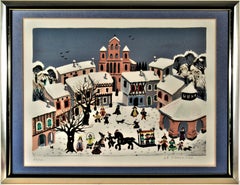
Village en Hiver
Located in San Francisco, CA
This artwork "Village en Hiver" c.1980 is an original color lithograph by French artist Madeleine (Mady) De La Giraudiere, 1922-2018. It is hand signed a...
Category
Late 20th Century Folk Art Figurative Prints
Materials
Lithograph
Sea Spirit
Located in San Francisco, CA
This artwork titled "Sea Spirit" 1965 is an original stonecut on thin paper by Eskimo artist Egevadluq (Eegyvudluk) Ragee, 1920-1983. It is hand signed, titled, dated, described and numbered 20/50 in pencil by the artist. With the blind stamp of the artist at the lower right corner. It is in excellent condition. it has a minor thin crease at the middle center, at the edge of the sheet, barely visible, see picture #4
About the artist:
Eegyvudluk Ragee was the oldest child born to Pamiaktok and Sorisolutu at the small campsite of Ikarasak, on the southern tip of Baffin Island in 1920.
When Egevadluq travelled to Cape Dorset (Kinngait) to trade for supplies, she would buy graphite pencil and paper from the West Baffin Eskimo Co-operative. Her early works filled entire sheets of paper, mythical creatures, bird-animal-human transformations, and images from reality - all randomly intermingled . By the mid-1960s, Eegyvudluk was using wax crayons, or coloured felt pens on paper.
In 1967, improved housing in Cape Dorset resulted in the Inuit abandoning most of the campsites. Eegyvudluk moved into the settlement, and by the early 1970s, explored the use of arcrylic washes, on which she drew her well-known figures and birds.
"I started drawing because I was 'tususkuk' (when I saw other people doing it, I wanted to do the same things)...When I start to make a drawing, I have a picture in my mind, but when I try to put that picture on paper, my hands won't do what my mind wants. When I have the picture in my head, I can't get it out by my hands. Sometimes I find it hard to draw when my children are in the house; I find it hard to think with so much noise around me. I make the kids go outside." Eegyvudluk, Cape Dorset Print Catalogue, 1978.
Exhibitions
Alaska Eskimo Dolls/Inuit Prints, Provincial Museum of Alberta, sponsored by the Alaska State Council on the Arts
ART ESKIMO, Galerie de France
Art Inuit, Presented by l'Iglou Art Esquimau, Douai at Galerie Akenaton
Art Inuit: Autour de la Collection de Cape Dorset 1991, Presented by l'Iglou Art Esquimau, Douai at Le Colombier
Art/Facts, McMaster Art Gallery
Art/Facts, McMaster Art Gallery
Canadian Eskimo Art...
Category
Mid-20th Century Folk Art Figurative Prints
Materials
Other Medium