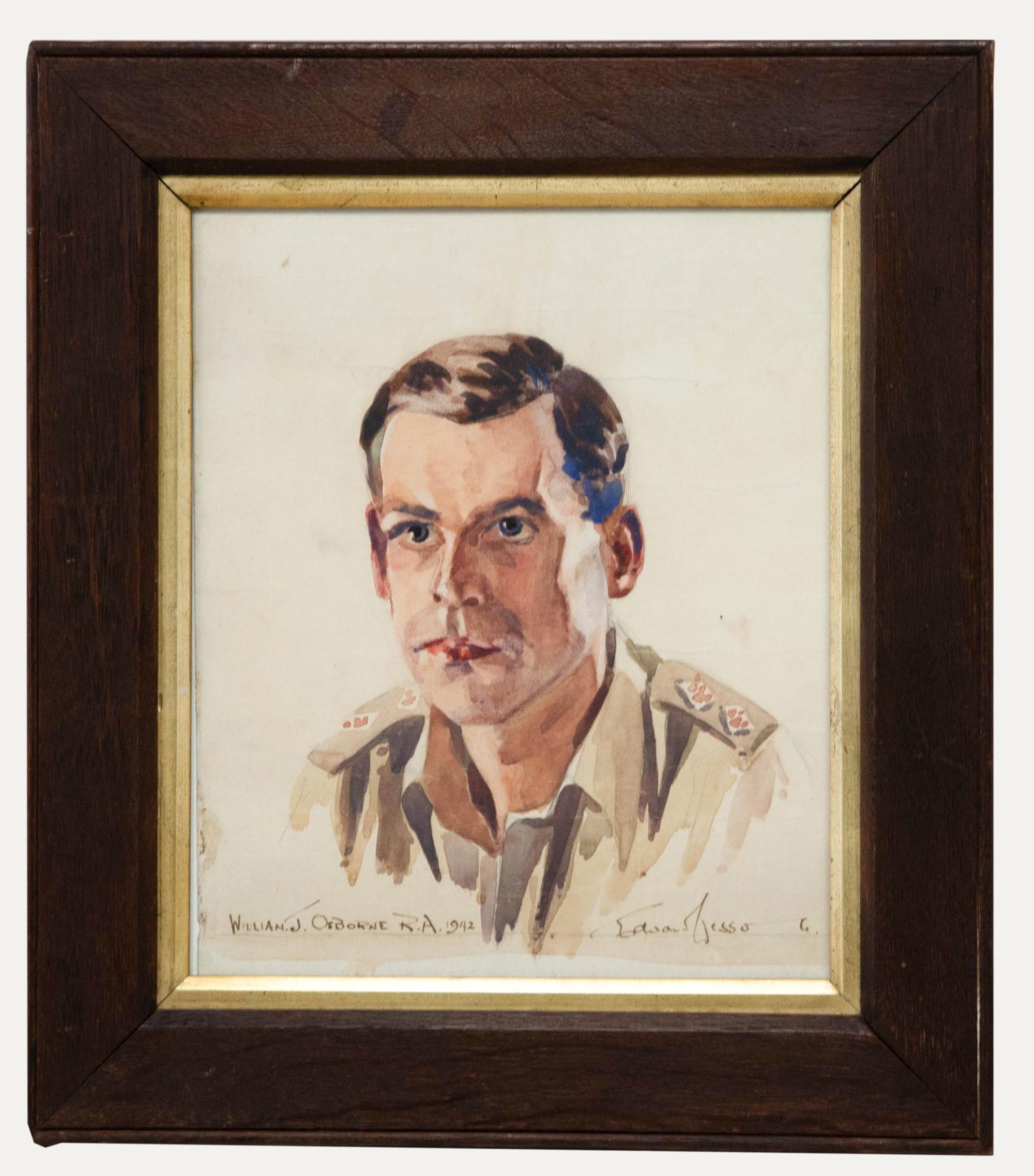
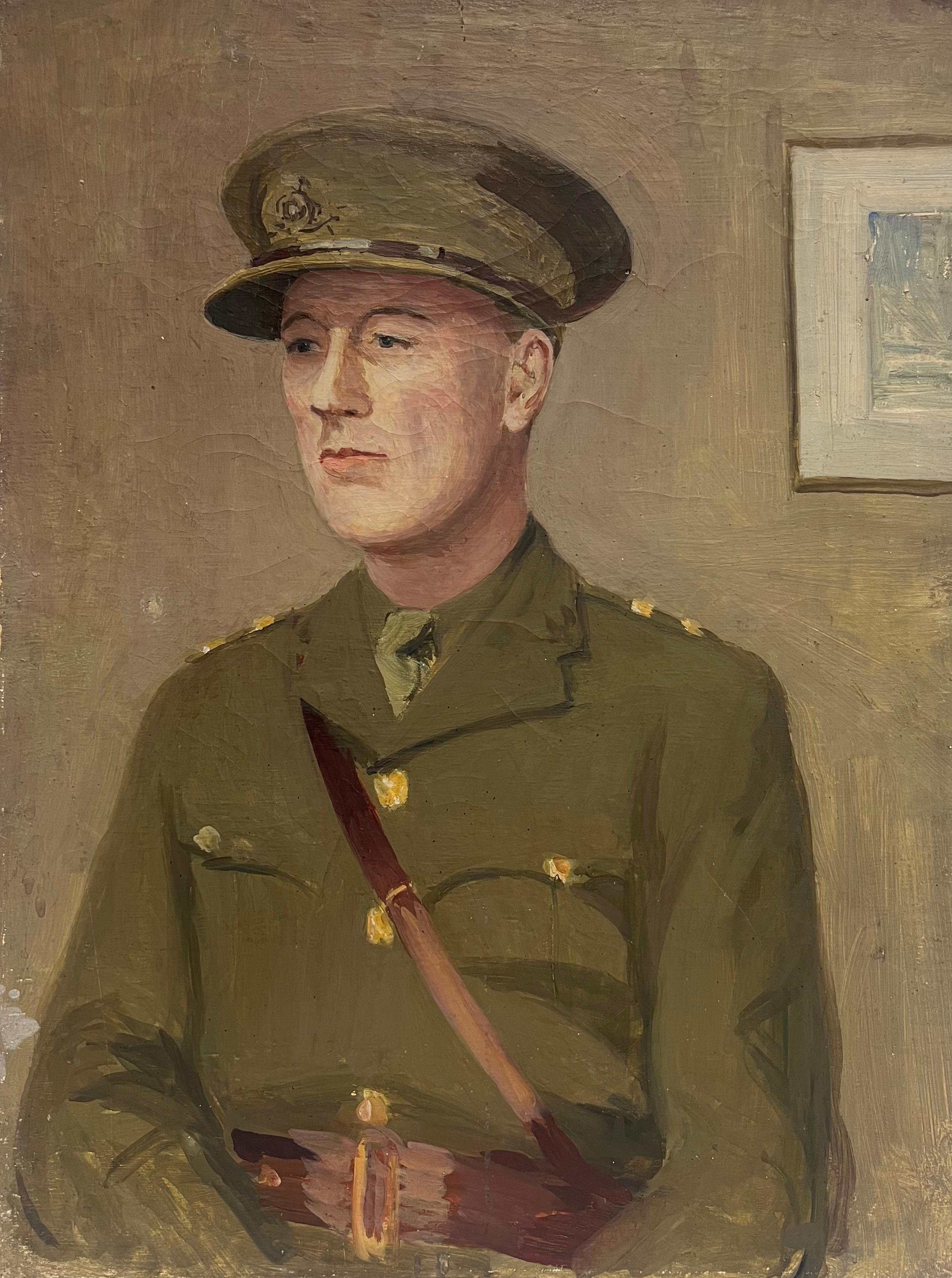
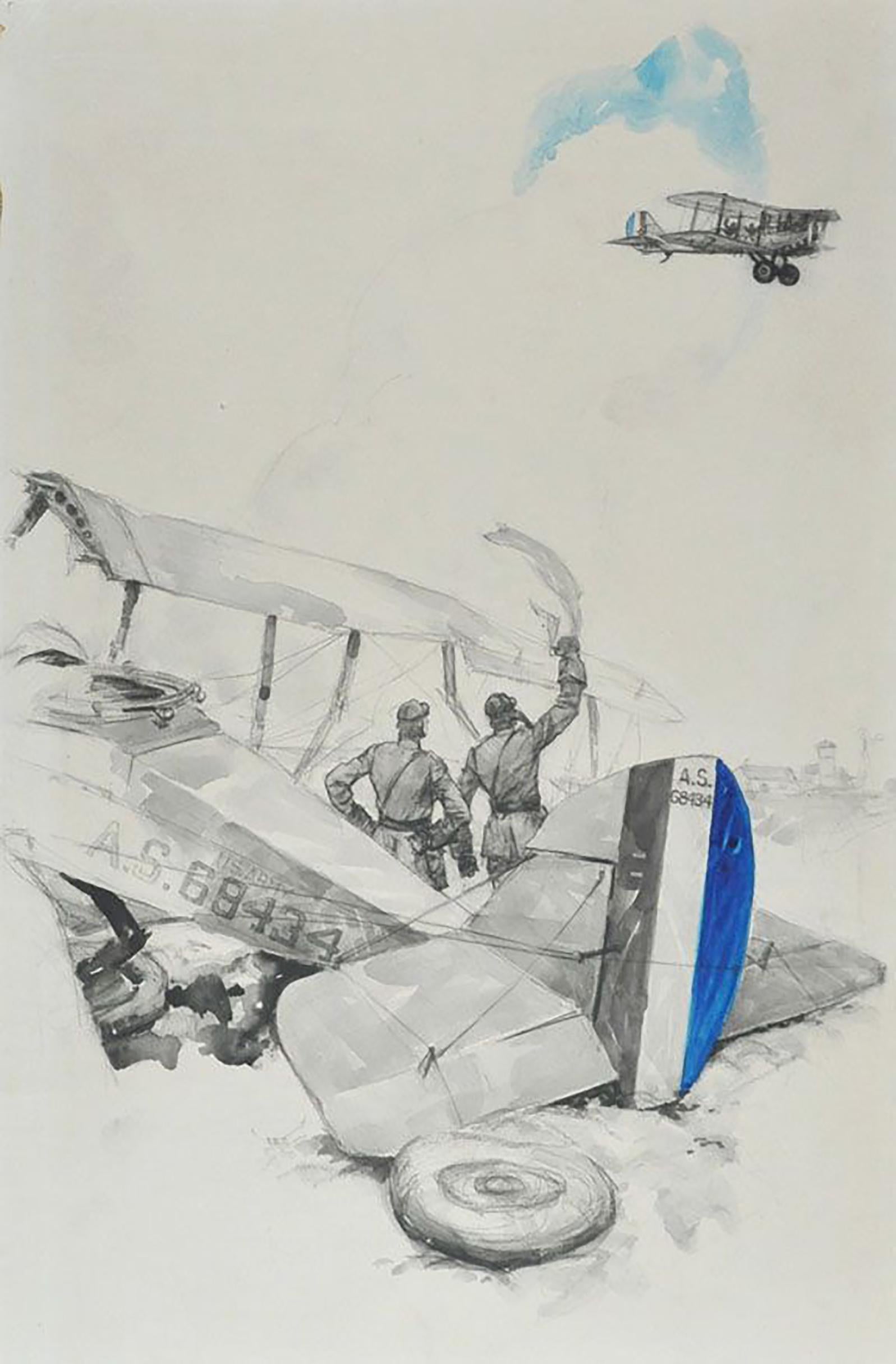
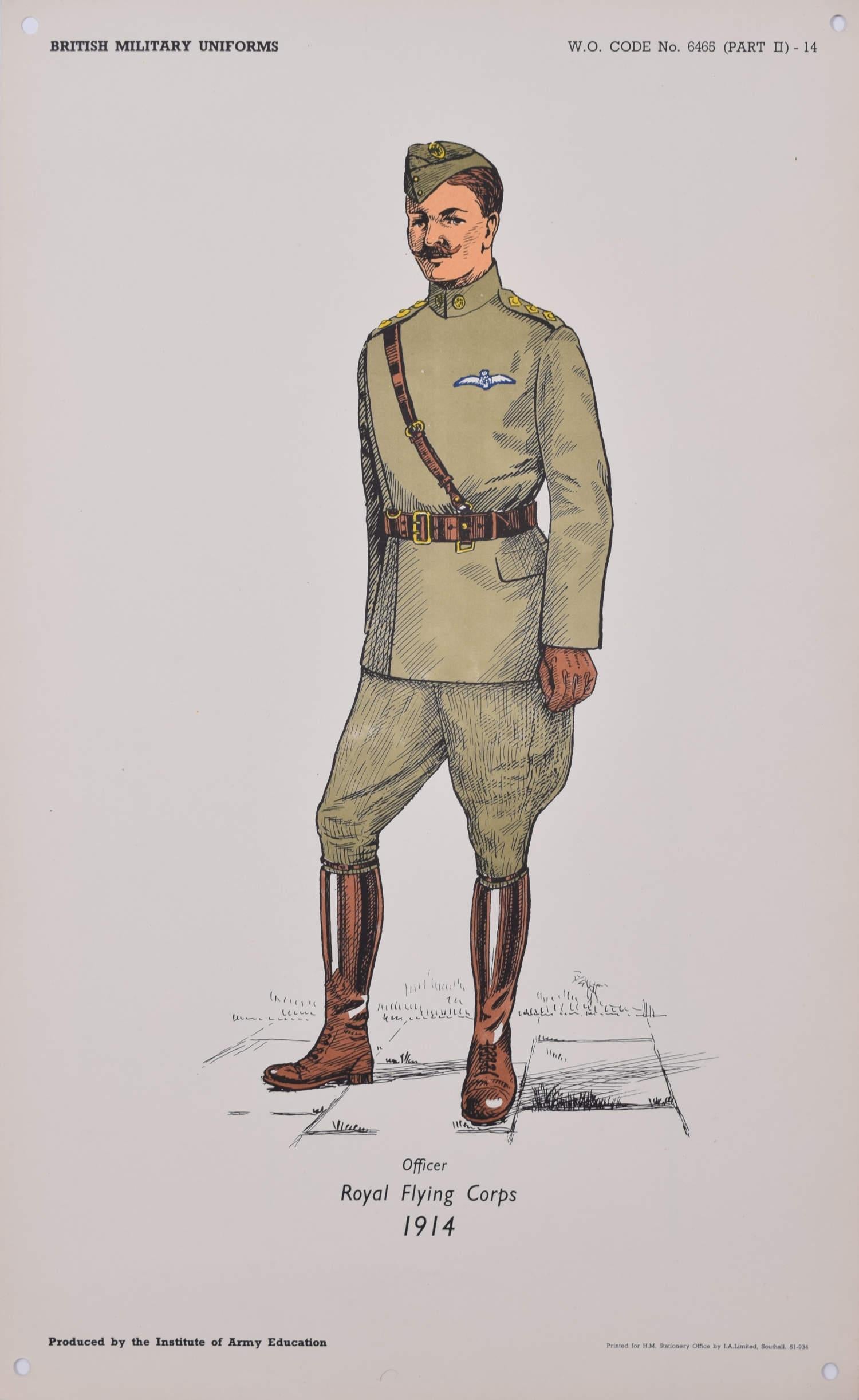
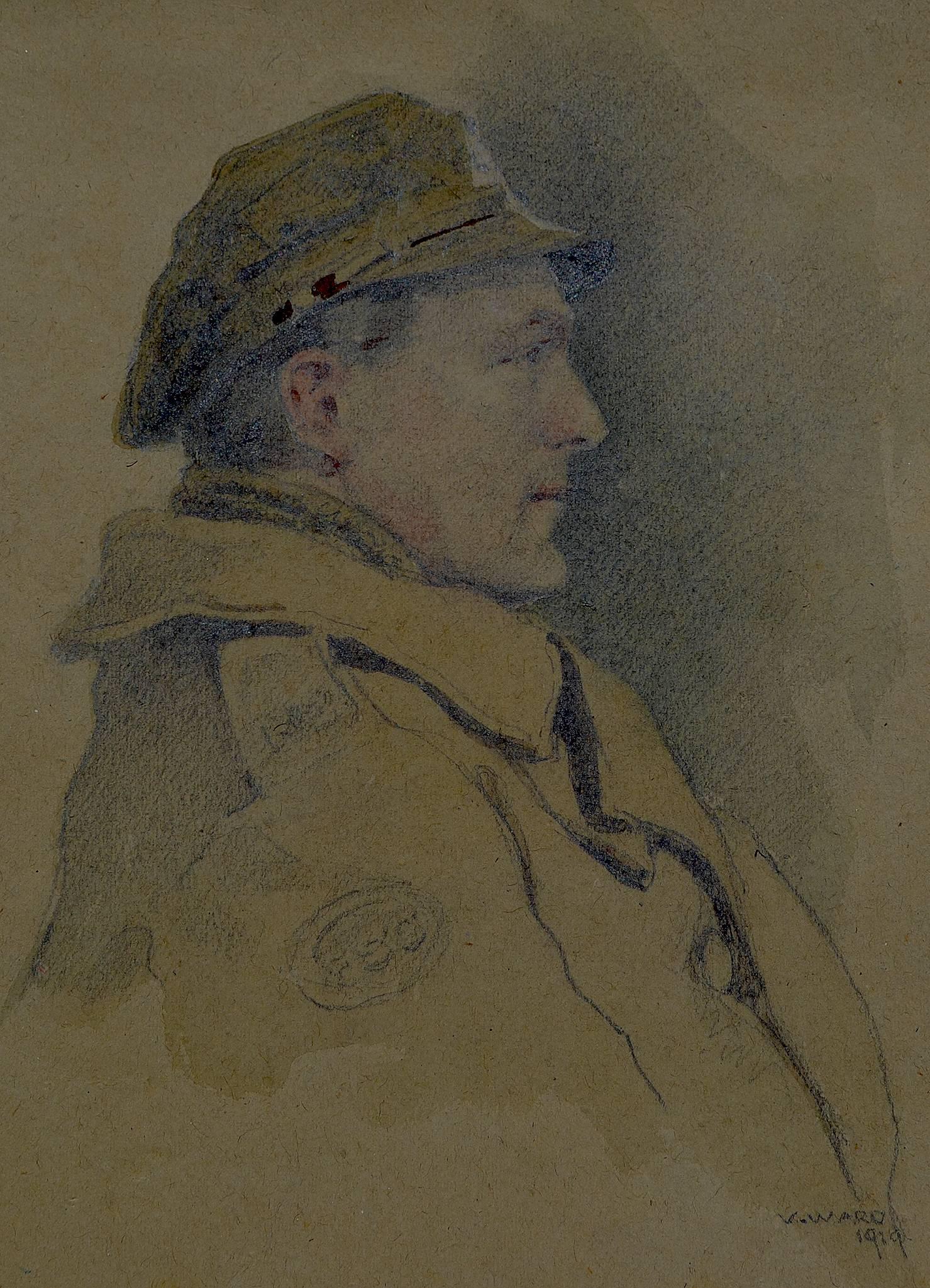
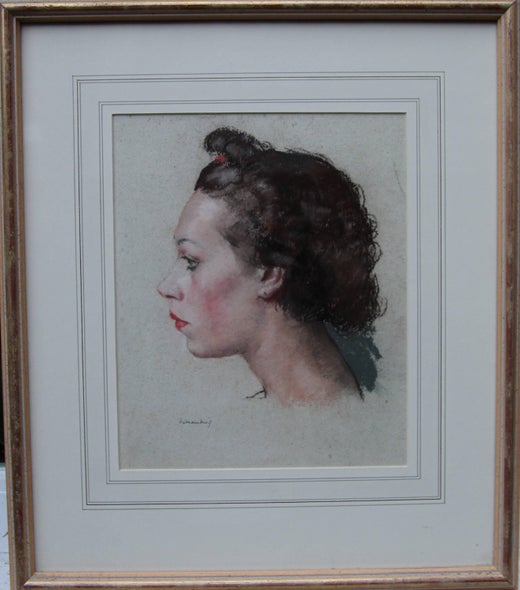
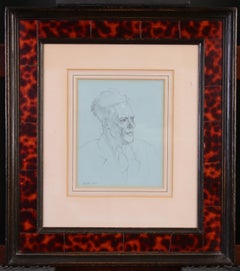
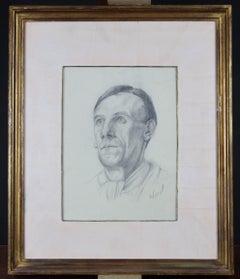
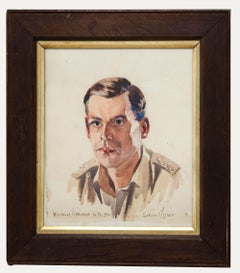
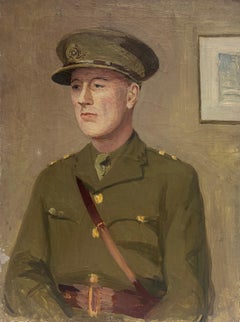
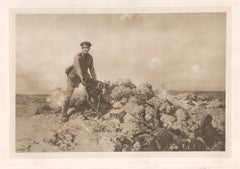
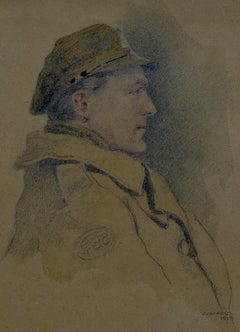
Denis William Dring R.A. 1904 - 1990, was an English artist who served in the second World War as an official War Artist recording portraits of serving soldiers. There are 3 portraits in this one lot. Dring trained at the Slade School of Art and taught at the Southampton School of art, and in the 1920's he was commissioned by Edwin Lutyens to paint murals. He travelled extensively throughout the UK painting for the War Artists Committee, painting portraits for the Admiralty. These 3 portraits were drawn between 1944 and 1945 and are Royal Air Force pilots almost certainly Mediterranean serving officers. The 3 portraits are offered here as one lot and it will be noticed they are unsigned as this was standard procedure for artists working under contract for the War Artists Commission. The artists were not allowed to display any identification of the sitter or the location, however it may be noticed that one of the sitters is a Wing Commander, one of the 3 portraits has been exhibited at the Royal Academy Exhibition in 1957 .
I have included a further scholarly biography of the artist for your information.
Dennis William Dring (born 26 January 1904, Streatham, London – 29 September 1990, Compton, Hampshire) was a British portrait painter and draughtsman whose work exemplifies the continuity of British academic realism through the mid-20th century. Known professionally as William Dring, he became one of the most respected official war artists of the Second World War and later a leading portraitist of post-war Britain.
Early Life and Education
Dring was born in Streatham, South London, into a family that would produce several artists, including his younger brother, James Dring. He began his formal artistic education at the Slade School of Fine Art from 1922 to 1925, studying under Henry Tonks, the influential teacher and former surgeon whose rigorous training emphasized draughtsmanship, anatomy, and observational acuity. At the Slade, Dring won multiple scholarships and prizes, distinguishing himself for technical precision and sensitivity of observation.
Early Career and Teaching
Following his graduation, Dring established himself as a skilled draughtsman and portrait painter. In the late 1920s and 1930s he executed a range of commissions, including murals for architectural projects, and began to exhibit his work publicly. He took up a post as a teacher of drawing and painting at the Southampton School of Art, where he taught until 1942, passing on the Slade’s disciplined methods to a new generation of students.
World War II and Official War Artist
Dring’s artistic direction was profoundly shaped by the outbreak of the Second World War. Initially undertaking individual portrait commissions for the War Artists’ Advisory Committee (WAAC), his early wartime drawings impressed the Committee, leading to his appointment on a full-time contract in 1942. His first contract focused on the Admiralty, and during this period he traveled extensively throughout Britain recording naval personnel and operations. His primary medium was pastel, which allowed him to work quickly while capturing nuanced expressions and character in often difficult conditions.
In 1943 he secured a second full contract that broadened his remit beyond naval subjects, and by 1944–45 he was working under full commission to the Air Ministry, producing portraits of airmen and other service personnel. His war work is notable for its immediacy, psychological insight, and technical prowess. A large body of these works—especially pastel portraits—is held today by major national repositories, including some 60–plus pastels and several oil paintings at the Imperial War Museum, and further works at the National Maritime Museum.
Post-War Career and Mature Work
Following the war, Dring’s career as a portraitist flourished. He produced portraits of notable public figures—including academics, civic leaders, and members of the British Royal Family—and documented civic ceremonies such as the presentation of the Freedom of the City of London to Princess Elizabeth in 1947. His commissions extended to institutional portraits, including a series for Lincoln’s Inn featuring eminent legal and political figures such as Margaret Thatcher and Lord Hailsham.
Dring was a frequent exhibitor at the Royal Watercolour Society and the Royal Academy of Arts. He was elected Associate Member of the RA in 1944 and elevated to full Academician in 1955, reflecting his stature within the British art establishment. His work also encompasses landscapes and domestic subjects, showing a range that extends beyond formal portraiture into more personal and lyrical modes of representation.
Artistic Style and Legacy
Dring’s artistic style is rooted in the British academic tradition: technically rigorous, figuratively grounded, and committed to a naturalistic representation of the human subject. His draughtsmanship—refined under Henry Tonks—remains a hallmark of his work, and his mastery of pastel and watercolour allowed both psychological depth and formal clarity. While Dring worked during an era increasingly dominated by modernism and abstraction, his sustained dedication to figurative realism positioned him as a principal chronicler of British identity in the mid-20th century. His war portraits, in particular, offer invaluable insight into the lived experience of military service and the social fabric of wartime Britain.
Personal Life
Dring married Grace Elizabeth Rothwell, a painter whom he met at the Slade; their long partnership underscores the interconnected world of British art education and practice in the interwar period. They lived at Compton near Winchester. Their daughter, Melissa Dring, also became an artist and developed a career in forensic facial reconstruction.