Want more images or videos?
Request additional images or videos from the seller
1 of 7

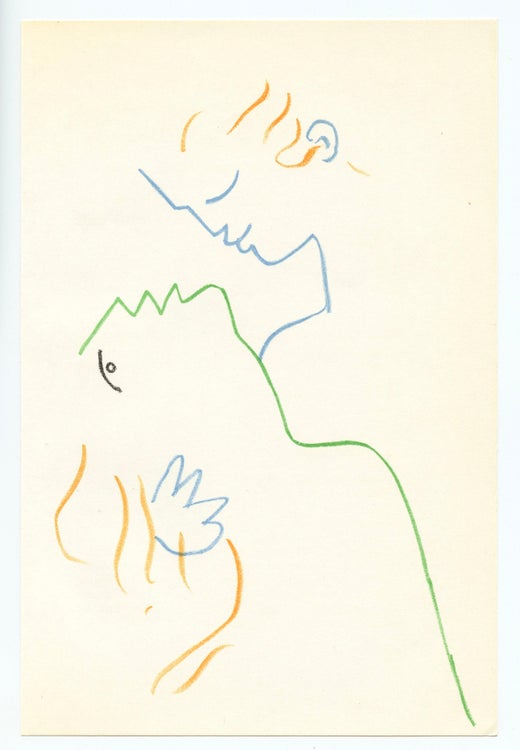
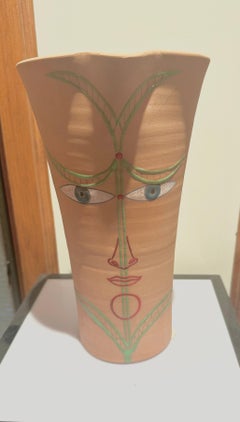
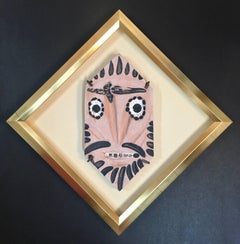
Jean Cocteau
Jean Cocteau, "Visage, " ceramic jug, hand signed

1958

Price:$11,412.93
$19,500List Price

You May Also Like

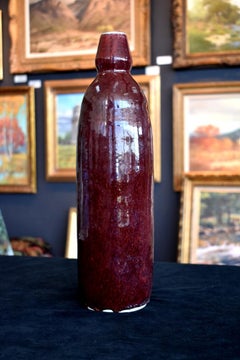
"Huge Oxblood Vase" Beautiful from Texas Master Glazer Harding Black
By Harding Black
Located in San Antonio, TX
Harding Black San Antonio (1912 - 2004) Huge Heavy Oxblood Vase 1984 Height 17'' At widest 5'' Biography Harding Black San Antonio (1912 - 2004) Harding Black was born on a farm in Nueces County between Ingleside and Aransas Pass and moved with his family to San Antonio in 1916. There he graduated from Brackenridge High School and attended San Antonio Junior College (1929-30). In 1931 Black joined an archaeological expedition to the Big Bend area sponsored by the Witte Memorial Museum. Initially a painter, he was taught by Rudolph Staffel in 1933 to make wheel- thrown pottery and in the same year began to teach children's ceramic classes at the Witte. Between 1937 and 1939, Black directed ceramic installation in a San Antonio reconstruction project sponsored by the National Youth Administration and the Works Progress Administration art program. In 1955 he retired from teaching and devoted his time to ceramics. Black became a well-known ceramist from his research, innovations, and writings in the field. Exhibitions: San Antonio Local Artists Annual Exhibition (1939-42, 1945, 1947); Texas General Exhibition (1940 award, 1942, 1948 honorable mention); National Ceramic Annual Exhibition, Syracuse Museum of Art (1947-54); River Art Group, San Antonio (1948-49); National Collection of Fine Arts, Washington D.C. (1951, 1956); Dallas Museum of Fine Arts (1952 one-man); Martin Museum of Art, Baylor University (1991 one-man); San Antonio Museum of Art (1995 retrospective); National Museum of Art, Washington, D.C. (1995); University of Texas at Dallas, Irving (1998 retrospective). Collections: Dallas Museum of Art; Museum of Fine Arts, Houston; San Angelo Museum of Fine Arts; San Antonio Museum of Art; Martin Museum of Art, Baylor University, Waco; National Museum of American Art, Washington D.C.; New Orleans Museum of Art; Everson Museum of Art, Syracuse, new York; Alfred University (New York). Harding Black resided in San Antonio Texas where he worked as a potter for over 60 years and far as anyone knows he was completely self taught. I find it amazing that anyone could ever accomplish what he did with with no formal training in either ceramics or chemistry. It was a long and prolific journey from the early hand built earthenware pottery to become recognized as a master of glazes. While I feel that his forms often could be better this is more than compensated for by the spectacular glazes he developed. Constant experimentation and his acquired knowledge of chemistry were the foundations for the wonderful glazes that adorn his pottery. The following quote is from an interview with Rudolf Staffel His copper reds are unbelievably beautiful. Harding was a master of glazes and one of the most generous human beings in the ceramic field that I've known. He had literally a room full of beautifully organized test tiles of all his glazes, and he would just throw the room open to anybody who wanted to rummage through his tiles. All the recipes were there and he shared them with anyone who was interested. It was wonderful to go and visit him. Although accurate records of all test firings were kept for reference it I have been told that it would be difficult to reproduce many of these glazes because of the kiln he built and clays he used. This may not be the case because in a recent phone conversation (4/11/2007) with Peter Pinnell he told me that some of his students had success replicating some glazes using Harding's formulas By concentrating on the bowl and vessel forms Harding remained true to the historical traditions of pottery making. The magnificent Harding Black journey began in 1932. At that time he joined the Witte Museum Archaeological Society which provided him with access to their collections of Native American pottery. Harding became fascinated by these pollychromed vessels and he began attempting to create hand built pots. He had very little or no success but a life long of working in clay had begun. It was about this time that he met up with Rudolf Staffel and it was from him that Harding learned wheel throwing and developed ideas of how to operate a studio. Harding was given access to working space at the Witte where he built a wheel and in 1933 he was given a position as ceramic instructor. In this position it was his responsibility to establish a ceramics department. The first kiln Harding built was using plans that were obtained from Newcomb College. He scrounged parts from a junkyard which were used in its construction. This project was not totally successful because of problems reaching required temperatures. As usual this did not deter Harding. He seemed to have a wonderful ability to learn from failure and move on. In the early 1940's Harding began working with formulas for copper red glazes prepared by Arthur Baggs and Edgar Littlefield. This work only added to his interest in Oriental pottery and fostered a desire to rework many old glazes. Being greatly influenced by A Potters Book published in 1940 by Bernard Leach Harding was now on his way seeking to incorporate form, function and surface treatment into a single entity where the whole is greater than the sum of the parts. In the 1950's Harding left the Witte and built his own studio where he spent the rest of his life creating his wonderful art. The body of his work is a living tribute to the Harding Black lifelong love of ceramics. Along with being a researcher he was also a teacher always willing to share his knowledge with others. He spent his life producing pots and occasionally taking time off to do a bit if fishing. According to Harding Black - Harding Black 11/14/90 "I am one of the lucky ones. When I get up in the morning I can hardly wait to get to work." 1912 Born April 15 near Aransas Pass, Texas 1916 Family moved to San Antonio 1929 Graduated from Breckenridge High School 1929-30 Attended San Antonio Junior College 1931 Joined Archaeological Society of the Witte Museum, San Antonio, and participated in excavations of ancient Basket maker Indian mounds and caves in the Big Bend area of Texas 1933 Taught by Rudolf Staffel to make wheel-thrown pottery. Set tip studio in a streetcar behind Witte Museum and began teaching children’s ceramic classes 1937-39 Appointed Superintendent of Ceramic Installation for N Y A /W P A reconstruction project in San Antonio 1943 Moved from streetcar studio to new facilities in the reconstructed Ruiz House on the grounds of the Witte Museum Began firing to stoneware temperatures 1947-54 Exhibited each year in the annual National Ceramic Exhibition, Syracuse Museum of Art 1951 Exhibited at the National Museum of Art, Washington, DC 1952 Toured ceramic centers throughout the United States 1953 “Opening the Door to Copper-Reds” by Harding Black, published in January issue of Ceramics Monthly “Harding Black Profile” published in February issue of Ceramics Monthly 1954 “Iron Spotted Glazes” by Harding Black, published in February issue of Ceramics Monthly 1955 Built present studio at 8212 Broadway, San Antonio Retired from teaching at the Witte Museum 1956 Exhibited at the National Museum of Art, Washington, DC 1961 “Lava Glazes” by Harding Black, published in October issue of Ceramics Monthly 1964 “Harding Black Texas Potter” by Jean R Lange, published in November issue of Ceramics Monthly 1971 The Meyer Family Master Potters of Texas, co-authored by Harding Black and Georgeanna H Greet 1980 Harding Black’s biographical information entered into the archives of the Smithsonian Institution, Washington, D C 1983 Harding Black traveled throughout China 1984 Awarded Glaze Research Grant by Southwest Craft Center, San Antonio 1985 Solo exhibition at the Southwest Crafts Center 1987 Selected as Artist of the Year by the San Antonio Art League 1988 Incarnate Word College, San Antonio, establishes Harding Black Fund to aid ceramics students 1990 “Harding Black Pottery...
Category

1980s Modern More Art

Materials

Ceramic

La Galère, 1950 - ceramic, 46x132x5
By Les Argonautes
Located in Nice, FR
Very Big Ceramic from "Les Argonautes" Vallauris Workshop "Les Argonautes", Vallauris: Isabelle Ferlay (1917-?) And Frédérique Bourguet (1925-1997) Isabelle Ferlay and Frédérique Bourguet founded their ceramic workshop in Vallauris in 1953, which they named "Les Argonautes", in reference to the famous Greek epic. Isabelle studied painting at the Fine Arts school of Lyon in 1940, then she attended the Fine Arts in Marseille. Finally, she finished her artistic training in Montpellier, at the Fontcarade national school, where she learned ceramics. Françoise dit Frédérique Bourguet studied at the Beaux-Arts in Montpellier until 1945 and it was in Sèvres, in Françoise Bizette's studio, that she trained in the art of ceramics. She created her first workshop in Paris in 1945, which she shared with Valentine Schlegel until 1951. The two women ceramicists then practiced modeling technique. It was in 1953 that she met Isabelle Ferlay and together, they decided to set up a workshop in Vallauris. They produce shaped pieces, sometimes molded, made of earthenware, enamelled in bright colors. In the 1970s they made stoneware cooked over a wood fire. Some ceramists frequented their workshop, notably the very talented Jacques Innocenti and François Raty.
Category

Mid-20th Century Modern More Art

Materials

Ceramic

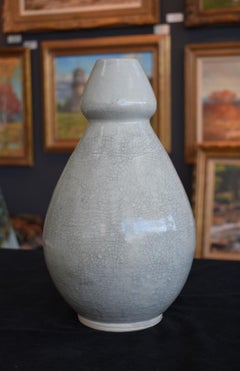
EXTRA BEAUTIFUL CRACKLE VASE BY MASTER TEXAS GLAZER HARDING BLACK POTTERY
By Harding Black
Located in San Antonio, TX
Harding Black San Antonio (1912 - 2004) Huge Heavy Crackle Vase 1985 Height 14'' Across Widest 8" Biography Harding Black San Antonio (1912 - 2004) Harding Black was born on a farm in Nueces County between Ingleside and Aransas Pass and moved with his family to San Antonio in 1916. There he graduated from Brackenridge High School and attended San Antonio Junior College (1929-30). In 1931 Black joined an archaeological expedition to the Big Bend area sponsored by the Witte Memorial Museum. Initially a painter, he was taught by Rudolph Staffel in 1933 to make wheel- thrown pottery and in the same year began to teach children's ceramic classes at the Witte. Between 1937 and 1939, Black directed ceramic installation in a San Antonio reconstruction project sponsored by the National Youth Administration and the Works Progress Administration art program. In 1955 he retired from teaching and devoted his time to ceramics. Black became a well-known ceramist from his research, innovations, and writings in the field. Exhibitions: San Antonio Local Artists Annual Exhibition (1939-42, 1945, 1947); Texas General Exhibition (1940 award, 1942, 1948 honorable mention); National Ceramic Annual Exhibition, Syracuse Museum of Art (1947-54); River Art Group, San Antonio (1948-49); National Collection of Fine Arts, Washington D.C. (1951, 1956); Dallas Museum of Fine Arts (1952 one-man); Martin Museum of Art, Baylor University (1991 one-man); San Antonio Museum of Art (1995 retrospective); National Museum of Art, Washington, D.C. (1995); University of Texas at Dallas, Irving (1998 retrospective). Collections: Dallas Museum of Art; Museum of Fine Arts, Houston; San Angelo Museum of Fine Arts; San Antonio Museum of Art; Martin Museum of Art, Baylor University, Waco; National Museum of American Art, Washington D.C.; New Orleans Museum of Art; Everson Museum of Art, Syracuse, new York; Alfred University (New York). Harding Black resided in San Antonio Texas where he worked as a potter for over 60 years and far as anyone knows he was completely self taught. I find it amazing that anyone could ever accomplish what he did with with no formal training in either ceramics or chemistry. It was a long and prolific journey from the early hand built earthenware pottery to become recognized as a master of glazes. While I feel that his forms often could be better this is more than compensated for by the spectacular glazes he developed. Constant experimentation and his acquired knowledge of chemistry were the foundations for the wonderful glazes that adorn his pottery. The following quote is from an interview with Rudolf Staffel His copper reds are unbelievably beautiful. Harding was a master of glazes and one of the most generous human beings in the ceramic field that I've known. He had literally a room full of beautifully organized test tiles of all his glazes, and he would just throw the room open to anybody who wanted to rummage through his tiles. All the recipes were there and he shared them with anyone who was interested. It was wonderful to go and visit him. Although accurate records of all test firings were kept for reference it I have been told that it would be difficult to reproduce many of these glazes because of the kiln he built and clays he used. This may not be the case because in a recent phone conversation (4/11/2007) with Peter Pinnell he told me that some of his students had success replicating some glazes using Harding's formulas By concentrating on the bowl and vessel forms Harding remained true to the historical traditions of pottery making. The magnificent Harding Black journey began in 1932. At that time he joined the Witte Museum Archaeological Society which provided him with access to their collections of Native American pottery. Harding became fascinated by these pollychromed vessels and he began attempting to create hand built pots. He had very little or no success but a life long of working in clay had begun. It was about this time that he met up with Rudolf Staffel and it was from him that Harding learned wheel throwing and developed ideas of how to operate a studio. Harding was given access to working space at the Witte where he built a wheel and in 1933 he was given a position as ceramic instructor. In this position it was his responsibility to establish a ceramics department. The first kiln Harding built was using plans that were obtained from Newcomb College. He scrounged parts from a junkyard which were used in its construction. This project was not totally successful because of problems reaching required temperatures. As usual this did not deter Harding. He seemed to have a wonderful ability to learn from failure and move on. In the early 1940's Harding began working with formulas for copper red glazes prepared by Arthur Baggs and Edgar Littlefield. This work only added to his interest in Oriental pottery and fostered a desire to rework many old glazes. Being greatly influenced by A Potters Book published in 1940 by Bernard Leach Harding was now on his way seeking to incorporate form, function and surface treatment into a single entity where the whole is greater than the sum of the parts. In the 1950's Harding left the Witte and built his own studio where he spent the rest of his life creating his wonderful art. The body of his work is a living tribute to the Harding Black lifelong love of ceramics. Along with being a researcher he was also a teacher always willing to share his knowledge with others. He spent his life producing pots and occasionally taking time off to do a bit if fishing. According to Harding Black - Harding Black 11/14/90 "I am one of the lucky ones. When I get up in the morning I can hardly wait to get to work." 1912 Born April 15 near Aransas Pass, Texas 1916 Family moved to San Antonio 1929 Graduated from Breckenridge High School 1929-30 Attended San Antonio Junior College 1931 Joined Archaeological Society of the Witte Museum, San Antonio, and participated in excavations of ancient Basket maker Indian mounds and caves in the Big Bend area of Texas 1933 Taught by Rudolf Staffel to make wheel-thrown pottery. Set tip studio in a streetcar behind Witte Museum and began teaching children’s ceramic classes 1937-39 Appointed Superintendent of Ceramic Installation for N Y A /W P A reconstruction project in San Antonio 1943 Moved from streetcar studio to new facilities in the reconstructed Ruiz House on the grounds of the Witte Museum Began firing to stoneware temperatures 1947-54 Exhibited each year in the annual National Ceramic Exhibition, Syracuse Museum of Art 1951 Exhibited at the National Museum of Art, Washington, DC 1952 Toured ceramic centers throughout the United States 1953 “Opening the Door to Copper-Reds” by Harding Black, published in January issue of Ceramics Monthly “Harding Black Profile” published in February issue of Ceramics Monthly 1954 “Iron Spotted Glazes” by Harding Black, published in February issue of Ceramics Monthly 1955 Built present studio at 8212 Broadway, San Antonio Retired from teaching at the Witte Museum 1956 Exhibited at the National Museum of Art, Washington, DC 1961 “Lava Glazes” by Harding Black, published in October issue of Ceramics Monthly 1964 “Harding Black Texas Potter” by Jean R Lange, published in November issue of Ceramics Monthly 1971 The Meyer Family Master Potters of Texas, co-authored by Harding Black and Georgeanna H Greet 1980 Harding Black’s biographical information entered into the archives of the Smithsonian Institution, Washington, D C 1983 Harding Black traveled throughout China 1984 Awarded Glaze Research Grant by Southwest Craft Center, San Antonio 1985 Solo exhibition at the Southwest Crafts Center 1987 Selected as Artist of the Year by the San Antonio Art League 1988 Incarnate Word College, San Antonio, establishes Harding Black Fund to aid ceramics students 1990 “Harding Black Pottery...
Category

1980s Modern More Art

Materials

Ceramic

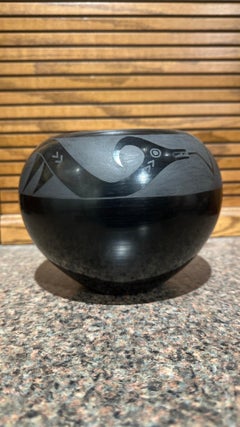
Juan Tafoya San Ildefonso Native American Pottery
By Juan Tafoya
Located in Missouri, MO
Impeccable Provenance! See attached pictures of Juan Tafoya holding this particular piece, as well as his business card and his original letter all include...
Category

1980s American Modern More Art

Materials

Clay

Alan Wallwork Vessel Vase Pottery Sculpture TOTEM White Brown Terracotta
Located in Eversholt, Bedfordshire
Alan Wallwork (1931-2019): Organic landscape sculptural vessel, 1960-1965 -Exhibiting the articulated, inventive, organic qualities & tactility of Wallwork’s early oeuvre for which he is best known - This sculptural landscape vessel has been handmade by coiling, slabbing and shaping the clay. The totemic form and pitted and pierced surfaces draw on the abstract landscape and tactility of elements in nature. matte glazes and oxides have been skillfully used to enhance the rich textures of the surfaces and the organic aesthetic. - Wallwork is one of the great individualists in British pottery, developing an archetypal language that echoed some of the wider artistic obsessions of that period, what the art critic Herbert Read called the “postwar ferment” of sculptural activity. - This piece was made during 1960-1965, the time that Wallwork was sharing a studio in Greenwich with Bernard Rooke and comes from a private collection along with a waterscape vase by Rooke and a bottle by Robert Fournier...
Category

1960s Modern More Art

Materials

Ceramic

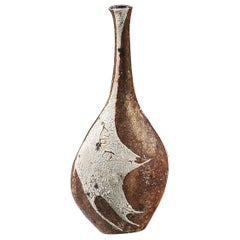
Robert Fournier Bottle Stoneware 1960-1965 White Brown Crusty Textured Glaze
Located in Eversholt, Bedfordshire
Robert Fournier (1915-2008), stoneware, tall flattened, bottle, circa 1960-1965 - This bottle is from the same series as No.2008.658.18 in the Metrop...
Category

1960s Modern More Art

Materials

Ceramic

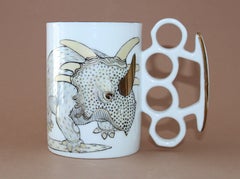
Mug with dinosaurs. porcelain h 11, 5 cm; d 8, 5 cm
Located in Riga, LV
Mug with dinosaurs. porcelain h 11,5 cm; d 8,5 cm
Category

Early 2000s Modern More Art

Materials

Porcelain

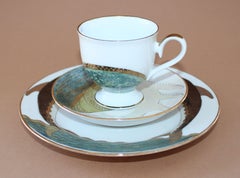
Coffee trio by Antonina Paskevica, cup height 7, 5 cm; diameter 8 cm
Located in Riga, LV
Coffee trio by Antonina Paskevica, cup height 7,5 cm; diameter 8 cm
Category

Early 2000s Modern More Art

Materials

Porcelain

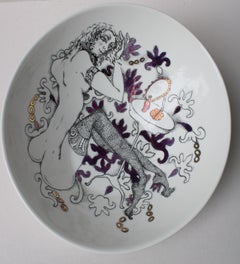
Morning 2008, painted porcelain bowl, 30х27.5х12 cm
Located in Riga, LV
Morning 2008, painted porcelain bowl, 30х27.5х12 cm ''Morning'' is a visually striking piece of art, combining intricate hand-painted details, a nude female figure, and the bloomin...
Category

Early 2000s Modern More Art

Materials

Porcelain

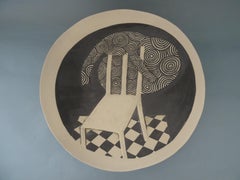
Plate from stone mass Chair with dress d 36 cm
Located in Riga, LV
Plate from stone mass Chair with dress d 36 cm The black and white drawing on the plate showcases a stylized representation of everyday objects. The artist's use of black and white ...
Category

21st Century and Contemporary Modern More Art

Materials

Stoneware

More From This Seller

View All
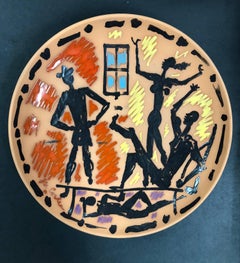
Scene d Interieur from Le Satiricon
By Jean Cocteau
Located in Chatsworth, CA
This piece is original ceramic plate by Jean Cocteau, created in 1961. This piece was embellished with black, red, green, blue, and yellow enamels. In 1957, Cocteau met Marie Madeline Jolly and Philippe Madeline and created over 300 ceramics in their workshop at Villefranche-sur-Mer. At this workshop, he began experimenting with new concepts in pottery design. All these ceramic objects, he said, should look as if they were discovered in an archaeological dig. This piece is from a series of 8 ceramic plates that illustrate the ancient Latin...
Category

1960s Modern More Art

Materials

Ceramic

Jean Cocteau, "L Homme Fleur, " ceramic pitcher, signed
By Jean Cocteau
Located in Chatsworth, CA
Jean Cocteau "L'Homme Fleur" 7/50 from an edition of 50 Ceramic pitcher, conceived in 1958 Hand signed and inscribed on the base, " Edition originale de Jean Cocteau, Atelier Madelin...
Category

1950s Modern More Art

Materials

Ceramic

Pablo Picasso, "Lozenge with Mask", ceramic, clay
By Pablo Picasso
Located in Chatsworth, CA
This hexagonal tile, created by Pablo Picasso in 1956, is made of chamotted red earthenware clay and has decoration in engobes in black and white. It is from the edition of 350, num...
Category

1950s Modern Figurative Sculptures

Materials

Ceramic, Clay

Pablo Picasso, "Man s Head with Long Hair", ceramic
By Pablo Picasso
Located in Chatsworth, CA
This piece is an O.P. square plaque by Pablo Picasso, done from December 1968 to January 1969. It is made with red earthenware clay, engobe ground and engraving enhanced with oxides...
Category

1960s Modern Sculptures

Materials

Ceramic

Pablo Picasso, Unique variant of "Tête peinte" (Painted Face), pitcher, ceramic
By Pablo Picasso
Located in Chatsworth, CA
This piece is an A.R. turned pitcher created by Pablo Picasso in 1953. It is made with white earthenware clay, decoration in engobes and oxides under partial brushed glaze with white...
Category

1950s Modern Figurative Sculptures

Materials

Ceramic, Clay

Pablo Picasso, "Tauromachy Scene", ceramic plate
By Pablo Picasso
Located in Chatsworth, CA
This piece is an A.R. turned round plate by Pablo Picasso made in 1957. It is made with red earthenware clay, engobe decoration, and knife engraved in black. It is numbered 279/ 500 ...
Category

1950s Modern Sculptures

Materials

Ceramic

Still Thinking About These?

All Recently Viewed