18th Century and Earlier More Art
to
18
76
14
18
15
14
Overall Width
to
Overall Height
to
137
565
4,606
9,876
87
69
269
289
133
331
405
404
477
1,215
71
17
7
2
76
35
4
7
4
3
3
2
2
2
1
1
1
1
1
1
1
1
33
25
21
21
16
3
2
2
2
1
6
1
90
46
Period: 18th Century and Earlier
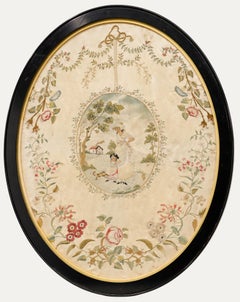
Georgian Embroidery - Family Walk
Located in Corsham, GB
A charming Georgian silk embroidery panel depicting a mother and child walking through the countryside, accompanied by their faithful dog. Exe...
Category
18th Century and Earlier More Art
Materials
Tapestry
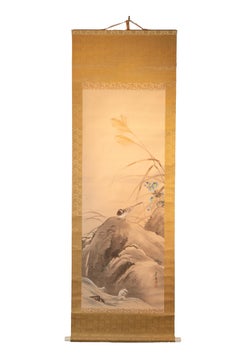
Bird on Rock with Blue Flowers
, By Unknown, Chinese Antique Scroll
Located in Oklahoma City, OK
This 59" x 20" Chinese Antique Scroll depicts a simple yet serene scene of a bird on a rock. The bird stands on the rock, which is much larger in size in comparison to the bird. The ...
Category
Qing 18th Century and Earlier More Art
Materials
Silk, Paper, Watercolor

$140 Sale Price
20% Off
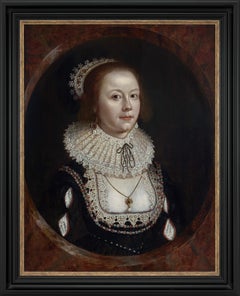
Portrait of lady, Mary Hammond in Rich Attire, Jewels, Lace c.1618-22 Historical
By Cornelius Johnson
Located in London, GB
Portrait of Mary Hammond in Sumptuous Attire, Jewels and Lace c.1618-22
Circle of Cornelius Johnson (1593-1661)
This portrait of a lady, presented by Titan Fine Art, is an exquisite example of early seventeenth-century portraiture, remarkable both for the lavishness of its subject’s attire and for the distinguished provenance that has accompanied it across four centuries that adds a rich layer of historical significance. It was once part of the notable collection of Sir William Temple, 1st Baronet (1628–1699) at Moor Park, a stately mansion in Hertfordshire. Temple was a diplomat, essayist, philosopher, and the patron of Jonathan Swift. He was a key participate at an important period in English history, helping not only to negotiate the Triple Alliance, but also the marriage between William of Orange and Princess Mary. His collection at Moor Park was well known in its day, reflecting both his cultivated taste in art and literature and his international connections.
Its fabulous attire, rendered with almost microscopic attention, is not merely decorative but emblematic of a world in which visual display was a language of power. Its provenance, stretching from the English country house and Enlightenment scholarship to modernist circles, forms a microcosm of cultural exchange across four centuries. Thus, the portrait of Mary Hammond stands as both a masterpiece of early seventeenth-century craftsmanship and a witness to the grand narrative of collecting and connoisseurship—a testament to the enduring fascination of beauty, status, and history intertwined.
By tradition the portrait depicts Mary Hammond (born c.1602), who was Sir William Temple’s mother, and the daughter of the royal physician who served James I, Dr John Hammond (c.1555–1617) and whose family owned Chertsey Abbey in Surrey. The woman appears between 18 and 25 years old, and Mary would be about 18–20 when the portrait was painted circa 1620, therefore this matches the apparent age of the sitter and the fashion perfectly.
Mary stood at the intersection of learned/courtly and gentry worlds. On 22 June 1627 she married her first cousin (a common practice for consolidating family wealth and influence during that era.) Sir John Temple (1600-1677) at St Michael, Cornhill in the City of London. The couple resided nearby, at Blackfriars. Her marriage to Sir Temple placed her at the heart of the social and political circles that shaped British history.
The couple had at least five children, and they became highly significant historical figures:
The eldest son, Sir William Temple, 1st Baronet, became a distinguished diplomat, statesman, and essayist, famous for his role in the Triple Alliance and as a patron and mentor to the writer Jonathan Swift – our portrait was in his collection. Their daughter, Martha Temple, later Lady Giffard, was a notable figure in her own right. She became her brother William's first biographer and a respected letter-writer, providing a rare female perspective on the events and high society of the time. Another son, also named Sir John Temple, became Attorney General for Ireland and was involved in the turbulent politics surrounding the English Civil War and the Act of Settlement in Ireland.
Mary died in November 1638 after giving birth to twins and was buried at Penshurst, Kent. The family's connection to Penshurst Place is a major point of interest as this historic manor was the seat of the Sidney family, a major aristocratic and literary dynasty.
The portrait was in the collection of the Mary’s son, Sir William Temple. From there it descended to his daughter, and then to her nephew, the Reverend Nicholas Bacon of Spixworth Park, Norfolk (his mother was Dorothy Temple who died in 1758). Indeed, by this time, many Temple relics were in the collection at Spixworth including the engagement ring of the illustrious Dorothy Osborne, Lady Temple, wife of Sir William Temple. The portrait thus linked two prominent English families—the Temples and the Bacons—for generations. It is listed in a Spixworth Park inventory of 27 October 1910 by the local collector and art historian, Prince Duleep Singh. He described it with characteristic precision as: “No. 69. Lady Half Length, body and face turned towards the sinister, hazel eyes upwards to the dexter, red hair dressed low and over the ears, a jewelled coronet behind, pearl ear-rings tied with black strings. Dress: black, bodice cut low and square, with lace all round the opening and over shoulders, sleeves with double slashes showing red lining and lace under, falling thin pleated lace collar, black strings tied behind it, a jewel suspended on a black string round the neck, and a double row of agate and silver beads all round to the shoulders. M. In brown veined stone frame. Age 30. Date c.1620. It is called ‘Dutch portrait from Moor Park, mentioned by Nicholas Bacon of Coddenham and Shrubland as a very valuable painting.’
A few years later, when Robert Bacon Longe’s executors sold the contents of Spixworth Park (19–22 May 1912), the portrait appeared as lot 262, described as: “A very valuable half-length portrait on panel, ‘Dutch Lady, with deep lace collar and pearl and amethyst necklace, pendant, and ear-rings, and auburn hair, with coronet’ Early Dutch School 1620.” Following this sale the painting entered the collection of David and Constance Garnett, prominent literary figures of the early twentieth century, before being gifted to Andre Vladimervitch Tchernavin by 1949, and subsequently passed by him to the present owners in 1994.
The two great houses associated with the painting, Moor Park and Spixworth Park, further underscore its pedigree. Moor Park, in Hertfordshire, was among the grandest country estates of seventeenth-century England—its gardens famously redesigned by Sir William Temple himself and later influencing landscape design across Europe. Sir William's Temple's secretary was Jonathan Swift, who lived at Moor Park between 1689 and 1699. Swift began to write "A Tale of the Tub" and "The Battle of the Books" at Moor Park.
Spixworth Park, near Norwich, was an Elizabethan country house in Spixworth, Norfolk, located just north of the city of Norwich. It was home to successive generations of the Bacon family, one of Norfolk’s most distinguished dynasties (later, the Bacon Longe family), who were considerable land owners (owning Reymerston Hall, Norfolk, Hingham Hall, Norfolk, Dunston Hall, Norfolk, Abbot's Hall, Stowmarket, and Yelverton Hall, Norfolk). Spixworth Hall and the surrounding parkland remained in the Longe family for 257 years until 1952, when it was demolished.
Rendered with meticulous precision and sumptuous detail, the painting depicts an elegantly dressed woman—her poise, costume, and jewels all communicating a message of wealth, refinement, and social rank. Every brushstroke conveys an artist deeply attuned to the textures of luxury and the nuances of feminine dignity.
The sitter’s attire is nothing short of magnificent. Her bodice and sleeves are fashioned from the finest black silk or satin, the fabric absorbing and reflecting light in equal measure, suggesting both depth and lustre. Around her shoulders lies an opulent lace ruff—a deep, radiating lace collar worked in such intricate detail that it testifies to both the artist’s technical skill and the sitter’s extravagant taste. Lace of this quality, especially Venetian or Flemish bobbin lace, was one of the costliest materials available in early seventeenth-century Europe, its weight worth more than gold, and was a marker of prestige that rivalled jewels in value. The painter has taken great care to delineate every loop and scallop of the lace, achieving an almost tactile realism. Pale skin was also a desired beauty standard, sometimes accentuated with contrasting black ribbons or strings.
Her jewels amplify this display of affluence. Matching earrings and a delicate coronet or jewelled hair ornament with a feather adorn her hair, which is styled in the modest yet fashionable manner of the time. These details are far from decorative excess—they serve as visual emblems of social standing, refinement, and lineage. Portraits of this kind were statements of both identity and aspiration, intended to project a family’s prosperity and moral virtue to posterity.
The portrait was most likely painted in London around 1618-1622. The low-cut, décolletage-revealing neckline was fashionable in the courts of England and France during the late Elizabethan and Jacobean eras (c. 1590s-1610s), this style did not prevail in the public fashion of the Low Countries at this time. This style of lace ruff — delicate needle lace with geometric openwork — was fashionable from c.1615 to 1622, and the jewelled caul (hair net) and lace edging over a stiffened coif are consistent with high-status English women’s portraiture between 1610–1620. The puffed sleeve slash and the use of pink satin beneath black velvet belong squarely to the late Jacobean...
Category
Old Masters 18th Century and Earlier More Art
Materials
Oil, Panel
Nova Totius Terrarum Orbis Geographica Ac Hydrographica Tabula
Located in New York, NY
Copper-plate engraving, hand-colored, 1608 - c.1630 and published by Joannes Jansonius, Amsterdam. Image size 15.75 x 21.19 inches (40 x 53.9 cm).
A classic example of a world ma...
Category
Other Art Style 18th Century and Earlier More Art
Materials
Engraving

Portrait of Lady, Barbara Herbert, Countess of Pembroke c.1708, Large Painting
Located in London, GB
Portrait of Barbara Herbert, Countess of Pembroke c.1708
Charles d’Agar (1669-1723)
This magnificent large-scale portrait, presented by Titan Fine Art, depicts the British court of...
Category
Old Masters 18th Century and Earlier More Art
Materials
Cotton Canvas, Oil
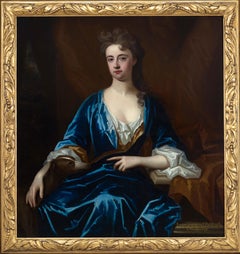
Portrait of a Lady, Mrs Wray in a Silk Dress
Pink Wrap c.1698, Oil on canvas
By Michael Dahl
Located in London, GB
Portrait of a Lady, Mrs Wray in a Silk Dress & Pink Wrap c.1698
Circle of Michael Dahl (1659-1743)
This delightful work, presented by Titan Fine Art, is a fine example of British po...
Category
Old Masters 18th Century and Earlier More Art
Materials
Cotton Canvas, Oil
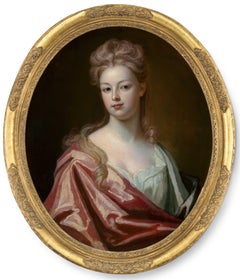
Seventeenth Century Old Master Biblical Oil Painting Joseph recounts his Dream
Located in ludlow, GB
Seventeenth Century Old Master Biblical themed Oil Painting on Panel of Joseph recounting his Dream. A Follower of Rembrandt Harmensz Van Rijn 1606 - 1669. This painting follows a ...
Category
Old Masters 18th Century and Earlier More Art
Materials
Oil
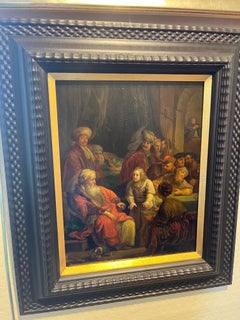
Ancient Arabic Calligraphy of Praying
Located in Roma, IT
Arabic Calligraphy of praying is a precious manuscript reporting Islamic Sacred Verses in an ancient calligraphy style.
One page, one-sided, in Ara...
Category
18th Century and Earlier More Art
Materials
Ink
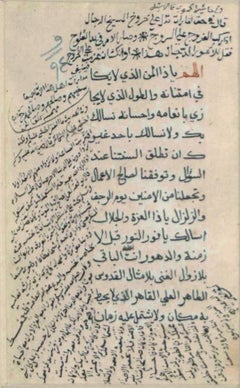
Anne Salmon - Fine 1791 Embroidery, The Cheerful Voyagers
Located in Corsham, GB
An exceptionally fine Georgian embroidery by Anne Salmon depicting 'Cheerful Voyagers' punting in the serene English countryside. Executed with rem...
Category
18th Century and Earlier More Art
Materials
Tapestry
Chimu Inca c.1500 Peruvian terra-cotta anthropomorphic face vase vessel Peru
Located in Wilton Manors, FL
Beautiful antique Peruvian face vessel. Chimu Inca, c.1500 Terracotta, measures h. 8 in., w. 4 7/8 inches. No repair or conservation.
Category
18th Century and Earlier More Art
Materials
Terracotta

$720 Sale Price
60% Off
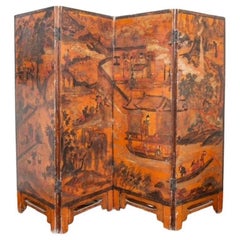
Antique Chinese Four Leaf Panel Hand-Painted Lacquer Screen
Located in Cirencester, Gloucestershire
Antique Chinese Four-Panel Lacquer Screen with Scenic Landscape
Description:
This exquisite antique Chinese four-panel lacquer screen is a remarkable example of traditional craftsma...
Category
18th Century and Earlier More Art
Materials
Wood
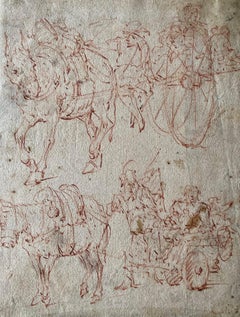
Flemish Old Master, Study of Donkey Carriage, 17th Century, Sanguine Drawing
Located in Greven, DE
This drawing shows several studies of a donkey with a carriage. Its style is close to Flemish 17th century artists. On the passepartout one reads "Mathias Scheyer/ Jacob Weyer", both...
Category
Baroque 18th Century and Earlier More Art
Materials
Chalk, Handmade Paper
$863 Sale Price
20% Off
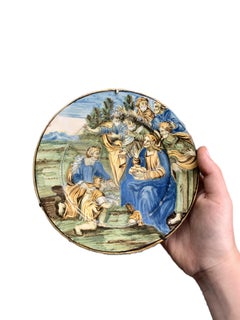
Majolica Plate by Castelli. The Miracle Of The Loaves And Fishes. 18 century
Located in Firenze, IT
Castles of Abruzzo.
Italian Maiolica, dish with the Miracle of the loaves and fishes.
Mid-18th century.
Polychrome tin-glazed majolica painted by hand.
Castles, Abruzzo, mid-18th c...
Category
Italian School 18th Century and Earlier More Art
Materials
Maiolica, Ceramic
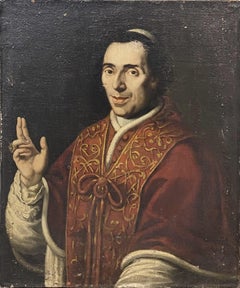
European Portrait of a Priest
Located in Milford, NH
A fine European portrait of a priest, oil on canvas, probably dating to the 17th or 18th century, unsigned, with original stretcher, minor surface losses and damage, craquelure, edge...
Category
18th Century and Earlier More Art
Materials
Canvas, Oil
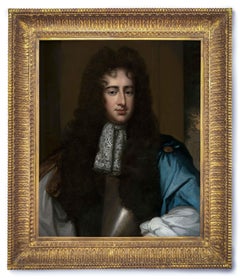
Portrait of Gentleman, Sir Henry Hobart, Blue Cloak
cravat, Wissing oil canvas
By Willem Wissing
Located in London, GB
Portrait of a Gentleman, Sir Henry Hobart Blue Cloak and cravat c.1683-1684
Attributed to Willem Wissing (1656-1687)
This impressive portrait, presented by Titan Fine Art, depicts t...
Category
Old Masters 18th Century and Earlier More Art
Materials
Cotton Canvas, Oil
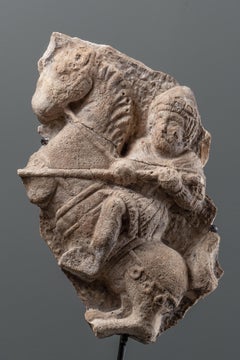
Limestone Relief With Saint Georges, France 15th Century
Located in Milan, IT
Relief with saint Georges
France, 15th Century
limestone 26 x 20 cm (10 1/4 x 7 3/4 in) without base
Category
18th Century and Earlier More Art
Materials
Limestone
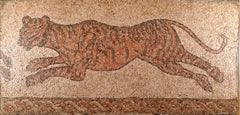
"Roman Mosaic", Tiger hunting for its prey, 4th Century AD North Africa Province
Located in Madrid, ES
ROMAN MOSAIC
Roman 4th Century AD
Roman Provinces of North Africa
A TIGER HUNTING ITS PREY
40-1/4 x 84-1/4 inches (102 x 213 x 2.5 cm.)
Within an iron metal frame
PROVENANCE
Nagel A...
Category
18th Century and Earlier More Art
Materials
Mosaic
Vintage Moth II (Hand-Painted, Gold Luster, Vintage Imagery)
Located in Kansas City, MO
Melanie Sherman
Vintage Moth II (Hand-Painted, Gold Luster, Vintage Imagery)
Porcelain, Glaze, Overglaze, Chinapaints, 24k German Gold Luster
Year: 2025
Size: 4.5 x 6 x 0.5 inches
Si...
Category
Victorian 18th Century and Earlier More Art
Materials
Luster, Porcelain, Paint, Glaze

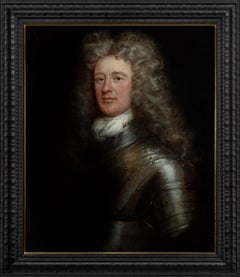
Portrait of a Gentleman, David Erskine, 13th Laird of Dun, Wearing Armour c.1700
Located in London, GB
The gentleman in this exquisite oil on canvas portrait, presented by Titan Fine Art, is shown with the grandiloquence characteristic of the English School of painting. He is portray...
Category
Old Masters 18th Century and Earlier More Art
Materials
Oil, Canvas
Gruppo di Acqueforti di Marco Alvise Pitteri, 1742
Located in Milan, IT
Gruppo di quattordici acqueforti. In basso i nomi dell' incisore e del pittore.
La serie, derivata da disegni di Giovanni Battista Piazzetta , comprendeva quindici stampe, ed era tit...
Category
Other Art Style 18th Century and Earlier More Art
Materials
Etching
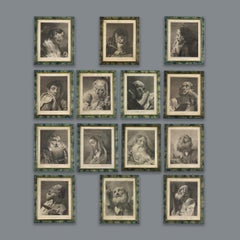
Mother of Pearl Inlaid Wooden Occasional Table
Located in New York, NY
This occasional table is a remarkable example of the luxurious furniture popular during the 17th and 18th centuries in Colonial Latin America. The decorative technique that creates s...
Category
18th Century and Earlier More Art
Materials
Wood
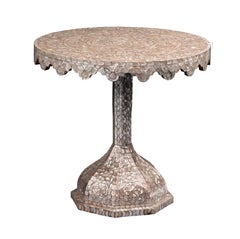
Portrait of Gentleman in blue, Portrait of Lady, oval pair Fine Carved Frames
Located in London, GB
Portrait of a Gentleman with Blue Cloak and Portrait of a Lady in Russet Dress c.1697
Thomas Murray (1663-1735)
These fascinating portraits are exquisite examples of portraiture in ...
Category
Old Masters 18th Century and Earlier More Art
Materials
Oil, Canvas

Mother Goddess Figurine, Early Indus Valley Civilization (circa 3500 - 2800 BC)
Located in Paris, Île-de-France
Mother Goddess Figurine
Early Indus Valley Civilization (circa 3500 - 2800 BC)
Handmade pottery, 140 mm x 45 mm, 60 g
Provenance:
Prince Collection, 1990s-2014;
Pierre Bergé Colle...
Category
Tribal 18th Century and Earlier More Art
Materials
Clay, Terracotta
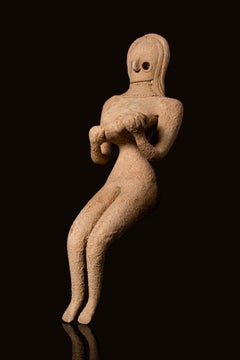
Portrait Gentleman Armour, Blue Cloak, Diamond Brooch c.1700 French Carved Frame
By Joseph Vivien
Located in London, GB
Portrait of a Gentleman in Armour and Azure Cloak with Diamond Brooch c.1700
Attributed to Joseph Vivienne (1657-1735)
The sitter in this superb portrait, offered by Titan Fine Art...
Category
Old Masters 18th Century and Earlier More Art
Materials
Oil, Cotton Canvas
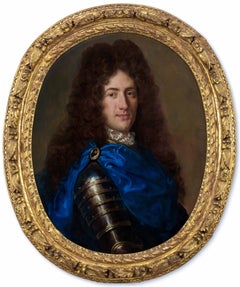
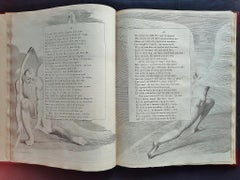
Night Thoughts - Rare Book Illustrated by Sir William Blake - 1797
Located in Roma, IT
Night Thoughts is an original Modern Rare book written by Edward Young (1683 – 1765) and engraved by Sir William Blake (London, 1757 - London, 1827) in 1797.
It includes a suite of ...
Category
Modern 18th Century and Earlier More Art
Materials
Paper, Etching
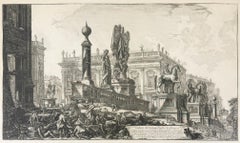
Veduta del Campidoglio di fianco
Located in New York, NY
Etching. Signed in the plate lower right. From the fourth state, of six, a late 18th / early 19th century impression; first Paris edition. From the Vedute di Rome series.
Overall...
Category
Old Masters 18th Century and Earlier More Art
Materials
Etching
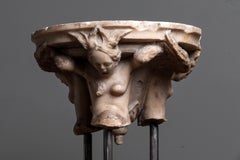
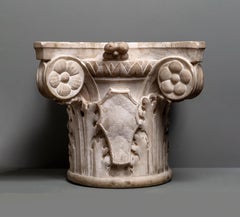
ITALIAN RENAISSANCE CAPITAL WITH MYTHOLOGICAL FIGURES, 15th Century
Located in Milan, IT
ITALIAN RENAISSANCE CAPITAL WITH MYTHOLOGICAL FIGURES, 15th Century
marble
H 18 x Diam 33.5 cm
H 7 x Diam 13 1/4 in
Category
18th Century and Earlier More Art
Materials
Marble
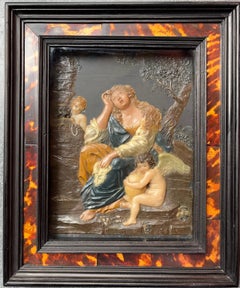
Baroque wax religious figurative bas-relief from the 18th century
Located in Florence, IT
Polychrome wax relief on chalkboard, 20 x 15 cm; with ebony and tortoiseshell frame, 28 x 23 cm
The scene depicts Mary Magdalene in the center, seated on a rock with a handkerchief i...
Category
Baroque 18th Century and Earlier More Art
Materials
Slate
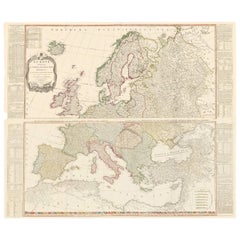
Two-Part Large Hand-Colored Map of Europe from 1798
By Thomas Kitchin
Located in New York, NY
Map of Europe printed on two separate sheets from A New Universal Atlas by Thomas Kitchin. Published in London by Laurie & Whittle, 1798. Original engravings hand-colored at publicat...
Category
18th Century and Earlier More Art
Materials
Paper
$1,700 Sale Price
33% Off
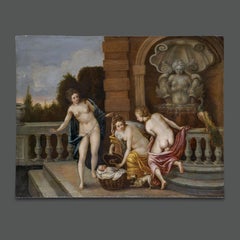
Francesco Albani Circle Italian Mythological Painting
Located in Roma, IT
Francesco Albani Circle Italian Mythological Painting
This important oil painting on wood depicts a subject that is very rare in the iconography of ancient mythological paintings: the birth of Erittonio. Erichthonius who succeeded Amphictyon becoming the fourth mythological king of Athens and married the naiad Praxithea who made him the father of Pandion.
The extremely high quality of this very rare painting suggests that it was painted by an artist who frequented Francesco Albani's studio.
The period, the mythological subject, the harmony of the colours and, above all, the sublime quality of the flesh tones all point in this direction.
This artwork, never before on the market, comes from an important Italian private collection
Every item of our Gallery, upon request, is accompanied by a certificate of authenticity issued by Sabrina Egidi official Expert in Italian furniture for the Chamber of Commerce of Rome and for the Rome Civil Courts.
ERYTHTONIOS (᾿Ερυχϑόνιος, Erychthonios)
Born of Hephaestus' love for Athena, from the breast of Ghe, who was impregnated by the god; welcomed by Athena, who placed him in a basket together with one or two snakes, entrusting him to the care of Cecrops' three daughters.
Against the goddess's wishes, they opened the chest, from which emerged, according to different versions of the myth, either the child wrapped in snakes or a snake, which, in some versions, killed the girls, while in others, they threw themselves from the Acropolis in fear. Erittonio, in the form of a snake, is welcomed by Athena into her temple and curls up under the goddess's shield. Alongside this myth, of Ionian origin, are others due to the doubling of the figures of E. and Erechtheus
The scene of the birth appears in figurative tradition: in a Melian terracotta relief from the early 5th century, Ghe, half-emerging, holds out the baby Erittonio. to Athena, who welcomes him in the presence of Cecrops; the same scene appears on various painted vases, such as a red-figure kölix by the Painter of Kodros, from Tarquinia, in the Berlin Museums, dating from around 440 BC, where Hephaestus also appears alongside Cecrops.
A modest red-figure vase from Camiro, in the British Museum, depicts the moment when the fleeing Cecropids discover the cista, from which the infant Erittonio. emerges between two snakes, greeting Athena.
The moment when the chest was opened was depicted by Phidias on the xiii and xiv S metopes of the Parthenon, where Cecrops and Pandrosus appear in the first and Erisichthon and Aglaurus with the chest uncovered in the second.
A kölix in the style of the Brygos Painter in Frankfurt, on the other hand, depicts the large snake E. chasing the fleeing Cecropids towards their father's palace.
Luciano (De dom., 27) recalls a painting depicting the scene of the birth and the representation of the myth in pantomime on the theatre (De salt., 39).
Bibliography: Engelmann, in Roscher, cc. 1303-1308, s. v. Erichthonios; P. Jacobstahl, Die Melischen Reliefs, Berlin 1931, pp. 96-98, plate 75 a; W. Züchner, in Jahrbuch, LXV-LXVI, 1950-51, p. 200 ff., figs. 34-35; J. D. Beazley, Red-fig., p. 720; G. Becatti, Problemi fidiaci, Florence 1951, p. 22.
Questo
Francesco Albani (Bologna, August 17, 1578 – Bologna, October 4, 1660) was an Italian painter.
Albani was born in Bologna, Papal States, in 1578.
His father was a silk merchant who intended his son to go into his own trade. By the age of twelve, however, he had become an apprentice to the competent mannerist painter Denis Calvaert, in whose studio he met Guido Reni. He soon followed Reni to the so-called "Academy" run by Annibale, Agostino, and Ludovico Carracci.
This studio fostered the careers of many painters of the Bolognese school, including Domenichino, Massari, Viola, Lanfranco, Giovanni Francesco Grimaldi...
Category
Old Masters 18th Century and Earlier More Art
Materials
Oil, Wood Panel
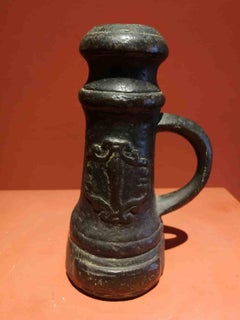
Tuscan Mannerist bronze Mortaretto d
allegrezza from the 17th century
Located in Florence, IT
Decorated with a cartouche on which the family coat of arms was probably engraved, this interesting small bronze object is a "cheer mortar" (also called a "mascolo" or "mastio" of ch...
Category
Mannerist 18th Century and Earlier More Art
Materials
Bronze
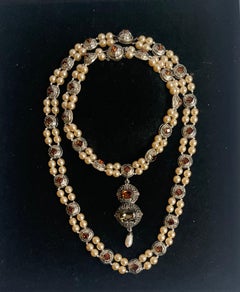
Hiroshi Sugimoto The Necklace of Henry VIII
s Third Wife Limited Edition, Signed
Located in New York, NY
Hiroshi Sugimoto
The Necklace of Jane Seymour, Henry VIII's Third Wife, 2000
Limited Edition Signed pendant of silver-plated brass, imitation pearls, Swarovski glass stones, handmade...
Category
Old Masters 18th Century and Earlier More Art
Materials
Metal
LARGE ITALIAN RENAISSANCE MARBLE CAPITAL, 15th/16th Century
Located in Milan, IT
LARGE ITALIAN RENAISSANCE MARBLE CAPITAL
Florence, 15th/16th Century
marble
38 x 47 x 47 cm
15 x 18 1/2 x 18 1/2 in
Category
18th Century and Earlier More Art
Materials
Marble
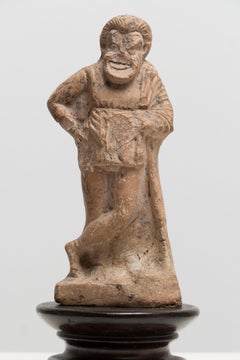
Ancient Greek Terracotta Comic Actor Figurine
Located in Milan, IT
TERRACOTTA FIGURINE OF A COMIC ACTOR , Greece, c. 350 B.C.
Labeled to the reverse, 'LAWRENCE COLL./LOT 426. SOTHEBY./APR. 1892. P. 816.';
Terracotta
height 15.2 cm
height 6 in
Prove...
Category
18th Century and Earlier More Art
Materials
Terracotta, ABS
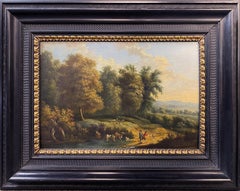
Dutch or Flemish Landscape with Figures
Animals
Located in Milford, NH
A beautifully detailed late 17th or early 18th century Dutch or Flemish landscape with cows grazing in the water, goats, dogs, and other animals near the water’s edge, under the watchful eye of the herdsmen, on a backdrop of rolling hills and trees. Oil on wood panel, unsigned, and housed in a Rudolph...
Category
Flemish School 18th Century and Earlier More Art
Materials
Oil, Wood Panel
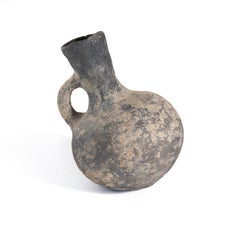
Jerusalem, Perfume Vessel, Iron Age
Located in Milwaukee, WI
4x3
Ceramic
Ancient clay perfume jug from the Iron Age discovered in Jerusalem.
Category
18th Century and Earlier More Art
Materials
Ceramic
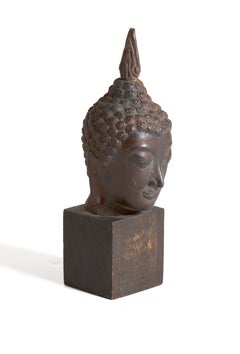
Burma, Thai Bronze Head of Buddha (original)
Located in Milwaukee, WI
Thai Bronze Head of Buddha (Original) 17th c.
Category
18th Century and Earlier More Art
Materials
Bronze
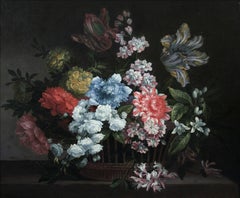
Flowers In A Basket - Original Oil, Still Life, French, Franco-Flemish painter
By Jean-Baptiste Monnoyer
Located in Knowle Lane, Cranleigh
Flowers in A Basket by Jean-Baptiste Monnoyer. A Still Life of flowers in a basket including jasmine, honeysuckle, dahlias, parrot tulips, delphiniums and white carnations.
Category
Baroque 18th Century and Earlier More Art
Materials
Oil, Canvas
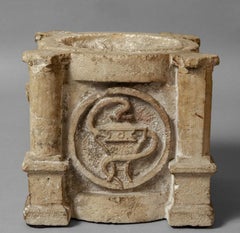
14th Century Italian Marble Mortar with Animals depicted on the sides
Located in Milan, IT
Unusual 14th Century Italian marble mortar with animals depicted on the sides
Category
18th Century and Earlier More Art
Materials
Marble
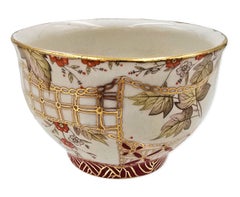
Hand-decorated Tea Bowl (Gold Luster, Rich, Floral, Fine China)
Located in Kansas City, MO
Melanie Sherman
Hand-decorated Tea Bowl / Yunomi (Gold Luster, Rich, Floral, Fine China, Precious)
Porcelain, 24K German Gold Luster, Glaze, Underglaze, China Paints, Vintage Transfe...
Category
Rococo 18th Century and Earlier More Art
Materials
Luster, Paint, Glaze, Porcelain
Nova Iconologia di Cesare Ripa Perugino - illustrated Book - 1618
Located in Roma, IT
Complete title: Nova Iconologia di Cesare Ripa Perugino Cavalier de SS. Maurition & Lazzaro Nella quale si descrivono diverse imagini di Virtu, Vitij, Affetti, Passioni humane, Arti,...
Category
Modern 18th Century and Earlier More Art
Materials
Paper
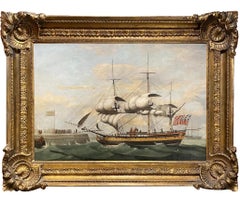
British East Indiaman Ship Returning from a Voyage to the East
Located in Milford, NH
A large marine painting probably depicting a British East Indiaman ship returning from a voyage to the East, attributed to British artist Francis Holman ...
Category
18th Century and Earlier More Art
Materials
Canvas, Oil
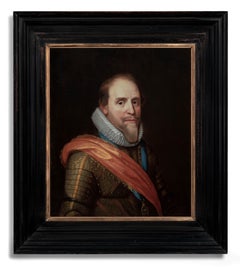
Dutch Old Master Portrait of Maurits, Prince of Orange-Nassau, Oil on Panel
Located in London, GB
In 1607, the Delft city council decided to commission a portrait of Stadholder Maurits of Nassau for the town hall, with Michiel van Mierevelt as the chosen artist due to the passing...
Category
Old Masters 18th Century and Earlier More Art
Materials
Oil, Wood Panel
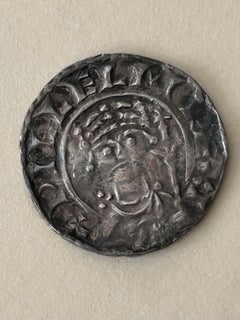
William the Conqueror Pax Penny
Located in New York, NY
William the Conqueror Pax Penny
English pennies struck in the name of “King William” are the PAXS pennies: these display the letters P A X S (“Peace”) at the intersections of the c...
Category
Medieval 18th Century and Earlier More Art
Materials
Metal
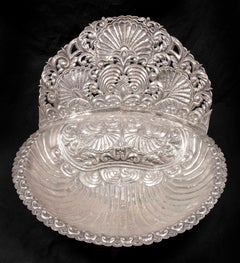
Cuzco School Baptismal Dish
Located in New York, NY
Provenance:
Manuel Ortíz de Zevallos y García, Peru; and by descent in the family to:
Private Collection, New York.
This impressive baptismal dish is an example of eighteenth-cent...
Category
Old Masters 18th Century and Earlier More Art
Materials
Silver
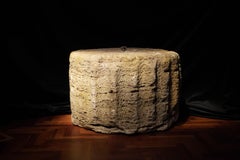
ANTIQUE ITALIAN LARGE CIRCULAR FRAGMENT OF A FLUTED COLUMN
Located in Milan, IT
LARGE CIRCULAR FRAGMENT OF A FLUTED COLUMN
Central Italy, 13th century
stone
Category
18th Century and Earlier More Art
Materials
Stone
Old Master Drawing, Westerkerk Keizersgracht in Amsterdam, 17th century, Dutch
Located in Greven, DE
Jan van der Heyden (1637 Gorinchem - 1712 Amsterdam), attributed.
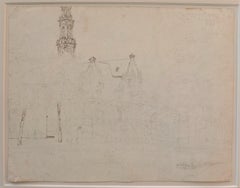
Old Master Drawing, Westerkerk Keizersgracht in Amsterdam, 17th century, Dutch
Westerkerk and Keizersgracht in Amsterdam
Backside: later drawn backside with village church of the 18th century
Chalk and pen on paper
23,5 x 18,5 cm
Preliminary drawing for a painting from the creative period c. 1667 - 1670. This painting has been published a few years ago by Peter C. Sutton in the catalogue raisonné of the artist.
Van der Heyden was initially a pupil of a glass painter, but later turned exclusively to architectural painting and went to Amsterdam, where he painted views of churches, castles, palaces, public squares, streets, canals, etc., most of which are richly decorated with staffage. In addition, van der Heyden was also active as an inventor, for example, he developed a street lighting system for Amsterdam by means of oil street lamps, which was in operation from 1669 to 1840. After a stay in London, he painted the London fire of 1666, which he either witnessed himself or had seen the consequences of. Certainly influenced by this, he did much to further the technical and organisational development of the fire brigade from 1669 onwards. His greatest invention was probably the fire hose, which enabled significant improvements in fire-fighting technology and tactics. He also improved the hand-operated fire engines of the time by making them smaller, more mobile and more powerful, and he developed the series connection of several pumps to increase the pressure in order to achieve a greater range for the water jet. In 1690, together with his son, he was the author and illustrator of the Brandspuiten-boek, the first manual for fire fighting.
Johann Lingelbach, Adriaen van de Velde and Eglon van der Neer...
Category
Dutch School 18th Century and Earlier More Art
Materials
Paper, Chalk
$1,821 Sale Price
20% Off
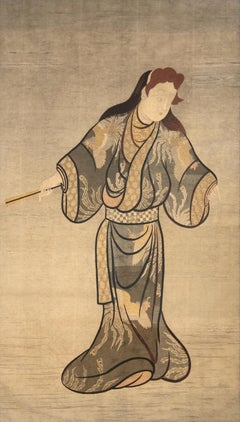
Figure of a Beauty, Japan, Edo Period
Located in Palm Desert, CA
A Japanese embroidery from the Edo Period. “Figure of a Beauty” is a portrait embroidery, silk and gold thread in golds and grays.
Provenance:
Priv...
Category
Edo 18th Century and Earlier More Art
Materials
Silk
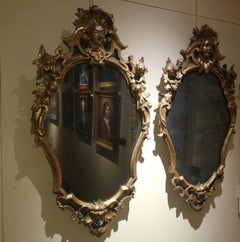
Coppia di specchi rococò toscane in legno dorato
Located in Florence, IT
Coppia di specchi rococò il legno dorato decorati a volute, racemi floreali, e mascheroni. Hanno mantenuto il loro vetro originale.
Category
Rococo 18th Century and Earlier More Art
Materials
Gold
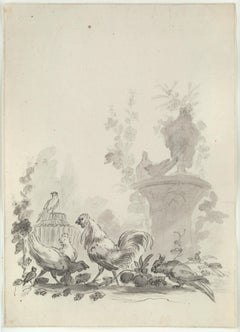
Old Master Drawing, Roccoco, 18th Century, German Artist, Animal Drawing
By Johann Martin Metz
Located in Greven, DE
Black chalk, partly washed, on paper, sheet 27.5 x 19.7 cm
Plain gold moulding, 44.8 x 36 cm
The Rhenish still life painter Johann Martin Metz was ...
Category
Rococo 18th Century and Earlier More Art
Materials
Paper, Crayon
$767 Sale Price
20% Off
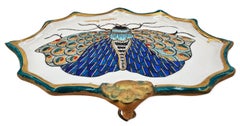
Vintage Moth X (Wall Piece/Dish (hand-painted)
Located in Kansas City, MO
Melanie Sherman
Vintage Moth X (Wall Piece/Dish (hand-painted)
Porcelain, Glaze, Overglaze, Chinapaints, 24k German Gold Luster, Brass Wire (for hanging, can be removed)
Year: 2025
S...
Category
Baroque 18th Century and Earlier More Art
Materials
Brass, Wire
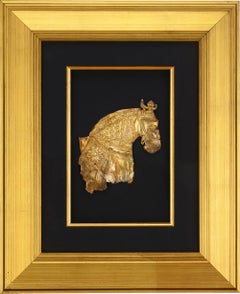
Gold Tang China Horse Head
Located in New Orleans, LA
This exceptional and rare rendering of a horse head, composed of gold over silver, hails from the illustrious Tang dynasty of China. The powerful Tang dynasty reigned for nearly 300 ...
Category
Other Art Style 18th Century and Earlier More Art
Materials
Gold, Silver
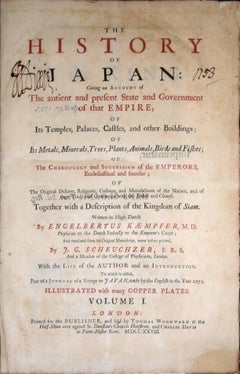
The History of Japan
By Engelbert Kaempfer
Located in Roma, IT
The History of Japan. Giving an Account of the Ancient and Present State and Government of that Empire; of its Temples, Palaces, Castles and other Buildings...
Category
18th Century and Earlier More Art
Materials
Paper, Etching
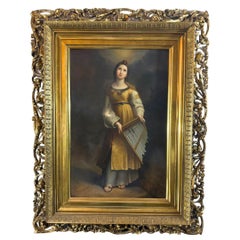
Porcelain KPM Plaque - Exquisite Saint Cecilia: Large size
Located in Jacksonville, FL
Immerse yourself in the divine beauty of Saint Cecilia with this extraordinary KPM Porcelain Portrait, meticulously crafted after Raphael’s masterpiece. This captivating artwork, hou...
Category
Victorian 18th Century and Earlier More Art
Materials
Porcelain
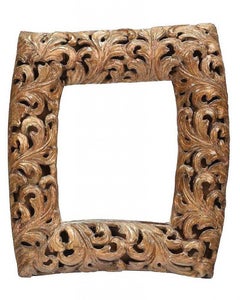
Venetian Frame, 17th Century Gilt Carved Wood
Located in London, GB
Venetian Frame
17th Century
Gilt carved wood
Sight size: 30 x 26 cm (The middle being the largest size)
Exterior size: 52 x 47 cm
Due to the curves of...
Category
18th Century and Earlier More Art
Materials
Wood
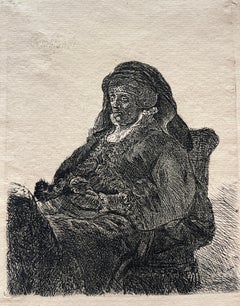
The Artist
s Mother Seated at a Table, Looking Left: Three Quarter Length
Located in New York, NY
Etching and drypoint, circa 1630s. Cream laid paper. Narrow margins.
Category
Old Masters 18th Century and Earlier More Art
Materials
Etching
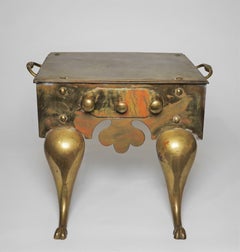
18th Century English Double Handle Footman
Located in Beachwood, OH
English Double Handle Footman, 18th Century
Brass
12 x 18 x 17 inches
Category
18th Century and Earlier More Art
Materials
Brass
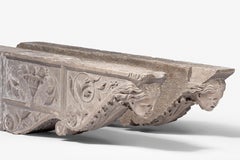
PAIR OF ITALIAN ARCHITECTURAL BRACKETS IN PIETRA SERENA, TUSCANY, 1600 CIRCA
Located in Milan, IT
Richly decorated on the side and with finely sculpted female faces, these carved stone architectural brackets are a great example of the Tuscan production of the late 16th Century. O...
Category
18th Century and Earlier More Art
Materials
Stone
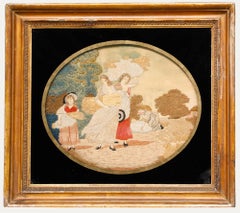
Georgian Embroidery - Collecting Corn
Located in Corsham, GB
A delightful 18th-century embroidery depicting three sisters and their mother gathering corn. The artist has expertly employed an array of different stitches such as French knots and...
Category
18th Century and Earlier More Art
Materials
Tapestry
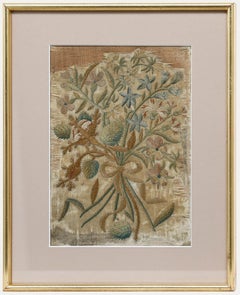
Georgian 18th Century Embroidery - Bouquet
Located in Corsham, GB
A delicate George III embroidery depicting a bouquet of flowers. Well presented in a gilt-effect frame with a brown mount. On silk.
Category
18th Century and Earlier More Art
Materials
Tapestry
Still Thinking About These?
All Recently ViewedMore Ways To Browse
Grouse Shooting
Harry Adams
Harry Day Paintings
Harvey Parks
Hedge House
Henry Collins
Hermes Birkin Bag 15
Highland Cow Painting
Hippo Painting
Hoppe Oil
Horse And Groom Painting
Horse Hunt Painting
Horse Lady Painting
Horse Painting Gold Frame
Horse Polo Paint
Hunt Double Bunnies
Hunt Etchings
Hunt Slonem Bunnies Heart