Items Similar to Norman’s Rock
Video Loading
Want more images or videos?
Request additional images or videos from the seller
1 of 7
Sir Alfred James MunningsNorman’s Rock
$40,000
£30,362.05
€34,817.66
CA$56,459.77
A$60,604.28
CHF 32,268.68
MX$717,789.75
NOK 407,787.88
SEK 372,424.07
DKK 260,103.71
About the Item
Literature: Alfred Munnings, The Autobiography of Sir Alfred Munnings Vol. I, An Artist’s Life, London: Museum Press Limited, 1950.
This extraordinary and truly unique piece captures the spirit, humor, and illustrative style that marked Munnings’ formative years as an artist. The models that appeared in Munnings’ early works were usually local farmers, stable boys, gypsies, and tradesmen with whom the artist developed lasting friendships. One of Munnings’ earliest models, James Norman, who was depicted selling oranges in one of Munnings’ most famous paintings, A Gala Day, is fondly remembered in An Artist’s Life, Munnings’ autobiography:
“At the time I was beginning to employ an old son of the soil; and we formed a friendship which lasted until he died. His name was
Norman. He was a grandfather many times over. He was over eighty, active and strong, hale and hearty: a nature’s gentleman, a swell of the soil. Indeed, ‘one of the rude forefathers of the hamlet,’ if ever there was one. Norman was not always holding horses or being painted, or gardening. He took part in other scenes—bacchanalian scenes at night in the studio.
At one in the morning we used to see Norman home to his solitary abode in what was known as the parish room. We spent merry evenings in that room watching him making rock. (Think of it now, in this sugar shortage!) Parcels of brown sugar weighing two stones or more stood on the table, a great iron saucepan of toffee bubbled on the fire. To this was added peppermint and lemon essence. Then, placing a mass of brown toffee on a plate to cool, Norman shaped it out in a long, loopy affair, and taking the ends in each hand, threw it over a hook fixed to a rafter, and began steadily pulling it and pulling it, and throwing it over the hook again, until it grew longer and whiter. Then he took some of the brown toffee and pulled this out once to the length. The two cables were then twisted together and cut off in lengths of five or six inches, and laid to cool, and it was then Norman’s Rock.
This rock he wheeled on Saturday afternoons up to Harleston in a large, lidded box, fixed on the springs, body, and wheels of an old perambulator. One or two of his grandchildren accompanied him to pull it up the hills. One day he brought this vehicle to the studio, and I painted three pretty girls’ faces on one side with the lettered advertisement thus: “Eat Norman’s Rock and Grow Sweet.” On the other side I painted three old maids with sour faces and wrote: “Norman’s Rock Cures Sour People.”
Oil on Pinewood Box
- Creator:Sir Alfred James Munnings (1878 - 1959, British)
- Dimensions:Height: 30.5 in (77.47 cm)Width: 19.5 in (49.53 cm)Depth: 19.5 in (49.53 cm)
- Medium:
- Period:
- Condition:
- Gallery Location:Lexington, KY
- Reference Number:1stDibs: LU2873217306442
Sir Alfred James Munnings
Sir Alfred James Munnings was born in Mendham, Suffolk in 1878. His father was a miller and Munnings was brought up on a working mill with horses being part of his daily life. This led to his deepening interest in the equine world that would later propel him into becoming the foremost English twentieth-century painter of sporting pictures. Munnings was apprenticed to a firm of lithographers from 1893 to 1898, and went on to study at the Norwich School of Art and in Paris where he was impressed with en plein air naturalism. Upon returning to England, Munnings became a full time painter and set up his own studio in Mendham where he predominantly painted scenes of country life with a focus on horse fairs. In 1898 Munnings lost his sight in his right eye in an accident, but this did not deter him from painting. The following year Munnings exhibited two paintings at the Royal Academy Summer Exhibition, for which he gained a growing reputation for his painting. His love for the East Anglian landscape and its rural pursuits was further enhanced after a visit to a horse fair in 1901. The enthralling world of gypsy travellers as well as that of hunting and horse racing offered Munnings a wide range of subject matter that would tie in with his passion for the landscape and horses. Munnings visited Cornwall in 1908 and became an important addition to the Newlyn School of artists, finally settling in the artists’ colony at Lamorna in Cornwall in 1911. At the outbreak of the Frist World War, Munnings enlisted despite having the use of only one eye. Rather than on the front lines, he instead became an army horse trainer near Reading and in 1918 travelled to France as an official war artist attached to the Canadian Expeditionary Force. The oil paintings and sketches that Munnings produced provide an insight into the men of the Canadian Cavalry Brigade and the Canadian Forestry Corps. Munnings paintings demonstrate both the important role of the cavalry on the Western Front and the vital work behind the lines that sustained the war effort. Munnings' wartime artwork was pivotal in establishing his success and securing his admittance to the Royal Academy of Arts in 1919. Munnings was elected as President of the Royal Academy from 1944 to 1949, and received a Knighthood in 1944. In his later career, Munnings became a vocal detractor of Modernism, he is famed for a speech he gave in 1949 in which he claimed the work of Cézanne, Matisse and Picasso had corrupted art. During his lifetime he was represented by Frost
Reed in London and through them his work entered some of the most prestigious private collections of the day. Munnings passed away in 1959 and upon his death his wife turned their home in Dedham into a museum to house his work. His work is also publicly displayed at The Royal Academy, the National Portrait Gallery, Tate Britain and other prestigious museums.
About the Seller
No Reviews Yet
Vetted Professional Seller
Every seller passes strict standards for authenticity and reliability
Established in 1974
1stDibs seller since 2025
- ShippingRetrieving quote...Shipping from: Lexington, KY
- Return Policy
More From This Seller
View AllL.H. Smith Esq. Master Island Foxhounds
Located in Lexington, KY
The Island Hunt in Ireland happens yearly at Killogy Castle in Ferns, and has been a tradition there for a long time. This piece by Phoebe Donovan depicts the master of the hunt with...
Category
20th Century Animal Paintings
Materials
Oil
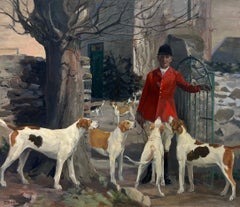
Mr Martinson’s Nancy With Job Marson, Jr. Up and the Trainer Job Marson Sr. 1851
Located in Lexington, KY
The following is an account of the 1851 Goodwood Cup from the Sporting Magazine:
We have now arrived at the event of the day par excellence ...The Goodwood Cup, value 300 sovereigns. This lot furnished a field of half a score with final odds: Nancy, 2 to 1 against her; 9 to 4 Cariboo, 9 to 2 Cossack. Cariboo was the first at work when the flag fell, the ruck close behind him. No change of any account occurred till at the mile-post, Cariboo showed in the van; but the speed was obviously a very low average, the whole of them being still upon good terms. As they ascended the hill the favourite drew towards the front, and consequently forced the rate of running. As they faced you, coming down the fall to the rails, it seemed that the pace had unfolded its tale — or tail — for, save Nancy and Cossack, all were out of it and the filly had it apparently her own way. Between the Stand and the Chair, however, Alfred Day made a rush with Cossack that for some cause or other looked as if it had put the result in jeopardy — ultimately Nancy winning cleverly by a head. Canaeus, the third, was a couple of lengths from Cossack. I refrain from any comments on the result. It is manifest that the best animal in the race won it, and that I take to be the end and purpose of the turf.
About this time, the stewards having gone into a “case” alleged against Nancy for the Cup—namely, that she was the property of “notorious defaulters“ — came to the subjoined resolution: “The stewards, having investigated the objections to Nancy’s qualification to start for the Goodwood Cup, are of opinion that she is entitled to run.” .... know no more of Mr. Martinson than I do of the man in the moon (if there be one there, which is very doubtful); but this I must say, if he were as big a rogue as Jonathan Wild, instead of an upright inhabitant of Hull, as I am assured he is, he would be justified in denouncing the treatment to which he has been subjected as anything but English fair...
Category
19th Century Animal Paintings
Materials
Oil

Newmarket Heath
By Doris Zinkeisen
Located in Lexington, KY
During the 1920’s and ‘30s, Zinkeisen would share a studio with her sister in London, where she started her commercial career as an artist, theatrical designer, and as a painter. Dur...
Category
20th Century Animal Paintings
Materials
Canvas, Oil
Hyde Park
By Frederic Whiting
Located in Lexington, KY
A painter and a printmaker, Whiting is well known for his portraits and equine paintings. He mainly worked in London and studied at the Royal Academy, and many of his works are hung ...
Category
Late 19th Century Animal Paintings
Materials
Oil
Full Cry
Located in Lexington, KY
Growing up around horses and the equine scene, Davis was born in the Cotswolds and was one of the most skilled horsewomen in her area. After graduating school in Cheltenham she would...
Category
20th Century Landscape Paintings
Materials
Oil
A Young Windsor Grey
Located in Lexington, KY
Little is known about this fine painter except that he showed his work at the major exhibitions. His subjects ranged from sporting, coaching, and military scenes to still lifes and p...
Category
19th Century Animal Paintings
Materials
Oil
You May Also Like
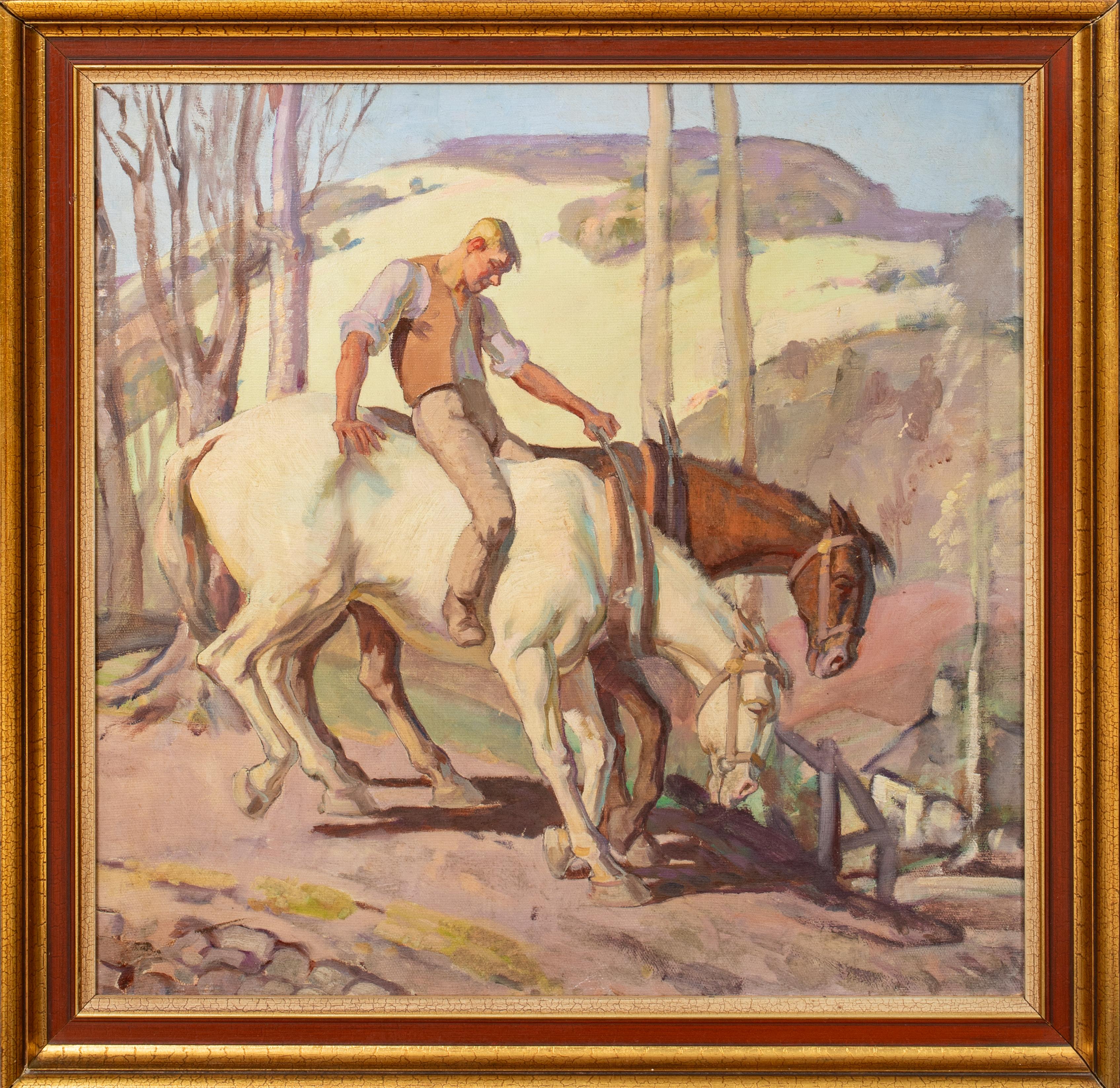
As The Day Closes, early 20th Century school of Sir Alfred MUNNINGS (1878-1959)
Located in Blackwater, GB
As The Day Closes, early 20th Century
school of Sir Alfred MUNNINGS (1878-1959)
Large early 20th Century English scene of a weary farmer at the end of the day, oil on canvas. Excel...
Category
Early 20th Century Animal Paintings
Materials
Oil, Canvas
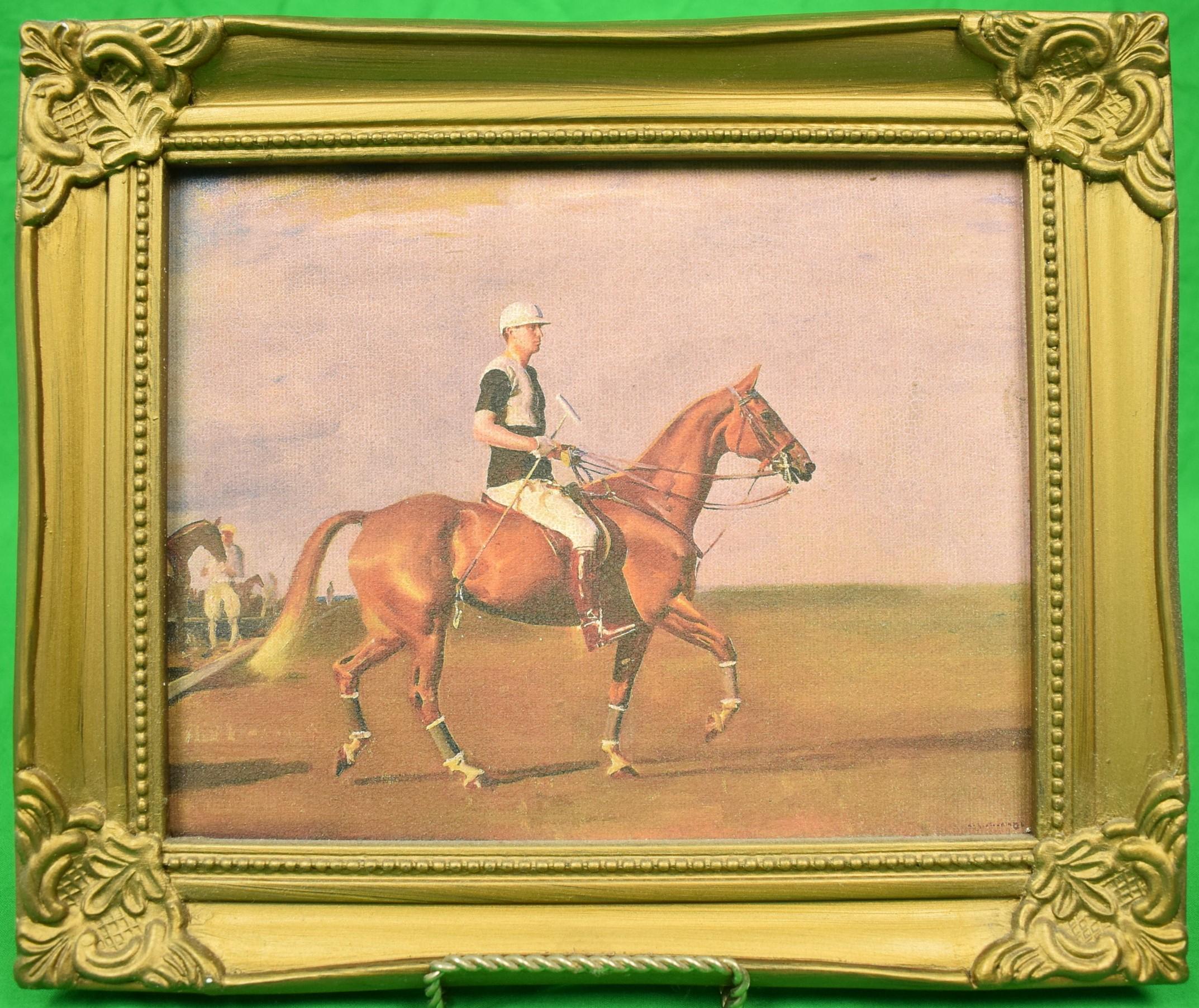
Sir Alfred Munnings "The Polo Player" Giclee
Located in Bristol, CT
Canvas Sz: 7 1/2"H x 9 1/2W
Frame Sz: 10 1/2"H x 12 1/2"W
A fine oleograph on stretched canvas "The Polo Pony" after the original painting by Alfred Munnings. The oleograph has a h...
Category
20th Century Animal Prints
Materials
Giclée
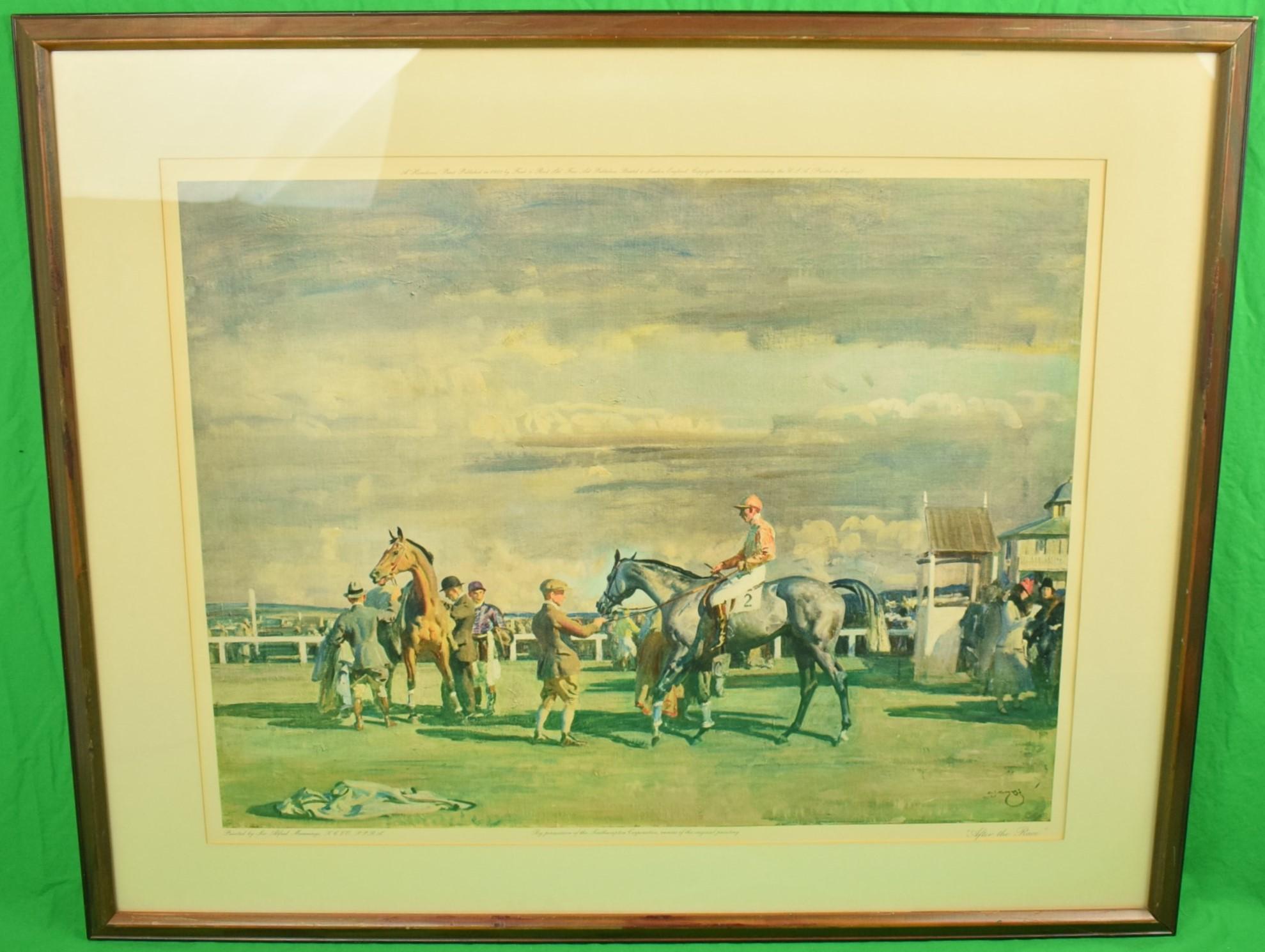
"After The Race, Cheltenham" c1951 MUNNINGS, Sir Alfred
Located in Bristol, CT
A "Homelovers" print
By permission of the Southampton Corporation, owners of the original painting
Published by Frost & Reed London
Print Sz: 20 1/4"H x 25 3/4"W
Frame Sz: 27 1/2"...
Category
1950s Animal Prints
Materials
Lithograph
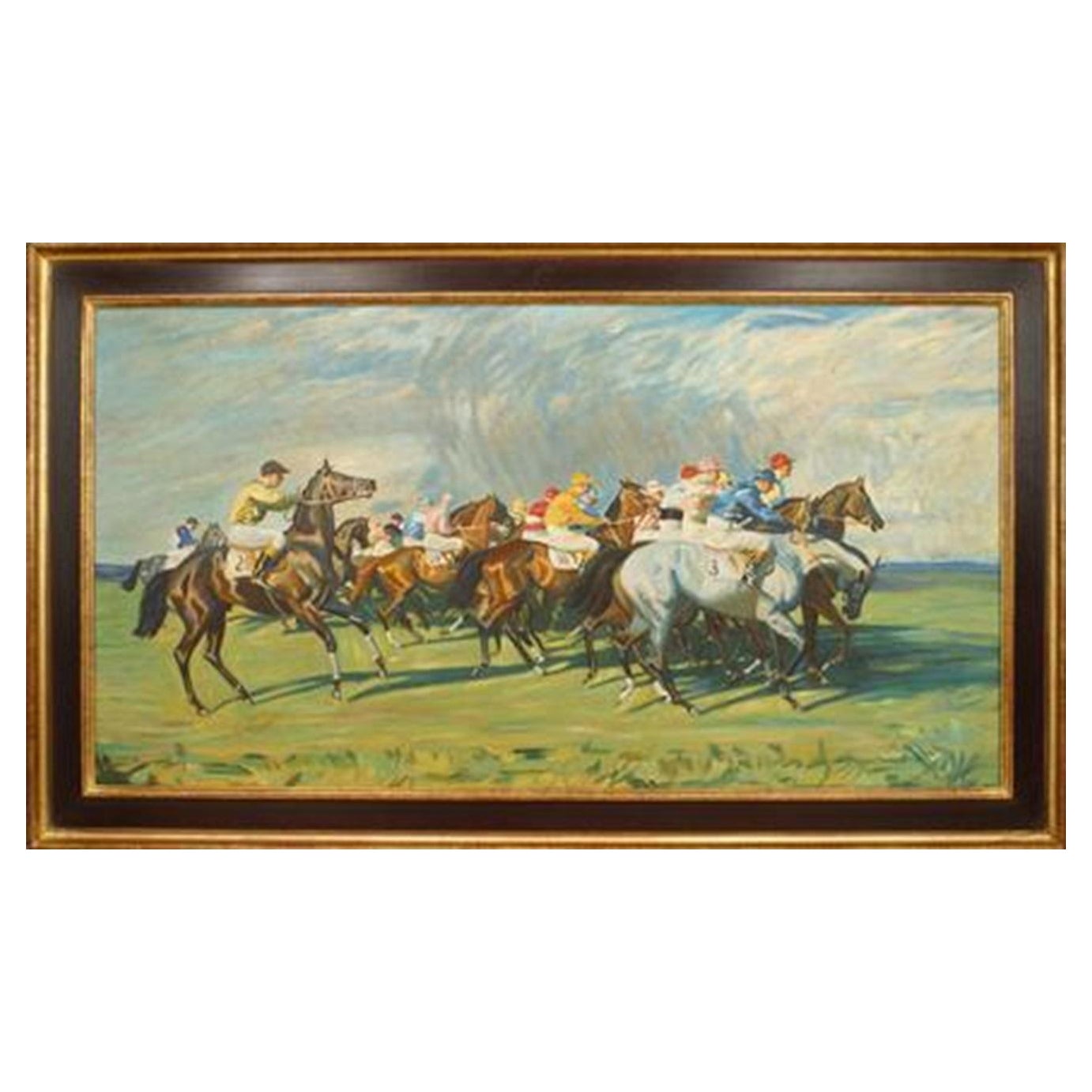
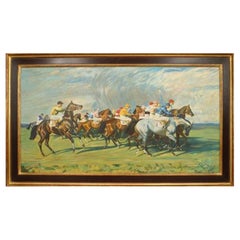
Sir Alfred James Munnings Field Race Painting
Located in Queens, NY
Copy of a Sir Alfred James Munnings painting of an open field race showing jockeys wearing colors queuing up in a broad line on their horses to race
Category
Late 20th Century American Victorian Paintings
Materials
Paint
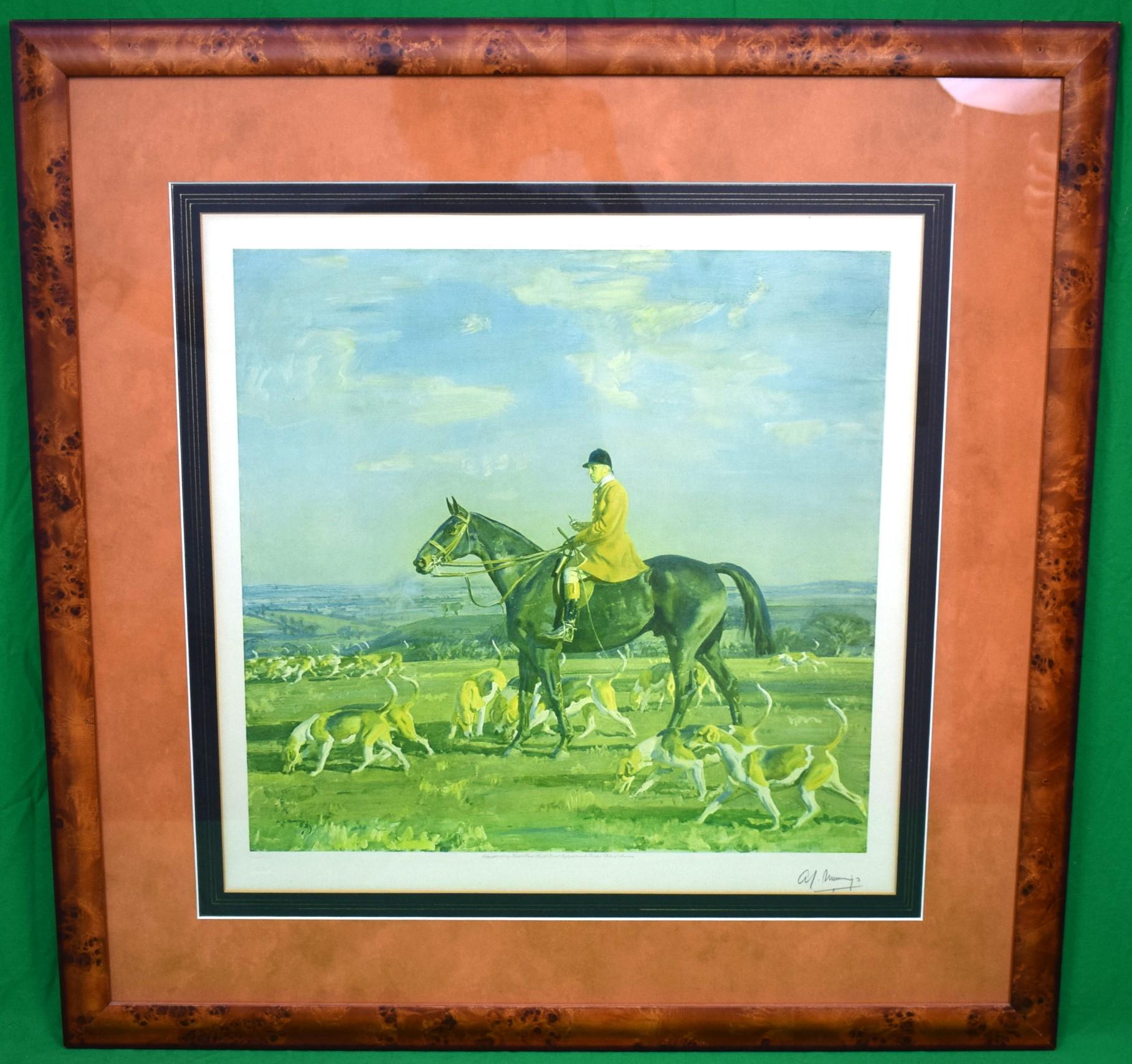
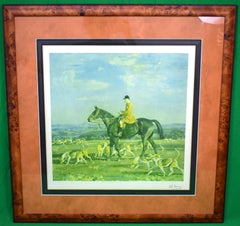
"The Pytchley Huntsman Frank Freeman On Pilot" 1930 MUNNINGS, Alfred J.
Located in Bristol, CT
Classic colour plate pencil signed by Sir Alfred J Munnings 'The Pytchley Huntsman-
"Frank Freeman on Pilot" published 1930 by Frost & Reed London with a blind stamp (LL)
Image Sz:...
Category
1930s Landscape Prints
Materials
Lithograph
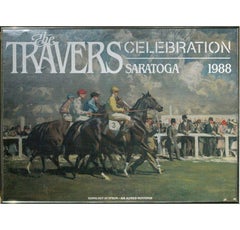
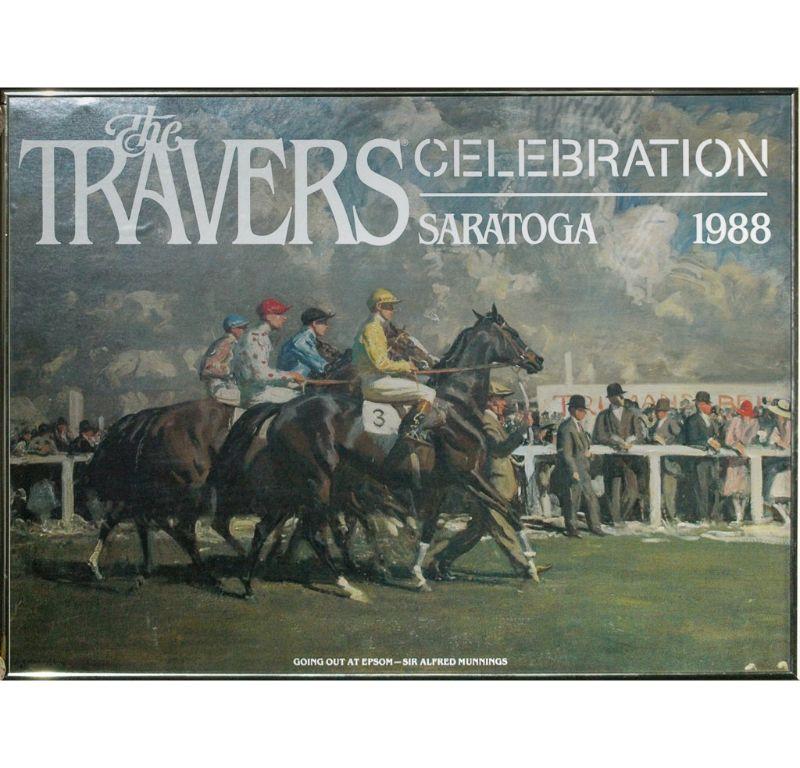
The Travers 1988
By Sir Alfred James Munnings
Located in Bristol, CT
Classic colour poster for The Travers Celebration, Saratoga 1988' depicting Sir Alfred Munnings' 'Going Out at Epsom'
Image Sz: 17.5"H x 23.5"W in a chrome frame
Frame Sz: 19"H x 25"W
Category
1980s Animal Prints
Materials
Paper