Items Similar to Mother of Pearl Inlaid Wooden Occasional Table
Want more images or videos?
Request additional images or videos from the seller
1 of 3
Spanish Colonial Mother of Pearl Inlaid Wooden Occasional Table18th Century
18th Century
$135,000
£102,715.25
€118,348.88
CA$191,657.75
A$205,614.47
CHF 110,287.37
MX$2,475,570.60
NOK 1,390,301.82
SEK 1,267,762.59
DKK 884,224.03
About the Item
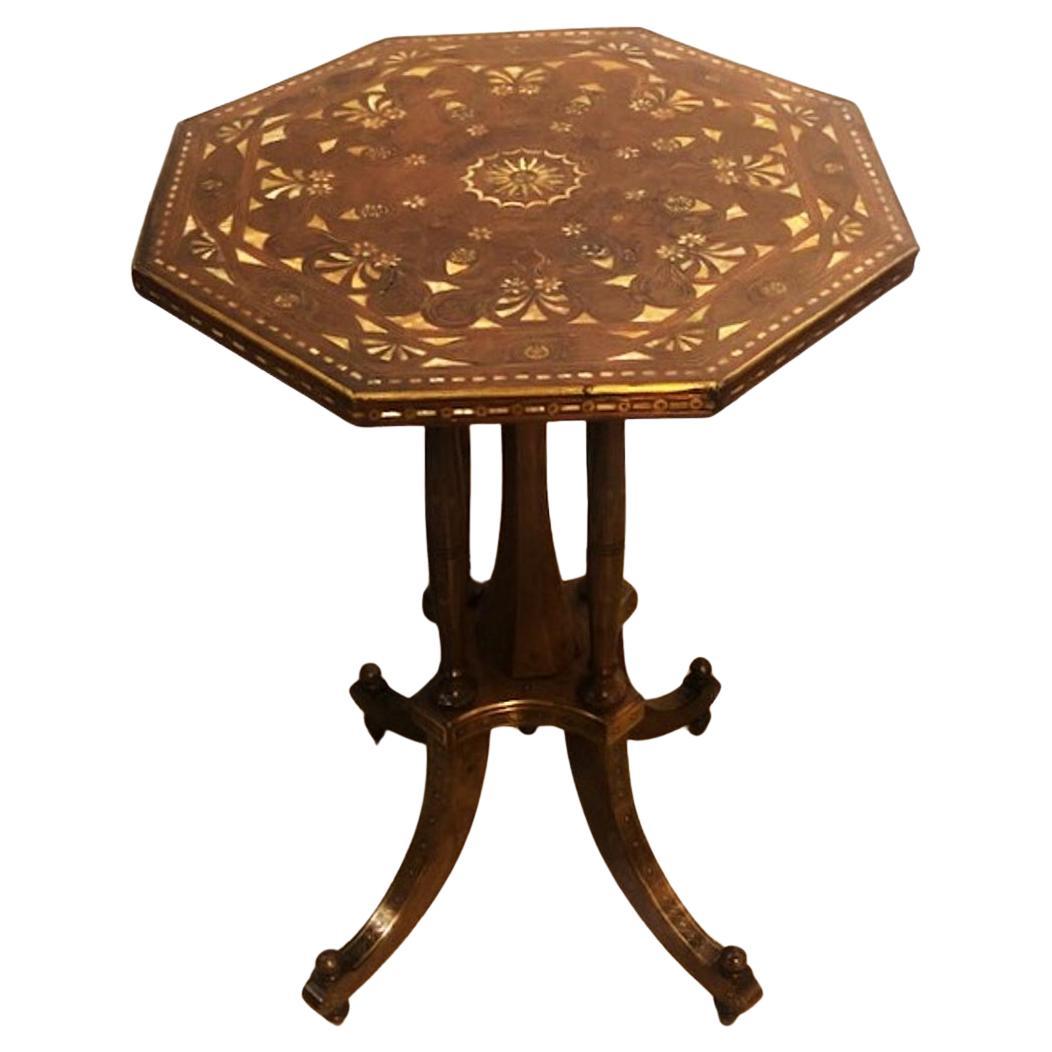
This occasional table is a remarkable example of the luxurious furniture popular during the 17th and 18th centuries in Colonial Latin America. The decorative technique that creates such a striking opalescent finish on the table is known as enconchado. The term derives from concha, the Spanish word for shell, and consists of the application of small pieces of mother-of-pearl on wooden surfaces, often enhanced by lacquer filament insets between each fragment. In our table, the mother-of-pearl has been delicately arranged into concentric bands of petals alternating with rows of rosettes that repeat outwards from a fleuron at the center of the tabletop (Fig. 1). A scalloped skirt runs along the edge, and the organic motifs found throughout the surface continue down a single faceted leg that both supports the tabletop and joins it to a bulbous, octagonal foot (Fig. 2).
Enconchado tables of this type are not simply valued for their manifest beauty, but also as material representations of the cultural exchange between Asia and the Americas that influenced and engendered new artistic traditions within the Spanish Viceroyalties. The refined enconchado technique derives from Korean and Japanese lacquer works, but it also references the continued tradition of mother-of-pearl inlay in the Middle East. These visual similarities led to the supposition that this type of object originated in Philippine workshops and, alongside other luxury goods and materials, were imported into the viceregal territories aboard the Manila Galleons. Whether foreign artisans traveled to the Americas, or whether the craftsmen in the Spanish viceroyalties imitated them is impossible to determine. Regardless of their origin, it is clear that with the burgeoning demand for such items, enconchado furnishings became uniquely colonial art forms, as traditional elements of Asian marquetry were adapted to local aesthetic tastes and combined with imported western forms.
Due to the sumptuous iridescence and sophistication of their materials and techniques, these furnishings were highly sought after by colonial settlers and the viceregal elite. While Peru was receiving substantial quantities of Asian luxury export goods in this period, the profusion in the country of mother-of-pearl decorative objects has led some scholars to speculate that these works may have been produced in local workshops, possibly with the involvement of Asian artisans. The significant demand for enconchado works was concentrated in Lima where such pieces figured prominently inside the city’s palaces. Dr. Luis Wuffarden has published a similar table in the Palace of Torre Tagle in Lima (Fig. 3). He has further suggested that this type of table formed part of the furnishings of women’s private rooms, and likely would have been set in a dais-type space where cushions and pillows would cover the floor and lower walls. In this sort of space, women would gather to work on crafts or spend time together—a living space and tradition inherited from the Muslim presence in the Iberian Peninsula.
Even if the demand for such pieces of furniture was concentrated in Lima, there is evidence for the popularity and taste for such furnishings, as well as additional centers of production, beyond Perú. A related table in the Los Angeles County Museum of Art is thought to have originated in Guatemala City, where mother-of-pearl and tortoiseshell were harvested locally and were considered a prized commodity (Fig. 4). Additional examples of mother-of-pearl inlayed furniture can be found in major international museums, including the Pedro de Osma Museum in Lima, the Denver Art Museum, the National Museum of Decorative Arts in Madrid, and the National Museum of Viceroyalty in Tepotzolán, Mexico.
- Creator:Spanish Colonial (1700 - 1799)
- Creation Year:18th Century
- Dimensions:Height: 21.5 in (54.61 cm)Width: 28 in (71.12 cm)Depth: 28 in (71.12 cm)
- Medium:
- Period:
- Condition:
- Gallery Location:New York, NY
- Reference Number:1stDibs: LU10211748572
About the Seller
5.0
Recognized Seller
These prestigious sellers are industry leaders and represent the highest echelon for item quality and design.
Established in 1997
1stDibs seller since 2012
24 sales on 1stDibs
Typical response time: 9 hours
- ShippingRetrieving quote...Shipping from: Tuxedo Park, NY
- Return Policy
More From This Seller
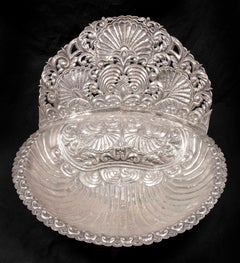
View AllSilver and Transitional Andean Textile Casket
By Spanish Colonial (Peruvian)
Located in New York, NY
Silver was the material of choice for both ecclesiastical and domestic vessels in the New World, not only for its status as a precious metal, but also because of its abundance and du...
Category
Early 18th Century Sculptures
Materials
Silver
Cuzco School Baptismal Dish
By Spanish Colonial (Peruvian)
Located in New York, NY
Provenance:
Manuel Ortíz de Zevallos y García, Peru; and by descent in the family to:
Private Collection, New York.
This impressive baptismal dish is an example of eighteenth-cent...
Category
18th Century Old Masters Sculptures
Materials
Silver
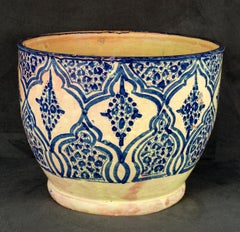
Moroccan, Fez or Meknes: Tall bowl (Jobbana) with geometric designs
Located in New York, NY
Provenance:
Collection of Emily Johnston De Forest and Robert Weeks De Forest, New York, by 1911-until 1942; thence by descent until 2018.
Literature: ...
Category
1810s Sculptures
Materials
Earthenware, Tin Glaze
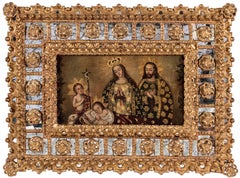
A Magnificent Gilt Wood Mirrored Frame
Located in New York, NY
Provenance: Private Collection, Argentina; there acquired by
Mr. and Mrs. Ernest T. Harper, New York, by 1960; by descent to:
Mr. and Mrs. Alan Harper, New York, until 2024.
This extraordinary mirrored frame is an exuberant and nearly perfectly preserved example of Andean 18th-century decorative art. Pierced mirrored rosettes surrounding floral motifs are set against mirrored surrounds along a broad frieze bordered within and without by elaborate raised moldings, inlaid by small, shaped mirrors. Repeating ornamental motifs reflecting both Spanish and indigenous designs surround both the inside panel and the exterior perimeter, the four corners of which are punctuated by mirrored rosettes.
Glass mirrors were unknown to the indigenous population of the Americas prior to the arrival of Europeans (obsidian mirrors...
Category
18th Century Old Masters Figurative Paintings
Materials
Canvas, Mirror, Wood, Oil
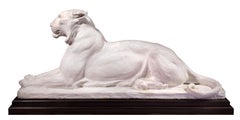
The Princeton Tiger
Located in New York, NY
Provenance: The artist; thence by descent to his granddaughter:
Rhoda Knight Kalt; from whom acquired by:
Private Collection, Pennsylvania, 1995–2025.
Literature: Richard Milner, Ch...
Category
1940s Figurative Sculptures
Materials
Plaster
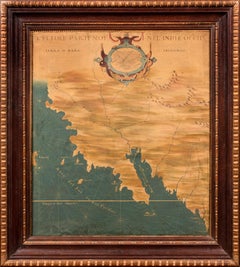
The 1564 Medici Danti Map of California
By Fra Egnazio Danti
Located in New York, NY
Florentine, Probably Seventeenth Century
Titled
L’ultime parti note nel Indie occidentali
Dated on the edge of the cartouche: “M.D. LXIII. M.AG” [1564…the month of August]
In the 1560s Cosimo I de’Medici, the powerful Duke of Florence, undertook a major renovation of the Palazzo Vecchio, the venerable palace that to this day dominates the city at the Piazza della Signoria. For the Sala della Guardaroba, literally the wardrobe room, but in fact the storeroom of the Duke’s most precious holdings, Cosimo conceived of a grand decorative project that was to reflect in one space the entire cosmos --both an indication of the Duke’s ambition and an allusion to his name. The plan, supervised by Giorgio Vasari, involved the construction of walnut cabinets to contain the Medici treasures, on the outside doors of which were to be placed large hand-painted maps specially commissioned to document and illustrate the current knowledge of the world. Portraits of famous men were to decorate the tops of the cabinets and two large globes –one representing the terrestrial world, the other celestial—were to descend from openings in the ceiling. The commission for the maps, inspired by Ptolemy’s Geographia, was given to the celebrated mathematician and cosmographer, Fra Egnazio Danti (Perugia 1536-1585 Alatri). Fifty-three maps were ultimately created. Thirty were conceived and executed by Danti between 1563 and 1575. The remaining twenty-three were completed by Stefano Bonsignori between 1576 and 1686. They remain in place in Florence in the room for which they were created.
The present work is an exact-size painted, drawn and inscribed copy of Danti’s map of California...
Category
17th Century Old Masters Drawings and Watercolor Paintings
Materials
Canvas, Paper, Ink, Watercolor, Gouache, Pen
You May Also Like
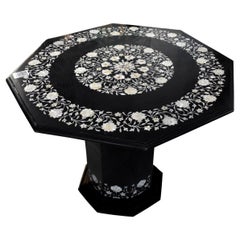
1990s Spanish Mother of Pearl Pietra Dura Inlay Mosaic Octagonal Side Table
Located in Marbella, ES
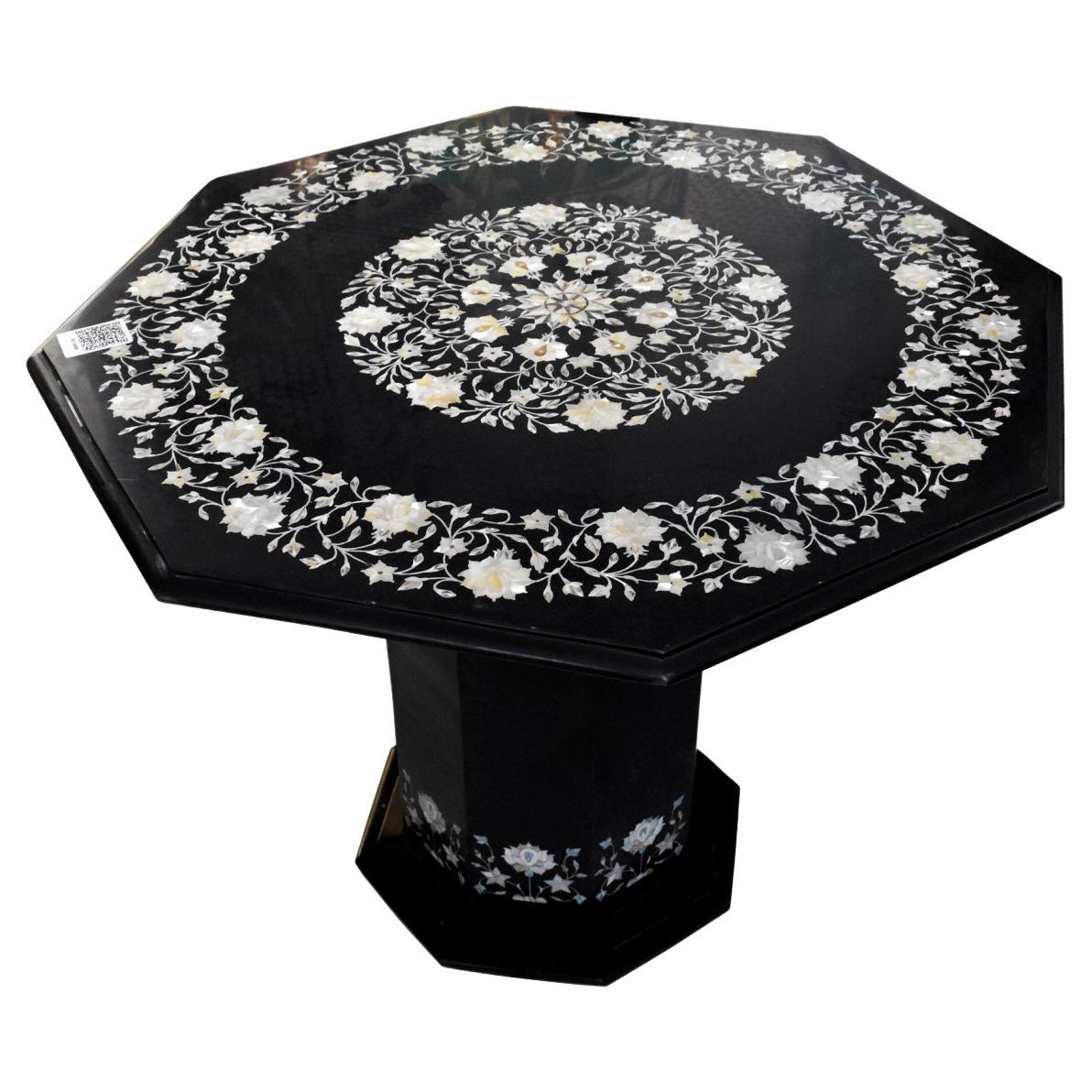
1990s Spanish mother of pearl Pietra Dura inlay mosaic octagonal side table with pedestal.
Category
Late 20th Century European Side Tables
Materials
Stone, Marble
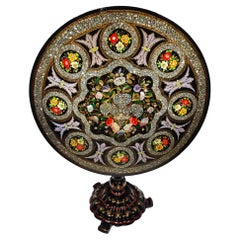
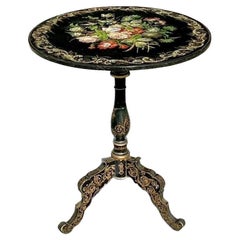
19th Century French Table with Mother of Pearl
Located in Madrid, ES
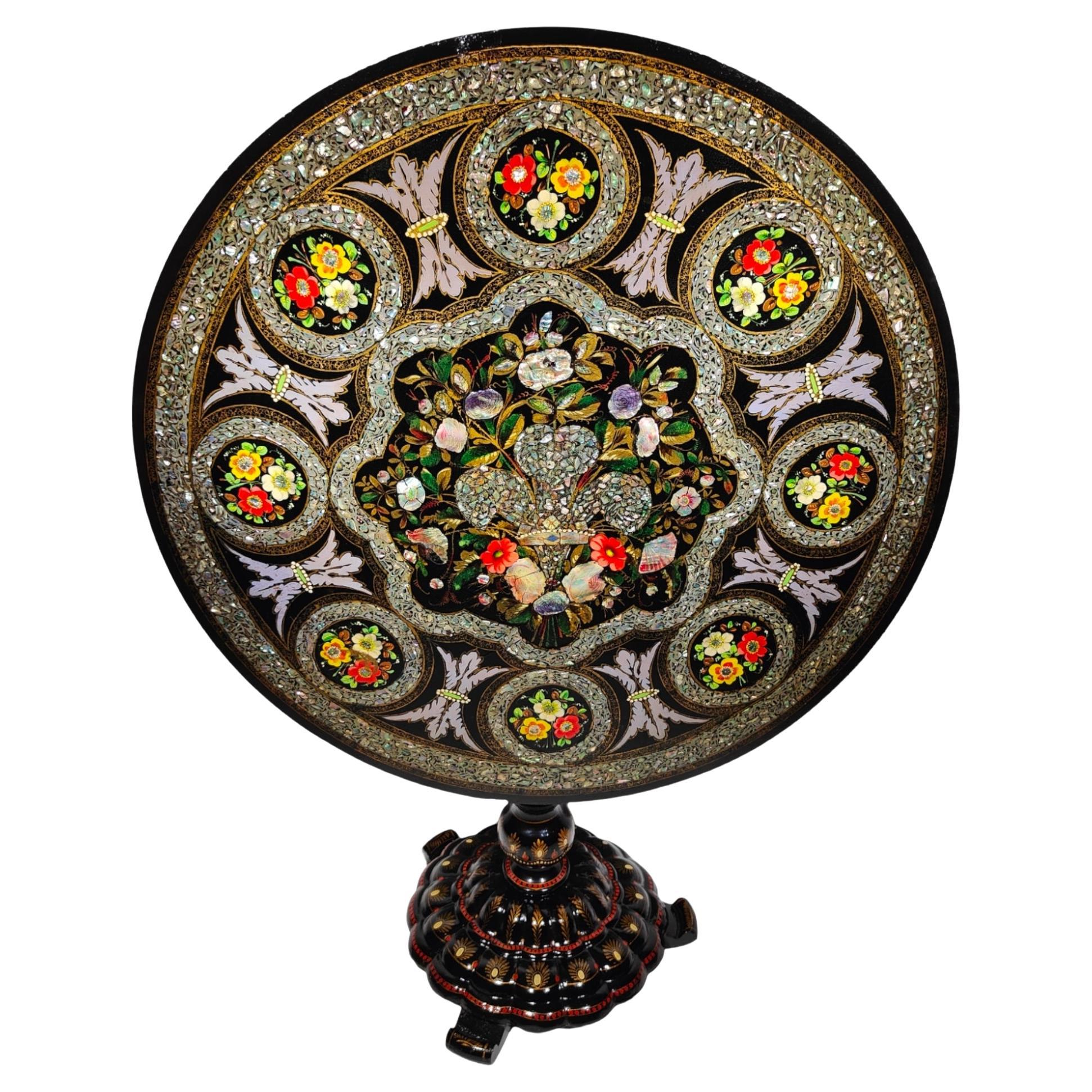
19th century French table with mother of pearl.
French table from the 19th century with mother-of-pearl very decorative table from the 19th century with mother-of-pearl inlays and h...
Category
Antique 1880s Center Tables
Materials
Fruitwood
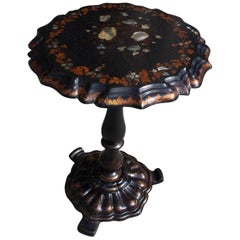
English Regency Papier Mâché Mother of Pearl Inlaid Gilt Tea Table, Circa 1815
Located in Charleston, SC
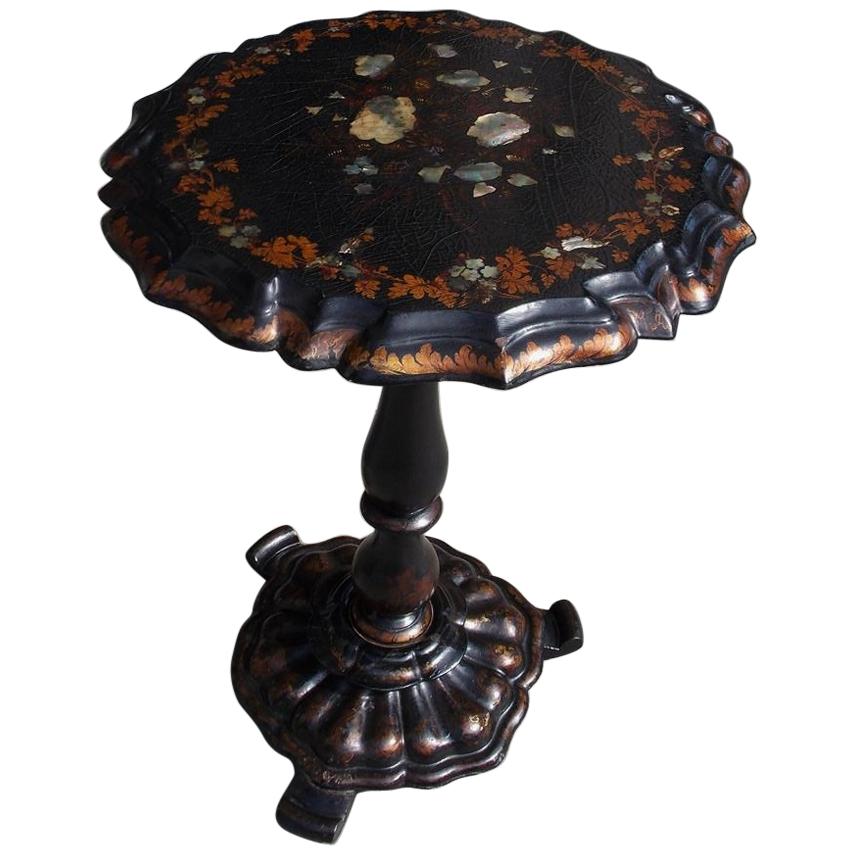
English Regency papier mâché tilt top scalloped edge tea table with gilt stenciled foliage motif, mother of pearl inlays, turned bulbous r...
Category
Antique 1810s English Regency Dessert Tables and Tilt-top Tables
Materials
Brass
Vintage Regency Inlay Mother of Pearl Side Table
Located in West Palm Beach, FL
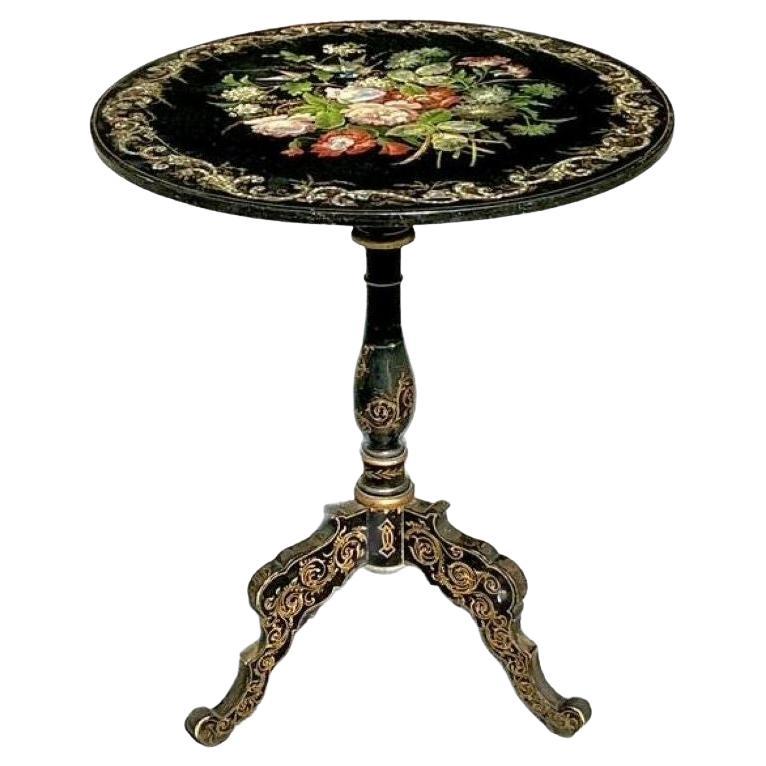
Experience the opulent artistry of the Victorian era with this magnificent antique side table. A true masterpiece of craftsmanship, the table features a lustrous black lacquer surfac...
Category
Antique Late 19th Century British Hollywood Regency Side Tables
Materials
Mother-of-Pearl, Wood, Lacquer
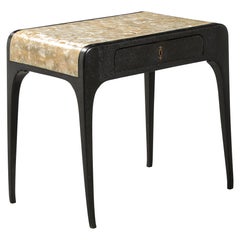
Italian 1930
s Mother of Pearl Hand-Carved Table
Located in New York, NY
A highly unique and rare Italian 1930's console or vanity table; the exquisite mother of pearl surface cascades down the sides creating a waterfall effect; the apron and legs of hand...
Category
Vintage 1930s Italian Art Deco Tables
Materials
Brass
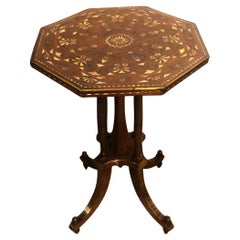
Carlo Zen, Mother-of-Pearl
Brass Thread Inlaid Side Table, Italy, circa 1900
By Carlo Zen
Located in New York, NY
Carlo Zen
Stile Floreale - Italian Art Nouveau
Octagonal Side Table
Walnut, Mother-of-Pearl & Brass Thread Inlay
Italy, circa 1900
DIMENSIONS
Height: 28.75 inches ...
Category
Antique Early 1900s Italian Art Nouveau Side Tables
Materials
Brass
More Ways To Browse
Wood Inlay 3 Leg Table
Korean Mother Of Pearl Furniture
Wood Inlay 3 Leg Table
Antique Galleon
Japanese Lacquer And Mother Of Pearl
Colonial Spanish Art
Mother In Pearl Inlay
Latin America Antique
France Postcard
Korean Mother Of Pearl Furniture
Wood Inlay 3 Leg Table
Antique Galleon
Japanese Lacquer And Mother Of Pearl
Colonial Spanish Art
Mother In Pearl Inlay
Latin America Antique
Korean Mother Of Pearl Furniture
Wood Inlay 3 Leg Table