Items Similar to "Untitled" Albert Eugene Gallatin, Mid-Century Abstract, Red and Blue, Geometric
Want more images or videos?
Request additional images or videos from the seller
1 of 10
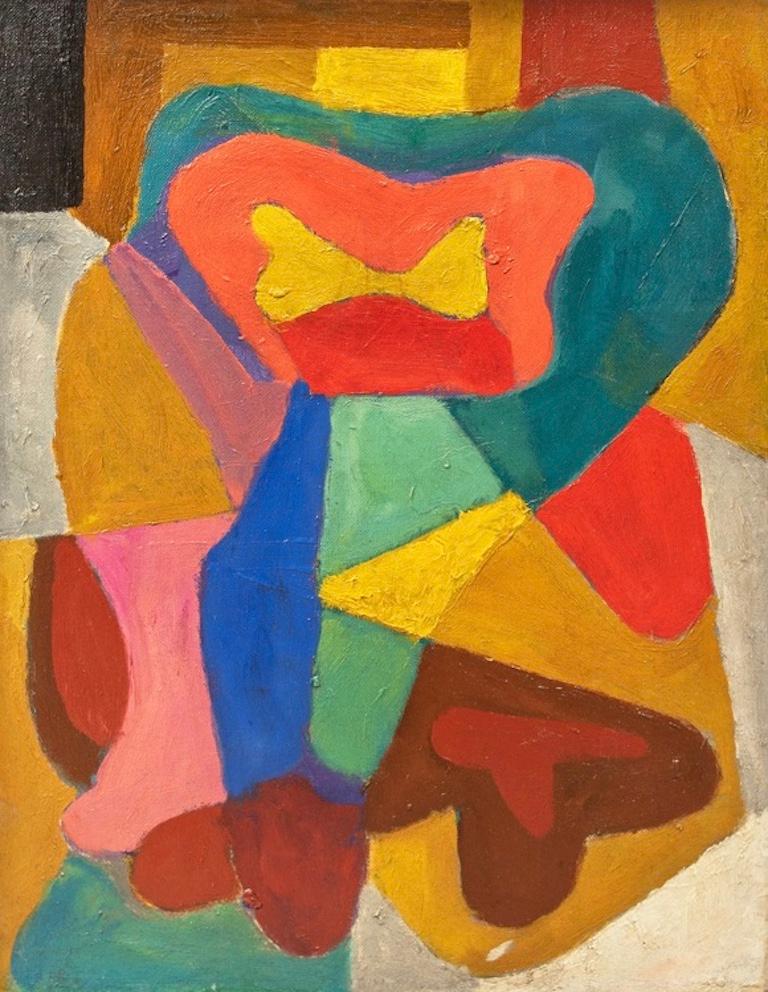
Albert Eugene Gallatin"Untitled" Albert Eugene Gallatin, Mid-Century Abstract, Red and Blue, Geometric1947
1947
$10,000
£7,622.17
€8,791.38
CA$14,202.99
A$15,262.61
CHF 8,189.27
MX$179,784.18
NOK 102,971.04
SEK 94,063.38
DKK 65,703.30
About the Item
Albert Eugene Gallatin
Untitled, 1947
Signed and dated on the reverse
Oil on canvas
10 1/4 x 14 inches
Private Collection
Private Collection, Mount Vernon, New York (gift from the above)
Painter, writer, patron, founder of the Gallery of Living Art at New York University, Albert Gallatin's contributions to abstract art in New York took many forms. Trained as a lawyer, Gallatin never practiced. Instead he concentrated his energies on collecting and writing about art. Initially interested in Aubrey Beardsley, James McNeill Whistler, the American Impressionists, and other turn-of-the-century artists, Gallatin turned to modern art in the 1920s. By 1927, his collection had grown sufficiently to be shown publicly. He established the Gallery of Living Art, dedicated to the ongoing display of European moderns. Located on Washington Square—near the studios of many young painters—New York University became home for his collection. There, Gallatin hoped to create an informal atmosphere for intellectual exchange, as well as a place where artists could congregate and study the newest developments in European art.
By 1933, when its second catalogue was published, the Gallatin Collection featured paintings by Céanne, Picasso, Braque, Léger, Gris, Mondrian, Ozenfant, Torres-Garcia, and others. With Jean Hélion, who served as advisor and friend, Gallatin increasingly focused his collection on a unified view of modernism. By 1937, its core artists were Picasso, Gris, Léger, and Braque. Masterworks purchased included Picasso's large Three Musicians and Léger's The City. Gallatin began adding work by American moderns as well.
Gallatin's collecting brought him into contact with leading artists and groups of the day. He knew many of the members of Abstraction-Création, andits short-lived predecessor ArtConcret. He visited the studios of Picasso, Braque, Mondrian, Miró, and others, during his annual trips toParis. As important as his acquaintance with these artists was for his own painting, of greater significance was the link it provided between them and the growing circle of vanguard artists in New York.
Although many young Americansfollowed the Parisian art scene through Cahiers d'Art, Abstraction-Création, and othermagazines, the opportunity to study original work firsthand was unparalleled. Through purchases for the collections and backing for exhibitions, Gallatin lent significant support to his younger colleagues. He bought paintings by Rupert D. Turnbull, Gertrude Greene, Jean Xceron, Charles Biederman, John Ferren, George L.K. Morris, and Charles Shaw. He sponsored shows of work by Alice Trumbull Mason, Esphyr Slobodkina, and others. In 1936, under the auspices of the Gallery of Living Art, the Paul Reinhardt Galleries presented Five Contemporary American Concretionists, a widely reviewed exhibition of work by Biederman, Alexander Calder, Ferren, Morris, and Shaw.
Gallatin viewed modern art in international terms. He considered the gallery to be akin to a scientific laboratory where experimentation and explorationwere documented. Hélion agreed, and in an essay for the 1933 catalogue of the collection, further argued that the newest developments should be understood as part of an evolutionary process. The concerns of "politics and the struggle for life," so popular among Social Realists, had no place in modern art.
In December 1942, New York University determined to retrieve the space occupied by the Gallatin collection. Looking about for another site, Gallatin rebuffed overtures from Alfred Barr at the Museum of Modern Art because he found Barr's lack of sympathy for younger American abstract artists disturbing. He gave the collection to the Philadelphia Museum of Art.
Although Gallatin's perceptive eye benefited from the advice of Hélion, Morris, and others, his acute understanding of the formal basis of Cubism and other modernist forms is clear from his own paintings. During the mid 1920s, when Gallatin was fifty-five, he began painting in a modified Cubist style.Both the Untitled canvas of 1936 and Composition (1937) reflect Gallatin's admiration for Juan Gris, whose "honest and profound paintings, so free from all pretention, take on more and more weight year by year."
Although Gallatin provided substantial moral and financial support for the American Abstract Artists, and was among the early, although not original members, he was both older and considerably wealthier than most of its members. Along with Charles Shaw, George L.K. Morris, and Suzy Frelinghuysen, Gallatin was dubbed a "Park Avenue Cubist." He remained a man whose elegant life style set him apart from the younger, poorer members of the group.
About the Seller
5.0
Platinum Seller
Premium sellers with a 4.7+ rating and 24-hour response times
Established in 2022
1stDibs seller since 2022
136 sales on 1stDibs
Typical response time: 1 hour
- ShippingRetrieving quote...Shipping from: New York, NY
- Return Policy
More From This Seller
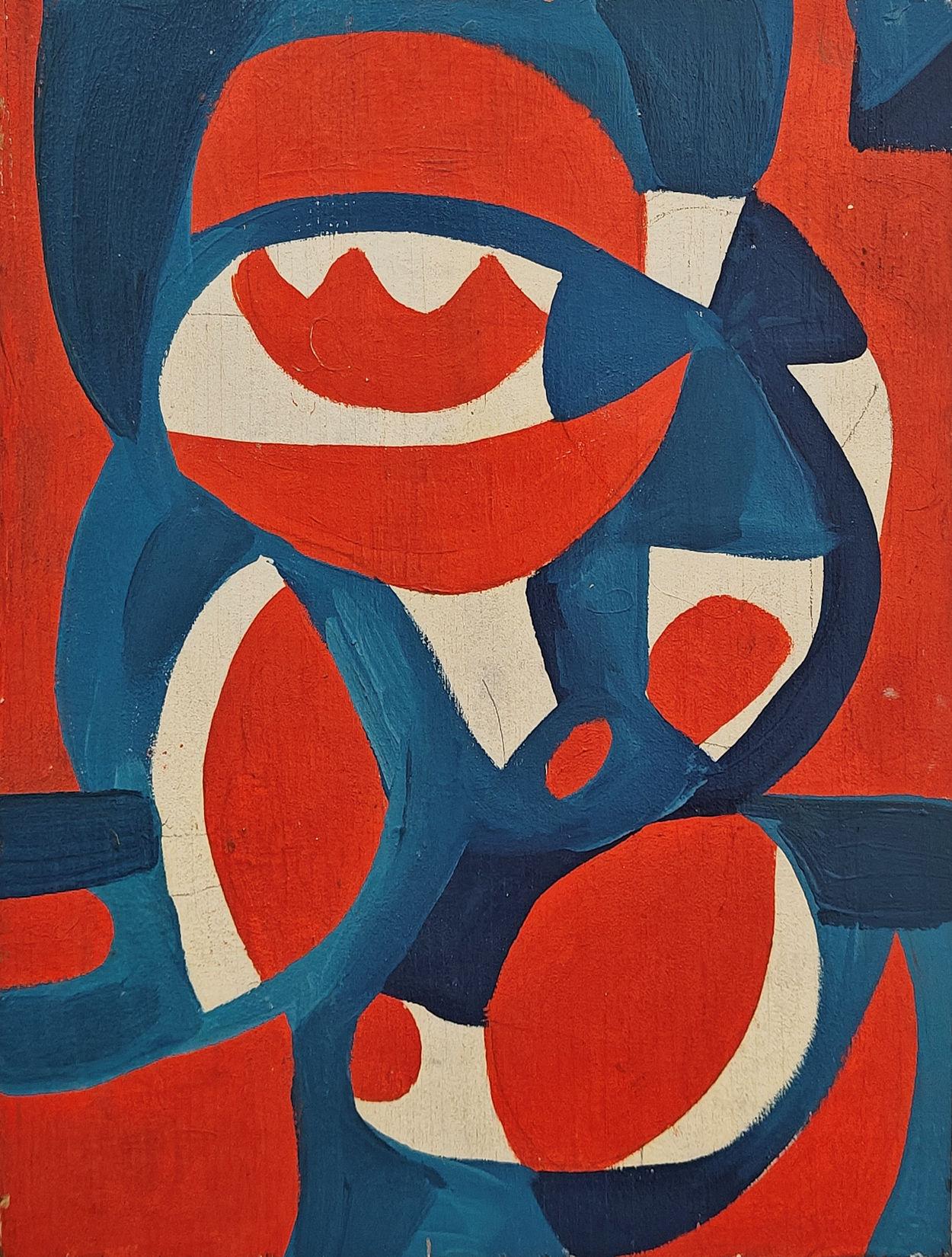
View All"Untitled" Howard Daum, Abstract, Red White and Blue, Modernist Composition
Located in New York, NY
Howard Daum
Untitled, 1972
Signed and dated on verso
Oil on board
10 1/8 x 8 inches
Provenance
The artist
Ashby Gallery, New York
Carl Ashby, New York
Estate of the above
Howard Daum was born in Poland. His family lived in Lodz until he turned 14, when he and his mother left the counrtry. They settled in Montreal, Canada, where Daum learned from the artist Alexander Bercovitch from 1934 to 1937. In 1938, Daum and his mom traveled to New York and chose the Bronx as their home.
After finishing high school in 1940, Daum received a scholarship to the Art Students League. There, he learned from teachers like Will Barnet, Cameron Booth, Morris Kantor, Harry Sternberg, and Vaclav Vytlacil, who was a key mentor. Vytlacil had studied under modern painter Hans Hofmann in Munich in 1921 and helped start the American Abstract Artists group in 1936.
In 1943 and 1944, Daum served in the U. S. Army in Mississippi before coming back to New York. During 1944 and 1945, he had lessons with Hofmann at his school in Greenwich Village. Daum's art during this time became more abstract, using bold and bright colors with clear brushstrokes. The space in his work was very shallow, with objects like figures and easels overlapping each other.
Some of Daum’s artist friends, such as Robert Barrell, Peter Busa, and Steve Wheeler...
Category
1970s Abstract Abstract Paintings
Materials
Oil, Board
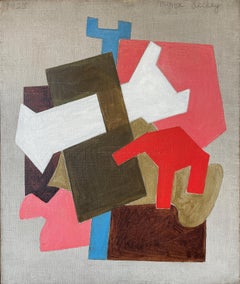
"Abstract Interior of Room" Myron Lechay, Colorful Early Geometric Abstract
By Myron Lechay
Located in New York, NY
Myron Lechay
Abstract Interior of Room, 1923
Signed upper right corner and dated upper left corner
Oil on canvas
24 x 20 inches
Provenance:
Estate of the artist
Spanierman Gallery, ...
Category
1920s Abstract Abstract Paintings
Materials
Canvas, Oil
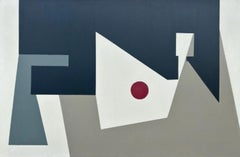
"Composition" Balcomb Greene, Geometric Abstract, Early Modernist Composition
By Balcomb Greene
Located in New York, NY
Balcomb Greene
Composition, 1936
Signed Balcomb Greene on verso upper stretcher bar
Signed on backing board: Balcomb Greene
Oil on canvas
30 1/4 x 46 inches
Provenance:
The artist
A...
Category
1930s Abstract Abstract Paintings
Materials
Canvas, Oil
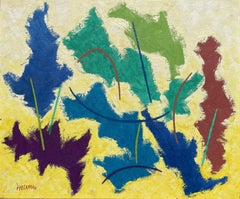
"Untitled" Albert Heckman, Mid-Century American Modernist Abstract Composition
By Albert Heckman
Located in New York, NY
Albert Heckman
Untitled
Signed lower left
Oil on canvas
20 x 24 inches
Albert Heckman was born in Meadville, Western Pennsylvania, 1893. He went to New York City to try his hand at...
Category
1950s Modern Abstract Paintings
Materials
Canvas, Oil
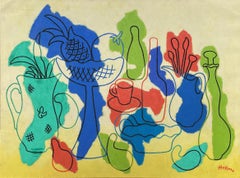
"Untitled" Albert Heckman, 1950s Modernist Abstracted Still Life Painting
By Albert Heckman
Located in New York, NY
Albert Heckman
Untitled, circa 1950
Signed lower right
Oil on canvas
21 1/4 x 29 inches
Albert Heckman was born in Meadville, Western Pennsylvania, 1893. He went to New York City to try his hand at the art world in 1915 after graduating from high school and landing a job at the Meadville Post Office. In 1917, at the age of 24, Heckman enrolled part-time in Teachers' College, Columbia University's Fine Arts Department to begin his formal art education. He worked as a freelance ceramic and textile designer and occasionally as a lecturer at the Metropolitan Museum of Art. In the early 1920s, at the age of almost 30, he graduated with a Bachelor of Arts degree from Columbia Teachers College. He was especially impacted by his instructor at Columbia, Arthur Wesley Dow.
After graduating, he was hired by the Teachers' College as a Fine Arts instructor. He stayed with Columbia Teachers' College until 1929, when he left to attend the Leipzig Institute of Graphic Arts in Leipzig, Germany. Isami Doi (1903-1965), who was born in Hawaii, was arguably his most impressive student at Columbia. Doi is now regarded as one of the most prominent artists hailing from Hawaii. Heckman became an active member and officer of the Keramic Society and Design Guild of New York in the 1920s as part of his early commercial art career. The Society's mission was to share knowledge and showcase textile and ceramic design exhibits.
In 1922, Heckman married Florence Hardman, a concert violinist. Mrs. Heckman's concert schedule during the 1920s kept Albert and Florence Heckman apart for a significant portion of the time, but they spent what little time they had together designing and building their Woodstock, New York, summer house and grounds. A small house and an acre of surrounding land on Overlook Mountain, just behind the village of Woodstock, were purchased by Albert and Florence Heckman at the time of their marriage. Their Woodstock home, with its connections, friendships, and memories, became a central part of their lives over the years, even though they had an apartment in New York City.
Heckman's main artistic focus shifted to the house on Overlook Mountain and the nearby towns and villages, Kingston, Eddyville, and Glasco. After returning from the Leipzig Institute of Graphic Arts in 1930, Mr. Heckman joined Hunter College as an assistant professor of art. He worked there for almost thirty years, retiring in 1956. Throughout his tenure at Hunter, Mr. Heckman and his spouse spent the summers at their Woodstock residence and the winters in New York City. They were regular and well-known guests at the opera and art galleries in New York. Following his retirement in 1956, the Heckmans settled in Woodstock permanently, with occasional trips to Florida or Europe during the fall and winter. Mr. Heckman's close friends and artistic career were always connected to Woodstock or New York City. He joined the Woodstock art group early on and was greatly influenced by artists like Paul and Caroline Rohland, Emil Ganso, Yasuo Kuniyoshi, Andre Ruellan, and her husband, Jack Taylor.
Heckman operated a summer art school in Woodstock for several years in the 1930s with support from Columbia University, where these and other Woodstock artists gave guest lectures. The Potter's Shop in New York City hosted Mr. Heckman's first art show in December 1928. The exhibit received some positive reviews from critics. The American Institute of Graphic Arts chose the plate of "Wehlen, Saxony" as one of the "Fifty Prints of the Year in 1929." There were sixteen etchings displayed. The remaining plates depicted scenes in Saxony, Germany, while five of the plates were based on scenes in Rondout, New York.
Heckman started switching from etching to black and white lithography by the early 1930s. A lifelong admirer of Heckman's artwork, Mr. Gustave von Groschwitz organized a significant exhibition of Heckman etchings and lithographs at the Ferargil Gallery in New York City in 1933. The exhibition traveled to the Stendahl Galleries in Los Angeles (May 1933), the Charles Lessler Gallery in Philadelphia (May 1933), J.L. Hudson in Detroit (June 1933), and Gumps in San Francisco (July 1933). Together with his early etchings, the exhibition featured brand-new black and white lithographs depicting scenes in and around Woodstock as well as "A View from Tudor City...
Category
1950s American Modern Figurative Paintings
Materials
Canvas, Oil
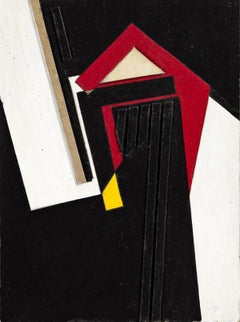
"Untitled, " Seymour Fogel, Geometric Abstraction, Texas Hard-Edge
By Seymour Fogel
Located in New York, NY
Seymour Fogel
Untitled
Oil on illustration board construction
10 x 7 1/2 inches
Provenance:
Estate of the artist
Charles and Faith McCracken
Larry and Trish Heichel
Private Collection
Seymour Fogel was born in New York City on August 24, 1911. He studied at the Art Students League and at the National Academy of Design under George Bridgeman and Leon Kroll. When his formal studies were concluded in the early 1930s he served as an assistant to Diego Rivera who was then at work on his controversial Rockefeller Center mural. It was from Rivera that he learned the art of mural painting.
Fogel was awarded several mural commissions during the 1930s by both the Works Progress Administration (WPA) and the Treasury Section of Fine Arts, among them his earliest murals at the Abraham Lincoln High School in Brooklyn, New York in 1936, a mural in the WPA Building at the 1939-1940 New York World's Fair, a highly controversial mural at the U.S. Post Office in Safford, Arizona (due to his focus on Apache culture) in 1941 and two murals in what was then the Social Security Building in Washington, D.C., also in 1941. Fogel's artistic circle at this time included Phillip Guston, Ben Shahn, Franz Kline, Rockwell Kent and Willem de Kooning.
In 1946 Fogel accepted a teaching position at the University of Texas at Austin and became one of the founding artists of the Texas Modernist Movement. At this time he began to devote himself solely to abstract, non-representational art and executed what many consider to be the very first abstract mural in the State of Texas at the American National Bank in Austin in 1953. He pioneered the use of Ethyl Silicate as a mural medium. Other murals and public works of art done during this time (the late 1940s and 1950s) include the Baptist Student Center at the University of Texas (1949), the Petroleum Club in Houston (1951) and the First Christian Church, also in Houston (1956), whose innovative use of stained glass panels incorporated into the mural won Fogel a Silver Medal from the Architectural League of New York in 1958.
Fogel relocated to the Connecticut-New York area in 1959. He continued the Abstract Expressionism he had begun exploring in Texas, and began experimenting with various texturing media for his paintings, the most enduring of which was sand. In 1966 he was awarded a mural at the U.S. Federal Building in Fort Worth, Texas. The work, entitled "The Challenge of Space", was a milestone in his artistic career and ushered in what has been termed the Transcendental/Atavistic period of his art, a style he pursued up to his death in 1984. Painted and raw wood sculpture...
Category
Mid-20th Century Abstract Geometric Abstract Paintings
Materials
Oil, Board
$4,600 Sale Price
20% Off
You May Also Like
"Abstraction" Mid-20th Century American Abstract 1960s Color Field Modernist
Located in New York, NY
"Abstraction" Mid-20th Century American Abstract 1960s Color Field Modernist
James Daugherty (1887 – 1974)
Abstraction with White Border
16 x 12 inches
Estate stamp verso
Oil on p...
Category
1960s Abstract Abstract Paintings
Materials
Oil, Panel
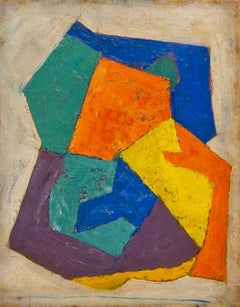
Composite #6, Abstract Geometric Shapes, Mid-20th Century
Located in Beachwood, OH
Charles Fodor (American, 20th Century)
Composite #6, 1969
Oil on canvas
Signed, dated and titled verso
27.5 x 20 inches
29 x 21.5 inches, framed
Category
1960s Abstract Geometric Abstract Paintings
Materials
Oil
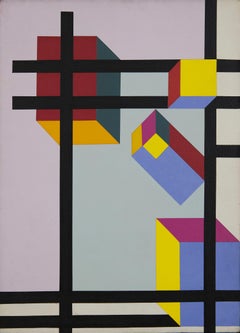
"Abstraction" Mid 20th Century American Abstract 1960s Color Field
Located in New York, NY
"Abstraction" Mid 20th Century American Abstract 1960s Color Field
James Daugherty (1887 – 1974)
Abstraction
16 x 12 inches
Estate stamp verso
Oil on panel
Provenance: Estate of t...
Category
1960s Abstract Abstract Paintings
Materials
Oil, Panel
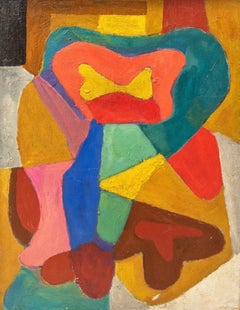
"Abstraction" Mid-20th Century American Abstract 1960s Color Field Modernist
Located in New York, NY
"Abstraction" Mid-20th Century American Abstract 1960s Color Field Modernist
James Daugherty (1887 – 1974)
"Abstraction"
58 ¼ x 41 ¾ inches
Signed and dated 1957 lower left
Oil on...
Category
1950s Abstract Abstract Paintings
Materials
Oil, Canvas
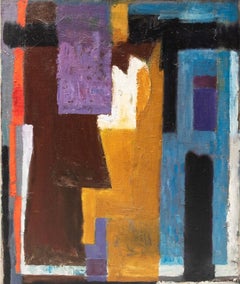
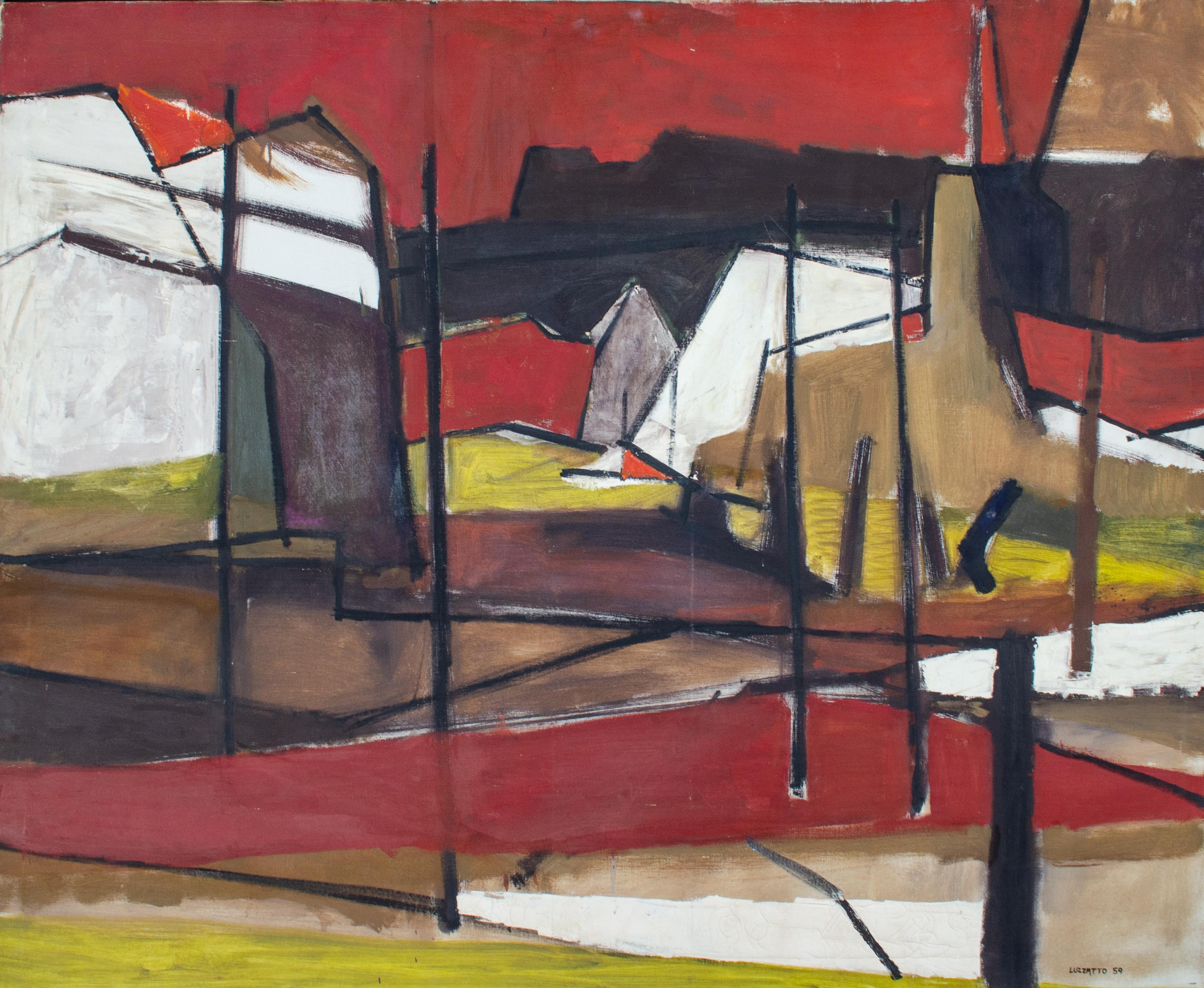
1959 Geometric Abstraction by Francis Almeida Luzzatto
Located in New York, NY
Francis Almeida Luzzatto (American, 1935-1999)
Untitled, 1959
Oil on canvas
40 x 48 1/2 in.
Signed and dated lower right: Luzzatto 59
Partial label verso: The Art Rental Gallery, Wa...
Category
1950s Abstract Geometric Abstract Paintings
Materials
Canvas, Oil
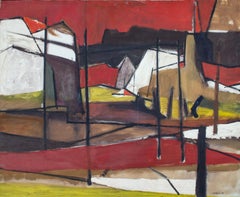
Untitled Mid-Century Modern Geometric Abstraction
By Rolph Scarlett
Located in New York, NY
Rolph Scarlett
Untitled Mid-Century Modern Geometric Abstraction, ca. 1950
Gouache on paper painting
Hand signed on lower right front
This is a stunning original, signed vintage 1950...
Category
Mid-20th Century Abstract Geometric Abstract Paintings
Materials
Gouache, Mixed Media, Pencil